Feeds:
Posts
Comments

Archive for the ‘Sense and Sensibility’ Category

By Brenda S. Cox

Last month, June 19-22, I had the joy of attending JASP, the Jane Austen Summer Program. I had only attended once before, during covid when it was online. That was fantastic, so I was delighted to finally get to go in person.

This year’s theme was Sensibility and Domesticity. The focus was on Sense and Sensibility (S&S), domestic arts, and trans-Atlantic connections between the young USA and Austen’s England.

Laura Klein and Megan Poff play and sing pieces from Jane Austen’s own playlist that relate to Sense and Sensibility, such as “Begone Dull Care” which they connected with Willoughby. JASP 2025

Plenary Sessions

Plenary talks explored household books of the time; effects of the war on home life; “The Constitutional Safeguard of a Flannel Waistcoat”; and the Jane Austen Playlist, with a performance of songs connected to S&S.

In “Reading the Americas with Jane Austen,” Susan Allen Ford (author of What Jane Austen’s Characters Read And Why) explained what Austen would have learned about the Americas in books Austen is known to have read. For example, novelist Charlotte Turner Smith used her study of botany and travel writing to describe American scenery, as a teaching technique. In the introduction to her collection of tales, The Letters of a Solitary Wanderer, Smith argues that “young persons, who have no taste for any thing but narrative, may sometimes, by the local description of a Novel, learn what they would never have looked for in books of Geography or Natural History.” However, she presents Native Americans as savage and violent.

Anne Grant’s Memoirs of an American Lady, which Austen also read, gives a different perspective. It shows Native Americans as noble friends. Grant grew up in close contact with Mohawks, even learning to speak their language. Austen was able to get multiple perspectives on North America.
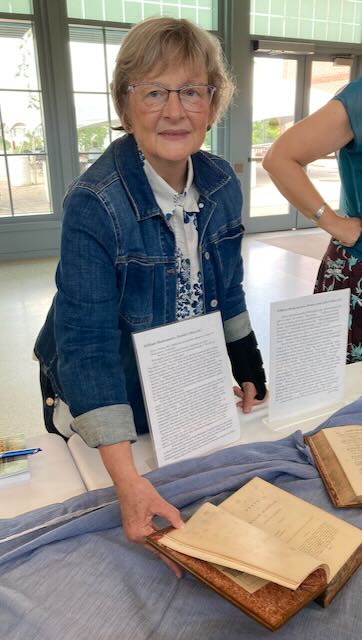
Susan Allen Ford, who spoke on Austen’s readings about America, shows rare books. JASP 2025

Jennie Batchelor, author of Jane Austen Embroidery, offered two fun embroidery workshops and a final plenary on “Transatlantic Domestic Arts in the Era of Jane Austen.” Jennie told us about resources used by women in England and America at the time, such as The Young Ladies School of Arts. That book gives instructions and receipts (recipes) for many kinds of ladies’ activities, from breeding canaries to gilding. It includes the technical, scientific knowledge needed for many of these skills. Fashionable boarding schools also taught such arts.

As one example, Sense and Sensibility mentions filigree work, which Lady Middleton expected Lucy to do at night by candlelight. Elinor kindly volunteered to assist Lucy. Filigree is quilling: cutting and rolling up small pieces of paper and fastening them onto a surface. This was quite fiddly, eye-straining work that Lucy was constrained to do in order to please her hostess.

Jennie Batchelor led two embroidery workshops, following patterns she adapted from magazines of Austen’s time. Some participants are tracing patterns onto their fabric at the windows, as Austen might have done. JASP 2025

Context Corners and Discussion Groups

I was particularly looking forward to one special feature of JASP: context corners and discussion groups. Graduate students led four 15-minute sessions (“context corners”) discussing various aspects of Sense and Sensibility. Topics connected S&S with sensibility and sisters; inheritance law; the East Indies; and “Scandal and the Fallen Woman.” For that final topic, we considered when the “fallen woman” was considered morally corrupt and when she began to be considered as a victim of immoral men or capitalism. We also learned definitions of a “rake” and saw comparisons with real people, noting similarities between William, Lord Craven, and the fictional John Willoughby.
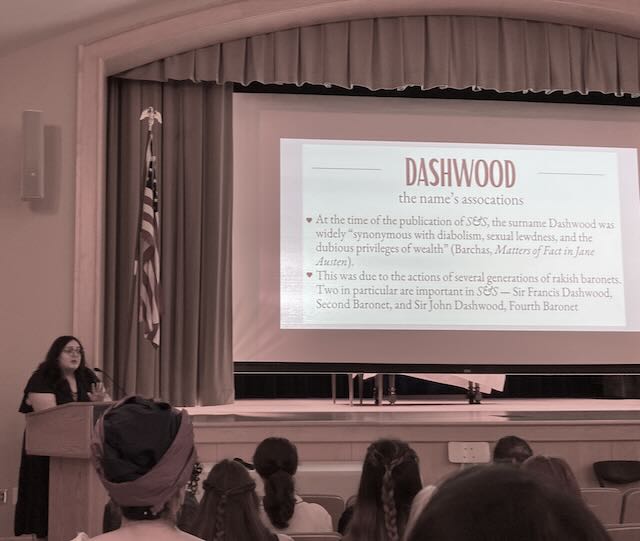
In a Context Corner on “Scandal and the Fallen Woman,” Nellie Downie told us about a real Dashwood family who were involved in various scandals. They were quite different from Austen’s Dashwoods. JASP 2025

After each context corner talk, we split up into small groups named after places in S&S. Mine was Norland Park. Using lists of excellent discussion questions and quotes, we had far-ranging discussions which were great fun. We had 45-60 minutes per discussion, so we could really get into it and trade ideas, building off of each other’s insights.

Education was a major emphasis of the conference, and teachers had their own forums in addition to the regular events.
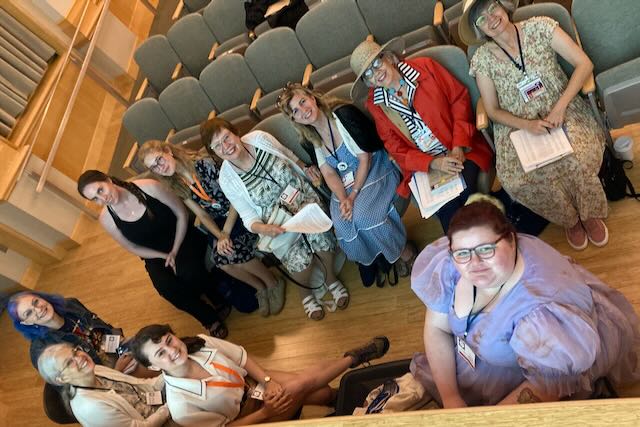
In the Norland Park group, as in all the other groups, we had lively discussions on many aspects of Sense and Sensibility. JASP 2025

And More Delights

The rest of the time was filled with fun events, including:

  • An opening banquet
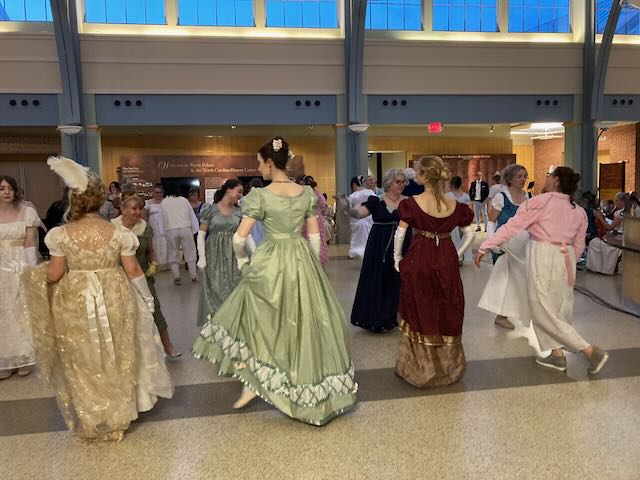
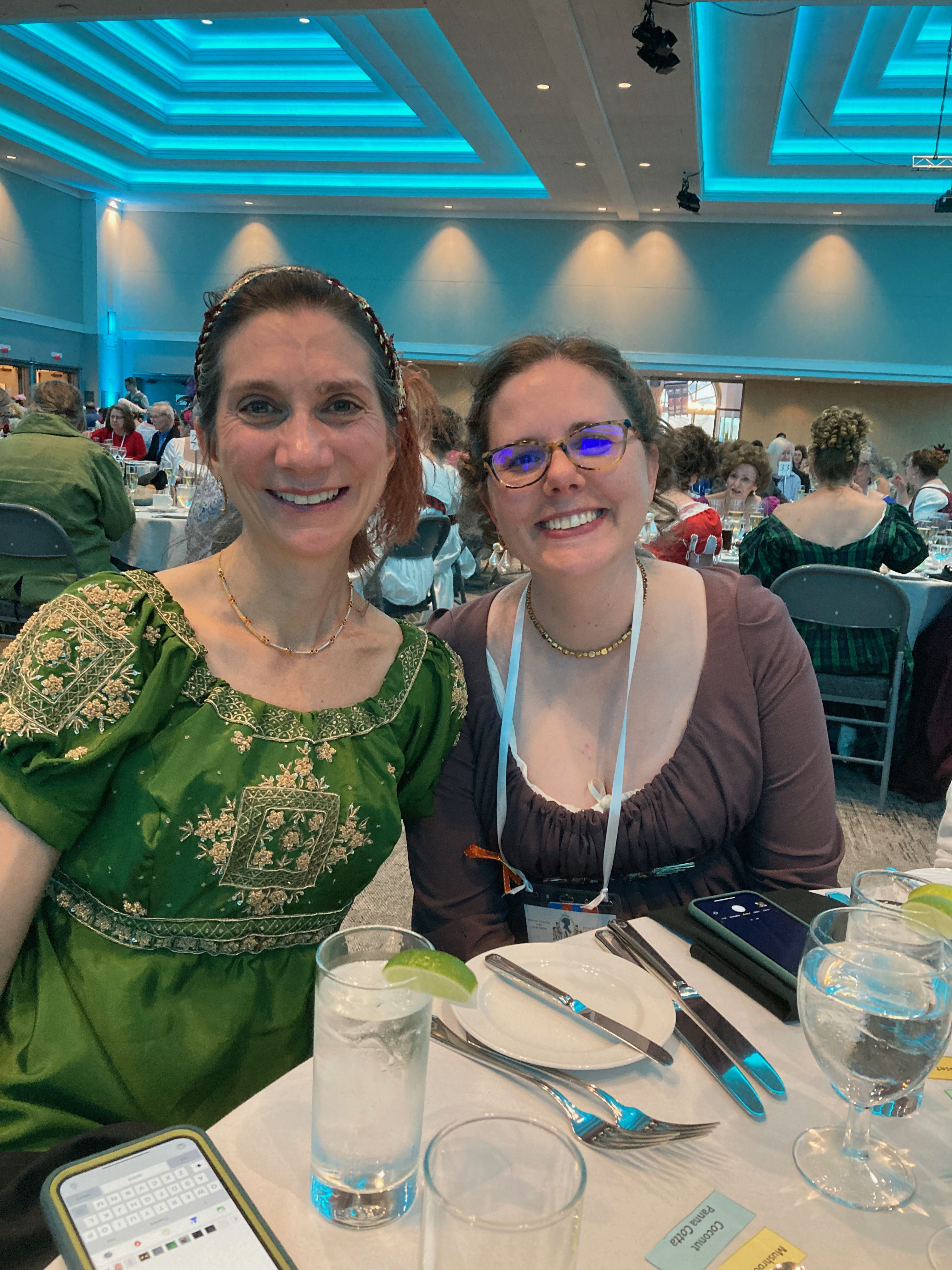
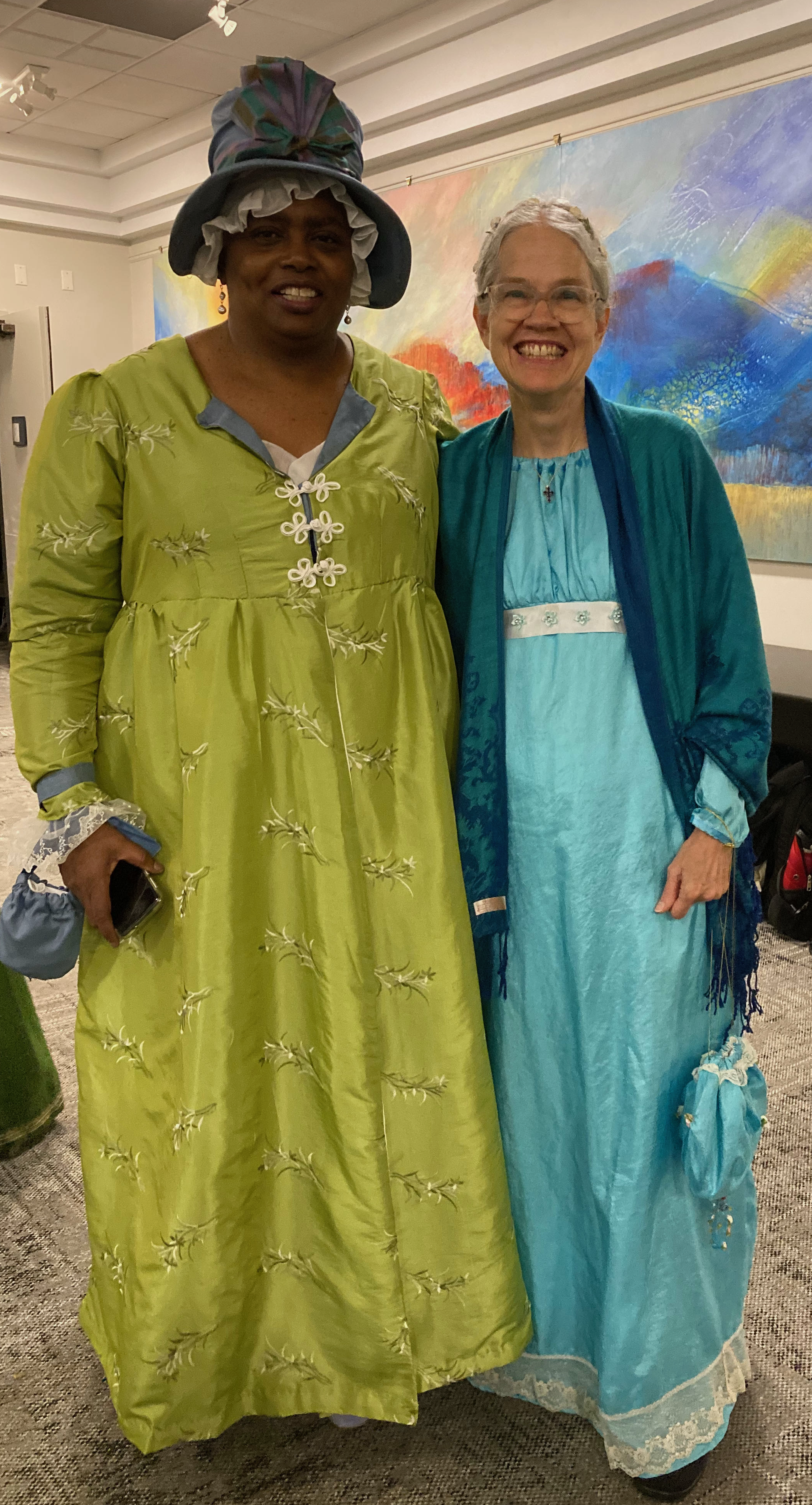
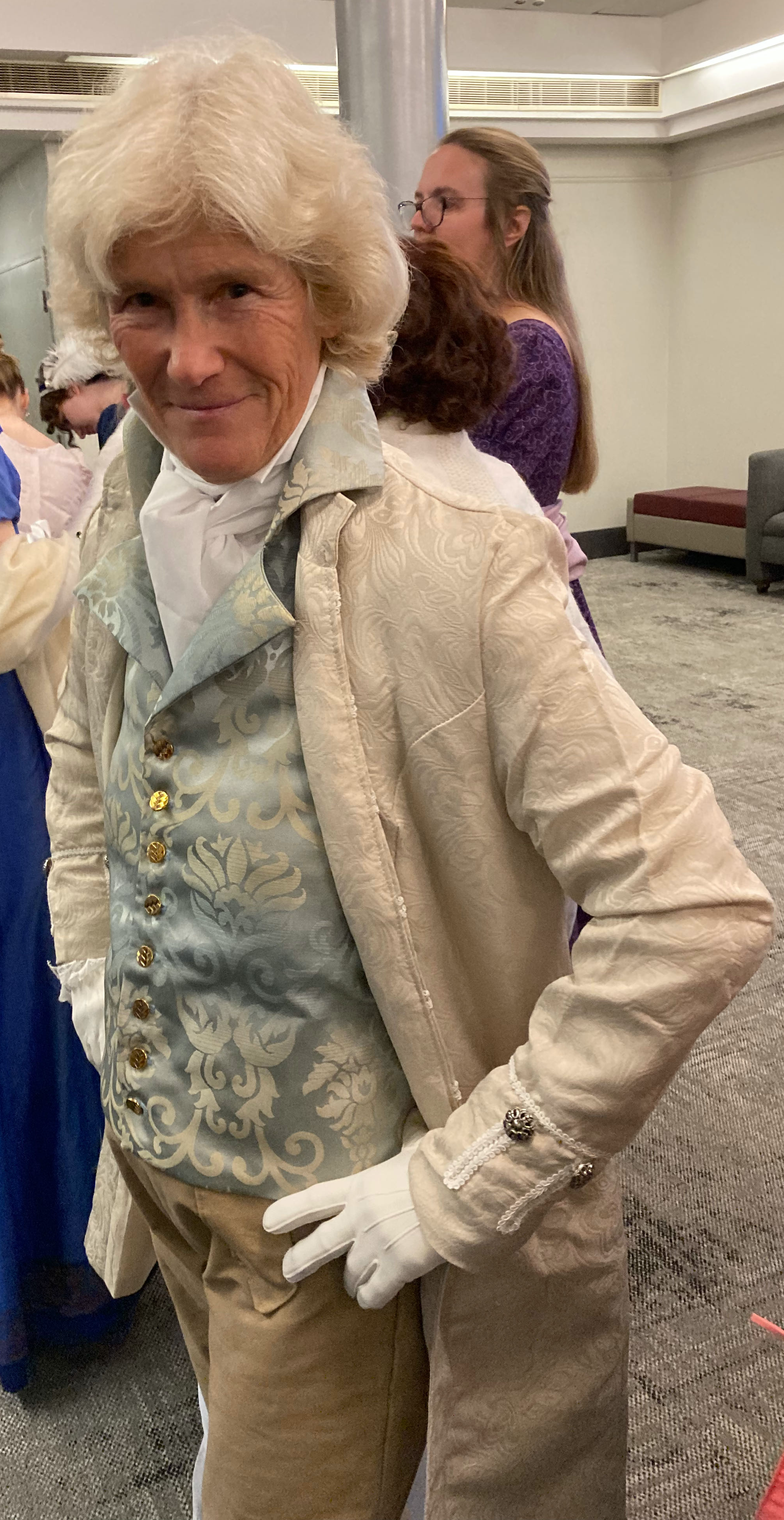
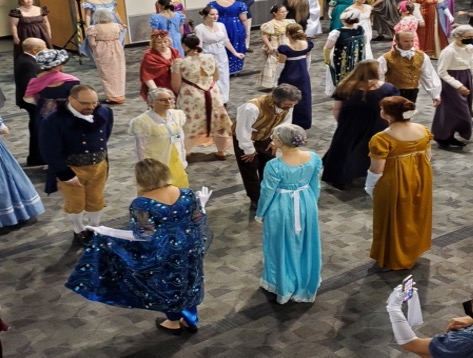
  • Multiple fun dance practices with “Mr. Steplively” and a Saturday night Regency Ball, with Regency Games for those who preferred not to dance. (A nice touch was the availability of reasonably priced costumes for those who wanted to rent Regency gowns.)
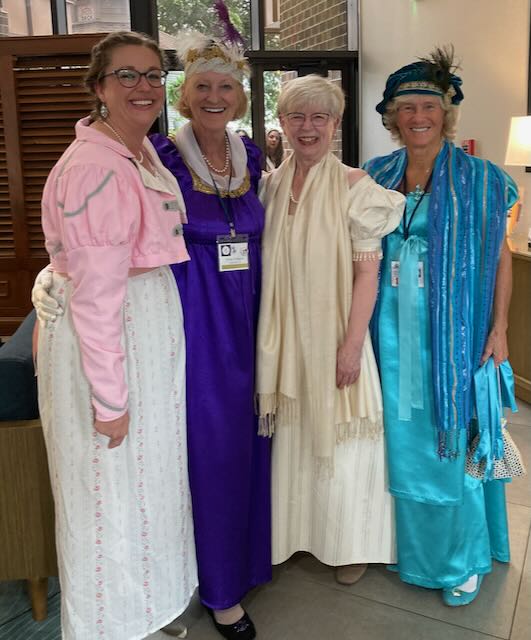
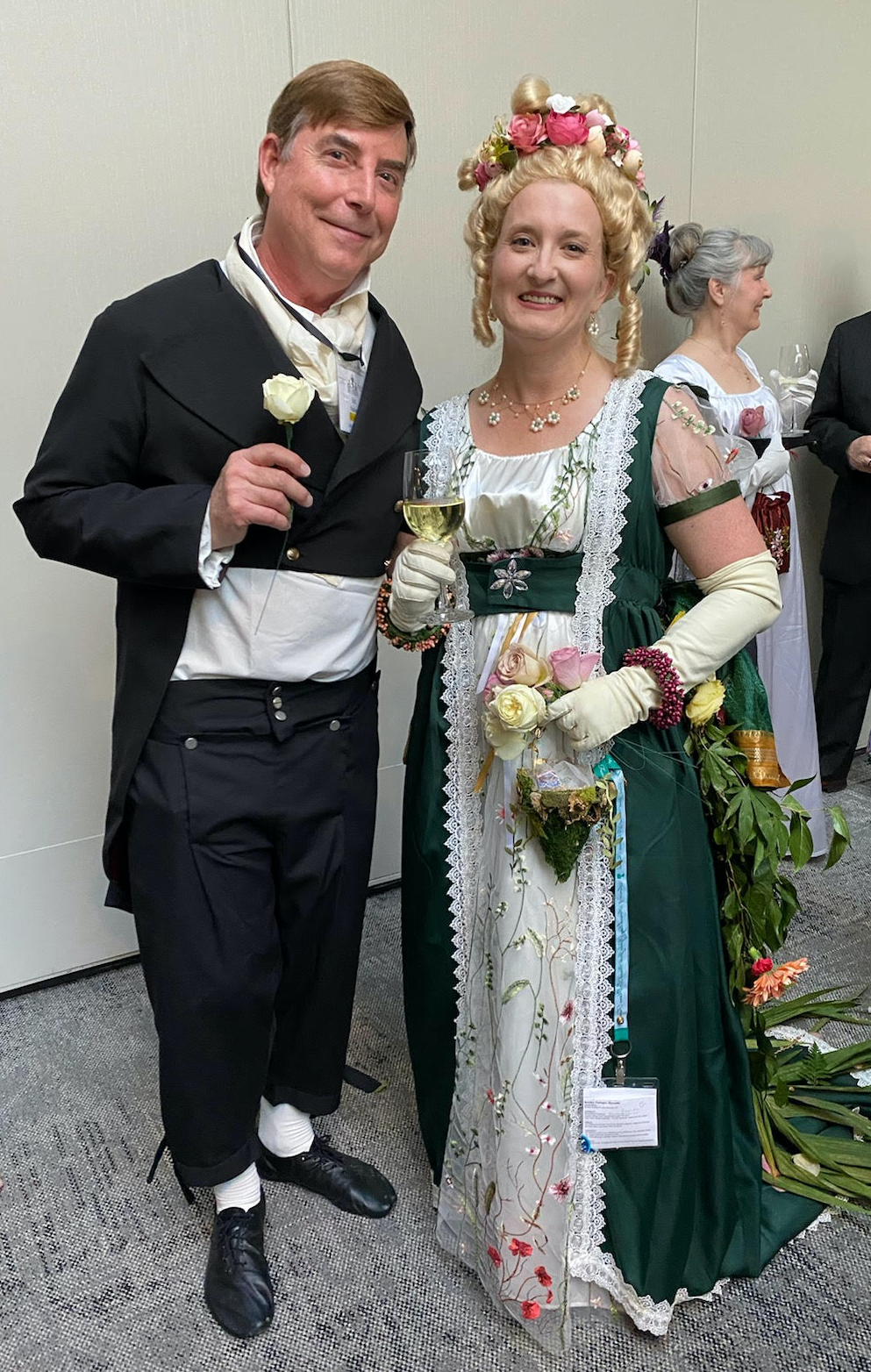
Ready to promenade from the hotel to the ball. Breckyn Wood, Erna Arnesen, Betty Parker Ellis, Jeanne Talbot, JASP 2025.
Dancing at the Regency Ball, JASP 2025
  • A theatrical evening, where we got to watch an original play connected S&S with Hamlet, and a screening of Sense and Sensibility: The Musical, a delightful take on the novel.
  • An adaptations panel which included music and costumes used in film versions of S&S, and more.
  • Optional tours
  • An emporium selling Jane Austen Books along with other fun items, and a silent auction.
  • A display of early editions of S&S and contemporary books by William Cowper, Sir Walter Scott, James Thomson, William Gilpin, and more.
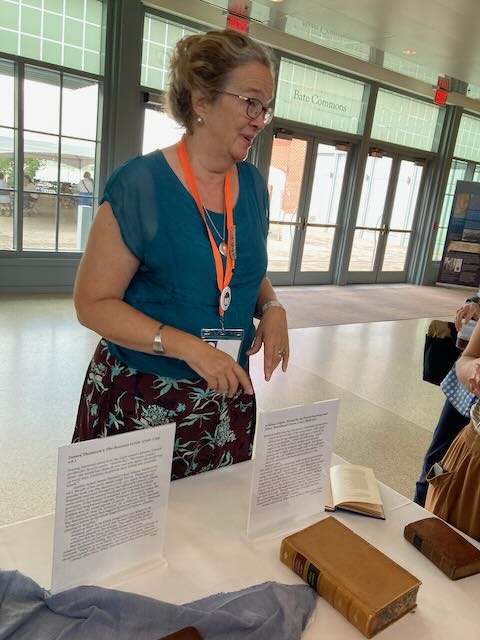
Inger Brodey, president of the Jane Austen Collaborative (of which JASP is a part), shows her early copies of books by Thomson and Gilpin.

Location, Location

Past JASPs have been held at UNC-Chapel Hill. This year about 150 participants met in New Bern, a historic town near the coast in North Carolina. Waterside views were lovely, and we got to tour the beautiful Tryon Palace and its extensive grounds. Our sessions were held at the North Carolina History Museum nearby.

Next summer, JASP is moving to Seton Hill University in Greensburg, Pennsylvania. The topic will be Pride, Prejudice, and the Pursuit of Happiness. I’m hooked on this great program, and I hope to see some of you there!

(Note: All photos ©Brenda S. Cox, 2025, please ask permission before using.)
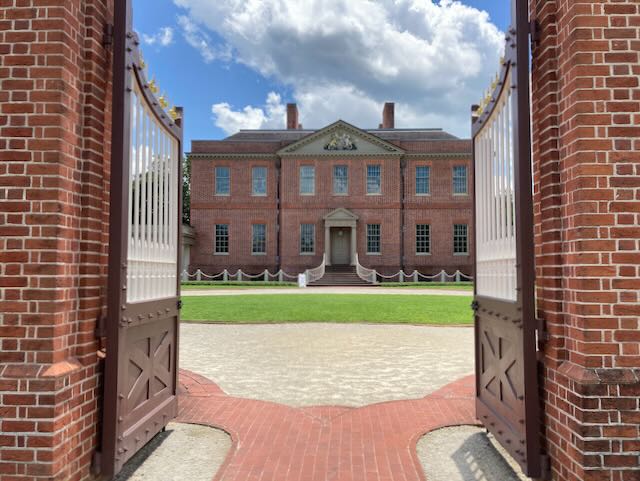
Tryon Palace, first permanent capitol of North Carolina, also Governor Tryon’s home, completed in 1770. Reconstructed and reopened in 1959. Well worth a visit! JASP 2025
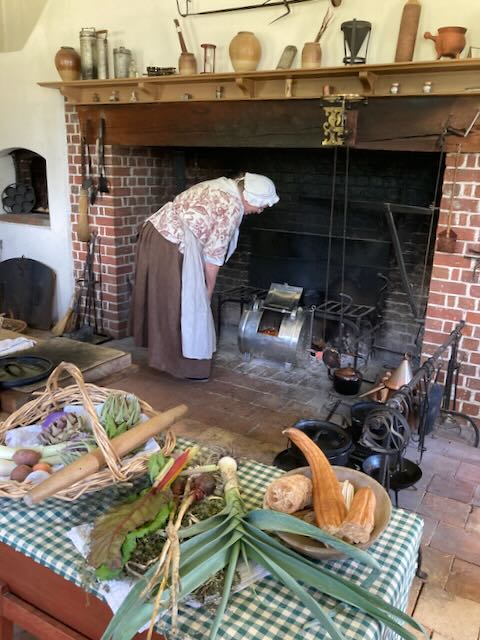
Touring the Tryon Palace was like touring an aristocratic home of Austen’s day, with period-appropriate furnishings, all the way down to the kitchen, where a real chicken was roasting in the fireplace. JASP 2025

Brenda S. Cox is the author of Fashionable Goodness: Christianity in Jane Austen’s England. She also blogs at Faith, Science, Joy, and Jane Austen.

Read Full Post »

By Brenda S. Cox

“. . . perhaps you would not mind passing through London, and seeing the inside of St. George’s, Hanover Square. Only keep your cousin Edmund from me at such a time: I should not like to be tempted.”—Mary Crawford, Mansfield Park, chapter 43

Mansfield Park includes much more discussion of the church than any other Austen novel. Not surprisingly, it also names more real churches than the other novels do.

In an earlier post we explored the Garrison Chapel, where Fanny Price and her family worship in Portsmouth. Henry Crawford attends with them on his visit. Perhaps this symbolizes his attempts to reform himself and become worthy of Fanny; attempts that ultimately fail.

Remains of the Garrison Chapel in Portsmouth where the Prices and Henry Crawford worshiped.

Henry’s sister Mary names another real church in a letter to Fanny. She wants Fanny to let her and Henry take Fanny back to Mansfield from Portsmouth, where Fanny has been staying with her family. Fanny is unhappy and unhealthy, but will not commit the impropriety of going back to Mansfield Park before her uncle sends for her. Mary wants to take Fanny to see Henry’s estate and then pass through London on the way to Mansfield.

She suggests visiting St. George’s, Hanover Square. This was a popular church for weddings among the upper classes of London. Mary hopes Fanny will marry Henry there. At the same time, Mary says it might tempt her to marry Edmund. She doesn’t want to marry a clergyman, or a second son who will not inherit an estate, but she is attracted to Edmund.

St. George’s Hanover Square exterior. According to the church website, “The classical front with six great Corinthian columns supporting a pediment represented a new trend in English Church design.”

St. George’s, Hanover Square Today

During a recent visit to London, I had the privilege of worshiping at St. George’s, Hanover Square on a Sunday morning. The service was a Sung Eucharist, a Communion service in traditional language, with beautiful singing from the choir and impressive organ music. During the service, the congregation renewed their baptismal vows.

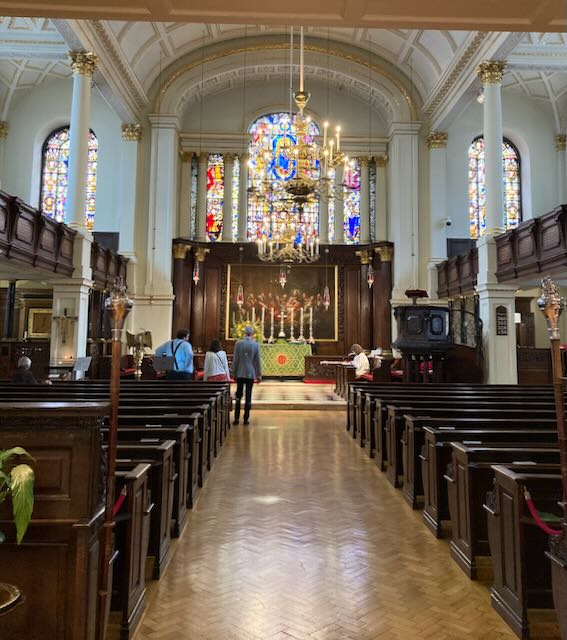
St. George’s Hanover Square interior. The painting of the Last Supper over the altar, and the surrounding carvings, were installed in 1724. The seven silver hanging lights in the church represent the seven lamps of fire burning before God’s throne, according to the book of Revelation in the Bible.

The church also offers brief midday services from the Book of Common Prayer on weekdays and several other Communion services during the week. Weekday “Morning Calm” services are held during termtime, as “a short period of reflection, contemplation, and relaxation before the challenges of the day begin.”

Nowadays the area around Hanover Square is mostly offices and businesses. I was told that most people in the current congregation live farther away, since few people live close to the church now.

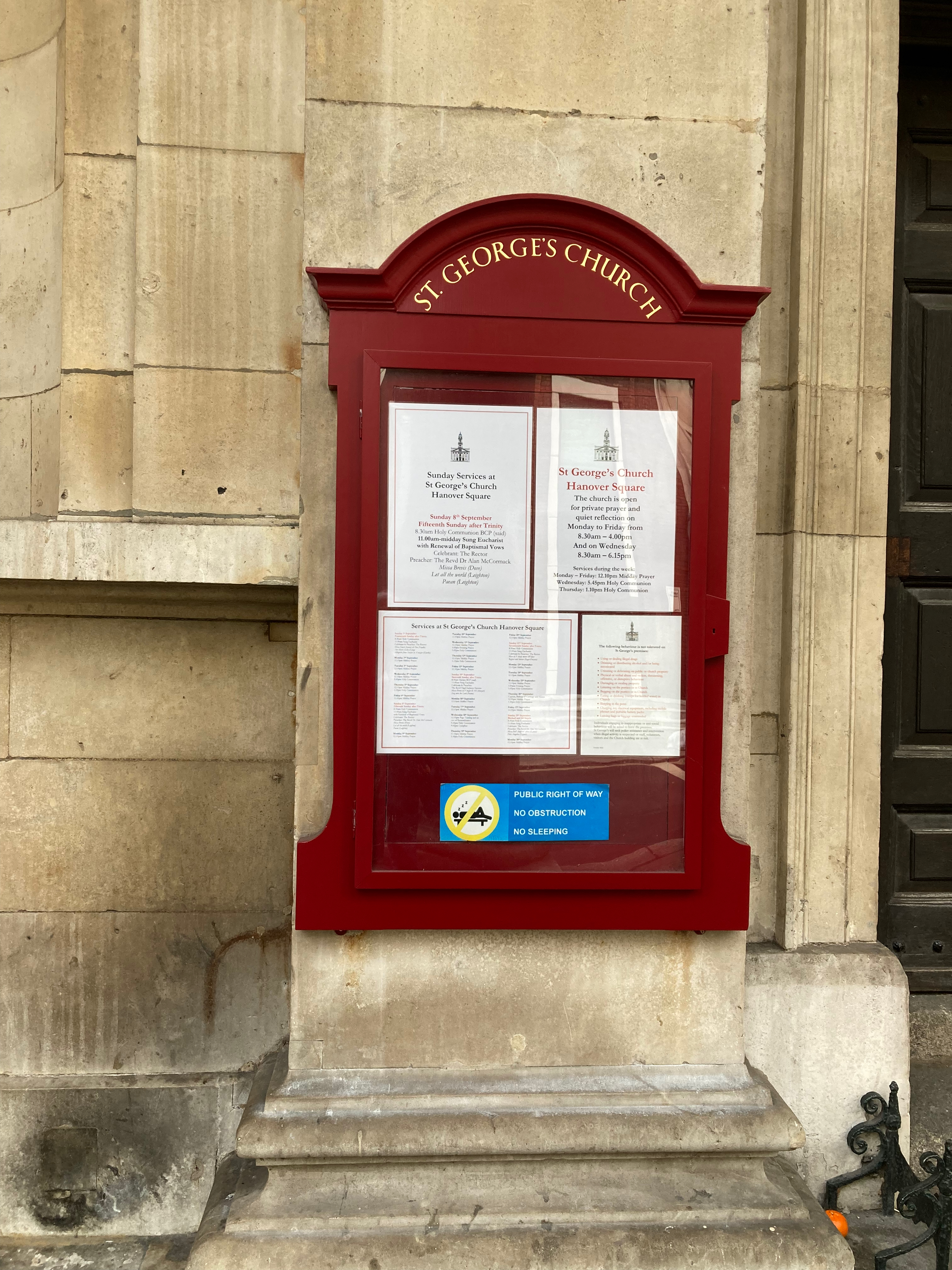
The signboard for St. George’s Hanover Square lists services, extensive opening hours, and rules such as no drugs in the church and no sleeping on pews.

Wealthy Mayfair

Hanover Square is in Mayfair. In Austen’s England, many wealthy people had large houses in Mayfair or surrounding areas. In Sense and Sensibility, the Palmers live in Hanover Square, while the Middletons, Mrs. Ferrars, and Willoughby live nearby in Mayfair. Mrs. Jennings and John and Fanny Dashwood live in Marylebone, an area just north of Mayfair. It developed when Mayfair could no longer accommodate all those who wanted fashionable, elegant housing. (Source: The Annotated Sense and Sensibility, David Shapard.)

St. George’s is the parish church of Mayfair, where the wealthy worshiped. In 1711, Parliament had passed an Act for the building of fifty new churches in and around London. The wealthy of Mayfair petitioned for a church, which was completed in 1725. The patron saint of the church is St. George, a Christian martyr of the third century who is also the patron saint of England.

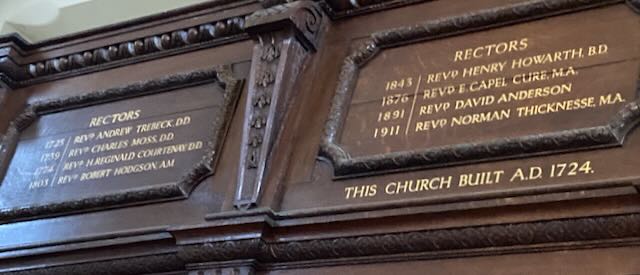
Rectors of St. George’s Hanover Square during Austen’s time and thereafter. Some held other influential church positions as well.

The parish was large, with a vestry of 101 vestrymen. These included 7 dukes, 14 earls, 7 barons, and 26 other titled people. A vestry, led by the church’s rector and churchwardens, decides matters relating to the church and the secular parish. (Mr. Knightley, Mr. Weston, Mr. Cole, and Mr. Cox are apparently on the vestry for their parish, as they are “busy over parish business” in Emma.) The St. George’s, Hanover Square vestry dealt with local issues including street lighting, refuse disposal, nightwatchmen, and a workhouse for the poor.

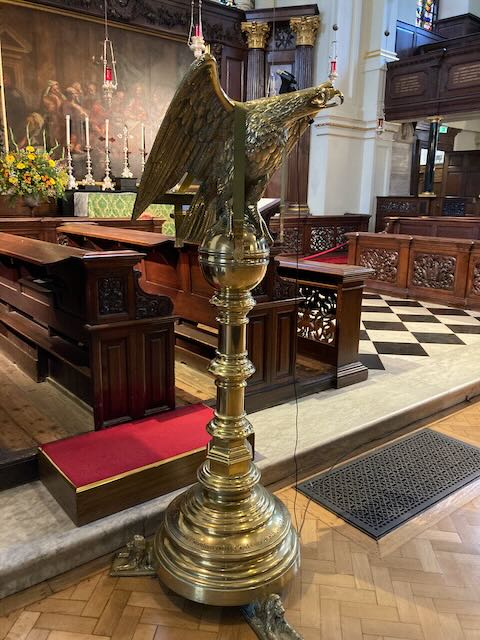
St. George’s Hanover Square eagle lectern. Many churches of Austen’s time had lecterns similar to this, where the Bible was read to the congregation. (The eagle symbolized the Word of God because supposedly it could fly directly into the sun without closing its eyes, so it was like the Bible, leading people to God with eyes open. Eagles’ wings also symbolized carrying the gospel to the ends of the earth.)
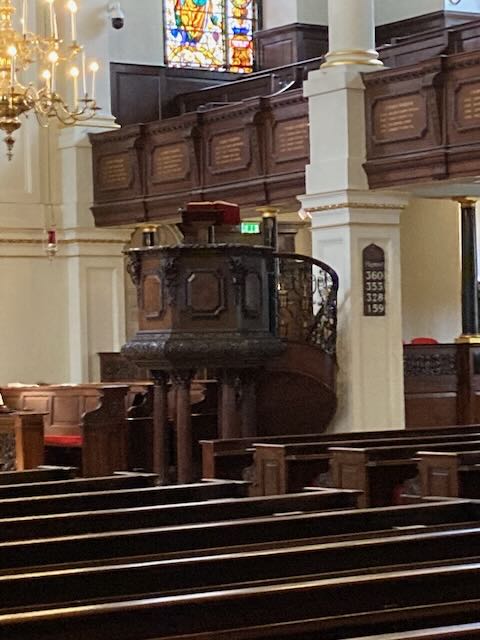
Pulpit of St. George’s, Hanover Square

Rich and Poor

While the wealthy owned mansions in the area, most spent only the winter in London, passing the rest of the year on their country estates. The back alleys behind the mansions teemed with poverty and misery year-round. In the early 1800s, the Evangelical movement began to awaken the church to the needs of the poor. St. George’s established a parish school for poor children in 1804, supported by public subscriptions. Later in the century, the church initiated and supported extensive projects to help the working classes of the area.

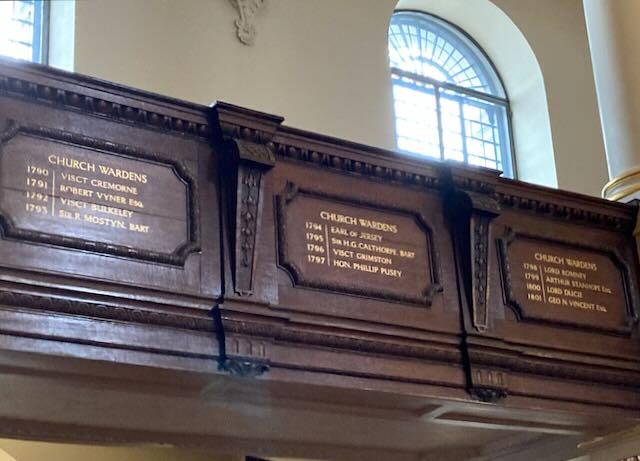
But the wealthy ran the church in Austen’s time. Around the gallery (balcony) are listed the churchwardens, year by year. Anglican churches generally have two elected churchwardens, responsible for financial accounts, movable property of the church, keeping order, and other administrative responsibilities. The churchwardens listed on St. George’s galleries for the 1700s and early 1800s sound impressive: Viscounts, Earls, Lords, Sirs, Honorables, and Esquires.

St. George’s Hanover Square balcony listing early churchwardens. Many were titled men.

Music

The composer George Friderick Handel lived about a four minute walk from the church. He helped choose the organ and organist for the new church. He had a pew there and worshiped at St. George’s until he died. He wrote the Messiah in his house nearby on Brook Street, which is now a museum.

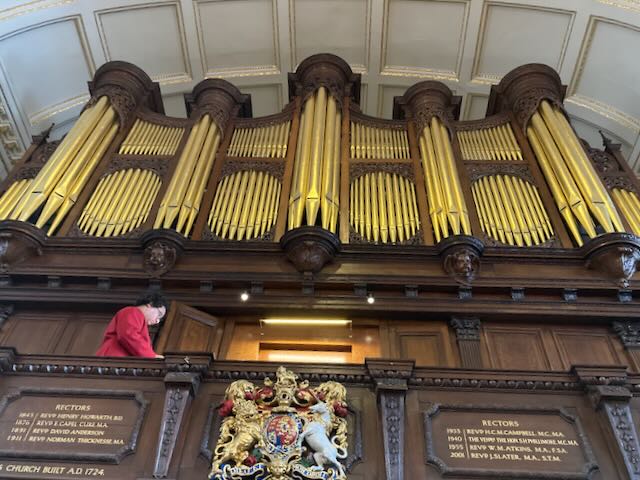
St. George’s Hanover Square organ pipes; a new organ was installed in 1972. The original organ had 1514 pipes and three manuals (keyboards for the hands). It cost £500 in 1725.

Weddings

Since it was at the heart of the wealthy district, St. George’s, Hanover Square was the popular place for weddings of the wealthy and influential. In 1816, the church hosted 1,063 weddings! Famous people including Percy Bysshe Shelley, Benjamin Disraeli, George Eliot (Mary Lewes), and Theodore Roosevelt were married at St. George’s. Mary Crawford was likely staying near there with her wealthy London friends, and she may have attended church there. So it was the first place she thought of for her own and her brother’s weddings. It is still a popular venue for weddings, though not as much so as in Austen’s time.

On Thursday, we’ll look at the other two real churches mentioned in Mansfield Park, the two most famous churches in England. Do you know which ones they are? We’ll also consider which London church Lydia and Wickham married in!

All images above ©Brenda S. Cox, 2025.

Churches mentioned by name in Jane Austen’s novels and letters

Garrison Chapel

St. Swithin’s, Walcot and other churches in Northanger Abbey

London Churches in Austen’s Novels

St. George’s, Hanover Square

St. Paul’s, Covent Garden: Actors’ Church

Austen Family Churches

Steventon

Chawton

Deane

Hamstall Ridware and Austen’s First Cousin, Edward Cooper

Adlestrop and the Leigh Family

Stoneleigh Abbey Chapel and Mansfield Park

Great Bookham and Austen’s Godfather, Rev. Samuel Cooke

Ashe and the Lefroy Family

Read Full Post »

Inquiring readers,

Earlier this year, I met author Sarah Emsley online, after she made an observation about something I’d written on Jane Austen’s World blog: she then revealed that she visited this site often. I was thrilled, and during our ensuing online discussions I agreed to write an article for her “Summer Party for Sense and Sensibility.” My article, published August 2nd, is entitled “Mrs. Dashwood’s Journey of Growth in Sense and Sensibility.

Knowing that so much has been researched, discussed and written about Austen’s first published novel, I honed in on one of her lesser characters, Mrs. Dashwood, who is well known by Austen’s readers. She plays a pivotal role, but remains largely a side character to her two eldest daughters, She is not written as a one-dimensional character. Nevertheless, she practically disappears from the novel’s plot in the last third of the novel, until events necessitate her return to help move the plot to its conclusion.

Image copyright Sarah Emsley

A Summer Party for Sense an Sensibility can be found at this link. Guest authors include: Maggie Arnold, Finola Austin, Elaine Bander, Deb Barnum, Sandra Barry, Cheryl Bell, Matthew Berry, Diana Birchall, L. Bao Bui, Kathy Cawsey, Lori Mulligan Davis, Lizzie Dunford, Susan Allen Ford, Paul Gordon, Heidi L.M. Jacobs, Natalie Jenner, Hazel Jones, George Justice, Theresa Kenney, Deborah Knuth Klenck, Shawna Lemay, Emily Midorikawa, Jessica Richard, S.K. Rizzolo, Peter Sabor, Vic Sanborn, Marilyn Smulders, Jacqueline Stevens, Emma Claire Sweeney, Joyce Tarpley, Janet Todd, and Deborah Yaffe, along with two teenagers, Gail and Ria, who are reading S&S for the first time.

New contributions are published every Friday and Tuesday, and will continue through the end of summer. Sarah refreshes the page (see the above link) with each new article, and encourages people to leave comments for the author.

The other series she’s featured in past years can be found on her site. They are:

About Sarah Emsley 

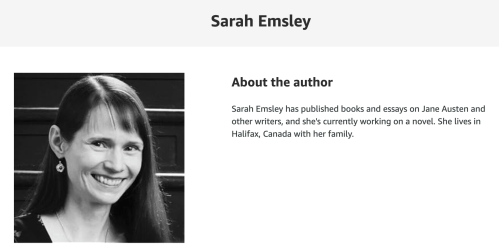
Screenshot from Ms.Elmsley’s page on Amazon.com

Sarah’s request: Please share the tour with others. Better yet, she’d love for you to write comments to the various contributors. Enjoy!

Read Full Post »

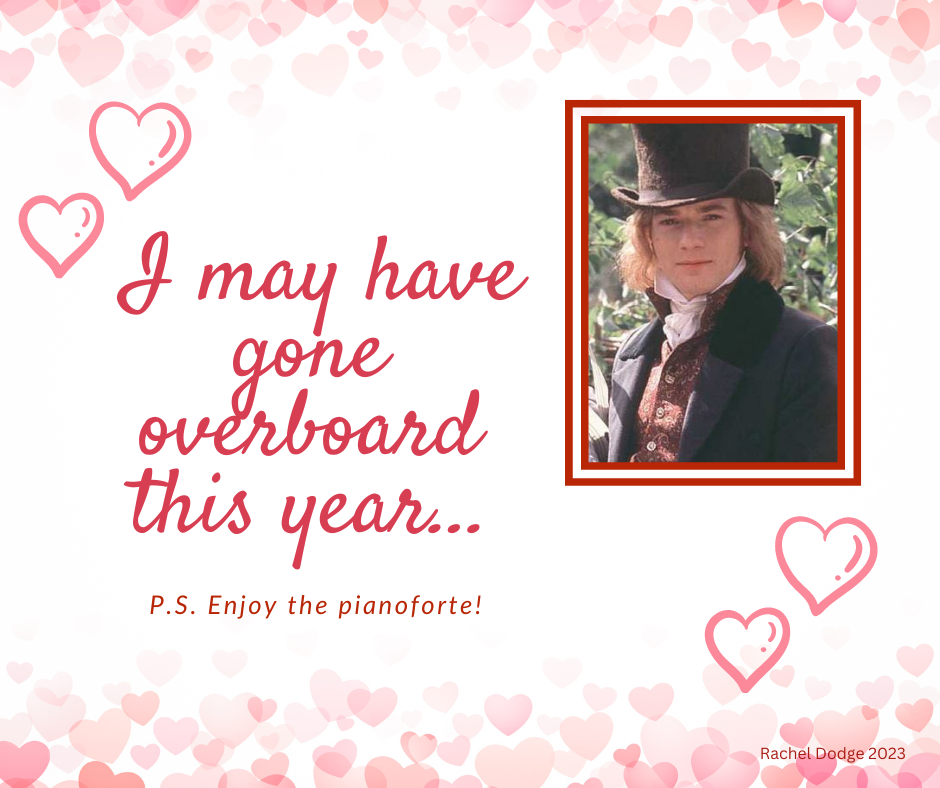
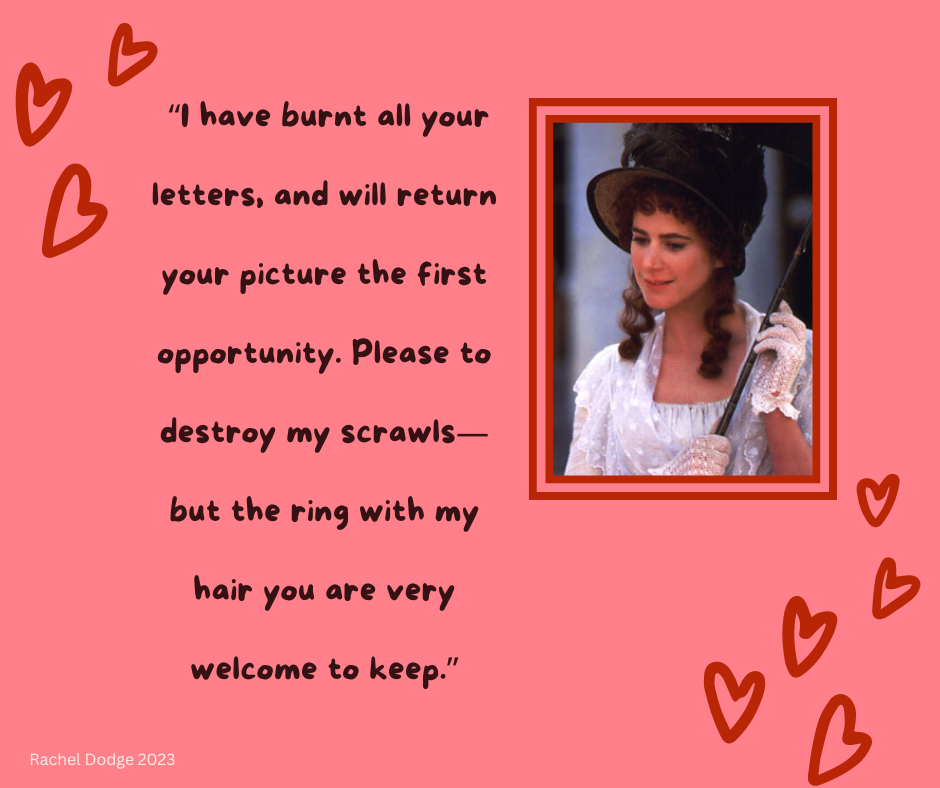
Happy Valentine’s Day, JAW friends! Are you sending cards this year or planning something special? I found it interesting to read about Valentine’s Day during the Regency Era and found several histories of the holiday online. A short overview from The Jane Austen Centre proved intriguing.

As I thought about the kinds of Valentine’s Day cards and letters Jane Austen’s characters might have sent to one another, I had a few creative ideas. The following is the fruit of an hour spent laughing over what some of Austen’s most famous (and silly) characters might say if they sent out Valentine’s Day cards.

Enjoy!

True Romantics

And finally, a few Jane Austen-themed Valentine’s Day graphics that you might like to share with a loved one! After all, she did write some of the most romantic lines in the English language!

A very Happy Valentine’s Day to you, from all of us here at Jane Austen’s World! May your day be filled with love, laughter, friends, sweet treats, and good books. Feel free to share this post with your friends and loved ones!


RACHEL DODGE teaches college English classes, gives talks at libraries, teas, and book clubs, and writes for Jane Austen’s World blog. She is the bestselling author of The Little Women DevotionalThe Anne of Green Gables Devotional and Praying with Jane: 31 Days Through the Prayers of Jane Austen. Now Available: The Secret Garden Devotional! You can visit Rachel online at www.RachelDodge.com.

Read Full Post »

by Brenda S. Cox

“I am never too busy to think of S&S. I can no more forget it, than a mother can forget her sucking child; & I am much obliged to you for your enquiries.”—Jane Austen, letter to Cassandra Austen, April 25, 1811, quoted in AGM brochure.

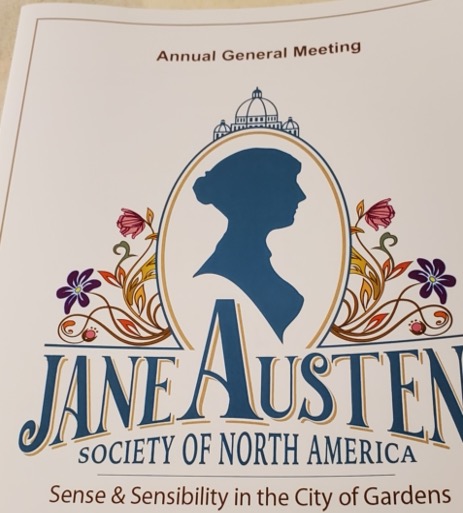
On this day, Oct. 30, 211 years ago (1811), Jane Austen’s first novel was published, Sense and Sensibility! A few weeks ago, the Jane Austen Society of North America (JASNA) met to discuss and celebrate “Sense and Sensibility in the City of Gardens.” The garden city of Victoria, British Columbia, Canada, hosted this 2022 AGM.

Lovely logo for the 2022 JASNA AGM, Sense and Sensibility in the City of Gardens (Victoria, Canada)

Getting to Victoria was challenging for those of us on the east coast, but it was rewarding. The city is on an enchanting island on the west coast of Canada. Those who came early or stayed late were able to visit famous Butchart Gardens, a nearby castle, or other local sights. Personally, I chose to go whale watching, which was a delight. We watched a pod of orcas and saw a humpback whale waving his front flippers back and forth at us!

During the conference itself I got to choose between many great options. The schedule overflowed with fascinating talks, fun workshops, and great events. Of course an Emporium offered great books from Jane Austen Books as well as other goodies from Jane Austen’s Regency World and regional JASNA chapters. And I found many wonderful “kindred spirits” to talk with between events.

Plenaries: Cowper, Sin, and Duels

Each speaker showed us Sense and Sensibility through a unique lens. The first plenary speaker,  Dr. Emma Clery, spoke on “‘Our Garden is Putting in Order’: The Place of William Cowper in Jane Austen’s Thought-World.” Having studied Cowper extensively for my own book, I was intrigued by Clery’s ideas on Cowper’s influences in Sense and Sensibility. She said the Dashwoods were expelled from the “garden” of Norland, as Jane Austen was expelled from her “garden” at Steventon. This “paradise” is regained at Delaford, which is described in terms of garden walls and fruit trees. People in Austen’s works are like plants, needing the right conditions to grow. I want to explore the many references to trees, timber, and woods that Clery said are found in S&S.

The most controversial talk of the weekend was Robert Morrison’s “‘Deeper in a Life of Sin’: The Regency Romance of Sense and Sensibility.Dr. Morrison, author of The Regency Years, showed the bad sides of all the men in S&S, claiming that none were real heroes. He also suggested that the first Eliza’s baby might have been Brandon’s, and that Marianne might have been losing Willoughby’s baby when she was so ill at Cleveland. He got a lot of pushback on these ideas; we can find potential evidence both for and against his suggestions. But his talk did start some great discussions through the rest of the weekend!

Finally, during Sunday brunch, we heard all about “The Many Duels of Sense and Sensibility” from Susannah Fullerton, author of Jane Austen & Crime. Fullerton told us that dueling at this time was not legal, but was rarely prosecuted. In this “Age of Politeness,” looking too closely at a man or brushing against him could result in a duel. She went on to describe the duels in S&S which were fought with words. She sees duels between John and Fanny Dashwood (Fanny wins), Fanny and Elinor’s mother (Fanny wins), Elinor and Lucy (goes back and forth), and more. From this perspective, as a novel of cutting and thrusting, Fullerton challenged us to look at the references to needles, pins, scissors, and knives in S&S, as well as “cut” and “sharp.”

Activities and Options

Outside of the plenaries, we had many great activities to choose from: workshops (including, as always, lots of dancing), special interest sessions, an improvised play, and great breakout sessions. Breakouts focused on a wide range of topics, including the arts, Austen in Spanish, specific characters in S&S, military service in the East India Company, information literacy, landscapes, a “playlet” dramatizing Lucy Steele’s tactics, and much more. Articles based on many of these are likely to appear in the next editions of Persuasions and Persuasions On-Line, so be on the lookout!

Breakout Sessions on Religious Themes

Besides religious echoes in the three main talks, three of the breakout sessions focused on one of my interests, the religious aspects of the novel. Laura Dabundo, author of Jane Austen: A Companion, shared about “Jane Austen’s Ode to Duty: Morality and Conscience in Sense and Sensibility.” Comparing S&S to Wordsworth’s “Ode to Duty,” Dabundo showed that “duty is manifest in one’s principled obligations to family, friends, church, and nation, personally and in community.” 

Roger E. Moore, author of Jane Austen and the Reformation, asked whether S&S might be “Jane Austen’s Most Religious Novel.” He examined the idea of religious enthusiasm, overly emotional reactions to religion, feared in Austen’s day. Many of Marianne’s thoughts, feelings, and actions fit with this religious enthusiasm. So it is possible Austen was showing the pitfalls of that contemporary concern.

I (Brenda S. Cox) also had the privilege of sharing my thoughts about “Faith Words in Sense and Sensibility: A Story of Selfishness and Self-Denial.”  I explored themes of vices and virtues in the novel. Austen, rather than preaching like many of her contemporaries, chose instead to use examples to encourage moral behavior. Elinor’s selfless behavior throughout, and Marianne’s repentance late in the novel, give strong examples to follow. Austen used “faith words” that had strong religious connotations in her time to reinforce her messages.

A Few of My AGM Highlights, in Pictures

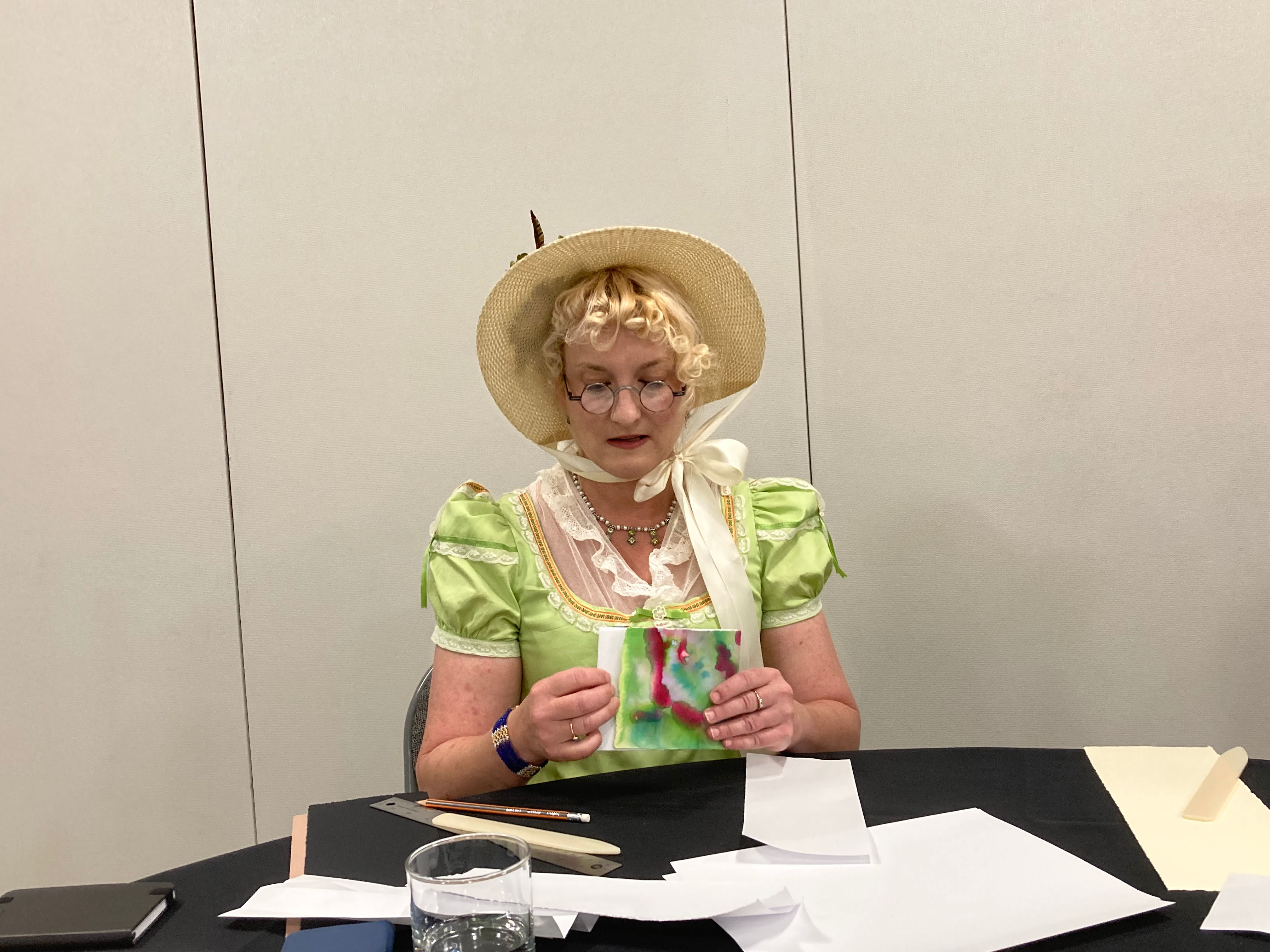
Bookbinding workshop: Richelle Funk taught us some basic bookbinding skills, and we made lovely little notebooks; I used mine to take notes during the conference. Here, Baronda Bradley, in one of her gorgeous outfits, prepares her booklet for binding.
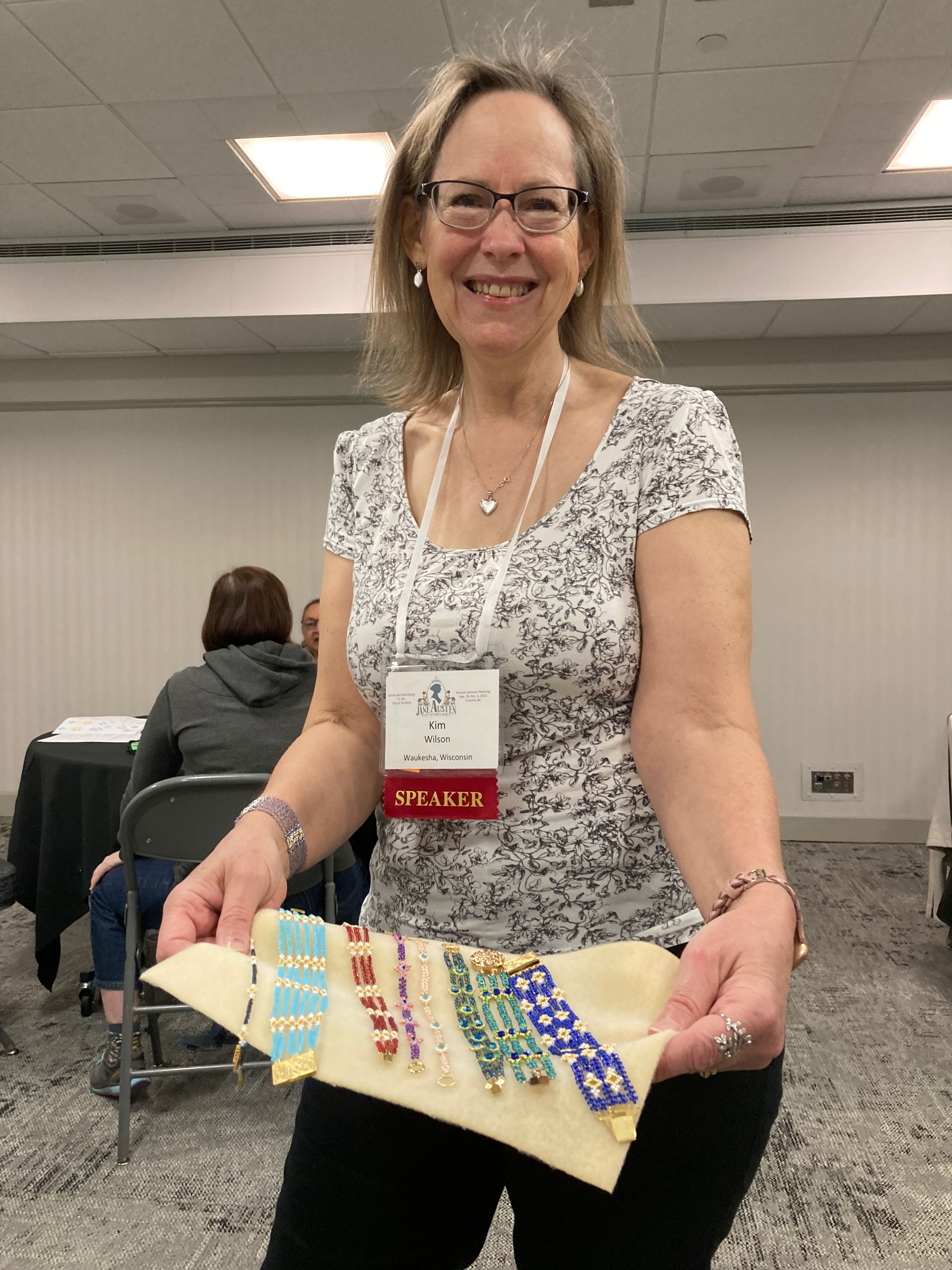
Beading with Jane Austen Workshop: Kim Wilson displays a replica of Jane Austen’s bracelet, along with other variations that can be made with her instructions and supplies, soon to be available online; sign up for her newsletter list to be notified. With her instructions and materials, I was able to start a lovely single-strand bracelet, and finish it as soon as I got home.

In a special interest session, Kristen Miller Zohn told us about “Gender and Decorative Arts in Austen’s Novels.” She explored how decorative arts, interiors, and clothing presented in Austen’s novels, particularly Northanger Abbey, speak to the unique roles of women and men in Austen’s era.
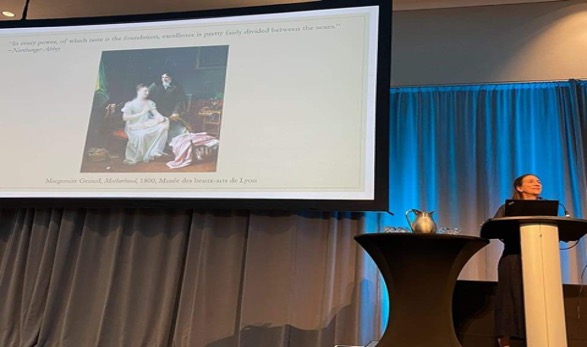
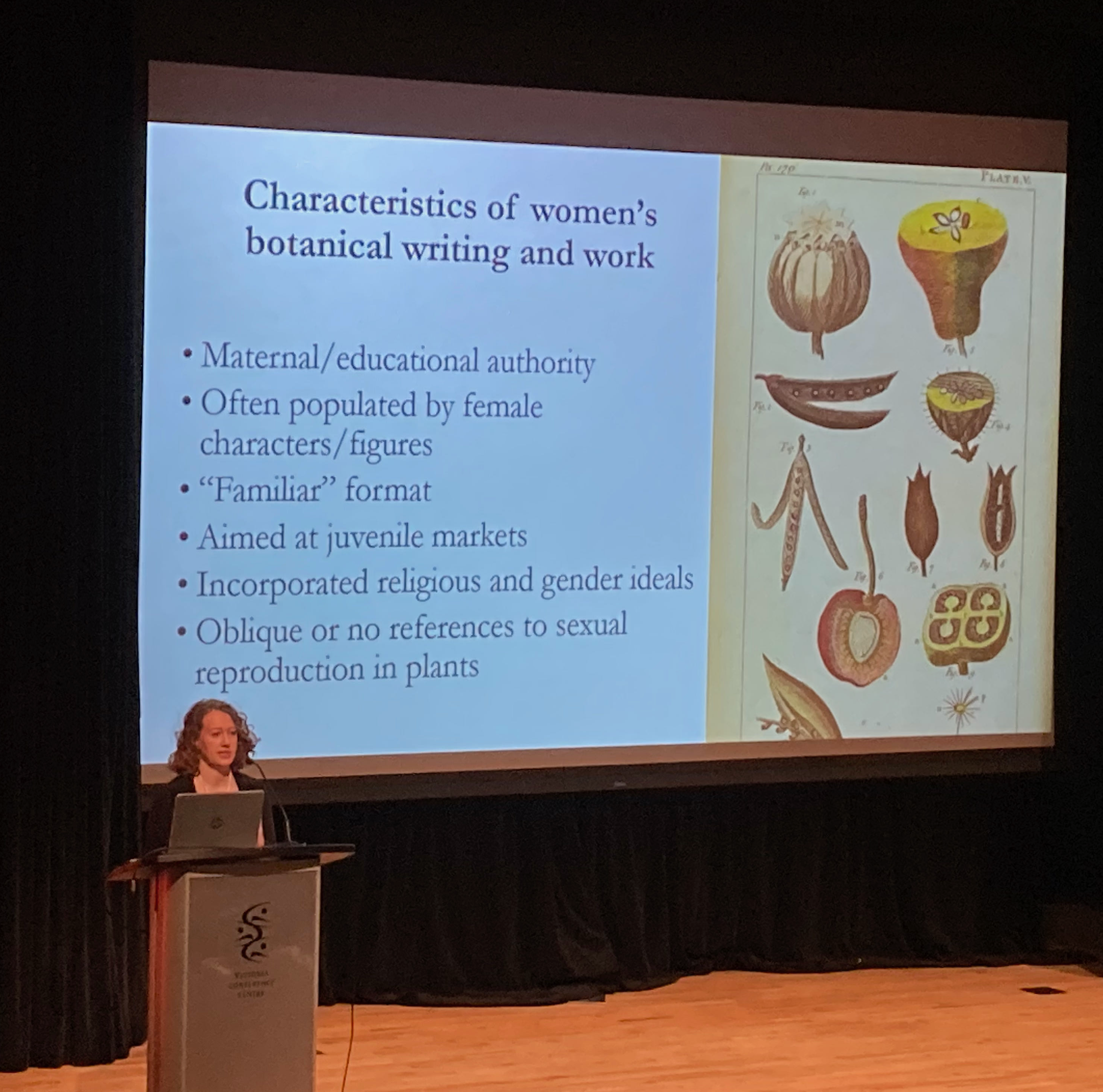
Cecily Van Cleave, a historical fiction writer, led another special interest session on “Beyond the Garden Wall: Priscilla Wakefield, Women in Botany, and the Intersection of Art and Science during the Austen Era.” We learned that women wrote science guides in this time, intended to help young ladies replace frivolous pursuits with more serious, intellectual hobbies.
Donna Fletcher Crow, dressed in a replica of Austen’s costume in the Byrne portrait, showed us maps and scenes of “Jane Austen in London with the Dashwoods.” She also explained the significance of Austen’s choices for locations. Listeners, though, seemed to be most fascinated by her mention of pencils as cutting-edge technology of the time, with graphite as a precious English product.
The Banquet and Promenade were a lovely time for many to dress up and show off their outfits. Kristen Miller Zohn and Jennifer Swenson, coordinators of the 2021 Chicago AGM, at the banquet.

For many of us, the Ball is always a joy and delight. Most people dressed in lovely costumes, like those in the above photos of Renata Dennis (head of the diversity committee) and myself, Jeanne Talbot, and Baronda Bradley (whose bustle held a bouquet of fresh flowers) with her husband Eric Fladager. We all danced the night away.

Next year, I hope you will join us at the 2023 AGM in Denver for “Pride & Prejudice: A Rocky Romance.”

All photos © Brenda S. Cox, 2022.

Brenda S. Cox, author of the new book, Fashionable Goodness: Christianity in Jane Austen’s England, writes for Jane Austen’s World and for Faith, Science, Joy, and Jane Austen. You can also visit her on Facebook.


Read Full Post »

Older Posts »