Feeds:
Posts
Comments

Reviewed by Brenda S. Cox

“I have seen nobody in London yet with such a long chin as Dr Syntax” (Jane Austen, March 2, 1814).

I just finished reading, cover to cover, a brand-new book which is over 200 years old. The Tour of Doctor Syntax in Search of the Picturesque, by William Combe, is a classic which Jane Austen herself enjoyed. But it’s out in a new edition, with wonderful illustrations, explanations, and comments.

A fun new annotated version of The Tour of Doctor Syntax, including parallels with Jane Austen’s novels!

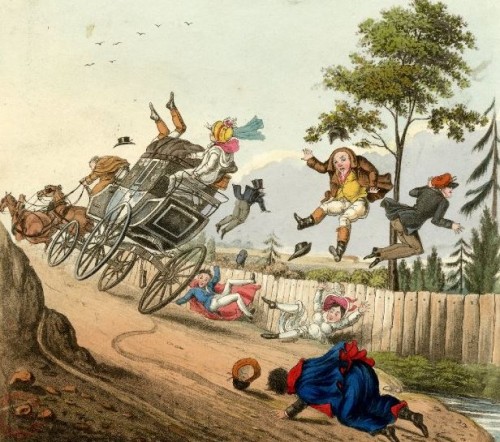
The story in verse was first published from 1809-1811 as a series in Ackermann’s Poetical Magazine. Ackermann had a series of prints by the great caricaturist Thomas Rowlandson. They featured a country clergyman with a long pointed chin and a tall white wig traveling through the countryside. Ackermann gave Combe the illustrations for each issue of the magazine, and Combe wrote a section of the story to go with them. He didn’t know ahead of time what the pictures would be for the next issue, but somehow he came up with a coherent story. One interesting facet is that Rowlandson apparently intended to satirize the clergy, but Combe made Syntax into a good, learned man, a little silly, but lovable.

A book version came out in 1812. Dr. Syntax was wildly popular and stayed in print, with multiple printings and editions, well into the 1800s.

This new version of The Tour of Doctor Syntax was edited and annotated by an advanced high school class and their professor, Dr. Ben Wiebracht. Ben actually discovered Dr. Syntax through one of my posts right here at Jane Austen’s World. Recognizing its potential for his class on “Jane Austen and Her World,” he asked Vic Sanborn, owner and primary writer of this website, and myself, to share with his class. Vic owns some lovely Rowlandson prints. We both loved connecting with such bright and interested students, who asked knowledgeable questions.

The Book

They’ve done a brilliant job with the book. It starts with a biography of William Combe and the history of the book itself. Combe’s challenges as a writer in Austen’s age were fascinating to me, as a writer myself. A clear introduction explains “the picturesque,” which is mentioned in Austen’s novels. Parallel to the text are straightforward explanations of difficult terms and phrases. That makes them easy to quickly reference. A glossary in the back gives terms previously defined.

The best part, for me, are comments pointing out parallels with Jane Austen’s work. I can’t even begin to list these, but there are many great insights. Some are about the clergy in Austen’s work, since Syntax is an underpaid country curate like Charles Hayter of Persuasion. Many comments have to do with the “picturesque,” “improvement” and country estates ranging from Sotherton to Pemberley. Others relate to the class system, Gothic novels, and other topics.

The full text of the poem/story is opposite explanations, comments, and illustrations, making them easy to access. The Tour of Doctor Syntax, 2024.
“Doctor Syntax Tumbling into the Lake,” by Thomas Rowlandson. One of the lovely full-page illustrations for this new version of The Tour of Doctor Syntax.
Victorian illustration, 1838, of the same scene, by Alfred Crowquill. The Tour of Doctor Syntax includes both the Rowlandson and Crowquill illustrations.

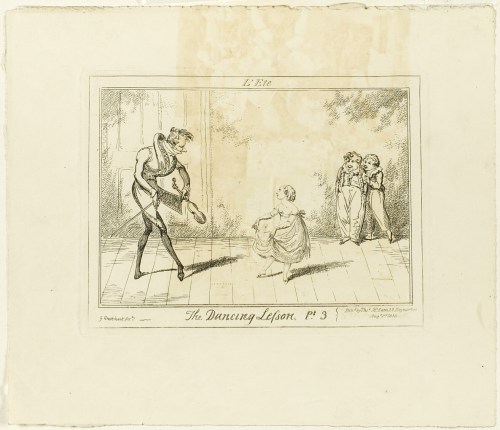
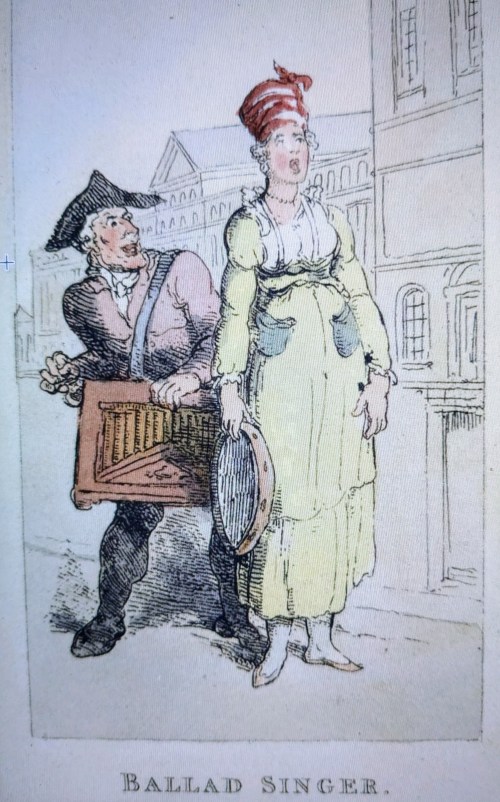
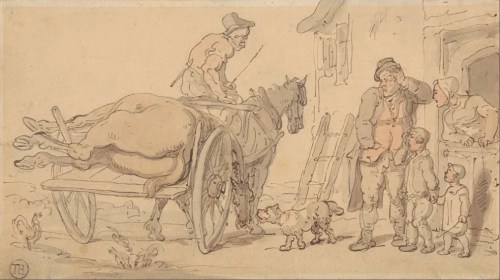
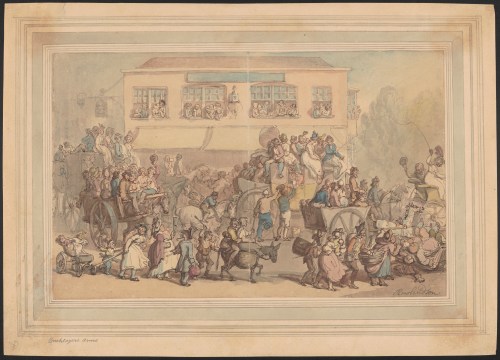
I also loved the illustrations. The editors chose the best versions they could find of each of the full-page, hand-colored pictures by Rowlandson that were the basis of the book. They added illustrations from a later Victorian version, as well as other entertaining and illuminating cartoons and pictures from the time.

Interview with the Editor

I’ll let Dr. Wiebracht himself tell you more about how this book came about.

Ben, please tell me about your class that produced this book.

The class is called “Jane Austen and Her World” and it’s designed for advanced juniors and seniors. The goal is to see Austen’s novels not as sealed-off masterpieces, floating in a historical vacuum, but as windows into her world. Most class days, our Austen reading is accompanied by shorter texts designed to create a sense of context and show how Austen was in conversation with her contemporaries. For instance:

  • We pair Austen’s account of Bath in Northanger Abbey with a number of late 18th-c. satires of Bath, 18th-c. dance music, and illustrations of the city by Rowlandson and others.
  • We pair Catherine’s pseudo-Gothic adventures in Vol. II with excerpts from The Monk, The Castle of Otranto, and The Mysteries of Udolpho.
  • We pair the private theatricals in Mansfield Park with a viewing of a performance of Lover’s Vows, as well as specimens of anti-theatrical criticism from the period, including a satire on private theatricals by Jane’s brothers!
  • We pair the discussion of landscape gardening in Mansfield Park with images from Humphry Repton’s famous “red books” showing “before and after” estate grounds.

The idea is to understand Austen in a deeper way by developing the practice of “reading outward.” And we incorporate that principle in our work for the class. Instead of the usual school essays, students work with me to create a critical edition of a neglected text from Austen’s time, with annotations and other resources that draw connections between the text and Austen’s life and work.

The class enrolled 16 students (the maximum). They hailed from all over the country and world: Japan, China, and many different U.S. states. This was my first time teaching the course, though I developed the core ideas in an Austen unit for a previous course. In the future, I will probably teach the course every three years. The book project in particular is a heavy lift, and I’m not capable of it every year!           

How did you end up studying Dr. Syntax along with Jane Austen?

I have to back up a bit here. In the course of an Austen unit for a previous class, students and I had created a critical edition of a long-forgotten 1795 poem called Bath: An Adumbration in Rhyme. We used that book to launch a new series called “Forgotten Contemporaries of Jane Austen.” Its goals are:

  • to recover neglected but valuable texts from Austen’s time, and
  • to trace new connections between Austen and her contemporaries.

As I was preparing my Austen class, I settled on Doctor Syntax (first brought to my attention in JAW by one of your articles!) for three reasons.

  • First, the poem had undeniable literary-historical importance – one of the all-out bestsellers of the Regency. A critical edition, I thought, was long overdue.
  • Second, many of its themes – from the plight of poor clergy to the “picturesque” – were major concerns of Austen’s novels, too.
  • Finally, the poem was simply a really good read. Combe’s verses are light, fun, and at times even touching, and Rowlandson’s accompanying illustrations are some of his best work. In every way, the poem deserved to be revived!

What do you hope readers will gain from the book?

There are a lot of things I hope people take away! One would be a deeper appreciation of just how engaged Austen was in the debates and issues of her day. Sometimes Austen is talked about as something of a provincial writer, sealed off from the wider Regency world, modestly toiling away on her “pictures of domestic life in country villages,” as she once put it. But when we keep in mind just how much of a smash hit Doctor Syntax was, and when we consider the many, many parallels between this work and Austen’s novels, which our edition lays out in detail, then we see Austen differently. She now starts looking like a very savvy writer, who understood what the major issues of the day were, what readers were interested in. To be sure, she stuck to her convictions and drew on her own experience and observations, but she did so in a way designed to appeal to a broad, national readership.

I’m also excited for people to meet this poet William Combe, who had one of the most interesting lives of any Regency writer. He was a remarkable literary talent. He doesn’t fit the mold of the “Romantic poet,” which is one reason he might be overlooked. Instead he offers a light, generous humor that shows us that Regency poetry wasn’t all about Byronic heroes and Wordsworthian dreamers. There was a sociable, comic side to the poetry of the period. Combe represents that comic side particularly well.

Finally, I would love it if this book inspired other teacher-scholars to undertake collaborative research with their students – especially at the upper-high-school level. There are so many benefits. For students, it’s a more rewarding and enjoyable approach to literary scholarship than the usual school essays. For teachers, it’s a welcome relief from the role of “judge/grader” – instead you get to teach through co-creation, as is done in most trades through the apprenticeship model. And for the reading public, there’s the benefit of the work produced! I am convinced that student involvement, with the right guidance and leadership from the teacher, leads to better scholarship. It certainly has in my experience.

By the way, while we don’t offer a Kindle edition, we do offer a free etext in the form of a downloadable PDF on our website. We decided from the beginning to be an open-access publisher, in part to make it easier for teachers with low-income students to assign our books. The best way to use the e-text is to enable the 2-page view in your pdf reader – that way the text and notes are neatly parallel, as in the physical book. The etext can also be used as a supplement to the physical book – for instance if you want to do a text search for a particular word.

How did you and the students share the work on this project?

Each student was responsible to annotate one of the poem’s 26 cantos, about ten pages of text. I did the other ten cantos myself. Students also had one or more additional responsibilities, which included:

  • Researching aspects of Combe’s life
  • Researching Gilpin and the picturesque
  • Compiling chronologies
  • Drawing maps
  • Designing the cover
  • Editing the text according to scholarly standards

My job was twofold. First, I offered regular feedback on work in progress, helping students learn how to navigate library databases, write good, concise annotations, etc. I also did the parts of the book that were a bit beyond the reach of high-school students, even excellent ones, which all the students who worked on this book were! For example, I wrote most of the introductory materials, as well as some of the trickier annotations. I helped with the final prose, too, to ensure continuity of voice. That doesn’t mean, though, that the best stuff is mine. Many of the best, most insightful annotations in the book are entirely by students, and every one of my students has some of their own writing, their own voice in the final book – which was a major priority for me. And just as students benefited from my feedback, I benefitted from theirs. They fully earned their editor credits in the final book.

Final Thoughts

Dr. Wiebracht and his class did an amazing job. I highly recommend this book, which is available on Amazon and from Jane Austen Books at a discount. I have not yet read the earlier book in the series, Bath: An Adumbration in Rhyme, but now I want to get hold of that and read it, too!

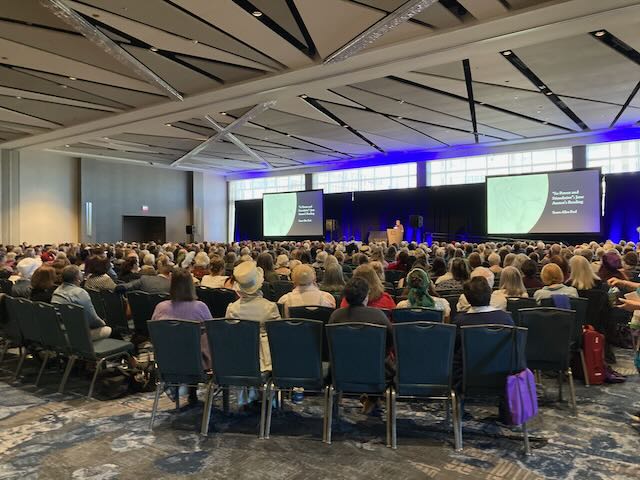
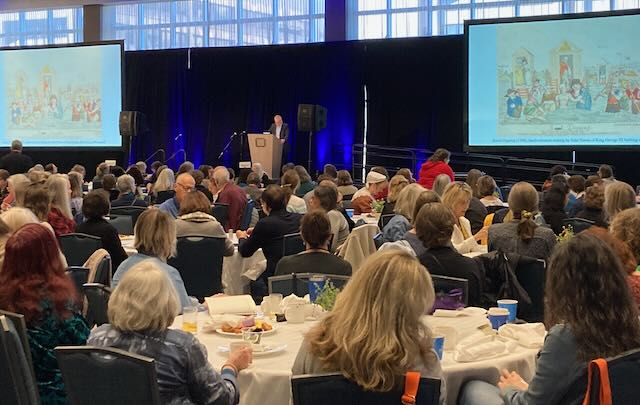
If you’re at the JASNA AGM this month, you can hear Ben and some of his students speak, and get them to sign your copy of the book. (Unfortunately I’m speaking in a slot opposite theirs, as well as other excellent speakers at that time, so you’ll have to choose! It’s always challenging.) Their talk is also available in the virtual version of the AGM.

The price is very reasonable for a book with color illustrations. I hope you’ll get a chance to enjoy and learn from this lovely book!

As we enjoy the crisp air of autumn, let’s take a tour of October in Jane Austen’s World! We’ll look at her life and times through the lens of her letters, novels, and personal interests and see what we can learn about Regency life in the month of October.

If you’re just jumping on the bus, you can find previous articles in the “A Year in Jane Austen’s World” series here: JanuaryFebruaryMarchAprilMayJuneJuly, August, and September.

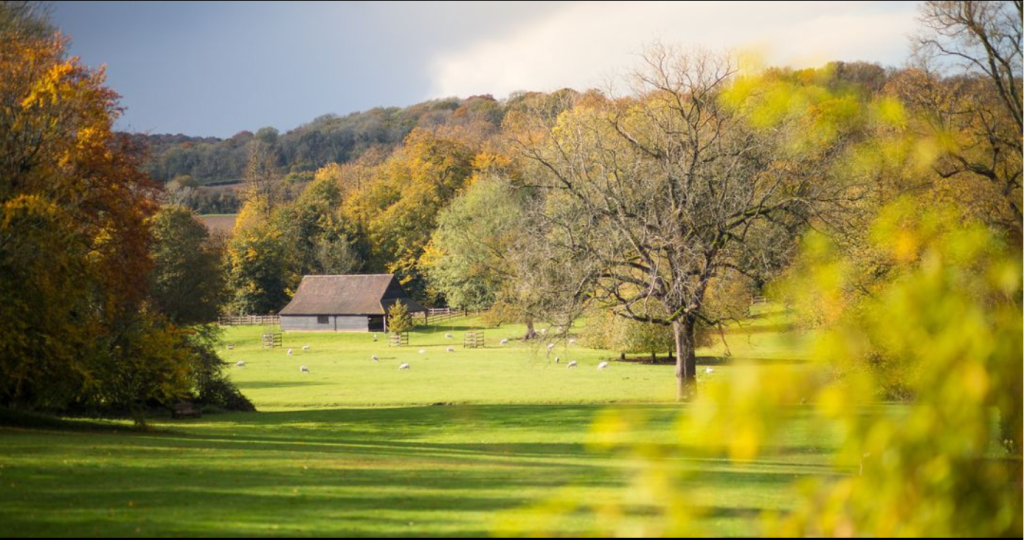
First off, let’s see what Jane Austen’s beautiful Hampshire countryside looks like in October. Big changes occur as the month continues, which means the lush green of summer turns to the yellow, gold, and ruby colors of fall. Here is a stunning photo of Chawton House Gardens:

Chawton House in October: Photo @ChawtonHouse.

October in Hampshire

October in Jane Austen’s Hampshire brings a total change of atmosphere. The leaves turn, and the weather cools and crisps, just like the apples in the orchard at Chawton House. As is our tradition, I’ve collected a few snippets from Austen’s letters regarding the season change, weather, and gardens/orchards:

24 October 1798 (“Bull & George,” Dartford): “My day’s journey has been pleasanter in every respect than I expected. I have been very little crowded and by no means unhappy. Your watchfulness with regard to the weather on our accounts was very kind and very effectual. We had one heavy shower on leaving Sittingbourne, but afterwards the clouds cleared away, and we had a very bright chrystal afternoon.”

27 October 1798 (Steventon): “I understand that there are some grapes left, but I believe not many; they must be gathered as soon as possible, or this rain will entirely rot them.”

24 October 1808 (Castle Square): “We have just had two hampers of apples from Kintbury, and the floor of our little garret is almost covered.”

11 October 1813 (Godmersham Park): “We had thunder and lightning here on Thursday morning, between five and seven; no very bad thunder, but a great deal of lightning. It has given the commencement of a season of wind and rain, and perhaps for the next six weeks we shall not have two dry days together.”

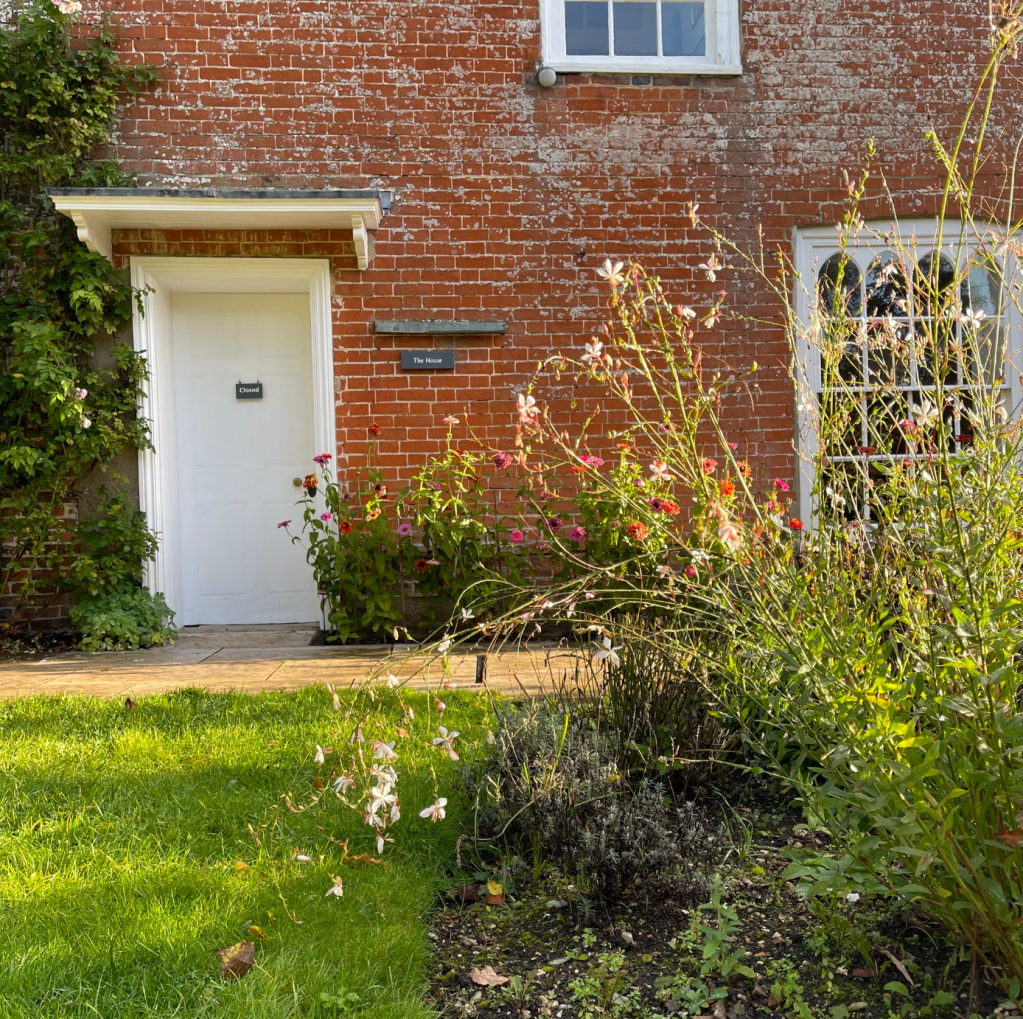
Such detailed descriptions of October! Here now is a current glimpse of Jane Austen’s House Museum and its gardens in October:

Jane Austen’s House in October, Photo: @JaneAustensHouse.

October in Jane Austen’s Letters: Jane’s Writing

While there are other October letters to consider, there is one excerpt that requires our attention first because it pertains to the safekeeping of Austen’s writing!

24 October 1798 (“Bull and George,” Dartford):

  • “I should have begun my letter soon after our arrival, but for a little adventure which prevented me. After we had been here a quarter of an hour it was discovered that my writing and dressing boxes had been by accident put into a chaise which was just packing off as we came in, and were driven away toward Gravesend in their way to the West Indies. No part of my property could have been such a prize before, for in my writing-box was all my worldly wealth, 7l., and my dear Harry’s deputation. Mr. Nottley immediately despatched a man and horse after the chaise, and in half an hour’s time I had the pleasure of being as rich as ever; they were got about two or three miles off.”

Thank goodness her writing box was found (and any money stowed in it). And what a beautiful description: “all my worldly wealth.” Though money and paperwork are important, one wonders if any of her writing might also have been in that box–a letter, a scene, a phrase. That would be treasure indeed.

Regency Era traveling writing desk.

October in Jane Austen’s Letters: A Great Loss

Now we must turn our main focus to Austen’s letters dating from October 1808. For those of us who take a personal interest in Jane Austen’s life and family, this is the month when Elizabeth Austen, Edward’s darling wife, died (10 October 1808).

Elizabeth Austen nee Bridges (1773-1808) married Edward Austen (Knight) on 27 December 1791, in Goodnestone, Kent, England. They had a large family and were very happily married. She was 35 when she passed and Edward never remarried.

The letters between Jane and Cassandra during that time are particularly tender. Both sisters mourned her death, but as is usual when a family member loses a spouse, they were even more concerned for Edward and his children (Jane’s nieces and nephews). I highly recommend reading the letters in full on your own, but below are several excerpts that share the beautiful manner in which Jane and Cassandra helped to comfort Edward and his children as they grieved the lost of a beloved wife and mother:

13 October (Castle Square):

  • First news of Elizabeth’s death: “My dearest Cassandra,—I have received your letter, and with most melancholy anxiety was it expected, for the sad news reached us last night, but without any particulars. It came in a short letter to Martha from her sister, begun at Steventon and finished in Winchester.”
  • Family Condolences: “We have felt, we do feel, for you all, as you will not need to be told,—for you, for Fanny, for Henry, for Lady Bridges, and for dearest Edward, whose loss and whose sufferings seem to make those of every other person nothing. God be praised that you can say what you do of him: that he has a religious mind to bear him up, and a disposition that will gradually lead him to comfort.”
  • Fanny Knight: “My dear, dear Fanny, I am so thankful that she has you with her! You will be everything to her; you will give her all the consolation that human aid can give. May the Almighty sustain you all, and keep you, my dearest Cassandra, well; but for the present I dare say you are equal to everything.”
  • Update on the boys: “You will know that the poor boys are at Steventon. Perhaps it is best for them, as they will have more means of exercise and amusement there than they could have with us, but I own myself disappointed by the arrangement. I should have loved to have them with me at such a time. I shall write to Edward by this post.”
Patchbox with portrait of Elizabeth Austen, courtesy of Jane Austen’s House.

15 October (Castle Square):

  • Concern for Edward: “Your accounts make us as comfortable as we can expect to be at such a time. Edward’s loss is terrible, and must be felt as such, and these are too early days indeed to think of moderation in grief, either in him or his afflicted daughter, but soon we may hope that our dear Fanny’s sense of duty to that beloved father will rouse her to exertion. For his sake, and as the most acceptable proof of love to the spirit of her departed mother, she will try to be tranquil and resigned. Does she feel you to be a comfort to her, or is she too much overpowered for anything but solitude?”
  • Concern for Lizzy: “Your account of Lizzy is very interesting. Poor child! One must hope the impression will be strong, and yet one’s heart aches for a dejected mind of eight years old.”
  • Mourning clothes for Cassandra: “Your parcel shall set off on Monday, and I hope the shoes will fit; Martha and I both tried them on. I shall send you such of your mourning as I think most likely to be useful, reserving for myself your stockings and half the velvet, in which selfish arrangement I know I am doing what you wish.
  • Mourning clothes for Jane: “I am to be in bombazeen and crape, according to what we are told is universal here, and which agrees with Martha’s previous observation. My mourning, however, will not impoverish me, for by having my velvet pelisse fresh lined and made up, I am sure I shall have no occasion this winter for anything new of that sort. I take my cloak for the lining, and shall send yours on the chance of its doing something of the same for you, though I believe your pelisse is in better repair than mine. One Miss Baker makes my gown and the other my bonnet, which is to be silk covered with crape.”
  • Sisterly Condolences: “That you are forever in our thoughts you will not doubt. I see your mournful party in my mind’s eye under every varying circumstance of the day; and in the evening especially figure to myself its sad gloom: the efforts to talk, the frequent summons to melancholy orders and cares, and poor Edward, restless in misery, going from one room to another, and perhaps not seldom upstairs, to see all that remains of his Elizabeth. Dearest Fanny must now look upon herself as his prime source of comfort, his dearest friend; as the being who is gradually to supply to him, to the extent that is possible, what he has lost. This consideration will elevate and cheer her. Adieu. You cannot write too often, as I said before. We are heartily rejoiced that the poor baby gives you no particular anxiety. Kiss dear Lizzy for us. Tell Fanny that I shall write in a day or two to Miss Sharpe.”
From Beatrice Knight’s article on Regency Mourning. Click HERE to read her article on this topic.

24 October (Castle Square):

  • Edward’s sons arrive: “Edward and George came to us soon after seven on Saturday, very well, but very cold, having by choice travelled on the outside, and with no greatcoat but what Mr. Wise, the coachman, good-naturedly spared them of his, as they sat by his side. They were so much chilled when they arrived, that I was afraid they must have taken cold; but it does not seem at all the case: I never saw them looking better.”
  • Jane’s Affectionate Observations: “They behave extremely well in every respect, showing quite as much feeling as one wishes to see, and on every occasion speaking of their father with the liveliest affection. His letter was read over by each of them yesterday, and with many tears; George sobbed aloud, Edward’s tears do not flow so easily; but as far as I can judge they are both very properly impressed by what has happened. Miss Lloyd, who is a more impartial judge than I can be, is exceedingly pleased with them.”
  • Entertaining the boys: “George is almost a new acquaintance to me, and I find him in a different way as engaging as Edward. We do not want amusement: bilbocatch, at which George is indefatigable, spillikins, paper ships, riddles, conundrums, and cards, with watching the flow and ebb of the river, and now and then a stroll out, keep us well employed; and we mean to avail ourselves of our kind papa’s consideration, by not returning to Winchester till quite the evening of Wednesday.”
  • Church on Sunday: “I hope your sorrowing party were at church yesterday, and have no longer that to dread. Martha was kept at home by a cold, but I went with my two nephews, and I saw Edward was much affected by the sermon, which, indeed, I could have supposed purposely addressed to the afflicted, if the text had not naturally come in the course of Dr. Mant’s observations on the Litany: ‘All that are in danger, necessity, or tribulation,’ was the subject of it.”
  • Sunday walk: “The weather did not allow us afterwards to get farther than the quay, where George was very happy as long as we could stay, flying about from one side to the other, and skipping on board a collier immediately.”
  • Sunday evening: “In the evening we had the Psalms and Lessons, and a sermon at home, to which they were very attentive; but you will not expect to hear that they did not return to conundrums the moment it was over… While I write now, George is most industriously making and naming paper ships, at which he afterwards shoots with horse-chestnuts, brought from Steventon on purpose; and Edward equally intent over the ‘Lake of Killarney,’ twisting himself about in one of our great chairs.”
A game of “Spillikins,” image courtesy of the Jane Austen Centre. Read their article for the rules of the game!

25 October (Castle Square) – contained in the same post:

  • Updates on Edward: “All that you say of Edward is truly comfortable; I began to fear that when the bustle of the first week was over, his spirits might for a time be more depressed; and perhaps one must still expect something of the kind.”
  • Adventures to Northam and Hopeful Plans for Netley: “We had a little water-party yesterday; I and my two nephews went from the Itchen Ferry up to Northam, where we landed, looked into the 74, and walked home, and it was so much enjoyed that I had intended to take them to Netley to-day; the tide is just right for our going immediately after moonshine, but I am afraid there will be rain; if we cannot get so far, however, we may perhaps go round from the ferry to the quay. I had not proposed doing more than cross the Itchen yesterday, but it proved so pleasant, and so much to the satisfaction of all, that when we reached the middle of the stream we agreed to be rowed up the river; both the boys rowed great part of the way, and their questions and remarks, as well as their enjoyment, were very amusing; George’s inquiries were endless, and his eagerness in everything reminds me often of his uncle Henry.”
  • Evening Entertainment: “Our evening was equally agreeable in its way: I introduced speculation, and it was so much approved that we hardly knew how to leave off.”
Site of the Itchen ferry in the 18th C.

October in Jane Austen’s Novels

Sense and Sensibility

  • Private Balls and Parties: “When Marianne was recovered, the schemes of amusement at home and abroad, which Sir John had been previously forming, were put into execution. The private balls at the park then began; and parties on the water were made and accomplished as often as a showery October would allow.”
  • Colonel Brandon’s Fateful Letter: “The first news that reached me of her [little Eliza] came in a letter from herself, last October. It was forwarded to me from Delaford, and I received it on the very morning of our intended party to Whitwell; and this was the reason of my leaving Barton so suddenly, which I am sure must at the time have appeared strange to every body, and which I believe gave offence to some. Little did Mr. Willoughby imagine, I suppose, when his looks censured me for incivility in breaking up the party, that I was called away to the relief of one whom he had made poor and miserable; but had he known it, what would it have availed? Would he have been less gay or less happy in the smiles of your sister? No, he had already done that, which no man who can feel for another would do. He had left the girl whose youth and innocence he had seduced, in a situation of the utmost distress, with no creditable home, no help, no friends, ignorant of his address! He had left her, promising to return; he neither returned, nor wrote, nor relieved her.”
Alan Rickman as Colonel Brandon, Sense and Sensibility (1995).

Pride and Prejudice

  • Mr. Collins Writes to Mr. Bennet: Excerpts from letter, from “Hunsford, near Westerham, Kent, 15th October,” read as follows:

    “The disagreement subsisting between yourself and my late honoured father always gave me much uneasiness; and, since I have had the misfortune to lose him, I have frequently wished to heal the breach: but, for some time, I was kept back by my own doubts, fearing lest it might seem disrespectful to his memory for me to be on good terms with anyone with whom it had always pleased him to be at variance… As a clergyman, moreover, I feel it my duty to promote and establish the blessing of peace in all families within the reach of my influence…

    “If you should have no objection to receive me into your house, I propose myself the satisfaction of waiting on you and your family, Monday, November 18th, by four o’clock, and shall probably trespass on your hospitality till the Saturday se’nnight following, which I can do without any inconvenience, as Lady Catherine is far from objecting to my occasional absence on a Sunday, provided that some other clergyman is engaged to do the duty of the day.”
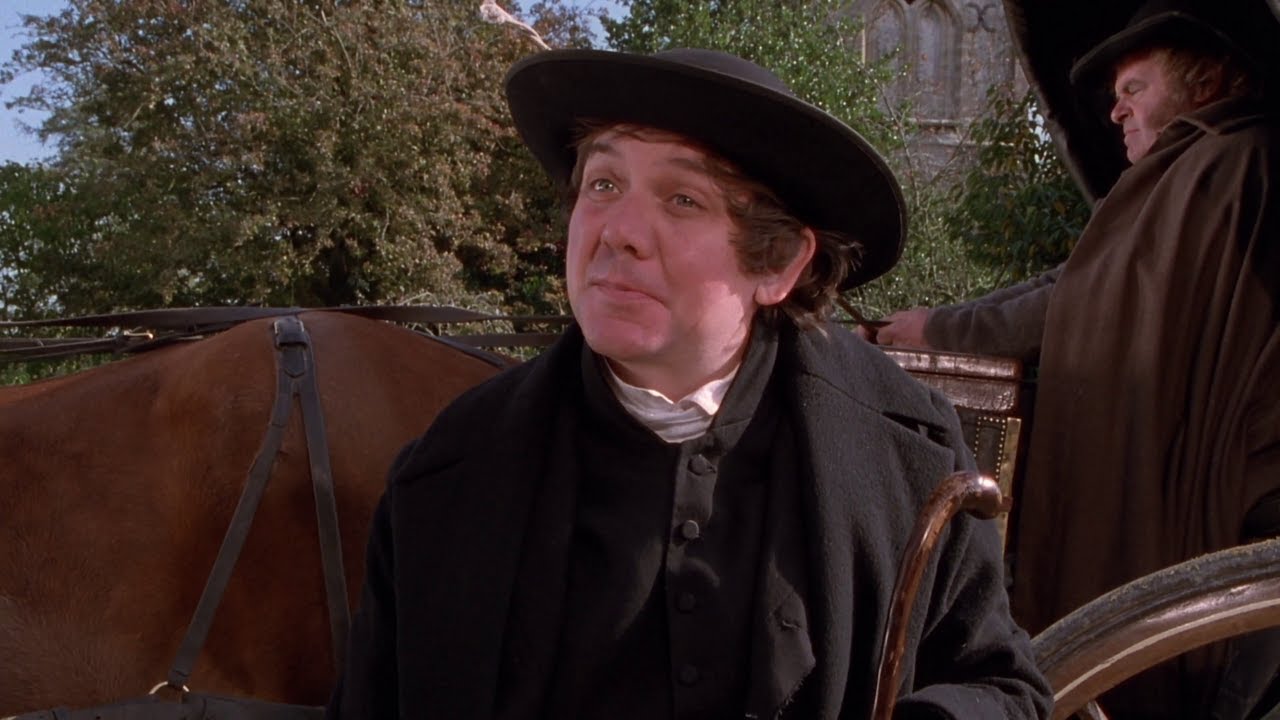
David Bamber as Mr. Collins, Pride and Prejudice 1995.

Mansfield Park

  • Tom Bertram on Hunting: “We have just been trying, by way of doing something, and amusing my mother, just within the last week, to get up a few scenes, a mere trifle. We have had such incessant rains almost since October began, that we have been nearly confined to the house for days together. I have hardly taken out a gun since the 3rd. Tolerable sport the first three days, but there has been no attempting anything since.”
  • Mr. Crawford on Fanny: “You see her every day, and therefore do not notice it; but I assure you she is quite a different creature from what she was in the autumn. She was then merely a quiet, modest, not plain-looking girl, but she is now absolutely pretty. I used to think she had neither complexion nor countenance; but in that soft skin of hers, so frequently tinged with a blush as it was yesterday, there is decided beauty; and from what I observed of her eyes and mouth, I do not despair of their being capable of expression enough when she has anything to express. And then, her air, her manner, her tout ensemble, is so indescribably improved! She must be grown two inches, at least, since October.”
  • Miss Crawford’s Response: “Phoo! phoo! This is only because there were no tall women to compare her with, and because she has got a new gown, and you never saw her so well dressed before. She is just what she was in October, believe me. The truth is, that she was the only girl in company for you to notice, and you must have a somebody.”
Fanny Price refusing Henry Crawford.

Emma

  • Emma Longs for Isabella’s Christmas Visit: “[Emma’s] sister, though comparatively but little removed by matrimony, being settled in London, only sixteen miles off, was much beyond her daily reach; and many a long October and November evening must be struggled through at Hartfield, before Christmas brought the next visit from Isabella and her husband, and their little children, to fill the house, and give her pleasant society again.”
  • Mrs. Weston on Mr. Frank Churchill and Jane Fairfax: “‘You may well be amazed,’ returned Mrs. Weston, still averting her eyes, and talking on with eagerness, that Emma might have time to recover— ‘You may well be amazed. But it is even so. There has been a solemn engagement between them ever since October—formed at Weymouth, and kept a secret from every body. Not a creature knowing it but themselves—neither the Campbells, nor her family, nor his.—It is so wonderful, that though perfectly convinced of the fact, it is yet almost incredible to myself. I can hardly believe it.—I thought I knew him.'”
  • Mr. and Mrs. Weston’s Pain: “Engaged since October,—secretly engaged.—It has hurt me, Emma, very much. It has hurt his father equally. Some part of his conduct we cannot excuse.”
  • Emma and Mr. Knightley get married in October:
    • “Before the end of September, Emma attended Harriet to church, and saw her hand bestowed on Robert Martin…”
    • “The Mr. Churchills were also in town; and they were only waiting for November. The intermediate month was the one fixed on, as far as they dared, by Emma and Mr. Knightley. They had determined that their marriage ought to be concluded while John and Isabella were still at Hartfield, to allow them the fortnight’s absence in a tour to the seaside, which was the plan.”
    • “But Mr. John Knightley must be in London again by the end of the first week in November.”
    • “[Emma] was able to fix her wedding-day—and Mr. Elton was called on, within a month from the marriage of Mr. and Mrs. Robert Martin, to join the hands of Mr. Knightley and Miss Woodhouse.”
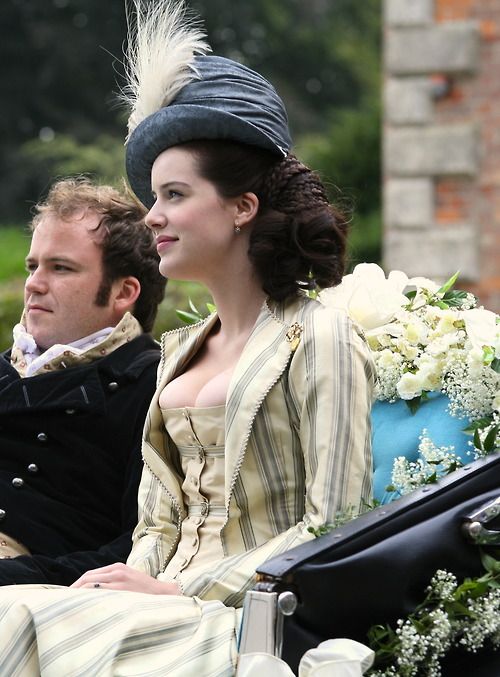
Gwyneth Paltrow as Emma Woodhouse, Emma 2009.

October Dates of Importance

This brings us now to several important October dates relating to Jane and her family:

Family News:

7 October 1767: Edward Austen born at Deane.

25 October 1804: Austen family returns to Bath and lives at 3 Green Park Buildings East.

October 1806: Austen women move to Southampton to live with Francis Austen and wife Mary.

14 October 1812: Edward Austen officially adopts “Knight” as surname.

4 October 1815: Austen travels to London and stays two months to nurse Henry during his illness.

Historic Dates:

19 October 1781: Major British defeat at the Battle of Yorktown, marking the end of the fighting during the American Revolutionary War.

16 October 1793: Marie Antoinette executed in France.

1 October 1801: Truce between Britain and France.

21 October 1805: Nelson defeats French-Spanish fleet at the Battle of Trafalgar.

Writing:

October 1796: Austen begins writing “First Impressions” (later revised as Pride and Prejudice).

30 October 1811: Sense and Sensibility published “By a Lady.”

Sorrows:

10 October 1808: Elizabeth Austen (Edward’s wife) dies after eleventh childbirth.

Battle of Trafalgar.

October

As we round the corner into the last few months of the year, it’s fascinating to find so many interesting tidbits each month in Jane Austen’s letters, novels, and life. Next month, we’ll take a look at November in Jane Austen’s World!


RACHEL DODGE teaches college English classes, gives talks at libraries, teas, and book clubs, and writes for Jane Austen’s World blog. She is the bestselling author of The Little Women DevotionalThe Anne of Green Gables Devotional and Praying with Jane: 31 Days Through the Prayers of Jane Austen. Now Available: The Secret Garden Devotional! You can visit Rachel online at www.RachelDodge.com.

Michaelmas

By Brenda S. Cox

“Netherfield is taken by a young man of large fortune from the north of England . . . he is to take possession before Michaelmas.” –Pride and Prejudice, chapter 1

“People did say you [Mr. Bingley] meant to quit the place entirely at Michaelmas . . .” –Pride and Prejudice, chapter 53

Today, September 29, is Michaelmas (pronounced MICK-ul-muss). In the church calendar, for Catholics and for Anglicans like Austen, this is a “holy day” (from which we get our word holiday). It commemorates St. Michael, the archangel.

Sculpture of the Archangel Michael defeating the devil, from St. Vitus Cathedral, Prague.
Photo by Jakub Hałun, CC BY-SA 4.0

Sometimes other angels are also commemorated on this day: “St. Michael and All Angels,” or specifically Michael, Gabriel and Rafael, the three angels mentioned by name in the Bible. The word “saint,” from Latin “sanctus,” means “holy one,” so the holy angels of heaven can be considered saints.

“Michaelmas” means the mass of Michael, as “Christmas” means the mass of Christ. Mass is the Catholic version of what Anglicans call the Lord’s Supper or Holy Communion, the ceremony where Christians eat unleavened bread and drink wine together to remember Christ’s suffering and death on the cross.

On the Calendar

In earlier times, the church and community were closely intertwined. Church holidays gave the year rhythm and consistency. Judicial, financial, and academic schedules came to revolve around four “quarter days” of the year. For England, these were Lady Day, Midsummer Day, Michaelmas, and Christmas.

March 25, Lady Day: Austen mentions this in her letters as the day when an allowance of money was to begin for her brother James, and as a day when someone was moving houses. In the church, it was the Feast of the Annunciation, when the angel Gabriel announced to the Virgin Mary (the “Lady”) that she would have a child, Jesus.

June 24, Midsummer Day: In Emma, Jane Fairfax is supposed to leave at Midsummer, though she gets delayed. The Box Hill picnic takes place at “almost Midsummer.” Midsummer is capitalized, so it means a specific date. On this date, the church celebrates the birth of John the Baptist, who prepared the way for Jesus’s coming.

Sept. 29, Michaelmas Day is mentioned in all of Austen’s novels except Northanger Abbey as a date when things happen. Mrs. Jennings thinks Colonel Brandon will be married by Michaelmas. Mr. Bingley is to take possession of Netherfield at Michaelmas, and rumor has it he will leave by the next Michaelmas. In Mansfield Park, Mrs. Norris has been doctoring the coachman for rheumatism from Michaelmas through the winter, and Henry Crawford expects to have a small home nearby at Michaelmas, obviously hoping he and Fanny will be married by then. In Emma, Harriet Smith is amazed that Mr. Elton could be in love with her, since she hardly knew him at Michaelmas. It is probably November when she says this. The Crofts take possession of Kellynch Hall at Michaelmas, and Anne tells her father that Mary has been in “good looks” since Michaelmas. In Sanditon, Lady Denham brings Clara Brereton from London at Michaelmas.

Dec. 25, Christmas Day. In Austen’s novels and shorter works, she mentions Christmas 41 times and Easter 18 times by my count. They often serve to mark dates and times of year.

(For some purposes, Epiphany (Jan. 6) was a quarter day instead of Christmas, and Easter instead of Lady Day. But Midsummer and Michaelmas were still the other quarter days.)

Around these four quarterly dates, rents and payments came due, leases of lands and houses (like Netherfield) began and ended, servants were hired, and local courts held “quarter sessions.”

The academic year also revolved around church dates. The fall term at both Oxford and Cambridge is called Michaelmas term. I was surprised when I was at Cambridge two weeks ago, in mid-September, that the colleges were not yet in session. Then I realized it was not  yet Michaelmas. This year’s fall term starts just after Michaelmas, on Oct. 8. 
In the Church

The Book of Common Prayer (BCP), which gives daily worship services for the Church of England, includes a calendar of saints’ days. By Austen’s time, special services for most of those days were not commonly held in country parishes unless they fell on a Sunday. Christmas Day, though, was celebrated with a church service. In Emma, the weather keeps Emma from going to church on Christmas.

For each saint’s day, the BCP gives relevant Bible readings and a collect (pronounced KAH-lect) prayer for that day. Austen was likely very familiar with these, hearing them every year. For Michaelmas, the clergyman could choose from these readings about angels:

Revelation 12:7-12. “War in heaven”; “Michael and his angels fought against the dragons” [the demons]. Satan is cast out of heaven, but those who believe in Christ “overcame him by the blood of the Lamb, and by the word of their testimony; and they loved not their lives unto the death.” Many depictions of Michael show him defeating Satan, sometimes in the form of a dragon.

Matthew 18:1-10. Jesus says not to despise children, for “their angels do always behold the face of my Father who is in heaven.”

Genesis 32. Jacob wrestles with an angel. This is the same Jacob who earlier saw a vision of a ladder to heaven, with angels going up and down it. The front of Bath Abbey, which Jane Austen must have seen many times, pictures that ladder.

Angels going up and down the ladder to heaven, on the front of Bath Abbey. Photo © Brenda S. Cox, 2024.

Daniel 10:4-14. An angel sent to Daniel was delayed by the prince of Persia, apparently a demon, until the archangel Michael, “one of the chief princes,” came to help him. The angel looked like a man “clothed in linen, whose loins were girded with fine gold of Uphaz: his body also was like the beryl [a gem, possibly an emerald], and his face as the appearance of lightning, and his eyes as lamps of fire, and his arms and his feet like in colour to polished brass, and the voice of his words like the voice of a multitude” (Daniel 10:5-6). This angel doesn’t sound much like today’s usual pictures of angels!

Acts 12:5-18 An angel rescues the apostle Peter from prison.

Revelation 14:14-20 Angels pour out God’s wrath and judgment on the earth.

The Collect prayer read on Michaelmas requests the help of angels for those on earth:

“O everlasting God, who hast ordained and constituted the services of Angels and men in a wonderful order: Mercifully grant that, as thy holy Angels always do thee service in heaven, so by thy appointment they may succour and defend us on earth; through Jesus Christ our Lord. Amen.”

Nowadays most Anglican churches use the more modern Book of Common Worship, but a traditional BCP service might still use this prayer and some of these Bible passages.

Church of St. Michael and All Angels, Hamstall Ridware, where Austen’s first cousin, Edward Cooper, served. Many English parish churches are named for St. Michael.
Photo © Brenda S. Cox, 2023

The church of Austen’s first cousin, Edward Cooper, in Hamstall Ridware, is named after St. Michael and All Angels. Their service this Sunday will be a celebration of Harvest (the British equivalent of America’s Thanksgiving) as well as a “patronal festival,” since it is the day of St. Michael, patron saint of the church. The clergyman, Revd. Jeremy Brading, told me, “The aim of these occasions [patronal festivals] is to celebrate the life of the local church on the occasion of its saint’s day. The celebration is for all that has gone previously, thanking God for his work through the local church. [Just] as important, is praying to God for his leadership and guidance for the future, that the local church might serve him faithfully.”

In Popular Culture

While Michaelmas is not much celebrated in today’s Anglican church, it was a great religious feast day in the Middle Ages, and traditions grew up around it. Michaelmas comes at the end of the harvest and the change of the season. A few old English traditions:

Eating goose and doing good: If you ate goose on Michaelmas, it was supposed to protect you from financial need for the next year. One writer says, “On Michaelmas, families spend the day doing good, dancing, singing, and at the end of the day, sharing a feast of freshly baked bread, roast goose stuffed with potatoes, veggies, and herbs.”

Picking blackberries: According to legend, when the Archangel Michael, with his flaming sword, cast the devil out of heaven, the devil landed in a thorny patch of blackberries. He was so angry that he spat on the blackberries and even urinated on them to make them unfit to eat. Thus blackberries picked after Michaelmas are considered inedible. Since Michaelmas originally fell in what is now mid-October, until the calendar changed (from Julian to Gregorian), that was pretty much the end of blackberry season.

A European Michaelmas daisy, aster amellus.
Photo by Björn S…, CC BY-SA 2.0

Michaelmas daisies: An old rhyme says,

The Michaelmas daisy, among dead weeds,

Blooms for St Michael’s valorous deeds.

And seems the last of flowers that stood,

Till the feast of St Simon and St Jude.’

Michaelmas daisies are asters, star-shaped flowers in lilac, blue, pink, or white. The peak of their bloom is around Michaelmas, though many are still blooming at the feast of St. Simon and St. Jude on Oct. 28.

Lawless Hour: An odd custom from Worcestershire: “In Kidderminster the Monday after Michaelmas had Lawless Hour between 12 pm and 1 pm, in between the old constable stepping down and the new one taking office. This led to an hour when people couldn’t be arrested, so groups would fight by throwing cabbage stalks and other fruit and vegetables at each other. The authorities mostly turned a blind eye, but by the mid 19th century this practice ended as it was considerate inappropriate.” Other local areas have their own Michaelmas traditions

We don’t know what Michaelmas traditions Jane Austen kept. But she did mention Michaelmas 15 times in her fiction, and now you know what it meant. Happy Michaelmas to you all!

For those of you who might not normally attend a JASNA AGM, we encourage you to consider attending in 2025 for the 250th anniversary of Jane Austen’s life and works. It promises to be a banner year at the AGM, with special speakers, workshops, and events. Here are the details we know so far:

Dates: October 10-12, 2025
Host City: Baltimore, MD
Theme: Austen at 250: “No check to my Genius from beginning to end”

The beautiful host hotel, the Baltimore Marriott Waterfront, is situated on the water, in the Harbor East neighborhood of Baltimore:

Details

The AGM web site provides all of the pertinent information you need to start planning your trip:

“2025 will be a milestone year as we celebrate the 250th anniversary of Jane Austen’s birth, with Baltimore welcoming JASNA back for its first AGM since 1980. We are planning a diverse and unique celebration of her life and literary genius, as well as an opportunity for attendees to connect with the rich history of Maryland and ‘Charm City.’ Attendees must find themselves agreeing that ‘a very strange [Janeite] it must be, who does not see charms in the immediate environs of [Baltimore], to make him wish to know it better.’

Austen at 250 will be the culminating event focusing on Jane Austen and her work, which she once characterized as “little bit (two inches) of Ivory” but that has endured for centuries. Baltimore will be a salute to her legacy, timelessness, relevance, and enduring genius through an exploration of:

  • Literary genius
  • Published and unpublished works
  • Surviving letters
  • Innovation in writing technique
  • Milestones of her life
  • Education and daily life
  • Family and friends

“Join your fellow Janeites friends at this once-in-a-lifetime celebration!”

Call for Papers

For those interested in applying to speak at the AGM during one of the breakout sessions, the Call for Papers has been posted. The deadline for submissions is November 30, 2024. Here is a snippet of the Call for Papers:

The AGM theme is: Austen at 250: “No check to my Genius from beginning to end”

“While commemorations of this anniversary will begin in 2024, the 2025 AGM will be the culminating event focusing on Jane Austen and her writing, which she once characterized as the ‘little bit (two inches wide) of ivory on which I work with so fine a brush,’ but which has endured for centuries. The 2024 Cleveland AGM leads off with her origin story and a focus on the literary, political, and cultural influences while the Baltimore conference will conclude with an examination of her life and her novels, juvenilia, and surviving letters.

“Our theme, drawn from Austen’s own words in a letter to her sister Cassandra, highlights her innovation, wit, realism, and irony. Proposals on all aspects of Jane Austen—her life, times, and writing—are welcome. We will focus primarily on the essence of Austen—the milestones of her life, interactions with family and friends, writing development, and the revelations in her letters. Specific areas to explore include, but are not limited to:

  • Important events in Austen’s life
  • Places or relationships
  • Real life reimagined in her fiction
  • Her writing process and her evolution as a writer
  • The importance and expression of particular themes
  • Publication goals and experiences
  • Psychological aspects
  • Change or consistency
  • The nature of genius and evidence of it in Austen’s work

“This multifaceted and unique celebration will offer opportunities to explore Austen’s enduring genius. A successful proposal will convey the speaker’s ability to engage and educate conference audiences in a 30- to 40-minute presentation.”

You can read more about the guidelines and application process HERE.

Meet Me in Baltimore

Every AGM is unique, but we expect that the 2025 AGM will include an incredible lineup of events and speakers. Have you attended an AGM in the past? If so, which one(s)? What is your favorite part of an AGM?

We hope many of our JAW friends will attend next year’s AGM. Vic, Brenda, and Rachel have all attended in past years if you have any questions!

As we explore September in Jane Austen’s World, we’re nearing the end of summer and the start of fall. Let’s take a look at Jane Austen’s life, letters, and novels and all they can tell us about Regency life in the month of September!

If you’re just jumping on the bus, you can find previous articles in this “A Year in Jane Austen’s World” series here: JanuaryFebruaryMarchAprilMayJune, July, and August.

First off, we always love to see what each month brings to the English countryside in Jane Austen’s Hampshire. You can already see a hint of fall colors here and there, but the gardens are still lush and green. Here is a look at Chawton House this time of year:

Chawton House in September: Photo @ChawtonHouse.

September in Hampshire

In September, Jane Austen’s Hampshire still feels like summer, but there is a hint of autumn in the air that deepens as the month draws on. Of the weather, we have two comments from Austen in September 1796:

1 September (Rowling): “Our men had but indifferent weather for their visit to Godmersham, for it rained great part of the way there and all the way back.”

18 September (Rowling): “What dreadful hot weather we have! It keeps one in a continual state of inelegance.”

Here is a glimpse of Jane Austen’s House Museum and its gardens in September:

Jane Austen’s House in September, Photo: @JaneAustensHouse.

September in Jane Austen’s Letters

Of Austen’s surviving letters, there are four from the month of September. All are dated from September 1796, at Rowling House. Austen spent several weeks there visiting her brother Edward and his wife, Elizabeth, at their first home, Rowling, a large farmhouse in Kent. Here are a few interesting highlights from her letters during her time there:

1 September:

  • Jane and Cassandra’s friendship: “The letter which I have this moment received from you has diverted me beyond moderation. I could die of laughter at it, as they used to say at school. You are indeed the finest comic writer of the present age.”
  • New gowns: “I have had my new gown made up, and it really makes a very superb surplice. I am sorry to say that my new coloured gown is very much washed out, though I charged everybody to take great care of it. I hope yours is so too.”
  • Jane’s skill with a needle and thread: “We are very busy making Edward’s shirts, and I am proud to say that I am the neatest worker of the party.”

Jane Austen quite prided herself on her needlework. In her article “I Am the Neatest Worker of the Party”: Making and Mending the Family’s Wardrobe,” Ann Buermann Wass (Persuasions On-Line) shares this:

“Before the invention of the sewing machine, all sewing had to be done by hand. While some tasks were left to professionals, the sewing of mothers, sisters, and daughters was a significant contribution to the household. Both letters and diaries suggest that women’s hands were seldom idle as they “sat at work,” that is, sewed garments for themselves and their families and mended them as they showed signs of wear. This work, stowed in work (or sewing) bags, was portable and could be carried around the house or even taken out visiting, allowing women to be productive while they chatted.” (Bauermann Wass)

Lady with a Red and Blue Sewing Bag (1815). National Gallery of Art.

5 September:

  • Cassandra attends a ball: “I shall be extremely anxious to hear the event of your ball, and shall hope to receive so long and minute an account of every particular that I shall be tired of reading it. Let me know how many, besides their fourteen selves and Mr. and Mrs. Wright, Michael will contrive to place about their coach, and how many of the gentlemen, musicians, and waiters, he will have persuaded to come in their shooting-jackets. I hope John Lovett’s accident will not prevent his attending the ball, as you will otherwise be obliged to dance with Mr. Tincton the whole evening. Let me know how J. Harwood deports himself without the Miss Biggs, and which of the Marys will carry the day with my brother James.”
  • Jane attends a ball: “We were at a ball on Saturday, I assure you. We dined at Goodnestone, and in the evening danced two country-dances and the Boulangeries. I opened the ball with Edward Bridges; the other couples were Lewis Cage and Harriet, Frank and Louisa, Fanny and George. Elizabeth played one country-dance, Lady Bridges the other, which she made Henry dance with her, and Miss Finch played the Boulangeries. (In reading over the last three or four lines, I am aware of my having expressed myself in so doubtful a manner that, if I did not tell you to the contrary, you might imagine it was Lady Bridges who made Henry dance with her at the same time that she was playing, which, if not impossible, must appear a very improbable event to you. But it was Elizabeth who danced.) We supped there, and walked home at night under the shade of two umbrellas.”

15 September:

  • Living in style: “We have been very gay since I wrote last; dining at Nackington, returning by moonlight, and everything quite in style, not to mention Mr. Claringbould’s funeral which we saw go by on Sunday.”
  • Jane’s commentary: “Miss Fletcher and I were very thick, but I am the thinnest of the two. She wore her purple muslin, which is pretty enough, though it does not become her complexion. There are two traits in her character which are pleasing — namely, she admires Camilla, and drinks no cream in her tea.”
  • A gentleman Jane admired: “We went by Bifrons, and I contemplated with a melancholy pleasure the abode of him on whom I once fondly doated.”
  • Jane’s travel plans: “As to the mode of our travelling to town, I want to go in a stage-coach, but Frank will not let me. As you are likely to have the Williams and Lloyds with you next week, you would hardly find room for us then. If anyone wants anything in town, they must send their commissions to Frank, as I shall merely pass through it. The tallow-chandler is Penlington, at the Crown and Beehive, Charles Street, Covent Garden.

What an intriguing line: “the abode of him on whome I once fondly doated.” Like me, you’re probably thinking, Who was this man? While some might wonder if she was referencing Tom Lefroy, it seems that Austen was actually writing about a different man.

Syrie James explains this reference in the following excerpt from her article, “Edward Taylor of Bifrons: Jane Austen’s First Love,” English Historical Fiction Authors (December 3, 2014):

When Jane wrote that letter in 1796, her flirtation with Lefroy had ended some seven months prior. She was reminiscing with wistful longing about a young man she’d met many years earlier. Scholars have long since identified the “Him” as Edward Taylor, and the “abode,” Bifrons Park, as the estate in Kent which he would one day inherit. Little else, however, was known about him. Biographer Deirdre Le Faye, in Jane Austen: A Family Record (1989) simply states, “Jane met and briefly cherished a girlish passion for young Mr. Edward Taylor of Bifrons.” John Halperin, in The Life of Jane Austen (1984), refers to Edward Taylor as “her old beau” and “the most shadowy of her possible early ‘suitors.’

You can read more of James’s fascinating article about Edward Taylor of Bifrons HERE. Her book Jane Austen’s First Love is based on her research about the young man Jane Austen apparently “doated” on in her youth. I have not read it, but I like the concept!

18 September:

  • News of Frank’s new appointment: “Frank has received his appointment on board the “Captain John Gore,” commanded by the “Triton,” and will therefore be obliged to be in town on Wednesday.” (The “Triton” is a new 32 frigate just launch at Deptford. Frank is much pleased with the prospect of having Captain Gore under his command.)

Having brothers in the Navy meant that the two Austen sisters were well-versed on topics surrounding ships, men in leadership, and appointments. Here is a fascinating bit of information I discovered about the very unique HMS Triton:

Triton was an experimental ship and the only one built to that design; she was constructed out of fir due to wartime supply shortages of more traditional materials and had some unusual features such as no tumblehome. Her namesake was the Greek god Triton, a god of the sea. She was commissioned in June 1796 under Captain John Gore, with whom she would spend the majority of her active service, to serve in the Channel in the squadron of Sir John Warren.” (Wikipedia)

HMS Triton, artist Nicholas Pocock (1797).

September in Jane Austen’s Novels

Sense and Sensibility

  • The Dashwood women arrive at Barton Cottage in September: “As a house, Barton Cottage, though small, was comfortable and compact; but as a cottage it was defective, for the building was regular, the roof was tiled, the window shutters were not painted green, nor were the walls covered with honeysuckles. A narrow passage led directly through the house into the garden behind. On each side of the entrance was a sitting room, about sixteen feet square; and beyond them were the offices and the stairs. Four bed-rooms and two garrets formed the rest of the house. It had not been built many years and was in good repair. In comparison of Norland, it was poor and small indeed!—but the tears which recollection called forth as they entered the house were soon dried away. They were cheered by the joy of the servants on their arrival, and each for the sake of the others resolved to appear happy. It was very early in September; the season was fine, and from first seeing the place under the advantage of good weather, they received an impression in its favour which was of material service in recommending it to their lasting approbation.”
Barton Cottage, Sense and Sensibility (1995), an 18th century stone cottage on Flete Estate in South Devon.

Pride and Prejudice

  • Lydia’s new husband goes hunting in September: “Lydia was exceedingly fond of him. He was her dear Wickham on every occasion; no one was to be put in competition with him. He did everything best in the world; and she was sure he would kill more birds on the first of September than anybody else in the country.”

September 1st is when hunting season opens for partridge, duck, and goose in the UK, as it did in Jane Austen’s day. Apparently, Lydia thinks her new husband will kill more birds than any other man in England on opening day!

Mansfield Park

  • Mr. Crawford goes to Norfolk in September: “The season and duties which brought Mr. Bertram back to Mansfield took Mr. Crawford into Norfolk. Everingham could not do without him in the beginning of September. He went for a fortnight—a fortnight of such dullness to the Miss Bertrams as ought to have put them both on their guard, and made even Julia admit, in her jealousy of her sister, the absolute necessity of distrusting his attentions, and wishing him not to return; and a fortnight of sufficient leisure, in the intervals of shooting and sleeping, to have convinced the gentleman that he ought to keep longer away, had he been more in the habit of examining his own motives, and of reflecting to what the indulgence of his idle vanity was tending; but, thoughtless and selfish from prosperity and bad example, he would not look beyond the present moment. The sisters, handsome, clever, and encouraging, were an amusement to his sated mind; and finding nothing in Norfolk to equal the social pleasures of Mansfield, he gladly returned to it at the time appointed, and was welcomed thither quite as gladly by those whom he came to trifle with further.”

Emma

  • Mr. Weston proclaimed a hero by Emma’s sister for his help one September night: “Me, my love,” cried his wife, hearing and understanding only in part.— “Are you talking about me?—I am sure nobody ought to be, or can be, a greater advocate for matrimony than I am; and if it had not been for the misery of her leaving Hartfield, I should never have thought of Miss Taylor but as the most fortunate woman in the world; and as to slighting Mr. Weston, that excellent Mr. Weston, I think there is nothing he does not deserve. I believe he is one of the very best-tempered men that ever existed. Excepting yourself and your brother, I do not know his equal for temper. I shall never forget his flying Henry’s kite for him that very windy day last Easter—and ever since his particular kindness last September twelvemonth in writing that note, at twelve o’clock at night, on purpose to assure me that there was no scarlet fever at Cobham, I have been convinced there could not be a more feeling heart nor a better man in existence.—If any body can deserve him, it must be Miss Taylor.”
  • Harriet’s visit to the Martin family and a fond September memory: “She had seen only Mrs. Martin and the two girls. They had received her doubtingly, if not coolly; and nothing beyond the merest commonplace had been talked almost all the time—till just at last, when Mrs. Martin’s saying, all of a sudden, that she thought Miss Smith was grown, had brought on a more interesting subject, and a warmer manner. In that very room she had been measured last September, with her two friends. There were the pencilled marks and memorandums on the wainscot by the window. He had done it. They all seemed to remember the day, the hour, the party, the occasion—to feel the same consciousness, the same regrets—to be ready to return to the same good understanding; and they were just growing again like themselves, (Harriet, as Emma must suspect, as ready as the best of them to be cordial and happy,) when the carriage reappeared, and all was over. The style of the visit, and the shortness of it, were then felt to be decisive. Fourteen minutes to be given to those with whom she had thankfully passed six weeks not six months ago!”
  • Harriet marries Mr. Martin in September:Before the end of September, Emma attended Harriet to church, and saw her hand bestowed on Robert Martin with so complete a satisfaction, as no remembrances, even connected with Mr. Elton as he stood before them, could impair.—Perhaps, indeed, at that time she scarcely saw Mr. Elton, but as the clergyman whose blessing at the altar might next fall on herself.—Robert Martin and Harriet Smith, the latest couple engaged of the three, were the first to be married.”
  • Anne grieves living away from Kellynch Hall for Michaelmas (29th of September): “Michaelmas came; and now Anne’s heart must be in Kellynch again. A beloved home made over to others; all the precious rooms and furniture, groves, and prospects, beginning to own other eyes and other limbs! She could not think of much else on the 29th of September; and she had this sympathetic touch in the evening from Mary, who, on having occasion to note down the day of the month, exclaimed, “Dear me, is not this the day the Crofts were to come to Kellynch? I am glad I did not think of it before. How low it makes me!”
Harriet marries Mr. Martin (Emma 2009).

September Dates of Importance

This brings us now to several important September dates that relate to Jane and her family:

Family News:

15 September 1791: James Austen becomes vicar of Sherborne St John, Hampshire.

September 1794: Charles Austen graduates from the Royal Naval Academy and becomes a midshipman aboard HMS Daedalus.

Historic Dates:

3 September 1783: The Treaty of Paris is signed, ending the American War of Independence.

29 September (yearly): Michaelmas celebrations, a day of feasting, which traditionally included a roast goose and blackberry pie.

Writing:

August/September 1815: Jane Austen possibly travels to London, regarding the publication of Emma, returning early in September.

Sorrows:

6 September 1814: Charles Austen’s wife Fanny dies after childbirth.

Chawton House Gardens in September: Photo @ChawtonHouse.

September

As you can see, September is a month when Jane Austen and her friends, family, and characters enjoyed travel, balls, and other outings. Next month, we’ll step into autumn in Hampshire and learn about October in Jane Austen’s World!


RACHEL DODGE teaches college English classes, gives talks at libraries, teas, and book clubs, and writes for Jane Austen’s World blog. She is the bestselling author of The Little Women DevotionalThe Anne of Green Gables Devotional and Praying with Jane: 31 Days Through the Prayers of Jane Austen. Now Available: The Secret Garden Devotional! You can visit Rachel online at www.RachelDodge.com.