Feeds:
Posts
Comments

A Victorian Christmas Feast

Gentle Readers, Frequent contributor Patty from Brandy Parfums recently attended a cooking class that featured classic recipes. She says of her experience: “When we think about our wonderful holiday dinners coming up, it is good to remember the origins of mid-winter celebrations, so ingrained in our DNA.” I can’t think of two more interesting recipes to try than the two Patty describes in this post.

Cooking Class Taught by Culinary Historian Cathy Kaufman at I.C.E, the Institute of Culinary Education, New York, NY on December 5, 2011 by Patricia Saffran

Before there was Christmastime, the cherished holiday and lovely dinner that many have come to look forward to each winter, in ancient times there was the winter solstice celebration of rebirth focusing on the sun, in Stonehenge and other Neolithic sites. Later, light-starved Romans celebrated the Saturnalia, in 217 BC starting with December 17th and extending to a week long festival with gorging and other very pagan activities.

Stonehenge

Then there was the Roman and Mithra Dies Natalis Solis Invicti, the birthday of the invincible sun, December 25th. Old customs die hard but we still pay tribute to tree worship in the form of the Christmas tree, that came to Great Britain from Germany. It was first introduced by Queen Charlotte, with the connection made stronger later by Prince Albert. When we come to Victorian times is when the present traditions take hold.

As culinary historian, Cathy Kaufman described the holiday’s traditions and her special class:
A Charles Dickens Christmas

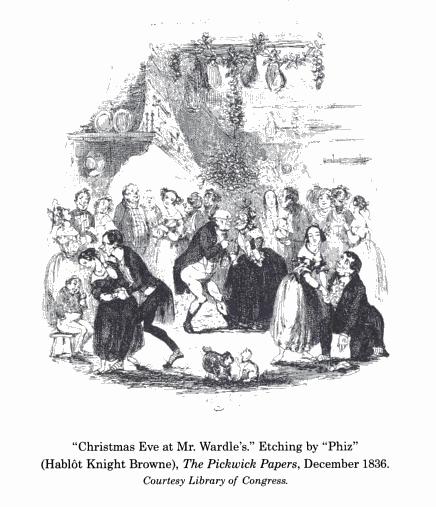
“Nothing pushes the nostalgia button at Christmastime more than Charles Dickens’s A Christmas Carol, with its warming images of a candlelit tree and Victorian plenitude. Yet prior to the 19th century, Christmas was a very different holiday, and it was only in the Victorian era that our concept of Christmas as a child-centered family holiday arose. After reviewing the evolution of Christmas holidays, we will use 19th-century English cookbooks, such as Charles Francatelli’s The Modern Cook and Eliza Acton’s Modern Cookery for Private Families, to create a groaning board of Victorian delights, including Jerusalem Artichoke Soup; Lobster Fricassée; Baked Goose with Chestnuts; Roasted Filet of Beef à l’Anglaise; Endives with Cream; Christmas Pudding; Gingerbread; and Twelfth Night Cake.”

Cathy continued, “This is upper class food that we’re making tonight, that took a large staff in the kitchen to prepare, with no expenses spared, using the most luxurious ingredients. It’s also infusion cuisine made with expensive stocks, showing the French influence in this period. There’s also a fair amount of cream in many dishes with a touch of cayenne pepper, an influence of the British colonials in India. The French at this time would have just used nutmeg. There were many women cooks in the kitchens of the wealthy in England, and in France there were more men in the kitchens.”
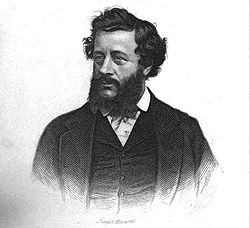
Charles Elme Francatelli

We separated into three groups to make the various dishes. I chose the group that was making the Charles Francatelli recipe for Beef à l’Anglaise. Francatelli was born in London in 1805 and went on to study with the great chef Marie-Antoine Carême in France, inventor of haute-cuisine. (At the downfall of Napoleon, Carême later went to work in London for the Prince Regent and George IV.) Francatelli was the chef for Queen Victoria and went on to be the chef at the Reform Club. His influential book was called The Modern Cook, published in 1846. This recipe is very time consuming and labor intensive with a vegetable and olive oil marinade and Financière and Espagnole (including truffle juice and veal stock) sauces for basting and serving. Our group also made vegetable garnishes and one of the three desserts, the Plum Pudding.

Another group made the Lobster Fricassée from an Eliza Acton recipe. Eliza Acton was born in Sussex in 1799. Like Francatelli, she spent time in France. She is credited with writing the first practical cookbook with a list of ingredients and instructions. Mrs. Beeton was supposed to have modeled her cookbook on Acton’s. The lobster recipe is somewhat complicated in that uses both a Béchamel and Consommé made from veal, mushrooms, ham, vegetables and stock. Final baking in the oven with the sauce and bread crumbs finished off this delectable dish.

The goose recipe from Charles Francatelli featured a Madeira wine mirepoix and a luting paste, a flour and water cover for the goose’s first hour of cooking to keep it moist.

Here are two recipes that are absolutely delicious and will be easy to make for a home version of a Victorian Christmas feast. Both recipes are presented in the original text and then in Cathy Kaufman’s modernized version for today’s kitchens.
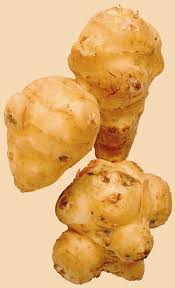
Jerusalem artichoke

Jerusalem Artichoke, or Palestine Soup (Eliza Acton)

Wash and pare quickly some freshly dug artichokes, and to preserve their colour, throw them into spring water as they are done, but do not let them remain in it after all are ready. Boil three pounds of them in water for ten minutes; lift them out, and slice them into three pints of boiling stock; when they have stewed gently in this from fifteen to twenty minutes, press them with the soup, through a fine sieve, and put the whole into a clean saucepan with a pint and a half more of stock; add sufficient salt and cayenne to season it, skim it well, and after it has simmered two or three minutes, stir it to a pint of rich boiling cream. Serve it immediately.

2 lb. Jerusalem artichokes
4 cups chicken stock
Salt and freshly ground white pepper to taste
1/8 teaspoon cayenne pepper, or more to taste
5/8 cup heavy cream mixed with 1/4 cup Crème fraîche

Pare the Jerusalem artichokes.  Drop the pared Jerusalem artichokes into a pan of boiling salted water.  Cook for ten minutes to set the color.  Drain and refresh.

Slice the Jerusalem artichokes into pieces of about 1/2 inch thick and place in a saucepan with the chicken stock.  Simmer for 20 minutes and pass mixture through a food mill three times [or puree in a blender].

Return the puree to a clean saucepan and add the spices and heavy cream mixture.  Cook for two minutes, skim any impurities off the surface, adjust the seasoning and serve.
 

.

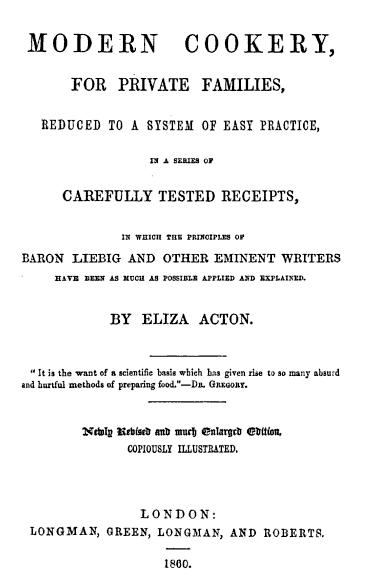
Fronticepiece, Modern Cookery by Eliza Acton

Gingerbread (Eliza Acton)

Whisk four strained or well-cleared eggs to the lightest possible froth (French eggs, if really sweet, will answer for the purpose), and pour to them, by degrees, a pound and a quarter of treacle, still beating them lightly. Add, in the same manner, six ounces pale brown sugar, free from lumps, one pound of sifted flour, and six ounces of good butter, just sufficiently warmed to be liquid, and no more, for if hot, it would render the cake; it should be poured in small portions to the mixture, which should be well beaten up with the back of a wooden spoon as each portion is thrown in: the success of this cake depends almost entirely on this part of the process. When properly mingled with the mass, the butter will not be perceptible on the surface; and if the cake be kept light by constant whisking, large bubbles will appear in it to the last. When it is so far ready, add to it one ounce of Jamaica ginger and a large teaspoonful of cloves in fine powder, with the lightly grated rinds of two fresh, full-sized lemons. Butter thickly, in every part, a shallow square tin pan, and bake the gingerbread slowly for nearly or quite an hour in a gentle oven. Let it cool a little before it is turned out, and set it on its edge until cold, supporting it, if needful, against a large jar or bowl. We have usually had it baked in an American oven, in a tin less than 2 inches deep; and it has been excellent. We retain the name given to it originally in our circle.

Please note: The treacle, sugar and flour are measured by weight, not by volume.

2 tablespoons softened butter for preparing the baking pans
3 eggs
20 oz treacle
6 oz light brown sugar
6 oz butter, melted and cooled
16 oz cake flour, sifted
4 tablespoons ground ginger
1 teaspoon ground cloves
grated zest of two lemons

Preheat the oven to 350ー F.  Generously rub the inside of a 9 x 9 x 2 baking pan with the softened butter and set aside.

Stir the eggs together and pass them through a strainer to remove the white threads holding the yolks. Transfer to the bowl of a standing mixer fitted with the whisk attachment and beat for two minutes. Very slowly pour in the treacle, beating constantly. Add the brown sugar in a slow trickle and continue beating. Add the butter and a steady stream, beating thoroughly to incorporate. Add flour in several additions, continuing to whisk. Finally, whisk in the spices and the lemon zest.

Pour the batter into the prepared pan and bake for 50 minutes to an hour, or until baked through. Cool on a rack before unmolding. Dust with confectioners’ sugar before serving.

Links:


New Portrait of Jane Austen?

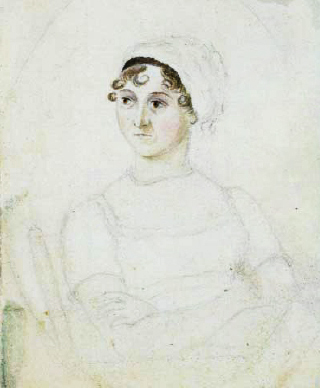
Let’s face it. Cassandra Austen’s tiny watercolour of her famous sister simply does not satisfy viewers. Jane Austen’s fans have been dying to find another authentic portrait of their favorite author. Has Dr. Paula Byrne accomplished this task? The Guardian.UK features an article with an imaginary portrait that Dr. Byrne believes was drawn from life.

Jane Austen portrait drawing, in graphite on vellum

The portrait drawing, in graphite on vellum, had been in a private collection for years, and was being auctioned as an “imaginary portrait” of Austen, with “Miss Jane Austin” written on the back. “When my husband bought it he thought it was a reasonable portrait of a nice lady writer, but I instantly had a visceral reaction to it. I thought it looks like her family. I recognised the Austen nose, to be honest, I thought it was so striking, so familiar,” Byrne told the Guardian.

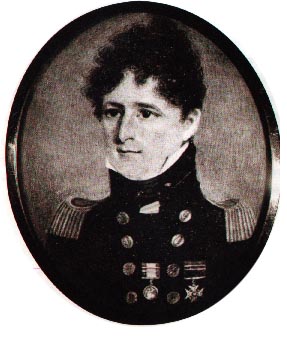
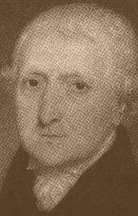
Compare this portrait with images of Jane’s family and of Jane herself.

Cassandra's watercolour of Jane

Captain Charles Austen, Jane's brother

Francis Austen, Jane's brother

George Austen, Jane's father

James Austen, Jane's eldest brother

The Pump Room Trio Interviewed

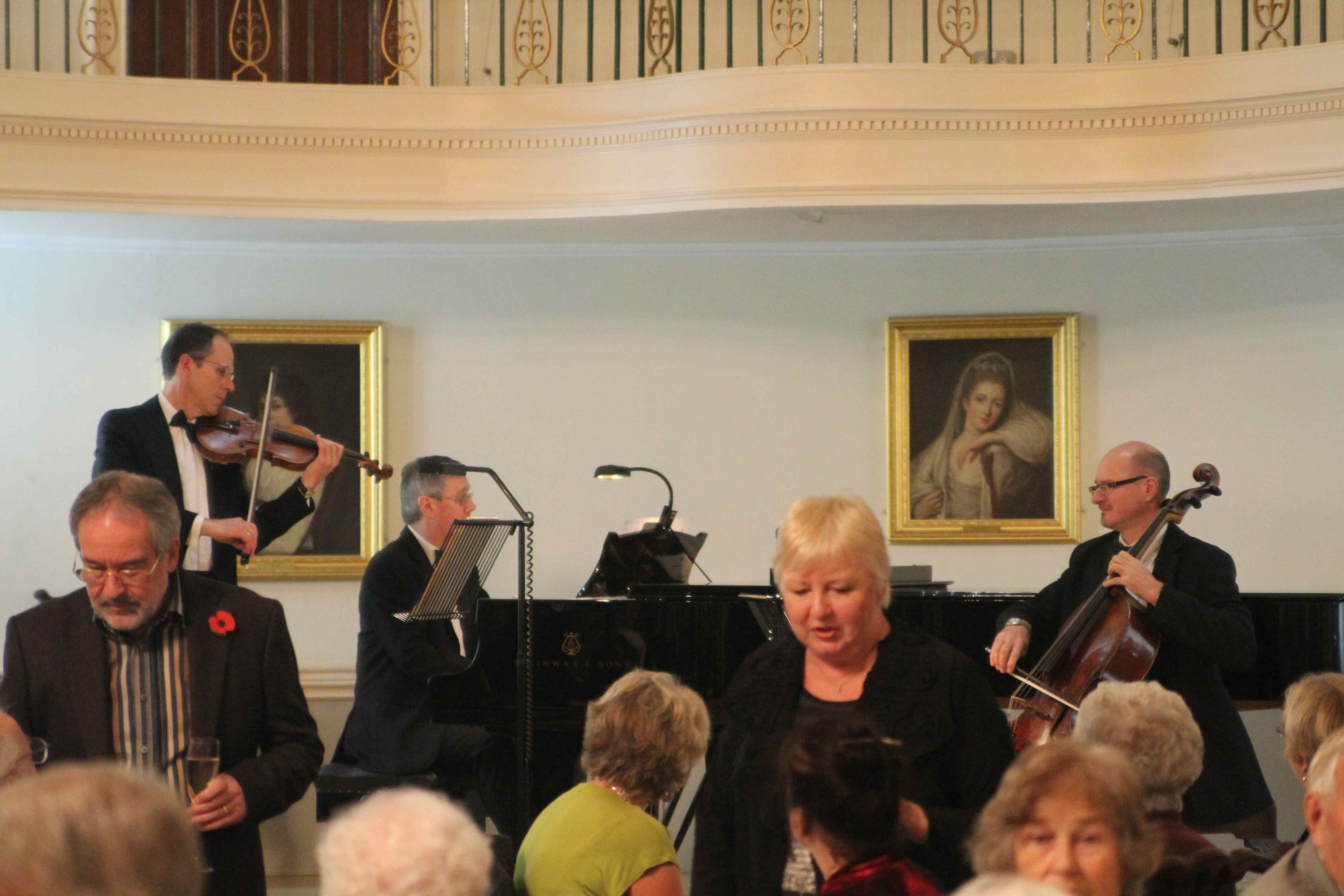
Gentle Readers, a few months I featured a new book, The Pump Room Orchestra: Three Centuries of Music and Social History, by Robert Hyman and Nicola Hyman, which you can order from Amazon.com. Recently BBC Radio 3 came to the Pump Room to do an interview with the Pump Room Trio. The review/feature will be on ‘Music Matters’ which starts at 12.15 pm on Saturday, December 10th. Nicola sent me a few images from the event. I do hope you will tune in on Saturday to listen to the interview! Meanwhile, enjoy these images.

The Pump Room Trio

Here’s the link to listen to the 12 minute program on Saturday! Fabulous.

Robert and Nicola Hyman

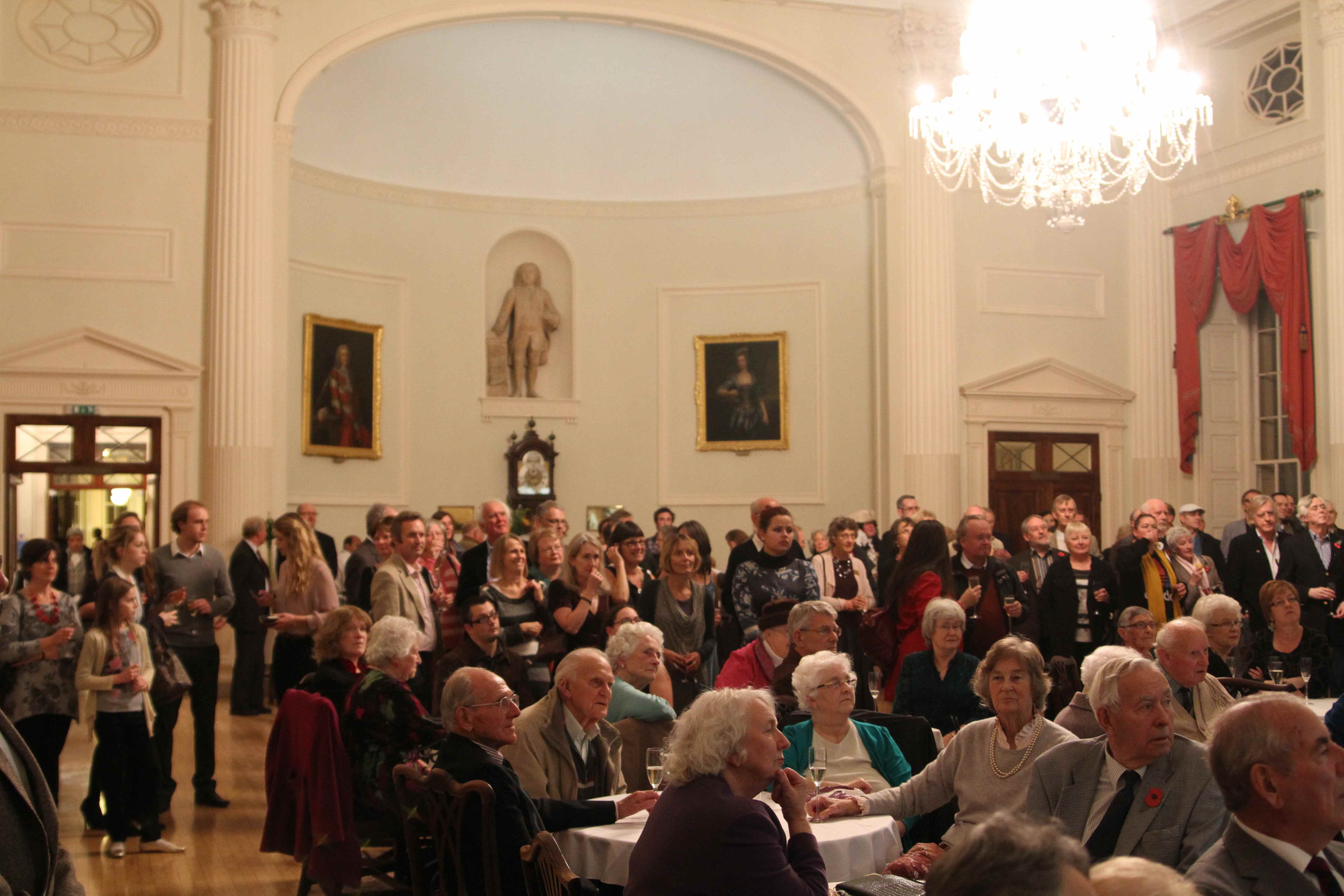
The gathering in the Pump Room. Note the breathtaking chandelier and the marble statue of Beau Nash carved by Joseph Plura that sits in an alcove above the clock.

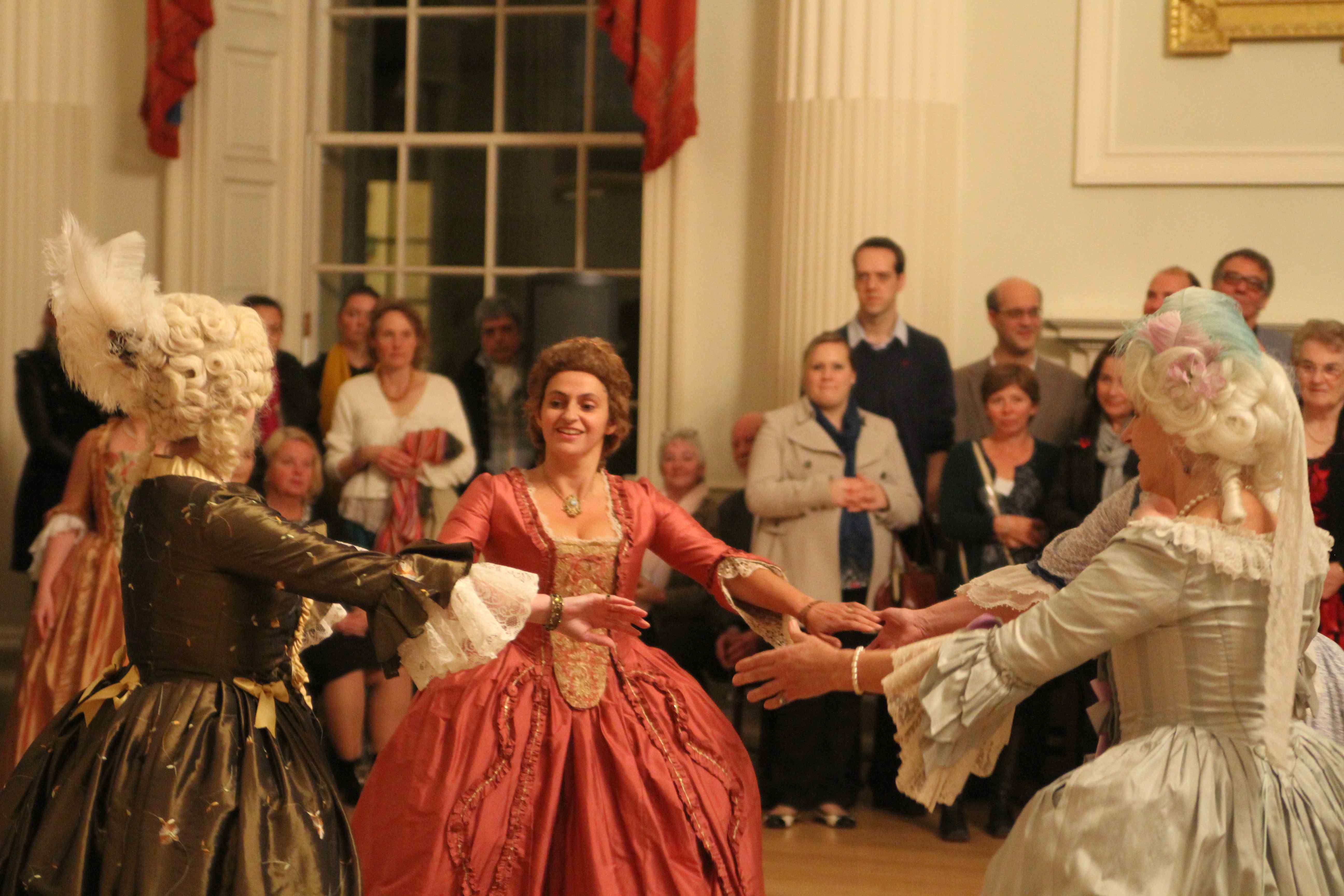
Bath Minuet Company

The Bath Minuet Company

A Short History of Floors

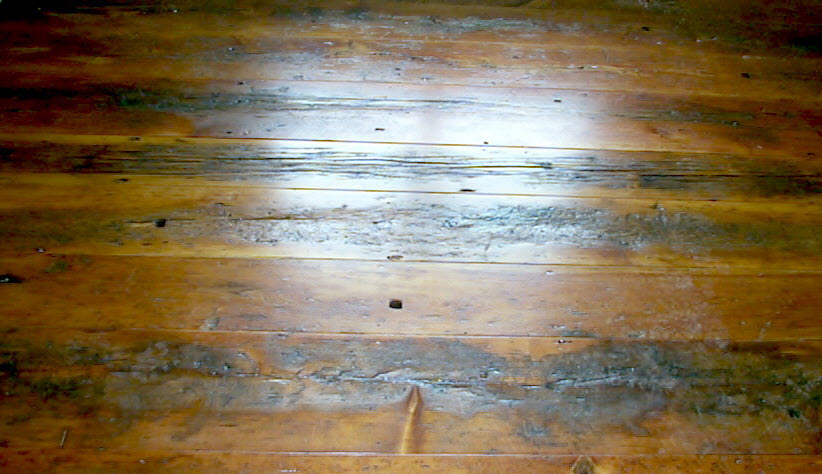
Wood floors of Brunswick House

In researching floors and floor coverings of Georgian houses, I came across these interesting tidbits of information.

During the middle ages, the floors of simple peasant households consisted of dirt. Hay and straw were strewn on top of the surface, and often cow dung and household wastes were tossed on top of the rushes. This mixture was trampled upon by the inhabitants. (During the middle ages, animals often shared the house with their human owners.) The result was a surface that became as hard as cement over time. Around the 1100s, saltpeter (potassium nitrate) was used for gunpowder, and the floors of former peasant homes provided a good source for this mineral. Mint was used as a deodorizer to cover the smell of the floors, for walking around the room and tramping onthe herb helped to spread its scent.  (A Not So Boring History of Flooring)

The interior of this Irish cottage shows the rough dirt floor. This image was taken in the late 19th century

Concrete floors were also widespread. They were made by plastering a concrete preparation over reeds that were fastened to joists. When this substance dried the concrete assumed the character of a slab of unbroken stone which was strong enough to bear a heavy load without the aid of supporting joists. This hardy substance was both fireproof and long lasting.

Pigs shown entering the Irish cottage. Late 19th century

Concrete floors eventually began to be replaced with wood floors during the Middle Ages.

We are not able to find any distinct records of wood having been employed for the boarding of the floors of dwelling-houses until towards the latter part of the middle ages, when an upper story began to be attached to middle-class houses in consequence of the increased value of land. The most abundant specimens of these early wooden floors are to be met with in London, probably for the reason that land being of higher values there than elsewhere, upperstoried houses wore more common. The name of 1′ lofts” was given to these upper storied rooms on their first introduction, from whence we have the compound word sentence of “up-a-loft,” and the word “cock-loft” has, probably, the same derivation, for wo find it now to be occasionally employed in some of the villages in the Midland counties to signify an up-stairs bedroom.- Building News and Engineering Journal, Vol 41, 1881

Wood floor planks were rough at first, and hand planed and hand finished with stone or metal. Old growth trees allowed for the maximum wood plank width (about 1-2 feet), which minimized the work required to cover a floor surface. In the 18th century, floorborads were irregular in shape and ranged in size and length. The goal was to use the smallest number of boards to cover a surface. More formal rooms used narower floorboards, indicating the wealth of the family who could afford to pay for the extra hours that craftsman took for the smaller sized boards.

Antique hemlock flooring with nail holes and saw marks.

Narrower floor boards general adoption gained rapid foothold during the Industrial Revolution after the repeal of duties place on foreign timber and the introductionof steam-powered planing machinery. In the early 1800s, production for such boards increased. The irony is that today wider floorboards have become a status symbol, for they have become more valuable as old growth trees have become scarce.

Wood floors had a variety of finishes. They were left unpainted and scrubbed with a mixture of sand and herbs. They were lymewashed, or oil painted in solid colors and stenciled. The floors were not sanded or washed or varnished during this early period. At a  later time varnishes and stains were applied to help make the wood last longer.

This charming watercolour by Diana Sperling shows the bare wood floor. It was the custom during this period to roll up the carpet and shove furniture aside for impromptu casual dancing.

In the mid 1800s decorated floor tile floors became popular in Europe. They had been used in Turkey, the Middle East, and in Dutch houses during the 1600s, and can be readily seen in Dutch interior paintings.

Floors were covered with a variety of rugs: rag rugs made of old bits of cloth; oil cloths; marble cloths; floor cloths, which were often painted to resemble carpets; and Persian rugs for the wealthy, which were prized for their color, design, and durability. Floor cloths were used in fine homes in France in the 14th century and made their appearance in England in the 17th century. Designs were often painted on them, as this U.S. example from Lakeport Plantation shows:

Floor cloth sample from Lakeport Plantation

One can see from this example how sturdy the cloth was after treatment.

Another fascinating fact is that rubber floors were used as far back as the 13th century and remained popular until the 1600s. In 1863, Frederick Walton, an English rubber manufacturer, patented linoleum, which is still made in the same way today.

Interesting fact: From ‘besom’ to broom

To sweep floors during the Middle Ages, the British used a ‘besom’ – a handful of twigs with the leaves attached. Besoms were often made of twigs from the ‘broom scrub,’ and so the sweeping implements came to be called ‘brooms’ around AD 1000.

More on the topic:

Amongst herbs to be eaten I find gourds, cucumbers, coleworts, melons disallowed, but especially cabbage. It causeth trouble-some dreams and sends up black vapours to the brain . . .” – Richard Burton, 16th century

Cabbage was first introduced in Great Britain by the Romans. In ancient times the Greeks revered it for its medicinal qualities, and it was well known in the Mediterranean region, where it spread out to other parts of Europe. The vegetable was cultivated as food for man and cattle and consumed mainly by the poor,  for this hardy plant could be grown in the vegetable garden in temperate climates for long periods and harvested into early winter. White cabbage, used for boiling, braising, and stewing, was distinguished from the red cabbage, which was mostly used for pickling. From the 14th century and on, European peasants consumed cabbage in the form of soups and stews, which nourished them through the long winter months. It wasn’t until the 18th century that cabbages began to make their appearance on more aristocratic tables.

Cabbage’s long lasting quality made it a valuable and nutritious vegetable staple for long sea voyages. One imagines that Jane Austen’s sailor brothers ate a great deal of cabbage while sailing.

In his journal for July 1772, Cook gives the following account of the provisions placed aboard the Resolution and Adventure…Biscuit, flour, salt beef, salt pork, beer, wine, spirit [distilled alcohol], pease [dried peas], wheat, oatmeal, butter, cheese [hard], sugar, oyle olive [olive oil], vinegar, suet, raisins, salt, malt, sour krout [sauerkrout], salted cabbage, portable broth [dessicated soup], saloup, mustard, mermalade [marmelade] of carrots, water…” – Sailors & Sauerkraut: Excerpts from the Journals of Captain Cook’s Expeditions All Pertaining to Food With Recipes to Match, Barbara Burkhardt, Barrie Andugs McLean & Doris Kochanek [Grey’s Publishing:Sidney BC] 1978 (p. 23)- The Food Timeline

High in vitamin c and anti-inflammatory properties, this cruciferous vegetable was not only nutritious and helped to fight scurvy, but an apocryphal story states that during Captain Cook’s first voyage, members of his crew were saved from gangrene by doctors who applied poultices of cabbage to their patients’ wounds.

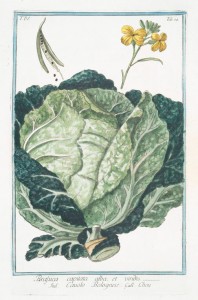
At the time, cabbage was called a ‘cabbage cole’ or ‘colewort. ‘By the mid eighteenth century, an array of different cabbages was grown, and as one anonymous writer put it:

‘There various Kinds of this Plant are endless to describe_’ The common White Cabbage, Sugarloaf, Pontefract, Battersea, Red Cabbage, and the green and White Savoy Cabbage’ [Anon (1744)].

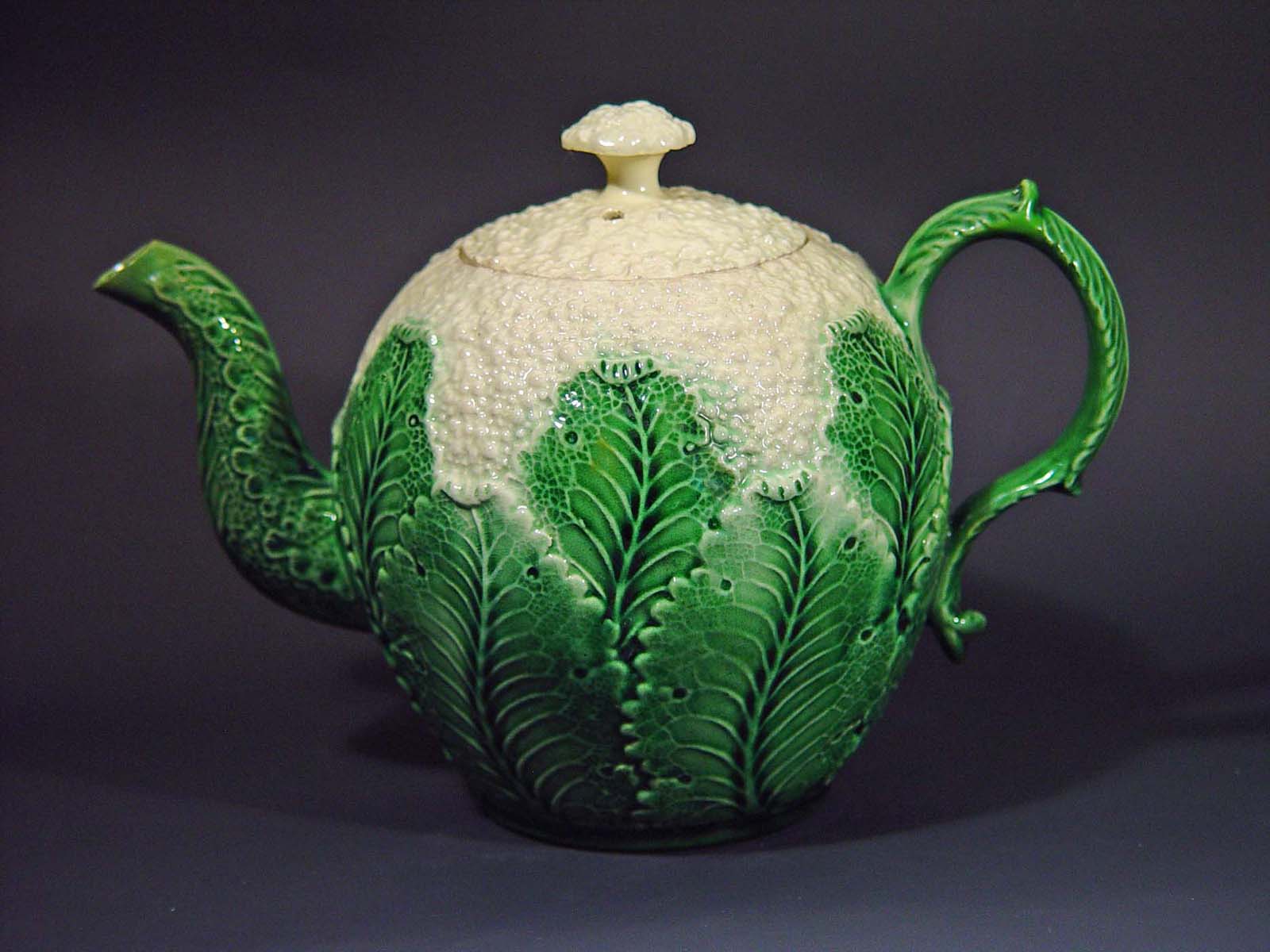
1770 creamware teapot. Image @Earle D. Vandekar of Knightsbridge

Cabbages were grown in family gardens in raised beds, near the door for easy picking, and protected from damaging winds by a fence or hedge and mulch. Recipes for cooking cabbage were included in early cookery books, however, one defies the modern cook to be able to follow Hannah Glasse’s charming recipe for beans ragoo’-d with a cabbage (at least I would have a difficult time.)

TAKE a nice little cabbage, about as big as a pint bacon ; when the outside leaves, top, and stalks are cut off, half boil it, out a hole in the middle pretty big, take what you cut out and chop it very fine, with a sew of the beans boiled, a carrot boiled and mashed, and a turnip boiled,  mash all together, put them, into’a sauce-pan, season them with, pepper, salt, and nutmeg, a good piece of butter, stew them a few minutes over the fire, stirring the pan often. In the mean time put the cabbage into a sauce-pan but take great care it does not fall to pieces; put to it four spoonsfuls of water, two of wine, and one of catchup ; have a spoonful of mushroom-pickle, a piece of butter rolled in a little flour, a very little pepper, cover it close, and let it stew softly till it is tender; then take it up carefully and lay it in the middle of the dish, pour your mashed roots in the middle to fill it up high, and your ragoo round it. You may add the liquor the cabbage was stewed in, and send it to table hot. This will do for a top, bottom, middle, or side-dish. When beans are not to be had, you may cut carrots and turnips into little slices, and fry them; the carrots in little round slices, the turnips in pieces about two inches long, and as thick as one’s finger, and toss them up in the ragoo.

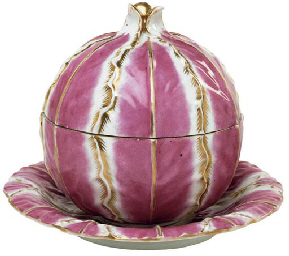
Cabbage tureen, mid-19th century Jacob Petit Porcelain. Image @Christie's

By 1773 the cultivation of cabbage in England was sufficiently commercialized to make it a criminal offence to steal or damage growing crops of cabbage, whose price had dropped by half since the 1730s. Chefs and cooks used cabbage to make ragout and pudding, or stuff it with meat. In the 16th and 17th centuries warm milk was added to make cabbage cream that was left to mature before being presented at dinner tables.

Red cabbage was prepared and sold as a pickle. Newspapers advertised the sale of cabbage seed, where it was defined as flat sided, green savoy, hellow (probably a misprint for yellow) red, Russia, sugar loaf, turnip, yellow savoy and Yorkshire. (Simone Clarke – British History Online.)

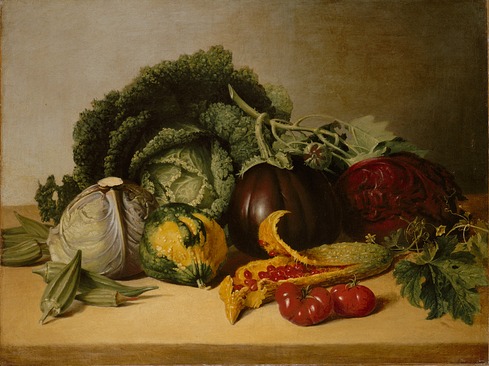
Still life with cabbage, James Peale

“The time has come…to talk of many things: Of shoes–and ships–and sealing wax–of cabbages–and kings–And why the sea is boiling hot–And whether pigs have wings.” – Lewis Carroll

Mrs. Beeton’s STEWED RED CABBAGE (19th century)

INGREDIENTS – 1 red cabbage, a small slice of ham, 1/2 oz. of fresh butter, 1 pint of weak stock or broth, 1 gill of vinegar, salt and pepper to taste, 1 tablespoonful of pounded sugar.

Mode.—Cut the cabbage into very thin slices, put it into a stewpan, with the ham cut in dice, the butter, 1/2 pint of stock, and the vinegar; cover the pan closely, and let it stew for 1 hour. When it is very tender, add the remainder of the stock, a seasoning of salt and pepper, and the pounded sugar; mix all well together, stir over the fire until nearly all the liquor is dried away, and serve. Fried sausages are usually sent to table with this dish: they should be laid round and on the cabbage, as a garnish.

Time.—Rather more than 1 hour. Average cost, 4d. each.

Sufficient for 4 persons.

Seasonable from September to January.

Hannah Glasse’s 18th century Recipe for Pickled Red Cabbage declares this dish to be useful only for garnish:

To pickle red-cabhage.

SLICE the cabbage thin, put to it vinegar and salt, and an ounce of all-spice cold cover it close, and keep it fer use. It is a pickle of little use but for garnishing of dishes, sallads, and pickles, though some people are fond of it.

Years ago, my then husband and I spent an outrageous sum of money eating Bubble and Squeak at a chichi Mayfair restaurant in London. Imagine my surprise when I discovered that this costly (to us) side dish consisted of the humble potato and cabbage, a dish invented by Maria Rundell in 1806.

Maria Rundell’s recipe for Bubble and Squeak.

Boil, chop, and fry, with a little butter, pepper, and salt, some cabbage, and lay on it slices of rare done beef, lightly fried.

In both the following receipts, the roots must be taken off the tongue before salted. – A new system of domestic cookery: formed upon principles of economy, and adapted to the use of private families, Maria Eliza Ketelby Rundell, 1808