Feeds:
Posts
Comments

During the second half of the 18th century and early 19th century Axminster carpets were the favorite carpets of the rich. They are frequently mentioned in descriptions of interiors in Regency novels, especially Georgette Heyer’s. Famous architects/designers like Robert Adam would supply the patterns based on Roman floor mosaics or coffered ceilings. Both George III and George IV patronized the factory, commissioning carpets for various Royal residences.
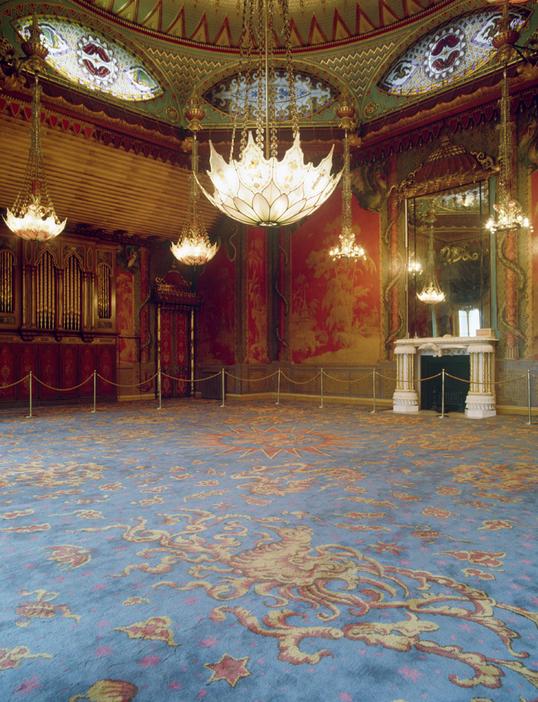
Reproduction of the Axminster carpet in the music room, Brighton Pavilion. Image @Craigie Stockwell

The history of the Axminster carpet started in 1755, when Thomas Whitty opened a carpet manufacturing company in the town of Axminster, in the county of Devon. The development of carpet manufacture in England during this period was enabled by laws which were designed to promote locally produced textiles, out of concern that foreign textiles were dominating the market, particularly by the French Savonnerie carpets. These early Axminster rugs were hand knotted, and they quickly became the undisputed choice for wealthy aristocracy. Antique Axminster carpets and rugs grace the floors of Chatsworth and Brighton Pavillion to name a few and were bought by George III and Queen Charlotte who visited the factory in the 18th Century. – Doris Lelsie Brau, English Axminster and Wilton

The Brighton Pavilion music room carpet (first image) has quite a remarkable story. The original carpet was made by Thomas Whitty and his daughters circa 1820 for the Prince Regent. Her Majesty, Queen Victoria, apparently disliked the brash blue color of this  ‘decadent’ carpet and had it removed, bleached into a light beige colour,  and cut up to be used in a guest bedroom at Buckingham Palace. The reproduction of this carpet is outlined in  Craigie Stockwell’s Historic Reproduction. (Scroll down the page to find the details of how a copy of the original carpet was made!)

The story of how Thomas Whitty (1713-1792), cloth manufacturer of Axminster in Devonshire, came to make his first carpet is well known. As an old man, he wrote an account for his son describing how, in 1755, in an attempt to provide a better income to support his growing family, he spied on the carpet factory of French émigrés in Fulham and returned to Axminster where “I immediately began to prepare a loom and materials for making a Carpet, and on MIDSUMMER’S DAY 1755, a memorable day for my family, I began the first carpet I ever made, taking my children and their Aunt Betty Harvey to overlook and assist them, for my first workers”. – Early Axminster Carpets
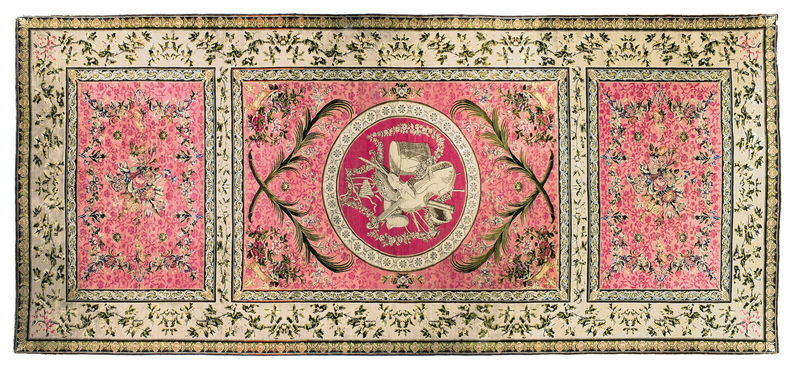
George III Axminster Carpet, England, by Thomas Whitty, late 18th century approximately 1323 by 572cm; 43ft. 5in. by 18ft. 9in. Photo: Sotheby's

This enormous late 18th century Axminster carpet was made by Whitty for the Music Room at Powderham Castle, 1798. Image @Eloge de l'Art par Alain Truong

Axminster carpets are distinctive because of their bright colors and intricate designs. They are traditionally made from wool.
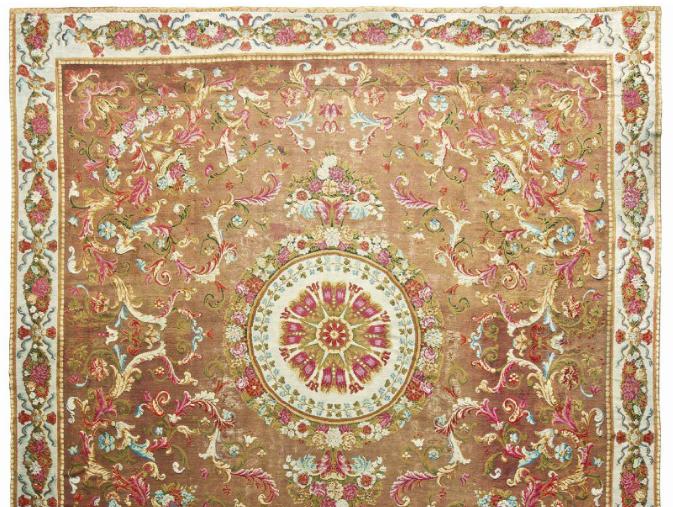
Large Axminster carpet, late 18th century. From Cowdray Park and Dunecht House, At Cowdray Park, West Sussex. Image @Christie's.

 Samuel Whitty, in an advertising broadsheet, described the advantages of Axminster carpets thus: “They are made in one piece, to any size or pattern and of any shape however irregular. They are capable of the most beautiful designs in Flowers, Fruit, Armorial Bearings, Grotesques or any other….and their texture is extremely durable”. – – Early Axminster Carpets
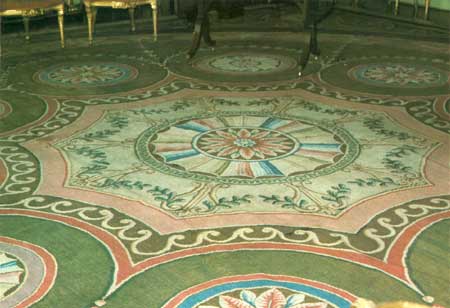
Detail of the Axminster carpet in the music room of Harewood House, c. 1791.

At Harewood House, for example, where Thomas Whitty made carpets for rooms remodeled by Robert Adam in the 1790’s, the neoclassical ideal of the whole becomes magnificently apparent. In the Music Room a flat plaster ceiling decorated with low-relief arabesques and geometric motifs incorporates small round classical paintings by Angelica Kauffmann; these medallions are exactly reflected in the Axminster carpet below, and the lines of the carpet mirror the lines of the light, airy plasterwork. – The Most Splendid Carpet, Chapter 3

The early 19th century English Axminster carpet in the video above has a sand field with a golden leaf roundel containing four fish around a naturalistic lion head within a border of finely-drawn mythological animals, palmettes and vinery. It goes for $425,000
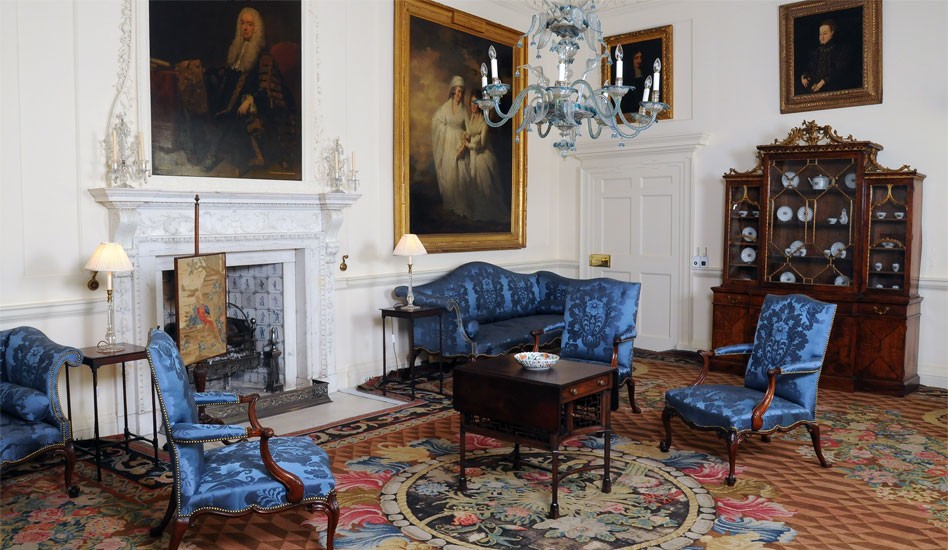
Axminster carpet in the Blue Drawing Room, Dumfries House

This carpet [above] is one of the earliest datable examples to have survived from the formative years at Axminster and was commissioned for the Drawing Room at Dumfries House. In a marvellously early example of thrift, it was shipped up separately from another, identical carpet, which the surviving invoice tells us was part of a Buy One – Get One Half Price deal! At £69 for the first one, this represents a saving of a large sum of money for the day. This is, of course, explained by the fact that they were both worked to the same design as a pair, so that the cartoon only need to be paid for once.

The carpet signifies the growing 18th century interest in exotic botany, as it includes a flowering cactus. The carpet dates from before Whitty’s collaboration with Robert Adam on the design of carpets. However, it is a wonderful example of a colourful, animated and sumptuous looking rococo piece of design. – The Story of the Blue Drawing Room: Dumfries House

The colors, designs,  and shapes of Axminster carpets were quite versatile.  Examples included floral carpets of the 1750s and 1760, and architect-designed carpets by Robert Adam for Harewood and Saltram, by Lewis Wyatt for the Library at Tatton Park, and by Robert Jones and Frederick Crace for the Brighton Pavilion. Axminster carpets were shaped and could be circular,  semi-circular, or woven with shaped ends to fit semi-circular and square alcoves and apses.  (Early Axminster carpets)
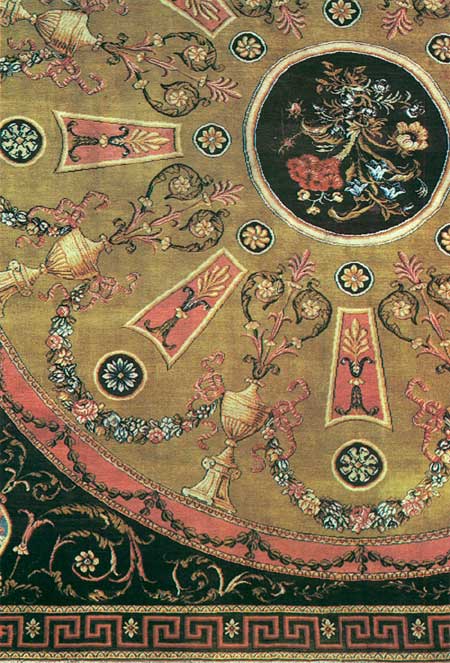
Detail of an Axminster carpet, c 1791. Image @Metropolitan Museum of Art

Axminster dominated the English carpet market until 1835, when Samuel Rampson Whitty, grandson of the founder, declared bankruptcy following a disastrous fire which destroyed the weaving looms. With competition from Europe and the rise of high-quality but cheaper, machine-made carpets, it was too expensive to try to revive the works.- Risky Regencies

The fire was disastrous on many levels, destroying records and carpet designs:

The fire destroyed not only buildings, looms and stock but also most of the written records, including the working drawings for carpets. Whereas the Woodward Grosvenor Company of Kidderminster still have an extensive archive of early cartoons, such cartoons are virtually non-existent for early Axminster carpets.  – Early Axminster Carpets

The Axminister carpet industry was revived in the 20th century. According to the Axminster website, “a carpet manufacturer called Harry Dutfield was on a train where he met a vicar from the West Country who told him that carpets had not been made in Axminster for a while due to a disastrous fire that had destroyed the factory. The germ of an idea was born and in 1937 the decision was taken to relaunch carpet manufacturing in the town of Axminster. This was the renaissance of ‘Axminsters from Axminster’.” Today the name serves as a generic term for all machine-made carpets with pile similar to velvet or chenille, with almost all pile yarn appearing on the surface of the carpet.

Modern Axminster carpet in the Casino de Deauville, France.

When one sees patterned carpet in a public place [today], such as a casino, hotel or restaurant, it is usually an Axminster.  Axminsters are more economical, for they use less yarn in their construction.  The pile is created by a V-shaped tuft of wool that is trapped in place between the warp and weft. This weaving method also allows for the use of many more colors, as it is not limited like the Wilton/Brussels construction.   For this reason, there were many carpets with huge sprays of flowers and Arabesques that could now be produced cheaply, and were available to the middle class, including outlets such as Sears and Roebuck. – Old House Web
More on the topic:
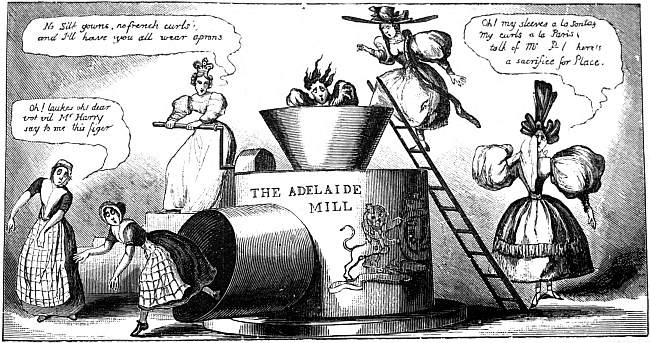
The Adelaide Mill

Caricature by Robert Seymour, 1830

After the death of Princess Charlotte in childbirth in 1817, the British Royal family was left without a legitimate heir to the throne. Since their marriage, King George IV had felt an overpowering physical and mental aversion to Queen Caroline, his consort, and the possibility of his begetting another child on her was less than zero.

None of the King’s brothers were married. The Dukes of York, Clarence, Kent, Cumberland, Sussex, and Cambridge all began to court potential brides in earnest.

In 1818 William Henry, Duke of Clarence, who would reign as King William IV, abandoned his 20-year relationship with Mrs. Jordan, with whom he had ten children, to marry Adelaide of Saxe-Meiningen, a rather plain lady half his age. In short time the strong-willed duchess managed to take her husband’s finances in hand and pay off his debts through economical living. Parliament voted to increase his allowance, which the Duke, who was angling for more, finally accepted.

William was crowned King in 1830. By all accounts he was faithful to his queen. They lived a sober, almost boring life,  but, sadly, their two infant children did not survive. Queen Adelaide’s strong influence throughout her marriage can be seen in this illustration.This cartoon of the Adelaide Mill, drawn by English caricaturist, Robert Seymour, shows Adelaide decreeing that the court domestics must dress more humbly:

From other contemporary pictorial skits by Seymour we learn that various changes were made in the royal establishment, and the new queen seems to have addressed herself specially to a reform in the dresses of the court domestics. On the 1st of October, 1830, Seymour represents her grinding an enormous machine, called the “Adelaide Mill,” into which the women servants, dressed in the outrageous head-gear and leg-of-mutton sleeves of the period, are perforce ascending, and issuing from the other side attired in plain and more suitable apparel. “No silk gowns,” says Her Majesty as she turns the handle. “No French curls; and I’ll have you all wear aprons.” The new queen seems also to have shown a disposition to encourage native manufactures and produce at the expense of French and continental importations. These changes were not particularly pleasing to the Conservative lady patronesses of Almack’s, who were celebrated at this time for their capricious exclusiveness. One of Robert Seymour’s satires, bearing date the 1st of November, 1830, shows us a conference of these haughty dames, who seriously discuss the propriety of admitting some lady (probably the queen) who proposed appearing at one of the balls “in some vulgar stuff made by the canaille at a place called Kittlefields” [Spitalfields].” – English Caricaturists and Graphic Humourists of the Nineteenth Century. How they Illustrated and Interpreted their Times, by Graham Everitt

The death of King William IV in 1837 led to the long and successful reign of Queen Victoria, daughter of Prince Edward, Duke of Kent.

Learn more about Mrs Jordan in this link: The Delectable Dora Jordan

Brunswick House

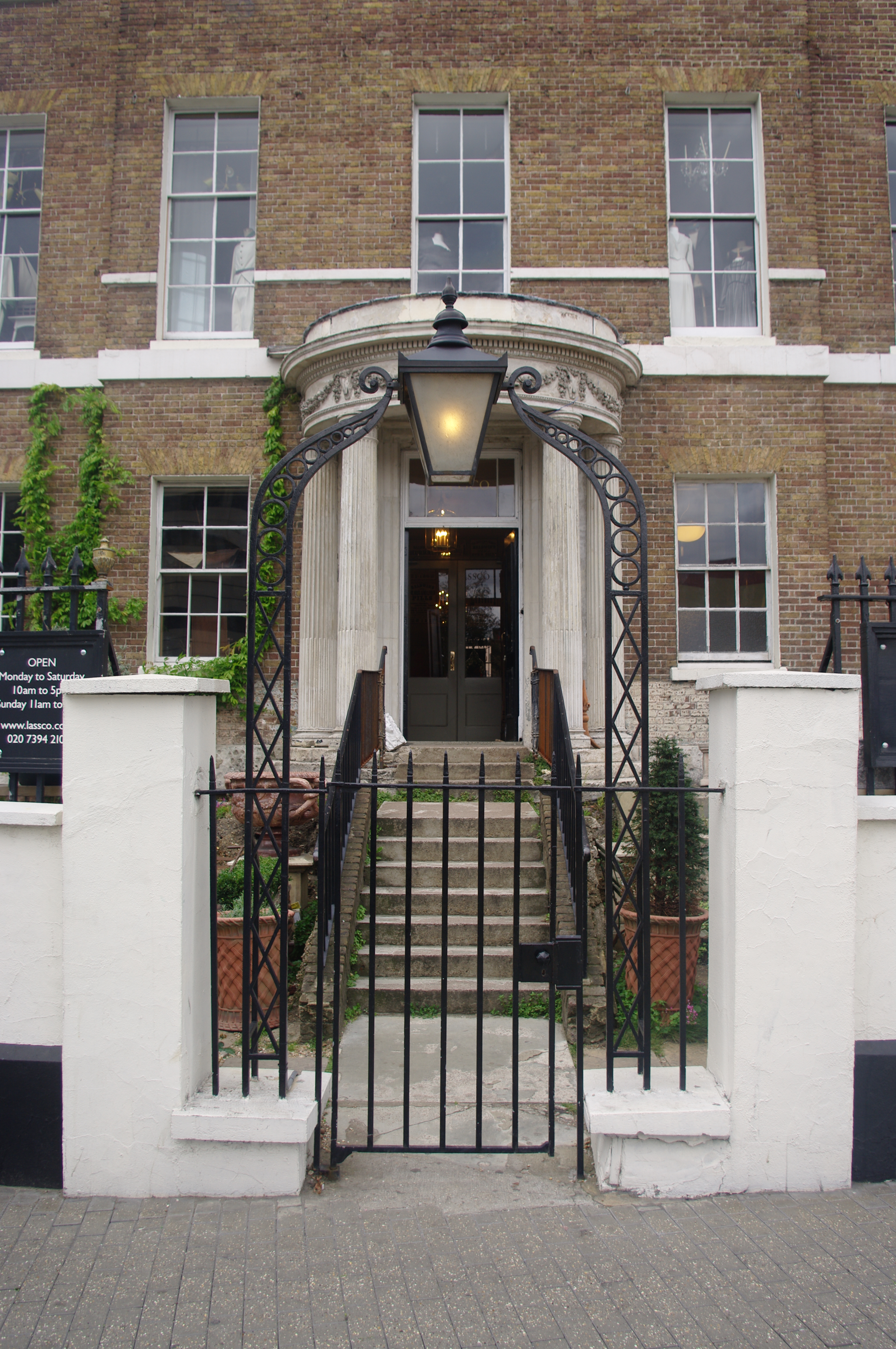
In his post about Hogarth’s The Rake’s Progress a few weeks ago, Tony Grant mentioned Brunswick House as a possible stand-in for Tom’s inherited home. Brunswick House was built in 1758 on #30 Wandsworth Road and was the former home to the Dukes of Brunswick.

Brunswick House. Image @Tony Grant

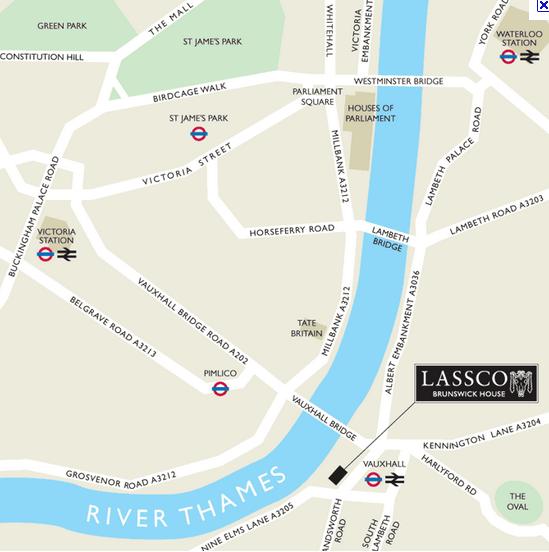
It sat on 3 acres of land along the South Bank of the Thames River near what was once Vauxhall Pleasure Gardens. This once popular entertainment destination, with its vast gardens, pavilions, and nightly illuminations, looms large in Georgian biographies and novels and modern books set in the Regency era.

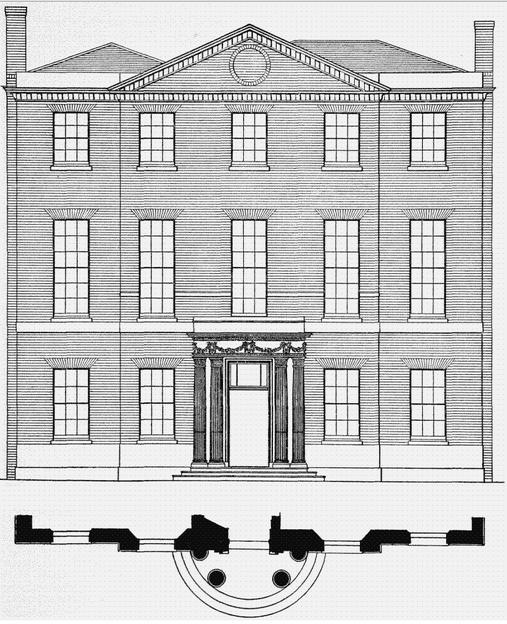
Brunswick House. Image @British History Online

The 3-story house, almost square in shape, was once described as a mansion house with offices, coach-house, and a stables. Its surroundings, once filled with vistas of green fields, woods, and river, is now crammed with tall buildings and flats made of concrete, steel and glass.

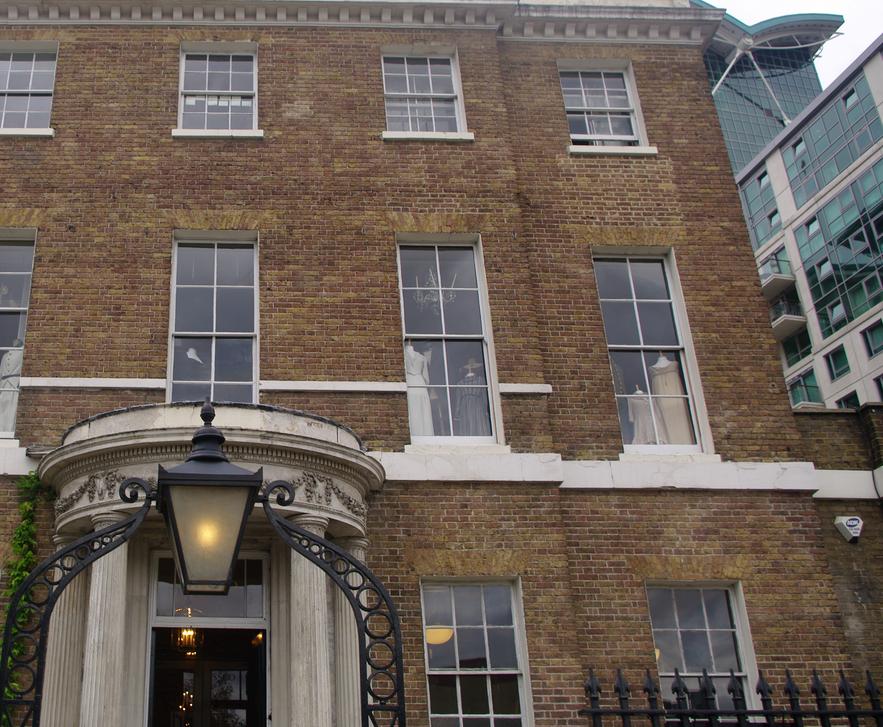
Brunswick House today. Image @Stephen Richards

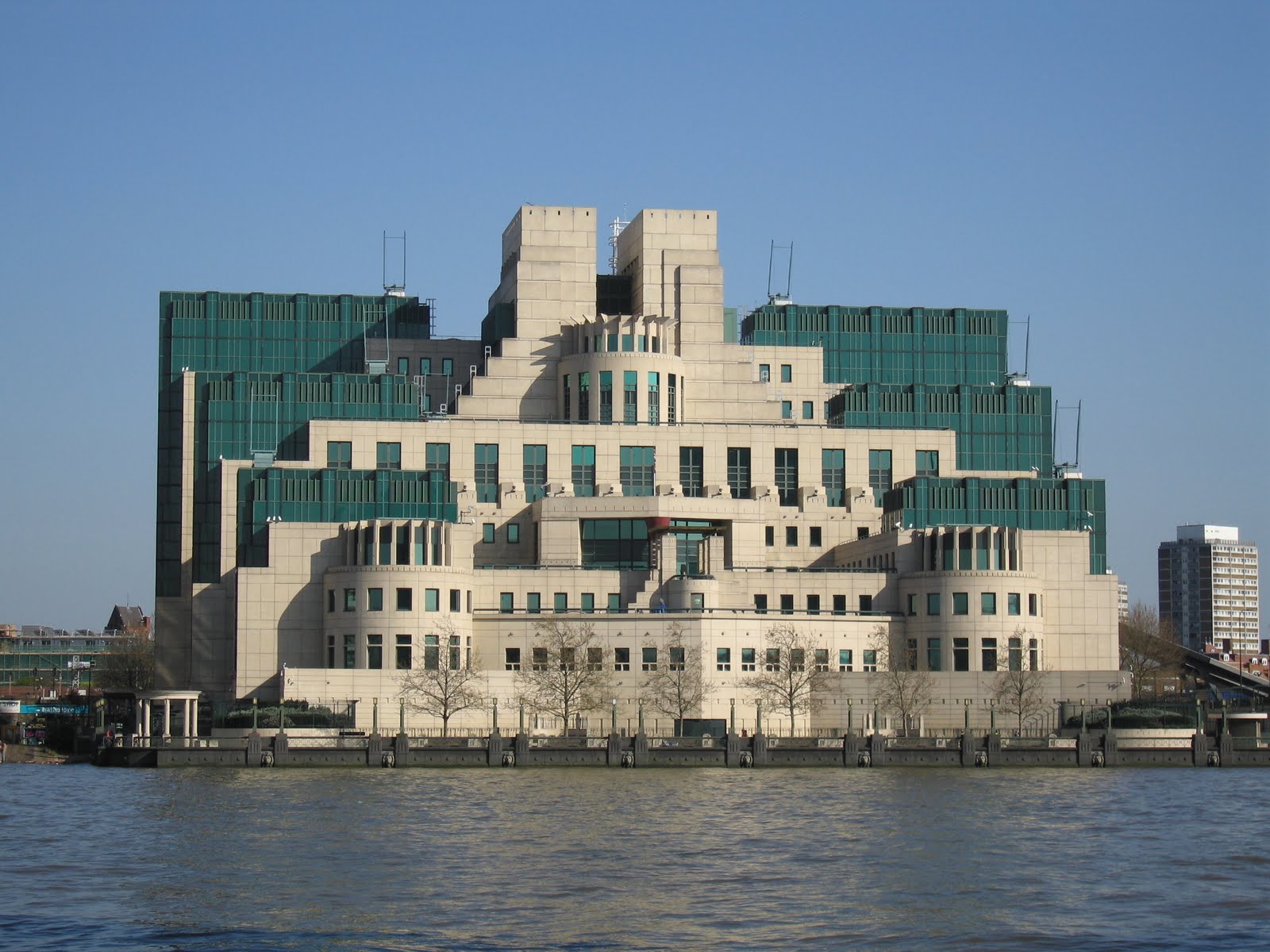
This relic of the Georgian era sits in Nine Elms on the South Bank opposite Vauxhall Tube Station and next to the green glass edifice of MI5…

M15 building, also known as Babylon on Thames. Image @Tony Grant

…its centrally placed semi-elliptical porch of painted Coade’ stone facing busy Wandsworth Road, where cars, lorries, and buses rush by at a fast pace.

Close up includes details of Georgian dress in second story windows. Image @Tony Grant

The porch

“has two free-standing and two engaged columns with enriched moulded bases, fluted and cabled shafts, and water-leaf capitals. The entablature has a frieze decoration of rams’ skulls linked by floral festoons, and the cornice bedmouldings are enriched. The surmounting blocking-course continues the lines of the first-floor platband.” – British History Online 

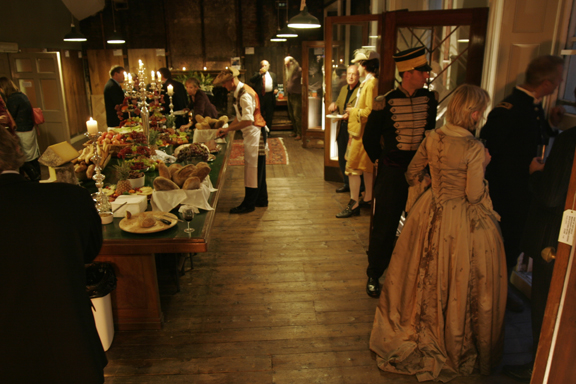
LASSCO launch party, Brunswick House, 2005

While Brunswick house’s exterior remains largely as it once was, the interior has changed so much that the original plans are no longer discernable. Today the structure is the home of LASSCO (The London Architectural Salvage and Supply Company) antique dealers.

“After the squatters were removed, the building was restored and it’s now used by LASSCO as a premises from which to sell architectural salvage. Members of the public are welcome to visit the restored building for a glimpse of Vauxhall’s elegant past.” – Time Out London http://www.timeout.com/london/museums-attractions/event/2156/brunswick-house

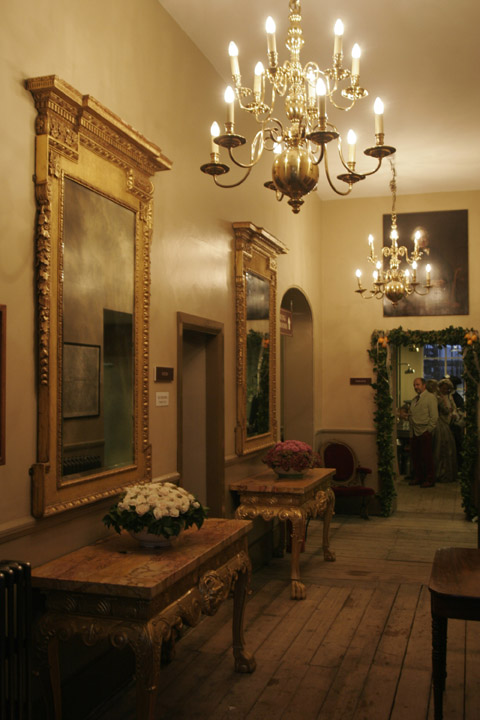
Restored interior, Brunswick House, 2005

Images from LASSCO’s launch party in 2005 show glimpses of the restored interior, especially the wood floors.

More about Brunswick House:

Gentle Readers, this is Christine Stewart’s second post about her trip to England this past summer. The author of Embarking on a Course of Study, you will enjoy her reminiscences.The day after visiting Jane’s writing desk and portrait in London, I went to Paris. Yes, for the day. It was there so I popped over to squeeze in what I could – a long, exquisite day of mostly walking and a trip up the Eiffel Tower (okay, more like hobbling because I walked everywhere in Reykjavik and had two days of London walking behind me as well. My ankles looked like I was 85 years old. But it was worth it for the view).

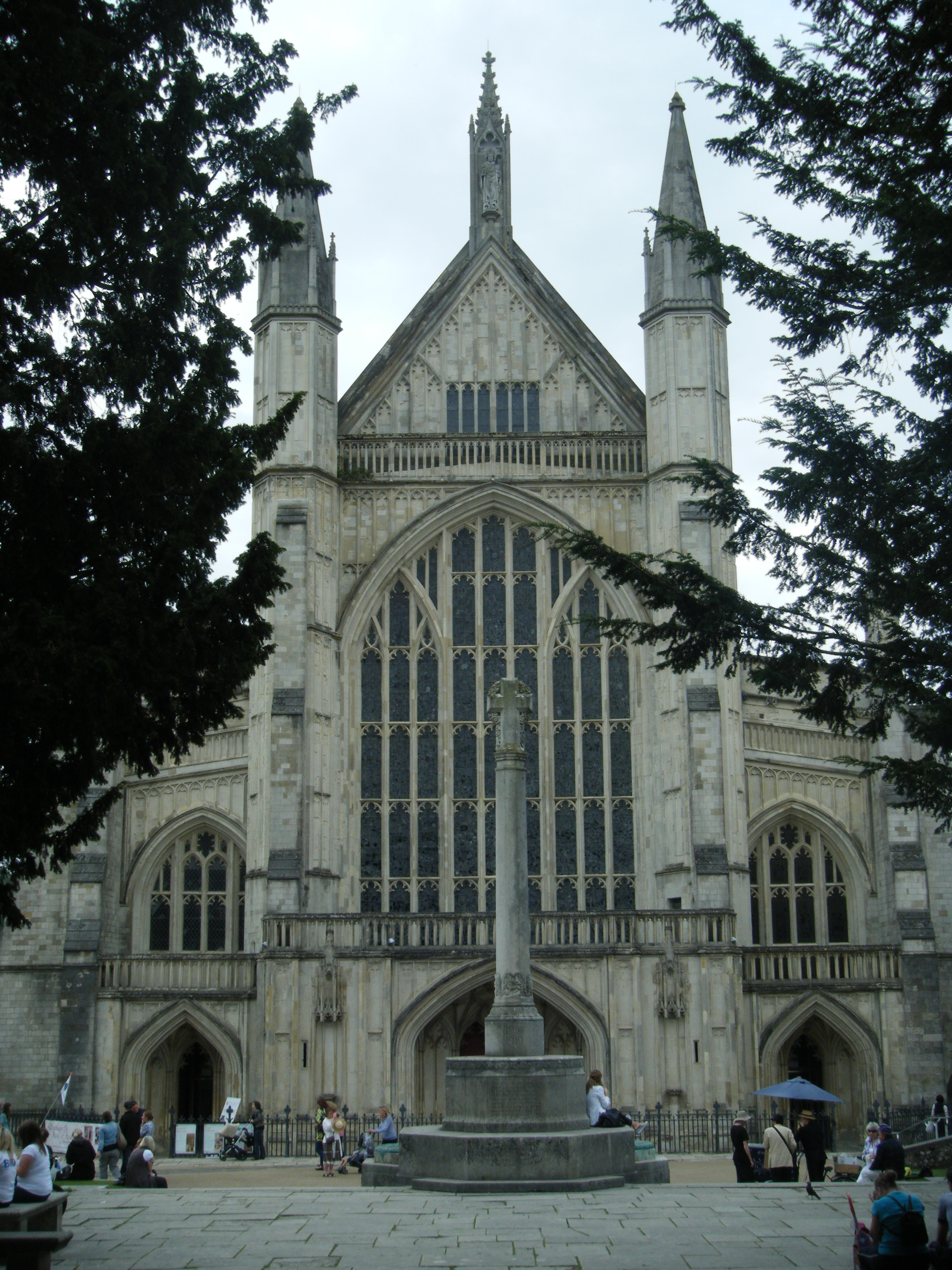
Paris turned out to be a 20 hour day, so I slept in and caught a later train to Winchester and had just enough time to see the Cathedral and the house on College Street where Jane died before catching my bus to Alton (near Chawton) to reach my hotel.Winchester is delightful. Twisty turny streets, archways, alleys tucked between the backs of houses with gates and wooden doors. It felt like one big secret garden to me. I could have wandered for hours.  The sky was grayish when I arrived at the Cathedral – perfect for photographs. I took many pictures of the outside as there were so many interesting vantage points but here’s the main one (to keep reading:  http://www.embarkingonacourseofstudy.com

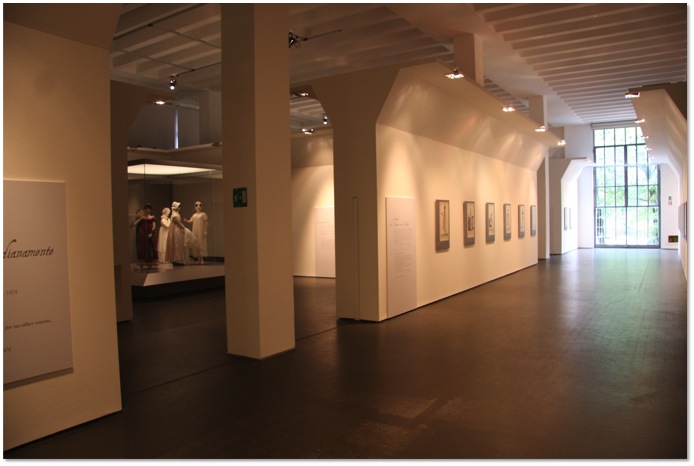
The lush fashion exhibition, Napoleon and the Empire of Fashion, closed in Milan in September. On the website, readers are still allowed to choose where they would like it to travel next!

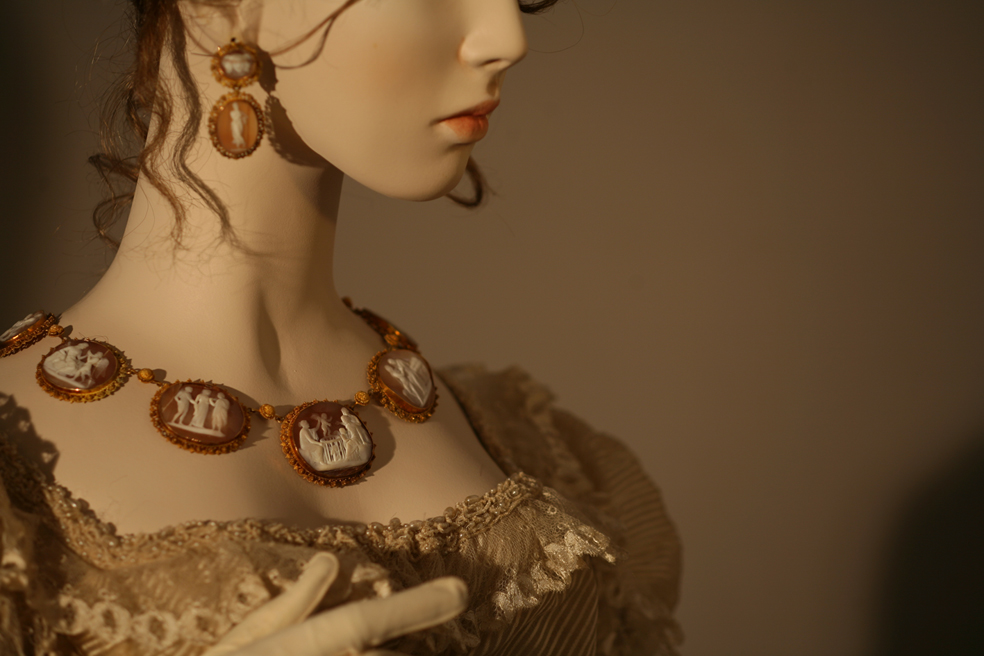
The beautiful cameo necklace and earrings complete this evening ensemble.

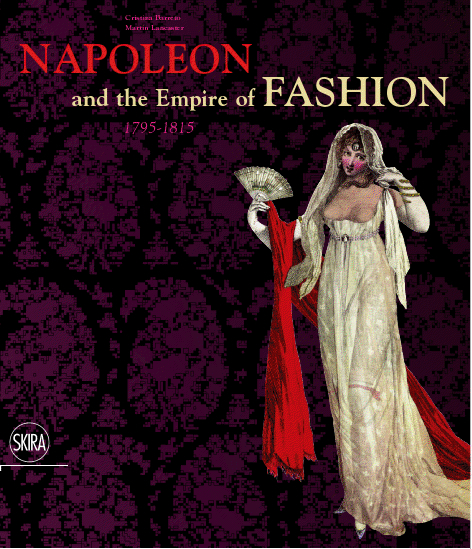
The catalogue, written by Cristina Barreto and Martin Lancaster, is sumptuous and filled with color photographs. The clothes are compared to fashion illustrations of the day. One cannot get a better education of French fashion during this period than this book. This video and the link to the slide show below it show what we have missed by not traveling to Milan last spring and summer.

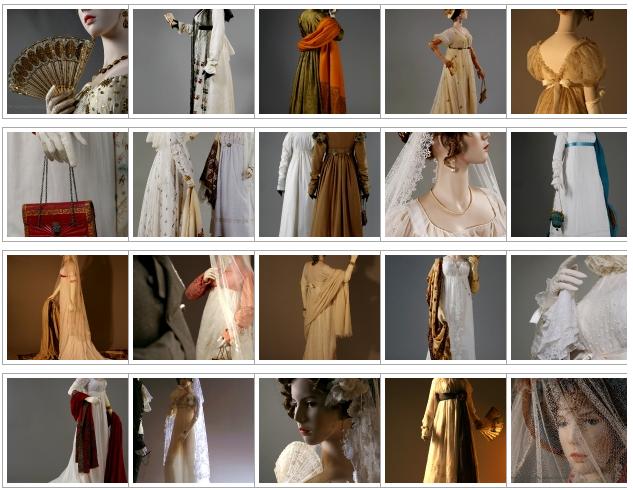
Napoleon’s desire to protect the garment industry in France after the French Revolution resulted in an explosion of designs that propelled the French fashion industry to the forefront, making it hugely influential. By encouraging women to purchase many gowns (so that they would not be seen in the same dress too often), France became synonymous with fashion. See the slide show of images from the exhibition by clicking on this link.

The many French fashions shown from the 1795-1810 years

Vote where you would like the exhibit to travel next. If the exhibit comes to New York, I hope to see the same mannequins. Aren’t they simply superb?

Napoleon and the Empire of Fashion in Milan

Order the catalog at Amazon: It ships within 1-3 months.