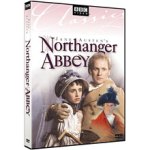
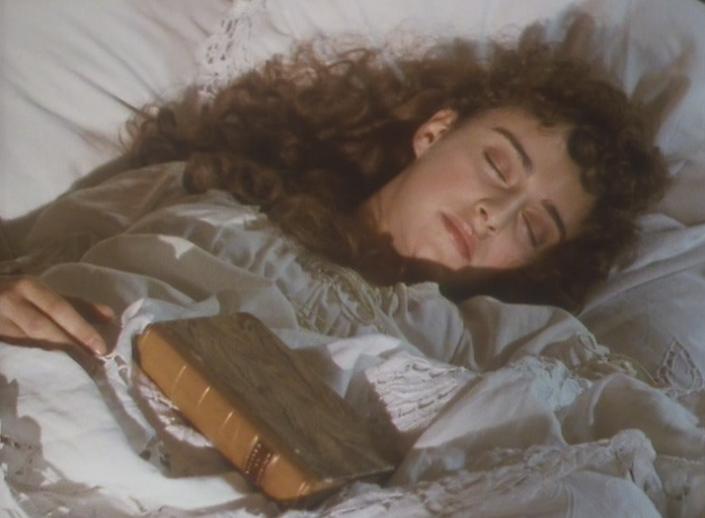
 Until a cold felled me low this week, I had refrained from rewatching Northanger Abbey 1986, which I had a tough time sitting all the way through the first few times around. This film has left me feeling frustrated for its lost opportunities and many misses, and I wonder if the director and script writer wish today that they could change some of the creative decisions they made almost a quarter of a century earlier. In this film, we see the story unfold from young Catherine Morland’s (Katherine Schlesinger’s) point of view. This means we get a lot of Gothic novel fantasies made up by script writer Maggie Wadey, and hardly any Jane Austen at all.
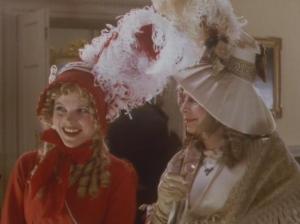
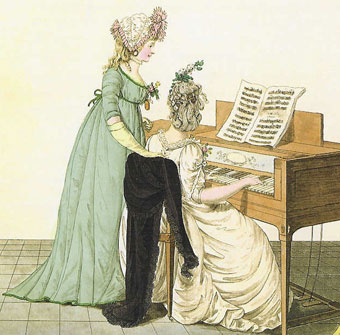
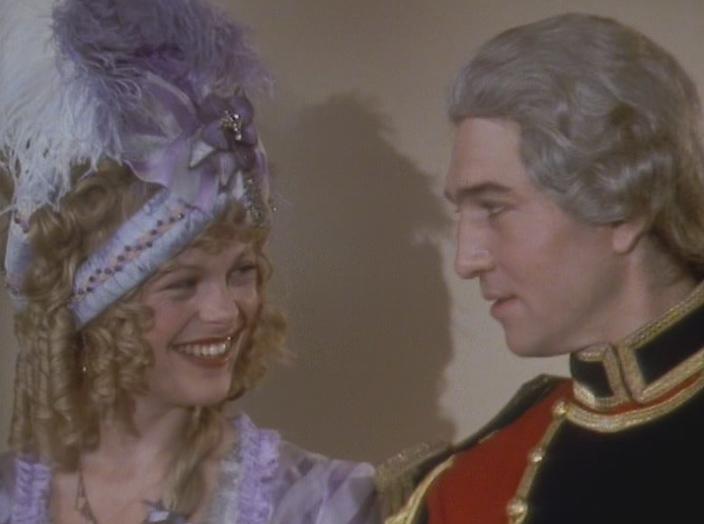
Isabella Thorpe and her mother wear outfits, hats, and hairdos that seem inspired by Von Heideloff prints
The production values are quite stunning, considering how old this BBC adaptation is and how poorly made films for television were in that era. Costumes designed by Nicholas Rocker are the fashion equivalent of beautiful meringues and chocolate bonbons (how could any of these women, except Mrs. Allen or Eleanor Tilney have afforded such luxurious gowns?). Despite the breathtaking settings and authentic backdrops, this 90-minute film adaptation with its strange synthetic music manages to entirely miss the satiric point of Jane Austen’s wonderful take on the gothic novel. And someone should have told the makeup department to lay off the heavy mascara and lipstick on all the ladies.
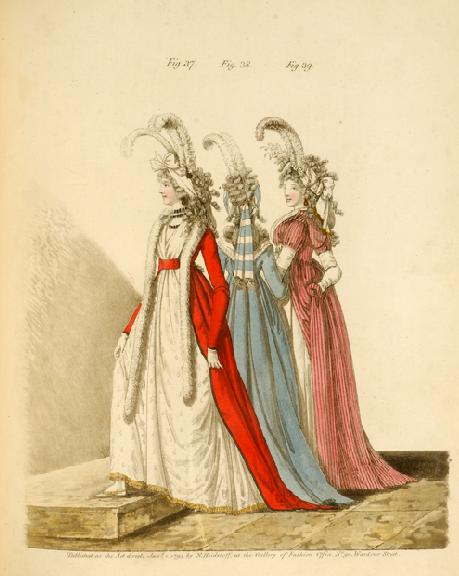
1795 Von Heidoloff fashion plate
Although the length of this adaptation is a mere 90 minutes, script writer Maggie Wadey added scenes and characters that detracted from the story or overwhelmed it, and that replaced moments in the book that were important to drive the plot forward and understand the characters better.
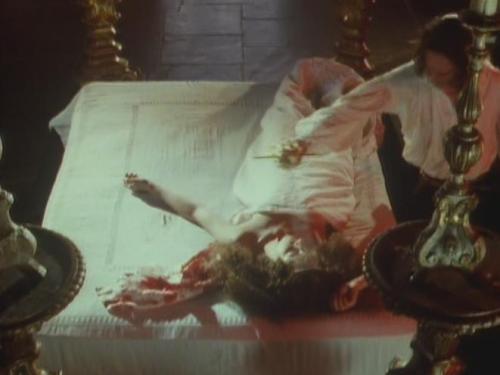
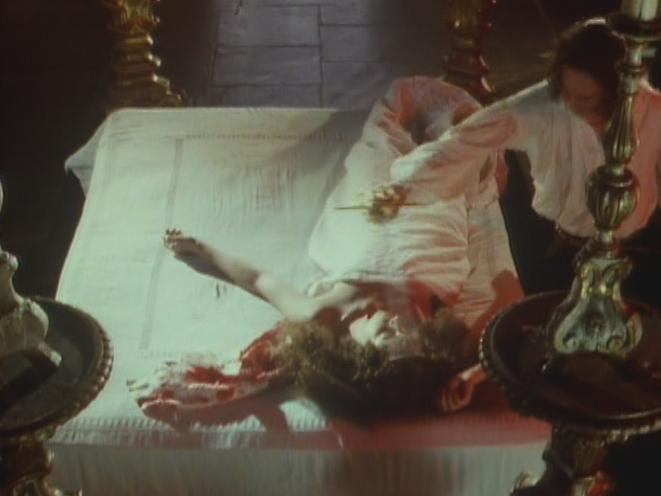
While Jane Austen made it clear that young Catherine had quite an imagination, these over the top film scenes were jarring and took away valuable cinematic time from good story telling.
I also found major problems with the musical score. The four musical clips embedded in this post and written by composer Ilona Sekacs in no way evoke the Regency era. Click to hear the theme for the DVD – a 47 second music clip.
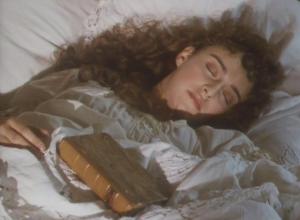
Catherine's Gothic dreams drive the music
Sekacs’ synthesized music and odd vocalizations from a female choir concentrate almost solely on giving us an eerie sense of ” Gothic doom”. Unfortunately, the composer uses the “Lah da dah-Ooh” chorus throughout the film, and occasionally throws in a Gregorian Chant for good measure. Only during the ball scenes and at a musicale in Northanger Abbey are we allowed to hear music made with traditional instruments and that might have been heard during the Regency era.
An occasional tinkle from a pianoforte would have added greatly to a Georgian era atmosphere
I can only surmise that Ilona Sekacs was influenced by Vangelis, who had won an Academy Award for his score for Chariots of Fire five years before this production. Although Chariots was a period film, Vangelis’ electronic score sounded fresh and sweeping as 1920’s male runners practiced their speed against a back drop of endless beaches, rolling waves, and big sky. His score was a huge success in the early 80’s and he was rewarded for it. Alas for Jane Austen lovers, electronic synthesizers do not work as effectively in evoking a Bath drawing room, or as a backdrop for such Regency pastimes as walking, taking the waters, and carriage rides.
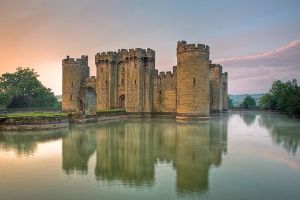
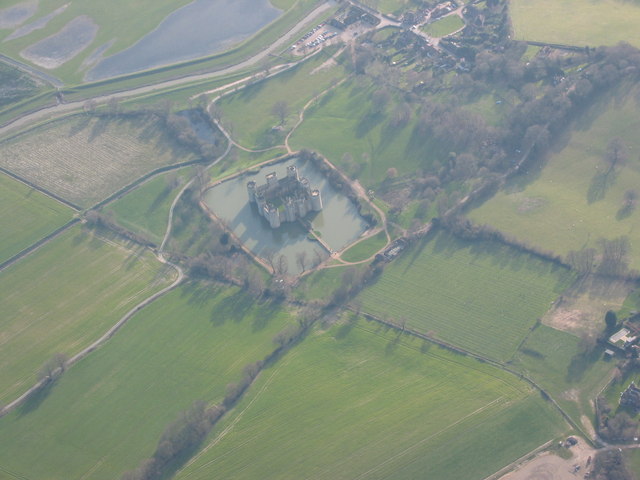
Bodiam Castle, built 1385
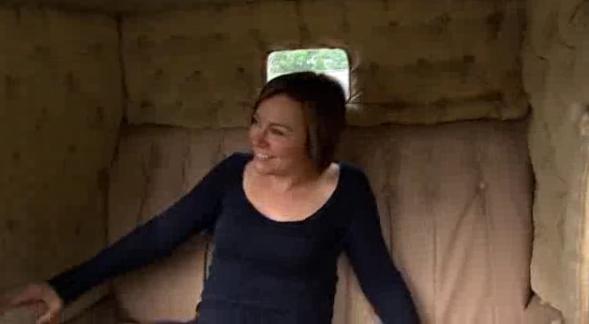
As the opening credits roll by, Catherine’s views Northanger Abbey from the carriage (to the accompaniment of this musical clip, which features male and female chanters and trumpets blaring). The Abbey is actually Bodiam Castle, a 14th-century keep with a water moat, and a well-known tourist destination.
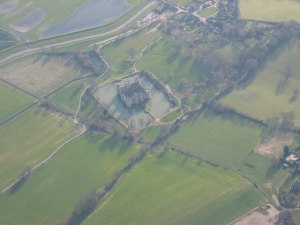
Bodiam Castle's grounds from the air
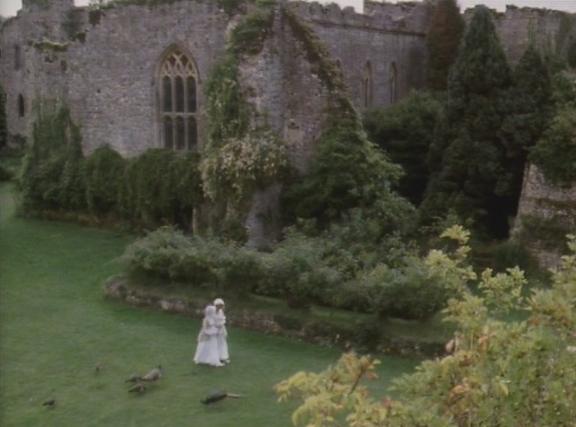
I instantly sat up and took notice, for I have visited Bodium Castle. It was a ruin during Jane Austen’s day and was only partially rebuilt in 1829, a good twelve years after her death. According to Jane’s novel, Northanger Abbey was surrounded by extensive gardens, and I wondered how the director would pull off the scene where the general boasted of his fruit trees. Imagine my surprise when I saw Catherine and Miss Tilney walking towards a side entrance of an entirely new building with different architectural details and nary a moat in sight. “Badly done”, as Mr. Knightley would have said. Bad transition, indeed.
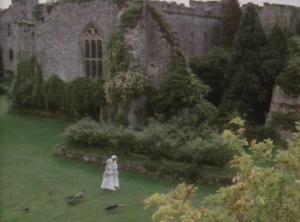
A stroll through the gardens of Northanger Abbey
But I have jumped ahead of myself, for there are other earlier errors for which I cannot forgive this production. Take Henry Tilney (Peter Firth), for instance. At the Assembly Ball, he bumps into Catherine and Mrs. Allen (a delightful Googie Withers) without a proper introduction from the Master of Ceremonies. Except for Henry’s comments about muslins, his fey but wise sense of humor is almost entirely missing at the start of this film.
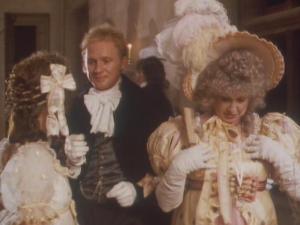
Henry Tilney bumps into Catherine Morland and Mrs Allen.
I must admit that I do not like Firth‘s portrayal of Henry Tilney and could never see him as this character. But even so, Henry’s charming conversation was given short shrift, and he appears only long enough for Catherine to develop an interest in him before disappearing. Click here to view a YouTube clip (and hear period appropriate music) of Henry’s first meeting with Catherine.
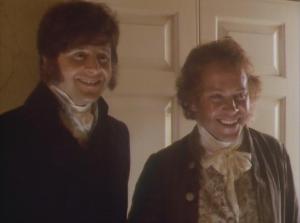
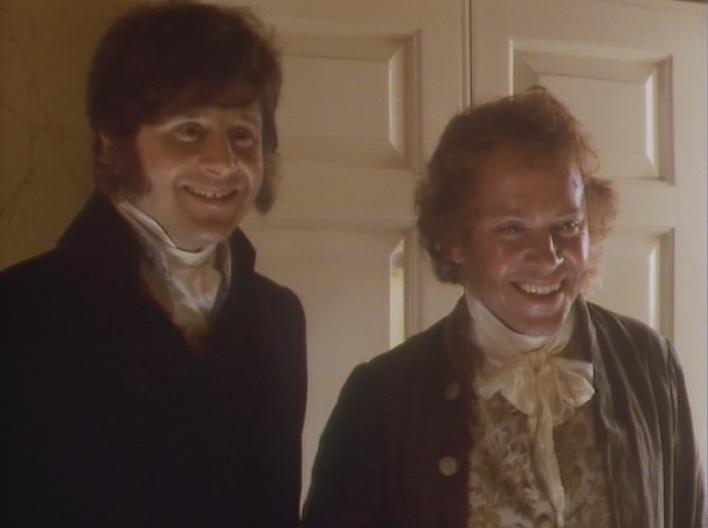
James Morland introduces John Thorpe
Where Henry’s role was severely diminished, John Thorpe’s presence early in the film was largely retained. Mrs. Allen and Catherine do not bump into Mrs. Thorpe as they walk through Bath, as Jane Austen had written. Rather, as you can see in this YouTube clip, Catherine’s brother, James, visits the Allens and makes the introduction. Catherine then meets Isabella, overplayed by Cassie Stuart.
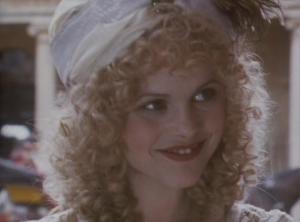
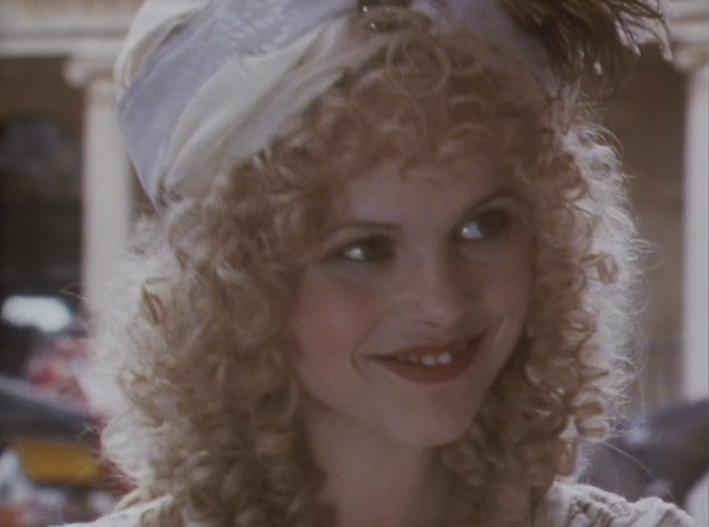
Isabella Thorpe, pretty but calculating
Because of the film’s short length, Isabella’s overly forward and friendly manner seems doubly rushed. The second time she meets Catherine, she reveals her love for James and her wish to marry him, and the next thing you know, James goes racing off to his father to beg for his permission to marry her.
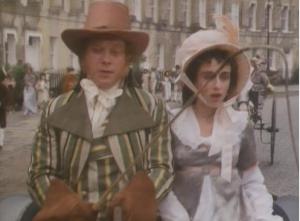
John's loud coat should clue Catherine about his character
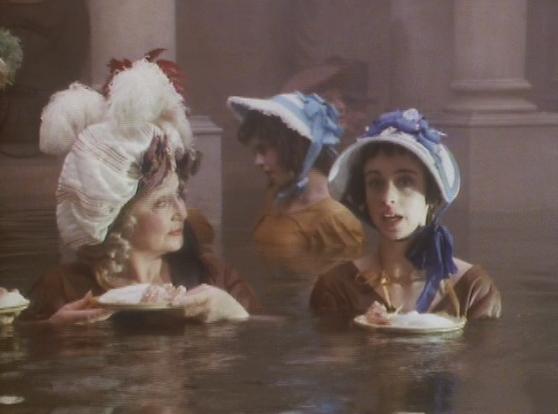
But once I again I digress. John Thorpe (Jonathan Coy) is suitably sleazy (can’t you tell from his hideously striped suit?) and even Catherine leaves her Gothic fantasies long enough to be appalled by his boorishness. Thorpe’s early scenes are quite effective and then … he disappears. Except for a few mentions later, he literally falls off the face of the DVD, but not before he participates in one final scene in the hot baths, where Catherine, Isabella, Mrs. Allen, and Eleanor Tilney gather to bathe in the hot mineral waters. The party enters the baths to the strains of odd discordant music. An entire chorus is now crowding in on Catherine’s brain, and she can only stare wide-eyed around her.
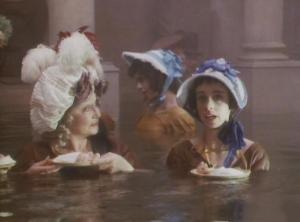
Mrs. Allen and Catherine in the hot bath
But Catherine, who has a full and active day ahead of her, can bathe for only a short time. She makes a walking date with pretty Eleanor Tilney (Ingrid Lacey), who happens to be there. After sweating for some time in a hot and humid room, Catherine and Isabella emerge from the building with every curl in place and looking fresh in their beautiful unwrinkled, delicate muslin walking dresses. Isabella begins to fret over Catherine’s excessive attention to Eleanor. It is at this point that the uninitiated will start to lose an important thread of the story, for unless the viewer has already read the book, she will have no idea why John and Isabella are so determined to have Catherine accompany them to Clifton.
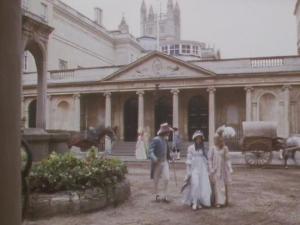
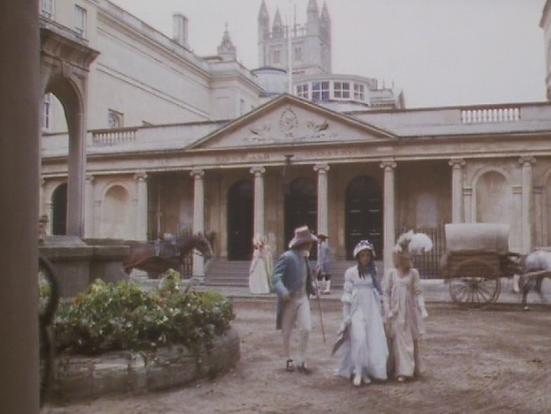
Bath is a beautiful setting as always
The plot has been so compressed and muddled, that the motivation that drives these characters is a bit murky. The uninitiated will wonder: Why is John so interested in Catherine? Why is Isabella jealous of Eleanor? Why, indeed.
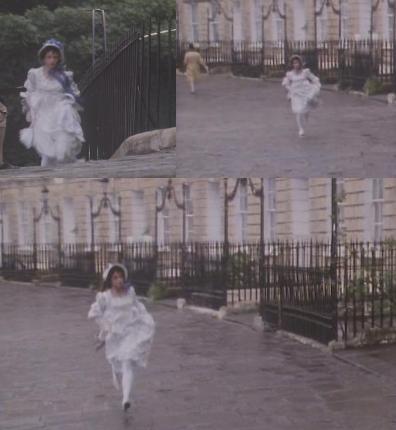
As John meets the ladies outside the hot baths he reveals that he has rearranged Catherine’s walking date with Eleanor, which sets Catherine’s temper off and sends her running through the streets towards General Tilney’s house.
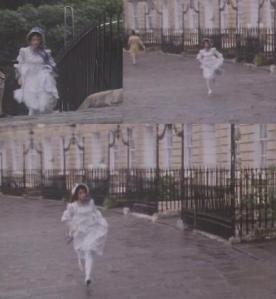
In my opinion, this would have been a good time to insert Vangelis’s oscar-winning score for Chariots of Fire, since a run through Bath by a Jane Austen heroine is now rapidly becoming a Jane Austen TV adaptation tradition. (See Persuasion 2007.)
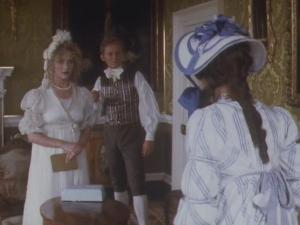
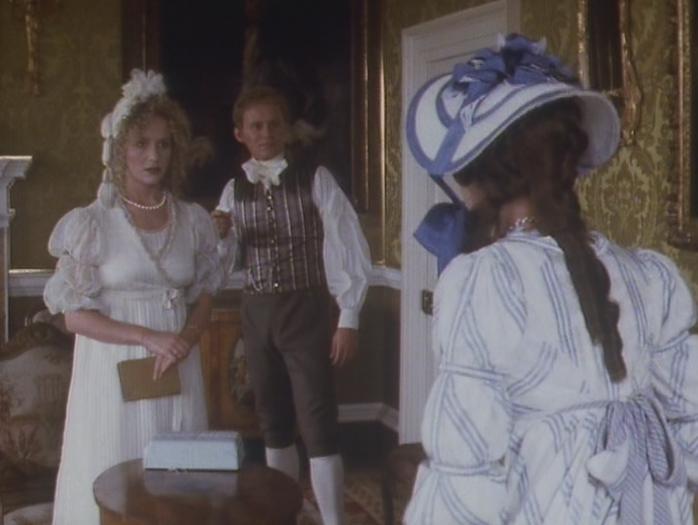
Catherine interrupts the Tilneys
Catherine rushes past the footman as he opens the Tilney’s front door, enters the house alone, and barges into the drawing room to apologize to Eleanor for John’s arrogance. All the while, she still looks fresh as a daisy.
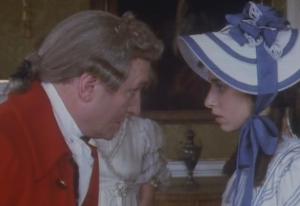
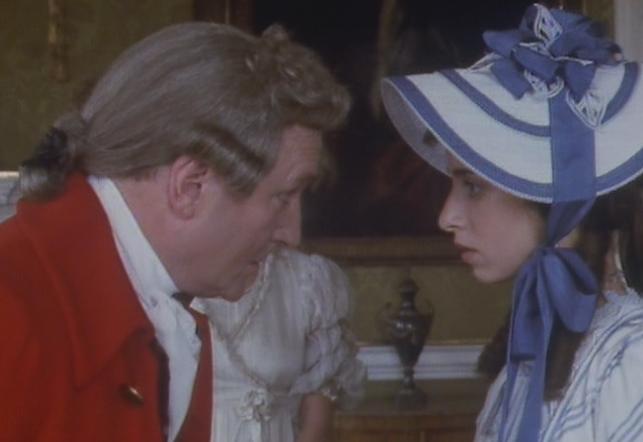
The General meets his unexpected guest
She meets General Tilney (Robert Hardy), who is simply delighted with Catherine and who encourages her to go on an outing with Henry and Eleanor as soon as possible. (The uninitiated will wonder: “why is he so intrigued with this rather simple, uninteresting girl?” Why indeed.) And so Catherine hurries off with the Tilney siblings to … Beechen Cliff ? Why, no! Jane Austen’s chosen spot for discussing the picturesque wasn’t deemed good enough and so the actors were taken to another location.
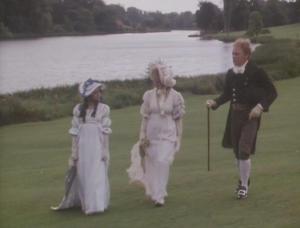
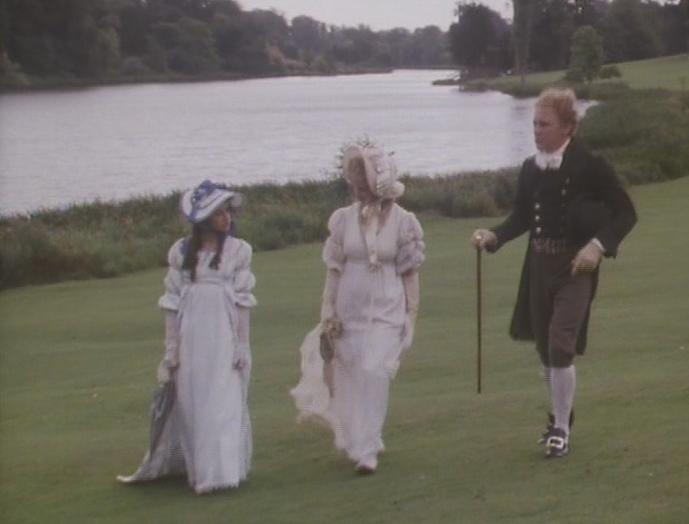
A walk along a sculpted lake instead of Beechen Cliff
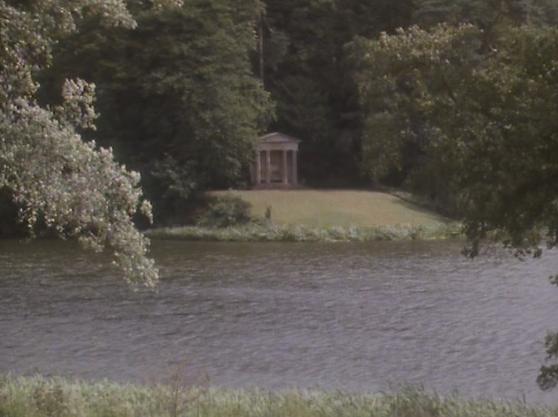
And thus they are filmed walking through a picturesque setting, with a lake and temple folly and weeping willows (so very 18th century refined), to talk about the picturesque.
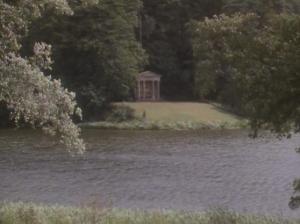
A lake with temple folly
Instead of gazing at Bath from the heights of Beechen Cliff, the viewers are treated to the sight of Henry rowing the ladies across the waters.
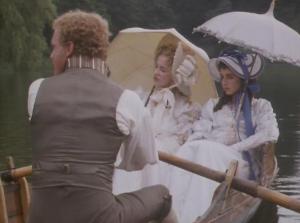
At the end of this important scene (for Henry recognizes Catherine’s natural, unassuming, yet unformed airs), the music crescendos and the viewers hear 31 seconds of neo-jazz/Grecian tragedy music with a greek chorus and New Orleans saxophone.
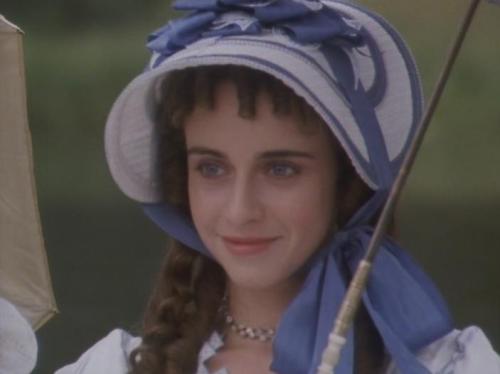
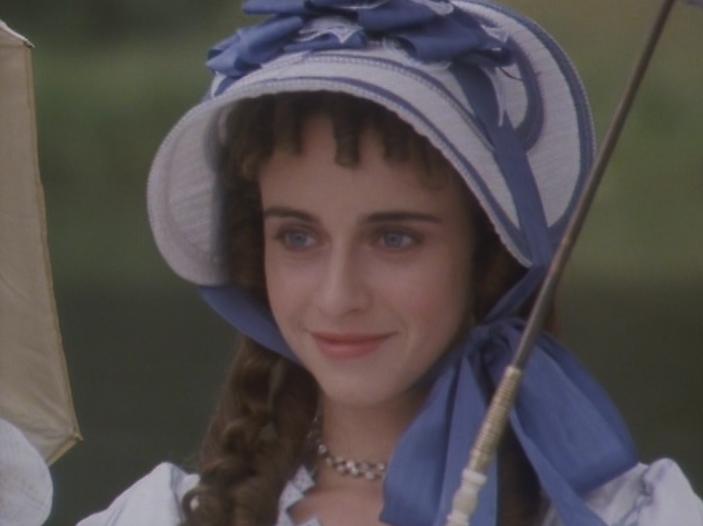
In this image, the description of Catherine rings true: ""Catherine grows quite a good-looking girl-she is almost pretty today."
At this juncture I must share the following comment, just to soften my own harsh critique. Jules, a very well spoken person, had this to say in 2005:
Ilona Sekacz wrote the score for a BBC TV version of ‘Northanger Abbey’ with Peter Firth. The music stood out a mile. A wonderful, haunting voice with a pulsing rhythm that has has stayed with me since I first saw the programme back in the 80s (I think). I could hum it now. I have tried to find this music but it has disappeared into cyberspace. Such a shame, it was so memorable. I bought the video years ago just to get the music. It’s not out on DVD but I transferred my VHS so I’ll never lose it.
I love this woman’s music, it’s unique and inspiring.
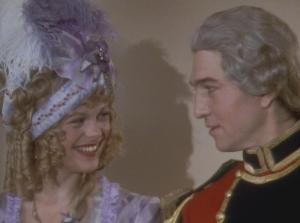
Isabella flirts with Captain Tilney and gets her comeuppance
Ok, so to each his own. I’ve gone on long enough about how much I dislike the film. In swift succession, Isabella flirts with Captain Frederick Tilney, prompting James to end their engagement; Catherine visits Northanger Abbey and makes a fool of herself trying to find intrigue and uncover a murder most foul,
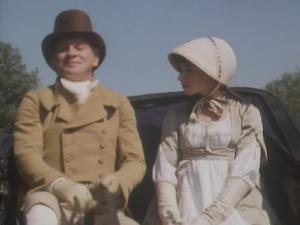
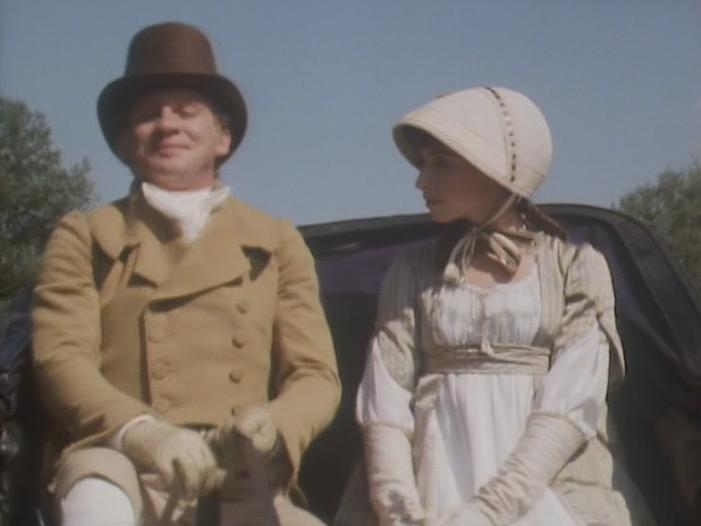
Catherine rides with Henry to Northanger Abbey
and General Tilney discovers she’s as poor as a church mouse and casts her out of his house.
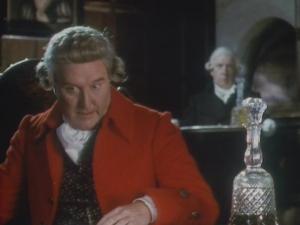
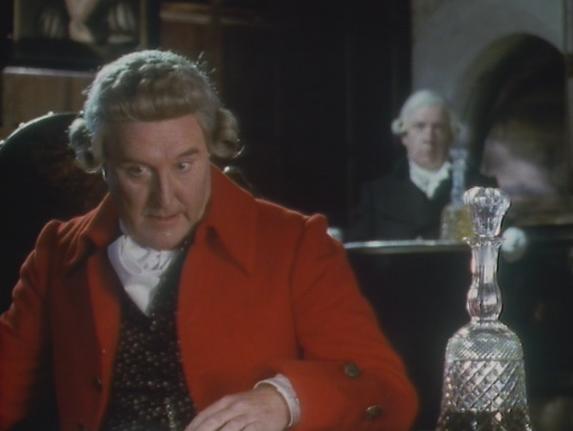
The general learns that Catherine is poor
Because time is so compressed in this film, Catherine is cast out of Northanger Abbey without explanation. The uninitiated will have no idea what has transpired, because no explanation was given at first. And because the camera does not follow her on her ride alone back home on a public stage without adequate resources, the uninitiated remain clueless about Catherine’s mature demeanor during that long journey alone and how dastardly the General treated her by forcing her to go unescorted, thereby placing her in harm’s way. Henry Tilney soon discovers he can’t live without her and comes after her on his steed. And because he comes across in this film as a prosy old bore, not a sharp-witted, dashing hero, the uninitiated will wonder what Catherine actually saw in him.
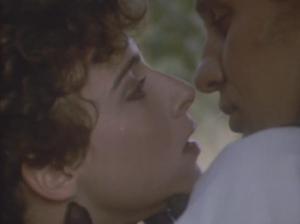
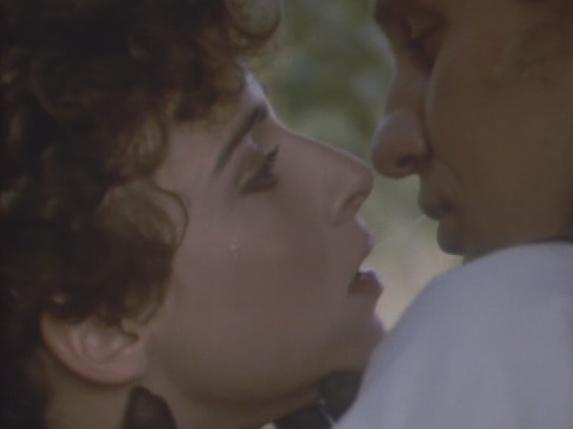
Henry comes for Catherine
Did I find anything of redeeming value in this film? Yes, but those comments shall have to wait for another critique. A production that added a marchioness who provided General Tilney with the latest gossip (and perhaps some sport in his bed), but that prevented Henry Tilney from saying some of his best lines deserves little praise.
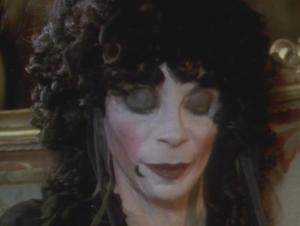
Why was the marchioness (Elaine Ives-Cameron)added?
How would Lady Catherine de Bourgh have critiqued the film, I wonder?
“I send no compliments to the director or script writer. They deserve no such attention. I am most seriously displeased.”
I must explain that this film was one of the main reason why I did not read Northanger Abbey until the very last of Jane’s novels. The story as told in this film is quite awful, so you can imagine my delight and surprise when I finally met Jane Austen’s actual characters in print.
Read more on the topic:















 Jane Austen's World