Feeds:
Posts
Comments

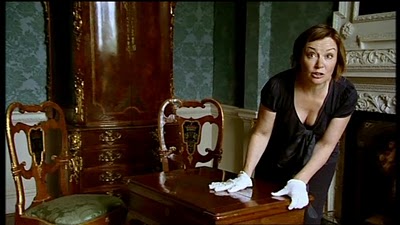
In the second episode of At Home With the Georgians: A Woman’s Touch, Amanda Vickery mentioned metamorphic furniture and (remarkably) turned a desk into a bed. A visitor to Tony Grant’s excellent post left this question: What is metamorphic furniture?

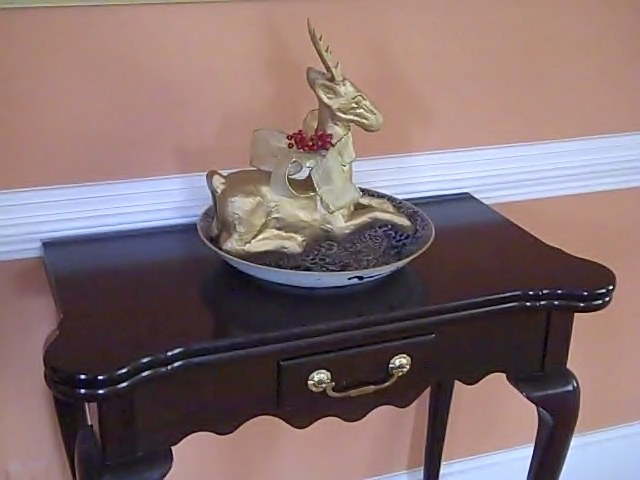
Modern example of metamorphic furniture: hall table/card table

Tony answered the question admirably. This mechanical furniture, wide-spread in Georgian times, had a dual use. A small folding staircase could be transformed into chair or desk, such as a writing table, library table, or card table. These pieces of furniture were great space savers, as I can attest. Only last week I transformed my faux-Georgian hall table into a card table for my guests. I never guessed until Tony’s post that I owned an example of mechanical furniture. Sweet!

The only change I would make in the video (besides the annoying lilt in my voice) is to make sure that the next time I film an example of my furniture, it is thoroughly dusted and cleaned! Extra points if you can spot my pooch in one of the scenes. His hang dog expression tells me that he was out of sorts, having been told to stay put.

This Victorian piano at the Brooklyn Museum pulls out into a bed. Fascinating. The video is available to view until March 2011.

READ MORE: If your interest in the topic is piqued, Clive Taylor (who also left a comment on the previous post) has written a dissertation on the topic (click here to read The Regency Period Metamorphic Chair) and sells metamorphic library chairs/stairs in his shop, Parbold Antiques.

Created by Oscar-winning writer Julian Fellowes (Gosford Park), “Downton Abbey” depicts the lives of the noble Crawley family and the staff who serve them at their Edwardian country house. It is April and the Titanic has just sunk.The world will never be the same for the Crawleys, for both the heirs to Downton Abbey went down with the ship.

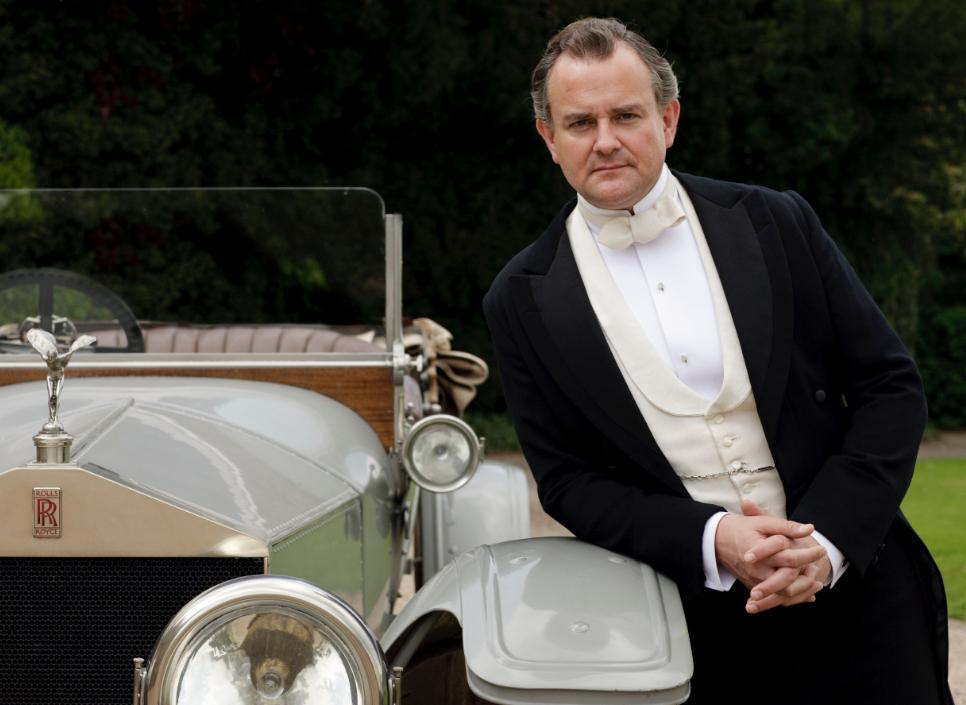
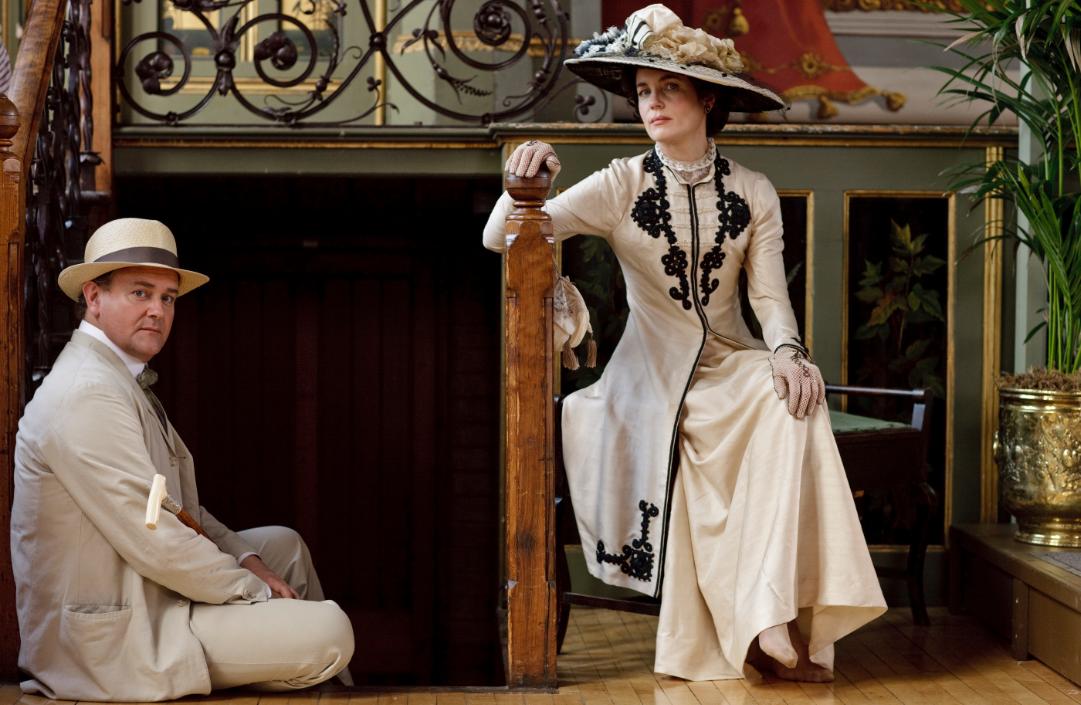
Hugh Bonneville as the Earl of Grantham. This image speaks of power and privilege.

The earl and countess of Grantham’s three daughters cannot inherit the estate, which is entailed to the male next in succession. He is Matthew Crawley, a third cousin, son of a doctor and a nurse, and a lawyer by trade. Matthew knows nothing about running such a vast estate, and cares little about the niceties of protocol.

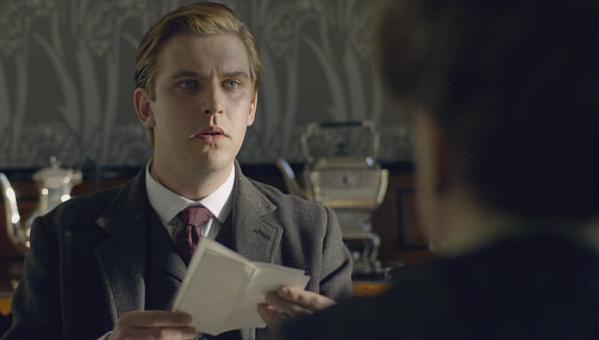
Dan Stevens plays Matthew Crawley. He also played Edward Ferrars in Sense and Sensibility.

The answer to the earl’s predicament is simple really – Lady Mary, his eldest daughter, should marry Matthew. But nothing is simple in Downton Abbey, for Lady Mary is stubborn and has a mind of her own.

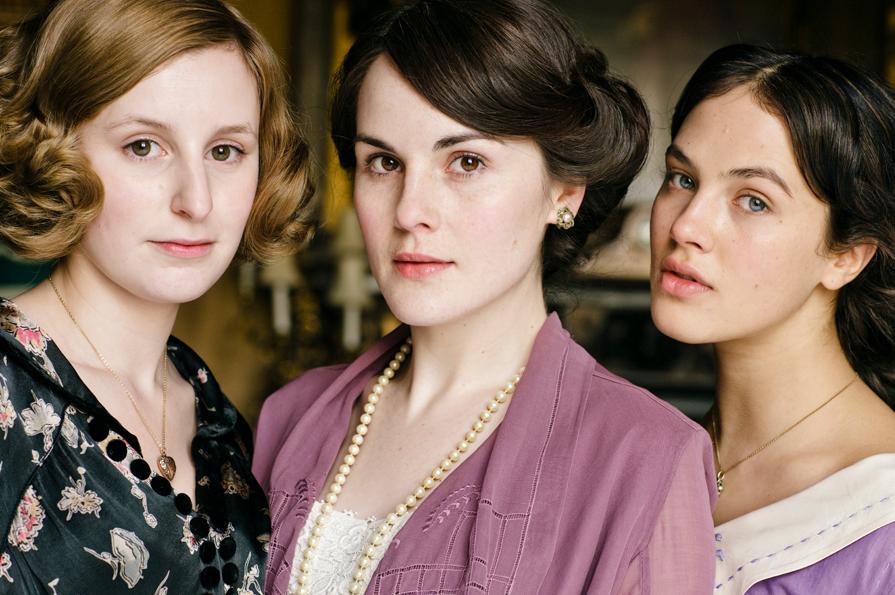
The Crawley sisters: Lady Edith, Lady Mary, and Lady Sybil

The series is lushly produced and the story lines are riveting. In its depiction of the intertwined lives of servants and aristocrats, Downton Abbey recalls one of television’s most beloved programs, Upstairs Downstairs, which aired on MASTERPIECE (then MASTERPIECE THEATRE ) in the 1970s. One of the thrills of MASTER PIECE’s 40th season is a new three-part Upstairs Downstairs with a new cast of characters set in the same house at 165 Eaton Place, taking the story from 1936 to the outbreak of World War II .

The Earl and Countess of Grantham (Hugh Bonneville and Elizabeth McGovern)

Episode 1
Sunday, January 9, 2011, 9 to 10:30pm
When the Titanic goes down, Lord Grantham loses his immediate heirs, and his daughter Mary loses her fiancé, throwing Downton Abbey and its servants into turmoil. The new heir turns out to be Matthew, a handsome lawyer with novel ideas about country life.

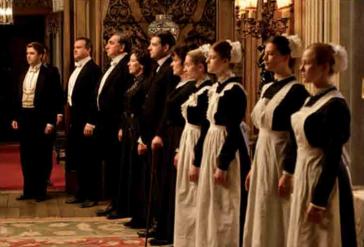
Matthew and his mother are formally received by the servants and family during their first visit to the Abbey

Episode 2
Sunday, January 16, 2011, 9 to 10:30pm
Mary entertains three suitors, including a Turkish diplomat whose boldness leads to a surprising event. Downstairs, the shocking former life of Carson, the butler, is unmasked, and Bates risks his health to remain valet.

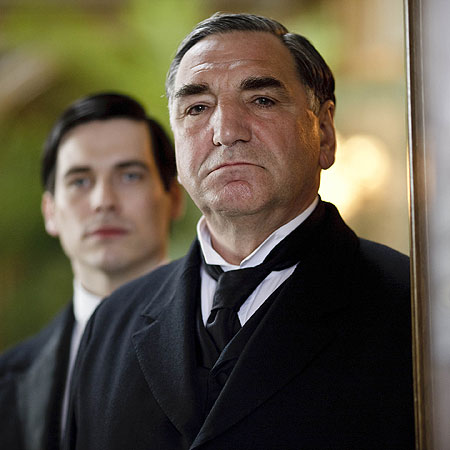
Jim Carter (Cranford) as Mr. Carson, the butler

Episode 3
Sunday, January 23, 2011, 9 to 10:30pm
Growing into his role as heir, Matthew brings out the bitter rivalry between sisters Mary and Edith. Servants Thomas and O’Brien scheme against Bates, while head housemaid Anna is increasingly attracted to him. Lady Violet’s winning streak in the flower show is threatened.

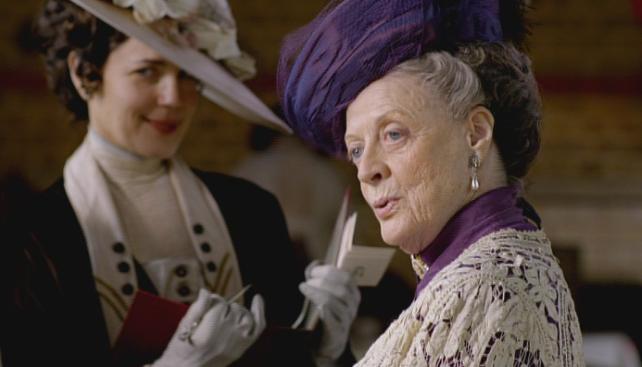
The Countess (Elzabeth McGovern) and the Dowager Countess (Maggie Smith) at the flower show.

Episode 4
Sunday, January 30, 2011, 9 to 10:30pm
The heir crisis at Downton Abbey takes an unexpected turn. Meanwhile, rumors fly about Mary’s virtue. Her sister Sybil takes a risk in her secret political life. Anna unearths Bates’ mysterious past. And O’Brien and Thomas plot their exit strategy.

The Countess of Grantham with her daughter Lady Edith

My posts about Downton Abbey

Cast

Hugh Bonneville (Daniel Deronda, Filth)…Robert, Earl of Grantham
Jessica Brown-Findlay…Lady Sybil Crawley
Laura Carmichael…Lady Edith Crawley
Jim Carter (Cranford)…Mr. Carson
Brendan Coyle (Prime Suspect 7: The Final Act)…John Bates
Michelle Dockery (Return to Cranford)…Lady Mary Crawley
Siobhan Finneran (The Amazing Mrs. Pritchard)… O’Brien
Joanne Froggatt (Robin Hood)…Anna
Thomas Howes…William
Rob James-Collier…Thomas
Rose Leslie…Gwen
Phyllis Logan (Wallander)…Mrs. Hughes
Elizabeth McGovern (A Room with a View)…Cora, Countess of Grantham
Sophie McShera…Daisy
Lesley Nicol (Miss Marple)…Mrs. Patmore
Maggie Smith (Harry Potter)…Violet, Dowager Countess of Grantham
Dan Stevens (Sense & Sensibility)…Matthew Crawley
Penelope Wilton (Wives and Daughters)…Isobel Crawley
Charlie Cox (Stardust)…Duke of Crowborough
Kevin Doyle (The Tudors)…Molesley
Robert Bathurst (Emma)…Sir Anthony Strallan
Bernard Gallagher…Bill Molesley
Samantha Bond (Miss Marple)…Lady Rosamund Painswick
Allen Leech (The Tudors)…Tom Branson
Brendan Patrick…Evelyn Napier
David Robb…Dr. Clarkson
Helen Sheals…Postmaster’s Wife

More on the Topic

Copyright @Jane Austen’s World. Written by Tony Grant, London Calling

Inquiring reader, I reviewed the first episode of At Home With the Georgians, A Man’s Place. This week, Tony reviews the second episode, A Woman’s Touch, adding his unique humor and male perspective.

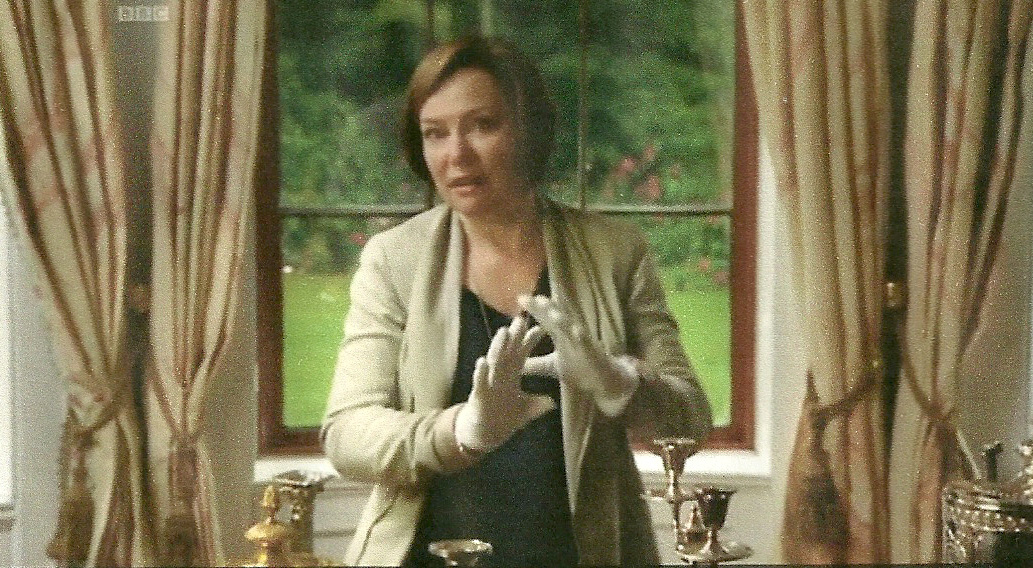
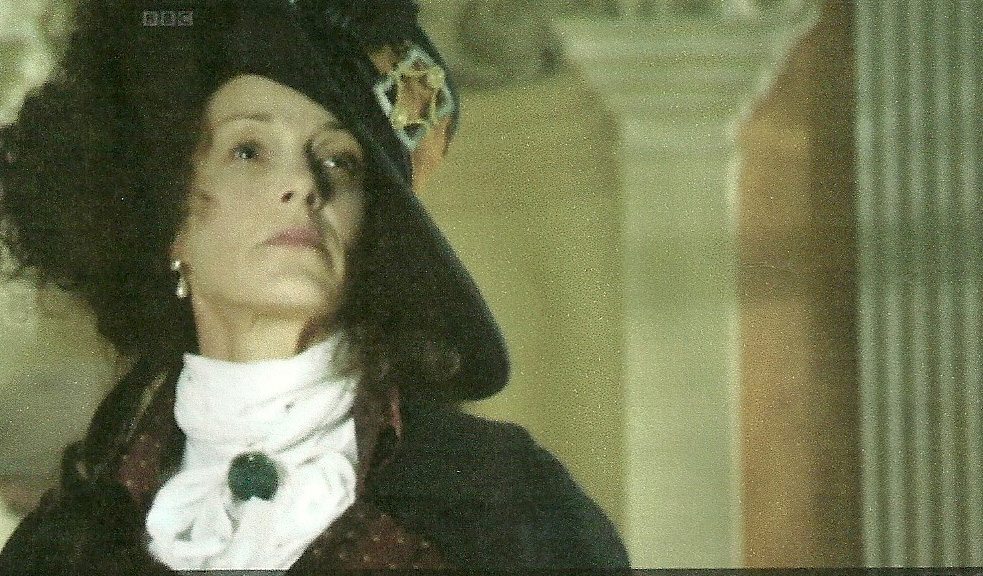
We have just had the second part of Amanda Vickery’s ,”At Home With Georgians,” aired on our screens. Vic wrote an excellent review of the first programme which dealt with the growing craze and indeed need the Georgians developed to own their own homes. Owning a house became a requirement to attract a good partner in marriage. Amanda Vickery’s seductive, sometimes amusing, tongue in cheek, highly intelligent way, entertained us to a very enjoyable , incisive analysis of this craze.

Amanda Vickery, At Home With the Georgians, A Woman's Touch

You must take into account Amanda Vickery’s origins when viewing this series to understand the full subtlety of her presentation. She is a Lancashire lass brought up in the northern mill town of Preston. Just listen to that smooth Lancashire accent. Girls and indeed boys are educated in the hard knocks of life up there and a hard; millstone grit type of humour that can get you through anything is all part of the upbringing. Witness that sassy smile ,sideways look, the very northern words she uses, the continual gentle flick of her fringe from in front of her eyes. Oh yes, she has learned all the tricks. A very powerful woman indeed.

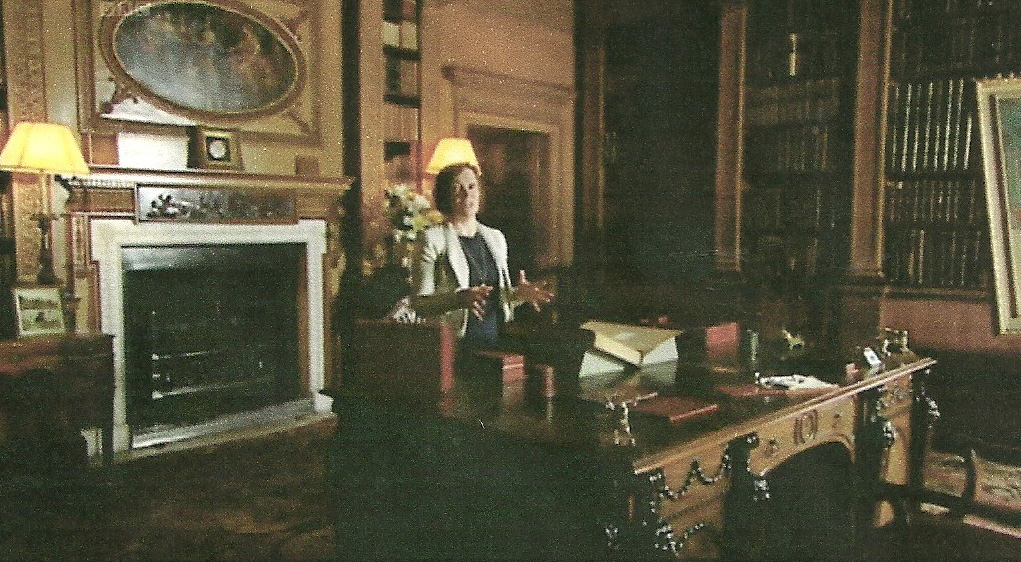
Amanda and her big desk.

In the first episode a wealthy merchants desk makes an appearance. Remember that scene? Amanda sits behind it and drapes herself across it, looks straight at us and intones, “Look at me, look at my desk,” as she caresses it’s polished smooth surface lovingly. Pure, naughty northern humour. By the way, the desk makes another appearance in this second episode. Amanda would be great as an entertainer in a northern working mens club. They would love her. I roared with laughter. But, what is so very very beguiling about Amanda and her presentation and what is most attractive is her deep intellectual analysis underlying her humour. We get all the layers of meaning that oozed unconsciously from this period. Amanda has uncovered the lot.

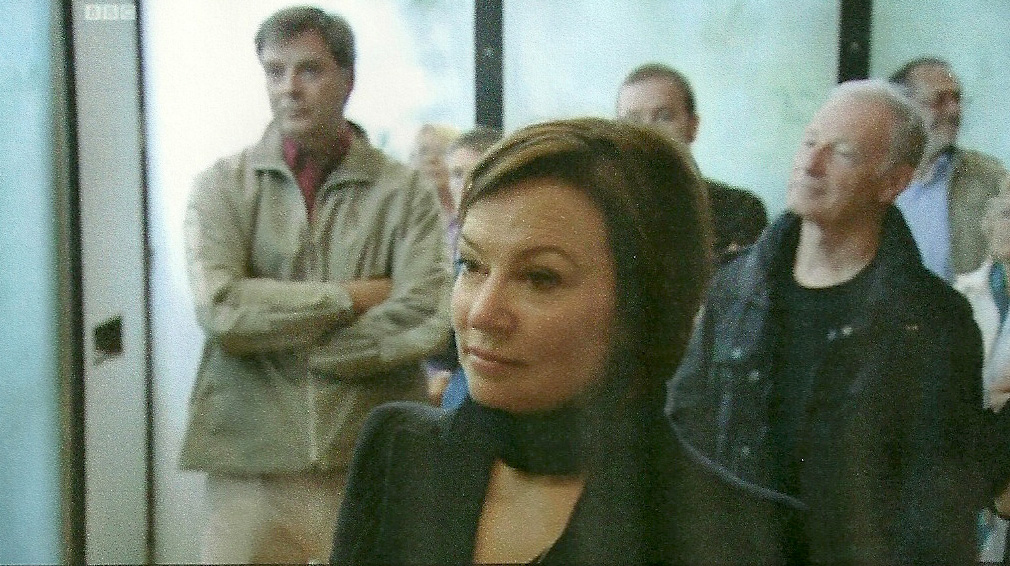
Touring an open house

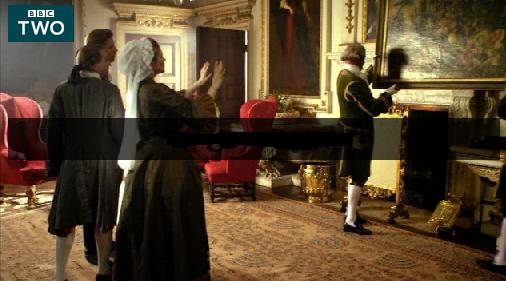
This episode begins with Amanda touring what seems to be an ordinary every day persons home, with other visitors. This is not as strange as it seems. Here in London we have a weekend in the summer every year which is called London Open House weekend. People can apply to open their homes for the public to visit. Anything from Hampton Court to a local semi in my road can be listed on their website. This year I went to Sir John Soanes House, an 18th century architects house in Holburn and the next day to a small house in Wimbledon owned by an architect who has taken Soanes ideas and incorporated them into his own 1950’s box shaped home. The comparison of ideas in both was very striking. Amanda makes the point that visiting people’s homes is not new. It started in the 18th century and is just as strong and vibrant a custom today. When we visit people’s homes, be they friends or strangers, we overtly or subconsciously gather ideas for our own homes. For the Georgians, and this is the point of this episode, getting ideas for their own interiors was a passion. DIY, home improvement, home magazines and adverts are not new. They began in 18th century England.

Georgian furnishings were a matter of taste

Amanda introduces us as indeed the 18th century gentleman and his wife were introduced, to the concept of taste, which originated in France but was very quickly taken up by the English. Taste is a minefield, get it wrong and you will be ridiculed. Get it right and you will be a success. Amanda asks us and we must search our own souls, “Do you have good taste? Do I?”

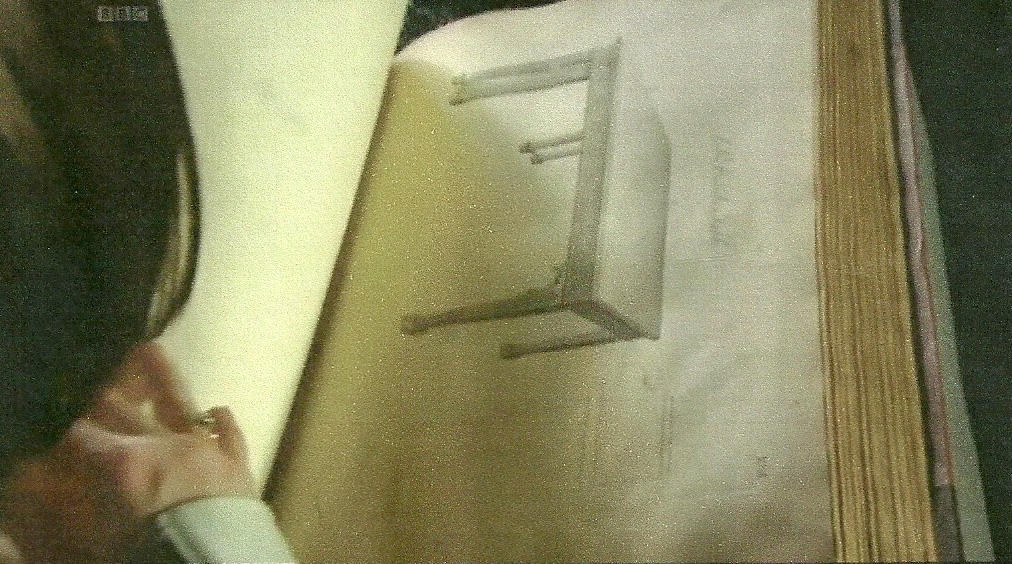
Furniture catalogue

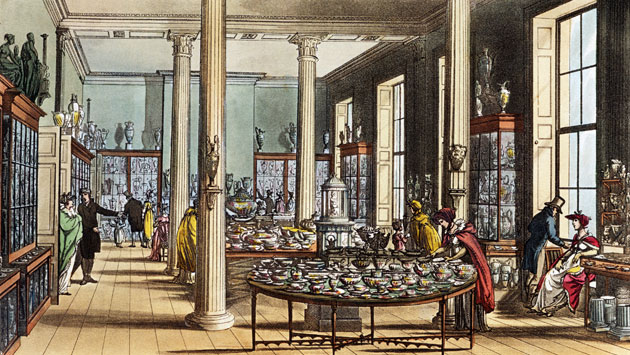
The aristocrats and the wealthy opened their houses for the public to come and see. They were the arbiters of what was good and bad. The,”middling classes,” also wanted artefacts of good taste in their homes. So entrepreneurs and craftsmen like Matthew Bolton produced cheaper versions in Sheffield plate, of the things the rich had. A whole new market opened up with the middle classes owning their own homes. Factories like Wedgwood churned out the stuff and it was greedily bought up.

Show room of Wedgwood and Byerley, Great Newport St and St. Martin's Lane, London

Artifacts and furniture were big business and created a need for salesmen and advertising. The modern world was being invented.

If you had your own home and you have decorated it and filled it full of what you think are beautiful objects, it’s no good keeping it to yourself. It needs to be seen. So visiting for afternoon tea was invented. The Georgians took to this craze big time. Amanda tells us about an entry in one diary, where one lady visits four or five friends in one day. Amanda’s inimitable Lancashire phrase for this is, “She hardly had time to park her bum.”

Metamorphic furniture had several functions and saved space

Metamorphic furniture made its’ appearance at this time. A great opportunity for a bit of toilet humour shall we say from our Amanda. She shows an incredible commode that you or I would be proud to eat our angel cakes off.

Amanda converts a desk into a bed

Some did get it wrong and big time. Amanda refers to two diaries in particular. One diary written by a Mrs Hewett relates how, just after marrying, she became ill and had to recuperate at home with her mother. James Hewett had bought a magnificent new house. He was very ambitious. However it was not decorated and because James was in a hurry he decided to go ahead and decorate it himself. It nearly destroyed their marriage before it got going. Another aristocratic family had it all but they didn’t socialise. The husband hated women and he couldn’t see the point in having visitors. This did destroy the marriage. Amanda is very good at balancing her view with the sad and painful experiences of some.

Social seclusion destroyed Lady Stanley's marriage

One of the points of this programme is that with interior decoration the home became the realm of the woman of the house. It was their palette, their creative space. Women decided on the decoration in the 18th century. It made homes comfortable, gentle, seductive places. Not the male testosterone fuelled (quoting Amanda here) interiors of the previous Stuart period.

Georgian woman decorating her home

Visiting and socializing was a vital element too. If this was got wrong too there could be dire consequences.

Amanda Vickery's iPad

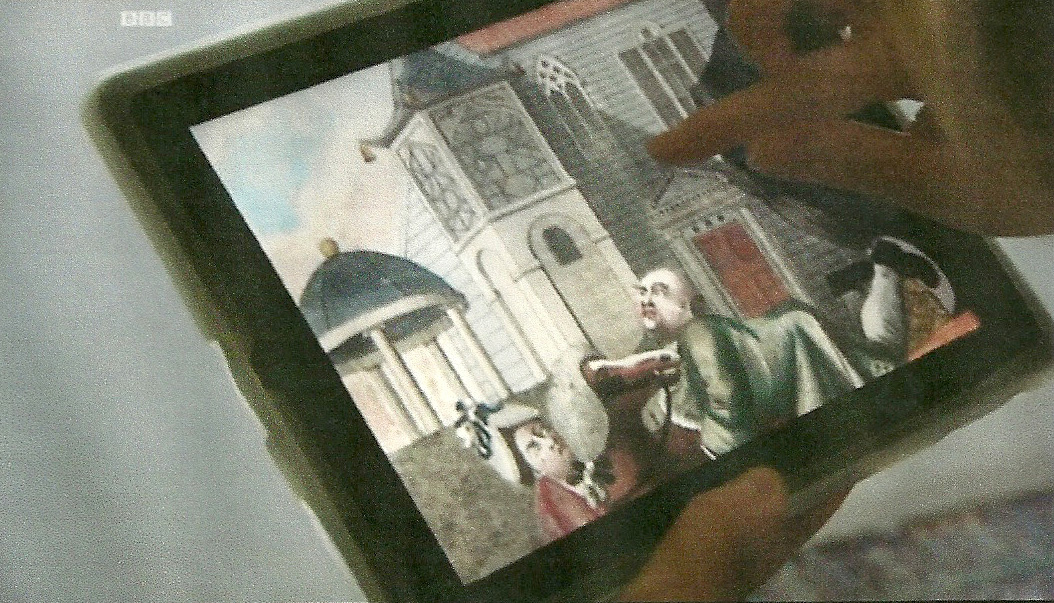
Finally please note how Amanda caresses expertly her iPad. It’s a lesson in using new technology seductively. After this three-part series I hope we are going to see a lot more of Amanda Vickery PhD, Professor of Holloway College London. I think she is fantastic. I would marry her. (I hope my wife didn’t hear that.)

The third installment of this series, Safe as Houses, was shown last Thursday. Look for Tony’s review of this episode soon.

Safe as Houses is the third episode of At Home With the Georgians

More on the Topic:

“Heigh ho! sing heigh ho! unto the green holly:
Most friendship is feigning, most loving mere folly:
Then, heigh ho, the holly!
This life is most jolly.”
– William Shakespeare, As You Like It

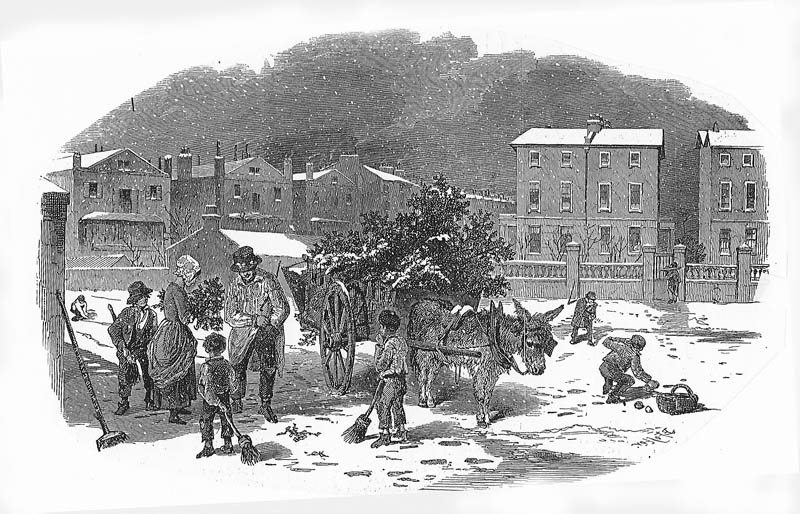
Decorating one’s house with natural boughs has been a Christmas tradition since Celtic times. Boughs of holly with their bright red berries were especially coveted. (Read Mythology and the Folklore of Holly.) One understands how easily people in rural areas could obtain these bright green leaves, but what about those who lived in London? This image of a holly cart pulled by a donkey provides a solution.

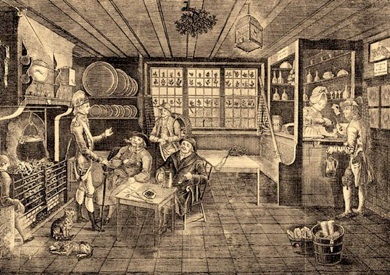
Note that the customer purchases a small amount of boughs. Christmas decorations in the 19th century were modest to none compared to ours. In this 18th-century print of a coffee house or chocolate shop, one can see small leaves of holly placed in each window pane and a bough hanging from the center of the ceiling. (One cannot imagine that mistletoe would  be hung in a public setting.)

Bowles and Carver print, London. Circa 1775

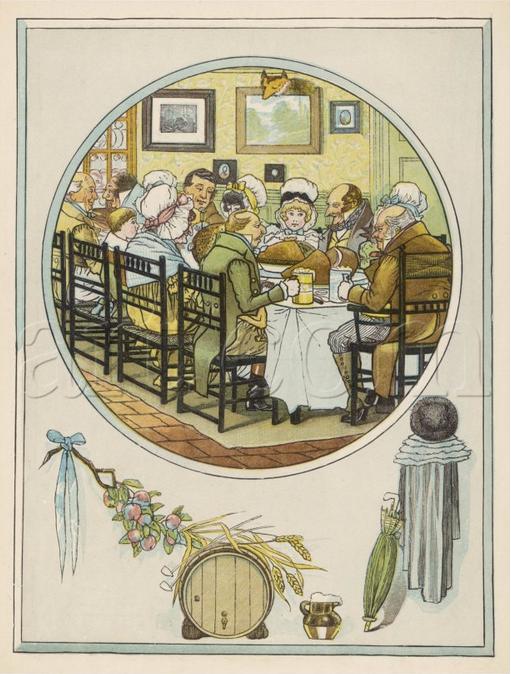
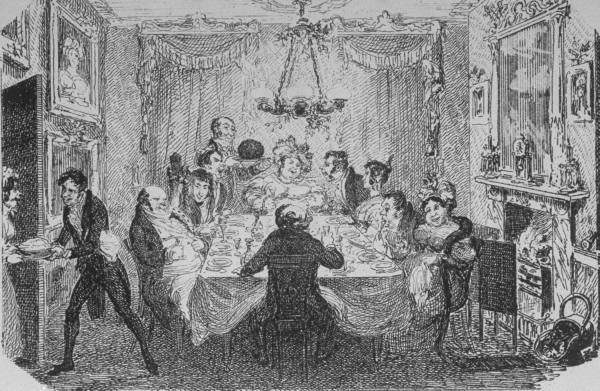
In this image of a lavish family dinner by Cruikshank, not a single bough of holly decorates the room. Most likely a wreath had been hung on the front door or some boughs had been hung from the ceiling. With holly hard to obtain in metropolitan areas, one imagines that the spare use of decorations was as much from necessity as from tradition.

Image: Art.com

This image by Cruikshank of a family celebrating Christmas during early Victorian times  shows a few boughs inserted into the chandelier, a roaring fire, and the Christmas pudding about to be served to the hostess. This year, I have taken the Regency approach to decorating my house, emphasizing the season with just a few well placed decorations. And I love it.

Other Christmas Posts on this blog:

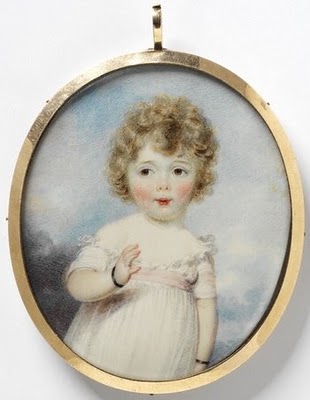
18th Century toddler

Gentle Readers; This post is in honor of Jane Austen’s 235th birthday. I have joined a group of bloggers in a blogfabulous celebration, and their links will sit at the bottom of this post. Leave your comments on our blogs for an opportunity to win an array of unique prizes! Copyright @Jane Austen’s World

Jane Austen was born on December 16, 1775 during one of the harshest winters that would be recorded in recent memory in England. A premature cold wave prompted naturalist Gilbert White to observe that the trees in Selborne were looking “quite naked” as early as November 11th. Despite the cold snap, there would still be periods of mild weather. The day that Mrs. George Austen went into labor with her 7th child, White noted, “Fog, sun, sweet day.”

During the latter half of the 18th century, all but a handful of births occurred in the home, but by 1775, the practice of midwifery had changed. Physicians were rapidly taking over obstetrics, replacing the midwive and relegating her to work with only the lower classes or those who lived in areas where a doctor or even an apothecary were not available.
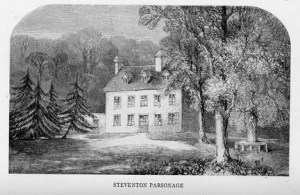
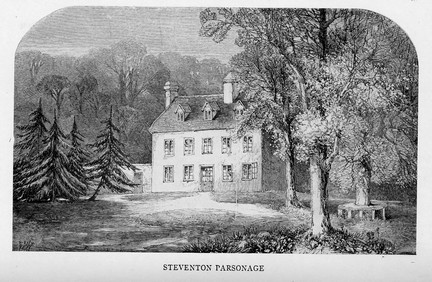
In fact, many women of that era gave birth without the services of a doctor or midwife. Steventon Rectory, the Austen family home, lay seven miles away from the nearest village of Basingstoke, and so on the eventful night that baby Jane was born, the Austen family did not bother to summon a physician.
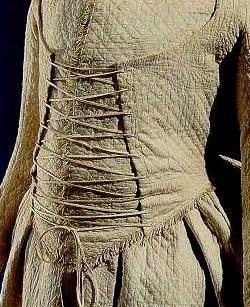
An 18th century pregnant woman’s corset could be loosened from both front and back. Image from @What clothes reveal: the language of clothing in colonial and federal America, by Linda Baumgarten
Hogarth’s image of a pregnant woman

Mrs. Austen gave birth to her second daughter in her own bedroom. She was attended, I surmise, by female friends and family members, such as her sister-in-law, Philadelphia, which was the tradition of the time. As a matter of course (and sisterhood), female friends and relatives helped to assist in the birth. In England, women who lay in bed while giving birth would lie in a Sims position, or on the side with their knees curled up. One historical source speculated that having a baby in bed could be a messy event and doubted that many women before the age of plastic would risk sullying their sheets and precious feather mattresses by remaining in bed during the final stages of the birth process. This made sense to me, and so I searched for alternate images.

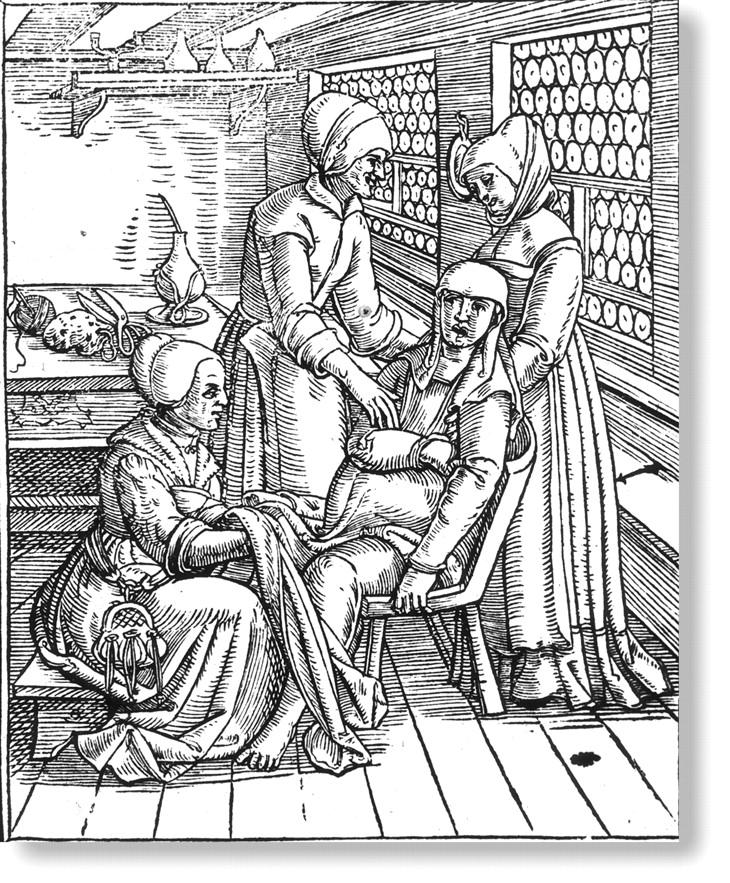
Birthing stools or chairs with sloping backs, which allowed gravity to help pull the baby through the birth canal, had been used for centuries.
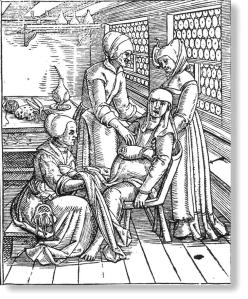
16th century woodcut of woman giving birth. The chair is sloped to allow her to lean back.

Birthing attendants also used various positions during labor, as in this 19th century image, which shows an American frontier scene, with the husband holding his wife in a half seated, half leaning position as the midwive and two female companions assisted with the birth.
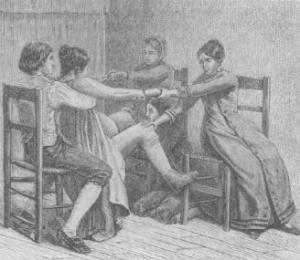
19th century birth, with husband and attendants

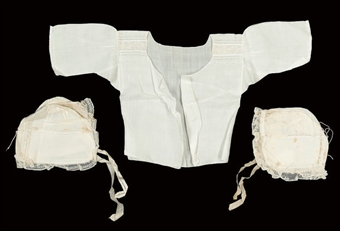
No one recorded precisely how many hours Mrs. Austen took to deliver baby Jane, but one can imagine that during her labor a cozy fire warmed the bedroom on that bitterly cold night,  twine and scissors lay on a nearby table, plenty of fresh water and linen rags stood at the ready, and baby linens were laid near a cradle.  Jane’s birth, which was expected in November, was swift and uneventful. Soon after she entered the world, baby Jane was cleaned, dressed and placed next to her mother in bed or inside her cradle, and wrapped snugly in a long quilted gown and a mantle. 
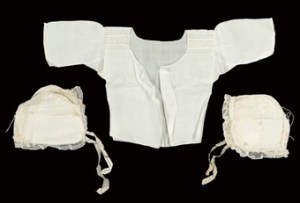
18th century infant shirt and bonnets, Christie’s

Reverend George Austen baptised his new daughter on December 17th in his home, as he had done with his other children. Then, as Mrs. Austen rested, he wrote notes announcing the birth to friends and acquaintances. For the only time in her life, he publicly called his new daughter “Jenny.” (One wonders if during private family time this nickname stuck.)
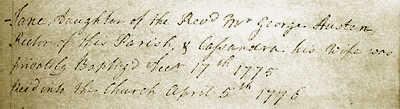
On April 5th, baby Jane was formally christened in St. Nicholas church, wearing a square-necked, sleeveless gown of fine cotton that probably opened in front. She would also have been wrapped in a pretty christening blanket.
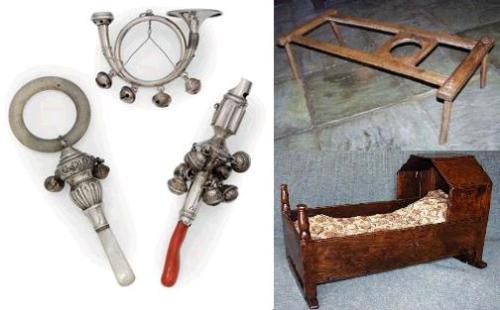
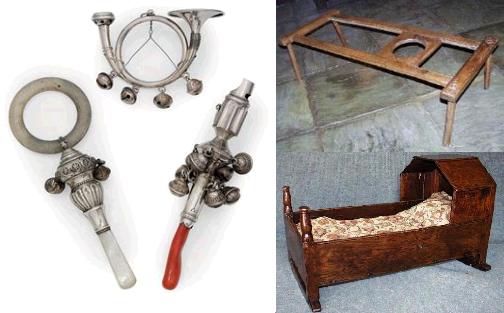
18th century silver rattles, baby walker, and oak cradle. 

In 1775, fewer babies were swaddled, but the practice took a long time to die off.

Throughout the nineteenth century, the medical profession recommended a less constraining form of swaddling. In this type of swaddling, often practiced by the middle classes, the infant was able to move its legs and the arms were kept free from restraints, although mothers were still advised to keep the swaddling band to support the baby’s back. Baby clothing also became more comfortable.” – Swaddling, FAQ

Babies wore linen clouts, the 18th century form of a thick cloth diaper, which was pinned with straight pins (ouch) or tied with with lacings. The clout was covered by a pilcher, a garment that offered another layer of protection. Today’s pilcher has a plastic lining to prevent urine from leaking through. (Do recall from a previous post, that the 18th century attitude towards urine was different than ours in that urea was regarded as a disinfectant.)
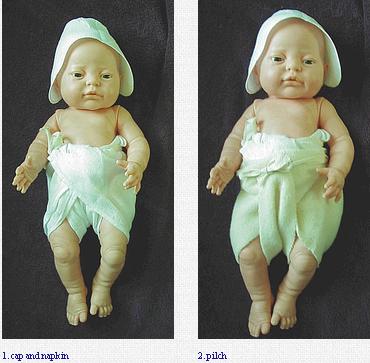
Cap, napkin and pilch. Image @Sharon Ann Burnston’s website

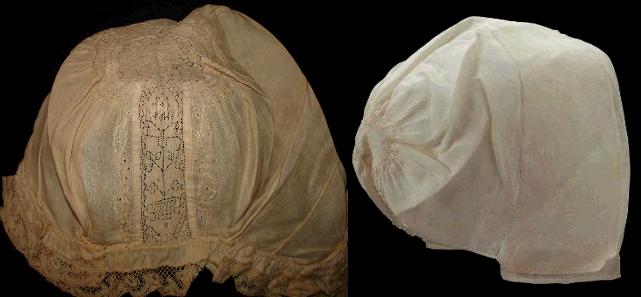
While Georgian attitudes towards sanitation differed from ours, parents did recognize that a baby’s tiny bald head needed extra protection in cold, drafty houses. Caps decorated with hollie point lace protected a baby’s fragile head
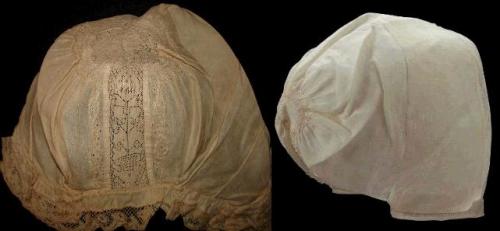
Holly point lace caps for infants

Tiny linen shirts and long quilted bed gowns that opened in the front and extended beyond their legs (long clothes) warmed their tender bodies. These baby linens were also decorated with hollie point lace. (Hollie point was a whitework embroidery technique that was popular in the middle ages for church lace, and that was used after the 17th century for baby garments and baby blankets.)
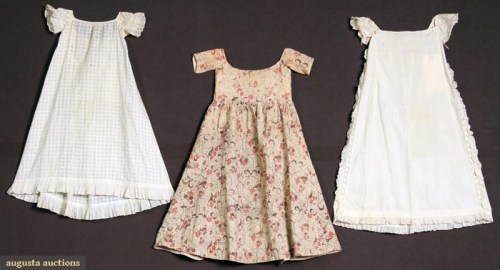
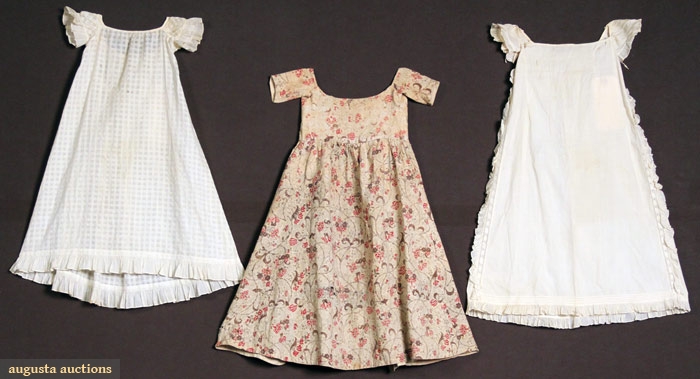
18th c. baby dresses, Sturbridge

During this age of Industrial Revolution, ready-made baby items became more easily available and affordable. Childbed linens and baby clothes could now be purchased in shops or warehouses. Recycling of old clothes and cloths was definitely practiced, and it is without doubt that Mrs. Austen re-used Cassie’s outgrown clothes and bedlinens for baby Jane. Aside from needing a goodly number of clouts, the Austens would already possess most of the baby items their tiny daughter would need.
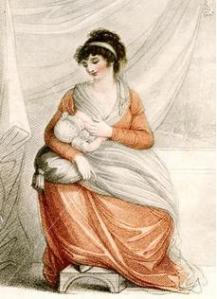
A day after giving birth to baby Jane, Mrs. Cassandra Austen was pronounced out of danger. Finally able to relax (even from her daily duties, which were overseen by friends or her sister-in-law, Philadelphia, perhaps) she would begin a lying in period to regain her strength. The mother, while resting during the lying in period, would be visited by her female friends, who would help look after the baby or help the mother through the grieving period (if the infant died.) This lying in period traditionally lasted a month, but for some sturdier (more impatient) mothers this period would last only a few weeks. Mothers whose infants died might not emerge for several months more. Ever the good hostess, biscuits and tea would be served to entertain visitors at set times.
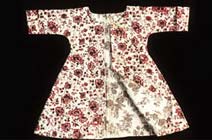
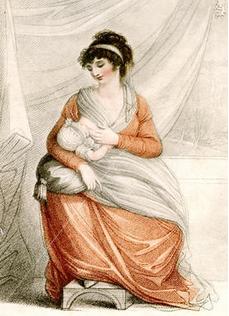
Short gown maternity garment. Image @Fashions of Motherhood

Mrs. Austen would open her short gown (which fastened in front) and suckle Jane. But as with all their children, the Austens would send the new baby away to be fostered, a remarkable act of faith in a year when almost half of the more than 20,000 recorded deaths in England were those of infants. I have read articles in which a contemporary writer asserts that a Georgian parents’ grief over a child’s death was not as acute as ours, since so many infants died during that period. But much historical evidence shows that such a sweeping statement is simply not true. Georgian parents loved their children as much as today’s parents and grieved deeply for them. While they were painfully aware of the horrendous mortality rates for infants, this foreknowledge did not assuage their profound sense of loss when a child died.
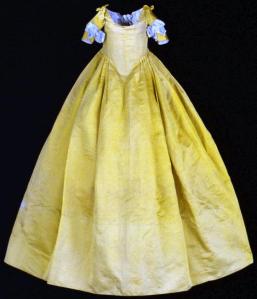
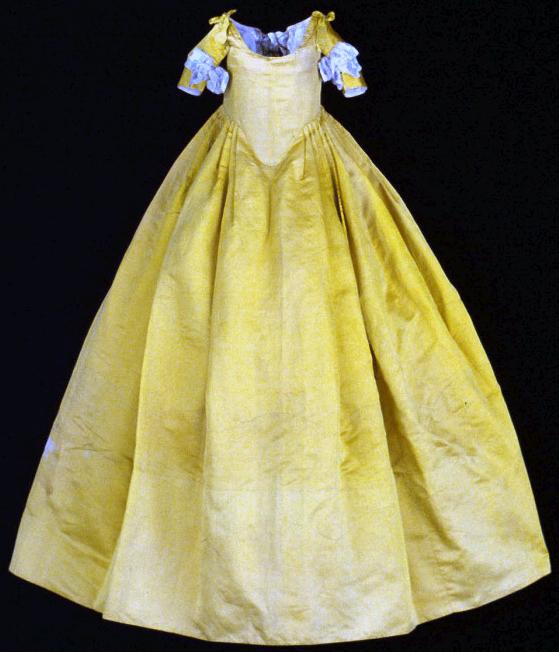
Infant gown with removable sleeves, emuseum collection, Colonial Williamsburg

Infant’s gown with removable sleeves

Despite the possibility of their child not surviving infancy, the Austens had been in the habit of sending their children away just three months after their births to “a good woman at Deane”, a village close to Steventon. Giving a child over to a wet nurse had once been a common custom, but by 1775 this habit was fading as fast for the gentry as the use of a midwife. For the first crucial months, however, Mrs. Austen would breast feed baby Jane and take care of her personally.

Frost on trees in Hampshire

Baby Jane’s first winter on earth was bitter cold. Gilbert White noted that severe weather, with severe frost and snow, affected most of Europe from 9th Jan through 2nd Feb, 1776, and that the Thames was frozen for some time. A stormy February followed. The prolonged cold spell was broken by interludes of mild temperatures and melting snow, but these did not last long. Snow fall was often considerable, with frequent drifting, and daytime temperatures often dipped below freezing.

St. Nicholas (Chawton) across the fields. Image @Tony Grant

With such a prolonged cold snap, was it any wonder that the Austens kept baby Jane at Steventon until April 5th of that year? In contrast, Cassandra, who was born on January 9, 1773, had been with her foster mother for eight weeks by June 6th. While Edward-Austen Leigh wrote somewhat disapprovingly of his grandparents’ habit of fostering out their children, they must have made the right choices, for all the Austen children survived their infancy. Despite his censure, Edward observed that little Jane’s parents did not neglect her: “The infant was daily visited by one or both of its parents, and frequently brought to them at the parsonage, but the cottage [at Deane] was its home.”
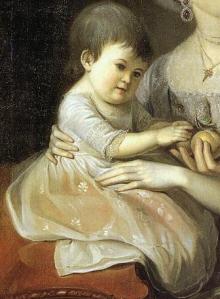
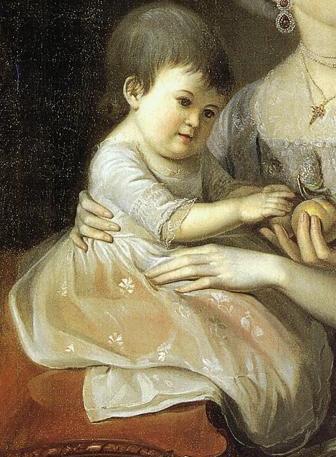
Baby Jane might have resembled Gen Cadwallader’s daughter, 1772, by Peale

Author Irene Collins in Jane Austen, The Parson’s Daughter, identifies “the good woman at Deane” as Elizabeth Littleworth, the wife of a farmworker at Cheesedown, located between Deane and Steventon. These country folks remained close to the Austens for years, for in 1789 Jane acted as godmother to their eldest grandchild and stood as witness to the wedding of John Littleworth’s brother. Like the Martins in Emma, the Littleworths belonged to a lower social station, and the Austens, however grateful for their services, would not have socialized as equals with them.
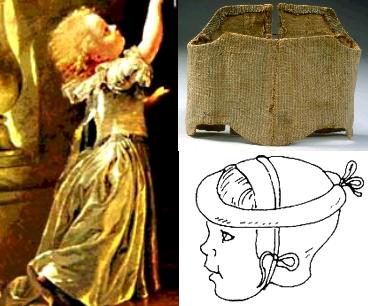
Child wih leading strings, stays with cardboard stiffening, and child wearing a pudding cap

The Austen children stayed with the Littleworths until they started to walk and talk and could “be regarded as rational beings.” Henry returned to Steventon Rectory at fourteen months, and Cassy and Jane were returned when they reached two years of age.
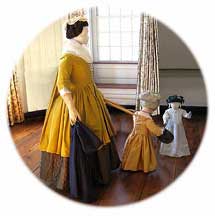
Walking a toddler on leading strings. Image @Williamsburgrose

When baby Jane was ready to walk and crawl (about the time when she would be returned to her family) her mother would change her out of long clothes into short clothes. Short clothes were ankle length and allowed chubby legs the freedom of movement they needed to practice toddling. Toddlers also wore clothes with “leading strings” and pudding caps, which were padded.
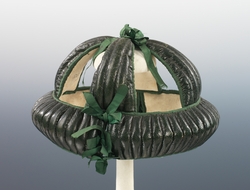
A very fine pudding cap. Image @Metropolitan Museum

These caps, a sort of bumper guard, if you will, prevented injury to a toddler’s head if it fell or bumped into objects as it learned to walk (or so it was hoped).

“Like many mothers at the time, Mrs. Austen recorded her children’s progress in terms of dress. When Cassandra was taken out of her long gown and put instead into ‘petticoats’ (a frock and slip which finished at the ankles), her mother regarded it as a sign that she had left babyhood and would soon be learning to walk. From the petticoat stage, there was little change in girls’ clothing, except that the waistline of the frock went higher and the neckline lower.” – Irene Collins in Jane Austen, The Parson’s Daughter
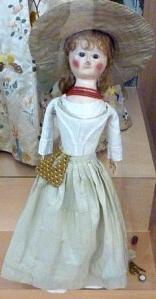
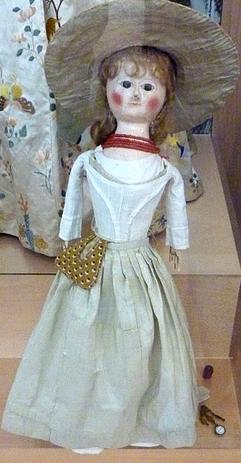
18th Century Doll

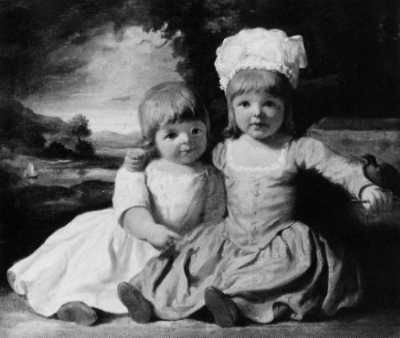
Toddler Jane and her older sister Cassie also wore corsets. Yes, you read the word correctly. The tiny corsets, stiffened with cardboard, were thought to promote posture and help with walking.

Putting stays on young girls and boys was not seen as harsh, but rather as insurance that their figures would develop the correct form, with chest out and shoulders down. While boys usually wore stays only in early childhood, they were considered essential for females throughout their lives. – Philadelphia Museum of Art
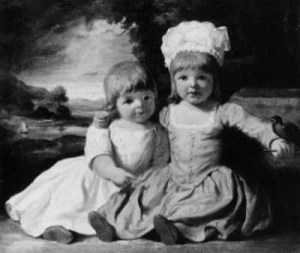
These two tiny 18th century girls are wearing corsets

Since these early days, tiny Cassy and baby Jane, barely three years apart, developed a lifelong bond. Cassy most likely played with her younger sister as she would a doll and looked over her. By all accounts, their childhood at Steventon Rectory was happy and relaxed, with the children called by pet names, eating meals at the table, and visiting friends and relatives with their parents. Luckily for the Austen children, attitude towards childhood had begun to change and children were no longer dressed or perceived to be small adults. They were allowed to dress as children and, if they did not live in dire poverty, live a relatively carefree childhood compared to the children from generations before.
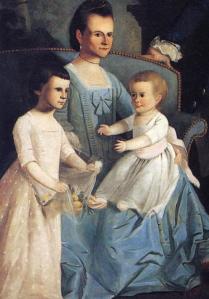
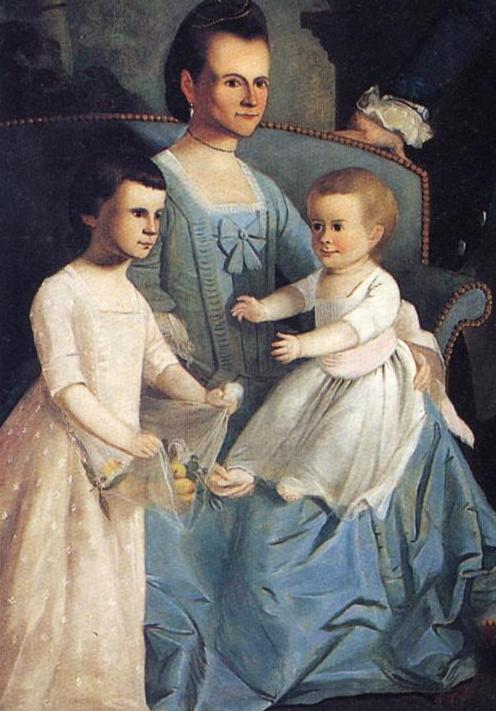
Would Mrs. Austen and her two daughters have resembled the Archibald Bulloch family? Painted in 1775 by Henry Bendridge, High Museum of Art, Atlanta.