Feeds:
Posts
Comments

Jane Austen fans tend to read her books repeatedly throughout their lives.  In an article in the Guardian UK, Charlotte Higgins describes how her identity with a Jane Austen character changes with age. Here are some of her thoughts:

If you read Jane Austen more or less annually, as I have done since my late teens, you end up marking yourself against the characters. Oh reader, when I first read Pride and Prejudice I was Lydia’s age. I am about to become older than the delightful Mrs Croft in Persuasion. I still hang on to Anne Elliot, though. A tender 27 she may be, but in modern money I reckon you can give her another 10 years.

This is so true. I am starting to identify more with Mrs. Croft and Lady Russell than Anne Elliot. Charlotte Higgins goes on to say:

Persuasion is a very middle-aged novel, with its melancholic flavour and its acknowledgement that yes, you can make a grotesque mess of your life (the romance part I find much less satisfactory than the bleakly comic first three quarters of the book, essentially before one reaches Bath). It is true, however, that you can tell you are middle-aged when you start to empathise with P&P’s Mrs Bennet: with what Sir Walter Elliot would call “the rapid increase of the crow’s foot” comes a sense of sympathy with this character, written off as absurd in one’s heedless youth. At least she is trying to save her daughters from a future of poverty. And she’s certainly not getting any help from that husband of hers.

So true again. Only in recent years have I become impatient with Mr. Bennet and more sympathetic with his silly wife. I have also become more observant of Mrs. Jennings in Sense and Sensibility, of how hospitable she is, how she tries to become a matchmaker to all the unmarried ladies, and how her house is open to guest seemingly all the time. Yes, she is a silly and irritating woman, traits I could not stand when I was young (thus I could not appreciate her other than as a comic relief character), but now I rather like her positive qualities, as I do Mrs. Palmer’s. Elinor Dashwood is aware of Mrs. Palmer’s good nature and would tolerate her better if she weren’t such an unflaggingly cheerful airhead all the time.
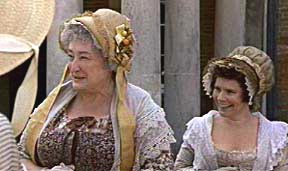
Mrs. Jennings and Mrs. Palmer, Sense and Sensibility

As I get older I see that Lady Catherine de Bourgh is all bluster, and that her authority over Elizabeth Bennet is precisely zero. Young Lizzie is smart enough to know that, but as a 19 year-old reader, I was in awe of Lizzie’s stubborn attitude towards that lady when she stormed to Longbourn to demand Lizzie promise never to marry Mr. Darcy.

Mr. Bennet reading. Image from Jim and Ellen Moody

There are other ways that my attitude towards Jane Austen’s novels is changing. I notice how few happy marriages are portrayed. Right off the bat I can think of only the Crofts, the Gardiners, the John Knightleys, and the Musgroves. These days, I am more on the side of a pragmatic Charlotte Lucas, who has learned long ago not to look at the world through rose colored glasses, than Elizabeth, who waits for love. To be sure, she snagged her Mr. Darcy, but would Charlotte have had such an opportunity? I think not. I also see that Fanny Price’s strength of character and resolve in the face of so much bullying is a trait to admire; and that Mr. Bennet’s extensive library and unwillingness to compromise a cushy lifestyle were acquired at the expense of his family’s future financial security.

As the years roll by, my tastes and preferences for Jane’s novels are changing. Persuasion and Pride and Prejudice are running neck and neck in my favorite category. P&P used to have the field all to itself. While I loathed Mansfield Park the first time I read it, I don’t mind it so much now, and I find Emma less and less interesting and much too long . Perhaps I should lay the book aside for a few years.

Are your tastes and preferences changing towards Jane Austen’s books and characters as time goes on? How? Curious minds want to know.
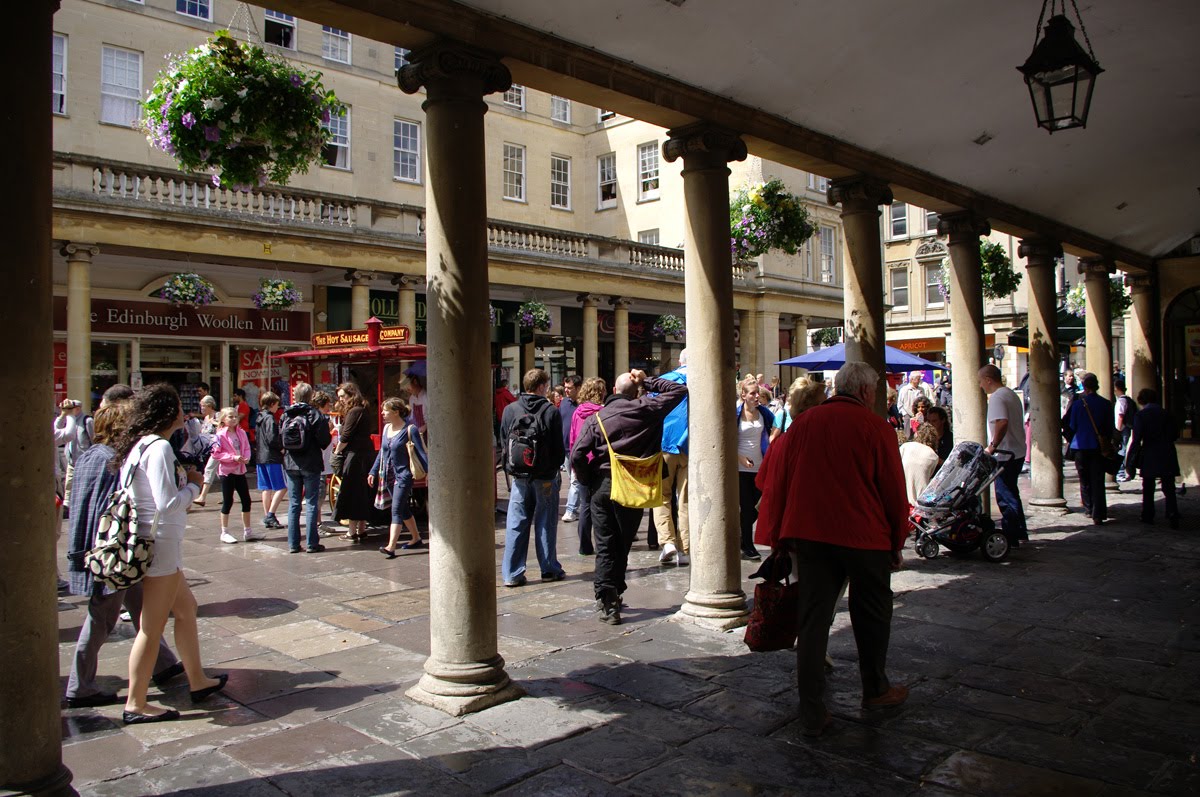
Inquiring Readers, Tony Grant has been contributing articles to Jane Austen Today for several months. Recently, Tony and his family traveled to Bath and the West Country. This is one of many posts he has written about his journey. Tony also has published several posts about his trip on this blog: Going to Bath With Jane Austen and The Servant’s Entrance to Regency Townhouses, for which he supplied the photographs. He has already contributed a post about Milsom Street for Jane Austen Today. This post about his tour through Bath was first published on Jane Austen Today, but the images caused the sidebar to be pushed out of sight, so I placed it here.

Bath Thoroughfare
Jane Austen knew Bath extremely well. Throughout Persuasion and Northanger Abbey she houses her characters in real streets and in real buildings, although she does avoid giving us the number of the house in such and such a street. The real owners and occupants might not have liked the notoriety. And today they might not like the notoriety as well. Was there such a thing as litigation in the 18th century? I’m sure there was.

Pultney Bridge

Here are some of the places that Janes characters lived in and when you go to Bath you can see them for yourself.

  • Anne Elliot and her father lived in Camden Place up the hill at the top of the town.
  • Lady Russel lived in Rivers Street just north of The Circus.
  • Rich, Mrs Wallis lived in Marlborough Gardens on the hill leading down from the north end of The Royal Crescent.
  • Catherine Moreland lived in Pultney Street, which is now called Great Pultney Street, very close to Sydney Street. I wonder if Jane saw somebody in Pultney Street that she thought, “ah, that’s Catherine Moreland.”
  • The Dowager Viscountess Dalrymple lived in Laura Place at the end of Great Pultney Street and at the start of Pultney Bridge.

The meeting places and places central to both novels are Milsom Street where everybody shops. Shopping, the bain of my life. My wife and three daughters love shopping. Shopping could be their lives. In Jane’s time tooapparently. It makes me come out in a cold sweat thinking about it. The amount of standing in shops and outside of shops I’ve done.

God, I’ve suffered for shopping over the years.

Ah, that’s better. I needed that rant.

Also the Pump room. What a glorious place it is. I felt a tingle down my spine as I my wife, Abigail and myself were shown to our seats by the headwaiter and we were graciously handed the menus. A trio of musicians, cello, pianist and violinist, played sedately at one end of the room. People lined up at the water pump to imbibe Baths greatest commodity, water from the spring and we ordered tea and cakes.

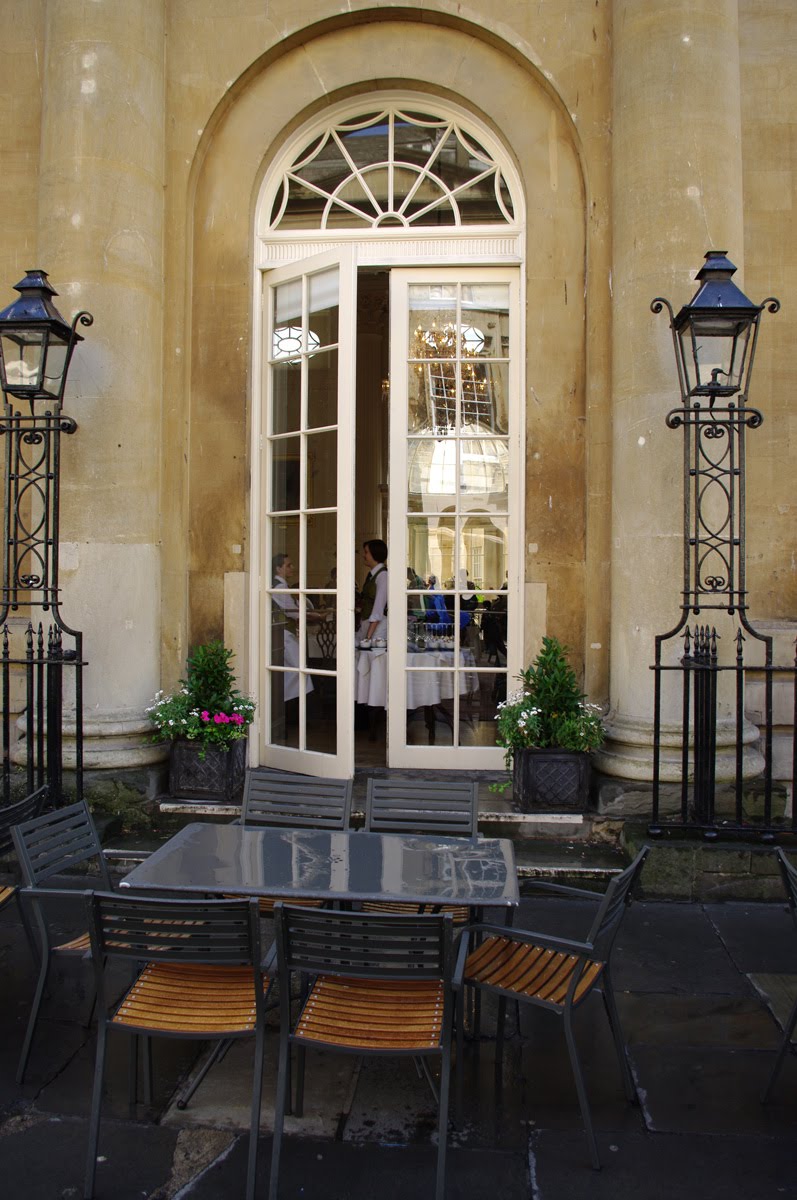
Pump room window
The “pump room blend” of tea is as close as you can get to the blend of tea that Jane Austen, Catherine Morland and Anne Elliot would have drunk. The scones with clotted cream and fresh strawberry jam were exquisite. The tea was delicious and there I was with my family, in THE PUMP ROOM!!!!!!

The Pump Room

I could almost see Catherine Morland pop in to see if she could find Henry Tilney and of course take a few turns of the room to see and be seen. I knew nobody in The Pump Room just as Catherine knew nobody.

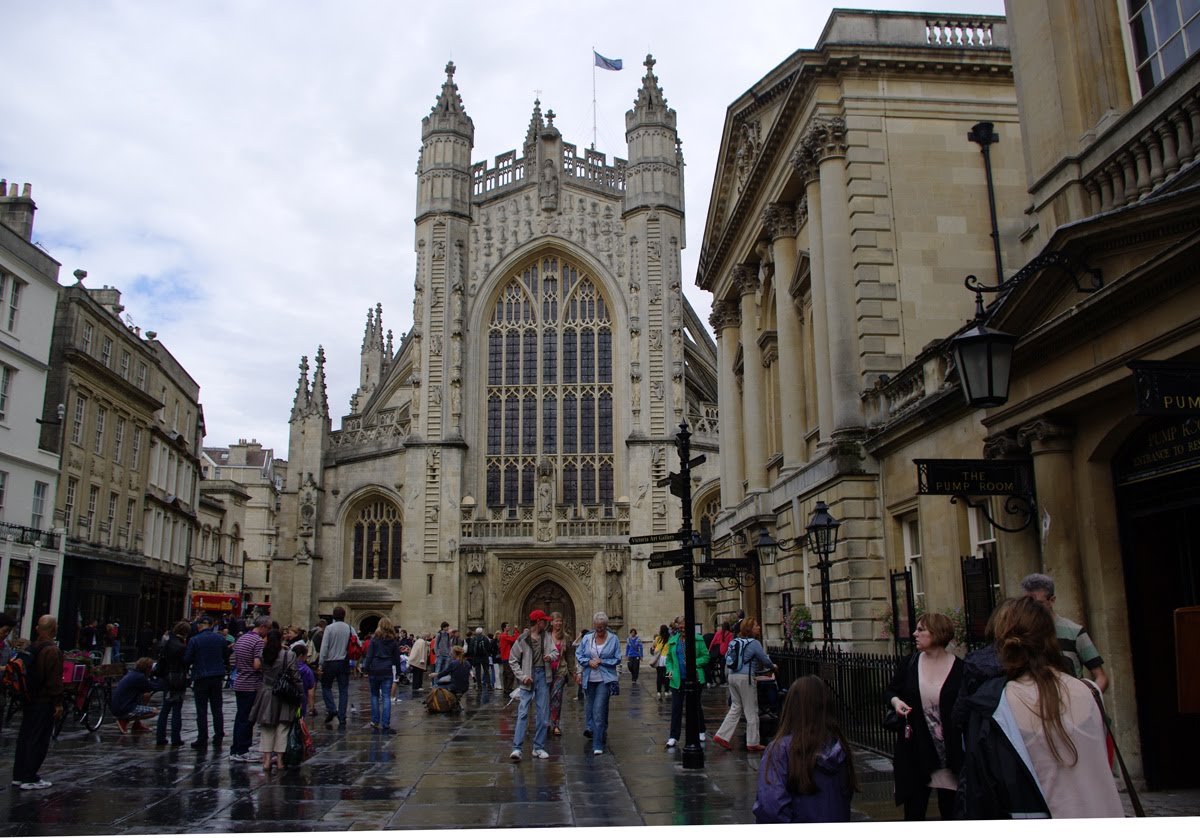
Bath Abbey


Then we had a look inside Bath Abbey. Jane seems to have not attended services at the abbey. She preferred The Octagon. This was a newly built chapel in Jane’s day. She seems to have preferred churches where the incumbent vicar had new and fresh ideas to deliver in his sermons.

Cheap Street
After Bath Abbey we walked through the passageway that leads from the churchyard opposite The Pump Rooms, called Union Passage and into Cheap Street. It is the very passage that Catherine Moreland walked through with Miss Thorpe and suddenly sees a carriage with her brother and coincidently Miss Thorpe’s brother too, the awful John Thorpe. It is their first fateful meeting.

George Street outside Edgar Buildings

We walked on up Milson Street to George Street where Edgar Buildings are situated. Edgar Buildings are where the Thorpes stayed.

25 Gay Street

From George Street we went into Gay Street and walked past number 25 where the Austens stayed for a while.

At the top of Gay Street is the magnificent, The Circus. This is a circle of the most magnificent Georgian Houses. There is a small green park in the centre of the circle in which grow four gigantic London Plains trees. They must be four or five hundred years old. Jane knew them. The portrait artist Gainsborough lived in one of these houses in The Circus for a while. Bath would have provided many opportunities to gain commissions and make money.

The Royal Crescent

From The Circus we turned down Brock Street and arrived at The Crescent at the top of the hill.

A front door at the Royal Crescent


This was the place where the elite lived. These were the largest and most expensive houses. Lords, Dukes and the very wealthy lived up here. It was also a good place to walk to get fresh air.

The back of the Crescent, each house is different
Jane mentions in her letters taking walks up to The Crescent and walking in the park and enjoying the views. Catherine Morland and Anne Elliot also walked there. There is a very good reason why Jane and her characters might want to walk here, the fresh air. If you look back over Bath you can see the beautiful city with its creamy yellow stonework In Jane’s time it would have been black. You will also notice the myriads of chimneys, which no longer spout black sooty smoke from thousands of coal fires. Coal is no longer burnt. We have clean air towns and cities nowadays. In Jane’s time the air was far from clean and the beautiful Cotswold stone became black. You can see today a building or two that have not had their surface cleaned since the clean air act was passed through parliament.

The Assembly Rooms

The Assembly Rooms, just north of The Circus, are what Jane and her characters knew as The Upper Assembly Rooms and also included the Octagon tearoom. This is where Catherine Morland met with the Thorpes.

The Lower Assembly Rooms, the original assembly rooms in Bath, where Beau Nash officiated , were situated near the abbey. They no longer exist. It was in the Lower Assembly Rooms that Catherine met Henry Tilney for the first time and fell in love.
Just to conclude, a couple of stories about Bath.

Sheridan eloped with Elizabeth from this house

In the Crescent , about half way round, is a house with plaque that relates a very dramatic story. In 1755 Richard Brinsley Sheridan, who was a great playwright in the 18th century and wrote The Rivals and School for Scandal and who was also the owner of the Covent Garden Theatre, absconded with a young lady from the house. Her father chased them all over Europe. When they were found the father made Sheridan marry his daughter. However soon after Richard Brinsley left her in the lurch. The chase was the thing. The excitement of the chase had gone. What a cad and bounder!!!!!

Tony at Pultney Bridge

Now, a story about myself. As we walked up Gay Street towards The Circus we obviously stopped outside number 25 to look at it and photograph ourselves outside. An irate and very upset looking lady marched out of the front door next to number 25 with a bowl full of water and threw it all over my legs. I must add this does not normally happen to me. The circumstances were, that some juvenile idiot had drawn rude graffiti over the side of her white van parked outside. She was trying to clean the words off. She was obviously upset and came out to wash the side of her vehicle. Unfortunately for me, she missed. She was SO sorry. Luckily it was a warm day and my trousers dried quickly in the walk up the hill.

The Royal Crescent (top) and the Circus (Bottom with trees at center.)

One fact before I finish. Did you know that the houses in The Crescent and in The Circus are all different? They all look the same because they are the same on the outside. The builder built the fronts and sold just the fronts. The new owners had to build their own backs to their houses. Hence, if you go round behind the houses in The Crescent they all look different.

Posted by Tony Grant, London Calling

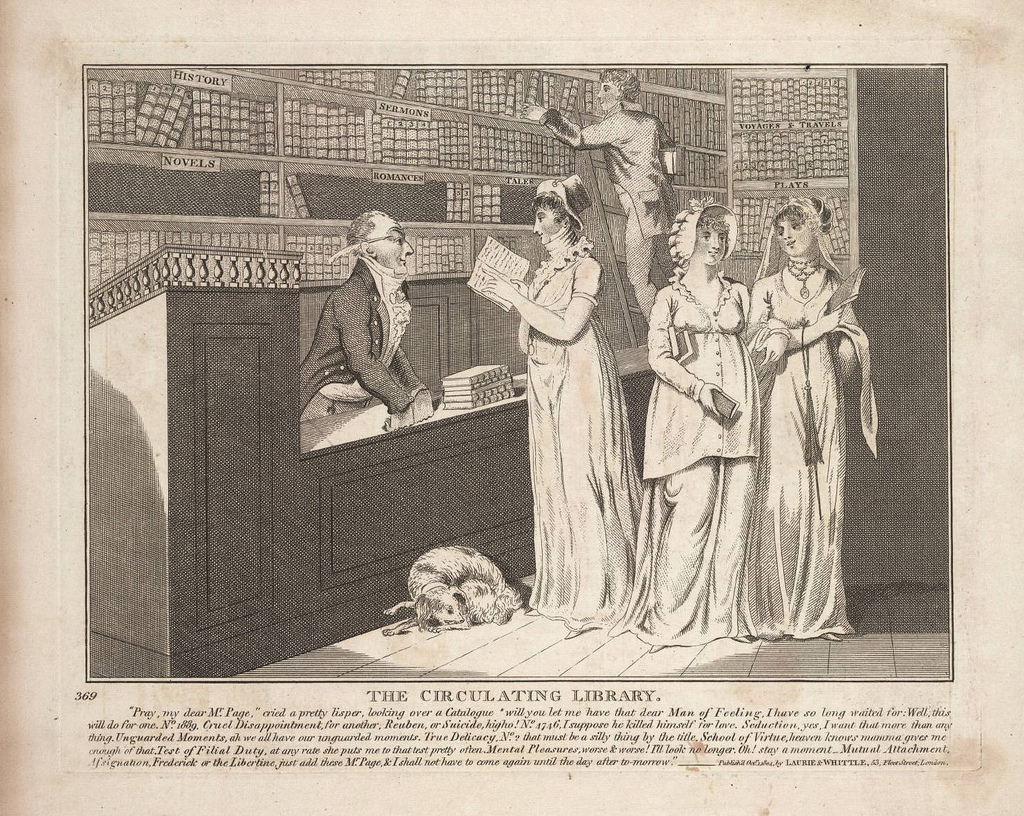
Circulating libraries in the 18th and 19th century were associated with leisure, and were found  in cities and towns with a population of 2,000 and upward. They were as much of an attraction in wealthy resorts, where people came to relax and look after their health, as in cities and small towns, like Basingstoke, where Jane Austen subscribed to Mrs. Martin’s circulating library.

In 1801, it was said that there were 1,000 circulating libraries in Britain. Book shops abounded as well, but in 1815 a 3-volume novel cost the equivalent of $100 today. Such a price placed a novel beyond the reach of most people. Worried about a second edition for Mansfield Park, Jane Austen wrote in 1814:

“People are more ready to borrow and praise, than to buy –which I cannot wonder at.”

Circulating libraries made books accessible to many more people at an affordable price.  For two guineas a year, a patron could check out two volumes. Which meant that for the price of one book, a patron could read up to 26 volumes per year.

By 1800, most copies of a novel’s edition were sold to the libraries, which were flourishing businesses to be found in every major English city and town, and which promoted the sale of books during a period when their price rose relative to the cost of living. The libraries created a market for the publishers’ product and encouraged readers to read more by charging them an annual subscription fee that would entitle them to check out a specified number of volumes at one time. – Lee Ericson, The Economy of Novel Reading

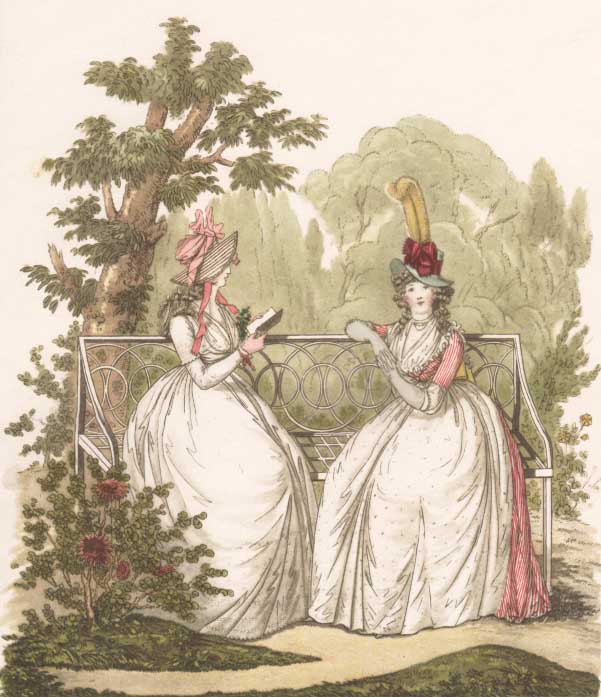
The leisurely classes had plenty of time for reading, late 18th c.

The practice of borrowing books was not a new concept in the Regency era. Records from the 17th century show that people were borrowing books from booksellers. As early as 1735, Samuel Fancourt advertised a circulating library in Salisbury for his religious books and pamphlets.

Circulating libraries attracted many patrons, even those who did not necessarily come to borrow or book or read, for they were also places for fashionable people to “hang out” and meet others.

In the resorts the circulating libraries became fashionable daytime lounges where ladies could see others and be seen, where raffles were held and games were played, and where expensive merchandise could be purchased.  – Lee Ericson, The Economy of Novel Reading

Jane Austen well knew the attractions of libraries at sea side resorts. Mrs. Whitby’s Circulating Library operated in Sanditon, and Lydia visited one in Brighton.  In her letters to Cassandra, Jane frequently mentioned circulating libraries, in particular visiting one in Southampton.

Circulating Library and Reading Room, Milsom Street, Bath. Image, Tony Grant

Circulating libraries tended to be located in a convenient location in the center of a resort. Newcomers would find out about them from guide books, such as the one in Brighton. The Royal Colonade Library advertised itself as thus:

MESSRS. WRIGHT AND SON’S ROYAL COLONADE LIBRARY, MUSIC SALOON, AND READING ROOMS.

This establishment is situated in North-street, at the corner of the New Road, and contains between seven and eight thousand volumes of History, Biography, Novels, French and Italian, and all the best Modern Publications. The Reading Room is frequented both by Ladies and Gentlemen, and is daily supplied with a profusion of London morning and evening papers, besides the French and weekly English journals, magazines, reviews, and general popular periodicals. – Brighton As It Is, 1836

In 1836, Cassandra Austen would have been familiar with the costs associated with the Royal Colonade Library’s terms of subscriptions:

Terms of subscription

By the end of the 18th century, Scarborough, a resortt located in the county of North Yorkshire, boasted several circulating libraries. The town’s population had risen to 7,067 by 1811, and one can imagine that, with the many leisurely hours available to tourists and visitors, these libraries managed a booming business.


A circulating library in Scarborough around 1818, from Poetical Sketches of Scarborough

The Poetical Sketches of Scarborough, first published in 1813, features twenty-one illustrations of humorous subjects about the many features available in the resort, including a satiric poem about the Circulating Library:

As in life’s tide by careful fate
The mind is made to circulate
Just so each watering place supplies
It’s CIRCULATING LIBRARIES:

Where charming volumes may be had
Of good indifferent and bad
And some small towns on Britain’s shore
Can boast of book shops half a score
Scarbro and with much truth may boast
Her’s good as any on our coast
AINSWORTH’S or SCAUM’S no matter which
Or WHITING’S all in learning rich
Afford a more than common measure
Of pleasant intellectual treasure

One wonders if the following publication could be checked out a Scarborough circulating library at the turn of the 19th century, for the book was written by a local schoolmaster:

A Short Grammar of The English Language. In Two Parts By John Hornsey. Schoolmaster, Scarborough.

THE publick are much indebted to Mr Hornsey for this able and excellent compendium of English grammar. We acknowledge that we perused it with singular satisfaction; and are well persuaded that a more useful introduction to the English language cannot be placed in the hands of our youth. That this work should reach a second edition, did not excite our wonder; may it pass through many succeeding ones!- The Nichols, John.Gentleman’s Magazine, Vol 86, 1799, p 1144.

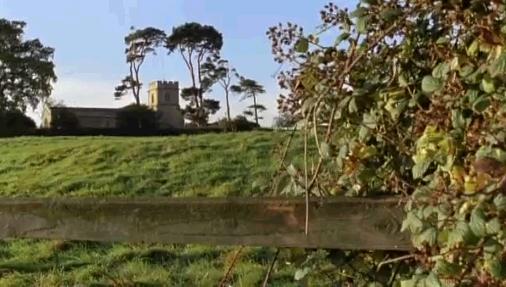
In Counter Culture Blues, the church's peaceful Sunday sermon is shattered by the sound of gun shots on the estate next door.

Counter Culture Blues, the latest Inspector Lewis mystery on PBS Masterpiece Mystery!, treats the viewer to three murders – a young boy, a rocker, and a music professor. This episode of Inspector Lewis kicks off to the third season and does not disappoint. Half the fun of mysteries set in England is witnessing the audaciousness of the characters and the entertaining display of British wit. Both are offered in abundance in this episode about aging rockers.

Richie (David Hayman) looks on as Franco (Anthony Higgins) sees Esme (Joanna Lumley) for the first time in 35 years.

The murders coincide with the reappearance of Esme Ford, the front singer of a once hugely popular 70’s rock band, Midnight Addiction. Esme was thought to have killed herself 35 years ago, but much to the shocked surprise of Ritchie Maguire, the band’s leather-faced leader, she walks back into his life, hoping to ressurrect the band and duplicate their past glory. It was Esme, the “tart with the heart”, who had been the “enchantment who held the band together.” While Richie Maguire had recently attempted a solo CD, whose master had mysteriously been wiped clean, the members of the band were living richly off the proceeds of their past glory.

Just when Inspector Lewis thinks it is safe to sit down to a nice meal, duty calls.

We first meet Inspector Lewis (Kevin Whately) at home and about to sit down to a microwave dinner, when he and Sergeant Hathaway (Laurence Fox) are called to investigate the illegal hunting of game near a church during Sunday service. The culprit is Richie, whose estate is nearby. Inspector Lewis knows the band’s history intimately, for in his youth he had been a huge fan. His surprise upon encountering Esme is as great as Richie’s, and it conjures up memories of a poster of Esme sans shirt and bra that he had purchased as a boy and hung in his room.

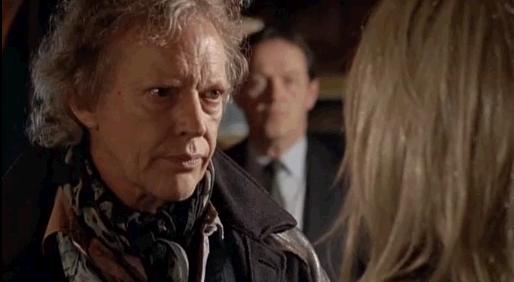
David Hayman as Richie Maguire

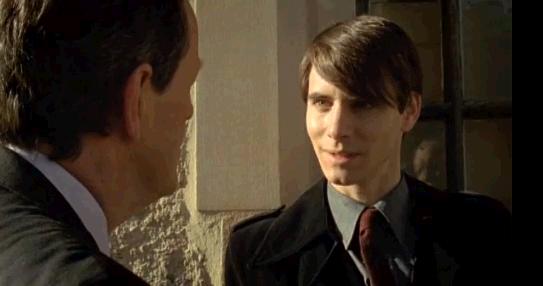
Anthony Higgins as Franco

The rockers have not aged well, and the actors who play Richie (David Hayman), Bone (Zig Byfield), Mack (Hilton McRae), and Franco (Anthony Higgins) are as craggy as Charlie Watts, Keith Richards, Mick Jagger, and Ron Wood of the Rolling Stones.

Zig Byfield as Bone

Hilton McRae as Mack

I won’t give too much of the plot away, since you can still see this episode online. This intelligent and often witty script was written by Guy Andre, who adapted the screenplay from a story by Nick Deare. The series itself is inspired by Colin Dexter’s’ Inspector Morse novels and is greatly enhanced by an excellent cast. Simon Callow portrays Vernon Oxe, the openly gay manager who claims that the band was his creation. Oxe’s sudden appearance in Oxford coincides with that of Esme Ford.

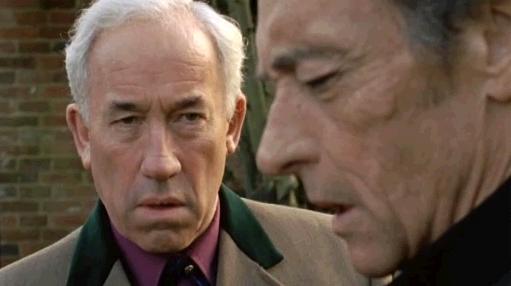
Simon Callow as Vernon Oxe (with Anthony Higgins)

Joanna Lumley as Esme is superb, but then I am biased in her favor. I will always adore Joanna for her turn as Patsy Stone, the boozing, smoking, non-eating, free-loving character of Absolutely Fabulous. I could not help but laugh at Esme’s brazen reason for sleeping with two men on the same night – to assure them that she had not forgotten either of them. My only beef with Joanna as Esme was her obvious wig, which was is not Ms Lumley’s fault. For the viewer’s sake, could they not have found a better hair piece?

Joanna Lumley as Esme

The plot of Counter Culture Blues is complicated, but still manages to hold the viewer’s interest. Sub plots abound. While they did not throw me off my scent (I figured out who the murderer was fairly early on), they added a richness and complexity to the world that Inspector Lewis and Sergeant Hathaway inhabit.

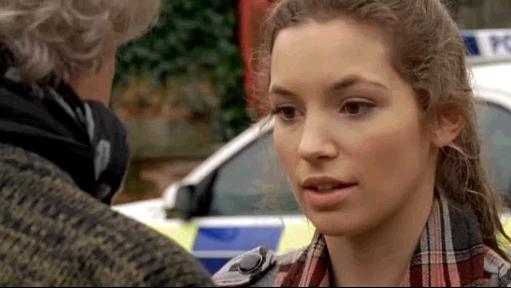
Perdita Weeks plays Kitten, a girl with a secret and from whom a secret is being kept.

Richie’s daughter, Kitten (Perdita Weeks), has mysterious dealings with a nasty young man named Peter, which gives James Hathaway (Laurence Fox) something productive to do. Hathaway is no slouch, and he is on to Peter’s sordid schemes. His confrontation of the young man are among my favorite scenes in this production.

Sergeant Hathaway interrogates creepy Peter

Peter (Harry Lloyd) shows no conscience

The mysterious death of Jason, the boy who was murdered at the gates of Richie’s mansion, and of two other charactes keep Inspector Lewis on his toes.

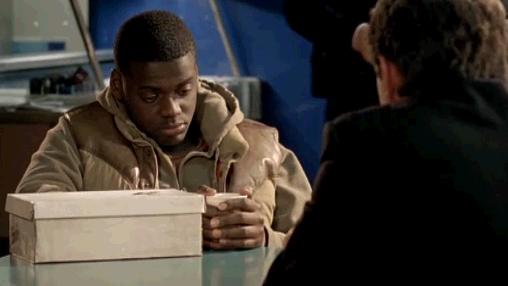
Jason's friend, Declan (Daniel Kaluuya) bravely helps Inspector Lewis solve why the boy was murdered.

It turns out that free-loving Richie has a wife. Helen Baxendale as Caroline is given the best line in this episode. When asked by Inspector Lewis why she disappears for weeks on end, she says she can always tell when her husband is gearing up to have another affair and she wanted to give him the necessary space. “He’s like a dog, really. Needs exercizing.”

Caroline, Helen Baxendale, takes a pragmatic view on marriage.

As usual the reader is treated to scenes in and around Oxford, always a delight, and Rebecca Front once againmakes her appearance as Chief Superintendent Jean Innocent, telling Lewis that “If my life is disagreeable, yours is going to be hell. “ Neither Lewis nor Hathaway can do their jobs without the sharp eyed skills of Drl Laura Hobson, capably played by Clare Holman. It would be lovely if she and Lewis got together, but that is my mothering gene working in overdrive.

The scenes in and around Oxford are part of the background.

Rebecca Front as Chief Superintendent Innocent is both exasperated with Inspector Lewis and in awe of his skills.

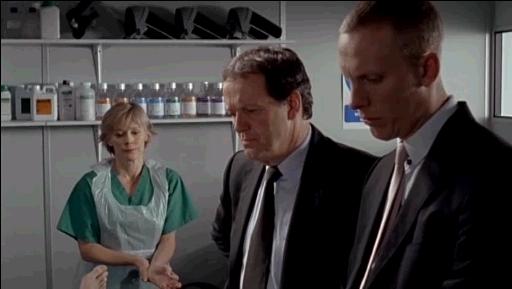
Lewis and Hathaway depend on Dr. Hobson's (Clare Holman) findings to do their work.

The identity of the murderer is somewhat obvious, but the ending is satisfying nevertheless. Joanna Lumley is entertaining as ever and this episode is worth watching for her performance alone. If you want to see the series again, it will be shown online at this link starting August 30 and through September 12. The other episodes scheduled for Season III are:

Needless to say, it is going to be a great September of Sundays with Inspector Lewis at PBS!

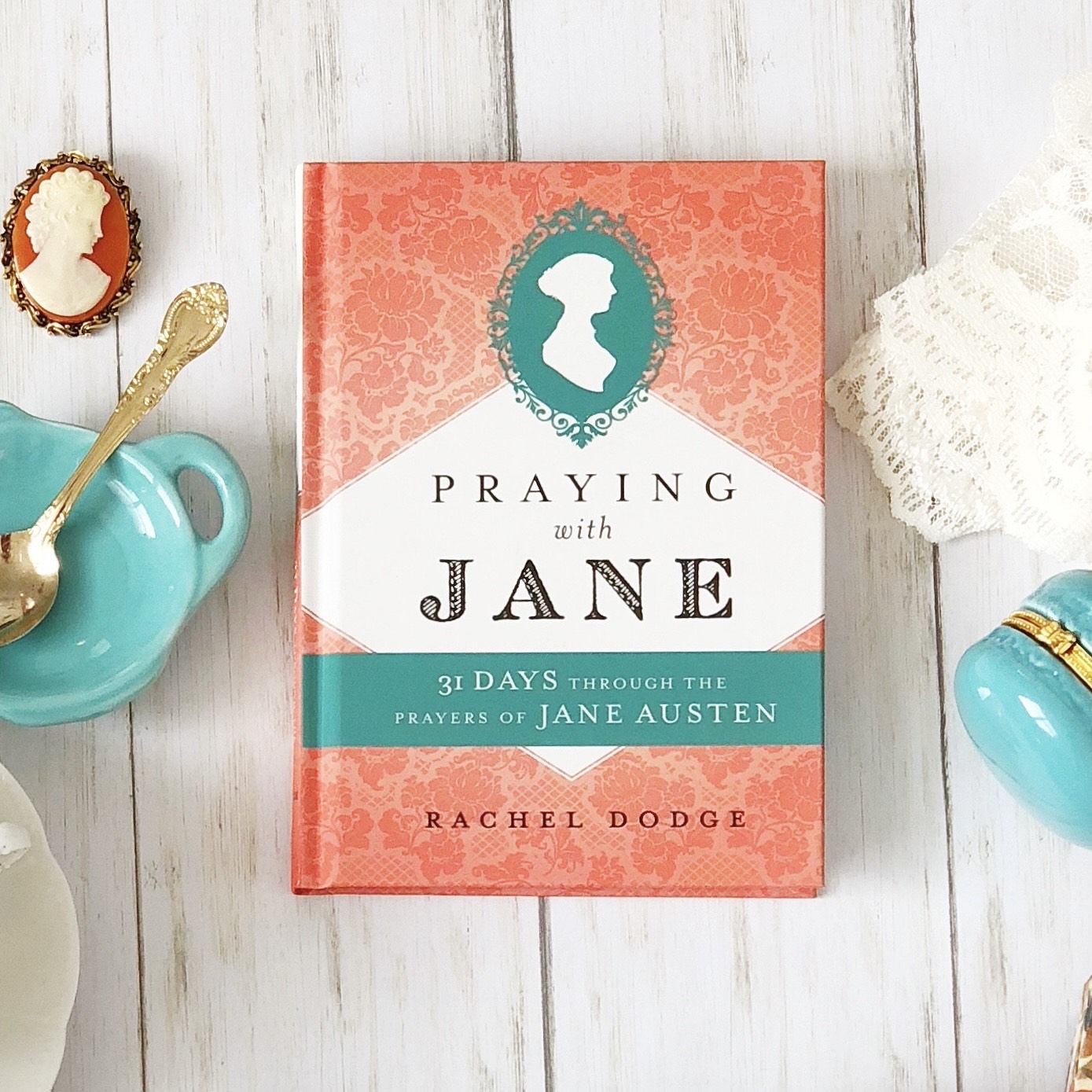
The new annotated edition of Pride and Prejudice by Patricia Meyer Spacks, a professor of English, Emerita, at the University of Virginia, is so beautiful a book, so lush to the touch and rich with beautiful color images and scholarly insights, that I cannot wait to spend the weekend reading it.

Pride and Prejudice: An Annotated Edition is substantially different from the 2007 Annotated Pride and Prejudice by David Shapard, a trade paperback. At $35, this hard cover book will make the perfect gift for the Jane Austen lover in your life. Click here to read more about it. Look for my review soon.