Feeds:
Posts
Comments

Murder on the Orient Express, PBS Masterpiece Mystery!, Sunday, July 11, 9 PM local listings. Starting 7-12, watch this episode online at this link.

David Suchet as Hercule Poirot

Hercule Poirot arrives at Masterpiece Mystery for Series X and the viewer will not be disappointed. David Suchet is back as Poirot, the Belgian detective, and I can imagine no one better in the role. This summer’s Masterpiece Mystery! will feature three new Poirot mysteries based on Agatha Christie Novels: Murder on the Orient Express (July 11), Third Girl(July 18) and Appointment with Death (July 25).

The Orient Express was more than a train – it was an experience. Considered the height of luxury in travel, it was also the turbojet Concorde of its day in that it provided the fastest route from Paris to the East. Agatha Christie and her husband traveled in style all the way to Instanbul, and her trips gave her the background information and details she needed to craft a truly unique murder plot. More a string of luxury sleeping cars, seating cars, couchettes, and dining cars than a regular passenger train, the Orient Express crossed many borders over rail lines owned by a number of companies and nationalities. With so many consortiums and countries involved in its smooth running, one marvels that the train made its destination at all, much less in record time.

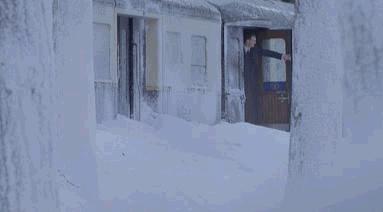
Passengers trapped on a snow bound train

In 1929 the train was stalled in a snow storm in Turkey, leaving the passengers stranded for days. Christie based her 1934 murder mystery on that true event, as well as on the 1932 kidnapping of Charles Lindbergh Jr., which made the headlines in respectable newspapers and scandal sheets for weeks.

Toby Jones plays the evil victim

This PBS production of Christie’s famous tale is darker in tone than the famous Sydney Lumet adaptation of the book in 1974, which starred Albert Finney as Poirot. That movie’s ending was more pat and Hollywood in style. There was no doubt that Ratchett, the villain (Richard Widmark), was evil through and through, whereas the villain (Toby Jones) in this PBS production seems to operate more from fear and self-protection.

The suspects have no place to go

The ending in this most recent adaptation is strikingly dark and ambivalent; raising questions of justice, ethics, and morality. I confess that it has been so many years since I’ve read this mystery that I cannot recall how faithful this film’s ending is to Agatha’s book.

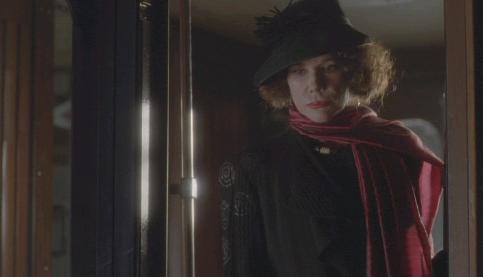
Barbara Hershey as Caroline Hubbard

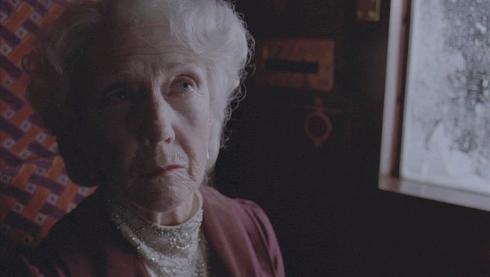
The actors are once again superb. We do not see Barbara Hershey enough these days, and the fabulous Eileen Atkins makes an unforgettable appearance. Samuel West, David Morrissey, and Hugh Bonneville round out a sterling cast. My major complaint about this production is its length, which was too short to develop the story lines for many of the suspects.

Eileen Atkins as Princess Dragomiroff, one of the suspects

Watch behind the scenes videos at this link.

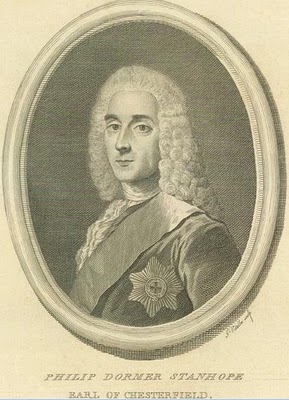
Influenced by his own neglect as a child, Lord Chesterfield began to write letters of advice to Philip, his illegitimate son by a Dutch governess, when the boy was only five years old. Regardless of what one might think of the information contained in these letters, they provide a fascinating insight into the manners and etiquette of the a gentleman in the 18th century:

I shall not therefore mention to you at present, your Greek or Latin, your study of the Law of Nature, or the Law of Nations, the Rights of People, or of Individuals; but rather discuss the subject of your Amusements and Pleasures; for to say the truth one must have some. May I be permitted to inquire of what nature yours are? Do they consist in little commercial play at cards in good company? are they little agreeable suppers at which cheerfulness and decency are united? or do you pay court to some fair one who requires such attentions as may be of use in contributing to polish you? Make me your confidant upon this subject; you shall not find a severe censor: on the contrary, I wish to obtain the employment of minister to your pleasures: I will point them out and even contribute to them. – Lord Chesterfield

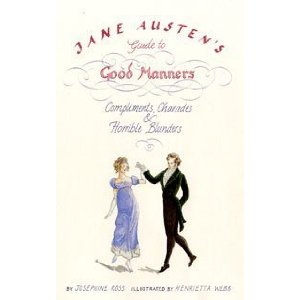
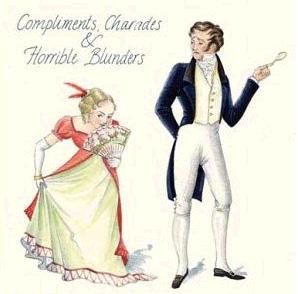
I’ve owned Jane Austen’s Guide to Good Manners: Compliments, Charades and Horrible Blunders by Josephine Ross for a number of years. It is a small book (133 pages), very pretty, and filled with charming illustrations like the one below painted by Henrietta Webb. The language is slightly old-fashioned, as if the book was written in the 19th century. The rules of etiquette and manners are lifted from Jane Austen’s novels, and thus we know they are authentic. The eight chapters are divided logically: Manners; Forms of Introduction; Calling and Conversation; Dancing and Dining; Dress and Taste; Matrimony; Family; and Servants.

Each chapter is divided into “rules”, which serve as guides to the rule of etiquette that will be discussed. For example, Rule 1. Do not be presumptuous in offering introduction. The example comes from the scene in Pride and Prejudice in which Lady Catherine de Bourgh charges angrily into the Bennet home and does not ask for an introduction to Mrs. Bennet, who, awkwardly, has not been granted permission to speak to that grand lady in her own house. Lady Catherine’s rudeness towards Elizabeth and her mother is exacerbated by her pointed cut and lack of manners!


The book would make a wonderful gift for a Jane Austen fan who would like more background into the Regency era. Someone like me, who owns several books of etiquette of the period, would find the lack of index irritating. It is hard to find the precise rules of etiquette quickly. If I must hunt and peck, I infinitely prefer consulting original sources: The Mirror of Graces (1811) by A Lady of Distinction and Lord Chesterfield’s letters to his son, for instance.

But for clarifying exactly what Jane intended in terms of behavior, this book is a tiny gem. Josephine Ross, the author of Jane Austen: A Companion, knows whereof she speaks.  I give Jane Austen Guide to Good Manners four correct rules out of five.

Inquiring Readers: This is the third of four posts in honor for Pride and Prejudice Without Zombies, Austenprose’s in-depth reading of Pride and Prejudice. My first post discussed Dressing for the Netherfield Ball and my second post talked about the dances. This post discusses the suppers served during Jane Austen’s era, and concentrates on what kinds of food and drink might have been served at the Netherfield Ball.

“As for the ball, it is quite a settled thing; and as soon as Nicholls has made white soup enough I shall send round my cards.” – Charles Bingley, Pride and Prejudice

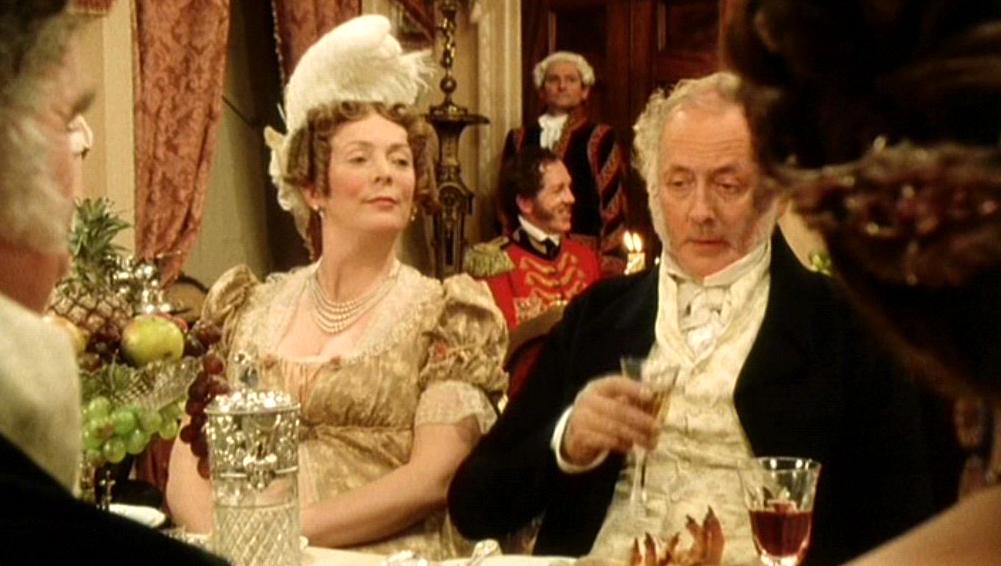
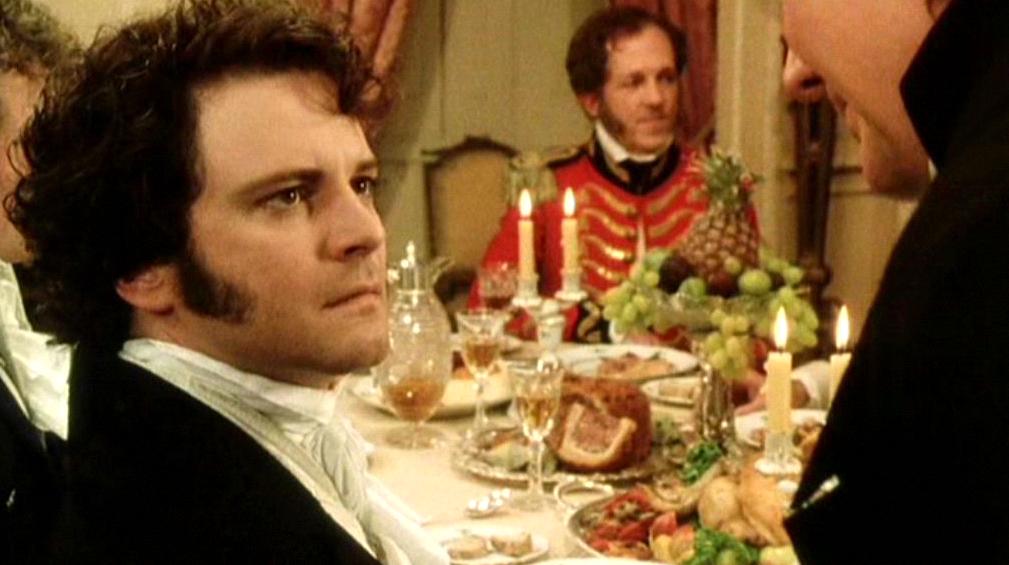
Mr & Mrs Bennet sit down to supper. Notice the lavish bowl of fruit.

The sit-down supper served at the Netherfield Ball in Pride and Prejudice probably occurred around midnight. By that time, people would be famished after their physical exertions or from playing cards nonstop in the card room. They had most likely eaten their dinner between 3-5 p.m. (earlier in the country, and later in Town). Dinners consisted of between 5-16 dishes and could last several hours. The best families would serve up two courses, for a meal’s lavishness depended on the number of courses and dishes that were served. Dishes representing a range of foods, from soups to vegetables and meats, would be spread over the table in a pleasing arrangement and would be set down at the beginning of the meal.
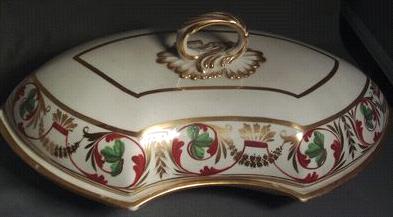
Large Derby porcelain supper dish from Ruby Lane

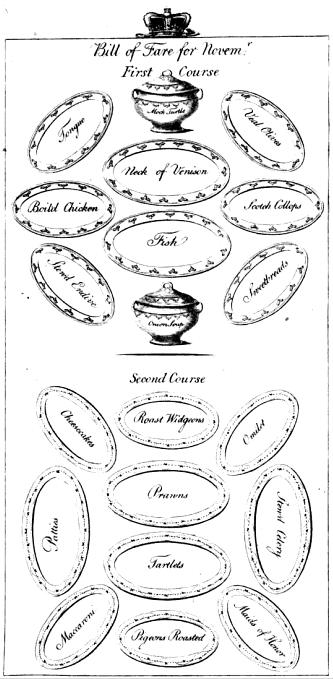
It is conjectured that by the time the covered dishes arrived from the kitchen and the family and guests were seated, the food had turned cold. Diners would be confined to eating from the dishes placed closest to them. In the Bill of Fare from the Universal Cook, 1792 (Francis Collingwood and John Woollams) one can see the foods that were available in November.

Bill of Fare, November 1792

The evening meal, which also included a dessert course, lasted as long as two hours, leaving the diners sated. Suppers were therefore served quite late and were simple and small in comparison. Often called a “tea board”, this small repast was frequently served on a tray between 10-11 p.m. If more than one person was hungry, a cloth would be laid on a small table, not the dining table, and a limited assortment of cakes, tarts, biscuits, pastries, jellies, cheeses, cold meats, sandwiches, savories, salad, dessert, or local fruits – whatever was at hand – would be made available. (One can imagine how tired the servants must have been, rising early as they did.)
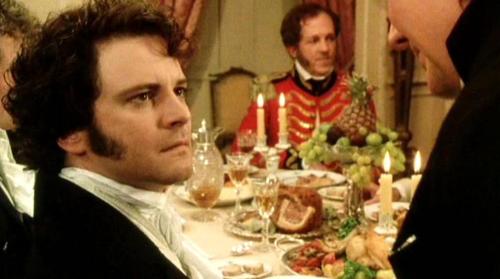
Mr. Darcy observes the Bennet family during supper and is accosted by Mr. Collins

Suppers served at private balls were an entirely different matter for they reflected on the splendor of the event. Balls generally began at 8-9 p.m. and the dancers sat down to a lavish spread at 11 p.m. or midnight. A gentleman accompanied his dance partner into the supper room, which makes one think that it would have been wise for a suitor who wished to further his acquaintance with a young lady to reserve a dance just before the meal.

Jane and Elizabeth at supper

Mr. Bingley most likely served a sumptuous supper on a magnificent table set with his finest china and silver. The food would consist of white soup, which during this time was made with veal stock, cream, and almonds; cold meats, such as chicken or sliced ham; poached salmon; glazed carrots and other seasonal vegetables; salads; fresh fruits;biscuits;dry cake (which meant unfrosted cake, like the pound cake recipe from the Delightful Repast at the bottom of this post); cheeses; short-bread cookies; pies; ice-cream; and trifles. One must not forget that during this period cockscombs and testicles were considered delicacies, and that bone marrow was routinely added to pies for richness. (Fancy Tripe or Trotters for Supper?)

Kitty and Lydia tippling, Netherfield Ball, P&P 2005

Drinks of tea, coffee, lemonade, white wine claret, and red wine (sweet madeira wine was especially popular) were served. Regency cups were filled with punch, negus (wine mixed with hot water, lemon and nougat); orgeat (made with a sweet syrup of orange and almonds); or ratafia (a sweet cordial flavored with fruit or almonds). Port was reserved for gentlemen, though I am not sure that they were allowed to imbibe this liquor in front of the ladies.
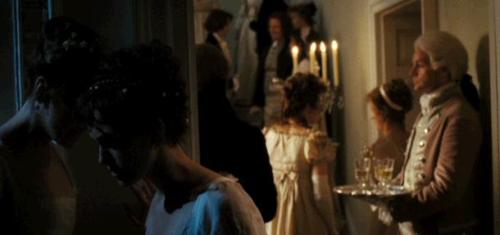
A footman holds a tray of drinks, Netherfield Ball, P&P 2005

A private midnight supper at Netherfield was a more splendid affair than the suppers served up at the weekly Wednesday night balls at Almack’s. These subcription dances coincided with the three months of the London social season. Alcohol was not served to discourage drunkenness among gentlemen, who were known to imbibe several bottles of wine per day, and only an assortment of thinly sliced stale bread (which was a day old), dry cakes, lemonade and tea were provided. Simpler balls given by hosts who were not as rich as Mr. Bingley  might offer a little bit of hot supper consisting of six dishes, including salad, dessert, and fruit, and coffee, tea, lemonade and wine.
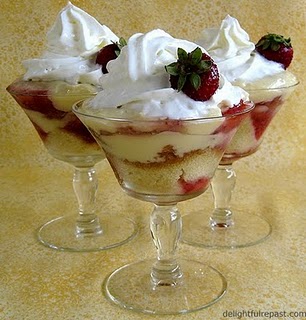
Trifle, The Delightful Repast

The links to the two recipes in this post were created expressly for us by Jean at The Delightful Repast. The pound cake (dry cake) recipe is one that even I am able to attempt with some success, and Jean’s solution of serving trifle in individual dessert dishes is sheer genius.

The last to leave the Netherfield Ball. Kitty and Lydia sleeping off their drinking. P&P 2005

The Food Timeline shows when meals were served during the Georgian and Regency periods, and how the hours changed.

  • 1780: Breakfast 10AM; Dinner 3-5PM, Tea 7PM, Supper 10-11PM
  • 1815: Breakfast 10AM (leisurely), 9AM (less leisurely), 8AM (working people); Luncheon Midday; Dinner 3-5PM; Supper 10-11PM
  • 1835: Breakfast, before 9AM; Luncheon (ladies only) Midday; Dinner 6-8PM; Supper depending upon the timing and substantiality of dinner

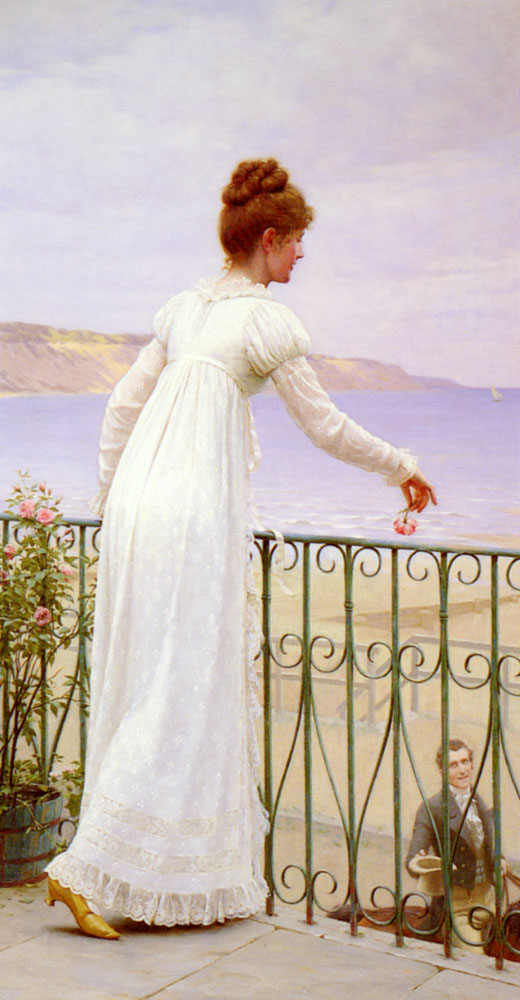
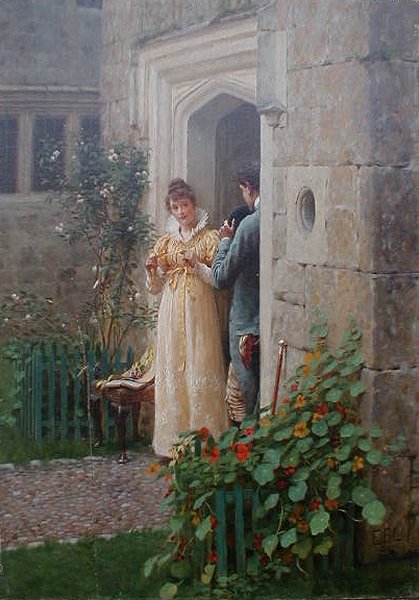
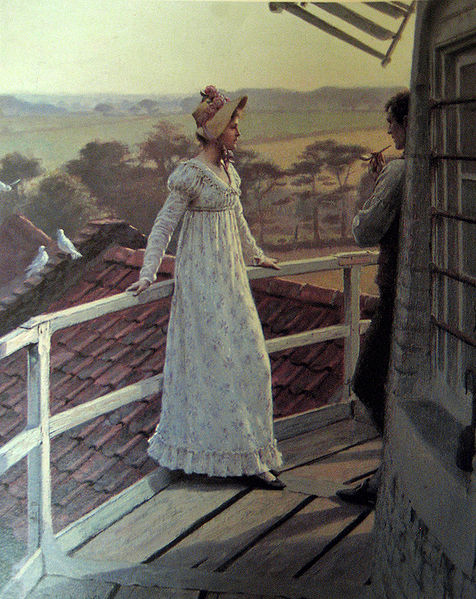
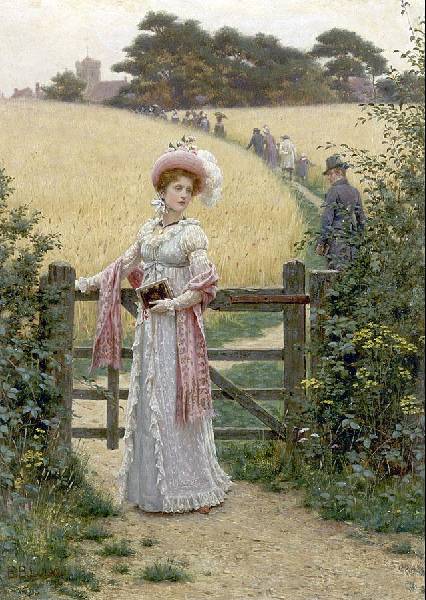
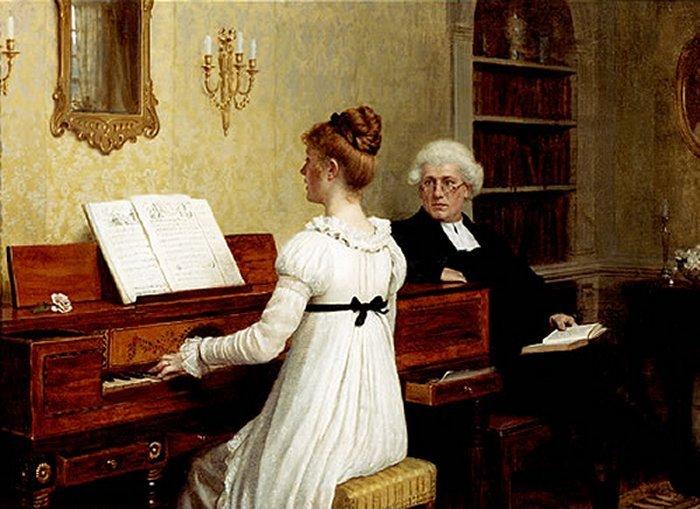
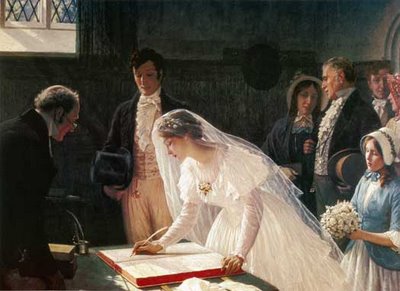
Edmund Blair Leighton (1853 – 1922) was an historical genre painter who is best known for paintings of regency and medieval times. The paintings are sentimental, but are still extremely popular as posters and prints. Very little is known about the artist. This biograpny of E.B. Leighton on ArtMagick offers the most comprehensive information about the painter, aside from Wikipedia. This link to the Art Renewal Center provides a photograph of the artist and an obituary.

A favour, Edmund Blair Leighton

The images, while idealized and a bit syrupy, and obviously painted during Edwardian and Victorian times, are still a joy to behold for their sweet nostalgia for a bygone era.

The request

The Windmiller's Guest

Walking to church

Sweets to the sweet

The piano lesson

Signing the register

More images at Enchanted Serenity of Period Films