Feeds:
Posts
Comments

Posts Tagged ‘Bath’

by Brenda S. Cox

“Hot! He [John Thorpe’s horse] had not turned a hair till we came to Walcot Church; but look at his forehand; look at his loins; only see how he moves; that horse cannot go less than ten miles an hour: tie his legs and he will get on.”–John Thorpe, Northanger Abbey, chapter 7

“Walcot Church” in Bath is one of several real churches that Jane Austen mentions in her novels. This particular church is closely connected to Jane Austen’s family. Austen made several visits to Bath and lived there for some years, so she knew Bath and its churches and chapels well.

As we’re celebrating Jane Austen’s life this year, we remember that church was an important part of her life. We’ve already looked at some of the churches she attended: St. Nicholas’ at Steventon, where she went as a child, St. Nicholas’ at Chawton, which she attended during the years she was writing most of her novels, and others (see links at the end of those posts).

St. Swithin’s Walcot in Bath. Completed in 1790, externally it is still much as it was when Jane Austen saw it.

“Walcot Church”

Walcot Church is the parish church of Walcot, right on the London Road coming into Bath. So it would have marked Thorpe’s arrival at the town. Wealthy and influential people worshipped there during the nineteenth century, so this may also be an indirect boast, as Thorpe tries to connect himself with a prestigious place.

A parish church can be called by the name of the parish or by the name of its patron saint. The patron saint of this church is St. Swithin, so the church is St. Swithin’s Walcot. St. Swithin (also spelled Swithun) was an Anglo-Saxon bishop. The patron saint of Winchester Cathedral, where Jane Austen is buried, is also St. Swithin.
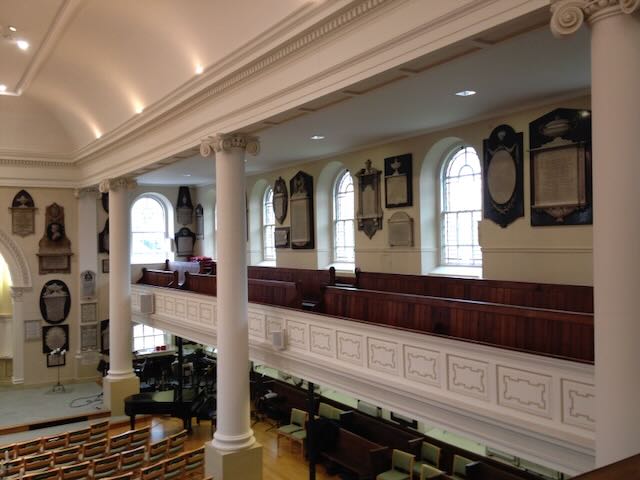
Many “monuments”–the plaques on the walls–commemorate wealthy and influential people who have worshipped at St. Swithin’s Walcot through the years. In Northanger Abbey, Catherine contemplates a similar monument to General Tilney’s wife at the fictional Northanger parish church.

St. Swithin

St. Swithin was associated with various miracles. He came to be connected mostly with the weather. July 15 is St. Swithin’s Day (each saint has a day associated with him or her in the church calendar, usually the day of their death). According to tradition, if it rains on St. Swithun’s day, it will rain for the next forty days, but if it’s clear that day, it will be clear for forty days.

Just before she died, Jane Austen wrote a humorous poem in which St. Swithin threatens Winchester race-goers with rain because they have forgotten him.
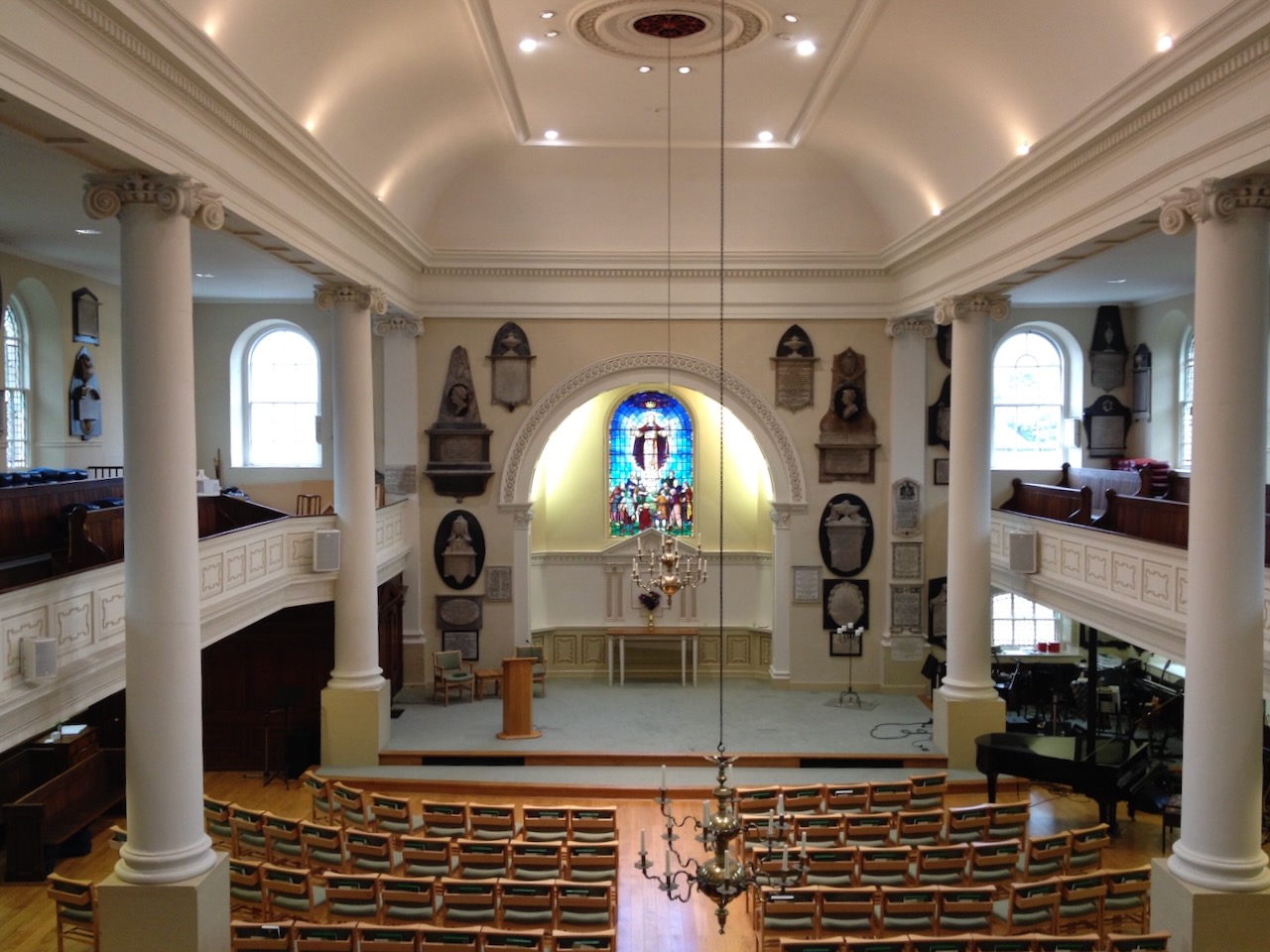
Interior of St. Swithin’s Walcot Church today. The stained glass window was first added in 1841 and replaced in 1958 after it was shattered in World War II. It portrays Christ ascending into heaven, surrounded by his disciples. Modern seating on the main floor, rather than pews, allows the church to host a variety of events.

Austen’s Parents’ Wedding

How was the Austen family connected with St. Swithin’s?

Jane’s father, George Austen, studied at Oxford University. He eventually became an assistant chaplain, then a proctor (in charge of student discipline), called “the Handsome Proctor.” At some point he met Cassandra Leigh, niece of the Master of Balliol College at Oxford. Cassandra was the daughter of a clergyman. Her father eventually retired and moved with his family to Bath. After he died, Cassandra Leigh agreed to marry George Austen, and they were married on April 2, 1764, at St. Swithin’s Church. The register states that Cassandra was living in Walcot parish, while George was in the parish of Steventon in Hampshire. Cassandra’s mother came to the wedding, and her brother, James Leigh-Perrot, and her sister, Jane Leigh, signed as witnesses. George was 32 and Cassandra was 24. They were married by license, presumably a common license, not by banns

By then George Austen had been ordained and gained the living of Steventon, through his relatives. The young couple went straight to Hampshire, where they rented the parsonage at Deane while the Steventon parsonage was prepared. Of course, Jane Austen was born in 1775 in that Steventon parsonage.
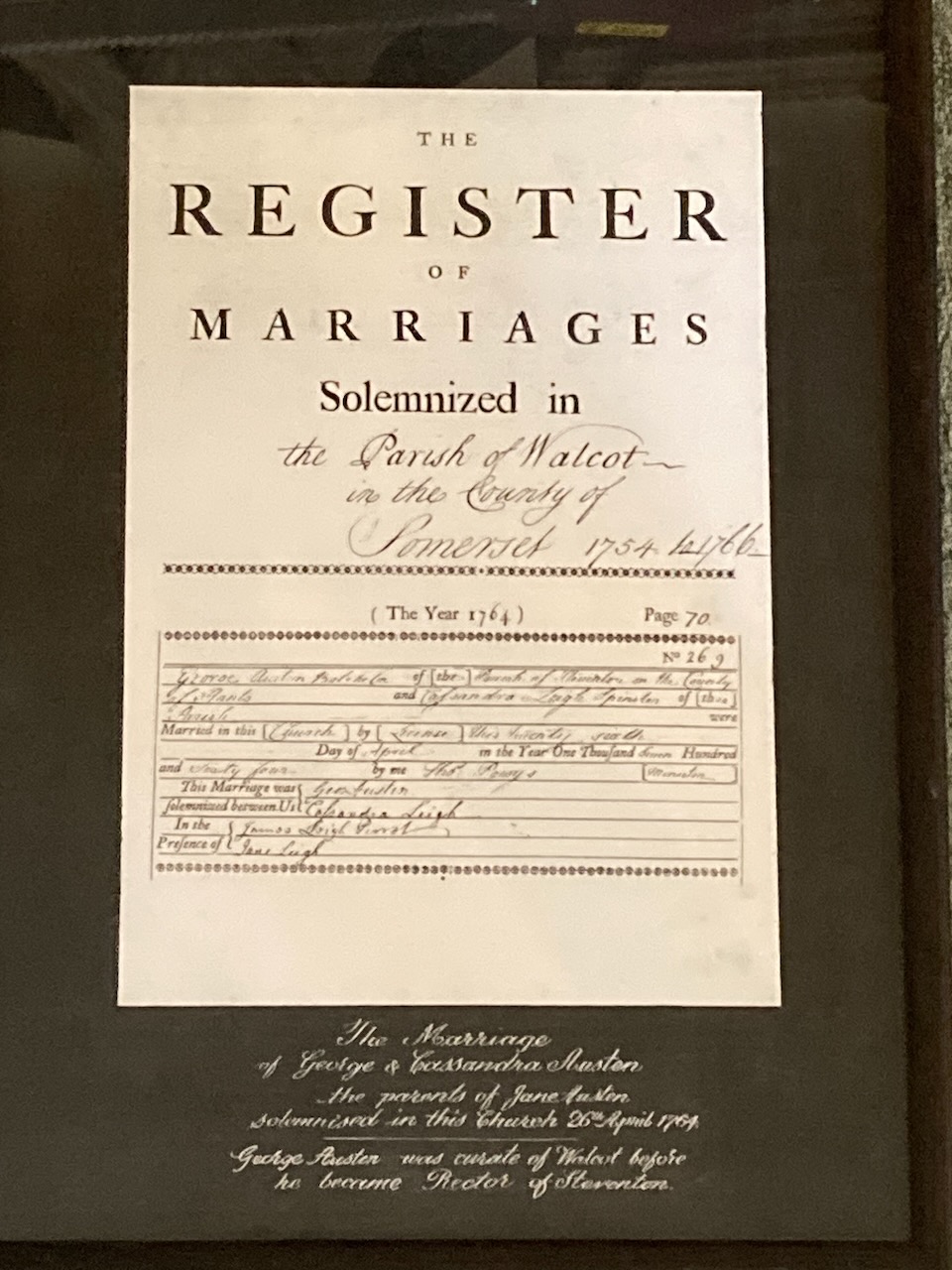
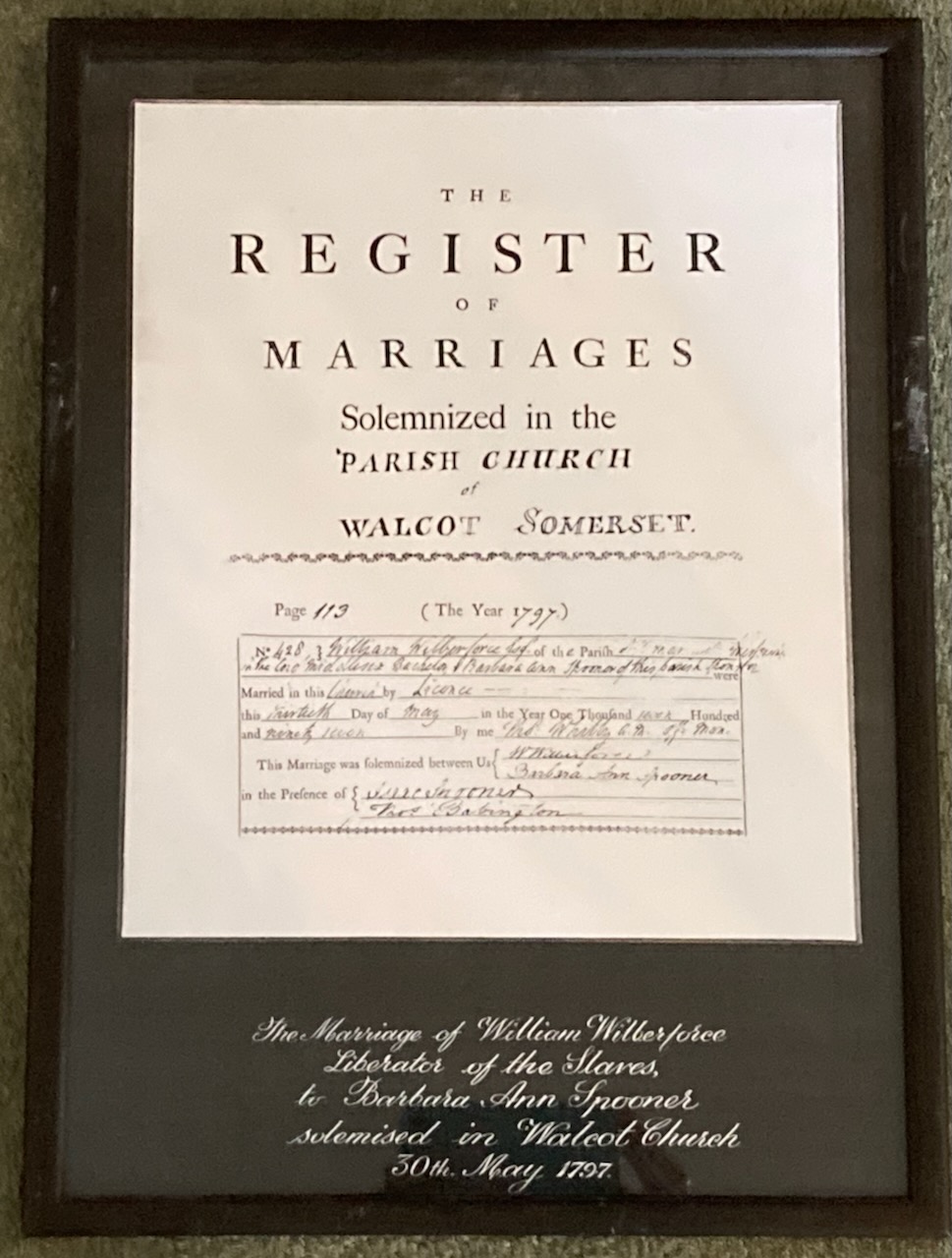
Copy of the entry in the marriage register for George and Cassandra Austen, married at St. Swithin’s Walcot on April 26, 1764.
Another famous wedding at St. Swithin’s Walcot: William and Barbara Wilberforce were married there on May 30, 1797, after a six-week whirlwind courtship in Bath. Wilberforce led the fight against the trade in enslaved people and slavery.

George Austen’s Death

In 1801, George Austen left his Steventon parish to his son’s care and moved to Bath with his wife and two daughters, as his wife’s father had done much earlier. In 1805, George Austen died there. He was buried at St. Swithin’s, where you can still see his grave. Jane Austen wrote to her brother Frank, on Jan. 21 and 22, 1805:

“Our dear Father has closed his virtuous & happy life, in a death almost as free from suffering as his Children could have wished. . . . We have lost an Excellent Father. . . .The funeral is to be on Saturday, at Walcot Church. . . . [his body] preserves the sweet, benevolent smile which always distinguished him.” 

Jane did not have a suitor waiting in the wings (as her father had been waiting for her mother in a similar situation). She and her mother and sisters had to depend on her brothers for financial help after her father died.
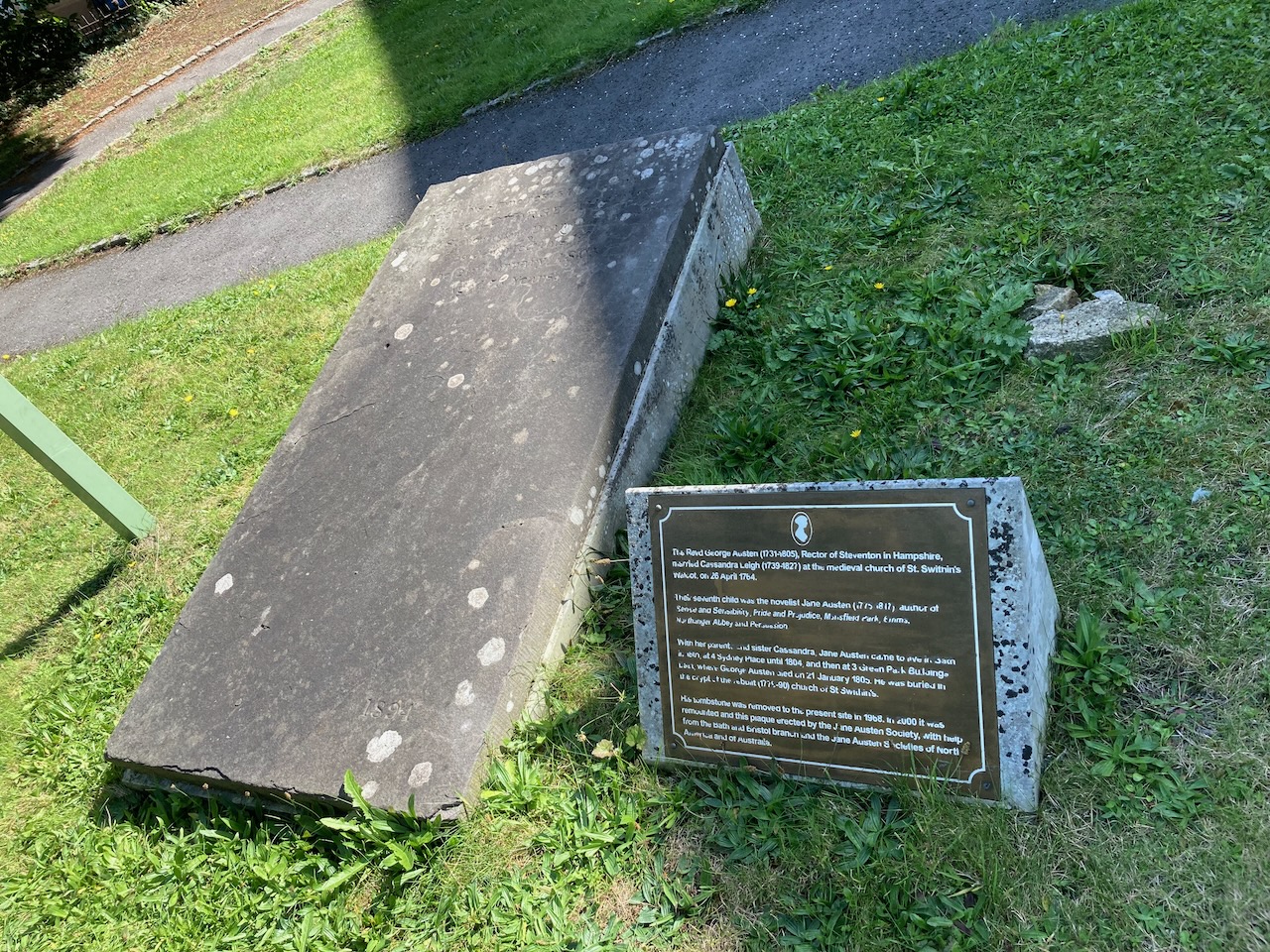
George Austen’s grave at St. Swithin’s Walcot. He died Jan. 21, 1805. The inscription on the gravestone is worn and hard to read. It identifies him as the rector of Steventon and Deane, who died age 75 (meaning, in his 75th year). The newer brown plaque, added in 2000, adds information about his daughter Jane Austen and her residence in Bath.
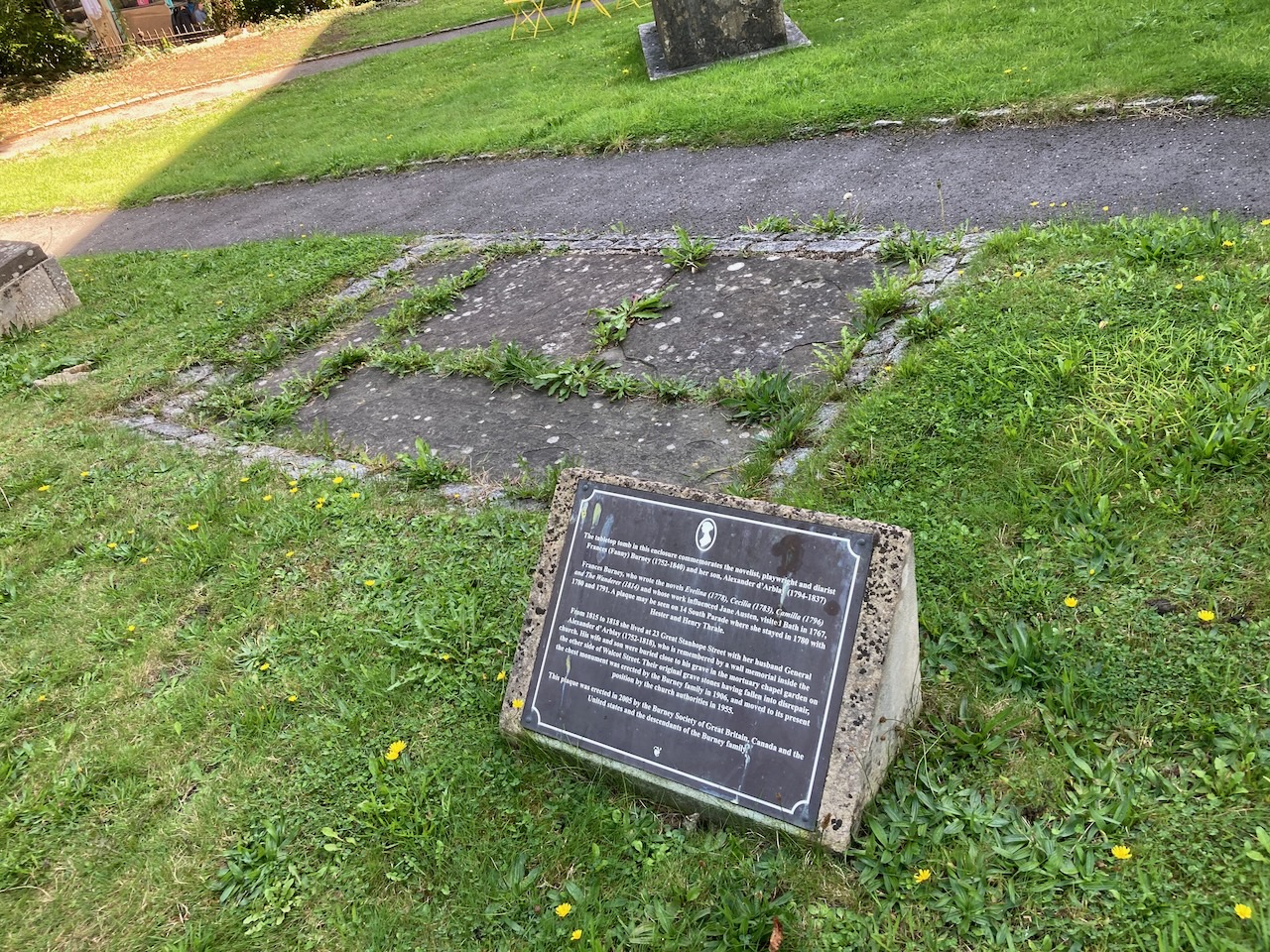
The author Fanny Burney, Jane Austen’s contemporary, is buried and commemorated nearby.

Did Austen ever attend church at St. Swithin’s? I’ve written another post exploring where she may have gone to church and chapel in Bath. It’s likely that she went to St. Swithin’s when she was visiting her aunt and uncle Leigh-Perrot who lived on the Paragon in Bath. That’s the edge of Walcot parish. The church is a steep walk uphill from their home. Later on, when Jane lived in Bath, she more likely went to chapels closer to her family’s various lodgings.

St. Swithin’s is a busy, thriving church today, with many activities going on. Some events of the Jane Austen Festival last fall took place there. The Charles Simeon Trust, started in 1836 by Evangelical clergyman Charles Simeon, is a patron of St. Swithin’s, as well as of Bath Abbey.

Other Churches Mentioned in Northanger Abbey

Northanger Abbey refers to four other real churches or chapels, more obliquely.

Thorpe says he bought his gig from a “Christchurch man.” He is referring to one of the colleges at Oxford University. Oxford and Cambridge are made up of semiautonomous colleges, and a student’s studies were mostly at his own college. Christ Church is a college at Oxford, and its college chapel is also Christ Church Cathedral for the diocese of Oxford. Thorpe shows a cavalier attitude toward “Christchurch” as well as toward everything else.

(A cathedral is the seat of a bishop, who leads a diocese made up of a number of parishes. A parish is a geographical area which was generally served by one main church, like the parishes that Edward Ferrars and Mr. Collins serve.)

Catherine and Isabella expect to worship together in a chapel in Bath; Austen doesn’t tell us which one. It may have been the Octagon Chapel, which would have been convenient to both of them.

Northanger Abbey also indirectly refers to Bath Abbey. Twice the “church-yard” in the center of Bath comes up. The two young men Catherine and Isabella are following go “towards the church-yard,” and later Catherine trips “lightly through the church-yard” to go make her apologies to the Tilneys. This would be the church-yard of Bath Abbey, in the center of Bath. Roger E. Moore, in Jane Austen and the Reformation, argues that Austen purposely did not name the abbey, which was historically the spiritual center of the town. She may have wanted to critique the fact that Bath in her time was a place of pursuing shallow entertainment rather than deeper spirituality.

Near the end of the novel, Catherine is headed home. She looks out for the “well-known spire” of Salisbury. This is ancient Salisbury Cathedral, which has the tallest cathedral spire in England. Her father’s parish is in Salisbury diocese.

While Jane Austen invents country parishes for her characters, she also connects them with spiritual places in the real world.
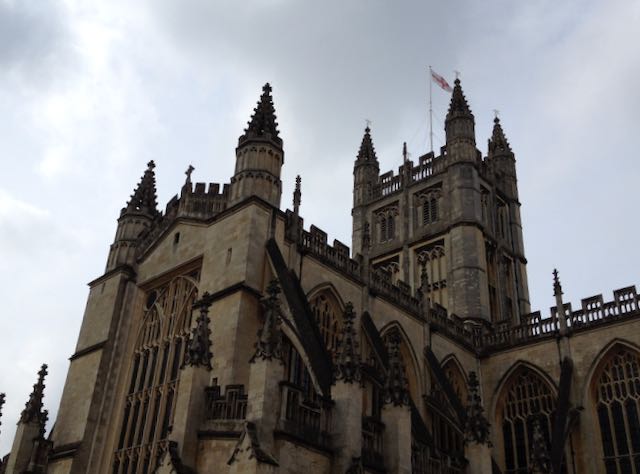
Bath Abbey towers above the city of Bath. It is not mentioned by name in Northanger Abbey, though its church-yard is mentioned.

All images above ©Brenda S. Cox, 2025
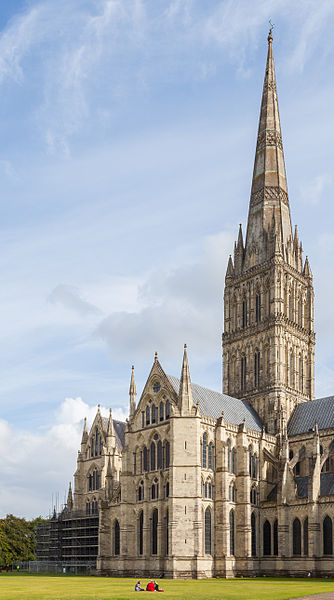
Austen includes real-life churches in her novels, such as Salisbury Cathedral, with the highest spire in England. This is Catherine Morland’s landmark as she heads home.
Photo by Diego Delso, CC-BY-SA license.

Real Churches in Austen’s Novels and Letters

Garrison Chapel

St. Swithin’s, Walcot and other churches in Northanger Abbey

St. George’s, Hanover Square

London Churches

St. Paul’s, Covent Garden: Actors’ Church

Austen Family Churches

Steventon

Chawton

Deane

Hamstall Ridware and Austen’s First Cousin, Edward Cooper

Adlestrop and the Leigh Family

Stoneleigh Abbey Chapel and Mansfield Park
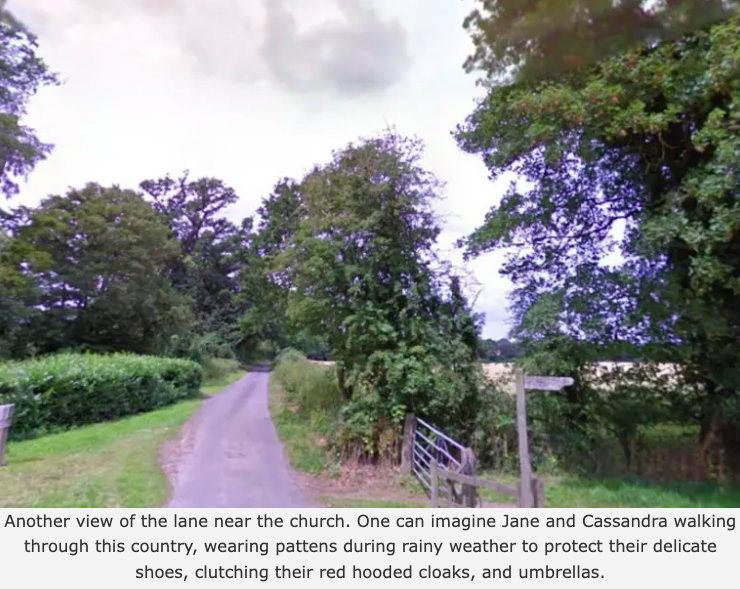
Great Bookham and Austen’s Godfather, Rev. Samuel Cooke

Ashe and the Lefroy Family

Read Full Post »

Inquiring readers,

Since 2007, this blog has published a number of posts regarding Steventon, the village where Jane Austen and her parents and siblings lived until the parents and sisters moved to Bath in 1801. Austen was 26 years old. It is said that upon hearing of her parents’ plans to leave Steventon, she fainted. 

Well, girls, it is all settled. We have decided to leave Steventon and to go to Bath.’ To Jane, who had been from home and who had not heard much before about the matter, it was such a shock that she fainted away . . . . Constance Hill, Chapter IX, Leaving Steventon

The probable truth was that she was deeply unhappy to move from a community and friends and family she knew so well, and where her writing skills had flourished. Her creativity blossomed in Steventon, while her life in Bath resulted in a writing desert, where her projects were not completed – until she moved in 1809 to Chawton Cottage

Regardless of her difficulties in Bath, this post is about her life in Steventon, where Austen grew up. Contributors Brenda Cox, Rachel Dodge, and Tony Grant published their outstanding (copyrighted) images in these posts!

Steventon Village

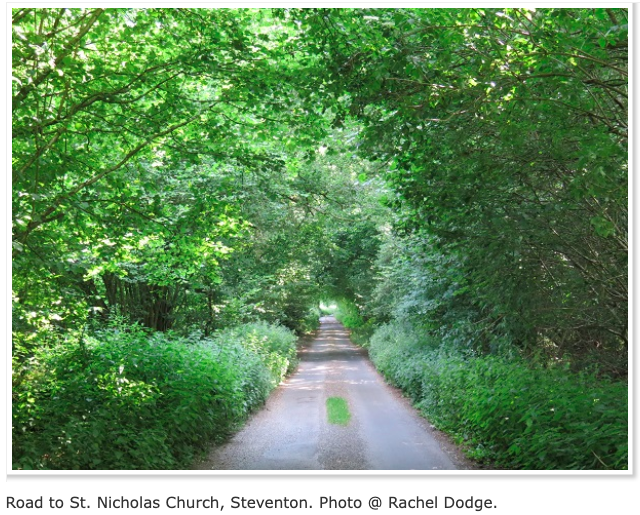
A Drive Through Steventon to St. Nicholas Church

Sadly, my five visits to England focused on London, Bath, Salisbury Cathedral, Stonehenge, Brighton and the South Downs, Warwickshire, Eton, Oxford, Windsor, etc. I missed Austen’s villages of Steventon and Chawton by a smidge. Thank goodness that I could take the road to St. Nicholas Church via Google street view.

Screen Shot 2024-02-24 at 11.41.21 AM

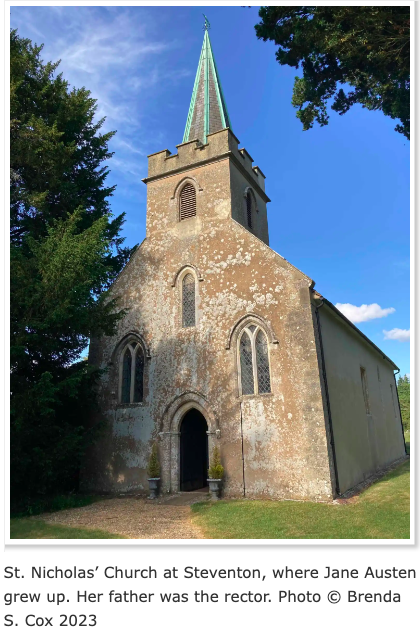
St. Nicholas, Steventon

Jane Austen’s Family Churches: St. Nicholas’, Steventon

This past summer, Brenda Cox, after an extensive trip to England, wrote a series of posts regarding the churches in Austen’s world. Cox’s original photos and historical information are unique to this blog and provide us with a fabulous way to view these beautiful buildings and their history.

Screen Shot 2024-02-24 at 11.44.35 AM

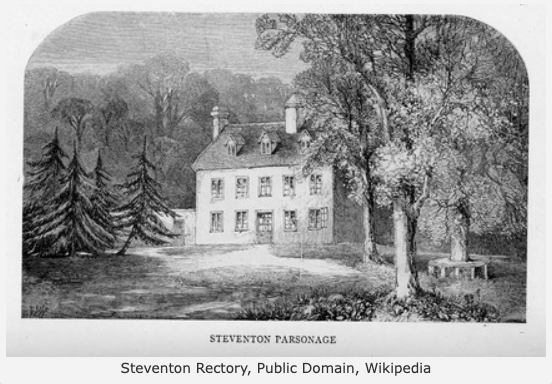
Steventon Rectory:

Steventon Rectory: Jane Austen’s Childhood Home

This was the first post I published in 2007 regarding Steventon Rectory. During that time I was a Jane Austen groupie and knew very little about her life. In the article, I focused on pattens, shoes with which I was not familiar. Good news: After all these years in this old post, the links still work! Looking back, the one negative comment still gives me the shivers, for I had no idea at that time  how to title a post! The reader came looking for substance and got clattering pattens instead!

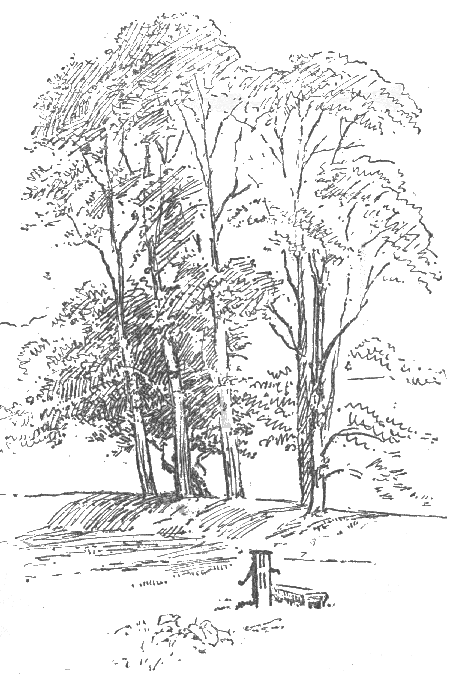
The image below of the remaining remnant of the Steventon Rectory (a pump) was drawn by Ellen G. Hill, whose sister, Constance wrote a book now in the public domain: Jane Austen: Her Homes and Her Friends by Constance Hill, 1901. See the link at the bottom of this post. Like me in 2007, Ellen and Constance were Austen fans. They visited the sites three quarters of a century after Austen died. In a some instances, they talked to a few aging villagers who recalled those who knew Cassandra Austen in her old age (dod 1845) and related some first-hand minutiae about her.

Screen Shot 2024-02-24 at 12.23.47 PM

Ellen Hill’s sketch of the pump on the site where the rectory stood.

The Garden:

Steventon Rectory Garden: Imagining the Landscape of Jane Austen’s Youth

Rachel Dodge, another outstanding writer for this blog, wrote a post about her visit to Steventon, Chawton, and the Austens’ self-sufficient gardens. Her photographs, as Brenda’s and Tony’s, are outstanding. This blog is blessed to have these contributors!

Screen Shot 2024-02-24 at 1.47.42 PM

The Rectory:

Servants in Jane Austen’s Houses

This post leads to an article that details the life of the Austen family in Steventon Rectory. It refers to Linda Robinson Walker’s 2005 Persuasions-Online article entitled Why Was Jane Austen Sent away to School at Seven: An Empirical Look at a Vexing Question. Ms Walker describes the Austen parents’ incentive to provide sufficiently for themselves and six children, which was not enough on Rev Austen’s two livings. The parents’ hard work to oversee a boy’s boarding school allowed the family to live a life of some comfort. Walker’s information regarding their daily lives and the costs for maintaining the boarding school and hire the servants is quite insightful.

Screen Shot 2024-02-24 at 1.16.24 PM

Last but not least: 

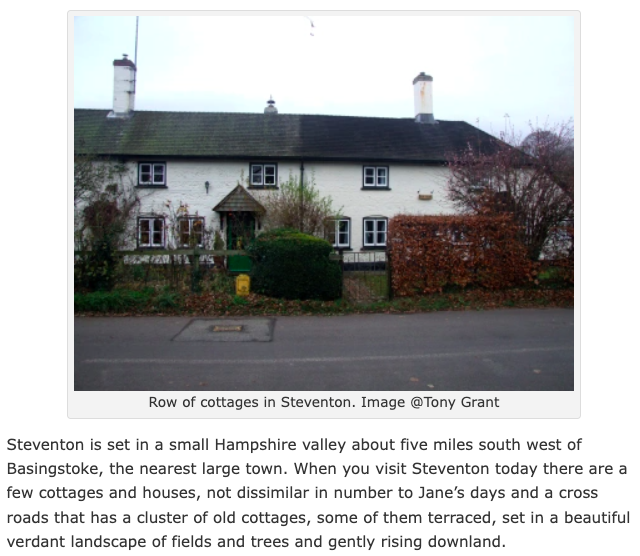
Steventon and Barton Cottage by Tony Grant

Tony Grant, a contributor to this blog since 2010, wrote this post and supplied his photographs to demonstrate the relationship between cottages in Steventon and Barton Cottage in Sense and Sensibility. His articles are always intriguing and informative, for he acted as a guide in Jane Austen tours in his native England for many years.

Screen Shot 2024-02-24 at 2.17.13 PM

More on the topic:

This online, public domain book, published in 1901 and referenced in this blog post, was my initial introduction to a first-hand Jane Austen fan account of her life. Enjoy the read! Jane Austen: Her Homes and Her Friends By Constance Hill

Read Full Post »

Gentle Readers, Nicola Hyman, one of the authors of The Pump Room Orchestra, Three Centuries of Music and Social History, a book that she co-wrote with her musician husband, Robert, sent me this information about music in the Pump Room. The book is available at Hobnob Press in the UK.

The Pump Room Orchestra is believed to be the first resident band in the country to play in an assembly room in the early 1700s. The book chronicles the three hundred year old history of this Band, from its inception to today. Beau Nash founded the Band and, during his sojourn, his supremacy over its management was unequalled. However, over the decades municipal philistinism, wars, economic slumps and the appeal of (usually Italian), virtuosi in Bath threatened its almost unbroken continuity. Handel visited Bath in 1749 and collaborated with Thomas Chilcot whose support of the Pump Room Band leader, during one of its most intense conflicts, is explored in the book. Thomas Linley and William Herschel both played in the Band in the 1760s. Haydn enthused over the progress of the new Grand Pump Room built in 1795 where the present Trio play. The glamorous backdrop of eighteenth century Bath was underpinned by a climate of fierce rivalry and partisan affiliations among many musicians, many who struggled to survive.

Several fine German musicians were directors or members of the Pump Room Orchestra during the nineteenth century, including up to the Great War, the great grandfather of Bristol based composer Richard Barnard. Bath was now a more sober city, its appeal as a resort diminishing and the Corporation’s control of the Pump Room Orchestra a constant challenge. During bleak pre Great War years, Holst conducted the Orchestra for the first performance of his Somerset Rhapsody.

During the Spa hey day of the 1920s ‘cellist Gilhermina Suggia, contralto Edna Thornton , violinist Daniel Melsa, Arthur Rubenstein and Solomon are just a few of the well known guest soloists who played with the Orchestra. Sir Thomas Beecham conducted the Orchestra several times during this period. Elgar was another guest conductor. As Spa Director, John Hatton’s progressive style of marketing revived Bath as a tourist attraction. A thriving Pump Room Orchestra reflected the unique collaboration Hatton had with Jan Hurst, the Orchestra’s director.

In the late 1930s the Orchestra was directed by the distinguished Maurice Miles and concerts were regularly aired on the BBC. His predecessor, the brilliant and popular ‘showman’ Edward Dunn, had emigrated to South Africa. Dunn’s role as Durban’s Director of Music led him after the War to build up an International Arts League of Youth Festivals across South Africa. While, after the Second World War, the direction of the Yorkshire Symphony Orchestra and the BBC Northern Ireland Orchestra were among Maurice Miles’s later roles.

However, it is the forgotten army of predominantly rank and file players in the Orchestra which is a central theme in the book. Many of these players were given solo roles and played in chamber ensembles in the Pump Room. Our research has divulged fascinating cameos, many tragic but many invested with astonishing devotion to music in the Pump Room and to Bath. One example was Lawrence Lackland who switched, at Lionel Tertis’ suggestion, to viola, and whose father was a violinist in St Helens under Thomas Beecham’s early orchestra.

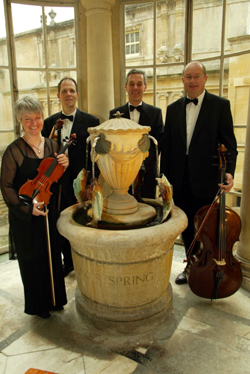
The Pump Room Trio at the fountain

A piano trio was the phoenix from the ashes of the Second World War, an unbroken legacy to this day. Now two violinists share the role dividing the 363 days of music in the Pump Room between them. All four members of the Trio are experienced, conservatoire trained musicians (RCM, RAM, RNCM, the Juilliard School).
People from all over Britain and the world come to the Pump Room. For many the visit is a regular pilgrimage, whether they be tourists or academics; their awe of the building enhanced by the music. Many writers, researchers and musicians have shared their expertise and knowledge in the development of this book. It is a departure from the many histories of Bath which are usually focussed on its architecture and archaeology. As such it covers unchartered territory – the people who played in the Pump Room. Trevor Fawcett, the eminent social historian and 18th century expert on Bath, has kindly helped with editing and other suggestions. The book will be marketed in Bath and other Spa towns in Britain as well as other independent book shops in this country and overseas. The publisher John Chandler (see http://www.hobnobpress.co.uk) will oversee distribution and contributes to on-line sales sites, such as Amazon. The book is eagerly awaited by the many contributors, either as a relative of an Orchestra member, regular visitor to the Pump Room, research contributor or musician.
© Nicola and Robert Hyman

To order The Pump Room Orchestra, Bath: Three Centuries of Music and Social History

US customers can order the book at Amazon.com at this link.

Please find attached the website http://www.hobnobpress.co.uk for an order form for those readers who would like to purchase The Pump Room Orchestra, Bath: Three Centuries of Music and Social History. Robert Hyman, (who studied at the Juilliard School, New York) is a violinist in the Pump Room Trio in Bath. Together he and his wife Nicola have researched and written this history. The book has a Foreward by Tom Conti. Colour plates include a photo ‘Leaving the Pump Room’ of ladies dressed in costume for the annual Jane Austen Festival. Two chapters in the book explore music in the Pump Room when Austen first visited Bath. They are ‘When Jane Austen Came to Bath’ and ‘After Rauzzini’. There is also a chapter called Screen and Stage which chronicles movies filmed in and around the Pump Room; actors who visit or have visited the Pump Room, some because they are performing at the Theatre Royal in Bath, and also TV productions of Jane Austen’s novels, where many of the scenes were filmed in the Pump Room. UK customers can order the book directly from the publisher. 

November 2011, 214 pages + 8 pages of colour, £14.95. ISBN 978-0-946418-74-9.

Read Full Post »

Inquiring readers: Patrick Baty of Papers and Paints is noted for his analysis of paint colours of the interiors and exteriors of buildings of architectural significance. He is consulted on both sides of the Atlantic. Mr. Baty has graciously allowed me to reproduce his blog post about exterior paint colours in the city of Bath. A link to more detailed articles sit at the bottom of this post.

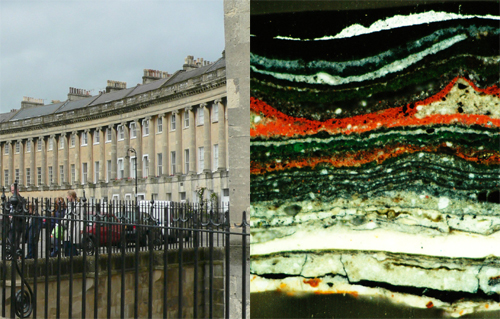
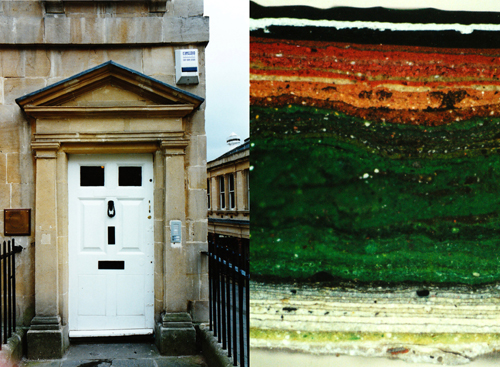
Patrick was commissioned to carry out an analysis of the paint on a number of buildings in the City. The purpose was to establish the decorative history of representative doors, windows and railings and to see whether one colour predominated on each element.

How had external painted surfaces appeared when Jane Austen lived there in the early 19th century, for example?

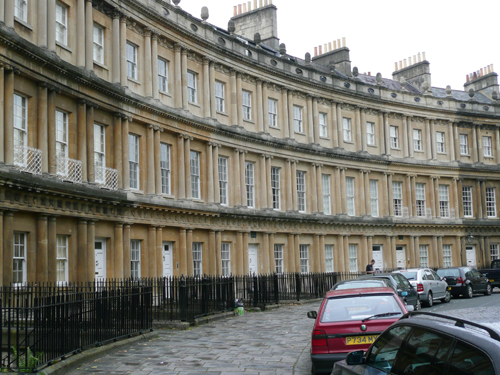
Royal Crescent

The Royal Crescent was built between 1767 and 1774. When the railings were sampled, 27 individual schemes were found, which suggests an average repainting cycle of about eight years. The first scheme was a pale lead (grey) colour. This kind of colour was used on the next fifteen occasions – probably until the end of the 19th century. Dark green and red-brown has been used subsequently, with black employed twice and then only since the 1970s.

Lead Colour

7 Alfred Street

Alfred Street is believed to have been built in 1772. When the railings of No 7 were sampled approximately 45 individual schemes were found, which suggests a repainting cycle of about five years. A stone colour was employed initially and variants of this appeared until the 1810s, when lead colour was introduced. Dark green appears to have been used from the middle of the 19th century, before giving way to red-brown. Black was only applied on the last three occasions.

Bronze Green

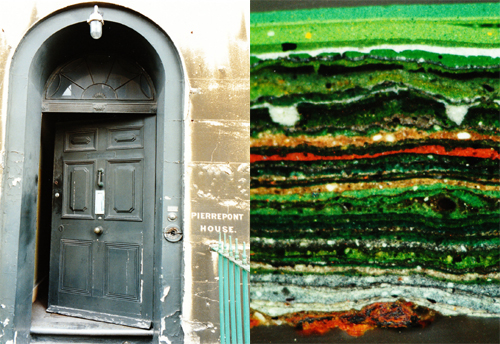
Pierrepont House

36 schemes were encountered on the railings of Pierrepont House. Lead colour was employed until the middle of the 19th century, when dark green was introduced. Black has never been used on these railings.

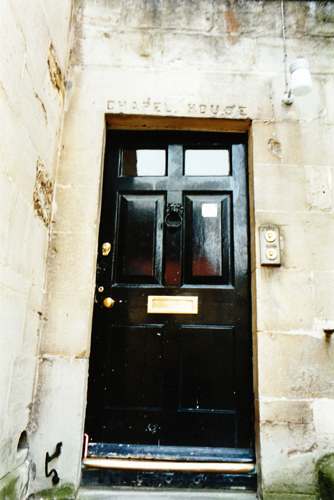
Chapel House

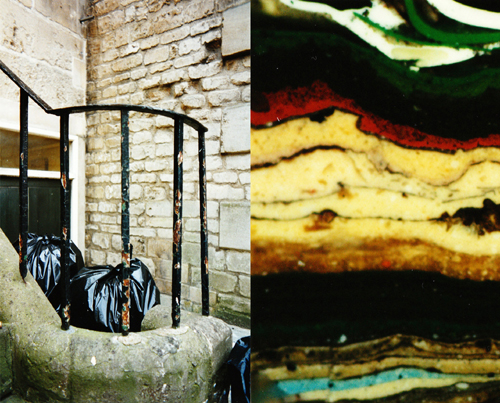
Chapel House railing

The railings of Chapel House, behind the Countess of Huntingdon’s Chapel, displayed approximately 38 decorative schemes. As the Chapel was built in 1765 this suggests a repainting cycle of about six years. The first two schemes were in lead colour and the third was in a stone colour. Unusually blue was employed on the fourth occasion. The remainder of the sequence consisted of variants of stone colour and dark green. Black had only been adopted in the 1980s.

As will be seen from the few examples cited here, grey and stone colours were employed on railings in the 18th and early 19th centuries. Dark green seems to have been generally adopted from about 1850 and, perhaps surprisingly, black only made its appearance in the late 20th century. Its use has nothing to do with being a sign of mourning for the death of Prince Albert – a belief held by many of the cognoscenti. This has been borne out by examining numerous examples of external ironwork across the country.

Specialist Profile, Patrick Baty

Patrick Baty provides more fascinating information about exterior paint colors on his blog, Patrick Baty, in three downloadable Scribd documents: External Paintwork, The Colour of Chelsea, and The Use of Colour on Architectural Ironwork, 1660 – 1960. You can also read an article about him,Specialist Profile, on the blog.

Please note: I place no ads on my blog, nor do I collect revenue from them. The ads you see in the comment section were placed there by WordPress.

Read Full Post »

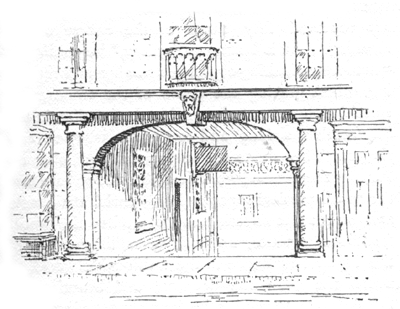
Archway opposite Union Passage, Constance Hill

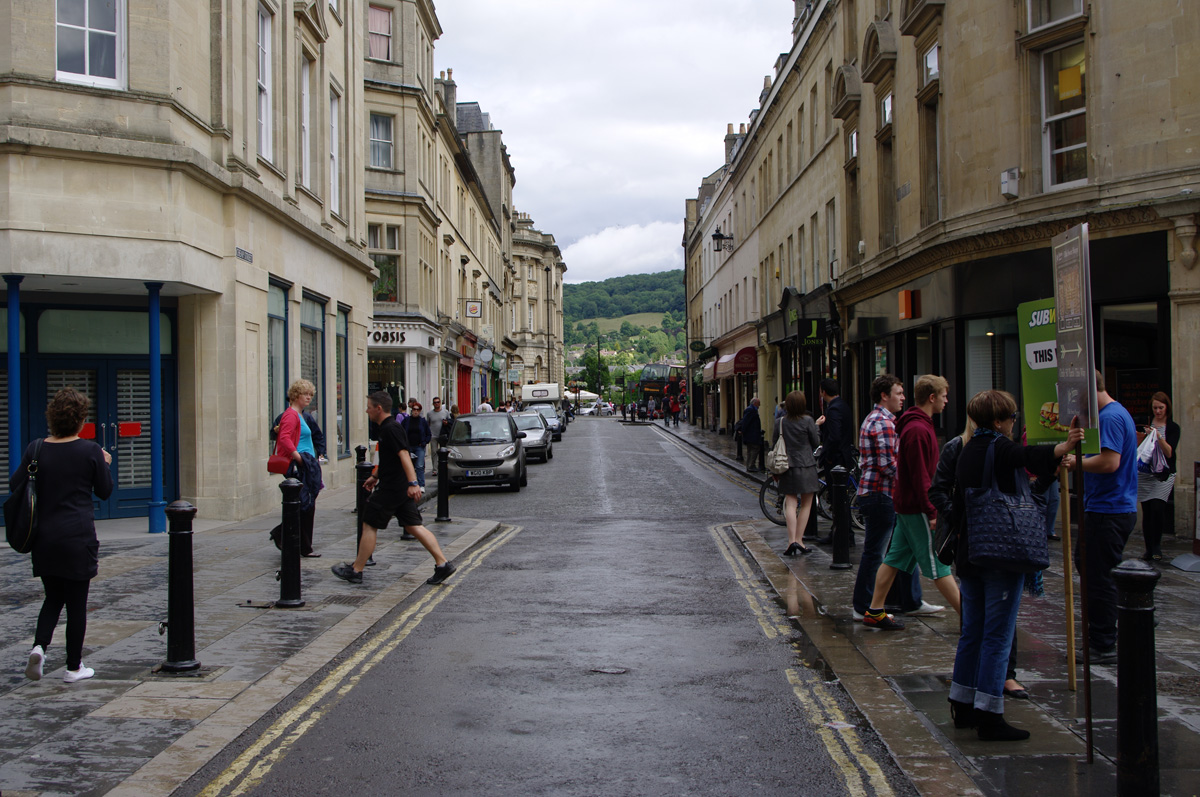
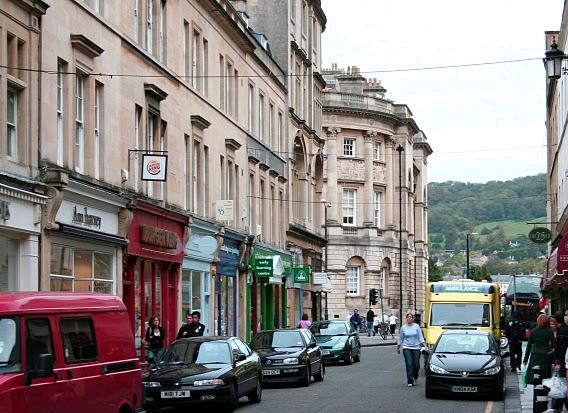
Half a minute conducted them through the pump-yard to the archway, opposite Union Passage; but here they were stopped. Everybody acquainted with Bath may remember the difficulties of crossing Cheap Street at this point; it is indeed a street of so impertinent a nature, so unfortunately connected with the great London and Oxford roads, and the principal inn of the city, that a day never passes in which parties of ladies, however important their business, whether in quest of pastry, millinery, or even (as in the present case) of young men, are not detained on one side or other by carriages, horsemen, or carts. This evil had been felt and lamented, at least three times a day, by Isabella since her residence in Bath; and she was now fated to feel and lament it once more, for at the very moment of coming opposite to Union Passage, and within view of the two gentlemen who were proceeding through the crowds, and threading the gutters of that interesting alley, they were prevented crossing by the approach of a gig, driven along on bad pavement by a most knowing-looking coachman with all the vehemence that could most fitly endanger the lives of himself, his companion, and his horse.- Northanger Abbey

Cheap Street in 2010, Image Tony Grant

“Oh, these odious gigs!” said Isabella, looking up. “How I detest them.” But this detestation, though so just, was of short duration, for she looked again and exclaimed, “Delightful! Mr. Morland and my brother!”

Another angle of the street

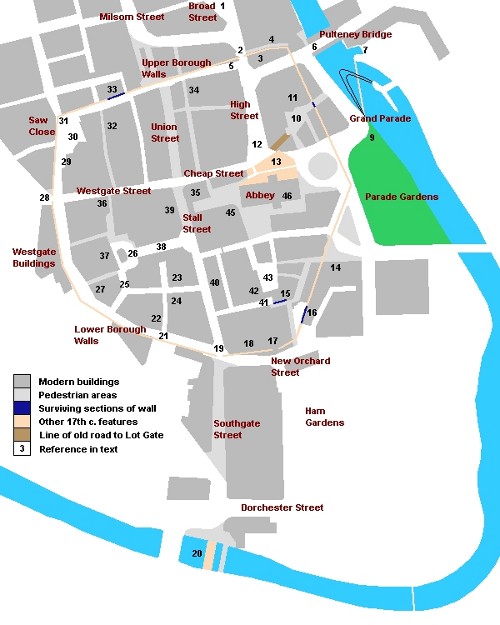
The Walking Tour of Bath provides a map that mentions many of the streets described by Jane Austen in the above passage, accompanied by images from medieval times to today.

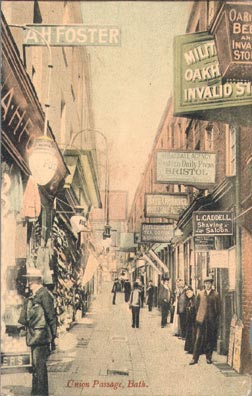
Cheap Street runs just north and parallel to the Abbey. In this turn-of-the-century post card of Union Passage, which intersects Cheap Street, one can see how drastically different Bath looked back then – many of the Georgian features are hidden under shop signs.

Union Passage in the Early 19th Century, Bath Post Cards

The Walking Tour mentions how Bath’s 18th century forefathers were concerned about preserving the nature of Bath’s gentrified renovations.

Incidentally, a friend who used to live in an 18th c. flat just round the corner in North Parade Buildings had some amusing conditions attached to the terms of his lease. He was prohibited from hanging bedding out of the window, holding public auctions and keeping livestock. One can only presume that the Georgian city fathers, having gentrified Bath at great expense, were concerned to prevent the locals spoiling things by falling back into their old peasant ways.”

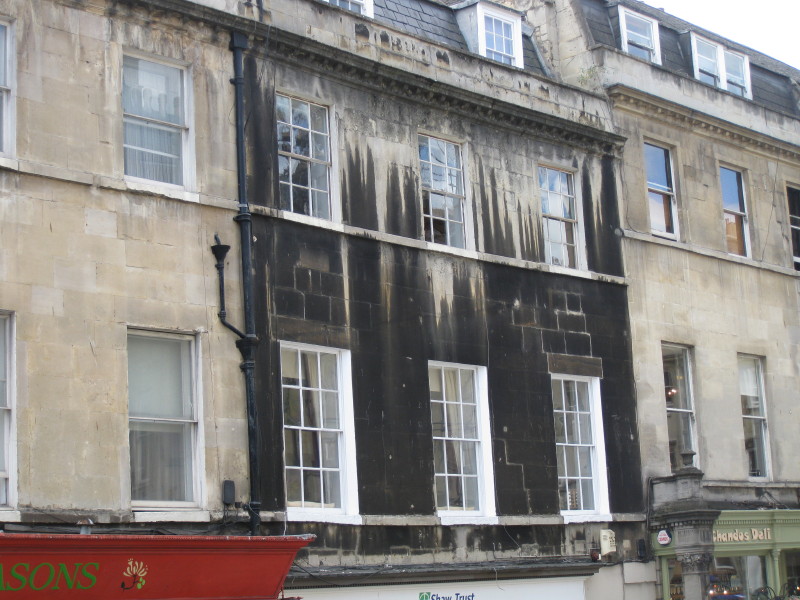
Coal soot blackened stone facades. Image Chuck and Claire Davis

The creamy colored limestone stone used in many of Bath’s architectural treasures have been used for building since the days of the Roman occupation.  The above image from European Adventure demonstrates how soot from coal fires blackened the buildings. Jane Austen was probably more familiar with these blackened facades than the creamy stones we are accustomed to viewing nowadays.

…in 1956 a clean air act was imposed. The townspeople were no longer allowed to burn coal and the buildings were painstakingly cleaned. He’s not sure why, but one building was left untouched, giving us the chance to see how they had looked.”

Today, the authentic nature of the buildings are still enforced legally. The Enforcement Policy in Bath Shopfronts Guide today requires:

Colour: No other single aspect of design has so much effect on the character of a shopfront than its colour. A good design can be completely spoilt by poor colour, or a nondescript design uplifted by the right choice of colour. Colour also has an effect on the Street Scene; out of key or aggressive colour will be damaging to everything within the field of vision.

Signs: The design and disposition of signs and the style of the lettering should always be historically credible and correct in design and detail for the design of the shopfront.

Illumination: The character of a shopfront and of the street will be altered by external illumination. This is often not acceptable, particularly where the shopfront is part of a listed building.

Appearance: Changes of a radical nature such as moving door positions are not normally acceptable. These may however be viewed more favourably if they can be shown to produce a permanent benefit such as the provision of a door to the upper floors.”

The cases described in The Bath Heritage Watchdog shows how vigilant the planning commission must be to preserve Bath’s unique heritage, and how historic preservation often clashes with business interests.

Read Full Post »

Older Posts »