Feeds:
Posts
Comments

Posts Tagged ‘Masterpiece Classic’

Tea is always served by the host/hostess or a friend, never by servants. Tea is never poured out, then passed several cups at a time, the way coffee may be, because it cools very quickly. Instead, it is always taken by the guest directly from the hands of the pourer.” – Etiquette Scholar

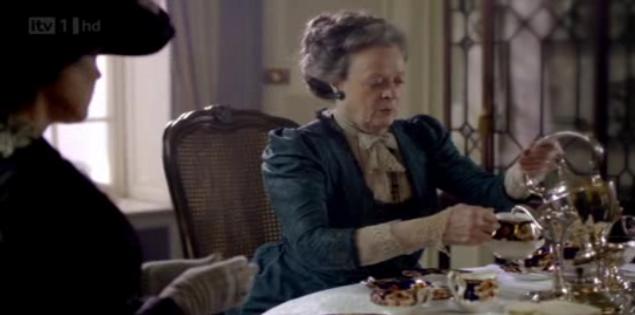
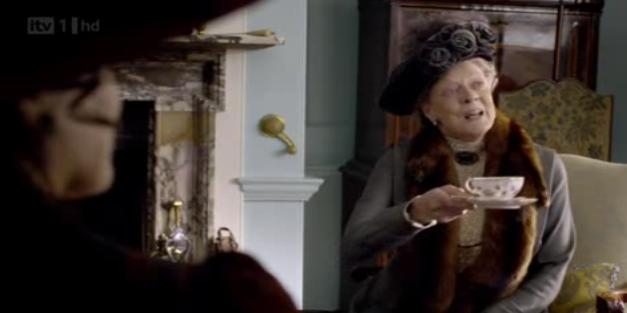
The ceremony of making tea is almost always included in costume dramas like Downton Abbey or a Jane Austen film, such as Emma. When Maggie Smith as the Dowager Countess of Grantham invited her daughter-in-law, Cora (Elizabeth McGovern), to the Dower House for tea in Downton Abbey, the arranged time was most likely at four o’clock in the afternoon.


Cora and the Dowager Countess sit down to tea

In one particular scene, the two women entered the drawing room in which a small table had been laid out with an elaborate tea set, fine china, and silver spoons. An assortment of tiny sandwiches, cookies, and scones were arranged upon a beautiful batttenburg lace tablecloth that covered the table. Low tea (an Edwardian dowager would never have said high tea) was meant to blunt the appetite before dinner.

The duchess pours boiling water over the tea leaves in the tea pot

A tea ceremony provided an intimate setting between the hostess and her guests, for it was the hostess who prepared and served the tea, catering to each guest and handing them their custom-prepared tea one cup at a time. In this time honored ritual, one of the most important questions the dowager would ask was: “Would you care for weak tea or strong tea?” Cora’s preference would guide the Countess in the next stage of tea preparation, for if she said “strong tea,” then the Dowager would pour the tea as she had prepared it into Cora’s cup. Had Cora said “weak tea”, the Countess would pour a smaller quantitiy of the brew into the china cup, then top it off with hot water.

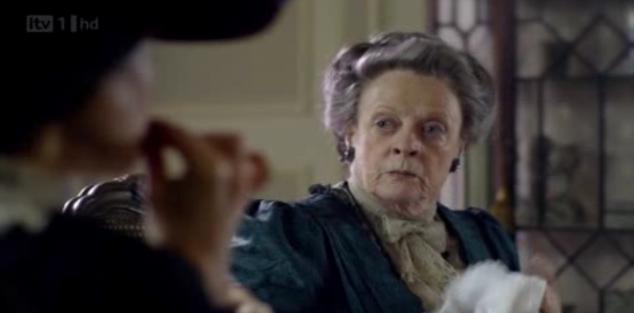
Cora eats a crustless sandwich as her mother-in-law prepares the tea

The Dowager would then ask her guest how much milk and sugar to add. She would have poured boiling water over the tea leaves in a tea pot, and steeped the leaves for three minutes, all the while conversing with her guests. At this point the water was no longer boiling. Then the Countess would pour in the milk. (If she poured it in first, she would have found it difficult to judge the strength of the tea by its color.) Hudson, the butler in Upstairs, Downstairs, said about pouring milk into tea: “Those of us downstairs put the milk in first, while those upstairs put the milk in last.”

In this instance, the Dowager leaves her guest in the middle of serving tea, a faux pas

History of Low Tea

On September 25, 1660, Samuel Pepys recorded: “did send for a cupp of tee (a China drink) of which I had never drank before.” By June 1667, tea was considered to be a healthy drink. One day Pepys arrived home to find his wife making tea, which his apothecary had found good for her cold.

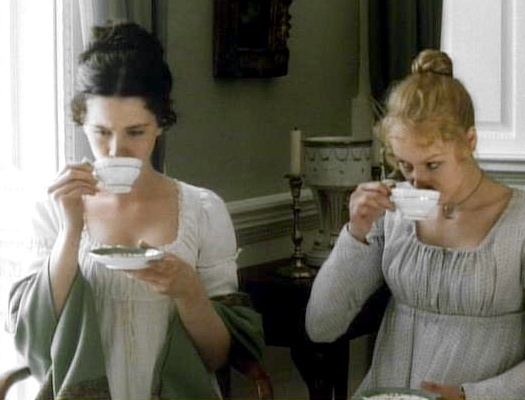
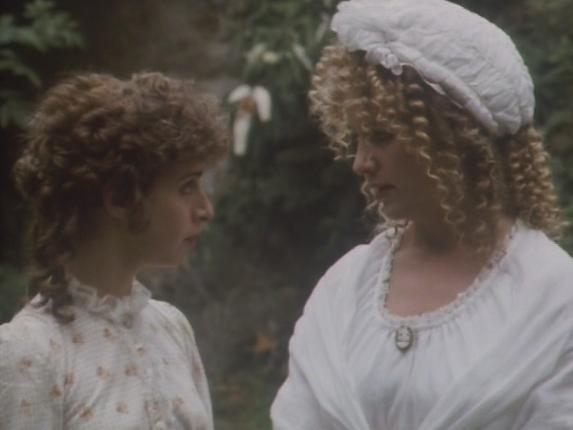
Emma, 1996 (with Kate Beckinsale). Emma and Harriet drink tea during Mrs. Elton's first visit

Samuel Johnson was a self-described “hardened and shameless tea drinker, who has, for twenty years diluted his meals with only the infusion of this fascinating plant; whose kettle has scarcely time to cool; who with tea muses the evening, with tea solaces the midnight, and with tea welcomes the morning.” His chronicler James Boswell observed that “It was perfectly normal for him to drink sixteen cups in very quick succession, and I suppose no person ever enjoyed with more relisht the infusion of that fragrant leaf than did Johnson.”

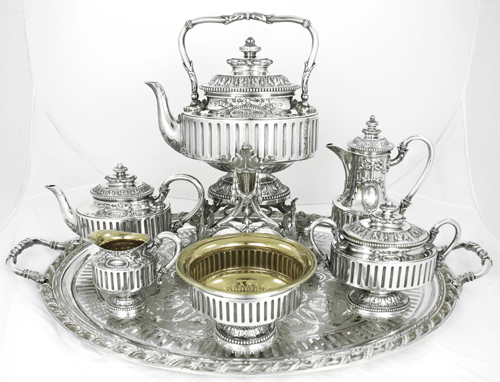
Silver tea set by Odiot, Paris, circa 1880. Image @A.Pash and Sons, Mayfair

Until the 1760’s, only the rich could afford teapots, which were made of silver. Then in 1765 Queen Charlotte commissioned Josiah Wedgwood to create a tea service made from his quality cream colored earthenware, which he named Queen’s Ware (with the Queen’s permission, of course) and gave to her as a gift. From that moment on he was the Queen’s potter. Wedgwood’s creamware was thin, attractive and durable. After receiving the Queen’s patronage, his firm became quite famous. The attractive new tableware quickly became popular, and by 1775 other manufacturers, including those on the Continent, had widely copied Wedgwood, imitating Queensware and creating increasingly fanciful teapots. It is said that this tableware was instrumental in spreading the popularity of tea.

Wedgwood Queensware, c. 1790. Image @Christies

In 1840, the Duchess of Bedford began serving tea with refreshments in the afternoon to appease her appetite before dinner, and the custom of afternoon tea, or low tea, took off. To read more about drinking tea between the 18th and mid-19th centuries, read my post about Tea in the Regency Era.

Some interesting facts about tea:

  • Notice, this is a change: The difference between high tea and low tea: Low, or afternoon, tea is served at four o’clock with light snacks, such as sandwiches, cookies, and scones. High tea is a full meal served with tea, including meat, bread, side dishes and dessert on a table of regular height. Hence high tea.

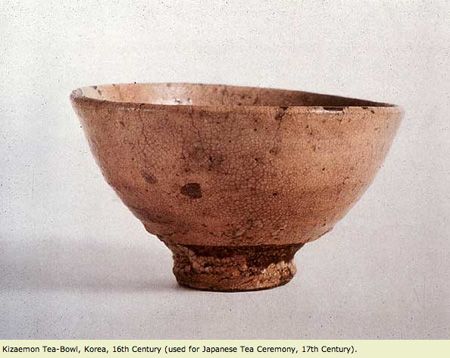
16th century tea bowl, Korea

  • Tea cups at first were fashioned after Chinese bowls without handles or saucers. In the mid 1750-s, a handle was added to prevent ladies from burning their fingers.
  • A saucer was once a small dish for sauce. During the Dowager Countess’s day, it was acceptable to pour tea into a cup’s saucer to cool the beverage before drinking it.
  • In the late 17th century, a lady would lay her spoon across the top of her cup to signal that she was through drinking. Other signals included turning the cup upside down, or tapping the spoon against the side of the cup.
  • Filling the cup with tea almost to the rim is considered a faux pas.

"Might I give you this cup?" The Dowager hands her tea to Moseley while visiting Matthew Crawley.

Sources:

Read Full Post »

Downton Abbey, presented on PBS Masterpiece classic this month, is one of the most expensively produced mini-series for television next to Brideshead Revisited. The sets and costumes are lavish, and the viewer can readily see that everything possible has been done to recreate the Edwardian world.

But even huge budgets have their limits, for creating new costumes for every character in the production would have been prohibitive. The website, Recycled Movie Costumes, and an article in the Daily Mail point to a few outfits that were worn in other productions.  This custom is common, and has been pointed out on this blog before in Recycled Fashions in Emma 2009.  Around 2/3 of the costumes used in Downton Abbey were used before, but only a few have been expressly identified so far.

The dress worn by Laura Michael (Lady Edith) was also used in A Room With a View, 2007. At left is Elizabeth McGovern as the Countess

Elaine Cassidy in A Room With a View, 2007

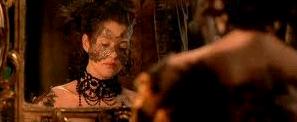
Compare the necklace worn by Michelle Dockery as Lady Mary to ...

...Monica Belluci's in Brotherhood of Wolves


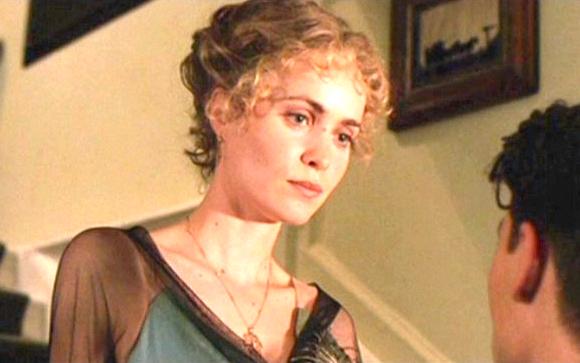
Lady Mary (Michelle Dockerey, between Maggie Smith and Laura Michaels) wears the same dress as ...

... Radha Mitchell in Finding Neverland

You can look for Regency costumes that have been recycled in this link. The Daily Mail mentioned that one certain brown dress has been used in seven productions in the past 15 years, including Pride and Prejudice and Little Dorrit. I wonder which one it is?

As you watch Downton Abbey tonight, perhaps you can spot a few recycled outfits on your own and inform Recycled Films of your find. Learn more about the series on PBS Masterpiece Classic.

More posts about Downton Abbey on this site:

Read Full Post »

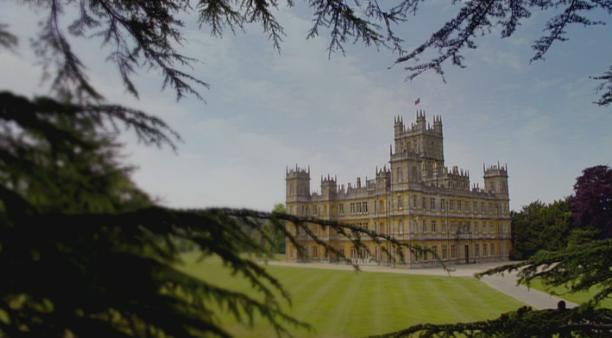
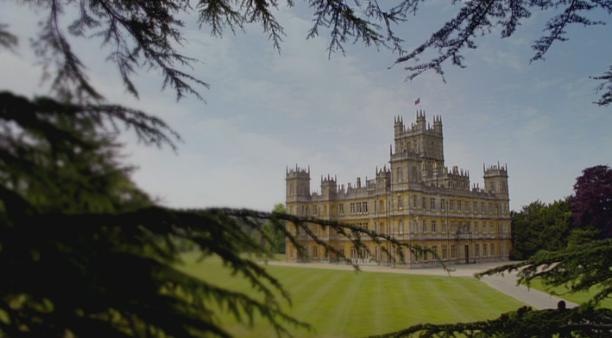
Highclere Castle as Downton Abbey

Downton Abbey’s connection to Jane Austen is through Lord Carnarvon, whose descendents still own Highclere Castle, where the PBS Masterpiece Classic mini-series’ interior and exterior shots of the fictional country house were filmed. (Read about Andrew Lloyd Weber’s recent attempt to purchase the castle.) In Jane’s day, Lord Carnarvon was Henry, the 1st Earl. Jane wrote in a letter to Cassandra Austen, Saturday25 – Monday 27 th,  October 1800 :

“This morning we called at the Harwood’s & in their dining room found Heathcote & Chute for ever – Mrs Wm Heathcote & Mrs Chute – the first of whom took a long ride in to Lord Carnarvons Park and fainted away in the evening…”

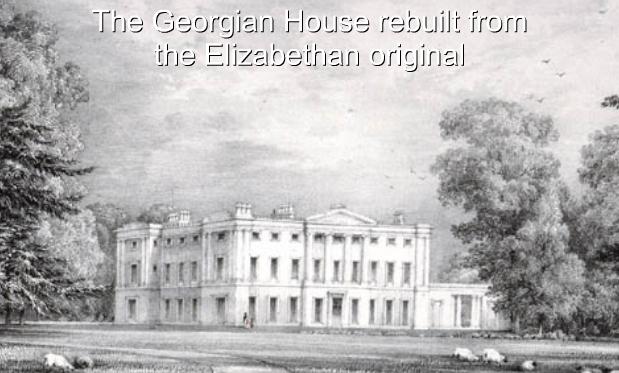
Highclere Castle as it looked in Jane Austen's day

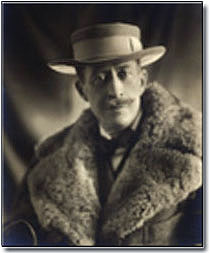
The 5th Earl

Lord Carnarvon’s park, which Jane writes of, is the grounds to Highclere Castle. The Carnarvon family has lived at Highclere since 1679, although the Castle as we see it today sits on the site of an earlier house. (Click here to view a short film about the Castle’s history.) A beautiful 6,000 acre park designed by Capability Brown between 1774-7 surrounds the Castle.

In 1842, the 3rd Earl commissioned architect Sir Charles Barry (also responsible for building the Houses of Parliament in Westminster) to redesign the Castle.

One of the most interesting fact about Highclere Castle is that the golden death mask of King Tutankhamun is featured in its gallery today.

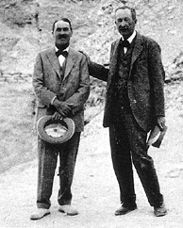
Howard Carter and Lord Carnarvon in Egypt

Lord Carnarvon of Tutankhamun fame (George, the 5th Earl) was an Egyptologist who sponsored Howard Carter,  the archaeologist who discovered Tutankhamun’s tomb in the Valley of the Kings in 1922. It is said that when Canarvon and Carter broke into Tut’s tomb, they unleashed the mummy’s curse. But the story goes more like this:


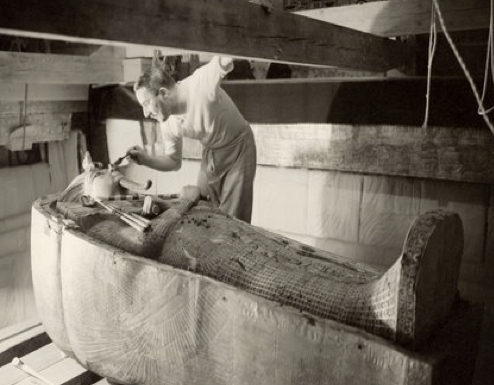
Howard Carter cleans the second coffin. Image @Harry Burton

This popular legend was born when Lord Carnarvon, the English Earl who funded the Tutankhamun expedition, died less than six months after the opening of the tomb. Despite the fact that Lord Carnarvon was a sickly individual, and that no such “hieroglyphic curse” was found inscribed on the tomb, this legend persists today. . . Lord Carnarvon had been in a car accident many years earlier and had never fully recovered. About a month after entering the tomb, he cut open a mosquito bite while shaving and infection set in. Blood poisoning and pneumonia quickly followed, and within a few weeks, he passed away. Newspapers reported that mysterious forces unleashed from the mummy and its trappings had caused his death. – King Tut

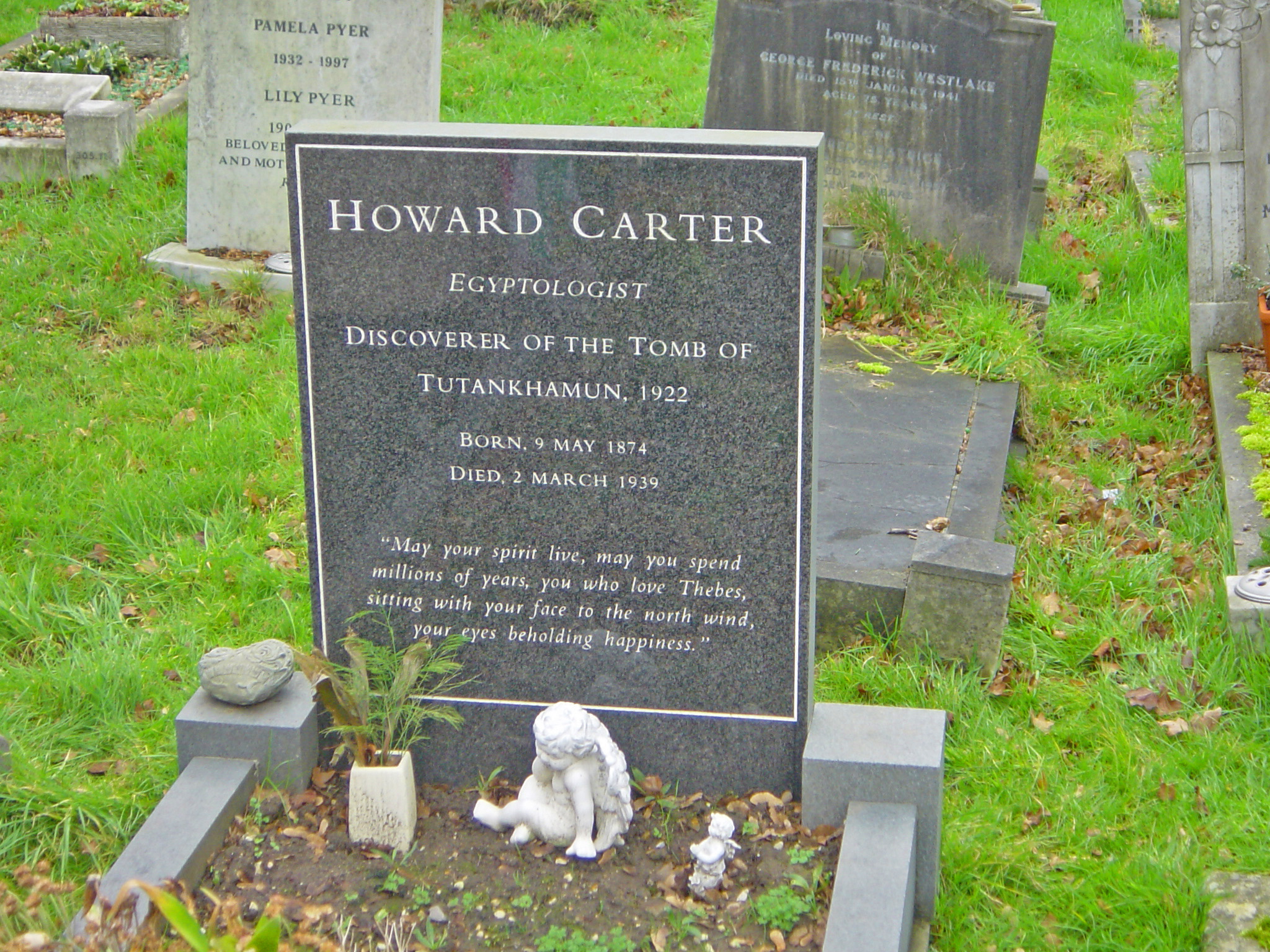
This image of Howard Carter’s grave was taken by Tony Grant, who lives near the cemetery in London. (Thank you, Tony, for the photo and for the quote from Jane Austen’s letter!)

Howard's grave. Image @Tony Grant

Watch Downton Abbey at your local PBS station Sundays, January 9, 16, 23, and 30, 2011 at 9 PM. Read my other posts:

More on the topic:

Read Full Post »

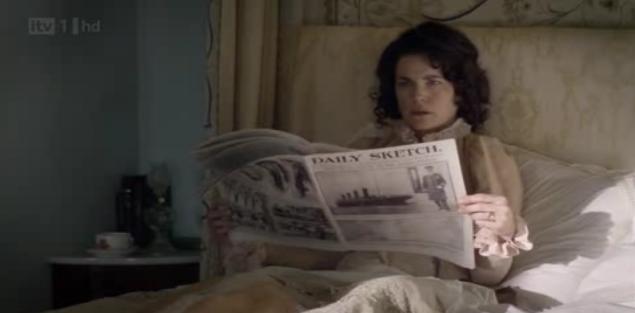
At the start of Downton Abbey, the Earl of Grantham sadly learns of the death of his cousin and cousin’s son on the Titanic. This event places the Earl and Countess of Grantham in a tragic and unexpected situation, for both men – the heir and the spare – were in line to inherit Downton Abbey.

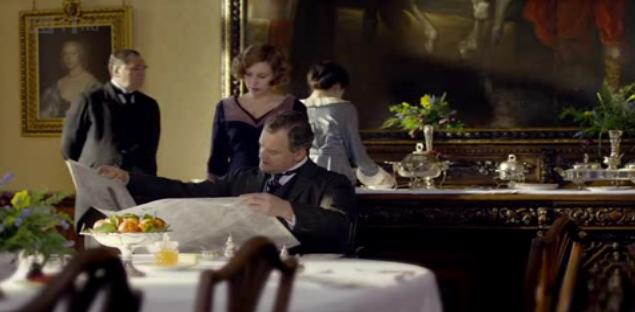
The earl (Hugh Bonneville) reads about the Titanic

The earl had never anticipated such a tragic turn of events. He had married Cora, an American heiress, in a marriage of convenience in order to maintain his landed estate in the manner in which it had been run for centuries. During the marriage negotiations, the old Earl of Grantham struck a hard bargain and Cora’s fortune became completely tied up in the entail. This  was no great matter to the young couple, who were certain they would produce an heir. While the earl eventually fell in love with his beautiful bride, they were unable to produce a son, their union resulting in three daughters.

The countess (Elizabeth McGovern) learns of the tragedy.

And so the plot of Downton Abbey thickens, for lovely Lady Mary, the earl’s eldest daughter, was engaged to the younger heir, Patrick. But Patrick died and now Matthew Crawley, the earl’s third cousin once removed, stands next in line to inherit. Unlike the previous heirs, who were accustomed to the ways of the upper classes, the very reluctant Matthew must learn how to run a great estate from the ground up … and Lady Mary, by dint of being a woman and as the result of an unbreakable entail, is left out in the cold.

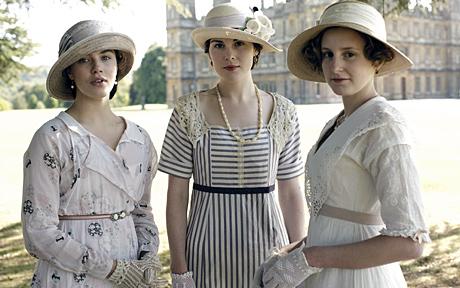
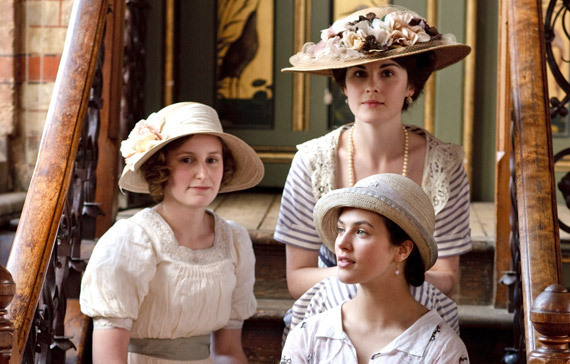
Lady Sybil, Lady Mary, and Lady Edith

The plot line of Downton Abbey weaves the stories of the privileged who live upstairs with the lives of those who serve them, and involves the intricacies of the entail and running the estate. Of the three sisters, only Lady Mary plays a major role. But the other two, Lady Edith and Lady Sybil, faced challenges that were typical of upper class women of the era. As Jane Austen astutely observed, “ There are not so many men of fortune in the world as there are pretty girls who deserve them,” a fact that the middle sister, Lady Edith, comes to know too well, and one that Lady Sybil ignores, for she has modern notions of a woman’s place in Society.

Downton Abbey. Jane Austen's World

Upon learning of the death of her fiance, Patrick, Lady Mary is not as sad as she should be.

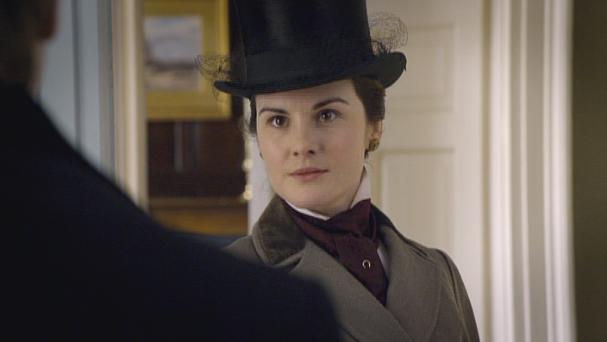
Lady Mary Crawley (Michelle Dockerey)

The eldest of the three girls, and the most beautiful and self-assured, is Lady Mary Crawley who knows her worth. Upset that the entail cannot be undone, she realizes that her only way to marry “up” or to financial security is to find a wealthy man with (preferably) a title. The new heir, Matthew Crawley, in no way interests her. From the moment they meet, snobby Lady Mary looks down her patrician nose at the upstart heir, who, she doubts, even knows how to hunt. (Lady Mary might have no use for Matthew, but he has more than a passing interest in her.)

Lady Mary meets Matthew and ... is not impressed

Ever the opportunist when it comes to snaring a suitable mate, Lady Mary sets her sights on a duke, as well as Evelyn Napier, a gentleman who is besotted with her.  But then a handsome and exotic visitor catches her eye and makes her heart flutter uncharacteristically,  and Lady Mary’s safe and secure world will never be the same again.

Downton Abbey. Jane Austen's World

Lady Edith reads Lady Mary's private letter

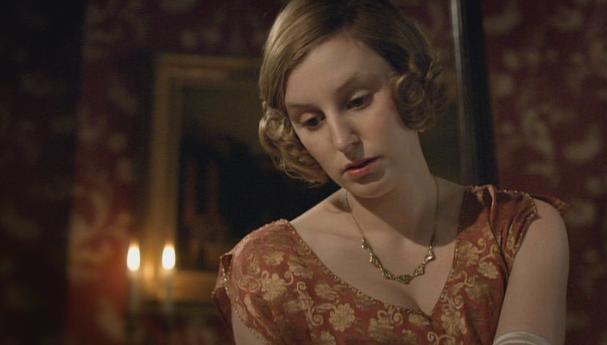
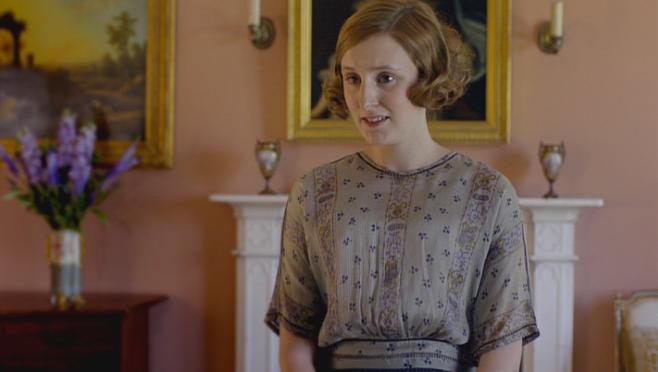
Lady Edith Crawley (Laura Carmichael)

Lady Edith can hardly contain her jealousy of Lady Mary’s beauty, her easy popularity with men, and her status as elder daughter. As the second daughter, she feels invisible. Lady Mary barely mourns her fiance, which triggers Lady Edith’s resentment of her older sister and her cool reaction to his death. Not that she is entirely to be pitied, for her jealousy drives her to snoop on her sister, and tattle tales that should never be shared.

Lady Edith looks hopeful as she is courted unexpectedly

The complex, nasty relationship between the two sisters is a result of the keen pressure that women still felt to marry up and well in the Edwardian era. Upper class women, as Amanda Vickery pointed out in her excellent series, At Home With the Georgians, were raised to live passive lives and accept the fact that they were second-class citizens. While Lady Edith plots and schemes to find a husband (if even from her older sister’s romantic leavings), Lady Sybil, the younger sister, is forging a role for herself.

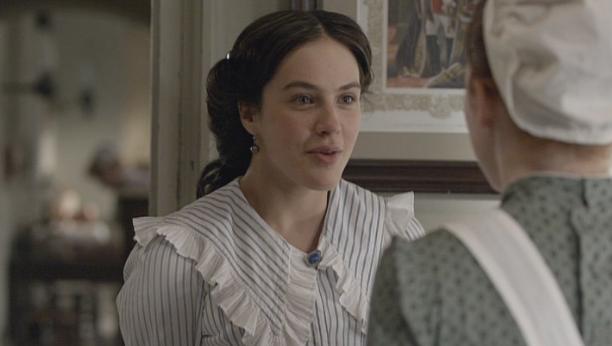
Lady Sybil helping Gwen, the housemaid

Lady Sybil Crawley (Jessica Brown-Findlay)

Lively, upbeat, and compassionate, Lady Sybil plays no role in the spiteful drama of her two older sisters. She is too busy admiring suffragettes, supporting Gwen, the housemaid, in her ambition to become a secretary, reading political tracts and attending forbidden rallies. Even her taste in clothes is flamboyant, and one suspects that as Lady Sybil matures she will become a character with a capital “C”.

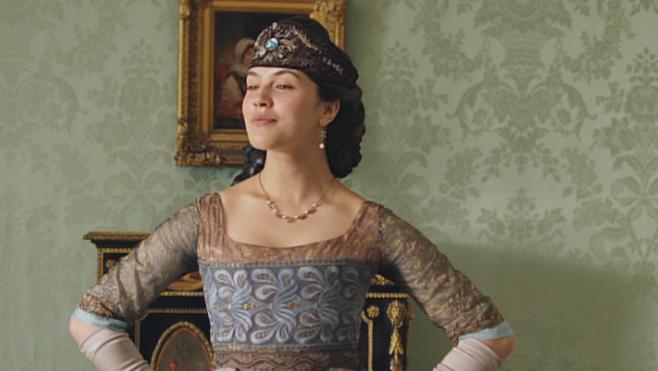
Lady Sybil shows off her new frock

In Downton Abbey, Lady Edith and Lady Mary demonstrate the dependent role that women still played in the early 20th century. But Lady Sybil was another creature altogether.  After the end of World War I,  she would no doubt be dancing the Charleston in flapper clothes, and after turning thirty, exercising her right to vote and earn her own living.


Edith, Mary, and Sybil

More about Downton Abbey, to air on Masterpiece Classic, Sunday, January 9th at your local PBS station:

Read Full Post »

Downton Abbey, a PBS Masterpiece Classic mini-series, is as much a tale about the servants below stairs as about the noble Earl of Grantham and his family who employed them. With the recent airing of the updated version of Upstairs Downstairs in Great Britain, I am sure a debate will long rage about which series portrayed their eras and class differences better. In both cases, the viewer is the winner.

Downton Abbey. Credit: Courtesy of © Carnival Film & Television Limited for MASTERPIECE

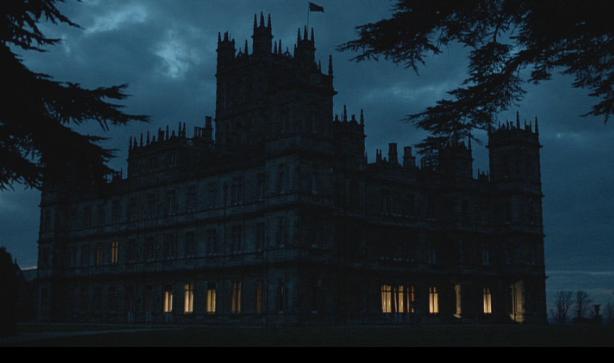
Downton Abbey (Highclere Castle, an “Elizabethan Pile”) Credit: Courtesy of © Carnival Film & Television Limited for MASTERPIECE

Images Credit: Courtesy of © Carnival Film & Television Limited for MASTERPIECE

No matter how expertly this mini-series of Downton Abbey tries to portray this bygone era, it is nearly impossible to capure life in an Edwardian country house exactly as it once was. The viewer should be aware that we can glimpse only a faint, musty, museum shadow of the complex and thriving community that a great English estate once supported.

Downton Abbey. Jane Austen's World. Credit: Courtesy of © Carnival Film & Television Limited for MASTERPIECE

The Crawleys and the servants of Downton Abbey. Credit: Courtesy of © Carnival Film & Television Limited for MASTERPIECE

Images Credit: Courtesy of © Carnival Film & Television Limited for MASTERPIECE

It is a well-known fact that grand country houses could only be run with a great deal of help. As early as the 18th century, Patrick Colquhoun estimated that there were around 910,000 domestic servants (in a population of 9 million). By 1911, the number of domestic servants had risen to 1.3 million. Eighty percent of the land during the Edwardian era was owned by only 3% of the population, yet these vast estates were considered major employers.

Downton Abbey. Credit: Courtesy of © Carnival Film & Television Limited for MASTERPIECE

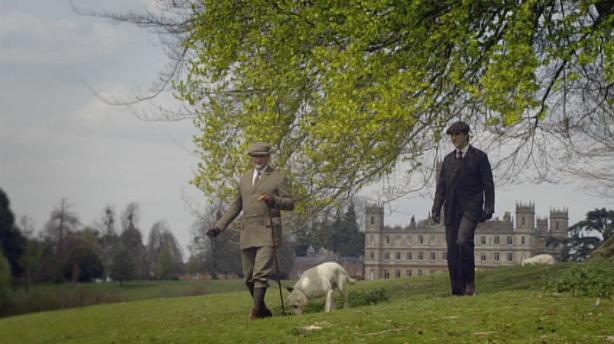
The earl (Hugh Bonneville) and his heir, Matthew Crawley (Dan Stevens), survey his vast estate. Credit: Courtesy of © Carnival Film & Television Limited for MASTERPIECE

In the grander and larger houses, the ratio of servants (both indoor and outdoor) to the family could approach 1:7 or 1:10, but as the industrial revolution introduced improvements in laundering, lawn maintenance, and cooking, the number of servants required to run a great estate was greatly reduced.
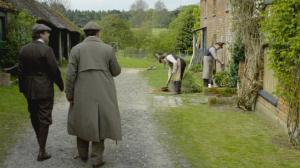
Credit: Courtesy of © Carnival Film & Television Limited for MASTERPIECE

The earl and his heir, Matthew Crawley, survey the cottages and outer buildings on his estate. Credit: Courtesy of © Carnival Film & Television Limited for MASTERPIECE

After World War One and the rise in taxes for each servant employed, many great families no longer kept two sets of house staff. They began to bring servants from their country house to their house in Town, leaving only a skeleton crew behind to maintain the family seat in their absence.
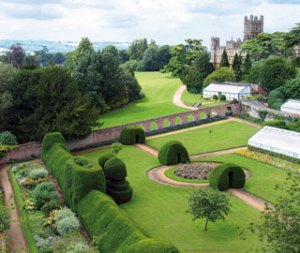
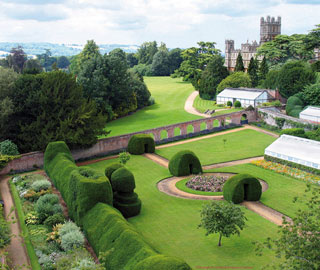
Grounds of Downton Abbey (Highclere Castle)

Country estates were designed to showcase the owner’s wealth via collections of art, furniture and other luxurious possessions, such as carriages, lawn tennis courts, and the like. The main house sat at the end of a long and winding drive through acres of beautifully landscaped park lands.

Downton Abbey.

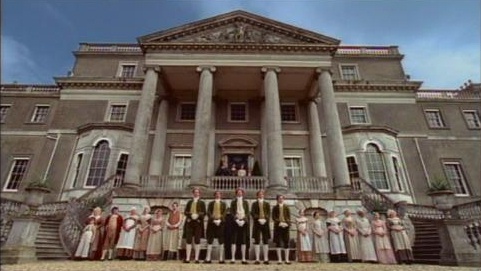
The Duke is greeted by both the family and the servants. Credit: Courtesy of © Carnival Film & Television Limited for MASTERPIECE

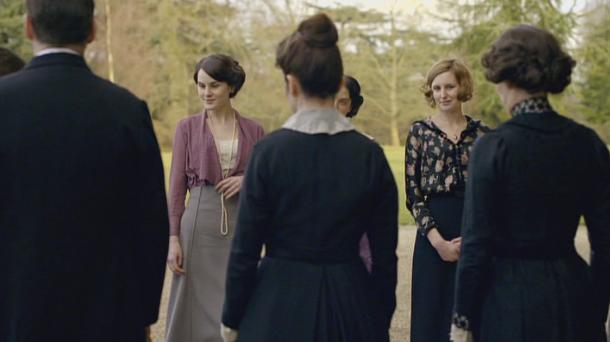
The spectacle did not end there, for approaching the house, guests would see a grand facade or an equally imposing flight of stairs that led to the first floor (or both). In Downtown Abbey, the family awaited the arrival of the Duke of Crowborough (Charlie Cox) along with their servants, who were arrayed in line according to their station.
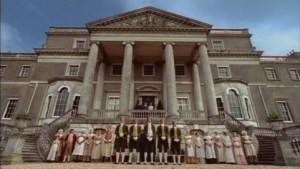
Downton Abbey. Jane Austen's World

The servants await their new masters at Norland. Sense and Sensibility, 2008.

Such a display of staff was also evident in the 2008 adaptation of Sense and Sensibility, when Fanny and Robert Dashwood arrived to claim Norland Park.

Downton Abbey. Credit: Courtesy of © Carnival Film & Television Limited for MASTERPIECE

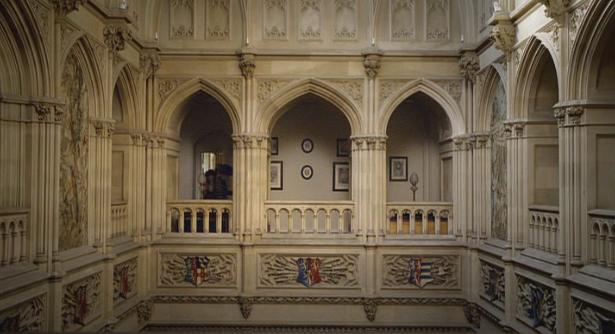
Grand interior hall of Downton Abbey, floor leading to the private rooms. Credit: Courtesy of © Carnival Film & Television Limited for MASTERPIECE

Once introductions had been made, the guests would ascend the imposing stairway and enter an equally impressive high-ceilinged hall that contained yet another grand staircase, which led to the private rooms upstairs. The ladies customarily brought their own maids, who would also require lodging. (In Gosford Park, a poor female relation had to make do with one of the hostesses’ house maids to help her with her dress and hair.)
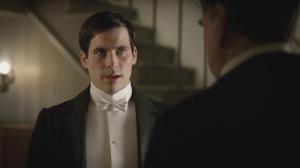
Downton Abbey. Credit: Courtesy of © Carnival Film & Television Limited for MASTERPIECE

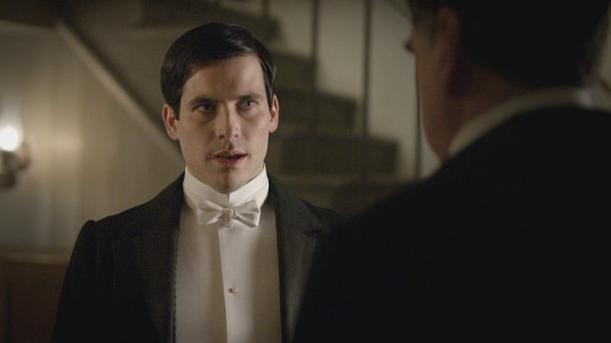
Thomas (Rob James-Collier), the first footman, is chosen to act as valet to the duke. Credit: Courtesy of © Carnival Film & Television Limited for MASTERPIECE

The guests’ servants were expected to enter the house through a separate, back servant’s entrance, and shared quarters with the regular staff. The host supplied his own butler or footmen to help serve as valet to his male guests.
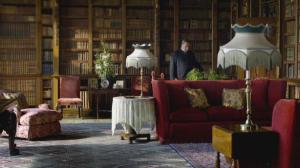
Downton Abbey. Credit: Courtesy of © Carnival Film & Television Limited for MASTERPIECE

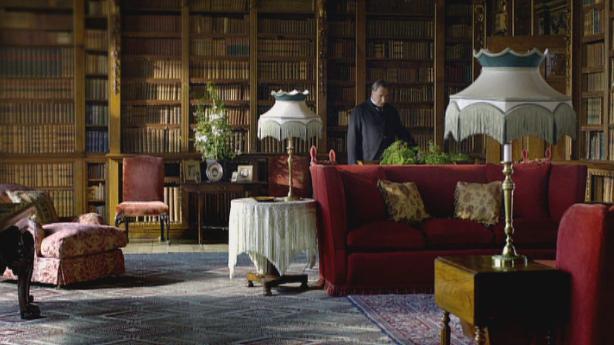
The Earl of Grantham’s impressive library/study. Credit: Courtesy of © Carnival Film & Television Limited for MASTERPIECE

A host’s willingness to lavishly entertain his guests did not necessarily reflect the family’s daily schedule:

In 1826 a German visitor to England remarked that: it requires a considerable fortune here to keep up a country house; for custom demands… a handsomely fitted-up house with elegant furniture, plate, servants in new and handsome liveries, a profusion of dishes and foreign wines, rare and expensive desserts… As long as there are visitors in the house, this way of life goes on; but many a family atones for it by meagre fare when alone; for which reasons, nobody here ventures to pay a visit in the country without being invited, and these invitations usually fix the day and hour… True hospitality this can hardly be called; it is rather the display of one’s own possessions, for the purpose of dazzling as many as possible.(3)” – The Country House: JASA

Downton Abbey. Jane Austen's World

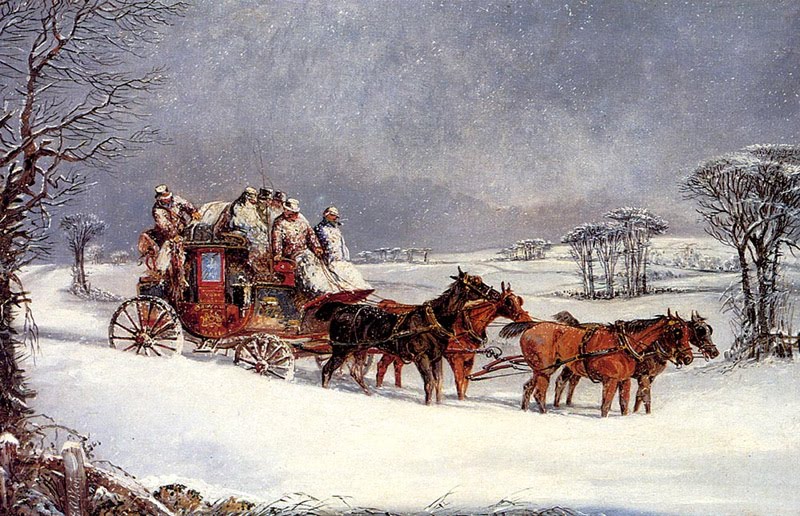
Travel in winter, Henry Alken, 1785

Guests stayed for a long time for a variety of reasons. In the 17th and 18th centuries, travel over a long distance was laboriously slow and difficult, for roads were notoriously poor and dangerous. Long visits, such as Cassandra Austen’s visits to her brother Edward in Godmersham Park, became a custom. Even during the Edwardian age, when travel was much improved, guests tended to stay for the weekend (Saturday through Monday). In Downton Abbey, the Duke of Crowborough arrived amidst much hope and anticipation, until he discovered that the estate had been entailed to a third cousin not the earl’s daughter, whom he had come to woo, and he cut his visit to one short day and evening, making an excuse that did not hold water.
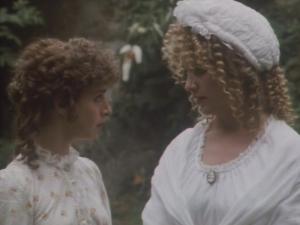
Downton Abbey. Jane Austen's World

Catherine Morland (Katherine Schlessinger) and Eleanor Tilney (Ingrid Lacey), Northanger Abbey 1986

Even during the 18th century, when long-term guests were expected, some overstayed their welcome, like Jane Austen’s anti-heroine, Lady Susan Vernon, whose hostess (sister-in-law) despised her but was forced to tolerate her because she was ‘family.’ Desirable guests, like Catherine Morland of Northanger Abbey, were invited to extend their visit. In Catherine’s instance, Eleanor Tilney, a motherless young lady who lived without a female companion, found the young girl’s company delightful. By the time General Tilney discovered that Catherine was no heiress, she had been with the Allens in Bath and the Tilneys in Northanger Abbey for a total of 11 weeks. As previously noted, Edwardian hosts, while generous, expected house guest to stay for only three days. During this time every luxury was lavished upon them, but it was considered bad form if they stayed longer than arranged or without invitation.

Downton Abbey. Credit: Courtesy of © Carnival Film & Television Limited for MASTERPIECE

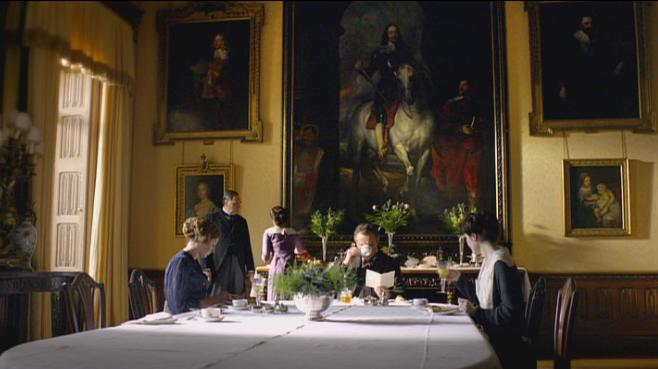
Breakfast was a substantial meal served at 9:30 a.m. Credit: Courtesy of © Carnival Film & Television Limited for MASTERPIECE

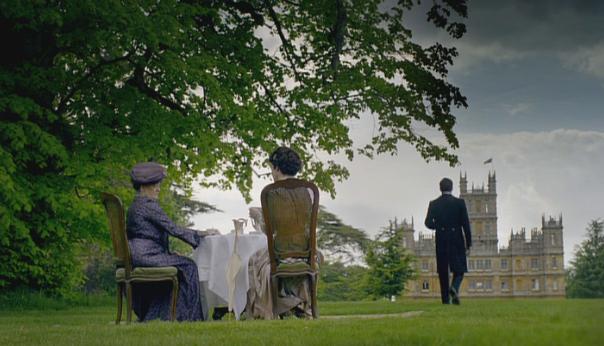
At set times, Edwardian guests would congregate in the common rooms, which included the drawing room, music room, dining room and breakfast room, the library or study, the gallery (where ancient family portraits were hung), the billiard room, and the conservatory. Vast lawns and gardens were laid out for promenading; guests could ride or walk through the parklands to view picturesque follys or dine alfresco (outdoors), take tea under an awning, or paint a vista or two.

Downton Abbey. Credit: Courtesy of © Carnival Film & Television Limited for MASTERPIECE

Taking tea alfresco. Credit: Courtesy of © Carnival Film & Television Limited for MASTERPIECE

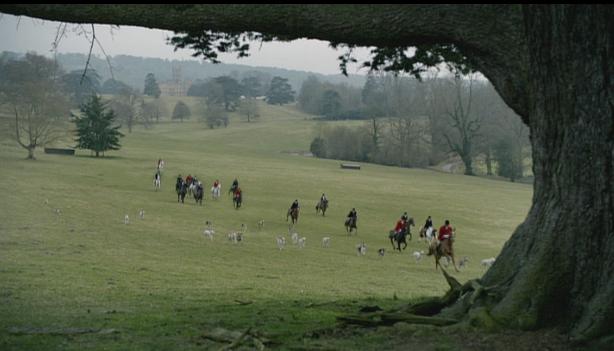
The reputation of a host rested on the entertainments, which helped to pass the time – walking, riding, shooting (in winter), and hunting (in fall) for outdoor activities; and card parties, musicales, and dances for indoor festivities. A fox hunt, such as the one depicted in Downton Abbey, required riding skill and stamina, for the chase would take riders over hills and dales, and hedges, and over long distances for much of the day.

Downton Abbey. Credit: Courtesy of © Carnival Film & Television Limited for MASTERPIECE

The hunt required riding skills and stamina.Credit: Courtesy of © Carnival Film & Television Limited for MASTERPIECE

Billiards made an appearance during the 17th century, and by the 19th century billiard rooms had become a staple. Private libraries offered a variety of books and periodicals. In the summer, Edwardians enjoyed lawn tennis, croquet, cricket, and golf (by the men).

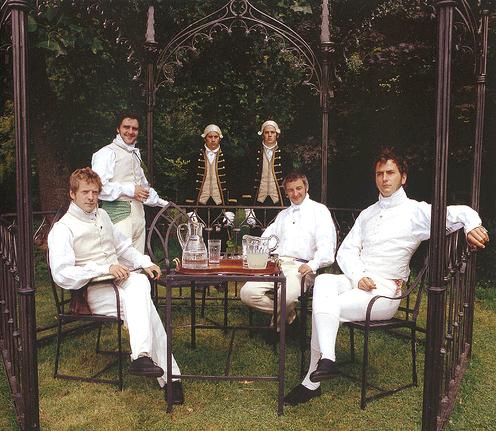
The male guests in Regency House Party (2004) could pretty well behave and move around as they pleased.

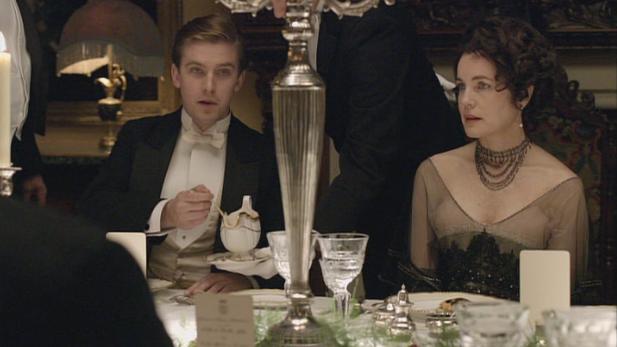
Ladies and gentlemen tended to spend the day apart. Male guests were more active and could engage in almost any activity during the day, except at the time reserved for dinner, when they were expected to show up. In an Edwardian house, men did not escort their female dining partners into the dining room. Rather, after the host served cocktails in the drawing room a half hour before the meal, the group moved to the dining room where they were seated according to a set pattern, with guests sitting between members of the family and their neighbors.
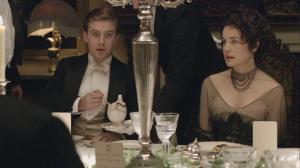
Downton Abbey. Credit: Courtesy of © Carnival Film & Television Limited for MASTERPIECE

The new heir of Downton Abbey (Dan Stevens) sits next to his hostess, the Countess of Grantham (Elizabeth McGovern). Credit: Courtesy of © Carnival Film & Television Limited for MASTERPIECE

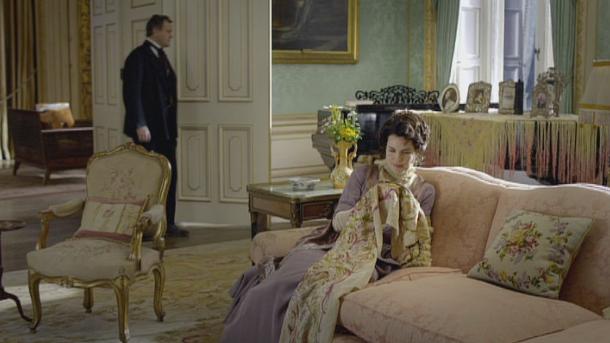
After dinner, the ladies would remove to the drawing room, which became increasingly larger and more feminine over time, while the gentleman relaxed at the dining room table, drinking port, smoking their cheroots, and discussing manly topics.

Downton Abbey. Credit: Courtesy of © Carnival Film & Television Limited for MASTERPIECE

The drawing room at Downton Abbey was large and feminine. Credit: Courtesy of © Carnival Film & Television Limited for MASTERPIECE

While an 18th century gentlemen would have talked about horse flesh and carriages, Edwardian guests would have included automobiles and their rapidly changing technology, road improvements, and the availability of petrol as well.

Downton Abbey. Credit: Courtesy of © Carnival Film & Television Limited for MASTERPIECE

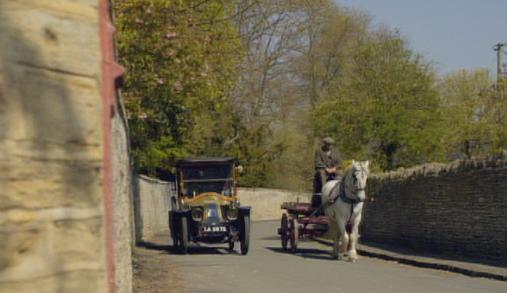
Transportation was changing rapidly at the turn of the 20th century. Credit: Courtesy of © Carnival Film & Television Limited for MASTERPIECE

Unlike the gentlemen, a lady’s day was more restricted and confined. She spent her day following a set routine, starting with breakfast, and wearing appropriate outfits and getting into them and out of them. Mothers spent some time overseeing the nannies and the care of their children (if they were brought along). Ladies, married or not, would also receive visitors, sew, gossip, read, walk, participate in charity work, observe the men at sport (if invited) or take a ride in the carriage. They did join in on more active, outdoor games at set times during the appropriate season, such as cricket, croquet, lawn tennis, lawn bowling, and the like, but they would have been properly dressed for the occasion.

Downton Abbey. Credit: Courtesy of © Carnival Film & Television Limited for MASTERPIECE

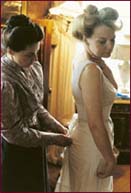
The head maid (Joanne Froggatt) dresses Lady Mary’s (Michelle Dockery) hair for dinner. Credit: Courtesy of © Carnival Film & Television Limited for MASTERPIECE

Imagine poor Eleanor Tilney in the late 18th century, alone in a grand house without female companionship, having no-one to talk to and forced to live a constricted life. No amount of walking, charity work, practicing the piano, or overseeing the household would have made up for her boredom, and thus Catherine Morland’s companionship was so welcome.

Manor House (2002), dressing Lady Olliff-Cooper. Image @PBS

In Regency House Party (the 2004 mini-series), the modern women who portrayed Regency ladies chafed under the strict rules of protocol, forced chaperonage, and daily tedium. A lady’s routine did not much improve during the Edwardian era, although towards the end of this period changing one’s gown for afternoon tea became obsolete.
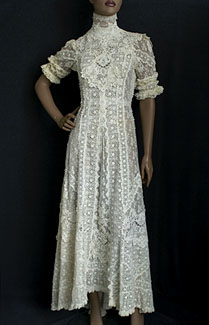
Tea gown, circa 1908. Image @Vintage Textiles

In Manor House, the 2002 mini-series set in the Edwardian era, Lady Olliff-Cooper’s spinster sister, the lowest-ranking member of the family, had so little to do and so little say in how she could spend her time, that Avril Anson (who in real life is a professor) left the series for a few episodes to maintain her sanity.

Downton Abbey. Credit: Courtesy of © Carnival Film & Television Limited for MASTERPIECE

Evelyn Napier (Brendan Patricks) and Matthew Crawley (Dan Stevens) eye their rival before dinner. Credit: Courtesy of © Carnival Film & Television Limited for MASTERPIECE

Lady Olliff-Cooper … [needed] to change her clothes five or six times a day. And very few of these dresses would be what today we’d call practical. Not only did each meal carry its own dress code, but if she needed to receive a visitor, pay a call or go riding, she’d have to change both her clothes and often her hairstyle as well.” Manor House, clothes

Anna Olliff-Cooper, who portrayed the lady of the house in Manor House, spent an enormous amount of her day changing into new gowns and having her hair dressed. She would stand passively as her maid did all the work. Anna noted how constricting the dresses were, and cried as she described how the tight sleeves of her gowns prevented her from raising her arms above her shoulders or from closely hugging her eleven-year old son. Even the fashions conspired to keep a women passive!

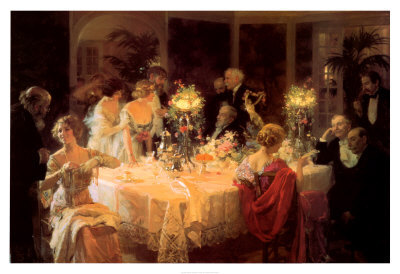
The Dinner Party, 1911, Jules Alexandre Grun

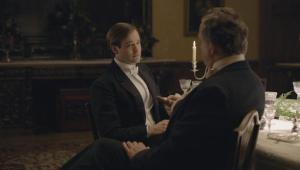
After they had finished their cigars and port, the gentlemen were obligated to rejoin the ladies for cards or music, or both, to while away the evening. The Duke’s behavior in Downton Abbey was egregious, for instead of joining the group for the rest of the evening, he went to bed early. The house party would stay up until 10:30 or so (unless a grand ball had been arranged, and then the guests would stay up until the wee hours of the morning).
Downton Abbey. Credit: Courtesy of © Carnival Film & Television Limited for MASTERPIECE

Male conversation after dinner over port and cigars. The duke and earl have a frank conversation. Credit: Courtesy of © Carnival Film & Television Limited for MASTERPIECE

In either case, the last people in the house to retire for the night would be the servants, but their lives and schedule will be described in another post.

Look for Downton Abbey, Part One to air on PBS Masterpiece Classic on Sunday, January 9th! Once again PBS will host a twitter party! Stay tuned for details.

Downton Abbey. Credit: Courtesy of © Carnival Film & Television Limited for MASTERPIECE

End of the day at Downton Abbey. Credit: Courtesy of © Carnival Film & Television Limited for MASTERPIECE

More on the topic:

Images of Downton Abbey Season 1: Credit Courtesy of © Carnival Film & Television Limited for MASTERPIECE

Read Full Post »
« Newer Posts - Older Posts »