I read these words on the book flab of the excellent new compilation, A Truth Universally Acknowledged: 33 Great Writers on Why We Read Jane Austen, edited by Susannah Carson, foreword by Harold Bloom, “For so many of us a Jane Austen novel is much more than the epitome of a great read. It is a delight and a solace, a challenge and a reward, and perhaps even an obsession.” How true. Susannah Carson has culled essays from the last one hundred years of criticism and juxtaposed a few pieces by today’s essayists and novelists in a book that I found to be more satisfying than attending a master class on Jane Austen. I consider this interview with Susannah to be among the better posts on this blog. Enjoy!
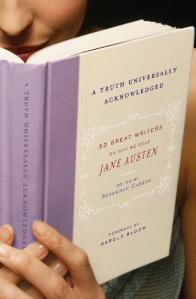 Q: What were your criteria for choosing the essays? Would you give us an example of a writer whose essay you first considered and then decided not to include in the collection?
A: There have been so many excellent essays written on Jane Austen! Most of them endeavor to clarify some aspect of the novels—the what, when, how, etc.—and these can be extraordinarily helpful. But then there are other essays which tackle what is, in my opinion, the big question: the why. Not, for instance, how can we understand the relationship between Darcy and Elizabeth in terms of gender relations, narrative technique, and cultural institutions, but why does their love continue to move us so?
David Lodge wrote an essay entitled “Jane Austen’s Novels: Form and Structure.” This is perhaps the most acute, elegant account of how the novels work. But it answers the “how” question, and so I chose to include his essay “Reading and Rereading Emma” instead, for there he is after the essential “why”.
Q. Did you have an order in mind when you arranged the essays and why?
A. Some of the essays are about one novel, some are about a couple or a few of her works, and some are about everything she wrote from the juvenilia to her unfinished novels to her letters. In the end, we decided to order them loosely: essays about a single novel appear in a series, and they are separated by two or three more general essays that are united by theme (e.g. morality, films). When I reread them through in this order, I was pleased to discover that the same thoughts would rise and fall in the smaller waves as well as throughout the length of the book. Austen’s vitalism, for instance: towards the beginning, Eudora Welty writes that Jane Austen’s novels are about “Life itself”; in the middle, later, Amy Heckerling notes that everyone is “BUSY” and Eva Brann observes that the heroines are full of “liveliness”; and in the penultimate essay, Virginia Woolf hears “the sound of laughter.”
Q: Do you agree with Benjamin Nugent’s observation that a Jane Austen novel is the “ultimate talky French movie,” because in essence nothing happens except for a series of conversations between characters?
A: I do agree. Austen’s use of dialogue is complex—she uses it to sketch character, but (as Diane Johnson notes in her essay) she rarely uses it to advance plot. And yet, at the same time, most of the climactic scenes are all about words—their use and misuse. In Pride and Prejudice, it’s Darcy’s hilariously misworded proposal; in Mansfield Park, it’s the drama surrounding drama, or the debate over whether or not to perform Lovers’ Vows; in Emma, it’s Emma’s slight of Miss Bates during the picnic at Box Hill; in Persuasion, it’s Wentworth’s letter written in counterpoint with the conversation he overhears between Anne and Harville. So words are at the center of whatever it is that they get wrong or right, whatever it is they need to learn in the course of the novel. Figuring out how words work in a social setting is, as Ben so astutely notes, part of a timeless coming-of-age process.
Q: James Collins made a number of powerful statements, saying that Jane Austen helped him clarify ethical choices and figure out a way to live his life with integrity. One of the reasons that she has credibility in his eyes is her total lack of sentimentality. C. S. Lewis comments on Austen’s hard core morality, and Amy Bloom paints a picture of a woman who sees the world around her through a clear pane of glass. These authors helped me to clarify why I am so drawn to Jane Austen. In your introduction you hope the reader will formulate an answer to the question: why do you read Jane Austen? I will reformulate your question: what was your reason for assembling this book and why are you drawn to Jane Austen?
A: It seems like there’s a whispered suspicion in our culture that Reading is dead—that we hardly ever read anymore and, when we do, we’re still not really reading. Hopefully this isn’t true, but the sublime Robertson Davies was certainly haunted by this fear when he issued his call to arms: “What I call for is a multitude of revolutionary cells, each composed of one intelligent human being and one book of substantial worth, getting down to the immensely serious business of personal exploration through personal pleasure.”
This collection of essays is intended to help people figure out how to really, really, really enjoy reading. There are different kinds of reading. There’s the light reading of a Jane Austen spin-off, and that provides a certain amount of fun. And then there’s the rich reading of a Jane Austen novel, and that provides not just quick delight but insight into how our hearts and minds work. We frequently think of reading as somehow separate from the act of living, but with the best literature—with Austen’s novels—reading becomes just as grand, if not grander, than the other bits and acts of life. So I read, and I read Austen, not only because it teaches me to think, imagine, and relate, but also because it’s a critically important and deeply indulgent pursuit.
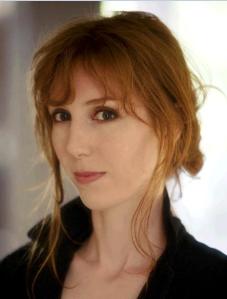 Q: Tell us a little about yourself! Your short bio on the book flap intrigues me. Unlike provincial Jane, whose life was quite circumscribed, you are truly a woman of the world.
Yes! It’s telling that Austen’s work continues to have something to say to modern women who are so very different from her in all sorts of quotidian details. I started off in much the same place, however; my first memories date from the years my family lived in Hockwold-cum-Wilton, a little village in East Anglia. We moved back to the Napa Valley when I was still small, and I grew up in the country where I could trek across the countryside to visit friends. The scope changed when I went away to college, for I found myself increasingly addicted to books: first philosophy, then literature. While I was writing an M.A. thesis for San Francisco State University on Madame de Lafayette’s La Princesse de Clèves, I fell head-over-heels in love with 17th C French novels. To read these rare novels in all their original mustiness, I moved to France. After a maîtrise at Lyon II, I did a D.E.A. (or M.Phil) at Paris III. In Paris, I lived in an apartment above a chocolaterie on the Ile St. Louis and walked around Notre Dame every day on my way to class at the Sorbonne. I then moved to New Haven to pursue a doctorate at Yale, and I’ve just returned to San Francisco to finish a dissertation on danger in French novels of the Ancien Régime.
What would Jane Austen’s life have been had she lived, read, and written today? Would she have traveled the world for her craft, or would she have been just as content with stationary flights of fancy? Would she have racked up degrees and indulged in “serious” study, or would she have stuck to her depictions of three or four families in a little village? No matter how we live it out, I think it’s inevitable that modern bluestockings somehow associate themselves with Austen: she was such an important pioneer, and it’s hard to say where we would be today had she never written.
Thank you for your insights, Susannah! It has been a pleasure talking to you. For the readers of this blog, I will post my review of the book soon.
More information about Susannah on Random House’s site: Susannah Carson is a doctoral candidate in French at Yale University. Her previous degrees include an M.Phil from the Sorbonne Paris III, as well as MAs from the Université Lyon II and San Francisco State University. She has lectured on various topics of English and French literature at Oxford, the University of Glasgow, Yale, Harvard, Concordia, and Boston University. Order the book at this link.
Susannah’s site sits at this link: Why Jane Austen
Read Full Post »
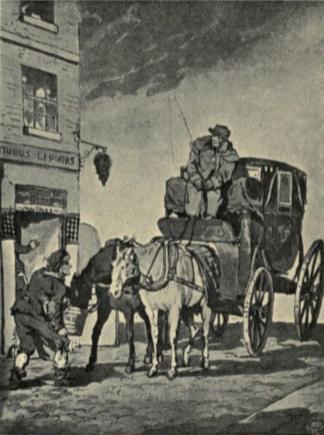
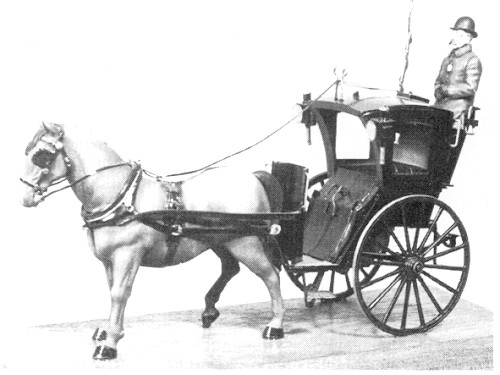
 Another book review so soon on this blog? Well, yes. This book from Shire Publications, Victorian and Edwardian Horse Cabs by Trevor May, is short, just 32 pages long, but it is filled with many facts and rare images of interest to lovers of history. In Jane Austen’s day most people walked to work, town, church, and market square, or to their neighbors. Six miles was not considered an undue distance to travel by foot one way. The gentry were another breed. They either owned their own carriages or hired a public horse cab. These equipages were available as early as the 1620’s.



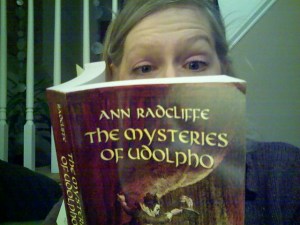 Inquiring readers, Several weeks ago, Chris asked me to link to her blog. Looking at it and reading her posts, I asked her to keep me updated on her work, which she describes as a personal journey that she is doing “for the pleasure of pursuing a course of study in a structured manner, which I greatly miss from my time in graduate programs. And to have fun and explore, more deeply, the work of a writer I admire and the time period in which she lived.” Below are her thoughts, and a link to her blog,
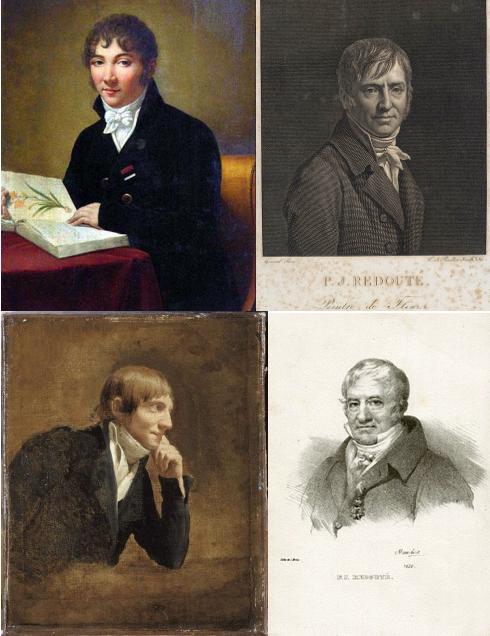
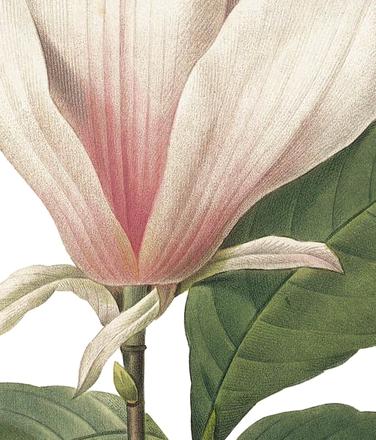
 Josephine, wife of Napoleon Bonaparte, was known for her spectacular garden at Chateau de Malmaison, where exotic plants were cultivated. The plants, acquired from around the world, were documented by France’s leading horticulturists and botanists, and painted by Pierre-Joseph Redouté.







 Jane Austen's World