Gentle Readers, Frequent contributor, Tony Grant from London Calling, has been on a hiatus. But he has returned with a vengeance. Please enjoy his observations about Hogarth’s breathtaking series, The Rake’s Progress, and the modern pictures he took as he went on a quest to search for The Rake’s London.
In 1733 William Hogarth began a new series of progress pictures. He had already created The Harlott’s Progress which had been very popular. He now began a series called The Rake’s Progress.
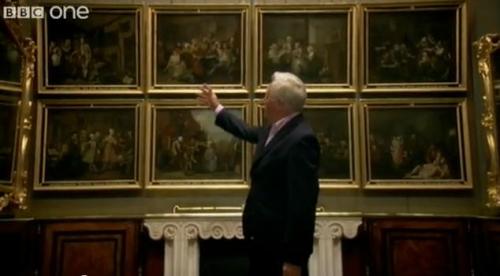
A Rake's Progress at the Sir John Soane's Museum
A rake was a stylised type of young man that had a literary tradition already before Hogarth began his series. He was generally regarded as a very impressionable young man, usually born and bred in the countryside to a wealthy father who had gained his riches by working hard and amassing a fortune which he had inevitably hoarded and not spent. The young man, cut off from society in the countryside during his childhood and not needing to work because of his inherited wealth, embarks on a dissolute life in the fleshpots of London. His fate usually includes the squandering of his fortune, venereal disease, prison and eventual death. Hogarth keeps to this format but also adds in a few other nuisances.
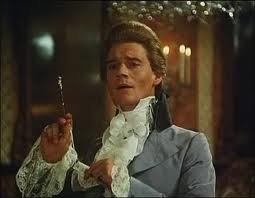
Anthony Andrews as the Scarlet Pimpernel, the quintessential 18th century fop.
Hogarth shows Tom Rakewell as aspiring to be cultured like a young well-educated aristocrat, commissioning and sponsoring poets and musicians with no idea about what has merit. He has no taste. He is not cultured or educated to any high standard. The popular name for this type of upstart in the 18th century was a ,”cit.” Tom also tries to create an outward show of elegance and sophistication. He is self deluded and fits the term “fop” exactly.
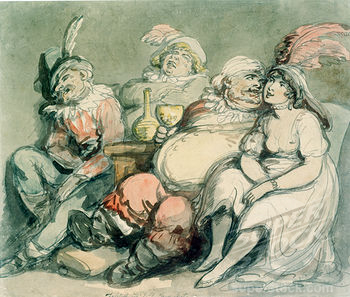
Fallstaff and Doll Tearsheet, Thomas Rowlandson. Image@Huntington Library
Tom’s surname, Rakewell, describes him. Hogarth is drawing again on a long comic and literary tradition. Many of Shakespeare’s lower class characters have names which describe them – ‘Doll Tearsheet’, in Henry IV part 1 and 2. ‘Bullcalf’, or somebody recruited by Falstaff in the same plays. Dickens often uses the same convention: Mould, the undertaker in Martin Chuzzlewit and Mr Choakumchild in Hard Times are prime examples. English comedians still play with these names to this day.
Inherited wealth is not so prevalent in the 21st century, but these days the spoilt, glossy, manicured characters who seem to do no work and have as much money to squander as they wish, as portrayed in the docudrama series, E4’s “Made In Chelsea,” fit the rake, male and now, female version.
Scene 1.
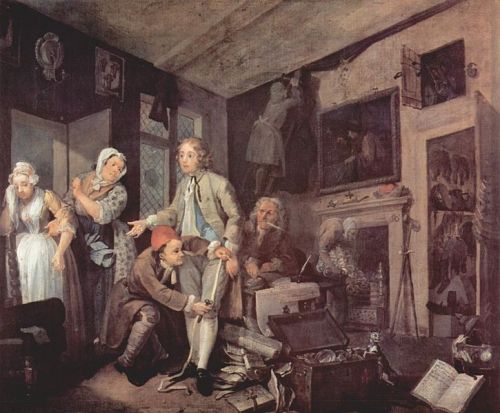
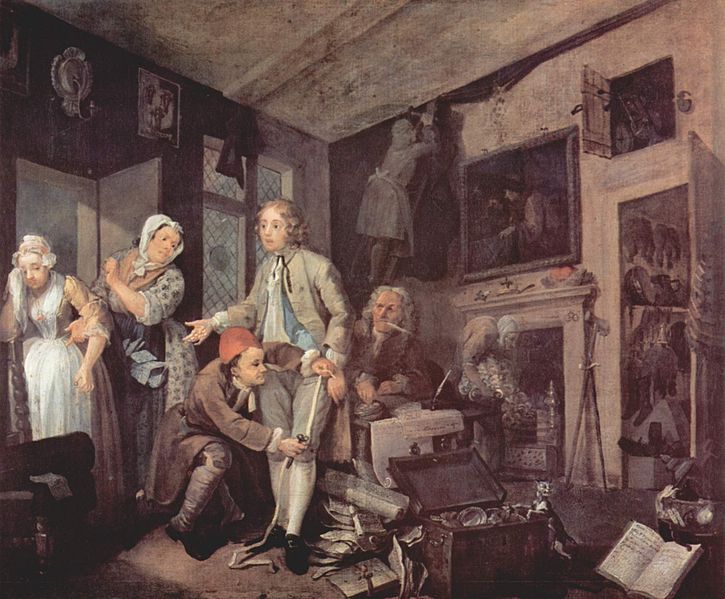
We are introduced to Tom Rakewell standing in the dingy dark parlour of his inherited country house, a red-capped gentleman measuring him up for a new suit. We can be sure it will be made from the most expensive silks and have the most garish designs. His old steward looks furtive, hunched behind him, trying to fiddle the books and put some cash into his own pocket. A weeping pregnant girl, Sarah Young, is being rejected by Tom and he tries to pay off her mother with a desultory sum. Tom is breaking his mould. We can see the wrong he is doing immediately although Tom is oblivious of the road he has set out upon.
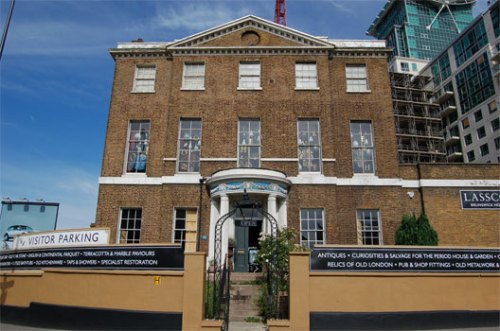
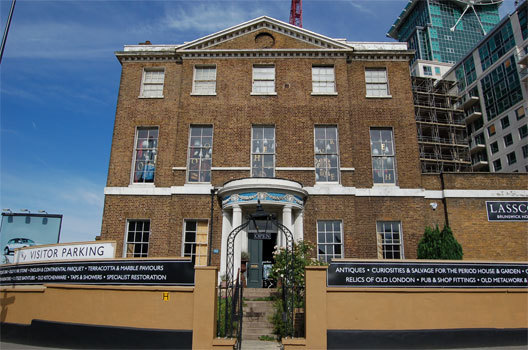
Brunswick House
There are many fine Georgian houses in the English Countryside. I found this one in Nine Elms on the South Bank opposite Vauxhall Tube Station and next to the great green glass edifice of MI5. It is called Brunswick House and it is the home of Lassco antique dealers. I thought this particular Georgian house fitted The Rake’s Progress nicely as standing in for Tom’s inherited home.The house would have been in the countryside on the outskirts of London during the 18th century. Today the house is a grade I listed building and a fine example of the Georgian Houses that used to be in Nine Elms. It stands alone now, surrounded by high rise modern flats and offices. The Nine Elms road junction is before it, awash with cars, buses and lorries at all times of the day, every day. It is an anomaly, as indeed Tom Rakewell’s life became an anomaly.
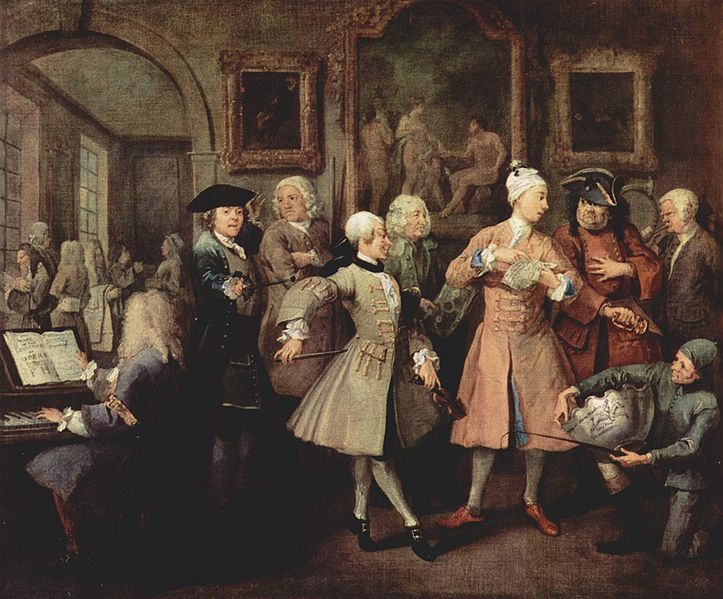
Scene 2.
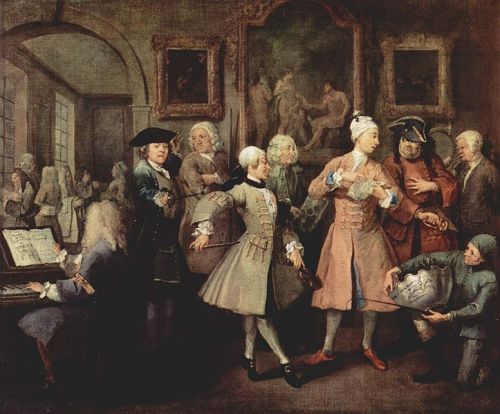
In this scene Tom is still at his country house. He is adapting to his new lifestyle. This scene shows a levee taking place. A levee consisted of the Lord or Duke holding a meeting every morning, as he dressed in his bedchamber with local tradesmen showing their wares and the Lord purchasing his requirements. Here Tom is following this tradition, and beginning to spend his money.
Tom doesn’t realise what he is doing. The gentry who follow this fashion of the levee were very wealthy people who owned lands , trading ships and industries that were creating more and more wealth for them. They spent money within their means. Tom has inherited amount of money, which he has no intention or wherewithal to add to. He knows not what he does. He appears to be what we might term, rather stupid. He is a prodigal son.
Scene 3.
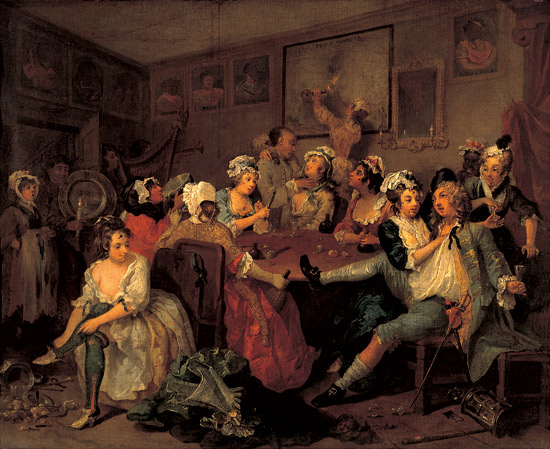
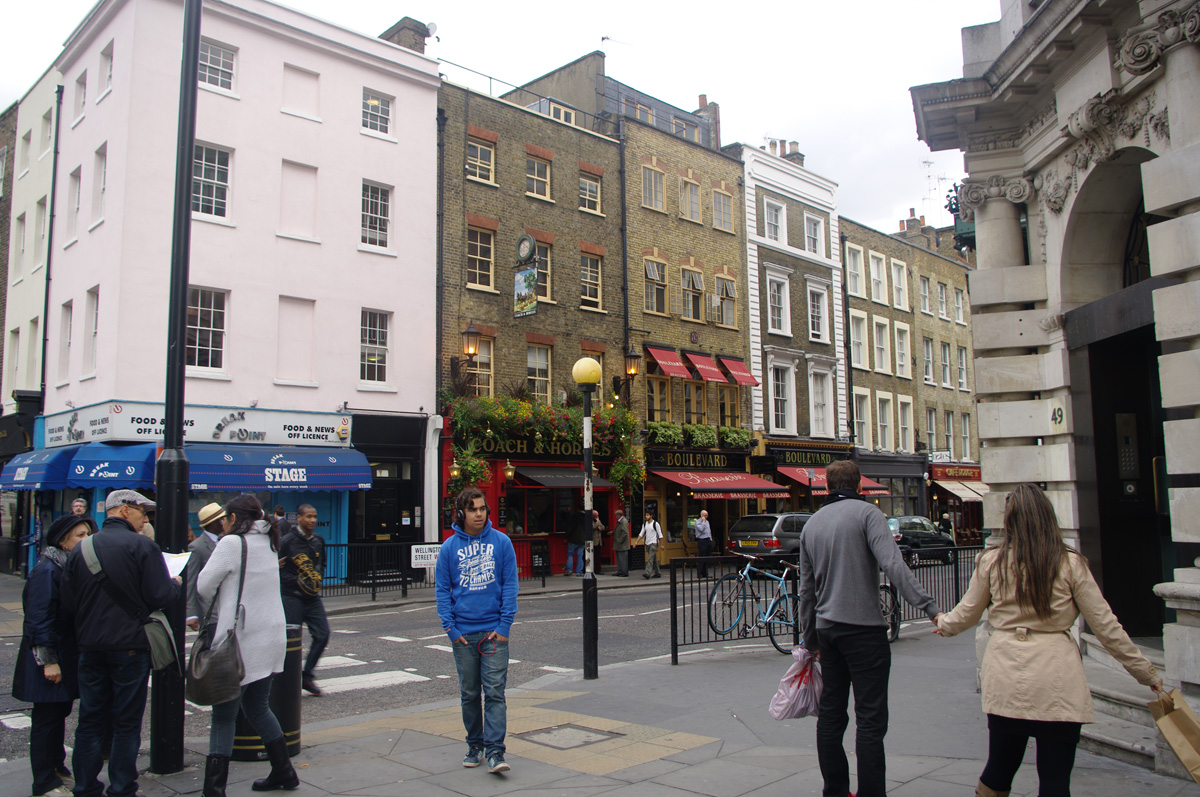
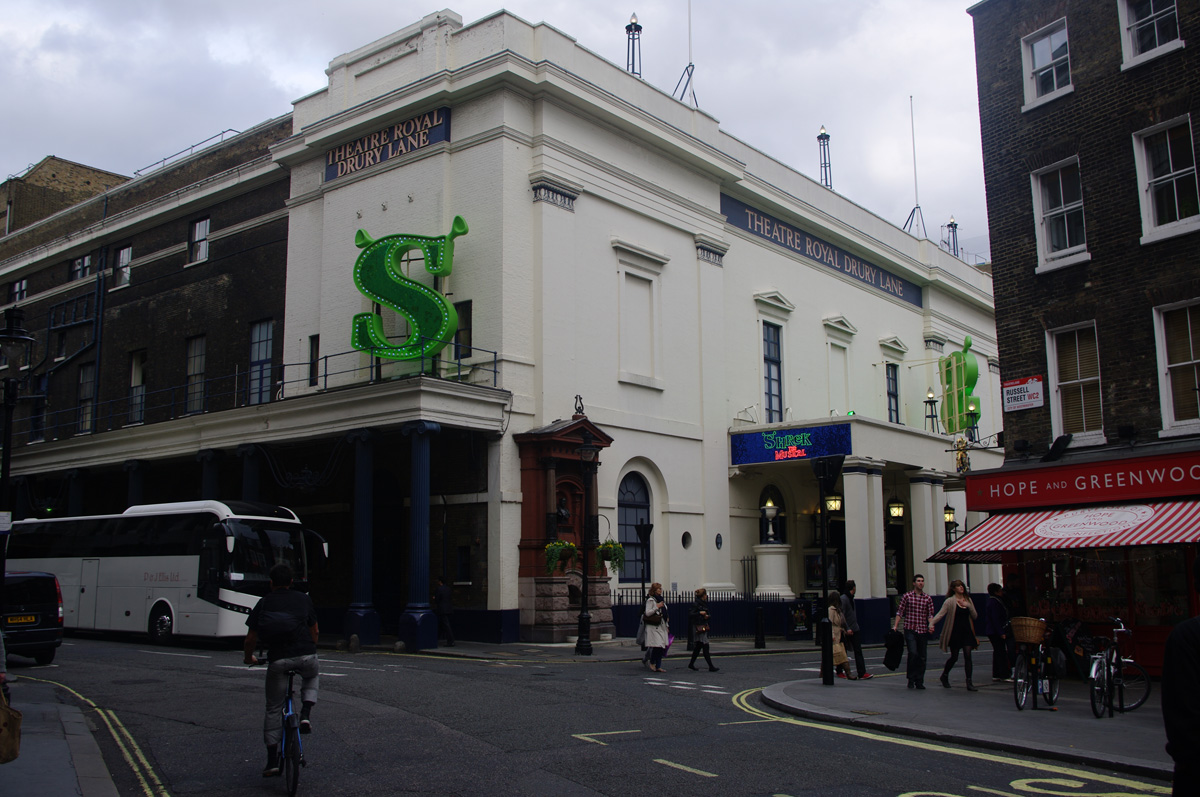
This is The Rose Tavern in Covent Garden. It was situated on the corner of Drury Lane just opposite The Drury Lane Theatre.

Rose Tavern site, corner of Drury Lane. Image @Tony Grant
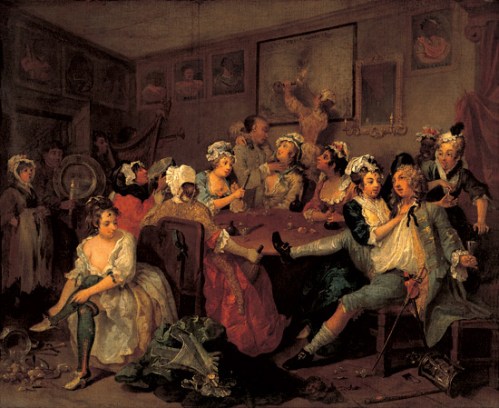
What is happening in this picture is a scene of debauchery. Tom is sitting to the right, his clothing loosened and being administered to by two prostitutes. A girl is removing her stockings in the foreground. Eventually she will be naked. A male servant is bringing in a silver platter for her to dance on. The tradition for new members of the trade, presumably still virgins, was to strip naked and perform a lewd dance on a silver plate high on a table for the wealthy clientele to view. She and her virginity would go to the highest bidder. A virgin could bring a very high price.
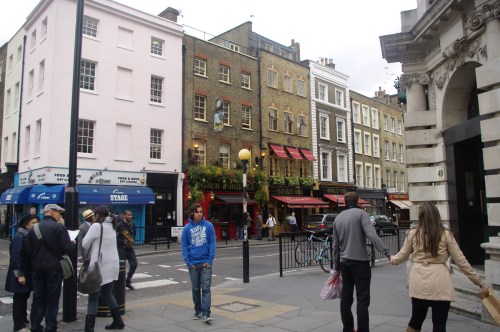
Site of 18th century brothels. Image @Tony Grant
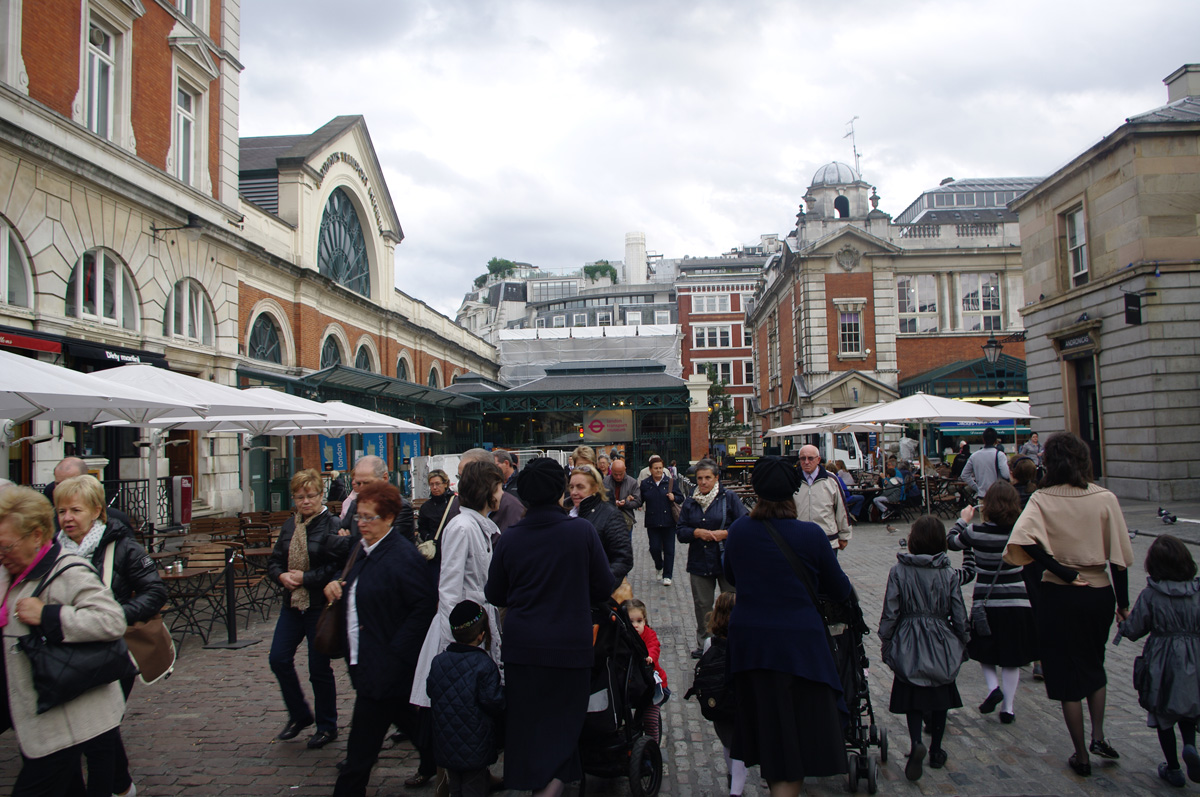
The reason many of the brothels were situated in and around Covent Garden was because it was there all the produce from the countryside was brought into London. With the farm carts young country lasses seeking their fortune would arrive in London too. The market was not just for fruit and vegetables. Old prostitutes, too old to ply their trade, would become madams. They would meet these young girls arriving in Covent Garden Market and befriend them, offering them warm lodgings and work. One such madam was called Elizabeth Needham. She features in Hogarths picture of Moll Flanders arriving in Covent Garden at the start of Daniel Defoe’s story.
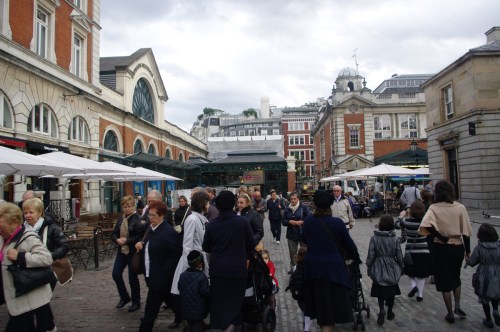
Covent Garden. Image @Tony Grant
Many of the authorities and the public were so incensed by her activities she was put into the stocks and stoned to death. At the height of prostitution in the 18th century it was said that one in five women in London were prostitutes. London was the most licentious city in Europe. After these girls fresh from the countryside had settled in at the madams house, they soon found out what the work they were to do. The madam would start to ask for rent and the cost of food. Of course the girls had no other means of paying. They could be threatened with their lives. Many did have, on the surface, respectable trades. They might be taught to be seamstresses or servants in the pubs around Covent Garden. but they would also provide certain other services. It was attractive because they could earn a lot more money than the ordinary servant or maid. The down side was that they would get diseases, such as gonorea and syphilis, and their lives and careers could be short. The black dots shown on many portraits of these girls were placed there to cover the ravages of syphilis.
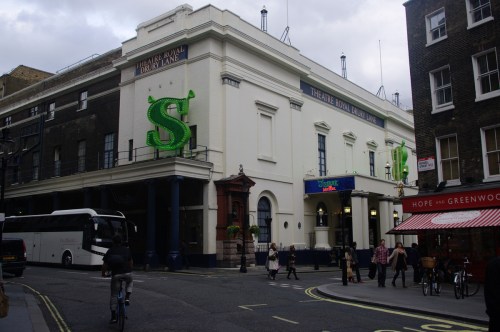
Drury Lane Theatre. Image @Tony Grant
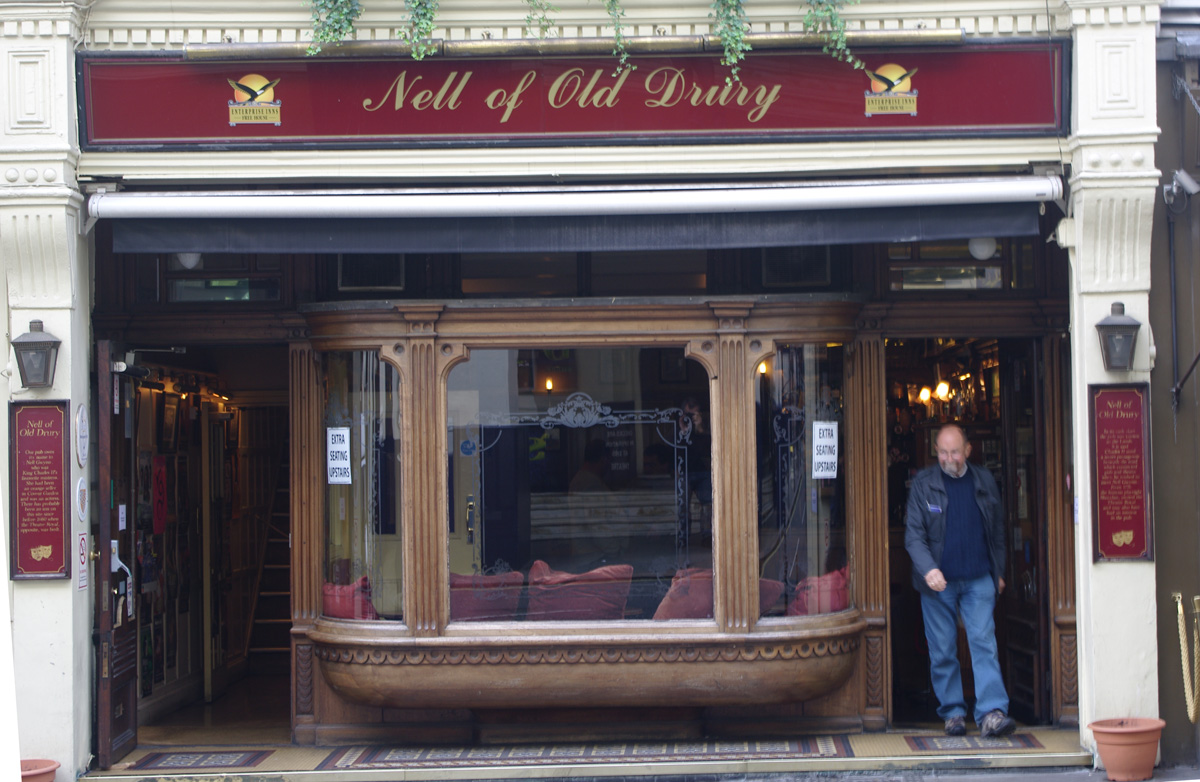
Some of the establishments that were pubs cum brothels were owned by supposedly reputable people. The Nell Gwyn, which exists today, opposite The Theatre Royal in Drury Lane. was partly owned at one time by Sherridan, the great playwright, who also owned and ran The Theatre Royal.
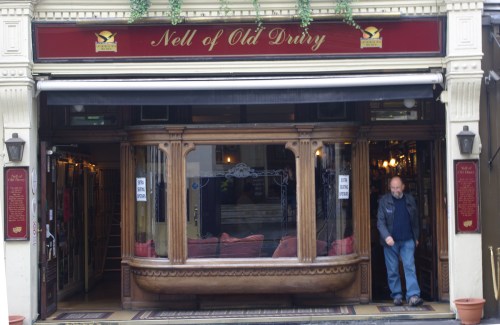
Nell Gwyn's hang out. Image @Tony Grant
It appears he had shares in the prostitution trade. Whether the Church of England owned brothels I am not sure. It was such a lucrative market and comprised a sizeable share of London’s economy, that I would not be surprised. The church needed money too.
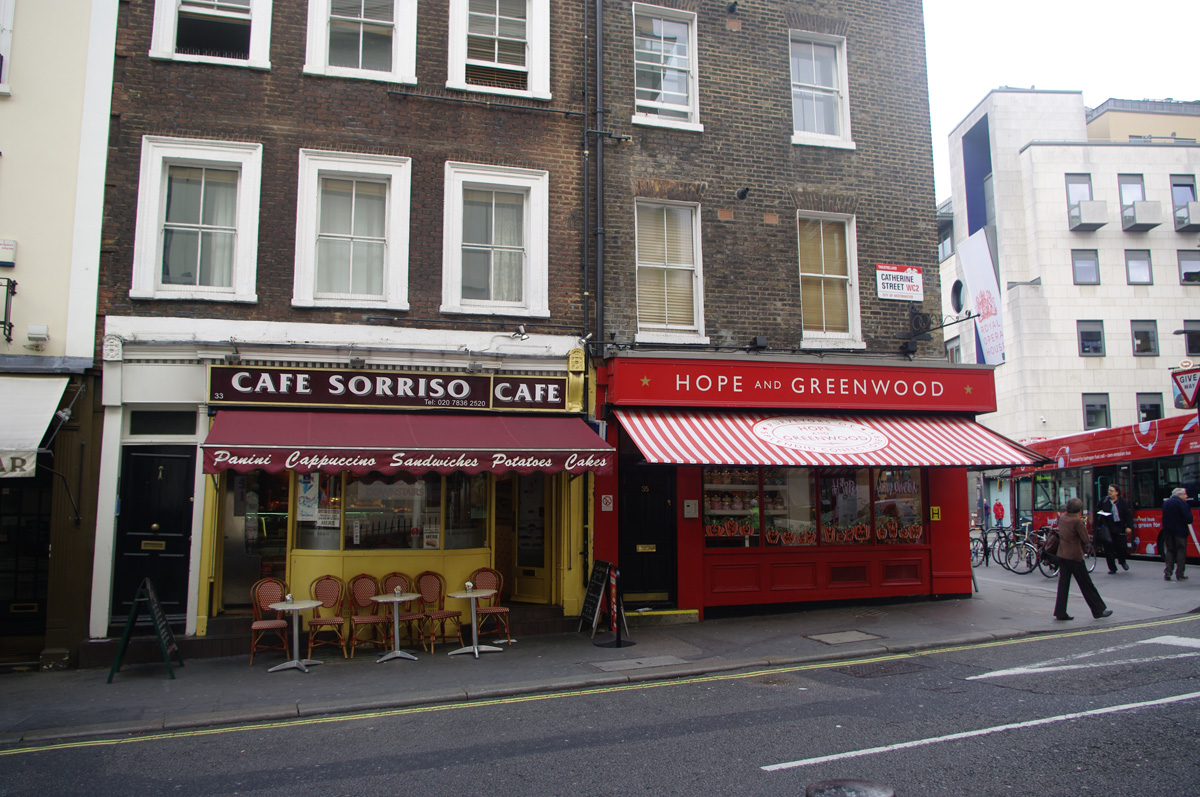
There are shops on the site of The Rose Tavern today. Whether they are the original building I am not sure.
Scene 4.
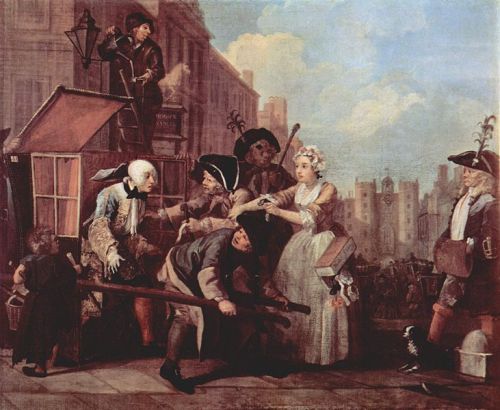
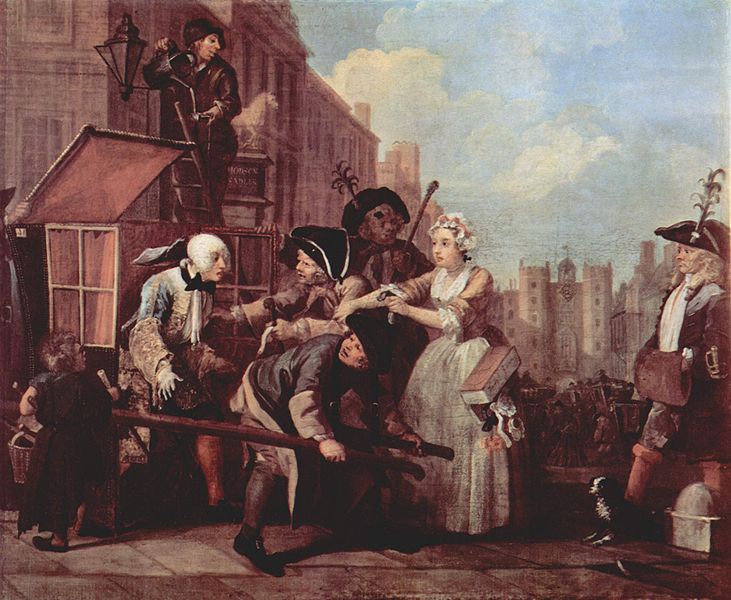
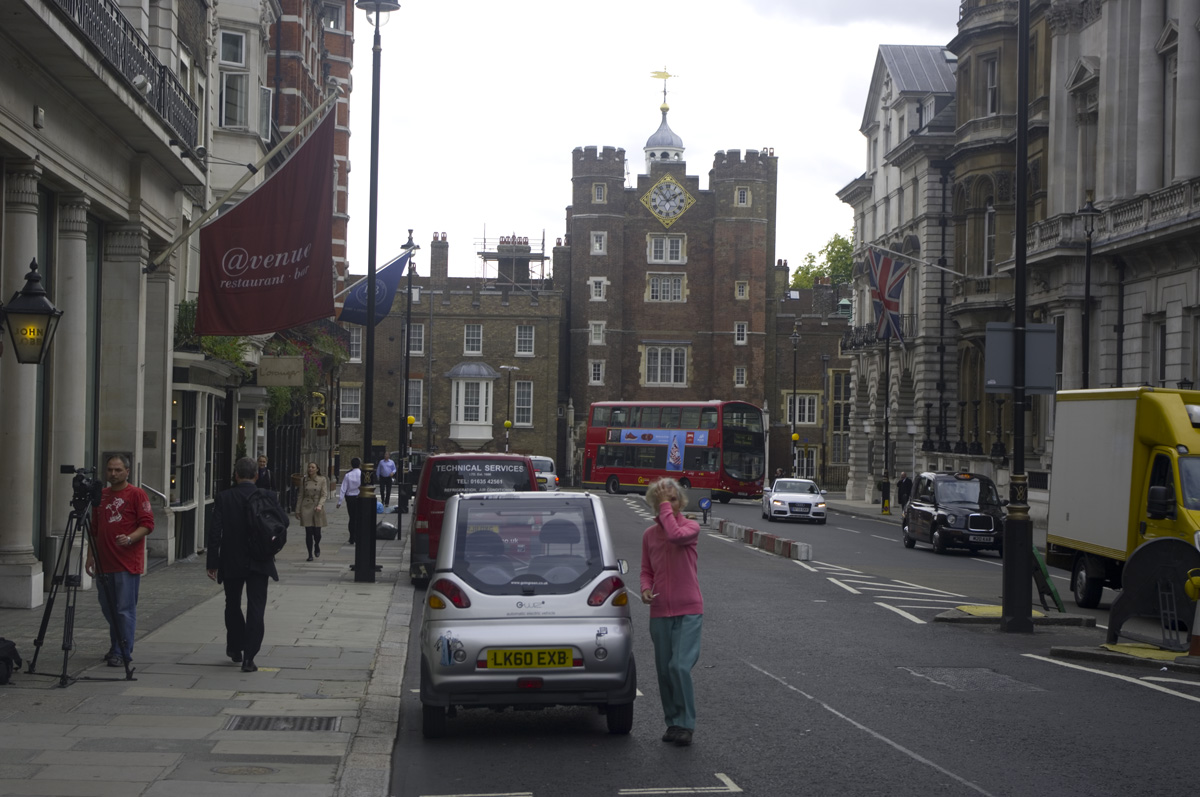
This scene show’s St James’s Street. In the background is St James’s Palace on the corner with Pall Mall. Tom is being apprehended by a bailiff requesting payment of his debts. He is obviously bereft of finances at the precise moment he is about to achieve one of his pretentious ambitions, being presented at court. He is in his rich finery and being taken to St James’s Palace in a sedan chair. He doesn’t want to get his expensive shoes dirty. Sarah Young is there again willing and ready to pay his debts for him. It is a heartbreaking scene in many ways.
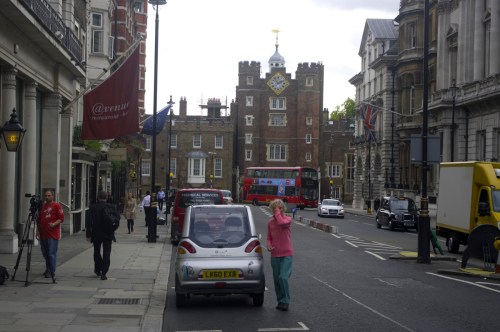
St. James's palace. Image@Tony Grant
I tried to get a photograph of the same scene from the position Hogarth aligned his picture. It meant I had to stand in the middle of the road with cars buses and vans roaring past.
Scene 5.
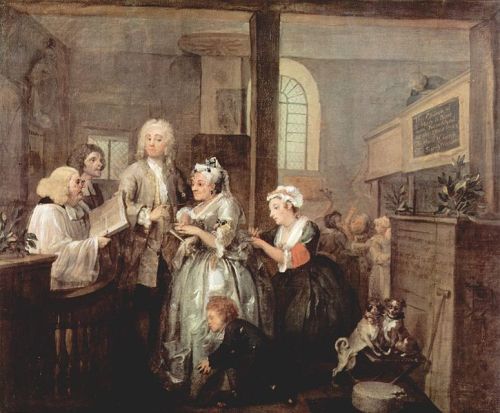
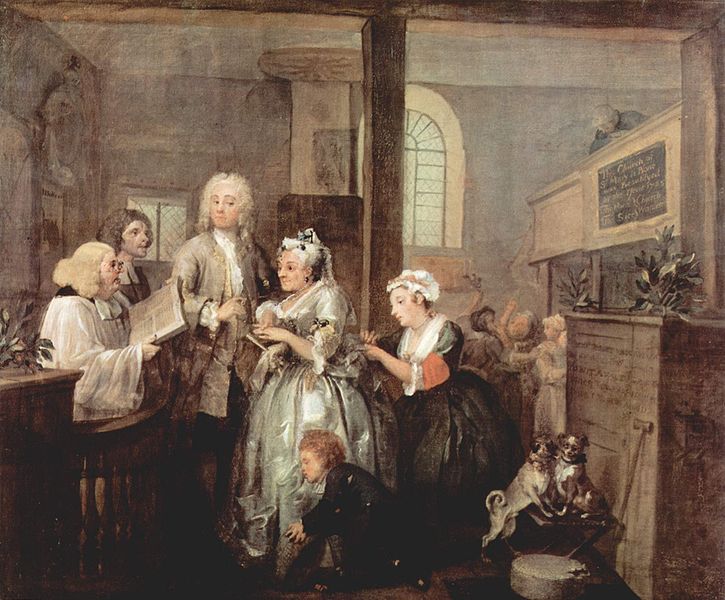
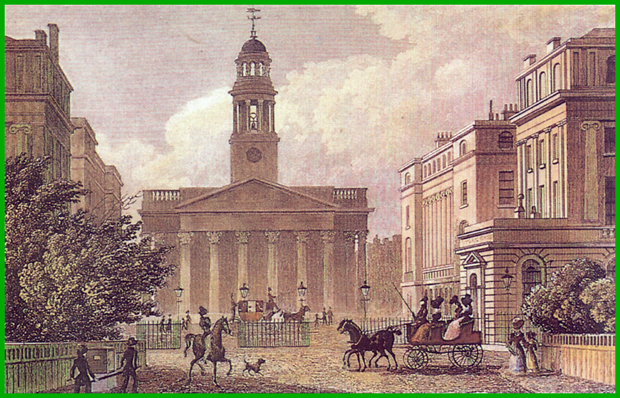
This is the interior of Marylebone Old Church. It was outside the city, towards Hyde Park. In the 18th century it became notorious for clandestine weddings. In this picture Hogarth shows Tom marrying an aging, overweight, one-eyed heiress undoubtedly for her money. He had to go to drastic lengths to pay his debtors and obtain more wealth. She may have lost her eye because of syphilis. Tom looks down on her as though she is a necessary evil, a bad smell under his nose that he must endure. She, undoubtedly, is looking forward to the wedding night. Two dogs show more love and affection than Tom shows for his bride. In the background a churchwarden refuses entry to Sarah Young and the child Tom has fathered with her.
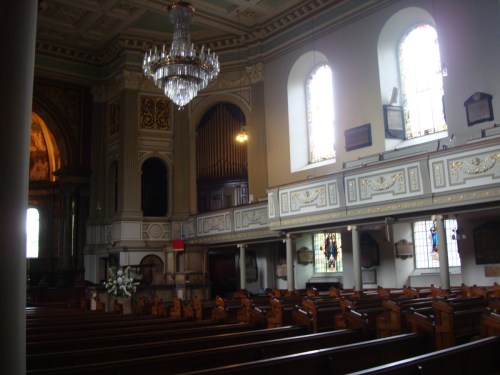
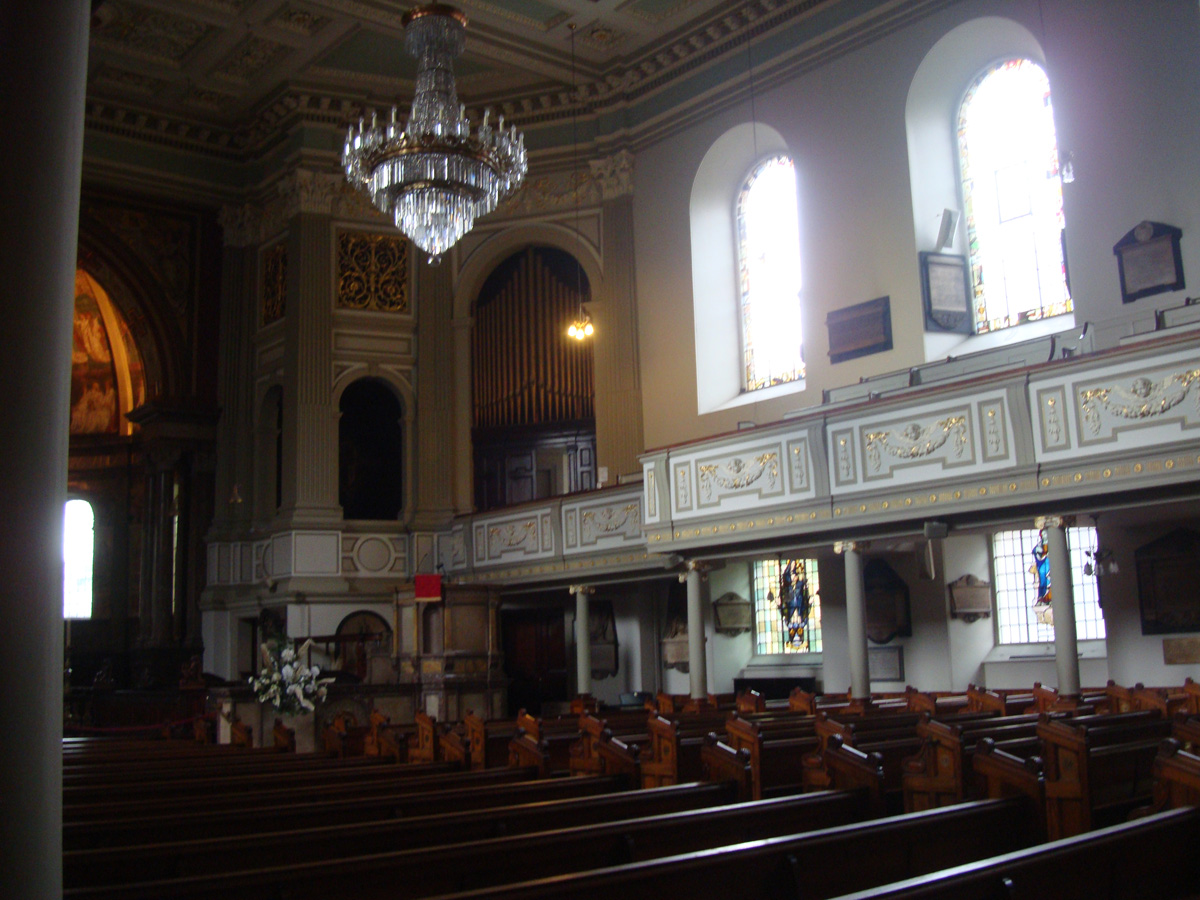
Interior, Marylebone church. Image@Tony Grant
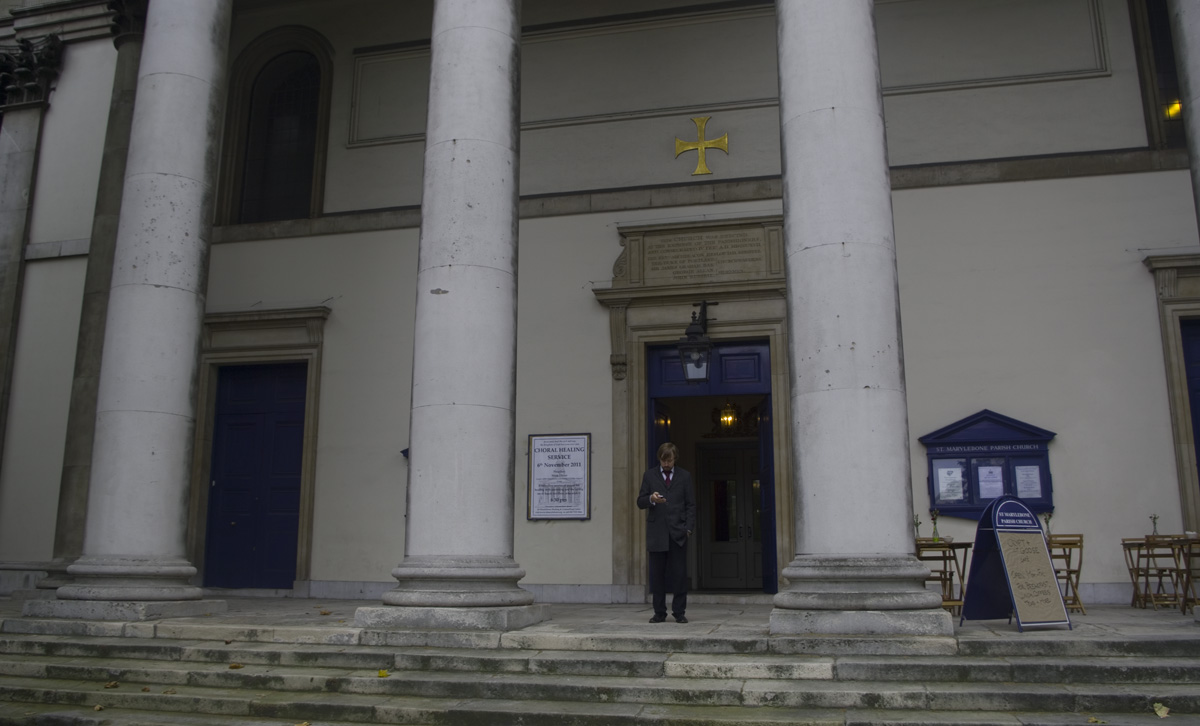
I cycled into London to try and find Marylebone Old Church. There are a number of elegant 18th-century and early Victorian churches in Marylebone. I thought it would be easy to find but I was mistaken. I spoke to two workmen decorating a church just off Old Marylebone Road. They hadn’t heard of it. One very kindly did an internet search on his i-phone for me and found it with a map attached. I was a mere half mile away, so off I peddled in the London traffic. Yes, I took my life in my hands for this project.
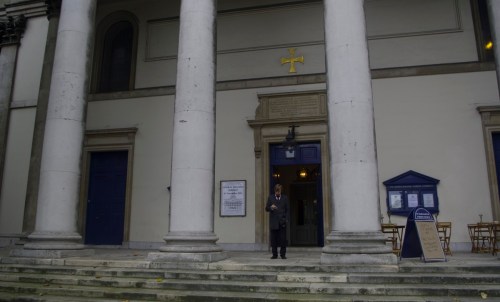
Marylebone church entrance. Image@Tony Grant
I found it!!! It was situated next to the park gates leading into Regent’s Park. It was beautifully ornate with balconies and a magnificent organ playing. The church organist was practicing. I discovered that Charles Dickens had lived in a house close by before he left his wife and family; he used to frequent St Marylebone Old Church. Then I found that this was not the church that Tom married his heiress in.

St. Marylebone parish church
The original had been demolished in the 1920’s. This church, near Regent’s Park, had taken over as the parish church of Marylebone. Anyway, it is a beautiful church and worth visiting and seeing.
Scene 6.
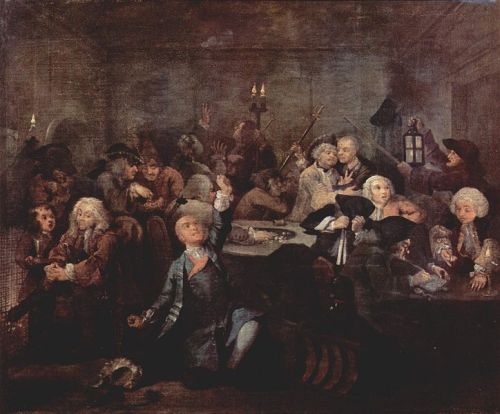
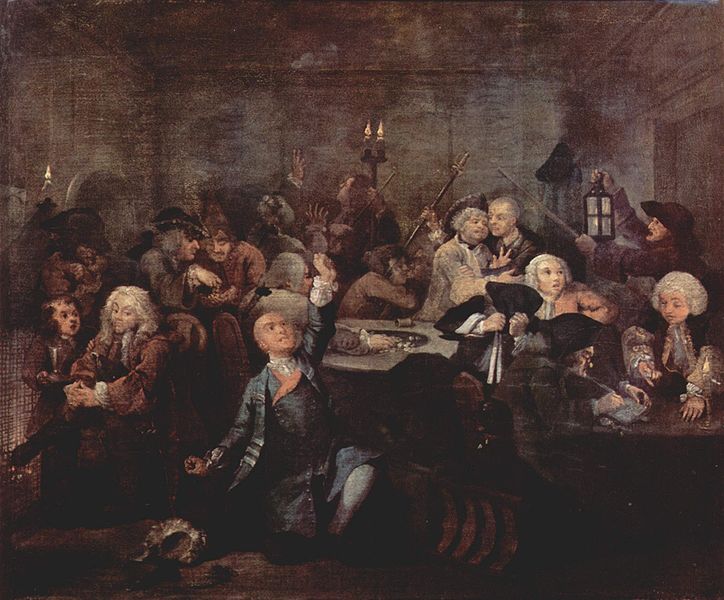
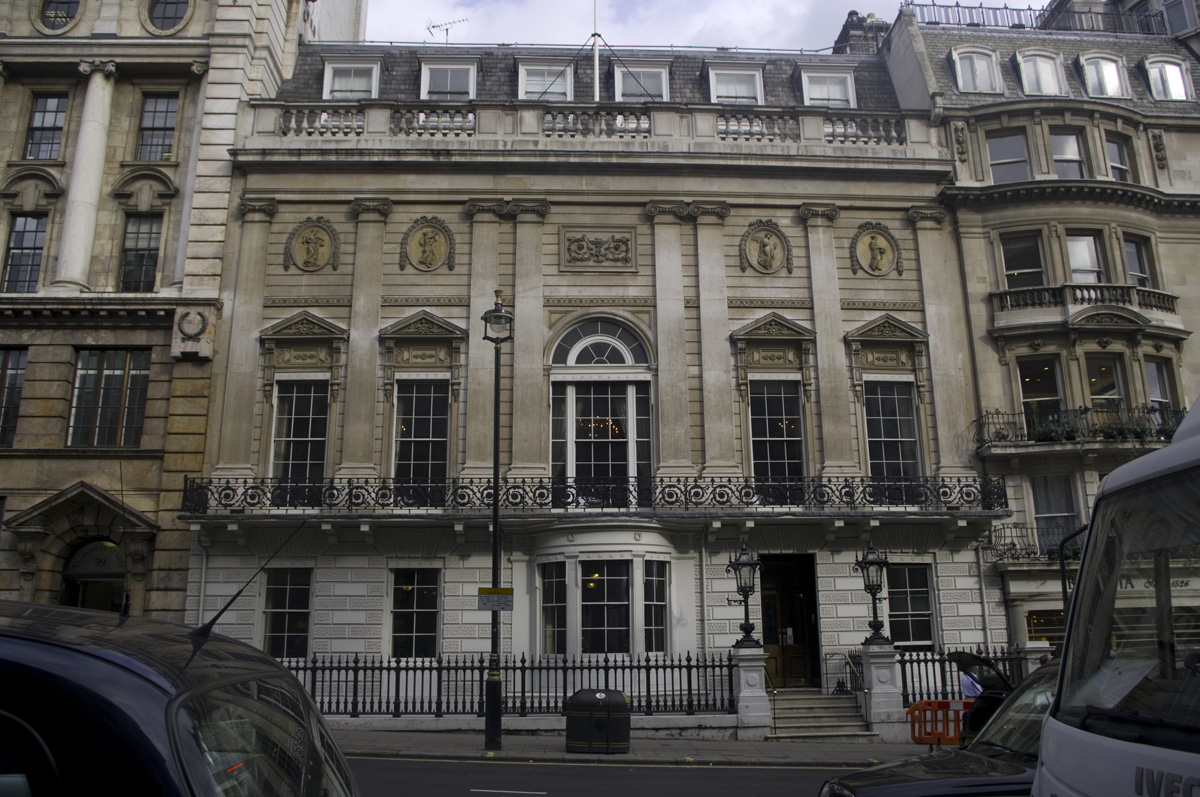
Here is Tom just having gambled away his second fortune provided by his new wife. He is railing against God and bad fortune. It is a shame he doesn’t realise it is his own fault. Smoke is spiralling up to show that the club is on fire but nobody notices they are so intent on gambling. This is symbolic of how they lead their lives. They don’t notice the destruction they are heaping on themselves. This is White’s Club. It was a place to drink the new sources of traded wealth, tea and chocolate. Many famous people at the time were members of White’s or one of the other well-known men’s clubs in the St James’s area.

White's club. Image@Tony Grant
St James is still full of gentleman’s clubs today. They are an 18th century invention but are still going strong. Many wealthy people, industrialists, famous actors,politicians, members of the Royal family and Lords and Dukes still frequent them. They are male preserves. They provide a room, servants, fine dining, a library very often, and a place to meet people of equal status in a social and friendly situation. Not anybody can join. You have to be invited by one of the members.You have to be right sort.
A couple of interesting points about White’s. The bow window at the front was the reserve of the most famous member of the club at one time. He was permitted to sit in the bay window for the world to see and for him to see the world. Beau Brummell, the great 18th century arbiter of fashion and master of ceremonies at Bath and Royal Tunbridge Wells was the first to sit there. You could almost bet on anything at White’s. The most famous bet being a wager on two rain drops falling down one of the pains of glass in the bow window. Which one would reach the bottom first? So it was here that Tom lost his second fortune.
Scene 7.
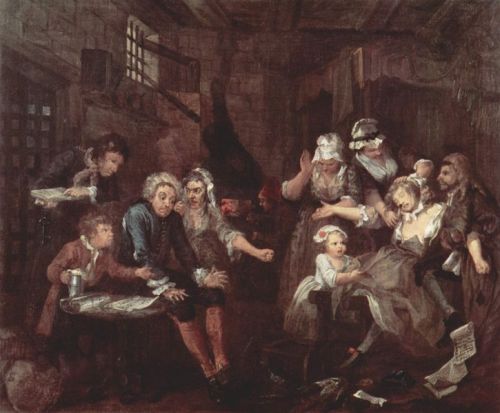
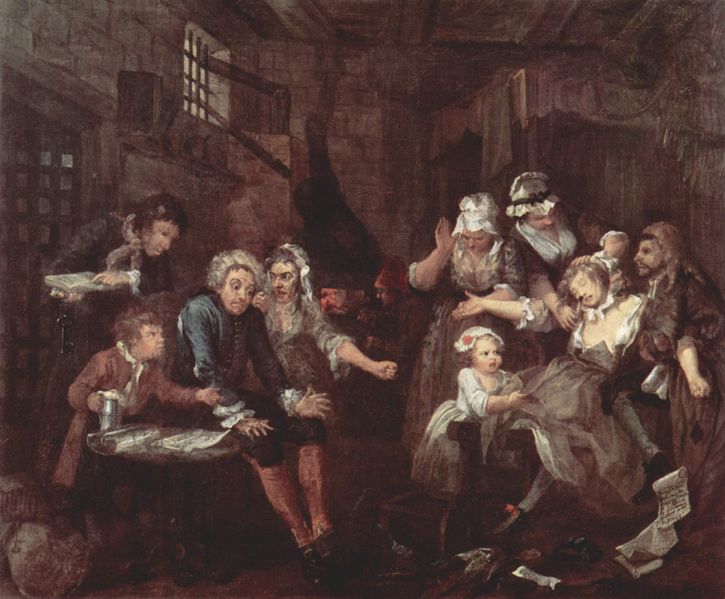
This scene leads to the finale. Tom is in The Fleet Prison in Farringdon Street because of his debts. It was named after The Fleet River which flowed into the Thames before it.
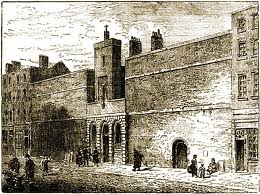
Fleet Prison
His now emaciated wife that was so plump at their wedding, shows the depths to which Tom has brought them. He has no money even for food. With his wig askew on top of his head Tom is attempting to write a play. He thinks he can make money this way. His delusion is now complete. Madness has come upon him.
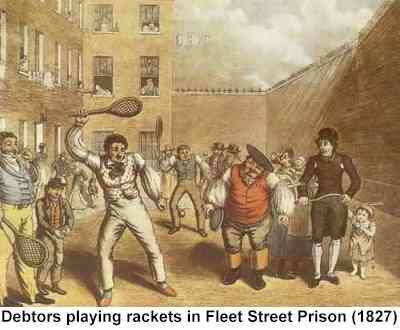
One interesting piece of information about The Fleet is that it had a raquets court for the inmates to keep themselves presumably fit and occupied.
Scene 8.
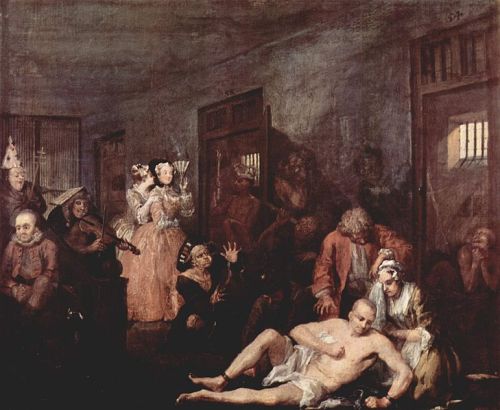
And finally here is Tom in Bedlam. The Bethlehem Hospital for the insane in Moorefields, just north of St Pauls and The City. He lies there almost naked stripped of everything including his clothes and his sanity. Wealthy ladies from the aristocracy look on.
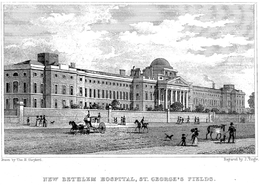
Bedlam
People were allowed to come and gawp at the strange antics of the inmates. Tom and the other people incarcerated are the entertainment. The people he aspired to be like and live like, are now mocking him. Sarah is there at the last, weeping.
Such a sad story.
More about this topic:
Read Full Post »
 One regret I have in my busy life is the lack of leisure time I have for reading. Right now there are four stacks of books on the floor of my office, all waiting to be read. So many books! So little time. Given my schedule, I am glad I set aside the required hours to read Jane Austen Made Me Do It, an anthology of Jane Austen-inspired stories by published Jane Austen sequel authors and edited by Laurel Ann Nattress.
 This is due, no doubt, to the hard work that editor Laurel Ann Nattress put into the project. As a blogger, I can’t imagine how much of her time was spent in contacting the authors and working with them, overseeing a contest for an unpublished author (the honor went to Brenna Aubrey), working with her publishing house in editing the stories, and now publicizing the book. I tip my hat to Laurel Ann for overseeing this ambitious and very worthwhile project, for this is her first book. I give Jane Austen Made Me Do It five out of five Regency tea cups!










 Jane Austen's World