Feeds:
Posts
Comments

Archive for 2013

Steventon. Every Janeite has heard of this sleepy little village in Hampshire and the parsonage in which Jane lived over half her life. It was situated in the chalk hills of North Hants, about seven miles from Basingstoke. As with Chawton, I “traveled” through narrow lanes to St. Nicholas church, where Reverend Austen held Sunday services, married parishioners, and baptized babies, and where members of the Austen family were laid to rest.

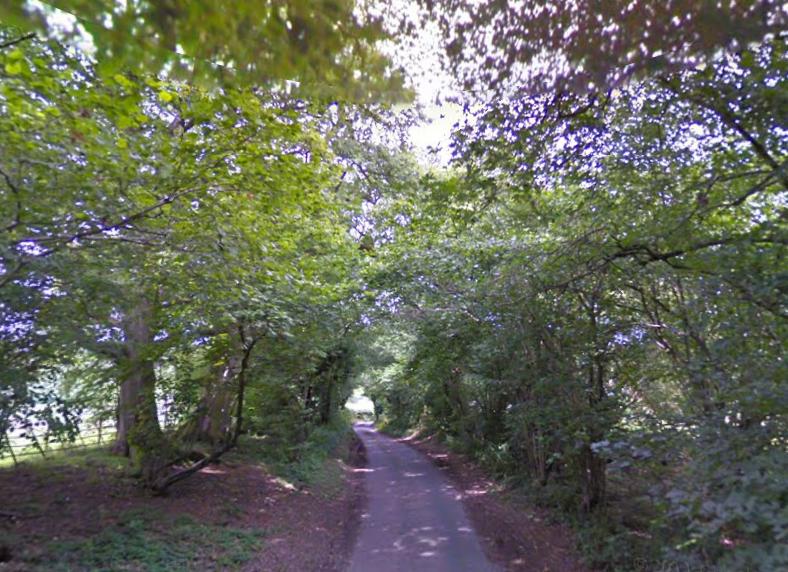
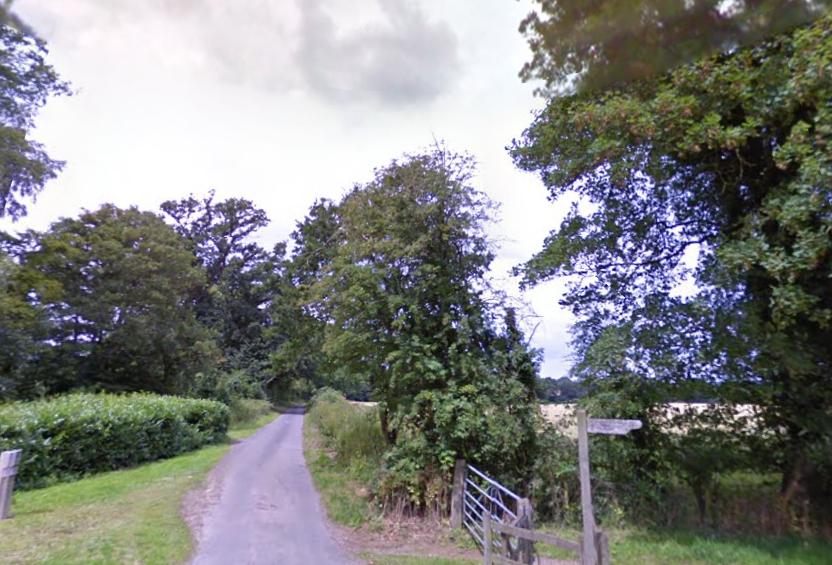
Drive to St. Nicholas

Drive to St. Nicholas. Google street view.

Edward Austen Leigh, Jane’s nephew, described the area as somewhat tame but well clothed with woods and hedgerows. The soil is poor, and while there is an abundance of timber, there are no large trees.

narrow winding lane

The narrow winding lanes curve naturally and offer pleasant nooks and corners. Google street view.

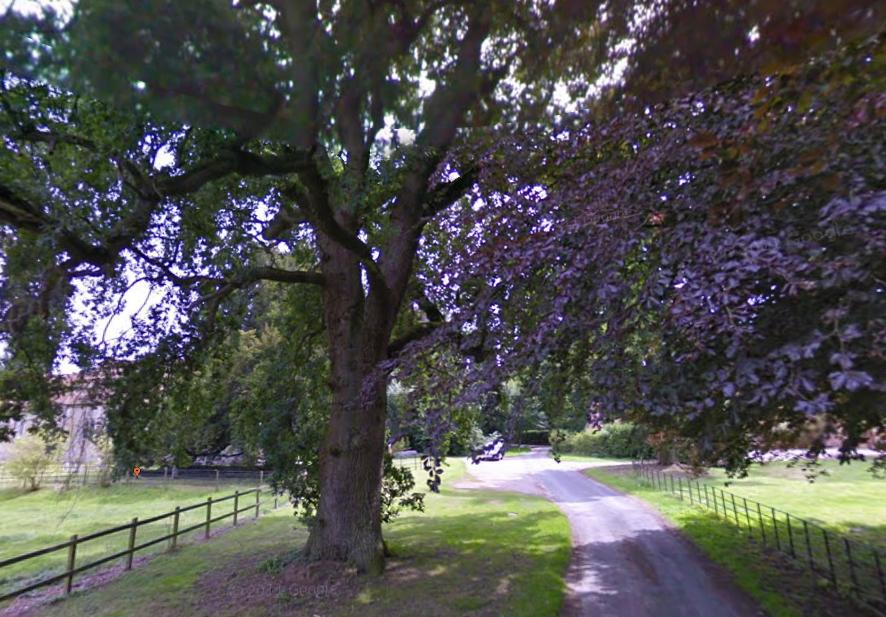
Approach to the church on the left

Approach to the church, which sits on the left, behind the tree. Google street view.

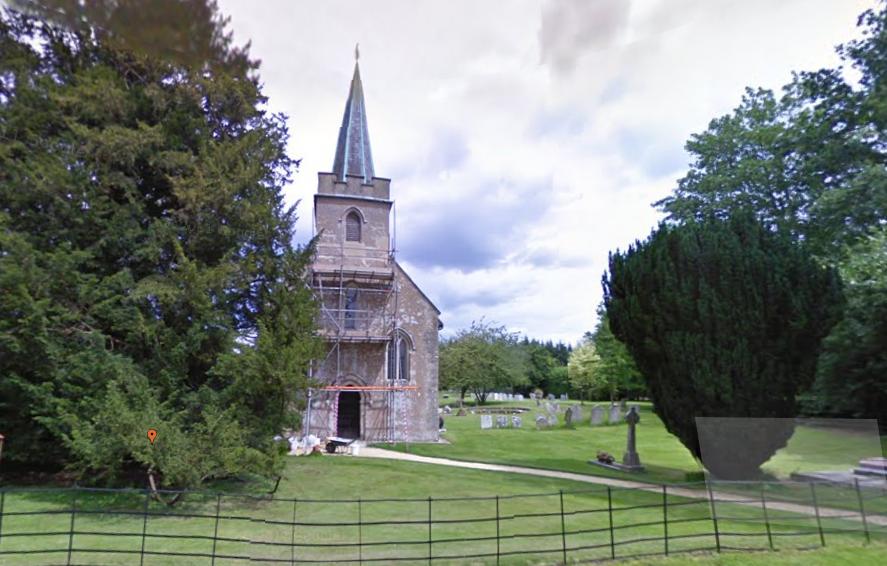
St. Nicholas as seen from the road, with the graves of the Austen family to the right.

St. Nicholas as seen from the road, with the graves of the Austen family to the right. Google street view.

St. Nicholas church. Image @Tony Grant

St. Nicholas church, first mentioned in records in 1238. Image @Tony Grant

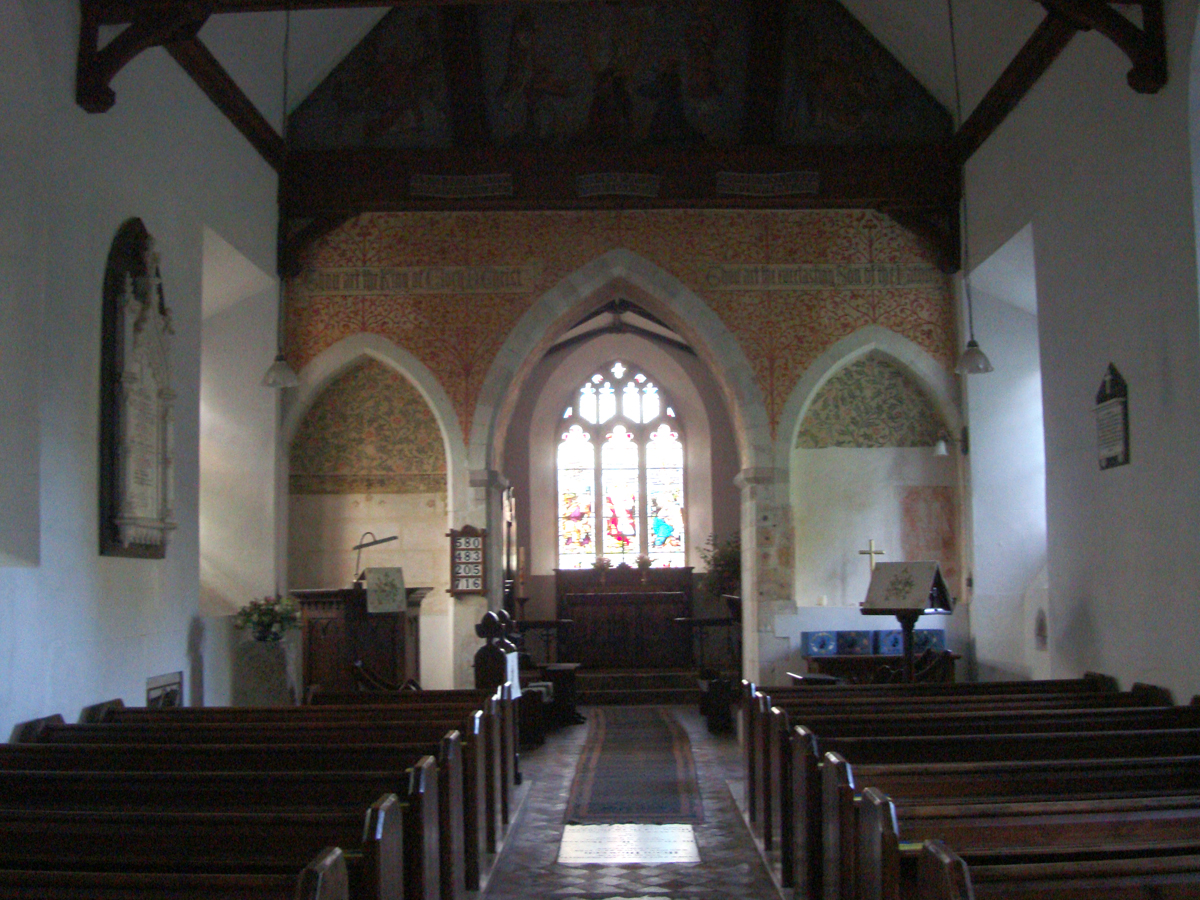
Interior of St. Nicholas

Interior of St. Nicholas. Two of the three arches have been closed in. Image @Tony Grant

Detail of interior

Detail of the arch to the right in the above image. Image @Tony Grant

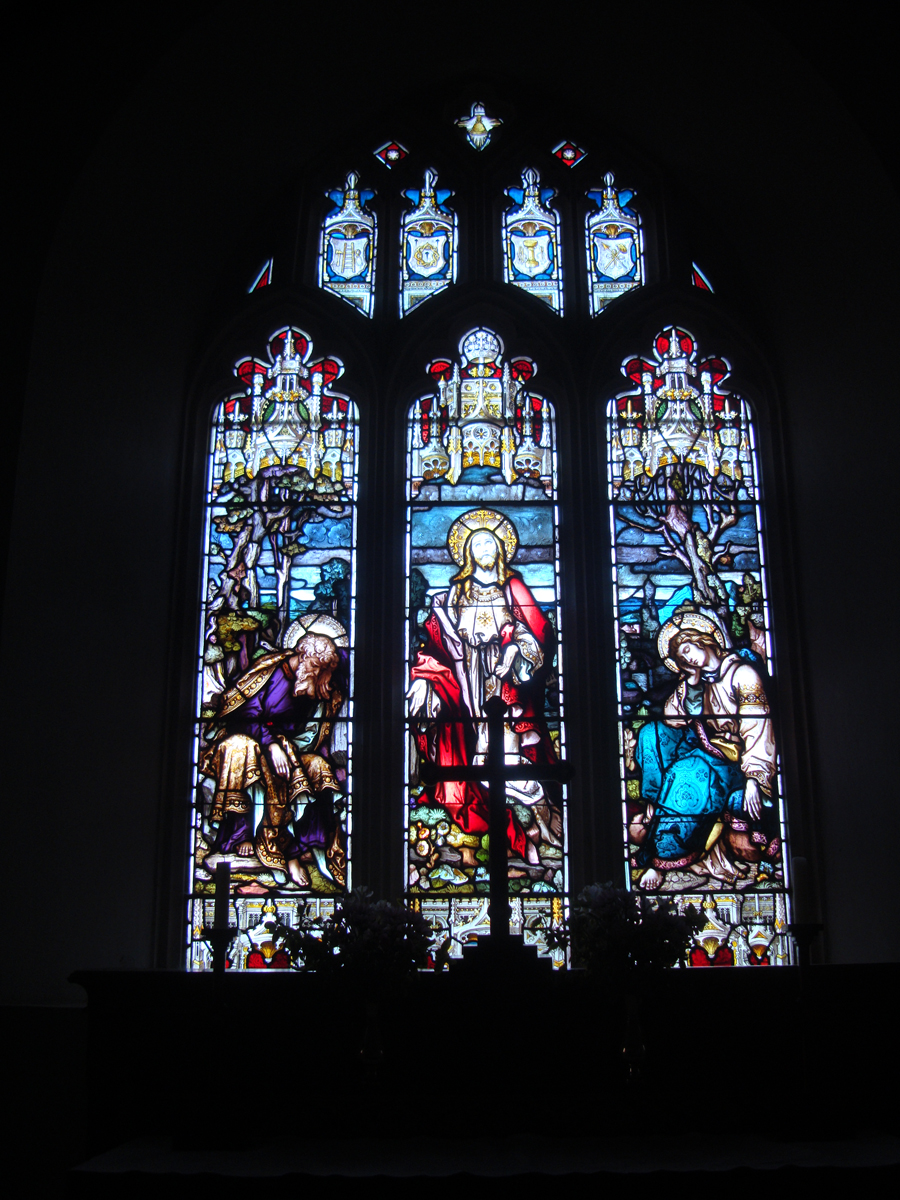
St. Nicholas's stained glass window

St. Nicholas’s stained glass window, which dates from 1883. Image @Tony Grant

Gargoyle

Gargoyle. Image@Tony Grant

Another view of the lane near the church

Another view of the lane near the church. One can imagine Jane and Cassandra walking through this country, wearing pattens during rainy weather to protect their delicate shoes, clutching their red hooded cloaks, and umbrellas.

The old rectory site where the parsonage once stood. A well (enclosure in back of the tree) is the only visible remnant of that house.

The old rectory site where the parsonage once stood. A well (inside the enclosure in back of the tree) is the only visible remnant of that house. Image @Tony Grant

More on the topic

Read Full Post »

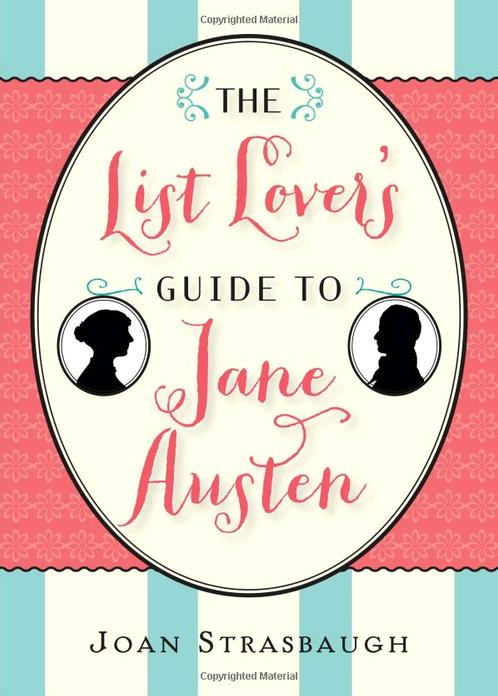
list lovers guideThe List-Lover’s Guide to Jane Austen is a quick, easy reference guide for all things Jane Austen. When you enter a JA trivia quiz, you can quickly become an expert by looking up the books Jane read, her #1 pet peeve, the people in her social circle, the balls she attended, who broke her heart and the hearts she broke, etc.

Joan Strasbaugh has created the first-ever list-only biography! Written mostly in 140 characters or less, this volume is jam-packed with information presented as lists or charts.

  • The flowers in her garden
  • Her royal ancestors
  • Particulars about her wardrobe
  • What she did for fun
  • Characters in her book
  • Where she traveled
  • The items she possessed
  • Where she worshipped
  • Where she lived and shopped
  • Contemporary descriptions of her features

The lists go on and on. (Click here for a view inside the book). The book provides a comprehensive overview of her life. Nieces and nephews born after she died are not listed, and places her friends or family may have traveled (but there’s no evidence she did) are not included. The lists do include friends’ and relatives’ firsthand accounts and reminiscences from neighbors and people who crossed her path.

Four out of five Regency tea cups

Four out of five Regency tea cups

My impressions of this book are positive. Any time I need to review a fact, I can turn to it and quickly find the information. The cover is attractive but I found the print a bit hard to read. This book will be helpful to Janeites, teachers, students, authors, and anyone interested in the Regency era. I give it 4 out of 5 Regency teacups.

About the Author

Joan Strasbaugh has been a proud Janeite for half of her life. She now works as the senior editor of Abbeville Press in New York, and notably organized the Jane Austen in the 21st Century Humanities Festival at the University of Wisconsin. She is currently spearheading the A former publisher at Jones Books, Strasbaugh also holds a membership to the Jane Austen Society of North America.

The biggest surprise in putting this book together was discovering the sheer number of social contacts, places visited, and characters in her books. Her social circle was enormous and her travels many, mirrored in her novels by the sixty plus characters and forty plus locations in Sense and Sensibility, for starters.

About the contest: (NOTE: Contest closed! The winners are – Cara D. , Anne F., Tess G., Lilyane S., and Alison M. Congratulations all and thank you for participating in this contest. The winners were drawn with random number generator. (Long discussions between two individuals were not included.) One of you entered the first day of the contest, and someone entered on the last day. Amazing.

Sourcebooks has agreed to give out 5 copies of the book. Yes, 5! To enter the contest, please share what information you’d like to know about Jane Austen. Contest ends June 9th at midnight!

List Lover’s Guide to Jane Austen by Joan Strasbaugh, released this month.

June 4th, 2013, ISBN 9781402282034, Trade Paperback

$12.99 U.S. / £8.99 UK

Excerpt. © Reprinted by permission. All rights reserved.

Read Full Post »

I’ve often wondered what Jane Austen and her sister Cassandra would have looked like as young ladies. This lovely public domain image by Paul Sandby from the Yale Center for British art gives us an idea. In her teens, Jane’s dresses would still have had waists and her hair would have been worn relatively loose and long. I envision the teen on the left with the direct gaze to be Jane – a pretty girl with round cheeks and a twinkle in her eyes, open to life’s possibilities.

 Paul Sandby, 1731-1809, British, The Misses Sandby of Norwich, undated, Graphite and brown wash on medium, slightly textured, cream laid paper, Yale Center for British Art, Paul Mellon Collection


Paul Sandby, 1731-1809, British, The Misses Sandby of Norwich, undated, Graphite and brown wash on medium, slightly textured, cream laid paper, Yale Center for British Art, Paul Mellon Collection

About Paul Sandby

Paul Sandby was celebrated in his day. The innovations and subject-matter that he introduced into the practice of watercolour painting in Britain had a profound influence on artists of successive generations, including Thomas Girtin and J.M.W. Turner RA. However, from the mid-nineteenth century, Sandby’s work slipped into obscurity. – Paul Sandby, Picturing Britain

This former map-maker turned watercolor landscape painter became a founding member of the Royal Academy in 1768.

Read Full Post »

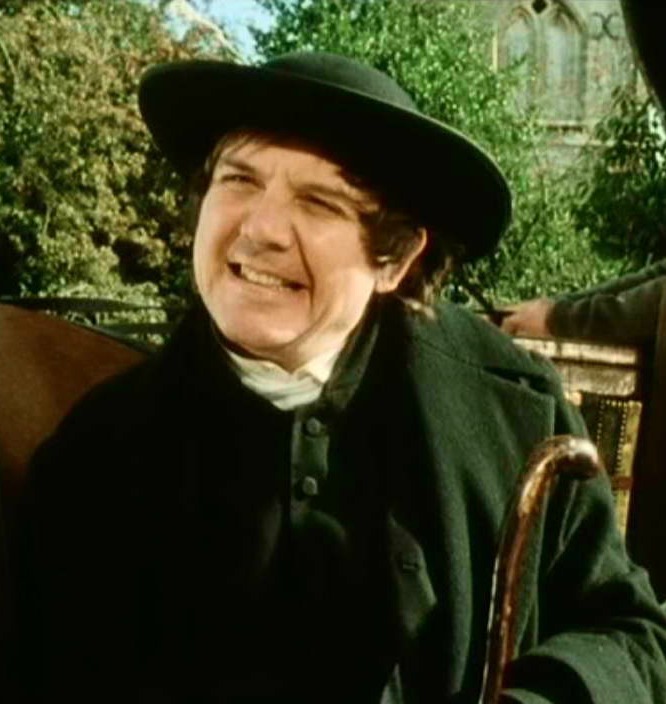
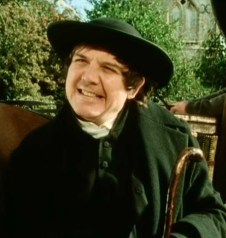
David Bamber is Mr Collins, Pride and Prejudice 1995

David Bamber is Mr Collins, Pride and Prejudice 1995

This year marks the 200th anniversary of the publication of Pride and Prejudice. When I was fourteen I read the novel in one sitting, choosing the book one summer in a quest to finish a list of classics. Like so many girls, I identified with Lizzy and wished that some modern Mr. Darcy would find my eyes strikingly beautiful. While P&P’s protagonists attracted me at first, it is the secondary, more imperfect characters who continue to fascinate me: Mrs. Bennet, Mr. Collins, Caroline Bingley, Mr. Bennet, Lydia, and Mr. Wickham, as well as those who played minor but crucial roles – Mary Bennet, Sir William Lucas, and Mr. Hurst. All are archetypes of people we have known in one way or another.

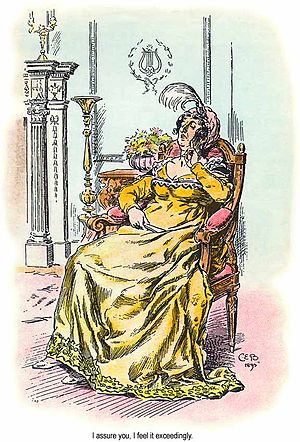
I have not forgotten Lady Catherine de Bourgh, or Lady CdeB, as she will be known henceforth in this narrative. In my opinion, Lady CdeB is in a class by herself and rises above the other sterling cast (although Mr. Collins is tough competition.) She’s a giant in the annals of literary supporting characters. My older self is astonished that a 19 year-old slip of a girl living in a quiet backwater village could have come up with such a magnificent creation. It boggles the mind.

It is quite telling that we are first introduced to Lady CdeB through Mr. Collins. That Jane Austen chose to announce the appearance of this proud, arrogant aristocrat through a fawning and obsequious bootlicker is genius, for we swiftly come to the conclusion that she is either as foolish as her empty-headed flatterer or is using him for some purpose. To the delight of Mr. Bennet, who has been bored out of his gourd since saying “I do” at the altar, Mr. Collins preens and swaggers at the very mention of his patron.

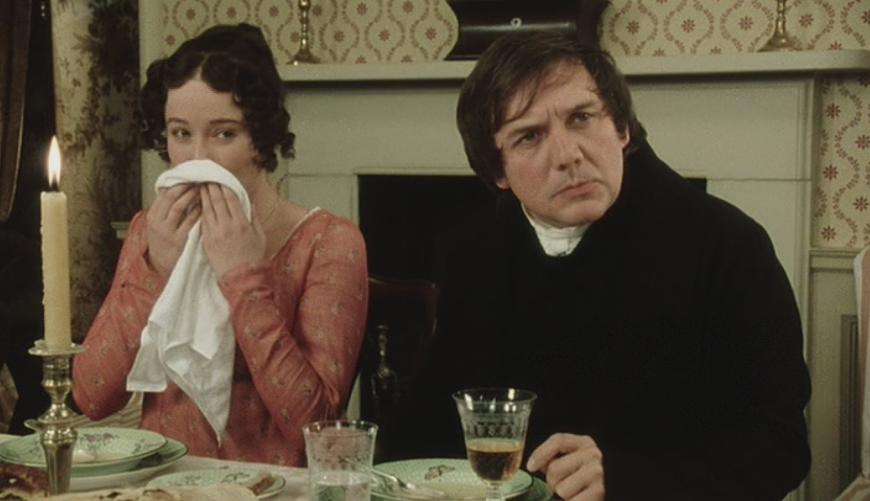
During dinner, Mr. Bennet scarcely spoke at all; but when the servants were withdrawn, he thought it time to have some conversation with his guest, and therefore started a subject in which he expected him to shine, by observing that he seemed very fortunate in his patroness.”
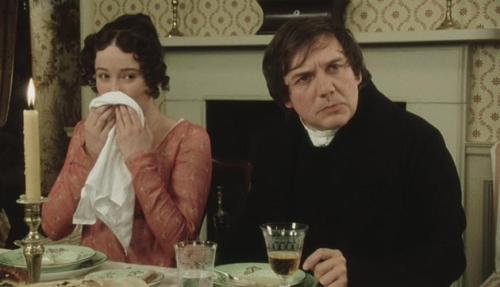
Mr Collins responds to Mr. Bennet's question

Mr Collins responds to Mr. Bennet’s question. Pride and Prejudice 1995

Like a marionette tugged on a string, Mr. Collins jumps at this prompt, much to Mr. Bennet’s delight. After years of suffering through banal dinner conversations with Mrs. Bennet and three of his five daughters, he now actively seeks relief from his ennui and his guest does not disappoint. The vicar boasts that:

he had never in his life witnessed such behaviour in a person of rank — such affability and condescension, as he had himself experienced from Lady Catherine. She had been graciously pleased to approve of both the discourses which he had already had the honour of preaching before her. She had also asked him twice to dine at Rosings, and had sent for him only the Saturday before, to make up her pool of quadrille in the evening. Lady Catherine was reckoned proud by many people he knew, but he had never seen any thing but affability in her.”

This effusive praise begs the question: if Lady CdeB had a lick of sense, why would she waste her precious time with this clown? Austen continues to dangle interesting glimpses of her in front of us, using Mr. Collins as her mouthpiece and building up our expectations of this nonpareil. During the most brilliantly ridiculous proposal written in English literature, Austen arranges to have Lady CdeB speak directly to us for the first time:
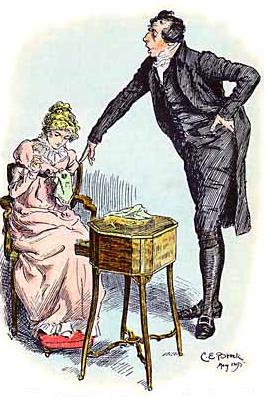
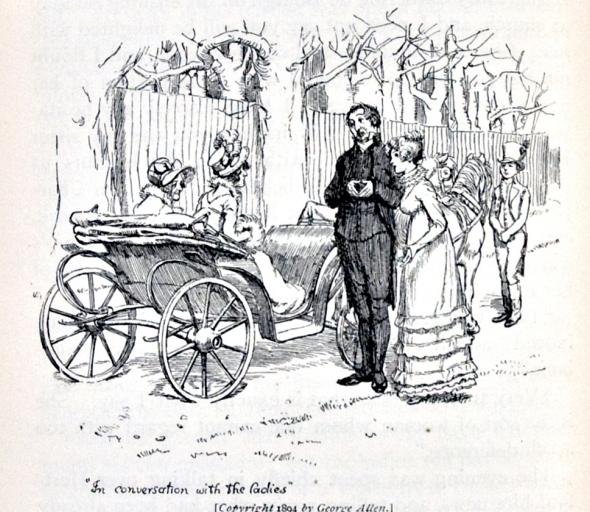
Mr Collins and Lizzy, by Brock. Image @Mollins

Mr Collins and Lizzy, by Brock. Image @Mollands

My reasons for marrying are, first, that I think it a right thing for every clergyman in easy circumstances (like myself) to set the example of matrimony in his parish. Secondly, that I am convinced it will add very greatly to my happiness; and thirdly — which perhaps I ought to have mentioned earlier, that it is the particular advice and recommendation of the very noble lady whom I have the honour of calling patroness. Twice has she condescended to give me her opinion (unasked too!) on this subject; and it was but the very Saturday night before I left Hunsford — between our pools at quadrille, while Mrs. Jenkinson was arranging Miss de Bourgh’s foot-stool, that she said, “Mr. Collins, you must marry. A clergyman like you must marry. — Chuse properly, chuse a gentlewoman for my sake; and for your own, let her be an active, useful sort of person, not brought up high, but able to make a small income go a good way. This is my advice. Find such a woman as soon as you can, bring her to Hunsford, and I will visit her.”

Such delicious dialogue! Lady CdeB has no higher hope for Mr. Collins’ happiness other than a wife who is active (can work her butt off) and can make a small income go a good way (is thrifty). The future Mrs. Collins must not be too high in the instep, but not so low of class that it would be impossible for Lady CdeB to be seen with her. In other words, Lady CdeB must be assured that those with whom she socializes are worthy of her attentions. (The more worthy, the better, for subjugating a strong person would give her a headier sense of power than lording it over a weakling.)

In rural Regency England, a grande dame’s social circle was restricted to the slim pickings in her community. Despite a lack of choice, there were standards to be maintained and Mr. Collins is as low down the status totem pole as Lady CdeB can go. Emma Woodhouse experiences a similar dearth of social connections in Highbury. Before easy travel became possible, one simply had to make do.
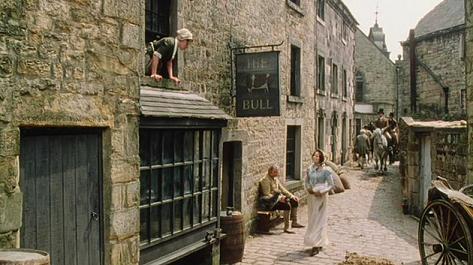
Social circles are small in a rural village. Pride and Prejudice 1995

Social circles are small in a rural village. Pride and Prejudice 1995

In these early scenes with Mr. Collins, Austen builds up our expectations. Knowing what priceless enjoyment is in store for us, she makes us wait for a few more chapters before Lady CdeB’s grand entrance, and so, during Lizzy’s visit to Hunsford, she continues to pique our curiosity.

Yes, Miss Elizabeth, you will have the honour of seeing Lady Catherine de Bourgh on the ensuing Sunday at church, and I need not say you will be delighted with her. She is all affability and condescension, and I doubt not but you will be honoured with some portion of her notice when service is over. I have scarcely any hesitation in saying that she will include you and my sister Maria in every invitation with which she honours us during your stay here. Her behaviour to my dear Charlotte is charming. We dine at Rosings twice every week, and are never allowed to walk home. Her ladyship’s carriage is regularly ordered for us. I should say, one of her ladyship’s carriages, for she has several.”

We are so entranced with Mr. Collins’s banal utterances that we nearly miss Charlotte’s quiet opinion of the patroness. Until she married Mr. Collins, Charlotte seemed a sensible sort, but now we are coming to understand why Lizzy’s respect for her old friend has cooled so dramatically. Aside from willingly marrying a buffoon, it turns out that Charlotte has inherited some of her father’s capacity for groveling.

Lady Catherine is a very respectable, sensible woman indeed,” added Charlotte, “and a most attentive neighbour.”

What? Where’s the irony in that statement? When Mr. Collins answers,”Very true, my dear, that is exactly what I say. She is the sort of woman whom one cannot regard with too much deference,” Charlotte remains silent. Her lack of rejoinder is damning – to us and surely to Lizzy – for she is becoming a toady.
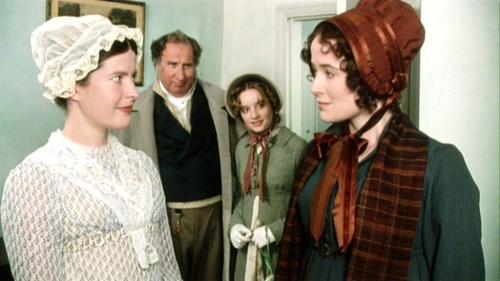
Charlotte, Lizzy, Maria Lucas, and Sir William Lucas. Pride and Prejudice 1995

Charlotte, Lizzy, Maria Lucas, and Sir William Lucas. Pride and Prejudice 1995

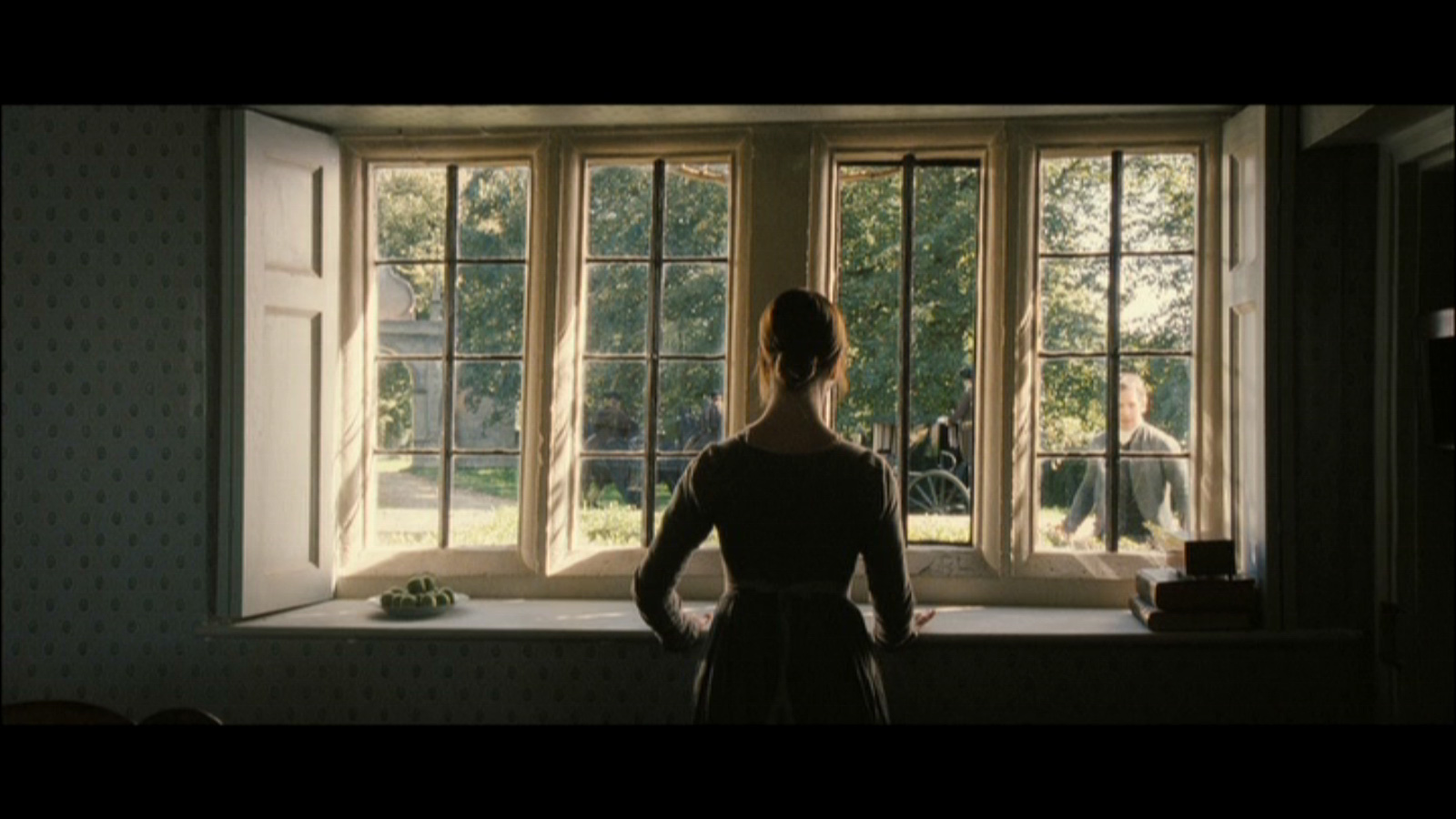
Observe Charlotte’s behavior somewhat later when Anne deB, Lady CdeB’s daughter, commands her driver to halt her phaeton at the parsonage’s garden gate. This non-event starts a rube goldberg chain of events in which Mr. Collins stops dead in his tracks to go rushing to the gate, Charlotte tosses aside her women’s work to chase after him and stand by his side, Sir William Lucas parks his carcass in the doorway to bask in all that reflected greatness, and Maria Lucas clomps noisily up the stairs to broadcast the GRAND EVENT and drag Lizzy to the window to SEE for herself!
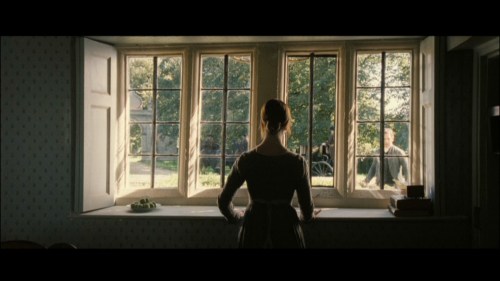
Charlotte at the window. Pride and Prejudice 2005

Charlotte at the window. Pride and Prejudice 2005

Lizzy, who had been busy searching for an instrument with which to catch pigs, thinking that only a herd of swine on the loose could cause such a commotion, looks in astonishment at an anemic woman with a scowling face and her companion. Suddenly it dawns on her that THIS is the cousin intended for Mr. Darcy! And here is when we discover that Miss Elizabeth has the makings of a mean girl, for she is pleased as punch to know that this sallow creature is destined to be Mr. Darcy’s bride.
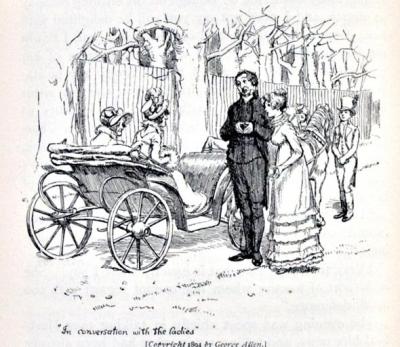
At the parsonage gate with Lady Anne her companion and the Collinses.

At the parsonage gate with Lady Anne her companion and the Collinses.

In this farcical scene Austen has provides us with foreshadowing of how things will be at Rosings and how these characters will conduct themselves in the presence of Lady CdeB. Their reaction to her daughter, a nonentity, is extraordinary, with the Collinses bobbing like two plastic dunking birds and the star-struck Lucases re-enacting the Regency version of a Kim Kardashian fan club.
Next: Lady CdeB

Next: Lady CdeB

Only Lizzy remains untouched, for she’s not easily awed by the trappings of title and position. Anne’s visit had a real purpose it seems, for Charlotte informs them that they are invited to dine at Rosings the next day. As Mr. Collins whirlygigs himself into a tizzy, Miss Elizabeth Bennet of Longbourn House, and the daughter of a gentleman, girds her loins in anticipation of meeting the dragon lady. Jane Austen, meanwhile, has us readers chomping at the bit.

Next: Lady Catherine de Bourgh in all her glory.

More posts on this blog regarding Pride and Prejudice 200 year anniversary.

Read Full Post »

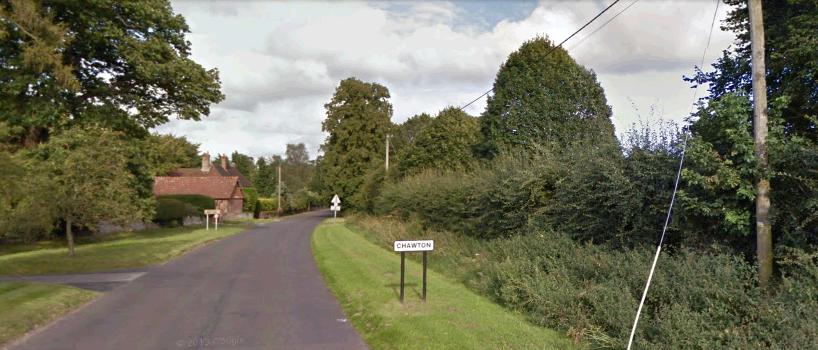
Tony Grant’s recent pictorial visit to Chawton was so popular that I thought you would like to see the village in which Jane Austen lived out the last years of her life. You might want to reference Tony’s images with the ones below, which were taken with Google maps. After I made these, I felt as if I had traveled to Hampshire for a pleasant hour or so. Interestingly, the seasons go back and forth, from late summer to early November.  At times you will see full foliage and at other times the scene was shot in the middle of fall.

Winchester Road to Chawton

Winchester Road to Chawton from A31. You can see the signpost marking the village.

Chawton sits in Hampshire, not far from Alton, Steventon, and Winchester, all familiar Jane Austen places.

Chawton sits in Hampshire, not far from Alton, Steventon, and Winchester, all familiar Jane Austen places.

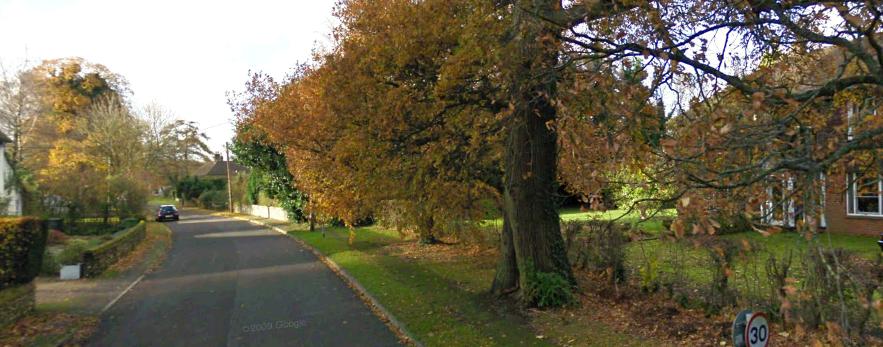
Lovely narrow lanes

Lovely narrow lanes. Click on the images for a larger version.

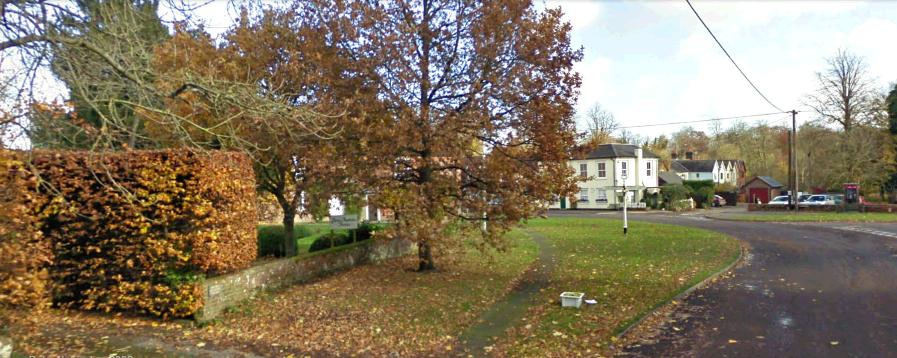
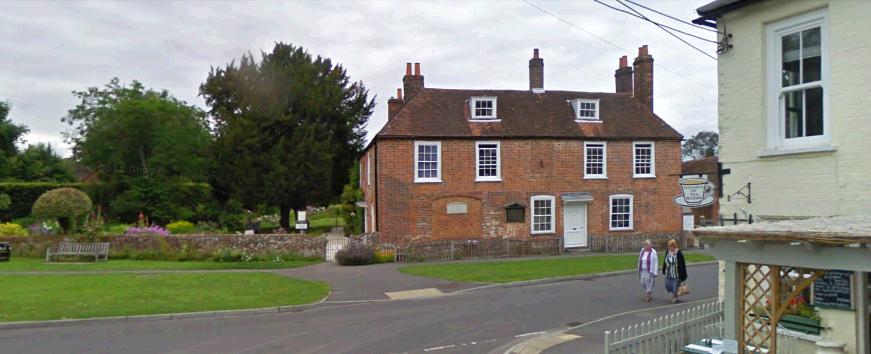
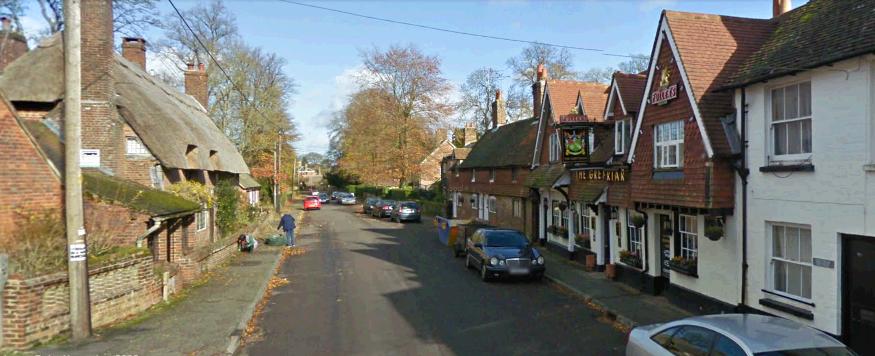
Approaching Chawton Cottage on the left and Cassandra's Cup Tea Room, the white building in the distance

Approaching Chawton Cottage behind the tree on the left and Cassandra’s Cup Tea Room, the cream colored building in the middle distance. If you turned right, you would be going to Chawton House, Edward Austen Knight’s residence. But we will be turning left.

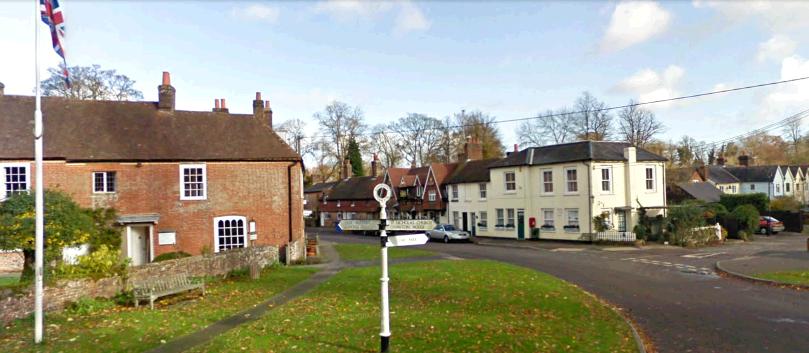
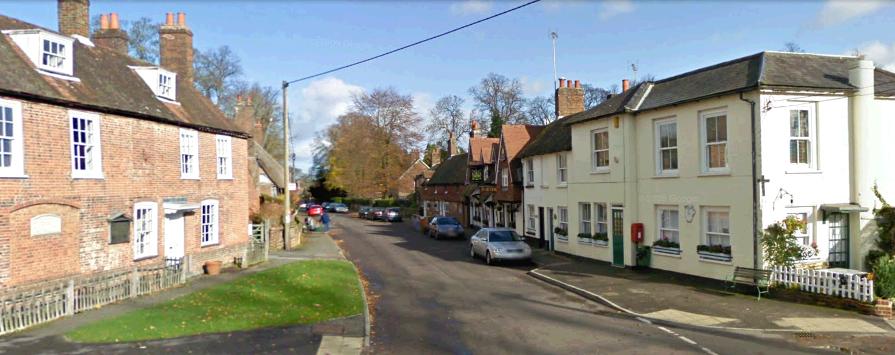
Chawton Cottage coming into full view, along with the cross roads sign

Chawton Cottage coming into full view on the left, along with the cross roads sign. Check Tony Grant’s images in the previous post for more details.

This is a slightly different angle of the scene, as if we were arriving from Chawton House.

This is a slightly different angle of the scene, as if we were arriving from Chawton House.

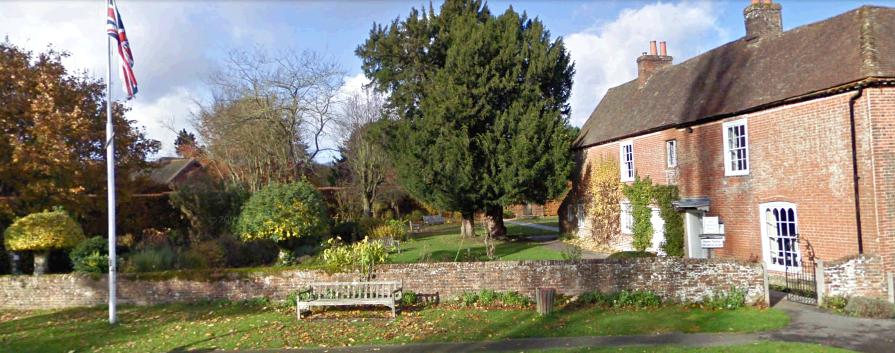
A view of the cottage and garden from Cassandra's Cup tea house.

A view of the cottage and garden from Cassandra’s Cup tea house.

The next few scenes show Chawton Cottage from many angles.

The next few scenes show Chawton Cottage from many angles. This one gives a view into the street and down the village. You can see how close the dining parlor window is to the street and sidewalk (to the right of the door.) This is where Jane Austen wrote and revised her novels.

The following text comes from the 1901 travel book, Hampshire, With the Isle of Wight by George Albemarle Bertie Dewar, John Vaughan. Their description of Jane Austen shows how successfully her family had whitewashed her image as a sweet spinster in whose life not much had happened. I thought you might enjoy reading it as you viewed the rest of my virtual trip through Chawton.

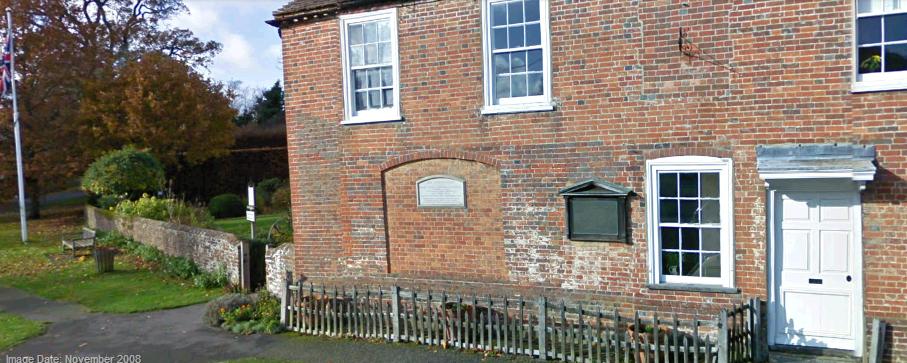
The cottage up close

The cottage up close, with bricked up window on the east side of the drawing room and plaques in honor of Jane Austen. Tourists exit from the garden to the left of the house.

A mile south of Alton is Chawton village. Jane Austen, the writer of the pure sweet stories which at the present time are loved better even than they were when Scott and Macaulay and Lewis sounded their praises, lived with her family at Chawton from 1809 to 1817.”

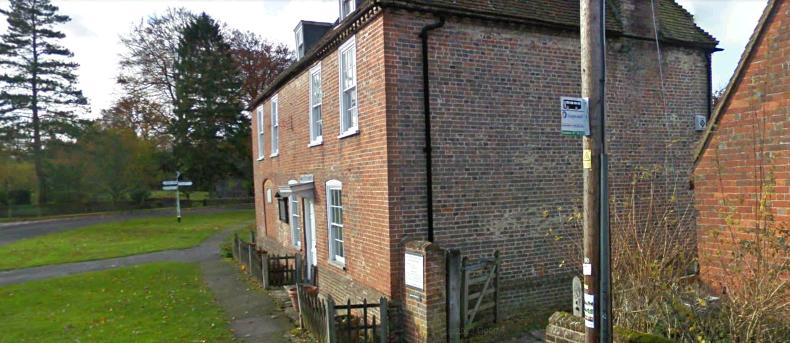
Few photos capture this angle of the cottage, which has always made me curious.

Few photos capture this angle of the cottage, which has always made me curious. The visitor’s entrance is to the right, through the gate, towards the outbuildings. The gift shop is housed in the brick building to your immediate right.

The house is still standing. Part of it has been made into a workman’s club, whilst the remainder is occupied by three families of working people, but it has been altered a good deal since her time. In the church there is a tablet to the memory of some members of the Austen family, Cassandra Elizabeth and her brothers. Jane Austen was quite a Hampshire woman.”

A view of the gardens.

A view of the gardens and a clear view of the yew trees.

She was born at Steventon near Oakley in December 1775, and lived there till twenty-five years old. I went to see Steventon one day in the summer of 1899, and found it the sleepiest little spot one could imagine. The country is green and leafy, but the scenery is without distinction: there are no hills to speak of, no beautiful troutstreams, no fine old houses, no stately parks. The old parsonage where Jane Austen was born has gone, and there are no remains whatever of her or her family at Steventon.”

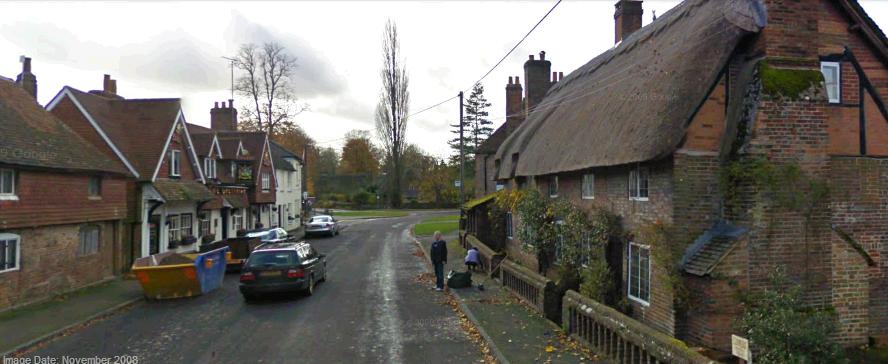
Continuing through the village and away from the cottage.

Continuing through the village and away from the cottage, still on Winchester Road. One can imagine the coaches and wagons rattling by the window near Jane’s writing desk.

The spired church in which her father held service stands a little distance from the village at the edge of a hazel and oak coppice. It was in this quiet nook, seven or eight miles from the nearest town, that Jane Austen at twentyone years of age began to write that perfect story “Pride and Prejudice.” In 1797 she was at work on “Sense and Sensibility,” and in 1798 completed “Northanger Abbey.”

You can imagine Jane and Cassandra walking a mile through the village to get to Alton, where they could shop.

Jane and Cassandra walked a mile north through the village to get to Alton, where they could shop.

Where in the world did she get her knowledge of human nature—a knowledge so great that Macaulay was almost ready to extol her as the Shakespeare of her sex? What life could she have seen about Steventon a hundred years ago? In 1801 Jane went to Bath, and in 1805 to Southampton, where the family had rooms in Castle Street: in 1807, as we have seen, the Austens settled at Chawton, and four years after the story “Sense and Sensibility” was published, being followed by “Pride and Prejudice” and “Mansfield Park.”

Looking back, you can see a different approach to Chawton Cottage. In this scene, it would be towards your right.

Looking back, you can see a different approach to Chawton Cottage. In this scene, it would be towards your right around the bend.

In 1817 her health broke down and she removed to rooms in College Street, Winchester, and died there the same year. The memorials of Jane Austen are but few, and it is clear that her life was uneventful. It has been said that the woman without a history is the happier. The life of Jane Austen, like her death, was placid; there is here no record of harrowing anguish, or anxiety, such as we find in the story of that strong sufferer Mrs. Oliphant. Nor in the scant materials which have been left for a “life,” could the biographer find anything in the nature of a sad love-affair.”

No wonder Jane Austen was inspired to write in this pretty and quaint setting, so quintessentially British. Hope you enjoyed your short trip.

No wonder Jane Austen was inspired to write in this pretty and quaint setting, so quintessentially British. Up ahead and to the right is Wolff’s Lane. This concludes my short trip through Chawton.

Serenity is the word that best describes her career: and in this Jane Austen may remind one of Gilbert White, who was spending his happy days at Selborne when at Steventon, only about fifteen miles off as the crow flies, she was doing her French exercises and getting her first insight into the little world around her. She has given us a small but very choice portrait gallery of masterpieces. The irresistible Elizabeth, as easy to fall in love with as Scott’s Di Vernon, the alluring if sometimes rather irritating Emma, the worldly but very human Constance—they live and move to-day. You should read Jane Austen after one of the unwholesome, much-boomed, ephemeral novels of to-day, as Dean Stanley read his “Guy Mannering” to take the nasty taste out of his mouth. Jane Austen was buried in Winchester Cathedral, where she is to have at length a worthy memorial.”

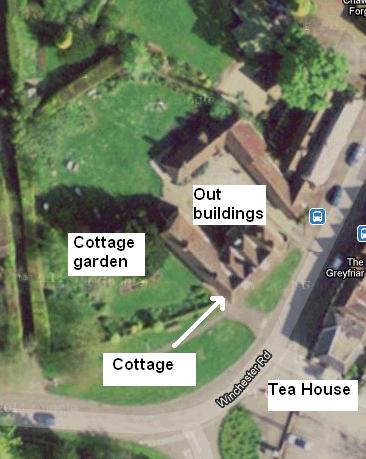
Sattelite view of Chawton Cottage with its walled in garden and outbuildings. Click here to see the image of the village from satellite.

Sattelite view of Chawton Cottage with its walled in garden and outbuildings. Click here to see the image of the village from satellite. On the left you can see a narrow footpath between the hedges.

Oh, those Victorians and their simplistic view of Jane Austen. Hope you enjoyed the 112 year old description of Jane’s life as well. In the image below you can see the short trip, which started on the Winchester Road (which started on the left, below A31), then turned left at Jane Austen’s house, and ended at Wolff’s Lane, which turns right and parallels with A31 at the top of the image. Alton would have been a mile up the street and NW of the cottage. Chawton House would have been too much of a walk for Mrs. Austen. I imagine that Edward must have sent his carriage to his mother and sisters when they came to visit.

A Walk Map

View a contemporary watercolor of the village in this article by Joan Austen-Leigh, Chawton Cottage Transfigured

Read Full Post »
« Newer Posts - Older Posts »