Feeds:
Posts
Comments

Archive for the ‘18th Century England’ Category

The riding habit, was first introduced in the 17th century. They were tailored by men in the manner of men’s dress: a fitted jacket worn over a long skirt, often worn with a masculine hat. Samuel Pepys, ever helpful with observations of his time, wrote in 1666 of seeing the Queen’s ladies of honor “dressed in their riding garbs, with coats and doublets and deep skirts, just for all the world like men, and buttoned their doublets up to the breast, with periwigs and with hats; so that, only for a long petticoat dragging under the men’s coats, nobody could take them for women in any point whatever — which was an odd sight, and a sight which did not please me.” – Candice Hern

In the 18th and through most of the 19th centuries, women’s riding habits were generally made by tailors and constructed like men’s wear. They were usually buttoned left over right, like a man’s coat. Other women’s fashions were made by dress makers and mantua makers. Masculine touches onwomen’s riding habits included mariner’s cuffs and fabrics and trims as seen on naval uniforms.  These riding habits were functional, but in the late 1700s they became fashionable dress as well, and were worn for informal day wear for traveling, visiting, or walking.
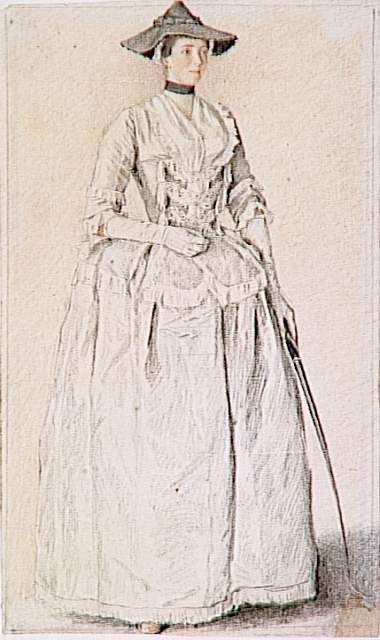
Madame Gaspard de Péleran by Jean-Etienne Liotard, 1738

The materials worn for riding from the mid-seventeenth to the early twentieth centuries were easily distinguished from the silks, muslins, and velvets of fashionable evening dress. Equestrian activities required sturdy and often weatherproof fabrics such as woolen broadcloth, camlet (a silk and wool or hair mixture), melton wool, and gabardine for colder weather and linen or cotton twill for summer or the tropics. In the eighteenth and early nineteenth centuries, habits were frequently adorned with gold, silver, or later woolen braiding, often imitating the frog-ging on Hussar or other military uniforms. – Equestrian costume

Equestrian portrait of Marie-Louise-Elisabeth d'Orléans (The Duchess of Berry in hunting-costume in 1710)

The appearance of a lady on horseback in a fashionable London riding-habit, and tricked out in the newest guise with patches, is amusingly described by Steele. The lady is supposed to be riding through the town of Kettering in Northamptonshire, in the month of July, 1724. ” Yesterday astrange and surprising creature was seen to pass through our town on horseback. It had the face of a young woman, stuck full of patches ; a perriwig which hung down to its waist; a hat cock’d with the smartness of a young officer; a huge bunch of ribbons fastened behind its left shoulder; a shirt laid in large pleights on the breasts and tied close at the neck and wrists, which, with a vest of white satteen, trimmed with black, had much the resemblance of a shroud.

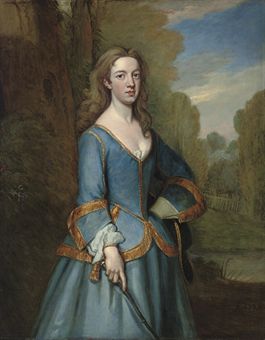
Portrait of Lucy Pelham-Holles, Countess of Lincoln (d. 1736), three-quarter-length, in riding habit, in a landscape

Our whole town was soon alarmed with this strange appearance, and various are still the opinions what it really was. The old people, who were the most couragious generally, went pretty near to it with their spectacles on to view it more distinctly; the younger sort kept it at an awful distance. Some were of opinion that it was a highwayman in disguise, and accordingly were for seizing it; others took it for a nun; but by a certain arch leer it had with its eyes I dare engage it had not a bit of nun’s flesh about it. However, by its pale complexion and shroud-like dress, most of my neighbours at last concluded it to be a ghost, and so took to their heels, and left me (who am no great believer in these things) almost alone with it in the road. I had now an opportunity, during the time it was drinking a glass of Rhenish wine and sugar at the Saracen’s Head Inn, to survey it well, and thereupon concluding it to be an Hermaphrodite, I enquired of the man who seemed to have the keeping of it, if he intended to show it in our town, and at what inn? For you must know, Sir, that I have a mighty curiosity to see one of those creatures all over. But the man with an angry countenance told me: That what I took for an Hermaphrodite was only a young lady, and that the sort of dress she was in was commonly worn for a riding-habit by the ladies of fashion at London. But as neither I nor my neighbours can believe it possible for folks upon no ill design to disguise themselves in such a manner… – A history of English dress from the Saxon period to the present day, Volume 2 (Google eBook)R. Bentley, 1893

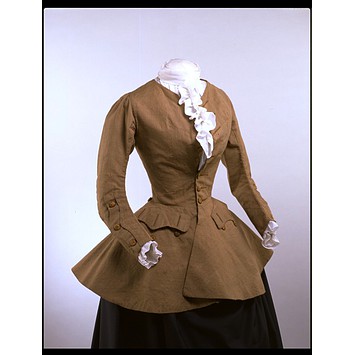
Women's riding Coat, 1750-59. Image V&A museum
Women’s riding outfits, known as ‘riding habits’, of the 18th century adapted elements of men’s dress. This jacket of the 1750s is styled after a man’s coat, although it has been modified with a waist seam to fit over stays and a wide petticoat. A narrow straight collar attached at the back neck and buttoning in front added protection on chilly rides. The fine tailoring and plain aspect of this jacket is typical of 18th century women’s riding habits. – Victoria & Albert Museum.

More Links
Read Full Post »

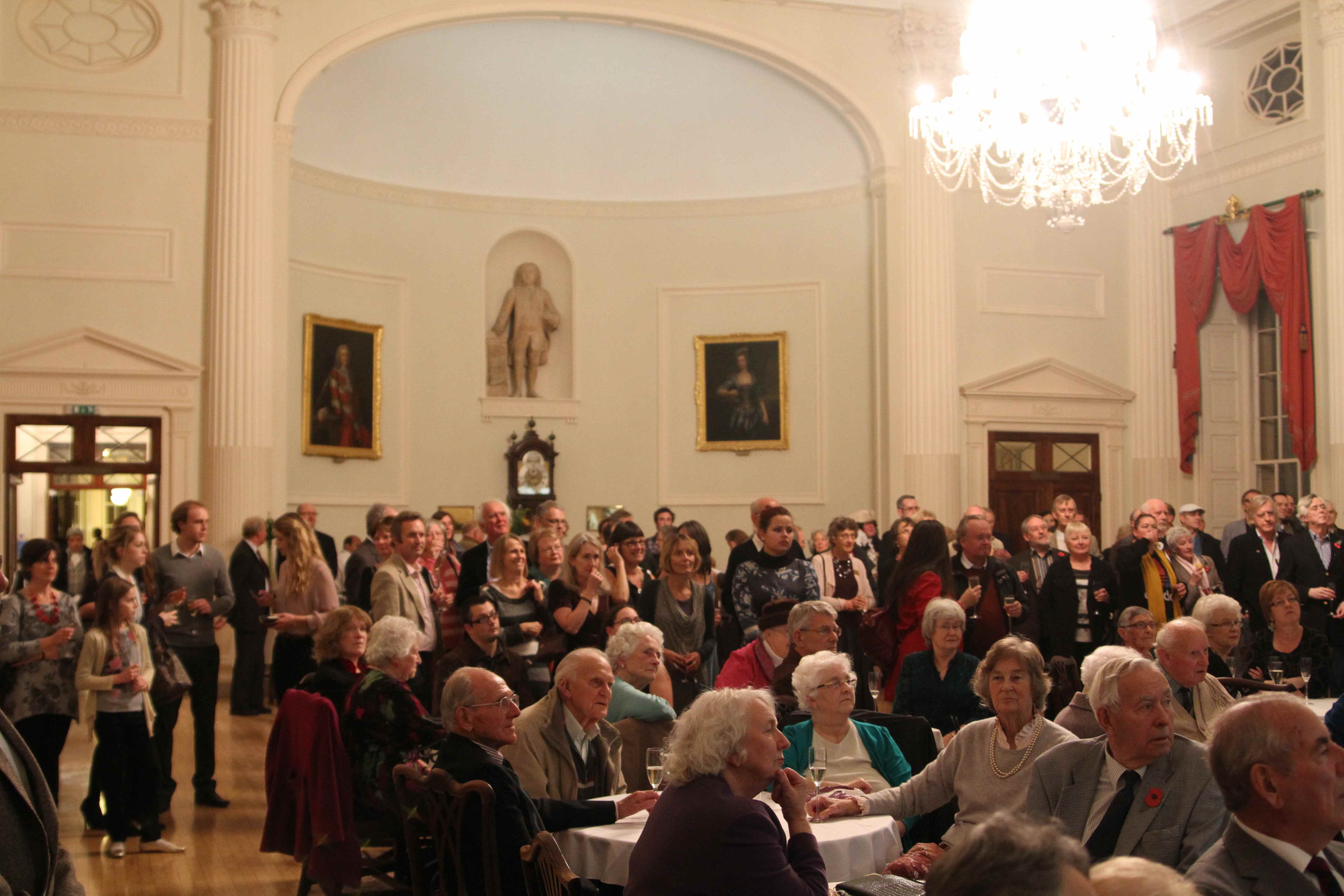
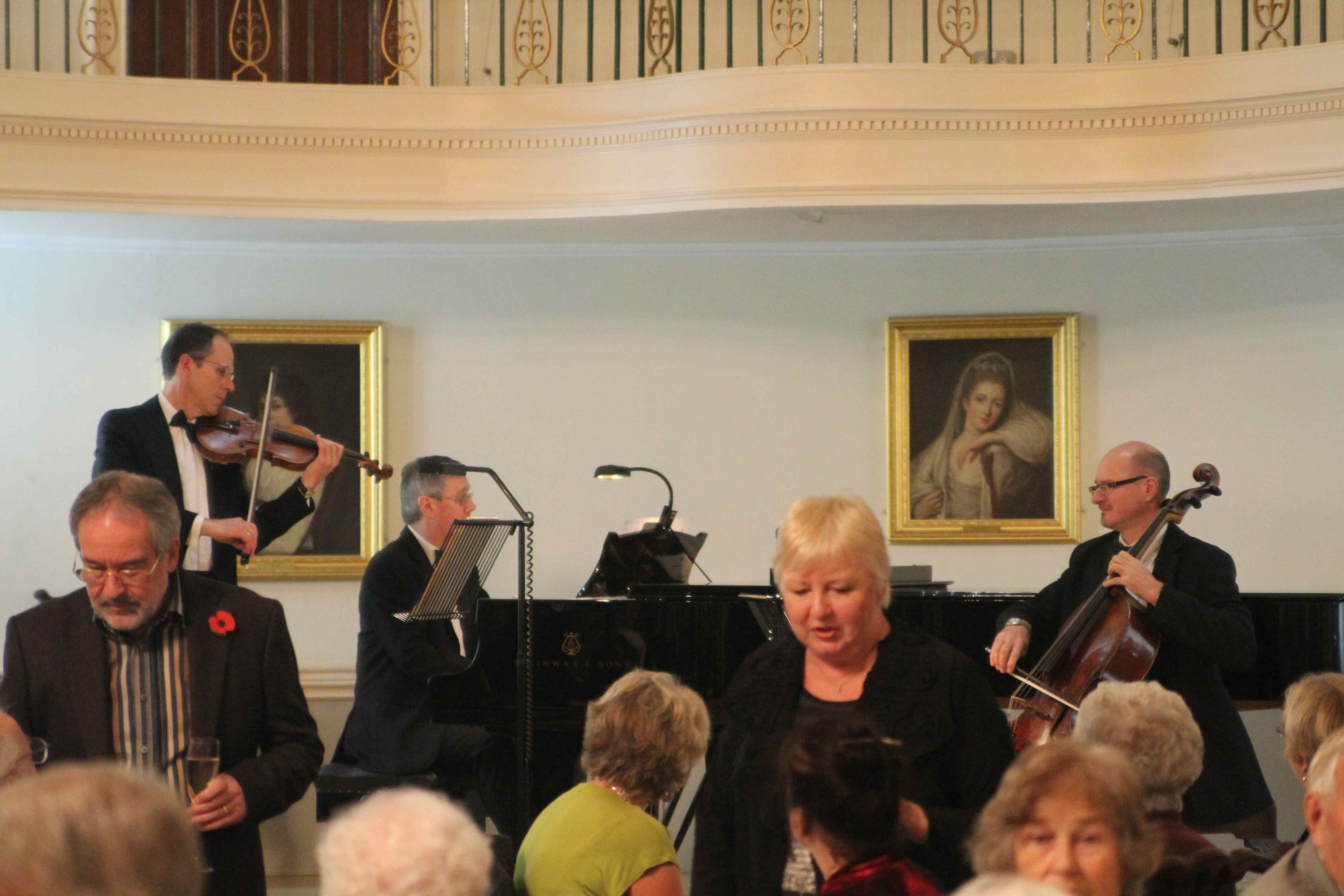
Gentle Readers, a few months I featured a new book, The Pump Room Orchestra: Three Centuries of Music and Social History, by Robert Hyman and Nicola Hyman, which you can order from Amazon.com. Recently BBC Radio 3 came to the Pump Room to do an interview with the Pump Room Trio. The review/feature will be on ‘Music Matters’ which starts at 12.15 pm on Saturday, December 10th. Nicola sent me a few images from the event. I do hope you will tune in on Saturday to listen to the interview! Meanwhile, enjoy these images.

The Pump Room Trio

Here’s the link to listen to the 12 minute program on Saturday! Fabulous.

Robert and Nicola Hyman

The gathering in the Pump Room. Note the breathtaking chandelier and the marble statue of Beau Nash carved by Joseph Plura that sits in an alcove above the clock.

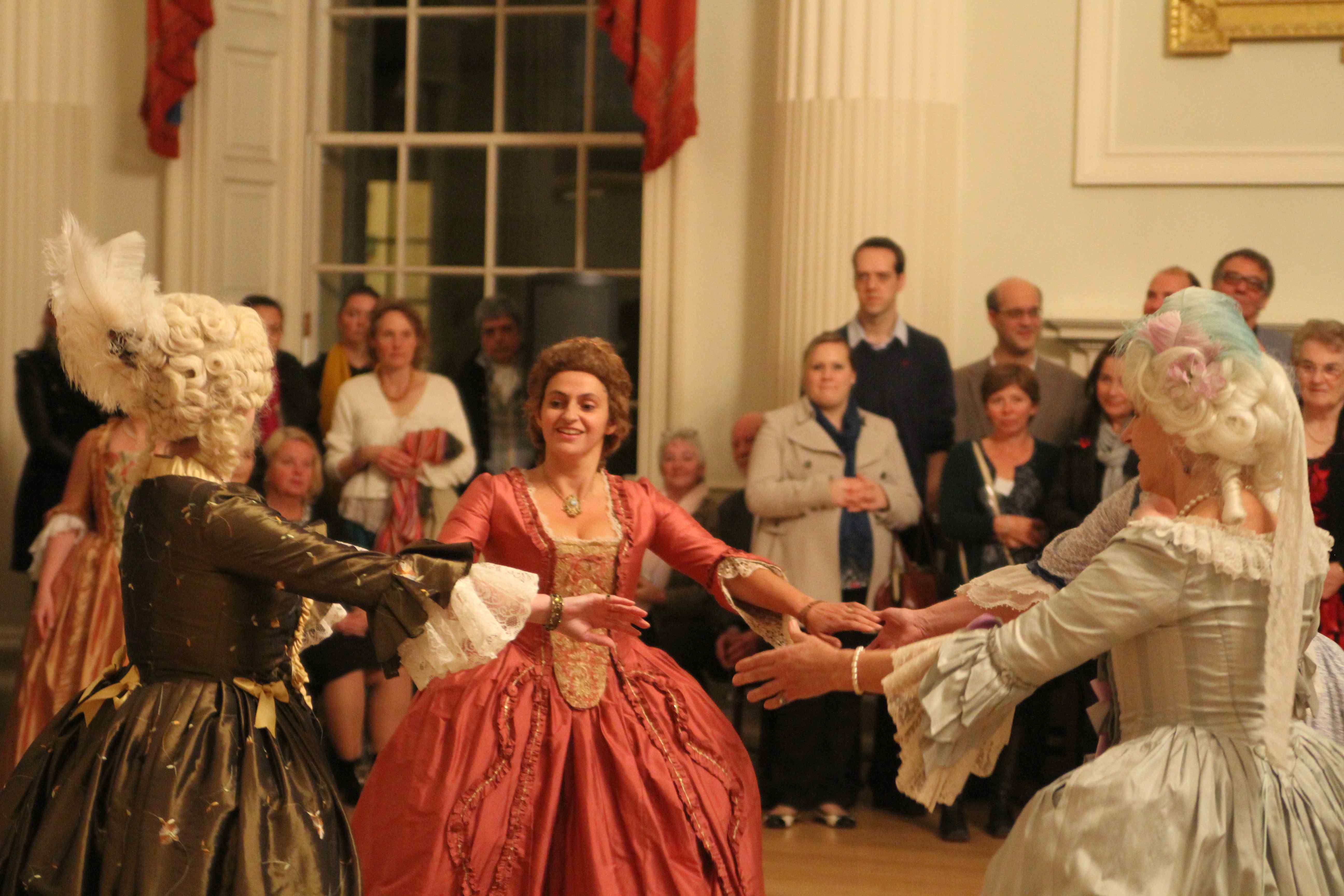
Bath Minuet Company

The Bath Minuet Company

Read Full Post »

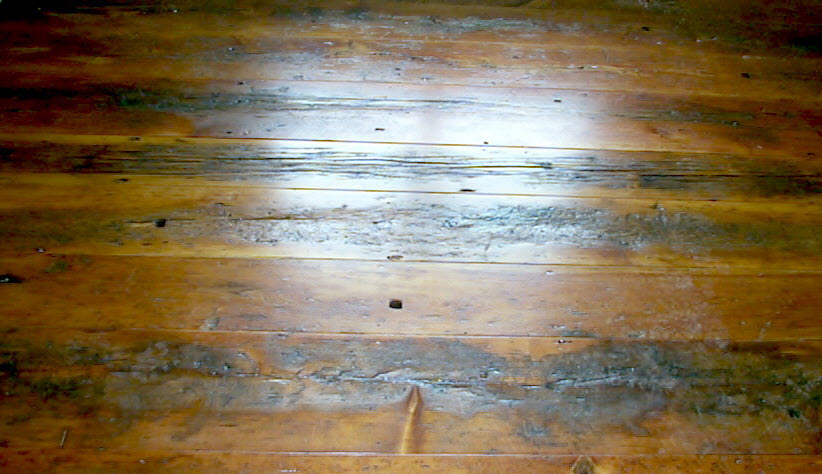
Wood floors of Brunswick House

In researching floors and floor coverings of Georgian houses, I came across these interesting tidbits of information.

During the middle ages, the floors of simple peasant households consisted of dirt. Hay and straw were strewn on top of the surface, and often cow dung and household wastes were tossed on top of the rushes. This mixture was trampled upon by the inhabitants. (During the middle ages, animals often shared the house with their human owners.) The result was a surface that became as hard as cement over time. Around the 1100s, saltpeter (potassium nitrate) was used for gunpowder, and the floors of former peasant homes provided a good source for this mineral. Mint was used as a deodorizer to cover the smell of the floors, for walking around the room and tramping onthe herb helped to spread its scent.  (A Not So Boring History of Flooring)

The interior of this Irish cottage shows the rough dirt floor. This image was taken in the late 19th century

Concrete floors were also widespread. They were made by plastering a concrete preparation over reeds that were fastened to joists. When this substance dried the concrete assumed the character of a slab of unbroken stone which was strong enough to bear a heavy load without the aid of supporting joists. This hardy substance was both fireproof and long lasting.

Pigs shown entering the Irish cottage. Late 19th century

Concrete floors eventually began to be replaced with wood floors during the Middle Ages.

We are not able to find any distinct records of wood having been employed for the boarding of the floors of dwelling-houses until towards the latter part of the middle ages, when an upper story began to be attached to middle-class houses in consequence of the increased value of land. The most abundant specimens of these early wooden floors are to be met with in London, probably for the reason that land being of higher values there than elsewhere, upperstoried houses wore more common. The name of 1′ lofts” was given to these upper storied rooms on their first introduction, from whence we have the compound word sentence of “up-a-loft,” and the word “cock-loft” has, probably, the same derivation, for wo find it now to be occasionally employed in some of the villages in the Midland counties to signify an up-stairs bedroom.- Building News and Engineering Journal, Vol 41, 1881

Wood floor planks were rough at first, and hand planed and hand finished with stone or metal. Old growth trees allowed for the maximum wood plank width (about 1-2 feet), which minimized the work required to cover a floor surface. In the 18th century, floorborads were irregular in shape and ranged in size and length. The goal was to use the smallest number of boards to cover a surface. More formal rooms used narower floorboards, indicating the wealth of the family who could afford to pay for the extra hours that craftsman took for the smaller sized boards.

Antique hemlock flooring with nail holes and saw marks.

Narrower floor boards general adoption gained rapid foothold during the Industrial Revolution after the repeal of duties place on foreign timber and the introductionof steam-powered planing machinery. In the early 1800s, production for such boards increased. The irony is that today wider floorboards have become a status symbol, for they have become more valuable as old growth trees have become scarce.

Wood floors had a variety of finishes. They were left unpainted and scrubbed with a mixture of sand and herbs. They were lymewashed, or oil painted in solid colors and stenciled. The floors were not sanded or washed or varnished during this early period. At a  later time varnishes and stains were applied to help make the wood last longer.

This charming watercolour by Diana Sperling shows the bare wood floor. It was the custom during this period to roll up the carpet and shove furniture aside for impromptu casual dancing.

In the mid 1800s decorated floor tile floors became popular in Europe. They had been used in Turkey, the Middle East, and in Dutch houses during the 1600s, and can be readily seen in Dutch interior paintings.

Floors were covered with a variety of rugs: rag rugs made of old bits of cloth; oil cloths; marble cloths; floor cloths, which were often painted to resemble carpets; and Persian rugs for the wealthy, which were prized for their color, design, and durability. Floor cloths were used in fine homes in France in the 14th century and made their appearance in England in the 17th century. Designs were often painted on them, as this U.S. example from Lakeport Plantation shows:

Floor cloth sample from Lakeport Plantation

One can see from this example how sturdy the cloth was after treatment.

Another fascinating fact is that rubber floors were used as far back as the 13th century and remained popular until the 1600s. In 1863, Frederick Walton, an English rubber manufacturer, patented linoleum, which is still made in the same way today.

Interesting fact: From ‘besom’ to broom

To sweep floors during the Middle Ages, the British used a ‘besom’ – a handful of twigs with the leaves attached. Besoms were often made of twigs from the ‘broom scrub,’ and so the sweeping implements came to be called ‘brooms’ around AD 1000.

More on the topic:

Read Full Post »

Amongst herbs to be eaten I find gourds, cucumbers, coleworts, melons disallowed, but especially cabbage. It causeth trouble-some dreams and sends up black vapours to the brain . . .” – Richard Burton, 16th century

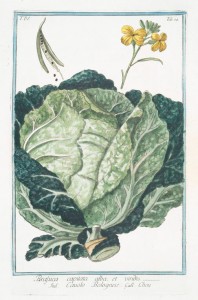
Cabbage was first introduced in Great Britain by the Romans. In ancient times the Greeks revered it for its medicinal qualities, and it was well known in the Mediterranean region, where it spread out to other parts of Europe. The vegetable was cultivated as food for man and cattle and consumed mainly by the poor,  for this hardy plant could be grown in the vegetable garden in temperate climates for long periods and harvested into early winter. White cabbage, used for boiling, braising, and stewing, was distinguished from the red cabbage, which was mostly used for pickling. From the 14th century and on, European peasants consumed cabbage in the form of soups and stews, which nourished them through the long winter months. It wasn’t until the 18th century that cabbages began to make their appearance on more aristocratic tables.

Cabbage’s long lasting quality made it a valuable and nutritious vegetable staple for long sea voyages. One imagines that Jane Austen’s sailor brothers ate a great deal of cabbage while sailing.

In his journal for July 1772, Cook gives the following account of the provisions placed aboard the Resolution and Adventure…Biscuit, flour, salt beef, salt pork, beer, wine, spirit [distilled alcohol], pease [dried peas], wheat, oatmeal, butter, cheese [hard], sugar, oyle olive [olive oil], vinegar, suet, raisins, salt, malt, sour krout [sauerkrout], salted cabbage, portable broth [dessicated soup], saloup, mustard, mermalade [marmelade] of carrots, water…” – Sailors & Sauerkraut: Excerpts from the Journals of Captain Cook’s Expeditions All Pertaining to Food With Recipes to Match, Barbara Burkhardt, Barrie Andugs McLean & Doris Kochanek [Grey’s Publishing:Sidney BC] 1978 (p. 23)- The Food Timeline

High in vitamin c and anti-inflammatory properties, this cruciferous vegetable was not only nutritious and helped to fight scurvy, but an apocryphal story states that during Captain Cook’s first voyage, members of his crew were saved from gangrene by doctors who applied poultices of cabbage to their patients’ wounds.

At the time, cabbage was called a ‘cabbage cole’ or ‘colewort. ‘By the mid eighteenth century, an array of different cabbages was grown, and as one anonymous writer put it:

‘There various Kinds of this Plant are endless to describe_’ The common White Cabbage, Sugarloaf, Pontefract, Battersea, Red Cabbage, and the green and White Savoy Cabbage’ [Anon (1744)].

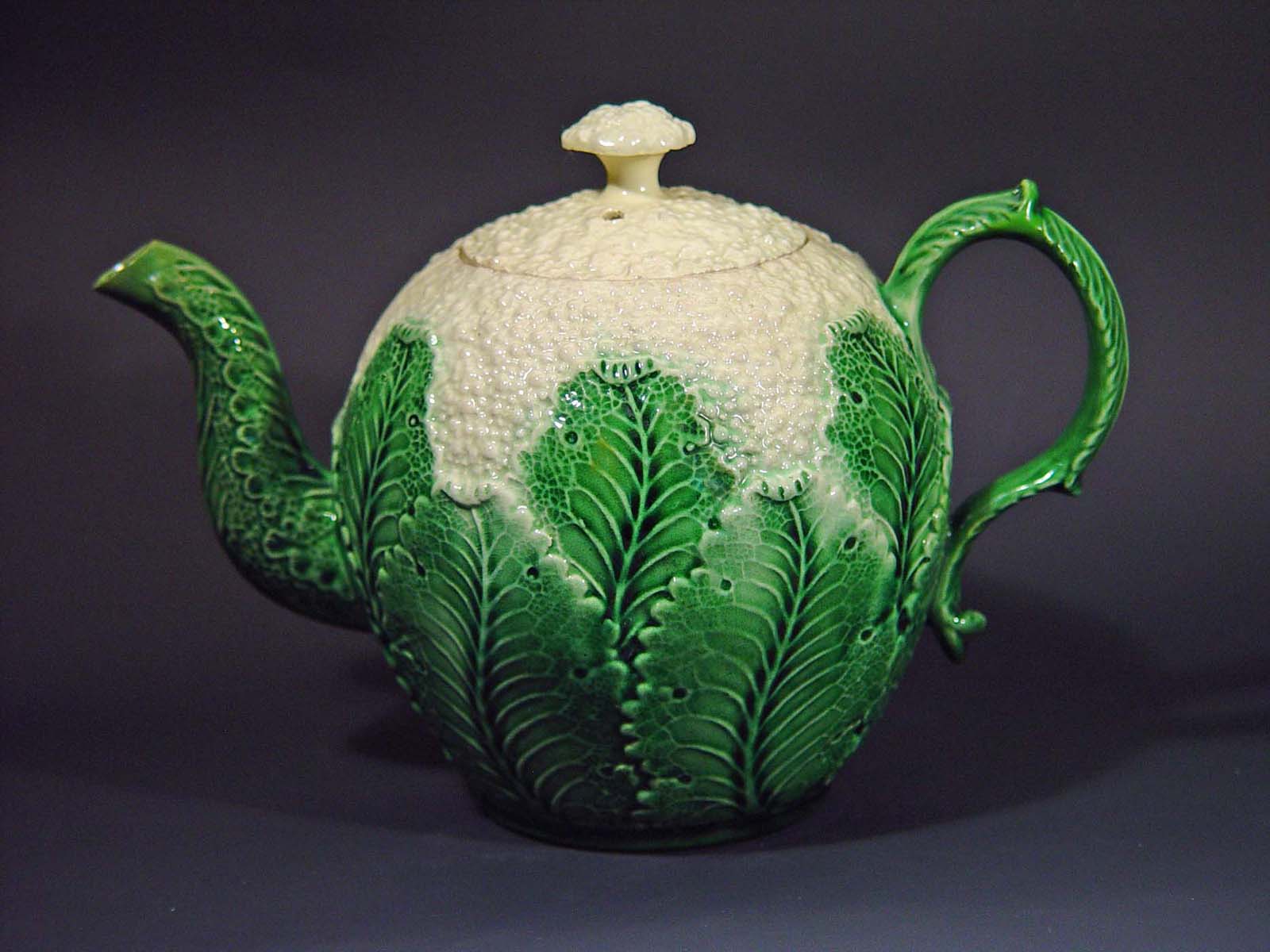
1770 creamware teapot. Image @Earle D. Vandekar of Knightsbridge

Cabbages were grown in family gardens in raised beds, near the door for easy picking, and protected from damaging winds by a fence or hedge and mulch. Recipes for cooking cabbage were included in early cookery books, however, one defies the modern cook to be able to follow Hannah Glasse’s charming recipe for beans ragoo’-d with a cabbage (at least I would have a difficult time.)

TAKE a nice little cabbage, about as big as a pint bacon ; when the outside leaves, top, and stalks are cut off, half boil it, out a hole in the middle pretty big, take what you cut out and chop it very fine, with a sew of the beans boiled, a carrot boiled and mashed, and a turnip boiled,  mash all together, put them, into’a sauce-pan, season them with, pepper, salt, and nutmeg, a good piece of butter, stew them a few minutes over the fire, stirring the pan often. In the mean time put the cabbage into a sauce-pan but take great care it does not fall to pieces; put to it four spoonsfuls of water, two of wine, and one of catchup ; have a spoonful of mushroom-pickle, a piece of butter rolled in a little flour, a very little pepper, cover it close, and let it stew softly till it is tender; then take it up carefully and lay it in the middle of the dish, pour your mashed roots in the middle to fill it up high, and your ragoo round it. You may add the liquor the cabbage was stewed in, and send it to table hot. This will do for a top, bottom, middle, or side-dish. When beans are not to be had, you may cut carrots and turnips into little slices, and fry them; the carrots in little round slices, the turnips in pieces about two inches long, and as thick as one’s finger, and toss them up in the ragoo.

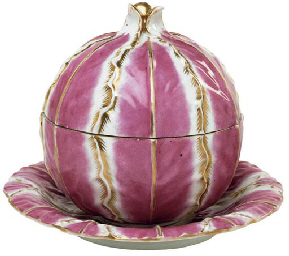
Cabbage tureen, mid-19th century Jacob Petit Porcelain. Image @Christie's

By 1773 the cultivation of cabbage in England was sufficiently commercialized to make it a criminal offence to steal or damage growing crops of cabbage, whose price had dropped by half since the 1730s. Chefs and cooks used cabbage to make ragout and pudding, or stuff it with meat. In the 16th and 17th centuries warm milk was added to make cabbage cream that was left to mature before being presented at dinner tables.

Red cabbage was prepared and sold as a pickle. Newspapers advertised the sale of cabbage seed, where it was defined as flat sided, green savoy, hellow (probably a misprint for yellow) red, Russia, sugar loaf, turnip, yellow savoy and Yorkshire. (Simone Clarke – British History Online.)

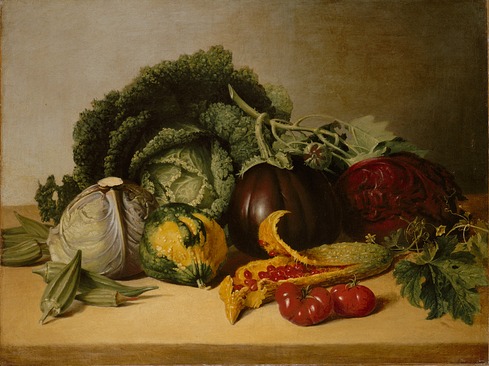
Still life with cabbage, James Peale

“The time has come…to talk of many things: Of shoes–and ships–and sealing wax–of cabbages–and kings–And why the sea is boiling hot–And whether pigs have wings.” – Lewis Carroll

Mrs. Beeton’s STEWED RED CABBAGE (19th century)

INGREDIENTS – 1 red cabbage, a small slice of ham, 1/2 oz. of fresh butter, 1 pint of weak stock or broth, 1 gill of vinegar, salt and pepper to taste, 1 tablespoonful of pounded sugar.

Mode.—Cut the cabbage into very thin slices, put it into a stewpan, with the ham cut in dice, the butter, 1/2 pint of stock, and the vinegar; cover the pan closely, and let it stew for 1 hour. When it is very tender, add the remainder of the stock, a seasoning of salt and pepper, and the pounded sugar; mix all well together, stir over the fire until nearly all the liquor is dried away, and serve. Fried sausages are usually sent to table with this dish: they should be laid round and on the cabbage, as a garnish.

Time.—Rather more than 1 hour. Average cost, 4d. each.

Sufficient for 4 persons.

Seasonable from September to January.

Hannah Glasse’s 18th century Recipe for Pickled Red Cabbage declares this dish to be useful only for garnish:

To pickle red-cabhage.

SLICE the cabbage thin, put to it vinegar and salt, and an ounce of all-spice cold cover it close, and keep it fer use. It is a pickle of little use but for garnishing of dishes, sallads, and pickles, though some people are fond of it.

Years ago, my then husband and I spent an outrageous sum of money eating Bubble and Squeak at a chichi Mayfair restaurant in London. Imagine my surprise when I discovered that this costly (to us) side dish consisted of the humble potato and cabbage, a dish invented by Maria Rundell in 1806.

Maria Rundell’s recipe for Bubble and Squeak.

Boil, chop, and fry, with a little butter, pepper, and salt, some cabbage, and lay on it slices of rare done beef, lightly fried.

In both the following receipts, the roots must be taken off the tongue before salted. – A new system of domestic cookery: formed upon principles of economy, and adapted to the use of private families, Maria Eliza Ketelby Rundell, 1808

Read Full Post »

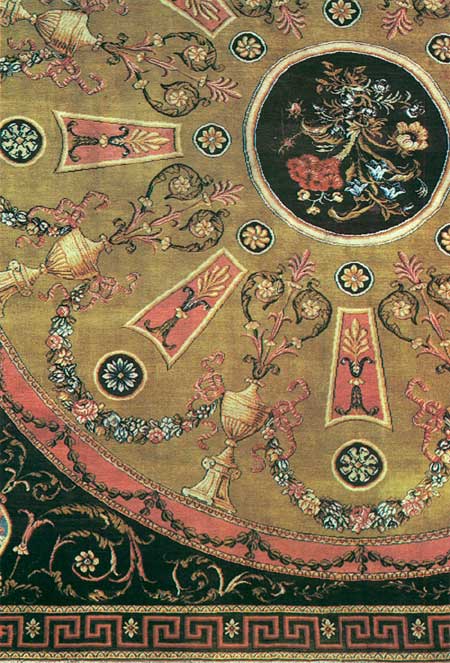
During the second half of the 18th century and early 19th century Axminster carpets were the favorite carpets of the rich. They are frequently mentioned in descriptions of interiors in Regency novels, especially Georgette Heyer’s. Famous architects/designers like Robert Adam would supply the patterns based on Roman floor mosaics or coffered ceilings. Both George III and George IV patronized the factory, commissioning carpets for various Royal residences.

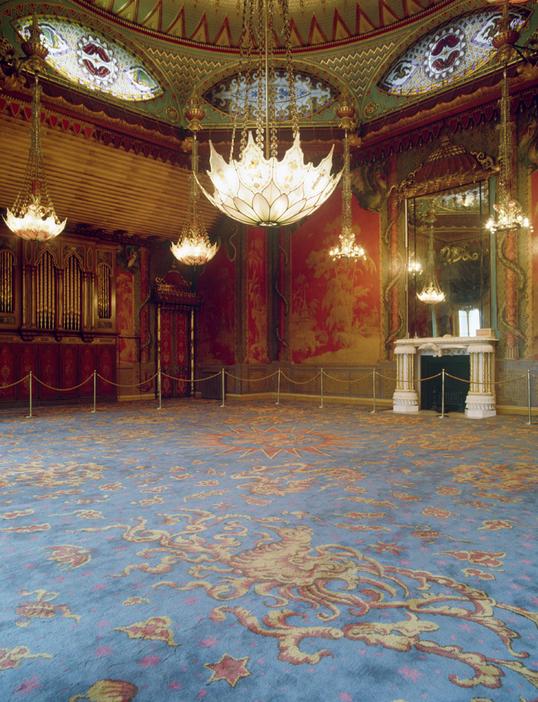
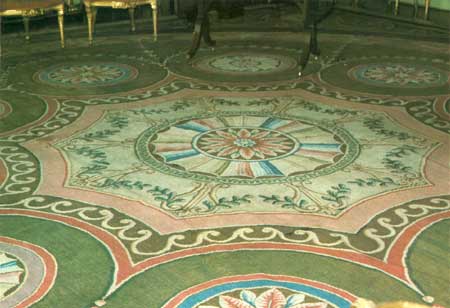
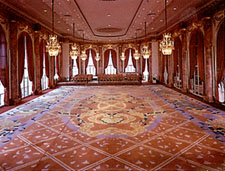
Reproduction of the Axminster carpet in the music room, Brighton Pavilion. Image @Craigie Stockwell

The history of the Axminster carpet started in 1755, when Thomas Whitty opened a carpet manufacturing company in the town of Axminster, in the county of Devon. The development of carpet manufacture in England during this period was enabled by laws which were designed to promote locally produced textiles, out of concern that foreign textiles were dominating the market, particularly by the French Savonnerie carpets. These early Axminster rugs were hand knotted, and they quickly became the undisputed choice for wealthy aristocracy. Antique Axminster carpets and rugs grace the floors of Chatsworth and Brighton Pavillion to name a few and were bought by George III and Queen Charlotte who visited the factory in the 18th Century. – Doris Lelsie Brau, English Axminster and Wilton

The Brighton Pavilion music room carpet (first image) has quite a remarkable story. The original carpet was made by Thomas Whitty and his daughters circa 1820 for the Prince Regent. Her Majesty, Queen Victoria, apparently disliked the brash blue color of this  ‘decadent’ carpet and had it removed, bleached into a light beige colour,  and cut up to be used in a guest bedroom at Buckingham Palace. The reproduction of this carpet is outlined in  Craigie Stockwell’s Historic Reproduction. (Scroll down the page to find the details of how a copy of the original carpet was made!)

The story of how Thomas Whitty (1713-1792), cloth manufacturer of Axminster in Devonshire, came to make his first carpet is well known. As an old man, he wrote an account for his son describing how, in 1755, in an attempt to provide a better income to support his growing family, he spied on the carpet factory of French émigrés in Fulham and returned to Axminster where “I immediately began to prepare a loom and materials for making a Carpet, and on MIDSUMMER’S DAY 1755, a memorable day for my family, I began the first carpet I ever made, taking my children and their Aunt Betty Harvey to overlook and assist them, for my first workers”. – Early Axminster Carpets

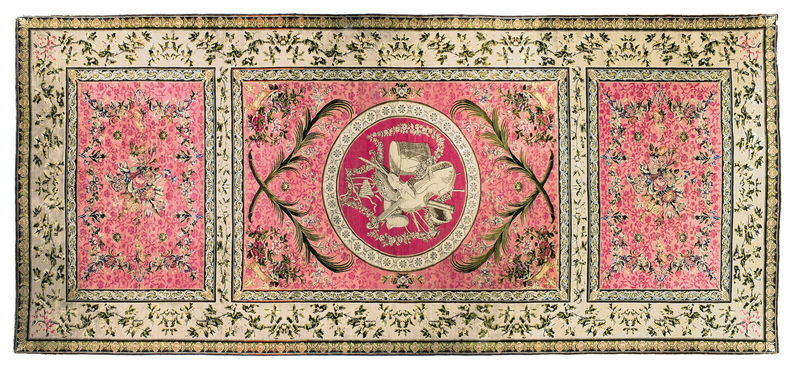
George III Axminster Carpet, England, by Thomas Whitty, late 18th century approximately 1323 by 572cm; 43ft. 5in. by 18ft. 9in. Photo: Sotheby's

This enormous late 18th century Axminster carpet was made by Whitty for the Music Room at Powderham Castle, 1798. Image @Eloge de l'Art par Alain Truong

Axminster carpets are distinctive because of their bright colors and intricate designs. They are traditionally made from wool.

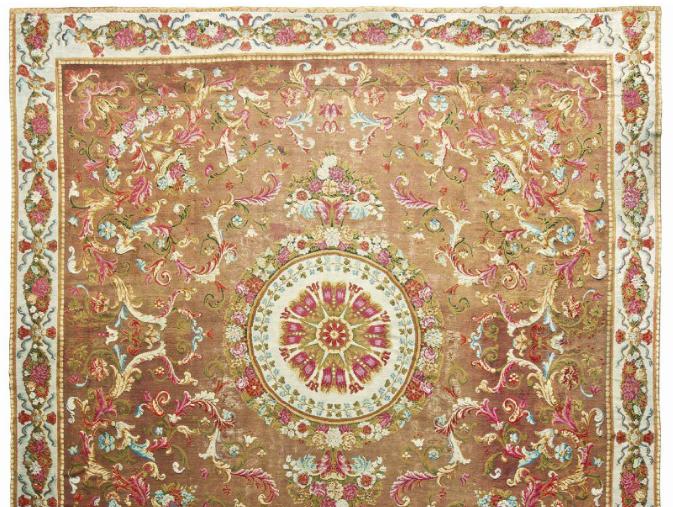
Large Axminster carpet, late 18th century. From Cowdray Park and Dunecht House, At Cowdray Park, West Sussex. Image @Christie's.

 Samuel Whitty, in an advertising broadsheet, described the advantages of Axminster carpets thus: “They are made in one piece, to any size or pattern and of any shape however irregular. They are capable of the most beautiful designs in Flowers, Fruit, Armorial Bearings, Grotesques or any other….and their texture is extremely durable”. – – Early Axminster Carpets

Detail of the Axminster carpet in the music room of Harewood House, c. 1791.

At Harewood House, for example, where Thomas Whitty made carpets for rooms remodeled by Robert Adam in the 1790’s, the neoclassical ideal of the whole becomes magnificently apparent. In the Music Room a flat plaster ceiling decorated with low-relief arabesques and geometric motifs incorporates small round classical paintings by Angelica Kauffmann; these medallions are exactly reflected in the Axminster carpet below, and the lines of the carpet mirror the lines of the light, airy plasterwork. – The Most Splendid Carpet, Chapter 3

The early 19th century English Axminster carpet in the video above has a sand field with a golden leaf roundel containing four fish around a naturalistic lion head within a border of finely-drawn mythological animals, palmettes and vinery. It goes for $425,000

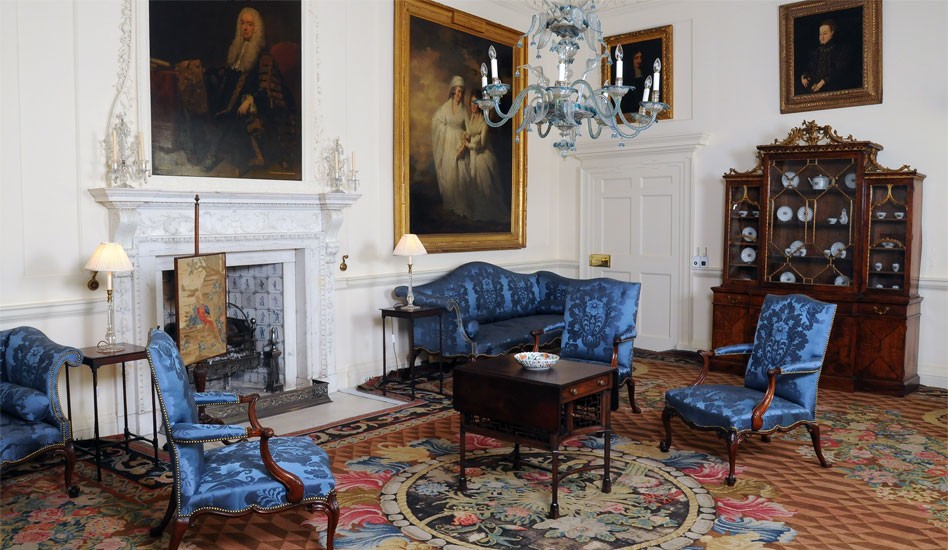
Axminster carpet in the Blue Drawing Room, Dumfries House

This carpet [above] is one of the earliest datable examples to have survived from the formative years at Axminster and was commissioned for the Drawing Room at Dumfries House. In a marvellously early example of thrift, it was shipped up separately from another, identical carpet, which the surviving invoice tells us was part of a Buy One – Get One Half Price deal! At £69 for the first one, this represents a saving of a large sum of money for the day. This is, of course, explained by the fact that they were both worked to the same design as a pair, so that the cartoon only need to be paid for once.

The carpet signifies the growing 18th century interest in exotic botany, as it includes a flowering cactus. The carpet dates from before Whitty’s collaboration with Robert Adam on the design of carpets. However, it is a wonderful example of a colourful, animated and sumptuous looking rococo piece of design. – The Story of the Blue Drawing Room: Dumfries House

The colors, designs,  and shapes of Axminster carpets were quite versatile.  Examples included floral carpets of the 1750s and 1760, and architect-designed carpets by Robert Adam for Harewood and Saltram, by Lewis Wyatt for the Library at Tatton Park, and by Robert Jones and Frederick Crace for the Brighton Pavilion. Axminster carpets were shaped and could be circular,  semi-circular, or woven with shaped ends to fit semi-circular and square alcoves and apses.  (Early Axminster carpets)

Detail of an Axminster carpet, c 1791. Image @Metropolitan Museum of Art

Axminster dominated the English carpet market until 1835, when Samuel Rampson Whitty, grandson of the founder, declared bankruptcy following a disastrous fire which destroyed the weaving looms. With competition from Europe and the rise of high-quality but cheaper, machine-made carpets, it was too expensive to try to revive the works.- Risky Regencies

The fire was disastrous on many levels, destroying records and carpet designs:

The fire destroyed not only buildings, looms and stock but also most of the written records, including the working drawings for carpets. Whereas the Woodward Grosvenor Company of Kidderminster still have an extensive archive of early cartoons, such cartoons are virtually non-existent for early Axminster carpets.  – Early Axminster Carpets

The Axminister carpet industry was revived in the 20th century. According to the Axminster website, “a carpet manufacturer called Harry Dutfield was on a train where he met a vicar from the West Country who told him that carpets had not been made in Axminster for a while due to a disastrous fire that had destroyed the factory. The germ of an idea was born and in 1937 the decision was taken to relaunch carpet manufacturing in the town of Axminster. This was the renaissance of ‘Axminsters from Axminster’.” Today the name serves as a generic term for all machine-made carpets with pile similar to velvet or chenille, with almost all pile yarn appearing on the surface of the carpet.

Modern Axminster carpet in the Casino de Deauville, France.

When one sees patterned carpet in a public place [today], such as a casino, hotel or restaurant, it is usually an Axminster.  Axminsters are more economical, for they use less yarn in their construction.  The pile is created by a V-shaped tuft of wool that is trapped in place between the warp and weft. This weaving method also allows for the use of many more colors, as it is not limited like the Wilton/Brussels construction.   For this reason, there were many carpets with huge sprays of flowers and Arabesques that could now be produced cheaply, and were available to the middle class, including outlets such as Sears and Roebuck. – Old House Web

More on the topic:

Read Full Post »

« Newer Posts - Older Posts »