Feeds:
Posts
Comments

Archive for the ‘Architecture’ Category

By Tony Grant. All rights reserved

Jane Austen knew Brighton. In Pride and Prejudice it is the place Lydia Bennett rushes off to, enamoured of the regimental officers who had inhabited Meryton for a while before being moved to Brighton, especially Wickham. It is the place she elopes with Wickham from.

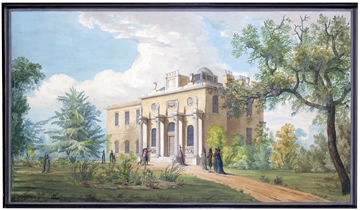
Brighton as it looked in Jane Austen's day. Charles Richards

It could be interpreted that Brighton is Jane’s symbol of profligacy and impulsive actions. It could be argued that this was so especially as the Prince Regent used Brighton in this way. The regiment Lydia has gone to be near is there to defend the coast against invasion. This is the time of the Napoleonic Wars when invasion is a threat and the total disruption of the world Lydia, the Bennet sisters and Jane herself knew.

Brighton Beach, John Constable, 1824

Brighton was also a new type of place. Jane begins to explore the development of seaside resorts in her unfinished novel Sanditon. It was the sort of place that people came from far afield and from various points of the compass, strangers, to be thrown together for short periods of time. It is interesting to see Jane begin to explore the loosening of moral codes and social rules within this sort of setting. Beau Nash invented his own code for these places at Bath and Tunbridge Wells. He had to invent a way for people to socialise.

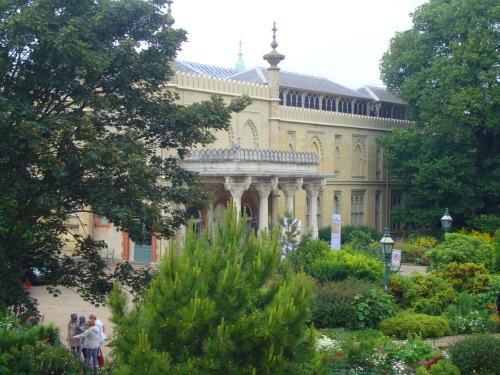
Brighton Museum, The Pavilion Stable Block. Image @Tony Grant

Lydia Bennet has been shopping in the scene where Brighton is introduced in Pride and Prejudice and has obviously come back from her expedition with something not at all suitable.

“ Besides, it will not much signify what one wears this summer, after the — shire have left Meryton, and they are going in a fortnight.”

“Are they indeed?” cried Elizabeth, with the greatest satisfaction.

“They are going to be encamped near Brighton: and I do so want papa too take us all three for the summer! It would be such a delicious scheme, and I dare say would hardly cost anything at all. Mamma would like to go too of all things! Only think what a miserable summer else we shall have!”

“Yes,” thought Ellizabeth,”that would be a delightful scheme, indeed, and completely do for us at once. Good Heaven! Brighton, and whole campful of soldiers, to us, who have been overset already by one regiment of militia, and the monthly balls of Meryton.”

Brighton Pavilion close up. Image @Tony Grant

So it appears that Lydia wants to go to Brighton and Elizabeth does not. In each case, to be fair to Brighton, their reasoning comes from a consideration of the military presence there. Lydia wants to go because of the regiment she has become acquainted with near Meryton and Elizabeth doesn’t want to, because of the same reason. Their views are not formed here by Brighton itself. At this time Brighton was becoming a very popular seaside resort frequented by no less a profligate person as the Prince Regent himself.

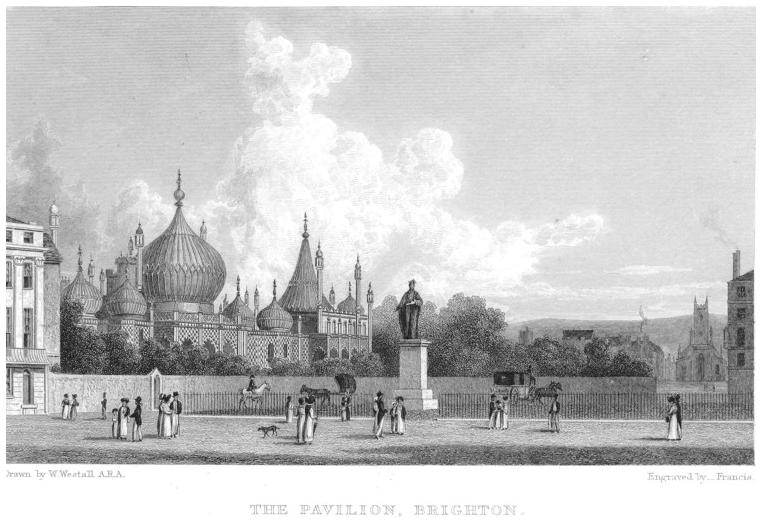
The Pavilion, Brighton by Westall

There he built a magnificent palace called The Brighton Pavilion. As for Jane Austen’s personal opinion we can only conjecture. She liked fun and dancing. Brighton had an abundance of these. She also enjoyed the seaside. The Austens visited Lyme and other seaside places in Devon and Cornwall and possibly South Wales.

The stable block from the Pavilion. Image @Tony Grant

Brighton Pavilion was begun in 1787. It was a farm house which the Prince Regent bought. There, he could have liaisons with Mrs Fitzherbert, his secret lover, away from the glare and attention of London. He got the architect Henry Holland, who had designed Carlton House , to develop it for him.

Brighton Beach today. Image @Tony Grant

Between 1815 and 1822, the designer John Nash redesigned and extended the Pavilion. It is the work of Nash which we see today.

On bank Holiday Monday, 30th May, Marilyn, myself, Emily and Abigail drove down to Brighton from Wimbledon. It was a lovely sunny day. Brighton sea front was a little breezy and the water was too cold to go in for a dip but it was one of those bright sparkling days fresh and invigorating
and to be in Brighton was glorious. We went into the Pavilion to explore the magnificent interiors.

Dining table at Royal Pavilion. Image @Stay in Sussex

Photography is not allowed inside the pavilion. They are very strict about this. We saw some professional photographers, who queued at the entrance in front of us, turned away amidst quite a hullaballoo. They said they had received permission to come and photograph the interior of the pavilion. The security people argued they had not been informed and had no paper work to confirm their assertions. When we got inside, I had put my DSLR safely away in its bag and zipped it up firmly.

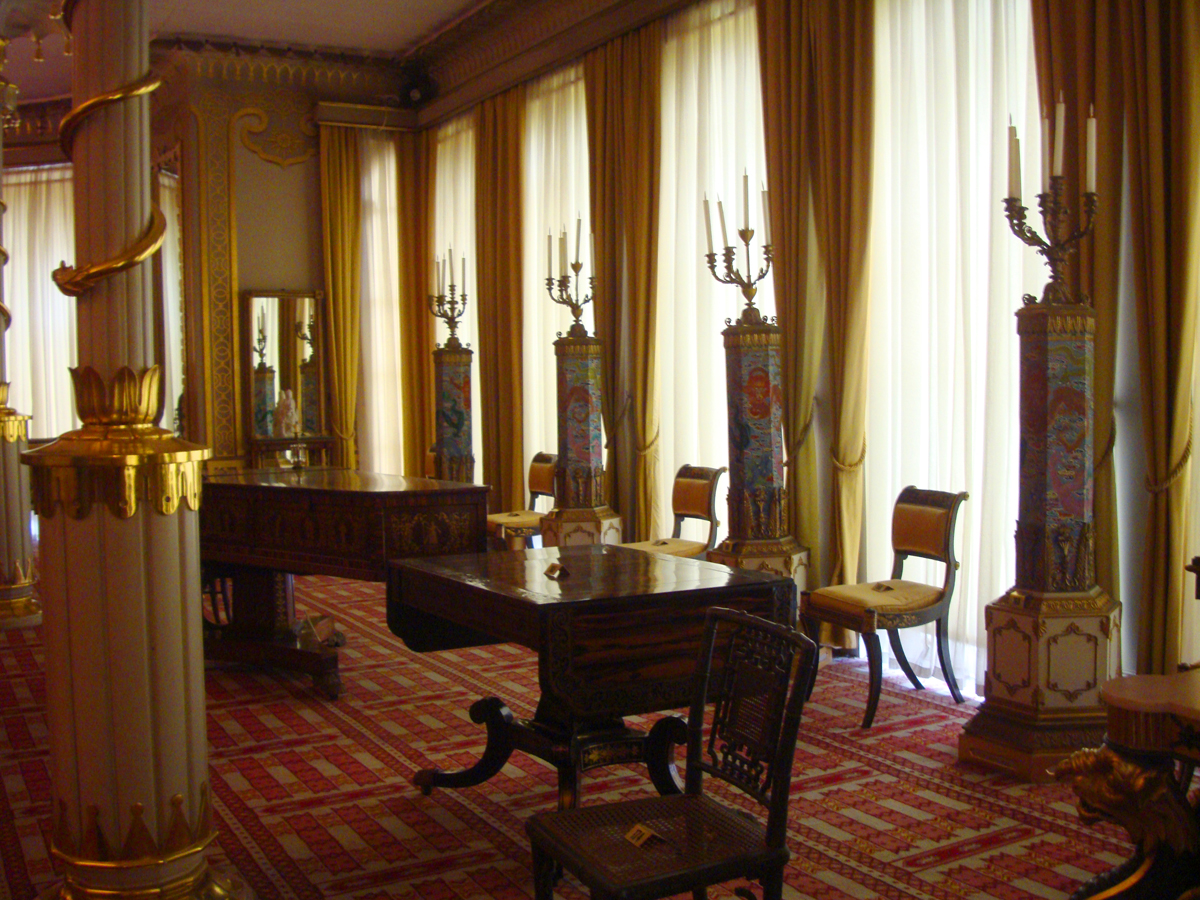
The retiring room after dinner. Image @Tony Grant

However, I slipped a small SONY digital camera inside my sleeve just in case an opportunity to snap a furtive, clandestine picture arose. There are a lot of security cameras around the pavilion so I had to position myself out of view of the cameras to take the pictures I did take. Some are blurred because of my hurried attempts. A person near me was asked to put their camera away but I escaped notice.

Upstairs inside the Pavilion. Image @Tony Grant

I think the city council of Brighton and Hove, who own the pavilion, don’t want some plastic copy of the pavilion ending up as a casino in Las Vegas. Ha! Ha!

Car parking. Image @Tony Grant

Brighton today is a glorious mixture of the brash, the tacky, and the brilliant. It has a very special feel to it like no other place. You can feel a very creative energy about the city.

Church Street. Image @Tony Grant

There is some magnificent graffiti , great restaurants and pubs and a whole community of new artistic entrepreneurs starting businesses connected with fashion, music, art and theatre.

Cafe society. Image @Tony Grant

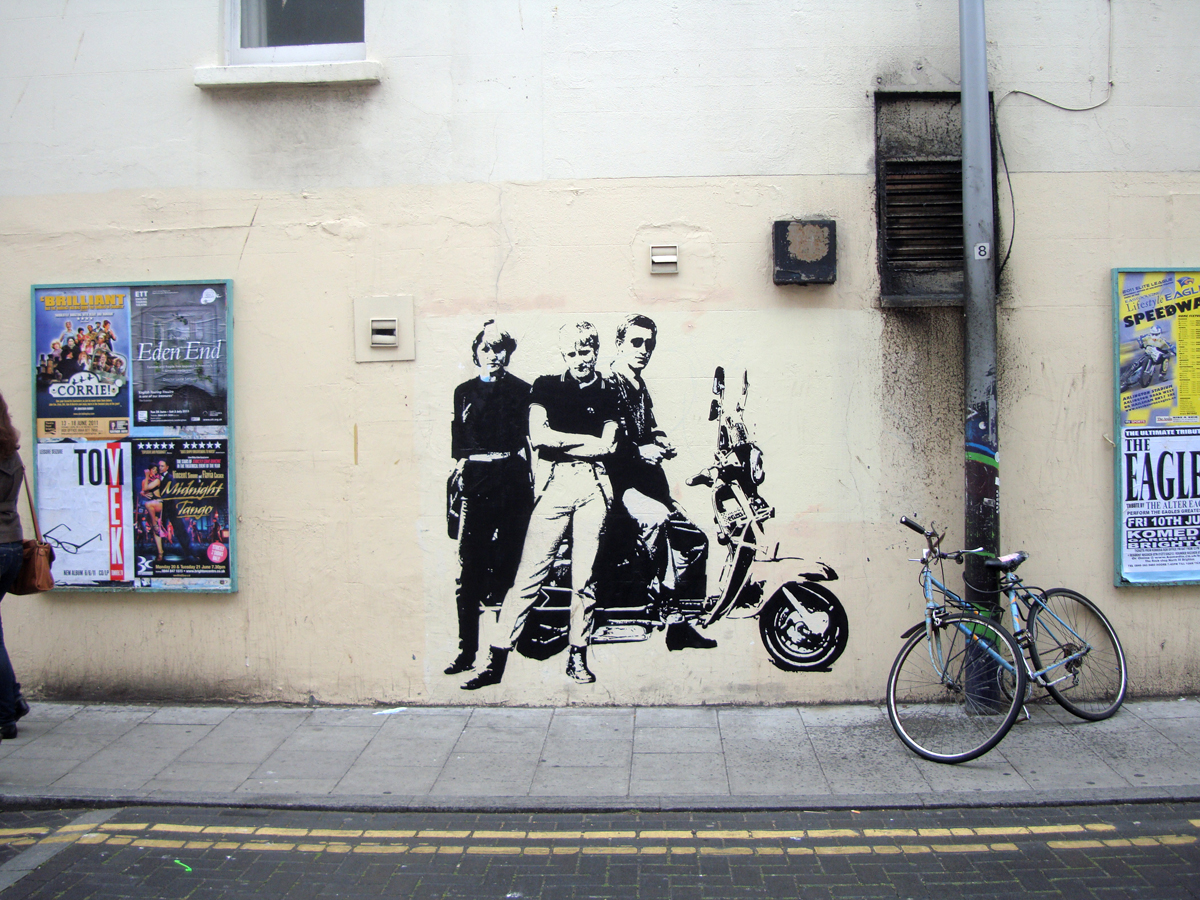
I found one piece of graffiti that made my heart beat that little bit faster. Compared to most graffiti in Brighton it looked understated but I think it must be an original Banksy. Nobody has ever interviewed Banksy and obviously that is not his real name. Nobody knows what he looks like. He is
a mystery to the public. Since the 1990’s, from his first wall cartoons in Bristol where he originates he has made social , religious and political comments through his art. His graffiti appears in the most unusual places. He has had books of his work published and art galleries show his work all over Europe.

Banksy's Mods Reduced. Image@Tony Grant

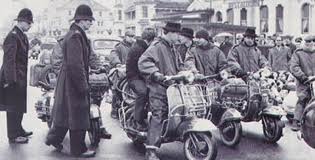
So I had found an iconic Banksy!!! Across the road and down an alleyway from a café we were having a cup of tea in. It shows some Mods. The Mods were a subculture of youth that originated in the early to mid sixties. They wore smart clothes with military style parkas and RAF, red, white
and blue roundels on their backs.

Mod on his bike

They rode motor scooters, Vespas and such like. They listened to Pete Townsend and the WHO. The Who were a MOD group and their lyrics reflect the MOD culture.

Smart MODS and their scooter

They were working class youth, factory workers, with their girlfriends, who challenged society in their own special way through clothes, music and lifestyle. Brighton and Margate were two coastal resorts they frequented, especially on Bank Holidays and weekends in the summer.

MODS and the police

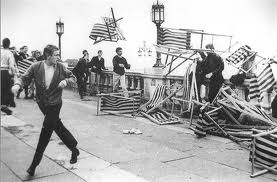
They would gather in their thousands. In opposition, the Rockers, leather clad and motorbike riders who rode BSA and Triumph 650’s, another sub culture of the time who listened to Elvis music, would come and challenge them on the beaches of Brighton and Margate. There would be pitched battles on the beach at Brighton using, stones, chains, knives and deck chairs.

MODS deck chairs

Deck chairs were always readily at hand on the beach. People would end up in hospital. The WHO film, Quadrophenia, is about one such MOD group coming to Brighton. A pitched battle on the beach is portrayed in the film and of course the music is The Who. So you can imagine my excitement seeing a real Banksy recalling those times and the meaning it has for Brighton.

Brighton has other memories too. Our political parties have a conference every year to discuss any progress made, to air views and opinions and to announce new policies. The conferences are held at the major seaside resorts around the country, Blackpool, Brighton and Bournemouth. Each political party takes it in turn to congregate in each resort.

The Grand Hotel. Image @Tony Grant

You might remember on the 12th October 1984 at The Grand Hotel in Brighton, The Provisional IRA blew up the Conservative Party. Margaret Thatcher was working late in the hotel when the bomb went off. They wanted to assassinate Thatcher. They failed to kill any government minister
but Norman Tebbits wife was crippled for life. Some other officials were killed and thirty four were badly injured and rushed to hospital. The Grand Hotel has been rebuilt and extended and presents a magnificent structure right on the seafront.

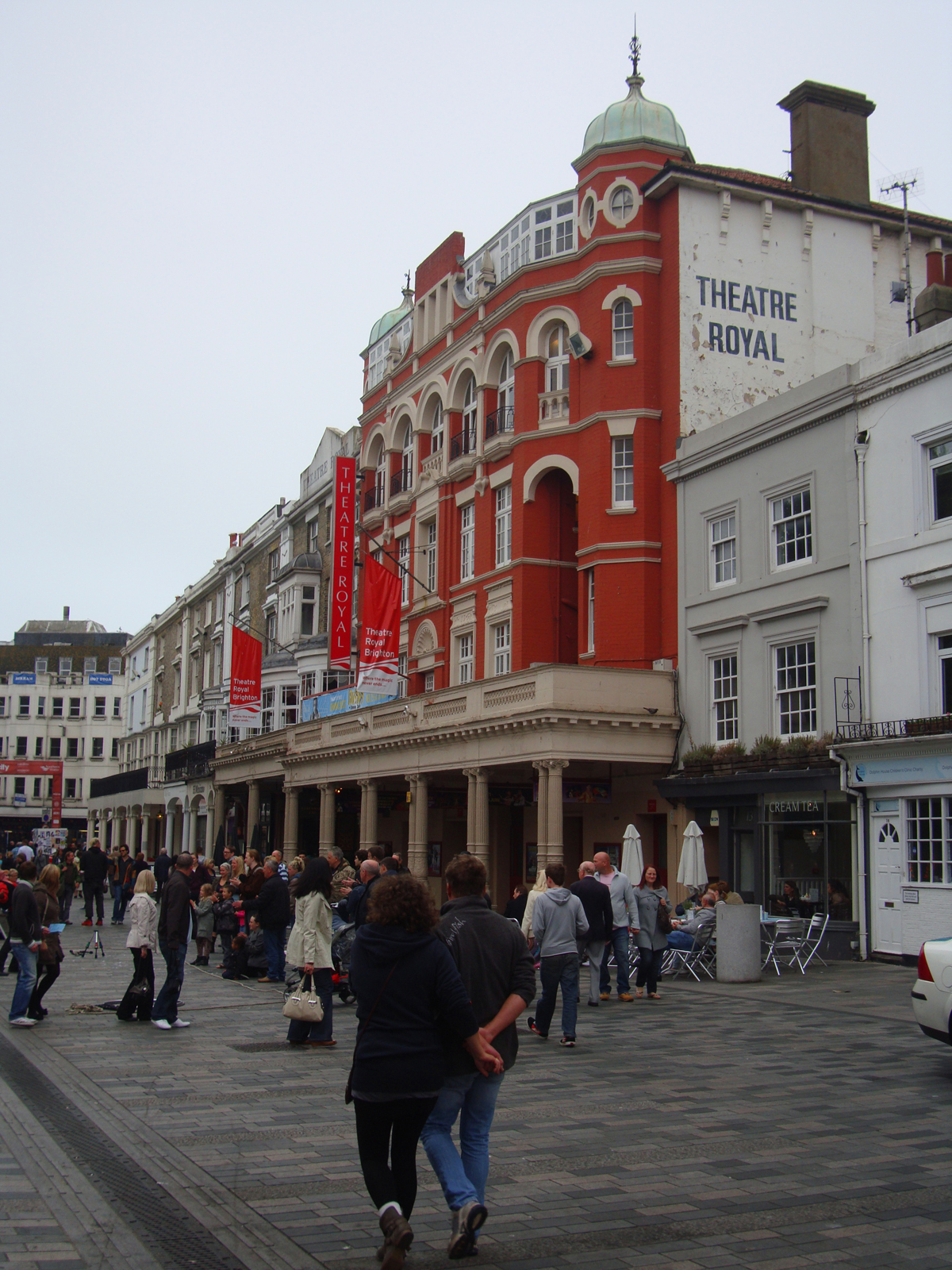
Theatre Royal. Image @Tony Grant

Brighton is famous as a film set. Apart from The Who’s Quadrophenia, some minor B comedy movies from the fifties were filmed there starring Norman Wisdom. Oh What A Lovely War, directed by Richard Attenborough used Brighton Pier extensively and just recently the dark and sinister,
Brighton Rock starring Helen Mirren, based on Graham Greens novel of the same name is set there.

Brighton. Image @Tony Grant

Some film clips:

Brighton shop, 1930z styles. Image @Tony Grant

Purple Heart. Image @Tony Grant

The Sussex. Image @Tony Grant

Read Full Post »

Inquiring Readers, Carolyn McDowall of The Culture Concept Circle has graciously allowed me to recreate Part One of her Two Part series. Find Part Two of Vanity Fair, but where is Mr Darcy? at this link.

Vanity and pride are different things, though the words are often used synonymously…pride relates more to our opinion of ourselves, vanity to what we would have others think of us” … Jane Austen, Pride and Prejudice, 1811
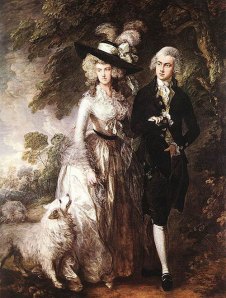
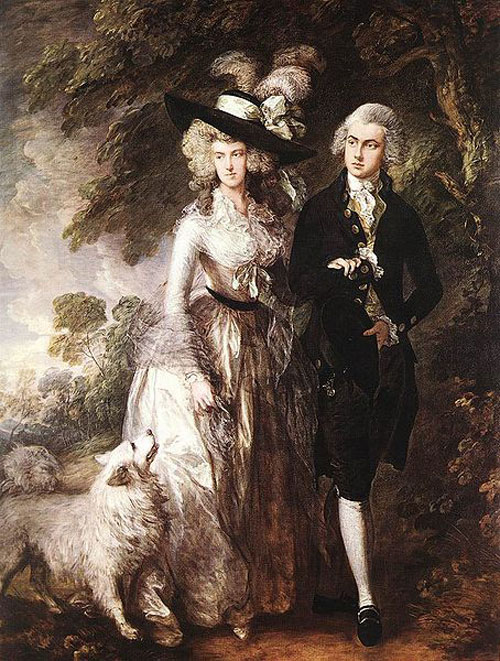
William Hallett and Elizabeth Stephen by Thomas Gainsborough, courtesy National Gallery at London

By the close of the eighteenth century archaeological investigations in Europe and Egypt were revealing more and more about the ‘antique’ past. The expansion of knowledge about antiquity revealed that ancient artists and writers had been accustomed to free expression in their work, with religion and honour paramount to any society’s daily existence. This revelation began changing the social and moral values and concerns of the many English, American and European societies who were all now ardently in search of truth.

Author Jane Austen lived in one of the most eventful, colourful and turbulent epochs in the history of England and Europe. The scenes of this extraordinary era were well recorded by many talented painters and sculptors of the day. In England this included the renowned painter Thomas Gainsborough.

In 1785, when Jane Austen was just 10 years old, he captured William Hallett and Elizabeth Stephen stepping out in style together for a morning walk. They were an elegant young couple, both 21 years of age and bound by their social status and the rules it imposed. They were due to be married in the summer of 1785.

They epitomize the stylish quality of the people who starred in Jane’s novels. He is discreetly dashing in a well fitting black velvet riding coat, an aspect of a gentleman’s costume that reflected his desire to be seen as ‘informal’, approachable, someone in touch with the political scene and social set of his day. He has the quiet confidence of a compleat gentleman.

She looks lovely in her softly floating silk dress, a smart black band accentuating her small waist and balancing perfectly with the simple black straw hat tied with a ribbon and feathers and placed at a jaunty modern angle on her very bouffant hair.

Strolling happily through a woodland landscape with an adoring dog at the lady’s heel they both appear full of hope in love and eagerly looking forward to a July wedding and a happy life together into the new millennium.

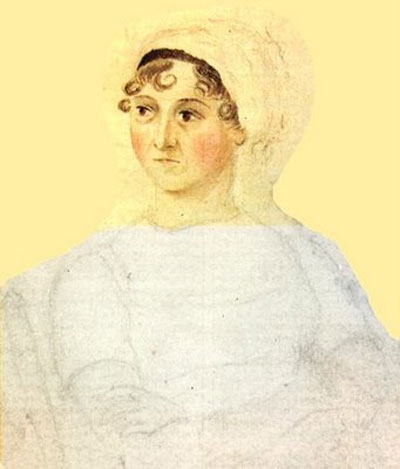
Cassandra's portrait of her sister, Jane Austen. National Portrait Gallery

One of Jane Austen’s peers, renowned Scottish author of romantic novels Sir Walter Scott (1771 – 1832) said of Jane (1775-1817) that he believed the secret of her success was that she had chosen to write about ‘ordinary people doing things that happen in every day life’.Born at Steventon, Hampshire on 16th December 1775. The seventh child and second daughter of a scholar-clergyman and rector of the small country parishes of Steventon and Deane, Jane Austen’s family were members of the wealthy merchant class on her father’s side and aristocrats on her mother’s side. She was brought up in a country rectory and was, from contemporary descriptions, without pretension, her demeanour more ‘in a homely rather than grand manner’. Another way of saying that she was plain.
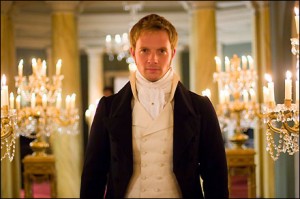
Captain Wentworth (Rupert Penry-Jones)

She and her family enjoyed amateur dramatics in the barn, playing charades, literary readings and musical evenings. While her older brothers hunted and shot game her mother industriously managed a small herd of cows, a dairy and, as a woman of sensibility and of some station in life, looked to the wellbeing of the local poor. Her father, as a rector, was regarded as a ‘gentleman’. He was an affable, courteous man welcomed by all the local landed gentry, and their well off tenants, as was her brother Edward, who just happened to be the heir to his cousin Mr. Thomas Knight’s estates. This meant Jane was able to move comfortably out and about in society and become a respectable observer in the luxurious world of the leisured classes.

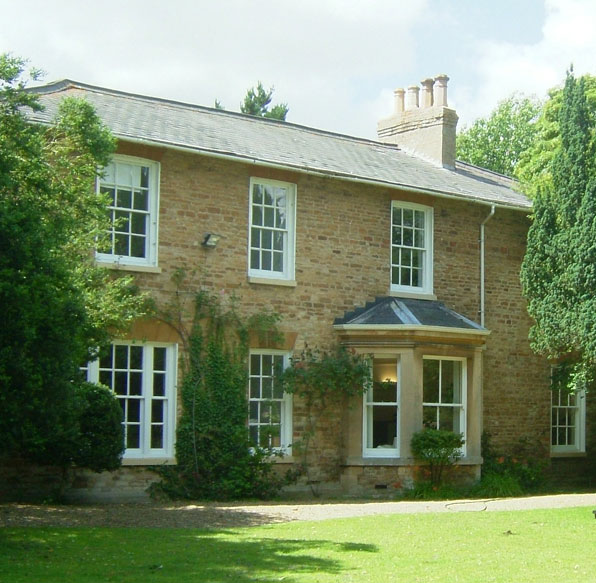
A Georgian Rectory

It seems that her family more than likely fell into a category of middling people, a term coined by literary wit and social commentator Horace Walpole on his return from the continent in 1741 “I have before discovered that there was nowhere but in England the distinction of being middling people. I perceive now that there is peculiar to us middling houses; how snug they are” The country gentry actively supported the ruling and upper classes by cultivating an ambience of politeness, a keen, though delicate sensibility, which was always balanced by displaying a great deal of practical common sense.

Their gentrification was reflected in how they dressed, dined, performed and were entertained, in a selection of social settings. They rotated from the socially competitive atmosphere of London’s elegant drawing rooms to the cheerful gaiety of Bath’s assembly’s room and they also enjoyed the more robust attractions of popular coastal resorts like Brighton, which were after 1792 was also frequented by the Prince Regent and his entourage.

They strove for aesthetic perfection urged on by their awareness of the ‘antique’, while striving to emulate the ideal – classical perfection, The classical ideal had flowed over into the landscape during the eighteenth century and small temples originally designed as refuges from the hot Mediterranean sun, became focal points of beauty.
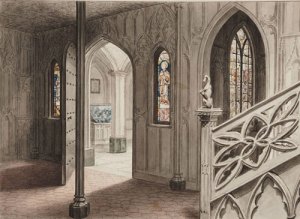
View of the Hall at Horace Walpole's Strawberry Hill 1788 Watercolour by John Carte

At the time of Jane’s birth Horace Walpole, for whom literacy mattered, was using decorative ornament inspired by a literary and pictorial interest in Gothic architecture at his house Strawberry Hill.

He and his peers benchmarked standards for excellence in taste and style well recognised by Jane and the burgeoning middle classes, who wished to emulate them.

Horry took what he liked and used it the way he wanted and his character seemingly enjoyed total satisfaction by ‘imprinting the gloomth of abbeys and cathedrals on one’s house.’

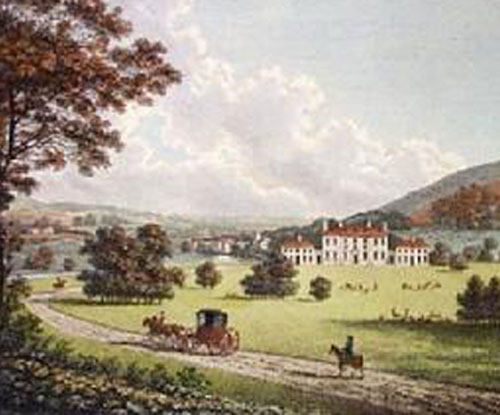
Godmersham Park.

Jane’s brother Edward Austen Knight eventually inherited the very gentrified Godmersham Park in Kent and two of her other brother’s Francis and Charles had distinguished careers in the British navy. Francis received a knighthood and the much coveted order of Bath and Jane’s brother Charles bought topaz crosses for his two sisters, going without to purchase them.

In the Christian understanding perfect love makes no demands and seeks nothing for itself, and this was the quality of the people that abounded in so many of the characters in Jane Austen’s life and in her novels. Jane enjoyed what she herself called ‘life a la Godmersham”.
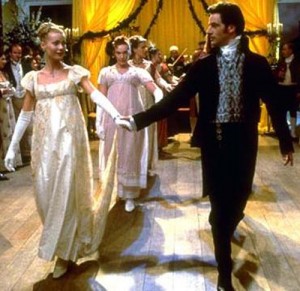
Emma (Gwynneth Paltrow) and Mr Knightley (Jeremy Northam) dance

Her brothers hunted in Edward’s park, played billiards and entertained in a style that amused Jane. Writing from Godmersham in 1813 she commented “at this present time I have five tables, eight and twenty chairs and two fires all to myself”.

The Royal navy were winning great victories on the continent at the time. For the leisured classes in Jane’s novels the war was something that happened in the newspapers or far out at sea. Although her brothers were involved, many of these events seemed very remote and Jane and her peers continued to pursue their daily activities such as music, painting, playing games and writing with great enthusiasm comforted in the knowledge that England had the best navy in the world.

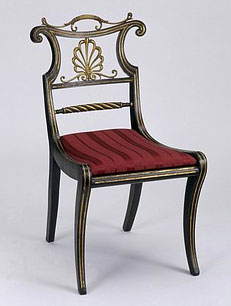
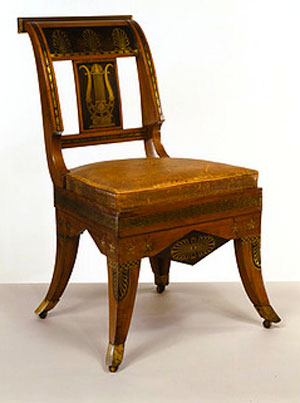
Trafalgar Chair, 1810, courtesy V & A Museum, London

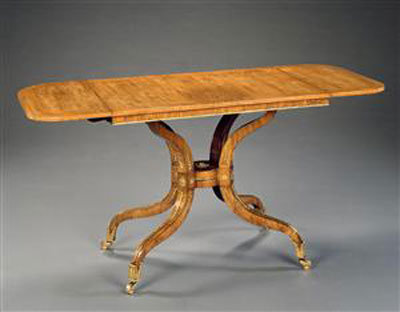
The Duke of Wellington’s victories and Admiral Nelson’s death at the Battle of Trafalgar caused a nation to mourn as well as celebrate wildly for twenty years afterward. And all manner of goods were named for him including “Trafalgar chairs”, which along with the sofa table were two very popular pieces of furniture during the Regency period.
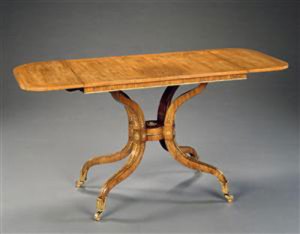
Rosewood Regency period Sofa Table c1810, courtesy Mallett Antiques, London

Country houses and their beautiful parks were not simply the expressions of a wealthy ruling class for Jane and her contemporaries. They represented an ideal civilization with a mixture of self-esteem, national pride and uncompromising good taste. For the rest of the population they reflected the unequal structure of a society where a third of the nation’s population faced a daily struggle to survive. From the monarch to the poorest of the land there was a pyramid of patronage and property. At the base of which in 1803 a third were the labouring poor, the cottagers, the seamen, the soldiers, the paupers and the vagrants who lived at subsistence level.

Jane’s letter to her sister Cassandra in 1799 highlights the point, when a horse her brother purchased cost sixty guineas and the boy hired to look after him four pounds a year. Those employed in service counted they lucky, but even in well off household’s service conditions were still fairly primitive. Jane said “Let other pens dwell on guilt and misery. I quit such odious subjects as soon as I can”. The contrast of the battlefield and the ballroom are apt as a reminder of the powerfully opposed elements that made up the England into which Jane was born and in which she grew to maturity.

Beau Brummell - The Fashionable dress of a Gentleman

George, Prince of Wales, the future George IV was the very active, central focus of the style we now know as the Regency period. His personality was complex and he often indulged in fantastic flights of fantasy.
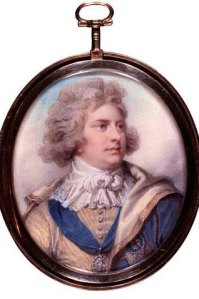
George, Prince of Wales in 1792

As a young man he had fair hair, blue eyes and pink and white complexion, and a tendency to corpulence. As he grew to maturity he gained considerably in popularity due to his good looks, high spirits and agreeable manners.

He was the darling of the fashionable world. George Bryan Brummell (England, 1778-1840) became the most famous of all the dashing young men of the Regency. He was not of aristocratic birth, but the son of the secretary to Lord North.(George III’s Prime Minister who played a major role in the American Revolution). Educated at Eton, the Beau became known as Buck and was extremely well liked by the other boys. He spent a short period at Oriel College, which has the distinction of being the oldest royal foundation in Oxford, dating from 1324.
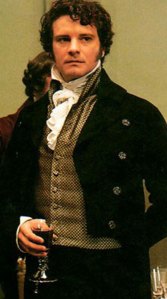
Sartorial splendour - shades of Mr Darcy? (Colin Firth)

The Prince Regent was told that Brummell was a witty fellow, so he obtained an appointment for him in his regiment (1794). Brummell became a Captain of the Tenth Hussars and was constantly in the Prince’s company.

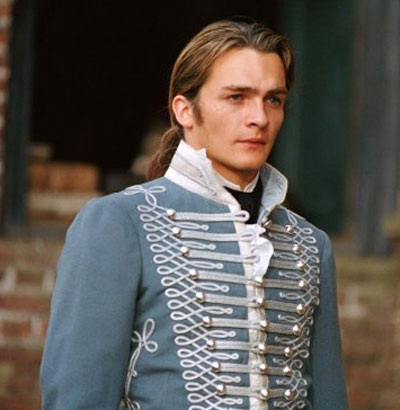
Military sartorial splendour...must be Mr Wickham! (Rupert Friend)

In the circles around the Prince he was known as a virtual oracle on matters related to dress and etiquette. As the new dictator of taste he established a code of costume.

A typical Regency outfit for day wear was a jacket cut away in front and with tails at the back. There was no waist seam, a feature present in Victorian coats. The open area around the hip had a distinctive curve pulling slightly around the waist.

Even more notably, the sleeves were particularly long and seated high on the shoulder. There are virtually no shoulder pads. Normally jackets had fabric-covered buttons. An exception was blue jackets with brass metal buttons–an association with military styles.

At night it was all sartorial splendour, rich textiles velvet, brocades, silks, all combined with a great deal of elegance, the costume for a gentlemen including a black coat.

Today we would say the Beau was very well connected, an important part of an influential network and a man to know.

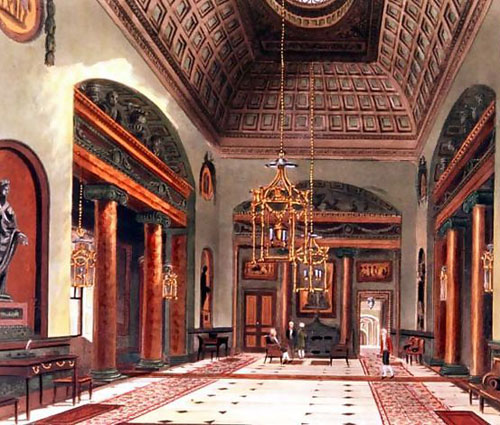
Entrance Hall, Carlton House, 1819 by W.H.Pyn

It was in 1784 when the Prince of Wales took one look at Maria Fitzherbert standing on the steps of the Opera and fell instantly in love with her. He was totally besotted and would only attend parties and events if the hostess assured him Maria would be both there – and sat next to him!
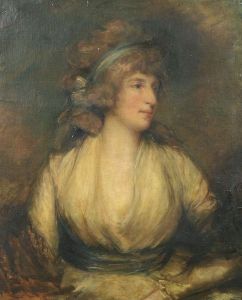
Maria Fitzherbert

Following a dedicated and unsuccessful pursuit of Mrs. Fitzherbert, Maria was surprised one evening by a visit from some of the Prince’s men. They had found him weak and bleeding in his home Carlton House, whose interiors were among the wonders of the age.

They told her the Prince had tried to commit suicide and Mrs. Fitzherbert, accompanied by the Duchess of Devonshire, rushed to his side whereupon he persuaded Maria to marry him. In 1785 George, Prince of Wales Prince married Mrs. Fitzherbert (1756 –1837) a Roman Catholic who had been married twice before. The couple was happy and while society seemingly accepted the unconventional pair the marriage rocked court circles, which could not cope with the thought that a Prince might marry a divorced woman.
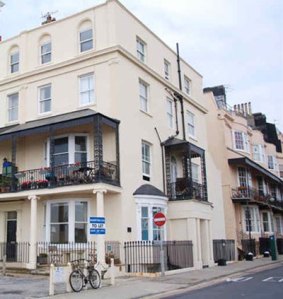
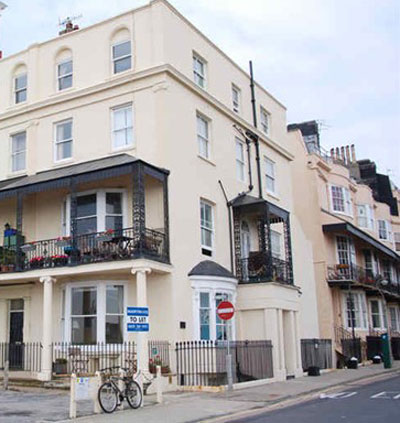
Bedford Square Brighton built 1801

Eventually the Prince would be forced to put her aside and it did not help his cause that his friend Beau Brummell, to whom Maria took a pronounced dislike, disapproved of the liaison.

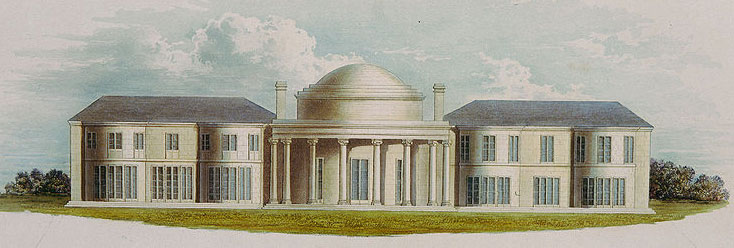
Brighton-Marine-Pavilion

Initially the Prince spent a great deal of time and effort building Maria his bride a house nearby his home Carlton House in Pall Mall and decorating his own home. He ran up such huge debts the only way his father, the King would agree to help him out and pay them was if he put aside Maria and marry Caroline of Brunswick, for political reasons, which he did.

In 1793 George, Prince of Wales visited the seaside town of Brighton, and ordered the subsequent renovation of a small house he purchased from one of his footman. Architect, Henry Holland, well known for his refined Francophile tastes, fashioned it into a splendid marine villa with gentle curving bays, wrought iron balconies and long sash windows, and it was much admired and set a standard for marine villas for many years to come. Mrs. Fitzherbert and the Prince parted company upon the marriage to Princess Caroline, however following the birth of his daughter; the Prince recommenced his pursuit of Maria.
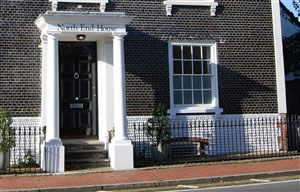
Mathematical Tiles on Regency House, Brighton

Maria was wary, however and upon asking the Pope for guidance she was informed that she was the only true wife of the Prince so she returned to him. Again the couple spent a lot of time entertaining at Brighton and London.
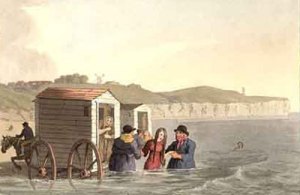
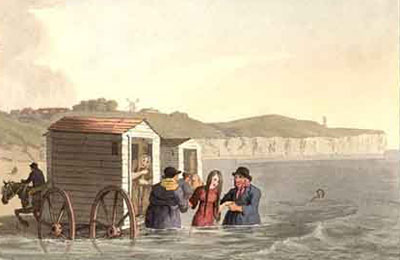
Sea Bathing England C19

Bathing in the sea had become very popular, with the Prince’s own physician recommending he bathe daily and bathing machines were set up especially for that purpose. All over Brighton, rows of small villas were built, echoing the Pavilion’s shape.

Some of the newly popular ‘seaside’ villas in Brighton were glazed with a smart material called ‘mathematical tiles’ which enabled villa houses to be built of less expensive brick and then ‘faced’. Introduced into the English architectural system after 1700 in England they were hung on buildings originally built of timber to give the appearance of higher quality brick walls. Today they are still not easy to recognise and are often mistaken for conventional brickwork. Black, glazed mathematical tiles are easy to discern, however, and may be seen at many locations in Brighton.
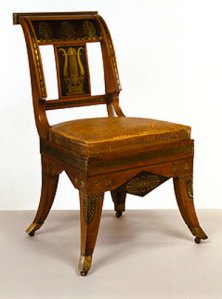
Chair designed by Thomas Hope, London in 1807 and made in 1892

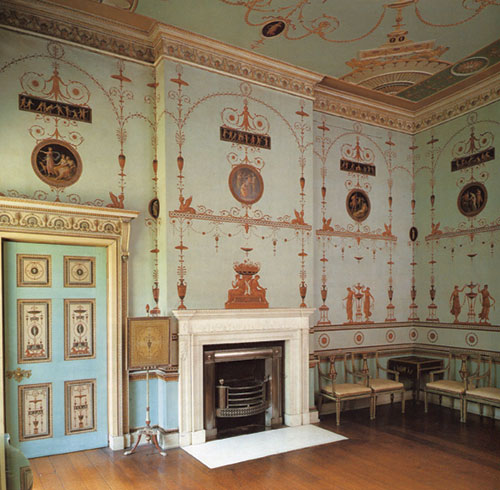
Painted furniture and at wall decoration ‘Etruscan style’ at Osterley House. The interiors were designed by Scottish Architect Robert Adam
Interior arrangements whose design focus was based on classical order reached the height of its popularity through the neoclassical style of Scottish architect Robert Adam between 1760 and 1793. The expansion of the neo-classical style was fuelled in the last half of the eighteenth century because of the interests of English Grand Tourists in the new discoveries being made at Pompeii and Herculaneum in Italy.
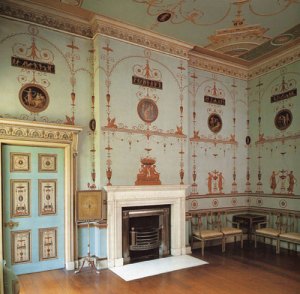
Etruscan room, Osterly House, Robert Adam.

Not only the shapes of the furniture were greatly influenced – for instance in the use of animal forms as supports for tables and chairs – but also the colour and decoration used for painted furniture, which was to be found in grand houses as well as much simpler gentry houses. Much of the charm of collecting such pieces lies in the rather primitive way the decoration was thought out and executed and many examples of very sophisticated simulated bamboo pieces were destined for important rooms.

Adam’s interiors could have easily been the inspiration for those of the formidable Lady Catherine de Burgh. Her country house Rosings in Pride and Prejudice was described by Jane as an interior of ‘fine proportion and finished ornaments’

Vanity fair, but where is Mr Darcy? – Part 2

Carolyn McDowall, April 2011 ©The Culture Concept Circle

Read Full Post »
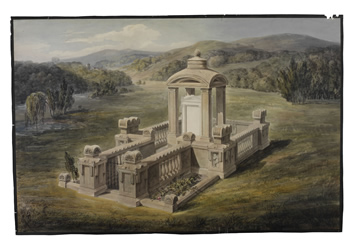
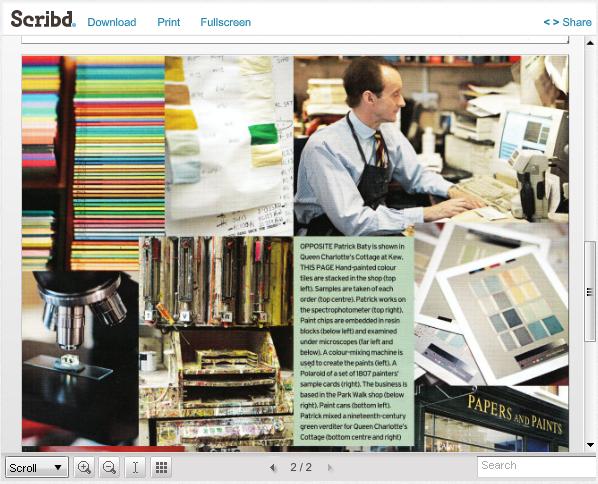
Inquiring readers: Patrick Baty of Papers and Paints is noted for his analysis of paint colours of the interiors and exteriors of buildings of architectural significance. He is consulted on both sides of the Atlantic. Mr. Baty has graciously allowed me to reproduce his blog post about exterior paint colours in the city of Bath. A link to more detailed articles sit at the bottom of this post.

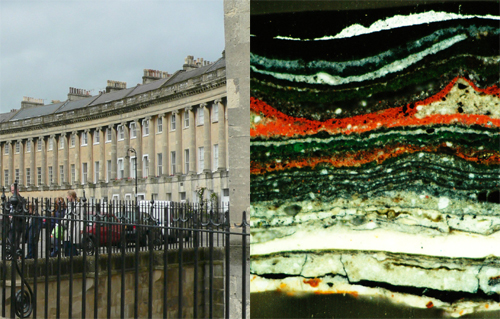
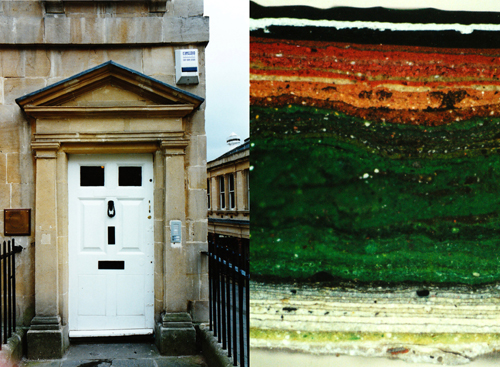
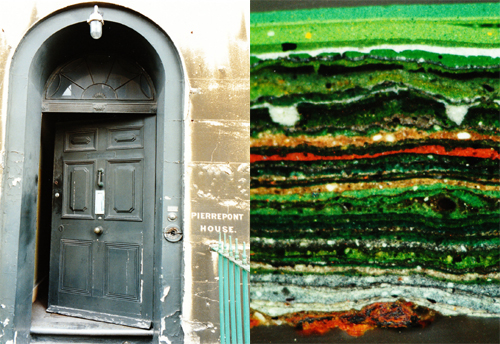
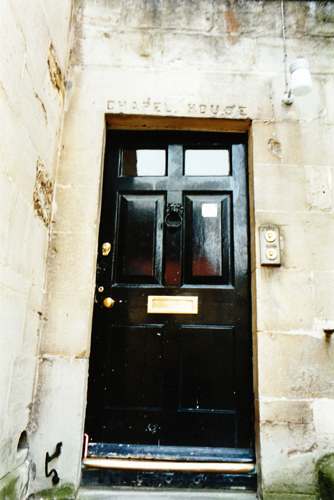
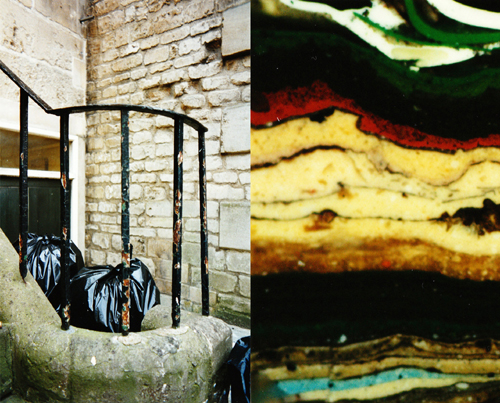
Patrick was commissioned to carry out an analysis of the paint on a number of buildings in the City. The purpose was to establish the decorative history of representative doors, windows and railings and to see whether one colour predominated on each element.

How had external painted surfaces appeared when Jane Austen lived there in the early 19th century, for example?

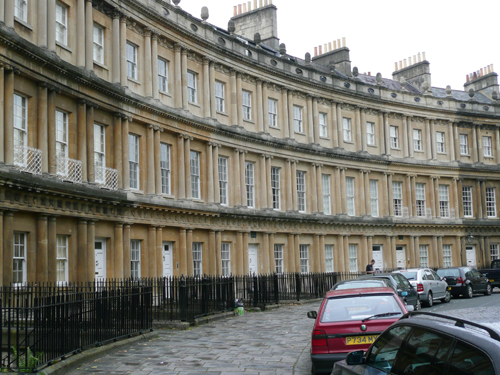
Royal Crescent

The Royal Crescent was built between 1767 and 1774. When the railings were sampled, 27 individual schemes were found, which suggests an average repainting cycle of about eight years. The first scheme was a pale lead (grey) colour. This kind of colour was used on the next fifteen occasions – probably until the end of the 19th century. Dark green and red-brown has been used subsequently, with black employed twice and then only since the 1970s.

Lead Colour

7 Alfred Street

Alfred Street is believed to have been built in 1772. When the railings of No 7 were sampled approximately 45 individual schemes were found, which suggests a repainting cycle of about five years. A stone colour was employed initially and variants of this appeared until the 1810s, when lead colour was introduced. Dark green appears to have been used from the middle of the 19th century, before giving way to red-brown. Black was only applied on the last three occasions.

Bronze Green

Pierrepont House

36 schemes were encountered on the railings of Pierrepont House. Lead colour was employed until the middle of the 19th century, when dark green was introduced. Black has never been used on these railings.

Chapel House

Chapel House railing

The railings of Chapel House, behind the Countess of Huntingdon’s Chapel, displayed approximately 38 decorative schemes. As the Chapel was built in 1765 this suggests a repainting cycle of about six years. The first two schemes were in lead colour and the third was in a stone colour. Unusually blue was employed on the fourth occasion. The remainder of the sequence consisted of variants of stone colour and dark green. Black had only been adopted in the 1980s.

As will be seen from the few examples cited here, grey and stone colours were employed on railings in the 18th and early 19th centuries. Dark green seems to have been generally adopted from about 1850 and, perhaps surprisingly, black only made its appearance in the late 20th century. Its use has nothing to do with being a sign of mourning for the death of Prince Albert – a belief held by many of the cognoscenti. This has been borne out by examining numerous examples of external ironwork across the country.

Specialist Profile, Patrick Baty

Patrick Baty provides more fascinating information about exterior paint colors on his blog, Patrick Baty, in three downloadable Scribd documents: External Paintwork, The Colour of Chelsea, and The Use of Colour on Architectural Ironwork, 1660 – 1960. You can also read an article about him,Specialist Profile, on the blog.
Please note: I place no ads on my blog, nor do I collect revenue from them. The ads you see in the comment section were placed there by WordPress.

Read Full Post »

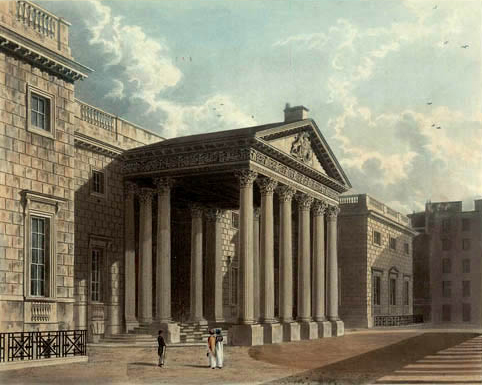
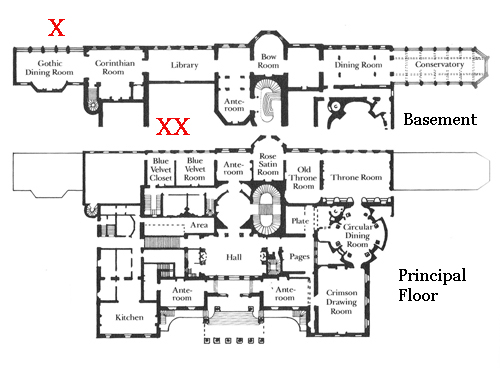
Carlton House was the town house of the Prince Regent for several decades from 1783 until it was demolished forty years later. It faced the south side of Pall Mall, and its gardens abutted St. James’s Park in the St James’s district of London. The location of the house, now replaced by Carlton House Terrace, was a main reason for the creation of John Nash’s ceremonial route from St James’s to Regent’s Park via Regent Street, All Souls, Langham Place and Park Square. Lower Regent Street and Waterloo Place were originally laid out to form the approach to its front entrance

An existing early eighteenth century house had been sold in 1732 to Frederick, Prince of Wales, and son of George I. William Kent had been employed to lay out the garden of which no trace remains. Frederick’s widow, Augusta, enlarged the house, had the entrance gates and porter’s lodge redesigned and a colonnaded porch built. She died in 1772 and for some years the house was unoccupied.

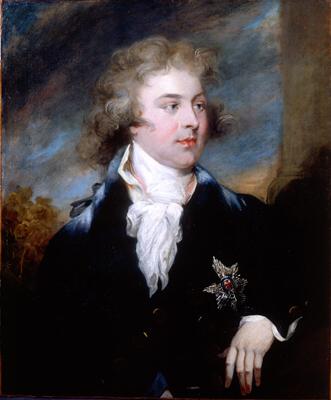
Portrait of The Prince of Wales, later King George IV (1762 – 1830) 1790. John Russell RA

In 1783 George III handed the house over, with £60,000 to refurbish it, to George, Prince of Wales on his coming of age. During the following years the interiors were remodelled and refurnished on a palatial scale.

Carlton House ca.1825. As published in Britton and Pugin, Public Buildings of London. 1825. Patrick has worked on elements from the areas marked with a cross

Initially Sir William Chambers was appointed as architect, but he was quickly replaced by Henry Holland. Both Chambers and Holland were proponents of the French neoclassical style of architecture, and Carlton House would be extremely influential in introducing the Louis XVI style to England.

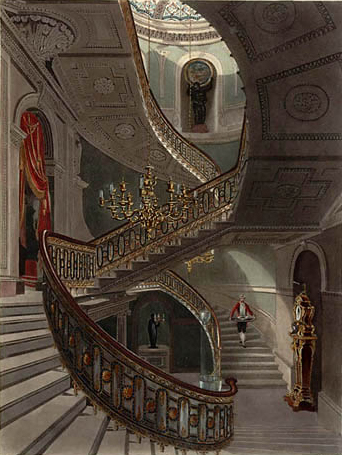
The Grand Staircase

Holland began working first on the State Apartments along the south (garden) front, the principal reception rooms of the house. Construction commenced in 1784. By the time of his marriage to Mrs Fitzherbert in December 1785, however, construction at Carlton House came to a halt because of the Prince of Wales’ mounting debts. Costs continued to soar and more money had to be found by the Prince…  Continue to read this post on Patrick Baty’s blog.

Inquiring Readers, Patrick Baty is one of the foremost authorities on architectural paint and colour on historic architecture and interiors. These days, the majority of Patrick’s time is spent as a historic paint consultant, sampling paint layers on buildings, bridges and architectural details to produce a forensic history of the decoration from creation to the present day. He has graciously allowed me to link to his post about Carlton House.

Other posts by Patrick Baty on this blog:

Read Full Post »

Interior, Sir John Soane’s House Museum

At Lincoln’s Inn Field , architect Sir John Soane (1753-1837) built three townhouses between 1792 and 1824 to house his remarkable collection of antiquities and objects d’art. The Museum was established by a private Act of Parliament in 1833 The house was opened to the public after the architect’s death in 1837.

Today, the museum is best seen on first Tuesday evening of each month when it is lit by candlelight. In three years, after a £7 million restoration, Soane’s private apartments will be opened to view for the first time in 170 years. Soane was known for his original designs of internal spaces and lighting, and for incorporating shallow domes, segmental arches, and clerestories.

Sir John Soane’s House and Museum. Image @Tony Grant

During the latter half of the 18th century (before the Napoleonic Wars), it was the custom of British collectors, painters and patrons to study antiquities of the ancient world during their Grand Tour of the Continent. The great collectors returned home laden with objects that they had acquired, most notably sculptures, gems, coins, vases, mosaics,  paintings, and architectural fragments from such countries as Italy, Egypt, and Greece. These visitors, mostly gentlemen, also brought back their vast knowledge (and love) of classical architecture, which in turn influenced the Neoclassical buildings, interiors, and styles so popular during the Georgian and Regency eras.

Interior of the Soane Museum**

Interior, original Bank of England

Sir John Soane traveled to Italy between 1777 – 1780 to study architecture on a scholarship from the Royal Academy, and acquired his collection between the 1780s and his death in 1837. Among his designs are the Bank of England (now torn down), Dulwich College Art Gallery, and his own houses in Lincoln Fields Inn.

On his appointment as Professor of Architecture at the Royal Academy in 1806 Soane began to arrange the Books, casts and models in order that the students might have the benefit of easy access to them and proposed opening his house for the use of the Royal Academy students the day before and the day after each of his lectures. By 1827, when John Britton published the first description of the Museum, Soane’s collection was being referred to as an ‘Academy of Architecture’. – Sir John Soane’s Museum: Official Site


The three doorways to the Sir John Soane’s House Museum. Image @Tony Grant

Read Full Post »

« Newer Posts - Older Posts »