Feeds:
Posts
Comments

Archive for the ‘Cassandra Austen (Jane’s Sister)’ Category

Inquiring readers, 

While Jane Austen referred to dogs in her novels, no mention was made of one living in the various houses she inhabited even when she settled in her last productive years in Chawton Cottage. After Mrs Austen’s death in 1827, Cassandra, who remained in Chawton Cottage, kept a dog as her companion. It seems the dog had two names: ‘Link’ and/or ‘Scout,’ depending on the source material. I haven’t read a description of the dog itself – whether it’s a purebred or a mongrel, or of the color of its fur or special markings, or how Cassandra acquired the dog. Link/Scout will forever remain in my memory due to this description:

She had a dog called Link, who, family story claims, would accompany a manservant to the farm at the end of the road to fetch milk; on the way back, Link would carry the pail of milk in his mouth. (Jane Austen’s House)

Such details are precious. Constance Hill (writer) and her sister, Ellen (artist), took a pilgrimage from the U.S. to England in order to visit all the places where the Austens lived. Their book with its lovely illustrations was published in 1902. (Jane Austen: Her Homes and Her Friends). When visiting Chawton, the sisters chanced upon an elderly man, who vividly recalled Cassandra and her dog, years after their deaths. It was he who mentioned his memory of Link to the two delighted sisters, whose book became an important resource in the early 20th century for Austen scholars.

While Jane Austen never had her own dog, she mentioned them or referred to them frequently.  Author Eliza Shearer wrote an interesting article entitled Dogs in Jane Austen’s Novels for her blog. I had no idea how often Austen incorporated dogs into her stories to flesh out her characters, such as Willoughby:

In ‘Sense and Sensibility’, Sir John Middleton is incensed when he discovers Willoughby’s true nature, perhaps even more so because he has just given Willoughby a precious present: a puppy by Folly, his favourite hound.

Chalon, Henry Bernard. “Two Pointers in a Landscape.” Wikimedia Commons, 1805.

Shearer goes on to mention that Willoughby’s choice of a rich wife over love was his road to unhappiness. After bidding Marianne goodbye, the only tiny bit of happiness he felt was in breeding hounds. 

An article in Reddit discusses more animal species in Austen’s novels than dogs, although this comment is notable:

“Lady Bertram’s Pug (Mansfield Park): This pug highlights Lady Bertram’s idleness and misplaced priorities, as she fusses over the dog while neglecting her children” (Reddit).

Brock, C. E. “Illustration for ch. 2 of Mansfield Park.” Wikimedia Commons, 1908.

Shannon Winslow featured a cartoon in FaceBook of a cat & dog discussing which of their species Jane liked most. The dog argues that Austen is “Definitely a dog person – she wrote “Scents and Scents ability,” with the cat countering “But she also wrote “Purr-suasion.” Click on this link to see the cartoon of Jane writing in the background as the pets argue. It’s a wonderful cartoon which I’m not sure is in the public domain, therefore the link.

Let’s just say that Jane and Cassandra and their family in general largely understood that animals were for labor – sheep dogs to keep their flocks in order and work in tandem with their shepherds, cats to hunt rats and mice, cows to produce milk and steers for meat, horses for sport and transportation, chickens for eggs and stews, and yelping hounds that led hunting parties for sport to kill foxes. The sights, sounds, and sustenance of animals were part and parcel in the background of their lives.

The last link I offer is to a rather long article I wrote in 2021 about Animals in Jane Austen’s Novels. While detailed, I hope you’ll enjoy it.


Read Full Post »

The new BBC miniseries “Miss Austen”, based on Gill Hornby’s novel of the same name, is currently the focus of much attention worldwide. The series aired in the UK in February and comes to PBS this May. Some of you have maybe already seen the show, depending on where you live, but for those who are waiting for it to air, I am here to say this:

Read the book while you wait!

You won’t regret it. In anticipation of the show, I decided to read Miss Austen by Gill Hornby, fully expecting to dislike it (I’m very picky). But I’m here to report that I loved it! I actually finished it in two days because I could not put it down (which is not easy as a writer with a busy household of teens). The story flows at a slower pace, but Hornby’s style–and the whole world she created–pulled me in and kept me engaged from start to finish.

In the book, an older Cassandra searches for a packet of Jane’s letters that she does not want anyone to ever see or read. As she finds and reads the various letters, we travel back through her memories to visit her younger self. I found myself completely immersed in the real (and imagined) details about Cassandra’s relationship with Tom Fowle (a former pupil of Reverend Austen), the Fowle family, and the Lloyd family.

Overall, the book does tell a sad story because it deals with a fictional retelling of Cassandra’s real-life story, her heartbreaks, her deep affection for her beloved family (many of whom she outlived), the Austens’ move to Bath, Reverend Austen’s death, the Austen women and their search for stability after his death, and Cassandra’s devotion and loyalty to Jane. However, there are many endearing and uplifting themes as well. The writing itself is exquisite.

While Hornby of course employs creative license as a novelist, I was also impressed by the copious amounts of research she must have done to write this book. Though fictional, it acts as a poignant biography of Jane’s sister and best friend. I felt as though I understood Cassandra, and had a deeper understanding of her protectiveness over Jane, by the end of the book. Hornby’s perspective on Jane is intriguing, and her (entirely fictional) character Henry Hobday adds depth to Cassandra’s story.

For those of you that read Miss Austen when it released in 2020, you might enjoy a reread. For those who have never read it, it’s a wonderful way to prepare yourself for the show. And even if you’ve already watched the show, you might like to read it and compare the two.

Book Description

England, 1840. Two decades after the death of her beloved sister, Jane, Cassandra Austen returns to the village of Kintbury and the home of her family friends, the Fowles. In a dusty corner of the vicarage, there is a cache of Jane’s letters that Cassandra is desperate to find. Dodging her hostess and a meddlesome housemaid, Cassandra eventually hunts down the letters and confronts the secrets they hold, secrets not only about Jane but about Cassandra herself. Will Cassandra bare the most private details of her life to the world, or commit her sister’s legacy to the flames?

Moving back and forth between the vicarage and Cassandra’s vibrant memories of her years with Jane, interwoven with Jane’s brilliantly reimagined lost letters, Miss Austen is the untold story of the most important person in Jane’s life. With extraordinary empathy, emotional complexity, and wit, Gill Hornby finally gives Cassandra her due, bringing to life a woman as captivating as any Austen heroine.

(The collection of cover art included in this article is from various editions sold worldwide.)

About the Author

Gill Hornby is the author of Miss Austen, The Hive, and All Together Now, as well as The Story of Jane Austen, a biography of Austen for young readers. Her most recent novel is Godermsham Park, also available from Pegasus Books. She lives in Kintbury, England, with her husband and their four children.

About the Show

Miss Austen takes an historic literary mystery – the notorious burning of Jane Austen’s letters by her sister Cassandra – and reimagines it as a fascinating, witty, and heart-breaking story of sisterly love, while creating in Cassandra a character as captivating as any Austen heroine.

Based on Gill Hornby’s best-selling novel, this period drama brings a fresh and intimate perspective to the Austen sisters’ lives — their joys, heartaches, and the passions that shaped Jane’s iconic novels.

Keeley Hawes (The Durrells in Corfu, Bodyguard, Line of Duty) as the loyal and loving Cassandra leads an ensemble cast that includes Rose Leslie (Game of Thrones, Downton Abbey) as family friend Isabella Fowle, Patsy Ferran (Living) as young Jane Austen, and Synnøve Karlsen (Bodies) as young Cassy.

PBS Episode Schedule

Premieres: Sunday, May 4, 2025, at 9/8c
Episode 2: Sunday, May 11, 9/8c
Episode 3: Sunday, May 18, 9/8c
Episode 4: Sunday, May 18, 10/9c

Miss Austen, Dutiful Daughter and Sister

I cannot wait to watch the show soon, and I hope to come back to discuss it later this year, but in the meantime, I enjoyed the book immensely. I usually only review nonfiction books here, but I felt that a novel of such high caliber warranted a thorough review, especially in light of the upcoming show. Here’s to celebrating Jane Austen’s 250th year and to enjoying her world more fully!


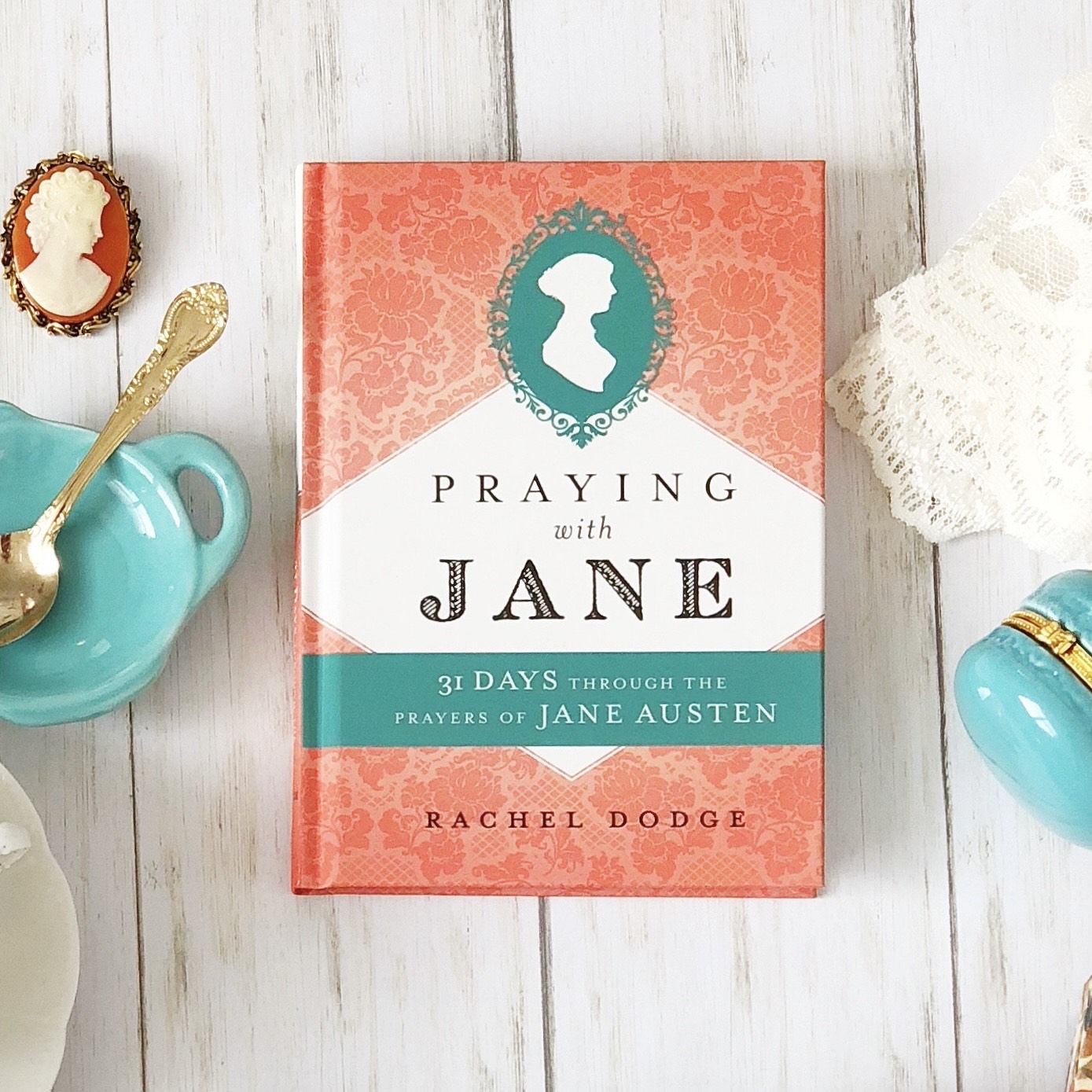
RACHEL DODGE teaches college English classes, speaks at libraries, teas, and conferences, and writes for Jane Austen’s World blog. She is the bestselling, award-winning author of The Anne of Green Gables DevotionalThe Little Women DevotionalThe Secret Garden Devotional, and Praying with Jane: 31 Days Through the Prayers of Jane Austen. A true kindred spirit at heart, Rachel loves books, bonnets, and ballgowns. Visit her online at www.RachelDodge.com.

Read Full Post »