Feeds:
Posts
Comments

Archive for the ‘Georgian Life’ Category

Copyright (c) Jane Austen’s World. Post written by Tony Grant, London Calling.

In 1754 David Garrick became the lessee first and finally bought the house, which was to become his villa beside The Thames.
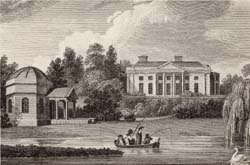
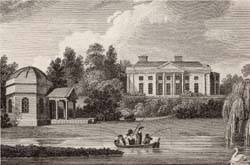
Garrick's villa, 1783

It became his country retreat and the place where he and his wife entertained friends. He began to alter the original building, which had parts that dated back to the middle ages, and employed his friend Robert Adam to redesign the façade in a classical style.Capability Brown advised on the layout of the gardens. The Kingston to Staines Road runs outside the front of the house today and it did also in the 18th century.
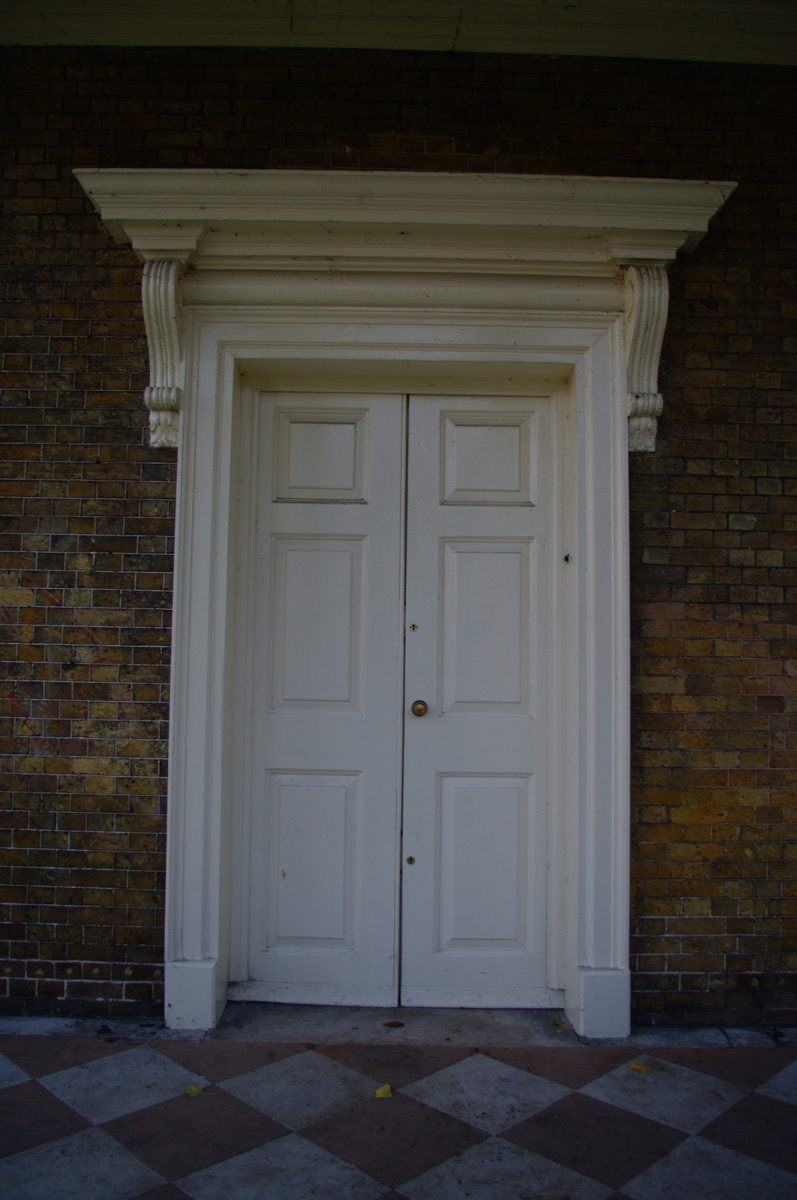
Temple doorway. Image @Tony Grant

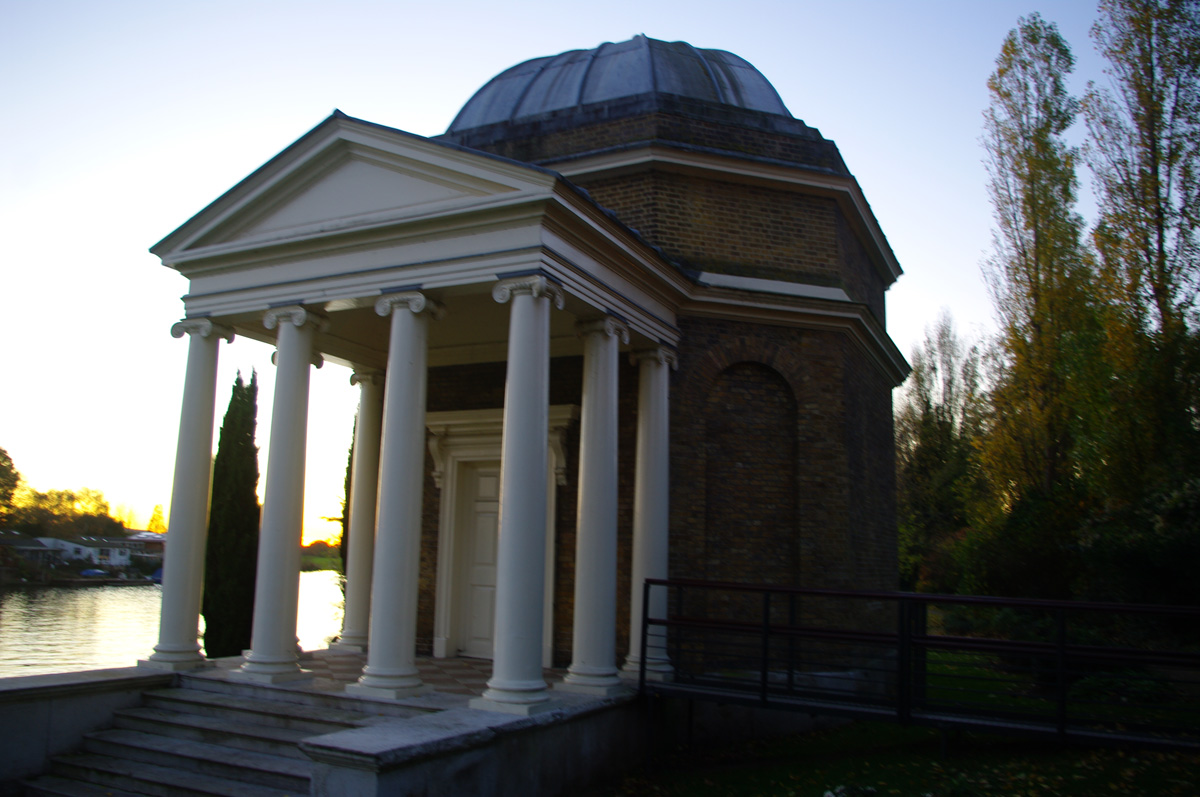
Garrick had a tunnel dug  from the front of his villa under the road to his gardens beside The Thames which today is called, Garrick’s Lawn. On this lawn, beside The Thames, Garrick had a temple to Shakespeare built. Inside was placed a very fine statue of Shakespeare designed by Roubiliac, another friend. When Garrick died, his wife Eva, gave it to the British Museum. A copy of the statue now has been placed inside the temple.
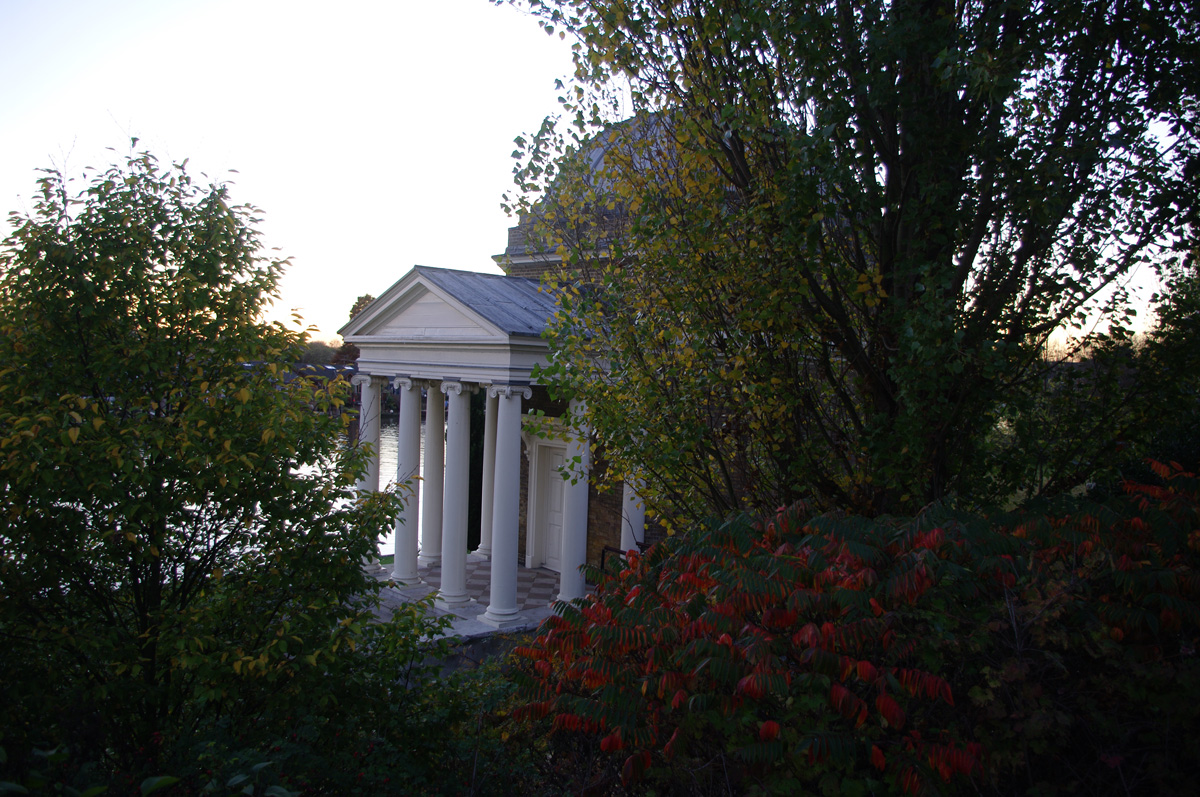
Garrick's dorric Temple. Image @Tony Grant

Garrick  added an orangery at the far end of the main garden which backs onto Bushy Park. Adam also designed the orangery in the main garden with a corinthian façade and classical entablature. Garrick owned much of the farmland, which is now Bushy Park. He also bought other houses in Hampton, including Orme House in Church Street, The Six Bells pub, later named The White Heart, Garrick’s Ait, the island opposite the temple and the villa and three other aits on The Thames. Just before his death, Garrick bought The Cedars, now called Garrick House, which you drive past on the Kingston Road.
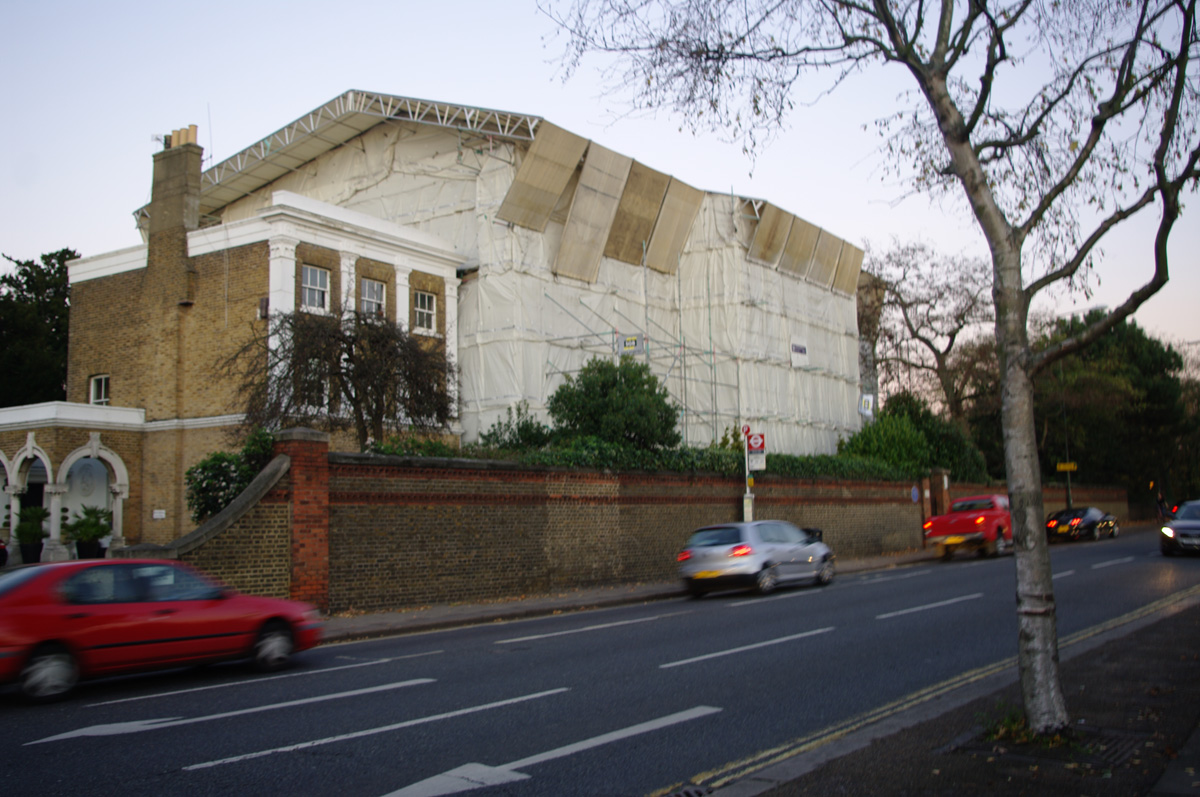
The villa under wraps after the fire. Image @Tony Grant

In 2008 some work was being done on the villa when a fire broke out. The entire roof of the grade 1 listed building collapsed. The second floor also caught fire. It took ten fire engines to bring the blaze under control and save the shell of the house. It is now undergoing extensive rebuilding. The house is a symbol  of the English Theatre and must not be lost to the nation and the world.
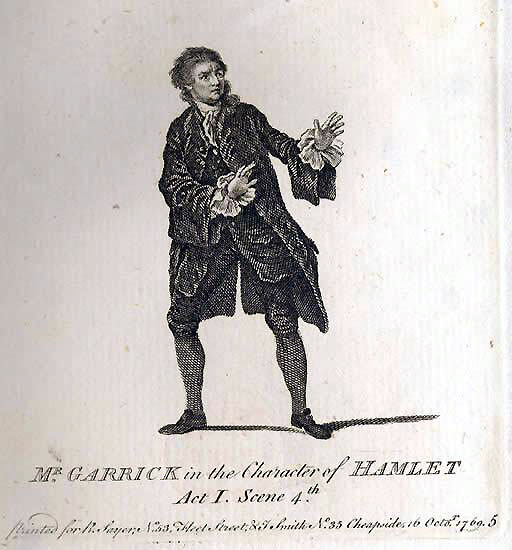
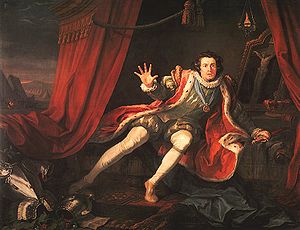
David Garrick in Hamlet. Image @Wikimedia Commons

David Garrick came from humble origins in Leicestershire. His family were Huguenot immigrants who had to struggle and fight for their survival and success. Garrick  continued this need for success. He had an incredible talent as writer, actor and innovator. His greatness can only be measured by his influence on theatre and acting today.
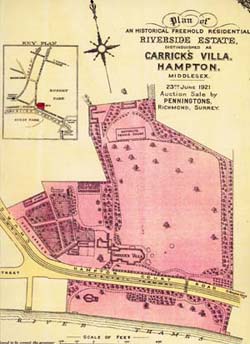
Garrick Estate Auction, 1921

What is interesting is his need to acquire property and land, to have the best in architecture and to keep acquiring, throughout his life. Was this the sign of an inner drive to stay successful, to gain security, to not allow himself to revert to lowly circumstances? Was he a driven personality? This reminds me of another driven personality, Charles Dickens, who literally worked himself to death. He too saw property and one house in particular, as a sign to himself and others that he was at the top, that he had made it.
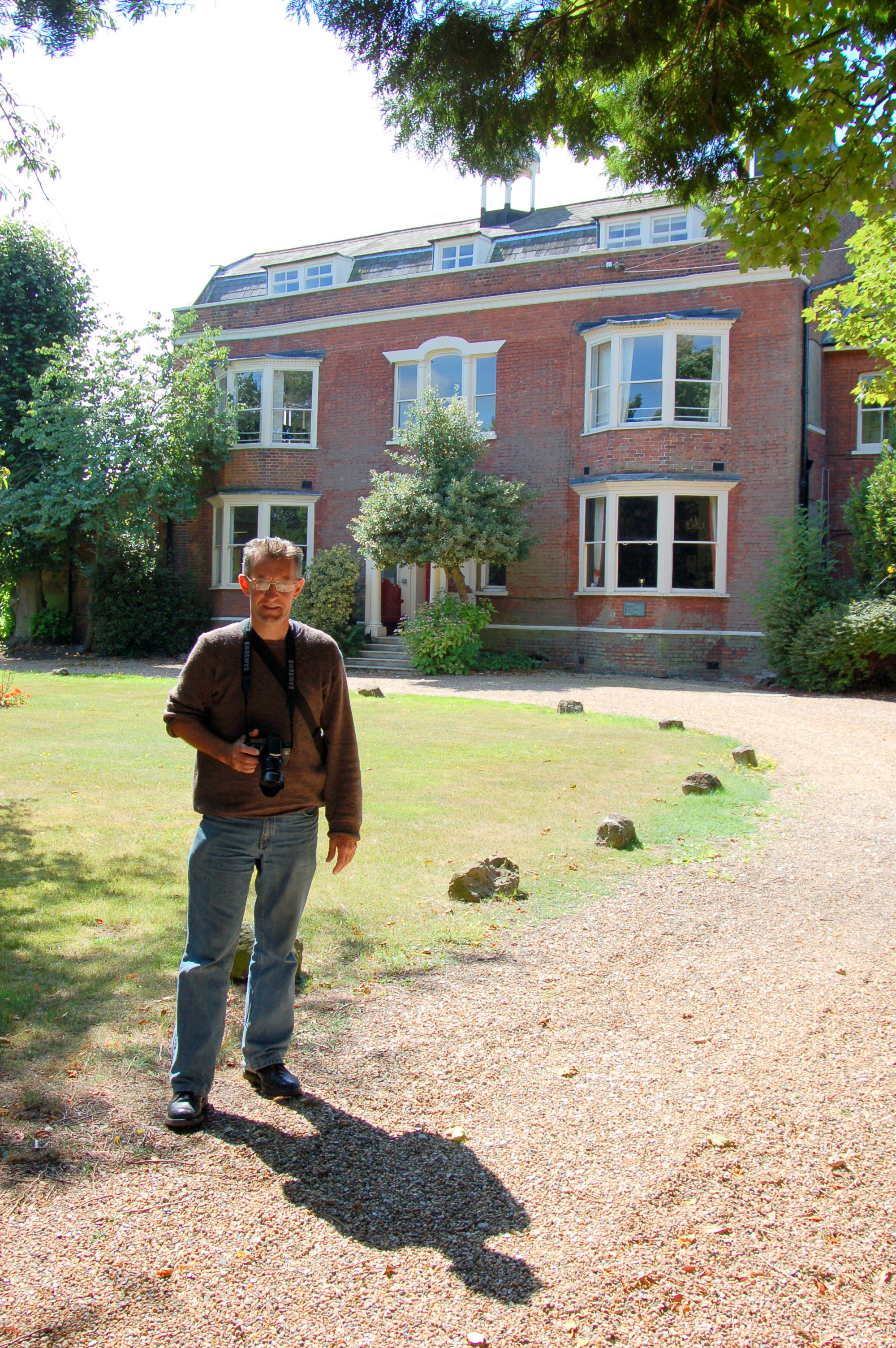
Tony Grant at Gads Hill. Image @Tony Grant

The house was Gads Hill in Kent just outside of Rochester and Chatham. After Dickens death, John Foster, a great publishing friend of Dickens wrote, “ upon first seeing it (Gads Hill) as he came from Chatham with his father and looking upon it with much admiration he had been promised that he might himself live in it or in some such house when he came to be a man, if he would only work hard enough.”
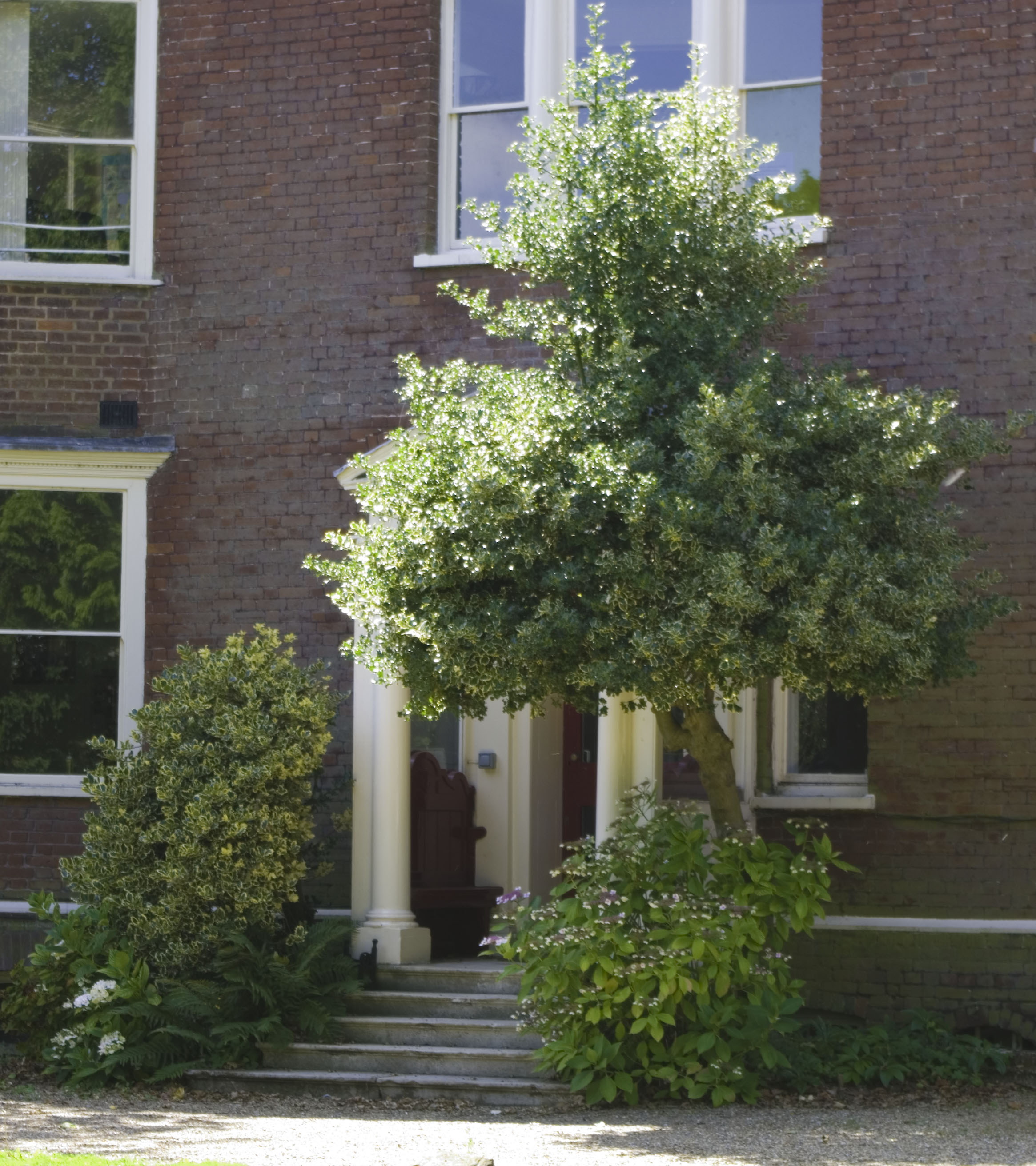
Gads Hill front door. Image @Tony Grant

Of course Dickens did work. He probably had more need to stay at the top than even Garrick. His father was notorious for getting into debt and had ended up in debtors prison. Cahrles Dickens had had to work in a blacking factory in almost slave like conditions. This affected Dickens for the rest of his life.

Ducks on the Thames. Image @Tony Grant

Both Dickens and Garrick were influenced greatly by Shakespeare. Garrick as actor and theatre owner. Garrick’s greatest performance was playing Richard III. Dicken’s house at Gads Hill was the very spot, in Henry IV part I, where Prince Hal waylays and robs Falstaff as a  prank or joke. Of course Dickens absolutely loved this connection. There is another rather obscure link with Garrick. David Garrick had a tunnel dug under the road in front of his villa to get to his garden beside The Thames. Dickens purchased the land on the opposite side of the road to his house at Gads Hill and had a tunnel dug in front of his house under the road to get to it.
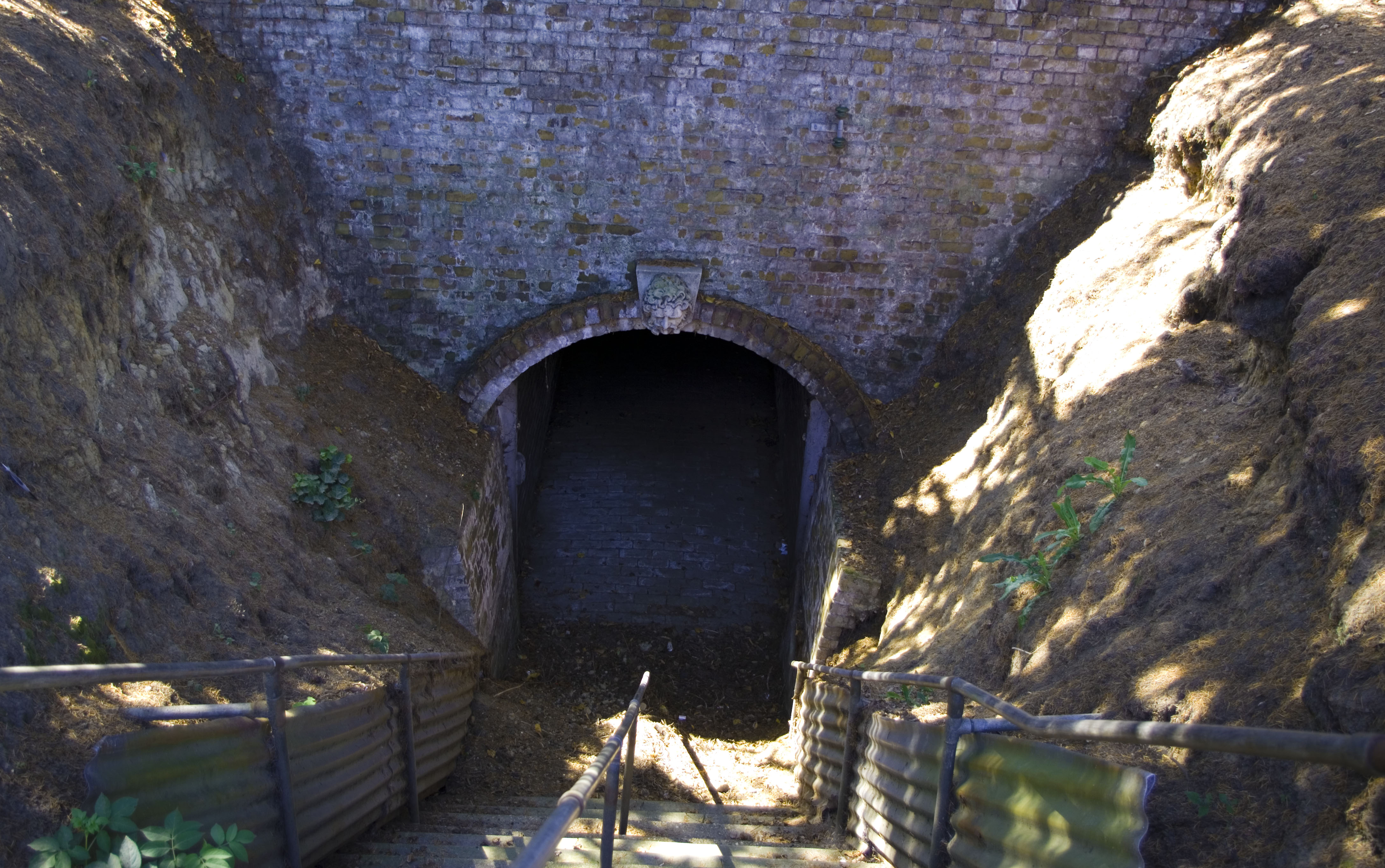
Gads Hill tunnel. Image @Tony Grant

Dickens had a small wooden Swiss Chalet built on the other side of the road where, towards the end of his life, he wrote. Passing through a tunnel to the beautiful scenery of The Thames or to a place to work could be read as having deep psychological meaning I am sure.
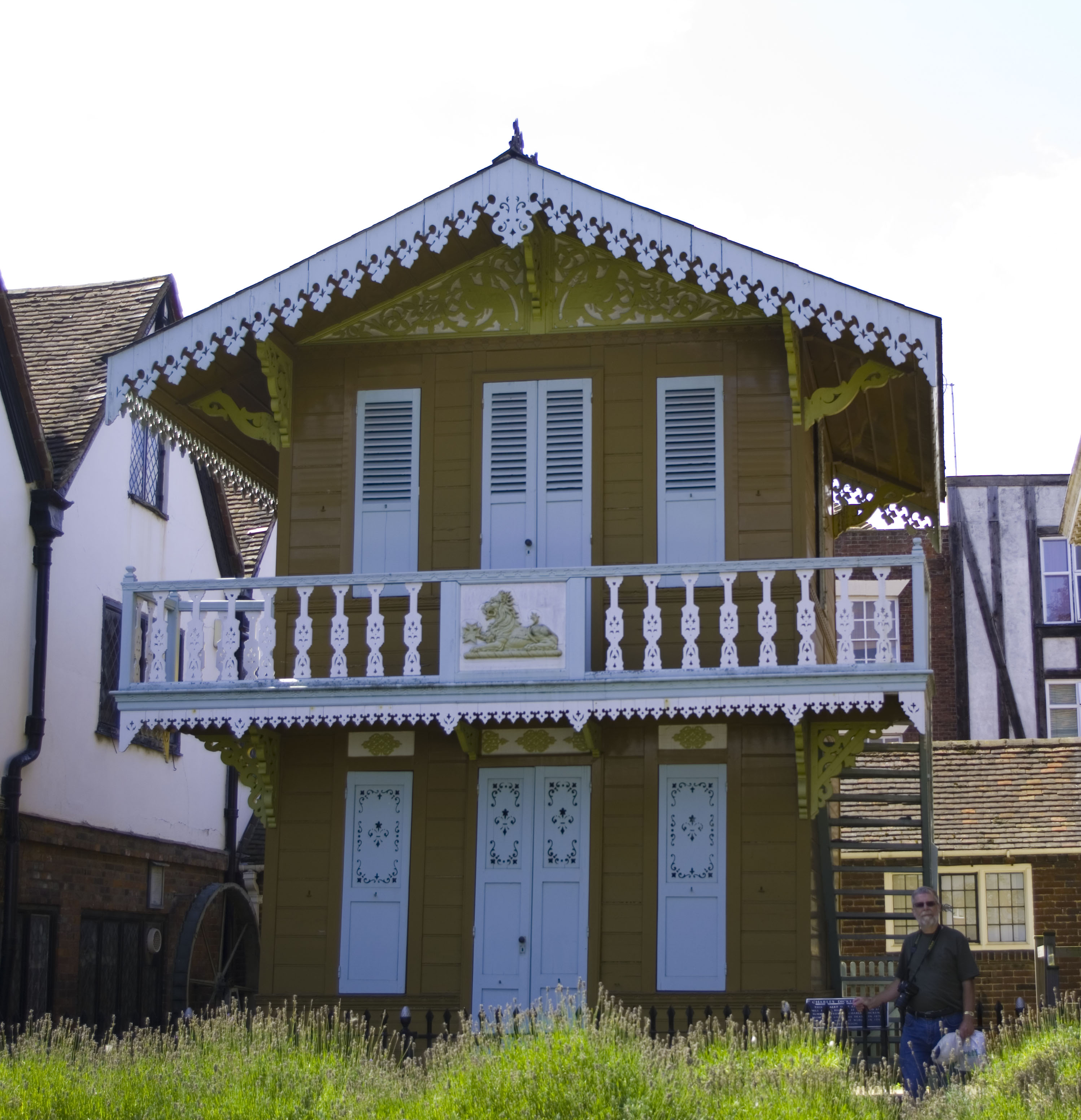
Dickens's Swiss Chalet. Image @Tony Grant

David Garrick’s  villa can be seen as his badge of success. A symbol of all his striving and hard work.

Where do our middle class ambitions get us? Are we driven? Where have we come from and where do we want to go? Are we working like Garrick and Dickens to prove something? How desperate are we and are we happy with it? I wonder if Dickens was ever happy? Maybe in the heightened hyper reality that he achieved  in his live readings, but that was fleeting. He was driven, so was Garrick and are we?
Garrick's villa, 1824

I know this an odd request on this site but you never know who might read this stuff. To any Hollywood Super Star out there. You owe everything, your whole profession, to David Garrick. If you have some spare cash, go on, pay for the refurbishment of Garrick’s Villa. It could be your real contribution to the world.
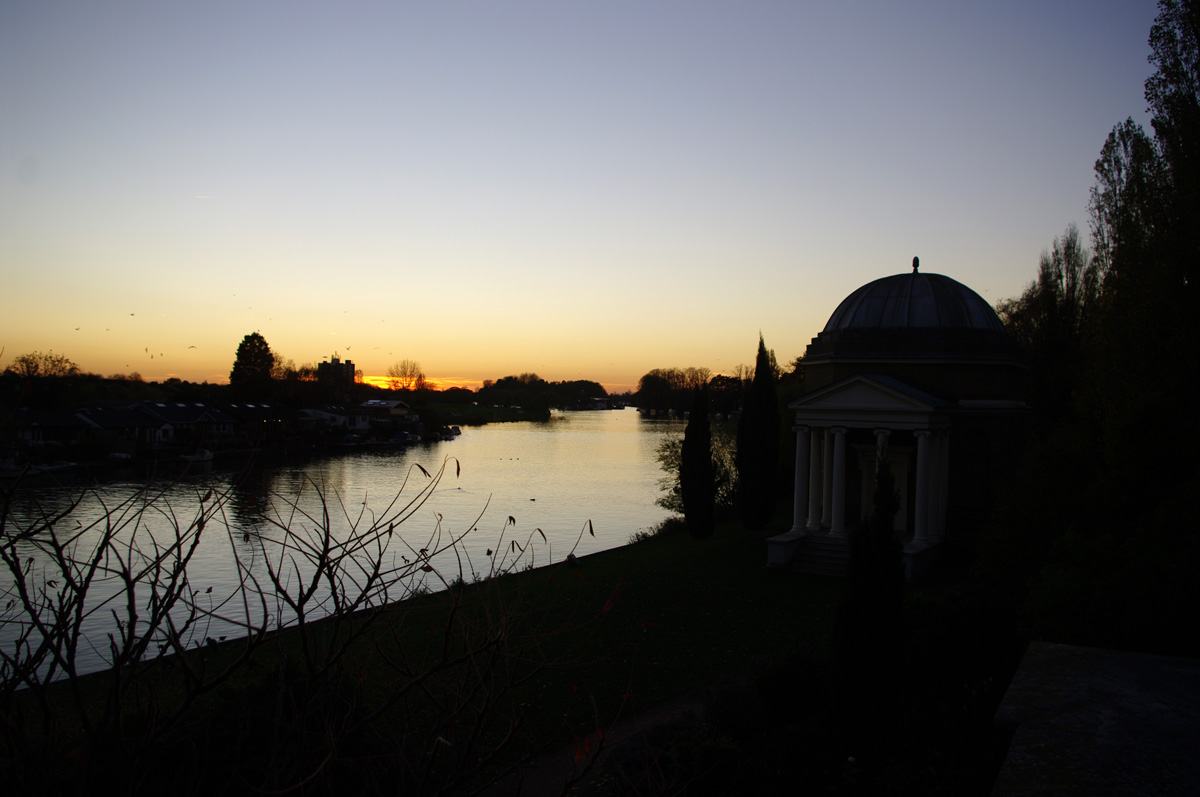
Garrick's temple, sunset. Image @Tony Grant

More on the topic:
Read Full Post »

Copryright (c) Jane Austen’s World. This post is in honor of Thanksgiving and all the cooks, feminine or masculine, who toil hard in the kitchen to feed their families on this special holiday.

I am sure that the ladies there had nothing to do with the mysteries of the stew-pot or the preserving-pan” – James Edward Austen-Leigh, writing about his aunts, Jane and Cassandra Austen, and grandmother, Mrs Austen, when they lived at Steventon Rectory.

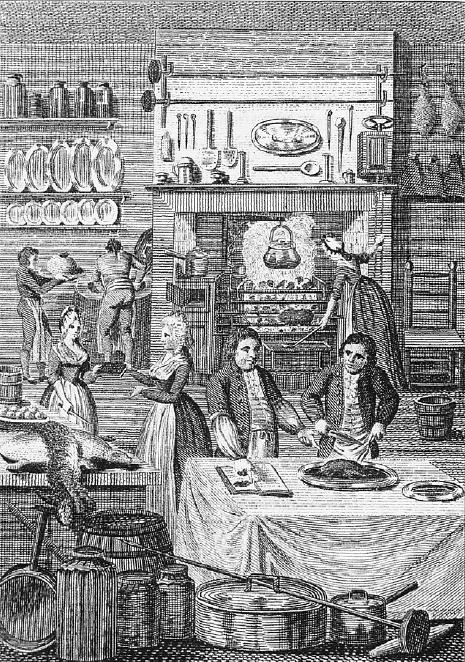
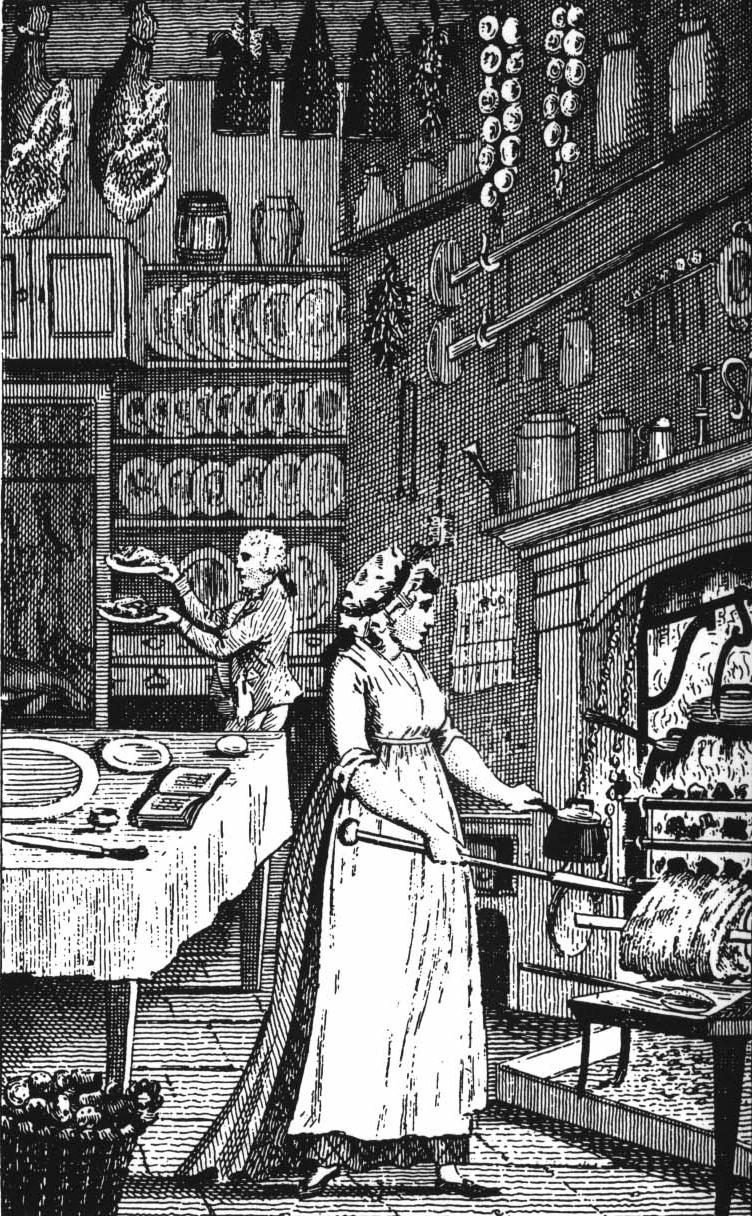
18th century kitchen servants prepare a meal. Image @Jane Austen Cookbook

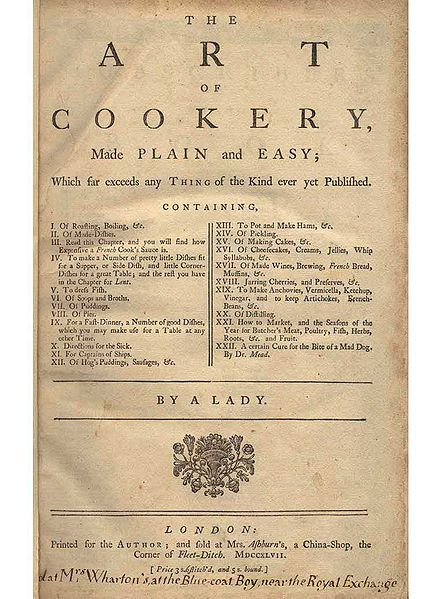
In 1747, Mrs.Hannah Glasse wrote her historic The Art of Cookery Made Plain and Easy, an easy-to-understand cookbook for the lower class chefs who cooked for the rich. Her recipes were simple and came with detailed instructions, a revolutionary thought at the time.

The Art of Cookery’s first distinction was simplicity – simple instructions, accessible ingredients, an accent on thrift, easy recipes and practical help with weights and timing. Out went the bewildering text of former cookery books (“pass it off brown” became “fry it brown in some good butter”; “draw him with parsley” became “throw some parsley over him”). Out went French nonsense: no complicated patisserie that an ordinary cook could not hope to cook successfully. Glasse took into account the limitations of the average middle-class kitchen: the small number of staff, the basic cooking equipment, limited funds. – Hannah Glasse, The Original Domestic Goddess forum

Hannah Glasse's The Art of Cookery Made Plain and Easy

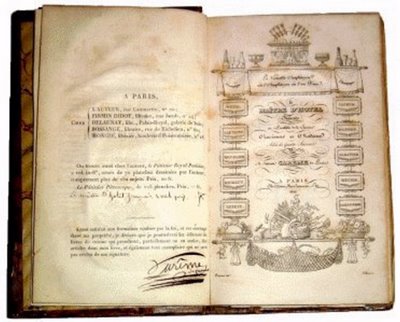
Until Mrs. Glasse wrote her popular cookery book (17 editions appeared in the 18th century), these instructional books had been largely written by male chefs who offered complicated French recipes without detailed or practical directions. (To see what I mean, check Antonin Careme’s recipe for Les Petits Vol-Au-Vents a la Nesle at this link.) Like Jane Austen, Hannah signed her books “By a Lady”.

Antonin Careme's cookbook

Mrs. Glasse had always intended to sell her cookery book to mistresses of gentry families or the rising middle class, who would then instruct their cooks to prepare foods from her simplified recipes, which she collected. “My Intention is to instruct the lower Sort [so that] every servant who can read will be capable of making a tolerable good Cook,” she wrote in her preface.

Frontispiece from William Augustus Henderson, The Housekeeper’s Instructor, 6th edition, c.1800. This same picture appeared in the very first edition of c.1791and it shows the mistress presenting the cookery book to her servant, while a young man is instructed in the art of carving with the aid of another book.*

Hanna’s revolutionary approach, which included the first known printed recipe for curry and instructions for making a hamburger, made sense. In the morning, it was the custom of the mistress of the household to speak to the cook or housekeeper about the day’s meals and give directions for the day. The servants in turn would interpret her instructions. (Often their mistress had to read the recipes to them, for many lower class people still could not read.)

In theory, the recipes from Hannah’s cookbook would help the lady of the house stay out of the kitchen and enjoy a few moments of free time. But the servant turnover rate was high and often the mistress had to roll up her sleeves and actively participate in the kitchen. Many households with just two or three servants could not afford a mistress of leisure, and they, like Mrs. Austen in the kitchens of Steventon Rectory and Chawton Cottage, would toil alongside their cook staff.

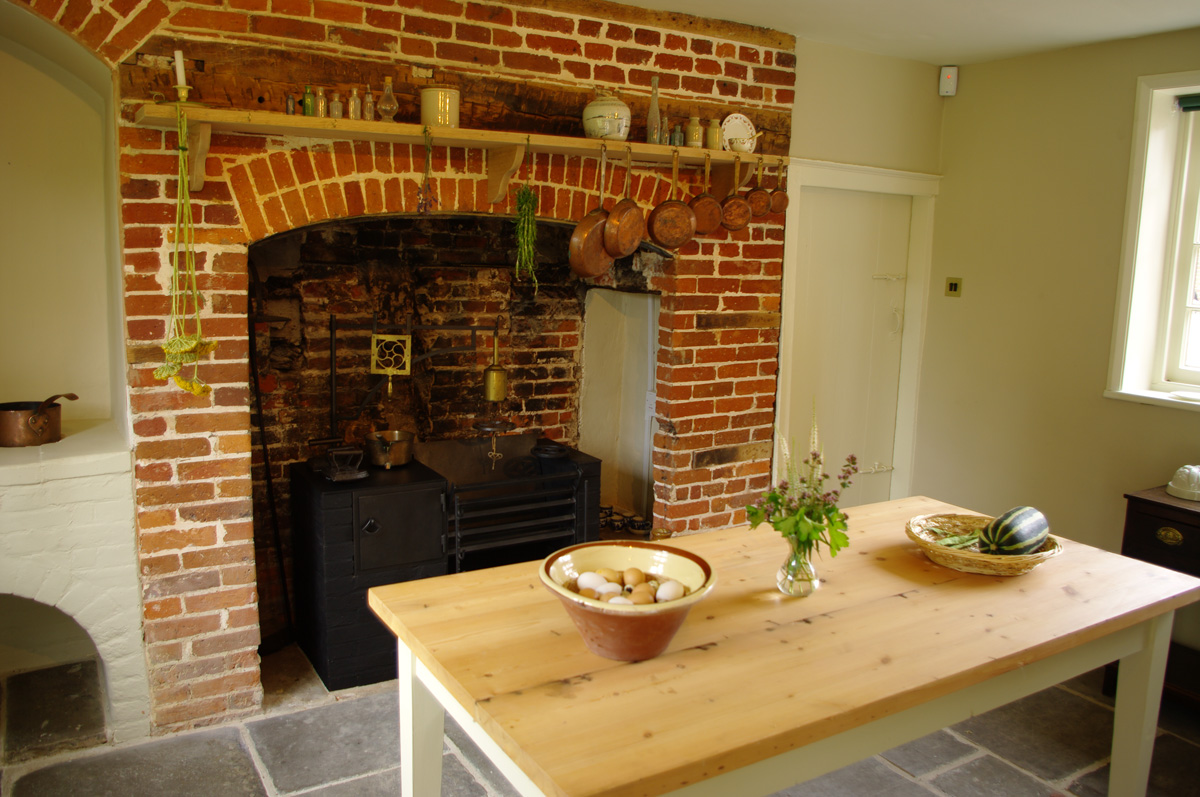
The simple kitchen at Chawton cottage. Image @Tony Grant

At the start of the 18th century the French courtly way of cooking still prevailed in genteel households. As the century progressed, more and more women like Hannah Glasse began to write cookery books that offered not only simpler versions of French recipes, but instructions for making traditional English pies, tarts, and cakes as well. Compared to the expensive cookbooks written by male chefs, cookery books written by women were quite affordable, for they were priced between 2 s. and 6 d.

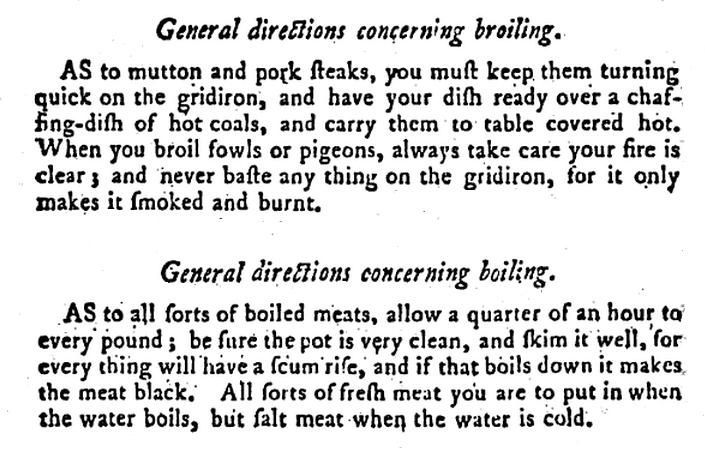
Hannah Glasse's practical directions for boiling and broiling

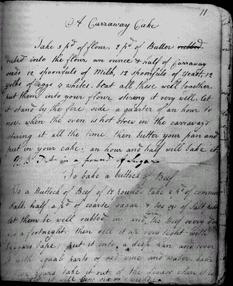
Publishers took advantage of the brisk trade, for with the changes in agricultural practices,  food was becoming more abundant for the rising middle classes. Large editions of cheap English cookery books by a variety of female cooks were distributed to a wide new audience of less wealthy and largely female readers who had money to spend on food. Before Hannah Glasse and her cohort, cooks and housewives  had been accustomed to sharing recipes in private journals (such as Marthat Lloyd’s) or handing them down by word-of-mouth.

Martha Lloyd's recipe for caraway cake written in her journal.

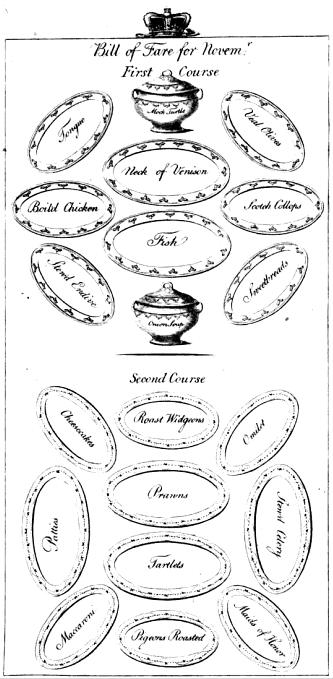
Female authors tended to share their native English recipes in their cookery books. As the century progressed, the content of these cookery books began to change. Aside from printing recipes, these books began to include medical instructions for poultices and the like; bills of fare for certain seasons or special gatherings; household and marketing tips; etc.

Bill of fare for November, The Universal Cook, 1792

By the end of the 18th century, cookery books also included heavy doses of servant etiquette and moral advice. At this time plain English fare had replaced French cuisine, although wealthy households continued to employ French chefs as expensive status symbols.  In the mid-19th century cookery books that targeted the working classes, such as Mrs. Beeton’s famous book on Household Management, began to be serialized in magazines, as well as published in book form.

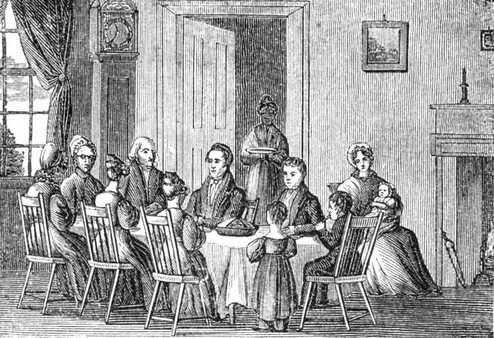
Family at meal time

Before ending this post, I would like to refer you back to James Edward Austen-Leigh’s quote at top. In contrast to what he wrote (for he did not know his aunts or grandmother well), Jane Austen scholar Maggie Lane reminds us that housewives who consulted with their cook and housekeeper  about the day’s meals still felt comfortable working in the kitchen. She writes in Jane Austen and Food:

“though they may not have stirred the pot or the pan themselves, Mrs. Austen and her daughters perfectly understood what was going on within them…The fact that their friend and one-time house-mate Martha Lloyd made a collection of recipes to which Mrs. Austen contributed is proof that the processes of cookery were understood by women of their class.”

More on the topic:
Read Full Post »

Copryright (c) Jane Austen’s World. Post written by Tony Grant, London Calling.

For four days last week, I was working in a school in Staines near Heathrow Airport. To get there from Wimbledon I had to drive past David Garrick’s Villa and his temple to Shakespeare, at Hampton on The Thames.

Garrick's Villa, 1783

David Garrick was an 18th century actor, playwright and owner of Drury Lane Theatre. He was innovative, and the forerunner of a new acting style. He was regarded as the greatest actor of his time and arguably is one of the great actors of all time. He had a profound interest in Shakespeare. It is easy to see connections between David Garrick and his career and the career and  driven personality of Dickens. Perhaps they are both a mirror in which we can see something of ourselves.

Garrick

David Garrick was the second son of Peter and Arabella Garrick. He was born at The Angel Inn in Hereford on the 19th February 1717. For a while he was the pupil of Samuel Johnson at the little school at Edial near Lichfield. In 1773 Garrick and Johnson went to London together both with little money to support them. Garrick at first worked as a salesman in his family’s wine firm. However he turned to playwriting and acting. He write a version of, “Lethe,” that was used by Henry Giffard’s company at Drury Lane. He then joined Giffard’s company and worked at the theatre in Tankard street in Ipswich. At first Garrick took the stage name of Lyddall. On the 19th October 1741 he played Richard III at Goodman’s Fields Theatre in East London. He was an overnight sensation.

David Garrick as Richard III, 1745. William Hogarth

His acting style was new and innovative. He began a more naturalistic style. Rather than use the exaggerated bombastic style that was popular. On 28th November that year he got rid of his stage name and began to use his real name. His real name appeared on the posters advertising, “The Orphan,” in which he played the character, Chamont.. As a sign of his meteoric rise to fame within two months William Pitt decalerd that the 22 year old Garrick was the best actor the British stage had ever produced. Garrick became the dominant force in British theatre from then on.

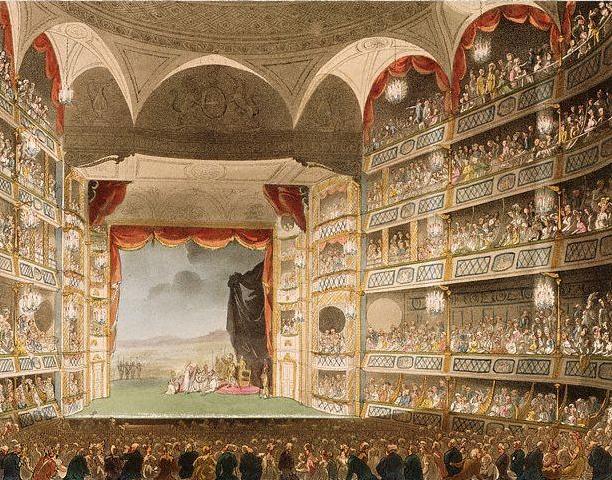
Drury Lane 1808

In 1747 with a new partner, James Lacey he took over the management of Drury Lane Theatre. For 29 years he directed repertory company in Europe. He developed new rehearsal techniques and discipline. His ideas included analysing characters, restoring the original texts of Shakespeare. Much of Shakespeare’s plays in the 18th century had been written in a bombastic and alliterative style. He didn’t always keep to Shakespeare’s original texts himself. He did tend to leave out bits and add bits to emphasise the character he was playing. Garrick was one of the leading playwrights of his day and wrote The Clandestine Marriage, Cymon, The Lying Valet and The Guardian. Garricks influence became the yardstick by which all other acting and drama was measured throughout Europe.

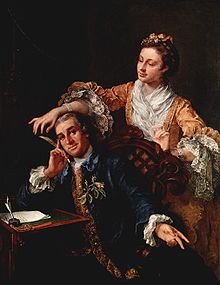
William Garrick and his wife, Eva Maria Vegel, by William Hogarth

In 1749 Garrick married the Viennese dancer, Eva Maria Vegel. They had no children and she outlived him by 43 years.They were so famous the crowned heads of Europe, the nobility and the leading figures of the London literary, art and social circles came to visit him.He owned residences at No 27 Southampton Street in Covent garden, in the Sdelphi, and his villa at Hampton on The Thames.You can imagine the elite of Europe coming to Hampton to visit garrick at his Thameside retreat, walking by The Thames, visiting his temple to Shakespeare and rowing out to the aits (river islands) Garrick owned along his stretch of the river to have sylvan parties in a beautiful natural surround.

Garrick's temple close up. Image @Tony Grant

Garrick gave up Drury Lane and made his last performance at Drury Lane during a series of final performances in June 1776. He died in his house in the Adelphi on 20 th January 1779. He was buried at Poets Corner, Westminster Abbey.

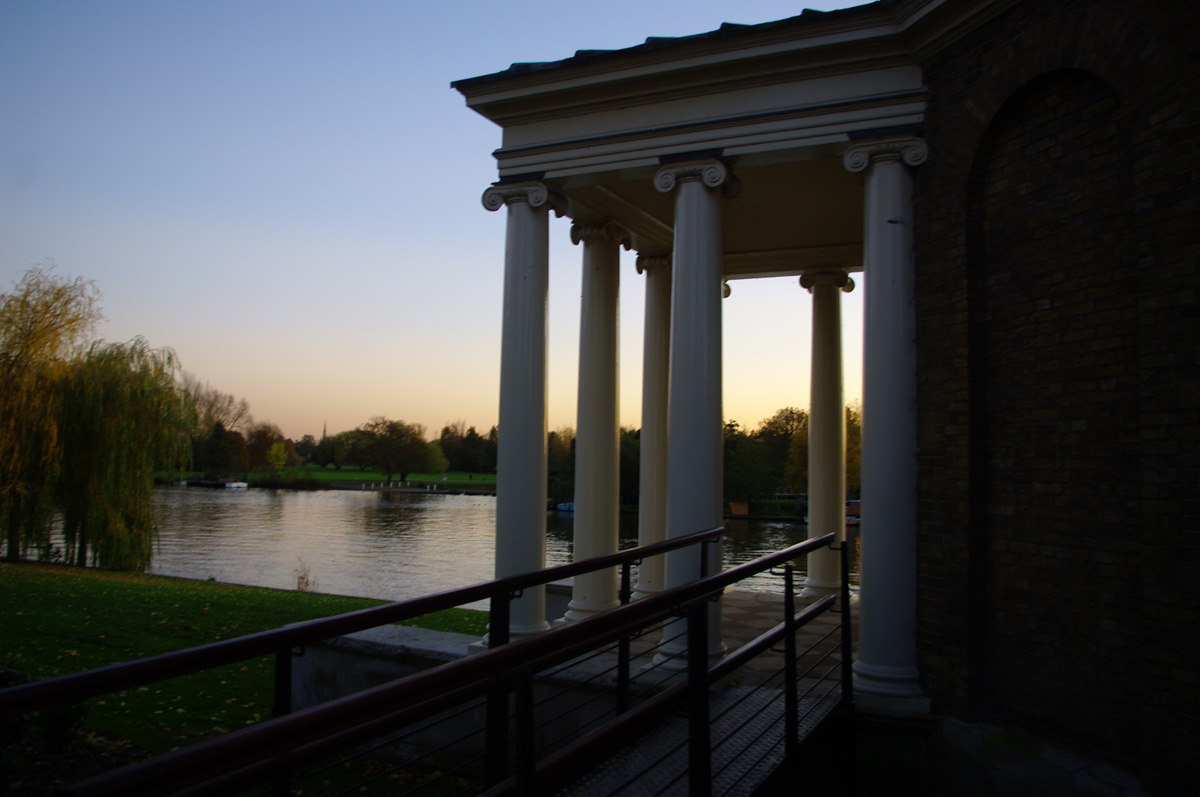
View of the Thames from the Temple. Image @Tony Grant

Gentle reader: This is the first of two articles about David Garrick by Tony Grant. The second will concentrate on the actor’s beautiful house and temple on the Thames.

Read more about the topic

Read Full Post »

Copyright @ Jane Austen’s World

Before that you suffer it to be washed, lay it all night in urine, the next day rub all the spots in the urine as if you were washing in water; then lay it in more urine another night and then rub it again, and so do till you find they be quite out.
Hannah Woolley, The Compleat Servant-Maid, 1677

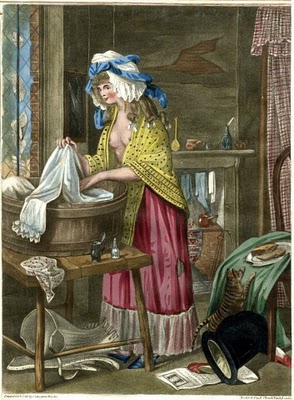
The Last Shift, Carrington Bowles

Urine for spot cleaning? Yes, you read the first word correctly.  Since the middle ages, professionals belonging to guilds manufactured soap and candles, for both products required tallow. They traditionally manufactured soaps from sodium or potassium salt or alkalis present in plant materials, and boiled the ingredients with animal fat. In the 19th century, it was discovered how to make caustic soda from brine. Soap makers no longer relied on cut wood to make soap and the cleaning industry was never the same again.

Before innovations during the Industrial Revolution changed laundry day forever, it was generally known that that alkaline substances, such as bleach or ash, dissolved or disintegrated stains and soils, enhancing the water’s ability to clean clothes.

Urine is alkaline, and since the days of ancient Rome, this by-product of the human body was used as a bleaching agent. “Pecunia non olet — money does not stink”,  Emperor Vespasian reportedly said when he started taxing this trade.*

Yes, urine stinks. But so do bleach and vinegar, a weak acid. The stinking ingredient that turns us off and that makes urine such a good cleaning agent – ammonia – is a substance that our modern cleaning products include in abundance.**  Eighteenth century English wool manufacturers used both urine and sheep or pig manure for washing. In addition, urine also sets dye. (The seller of my beautiful little handmade rug from Turkey cautioned that its vegetable dyes were set with goat urine. Twenty years after its purchase, the rug no longer smells, but its fragile colors must be vigilantly protected from direct sunlight.)

As recently as the early 20th century, urine was collected in barrels in Japan and fermented for use in laundering. The Japanese threw the contents of their slop jar into the barrel, then separated the feces from the liquid urine. The feces were used as fertilizer to enrich the soil, and the urine was collected by laundry shops, who fermented the liquid and used it  as a bleaching agent by pounding it into the cloth. – Edible Soap, A Harmless Natural Soap for the Family. It is the fermentation process that probably made urine safe to handle, much like fermented beer or distilled alcohol were safe to drink in the days before sterilization.

Urine from the animal of choice was also used to improve the complexion. Samuel Pepys’ wife decided to try the urine of puppies (‘puppy-dog water’), for instance, in March 1664 (Diary of Samuel Pepys). This may have been less foolish than spending a hundred bucks on a small pot of modern-day moisturiser, since the ‘active’ ingredient in urine is urea, and urea creams are inexpensive, effective and regularly recommended by dermatologists. – The Thirteenth Depository: A Wheel of Time Blog

This YouTube video uses urine to demonstrate that it is as powerful a cleanser as commercial products.

More on the Topic

*The Historical Development for Washing Laundrys

**Pepys Diary

Read Full Post »

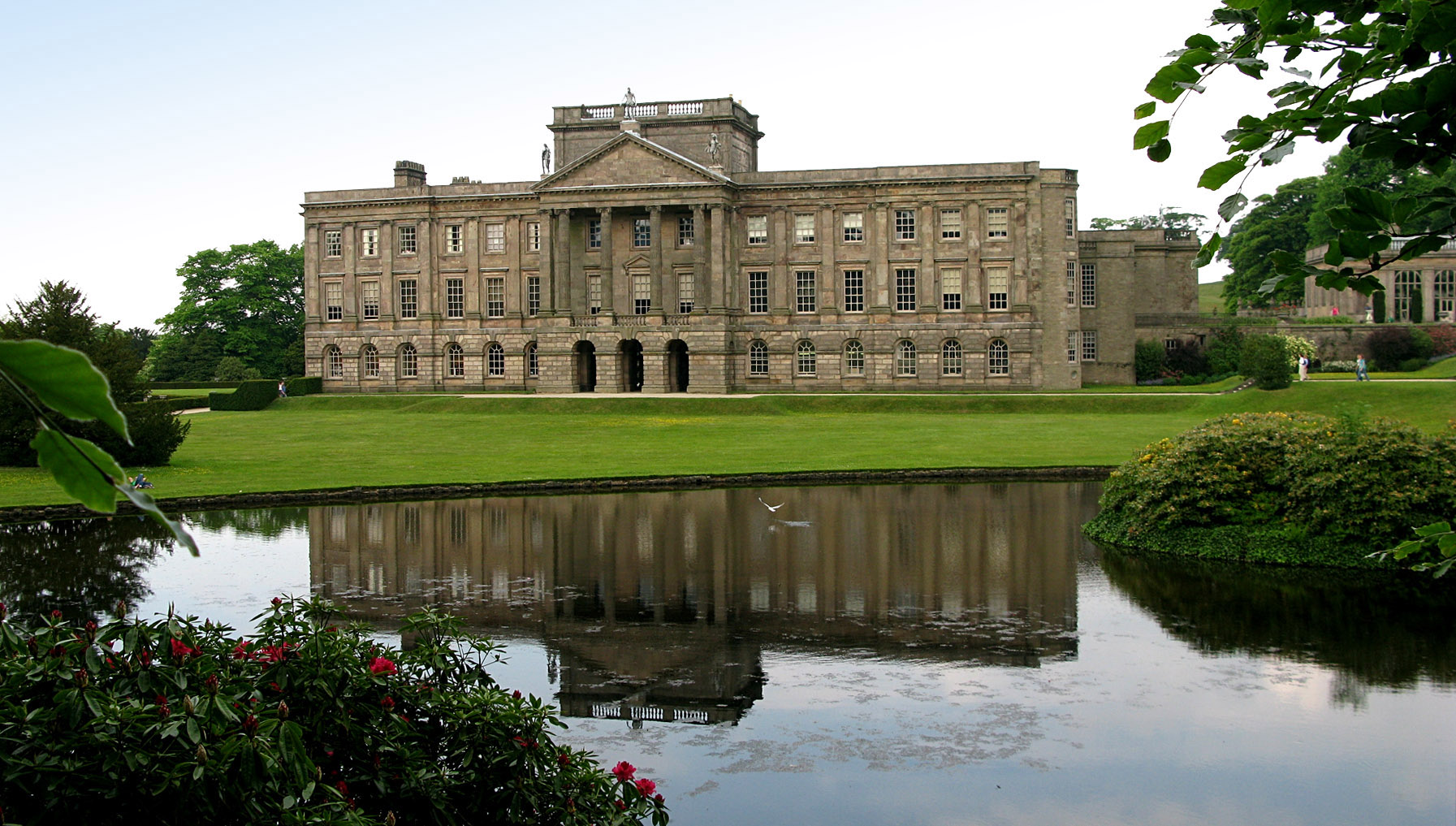
Copyright (c) Jane Austen’s World. Lyme Park in Chesire is best known today as the exterior of Pemberley in Pride and Prejudice 1995. The house, situated near the village of Disley, was the principal seat of the ancient family of Leghs, whose ancestor fought bravely in the battle of Cressy. Once a hunting lodge, the building dates back to Elizabethan times. Its classical facade was designed in the 1720’s by the famed Venetian architect, Giacomo Leoni. The lake made famous by Colin Firth’s dip was once the source of a cascade, or a staircase with water running down it, from 1703-1818.

Lyme Park. Image @Lesley Rigby, Panoramio

The vast moors and lands of Lyme Park housed herds wild cattle and fallow and red deer, which had roamed the area for around five hundred years. Lyme Park’s stags were famous for their size and fierceness, but their wildness did not prevent them from being driven annually across the water. The two sources below do not list the reason for this custom, but one imagines it was to drive the herds to “greener” pastures.

Manners & Customs of all Nations

CURIOUS CEREMONY OF DRIVING DEER THROUGH THE WATER (FORMERLY PRACTISED) IN LYME PARK CHESHIRE

(For the Mirror)

ORMEROD, in his splendid History of Cheshire, says, “The park of Lyme, which is very extensive, is celebrated for the fine flavour of its venison, and contains a herd of wild cattle, the remains of a breed which has been kept here from time immemorial, and is supposed indigenous. In the last century a custom was observed here of driving the deer round the park about Midsummer, or rather earlier, collecting them in a body before the house, and then swimming them through a pool of water, with which the exhibition terminated.”

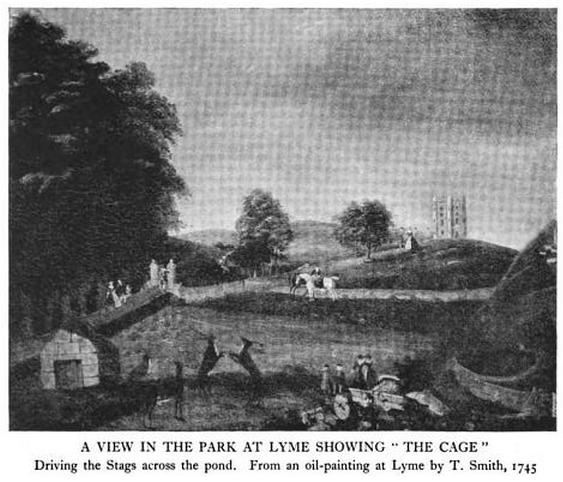
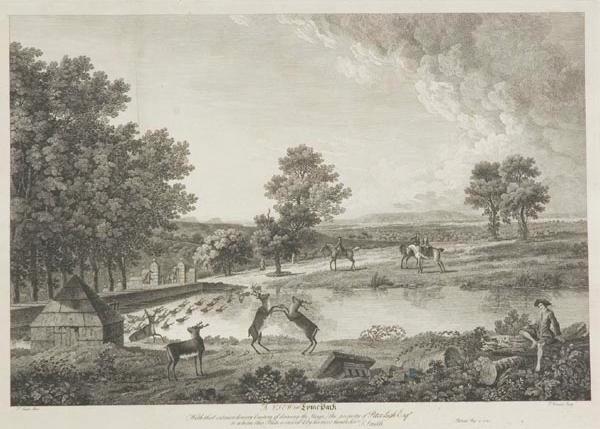
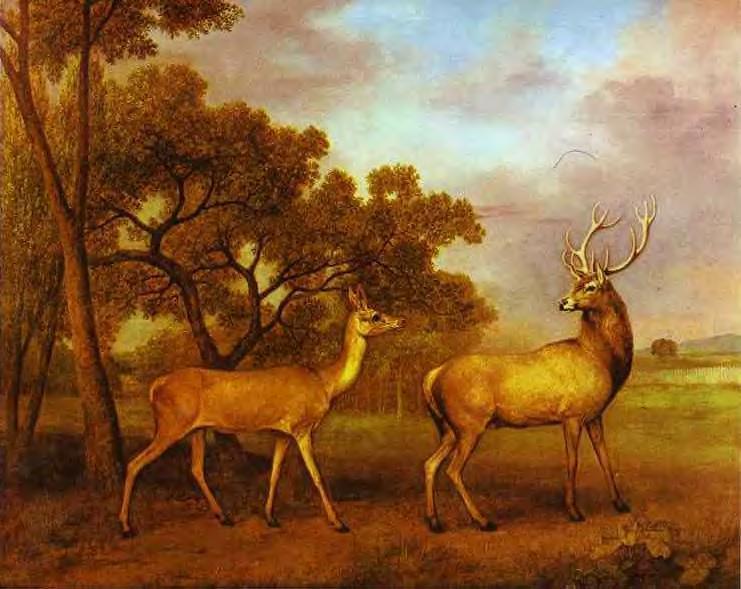
Driving the stags, a view of Lyme Park, 1745. Engraved by F. Vivares after a painting by Thomas Smith. Notice the differences in details between the print and the painting.

There is a large print of it by Vivares, after a painting by T. Smith, representing Lyme Park during the performance of the annual ceremony, with the great Vale of Cheshire and Lancashire as far as the Rivington Hills in the distance, and in the foreground the great body of the deer passing through the pool, the last just entering it, and the old stags emerging on the opposite bank, two of which are contending with their forefeet, the horns at that season being too tender to combat with. This art of driving the deer like a herd of ordinary cattle, is stated on a monument at Disley, to have been first perfected by Joseph Watson, who died in 1753, at the age of 104, “having been park keeper at Lyme more than sixty four years.”

Red deer stag and hind, George Stubbs, 1792

The custom however appears not to have been peculiar to Lyme, as Dr Whitaker describes, in his Account of Townley, ( the seat of a collateral line of Legh,) near the summit of the park, and where it declines to the south, the remains of a large pool, through which tradition reports that the deer were driven by their keepers in the manner still practised in the park at Lyme.” – The Mirror of Literature, Amusement, and Instruction, Vol 14, Percy and Timbs, 1829, p 101-102

In connexion with these deer a very curious custom prevailed at Lyme from earliest times, namely, the driving of the stags at midsummer across a pond, called the Stag Pond — now no longer in existence. This performance was attended by a certain amount of ceremony, it formed a species of entertainment, and neighbours and friends from a distance were invited to be present and to take part in the chase. Vivares,* in a print after a picture by T. Smith,| still preserved at Lyme, represents the stags swimming across the pond, those in the foreground emerging from the water and fighting with their forefeet, the horns being in velvet : in the background are the ladies and gentlemen following the hunt on horseback, dressed in eighteenth-century costume. The print is inscribed :

A View in Lyme Park
With that extraordinary Custom of driving the Stag,

the property of Peter Legh Esqr

to whom this plate is inscribed by his most humble

servant T. Smith

Published Aug : 17. 1745.

* Fran9ois Vivares (1709-1780), a French landscape engraver; came to London 1727 ; kept a print shop, 1750-1780. – The House of Lyme, From its Foundation to the end of the Eighteenth CenturyEvelyn Caroline Bromley-Davenport Legh Newton (baroness), Lady Newton, G.P. Putnam, 1917

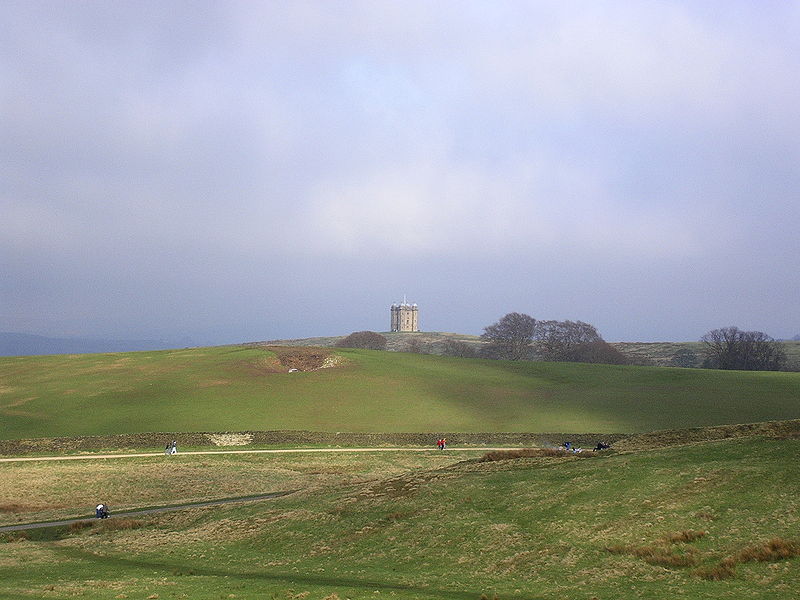
The Cage at Lyme Park overlooking the moors. Image @Wikimedia Commons. The structure was built as a hunting lodge and later used as a lockup for poachers.

More on the topic:
Read Full Post »

« Newer Posts - Older Posts »