Feeds:
Posts
Comments

Archive for the ‘History’ Category

Gentle Readers, It may please you to know that frequent contributer, Tony Grant (London Calling), lives near Richmond Park, a wilderness that has kept its pristine nature for centuries. Enjoy these beautiful photographs.
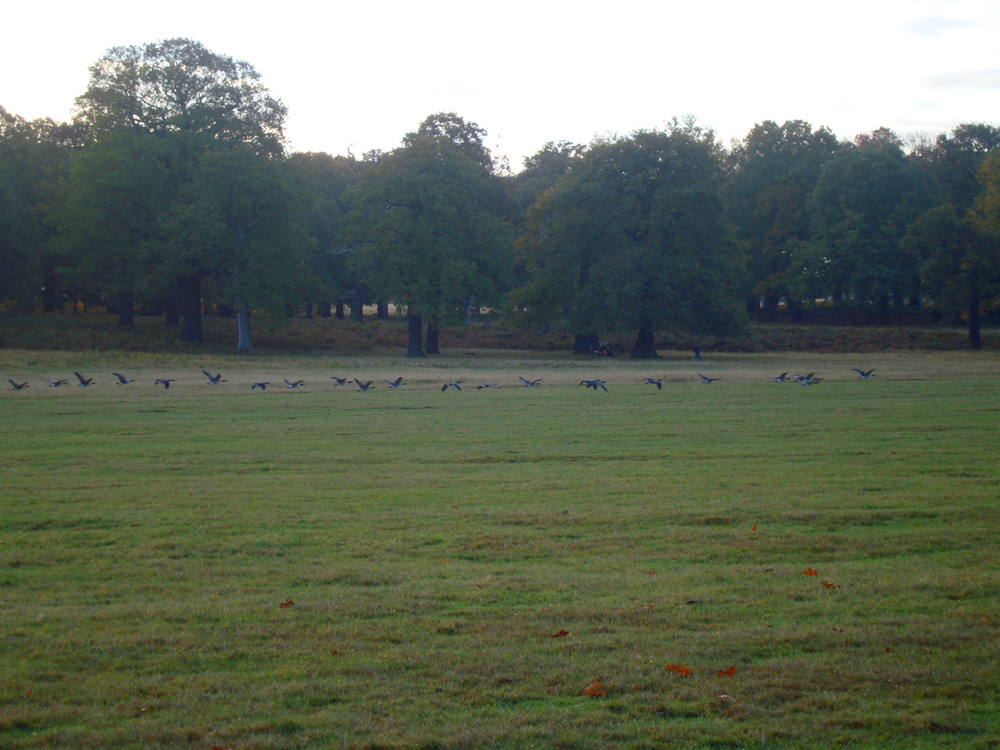
Geese flying towards Pen Ponds

Richmond Park is situated 12 miles south west of St Pauls Cathedral in the city of London. It just happens to be two miles from where I live on the edge of Wimbledon and abuts Wimbledon Common that stretches for a few miles on the other side of the Kingston Road.

Deer at Richmond Park

The Kingston Road is a very old road running between Kingston upon Thames and the City of London. It bisects Wimbledon Common and Richmond Park on it’s way. Jane Austen would have travelled often along it on her way from Hampshire by way of Kingston upon Thames to her brother Henry’s house in Henrietta Street or to one of the other houses Henry owned at different times.
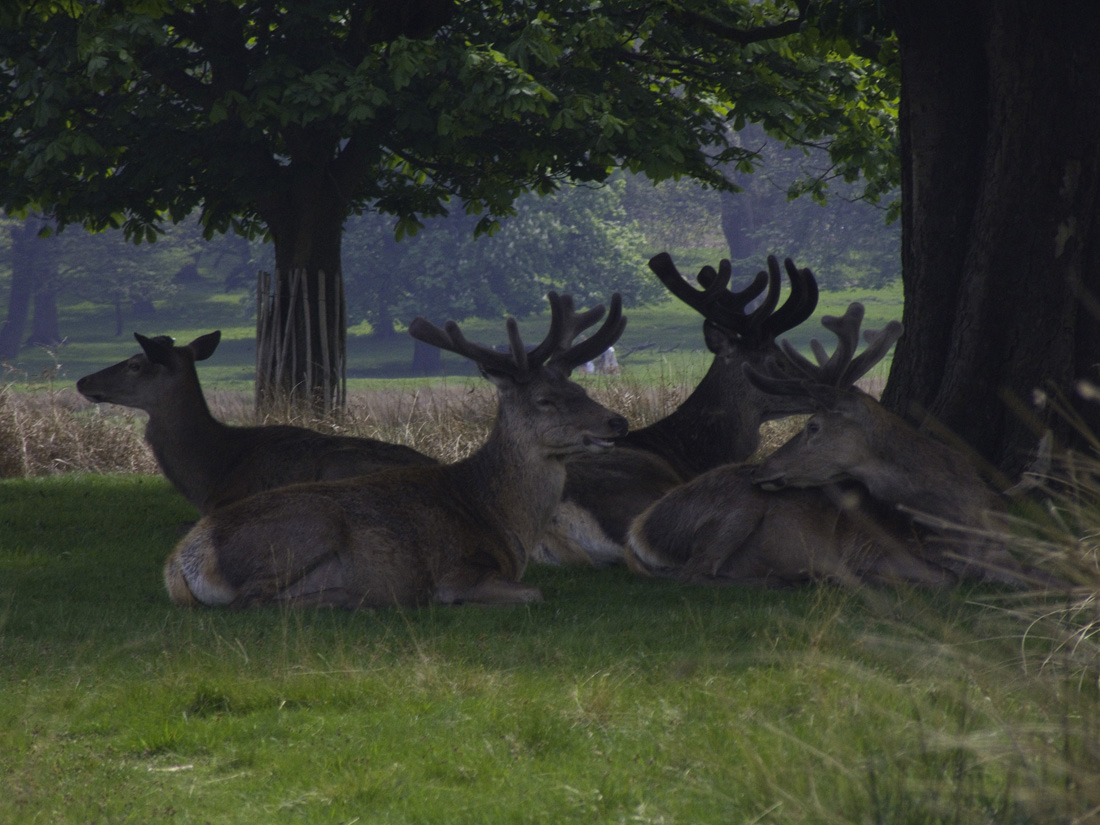
Deer under the trees

The park has always been an untouched piece of wilderness. It has never been adapted or changed by agriculture. It has always been as it is to this day. It covers 2,500 acres. King Edward I who lived from 1272 to 1307 and who was also called Longshanks and The Hammer of the Scots, formed the park in the Manor of Sheen beside the Thames outside of London, as a hunting park stocked with red and fallow deer.

There are six hundred deer in the park to this day. Under Henry VII, who built a palace at Sheen beside the river, the park and the local town was renamed, Richmond. There is a mound or small hill in the park called, Henry VIII’s Mound, where the Tudor king reputedly would spy out likely deer to be hunted. In 1625 Charles I removed the whole of his court to Richmond Palace because of the Black Plague raging through London.

He used the park for hunting too. In 1637 Charles had a wall built around the park, which is still there. The local people were obviously chagrined. Charles passed strict laws about the King’s deer being poached and the wall was an extra deterrent.
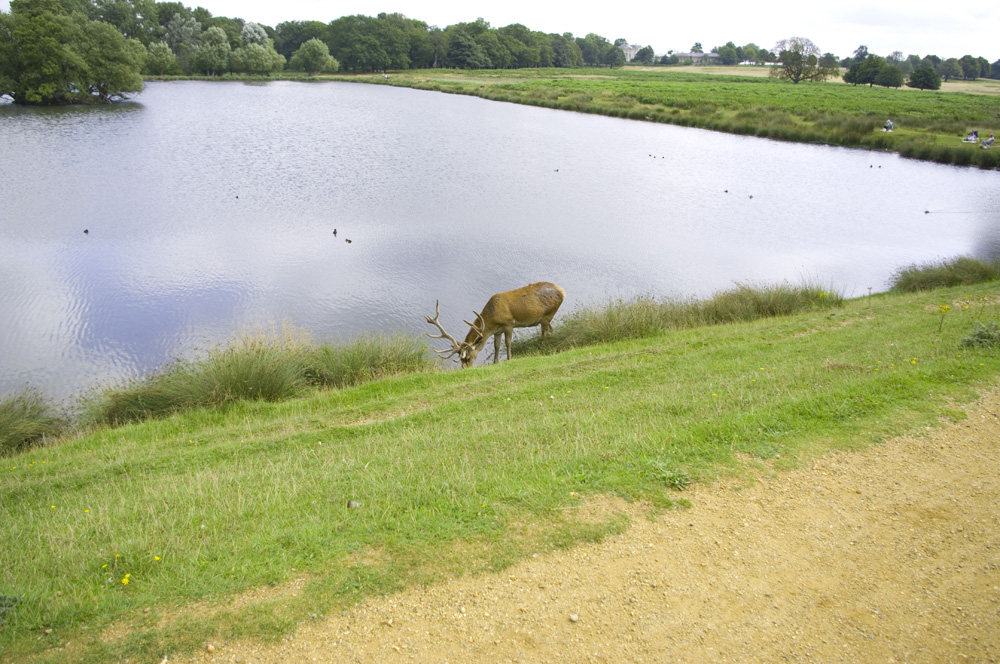
Stag by Pen Ponds

Richmond Park has a strong emotional connection for Marilyn and me. Not only does one of the campuses of Kingston University, where me met as undergraduates, back onto the park and on numerous occasions we scaled the brick wall between Kingston Hill Place, my halls of residence , to get into the park at night but it has great significance to the birth of all our children. Now I know what you are thinking, but you would be wrong. By the way, Kingston Hill Place used to be the home of Lilly Langtry or Jersey Lill, as she was known, the mistress of Queen Victoria’s eldest son Edward VII.
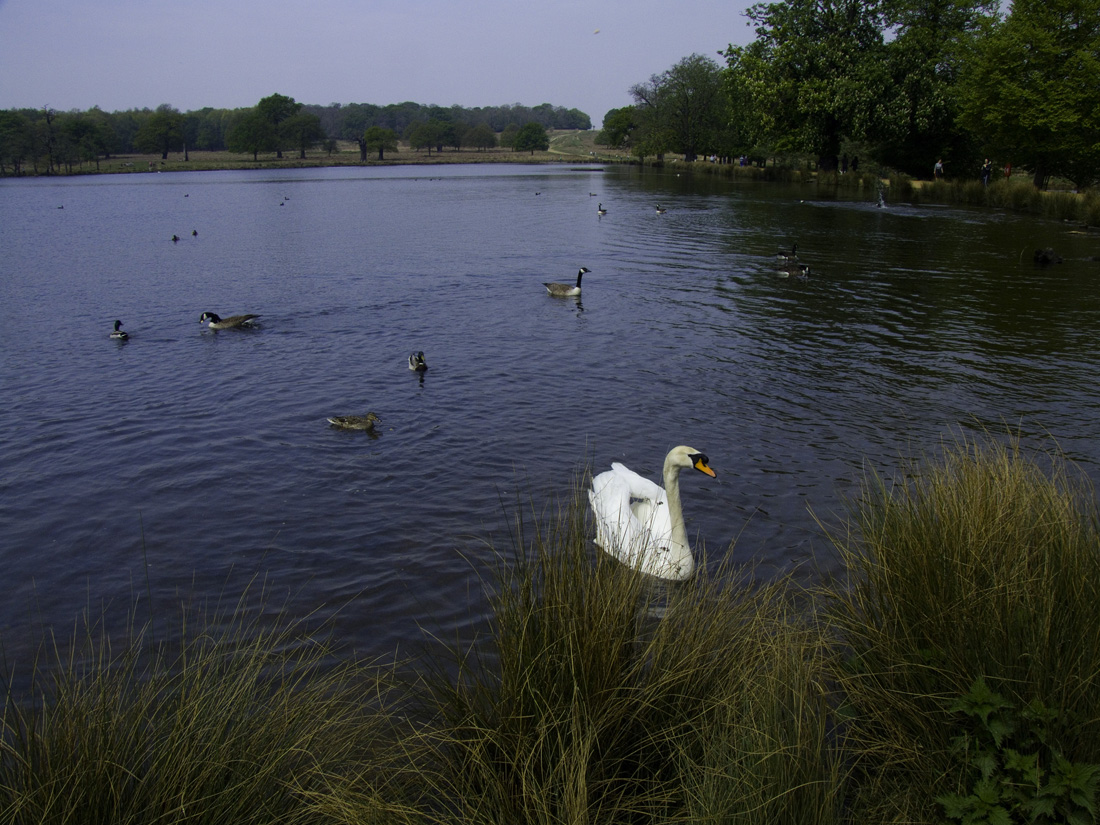
Pen Ponds, Richmond Park

Getting back to the great significance to the birth of our four children. Well, it first happened with Sam, our eldest. The day he was due to be born, 1st July 1986, Marilyn showed no signs of going into labour. We sat around and sat around waiting for something to happen and obviously it wasn’t going to.
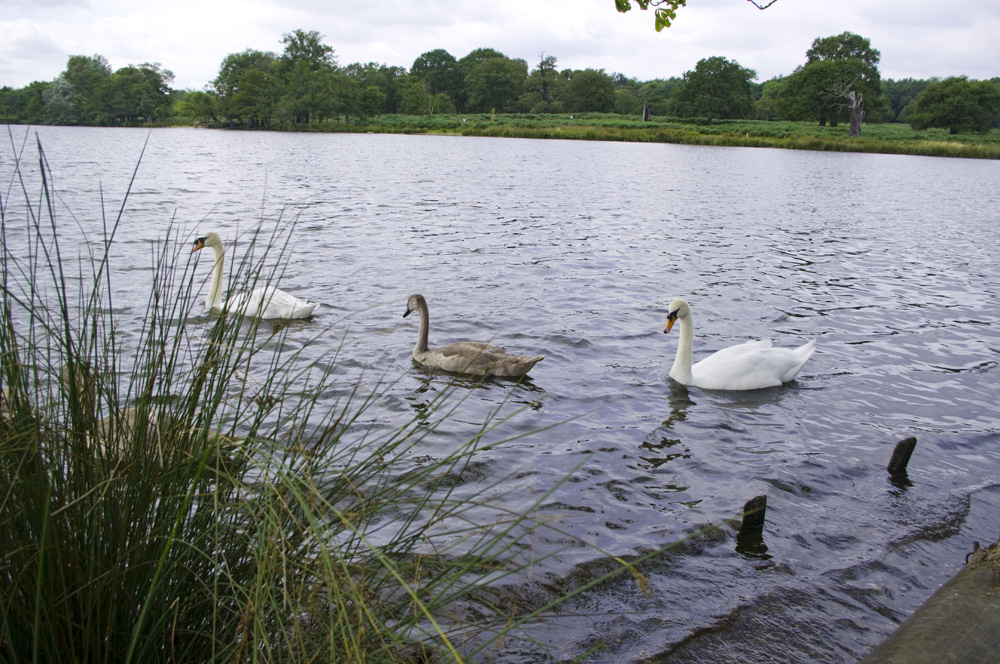
Pen Ponds

We decided to drive to Richmond Park and go for a walk beside Penn Ponds, two beautiful small lakes right in the middle of the park with reed beds and groves of massive ancient oak trees nearby. The ponds have a large variety of water birds, swans, mallards, Canada Geese, coots and many other varieties of ducks inhabiting them. They nest in the reed beds along the edge of the ponds. Richmond Park has been classified as SSSI status. That means it is a site of special scientific interest. Sam was born a week later on the 8th July.
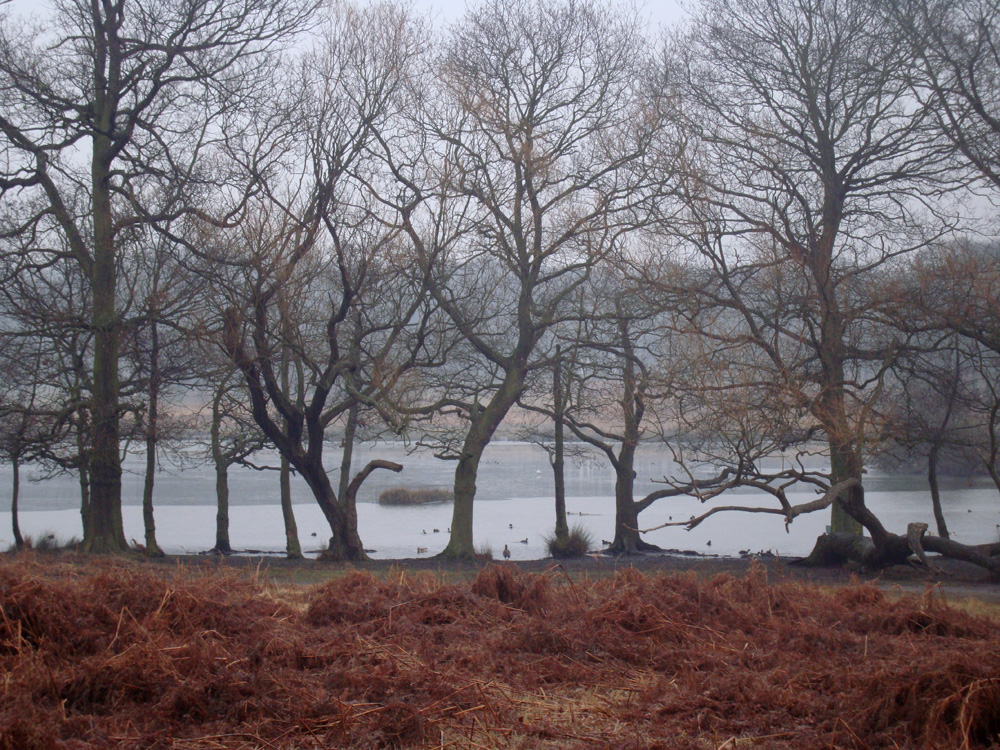
Pen Ponds in the Rain

When Marilyn [Tony’s wife] was pregnant with Alice we followed the same routine, a day beside Penn Ponds and then after that, we did the same with Emily and Abigail in later years.
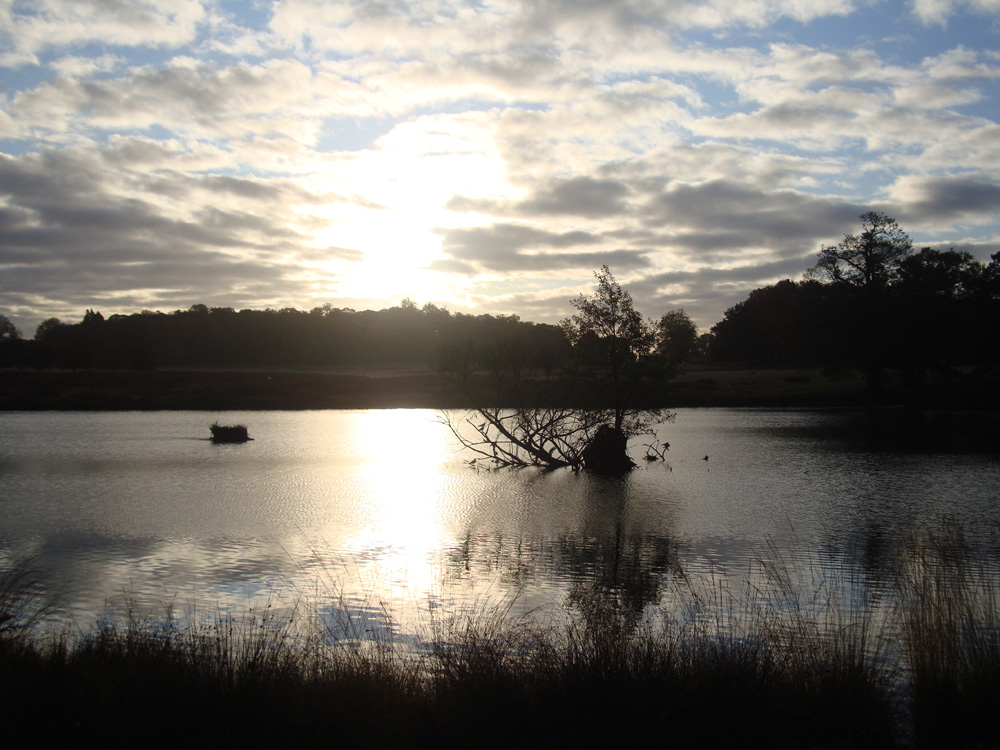
Pen Ponds

All of our children were born late. You might think, weren’t you taking a chance? What if Marilyn had gone into labour on the predicted date? Ah well you see, Kingston Hospital is right next to Richmond Park. All we needed to do was climb over the wall. No sorry, let me get that right; drive a short distance to the maternity department.
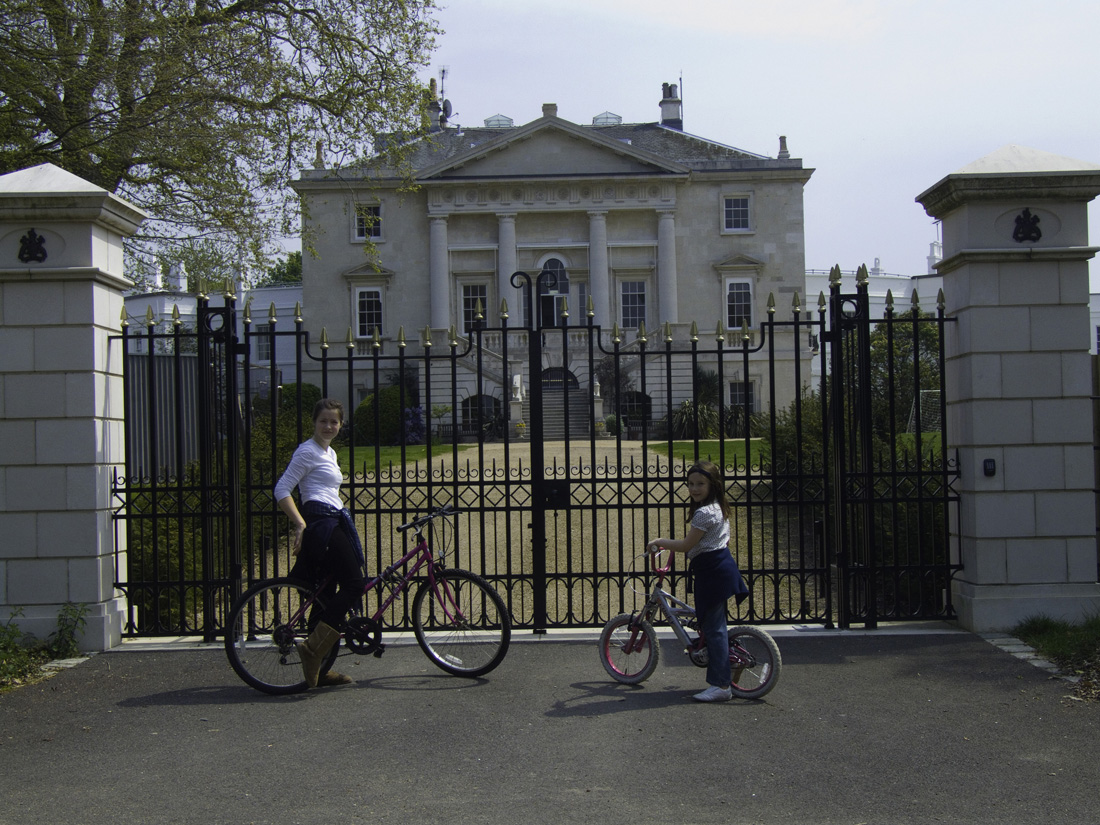
My daughters outside the Royal Ballet School

There are a number of beautiful houses inside Richmond Park. White Lodge,in the centre, is the home of The Royal Ballet School. All our great ballet dancers train there from an early age. In the film Billly Elliott, that is where he went to train as a dancer. White Lodge is an elegant 18th century pile that used to be a country house belonging to Edward VII.
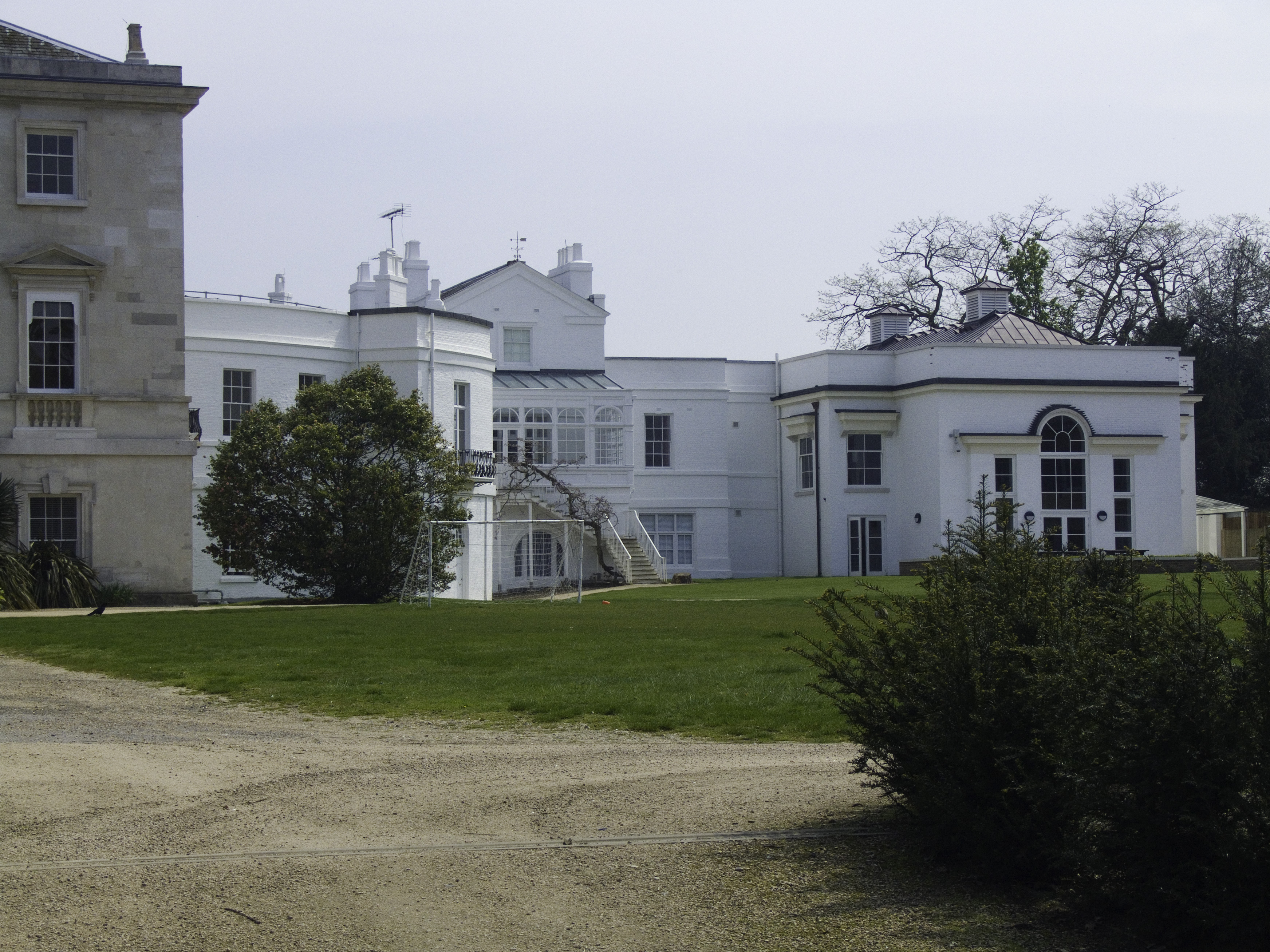
Outside the Royal Ballet school

Pembroke Lodge, situated on a high hill overlooking the River Thames and Kingston upon Thames is situated on the edge of the park. It used to be the home of Lord John Russell, a prime minister during the reign of Queen Victoria. He was the grandfather of Bertrand Russell, the philosopher. Bertrand Russell spent much of his childhood at Pembroke Lodge.
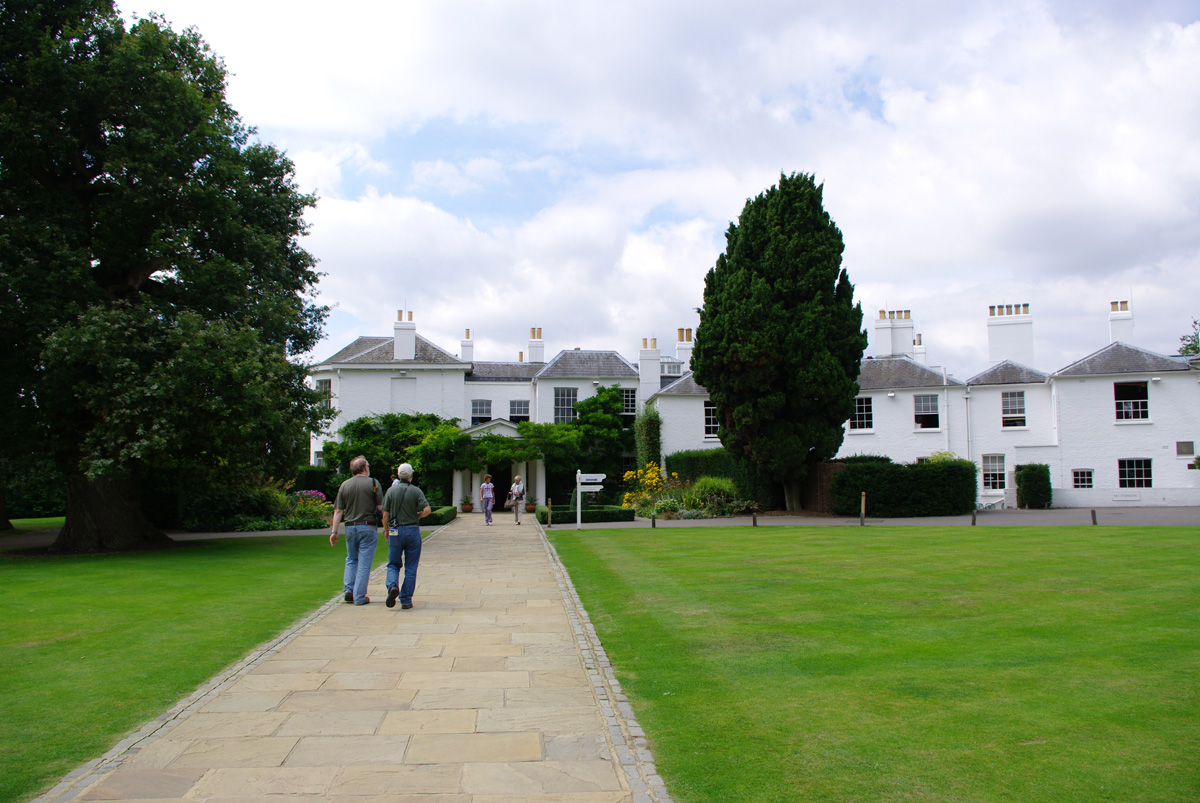
Pembroke Lodge

Pembroke Lodge is now a café and restaurant. It is a great experience to sit on the terrace of Pembroke Lodge on a summers afternoon looking out over the Thames sipping Earl Grey or Lapsang Souchong, and eating a scone with clotted cream or homemade strawberry jam.
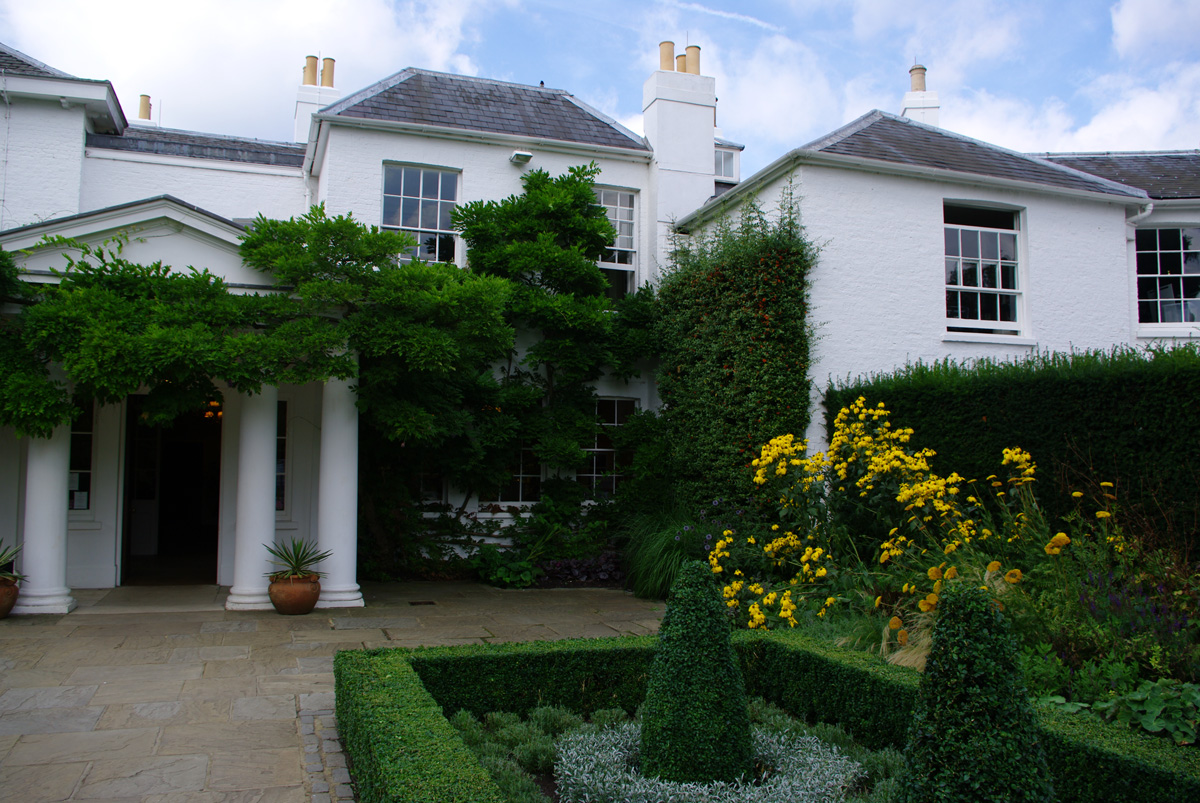
Pembroke Lodge entrance

Richmond Park is wonderful to take long walks. There are many massive ancient oak trees. Some must be four or five hundred years old. A few have been scarred by lightning strikes.
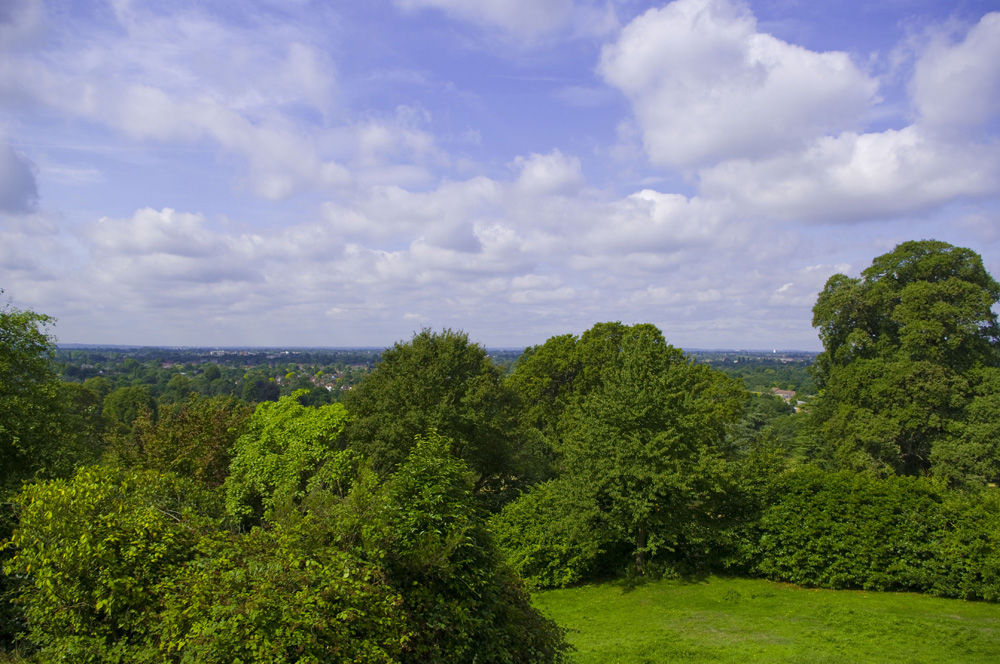
Pembroke Lodge view

You will see deer grazing in amongst the vast areas of bracken. An unexpected sound and sight are the flocks of green parakeets that have inhabited parts of Richmond Park.
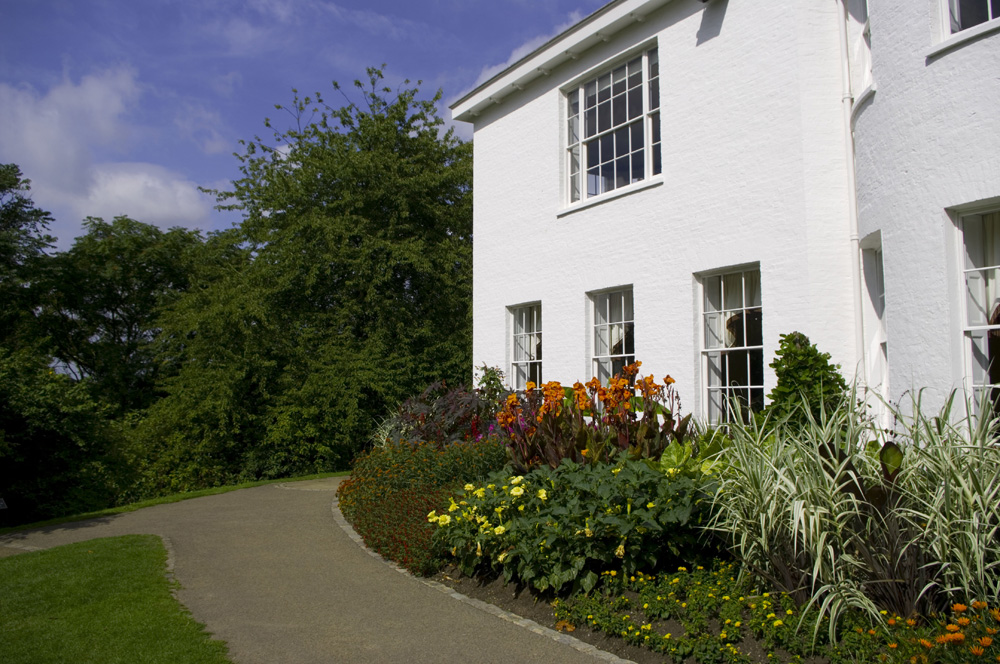
Pembroke Lodge

The story goes, whether myth or reality , is that in the 1940’s Treasure Island was being filmed at Pinewood Studios. They had parakeets on the film set and some escaped and began breeding in Richmond Park. A similar story centres around the making of The African Queen with Humphrey Bogard. It too was being filmed partly at Pinewood. Again the story goes that parakeets escaped from that film set too. I don’t know how much truth there is any of these stories but there is, without doubt, a colony of green parakeets living and breeding in Richmond Park. I have had a few land and rest in the branches of the apple trees in my own garden.
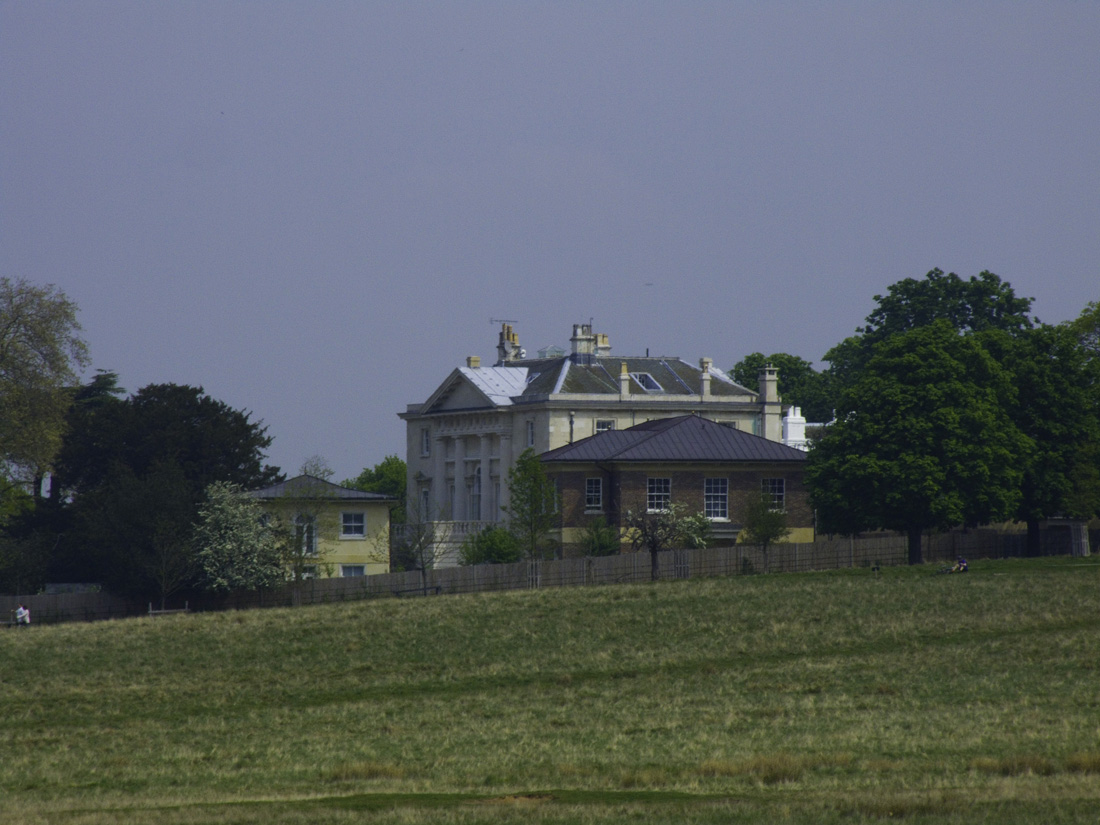
The Royal Ballet School

There are a number of plantations that are fenced off from the rest of the park so deer cannot eat the shrubs and trees growing in them.
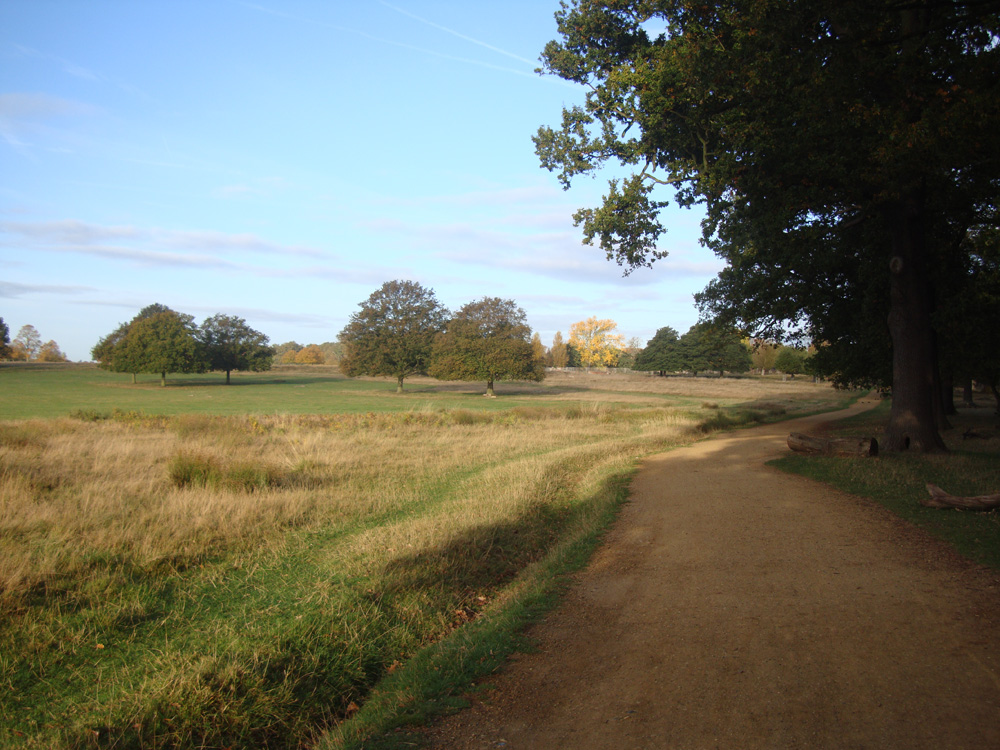
Walk in the park

The Isabella Plantation is the most wonderful example of them all. It is a woodland garden at it’s best. In the spring when the bluebell woods are carpeted in blue it lifts the spirits and is a joy to behold. Many of the bushes and shrubs situated in glades and beside the sparkling stream that runs through the plantation create an emotional and spiritual experience.
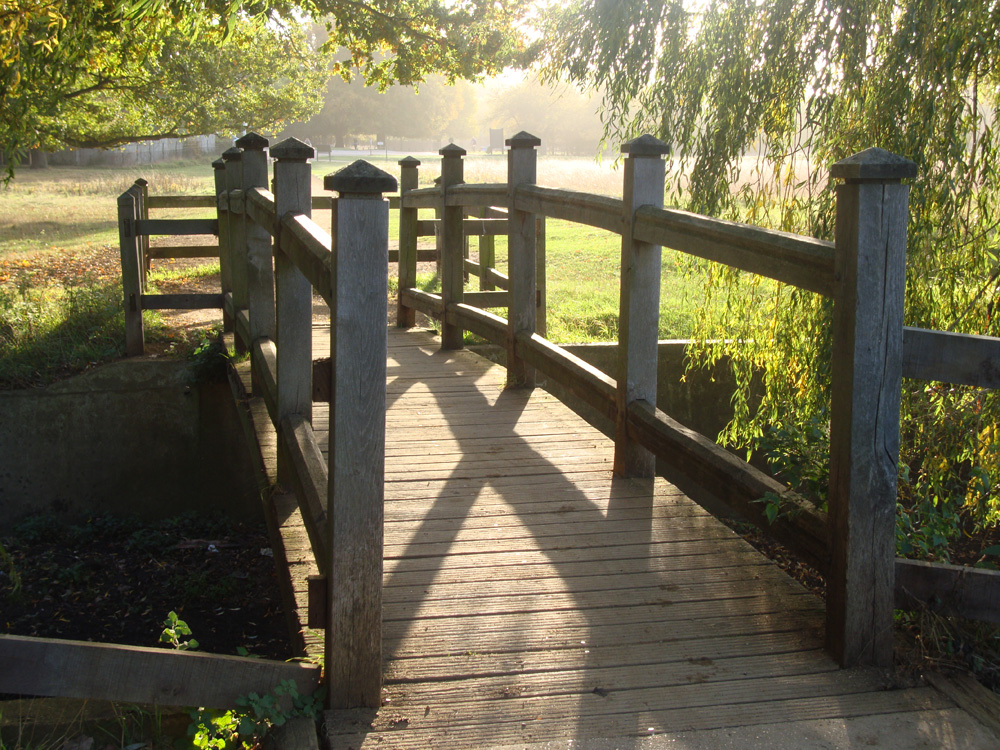
Foot bridge

The Isabella Plantation is one of those places on earth that sooths the spirit and fills your eyes with beauty. To sit on the grass and listen to the birds and look at the camellias, magnolias, azaleas and rhododendrons is wonderful. The plantation is run on organic principles and because of this it is home to a great variety of insects and mini beasts.
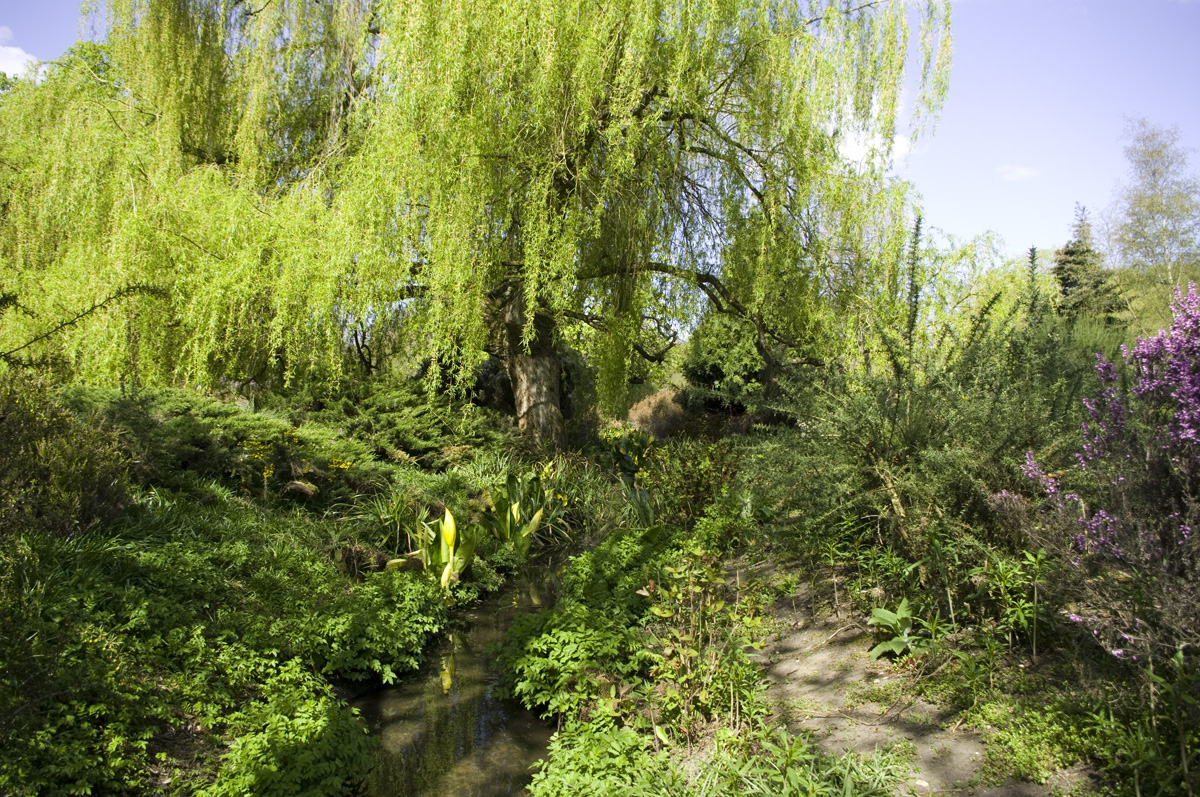
Wild corner

Here is a quote from the web site dedicated to the Isabella plantation.

“In spring, visitors can see camellias, magnolias, as well as daffodils and bluebells. From late April, the azaleas and rhododendrons are in flower. In summer, there are displays of Japanese irises and day lilies. By autumn, guelder rose, rowan and spindle trees are loaded with berries and leaves on the acer trees are turning red. Even in winter, the gardens have scent and colour. There are early camellias and rhododendron, as well as mahonia, winter-flowering heathers and stinking hellebore.”

The present plantation was developed by George Thomson , the park superintendent from 1951-1971.
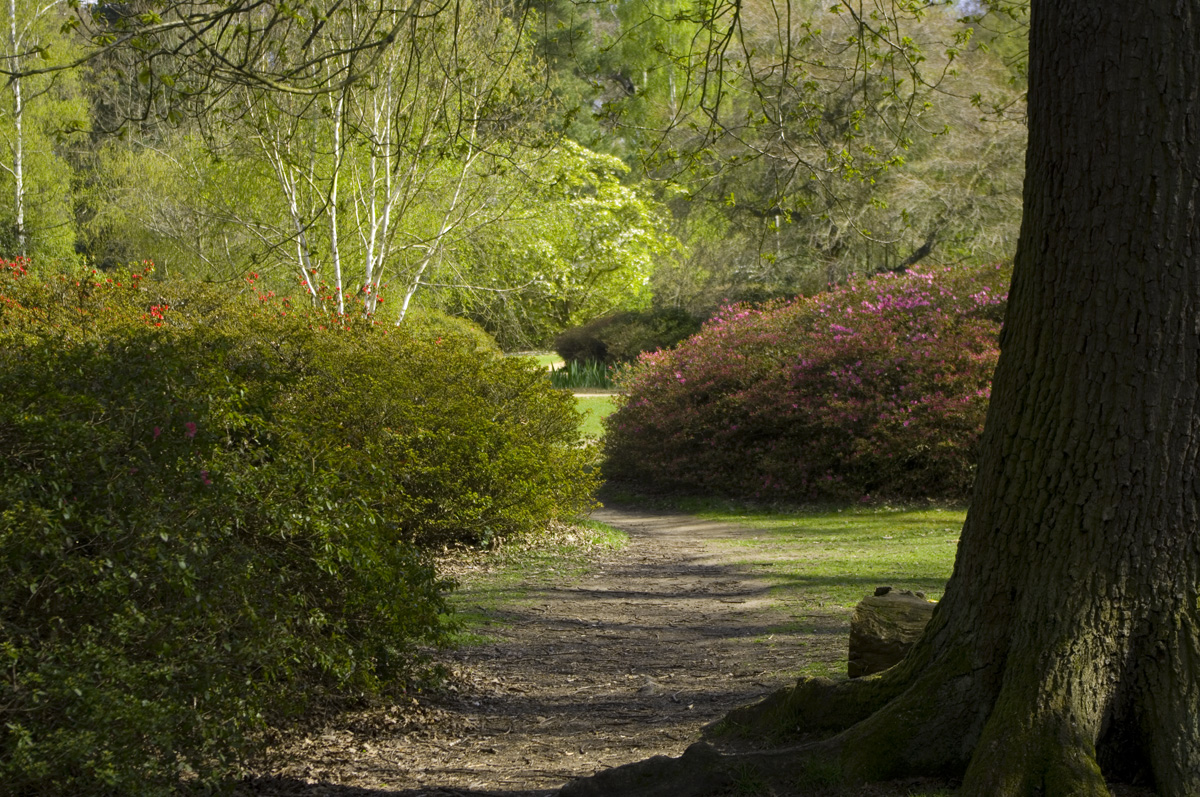
Woodland paths

Some recent news for you Hollywood A list watchers. My local paper had a small news item. Brad Pitt has been spotted taking pictures of the deer in Richmond Park recently. He is over here filming at the moment. He and Angelina are living in a house, a grand house I am sure, by the Thames at Richmond.
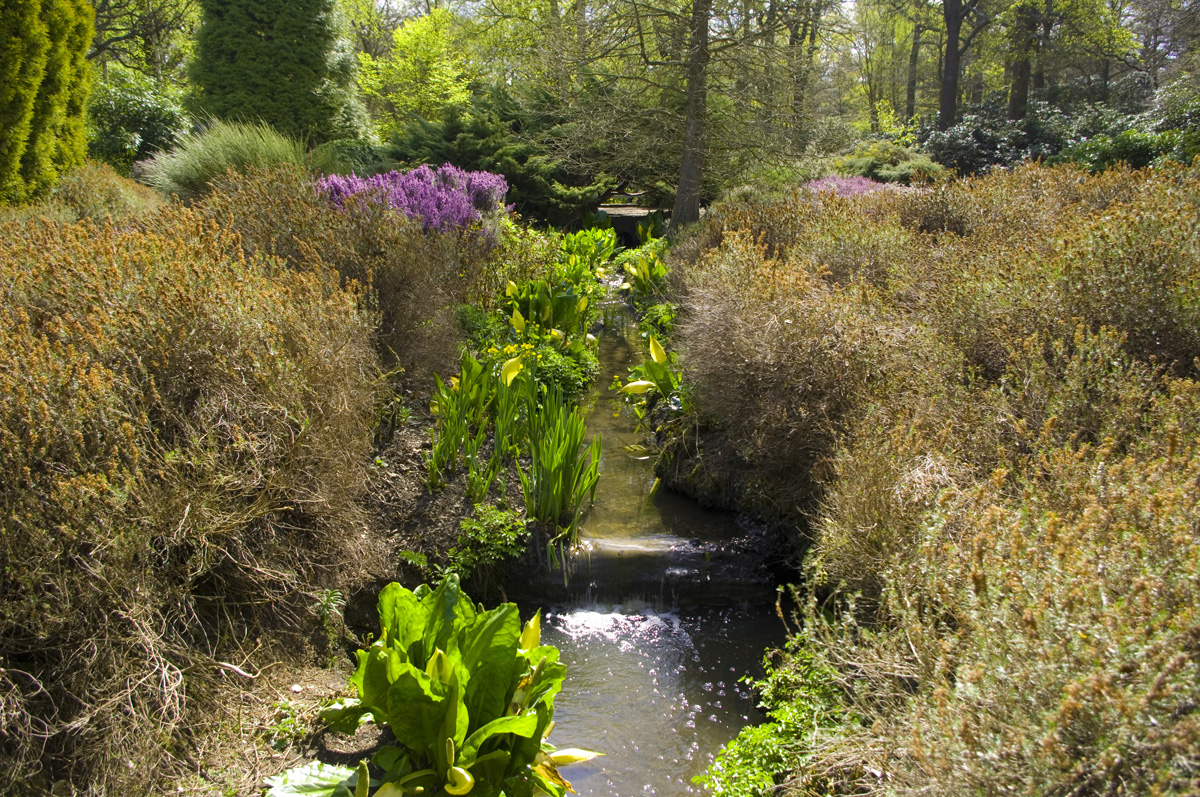
Woodland stream and flowers

Outside the Richmond gate is a large elegant brick building called The Star and Garter Hospital. It is a special hospital for aged military servicemen and women from all wars. They also have the poppy factory next to it. We celebrate the dead of our wars on November 11th every year which was the First World War Armistice Day. The fields of Picardy, in Northern France, where much of the terrible deadly trench warfare took place, were covered in wild poppies in the Spring. Somebody thought the poppies represented the drops of blood from the dead who lay in those fields so the poppy was taken as the British symbol to remember the dead.

In Flanders fields the poppies blow
Between the crosses, row on row,
That mark our place; and in the sky
The larks, still bravely singing, fly
Scarce heard amid the guns below. – John McRae
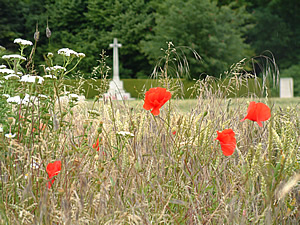
Poppies in Connaught Cemetery. Image @The Great War

Just down the hill from the park, in Richmond town, there is a house called Hogarth House. It was in this house that Virginia Woolf lived with her husband Leonard for many years and began The Hogarth Press, named after the house. Virginia Woolf, in her diaries, often mentions going for walks with Leonard and friends in Richmond Park.
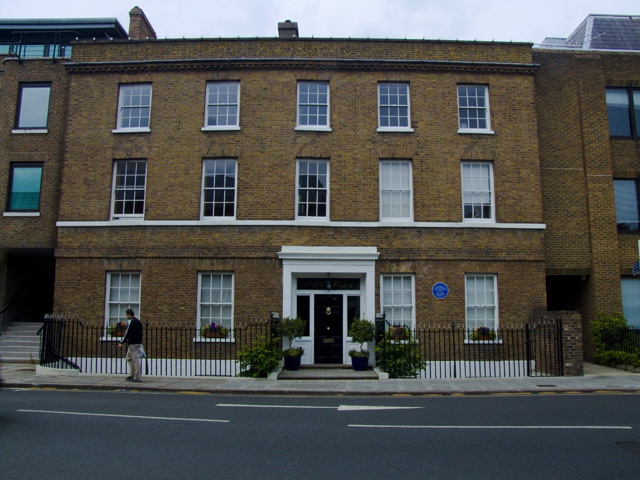
Hogarth House, Richmond

More on the topic:
Read Full Post »

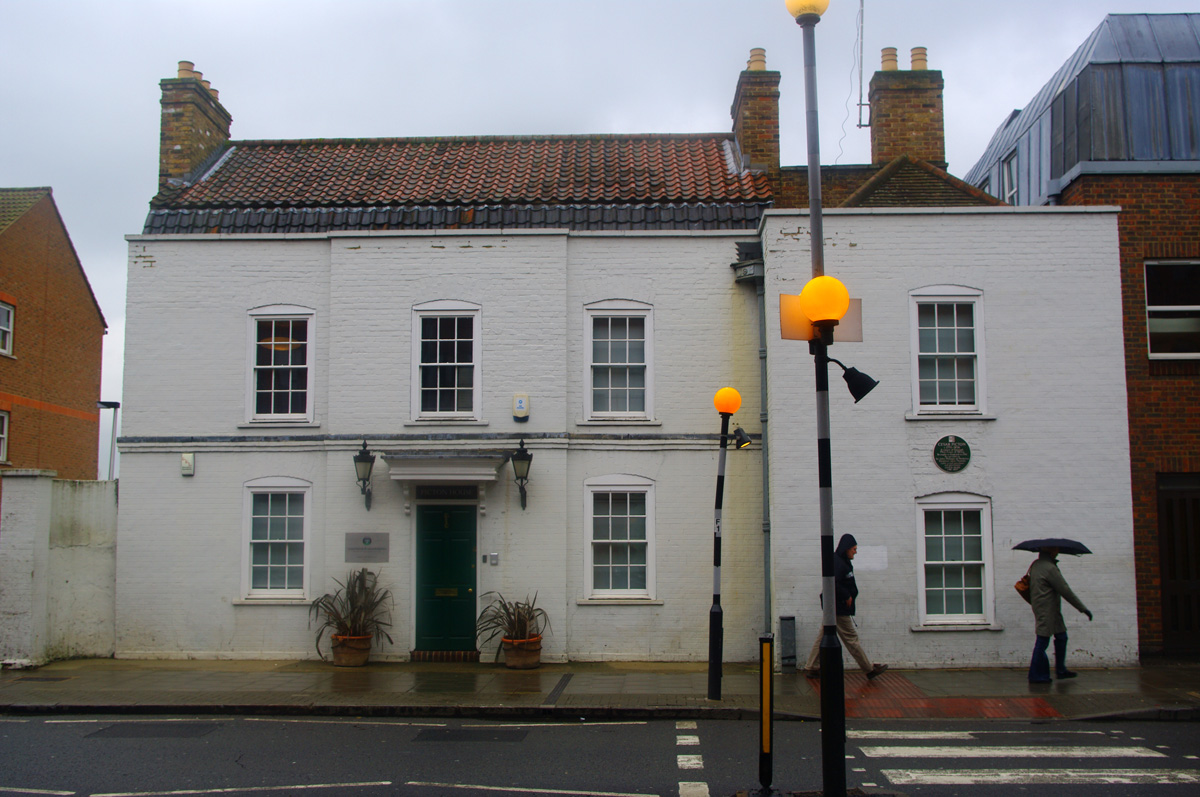
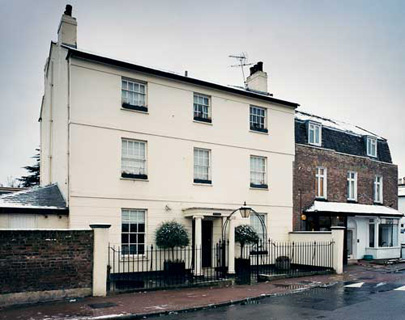
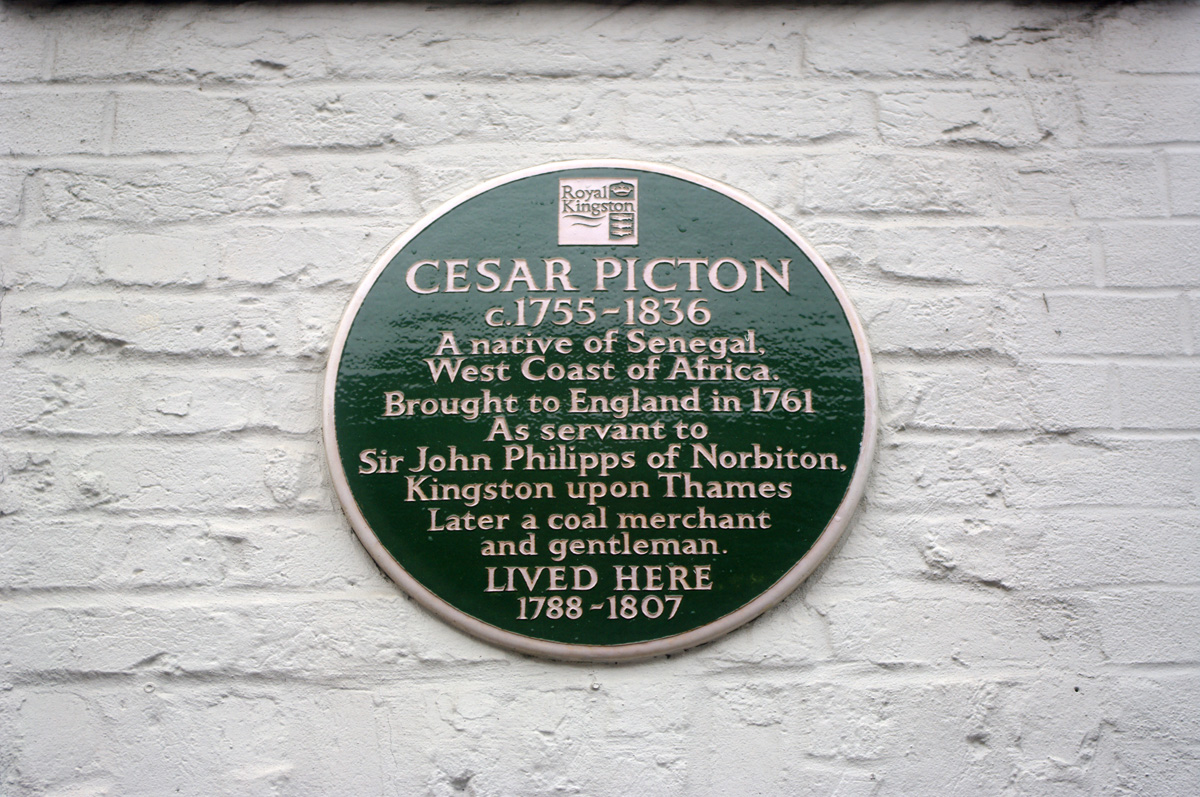
There is an old 18th century white washed house in The High Street of Kingston upon Thames that backs on to the river. On the road side there is a large circular green plaque positioned on the outside wall of this house that reads:

“ Cesar Picton
c1755-1836.
A native of Senegal
West Coast of Africa.
Brought to England in 1761
as servant to Sir John Philips of Norbiton
Kingston upon Thames.
Later a coal merchant and gentleman.
Lived here 1788 – 1807.”

Cesar Picton's house, front. Image @Tony Grant

Cesar Picton was a slave in the ownership of Sir John Philips, and was made a freed man. It is interesting to note that 1807, the last year Cesar Picton lived in this house, before he moved to Thames Ditton, a few miles away,  the year the slave trade was abolished in Britain. It would be another twenty-six years before slavery itself would be abolished.

The road outside Cesar Picton's house. Image @Tony Grant

Cesar Picton

But Cesar Picton was a freed man long before this  event and already a prosperous merchant. His freedom had to do with Sir John Philips and what he and his family believed. Jane Austen would have passed through Kingston at the time Cesar Picton was a gentleman and merchant there. I wonder if she saw him in the streets? Jane’s family must have had close connections with slavery. Her brother Henry was a banker. Most of the wealth of Britain at the time came from slavery. Her brother Charles was a Royal Naval captain and was stationed on the North American station, often calling into Bermuda. His ship must have been used to protect the slaving ships that the fictional SirThomas Bertram, in Mansfield Park, relied on for his wealth in the plantations.

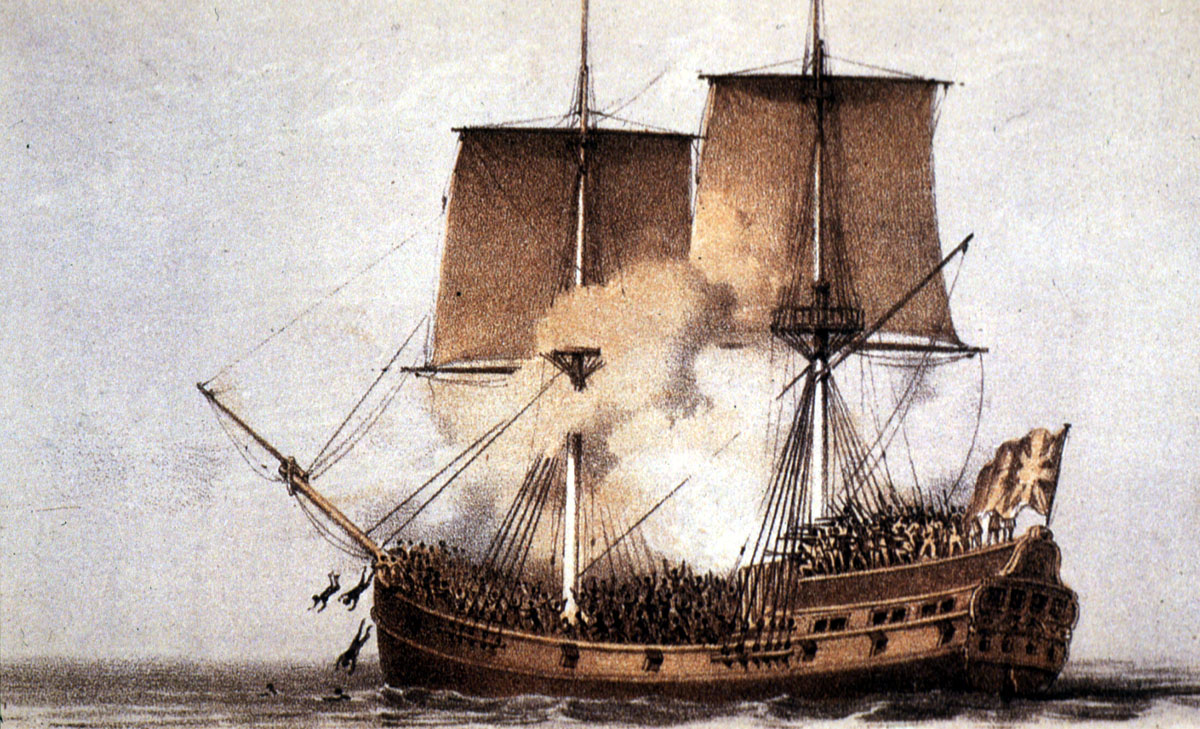
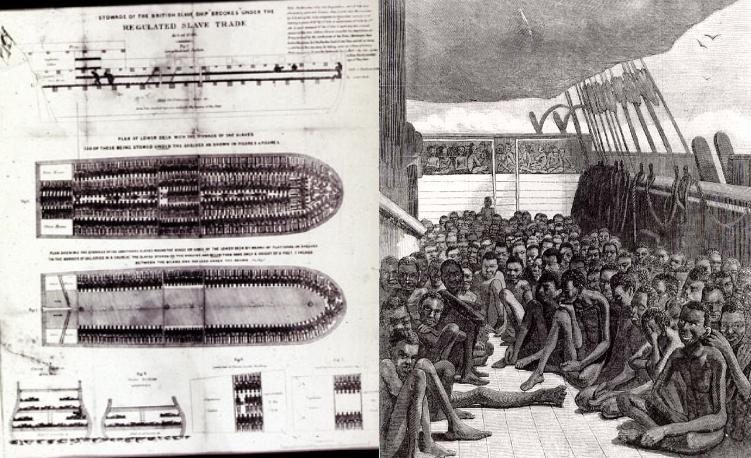
Slave ship, Bristol

Apart from this oblique reference in Mansfield Park, Jane never mentions slavery or her views about it. During her lifetime the slave trade was abolished but not slavery itself. But change was happening, and by the time Cassandra died slavery was seen as a repugnant thing and was abolished. Was it one of the reasons Jane’s letters were culled by Cassandra in later life? Did she try to hide Jane’s – perhaps – unpopular views in the tide of anti slavery? We will never know.

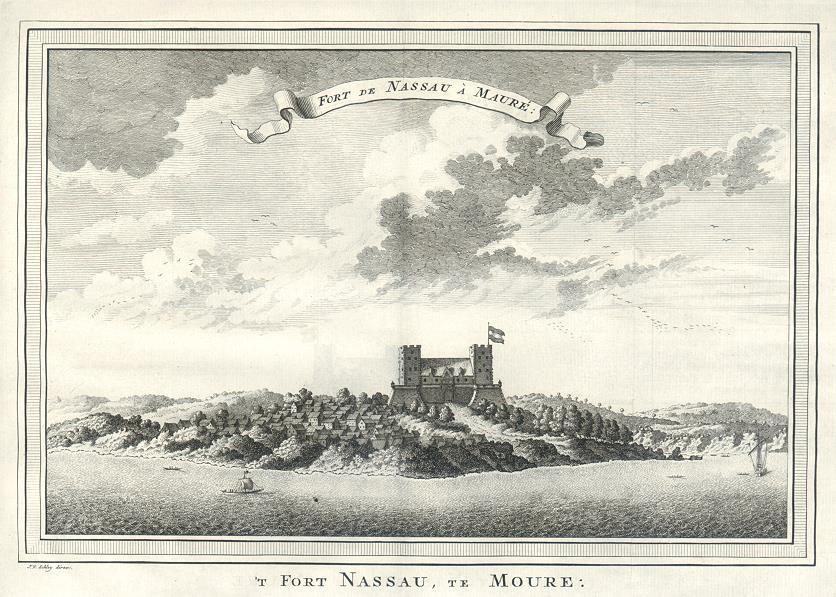
The year 1761, when Cesar Picton was brought to Britain by Captain Parr of the British Army especially for Sir John Phillips,  is an interesting one. Senegal had been British up to 1677, when the French took it over. France and Britain had been at war in the late18th and early 19th centuries. Goree, the island just off Senegal that was used for trading slaves, changed hands briefly during these wars back and forth between the British and French. It could well have been during one of these brief spells in charge by the British that Cesar Picton was bought as a promising servant for a wealthy man back in England.

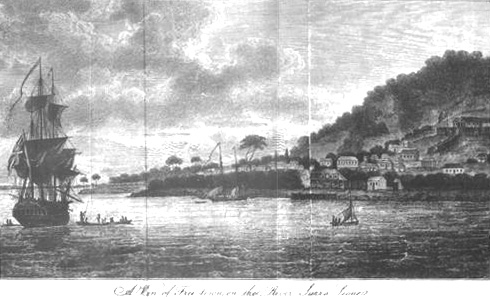
There must have always been an element in British religious and moral sensibilities that saw these African slaves as equal human beings and at a high government level. In 1788 Britain set up a settlement for freed slaves further along the coast from Senegal to accommodate slaves from the plantations of Virginia and Carolina. They had helped the British fight The War of Independence against the Americans, and a place for them to live had to be found after the British retreated from America. Nova Scotia was their first settlement, but the climate was too cold.

Freetown, Sierra Leone, 1803

Sierra Leone on the West African coast was set up for them, and Freetown, the capital, was established. But slavery was a vital element in the Empire for trade and financial wealth. It couldn’t be given up that easily, no matter how much it pricked certain people’s consciences, and the majority of people in England were kept ignorant of what went on in the slave plantations.

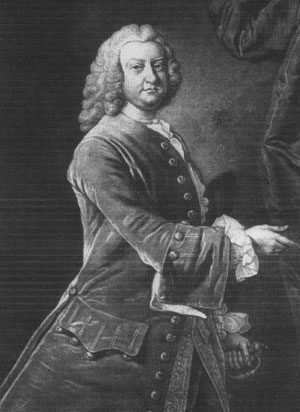
Sir John Philipps

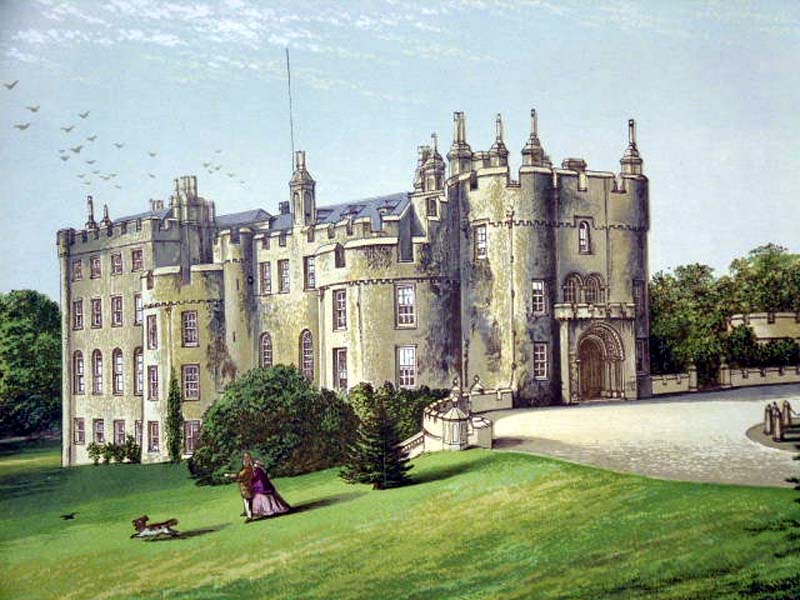
Sir John Philipps (1666 – 1773), the gentleman who obtained Cesar Picton, was a member of an illustrious family whose main seat was Picton Castle, near Haverfordwest in Pembrokeshire, South Wales. In the 18th century, the Philips family was the most powerful family in the political, social, and economic arenas  in Pembrokeshire. Sir John Philips, who owned large areas of land in Wales, was a philanthropist who supported the building of schools. He built twentythree of them in Pembrokeshire alone. He also built schools in Camarthenshire.

Fort Nassau, Senegal, 1760

It was to Picton Castle in Wales that Cesar Picton was first brought from Senegal. He then took the name of the castle as his surname.

Picton Castle, Pembrokeshire, 1865

Sir John Philipps attended Westminster public school in 1679 when he was 13 years of age. He went on to Trinity College, Cambridge between 1662 to 1664, and was admitted to Lincolns Inn in 1683. He did not complete his degree at Cambridge, and he was not called to the bar either. Sir John appears to have wasted his time and seemed to have enjoyed a frivolous life style when he was young. However by 1695 he became the Member of Parliament for Pembrokeshire. He remained a Member of Parliament until 1702. He then later returned to parliament for Haverfordwest and remained there until 1772. On the 18th January, 1697, Sir John’s father died, and he became the 4th baronet. In the same year he married Mary, the daughter and heiress of Anthony Smith, a rich East India merchant. Sir John had influential friends and great wealth. His sister Elizabeth’s daughter married Horace Walpole in 1700.

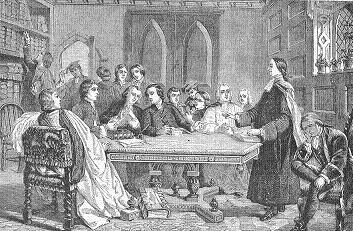
The Oxford Holy Club

From 1695 to 1737, Sir John was a leading figure in many religious and philanthropic movements. Most important of all, in relation to Cesar Picton, Sir John was a member of The Holy Club. The Holy Club had many religious reformers amongst its numbers, A.H. Francke, A.W. Boehme, J.F. Osterwald, John and Charles Wesley and George Whitefield. These were Evangelists, Methodists and Quakers. It was from amongst these religious colleagues that the anti slavery movement found it’s strength and became an unstoppable force. Sir John was part of a group therefore that constructed the legislation to abolish the save trade and eventually abolish slavery. In his treatment of Cesar Picton we can see these beliefs in early action. It might have been that Sir John Picton actively sought a slave from Senegal with the express purpose of freeing him once back in England and supporting him to become a wealthy esteemed member of society. Maybe Cesar Picton was his proof that slaves were his equal. This is what happened to Cesar Picton.

Cesar Picton's coal wharf site. Image @Tony Grant

Cesar Picton was six years old when he was brought to England by Captain Parr , an British Army officer who had been serving in Senegal.. He was given to Sir John Philips along with a parakeet. Cesar was born a Muslim but soon after arriving in Sir John’s household at Picton Castle he was baptised and given the name of Cesar on the 6th December 1761. He was dressed as a servant wearing a velvet turban, which cost 10 shillings and sixpence. It was fashionable for black servants to be richly dressed. There were very few black servants in England. Only very rich merchants and the wealthy aristocracy would have them. They were not treated the same as slaves which were used in their tens of thousands on the sugar, tobacco and cotton plantations of the West Indies and the mainland coast of America. Normally a black servant would have been the personal servant of the male head of the household but Cesar became the favourite of Lady Philips. He mixed with the family on equal terms. Sir John’s philanthropic and religious beliefs were applied to the treatment of Cesar.

Horace Walpole

Horace Walpole, the younger son of the first British Prime Minister Robert Walpole. who married Elizabeth the sister of Sir John, wrote in a letter to a friend in 1788,

“I was in Kingston with the sisters of Lady Milford; they have a favourite black, who has been with them a great many years and is remarkably sensible.”

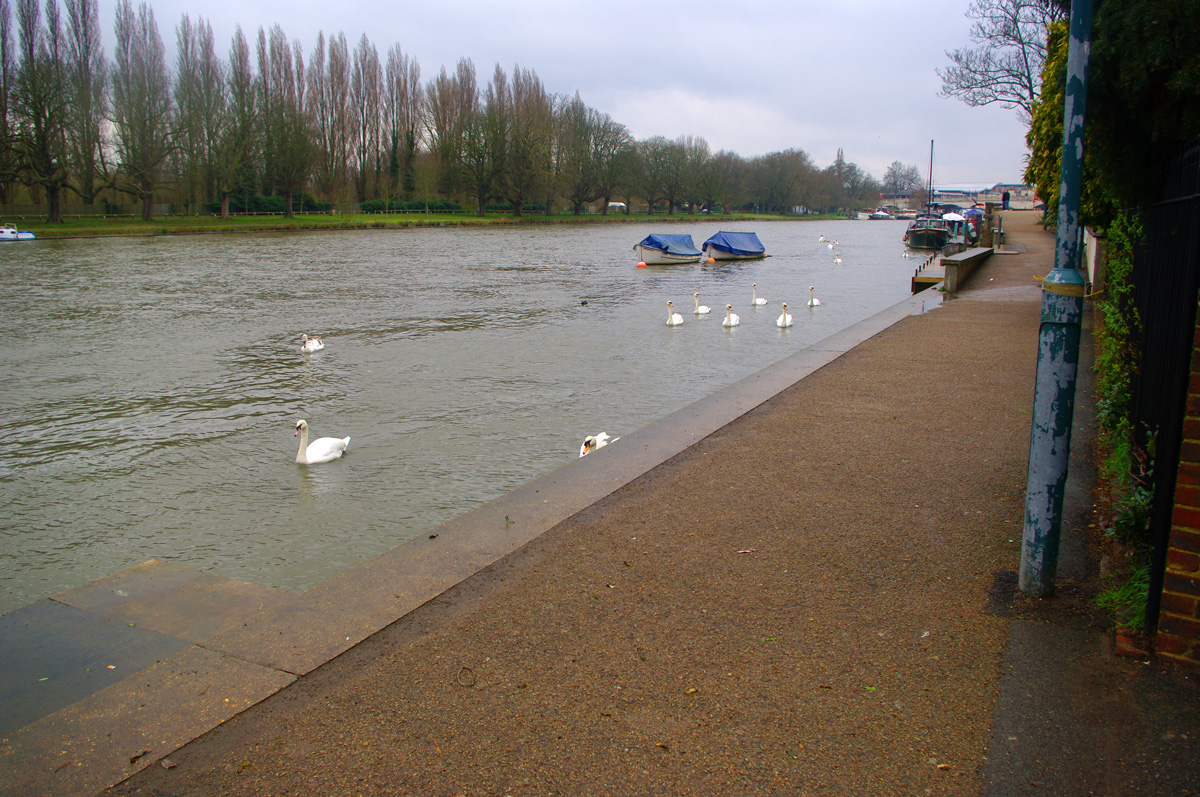
Sir John died in 1764 and his son became Lord Milford. Milford is the area in Wales where Picton Castle is situated. Lady Milford made a new will in which she left Cesar £100. Her son sold Norbiton Place near Kingston. With the money he was given, Cesar was able to rent a coach house and stables next to the Thames in Kingston. This building today is called Picton House.

Kingston Upon Thames, 18th century

After paying a corporation tax of £10 to trade, Picton set himself up as a coal merchant. By 1795 he had made enough money to buy Picton House, a wharf for his coal barges, and a malt house for brewing beer. In 1801, one of the Philips daughters died and left him a further £100. He was wealthy by now on his own terms. In 1807,when he was 52, he let his properties in Kingston and lived in Tolworth neaby to Kingston for a while.

Picton House, Thames Ditton

In February 1816 he bought a house in Thames Ditton, down river from Kingston, for the then massive sum of £4000. He lived there for the next twenty years until his death. When he died the list of the contents of his house included a horse and chaise, two watches, with gold chains, seals, brooches, gold rings, a tortoiseshell tea chest, silver spoons and tongs. There were also paintings of his friends hanging in his house including a portrait of himself.

While Picton was living in Thames Ditton, the other two Philips daughters died in Hampton Court. Joyce left him £100 and Katherine left him £50 and a legacy of £30 per year for life. Cesar himself died in 1836 aged 81. He did not marry and had no heirs,  and was buried in All Saints Church, Kingston upon Thames on the 16th June, 1836. He had become very fat in his old age and his body had to be taken to the church on a four-wheeled trolley.

Cesar Picton Gravestone. Image @Find a Grave

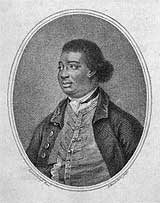
Unlike some of the other freed slaves in England at the time, Cesar did not make his thoughts known about slavery and the slave trade. He was happy to lead a comfortable life. Olaudah Equiano wrote a book about his experiences and actively took part in the campaigning of William Wilberforce and Thomas Clarkson. Others, like Briton Hammon and Ukawsaw Gronniosaw, made oral accounts that were transcribed. Letters were written by Ignatius Sancho to help bolster the anti slavery cause.

Jane Austen wrote in Mansfield Park,

These opinions had been hardly canvassed a year, before another event arose of such importance in the family, as might fairly claim some place in the thoughts and conversation of the ladies. Sir Thomas had found it expedient to go to Antigua himself, for the better arrangement of his affairs, and he took his eldest son with him in the hope of detaching him from some bad connections at home. They left England with the probability of being nearly a twelve month absent.”

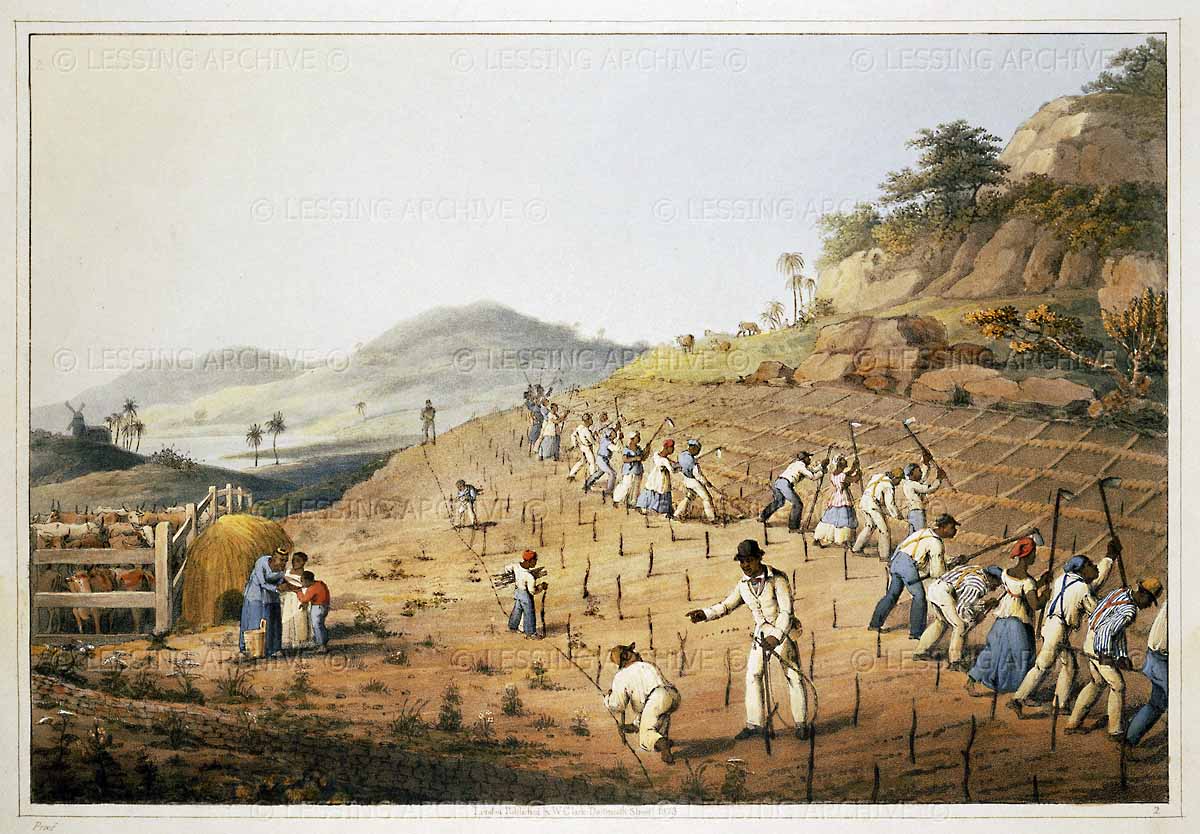
Slaves digging the cane holes, Antiqua, 1823

Sir Thomas Bertram’s affairs in Antigua could only have referred to his sugar plantations, the source of all his wealth and the financial source of Mansfield Park itself.

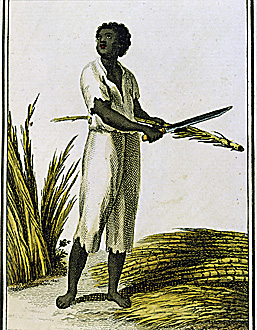
Slave cutting sugar cane, 1799

Jane’s own brothers, Frank and Charles would have been amongst the captains with their warships used to protect the likes of Sir Thomas Bertram’s trading ventures, which must have included slaves for his plantations in Antigua. Henry, Jane’s favorite brother, would have invested the proceeds of this trade through his bank. It is very possible that Jane caught sight of the famous Cesar Picton, wealthy merchant and freed man, walking in the streets of Kingston upon Thames. I wonder what her opinion was?

Kingston Upon Thames, Thomas Hornor, 1813

Post written by Tony Grant, London Calling.

More on the topic:
Read Full Post »

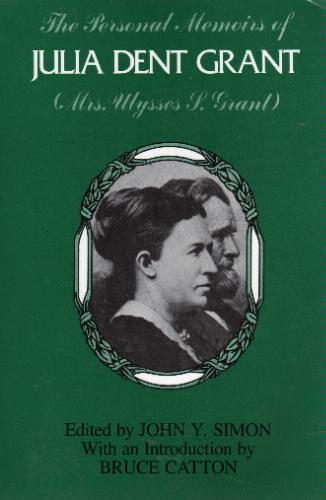
The Personal Memoirs of Julia Dent Grant (Mrs. Ulysses S. Grant), edited by John Y. Simon, Southern Illinois University Press, on Amazon, a review by Patty of Brandyparfums.com

I’m rereading this fantastic, romantic book, and I thought of readers who should be acquainted with this literary gem. Any Regency reader would love Julia Dent Grant’s charming memoirs which due to failing eyesight she dictated to her son or secretary. Her eloquence is astonishing – at once dramatic and poetic. There are many references to things English since she and Ulysses met the Queen during their world tour. They also dined at Apsley House. Daughter Nellie married an Englishman and went to live in England. Here are some of the beautiful, moving passages:

“My first recollections in life reach back a long way, more than three-score years and ten now……..Dear papa, coming out with great pleasure, caught me, held me up in the air, telling me to look, the very trees were welcoming me, and, sure enough, the tall locust trees were tossing their white-plumed branches gleefully.”

“Such delightful rides we all used to take! The Lieutenant [Ulysses] rode a bonny brown steed with flowing wavy mane and tail. He called him Fashion. My horse was a beauty, a chestnut brown, and as glossy as satin, and such pretty ears and great eyes. She was part Arabian, and I named her Psyche. Such rides! in the early spring, the tender young foliage scarcely throwing a shadow…..he was always by my side.”


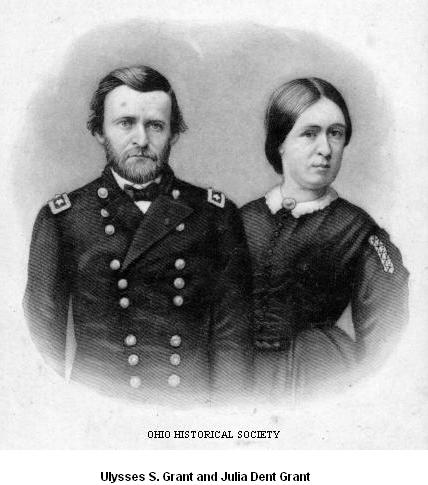
Julia Grant and her husband, Image @OhioPix

There’s information about Lincoln and the assassination that isn’t found in most history books. The day of the assassination, Julia was visited by one of the conspirators wearing “a shabby hat.” –

I thought it was the bellboy with cards. ‘What do you want?’ He reddened and, bowing, said, “This is Mrs. Grant?” I bowed assent. “Mrs. Lincoln sends me, Madam, with her compliments, to say she will call for you at exactly eight o’clock to go to the theatre.” To this I replied with some feeling (not liking either the looks of the messenger or the message, thinking the former savored of discourtesy and the latter seemed like a command), ‘You may tell Mrs. Lincoln that as General Grant and I intend leaving the city this afternoon, we will not therefore be here to accompany the President and Mrs. Lincoln to the theatre.”

Later that afternoon at a late lunch in the Willard, the conspirators sit at a table starring at Julia –

He seemed to be intent on what we and the children were saying. I thought he was crazy.”

When the Grants hold their first few White House receptions, Julia wrote about the young peoples’ luncheon and it reminded me of a Heyer novel –

The young peoples’ luncheon is a memory of dimples, smiles, gleaming white shoulders, of lace and flowers and tender glances – a pleasant memory to me.”

The Grants go to the grand Apsley House for a dinner given by the second duke of Wellington. Julia wonders, “This great house was presented to Wellington by the government for a single victory at Waterloo along with a noble title which will descend throughout his line. As I sat there I thought, ‘How would it have been if General Grant had been an Englishman’ – I wonder, I wonder.”

While in Paris, Julia reveals her interest in fashion –

I had a splendid time shopping. [in Paris] Mr [Charles F.] Worth personally directed the fitting of my costumes, and Madame Virot attended me in person for any millinery I wished, and these were no small attentions, I assure you.”

Many more amazing passages may be found in Julia’s Memoirs. She was the first First Lady to write her memoirs but they weren’t published during her lifetime and appeared in 1973.

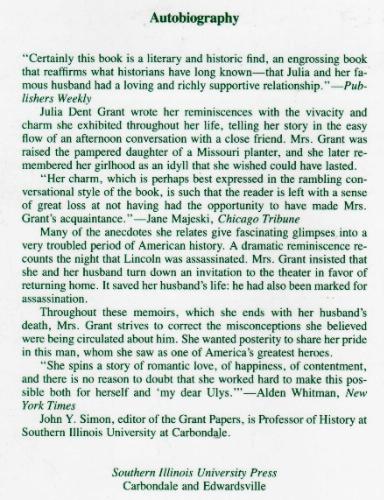
Back Cover of the book

Read Full Post »

Inquiring readers,

For those of you who have not yet visited Nancy Mayer’s beautiful website, you are in for a treat. Click here to enter Nancy Mayer, Regency Researcher: A most proper authority on all things Regency. Nancy has been a member of JASNA (Jane Austen Society of North America) for some time. She was a member of a local chapter in 1990-1994, then started up a new chapter in 1996, and has been the regional coordinator for northern Georgia since then. Nancy has been researching Regency England for more than twenty years, and finds Google books a big help. While she is responsible for the text on her website, Susan Newman designed the web pages and added the illustrations. Nancy graciously agreed to answer a few of my questions:

1. How and when did you become interested in Jane Austen’s novels?

This is probably heresy, but I came to Austen and her novels because I wanted to learn more about Regency life. I had heard of Pride and Prejudice and seen the old Lawrence Olivier movie, but hadn’t gone any further with it or the other novels until I became interested in the Regency period. After reading Jane Austen’s letters, and some biographical data on her, I started in on her novels. I joined a discussion group in Atlanta around 1990 and haven’t looked back since. Even after twenty years of discussing the novels there is always something new to be found. I am not one who has memorized the books and don’t read them all over every year, but I usually find some new insight each time I do.

2. Which is your favorite Jane Austen book and/or character, and why?

Persuasion. Anne Elliot is my favorite character. She is more mature than the other heroines and so doesn’t make the mistakes they do. One seldom has to blush for her. I also think Wentworth is more romantic than Darcy, but I wouldn’t want to be a sailor’s wife.

3. You are considered an authority on the topic of Jane Austen and the Regency period, and your breadth of knowledge about the era astounds me. What are some of your favorite topics to research and why?

You flatter me. The more I research the more I discover what I don’t know. I like to research marriage, titles, peerage, the law, and mourning rules. I find property law most confusing, and barely know a VanDyke fringe from a scalloped one.

One can find all sorts of period books on Google books.

I am also interested in Lord Byron who was Jane Austen’s contemporary, His life gives the masculine and aristocratic elements missing in Jane Austen’s life. Though they both were alive from 1809 to 1817, one could sometimes think they lived at different times.

4. For the casual (but avid) Jane Austen reader, what are some sources you would recommend for further reading?

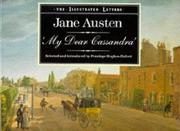
  • My Dear Cassandra:The letters of Jane Austen, Selected and introduced by Penelope Hughes Hallet. Clarkston Potter Publishers or Collins & Brown 1990, ISBN 0-51758312-7
  • Some might want the complete letters edited by Deirdre Le Faye, or the ones edited by John Chapman.
  • The novels published by Oxford have great appendices. Some of the Critical editions of the novels have appendices. One should have a copy of Lover’s Vows in one’s Copy of Mansfield Park. There are annotated versions of the stories with explanations of obscure and not so obscure points, and there are even comic book editions of Pride and Prejudice and Sense and Sensibility. No matter one’s taste or interests, one should be able to find a connection with Jane Austen.
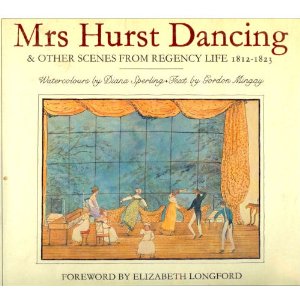
  • Mrs. Hurst Dancing by Diana Sperling. This isn’t about Jane Austen but the illustrations of the Sperling family could be those of the Younger Dashwoods or the Bennets. # ISBN-10: 0575030356 # ISBN-13: 978-0575030350. Some are exceedingly expensive, but there are remaindered copies and second-hand copies at reasonable prices.
  • Jane Austen and Her times by G.E. Mitton, originally published 1905, 2007 Barnes and Noble.
  • Also there are probably fifty books out there covering everything from Jane Austen and Art to Jane Austen and Zombies. I know of book on Jane Austen and Food, Jane Austen and Crime, Jane Austen and fashion, ( and Fashion in the Time of Jane Austen).
  • Those who like quizzes and challenges might like: Jane Austen Challenge by Helen Barton: BartonBooks (June 2009) # ISBN-10: 0952725754 # ISBN-13: 978-0952725756
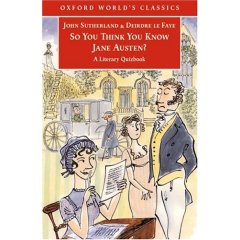
  • Also, So you Think You Know Jane Austen? By John Sutherland and Deidre le Faye Oxford University press, ISBN 0-19-280440-5

5. Would you like to share a common misconception about the Regency period with our readers, one that is wrongly perpetuated by book sources, websites, and blogs?

A general error I have found is thinking that the marriage laws, the church, and laws of inheritance were the same then as they are now. Many think the regency period was just like today, but in costume and with horses.

Nancy, thank you for sharing your wonderful insights. I hope readers will bookmark your website and visit it often. It’s best feature, as far as I am concerned, is your answers to their specific questions, like a personal researcher.

Read Full Post »

Inquiring readers: Raquel Sallaberry from Jane Austen em Portugues sent the link to this post on Promantica about the entail in Downton Abbey entitled “Downton Abbey Fans – Welcome to the MOST Boring Law School Class.” The title is not exactly descriptive, for this wonderful post explains in great detail why the entail cannot be superceded, why Cora’s money is tied up and Lady Mary cannot inherit, and why Matthew Crawley cannot relinquish the title.

The Earl of Grantham and Matthew Crawley walk around the grounds of Downton Abbey

Magdalen, one of the blog contributors, introduces the expert:

By special request, I have asked my ex-husband to help us understand the law of the entail, critical to the plot of Downton Abbey.  Henry is a) British, b) an attorney, c) smart, and d) the son and grandson of QCs, i.e., barristers (British attorneys who appear in court) selected to be “Queen’s Counsel.”  (Although, to be fair, I think Henry’s grandfather took silk — Britspeak for becoming a QC — long enough ago that he was actually King’s Counsel!)
The blog goes on to describe the difference between real property, personal property, and intellectual property. Magdalen then dives into her questions:

First off, what’s an entail?
It is a limitation on the current tenant’s (in our case, the 6th Earl of Grantham) ownership interest in the estate. If he owned Downton Abbey outright, he would have a fee simple. Instead, he has a fee tail, which gives him a life interest so he can’t be evicted in his lifetime, but not the right to say who gets Downton Abbey after he dies.

The Earl of Grantham summarizes the situation best: "I'm a custodian, not an owner."

Okay, so how would an entail work?
The normal entail would be to “the 6th earl and heirs of his body” (meaning his legitimate biological children) or “and heirs male of his body” or “and heirs male of his body to be begotten on Cora.” When the 6th earl had no sons, the second and third of those would terminate, allowing the 6th earl to dispose of the money by will. The first would allow a daughter to inherit, but I’m not sure if it would pass to Mary or to the three daughters jointly or in shares…

To read the rest of this fascinating post, please click on this link to Promantica.

Thank you, Raquel (and Magdalen and Henry). This article is fascinating, fun to read, and very, very informative.

Read this blog’s other posts about Downton Abbey:


Read Full Post »

« Newer Posts - Older Posts »