Feeds:
Posts
Comments

Archive for the ‘jane austen’ Category

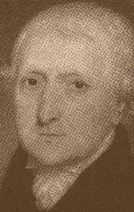
Reverend George Austen

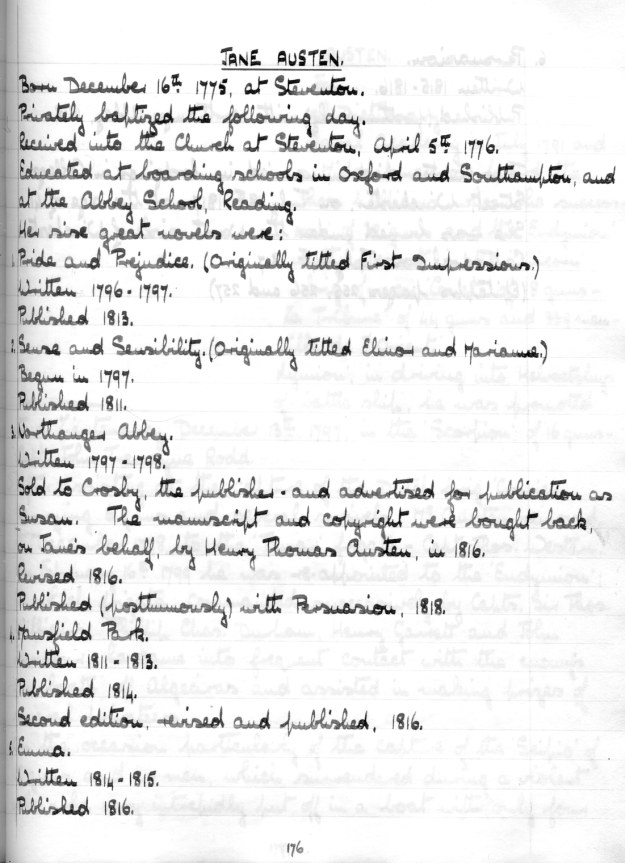
As many Jane Austen fans know, Rev. George Austen ran a boarding school out of his parsonage house in Steventon to augment his £230 pr year income. In1793 he began to teach the sons of local gentlemen in his home to prepare them for university. His library was extensive for a man of modest means, from 300- 500 volumes, depending on the source, an amazing collection, for books were frightfully expensive. Rev. Austen encouraged Cassandra and Jane to read from his library and supported budding author Jane in her writing. At some point, the Austens sent the girls to boarding school in Reading, for which he paid £35 per term, per girl, a not inconsiderable sum. He received around the same amount of money per boarder, and it is conjectured that the Austens hoped to replace their two daughters with many more pupils, which made economic sense. (See Linda Robinson Walker’s link below.) Mrs. Austen was not an indifferent bystander. She cooked, cleaned, sewed, and clucked over the boys like a mother hen, and was involved in their maintenance in a hands-on and caring way, acting as a surrogate mother.
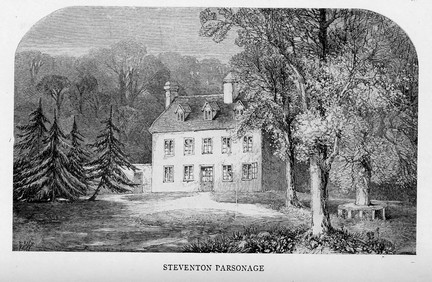
In his Travels Through England in 1782, German traveler Karl Phillip Moritz describes learning academies, head masters, and boarding schools. From his observations, one gains a sense of what life must have been like for the Austens and their pupils:

A few words more respecting pedantry.  I have seen the regulation of one seminary of learning, here called an academy.  Of these places of education, there is a prodigious number in London, though, notwithstanding their pompous names, they are in reality nothing more than small schools set up by private persons, for children and young people.

One of the Englishmen who were my travelling companions, made me acquainted with a Dr. G– who lives near P–, and keeps an academy for the education of twelve young people, which number is here, as well as at our Mr. Kumpe’s, never exceeded, and the same plan has been adopted and followed by many others, both here and elsewhere.
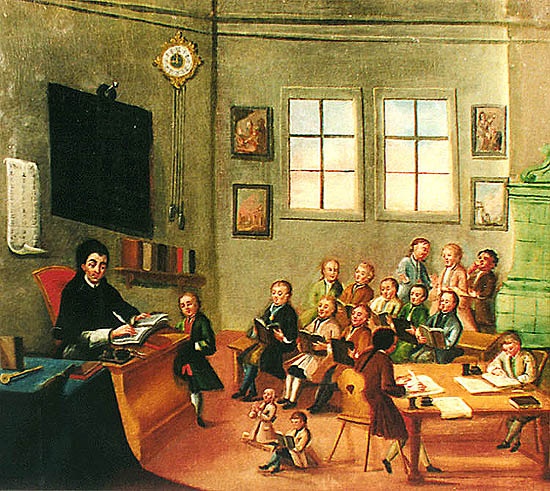
18th Century school room. One imagines a less formal setting for Rev. Austen’s school.

At the entrance I perceived over the door of the house a large board, and written on it, Dr. G–’s Academy.  Dr. G– received me with great courtesy as a foreigner, and shewed me his school-room, which was furnished just in the same manner as the classes in our public schools are, with benches and a professor’s chair or pulpit.

The usher at Dr. G–’s is a young clergyman, who, seated also in a chair or desk, instructs the boys in the Greek and Latin grammars.

Such an under-teacher is called an usher, and by what I can learn, is commonly a tormented being, exactly answering the exquisite description given of him in the “Vicar of Wakefield.”  We went in during the hours of attendance, and he was just hearing the boys decline their Latin, which he did in the old jog-trot way; and I own it had an odd sound to my ears, when instead of pronouncing, for example viri veeree I heard them say viri, of the man,exactly according to the English pronunciation, and viro, to the man.  The case was just the same afterwards with the Greek.

Mr. G– invited us to dinner, when I became acquainted with his wife, a very genteel young woman, whose behaviour to the children was such that she might be said to contribute more to their education than any one else.  The children drank nothing but water.  For every boarder Dr. G– receives yearly no more than thirty pounds sterling, which however, he complained of as being too little.  From forty to fifty pounds is the most that is generally paid in these academies.

I told him of our improvements in the manner of education, and also spoke to him of the apparent great worth of character of his usher.  He listened very attentively, but seemed to have thought little himself on this subject.  Before and after dinner the Lord’s Prayer was repeated in French, which is done in several places, as if they were eager not to waste without some improvement, even this opportunity also, to practise the French, and thus at once accomplish two points.  I afterwards told him my opinion of this species of prayer, which however, he did not take amiss.

After dinner the boys had leave to play in a very small yard, which in most schools or academies, in the city of London, is the ne plus ultra of their playground in their hours of recreation.  But Mr. G– has another garden at the end of the town, where he sometimes takes them to walk.

After dinner Mr. G– himself instructed the children in writing, arithmetic, and French, all which seemed to be well taught here, especially writing, in which the young people in England far surpass, I believe, all others.  This may perhaps be owing to their having occasion to learn only one sort of letters.  As the midsummer holidays were now approaching (at which time the children in all the academies go home for four weeks), everyone was obliged with the utmost care to copy a written model, in order to show it to their parents, because this article is most particularly examined, as everybody can tell what is or is not good writing.  The boys knew all the rules of syntax by heart.
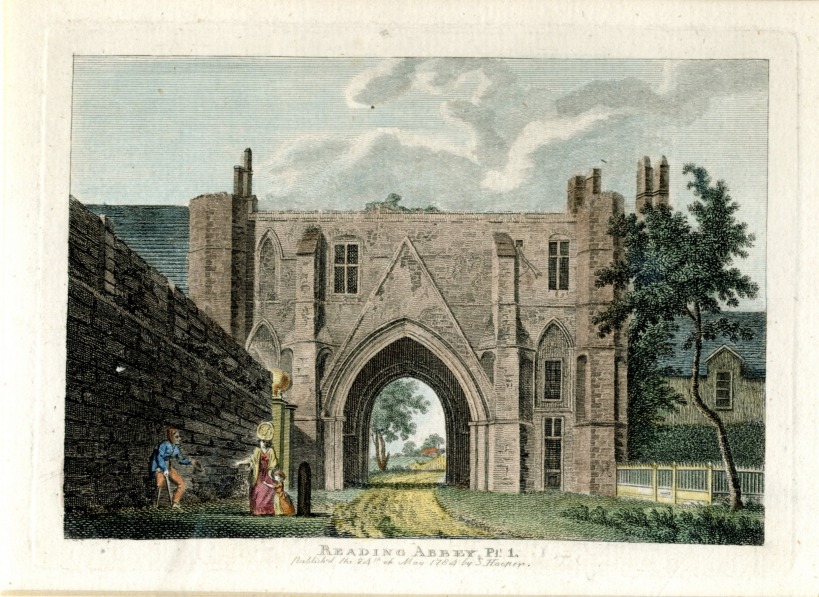
Reading Abbey, where Jane and Cassandra Austen were sent to boarding school

All these academies are in general called boarding-schools.  Some few retain the old name of schools only, though it is possible that in real merit they may excel the so much-boasted of academies.

It is in general the clergy, who have small incomes, who set up these schools both in town and country, and grown up people who are foreigners, are also admitted here to learn the English language.  Mr. G– charged for board, lodging, and instruction in the English, two guineas a-week.  He however, who is desirous of perfecting himself in the English, will do better to go some distance into the country, and board himself with any clergyman who takes scholars, where he will hear nothing but English spoken, and may at every opportunity be taught both by young and old.

Source: Moritz, Karl Philipp, 1757-1793. Travels in England in 1782 by Karl Philipp Moritz (Kindle Locations 645-656). Mobipocket (an Amazon.com company).

Read Full Post »

Inquiring readers, One of the benefits of overseeing a long-lasting blog is the number of Jane Austen aficionados one meets via email and online. Ronald Dunning, a descendant of Jane Austen’s brother, Francis, recently emailed me to discuss his new genealogy site and Jane Austen family website. After I visited the sites and read Deb Barnum’s excellent post on the topic at Jane Austen in Vermont, I invited Mr. Dunning to explain how he managed to fill in so many members on his family tree. When all was said and done, what excited me most was when I saw the resemblance between Mr. Dunning and his illustrious ancestor. The Austens do indeed live on. Enjoy!

Sir Francis William Austen, Admiral of the Fleet, and descendant Ronald Dunning

Hi Vic! I’m a 4th-great-grandson of Frank Austen, and a committed genealogist. I’ve been working for quite a few years on an extended and inclusive genealogy of the Austen family, which can be seen at RootsWeb: http://wc.rootsweb.ancestry.com/~janeausten. It’s an ongoing project, subject to addition and revision, but has reached an advanced state of maturity. Various writers on the Austen family in England and the US have used it, and I’ve even found it cited as a reference source for biographies at Wikipedia.

Joan Corder

I’ve just posted a new website dedicated to Jane Austen’s Family, which was announced to the public at last week’s JAS AGM. The address is www.janeaustensfamily.co.uk. The first content is Joan Corder’s “Akin to Jane” – a 1953 manuscript listing as many descendants of George and Cassandra Austen as the author could find. Joan recorded something like 320 descendants of George and Cassandra Austen, which is very good going for 1953. The biographical detail in the manuscript makes it invaluable. She could never find a publisher and the book exists only in a couple of manuscript copies, one of which is at the Jane Austen’s House Museum at Chawton. When I first began working on the site, I wasn’t sure whether it would interest anyone – I was simply driven on by my obsession with family history – but it’s been well received, to my delight. The Museum is pleased that they can now retire Joan Corder’s fragile original.

Joan’s page on Jane Austen in Akin to Jane Austen. The fragile original has been replaced with interactive online pages.

With the benefit of modern genealogical facilities, I’ve increased the tally from 320 to over 1200 – all of whom are to be found on my RootsWeb site. I have to admit that I have included very little anecdotal information, it is mainly genealogy; and all details except the surname are withheld for anyone born after 1915, though I have them on my computer database.

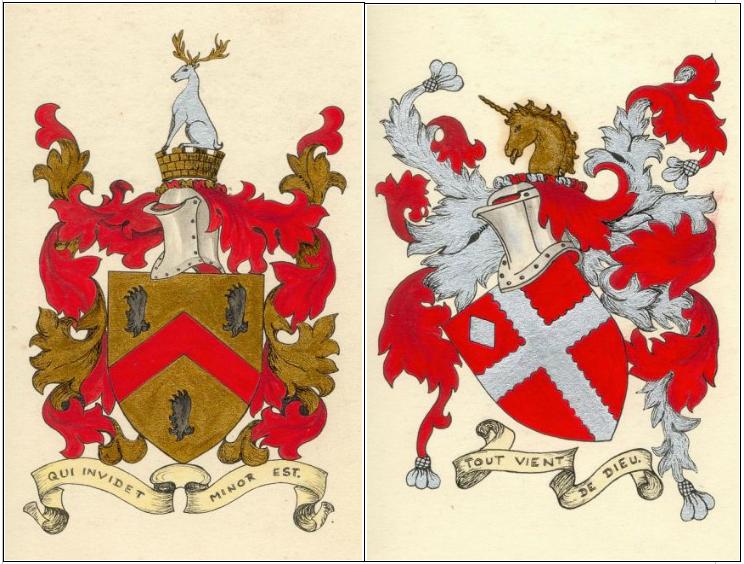
Austen (l) and Austen-Leigh (r) family coat of arms.

You asked for an anecdotal example for Jane Austen’s World readers that would flesh out the details of my research. I immediately thought of James Brydges, 8th Baron Chandos of Sudeley and Elizabeth Barnard – Cassandra Leigh’s great-grandparents. Cassandra was of course Jane Austen’s mother.

Hearing Miss Barnard was engaged to a party with a fashionable conjuror, who showed the ladies their future husbands in a glass, he by a proper application to the cunning man beforehand, and by a proper position at the time, was exhibited in the glass to Miss Barnard: clapping her hands she cried, ‘Then Mr. Bridges is my destination, and such he shall be.’”

This lovely anecdote was recorded in a footnote, in The Complete Peerage,under the entry for James Brydges, the 8th Lord Chandos of Sudeley. The lady in question, Elizabeth Barnard, did become his wife. Elizabeth’s father Sir Henry Barnard was a “Turkey merchant,” a trader whose business interest was in importing from Constantinople. Her husband James Brydges was himself the Ambassador of the “Turkey Company” (properly the Levant Company) in Constantinople from 1680 to 1686.

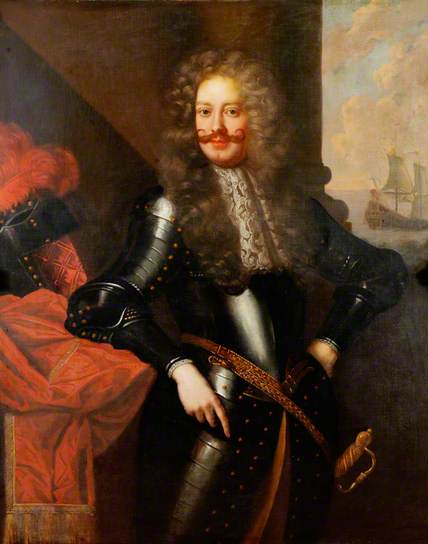
Sir James Brydges (1642–1714), 8th Baron Chandos, Turkey Company Ambassador to Constantinople

Elizabeth gave birth to twenty-two children. We are familiar with the mortal threat to women’s lives from childrearing – three of Jane Austens’ sisters-in-law suffered that fate. Elizabeth survived her twenty-two deliveries and lived to the age of 77. Not all of her children fared so well – only fifteen were baptized, and of those, three sons and five daughters survived infancy. This was far from unusual – Antonia Fraser, in her study of 17th-century woman, The Weaker Sex, stated that it was normal for only a third of children born to a large family to survive. Their eldest child, Mary Bridges, was one of the survivors. The link to Jane Austen can now be traced within a few generations. Mary married Theophilus Leigh; they were Cassandra Leigh’s paternal grandparents and the parents of Theophilus Leigh, who served as Master of Balliol College in Oxford from 1726 until his death in 1785. Theophilus Jr.’s brother Thomas Leigh married Jane Walker, and they were Cassandra Leigh’s parents. Cassandra, who married George Austen, gave birth to eight children, including Jane Austen in 1775. (And she too survived to a ripe old age, outliving her daughter Jane by 10 years.)

Click on image for details. Image @A Reading Affair

I hope you enjoyed this small sampling of the information that my sites offer about Jane Austen’s family. Deb Barnum from Jane Austen in Vermont has interviewed me, and written a very thorough review and detailed explanation of how to find information on the sites.

More on the topic:

Read Full Post »

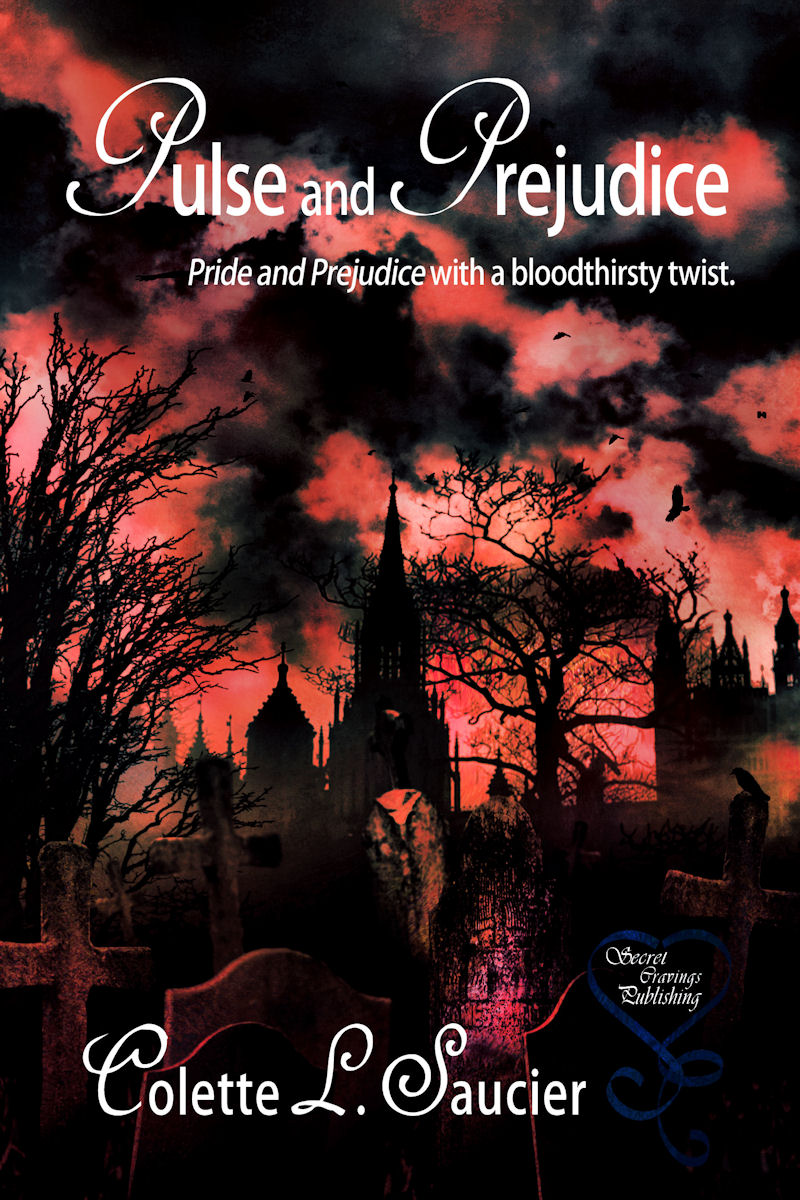
Gentle Readers, author Colette Saucier has written a description of her journey on writing Pulse and Prejudice, a vampire adaptation of Pride and Prejudice. Those of us who are fascinated with the vampire myth can relate to her journey! You can find more information about Colette and her book on Colette Saucier.com

This is a story of Mr. Darcy, Lord Byron, and vampires.

I love Pride and Prejudice. I have read it so many times, I cannot even remember a time before it was not part of my consciousness. Of course, I like all of Jane Austen’s novels, but the story of Mr. Darcy and Elizabeth speaks to me in a way the others do not. I do not believe I am alone in this, as it set the standard for every romance novel and romantic comedy since its publication 200 years ago: boy meets girl, boy likes girl, girl hates boy, girl and boy like each other, misunderstanding/outside forces tear them apart, reunion, reconciliation, happily ever after.

Quite a number of years ago, I had the misfortune of seeing what I refer to as the Pride and Prejudice mutilation, the 1940 film starring Laurence Olivier and Greer Garson. Not only did they dress all of the Bennet girls as Southern Belles, Greer Garson was thirty-six. THIRTY-SIX! Three years older than Olivier. I won’t even go into the plot except to say they had no right to call it Pride and Prejudice. After that, I decided never again would I subject myself to any adaptation of my beloved Austen. I did not even see the BBC miniseries with Colin Firth when it premiered.

So what changed? First, I saw the movie Clueless. I enjoyed every moment of it, all the while thinking to myself, “This is Emma!” Sure enough, Amy Heckerling had updated my second favorite Jane Austen novel. Then, without knowing Helen Fielding had written it as a modern variation on Pride and Prejudice, I read Bridget Jones’s Diary. Well, after that, I had to see Colin Firth’s Pride and Prejudice, and now I had a face to go with my Mr. Darcy. Thus ended my boycott of all things not-quite-Austen.

All of this, of course, occurred some fifteen years ago. Although my mind had been opened to the possibilities, I had no intention of writing any Austen adaptations myself. Then a little book called Pride and Prejudice and Zombies took off like wildfire and landed near the top of the New York Times bestseller list. I have never been a zombie fan myself, but I did love the film Shaun of the Dead. When I stumbled upon the zombie book in my daughter’s bedroom, I knew it was a parody, and I had hoped its approach would be similar to that film. I had never heard of a “mash-up” before, but now I know I do not like them. The (co)author had taken the complete text of Pride and Prejudice and just stuck zombies and ninjas between the paragraphs. Not impressed. The zombie book did, however, introduce me to the genre of Austen adaptations and variations, and an addiction was born. I ate them up like potato chips. Some were good, some were horrid, but many I found completely delightful. All of them allowed me to continue my literary love affair with Mr. Darcy.

Now to back up a bit, somewhere in the middle of my multiple readings of Pride and Prejudice (actual Austen, not adaptations), I learned about Lord George Gordon Byron. I had read some of his poems over the years, but after seeing the film Gothic, I became more interested in the man behind the words. That he was portrayed by a young Gabriel Byrne didn’t hurt! This film depicts the summer night when Byron and his pal Percy Shelley gathered with friends in Switzerland and told each other ghost stories, one of which became Mary Shelley’s Frankenstein.

That evening also inspired John Polidori to write The Vampyre – the original gentleman vampire. Although I never cared for zombies or werewolves or other monsters, I have always been a vampire fan. (To all of those publishers who rejected my manuscript because they believed the “vampire trend is over,” allow me to say, vampires will never of out of style. They’re immortal, after all!) I refer to the sensual, suave, and seductive variety of vampire, or the tortured souls such as Gary Oldman’s depiction in Bram Stoker’s Dracula. That image of the mysterious and charismatic vampire originated that night in 1816 with Polidori and Lord Byron.

Austen’s Mr. Darcy struck me as a Byronic figure – intelligent but arrogant, sophisticated and cynical, introspective and conflicted. “That man of loneliness and mystery, Scarce seen to smile, and seldom heard to sigh.” (The Corsair, I, VIII) Knowing that Polidori had based his Vampyre on Byron cultivated in my mind the idea that Darcy as a character – as well as Pride and Prejudice as a whole – lent itself well to a vampire adaptation; however, when I looked, I could not find the adaptation I envisioned. Yes, someone had published a vampire “mash-up,” but I have already expressed my opinion on those. I also found a vampire sequel told in gothic style. Regina Jeffers had written a fascinating novel inspired by Pride and Prejudice with Mr. Darcy as dhampir, battling against vampires while resisting the urge to become one himself.

I needed something more. I wanted Mr. Darcy to be an honest-to-goodness neck-biting, blood-drinking, night-walking vampire who could be healed in the moonlight as in the Polidori story. I felt the story must be told from Mr. Darcy’s point of view to explore that Byronic Hero aspect of his nature, which we only glimpse in Austen’s narrative, and allow the curse of vampirism to reveal further depths of character – an outcast, suffering, jaded . Because this adaptation of Pride and Prejudice did not exist, I had no choice but to write it myself.

I threw myself full-force into researching Regency England, vampire folklore, and Pride and Prejudice itself. This paranormal adaptation had to remain faithful to Austen in style, plot, and characters. How would Austen’s Elizabeth Bennet react to vampires? That itself required a thorough analysis of Elizabeth to ensure in this adaptation she remained true to the original character under remarkable circumstances. The novel had to be historically accurate and free of any anachronisms. I wanted it to be as if Jane Austen herself had written the story of Mr. Darcy as vampire, and I think I have succeeded. Well, except I did add another section – Beyond Pride and Prejudice – to peek into the passion, lust, and desire between Elizabeth and Mr. Darcy that simmers just under the surface in the original. Jane Austen teases us with hints of Darcy’s attraction to Elizabeth, and I could not leave that territory uncharted.

Thus, after fifteen years gestation, Pulse and Prejudice was born – an authentic vampire variation of the beloved classic. I hope I have written the paranormal adaptation others want to read as well.

Read Full Post »

Gentle readers: Penguin English Library is holding an Austen/Brontë smackdown on its Facebook page, with Jane Austen’s World and Christine from Bronte Blog providing the ammunition for discussion. An edited version of my smackdown sits on Facebook, the full version sits on this blog. I have added Christine’s edited defense of Charlotte Brontë below my defense of Jane. Do go over to Penguin’s Facebook page and leave your comment! You will have the chance of winning a Penguin library canvas bag! Enjoy.

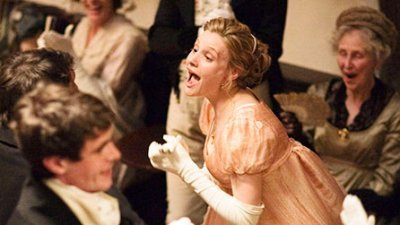
Romola Garai as Emma dancing a country dance at the local assembly hall.

Vic’s Unedited Take:

I’ve been asked to participate in a smackdown, pitting Jane Austen, whose best-selling novel starts with the most memorable opening line in literature – “It is a truth universally acknowledged…” – against Charlotte Brontë, who begins Jane Eyre with a sentence that barely qualifies as a decent Facebook entry: “There was no possibility of taking a walk that day”. Good lord. GO Team Austen!

I love smart and funny women who are quick with their tongues. If our dowdy spinster from Hampshire suddenly found herself at the Algonquin Round Table in post-World War One New York city, she would have jumped into the fray and easily held her own against such rapier wits as Dorothy Parker, Harold Ross, Edna Ferber and Harpo Marx. Charlotte Brontë would have sat slack-jawed amongst such august company, waiting for a lull in the conversation before daring to venture her opinion. Had Mark Twain materialized in front of Miss Austen and threatened to personally beat her skull in with her own shin-bone, she would have swiftly retorted, “Why I now fully understand, Mr. Twain, why Mrs. Hall of Sherbourn was brought to bed of a dead child, some weeks before she expected. T’was owing to a fright — I suppose she happened unawares to look at YOU.” Austen had teeth. No wonder Pride and Prejudice was chosen for the first Zombie mash-up!

A number of Brontë fans have accused Austen of writing sterile romance novel claptrap, which means that those poor souls don’t get Austen’s ironic take on life with its underlying passions at all. Can you imagine one of Brontë’s overwrought characters coming up with the cool line that Mary Crawford uttered in Mansfield Park? “Certainly, my home at my uncle’s brought me acquainted with a circle of admirals. Of Rears, and Vices, I saw enough. Now, do not be suspecting me of a pun, I entreat.” I had been of legal drinking age for a number of years before I understood exactly what rears and vices meant!

Brontë supporters think Jane’s novels lack passion and give us no sense of the greater society in which she lived. Let’s debunk that myth, shall we? Willoughby got a girl pregnant, enticed Marianne to behave like a hoyden, then cynically married an heiress for money. Wickham attempted to seduce an underage heiress, then ran off with a lusty, empty-headed 16-year-old virgin with no intention of marrying her. Lucy Steele was a sadistic, mean, and spiteful little bitch. Mrs. Norris was a verbal abuser who could have taught Lucy a thing or two in the nasty department. Fanny Price’s mother married for love, and look where that got her – barefoot, too many times pregnant, and living like a slattern in a hovel. John Thorpe was a douche-bag, plain and simple, as was William Elliott. Then there were the silly ministers, and the neglectful husbands, like Mr. Bennet and Mr. Palmer. Last but not least, Jane handed the dreaded specter of poverty to Mrs. and Miss Bates, and Mrs. Smith, whose cheerful demeanor belied her desperate state. Interwoven through Austen’s novels are her sparkling wit and clear observations of the human character. We are treated to strong heroines like Lizzie Bennet and Anne Elliot, and to alpha males like Mr. Darcy and Colonel Brandon, who, as men of few words, sprang into selfless action when heroism was required.

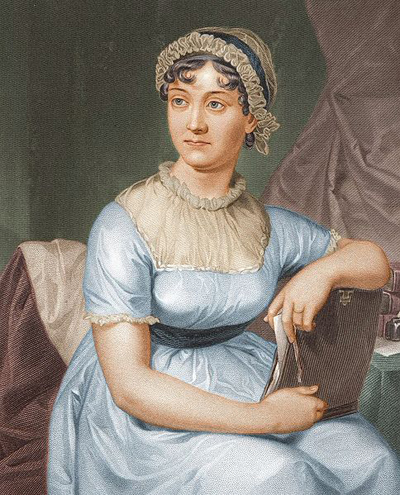
Idealized romanticized image of Jane Austen.

What does Charlotte Brontë offer us? That metrosexual cold fish, St. John Rivers. And then there’s Rochester, Mr. Sturm und Drang. He was a closet whiner and complainer, I’ll warrant, who, while holding all the power cards, forced poor plain Miss Eyre to listen to his incessant self-serving monologues. I bet he wandered around his cold stone house dragging the proverbial ball and chain in the form of the hidden insane wife, and wearing an expression that shouted to all but the blind: “Woe is me. Oh, woe is pitiful, loveless me.” As my dear friend, Lady Anne, told me, “Even Austen’s bad boys are more plausible than Brontë’s heroes.”

Where Mr. Darcy took his medicine with only a minor facial tick when Lizzie dressed him down after refusing his proposal, Rochester emoted suffering morning, noon, and night. Misery must have oozed out of his pores. Those obvious ploys for sympathy worked on me when I was 14 years old, but now that I am slightly longer in the tooth I am attracted to more mentally stable men, like Mr. Darcy. Oh, don’t get me wrong, I know that Darcy’s a cool and reserved character, and a bit of a prig. Taming him would be a REAL challenge, one that Elizabeth Bennet took on with relish. Whatever you think of him, there’s no denying that Darcy’s passion for Lizzy simmered and sizzled throughout Pride and Prejudice. Austen’s writing style might be spare and cerebral, but the chemistry between her heroes and heroines leaps off the pages and keeps us enthralled.

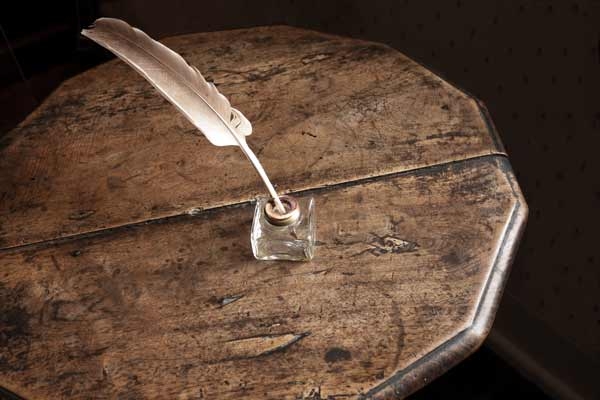
Jane Austen’s writing desk

In closing (and here my imagination has taken over), one suspects that after their wedding, our young and virile Mr. Darcy gave Lizzie some extremely satisfying romps in bed, followed by a repeat performance or two, whereas poor Mr. Rochester – well, let’s face it – he was OLD, and his physical health was compromised by that pesky though fortuitous fire. (Deux ex machina, anyone?) My guess is that, after observing his manly duty with Mrs. Rochester, he most likely gave her a peck on the cheek before rolling to the other side of the bed and instantly falling asleep. As her husband snored contentedly, a frustrated (but romantically inclined) Jane was frequently left to lie in the dark and think of England.

Christine’s edited version: 

‘In Austen, sex is just a kiss on the hand. In the Brontës, everything happens’. So says a newspaper clipping kept at the Brontë Parsonage Museum Library. After hearing that, the Brontës would get a twinkle in their eyes that would belie their quieter, Northern-lasses-from-a-parsonage appearance.

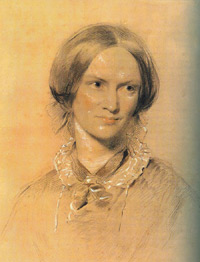
Charlotte Bronte

Charlotte herself, after reading Emma pronounced ”the passions are perfectly unknown to her, she rejects even a speaking acquaintance with that stormy Sisterhood; even to the Feelings she vouchsafes no more than an occasional graceful but distant recognition; too frequent converse with them would ruffle the smooth elegance of her progress.”

Which she corroborated after reading Pride and Prejudice: “An accurate daguerrotyped portrait of a commonplace face; a carefully fenced, highly cultivated garden, with neat borders and delicate flowers; but no glance of a bright vivid physiognomy, no open country, no fresh air, no blue hill, no bonny beck. I should hardly like to live with her ladies and gentlemen, in their elegant but confined houses”.

It’s an easy choice: either you like opening a book and gazing at a quiet and ever-green meadow, nice and lovely but always nice and lovely, sometimes too nice and too lovely or you like opening a book and looking at an ever-changing moor, sometimes bleak, sometimes radiantly in bloom, never predictable, always engaging. If you choose the latter, remember that being Team Brontë is more than a mere liking. As another newspaper said (as early as 1916): “Miss Austen and Thackeray have admirers; Charlotte Brontë has worshippers”.

Read Full Post »

On July 18, 1817 Jane Austen died at the age of 41 of Addison’s disease, a diagnosis that remains largely disputed. Her last hours are described by her grieving sister Cassandra to Fanny Knight, Jane’s beloved niece. Other posts that Tony Grant and I have written on the topic sit below.

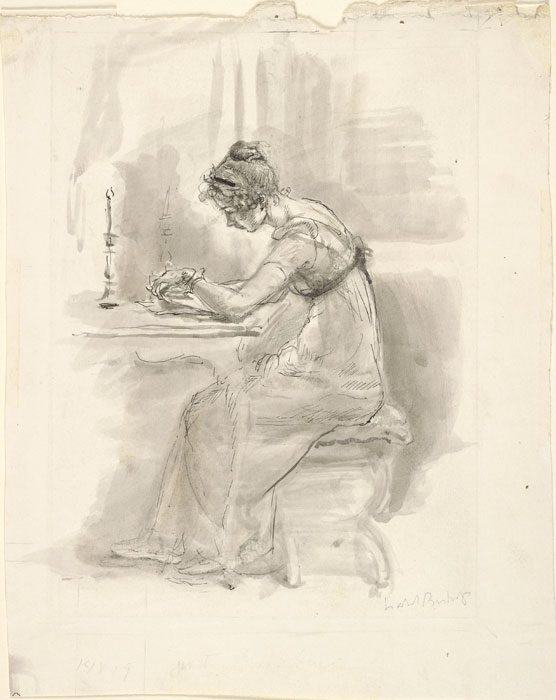
Isabel Bishop’s scene in Pride and Prejudice

My dearest Fanny,

Doubly dear to me now for her dear sake whom we have lost. She did love you most sincerely, and never shall I forget the proofs of love you gave her during her illness in writing those kind, amusing letters at a time when I know your feelings would have dictated so different a style. Take the only reward I can give you in the assurance that your benevolent purpose was answered; you did contribute to her enjoyment.

Even your last letter afforded pleasure. I merely cut the seal and gave it to her; she opened it and read it herself, afterwards she gave it to me to read, and then talked to me a little and not uncheerfully of its contents, but there was then a languor about her which prevented her taking the same interest in anything she had been used to do.

Since Tuesday evening, when her complaint returned, there was a visible change, she slept more and much more comfortably; indeed, during the last eight-and-forty hours she was more asleep than awake. Her looks altered and she fell away, but I perceived no material diminution of strength, and, though I was then hopeless of a recovery, I had no suspicion how rapidly my loss was approaching.

I have lost a treasure, such a sister, such a friend as never can have been surpassed. She was the sun of my life, the gilder of every pleasure, the soother of every sorrow; I had not a thought concealed from her, and it is as if I had lost a part of myself. I loved her only too well — not better than she deserved, but I am conscious that my affection for her made me sometimes unjust to and negligent of others; and I can acknowledge, more than as a general principle, the justice of the Hand which has struck this blow.

You know me too well to be at all afraid that I should suffer materially from my feelings; I am perfectly conscious of the extent of my irreparable loss, but I am not at all overpowered and very little indisposed, nothing but what a short time, with rest and change of air, will remove. I thank God that I was enabled to attend her to the last, and amongst my many causes of self-reproach I have not to add any wilful neglect of her comfort.

Cassandra’s watercolour of Fanny Knight

She felt herself to be dying about half-an-hour before she became tranquil and apparently unconscious. During that half-hour was her struggle, poor soul! She said she could not tell us what she suffered, though she complained of little fixed pain. When I asked her if there was anything she wanted, her answer was she wanted nothing but death, and some of her words were: “God grant me patience, pray for me, oh, pray for me!” Her voice was affected, but as long as she spoke she was intelligible.

I hope I do not break your heart, my dearest Fanny, by these particulars; I mean to afford you gratification whilst I am relieving my own feelings. I could not write so to anybody else; indeed you are the only person I have written to at all, excepting your grandmamma — it was to her, not your Uncle Charles, I wrote on Friday.

Immediately after dinner on Thursday I went into the town to do an errand which your dear aunt was anxious about. I returned about a quarter before six and found her recovering from faintness and oppression; she got so well as to be able to give me a minute account of her seizure, and when the clock struck six she was talking quietly to me.

I cannot say how soon afterwards she was seized again with the same faintness, which was followed by the sufferings she could not describe; but Mr. Lyford had been sent for, had applied something to give her ease, and she was in a state of quiet insensibility by seven o’clock at the latest. From that time till half-past four, when she ceased to breathe, she scarcely moved a limb, so that we have every reason to think, with gratitude to the Almighty, that her sufferings were over. A slight motion of the head with every breath remained till almost the last. I sat close to her with a pillow in my lap to assist in supporting her head, which was almost off the bed, for six hours; fatigue made me then resign my place to Mrs. J. A. for two hours and a-half, when I took it again, and in about an hour more she breathed her last.

House on College Street in Winchester where Jane Austen died

I was able to close her eyes myself, and it was a great gratification to me to render her those last services. There was nothing convulsed which gave the idea of pain in her look; on the contrary, but for the continual motion of the head she gave one the idea of a beautiful statue, and even now, in her coffin, there is such a sweet, serene air over her countenance as is quite pleasant to contemplate.

This day, my dearest Fanny, you have had the melancholy intelligence, and I know you suffer severely, but I likewise know that you will apply to the fountain-head for consolation, and that our merciful God is never deaf to such prayers as you will offer.

The last sad ceremony is to take place on Thursday morning; her dear remains are to be deposited in the cathedral. It is a satisfaction to me to think that they are to lie in a building she admired so much; her precious soul, I presume to hope, reposes in a far superior mansion. May mine one day be re-united to it!

Jane Austen is buried in Winchester Cathedral.

Your dear papa, your Uncle Henry, and Frank and Edwd. Austen, instead of his father, will attend. I hope they will none of them suffer lastingly from their pious exertions. The ceremony must be over before ten o’clock, as the cathedral service begins at that hour, so that we shall be at home early in the day, for there will be nothing to keep us here afterwards.

Your Uncle James came to us yesterday, and is gone home to-day. Uncle H. goes to Chawton to-morrow morning; he has given every necessary direction here, and I think his company there will do good. He returns to us again on Tuesday evening.

I did not think to have written a long letter when I began, but I have found the employment draw me on, and I hope I shall have been giving you more pleasure than pain. Remember me kindly to Mrs. J. Bridges (I am so glad she is with you now), and give my best love to Lizzie and all the others.

I am, my dearest Fanny,
Most affectionately yours,
Cass. Eliz. Austen

More on the topic:

Read Full Post »

« Newer Posts - Older Posts »