Feeds:
Posts
Comments

Archive for the ‘Jane Austen’s World’ Category

By Brenda S. Cox

“God grant me patience, Pray for me Oh Pray for me.” –Jane Austen’s last recorded words, from Cassandra’s letter to Fanny Knight, July 20, 1817

You probably know that Jane Austen died young, at age 41, on July 18, 1817.

What did she die of? We don’t know, but many scholars have speculated. Most of these conditions had not even been identified in Austen’s time.

Her Symptoms

From letters we learn that Austen had:

  • Fluctuating symptoms, better, worse, better, worse
  • Pain in her face (Sept. 15 and 24, 1813, exacerbated by cold air), back (Sept. 8, 1816), and knee (Feb. 21, 1817), though not much pain near the end
  • Discoloration of skin, especially face, “black and white and every wrong color” (March 25, 1817)
  • Pale skin (from her niece Caroline’s observations)
  • Recurrent fevers (March 25, April 6, 1817)
  • Sleepless nights
  • A clear mind (she wrote a poem on Winchester Races shortly before her death)
  • Fatigue, weakness, langour, often needing to lie down (May 22, 1817, as well as months before that)
  • A “Discharge” for a week, which the “applications” of a Winchester doctor alleviated (May 22, 1817)
  • A seizure near the very end; when repeated, Cassandra describes it as faintness (July 20, 1817)

Her Self-Diagnosis

What did Austen think she had? On Jan. 24, 1817, she wrote, “I am more & more convinced that Bile is at the bottom of all I have suffered, which makes it easy to know how to treat myself.” And again on April 6, “I have been suffering from a Bilious attack, attended with a good deal of fever.”

Bile is often mentioned in Austen’s letters as a source of disease for her family and friends. The liver produces bile as part of the digestive process. She implies that she has a digestive disorder.

On Feb. 21, 1817, Austen wrote, “I am almost entirely cured of my rheumatism, just a little pain in my knee now & then, to make me remember what it was, & keep on flannel.” March 26, 1817, she wrote, “I have still a tendency to Rheumatism.” So at this point she attributed her pain and weakness to rheumatism in her joints.

Contemporary Treatments

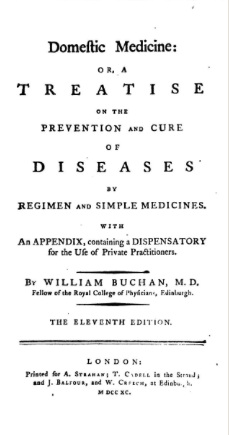
In Austen’s time, doctors considered that the “humours” in the body: blood, phlegm, yellow bile, and black bile, had to be in balance. In Dr. Buchan’s popular Domestic Medicine (11th ed., 1790), he writes, “Jaundice, indigestion, loss of appetite, and a wasting of the whole body” are “the consequences of a vitiated state of the liver, or obstructions of the bile” (56). 

For an intermittent fever, Dr. Buchan recommends ipecac, which will cause the patient to vomit up bile and clean out the system (150). For stomach issues caused by bile, he recommends bleeding, liquids and light foods (such as Mr. Woodhouse’s gruel), and warm baths (290-291).

For jaundice (probably what we would call hepatitis, which turns the patient’s skin and eyes yellow, from excess bile), Buchan says “numberless British herbs” supposedly cure it, but he observes that generally the disease goes away by itself, so the herbs don’t necessarily cause the cure. He goes on to recommend hempseed and several other herbs that he thinks work. He also describes other diseases as connected with bile.

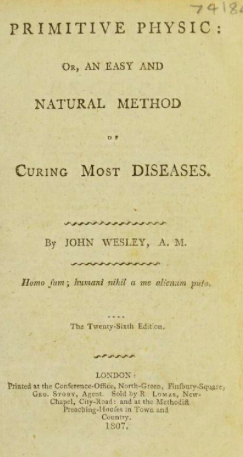
John Wesley, the Methodist preacher, wrote a very popular book called Primitive Physic: Or, An Easy and Natural Method of Curing Most Diseases. It went through many editions and is still available today (I bought mine at the Wesley Museum in London). His goal was to list “cheap, safe, and easy medicines” available to “plain, unlettered” people. He marked those he had tried himself. Wesley started with lifestyle recommendations, such as, eat and drink moderately, and exercise regularly. Then he gave remedies for many diseases.

For “bilious cholic” (upset stomach ejecting bile), he recommends drinking warm lemonade or taking “sweet oil.” He gives nine remedies for rheumatism, including cold baths, warm steams, and eating barley-gruel with currants, roasted apples, fresh whey, and light pudding.

We don’t know what remedies Austen might have tried for her “bile” or rheumatism.

Mr. Curtis, her apothecary in Alton, and Mr. Lyford, her doctor in Winchester, tried to cure her, but we don’t know what diagnoses they made. For some possibilities, as well as more modern ideas, see “Did Jane Austen die from Nervous Consumption on July 18, 1817?” 

Modern Theories

Many modern scholars and doctors have speculated on what might have caused Jane’s death. Here are a few of their ideas:

Addison’s disease (tuberculosis of the adrenal glands)

This theory was put forward by Sir Zachary Cope in 1964. Austen’s langour, fatigue, skin discoloration, and stomach irritability fit with Addison’s. However, her niece described her as pale, while Addison’s generally gives a tanned appearance, according to Claire Tomalin in Jane Austen: A Life. The National Organization for Rare Disorders says, though, that Addison’s can cause white patches and darker patches, including black freckles on the face, so that might fit. However, her clear mind and lack of pain towards the end do not fit with Addison’s, apparently.

Lymphoma, such as Hodgkin’s Disease, a form of cancer

A study in June 2005 gives Hodgkin’s Disease as a more likely diagnosis. This causes an immune deficiency. The article considers Austen’s medical history of recurrent infections, including possible conjunctivitis which gave her eye problems, typhus when she was a child, and the whooping cough she contracted as an adult. She may have had an immune deficiency and lymphoma for years. Jane Austen’s birth, a month late, could have made her more susceptible to an immune deficiency. Trigeminal neuralgia, causing her face pain exacerbated by cold, could also be associated with a lymphoma.

Tuberculosis, or consumption

Another writer, K.G. White,  suggested in 2009 that tuberculosis, or consumption, was much more widespread in Austen’s day than Addison’s, and is another possible cause of her death. It may have been a secondary infection on top of a lymphoma

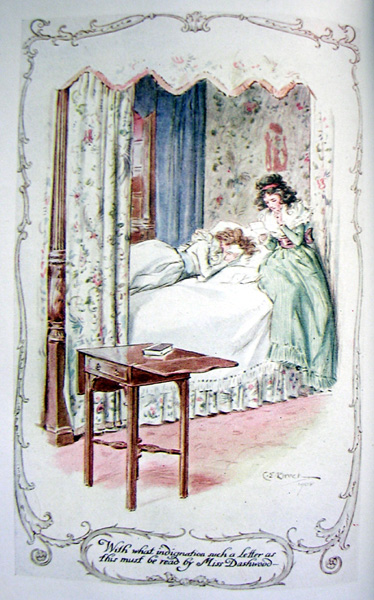
In Sense and Sensibility, Marianne Dashwood nearly dies of an illness brought on by indulging her misery and “sitting in her wet shoes and stockings.”

Lupus (an autoimmune disease)

An even more recent theory claims that all Austen’s symptoms were consistent with systemic lupus erythematosus. Joint pain, skin discoloration, fever, fatigue, and fluctuating symptoms that come and go are all consistent with lupus. See “Black and White and Every Wrong Colour.” 

Accidental Arsenic Poisoning

The British Library suggests that Austen may have died of accidental arsenic poisoning, from arsenic in medications or the water supply. They tested three pairs of spectacles from Austen’s writing desk, which are believed to be hers. Based on the prescription strengths, the researchers speculate that she may have gotten cataracts due to arsenic poisoning. Arsenic could also have caused her facial discoloration. See Dr. Sandra Tuppen’s article  and “Jane Austen Poisoned.”

Breast Cancer

Another possibility is breast cancer, which Carol Shields suggests in Jane Austen: A Life (NY: Penguin, 2001), 173-174. Austen’s Aunt Philadelphia (her father’s sister) apparently died from breast cancer, and estrogen fluctuations might have caused Austen’s fevers. 

Typhus

Another theory is that she died of a recurrence of the typhus which almost killed her as a child, while she was in Southampton. See Linda Robinson Walker, “Jane Austen’s Death: The Long Reach of Typhus?

Overdose?

Helena Kelly, in Jane Austen: The Secret Radical, thinks that whatever Austen was sick with, “a dose of opiates strong enough to knock her out completely for nine hours has to have at least hastened her death” (282). The laudanum Dr. Lyford gave her may have been too high a dose, which caused her to eventually stop breathing.

In the end, we don’t really know what took Jane Austen away—to heaven, as her sister Cassandra strongly believed. We know she left this world before she could finish all the works we wish she might have done. But we’re thankful for those works she did complete and the legacy she left to us all.

What’s your favorite theory about what happened to our beloved Jane? Can you add any information about the possible diagnoses above?

Jane’s obituary in the Salisbury and Winchester Journal says, “Her manners were gentle, her affections ardent, her candour was not to be surpassed, and she lived and died as became a humble Christian.” (Candour at this time meant that she thought the best of people, as Jane Bennet did.) (Quoted in Claire Tomalin, Jane Austen: A Life.)

For spiritual and religious aspects of death in Austen’s novels and in her experience, see my article in Persuasions On-Line, “Preparation for Death and Second Chances in Austen’s Novels.” 

You can connect with Brenda S. Cox, the author of this article, at Faith, Science, Joy, and Jane Austen or on Facebook.

Read Full Post »

Taking a vacation—whether it’s a staycation or a trip—is all about taking a break from your everyday activities to rest, relax, and get refreshed. As things continue to reopen, it’s fun to think about ways to make the summer season special. And of course, Jane always provides me with special inspiration!

Here are a few activities you might like to try this summer, whether you prefer to keep closer to home or you are ready to set out and have an adventure. These “Jane-cation” ideas are designed to fill your cup and put a pep in your step! Most of these activities can be done virtually, with your family, or in small groups.

#1 – Take a Book Lovers Day Off

  • Clear your calendar—just like a regular vacation day
  • Plan your meals ahead of time
  • Select your books
  • Read books you want to read (not something you have to read)
  • Set up a cozy spot indoors (or create an outdoor reading nook)

Read Like Jane: Read the books Jane Austen read in her lifetime. You can select some of your titles from this list from Jane Austen in Vermont: Jane Austen’s Reading List.

Jane Austen on Reading:

The person, be it gentleman or lady, who has not pleasure in a good novel, must be intolerably stupid.

―Mr. Tilney, Northanger Abbey

I declare after all there is no enjoyment like reading! How much sooner one tires of anything than of a book! When I have a house of my own, I shall be miserable if I have not an excellent library.

―Miss Bingley, Pride and Prejudice

If a book is well written, I always find it too short.

―Kitty Percival, “Catharine, or the Bower”
Anne Hathaway, Becoming Jane

#2 – Host a Small Garden Party

  • Plan summer fare that’s light and fresh
  • Invite guests to bring a favorite tea cup
  • Provide a selection of teas, lemonades, and sparkling waters
  • Don’t forget a pretty dessert such as Strawberry Shortcake Trifles
  • Decorate with fresh flowers, tea cups, and stacks of books tied with ribbon

Party like Jane: Ask your guests to bring fresh flowers and create your own bouquets or nosegays. You can read this JAW article about Regency bridal bouquets for inspiration. Learn how to make Georgian ices here!

Jane Austen on Parties:

Our party went off extremely well. There were many solicitudes, alarms, and vexations beforehand, of course, but at last everything was quite right. The rooms were dressed up with flowers, etc., and looked very pretty. 

―Jane Austen’s Letter to Cassandra, 25 April, 1811.

You know how interesting the purchase of a sponge-cake is to me.

―Jane Austen’s Letter to Cassandra, 15 June, 1808.

The Orange Wine will want our Care soon. –But in the meantime for Elegance & Ease & Luxury . . . I shall eat Ice & drink French wine, & be above Vulgar Economy.

―Jane Austen’s Letter to Cassandra, 1 July, 1808.

Strawberry Shortcake Trifles from CookingClassy.com

#3 – Plan a Picnic or Fruit-picking Excursion

  • Meet up with family or friends for a picnic
  • Explore a new park or picnic area
  • Bring a pretty basket, delicious food, drinks, and a blanket
  • Play games or provide riddles for guests
  • Try a new recipe

Picnic like Jane:
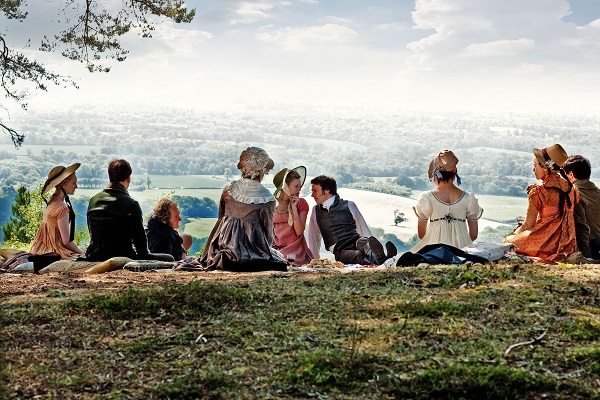
Take cushions, flowers, and other items to make it comfortable and picturesque. You can read this JAW article on Box Hill and Regency picnics. Or plan a Regency picnic menu courtesy of the Jane Austen Centre.

Jane Austen on Excursions:

We are to walk about your gardens, and gather the strawberries ourselves, and sit under trees;—and whatever else you may like to provide, it is to be all out of doors—a table spread in the shade, you know. Every thing as natural and simple as possible.

―Mrs. Elton, Emma

To sit in the shade on a fine day, and look upon verdure, is the most perfect refreshment.

―Fanny Price, Mansfield Park

The pleasures of friendship, of unreserved conversation, of similarity of taste and opinions will make good amends for orange wine.

―Jane Austen’s Letter to Cassandra, 20 June, 1808.

Emma, 2009

#4 – Take a Home & Garden Tour:

  • Explore a local public garden
  • Tour a historic home
  • Volunteer in a community garden
  • Revamp a corner of your own garden or patio
  • Take a gardening class

Garden like Jane: Try planting flowers like Jane might have had in her garden. Read this JAW article on Jane Austen’s garden when she was living at Chawton Cottage. Or enjoy this Pictorial Visit to Chawton by Tony Grant.

Jane Austen on Homes & Gardens:

Pemberley House . . . was a large, handsome stone building, standing well on rising ground, and backed by a ridge of high woody hills; and in front, a stream of some natural importance was swelled into greater, but without any artificial appearance. Its banks were neither formal nor falsely adorned. Elizabeth was delighted.

―Jane Austen, Pride and Prejudice

Some of the flower seeds are coming up very well, but your mignonette makes a wretched appearance. …Our young piony [sic] at the foot of the fir-tree has just blown and looks very handsome, and the whole of the shrubbery border will soon be very gay with pinks and sweet-williams, in addition to the columbines already in bloom. The syringas, too, are coming out. We are likely to have a great crop of Orleans plums, but not many greengages—on the standard scarcely any, three or four dozen, perhaps, against the wall.

―Jane Austen’s Letter to Cassandra, 29 May, 1811.

Two . . . hedgerows radiated, as it were, from the parsonage garden. One, a continuation of the turf terrace, proceeded westward, forming the southern boundary of the home meadows; and was formed into a rustic shrubbery, with occasional seats, entitled “The Wood Walk.” The other ran straight up the hill, under the name of “The Church Walk,” because it led to the parish church.

―James Edward Austen-Leigh, A Memoir of Jane Austen (Description of Steventon)
Jane described the syringa in the garden. Image@Tony Grant

#5 – Take a trip to the seaside or mountains:

  • Go to the seaside
  • Drive to the mountains
  • Take a day trip
  • Rent a house or cabin
  • Camp out

Travel like Jane: Looking for something literary? Explore one of these Literary-themed Day Trips. Or check out some of the Best Literary Places to Read and Eat around the world. Want to stay closer to home? Visit your local independent bookstore, buy a book, and show your support.

Jane Austen on Travels:

A little sea-bathing would set me up forever.

―Mrs. Bennet, Pride and Prejudice

What delight! what felicity! You give me fresh life and vigour. Adieu to disappointment and spleen. What are young men to rocks and mountains? Oh! what hours of transport we shall spend!

―Elizabeth Bennet, Pride and Prejudice

The Cobb itself, its old wonders and new improvements, with the very beautiful line of cliffs stretching out to the east of the town, are what the stranger’s eye will seek; and a very strange stranger it must be, who does not see charms in the immediate environs of Lyme, to make him wish to know it better.

―Jane Austen, Persuasion

We had a little water-party yesterday; I and my two nephews went from the Itchen Ferry up to Northam, where we landed, looked into the 74, and walked home, and it was so much enjoyed that I had intended to take them to Netley to-day; the tide is just right for our going immediately after moonshine, but I am afraid there will be rain; if we cannot get so far, however, we may perhaps go round from the ferry to the quay.

―Jane Austen’s Letter to Cassandra, 24 October, 1808.
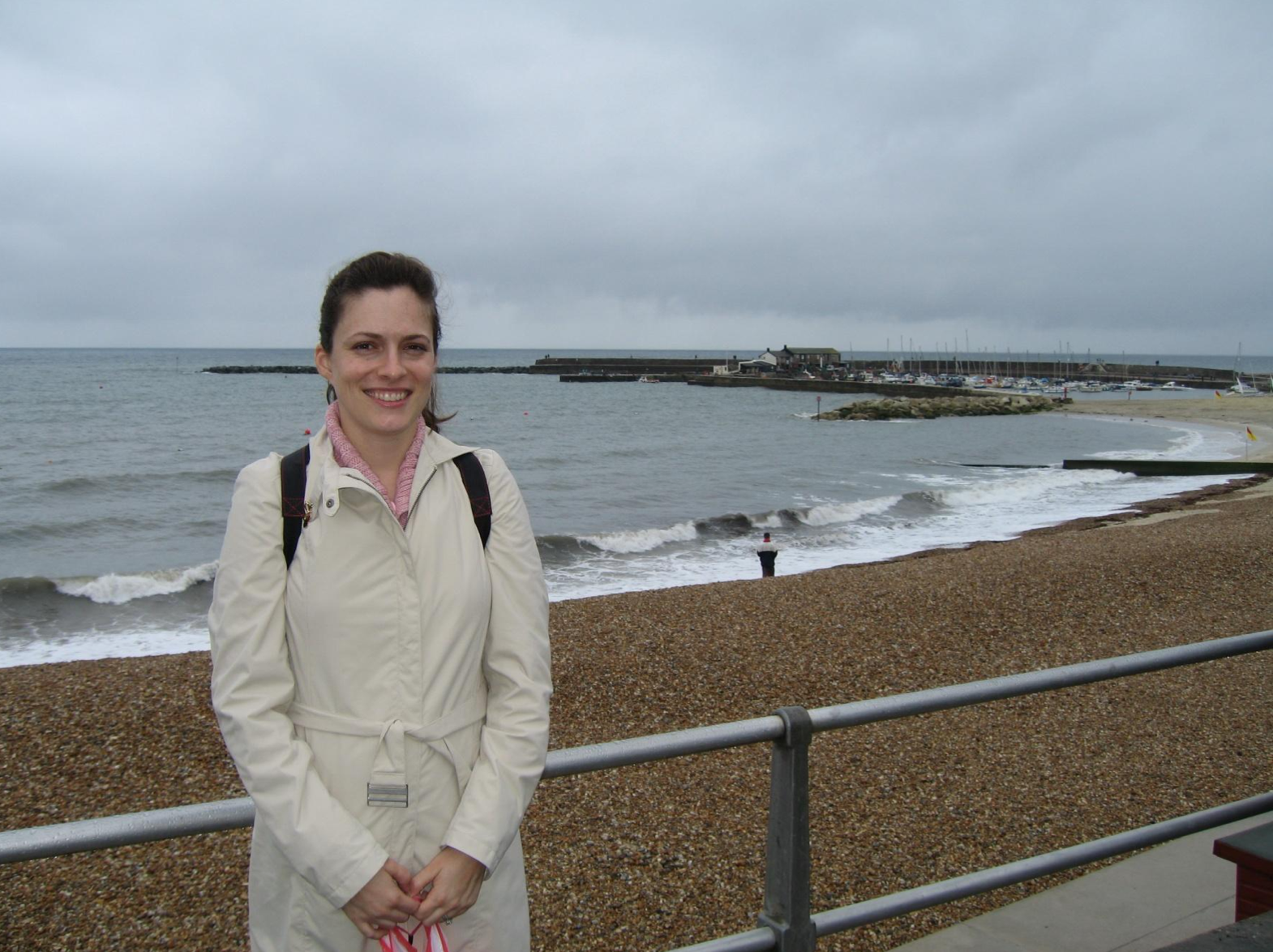
Lyme Regis and The Cobb (Rachel Dodge, 2007)

Wishing you all a summer filled with bookish plans, dear Jane Austen’s World readers! If you could choose any “Jane-cation” (if travel/health restrictions did not exist), where would you go?

RACHEL DODGE teaches college English classes, gives talks at libraries, teas, and book clubs, and writes for Jane Austen’s World blog and Jane Austen’s Regency World magazine. She is the bestselling author of The Anne of Green Gables Devotional: A Chapter-By-Chapter Companion for Kindred Spirits and Praying with Jane: 31 Days Through the Prayers of Jane Austen. Her newest book The Little Women Devotional is now available for pre-order and releases later this year. You can visit Rachel online at www.RachelDodge.com.

Read Full Post »

Inquiring readers, I recently wrote a post about the important but largely unseen parts servants played in Jane Austen’s novels. As I looked into the topic, animals were also mentioned. So much information exists that I decided to write about their important contributions to our understanding of Austen’s milieu.

________

In The Jane Austen Companion, the editor of the book, David Grey, wrote that Jane Austen “pays little attention to pets and animals”. Professor Susan E. Jones, who quoted Mr. Grey at the start of her JASNA article, begs to disagree. She ends her thoughts by writing:

“Austen uses her animal references to provide provocative signals and insights that would have amplified the pleasure of her text to insider readers.”

As an avid reader of Austen’s novels and letters, wherein a great deal of animals are mentioned, I agree with Professor Jones’s POV. Jane’s inclusion of animals and food might not have been given center stage, but her contemporary readers knew just what they represented when they made their appearance in her stories. The animals added dimension to her human characters and to her readers’ understanding of the scene: Their presence meant more than mere beasts of burden or as a source for food.

Screen Shot 2021-07-03 at 7.59.29 AM

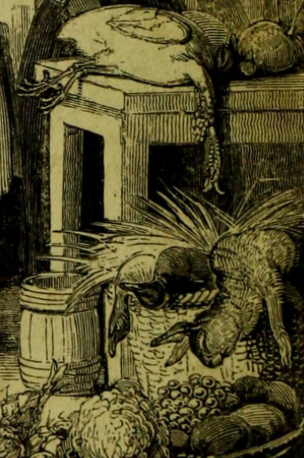
Detail of the fronticepiece image for The Frugal Housewife, 1835, Internet Archive.

One passage in Emma demonstrates why only a few references to food conjured up a host of associations for Austen’s contemporary readers, and why current scholarship helps us to understand her era better. Emma suggested a menu for an early dinner for Mrs and Miss Bates and Mrs Goddard, a trio that was “always at the service of an invitation at Hartfield” (Austen, Emma).

“…with the real good-will of a mind delighted with its own ideas, did she then do all the honours of the meal, and help and recommend the minced chicken and scalloped oysters, with an urgency which she knew would be acceptable to the early hours and civil scruples of their guests.” – Emma, Vol 1, Ch 3.

This passage provides much information about Mr. Woodhouse’s food phobias and the dishes he deemed too rich for “the digestion.” But there is more to this scene than first meets the eye.

Mrs Bates, who was “almost past everything but tea and quadrille”, and her daughter, Miss Bates, were poor due to Mr Bates’s death. Mr Elton, who replaced him as Vicar of Highbury, acquired his living. Mr Bates’s widow and daughter were instantly poor and reduced to renting rooms in town, with only a maid of all work to help them. Except for a small income, they were dependent on the beneficence of their community. They, and Mrs Goddard, the mistress of the local boarding school, were frequent visitors at Hartfield, and were invited early to play cards with Mr Woodhouse, and keep him company and partake of his food and hospitality.

Emma, who had been Hartfield’s mistress since her older sister’s marriage to Robert Knightley, and who hoped she was “not often deficient in what is due to guests at Hartfield,” arranged for this particular meal, hoping to please both her company and her exacting father. From her planned menu, Austen’s contemporaries instantly recognized the three visitors’ social and economic status. Guests belonging to the first tier of society would have been served a fresh, whole capon. Minced chicken was made with leftover chicken, and while the dish was considered delicious, Austen’s readers understood that these second tier guests had been served the remains of yesterday’s chicken (Jones).

Emma also served oysters, which are considered a specialty today. In my region, which is part of the Chesapeake Bay Watershed, U.S., oysters are expensive delicacies, since their numbers have been drastically reduced by fertilizer run-offs and other pollution in the bay, but in Austen’s day, oysters were cheap and plentiful in England and served as “common fare at an inn” (Jones). They, like chicken, are a white food, whose bland color, Emma knew, suited Mr Woodhouse to a tee.

Animals in the countryside:

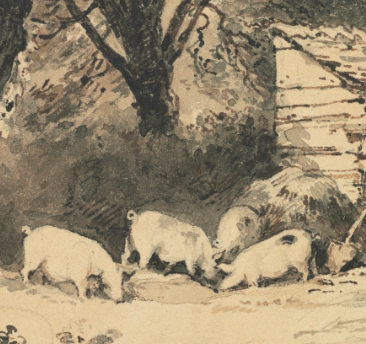
Pork was considered a symbol of affluence. Jane’s rich brother, Edward, kept pigs:

“In a letter to Cassandra from Steventon (1 December 1798), Jane wrote, ‘My father is glad to hear so good an account of Edward’s pigs, and desires he may be told…that Lord Bolton is particularly curious in his pigs, [and] has had pigstyes of a most elegant construction built for them, and visits them every morning as soon as he rises’” (Wilkes).

In her blog post, author Sue Wilkes aptly titled an image of a fortunate pig as

“an elegant pig in an elegant pigsty.”

Emma’s gift to Mrs and Miss Bates of a whole hindquarter of a pig was generous – but to a fault. Mr Woodhouse first suggested a small, more delicate loin or leg, which Susan Jones points out was thoughtful, since the Bates’s rented accommodations were small. While Miss Bates effusively thanked Emma, she added that her mother feared they “had not a salting-pan large enough.” In the film Clueless, director Amy Heckerling had it right – Emma was oblivious in so many ways.

Growing up in the Steventon countryside, the Austens were surrounded by fields of crops, stands of woodlands, and grazing animals. “Mr Austen was entitled to graze his sheep and cows in the actual churchyard of St Nicholas if he so chose” (Le Faye, p 170). Jane mentioned in her letters the excellent quality of the Leicester sheep he had sold for profit.

“Mr Lyford gratified us very much yesterday by his praises of my father’s mutton, which they all think the finest that was ever ate.” – Le Faye, p 172

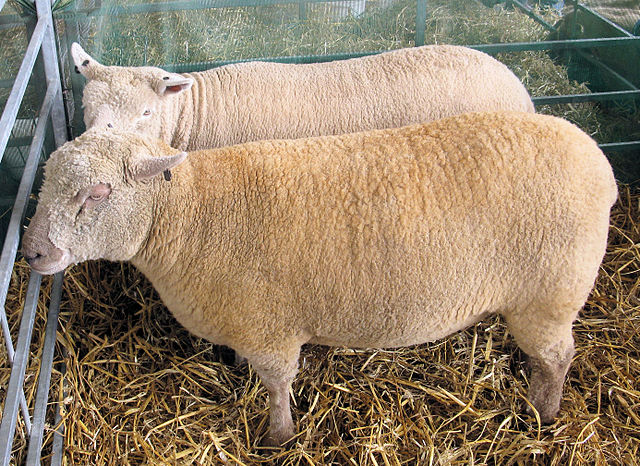
Mr Austen likely raised Southdown Sheep, a small, stocky animal, whose lambs, born in October, were ready for slaughter by Christmas. LeFaye speculated that the sheep Mr Knightley and Robert Martin (E) kept on their farms on the Donwell Abbey estate were also Southdown sheep, for they had exceptional wool and Mr Martin’s wool crop fetched a high price. Admiral and Mrs Croft (P) inspected their sheep as soon as they were settled at Kellynch Hall, an action that Sir Walter Elliot considered vastly beneath his lofty sense of self (LeFaye, 174).

Southdown Sheep-Wikimedia Commons

Southdown Sheep, Wikimedia Commons image

Working animals:

Animals in the countryside in which Austen lived sounded out familiar noises – the crowing of roosters, clucking of chickens, honking of geese, mooing of cows, neighing of horses, squealing of pigs, meowing of cats, and barking of dogs. Austen must also have intimately known their smells, their antics when they were young, and their drama from birth to death. They were part of her childhood in Steventon and formed the background for the rural locations in her novels, albeit more as indicators of a character’s status and wealth than as characters in their own right. Their literary presence marked their service of their owners who fed them.

Jane mentioned cats once in a minor quote from Mrs Jennings in Sense and Sensibility: “Lord! we shall sit and gape at one another as dull as two cats,” so I shall quickly move on to their jobs as hunters of mice and rats in barns and houses, and of moles and voles in gardens. They “earned” their living, although I am certain no child could resist the continuous litter of kittens produced by these feral creatures.

Purebred dogs specifically bred for desired features and purposes belonged largely to aristocrats and the gentry. Farmers and peasants owned more common curs. With their sensitive noses, ability to run alongside their masters for hours, loyalty, and willingness to serve and please, dogs were essential in too many jobs to count. As herders they were essential helpmeets for shepherds and drovers. As fearless terriers, they could dig any animal out of a hole, their tails providing a handy means for pulling them out of predicaments. Dogs protected livestock, barked warnings at intruders, defended their masters, pulled down large animals, acted as nanny dogs for children, etc. One suspects that many individuals who worked with dogs learned to love them more as companions than as workers, such as Willoughby, who “bred hounds for pleasure” (Shearer).

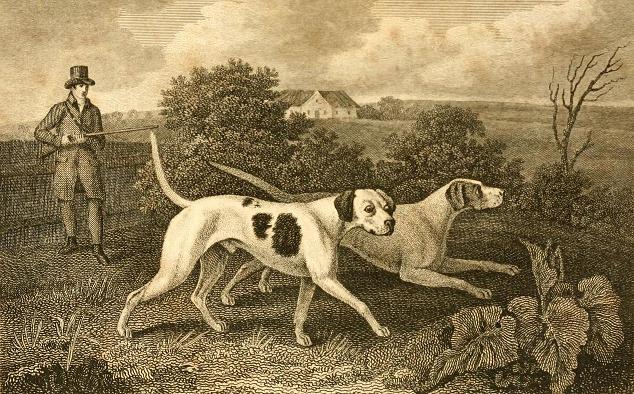
A black and white print of a hunter going out with two pointers, 1820 image.

James Barenger , 1820, Pointers. Wikimedia Commons image.

Aside from providing mankind with eggs, meat, and feathers, geese also trumpeted danger to chickens and anything and anyone within hearing distance. Austen’s mention of a goose in Emma, demonstrates the quality of Mr Martin’s excellent farm products:

“…Robert Martin raises geese because the Martin matriarch gives a fine goose to Mrs Goddard, who says it is “the finest goose[she has] ever seen” (Jones).

Animals for food:

Alderney cows played a major role for the Martin family in Emma:

“…and of their having eight cows, two of them Alderneys, and one a little Welch cow, a very pretty little Welch cow indeed; and of Mrs. Martin’s saying as she was so fond of it, it should be called her cow).”

Interestingly, Jane’s mother also kept Alderney cows. Mrs Austen wrote in a letter to a sister-in-law in 1773:

“I have got a nice dairy fitted up, and am now worth a bull and six cows”

Maggie Lane tells us that in 1770, Mrs. Austen had described “an Alderney cow which ‘makes more butter than we use,” which meant that any excess from their animals earned much needed income for the Austens and their large family.

In a letter to Cassandra, Jane Austen exclaimed over the value of the family cows in the sale of the family possessions [when moving from Steventon to Bath], “sixty one Guineas & a half for the three Cows…” (Jones)

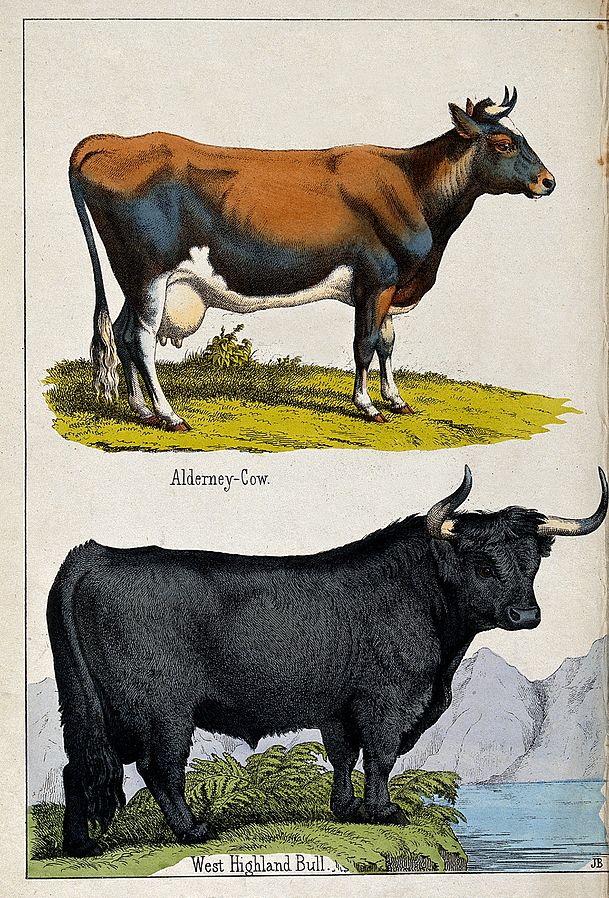
The butter of Alderney cows, a small rugged Channel Island breed, was considered superb, but, sadly, these cows became extinct in WWII. There were other varieties of cows during this era that produced milk, meat, and leather, but the Alderneys were prevalent in Austen letters and in Emma.

Above,_an_Aldernay_cow;_below,_a_Westhighland_bull._Coloured_Wellcome_V0020750

Alderney cow, top image, West Highland bull, lower image. Creative Commons, Wikimedia Commons via Wellcome library.

Other farm animals (still common) provided essential food and products for the Austen family, like chickens (meat, eggs, feathers), sheep (meat, wool), and goats (meat, milk.) My descriptions echo the dispassionate attitude that the Georgian era populace had until the turn of the 19th century, when attitudes changed.

Animals for transport:

Many animals, commonly known as beasts of burden,” served as “engines” for transport. In too numerous instances to count, their lives were severely shortened from hard work and harsh treatment. Horses were primarily owned by the elite because their upkeep was expensive. When Austen mentioned a carriage drawn by four horses (luxurious), or a curricle pulled by two (costly), her reading audience knew to the penny how much their maintenance cost per year. John Thorpe (NA) drove a gig pulled by one horse, which he pretended was as fine and fast as Mr Tilney’s carriage pulled by two. At the mere mention of the carriages Jane’s readers instantly knew which of the two young men had more financial resources and the faster vehicle. The way Thorpe forced his sole horse to compete with Tilney’s team of two demonstrated his ambition and cruelty. (See the Brock image on the left of John Thorpe, “Pray, pray, Stop Mr. Thorpe,” Wikimedia Commons) vs. (Henry Tilney in his carriage with Catherine on the right, “Henry Drove So Well,” Ch XX, Molland’s.)

In Sense and Sensibility, Austen demonstrated Marianne Dashwood’s recklessness with Willoughby’s gift of a horse (Queen Mab), and complete disregard of her family’s financial situation. She could only think of Willoughby’s loving present, which it wasn’t. Willoughby must have known of the family’s circumstances, and so his gesture was cruel.

“Marianne told her [Elinor], with the greatest delight, that Willoughby had given her a horse, one that he had bred himself on his estate in Somersetshire, and which was exactly calculated to carry a woman. Without considering that it was not in her mother’s plan to keep any horse, that if she were to alter her resolution in favour of this gift, she must buy another for the servant, and keep a servant to ride it, and after all, build a stable to receive them, she had accepted the present without hesitation, and told her sister of it in raptures.

“He intends to send his groom into Somersetshire immediately for it,” she added, “and when it arrives we will ride every day. You shall share its use with me. Imagine to yourself, my dear Elinor, the delight of a gallop on some of these downs.”

“Most unwilling was she to awaken from such a dream of felicity to comprehend all the unhappy truths which attended the affair; and for some time she refused to submit to them. As to an additional servant, the expense would be a trifle; Mamma she was sure would never object to it; and any horse would do for HIM; he might always get one at the park; as to a stable, the merest shed would be sufficient. Elinor then ventured to doubt the propriety of her receiving such a present from a man so little, or at least so lately known to her. This was too much.”

Because of this expensive gift, Elinor assumed that the pair had entered into a secret engagement.

In another example of Austen’s use of an animal to demonstrate character, she shows Edmund’s interest in Mary Crawford by allowing her to ride Fanny Price’s gentle pony. He had first obtained it for his cousin for her health, which blossomed with a daily ride. Then Mary Crawford expressed her desire to learn to ride, and Edmund, losing his head, gave her free rein to use Fanny’s pony.

“The ensuing spring deprived [Fanny] of her valued friend, the old grey pony; and for some time she was in danger of feeling the loss in her health as well as in her affections; for in spite of the acknowledged importance of her riding on horse-back, no measures were taken for mounting her again…”

Ignored by her most supportive cousin, Fanny’s aunts took advantage of the circumstances and employed her to run errands for both of them, which tired her excessively. Edmund soon noticed that Fanny looked ill and realized that his insensitivity to her situation and that his interest in Mary had contributed to his cousin’s ill health. He swiftly returned the pony for her daily rides. Without much exposition, Austen introduced this subplot with a pony at its center to point out her characters’ motivations, their actions and the consequences.

Other modes of transportation:

Not many people could afford to purchase or maintain horses. Drays and heavy wagons drawn by teams of mules and oxen pulled heavy loads over rutted roads or provided transportation for groups of people with fewer means. Donkey and pony carts could carry two adults, and goat carts could carry one woman or two children. Dogs pulled carts for small children or pulled specialized vehicles alongside their working masters.

We know that the Austen women used a donkey cart to get around. Today it can still be seen in Chawton Cottage, now a museum.
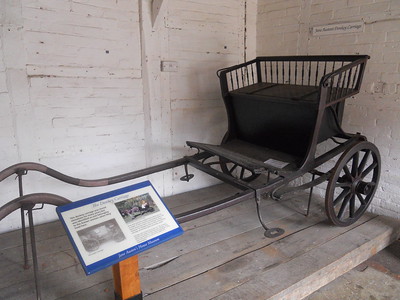
donkey cart-JA House Chawton-PhoebeZu

The donkey cart, Jane Austen House Museum (Chawton Cottage), taken by Phoebe Zu.

Animals as pets:

This last category is short, for in the early 19th century animals were largely used for work. The aristocracy and gentry, however, were another matter, as my pinterest board, “Regency Pets and Animals,” attests. The paintings depict dogs, horses, cats, and birds, etc. held by their owners. Many of the horses and dogs were signs of wealth and consequence.
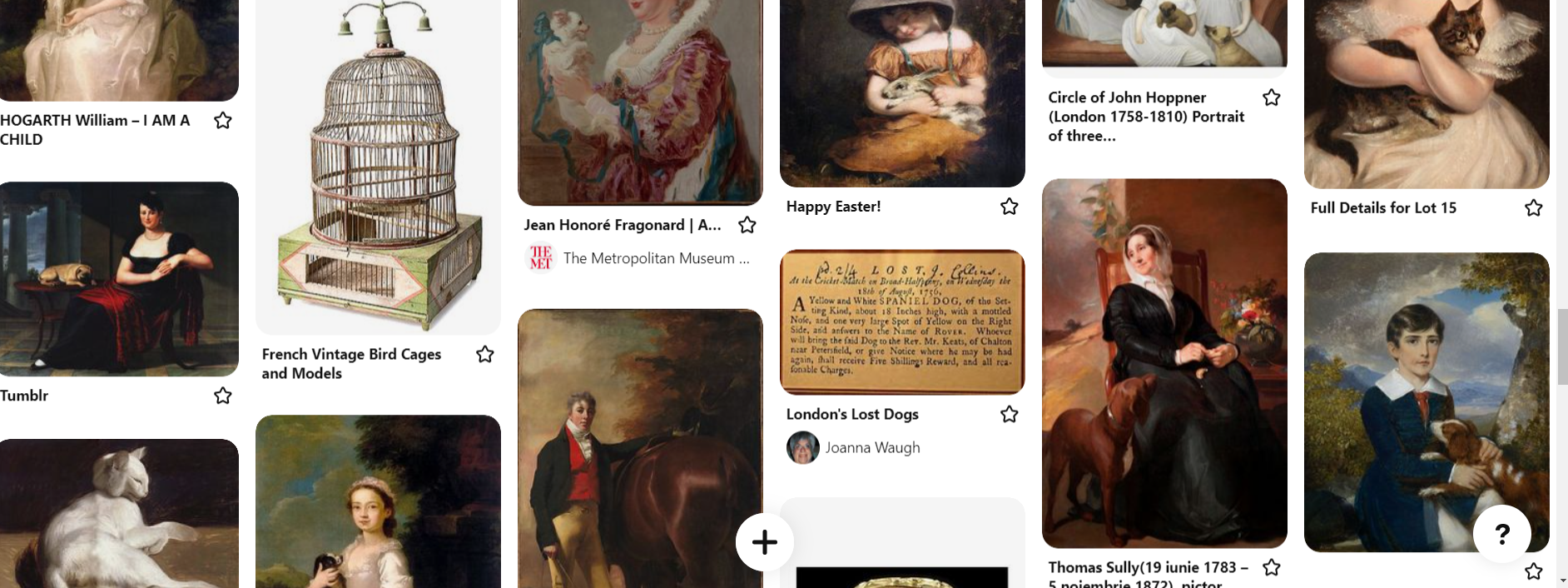
Pinterest board of Georgian pets

Rabbit, pugs, cats, dogs, bird cage, and a man with his thoroughbred. Vic’s Pinterest Board. A majority of the paintings and illustrations depict adults and children from the upper classes.

The pug in Mansfield Park is the only pet fully described in a Jane Austen novel. It too was used to show character, as well as sloth and indolence.
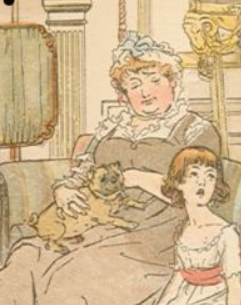
Detail of pug-Molland's

Detail of a Brock image of Lady Bertram, pug, and Fanny as an infant. Molland’s.

“To the education of her daughters Lady Bertram paid not the smallest attention. She had not time for such cares. She was a woman who spent her days in sitting, nicely dressed, on a sofa, doing some long piece of needlework, of little use and no beauty, thinking more of her pug than her children, but very indulgent to the latter when it did not put herself to inconvenience, guided in everything important by Sir Thomas, and in smaller concerns by her sister.”

Pugs, first bred in China and brought to The Netherlands by the Dutch East India Company, became a favorite animal of William of Orange and his wife Mary, who introduced the small dog to England in the 17th century, where its popularity took off.

When Henry Crawford took notable interest in Fanny, Lady Bertram became quite talkative:

“No, my dear, I should not think of missing you, when such an offer as this comes in your way. I could do very well without you, if you were married to a man of such good estate as Mr. Crawford. And you must be aware, Fanny, that it is every young woman’s duty to accept such a very unexceptionable offer as this.”

This was almost the only rule of conduct, the only piece of advice, which Fanny had ever received from her aunt in the course of eight years and a half. It silenced her. She felt how unprofitable contention would be…”

Lady Bertram was convinced that Henry Crawford fell in love with her at the ball, where she looked remarkably well (even Sir Thomas said so).

And you know you had Chapman to help you to dress. I am very glad I sent Chapman to you. I shall tell Sir Thomas that I am sure it was done that evening.” And still pursuing the same cheerful thoughts, she soon afterwards added, “And I will tell you what, Fanny, which is more than I did for Maria: the next time Pug has a litter you shall have a puppy.”

This speech must have exhausted Lady Bertram, for it was the first time she showed such deep emotion and enthusiasm on any topic, or affection towards another person. That she was willing to give Fanny one of Pug’s precious puppies spoke volumes.

Conclusion:

Most of Austen’s contemporary readers experienced first-hand the life and death roles that animals played in their lives. When reading her novels, they could use this knowledge to fill in the blanks that Austen, an author not known for detailed descriptions, assumed they knew. Today’s readers do not have this luxury. For example, take this statement from Sue Wilkes, which describes the different ways in which rich and poor treated each other regarding property and food:

“Rich landowners … had hothouses for growing tender fruits like grapes, nectarines and peaches. In season, they also enjoyed game from their estates. The Knight family sent game to the Austens from Godmersham. The killing of game by using dogs or a gun was restricted by law to members of the landed gentry, providing they owned estates worth at least £100 p.a., or leased land worth at least £150 p.a. Although the countryside was plentifully stocked with fish and game, a poor man who helped himself to a hare or salmon to feed his family faced jail or transportation.”

Details like these enrich our knowledge of the era and our understanding of novels written at that time. Austen’s ways of incorporating the roles that animals represented in her stories without burdening us with too many details was simply genius.

Additional resources:

Books

Grey, J.D. (1986) The Jane Austen Companion (with A Dictionary of Jane Austen’s Life and Works by H. Abigail Bok (U.S.). Macmillan Publishing Company.

LeFaye, D. (2014) Jane Austen’s Country Life (1st ed., U.K.) Frances Lincoln Ltd.

Online information

Jones, S.E. (2016) “Oysters and Alderneys: Emma and the Animal Economy,” (Vol 37, No. 1) Persuasions Online, JASNA. URL downloaded 7/2/21: http://jasna.org/publications-2/persuasions-online/vol37no1/jones/

Knowles, R. (2019) “Curricles, gigs and phaetons in the Regency,” Regency History. URL downloaded 7/2/21: https://www.regencyhistory.net/2019/07/curricles-gigs-and-phaetons-in-regency.html

Sanborn, V. (2010) “Pugalicious: The Pug in Mansfield Park and the 19th Century,” Jane Austen’s World. URL downloaded 7/1/21: https://janeaustensworld.com/2010/02/16/pugnacious-the-pug-in-mansfield-park-and-the-19th-century/

Shearer, E. (2017) “Animals in Jane Austen’s novels,” Eliza Shearer. URL downloaded 6/30/21: https://elizashearerblog.wordpress.com/2017/10/30/animals-in-jane-austen/

Sullivan, M.C. (2000) “The Curricle,” Tilneys and Trapdoors. URL downloaded 7/1/21: http://www.tilneysandtrapdoors.com/cult/curricle.html

Wilkes, S. (2015) “Down on the Farm,” A Visitor’s Guide to Jane Austen’s England. URL downloaded 7/2/21: https://visitjaneaustensengland.blogspot.com/2015/07/down-on-farm.html

Detail of image, fronticepiece, Mrs. Child, (1835) The Frugal Housewife (15th Ed. U.K.)

Read Full Post »

Inquiring readers: WordPress has changed its editor, and I am still wrestling with the changes, especially on different computers – Mac and Android. You can see it in the changes in spacing and font. I am also experiencing internet connectivity problems. For these reasons, this post is published 4 days later than I intended. When we celebrated Father’s Day in the U.S., I thought of my beloved father and of his dry wit, which influenced my love for Austen and her novels (especially of Mr Bennet’s comments in Pride and Prejudice that reminded me of my father’s droll, but gentle humor). As I pondered the connection, I asked: “How did Jane Austen’s father influence her writing?” Here is my very short analysis.

Jane Austen was born on December 16th in 1775 on a bitter cold day in Steventon, a village in Hampshire. One day after her birth, her father, the village’s pastor, wrote a family member about his 7th child (out of 8) and second daughter:

“You have doubtless been for some time in expectation of hearing from Hampshire, and perhaps wondered a little we were in our old age grown such bad reckoners but so it was, for Cassy* certainly expected to have been brought to bed a month ago: however last night the time came, and without a great deal of warning, everything was soon happily over. We now have another girl, a present plaything for her sister Cassy** and a future companion. She is to be Jenny…” (Lane, 63). (*His wife, Cassandra; **His daughter.)

George Austen

One senses a father’s pride in the tone of this letter, as well as George Austen’s pleasure that Cassy, the only girl among his six children, and almost three years older than *Jenny*, would have a sister as a playmate. 

Reverend George Austen baptized his new daughter on December 17th in his home, as he had done with his other children. While Mrs Austen rested during her lying in, he wrote notes announcing the birth to friends and acquaintances. As far as we know, this was the last time that he called his newborn Jenny.  On April 5th, baby Jane was formally christened in St. Nicholas church. She was named after her godmother; her two aunts – Mrs Cooper and Mrs Leigh Perrot – and her maternal grandmother. 

Despite the high infant mortality rate during this era, the Austens sent their babies to “a good woman at Deane” three months after their births. This custom was commonly practiced at that time.  Cassandra Austen visited her babies daily in the nearby village, until they returned to the family fold at around 18 months of age. The reasons for this custom can be found in the following article on Breast Feeding in the Early 19th Century on this blog. 

A loving father and mother:

George and his wife were equally hard working parents who provided a stable and often joyful childhood for their children, except perhaps for the physically disabled George, who might have suffered from epilepsy. (His condition is more fully discussed in this article by Geri Walton: Jane Austen’s Disabled Brother George Austen. 

Early childhood and an education at home

Once the infants were returned to Steventon Parsonage, the parents took over raising their children. By all accounts, the Austen family was close-knit. After baby Jane’s return to the family fold, her parents’ teachings and examples during her formative years modeled intellectual, creative, and practical activities in a comfortable home and rural setting. 

“She was apparently a tomboy as a child, preferring to play cricket and roll down hills with her brothers than play ‘girls’ games, much like the character of Catherine Morland in Northanger Abbey.” (Ivins, p 2.)

Book cover with image of a family with two parents and six childrendancing, with carpet rolled up and one of the girls playing piano.

Mrs Hurst Dancing book cover from Amazon books. The image shows a family of 8 dancing inside a drawing room, with the carpets rolled up.

Many facts exist about the timeline of Rev George Austen’s life, but what was his relationship with his family, and, in the interest of this article, with his famous daughter?  From an early age, George Austen led a hard-scrabble life. He lifted himself up through extraordinary intelligence and industry.  

Young Jane and her sister learned about history, literature, and the classics from their father and brothers. George’s library consisted of 500 volumes, an enormous (and expensive) number for a mere country parson. Shades of Mr Bennet! The library contained both classical books and novels, the latter of which were first frowned upon by academics and traditionalists, but were read with enjoyment by the Austen family. 

“…most of [the sisters’] education was undertaken privately at home, where their father, Reverend George Austen, supplemented his clerical income by taking boy pupils as boarders. It is likely that the Austen sisters benefited from their father’s library and from his informal instruction. We do not know whether or not they also sat in on any of the boys’ classes.” – Sutherland, British Library

Boarding school and “formal” education:

Jane and Cassandra acquired some formal education, although there were no expectations that their education would be as rigorous as their brothers’.

“In 1782 at the age of 7 Jane Austen went to school for the first time. Theories [conjecture] that she wanted to go to school because her elder sister Cassandra was being sent to Mrs Cawley’s school in Oxford to accompany their cousin Jane Cooper who was being sent there.” – Jane Austen Went to School

In 1783, Jane, Cassandra, and their cousin Jane Cooper caught an infectious disease spread by troops returning to Southampton. The three became quite ill. Jane Cooper sent a letter about the situation to her parents, who informed the Austens. Alarmed, Mrs Austen and Mrs Cooper immediately traveled to the school to retrieve their daughters. Mrs Austen nursed Jane back to health, but sadly Mrs Cooper caught the disease and died from it.

In the following three years, Jane and Cassandra continued their education at home. Then, when Jane was ten, the girls set off again to school, one that seemed similar to Jane’s description of Mrs. Goddard’s school in Emma:

“Mrs. Goddard was the mistress of a school — not a seminary, or an establishment, or anything which professed, in long sentences of refined nonsense, to combine liberal acquirements with elegant morality, upon new principles and new systems — and where young ladies for enormous pay might be screwed out of health and into vanity — but a real, honest, old-fashioned boarding school, where a reasonable quantity of accomplishments were sold at a reasonable price, and where girls might be sent to be out of the way, and scramble themselves into a little education, without any danger of coming back prodigies. Mrs. Goddard’s school was in very high repute, and very deservedly; for Highbury was reckoned a particularly healthy spot: she had an ample house and garden, gave the children plenty of wholesome food, let them run about a great deal in the summer, and in winter dressed their chilblains with her own hands.”

The school Jane and Cassandra attended between the spring of 1785 and December of 1786 was the Abbey School in Reading (remarkably still a girl’s school today https://theabbey.co.uk), where the curriculum included writing, spelling, French, history, geography, needlework, drawing, music and dancing – subjects that were considered essential for a girl’s education during the girls’ formative years to prepare them for attracting a husband and running a household. Few roads for women in Austen’s time led to higher education, travel abroad, or a career.

Unlike most of their female contemporaries, Jane’s and Cassandra’s education did not stop when they returned to Steventon. In fact, they were exposed to a wider variety of topics, subjects, and intellectual skills than they would have encountered in boarding schools. In addition:

“[Jane] was not denied “unladylike” material; she mentioned Henry Fielding’s bawdy novel Tom Jones in one of her letters and wrote that the Austen family were “great novel readers and not shamed of being so.” – Sullivan, (p180).

Early writing

Jane wrote her Juvenilia between 12 – 18 years of age as “gifts to her family” (Ivins). She frequently read these short, hilarious pieces of fiction to her siblings, parents, and friends. An early draft of Pride and Prejudice (First Impressions) was a particular favorite of her audience and remained so for years. Importantly, Rev. Austen encouraged her writing. In later years Cassandra recalled Jane reading from Elinor and Marianne (later Sense and Sensibility) before 1796. These carefree times in the Austen family’s social lives were filled with laughter, games, riddles, plays, readings, and intellectual discussions.

“…the relationship of Jane Austen with her own father seems, from what remains of her correspondence, to have been a good one. John Halperin characterizes him as a gentle, scholarly man, a good teacher and an excellent classical scholar. It was he who gave his daughter her literary education, and he who took sufficient interest in her work to offer her first novel to a publisher.” (Gibbs).

Despite their loving relationship, Austen’s six major novels described deeply flawed fathers with a variety of issues: Sir Walter Elliot was a snob and a spendthrift (P); Mr Woodhouse was a fearful hypochondriac whose neediness bound his youngest daughter to their home (E); General Tilney, another snob, was a truly nasty man all around (NA); and Mr Henry Dashwood (SS) left the financial fate of his second wife and daughters to the mercy of his weak-willed son and heir for lack of planning and foresight. 

Sir Thomas Bertram’s fathering skills in Mansfield Park were more nuanced. While he wasn’t a model father, his understanding and insights changed. The growth of his character is one of many reasons why Mansfield Park is considered by many to be Jane’s masterpiece.

I have reserved Mr Bennet (PP), for last. When I was fourteen his character delighted me – his witticisms, his criticisms of his silly wife and three younger equally silly daughters, and his close relationship with Jane and Elizabeth, who I adored, all had my approval. But then I grew up and saw him in a different light.

In my mature years I saw a man whose wit and sarcasm hid an underlying cruelty. He was a husband who made fun of his wife; who favored two daughters above three others; a man who bought extremely expensive books, but who failed to set a portion of that expense aside for future investments for his wife and daughters. I now see a man who retreated from daily reality and, for all his intellectual curiosity, was generally lazy. 

Even after Mr Wickham compromised his daughter, Lydia, and after Mr Darcy did everything in his power to rectify the situation, including providing the shameless couple with a yearly income, Mr Bennet quipped to Elizabeth:

“I admire all my three sons-in-law highly,” said he. “Wickham, perhaps, is my favourite; but I think I shall like your husband quite as well as Jane’s.”

That statement put the nail in the coffin to my youthful admiration of this father. 

George Austen’s support:

George Austen was proud of all his children. He actively supported Jane’s talents as a writer and encouraged her from childhood and on. In a letter to publisher Thomas Cadell, Jr., who was a partner in the firm that had published Fanny Burney’s novels, he proposed to submit her completed manuscript of First Impressions. George’s letter, written in November, 1797, offered “A Manuscript Novel, comprised in three Vols., about the length of Miss Burney’s Evelina.” Cadell, Jr. returned the letter unopened, and so the manuscript languished for 16 years.

Edward’s gift, and the fortuitous consequences of Cadell’s rejection:

George Austen’s sudden death in Bath on 21 January 1805, when Austen was nearly 30, placed his female family in uncertain circumstances. All the brothers, except for George, contributed enough funds towards their mother’s and sisters’ upkeep to relieve some of their financial burdens. Nevertheless, Jane’s creative writing suffered as her female family sought a permanent place to land after George’s death. In 1809, the group found a permanent home in Chawton Cottage, a house that Jane’s brother, Edward Austen Leigh, had refurbished for them.

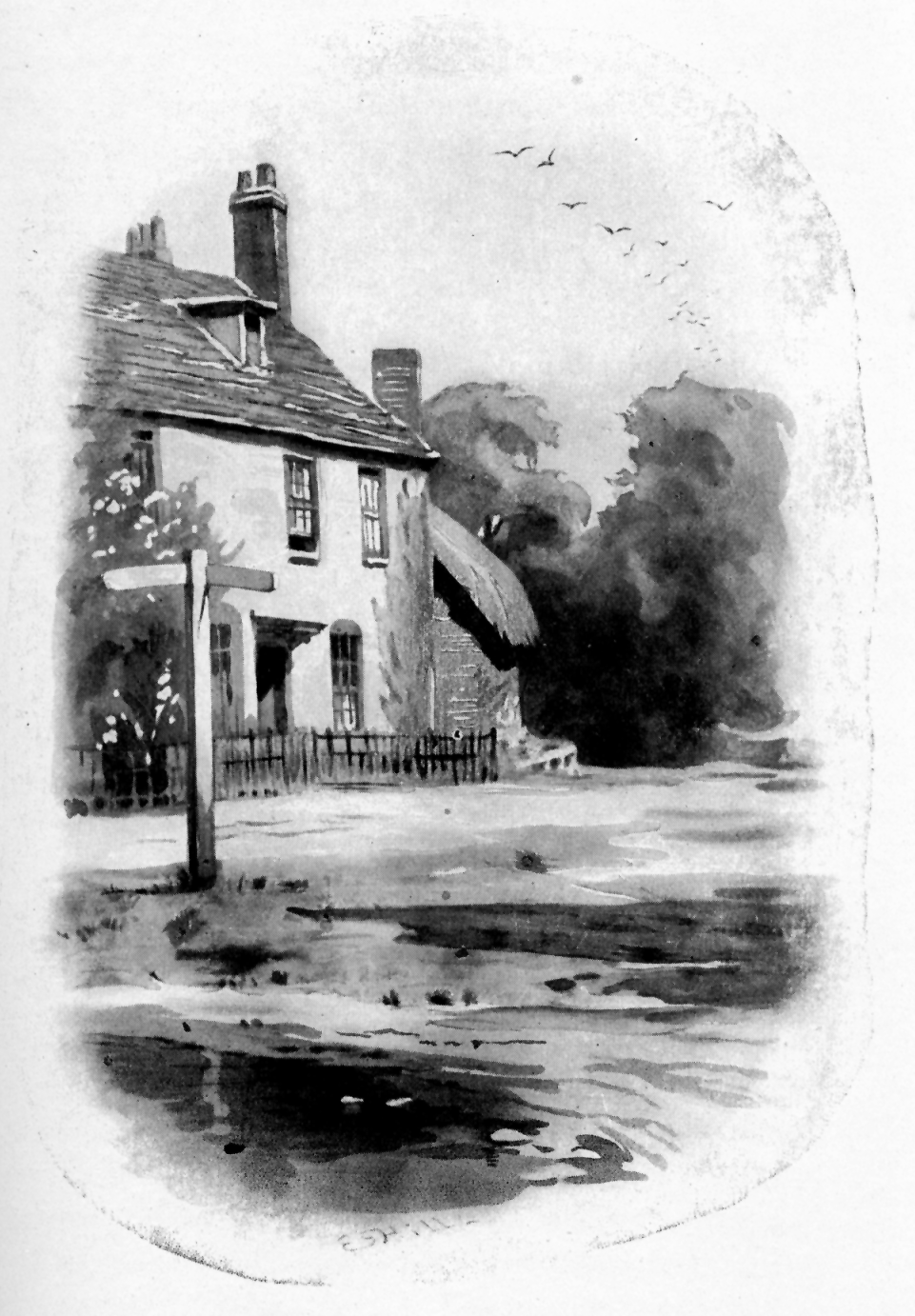
Black and white pen and ink drawing of the cottage by Ellen Hill

Chawton Cottage by Ellen Hill

The move to Chawton Cottage created a perfect storm of creativity and success for Jane. Thanks to Edward, she returned to the rural countryside she loved, and once again her talent and creativity flourished. First on her to-do list was to rewrite Sense and Sensibility. A publisher had not rejected this manuscript and she sensed its commercial value. After its modest success, she turned to her other novel, First Impressions, the family favorite which had languished unpublished. We have no way of knowing how often Jane revised this beloved story, which, like Sense and Sensibility, started out as an epistolary novel. What we do know is that the finished product, renamed Pride and Prejudice (published in 1813), was well received. The book retains its literacy rock star status to this day.

I have no doubt that George Austen’s unshakable faith in Jenny’s brilliance as an author contributed to her success. His gift was his consistent confidence and encouragement in nourishing her spectacular talent. Well done, George!

______

Articles from this blog:

Online Articles

Gibbs, C. (1986) Absent Fathers: An Examination of Father-Daughter Relationships in Jane Austen’s Novels (Persuasions #8. JASNA. PDF Downloaded 6/26/21: http://www.jasna.org/persuasions/printed/number8/gibbs.pdf

Sutherland, K. (2014) Female education, reading and Jane Austen, British Library. URL Downloaded 6/26/21: https://www.bl.uk/romantics-and-victorians/articles/female-education-reading-and-jane-austen

Books

Grey, J.D. (1986) The Jane Austen Companion (with A Dictionary of Jane Austen’s Life and Works by H. Abigail Bok (U.S.). Macmillan Publishing Company.

Lane, M. (1997) Jane Austen’s Family: Through Five Generations (Paperback reprint (U.K.) St. Edmundsbury Press, Ltd.

Hannon, P. (2007) 101 Things You Didn’t Know About Jane Austen: The Truth About the World’s Most Intriguing Literary Heroine (U.S.). Fall River Press.

Ivins, H. (2010) The Jane Austen Pocketbook Bible (1st ed. U.K.). Crimson Publishing.

Mingay, G & Sperling, D. (1981) Mrs Hurst Dancing And Other Scenes from Regency Life 1812-1823 (U.K.). Victor Gollancz Ltd.

Sullivan, M.C. (2007) The Jane Austen Handbook: Proper Life Skills from Regency England (U.S.). Quirk Books.

https://www.amazon.com/Hurst-Dancing-Scenes-Regency-1812-1823/dp/0312551290

Read Full Post »

Inquiring Readers: Servants and the working class are ever present as background characters in Jane Austen’s novels. Readers in her time were well aware of their important duties in all levels of Regency households. They were essential in the running of daily life and/or an estate, and therefore were given no distinction in Austen’s novels unless their roles moved the plot forward.

Introduction:

Without much explanation, Austen’s contemporaries could easily gauge the number of servants that the Bertrams or the Woodhouses employed (at least 7-9 inside their grand houses and more in the fields and gardens) against the socially downward turn the Elliot family and Dashwood women experienced by the number of their reduced help, which in the latter instance was three. The Dashwood women were able to maintain some kind of social status within their unenviable income of £500 a year and with the help of a friendly (and very rich) Mrs. Jennings.

Mrs and Miss Bates employed a maid of all work to help them with their daily chores, although they were dependent on the kindness of their neighbors to help make ends meet. Fanny Price’s parents in Portsmouth engaged two housemaids, impoverished as they were, their poverty due no doubt to Mr. Price’s drinking and meager income, which needed to stretch to clothe and feed a family of 12. Only Mrs Smith, Anne Elliot’s old school friend, an impoverished widow, was too poor to “afford herself the comfort of a servant.” (Persuasion, Chapter 16.) She lived in public accommodations in Bath, whose landlady employed only one servant for her lodgers.

Hogarth portrait of 6 Georgian servants, 3 men (boy to older men) and 3 women, all wearing caps

Heads of Six of Hogarth’s Servants, mid 1770’s. Creative Commons image from Wikimedia Commons , via the Tate Gallery.

Austen’s descriptions of her characters reveal much about the way they treated their help. Imagine having to work under Mrs. Norris’s direction or Mrs. Elton’s! Those two exacting women, neither of whom possessed an ounce of compassion, set the most stringent standards, yet still found time to complain about their staff’s performances.

Compare their attitude to Colonel Brandon’s, who treated underlings with respect and caring, or Mr. Darcy, whose housekeeper’s admiration for her master helped change Elizabeth’s opinion of the man she rejected for being too proud, distant, and arrogant. 

Austen’s oblique descriptions of other characters’ interactions with their servants – Mr. Woodhouse (Emma’s father), for example – causes the reader to contemplate poor James’s situation as his coachman. James was asked to ferry guests like Mrs and Miss Bates back and forth, regardless of time or weather, which was considered a terrible imposition by Austen’s contemporaries. Mr. Woodhouse’s cook, who probably failed to satisfy her employer’s exacting standards for boiling an egg or making gruel, must have suffered silently through his passive aggressive sighs of disappointment for not achieving perfection. 

Then there is Sir Walter Elliot, whose ego was twelve sizes larger than his income, and whose ability to employ the help he was accustomed to was reduced to such a degree that his daughter Elizabeth chose not to invite the Musgroves to dinner, but only to an evening get-together where the lack of servants would not be so obvious. Sir Walter’s major sin in the eyes of Austen’s contemporaries was to squander his fortune to such an extent that he had to rent out his estate and downsize to a mere townhouse in Bath.

Watercolor of a busy office in which prospective employers interview and look over potential servant applicants

Register Office for the Hiring of Servants, Thomas Rowlandson, Watercolour, 1800-1805, Creative Commons image from Wikimedia Commons, Yale Center for British Art.

Servants and help in the Austen family’s household:

The Austens lived a rural life in Steventon Rectory, a life that fed Jane’s budding creativity. Servants in small villages did not necessarily live with their employers. A few might have lived with the Austens, but others worked during the day and returned to their families at night, or worked only the hours they were needed. (Worsley, p. 95.) Laundresses, for example, were employed only on certain days, for their work was strenuous, with intensive labor required for this task. 

“The Austen household was large, with eight children – six boys and two girls – as well as additional pupils, for Rev. George Austen supplemented his clerical income by taking in boy pupils as boarders. There was also a small farm, to supply the family with meat and vegetables, and there were maids and manservants to help with the work. – Jane Austen: A Life

As the above quote suggests, an active working family managed Steventon Rectory. The house sat on Glebe land, or land that yielded revenue to a parish church. An 1821 plan of the Glebe land shows Steventon house, its outbuildings, a yard, and fields. (Robinson Walker, detail from the Jane Austen Memorial Trust.) The family were hardworking. Rev. Austen visited his parishes, collected tithes, raised sheep and pigs, supervised the farm, oversaw the workmen, and taught a boarding school of young boys, among many duties. Mrs Austen tended to the kitchen, the kitchen gardens, chickens, and her alderney cow (which produced a copious amount of milk for its small size, which resulted in a rich butter). She guided her family, the household (including the boarders), and house servants. According to Maggie Lane in Jane Austen and Food, (p. 7):

“…though the family always kept a cook, they did not aspire to a housekeeper to plan meals, organise stores and superintend the daily work of the kitchen. This was done first by Jane’s mother, later by Jane’s sister Cassandra, with Jane herself as subordinate…”

Linda Robinson Walker (Why Was Jane Austen Sent Away to School at Seven?) created an impressive table that shows the number of family members, students, and servants living, studying, and working in the rectory between 1775 and 1795. The chart totals the number of people living in the house, which ranged from 9-20 during that time. Within that total number she included 4-8 servants.

In a letter to Cassandra, Jane wrote fondly of Nanny Littlewart dressing her hair. Nanny is Anne Littleworth, who fostered Jane and Cassandra when they were quite young. Jane mentions as many as nine servants in her letters in 1798. The laundry, for example, “was to be handed over from Mrs Bushell to Mrs Steevens; there was a new maid: ‘we have felt the inconvenience of being without a maid so long, that we are determined to like her.’” (Worsley, p.95.)

In 1801, after Rev. Austen retired and the Austen parents and their two daughters moved to Bath, Mrs Austen expressed her desire to retain two maids, although she kept Rev. Austen in the dark regarding those plans. (Le Faye, Letter 29, p.69.)  At this time, the family’s income was drastically diminished, as were the number of servants. Not until the women moved into Chawton Cottage, did their peripatetic life become stable and a semblance of normalcy re-establish itself, including Mrs. Austen’s work in the gardens, with overseeing the chickens and kitchens and servants. 

Jane also visited many great houses: Stoneleigh Abbey, her mother’s ancestral home; Godmersham Park and Chawton House, both owned by her brother Edward, and Manydown Park, where she received, accepted, and then rejected a proposal from Harris Big-Whither, its heir. These visits acquainted her with the management of great houses and the numbers of servants required to service them and their extensive grounds. Her personal observations were reflected especially in her letters. 

Engraving of Godmersham Park, Kent

Godmersham Park, Kent, 1824, John Preston Neal, digitized by the British Library.  Creative Commons. Wikimedia CommonsWikipedia.

Gossip and the lack of privacy between servant and employer: 

And now to the servant “problem,” meaning the lack of privacy they represented to those who were served, and the gossip among the servants that irked their employers. In Japanese cultures, where dividing walls consisted of screens largely made of wood frames and rice paper, people learned not to actively listen to their neighbors and intrude on their privacy. 

Servants in Austen’s era, who dressed, bathed, fed, and catered to their employers needs and whims could not help but notice their moods, hear their private conversations, or know about their most intimate habits.

In turn, as a form of self protection, employers simply chose not to notice their staff. Their schedules also did not coincide, for the staff were the first to awaken and the last to retire to bed. They entered rooms to stoke fires when their employers were still asleep, or cleaned and dusted them when those rooms were empty. If they did encounter each other, few exchanges, if any, occurred. 

There were some personal interactions, of course. A master spoke to his valet, steward and/or butler; the mistress to her personal maid, and to give instructions to the cook and housekeeper. These individuals acted as buffers between the employers and the majority of the staff. 

“A good servant was scarcely noticed by his or her employer. To serve is to wear a cloak of invisibility, as it is in Persuasion:

‘Did you observe the woman who opened the door to you, when you called yesterday?’ [Mrs Smith]

‘No. Was it not Mrs Speed, as usual, or the maid? I observed no one in particular.’ [Anne Elliot]” – (Worsley, 2017, pp 95-96) “

This short discussion in Persuasion demonstrated the matter of factness with which Austen (and Anne) regarded this exchange.

Servants were human, however. They gossiped about their betters below stairs or in the kitchens. Often, they were the source of gossip for their employers. Mrs Smith, who, as a cripple, lived a solitary life, learned all she wanted to know through Nurse Rook, who kindly helped her and told her about all the goings on. 

“Call it gossip if you will; but when Nurse Rooke has half an hour’s leisure to bestow on me, she is sure to have something to relate that is entertaining and profitable, something that makes one know one’s species better. One likes to hear what is going on, to be au fait as to the newest modes of being trifling and silly. To me, who live so much alone, her conversation I assure you is a treat.” – Mrs. Smith, Persuasion, Ch 17.

Some individuals, like Lydia Bennet, lost all decorum when she ran to show off her engagement ring to the servants. This was another method by which Austen alerted her readers to Lydia’s recklessness.

Conclusion:

While Austen’s details of her characters and daily life were spare in her novels, her letters revealed personal observations that filled in the gaps for today’s readers. Suffice it to say that Jane’s contemporary readers easily understood her characters when she described their attitudes and treatments towards staff. Two hundred years later we have lost much of that knowledge and require annotation to fully understand the customs of that bygone era, but a lady in Austen’s time would have known how to maintain her dignity despite all the familiarity..

The most fitting ending to this short essay is a quote by Lucy Worsley about Mrs Smith’s network of information (p 96): 

“ Mrs Smith [revealed] to Anne the hidden spy network of servants, nurses and maids that brings her all the Bath gossip. Like Mrs Smith, Jane would notice more than most people did about the invisible people who kept households running.” 

_________

Sources:

Giles, K. Help! – Servants During the Regency, Randolph College, downloaded 6/2/21.

Jane Austen: A Life, Jane Austen’s House, downloaded 6/2/21

Lane, M. (2018) Jane Austen and Food, Lume Books (Kindle)

Le Faye, D. Jane Austen’s Letters (4th ed.) Oxford University Press

Mulan, J. (2013). What Matters in Jane Austen? Twenty Crucial Puzzles Solved. Chapter 8: “Do We Ever See the Lower Classes?” (1st ed. U.S.). Bloomsbury Press.

Robinson Walker, L. (2005). Why Was Jane Austen Sent away to School at Seven? An Empirical Look at a Vexing Question. Persuasions On-Line, 26 (No. 1 (Winter)). http://www.jasna.org/persuasions/on-line/vol26no1/walker.htm

Worsley, L. (2017). Jane Austen at Home (1st ed. U.S.). St. Martin’s Press

Posts about servants on this blog:

The Green Baize Door: Dividing Line Between Servant and Master, January 2012.

Food – To Die For: Food Preparation in the Georgian Era, August, 2012.

Laundry, Georgian Style, August, 2011

Regency Servants: Maid of All Work, June, 2009.

Hiring Servants in the Regency Era and Later, May, 2009.

Footmen: Male Servants in The Regency Era, January, 2008.

Regency Life: Finding a Job as a Servant, June, 2008

Every Day Chores of Laundry and Scullery Maids, and Washer Women, July 2007.

The Scullery Maid, November 2006.

Read Full Post »

« Newer Posts - Older Posts »