Feeds:
Posts
Comments

Archive for the ‘Regency Customs’ Category

Gentle Readers, I am spending July 4th with my family. We will picnic, eating a variety of collations, both hot and cold, and enjoying time with our extended family, including mothers, fathers, children, nieces and nephews, grandparents and great grandchildren.

Box Hill, view from the train. Image @Tony Grant

Because I am a Jane Austen aficionado, I am reminded of Emma’s picnic on Box Hill, which couldn’t be further from the closeness that my family will feel on the day we celebrate America’s birth.

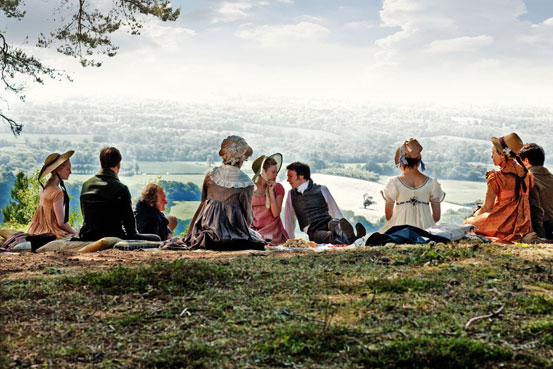
View from Box Hill, Emma 2009

The wretchedness of a scheme to Box Hill was in Emma’s thoughts all the evening. How it might be considered by the rest of the party, she could not tell. They, in their different homes, and their different ways, might be looking back on it with pleasure; but in her view it was a morning more completely misspent, more totally bare of rational satisfaction at the time, and more to be abhorred in recollection, than any she had ever passed. – Emma, Jane Austen, Chapter 44

No one was quite satisfied with Emma’s planned outing, least of all Miss Bates, Mr. Knightley, and Emma. The Eltons wandered off bored and disappointed, and Miss Fairfax keenly felt the insults that Emma and Frank Churchill hurled her way.

Box Hill, Emma 2009. Fabulous view.

Yet Box Hill was a beautiful location, with a view that wouldn’t quit. It is still a tourist destination, and a place that offers peace and quiet to those who would enjoy its beauty.  Unlike Emma, I am prepared to enjoy my picnic with my family. Happy July 4th, all!


Read Full Post »

Gentle readers,

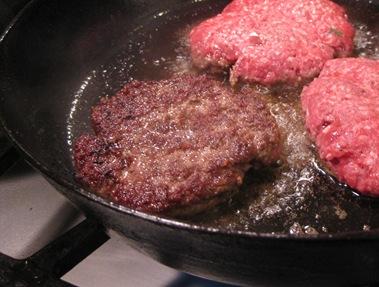
Summer means long, lazy afternoons lounging in the yard or by the pool side, grilling meats like hamburgers, sausages, and hot dogs. The hamburger has had a long tradition.

In 1802, the Oxford English Dictionary defined Hamburg steak as salt beef. It had little resemblance to the hamburger we know today. It was a hard slab of salted minced beef, often slightly smoked, mixed with onions and breadcrumbs. The emphasis was more on durability than taste. “ – Hamburger History 

Sailors from Hamburg, Germany, crossed the Baltic Sea regularly and returned with a taste for the minced raw beef dishes served up in Russian ports. The German haus-frau’s interpretation of these Baltic dishes was to fry or broil the patties. And voila! The Hamburg steak was born. By the late 1700’s the British knew them as Hamburg sausages.

Enter Hannah Glasse and her famous Art of Cookery book, which featured a recipe for Hamburgh sausage.

Hannah Glasse's recipe for Common Sausages

“By the mid-18th century, German immigrants also begin arriving in England. One recipe, titled “Hamburgh Sausage,” appeared in Hannah Glasse’s 1758 English cookbook called The Art of Cookery Made Plain and Easy. It consisted of chopped beef, suet, and spices. The author recommended that this sausage be served with toasted bread. Hannah Glasse’s cookbook was also very popular in Colonial America, although it was not published in the United States until 1805. This American edition also contained the “Hamburgh Sausage” recipe with slight revisions.” – History and Legends of Hamburger 

By 1834, the menu of Delmonico’s in New York City advertised a Hamburger steak. And the rest, as they say, is history. Today the humble hamburger is popular the world over due to the marketing genius (or avarice?) of McDonald’s and other fast food chains.

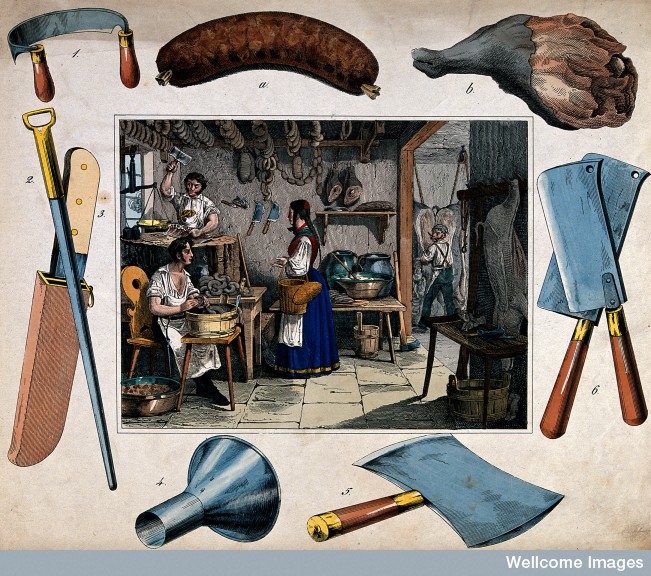
18th c. Sausage shop. Image © Wellcome Trust

Image description: Two men are working with knives and cleavers as another makes sausages, a woman has come to buy and is holding some money in her hand. Coloured etching. A pork-butcher’s shop: two butchers are working with knives and cleavers as another makes sausages, a woman has come to buy and is holding some money in her hand. Coloured etching, 18-. 19th c.” – Wellcome Trust

More on the topic:

Read Full Post »

Vendors set up their carts and booths hours before execution time, doing a roaring trade selling food, drink, souvenirs, even pornographic material, to a frenzied crowd. Minstrels and jugglers entertained the crowd. With the advent of cheap printing in the 16th and 17th centuries, touts created lurid “broadsheets” detailing the supposed history and scandalous crimes of the victim, the precursors to modern day tabloids. These “broadsheets” sold like hotcakes to an excited audience. – The History of Executions in Olde London Towne– Roy Stevenson

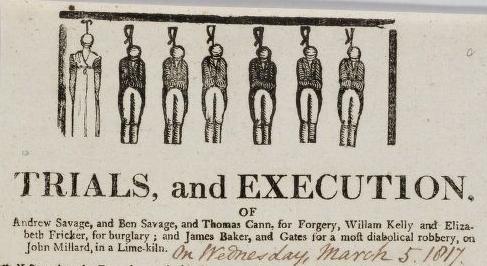
Detail of an execution broadside purchased March 5, 1817. Image @Harvard Law School Library


Life was cheap in Georgian England as this 1817 broadside attests. Five criminals were executed in March 1817 for forgery, burglary, and robbery. Poor Elizabeth Fricker protested her innocence, but to no avail.  Executions were public events, even during Jane Austen’s day, and one wonders if she ever saw a body left to rot on a gibbet, or if she cautiously avoided such sights and averted her eyes.  In any event, crowds would gather early at the execution spot to witness the hanging. They came in droves especially if the execution was of a notorious person.

Vendors set up stalls, selling drinks and refreshments to the large crowd, which, as the Hogarth illustration shows, were stacked on top of each other. The atmosphere must have been festive and somber at the same time, for even though there were jugglers and entertainers to amuse the crowd, a certain “execution” protocol was followed. Criminals were expected to speak to the crowd and to die well.

Broadsides, which were purchased for a pittance (in this instance a penny) described the crimes in detail, and were purchased much like programs to sporting events are purchased today.  Read the entire broadside here. This particular broadside was printed by J. Pitts of Seven Dials. Like other broadsides, it featured an illustration of the execution. Someone (the purchaser?) carefully penned in the date below the image.

Hogarth, 1747. Image @Wikimedia

Persistent Link to the Broadside:
http://nrs.harvard.edu/urn-3:HLS.Libr:1087957
Description:
Executions of criminals: more generally known by the uninviting name of “Dying speeches.”. Execution broadside (Andrew Savage, Ben Savage, Thomas Cann, William Kelly, Elizabeth Fricker, James Baker, James Gates)
Page:
(seq. 11)
Repository:
Harvard Law School Library
Institution:
Harvard University
Accessed:
09 June 2011

Other related links:

Read Full Post »

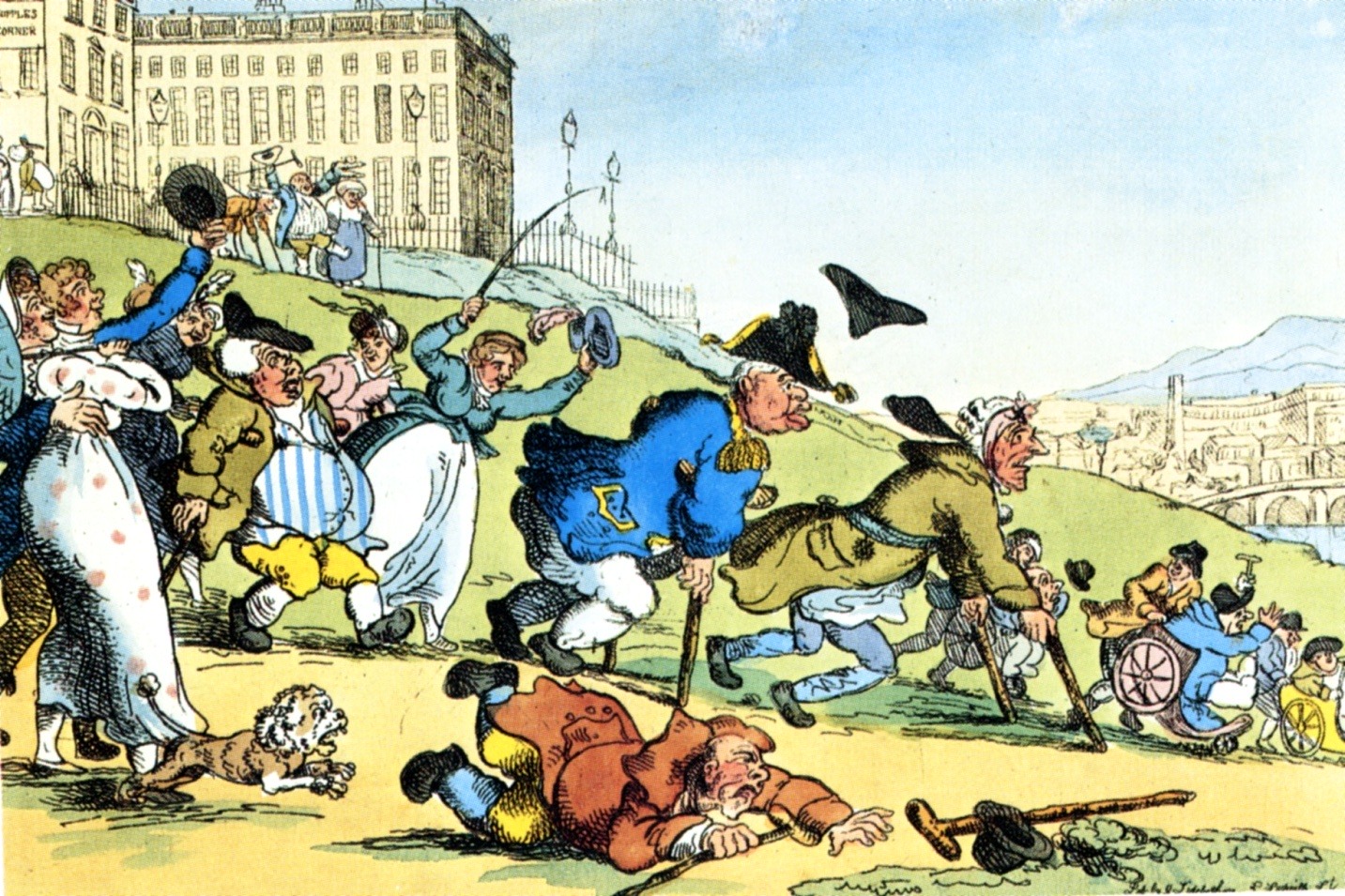
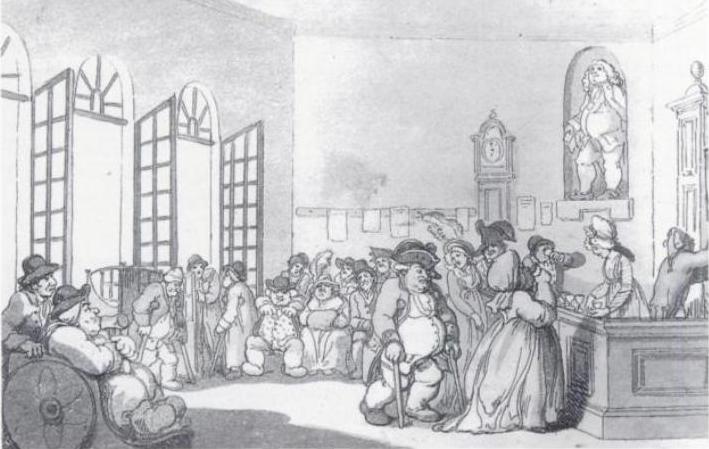
The Comforts of Bath, Thomas Rowlandson.

Almost everyone who visits my blog, Twitter account, and Facebook page knows I’ve broken my foot in two inconvenient places. Even with modern medical advances the most pleasant way to describe my experience is that it’s been a … pain. Literally and figuratively. This lover of walking 3-4 times a day with her dog has been sidelined. I’ve been sitting or lying down for a month, watching my bum grow two sizes. I’m a bit more mobile now and can hobble wearing an unwieldy boot.

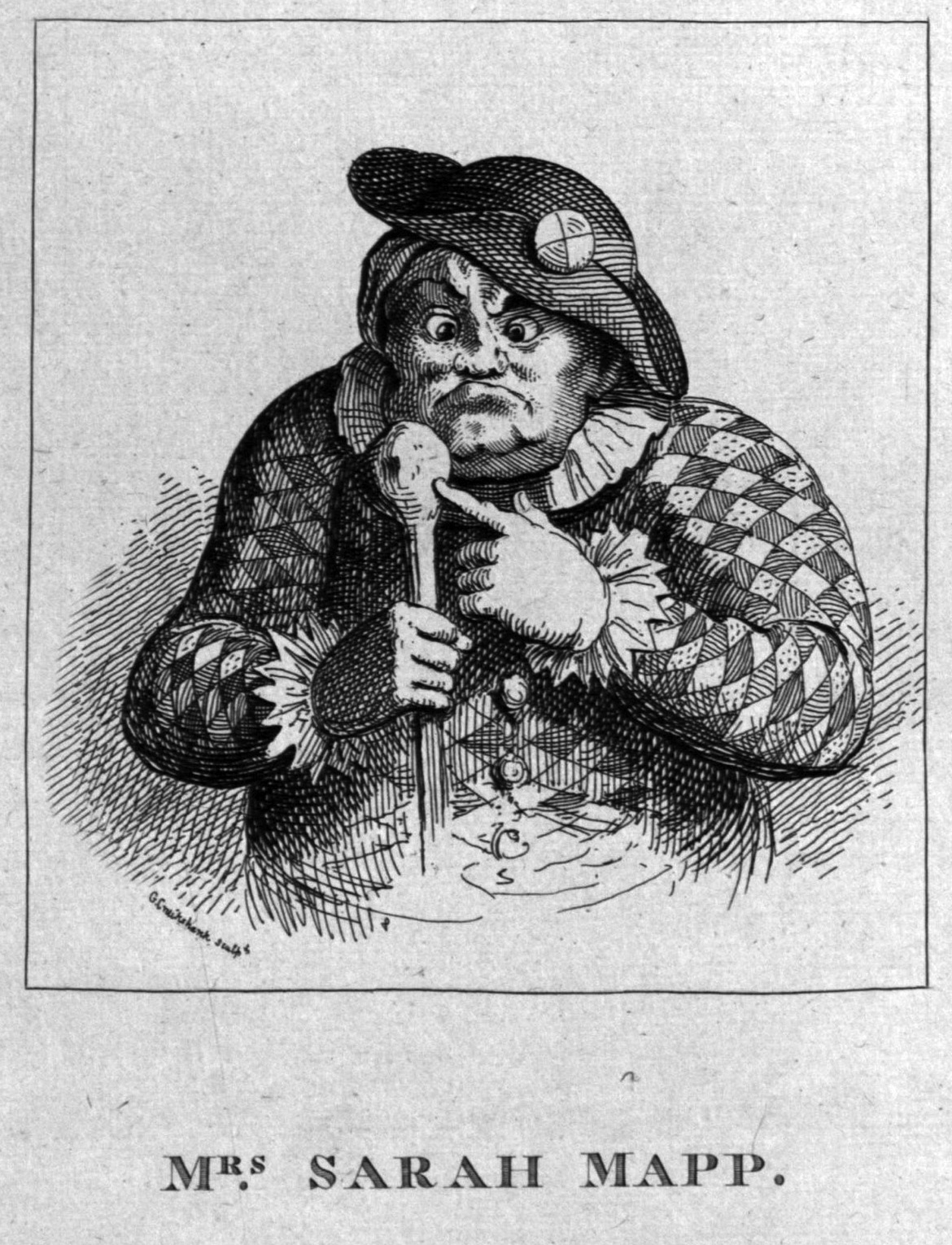
How did people deal with this situation two-hundred years ago? I wondered as I stared at the ceiling with my foot propped up higher than my head. It certainly could not have been easy. Mrs. Mapp, or Crazy Sally, as she was known, was a famous London bone setter in the early 18th century. While she was unlucky in love, she made her fortune with her strength, boldness, and wonder-working cures.

Besides driving a profitable trade at home, she used to drive to town once a week in a coach and four and return again bearing away the crutches of her patients as trophies of honour. – Mrs. Mapp: The Bone-Setter, Book of Days, Robert Chamber, 1864

I doubt Mrs. Mapp would have bothered setting my foot. There was really nothing to manipulate. All it needed was rest and a good calcium-rich diet. How did people get round and about when they were hobbled in days of yore?

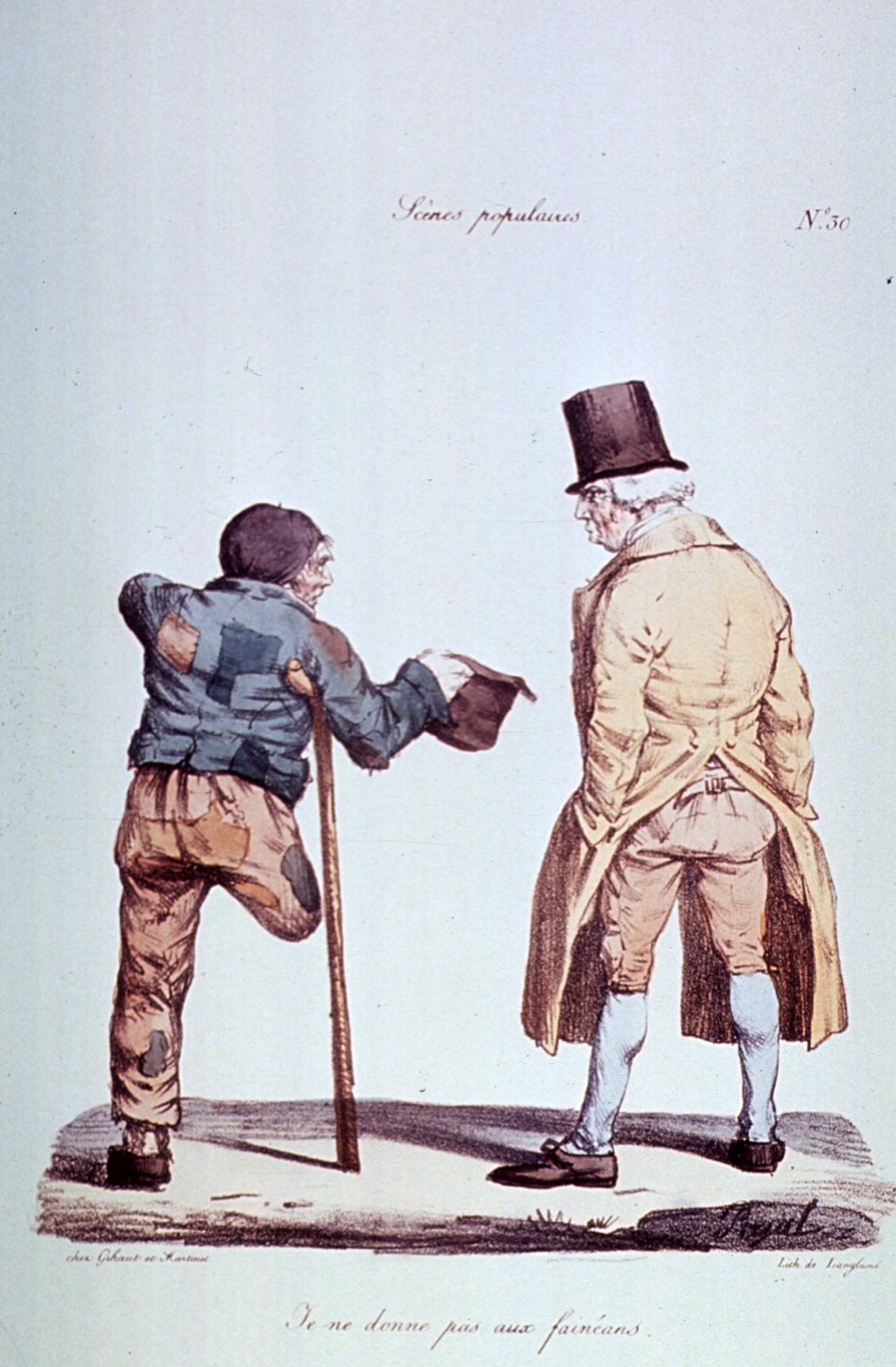
In my estimation, crutches resembled torture instruments more than helpmeets.

Beggar with one leg and a crutch. Image @Risky Regencies

This 1850 crutch is similar to the one depicted in the image above. It was not adjustable, and rags were wound around the top to make the crutch less painful. Even with ample padding on the modern crutch, my underarms became sore. I can only imagine how much discomfort the old models offered.

Wheelchair, Barry Lyndon

Wheelchairs were invented early in the history of mankind. In 530 B.C. a wheeled child’s bed made an appearance on a Greek vase, and in 525 A.D. a wheelchair was depicted on a Chinese print. By the 17th century, the patient’s comfort began to be taken into account.

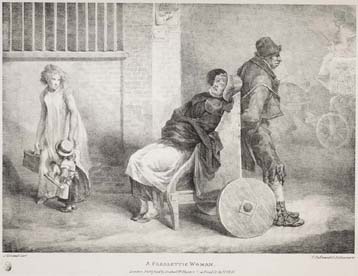
Paralytic woman in wheelchair, 1821. Image @Museum of London

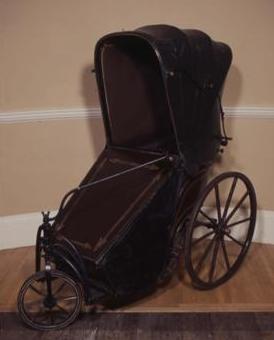
During the 18th century the Bath chair was born. Invented by John Dawson, the three-wheeled chairs remained popular all through the 19th century.

3-wheeled Bath chair. Image @BBC

This Rowlandson caricature depicts the ill visiting the Pump Room to take the waters. Note the sedan chair at left being carried inside the room, the man in the wheelchair, and the man walking with two canes.

Read Full Post »

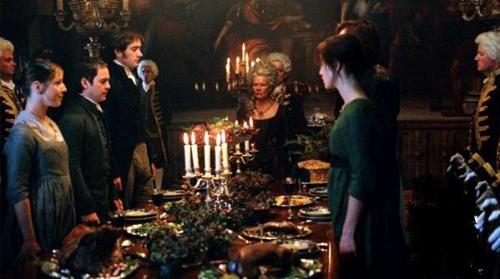
Lady Catherine de Bourgh's formal table: Pride and Prejudice 2005

When dinner is announced, the mistress of the house requests the lady first in rank, in company, to shew the way to the rest, and walk first into the room where the table is served; she then asks the second in precedience to follow, and after all the ladies are passed, she brings up the rear herself. The master of the house does the same with the gentlemen. Among the persons of real distinction, this marhalling of the company is unnecessary, every woman and every man present knows his rank and precedence, and takes the lead, without any direction from the mistress or the master.

When they enter the dining-room, each takes his place in the same order; the mistress of the table sits at the upper-end, those of superior rank next [to] her, right and left, those next in rank following, the gentlemen, and the master at the lower-end; and nothing is considered as a greater mark of ill-breeding, than for a person to interrup this order, or seat himself higher than he ought. – John Trusler, 1791
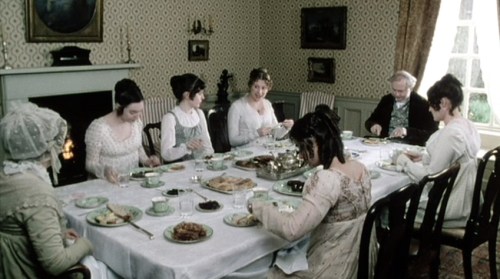
The Bennets seated at table en famille, with the two oldest daughters next to their father at the head of the table. Mrs. Bennet sits at the lower end. Pride and Prejudice 1995

As the eldest daughter, Jane and Elizabeth sat nearest their father during family meals, with Jane to his right. When Lydia returns as Mrs. Wickham, she unceremoniously bumps Jane to a position towards the middle of the table, for her married state gave her a higher rank than her eldest sister:

Elizabeth could bear it no longer. She got up and ran out of the room; and returned no more till she heard them passing through the hall to the dining parlour. She then joined them soon enough to see Lydia, with anxious parade, walk up to her mother’s right hand, and hear her say to her eldest sister, ‘Ah, Jane I take your place now, and you must go lower, because I am a married woman.’ – Jane Austen, Pride and Prejudice

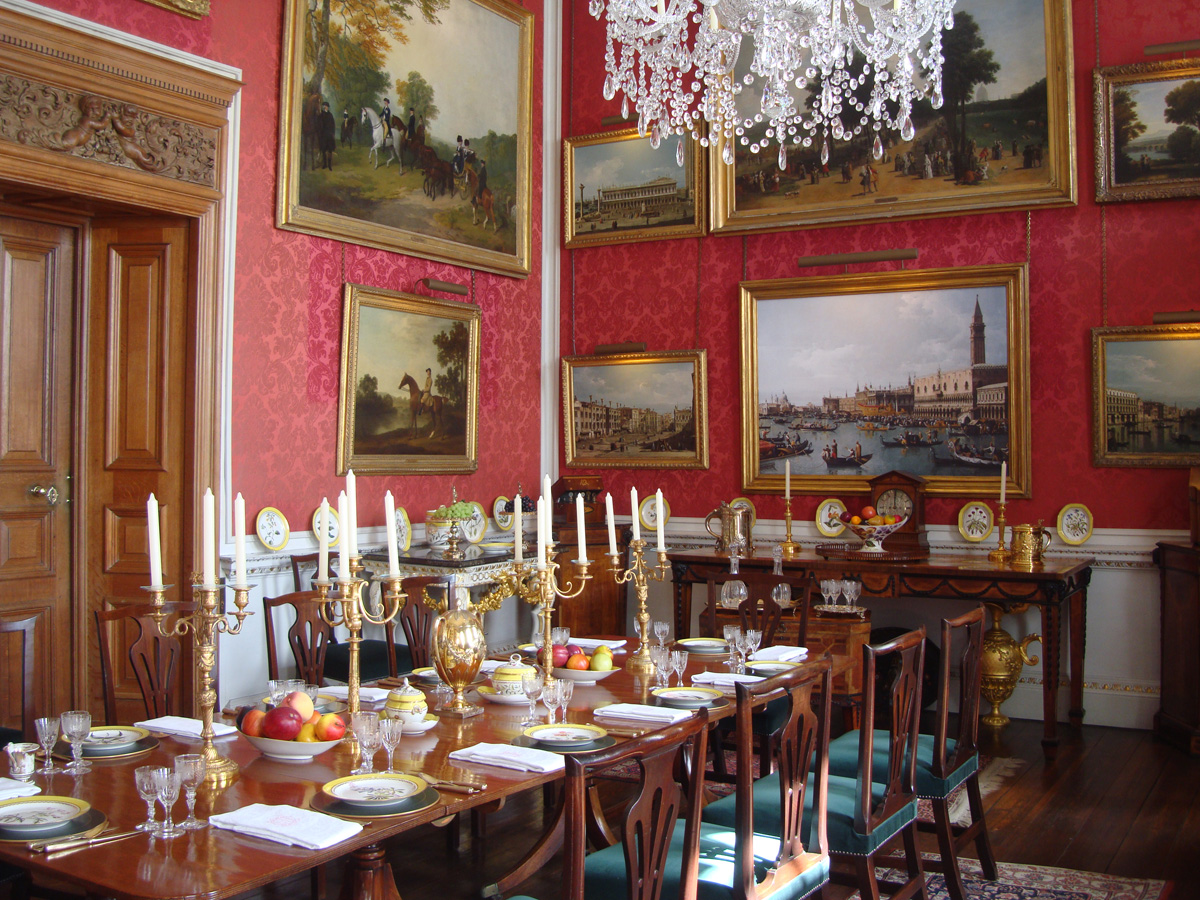
Sumptuous dining table at Castle Howard. Image @Tony Grant
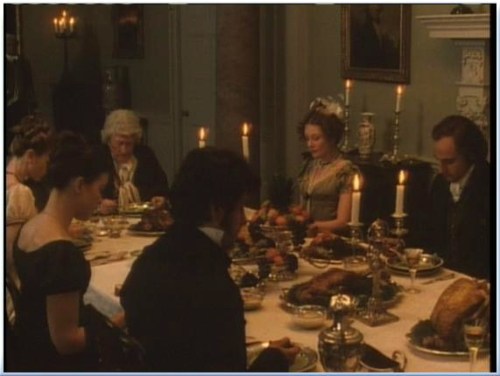
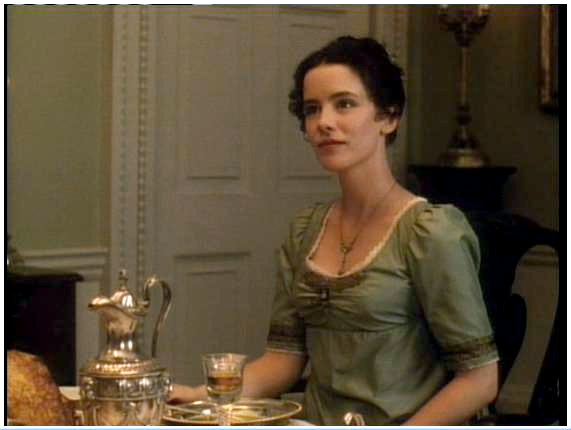
As hostess at her father's table, young Emma Woodhouse sat opposite her father at the upper end of the table. The ladies sit next to Mr. Woodhouse in hierarchy. As in the description by John Trusler, the gentlemen are seated nearest Emma's end of the table.

Emma Woodhouse (Kate Beckinsale)

Custom, however, has lately introduced a new mode of seating. A gentleman and a lady fitting alternately round the table, and this, for the better convenience of a lady’s being attended to, and served by the gentleman next to her. But notwithstanding this promiscuous seating, the ladies, whether above or below, are to be served in order, according to their rank or age, and after them the gentlemen, in the same manner. – John Trusler, p 6

From: The honours of the table, or, Rules for behaviour during meals : with the whole art of carving, illustrated by a variety of cuts. Together with directions for going to market, and the method of distinguishing good provisions from bad; to which is added a number of hints or concise lessons for the improvement of youth, on all occasions in life. By the author of Principles of politeness, &c. … For the use of young people, John Trusler

Other posts on this blog:

Read Full Post »
« Newer Posts - Older Posts »