Feeds:
Posts
Comments

Archive for the ‘Regency food’ Category

Gentle readers,

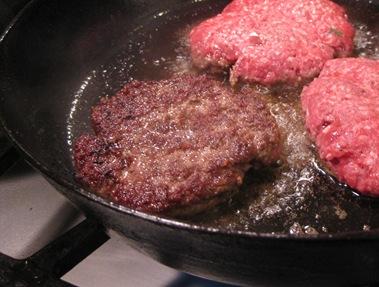
Summer means long, lazy afternoons lounging in the yard or by the pool side, grilling meats like hamburgers, sausages, and hot dogs. The hamburger has had a long tradition.

In 1802, the Oxford English Dictionary defined Hamburg steak as salt beef. It had little resemblance to the hamburger we know today. It was a hard slab of salted minced beef, often slightly smoked, mixed with onions and breadcrumbs. The emphasis was more on durability than taste. “ – Hamburger History 

Sailors from Hamburg, Germany, crossed the Baltic Sea regularly and returned with a taste for the minced raw beef dishes served up in Russian ports. The German haus-frau’s interpretation of these Baltic dishes was to fry or broil the patties. And voila! The Hamburg steak was born. By the late 1700’s the British knew them as Hamburg sausages.

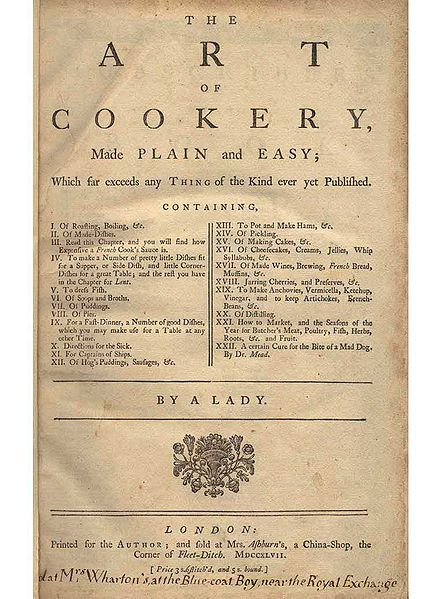
Enter Hannah Glasse and her famous Art of Cookery book, which featured a recipe for Hamburgh sausage.

Hannah Glasse's recipe for Common Sausages

“By the mid-18th century, German immigrants also begin arriving in England. One recipe, titled “Hamburgh Sausage,” appeared in Hannah Glasse’s 1758 English cookbook called The Art of Cookery Made Plain and Easy. It consisted of chopped beef, suet, and spices. The author recommended that this sausage be served with toasted bread. Hannah Glasse’s cookbook was also very popular in Colonial America, although it was not published in the United States until 1805. This American edition also contained the “Hamburgh Sausage” recipe with slight revisions.” – History and Legends of Hamburger 

By 1834, the menu of Delmonico’s in New York City advertised a Hamburger steak. And the rest, as they say, is history. Today the humble hamburger is popular the world over due to the marketing genius (or avarice?) of McDonald’s and other fast food chains.

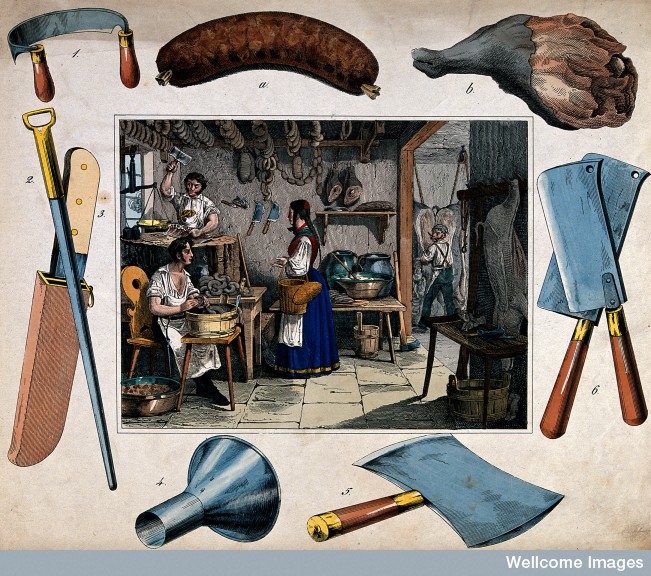
18th c. Sausage shop. Image © Wellcome Trust

Image description: Two men are working with knives and cleavers as another makes sausages, a woman has come to buy and is holding some money in her hand. Coloured etching. A pork-butcher’s shop: two butchers are working with knives and cleavers as another makes sausages, a woman has come to buy and is holding some money in her hand. Coloured etching, 18-. 19th c.” – Wellcome Trust

More on the topic:

Read Full Post »

Happy Christmas Eve and Merry Christmas, everyone! I leave you with this post about Plum Pudding as I celebrate the occasion with my favorite people in all the world – my family. May this season be a truly special one for you. And thank you for visiting Jane Austen’s World.

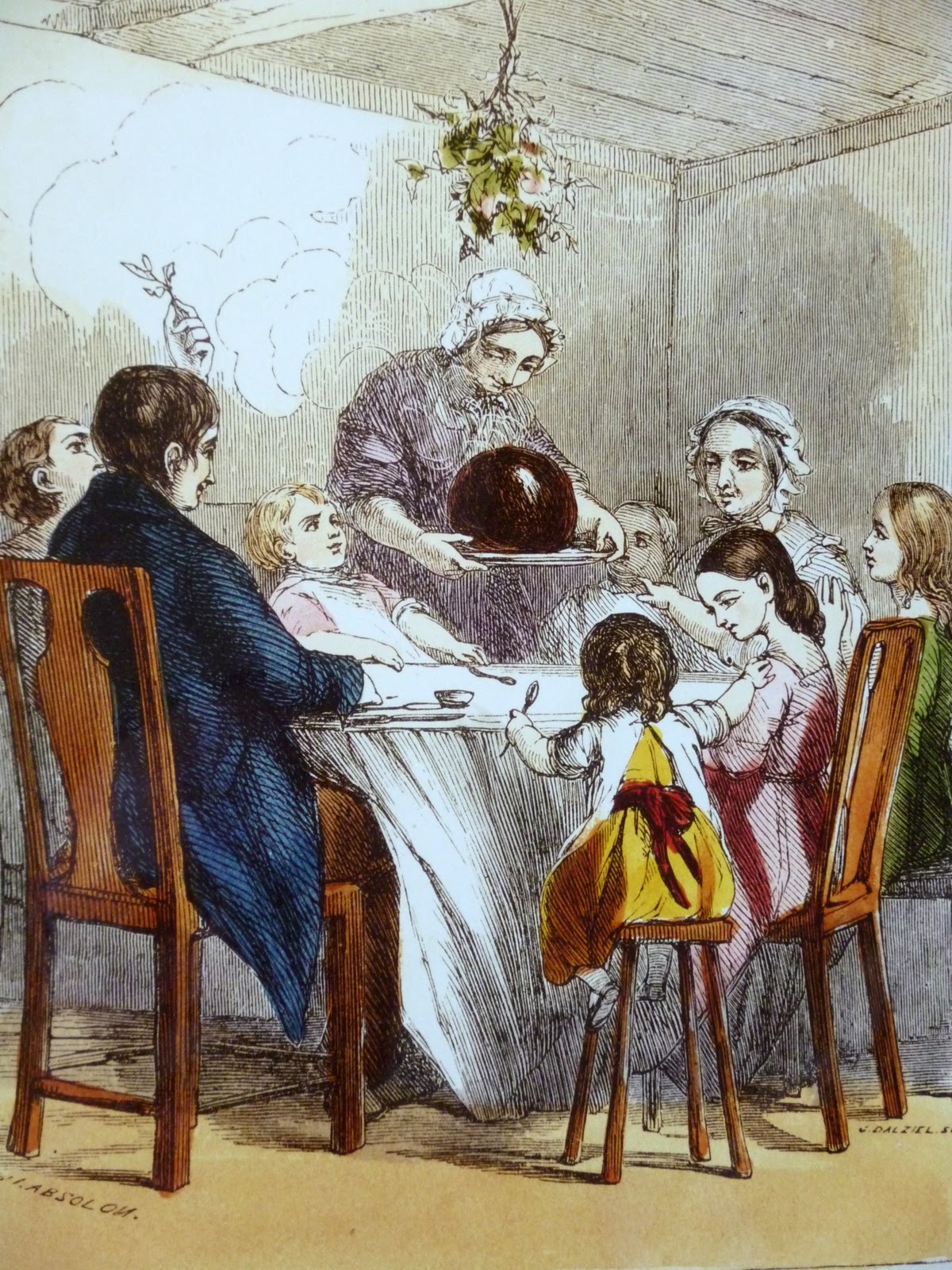
In half a minute Mrs. Cratchit entered — flushed, but smiling proudly — with the pudding, like a speckled cannon-ball, so hard and firm, blazing in half of half-a-quartern of ignited brandy, and bedight with Christmas holly stuck into the top. – Charles Dickens, A Christmas Carol

Stir-Up Day is the name traditionally given to the day on which Christmas puddings are made in England.

Banned by the Puritans in the 1660s for its rich ingredients, the [plum] pudding and its customs came back into popularity during the reign of George I. Known sometimes as the Pudding King, George I requested that plum pudding be served as part of his royal feast when he celebrated his first Christmas in England after arriving from Hanover to take the throne in 1714. By 1740, a recipe for ‘plum porridge’ appeared in Christmas Entertainments. In the Victorian era, Christmas annuals, magazines, and cookbooks celebrated the sanctity of family as much as the sanctity of Jesus’ birth, and the tradition of all family members stirring the pudding was often referenced…Poorer families made the riches version of plum pudding that they could afford…Even workhouse inmates anticipated a plum pudding on Christmas Day.” – Food and Cooking in Victorian England: A History, Andrea Broomfield [Praeger:Westport CT] 2007 (p. 150-151)

Stir-Up Sunday, the last Sunday before Advent, is considered the final day on which one can make the Christmas fruit cakes and puddings that require time to be aged before being served.

The Christmas pudding is traditionally “stirred up” on Stir-Up day day. All family members must take a hand in the stirring, and a special wooden spoon (in honor of Christ’s crib) is used. The stirring must be in a clockwise direction, with eyes shut, while making a secret wish. Source: The Customs and Ceremonies of Britain by Charles Knightly. London:Thames and Hudson, 1986, p. 211.”
The Folklore of World Holidays, Robert H. Griffen and Ann H. Shurgin editors, Second Edition [Gale:Detroit] 1998 (p. 679)

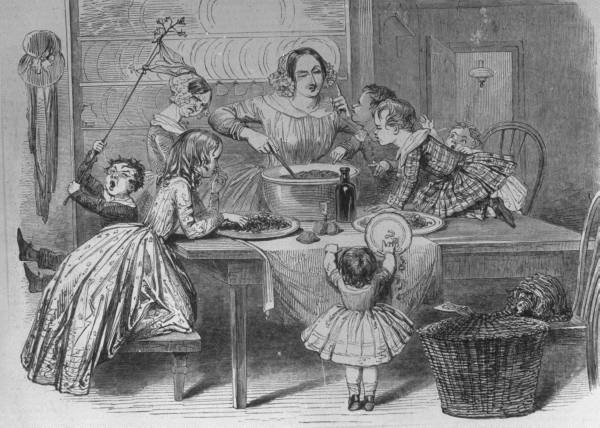
Stirring the Christmas pudding. Image@LIFE magazine

In past times the words “stir up”…reminded people to begin preparing their Christmas puddings…Children chanted a rhymed verse on that day that mixed the words of the collect with requests for special Christmas fare…Thus, the preparation of the Christmas pudding eventually became associated with this day. Folk beliefs advised each member to take a turn stirring the pudding, and ace that was believed to confer good luck. Another custom encouraged stirrers to move the spoon in clockwise motion, close their eyes, and make a wish.” – Encyclopedia of Christmas and New Year’s Celebrations, Tanya Gulevich, 2nd edition [Omnigraphics:Detroit] 2003 (p. 741)

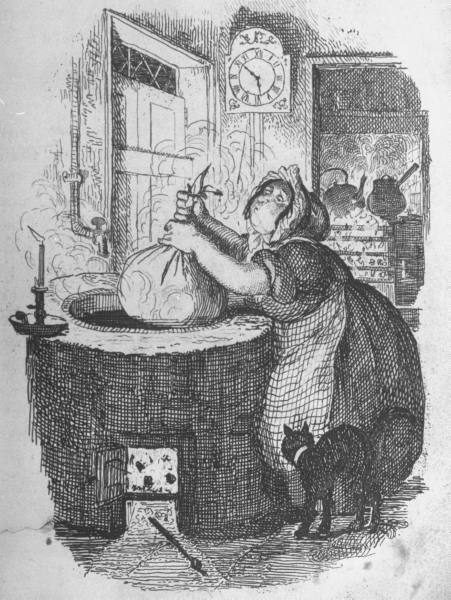
Cook making Christmas pudding, Cruikshank

Hallo! A great deal of steam! The pudding was out of the copper. A smell like a washing-day! That was the cloth. A smell like an eating-house and a pastrycook’s next door to each other, with a laundress’s next door to that! That was the pudding!- Charles Dickens, A Christmas Carol

A boiled Plum Pudding – Hannah Glasse (18th century recipe)

TAKE a pound of suet cut in little pieces not too fine a pound of currants and a pound of raifins storied eight eggs half the whites half a nutmeg grated and a tea spoonful of beaten ginger a pound of flour a pint of milk beat the eggs first then half the milk beat them together and by degrees stir in the flour then the suet spice and fruit and as much milk as will mix it well together very thick Boil it five hours – Hannah Glasse, The Art of Cookery made plain and easy, p. 137

Rich Plum Pudding Recipe, Lady Godey’s Book, December 1860

Stone carefully one pound of the best raisins, wash and pick one pound of currants, chop very small one pound of fresh beef suet, blanch and chop small or pound two ounces of sweet almonds and one ounce of bitter ones; mix the whole well together, with one pound of sifted flour, and the same weight of crumb of bread soaked in milk, then squeezed dry and stirred with a spoon until reduced to a mash, before it is mixed with the flour.

Cut in small pieces two ounces each of preserved citron, orange, and lemon-peel, and add a quarter of an ounce of mixed spice; quarter of a pound of moist sugar should be put into a basin, with eight eggs, and well beaten together with a three-pronged fork; stir this with the pudding, and make it of a proper consistence with milk. Remember that it must not be made too thin, or the fruit will sink to the bottom, but be made to the consistence of good thick batter.

Taking up the Christmas pudding

Two wineglassfuls of brandy should be poured over the fruit and spice, mixed together in a basin, and allowed to stand three or four hours before the pudding is made, stirring them occasionally. It must be tied in a cloth, and will take five hours of constant boiling.

Carrying the plum pudding

When done, turn it out on a dish, sift loaf-sugar over the top, and serve it with wine-sauce in a boat, and some poured round the pudding. The pudding will be of considerable size, but half the quantity of materials, used in the same proportion, will be equally good.

Presenting the plum pudding

The following articles about plum pudding were published in 19th century periodicals and in a more recent blog:

Colonel Hazard’s Plum Pudding (In which the Colonel proves that plum pudding has impressive staying power.)

Colonel Rowland R. Hazard of electric railroad fame tells a story which gives the plum pudding a new dignity. Several years ago, the colonel suddenly decided to run over to England to make a holiday call on relatives there. It was a few days before Christmas, and just as the colonel was starting for the steamer, a Christmas package arrived for him. He had no time to examine it then, and left orders to have it kept for him. He did not return to New York for two year.s When he did get back, the package was brought down from the garret. It proved to contain a plum pudding that his English friends had sent him. It was as hard as a rock, but Colonel Hazard ordered it to be cooked, and he declares he never tasted a more perfect plum pudding in his life. He is inclined to think that good plum pudding, like the wheat found in the old Egyptian mummy cases, would keep all right for a thousand years. –  New York Commercial Advertiser – Good Housekeeping, Vol 5, Hearst Corp, 1887

Plum Pudding

The secret of making plum pudding light and digestible lies in properly preparing the suet, mincing the currants, and boiling a sufficient time. Puddings made with breadcrumbs are lighter than those made wholly of flour; and a mixture of the two makes the best pudding. Plum puddings may be made some time before Christmas, and, having been boiled, the cloth must be opened out, but not taken off the pudding, and dried. Wrapped in paper, and stored in a dry place, puddings will keep good for several months, and only require to be boiled for an hour at the time of serving.  – Household Words, A weekly journal, vol 2, 1882. Charles Dickens

Christmas pudding on a hook. Image @eons

This pictorial article in eons explains the various steps in making a Christmas pudding.

Surprises Inside Plum Pudding

Plum pudding is well known for the silver coins and small objects hidden within the pudding to be found by the eater. Common objects were the silver coin for wealth, a tiny wishbone for good luck, a silver thimble for thrift, a ring for marriage or an anchor for safe harbor. These items have migrated from plum pudding to bridal shower cakes, oddly enough…- Gram’s Recipe Box, Plum Pudding

Sources for this post:

Read Full Post »

Copryright (c) Jane Austen’s World. This post is in honor of Thanksgiving and all the cooks, feminine or masculine, who toil hard in the kitchen to feed their families on this special holiday.

I am sure that the ladies there had nothing to do with the mysteries of the stew-pot or the preserving-pan” – James Edward Austen-Leigh, writing about his aunts, Jane and Cassandra Austen, and grandmother, Mrs Austen, when they lived at Steventon Rectory.
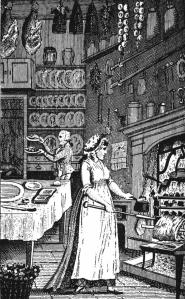
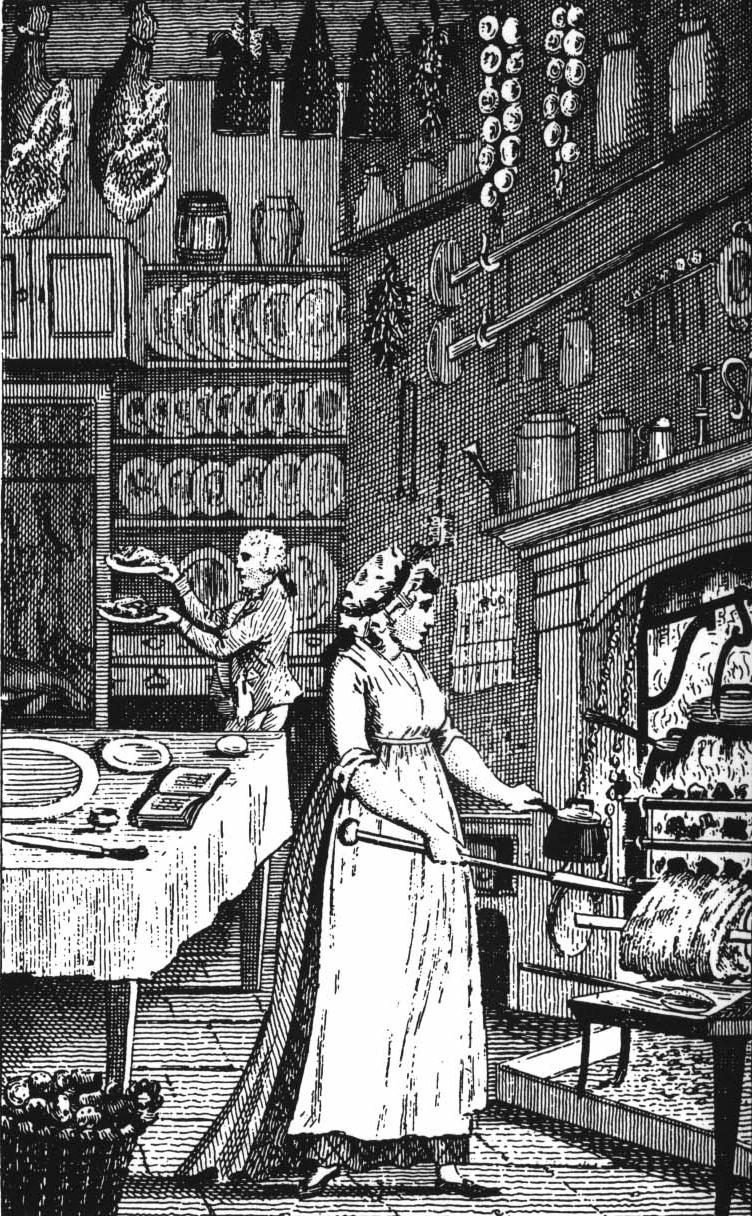
18th century kitchen servants prepare a meal. Image @Jane Austen Cookbook

In 1747, Mrs.Hannah Glasse wrote her historic The Art of Cookery Made Plain and Easy, an easy-to-understand cookbook for the lower class chefs who cooked for the rich. Her recipes were simple and came with detailed instructions, a revolutionary thought at the time.

The Art of Cookery’s first distinction was simplicity – simple instructions, accessible ingredients, an accent on thrift, easy recipes and practical help with weights and timing. Out went the bewildering text of former cookery books (“pass it off brown” became “fry it brown in some good butter”; “draw him with parsley” became “throw some parsley over him”). Out went French nonsense: no complicated patisserie that an ordinary cook could not hope to cook successfully. Glasse took into account the limitations of the average middle-class kitchen: the small number of staff, the basic cooking equipment, limited funds. – Hannah Glasse, The Original Domestic Goddess forum
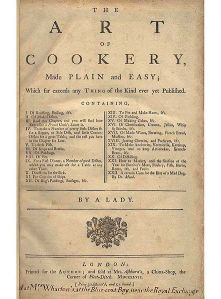
Hannah Glasse's The Art of Cookery Made Plain and Easy

Until Mrs. Glasse wrote her popular cookery book (17 editions appeared in the 18th century), these instructional books had been largely written by male chefs who offered complicated French recipes without detailed or practical directions. (To see what I mean, check Antonin Careme’s recipe for Les Petits Vol-Au-Vents a la Nesle at this link.) Like Jane Austen, Hannah signed her books “By a Lady”.
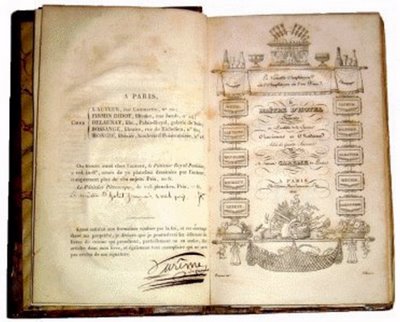
Antonin Careme's cookbook

Mrs. Glasse had always intended to sell her cookery book to mistresses of gentry families or the rising middle class, who would then instruct their cooks to prepare foods from her simplified recipes, which she collected. “My Intention is to instruct the lower Sort [so that] every servant who can read will be capable of making a tolerable good Cook,” she wrote in her preface.
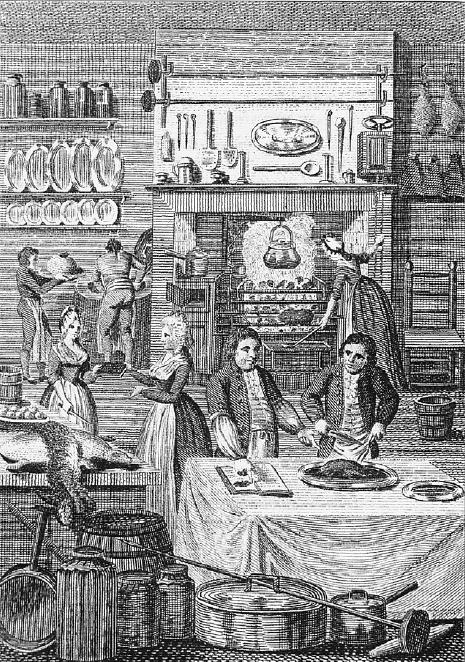
Frontispiece from William Augustus Henderson, The Housekeeper’s Instructor, 6th edition, c.1800. This same picture appeared in the very first edition of c.1791and it shows the mistress presenting the cookery book to her servant, while a young man is instructed in the art of carving with the aid of another book.*

Hanna’s revolutionary approach, which included the first known printed recipe for curry and instructions for making a hamburger, made sense. In the morning, it was the custom of the mistress of the household to speak to the cook or housekeeper about the day’s meals and give directions for the day. The servants in turn would interpret her instructions. (Often their mistress had to read the recipes to them, for many lower class people still could not read.)

In theory, the recipes from Hannah’s cookbook would help the lady of the house stay out of the kitchen and enjoy a few moments of free time. But the servant turnover rate was high and often the mistress had to roll up her sleeves and actively participate in the kitchen. Many households with just two or three servants could not afford a mistress of leisure, and they, like Mrs. Austen in the kitchens of Steventon Rectory and Chawton Cottage, would toil alongside their cook staff.
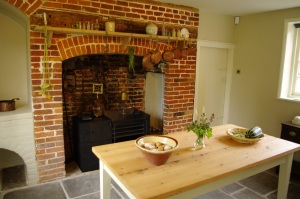
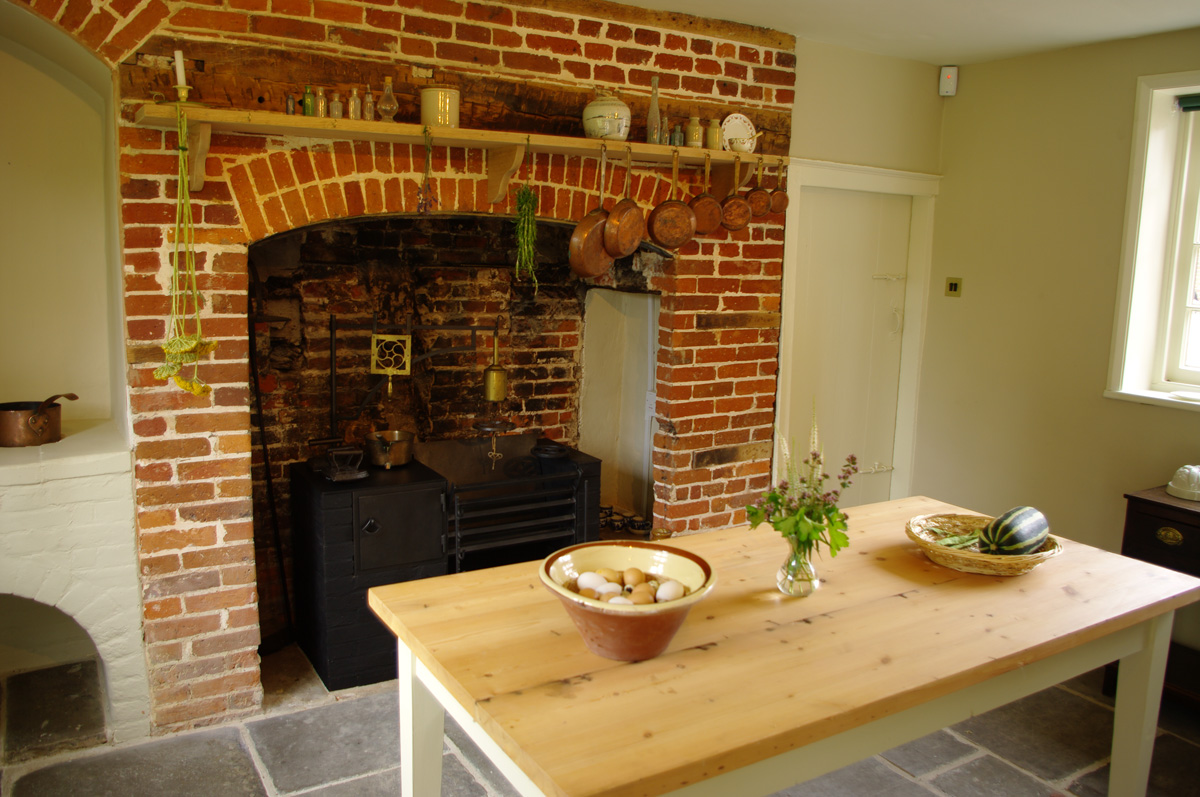
The simple kitchen at Chawton cottage. Image @Tony Grant

At the start of the 18th century the French courtly way of cooking still prevailed in genteel households. As the century progressed, more and more women like Hannah Glasse began to write cookery books that offered not only simpler versions of French recipes, but instructions for making traditional English pies, tarts, and cakes as well. Compared to the expensive cookbooks written by male chefs, cookery books written by women were quite affordable, for they were priced between 2 s. and 6 d.
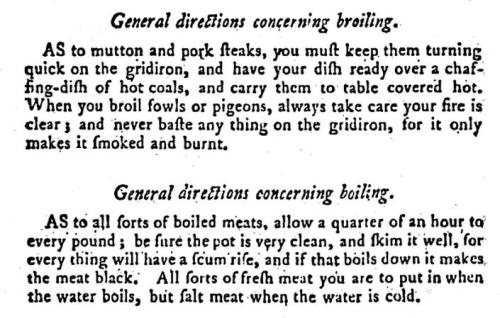
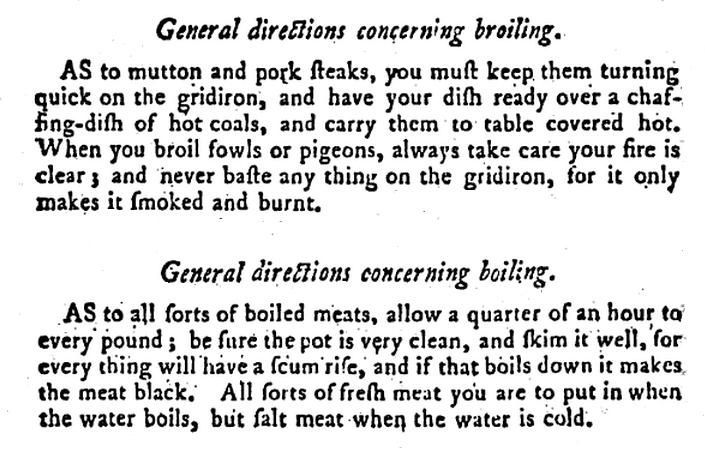
Hannah Glasse's practical directions for boiling and broiling

Publishers took advantage of the brisk trade, for with the changes in agricultural practices,  food was becoming more abundant for the rising middle classes. Large editions of cheap English cookery books by a variety of female cooks were distributed to a wide new audience of less wealthy and largely female readers who had money to spend on food. Before Hannah Glasse and her cohort, cooks and housewives  had been accustomed to sharing recipes in private journals (such as Marthat Lloyd’s) or handing them down by word-of-mouth.
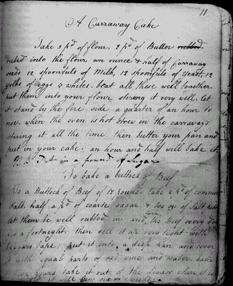
Martha Lloyd's recipe for caraway cake written in her journal.

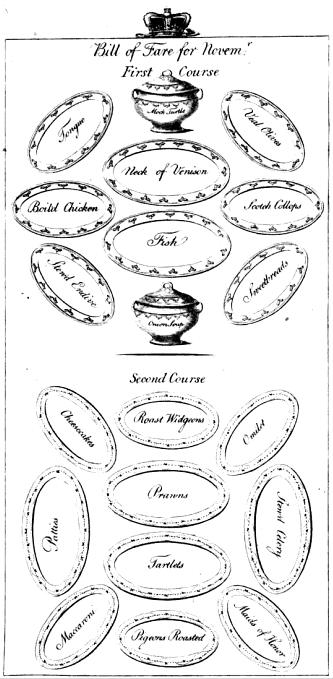
Female authors tended to share their native English recipes in their cookery books. As the century progressed, the content of these cookery books began to change. Aside from printing recipes, these books began to include medical instructions for poultices and the like; bills of fare for certain seasons or special gatherings; household and marketing tips; etc.
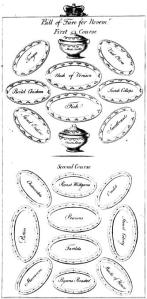
Bill of fare for November, The Universal Cook, 1792

By the end of the 18th century, cookery books also included heavy doses of servant etiquette and moral advice. At this time plain English fare had replaced French cuisine, although wealthy households continued to employ French chefs as expensive status symbols.  In the mid-19th century cookery books that targeted the working classes, such as Mrs. Beeton’s famous book on Household Management, began to be serialized in magazines, as well as published in book form.
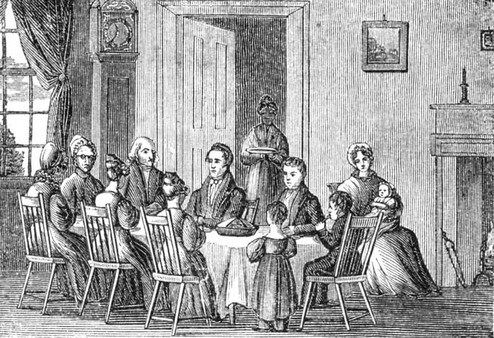
Family at meal time

Before ending this post, I would like to refer you back to James Edward Austen-Leigh’s quote at top. In contrast to what he wrote (for he did not know his aunts or grandmother well), Jane Austen scholar Maggie Lane reminds us that housewives who consulted with their cook and housekeeper  about the day’s meals still felt comfortable working in the kitchen. She writes in Jane Austen and Food:

“though they may not have stirred the pot or the pan themselves, Mrs. Austen and her daughters perfectly understood what was going on within them…The fact that their friend and one-time house-mate Martha Lloyd made a collection of recipes to which Mrs. Austen contributed is proof that the processes of cookery were understood by women of their class.”

More on the topic:

Read Full Post »

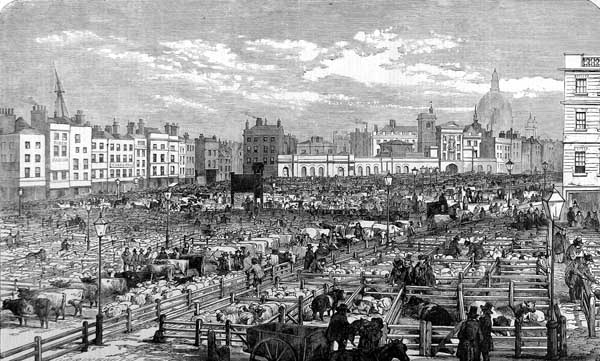
Last day of Old Smithfield, 1855

By the turn of the 19th century, over one million people lived and worked in London and its environs. The challenge in feeding so many people was no mean feat. Surrounding  farms sent produce to London’s markets, and drovers brought sheep and cattle over deeply rutted and ancient roads  from as far north as Scotland. Every September and October, enormous numbers of animals converged in Smithfield market, where they were sold and slaughtered for consumption. In Oliver Twist (1838), Charles Dickens described the filth of Smithfield Market, and the bellowing of frightened animals who had been forced to trudge from their peaceful pastures to what must have been a frightful, bewildering and nightmarish place.

It was market morning. The ground was covered nearly ankle deep with filth and mire; and a thick steam perpetually rising from the reeking bodies of the cattle, and mingling with the fog, which seemed to rest upon the chimney tops, hung heavily above … Countrymen, butchers, drovers, hawkers, boys , thieves, idlers, and vagabonds of every low grade, were mingled together in a dense mass: the whistling of drovers, the barking of dogs, the bellowing and plunging of beasts, the bleating of sheep, and the grunting and squealing of pigs; the cries of hawkers, the shouts, oaths, amd quarrelling on all sides, the ringing of bells, and the roar of voices that issued from every public house; the crowding, pushing, driving, beating, whooping and yelling; the hideous and discordant din that resounded from every corner of the market; and the unwashed, unshaven, squalid, and dirty figures constantly running to and fro, and bursting in and out of the throng, rendered it a stunning and bewildering scene which quite confused the senses.’

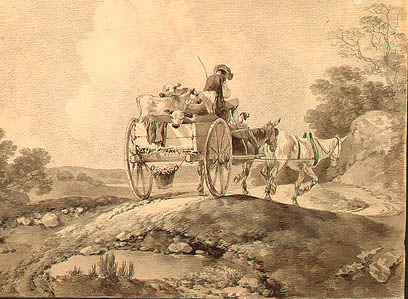
Drover with calves in a country cart, Gainsborough, 1755

Smithfield Market Days.-Monday for fat cattle and sheep. Tuesday, Thursday, and Saturday, for hay and straw; Friday, cattle and sheep and much cows, and at 2 o’clock for scrub-horse and asses. All sales take place by commission. The customary commission for the sale of an ox of any value is 4s., and of a sheep 8d. The City receives a toll upon every beast exposed to sale of 1d. per head, and of sheep at 2d. per score, and for every pen 1s. The total produce to the Corporation is from 5000l. to 6000l. a-year. Smithfield salesmen estimate the weight of cattle by the eye, and from constant practice, approach so near exactness, that they are seldom out more than a few pounds. The sales are always for cash. No paper is passed, but when the bargain is struck, the buyer and seller shake hands and close the sale. Several millions, it is said, are annually paid away in this manner in the narrow area of Smithfield Market.

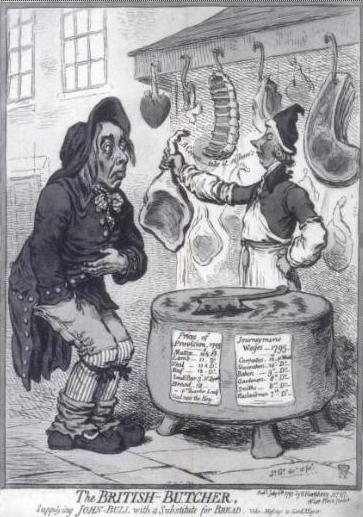
The British butcher

Quantities sold -The average weekly sale of beasts is said to be about 5000 ; and of sheep about 30,000 ; increased in the Christmas week to about 4000 beasts, and 47,000 sheep. As a sheep market, Smithfield has been constantly on the decrease within the last ten years. The following return shows the number of cattle and sheep annually sold in Smithfield during the following periods – Peter Cunningham, Hand-Book of London, 1850 – Victorian London Markets

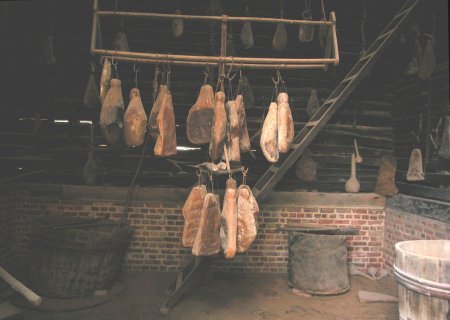
Smoke house, Mt. Vernon, Virginia. Image @Donald Mark

Without refrigeration and cookstoves, food storage and preparation presented challenges to the housewife and innkeeper alike. Fortunately, salt needed for preservation was plentiful in England. Cattle were brought into the market towns in September and October. The beef was salted and then hung up in smoke to preserve it. Pork was likewise both salted and smoked to make bacon and ham. For poorer families, these were practically the only meats eaten during the winter months. – Merrye Olde England: Food

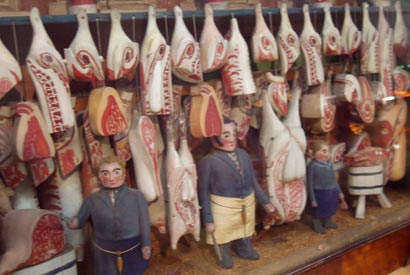
Toy 19th century butchers. Image @The Royal County Arbiter

The preservation of meat turned out to be a relatively simple technique. The meat was salt cured, which meant preserving it with a mixture of salt and saltpetre. Flavorings could be added, such as honey, sugar, pepper, and juniper berries. The salt in the meat drew out moisture, reducing the weight of the meat by as much as 18%-25%, and preventing the meat from decomposing.  The salted meat was hung to dry cure from a few months to a year. This process deepened the color of the meat and produced an intense flavor. Dried and cured, the meat was cut into thin slices and could be served at any time. – Historical Recipes: Dry Cured Ham


Read Full Post »

Inquiring reader: Jean at The Delightful Repast is a freelance writer who writes mostly about food, weddings, etiquette and entertaining for numerous publications. Her blog reflects her culinary heritage–an English grandmother, a Southern grandmother and a mother who could do it all. Jean’s love of reading and cooking (often done simultaneously) is definitely in her genes. She has (delightfully) offered to share her thoughts about tea in Jane Austen’s day and her recipe for Sally Lunn buns!

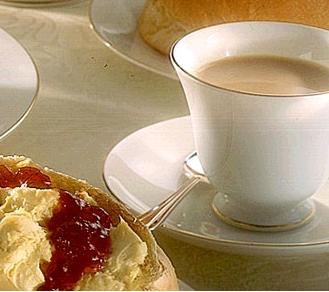
It came as quite a disappointment to me that day long ago when I, an avid afternoon tea aficionado, realized that afternoon tea was not part of Jane Austen’s life. (I am still taken aback by the thought as I write those words!) Tea drinking, popular at Court since the 1660’s, had by the Regency Period long since trickled down through all strata of society. Jane and her family no doubt enjoyed a nice cup of tea at least twice a day, at breakfast and in the evening after dinner.

Tea, being the magical all-purpose beverage that it is, was surely drunk at other times as well. I drink tea a minimum of four times a day. My grandmother Elizabeth (from the Lake District) drank tea several times a day, including once in the middle of the night. Her mother Mary Ann was constantly putting the kettle on. And it was Mary Ann’s grandmother Mary who was a contemporary of Jane Austen’s, though at the other end of the country.

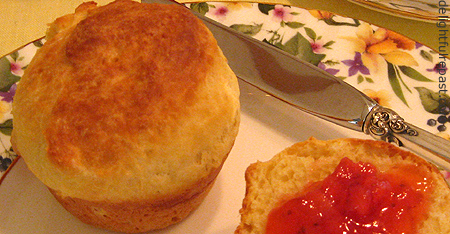
There are a number of things Jane might have had with her tea, including hot, buttered Sally Lunn buns, good with both sweet and savory toppings. Those made today in Bath are very large, perhaps six inches across and four inches high. My own version, which I’m sure Sally Lunn’s in Bath would scorn as an inadequate imitation, is much smaller. I’ve made them as large as a hamburger bun but, preferring them smaller yet, usually make them in a muffin tin.

Sally Lunn Buns
(Makes 18 )

4 packed cups (20 ounces) unbleached all-purpose flour

1/3 cup sugar

2 1/4 teaspoons (1 package) instant yeast

1 1/2 teaspoons salt

1 stick (1/2 cup) unsalted butter
4 large eggs

1 cup milk

In medium bowl (I use a 2-quart glass measure), whisk together flour, sugar, yeast and salt. In small saucepan, melt butter.

With electric mixer, beat the eggs until fluffy and pale lemon yellow, about 5 minutes. Add the milk and beat until smooth, about 1 minute. By hand with a dough whisk or wooden spoon, add the flour mixture to the egg mixture in three additions, alternating with the melted butter and beginning and ending with the flour mixture. Cover with lid or plastic wrap. Place in refrigerator for at least 24 hours and up to three days.

About 2 1/4 hours before serving time, remove dough from refrigerator. Stir down the dough, just a few strokes, with a wooden spoon. With a 1/4-cup measure or scoop sprayed with cooking spray, scoop dough into well-greased or cooking-sprayed standard muffin tins. Lightly butter a sheet of plastic wrap and place, buttered side down, over the buns. Let rise until puffy but likely not doubled in volume, about 1 3/4 hours. During last 15 minutes, preheat oven to 375 degrees.

Uncover buns. Bake at 375 degrees about 25 minutes, or until golden brown. Transfer tins to wire racks and let cool for 5 minutes. Turn the buns out of the tins onto the racks and serve warm or continue to cool before storing.

By Jean at The Delightful Repast at http://delightfulrepast.com/

Read Full Post »

« Newer Posts - Older Posts »