Feeds:
Posts
Comments

Archive for the ‘Regency gardens’ Category

Curious readers: Tony Grant (London Calling) has contributed an article about Kew Gardens and his beautiful photographs to go with it. Relax and enjoy this visual feast of gardens, walkways, and flowers.

The Royal Entrance at Kew. Image @Tony Grant

I have been to Kew Gardens, which is only a couple of miles from where I live, on the other side of Richmond upon Thames, many, many times for more than thirty years. When I first visited Kew gardens all those years ago the charge to get through those regal, ornate gates was 1p, a penny, a mere token payment. Kew is a government research centre and a leading authority on plants throughout the world. I think they felt in those far off days that a token payment, just to keep the paths swept, was all that was required. It was and is a government-owned establishment, and so by default, we, the British public, own it, (A little like The National Gallery and The National Portrait Gallery. Those paintings belong to me you know. So, why shouldn’t I get in free?)

Bumble bee at Kew. Image @Tony Grant

Nowadays, it costs an arm and a leg to get into Kew Gardens. I’ll whisper this; “it’s £13.90 for an adult.” The Government decided, to help finance research, and to develop further public facilities in the gardens, we should all pay to get in. It’s such a beautiful place and such an elemental place that, yes, I’ll pay to get in. No questions asked. I need my dose of Kew. And many, many thousands of others just love to pay to get in too.
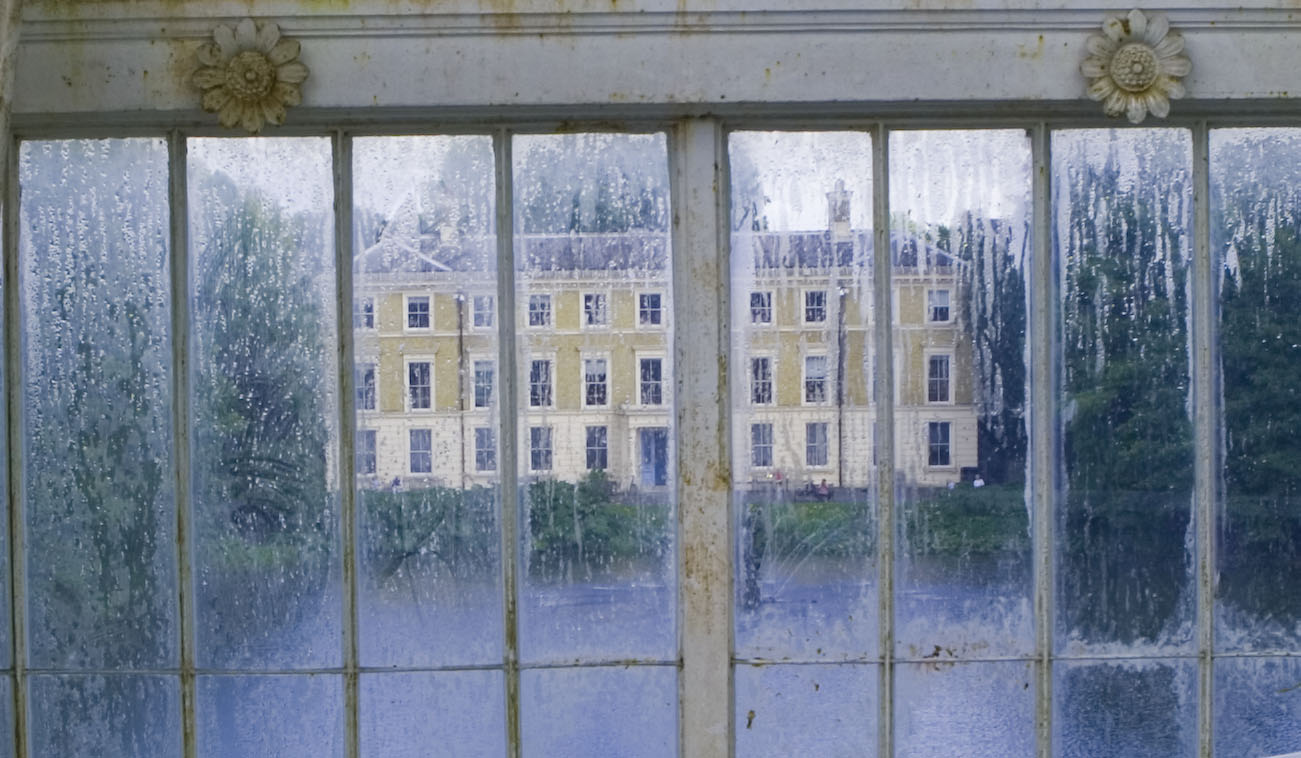
Through the glass wall. Image @Tony Grant

Oh, by the way, if you are a mum with a baby and young toddlers in tow, it’s free for the children, totally free. An example of British quirkiness in action. The gardens are a great place to meet for morning coffee in one of the 18th-century orangeries, to have a chat and a place to let the youngsters roam.

The Chinese Pagoda. Image @Tony Grant

My first encounter with Kew, I must admit, involved fellow students, bottles of wine, cans of beer, some very attractive females (my future wife amongst them), and an appreciation of nature and trees gained by lying on my back looking up through leafy branches to a clear blue sunny sky beyond.
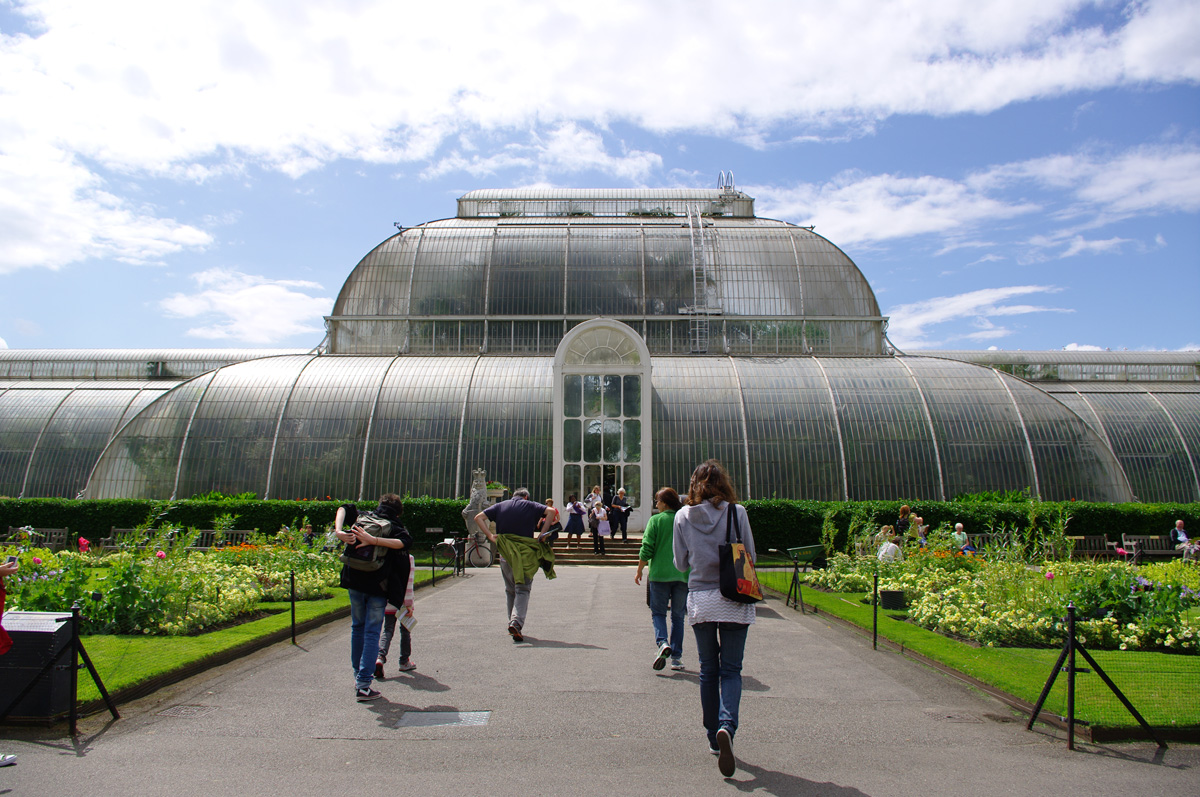
Approaching a palm house. Image @Tony Grant

Kew to me means pleasant tree-lined walks, elegant plant houses with their acres of glass and miles of fine wrought iron structural parts painted white and curved and curled into shapely structures. It is a place to look closely at beautiful flowers, contemplating their wondrous shapes and form, and their intense colours, and to take in their seductive perfumes. It is uplifting to observe the majesty of the many varieties of trees, with their beautiful patterned leaves, and their branch and twig systems like fine black lace against changing skies.
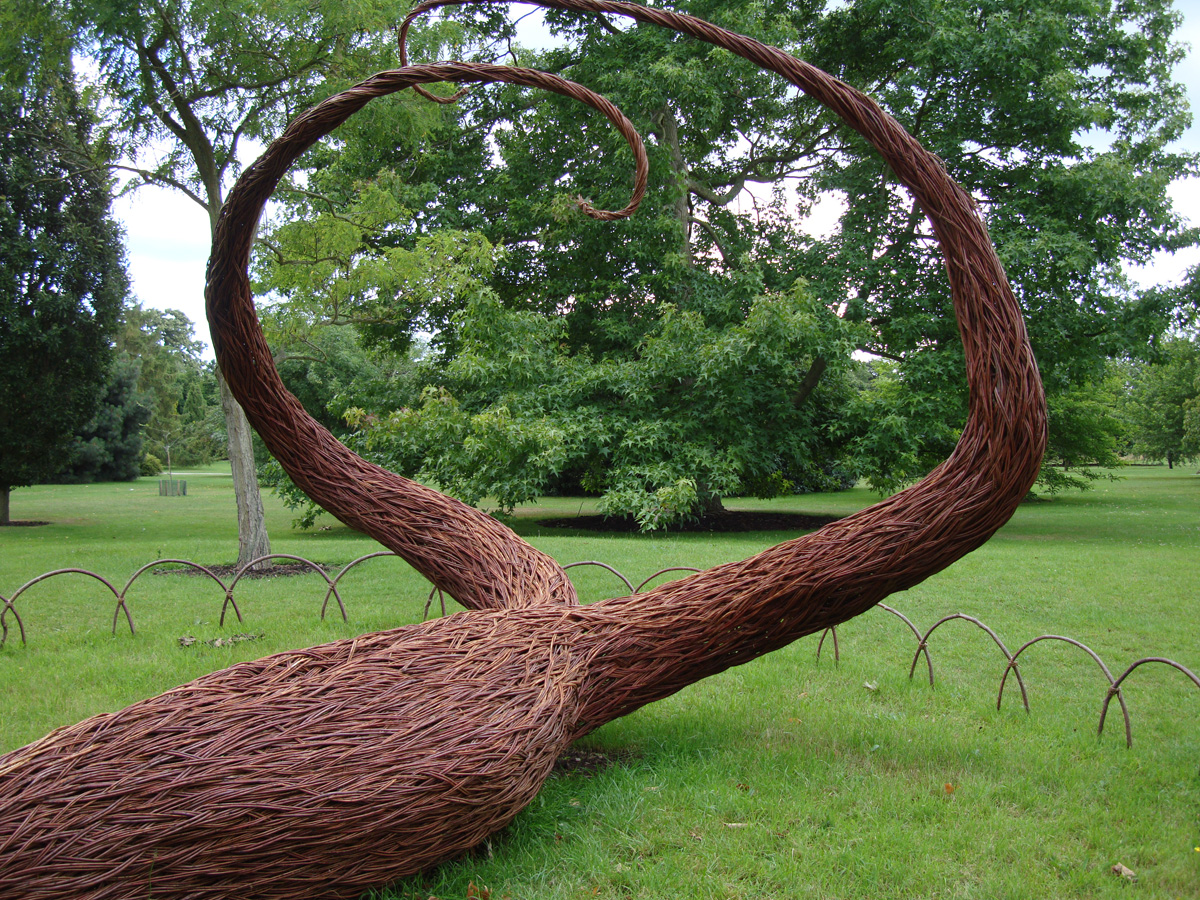
Environmental art at Kew. Image @Tony Grant

Kew calms the spirit. It is a meditative place. You can become one with yourself as you walk around or find a place on the grass to sit.
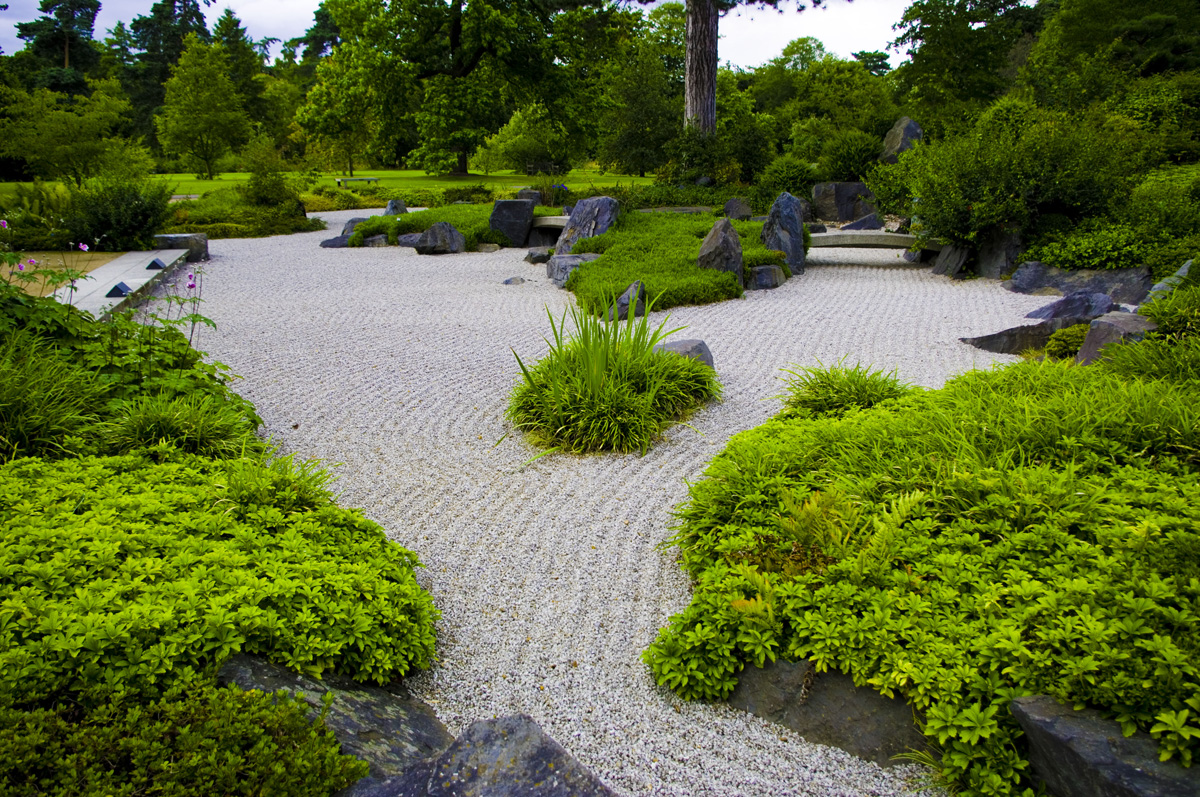
A Zen Garden. Be at peace. Image @Tony Grant

It is vast enough to give you personal space and there is tranquillity amongst the greens and shade.

Museum Number One, Economic Botany. Image @Tony Grant

The Importance of Kew

Kew is an important place. It has a seed bank that holds 10% of all the worlds’ plant species, and contains samples of nearly all endangered species. It also has a herbarium whose collection is being added to virtually daily. At the Joderell Laboratory at Kew, they research the molecular systems, and study the physiology and biochemistry of plants. They study the plants to find natural medicines, specifically for anti-cancer and anti-inflammatory drugs. One department focuses on agricultural research, and there are also botanical illustration and photography departments. Kew is a world leader in conservation and plant technology.
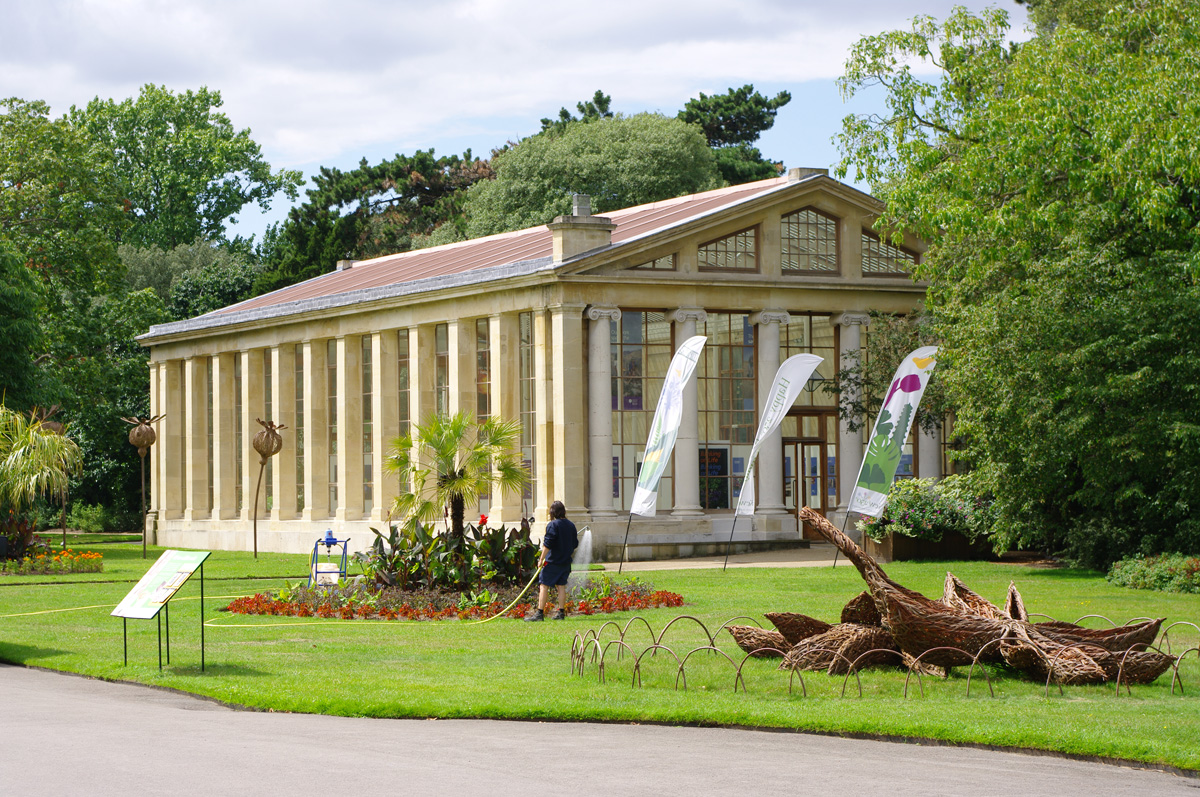
18th century orangery. Image @Tony Grant

Development of Kew

The development of Kew began in the 16th century when Henry VII built a palace at Richmond just along the Thames from Kew. By the 17th century the area round Richmond had become established as a hub of political power for part of the year. Everybody who was part of the court and the government came there in the summer when the king was in residence. Later, James I combined all the royal land in the area, along with former monastic land, with the park that existed at Shene, and created a new hunting ground of 370 acres. Robert Stickles, the architect, built a hunting lodge called Richmond Lodge right in the middle of it.

Temperate House and pagoda. Image @Tony Grant

After Charles I was executed, and The Commonwealth had taken over under Oliver Cromwell, much of the Royal property around Richmond and Kew was sold off. However, those sales were reversed during the reign of William III. Robert Stickles’s Richmond Lodge had survived, and it was extended and turned into a royal palace. The old deer park was reassembled, and the land around Richmond Lodge was turned into formal gardens. So began what we know today as Kew Gardens.
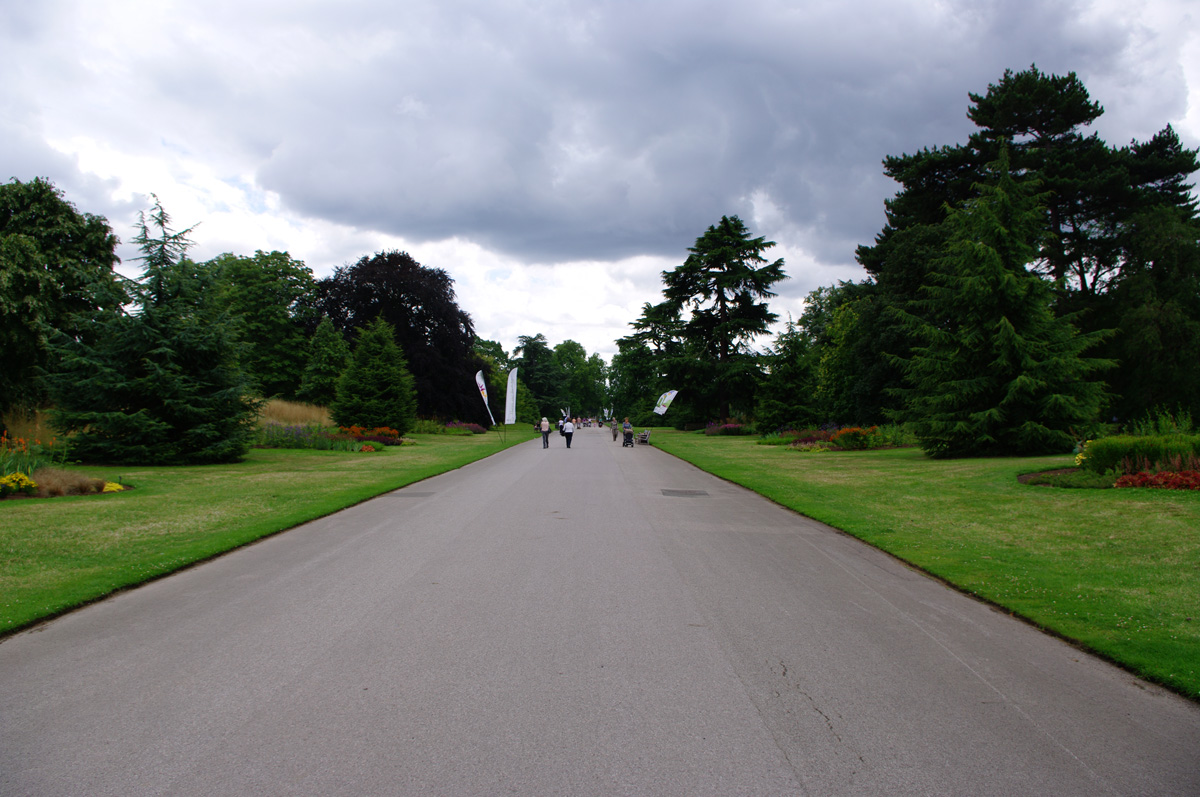
The broad walk.Image @Tony Grant

In the 1690’s, George London created the Broad Avenue, a wide path that goes nearly the full length of the gardens connecting many of the main gardens features. Charles Bridgeman and William Kent, two great 18th century landscape gardeners, primarily created the layout and design of the original gardens.
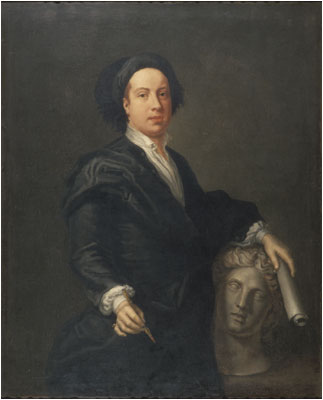
William Kent

Capability Brown added to the design later. Because of these three great garden designers’ influences and ideas, the garden at Kew were watched and visited, so that new ideas in garden design could be disseminated. Kew was an important influence to 18th century garden design throughout Britain.
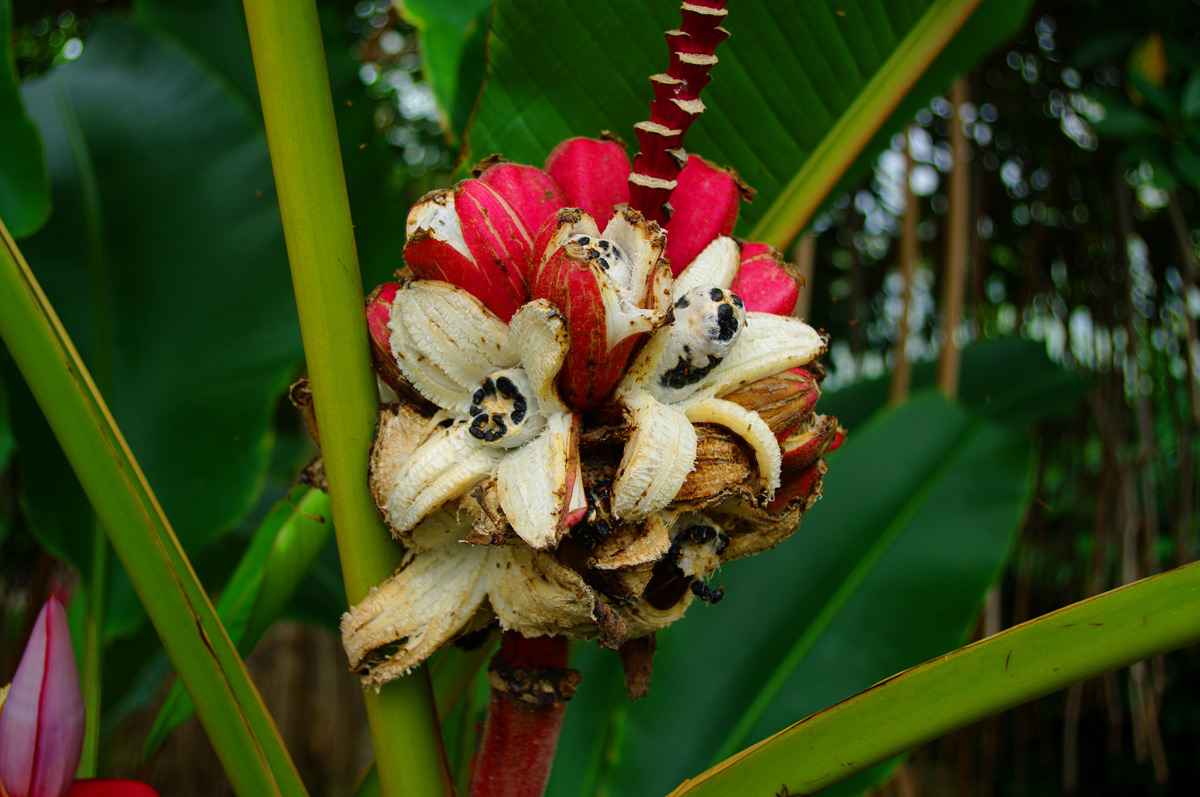
Shape, pattern, colour. Image @Tony Grant

This early 18th-century plan was overlaid by later designers, although some of the Capability Brown’s features still persist. It is also likely that some of the older trees might have been planted by Charles Bridgeman. In 1731, King George II’s son, Frederick, Prince of Wale,s leased Kew farm. In 1736 he married Princess Augusta of Saxe Gotha, and together they began some drastic changes at Kew. They commissioned William Kent to redesign Richmond Lodge. He added extensions and covered the façade in white stucco. It became known as The White House.

Monkey puzzle tree. Image @Tony Grant

Frederick and Augusta were garden enthusiasts, and they were helped by the Earl of Bute, who advised them on obtaining plants and landscaping. He later became the tutor to their son, who became George III. Unfortunately, Frederick died in 1751 due to a bout of pleurisy and a burst abscess in his chest. He wasn’t able to fulfil his plans for the gardens. At the time it was said his death was a great loss to the development of gardening in this country. George III, Frederick’s son, succeeded to the throne on the death of his grandfather, George II in 1760.
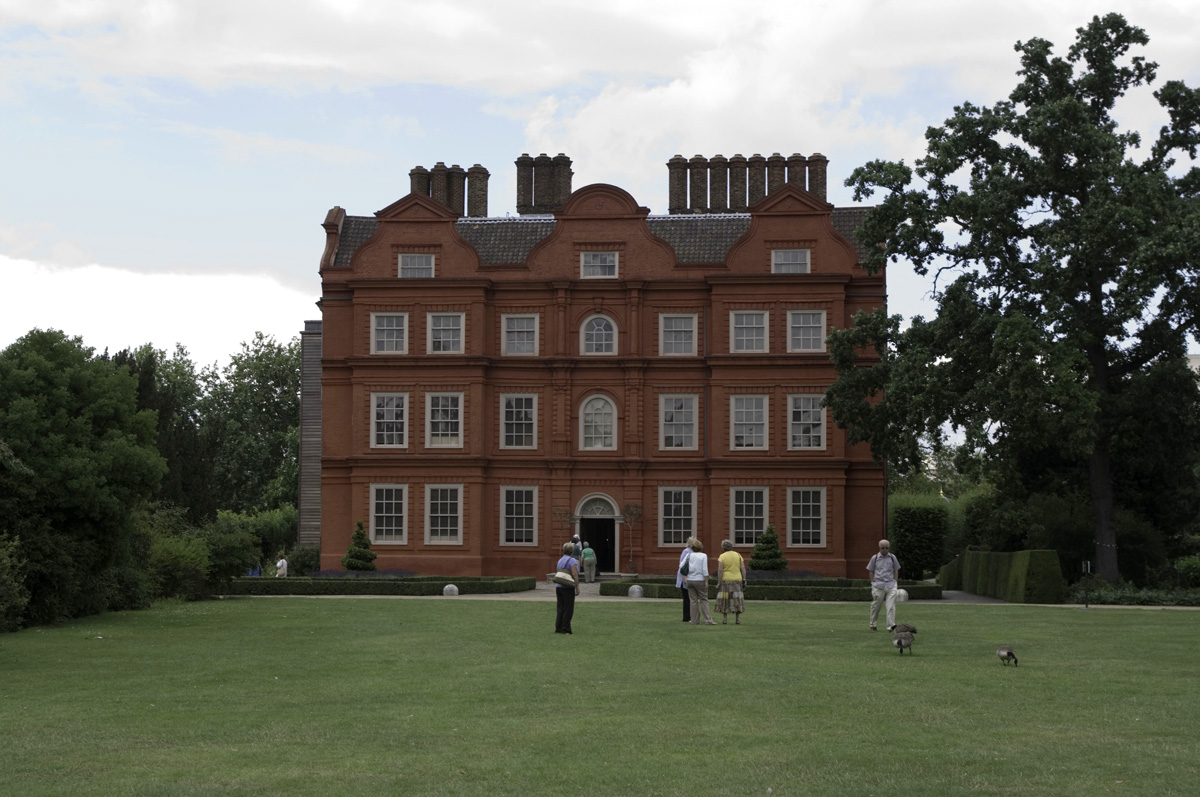
 

The Dutch House at Kew, Kew Palace. Image @Tony Grant

Capability Brown was commissioned to re-landscape the gardens. The royal family used Richmond Lodge as a summer home. When, Princess Augusta, George’s wife, died, the royal family moved to the White House, whilst The prince of Wales and his brother Prince Frederick lived in the Dutch House, which still exists today and is now called Kew Palace. The royal children were given lessons in botany and botanical illustration. During his bouts of illness, the King lived at Kew.
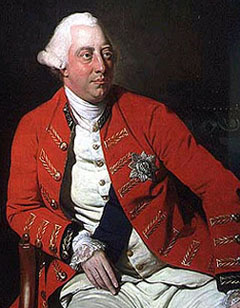
George III

During the Georgian period Joseph Banks became friends with George III and was the unofficial director of Kew Gardens. He became one of the most influential botanists of his time and began many of the work botanists do today.
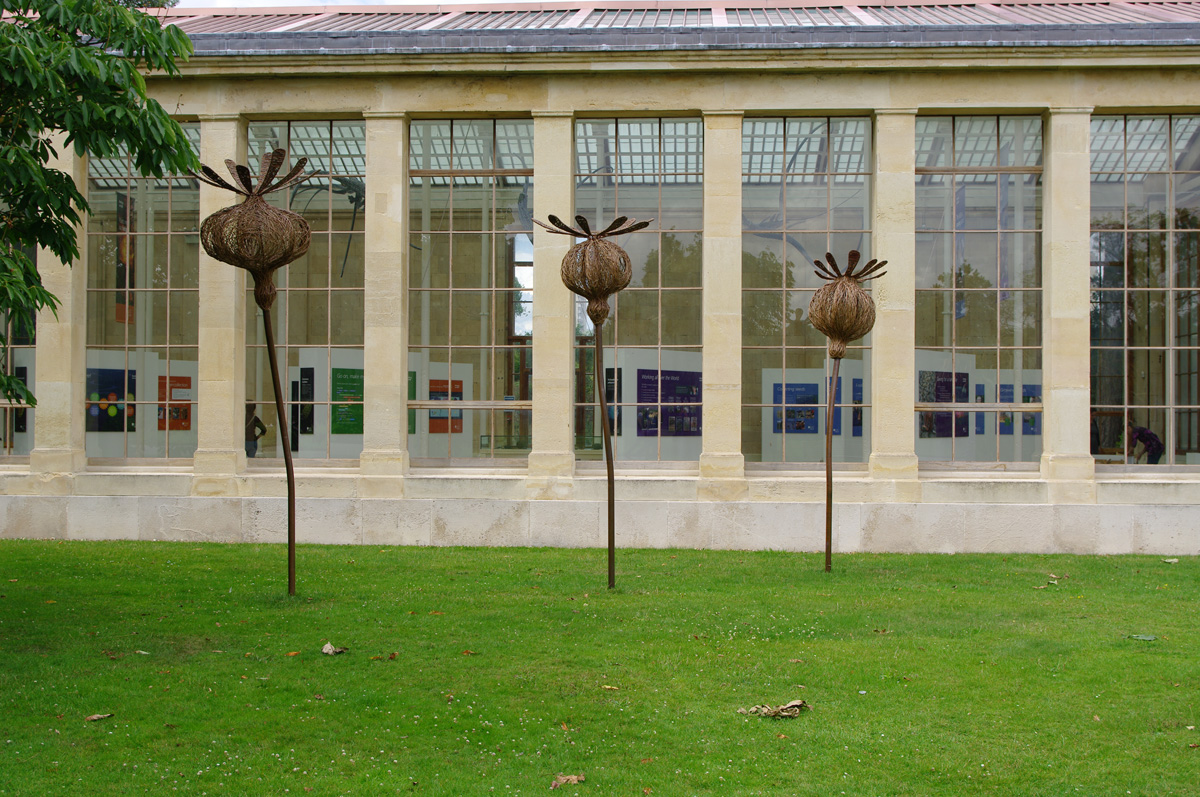
Natural art beside an orangery. Image @Tony Grant

Sir Joseph Banks (1743 – 1820)
In 1761he inherited his father’s estate in Lincolnshire to which was attached considerable wealth. His first voyage of discovery was to the coasts of Newfoundland and Labrador on the ship HMS Niger. On his return to London in 1767 he was elected a member of the Royal Society at the tender age of 23.
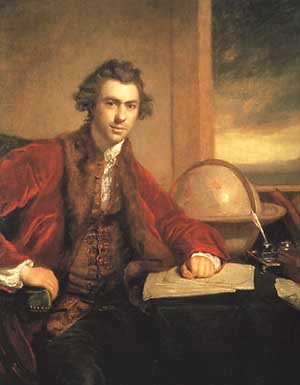
Joseph Banks

When the society proposed an expedition to observe the transit of Venus in the Pacific in 1769, Joseph Banks financed his own expedition with his own team of scientists, including the botanist Daniel Solander and the artist Sydney Parkinson. HMS Endeavor under Captain Cook left England in August 1768.
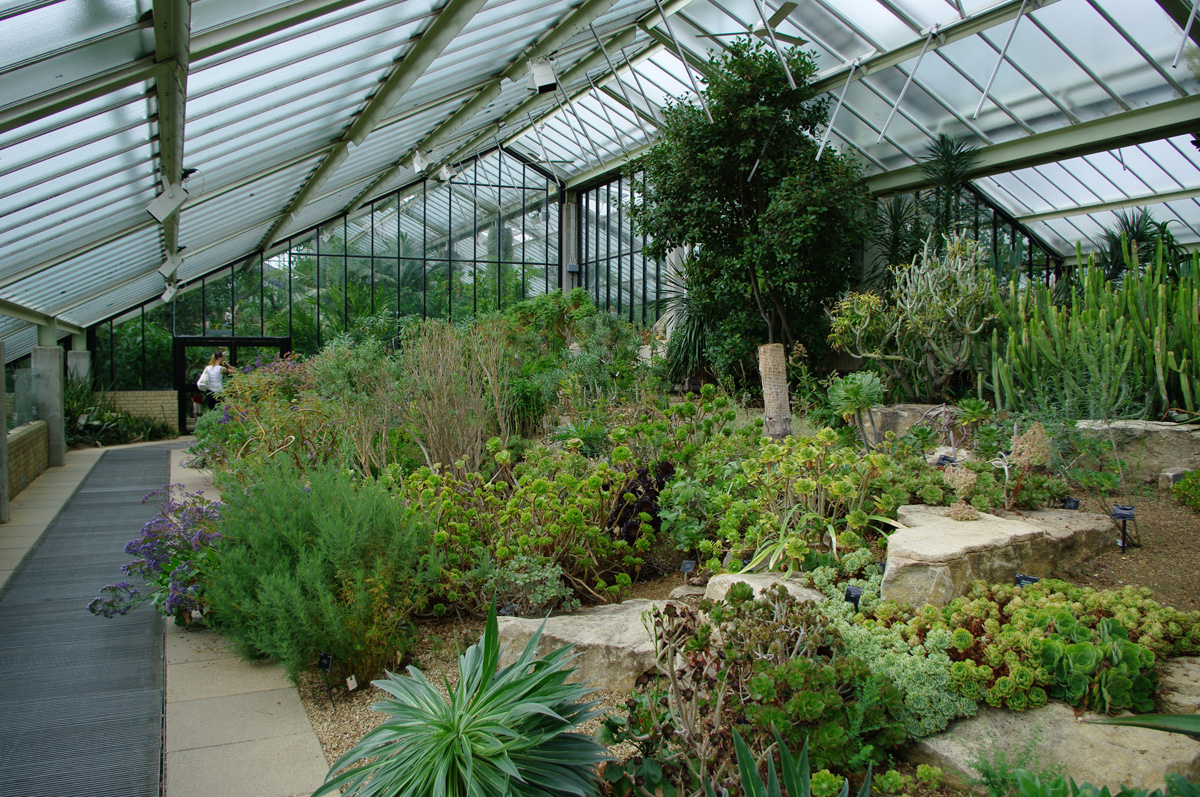
Inside a green house. Image @Tony Grant

Joseph Banks’ botanical collection formed the basis of the Herbarium at Kew today. His original specimens an still be studied there. Later he mounted expeditions to Iceland, the Hebrides, and the Orkneys. Banks helped organise the first collections at Kew. Specimens arrived from all over the growing British Empire, a typical trait with Empire building.
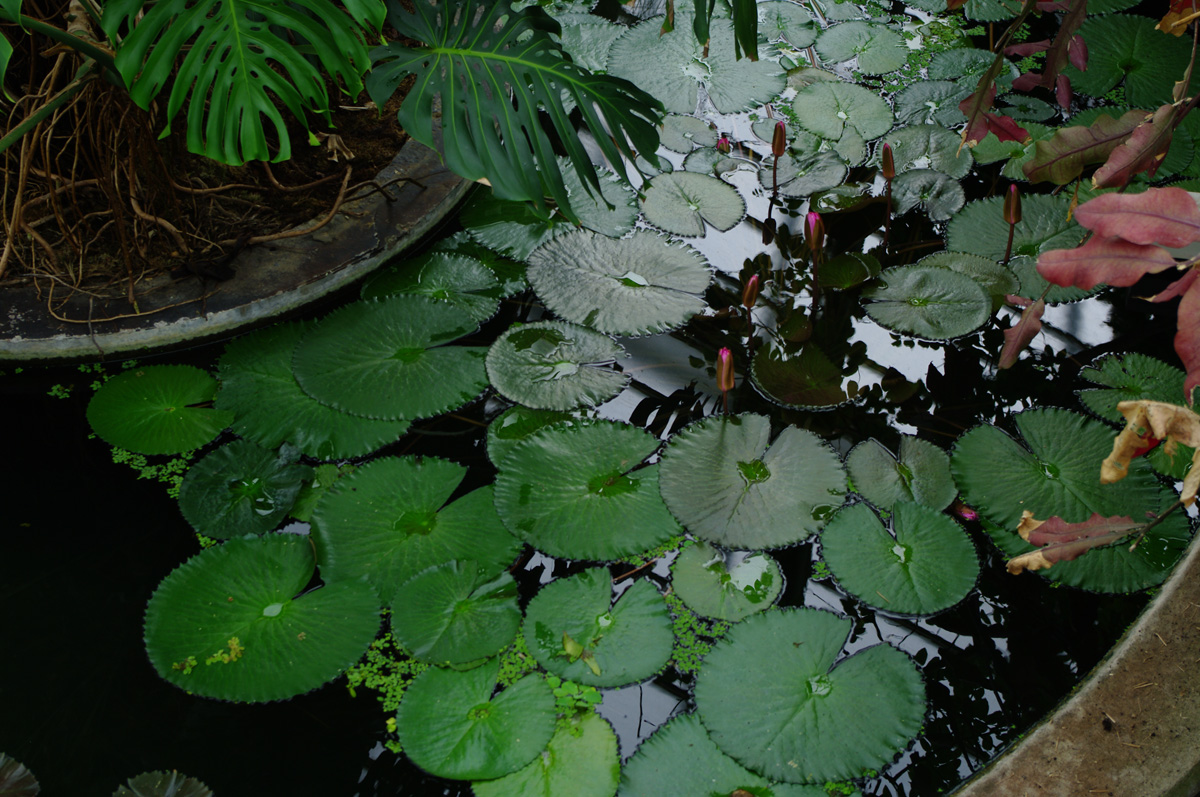
Water lillies. Image @Tony Grant

The initial impulse were trade and wealth, but so many other things went along in parallel with that:  science, exploration, discovery, art, culture. The British Empire brought religion, government, and even citizenship along with it. You can see examples and parallels with The Roman Empire, the Spanish exploration of South America, and present-day empire building.
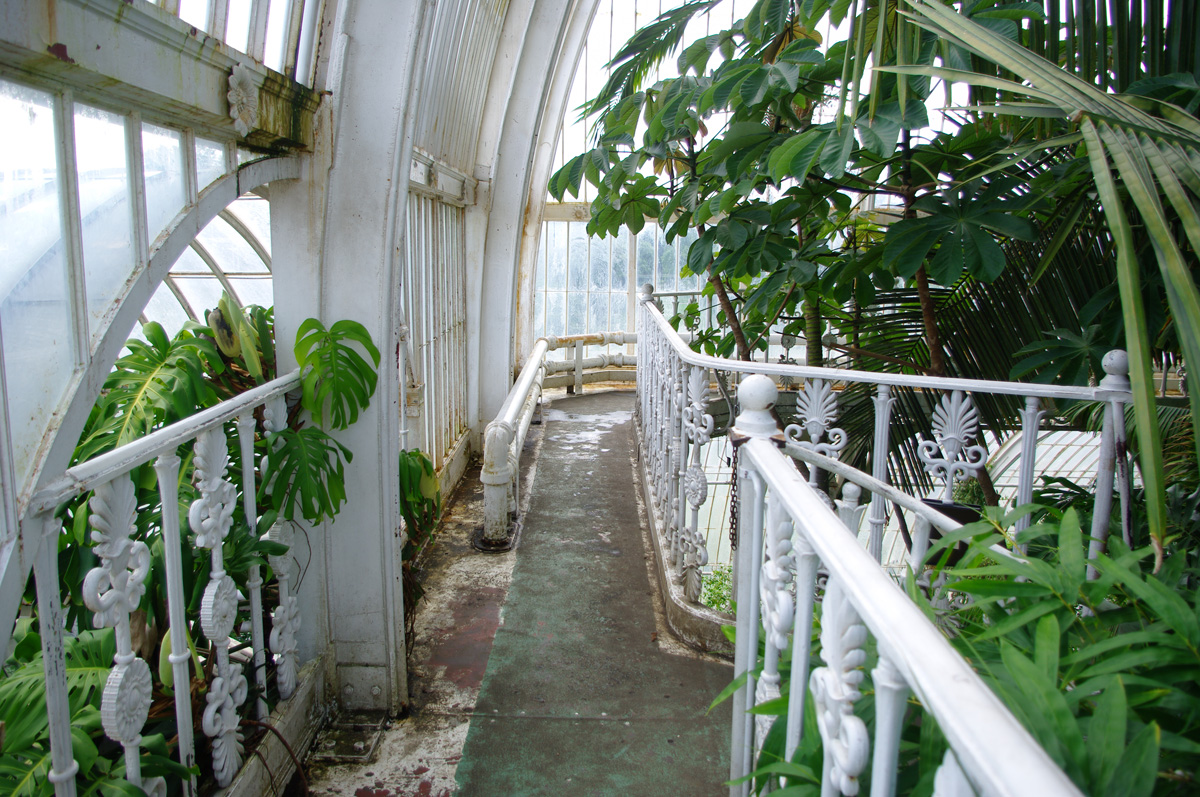
Inside the roof of the Palm House. Image @Tony Grant

Kew is a special place, and a visit there brings home the importance of plants, the keystone of our planet and very existence. They do so much for us, and their beauty brings us peace and joy. Is it such a strange thing to do – hug a tree?
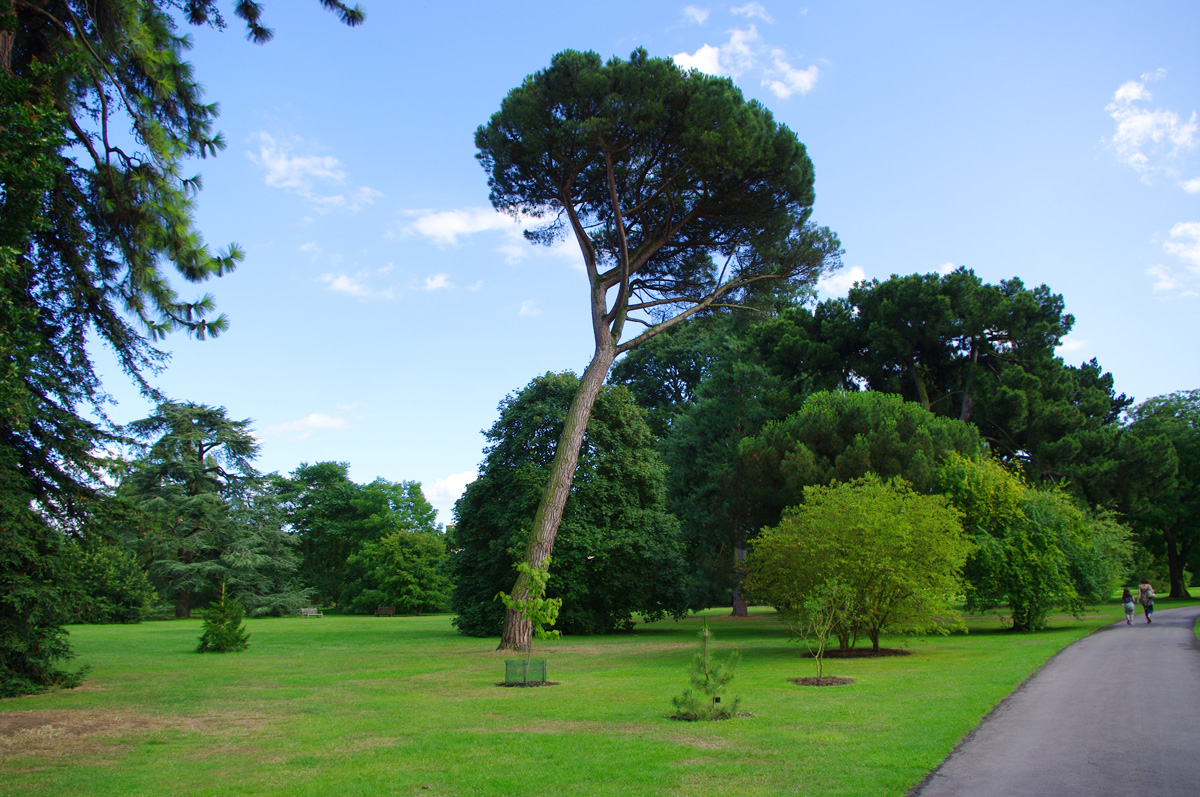
Scots pine. Image @Tony Grant

More images:

Before opening. Image @Tony Grant

Environmental art at Kew. Image @Tony Grant
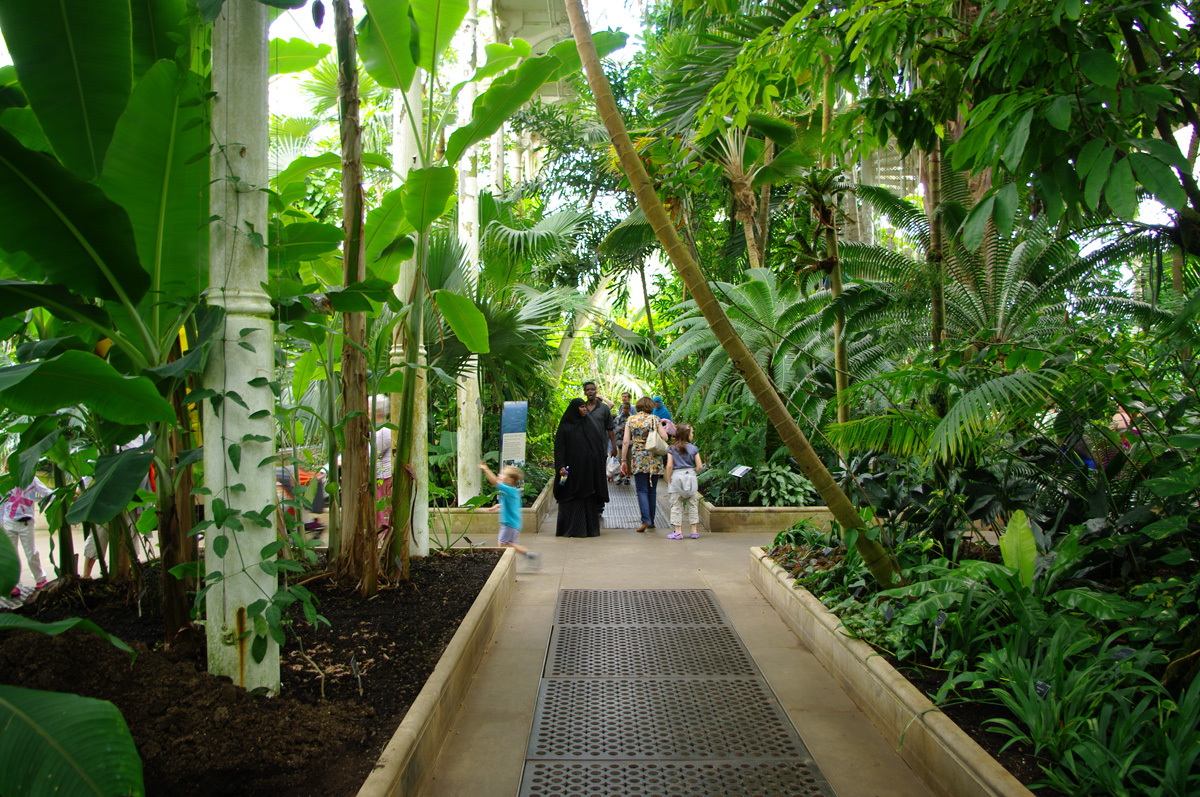
Inside the Palm House. Image @Tony Grant
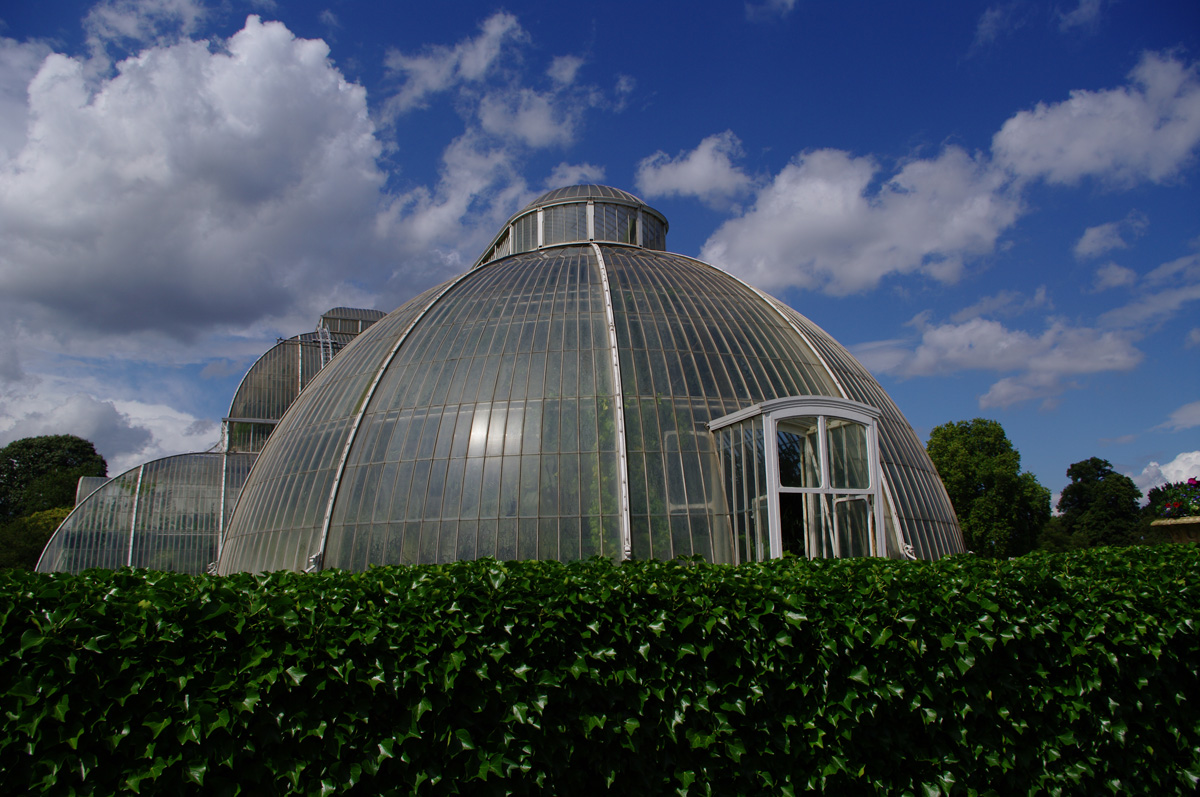
Side entrance. Image @Tony Grant
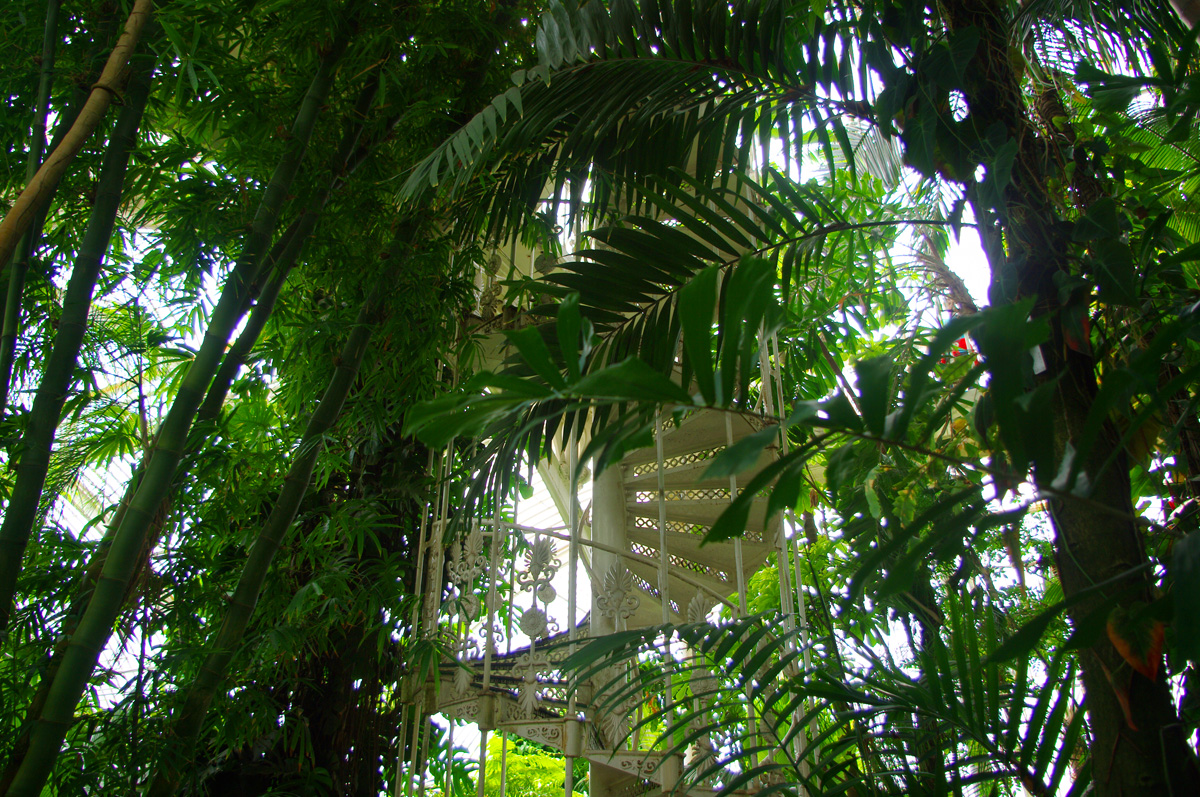
Stairs inside the Palm House. Image @Tony Grant
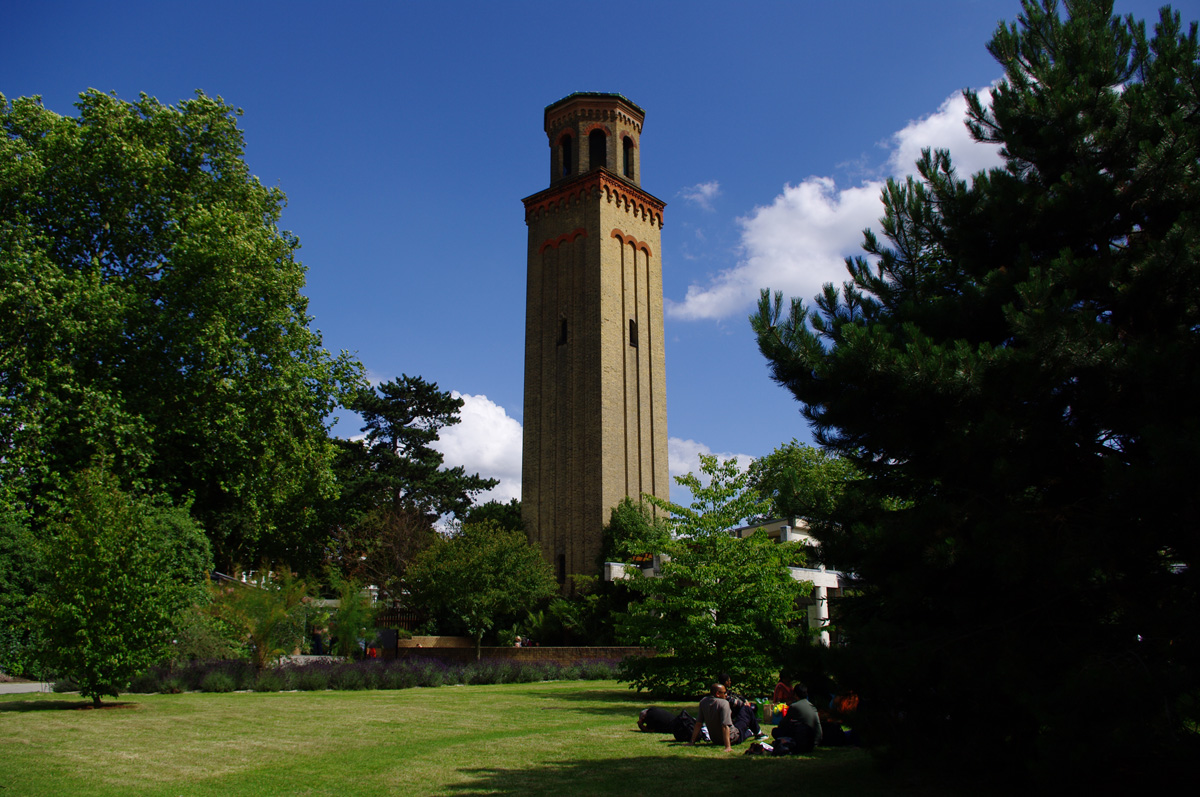
Water tower. Image @Tony Grant
Read Full Post »

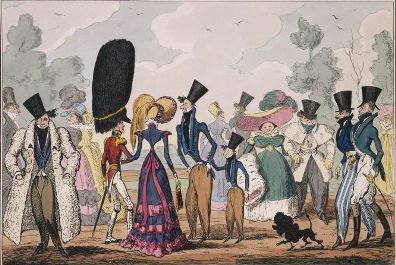
The Parks of London by Mary Elizabeth Brandon, 1868, on Dandyism.net discusses the dandies parading up and down London’s fashionable parks. After visiting that site, return to read some of my older posts about Hyde Park and the pleasure gardens.

More on the Topic:

Read Full Post »

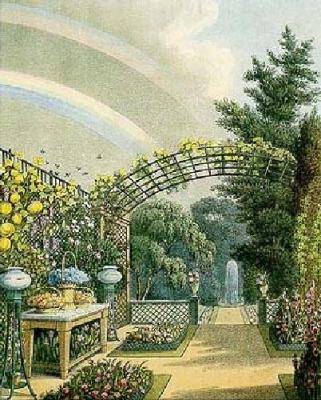
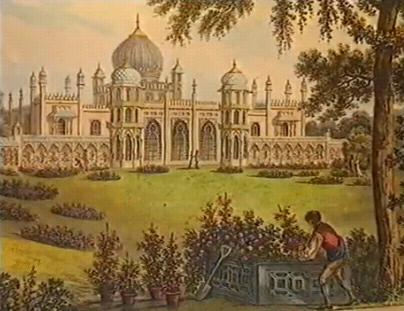
Repton's design for the gardens for the Royal Pavillion, Brighton

Sir Humphry Repton (1752-1818), who was mentioned in a previous post about the paint color Invisible Green was a famous landscape designer during the end of the 18th century and early 19th century. “In his day, [he]was equal in stature to Capability Brown or Gertrude Jekyll, but is now often-overlooked. However, he was once favoured by the Prince Regent (later George IV), drawing up plans for the Brighton Pavillion, as well as working at Woburn, in Londons Bedford Square, Sherringham in Norfolk and Ensleigh in Devon.”

This 1991 film about Repton’s career, which I found on YouTube and whose title I could not find, features Sir Michael Hordern as the narrator and John Savident as Repton. The special showcases Repton’s magnificent drawings for the redesign of many famous properties; some of his work can still be observed in their natural settings.

About the name: Is it Humphry or Humphrey? I have seen both spellings. The BBC spelled the name as Humprhey, whereas the National Portrait Gallery, Morgan Library, and the majority of sources use Humphry.

Read Full Post »

Inquiring reader: This is the second post by historical paint expert Patrick Baty of Papers and Paints, who has carried out extensive research into the use of pigments in architectural and decorative paintings. He has kindly answered a question about the paint color “invisible green,” which was left on his previous post, Painting a House During the Regency Era.

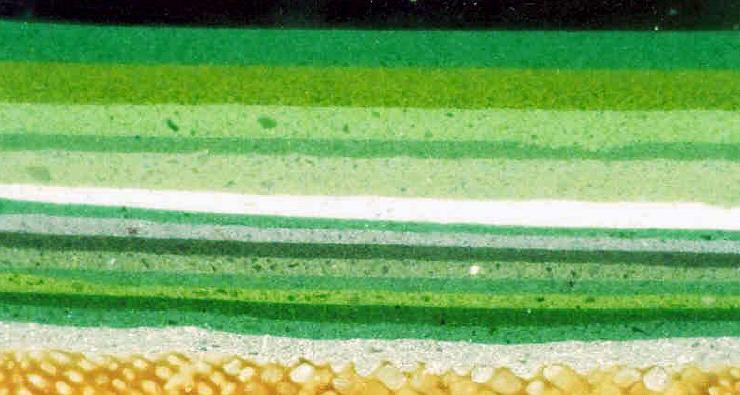
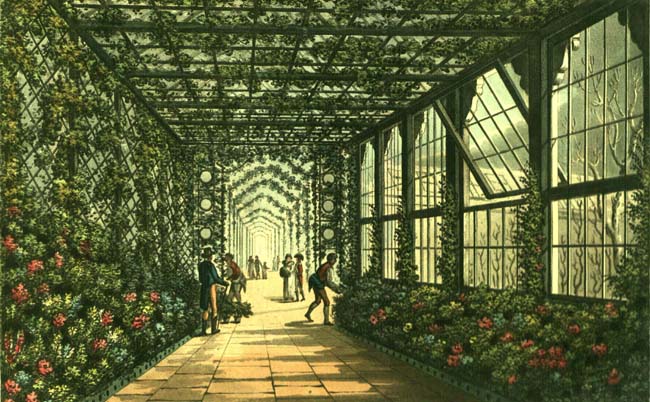
Invisible Green was a favourite of Humphrey Repton, the famous landscape designer of the Georgian/Regency eras. (The image above shows his trellises painted in a dark, rich green.)

William Mason, in his poem “The English Garden” published in 1783, provides us with a very early reference to the Picturesque treatment of fences and to the colour that became know as “Invisible Green”. He describes in verse the preparation of a dark green oil paint based on yellow ochre and black with white lead. Great care was required in mixing the right colour:

‘Tis thine alone to seek what shadowy hues
Tinging thy fence may lose it in the lawn…”

and he concludes by saying:

the paint is spread, the barrier pales retire,
snatched as by magic from the gazer’s view”.

Patrick Baty, Green Schemes, Garden Door, Scottish Estate

In 1808, James Crease, the Bath colourman, described “Invisible Green” as a dark green:

so denominated from its being proper for covering gates and rails in parks, pleasure grounds, etc. by rendering them in a measure invisible at a distance on account of its approximation to the hue of the vegetation”.

In 1829, T.H. Vanherman, the London colourman, described Invisible Green as follows:

“The Invisible Green is one of the most pleasant colours for fences, and all work connected with buildings, gardens, or pleasure grounds, as it displays a richness and solidity, and also harmonizes with every object, and is a back-ground and foil to the foliage of fields, trees, and plants, as also to flowers.”

One of my early projects was at Uppark, where the young Emma Hamilton is alleged to have danced naked on the dining room table.  The wonderful Lucy Inglis has written very well in her blog Georgian London about the concept of prostitution in the eighteenth century in Frances Barton – Alimony and Acting: The Life of Nosegay Fan.

More information on this topic:

Second image by Sir Humprhy Repton of a garden building for the Royal Pavillion at Brighton. The design was not used.

Read Full Post »

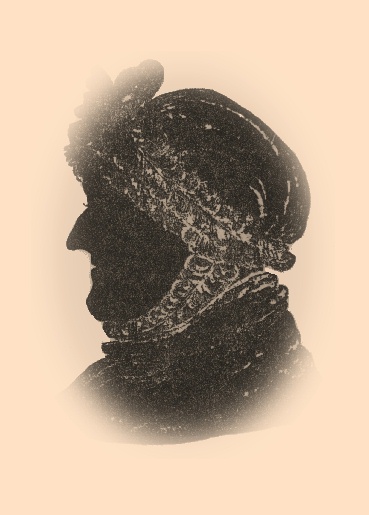
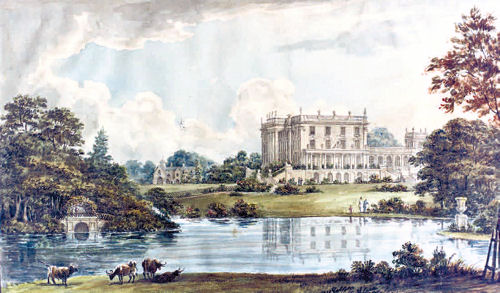
This weekend as we celebrate Mother’s Day, my thoughts turn to Cassandra Austen,  wife of Rev. George Austen and mother of Jane Austen. Cassandra was related to the Leighs of Stoneleigh Abbey.  In 1806, the recently widowed Mrs. Austen visited Adlestrop Rectory in Gloucestershire with her two daughters, where they stayed with her cousins Rev. Thomas Leigh and his sister Elizabeth.  During their visit,  Rev. Thomas Leigh learned that the Hon. Mary Leigh of Stoneleigh Abbey had died and that he would inherit the great house, whose origins go back to 1154. The Austen women traveled with Rev. Leigh to Warwickshire. In the following letter, Mrs. Austen writes glowingly about their stay at the mansion:

“STONELEIGH ABBEY,
“August 13, 1806.

“MY DEAR MARY, – The very day after I wrote you my last letter, Mr. Hill wrote his intention of being at Adlestrop with Mrs. Hill on Monday, the 4th, and his wish that Mr. Leigh and family should return with him to Stoneleigh the following day, as there was much business for the executors awaiting them at the Abbey, and he was hurried for time. All this accordingly took place, and here we found ourselves on Tuesday (that is yesterday se’nnight) eating fish, venison, and all manner of good things, in a large and noble parlour, hung round with family portraits. The house is larger than I could have supposed. We cannot find our way about it – I mean the best part; as to the offices, which were the Abbey, Mr. Leigh almost despairs of ever finding his way about them. I have proposed his setting up direction posts at the angles. I had expected to find everything about the place very fine and all that, but I had no idea of its being so beautiful. I had pictured to myself long avenues, dark rookeries, and dismal yew trees, but here are no such dismal things. The Avon runs near the house, amidst green meadows, bounded by large and beautiful woods, full of delightful walks.

Stoneleigh Abbey, 1808, Humphrey Repton

“At nine in the morning we say our prayers in a handsome chapel, of which the pulpit, &c. &c., is now hung with black. Then follows breakfast, consisting of chocolate, coffee, and tea, plum cake, pound cake, hot rolls, cold rolls, bread and butter, and dry toast for me. The house steward, a fine, large, respectable-looking man, orders all these matters. Mr. Leigh and Mr. Hill are busy a great part of the morning. We walk a good deal, for the woods are impenetrable to the sun, even in the middle of an August day. I do not fail to spend some part of every day in the kitchen garden, where the quantity of small fruit exceeds anything you can form an idea of. This large family, with the assistance of a great many blackbirds and thrushes, cannot prevent it from rotting on the trees. The gardens contain four acres and a half. The ponds supply excellent fish, the park excellent venison; there is great quantity of rabbits, pigeons, and all sorts of poultry. There is a delightful dairy, where is made butter, good Warwickshire cheese and cream ditto. One manservant is called the baker, and does nothing but brew and bake. The number of casks in the strong-beer cellar is beyond imagination; those in the small-beer cellar bear no proportion, though, by the bye, the small beer might be called ale without misnomer. This is an odd sort of letter. I write just as things come into my head, a bit now and a bit then.

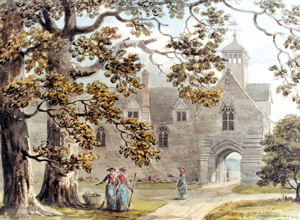
Stoneleigh Abbey, Gatehouse. 1807

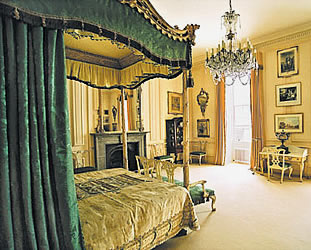
“Now I wish to give you some idea of the inside of this vast house – first premising that there are forty-five windows in front, which is quite straight, with a flat roof, fifteen in a row. You go up a considerable flight of steps to the door, for some of the offices are underground, and enter a large hall. On the right hand is the dining-room and within that the breakfast-room, where we generally sit; and reason good, ’tis the only room besides the chapel, which looks towards the view. On the left hand of the hall is the best drawing-room and within a smaller one. These rooms are rather gloomy with brown wainscot and dark crimson furniture, so we never use them except to walk through to the old picture gallery. Behind the smaller drawing-room is the state-bedchamber – an alarming apartment, with its high, dark crimson velvet bed, just fit for an heroine. The old gallery opens into it. Behind the hall and parlours there is a passage all across the house, three staircases and two small sitting-rooms. There are twenty-six bedchambers in the new part of the house and a great many, some very good ones, in the old.

Bedroom, Stoneleigh Abbey

There is also another gallery, fitted up with modern prints on a buff paper, and a large billiard-room. Every part of the house and offices is kept so clean, that were you to cut your finger I do not think you could find a cobweb to wrap it up in. I need not have written this long letter, for I have a presentiment that if these good people live until next year you will see it all with your own eyes.

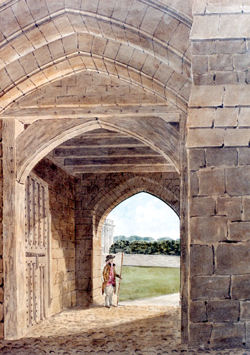
Arch, Stoneleigh Manor, Repton, 1807

“Our visit has been a most pleasant one. We all seem in good humour, disposed to be pleased and endeavouring to be agreeable, and I hope we succeed. Poor Lady Saye and Sele, to be sure, is rather tormenting, though sometimes amusing, and affords Jane many a good laugh, but she fatigues me sadly on the whole. To-morrow we depart. We have seen the remains of Kenilworth, which afforded us much entertainment, and I expect still more from the sight of Warwick Castle, which we are going to see to-day. The Hills are gone, and my cousin, George Cook, is come. A Mr. Holt Leigh was here yesterday and gave us all franks. He is member for, and lives at, Wigan in Lancashire, and is a great friend of young Mr. Leigh’s, and I believe a distant cousin. He is a single man on the wrong side of forty, chatty and well-bred and has a large estate. There are so many legacies to pay and so many demands that I do not think Mr. Leigh will find that he has more money than he knows what to do with this year, whatever he may do next. The funeral expenses, proving the will, and putting the servants in both houses in mourning must come to a considerable sum; there were eighteen men servants.” – Letter, Hill, Jane Austen: Her Homes and Her Friends

More on the topic:

Images: Plants info

Bedroom image: UK Student Life

Add to DeliciousAdd to DiggAdd to FaceBookAdd to Google BookmarkAdd to RedditAdd to StumbleUponAdd to TechnoratiAdd to Twitter

Read Full Post »

« Newer Posts - Older Posts »