This Jane Austen blog brings Jane Austen, her novels, and the Regency Period alive through food, dress, social customs, and other 19th C. historical details related to this topic.
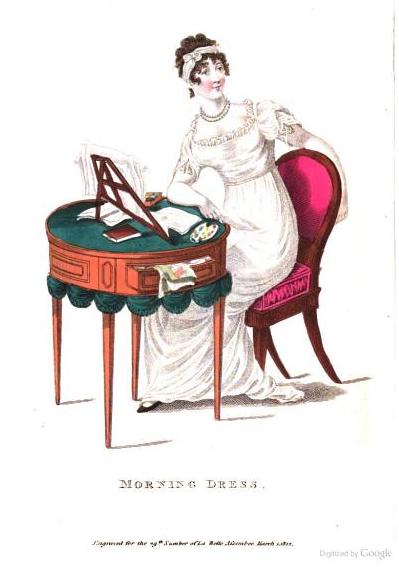
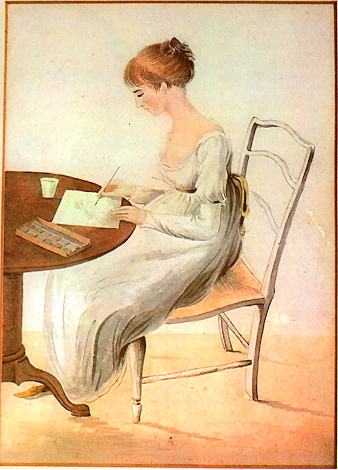
What did ladies do in the morning 200 years ago? Why, write letters and draw and paint, of course. A genteel lady knew all three arts and achieved them with varying skills. This delightful La Belle Assemblee print details how a well-dressed woman would look at her work table. This young Regency miss works like me, btw: with everything out and cluttering surfaces.
MORNING or HOME COSTUME: A white cambric frock with a demi train, short sleeves fastened up in front with cordon and tassels, a necklace formed of two rows of opal; the hair dressed in full curls, and confined by a demi turban of very fine muslin tied on the right side with a small bow; silk stockings with lace clocks richly brocaded; and plain black kid slippers.”
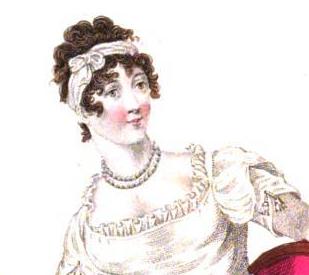
Detail of hair and bodice, La Belle Assemblee, March 1812. Note the lovely bandeau, the ringlets framing the face, and the relatively high neckline with ruff.
The magazine goes on to say that embroidery on all gowns, whether for domestic parties or home attire, seems very prevalent. Embroidery on evening gowns made of costly materials is frequently of gold and silver. India muslins are again coming much into wear and were very decently priced:
for the information of our Fashionable Readers, we have observed, at the house of Millard, in the City, some of the choicest production of the East Indies from the Company’s recent Sale of Bengal Muslins, &c. Their beauty is exquisite…”
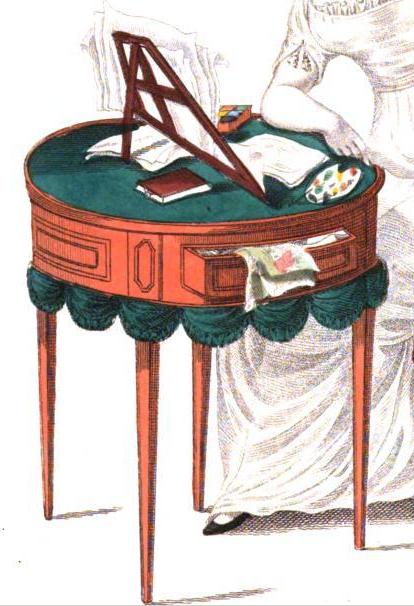
Detail of ladies round worktable with drawer. La Belle Assemblee, March 1812. This one most likely had a top and decorative swaths made of green baize, which prevented sliding.
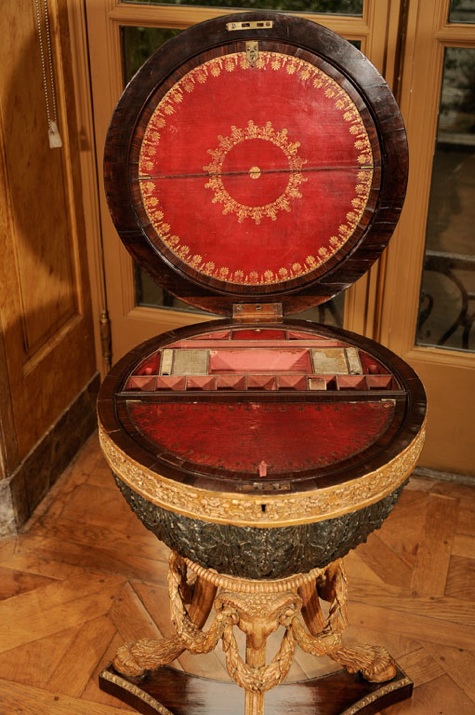
These small and elegant worktables were portable and could be easily carried near a light source or fireplace, or stashed against a wall when company came. They varied, some coming with a variety of compartments – some hidden – that contained writing and painting supplies. Many had book stands for reading, others had drawers that contained paper or embroidery threads and sewing supplies.
This work table was “equally adapted to the boudoir and drawing-room, and answers the purpose of a drawing-table as well as a work-table, and a desk for writing and reading.”
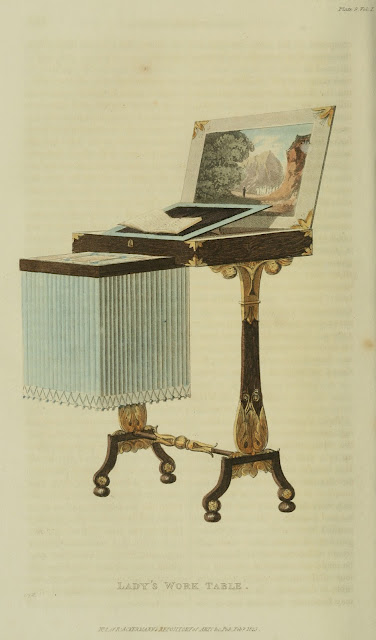
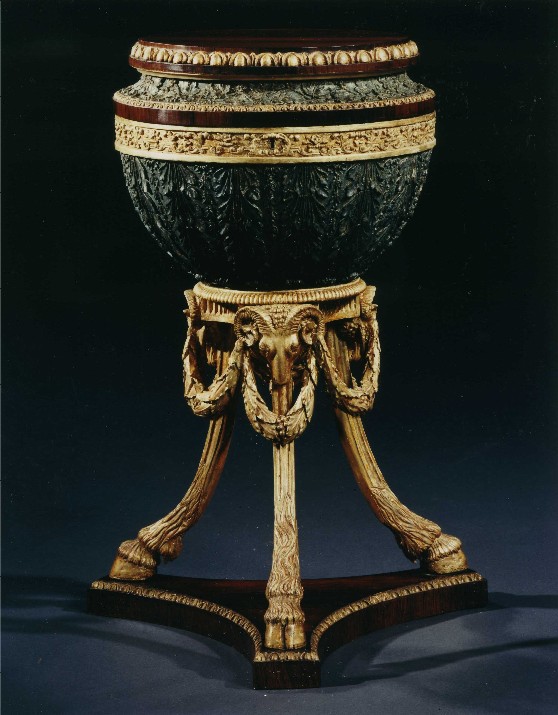
This was a very elegant and expensive work table for a rich lady.
This English work table, circa 1815, is a curious fusion of the refined neoclassicism of Robert Adam and the exotic eclecticism which emerged during the Regency period. The finely carved tri-form giltwood stand, based on a Roman form, is typical of Adam’s adaptation of the antique. – Carlton Hobbs Work Table
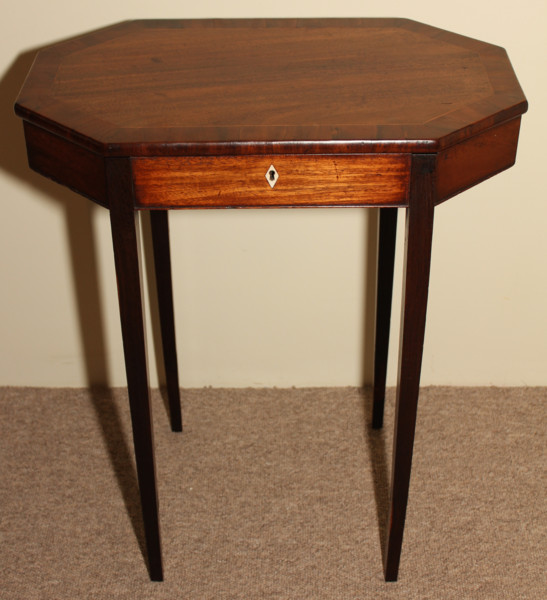
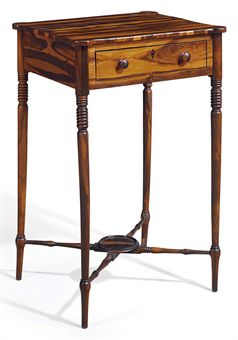
As you can see, work tables varied in design and construction. This simpler and smaller cocuswood work table suited a lady’s purpose as well as a fancier one, but it has fewer compartments.
Early 19th century regency cocuswood work table with a rectangular top and single drawer.The turned legs are joined by a turned stretcher with circular platform, with paper label to underside inscribed purchased by ABM.
A few months ago I featured a short video of an 18th century French mechanical worktable, which showed how the hidden mechanisms worked and how easily the table could be moved from place to place. Click on this link to view it.
Note: The blue links are mine: the green links are ads placed here by WordPress. I make no money from this blog.
Great landed estates were symbols of the owner’s wealth and status in British society. Everything was put on grand display – from the exquisite architecture of the house itself to the furniture, jewels, silver plate, servants, books, carriages, horses, deer, game, forests, fields, and splendid grounds and gardens.
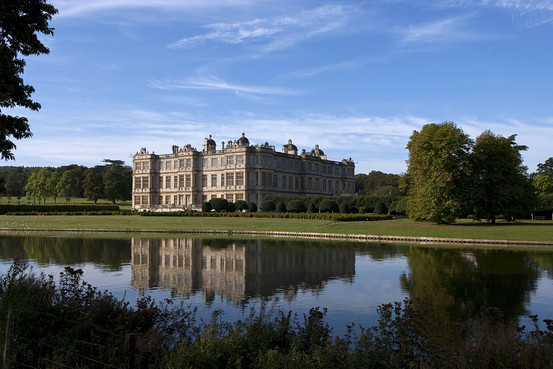
Longleat House in Wiltshire Image @www.longleat.co.uk
A fine estate certainly elevated a man in a lady’s estimation. Take this passage in Mansfield Park, written from Mary Crawford’s point of view:
Tom Bertram must have been thought pleasant, indeed, at any rate; he was the sort of young man to be generally liked, his agreeableness was of the kind to be oftener found agreeable than some endowments of a higher stamp, for he had easy manners, excellent spirits, a large acquaintance, and a great deal to say; and the reversion of Mansfield Park, and a baronetcy, did no harm to all this. Miss Crawford soon felt that he and his situation might do. She looked about her with due consideration,and found almost everything in his favour, a park, a real park, five miles round, a spacious modern-built house, so well placed and well screened as to deserve to be in any collection of engravings of gentlemen’s seats in the kingdom, and wanting only to be completely new furnished—pleasant sisters, a quiet mother, and an agreeable man himself—with the advantage of being tied up from much gaming at present, by a promise to his father, and of being Sir Thomas hereafter. ” – Mansfield Park, Jane Austen
(It is to Mary’s credit that, after this consideration, she prefered Edmund, the younger son, until she discovered that he intended to become a man of the cloth, and even then she did not give him up so easily.)
Visitors arriving at a landed estate took a circuitous route to the house along winding paths that were designed to show the grounds to their best advantage. They would pass through wooded areas and open fields, past lakes and rivers and herds of deer or cattle, and through a controlled wilderness area.
“The idea with Brownian landscapes is that you effectively go round them,” explains Mowl. “When [Capability] Brown did his landscape designs they would always have drives in them. They were an essential part of what he would do.” – The English Landscape Garden
Groundskeepers of extensive parks that featured winding drives and a variety of formal and ornamental gardens employed several means of keeping grass under control. Grazing sheep and cattle represented the first lines of defense. These herds were allowed to roam over vast expanses of land. Eighteenth-century romantic sensibility required that nothing as obviously artificial as a visible fence be allowed to contain them.
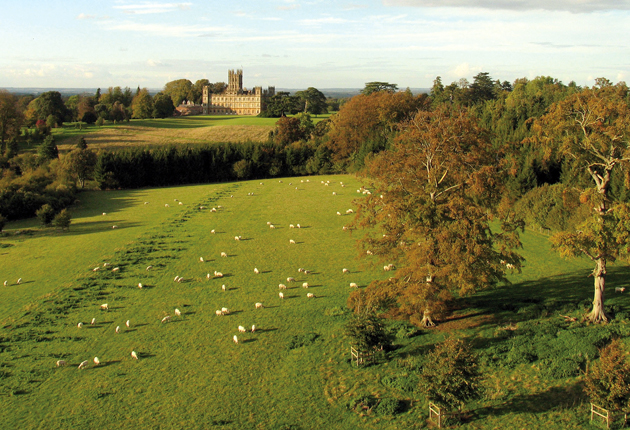
Highclere Castle is surrounded by park land designed by Capability Brown. Grazing sheep in the foreground.
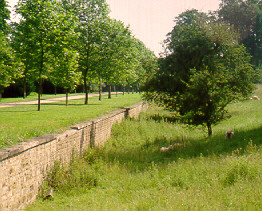
A landscape feature called a Ha-Ha prevented grazing herds from coming too close to the house. The Ha-Ha, which consisted of a deep trench abutting a wall and which was hidden from casual view even at a short distance, allowed for the naturalistic features of romantic landscape gardening to take hold.
A Ha-Ha was so named because, as the myth goes, this landscape feature was so well hidden that an unsuspecting visitor would blurt out “ha-ha!” before falling into the trench. This cross section shows how the system worked.
The trenches of a Ha-Ha could sometimes be 8 feet deep.The primary view is from the right and the barrier created by the ha-ha becomes invisible from that direction and sometimes from both directions, unless close to the trench. Image @Wikipedia
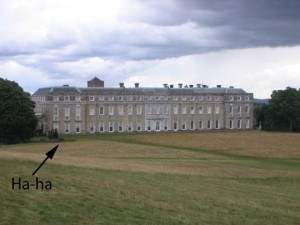
Not all Ha-Ha’s prevented deer, sheep, or cattle from grazing up to the front of the house (though considering their droppings, one would thinks that this would be highly preferred.) At Petworth, the Ha-Ha was placed at the side of the house.
Built at the edge of a pleasure grounds surrounding a house, the ha-aha made a virtually invisible barrier that kept the cows and sheep in their pastures yet allowed uninterrupted views from house into park of from park into distant countryside. It meant that pleasure grounds, park and landscape could seamlessly become one. It is probably French in origin. Charles Bridgeman is generally credited with it’s introduction, but the first remnants of a ha-ha had already been installed at Levens Hall in Cumbria in 1689. – Architessica: Gardens and Landscapes
The transitional area between the formal gardens and the large park surrounding the house was known as the wilderness. This area was as meticulously planned as the other areas of the estate, but here the plantings were more irregular and included native plants and trees; gravel walkways; a pond, lake or river or all three; waterfalls; lawns that resembled meadows; and areas where the vistas were framed to deliberately look natural. If cottages and villages were required to be moved to achieve this picturesque effect, then so be it. The master’s will was done.
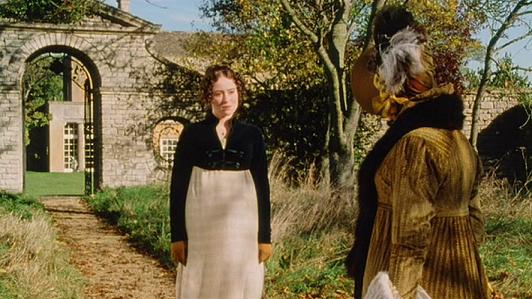
In Pride and Prejudice 1995, Elizabeth Bennet and Lady Catherine de Bourgh conduct their heated discussion in Longbourn’s “wilderness”. No grazing required here.
These wilderness areas were unique to topography and region, for each estate was uniquely different.
Nature in Herefordshire is not like nature in Lancashire and the garden style that tries to emulate the same form everywhere (particularly
one imported from another country entirely) is destroying what Pope had called the genius loci.” – (Wildness in the English Garden Tradition: A Reassessment of the Picturesque from Environmental Philosophy Author(s): Isis Brook Reviewed work(s): Source: Ethics and the Environment, Vol. 13, No. 1 (Spring, 2008), pp. 105-119)
This plan of Paca Garden in Annapolis, MD, shows the formal gardens separated from the park by a wilderness area with pond, bridge, and follies. Image (a) Creating a Period Garden
Walking along a wilderness provided one with an endless variety of aesthetic experiences. Paths wended their way through woods that opened up to vistas. Large trees provided shelter for a bench or revealed moss growing on gnarly roots. Rivers, ponds, follies, and bridges provided natural sources of visual patterns. They were pleasant places to visit:
A ‘pleasant place’ is supposed to be naturally crafted. It’s a balance between two opposites: wanting to cultivate the land and letting it grow freely. However landscapers and architects finally accomplish this goal, the product always ends up being a beautiful oxymoron. – Landscape as Amenity
Chawton House grounds. One of the vistas from a gravel path. Image @Tony Grant
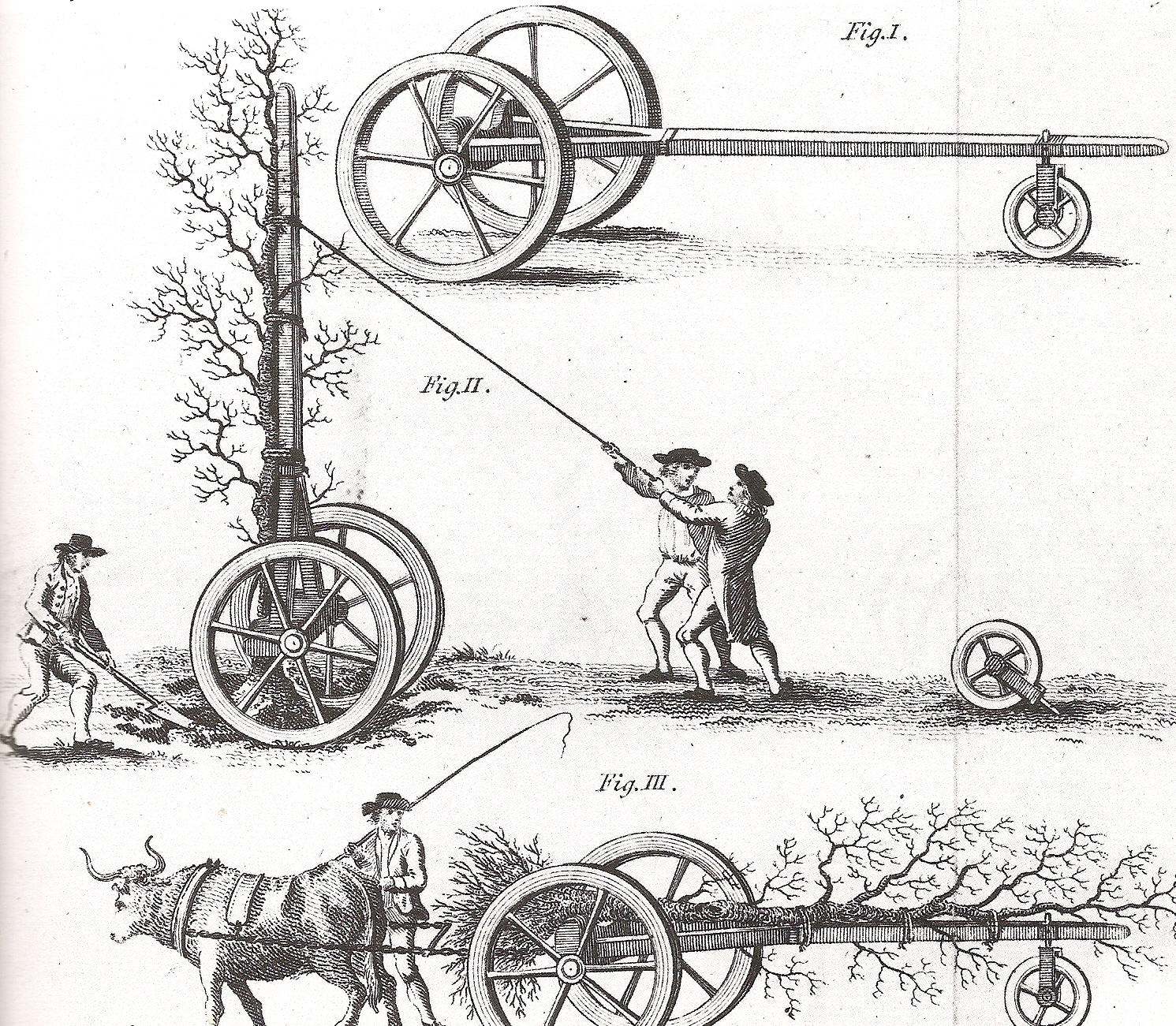
The exercise of walking along a wilderness ground was both visually and physically stimulating. These wilderness areas took years to design and arrange, with large trees moved from one area to another, buildings demolished or transported, and hillsides lowered or raised to “improve” the view.
Moving a full grown tree into place, Hayes, 1794
Such improvements, as they were generally known, required meticulous planning and strenuous effort. Master landscape gardeners like Lancelot “Capability” Brown and Humphry Repton became household names. Jane Austen knew about such efforts and their resulting changes:
Mr. Rushworth, however, though not usually a great talker, had still more to say on the subject next his heart. “Smith has not much above a hundred acres altogether, in his grounds, which is little enough, and makes it more surprising that the place can have been so improved. Now, at Sotherton, we have a good seven hundred, without reckoning the water meadows; so that I think, if so much could be done at Compton, we need not despair. There have been two or three fine old trees cut down that grew too near the house, and it opens the prospect amazingly, which makes me think that Repton, or anybody of that sort, would certainly have the avenue at Sotherton down; the avenue that leads from the west front to the top of the hill, you know,” turning to Miss Bertram particularly as he spoke. But Miss Bertram thought it most becoming to reply—
“The avenue! Oh! I do not recollect it. I really know very little of Sotherton.”
Fanny, who was sitting on the other side of Edmund, exactly opposite Miss Crawford, and who had been attentively listening, now looked at him, and said, in a low voice—
“Cut down an avenue! What a pity! Does it not make you think of Cowper ?’ Ye fallen avenues, once more I mourn your fate unmerited.'”
He smiled as he answered, ” I am afraid the avenue stands a bad chance, Fanny.”
“I should like to see Sotherton before it is cut down, to see the place as it is now, in its old state , but I do not suppose I shall.” – Mansfield Park, Jane Austen
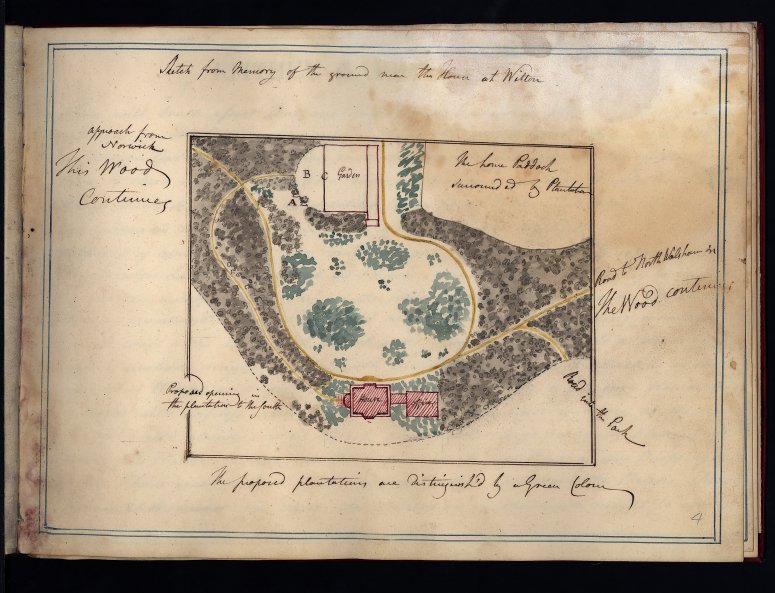
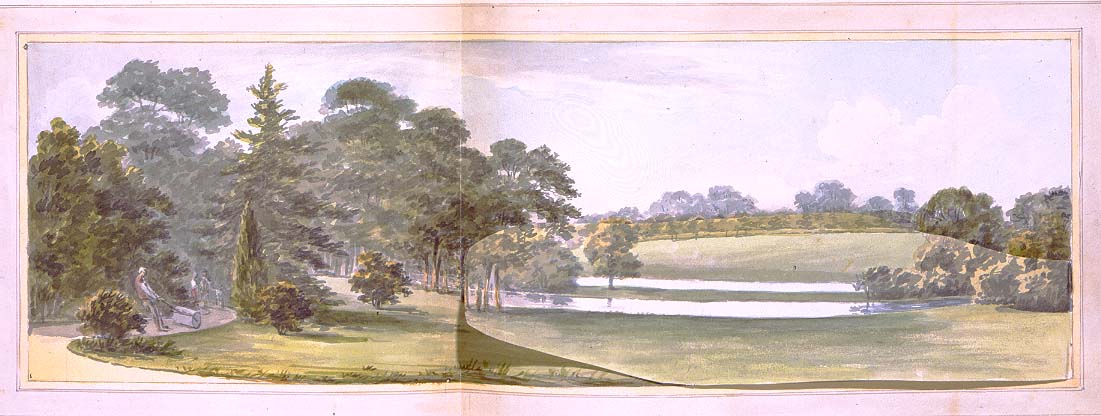
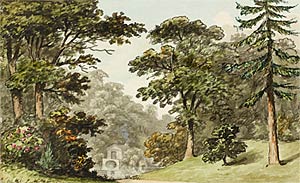
Sir Humphry Repton left a valuable legacy with his Red Books. It was his habit to sketch before and after landscapes for his customers and present the drawings to them bound in red covers. His improvements for Whiton are subtle but important. Two parallel streams have been turned into a serpentine lake with a waterfall at one end. The distant fields provide a focal point with artfully arranged trees. If you look closely at the gravel path on the left, you can spy a gardener.
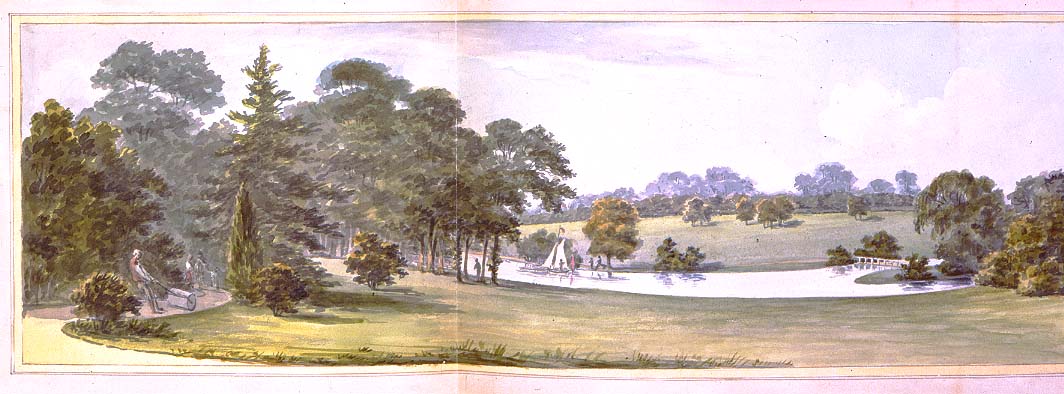
The samples below of Ferney Hall from The Morgan Library and Museum show the before and after drawing of an improved vista in which, using Jane Austen’s words, ” a prospect was opened”.
Ferney Hall by Repton. Image @The Morgan Library
The after image provides a glimpse of a folly. Instead of acting as a barrier, the woods give way to the scene, which provides a pleasant stopping point for the wanderer to sit and view. While such scenes looked natural, they were not.
Ferney Hall, After, by Repton. Image @The Morgan Library
Though visually the wild and the domestic were one is the same, “these were carefully managed scenes, designed to look natural, but actually contrived on a vast scale” – Landscape as Amenity
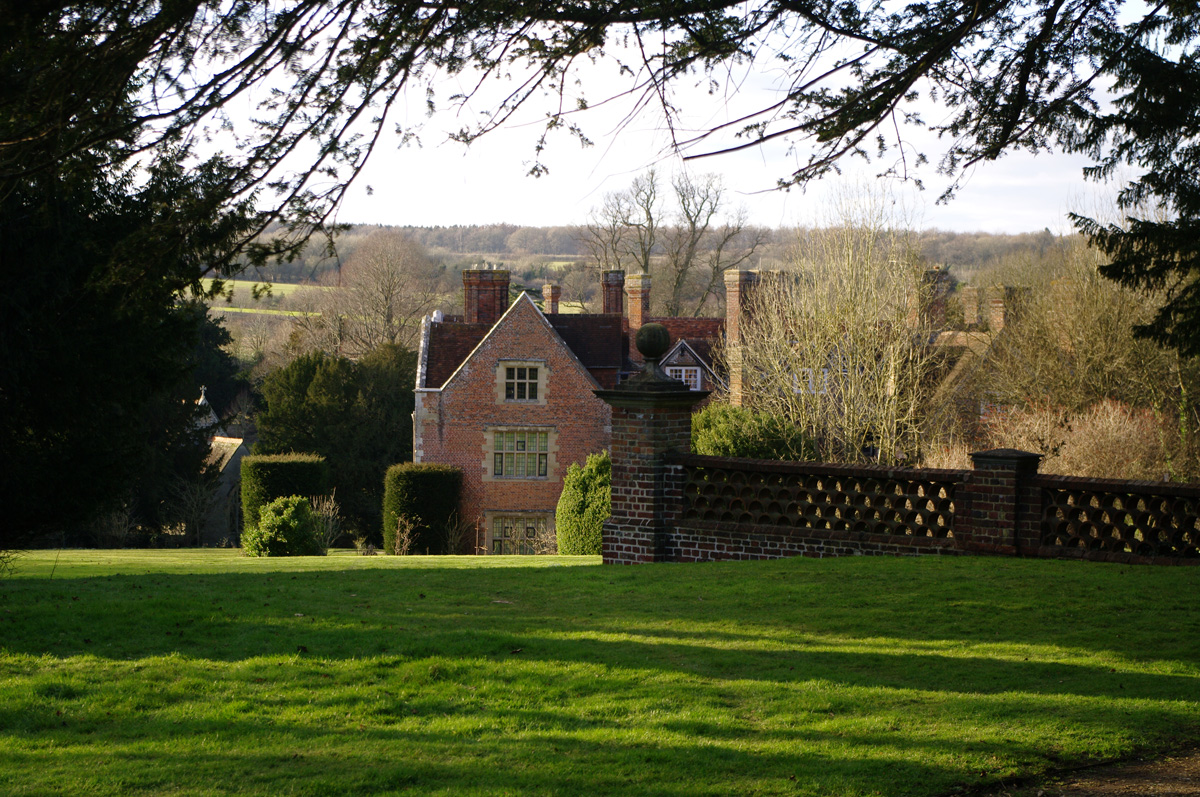
The wilderness was designed some distance from the house. Approaching closer, the visitor would see a more formal arrangement of fountains and shrubbery and mazes and flower gardens.
Chawton House: View from the wilderness towards the house and more formal plantings. Image @Tony Grant
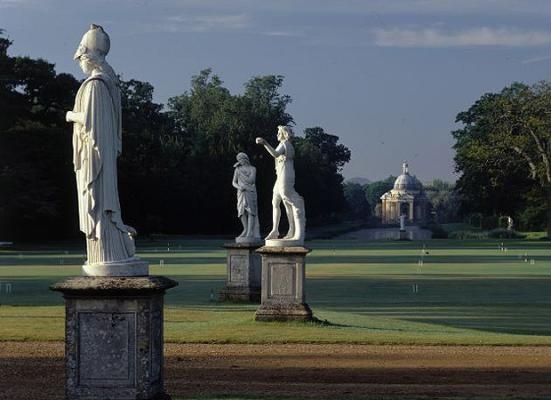
The gentlemen who had these gardens designed for them had all been on the Grand Tour and learned the classics,” says Timothy Mowl of the University of Bristol. “It was part of their make-up and they wanted to display their taste and learning within gardens.” – The English Landscape Garden
Wrest Park, Bedfordshire. Image @The Telegraph UK
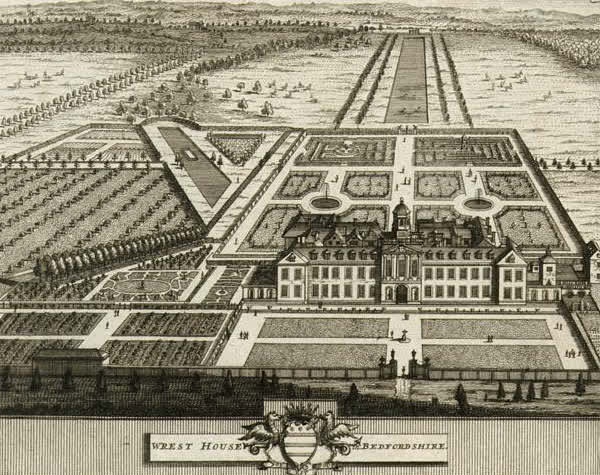
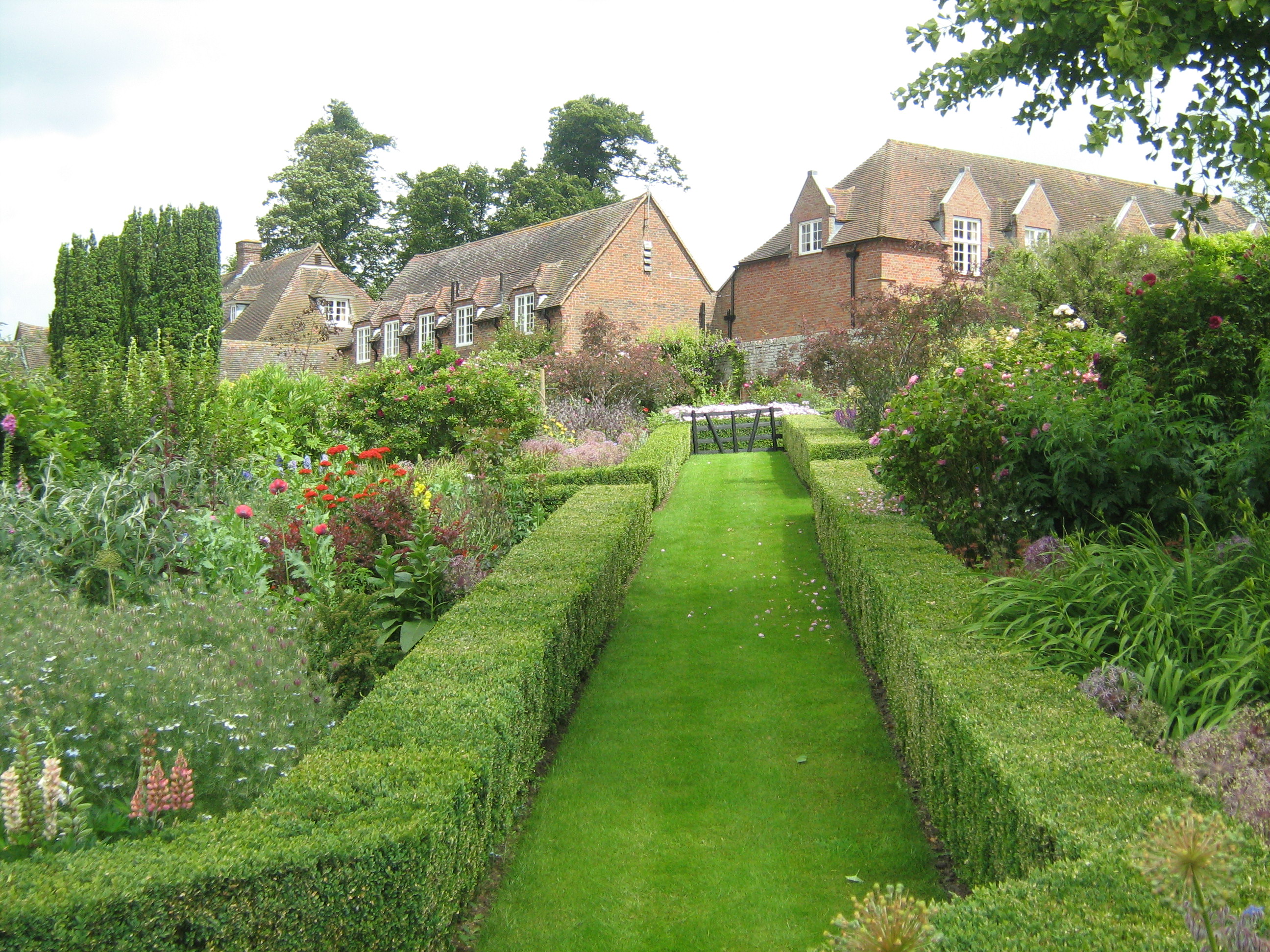
Landscape designs informed the process of maintaining the grounds. Large estates employed many gardeners to keep cricket and croquet fields in pristine condition, cultivate the ornamental and kitchen gardens, and oversee the orchards and hot houses. The question is: How did they do it?
Extensive gardens surrounding Wrest House in Bedfordshire. Wrest Park Gardens are spread over 150 acres (607,000 m²) near Silsoe, Bedfordshire, and were originally laid out in the early 18th century, probably by George London and Henry Wise for Henry Grey, 1st Duke of Kent, then modified by Capability Brown in a more informal landscape style, without sacrificing the parterres. Image from The Leisure Guide
As mentioned before, the first line of defense was allowing herds of sheep and cattle to graze. However, their by-products left something to be desired. (If anyone has ever walked through a cow pasture, they will know what I mean.)
English Garden at Leeds: Artfully contrived to look both contained and natural. Image @Landscape Into Land
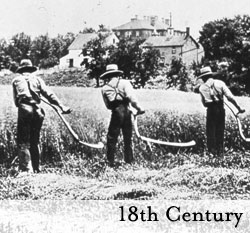
Lawn mowing and ornamental landscaping held no particular interest to 99% of the people who lived during the Georgian era. Cottagers and town dwellers maintained small plots of vegetable gardens and laborers worked in the fields, using scythes to cut wheat and grain for their employers.
18th century method for harvesting grain with scythes. Image @Our Ohio
The laborers wielding scythes in the above image provide a clue to how grass was clipped – using a smooth, well-rehearsed motion, they worked in teams to cover large areas of ground. Their labor was cheap and they followed a system that included working in the morning when the ground was still damp.
Mowing Clover, late 19th c., by Arthur Verey
To prepare the lawn for scything, a gardener would:
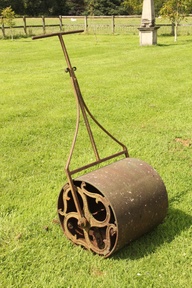
“pole” the lawn first (swishing a long whippy stick across the grass to remove wormcasts) and … roll the ground to firm it and set the blades of grass in a uniform direction.” – Notes and Queries, The Guardian UK
19th Century Coalbrookdale Roller. Rolling the lawn tamped down the grass and seed, and promoted growth and strong roots. Image @jardinique.co.uk
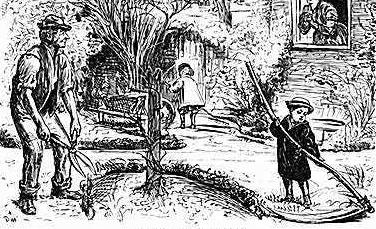
The secret to maintaining a close-cropped lawn was to trim it frequently, about once a week. Lawn edges were best trimmed with sheep shearing clippers.
This gardening family is using shears, a rake, and a scythe in their cottage garden.
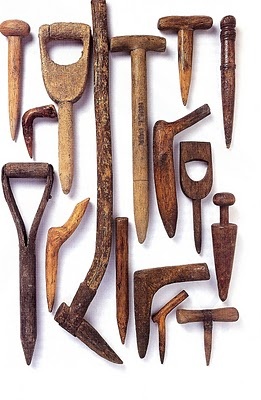
The grass was kept free of daisies with an instrument named a daisy grubber, which is the long-handled instrument with angled pick in the image below. Daisy grubbers are still sold today, as they apparently do the job well.
Dibbles were used to dig holes in the ground to plant seeds or bulbs, pry up roots, or jab weeds out between bricks and stone.
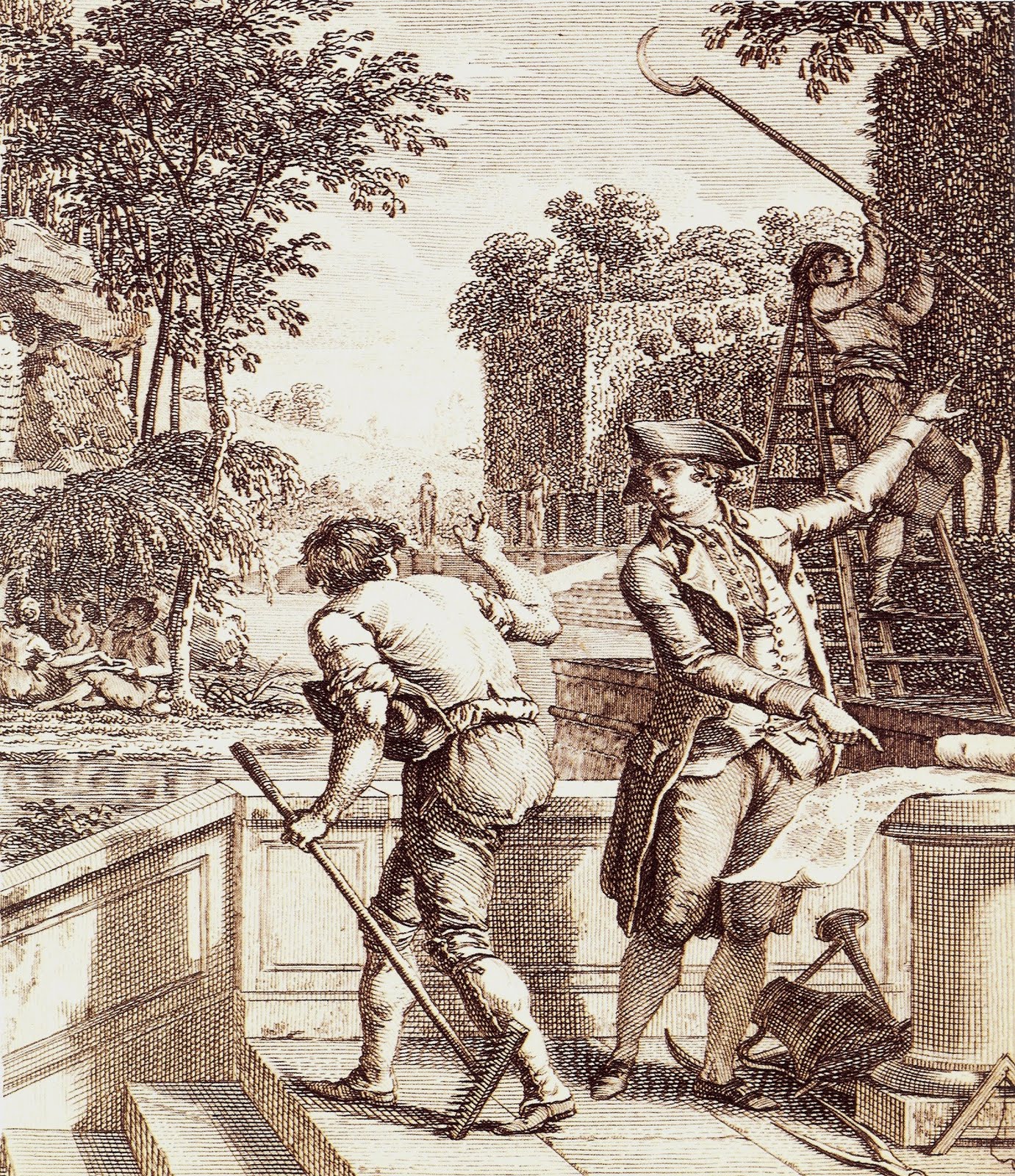
18th century gardener taking direction from a landscape designer. Note the man pruning the tree.
Even with these instruments, maintaining these large gardens took intensive labor. One can just imagine how much work was involved in protecting tender plants from insects and marauders, early frosts, and dry spells; and forcing exotic fruits and vegetables to grow out of season in hot houses.
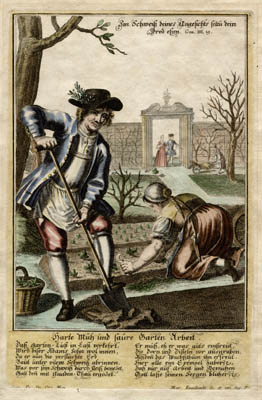
Engelbrecht. 18th century German print of gardening – planting.
While improvements were made over the course of the 19th century, some customs remained the same:
“rich people used to show their wealth by the size of their bedding-plant list: 10,000 plants for a squire; 20,000 for a baronet; 30,000 for an earl and 50,000 for a duke. ” – Ernest Fields, Life in the Victorian Country Houseby Pamela Horn, p. 75.
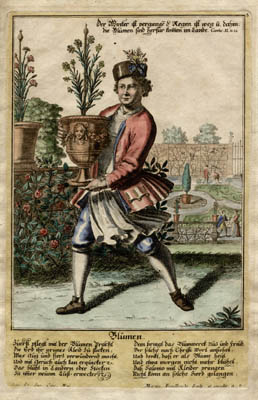
Engelbrecht’s plate of an 18th century gardener working with flowers
Landed owners showed off their wealth through a variety of means, including the number of servants they employed.
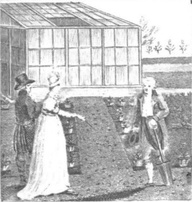
Master and mistress in discussion with the head gardener
It was not unusual for a great estate to employ 60 – 100 gardeners. There was the full-time staff, consisting of a master gardener, who had begun his apprenticeship as a boy, and his assistants.
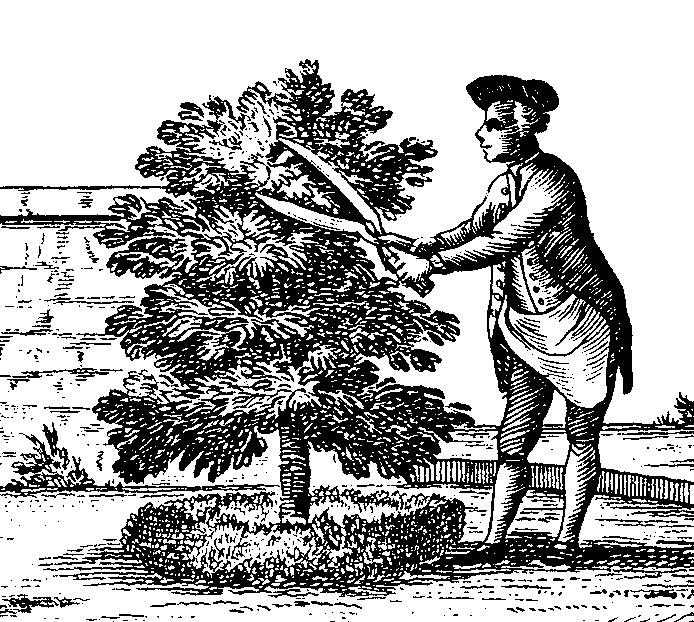
Pruning
Scottish gardeners were preferred, as it was thought that they had received the best training. Unmarried apprentice gardeners moved from estate to estate in order to gain experience and be promoted.
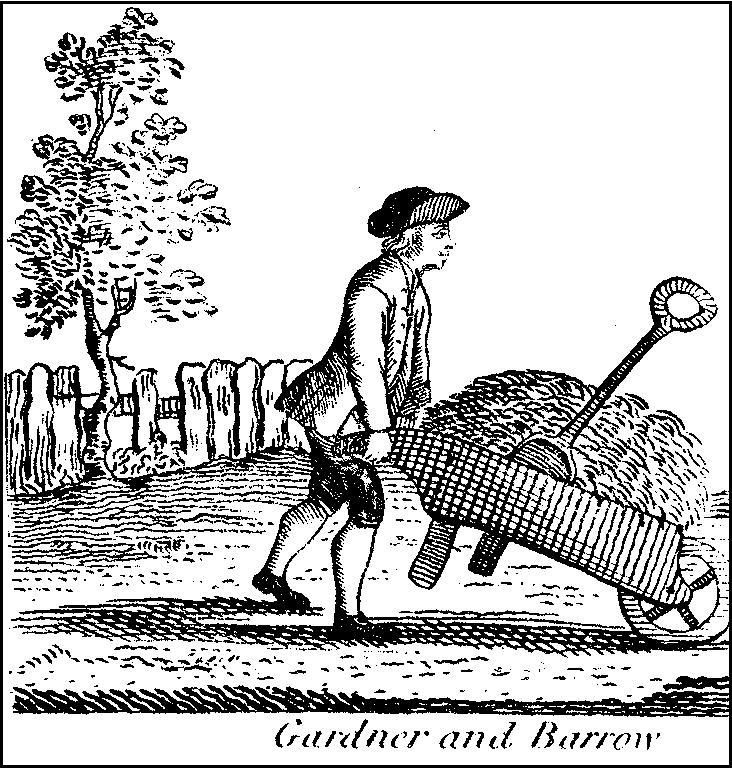
Dungbarrow
Junior staff worked long hours, around 60 hours a week, for, in addition to their gardening duties, they had to maintain the temperatures in glassed-in conservatories and meticulously care for archery, cricket, bowling and croquet lawns.
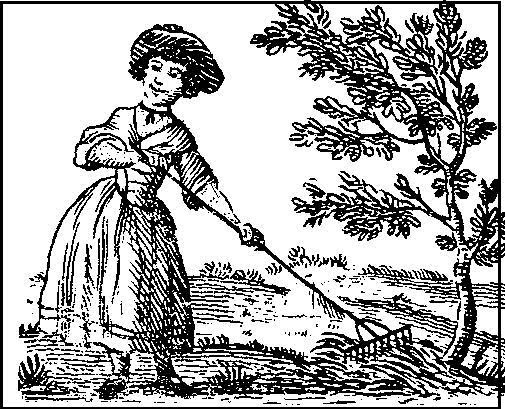
Woman using a rake
The master gardener hired local labor seasonally to help during peak times, so the number of laborers fluctuated.
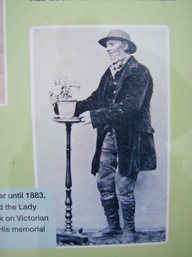
The head gardener at the Thornham estate in Sussex at the end of the 19th century. Image by kitchen915
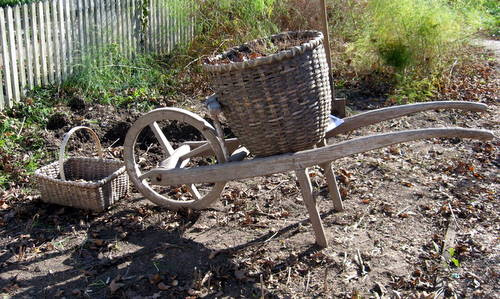
18th century garden cart and basket
With improvements in gardening equipment, including the invention of the lawn mower in 1830 by Edwin Beard Budding, machines began to take over the hard work of the scythe men.
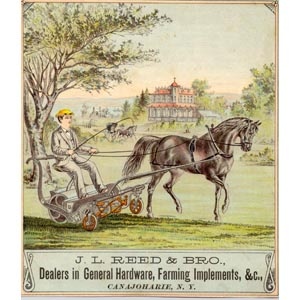
I imagined a Regency gentleman pushing one in his regalia, and found this wonderful advertisement. After Budding’s initial invention, a variety of lawn mowers were invented, each improving on the other.
Needless to say, large areas of lawn needed a more efficient method of keeping the grasses trimmed. As the 19th century progressed, horses were employed to pull large lawn mowing machines.
Men of fashion began to wear short and more natural hair at the end of the 18th century, sporting cropped curls and long sideburns in a classical manner much like Grecian warriors and Roman senators. Before this period, a balding Louis XIII had made powdered wigs popular at the French court and consequently throughout Europe. The often elaborate and expensive gray wigs lent an air of wisdom and authority to their wearers.
William Pitt the Younger – Attributed to Thomas Gainsborough (c. 1804) Prime Minister 1783 – 1801; Chancellor of the Exchequer 1804 – 1806
A scarcity of flour in 1795, combined with William Pitt’s attempt to raise revenue through a hair powder tax, brought the fashion for wigs and powder to a screeching halt. Men protested and a new more natural hair style became fashionable.
The 5th Duke of Bedford. Image @ Wikipedia
The Bedford Crop was a style of hair favored by the Duke of Bedford, who, in protest to the tax, abandoned his wigs in favor of a short cropped and unpowdered hairstyle. He challenged his friends to do the same. His natural looking crop was parted on the side with a dab of hair wax.( Wikipedia)
Pitt eventually reduced this unpopular tax on hair powder, which never quite generated the revenue he predicted, but by then it was too late. Gentlemen had discovered the comforts of going au naturel, and by 1812, few men still wore wigs. There were some holdovers – older men, military officers, and those in conservative professions such as lawyers, judges, physicians, and some servants for the very rich (footmen and coachmen) retained their wigs and powder. Formal court dress also still required powdered hair.
Beau Brummel’s Brutus hair style in 1805. Notice how it is brushed forward and volumized on top of his head.
By and large men took their cue from classical Greek and Roman art. The romantic movement also influenced a natural, unpretentious aesthetic. A dry disordered look that used very few artificial products began to rule. Beau Brummel’s influence cannot be discounted. His own grooming included shorter hair and a clean-shaven face. Every morning he examined his face in a dentist mirror and plucked any remaining stray hairs with tweezers. By 1813, almost all Regency men sported both long or short sideburns; they rarely wore mustaches or beards.
In Pride and Prejudice 1995, Colin Firth as Mr. Darcy wore his hair somewhat longer than the Bedford Crop and affected a slightly unruly hairdo, probably known as the Brutus. (I confess I never liked Firth’s hairstyle for Mr. Darcy.)
Colin Firth as Mr. Darcy. His rather long, wild hairstyle now makes sense to me.
Upon seeing the following images, I can now see why the film’s hair stylist settled on this slightly wild do for Mr. Darcy, which seems to be a compromise between a severe clipped hair style and the stylish “frightened owl” hairdo below.
The “frightened owl” hairstyle was achieved through infrequent hair washing (as infrequently as every few months) and the use of hair wax, which helped to create the wild and unruly volume.
The models for Regency men’s hairstyles: Caesar, Titus, and Brutus
Popular styles in the late 18th century were the Caesar, Titus, and Brutus. The Coup au Vent was short at the back and worn long over the eyes at the front.
Caesar cut. You can almost see the laurel leaves on his head with this brushed forward Caesar cut. Portrait of an unnamed man, ca. 1810-20
The Cherubin, like the Bedford Crop, sported short curls all over (the Caesar was clipped even closer.)
Bernier by Ingres, 1800. You can see the all over cropped unruly look. The sideburns in all these images are long, but the men are clean shaven.
The Classically influenced Titus was cropped short everywhere but at the front with curls combed forward onto the forehead to resemble the Roman Emperor Titus.
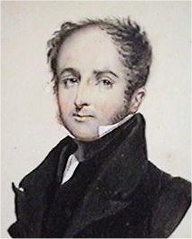
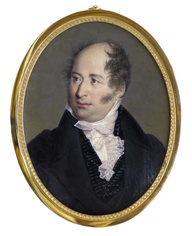
Balding men benefited from the close cropped, forward brushed styles. c.1815. Louis Francois Aubry. Monsieur Rivio Baritone in Paris Opera. Image courtesy of A Private Portrait Miniature Collection. (Update:) Mr. Phillips, who oversees the blog, lists the date of the portrait as 1840.
The more severe Brutus was even more clopped than the Titus. One of the most popular hair styles of the day, though, was the Brutus, a disheveled style that Beau Brummell and his followers wore.
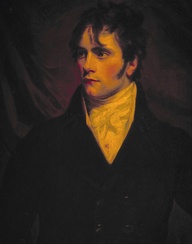
John Opie’s 1802 portrait of Edmund Lenthal Swifte shows a few artfully arranged locks over the forehead.
These hairstyles took a great deal of time and patience to achieve. Men used an oil or pomade made of bear fat to achieve a natural “tamed” wildness. (Scented pomades were called Pomade de Nerole and Pomade de Graffa.) Since hair was rarely washed, night caps were worn to prevent soiling pillows and doilies protected the backs of chairs.
The height on top with the artfully arranged curls take precedence in this hairstyle. Friedrich Wilhelm Schelling, 1801.
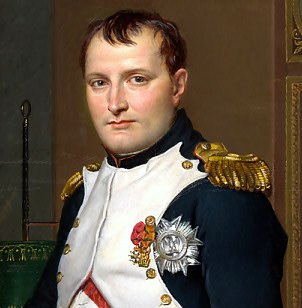
Napoloeon Bonaparte’s classic Caesar cut sported longer locks down the forehead.
This dandy sports a Titus.
Arnauld de Beaufort ca 1818 (by Pierre Paul pPrud’hon). His hair is noticeably brushed forward, lending his features a saturnine look.
Regency hairstyles gave men a natural, romanticized look. (Portrait of an Artist by Unknown Artist) is part of the collection of the Michele and Donald D’Amour Museum of Fine Arts, Springfield, Massachusetts.
Gericault’s 1816 self-portrait shows a wildly romantic and unruly hairstyle.
Inquiring readers: Paul Emanuelli, author of Avon Street, has contributed posts for this blog before about the City of Bath as a Characterand Law & Order and Jane Austen’s Aunt.He has graciously sent in an article about food preparation in the 18th and 19th centuries. The content will astonish you. Paul writes about Bath in his own blog, unpublishedwriterblog. It is well worth a visit.
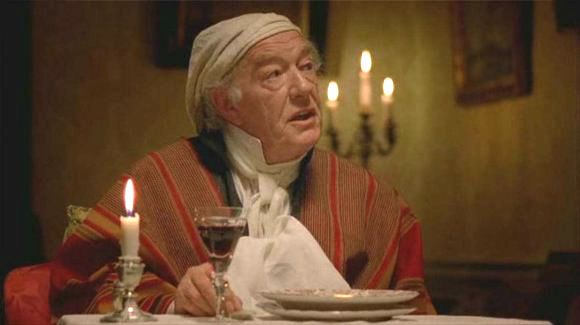
Miss Bates, let Emma help you to a little bit of tart–a very little bit. Ours are all apple-tarts. You need not be afraid of unwholesome preserves here. I do not advise the custard.”
Michael Gambon as Mr. Woodhouse, Emma, 2009
So says the ever-cautious, Mr Woodhouse, in Jane Austen’s Emma as he entertains his guests at supper. Yet Mr Woodhouse’s fears were not entirely in his imagination. At the time it was relatively common for commercially bought pickles and preserves to contain poisonous sulphate of copper to improve their eye-appeal. And even when prepared at home, the copper pans in which they were cooked, unless properly looked after, could also poison the ingredients.
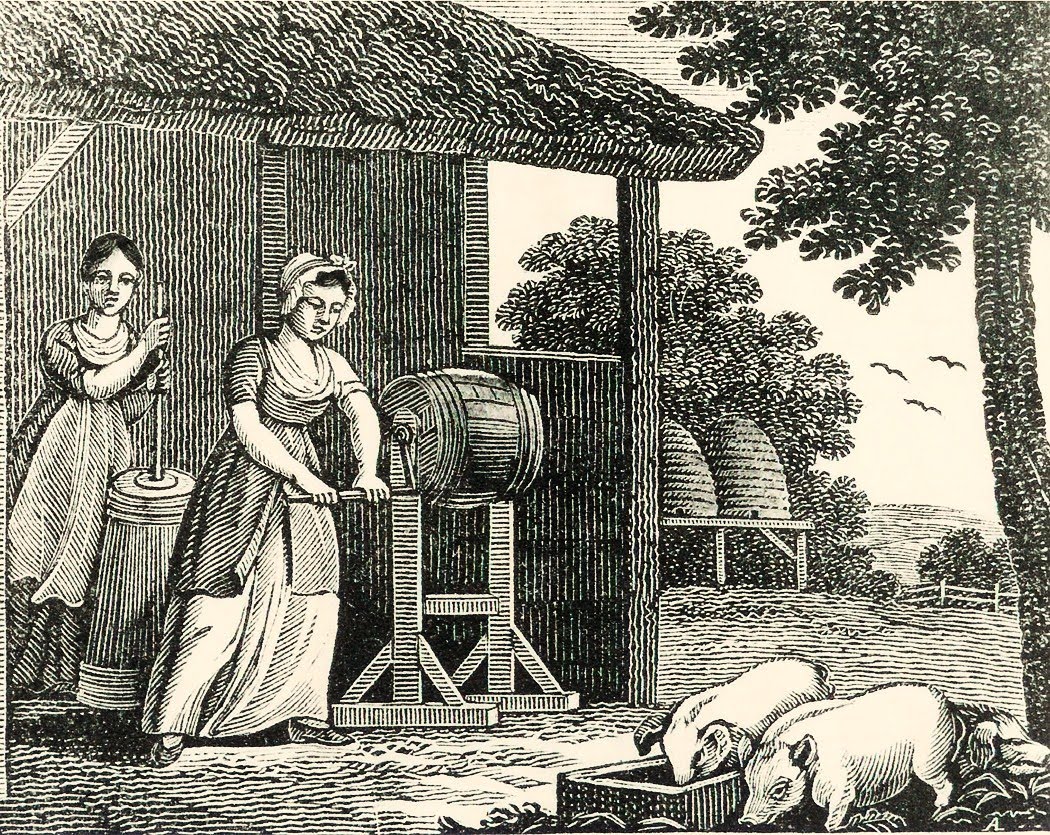
Churning butter
Yet for most people who lived in the country, as Jane Austen did for much of her life, food-safety was not a major concern. Food was prepared and preserved either by the family themselves or by their domestic staff, and cooking and baking was done at home.
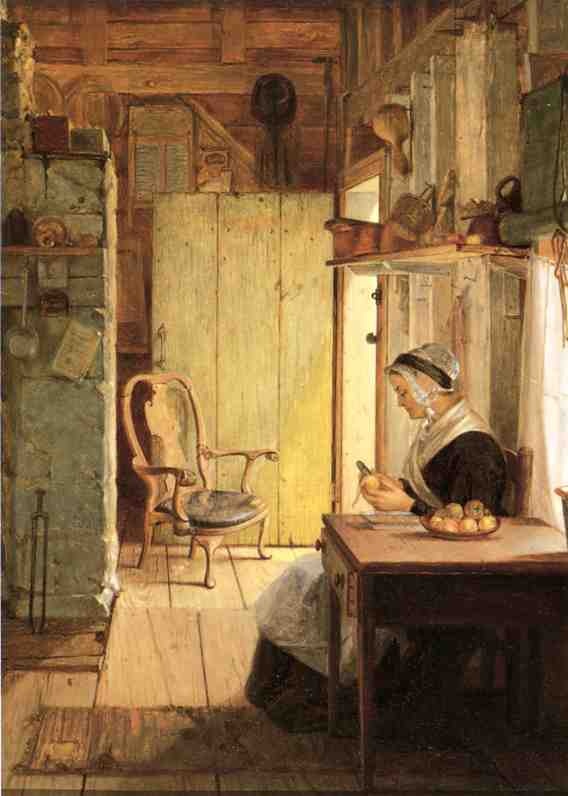
Food preparation in the kitchen.
The ingredients were for the most part grown and bought locally, and word travels quickly in small communities. Meat came from local farms or estates, and farmers and landowners had reputations to maintain, as did the local mill for flour, and the local shopkeepers for all that they sold.
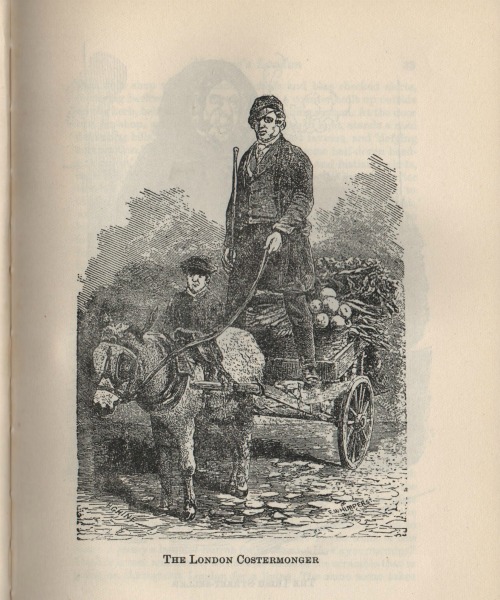
Costermonger from Henry Mayhew’s London Labour and the London Poor, 1840s.
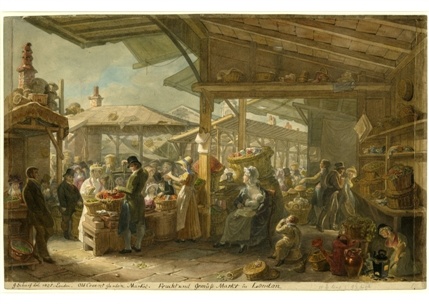
The situation though, was very different in towns and cities. Here it was the shopkeepers and “costermongers” who sourced, stored, prepared and supplied the produce. And with a wider market at their disposal these tradesmen were often less concerned with quality, as they were with cost. The worst affected were the poor. For the most part they lived from hand-to-mouth and bought food in “pennyworths” or even “half-pennyworths.” Buying in these smaller quantities (enough for the day) meant goods often cost four or five times more than they would have cost had they been bought in regular quantities.
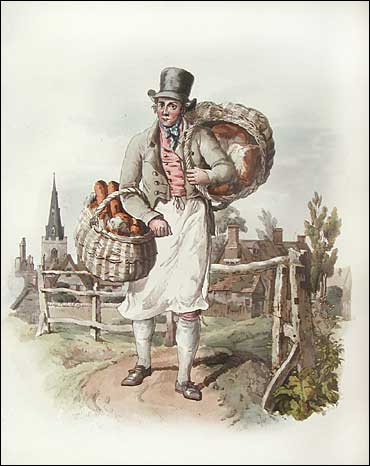
Bread Seller, William Henry Pyne, ca. 1805
Bread itself could be bought as quarter or half loaves and the poor subsisted largely on bread. But even then, bakers used chalk to make the bread whiter, and alum to enable the use of inferior flour, and while alum was not poisonous it inhibited the digestion and decreased the nutritional value of anything else their customers ate.
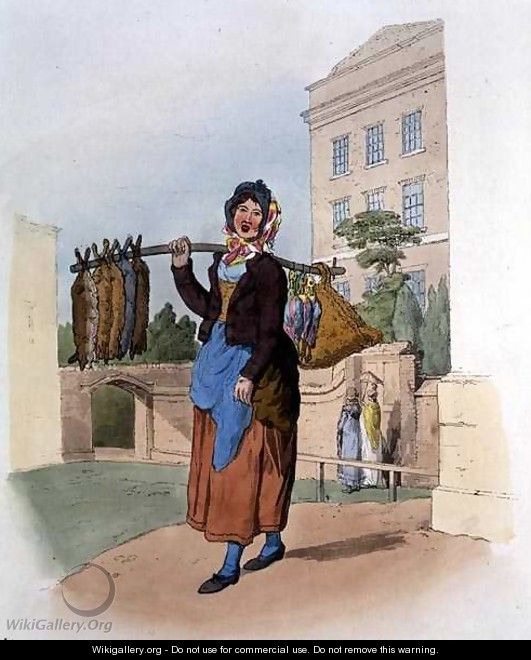
Rabbit seller, William Henry Pyne, 1805
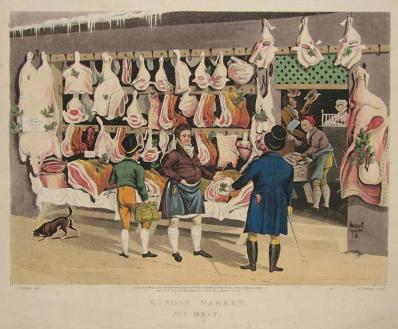
The wealthier residents in towns and cities could afford a “better” diet, yet this too carried its own dangers. There was of course no refrigeration at the time and little concept of hygiene. In towns and cities most meat was killed locally, but then it had to be stored, sold and transported to the home. As late as 1862 the government estimated that one-fifth of butcher’s meat in England and Wales came from animals which had died of disease or were carrying considerably disease. And at the start of the nineteenth century butcher’s boys would deliver meat to the wealthier homes, carried on their heads, in baskets or trays, open to the heat and dirt of the day.
A butcher’s shop, by James Pollard
As the Industrial Revolution took hold, the British population grew, and so did the towns and cities. The nation became more dependent on imported and processed foods. The growing “middle classes” were acquiring a growing taste for tea, coffee, sugar, cocoa, and sauces and spices from around the world. The problem that the fictional Mr Woodhouse had been concerned about a few years earlier rapidly became a fact of life as the century progressed.
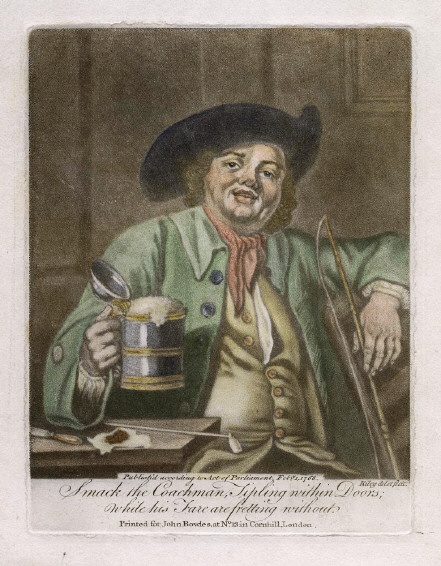
Coachman, seated, holding a tankard. Mezzotint by Ryley, printed in colours for John Bowles in London Feb. 1st, 1768
The “adulteration” of food and drink became increasingly commonplace. Producers, importers, merchants and sellers were all adding ingredients to increase bulk or “improve” appearance. The making of beer had more to do with chemistry than the brewing process. As Dr Richard Wetherby says, in my novel, Avon Street,
Have you any idea of how they adulterate the beer in the ale houses around Avon Street? It is full of foxglove, henbane, opium and God knows what other concoctions. They use chemicals so that they can water down the beer, keep its taste and appearance, but make it stronger, and still sell it cheaply.”
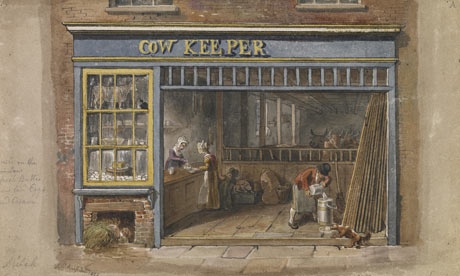
Cow Keeper’s Shop in London, 1825, George Scharf
Milk too, was often watered down, sometimes by as much as 50%. So common did the adulteration of food become that books on housekeeping routinely carried warnings and tests for detecting added chemicals like plaster of Paris. Mrs Beeton in prefacing a recipe for a popular anchovy paste warned against shop-bought pastes,
In six cases out of ten, the only portion of those preserved delicacies, that contains anything indicative of anchovies, is the paper label pasted on the bottle or pot, on which the word itself is printed.”
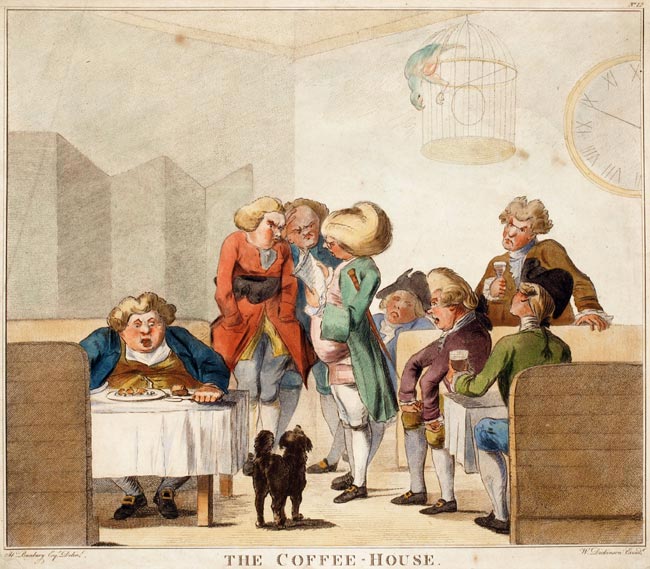
Typical coffee house, late 18th century
In 1851 The Lancet, medical journal, commissioned a doctor from the London Royal Free Hospital to examine the adulteration of thirty common foods. The study revealed that China tea contained 45% sand and dirt together with traces of sulphate of iron; lard contained carbonate of soda and caustic lime; coffee included chicory, mangel wurzel (root vegetable) sawdust, and acorns; cocoa and chocolate were coloured with earth and included arrowroot and Venetian lead; sweets (candy) were found to contain chromate of lead, sulphate of mercury and various other noxious flavourings and colourings. Red lead and other chemical colourings were found to be routinely used in foodstuffs such as “Red Leicester Cheese.”
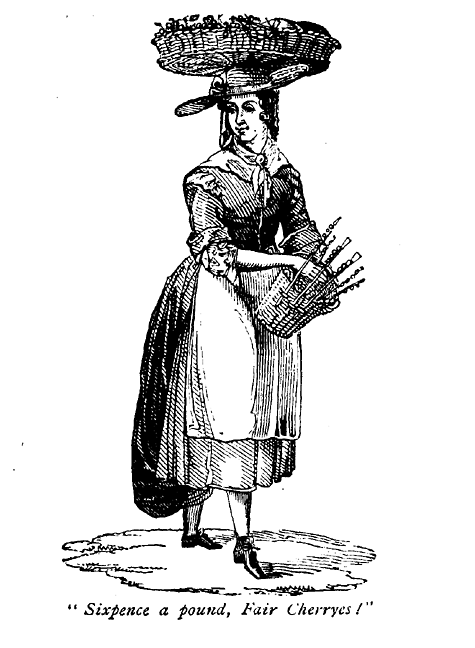
Six pence a pound, fair cherryes
Even after the study was published the merchants, tradespeople and government were slow to respond. It was not until 1860 that the Adulteration Act was passed. Thankfully, technology and innovation helped in the interim. In 1857 a process for the mass production of ice was patented allowing foods to be better preserved and transported. The availability of canned goods also increased. The army had been supplied with canned foods since 1820, but the cans had to be opened with a chisel or a bayonet, until the can-opener was invented in 1858. As technology improved, mass-produced processed foods like soups, sauces, biscuits, chocolate, pickles and egg-powder became more popular and were prepared to more rigorous standards. And though the Adulteration Act was still largely resisted, in 1872 official inspectors were created with the power to test food and impose substantial fines. Quality and safety of food gradually improved, which I am sure would have pleased the fictional Mr Woodhouse.
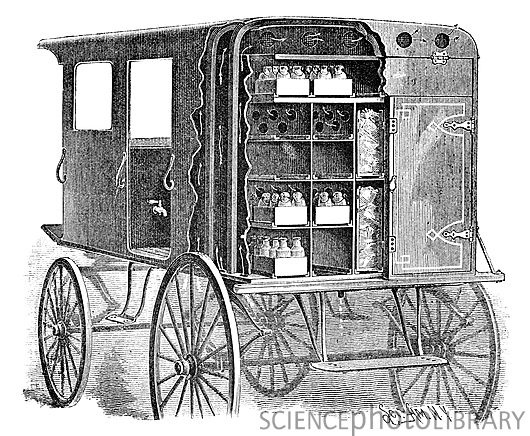
Refrigerated milk cart, 19th c. This design, from the USA, used ice to keep the air temperature cool for the transport of milk. Holes in the compartments allowed air to circulate from where the ice compartments to the milk compartments.
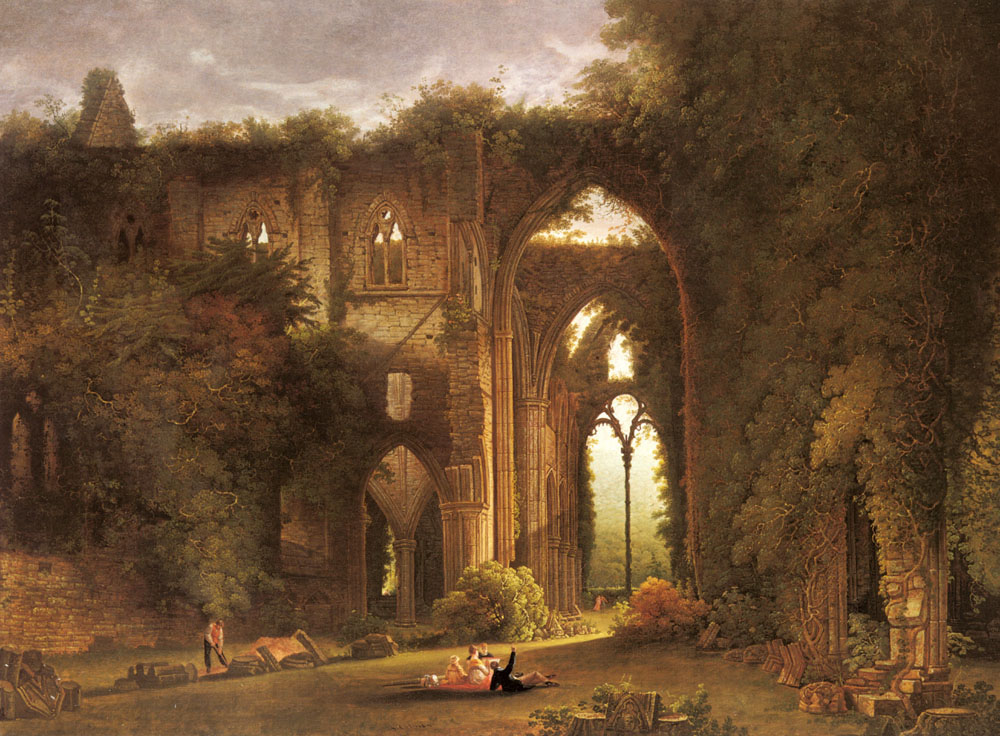
Gentle readers, frequent contributor Tony Grant has recently returned from visiting the Lake Country with his friend, Clive. (Visit his blog, London Calling, where he shares his experiences and wonderful images.)While there he was reminded of Wordsworth’s poem about Tintern Abbey and sent in his thoughts. Thank you, Tony, for making poetry come alive!
“Lines composed a few miles above Tintern Abbey, on Revisiting the Banks of the Wye during a Tour, July 13, : 1798”
Wye Valley
This rather ungainly title is the precursor to a poem by William Wordsworth written in 1798, as the title shows, which lays out his philosophy about his understanding of the world and the effect it has on him.
First of all the title tells us about a revisiting of the Wye Valley. Wordsworth may well have been using the guide book written by William Gilpin about the Wye and Tintern Abbey. Gilpin was a fellow lover of nature, who was also born in Cumberland and The Lakes. In this poem Wordsworth is revisiting, recalling, adjusting his memory of a place and adding to the strength of its power over him.
Once again
Do I behold these steep and lofty cliffs,
That on a wild secluded scene impress
Thoughts of more deep seclusion; and connect
The landscape with the quiet of the sky.”
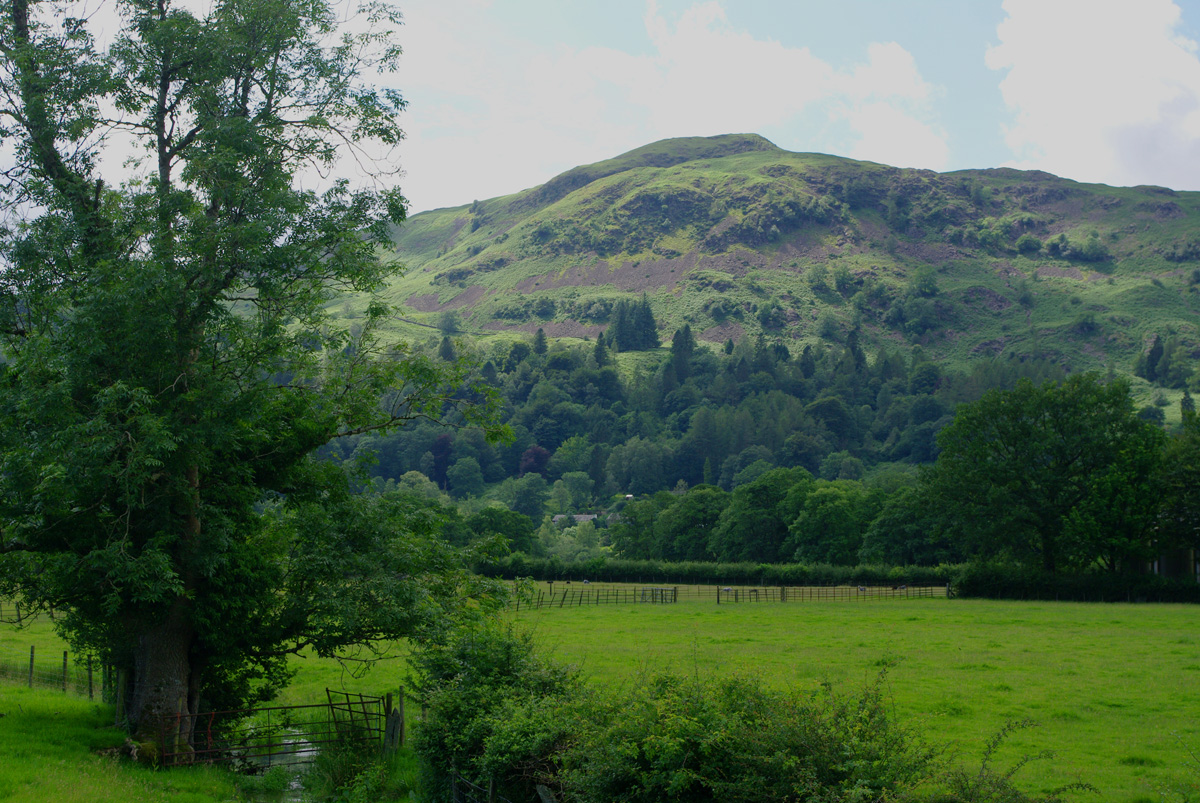
The Lakes. Image @Tony Grant
Wordsworth emphasises seclusion such as a hermit might experience.. This aloneness is an important aspect of this poem. When we meditate we find a secluded tranquil spot to be alone in.
The use of his senses is paramount to this process.
again I hear
These waters, rolling from their mountain-springs
With a soft inland murmur.”
And also,
Once again I see
These hedgerows, hardly hedgerows, little lines
Of sportive wood run wild; these pastoral farms,
Green to the very door; and wreaths of smoke
Sent up,”
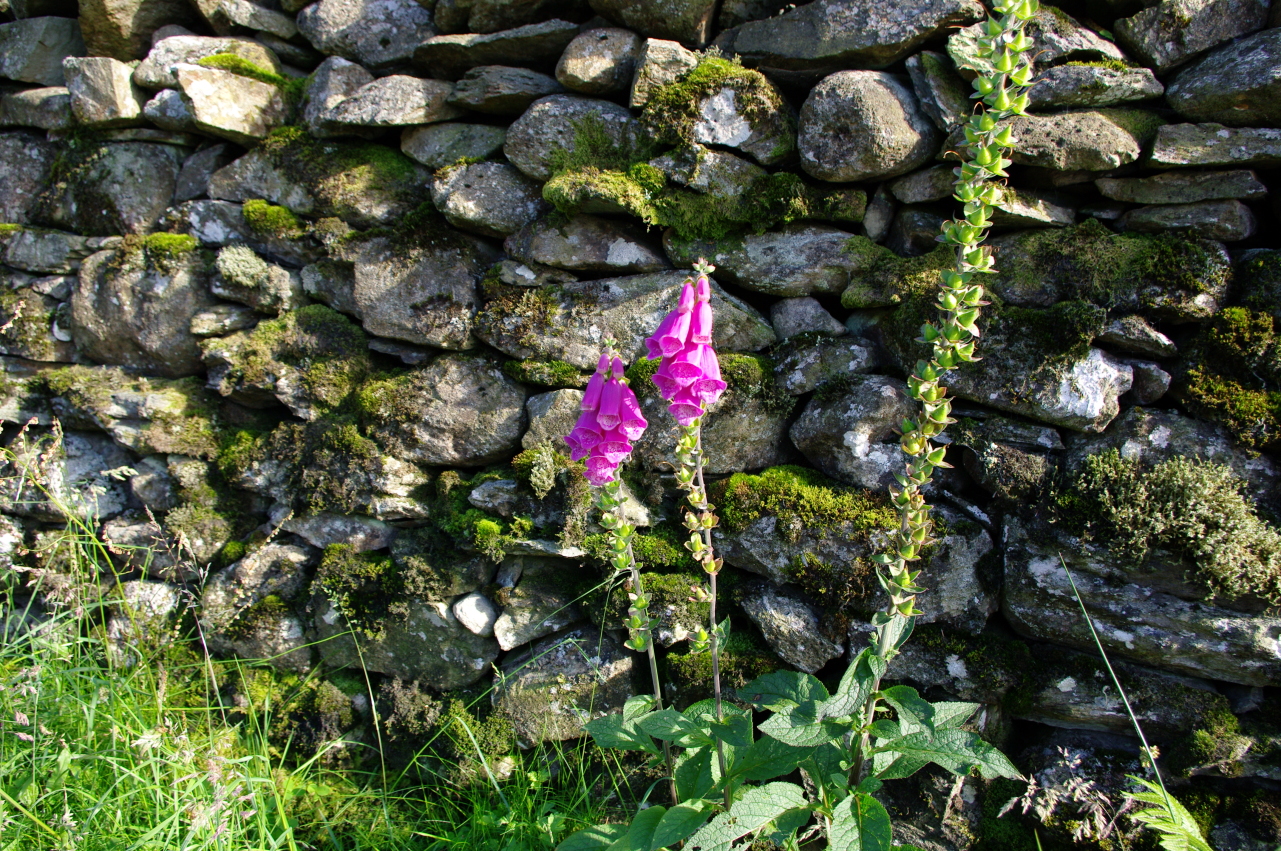
Foxgloves and dry stone wall. Image @Tony Grant.
Sound and sight come together to make an impression on his mind and feelings. But these are not short lived impressions. They have a deep and profound effect.
“oft, in lonely rooms, and ‘mid the din
Of towns and cities, I have owed to them,
In hours of weariness, sensations sweet,
Felt in the blood, and felt along the heart;
And passing even into my purer mind,
With tranquil restoration: -feelings too
Of unremembered pleasure; such, perhaps,
As have no slight or trivial influence.”
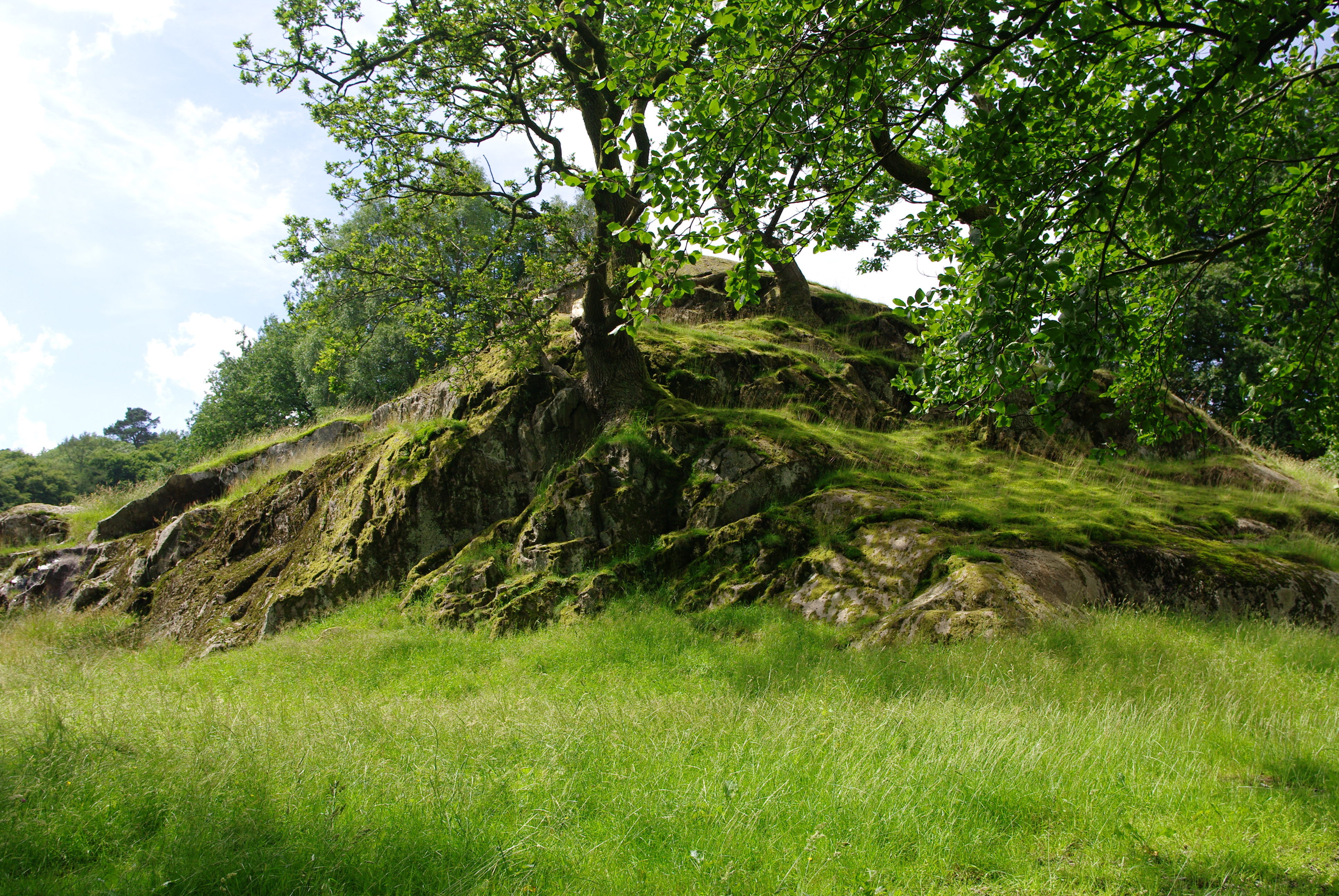
Rocky outcrop, image @Tony Grant
Wordsworth is saying that remembering the sensations that nature has had on him can be recalled, relived at other times and in other places and help him overcome things such as weariness and other detrimental sensations.
how oft –
In darkness and amid the many shapes
Of joyless daylight; when the fretful stir
Unprofitable, and the fever of the world,
Have hung upon the beatings of my heart –
How oft, in spirit, have I turned to thee,
Tintern Abbey
Memory, imagination, recalling good sensations, becomes a sort of force that Wordsworth can use. He describes it as being “felt in the blood” and “along the heart. “ These sound strange phrases to us. We might describe these experiences as affecting us deeply or having a psychological influence or even providing a spiritual experience.
Methods of meditation use memory and imagination in this way. Athletes and sportspeople use this method too. We are experiencing the Olympics at this moment. Athletes have described how they use imagination to help them perform to the best of their ability. A white water canoeist was interviewed yesterday morning and asked how she prepares for such a hazardous descent and how is she able to get the timing of her turns just right. She answered that she imagines the descent through the rough and tumbling waters again and again, living in her imagination every move, paddle stroke and turn she is going to make.
Wordsworth gives even more importance to the powers of nature when he says these experiences have an effect ,
On the best portion of a good man’s life,
His little, nameless, unremembered, acts
Of kindness and of love.”
He is saying our experience of nature has an actual effect on the way behave.
The chancel crossingot Tintern Abbey looking towards the east window, JWM Turner, 17942
Wordsworth takes his ideas to an even higher almost mystical religious level when he says,
that blessed mood,
In which the burthen of the mystery,
In which the heavy and the weary weight
Of all this unintelligible world,
Is lightened: -that serene and blessed mood,
In which the affections gently lead us on –
Until, the breath of this corporeal frame
And even the motion of our human blood
Almost suspended, we are laid asleep
In body, and become a living soul;”
The effects last into the afterlife and affect our experience of heaven. This is serious stuff. Wordsworth is completely taken with this concept.
Banks of the Wye
Towards the end of the poem it becomes a letter, almost a love letter, to his sister Dorothy, who he sees as his soul mate. He includes her in his understanding of what he experiences,
all which we behold
Is full of blessings.”
What is interesting to consider is that in this poem Wordsworth describes how he uses his experience of nature through his senses to lighten and bring joy and spiritual pleasure to himself at other times. This revisit to the Wye Valley five years after his first visit appears to be an attempt to strengthen his experiences of nature and to replenish and strengthen his memories so he can use a stronger dose, so to speak, of his experiences in future. This begs the question , does Wordsworths poem, help the reader of the poem along this path of spiritual experience in anyway or is he just telling the reader, you must go and experience nature yourself to gain these effects?
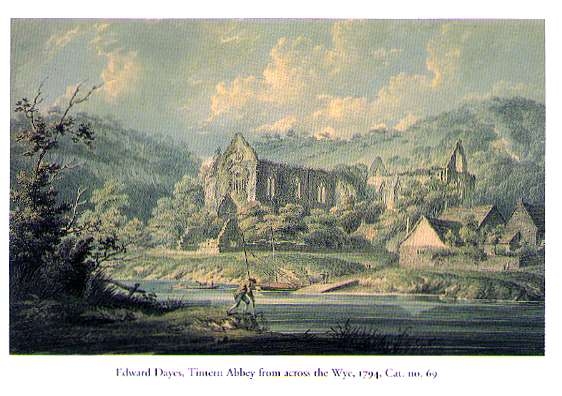
Edward Dayes, Tintern Abbey from across the Wye 1795.
What the poem does for me is help me recall my own experiences of places that gave me pleasurable experiences through my senses. Wordsworth in his poem is triggering our memory of good things too. He suggests we find a secluded place ourselves, remember, imagine and discover our own benefits. Nature can provide a healing process,
when thy mind
Shall be a mansion for all lovely forms,
Thy memory be as a dwelling place
For all sweet sounds and harmonies; oh! then,
If solitude, or fear, or pain, or grief,
Should be thy portion, with what healing thoughts
Of tender joy wilt thou remember me,”
There is something ageless in Wordsworth’s theory which is the theory of Romanticism. It makes me think of Karma and the Buddhist approach to meditation.
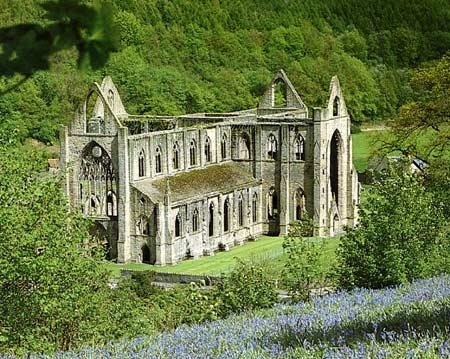
Tintern Abbey. Postcard photo courtesy of Paradoxplace.com.
As an addenda to the William Gilpin (1724-1804) reference above: Wordsworth may have used Gilpin’s guide book in the Wye Valley. Gilpin also was an advocate of experiencing nature and drawing benefits from it , it’s hues and colours and it’s natural arrangement He wasn’t averse, however, to making suggestions about its arrangement. He might suggest in his writing the removal or addition of a tree or even the roughing up and creation of a more crumbling effect of Tintern Abbey to create a better aesthetic affect. It is suggested that Jane Austen made fun of this in Northanger Abbey.
Fashionable Goodness: Christianity in Jane Austen's England is now available! By JAW contributor Brenda S. Cox. See Review. Available from Amazon and Jane Austen Books.
Available through December 31st, 2025. Click on image for details, and share this poster with other teachers and students!
The Obituary of Charlotte Collins by Andrew Capes
Click on image to read the story.
Comments
“My idea of good company…is the company of clever, well-informed people, who have a great deal of conversation.” – Jane Austen, Persuasion
Gentle readers: Please feel free to post your comments and continue the conversation! Due to SPAM, we will no longer accept comments on posts after 30 days of publication. In some instances, links will be removed from comments as well.
Administrators and Contributors
Vic Sanborn, founder of this blog, is supported by a team of talented and knowledgeable writers about Jane Austen and the Regency era. They are:
Tony Grant, who now contributes his photos from London and England
Click on their names to enter their own blogs.
In addition, we thank the many experts and authors who frequently contribute their posts and opinions, and who continue to do so freely or at our request.
Click here to enter the page. Topics include Regency fashion, historic foods, Jane Austen societies, British sites, related topics. Click on image.
May we suggest?
Hello, my name is Vic and I live in Maryland, USA. I have adored Jane Austen almost all of my life. I am a proud lifetime member of the Jane Austen Society of North America. This blog is a personal blog written and edited by me and my team. We do not accept any form of cash advertising, sponsorship, or paid topic insertions. However, we do accept and keep books and CDs to review.
If you would like to share a new site, or point out an error, please email us. (Yes, we are fallible. We'll own up to our mistakes and will make the corrections with a polite smile on our faces.) Write us at
Thank you for visiting this blog. Your comments and suggestions are most welcome.
Project Gutenberg: eBook of Stage-coach and Mail in Days of Yore, Volume 2 (of 2), by Charles G. Harper
STAGE-COACH AND MAIL IN DAYS OF YORE: A PICTURESQUE HISTORY
OF THE COACHING AGE, VOL. II, By CHARLES G. HARPER. 1903. Click on this link.























 Jane Austen's World