Feeds:
Posts
Comments

Archive for the ‘Regency Period’ Category

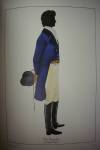
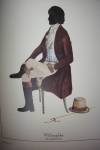
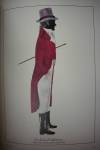
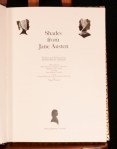
Shades from Jane Austen by Honoria Marsh was published in 1975-1976 in a series of limited editions. I saw this rare work at the silent auction table at the 2012 JASNA AGM meeting in NYC. There were many beautiful items, but this one was a standout with its colored illustrations, mostly silhouettes, and a few reproductions of Jane Austen’s writings. Bidding began at $50.00, but at the time I approached the table the price had gone up to $150.00, a bit beyond my price range but still less than the book attracts in online bookstores. The price reflects the book’s rarity, for only a few copies are available. I had seen a few illustrations before, but not the originals … until now.

The video shows a number of illustrations from the book not seen in this post. The portrayals of Jane Austen’s characters were painted by the author from life. Her sitters were either friends and acquaintances, or Jane Austen’s descendants or people associated with her! You can read their names below the title of the characters.

Part one of the book includes ‘Jane Austen’s Family in Silhouette’, a table showing Jane Austen’s Family and Chronology of Events During her Lifetime’ (written by Peggy Hickman), and Jane Austen’s family tree.

Part two includes an introduction and a discussion of Sense and Sensibility, Pride and Prejudice, Mansfield Park, Emma, Northanger Abbey and Persuasion.

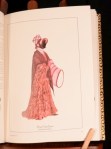
Silhouette of Mrs. Gardiner

Alas, I do not know who successfully bid for the book in the silent auction or what it went for. Does anyone know?

Read Full Post »

I can’t believe it’s been a day since the excitement of my first JASNA (Jane Austen Society of America) Annual Meeting. This one was held in Brooklyn, which turned out to be a fabulous place for this Janeite, for I walked over half of the Brooklyn Bridge between sessions and loitered in Brooklyn Heights, a truly wonderful neighborhood in which to while away one’s time. Then there were the plenary sessions, break out sessions and the EMPORIUM, where money flowed from my pocket into the vendors’. (I had to ship my loot back!)

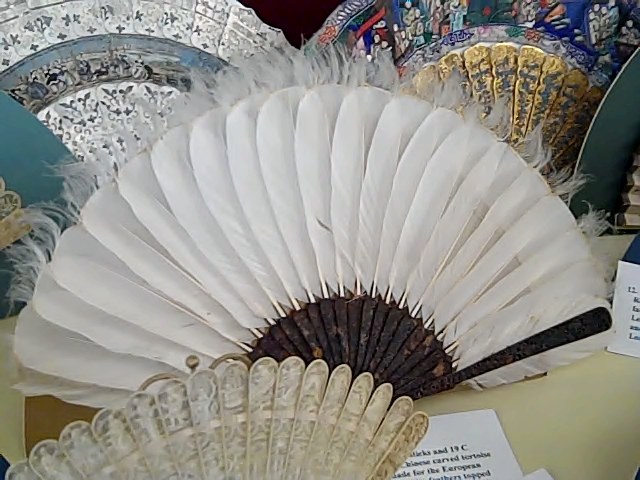
Feather fan. Only some discoloration and one blemish flaw this otherwise remarkably preserved fan.

One of the loveliest displays was the antique fan exhibition presented by Dr. Abbey Block Cash. The variety of fans was astounding. One, made entirely of feathers, was in almost pristine condition (see image). The fans were so delicate that I would be afraid to handle them and many were hand painted. One in particular caught my eye … a puzzle fan from 1820:

The fan is made of French brise with blond horn sticks. The four images that open in four directions are:

  • Bouquet of flowers
  • Marriage proposal
  • Farm house
  • Planting scene

I went to the website suggested in the brochure, the Fan Association of North America at this link. Information on this site was varied and practical. What I liked in particular were the links to other fan sites. FANA is well worth a visit and exploration if you are interested in these beautiful yet practical accessories.

Not all the fans belonged to the Regency Era. As you can see, most are hand painted with exquisite scenes. The last fan in this video was made ca. 1910 (I hope my memory serves me right) and depicts scenes painted by Kate Greenaway. It is obvious from the quality of the fans that all were destined for the upper crust. I did not see a fan of the sort that the lower classes could afford, such as those with advertisements. (Because I did not see such fans, does not mean that they were absent.)

I wish I had the presence of mind to ask about the language of the fan, for there are so many myths swirling around that topic, but those of you who have been to an AGM know how much there is to see and do, and how many people one MUST meet NOW.

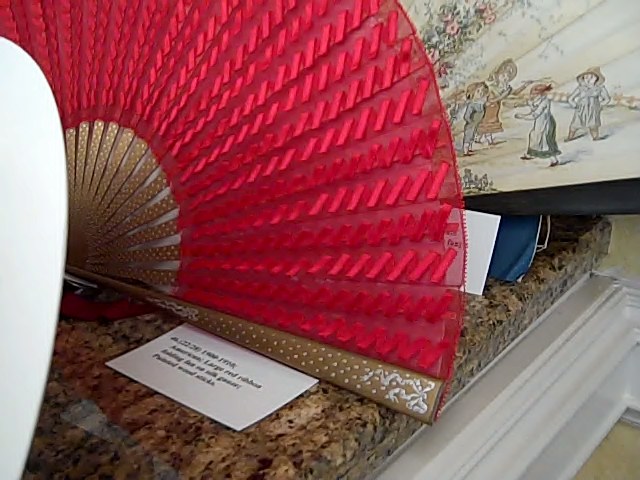
The red fan was exquisite and dramatic. The fan in back of it sports Kate Greenaway images of children.

There were some notable absences at this year’s AGM: I so wanted to meet my frequent blog partner Laurel Ann Nattres (editor of Jane Austen Made Me Do It and Austenprose) and Margaret Sullivant (editrix of Austenblog), but alas they did not come this year. You will see over the coming weeks the people I DID meet, such as Joan Klingel Ray, Susannah Fullerton, Deb Barnum (my lovely roommate), Lori Smith, Syrie James, and Dianah Baycich. Some of us fell all over each other like twins separated at birth. Every Janeite should make at least one JASNA Meeting. You simply will not be disappointed. I must add that the folks from JASNA NY did a splendid job of putting this complex (and largest) JASNA conference together. Kudos to all.

Read my other post from the AGM:

Read Full Post »

Reverend George Austen

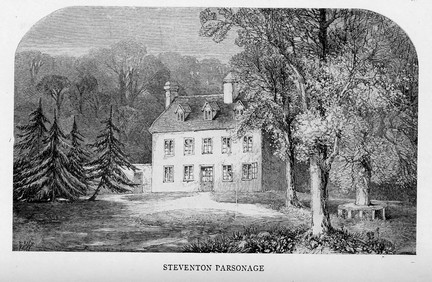
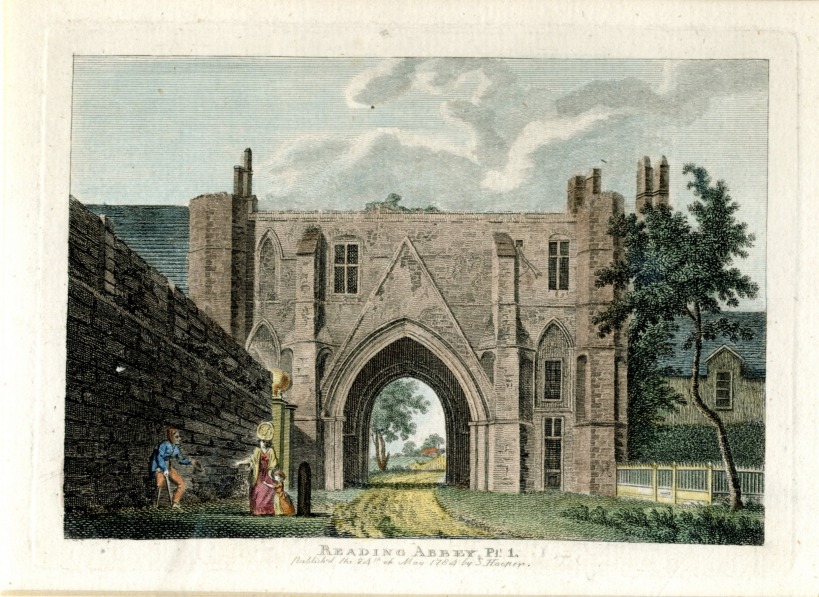
As many Jane Austen fans know, Rev. George Austen ran a boarding school out of his parsonage house in Steventon to augment his £230 pr year income. In1793 he began to teach the sons of local gentlemen in his home to prepare them for university. His library was extensive for a man of modest means, from 300- 500 volumes, depending on the source, an amazing collection, for books were frightfully expensive. Rev. Austen encouraged Cassandra and Jane to read from his library and supported budding author Jane in her writing. At some point, the Austens sent the girls to boarding school in Reading, for which he paid £35 per term, per girl, a not inconsiderable sum. He received around the same amount of money per boarder, and it is conjectured that the Austens hoped to replace their two daughters with many more pupils, which made economic sense. (See Linda Robinson Walker’s link below.) Mrs. Austen was not an indifferent bystander. She cooked, cleaned, sewed, and clucked over the boys like a mother hen, and was involved in their maintenance in a hands-on and caring way, acting as a surrogate mother.

In his Travels Through England in 1782, German traveler Karl Phillip Moritz describes learning academies, head masters, and boarding schools. From his observations, one gains a sense of what life must have been like for the Austens and their pupils:

A few words more respecting pedantry.  I have seen the regulation of one seminary of learning, here called an academy.  Of these places of education, there is a prodigious number in London, though, notwithstanding their pompous names, they are in reality nothing more than small schools set up by private persons, for children and young people.

One of the Englishmen who were my travelling companions, made me acquainted with a Dr. G– who lives near P–, and keeps an academy for the education of twelve young people, which number is here, as well as at our Mr. Kumpe’s, never exceeded, and the same plan has been adopted and followed by many others, both here and elsewhere.

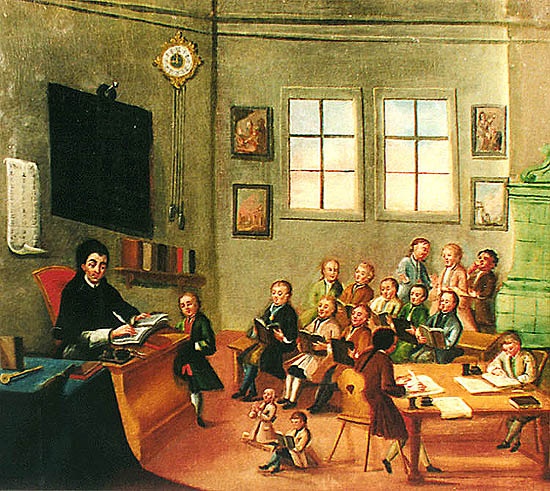
18th Century school room. One imagines a less formal setting for Rev. Austen’s school.

At the entrance I perceived over the door of the house a large board, and written on it, Dr. G–’s Academy.  Dr. G– received me with great courtesy as a foreigner, and shewed me his school-room, which was furnished just in the same manner as the classes in our public schools are, with benches and a professor’s chair or pulpit.

The usher at Dr. G–’s is a young clergyman, who, seated also in a chair or desk, instructs the boys in the Greek and Latin grammars.

Such an under-teacher is called an usher, and by what I can learn, is commonly a tormented being, exactly answering the exquisite description given of him in the “Vicar of Wakefield.”  We went in during the hours of attendance, and he was just hearing the boys decline their Latin, which he did in the old jog-trot way; and I own it had an odd sound to my ears, when instead of pronouncing, for example viri veeree I heard them say viri, of the man,exactly according to the English pronunciation, and viro, to the man.  The case was just the same afterwards with the Greek.

Mr. G– invited us to dinner, when I became acquainted with his wife, a very genteel young woman, whose behaviour to the children was such that she might be said to contribute more to their education than any one else.  The children drank nothing but water.  For every boarder Dr. G– receives yearly no more than thirty pounds sterling, which however, he complained of as being too little.  From forty to fifty pounds is the most that is generally paid in these academies.

I told him of our improvements in the manner of education, and also spoke to him of the apparent great worth of character of his usher.  He listened very attentively, but seemed to have thought little himself on this subject.  Before and after dinner the Lord’s Prayer was repeated in French, which is done in several places, as if they were eager not to waste without some improvement, even this opportunity also, to practise the French, and thus at once accomplish two points.  I afterwards told him my opinion of this species of prayer, which however, he did not take amiss.

After dinner the boys had leave to play in a very small yard, which in most schools or academies, in the city of London, is the ne plus ultra of their playground in their hours of recreation.  But Mr. G– has another garden at the end of the town, where he sometimes takes them to walk.

After dinner Mr. G– himself instructed the children in writing, arithmetic, and French, all which seemed to be well taught here, especially writing, in which the young people in England far surpass, I believe, all others.  This may perhaps be owing to their having occasion to learn only one sort of letters.  As the midsummer holidays were now approaching (at which time the children in all the academies go home for four weeks), everyone was obliged with the utmost care to copy a written model, in order to show it to their parents, because this article is most particularly examined, as everybody can tell what is or is not good writing.  The boys knew all the rules of syntax by heart.

Reading Abbey, where Jane and Cassandra Austen were sent to boarding school

All these academies are in general called boarding-schools.  Some few retain the old name of schools only, though it is possible that in real merit they may excel the so much-boasted of academies.

It is in general the clergy, who have small incomes, who set up these schools both in town and country, and grown up people who are foreigners, are also admitted here to learn the English language.  Mr. G– charged for board, lodging, and instruction in the English, two guineas a-week.  He however, who is desirous of perfecting himself in the English, will do better to go some distance into the country, and board himself with any clergyman who takes scholars, where he will hear nothing but English spoken, and may at every opportunity be taught both by young and old.

Source: Moritz, Karl Philipp, 1757-1793. Travels in England in 1782 by Karl Philipp Moritz (Kindle Locations 645-656). Mobipocket (an Amazon.com company).

Read Full Post »

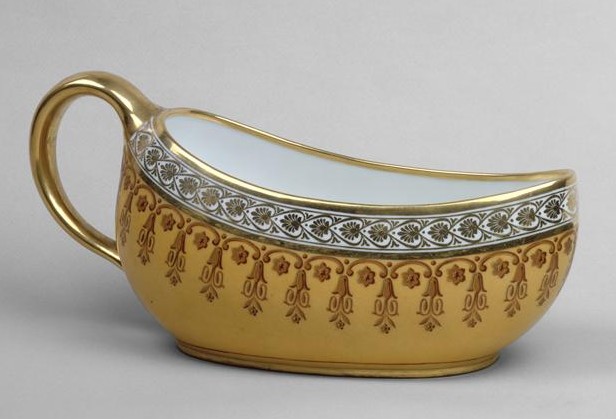
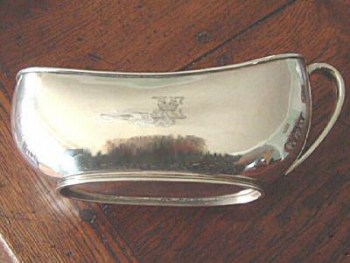
This image of a bourdaloue might be somewhat confusing to the uninitiated. Could this small and elegant vessel be a gravy boat? Or a blood-letting container?

Sevres bourdaloue, 1831.

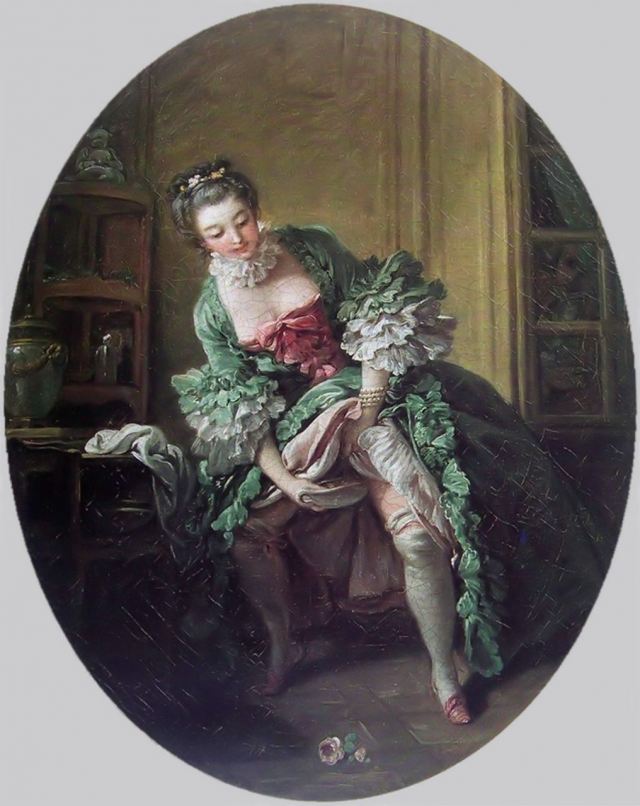
This image by Francois Boucher says it all. A fully dressed lady is relieving herself into an object called the bourdaloue or bourdalou, careful not to soil her skirts. Her maid, no doubt, stands nearby, waiting to receive the small chamber pot in order to empty it. The lady (or woman of ill repute) is in a public place – a theatre or tavern, perhaps – but certainly not a church. Wherever she is, the place has no public toilet. And so she must relieve herself standing up, taking care not to soil her skirt and petticoats.

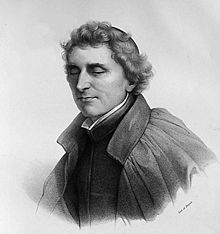
Louis Bourdaloue. Image @Wikimedia Commons

According to legend, the name of this porta potty comes from  Louis Bourdaloue (1632-1704), one of Louis XIVs Jesuit priests. His oratorical skills were reputedly so accomplished that people felt they could not miss a single word of his sermons. It is said that women sat through his masses with a bourdaloue placed under their dresses, whose skirts were held out by panniers. Since the priest’s  sermons were somewhat longwinded, the chances that ladies would need to relieve themselves were almost certain.  As a rule, churches and theatres had no toilets, and there were no breaks given during sermons. Ergo these portable urinals, which were ergonomically designed to accommodate the female body.

The vessel was oblong, rectangular, or oval in shape. A slightly raised lip at one end and a handle at the other allowed the woman to relieve herself from a squatting or standing position. The edges curved inward to avoid hurting her tenderest parts.

Sevres bourdaloue, with medallion depicting a scene from Watteau, blue lapis and framed in gold leaf. 1892.

It is a little hard to distinguish truth from fiction, so I am a bit skeptical about this apocryphal tale. Were the priest’s sermons in the early 18th century so truly awe-inspiring that a lady would squat in her pew, however discreetly, to relieve herself in front of her family and other parishioners so as not to miss a word?

In truth it was her maid who brought the vessel in, for bourdaloues were compact and came with a cover. When a lady had to relieve herself she would, I imagine, retreat discreetly to a private corner of a tall pew or to a back or side room in the church. Her maid would then hand the vessel over to her mistress, who took care not to spill any liquid on her skirts. When the lady was finished, she would hand the bourdaloue to her maid to empty its contents.  When attending a play or opera at the theatre, I imagine she would again retreat to a darker more private corner of the box to urinate.

A PAIR OF SEVRES BOURDALOUES (POTS DE CHAMBRE OVALE) CIRCA 1776,

Designed only for women, these bourdalous are quite beautiful. Made of faience or porcelain, they are decorated with flowers or painted scenes. Many are gilded. The portable pots, or coach pots as they were known in England, could be decorated inside as well.  They were quite small and compact, designed for travel, which made it easy to carry them and pack them for coach trips. They were also taken to long banquets, where ladies would scurry behind curtains when they needed to go.

Bourdalou made in France c. 1840. It has an engraved crest and a leather case to contain it. The silver bourdalou is a small urinary receptacle for female use, of compressed eliptical shape and generally made of porcelaine or earthenware, but also made occasionally of silver. Its front end has an incurved rim and, usually, stands on a simple foot ring with a simple loop handle. Also known as a coach pot in England.

Bourdaloues were used throughout the 18th and for most of the 19th century. As water closets began to be built inside homes and buildings, the use of these chamber pots began to be reduced dramatically.

Plain bourdaloue made of creamware. The shape is quite elegant.

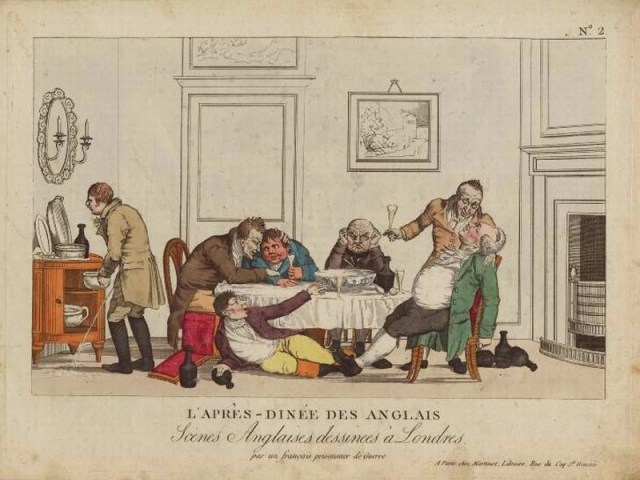
Gentlemen had it a little easier, although this satiric French cartoon, which I have shown before, depicts the disgust that Frenchmen felt towards Englishmen who freely pissed in a pot in the dining room. In this instance, the man misses the chamber pot and hits the floor. There seems to be a lack of modesty among these men, which largely holds true today.

c1816, from Fitzwilliam Museum.

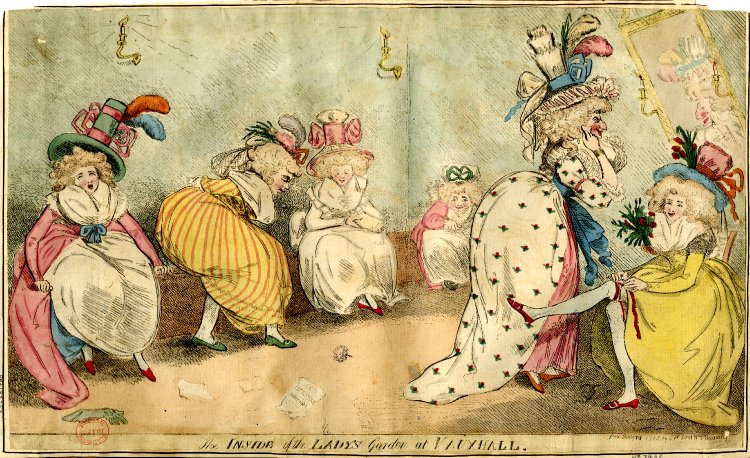
Modesty is also lacking in this cartoon of ladies relieving themselves inside a public restroom at Vauxhall Gardens. Four are arrayed on a long latrine against the wall. One lady is refreshing her make up and another is tightening her garter. If such scenes were common for upper class women in public spaces, perhaps many felt no modesty relieving themselves in church as well.

The Inside of the Lady’s Garden at Vauxhall, 1788 by SW Fores. Image @British Library. The interior of a ladies’ cloak-room. Against the wall on two sides of the room is a bench forming a latrine on which four fashionably dressed ladies are seated. On the right a woman in profile to the right, resembling Lady Archer, applies paint to her cheeks before a mirror lit by two candles. A young woman seated beside her on the extreme right ties up her garter.

Read Full Post »

I’ve placed these gorgeous Ackermann fashion plates here  to wish my readers who are mothers a Happy Mother’s day. Aren’t these images precious?

1812 morning dress or domestic dress.

Click on images to enlarge.

1826 evening gowns, March.

Read Full Post »

« Newer Posts - Older Posts »