This Jane Austen blog brings Jane Austen, her novels, and the Regency Period alive through food, dress, social customs, and other 19th C. historical details related to this topic.
If I had only read Kim Wilson’s Tea with Jane Austen many years ago, I would have saved myself a lot of trouble. Yes, gentle readers, I spent hours researching the history of tea and how and when people in the Regency era served it only to find that most of the information had already been gathered in this book.
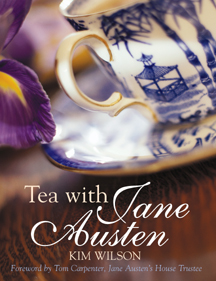
Tea With Jane Austen at the Morgan Library & Museum gift shop. Image @Jane Austen's World
Kim published her slim but informative book in 2004, two years before I began this blog. It is now in its second edition, and rightly so. The author has included almost all the facts and social customs about tea that a Regency romance author or Jane Austen fan or 18th- and 19th-century social historian could want.
Image inside the book. Copyright 2011 Frances Lincoln Ltd
I read this slim but fact-packed volume in two sittings the first time around, and have since read it twice more. Each time I have been DELIGHTED. Kim includes information about the Austens; a short history of tea; mealtimes and the hours they were taken by both simple folks and the gentry;
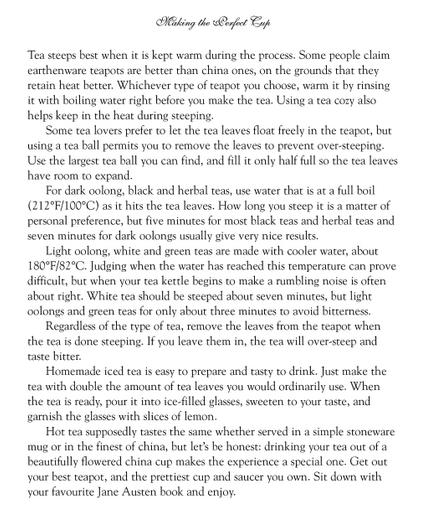
A sample page - Making the Perfect Cup. Click on image. Copyright 2011 Kim Wilson
tea served in the home and outside of it; tea served in the morning and at a grand ball; the best way to prepare tea (or how the English do it); the health benefits of tea; shopping for tea; recipes for tea treats (including one for Mr. Woodhouse’s gruel!); and the difference between high tea and low tea (and why so many of us use the terms wrong).
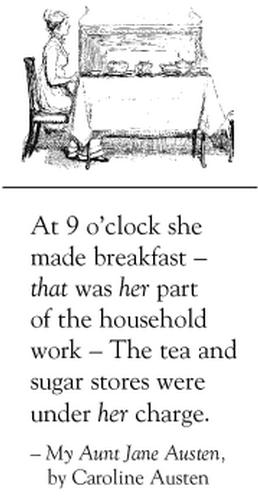
One of the many charming quotes sprinkled throughout the book. Copyright 2011 Frances Lincoln Ltd
If I have any fault to find with the book is that it’s too short. Thankfully, Kim Wilson also wrote In the Garden with Jane Austen, a book I shall review at a later time. I give Tea with Jane Austen five out of five china tea cups. Order the book here: Frances Lincoln, UK; and Amazon.com US
5 out of 5 tea cups
Binding: Hardback, 128 pages
ISBN: 9780711231894
Format: 215mm x 165mm
40 colour and 45 b/w illustrations
BIC Code: BGL, WBX
BISAC Code: BIO007000
Imprint: Frances Lincoln
Gentle Readers, I am spending July 4th with my family. We will picnic, eating a variety of collations, both hot and cold, and enjoying time with our extended family, including mothers, fathers, children, nieces and nephews, grandparents and great grandchildren.
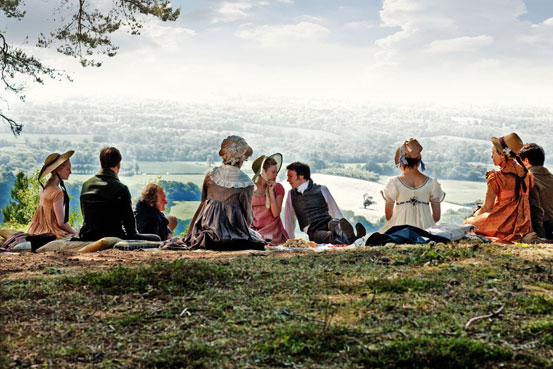
Box Hill, view from the train. Image @Tony Grant
Because I am a Jane Austen aficionado, I am reminded of Emma’s picnic on Box Hill, which couldn’t be further from the closeness that my family will feel on the day we celebrate America’s birth.
View from Box Hill, Emma 2009
The wretchedness of a scheme to Box Hill was in Emma’s thoughts all the evening. How it might be considered by the rest of the party, she could not tell. They, in their different homes, and their different ways, might be looking back on it with pleasure; but in her view it was a morning more completely misspent, more totally bare of rational satisfaction at the time, and more to be abhorred in recollection, than any she had ever passed. – Emma, Jane Austen, Chapter 44
No one was quite satisfied with Emma’s planned outing, least of all Miss Bates, Mr. Knightley, and Emma. The Eltons wandered off bored and disappointed, and Miss Fairfax keenly felt the insults that Emma and Frank Churchill hurled her way.
Box Hill, Emma 2009. Fabulous view.
Yet Box Hill was a beautiful location, with a view that wouldn’t quit. It is still a tourist destination, and a place that offers peace and quiet to those who would enjoy its beauty. Unlike Emma, I am prepared to enjoy my picnic with my family. Happy July 4th, all!
Gentle Readers: To celebrate the 3 millionth visitor to this blog, I will be giving away Tea With Jane Austen, a delightful and informative book by Kim Wilson. Deadline: The contest will end the moment my blog meter records 3 million or July 4th, whichever comes first! Contest Closed! Congratulations, Sherry, and thank you ALL for participating and leaving such excellent questions!
All you need to do is leave a comment and a way for me to reach you. Please address this question: If Jane Austen came over for tea, which burning question would you want to ask her?
Thank you all for visiting my blog and for making it such a joy to meet you online.
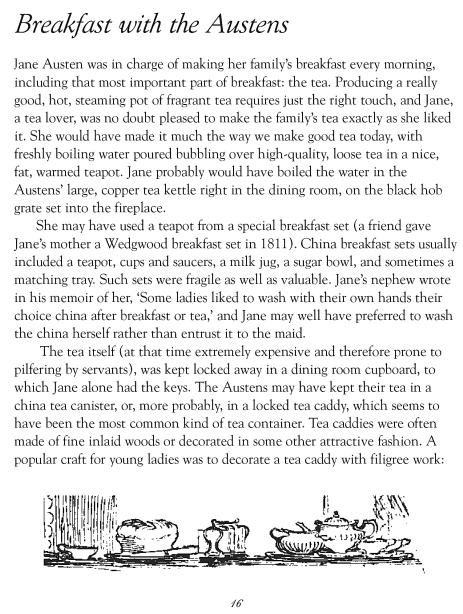
Page 16 of Tea with Jane Austen. Image @Amazon.com
Imagine that your beloved husband or son suddenly disappeared after meeting friends at a neighborhood bar, and that you would not know for months what had happened to them. You fear that he has been taken by a pressgang.
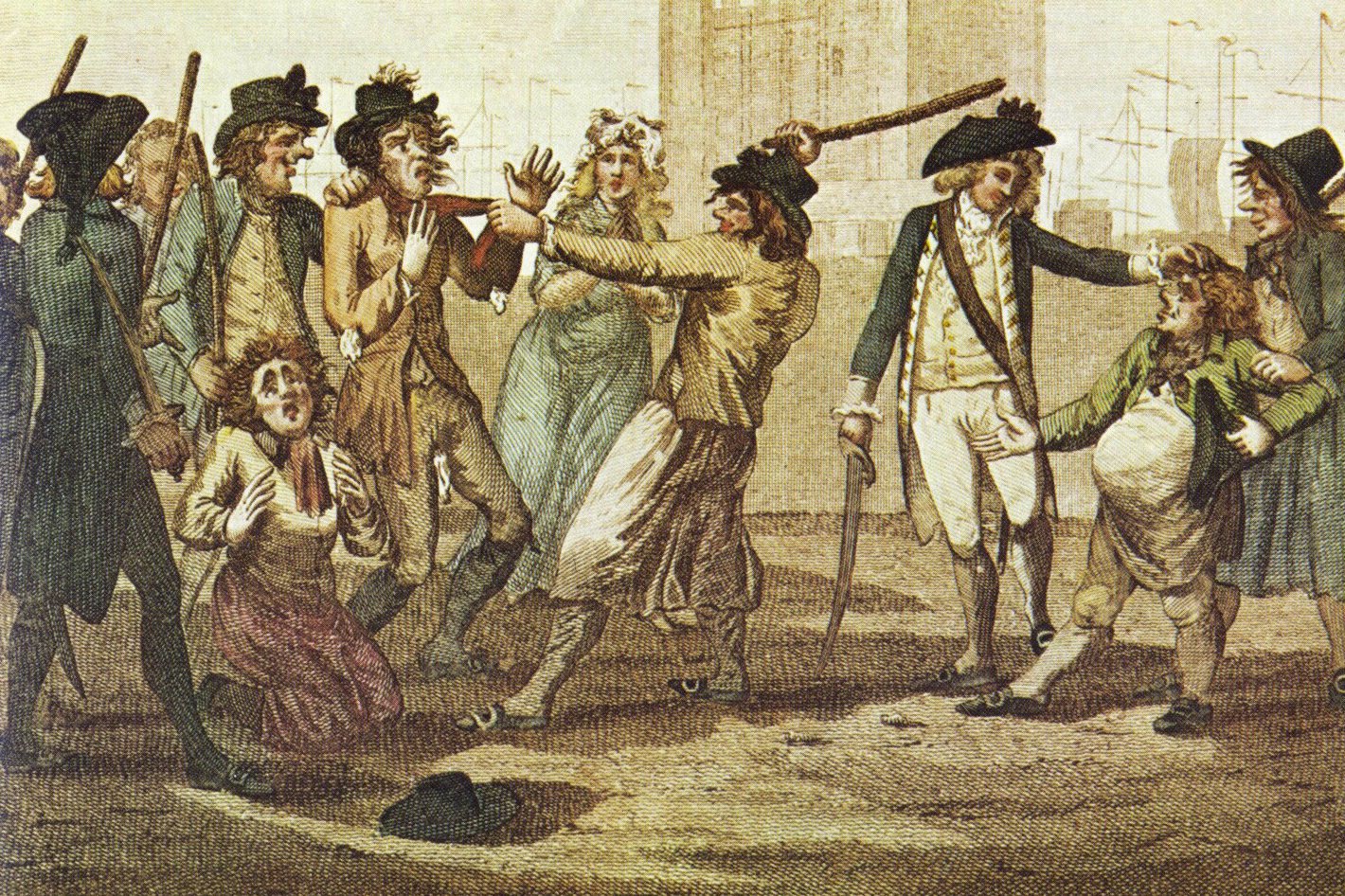
Press gang taking unwilling men
Such was the case in Jane Austen’s time, when Great Britain fought long wars over land and sea. Since medieval times it had been the royal prerogative to impress free men into a seamen’s service. The custom was roundly condemned, except in cases of “necessity of the sudden coming in of strange enemies into the kingdom.”* During times of war, “the tempation of impressment” was “too strong to be resisted by Parliament.”* And so pressgangs would roam towns and the countryside to take men against their will to serve in His Majesty’s navy.
“The class on whom it fell, however, found little sympathy from society. They were rogues and vagabonds, who were held to be better employed in defence of their country, than in plunder and mendicancy. During the American war, impressment was permitted in the case of all idle and disorderly persons, not following any lawful trade or having some substance sufficient for their maintenance. Such men were seized upon, without compunction, and hurried to the war. It was a dangerous license, repugnant to the free spirit of our laws; and, in later times, the state has trusted to bounties and the recruiting sergeant, and not to impressment, — for strengthening its land forces.” – The constitutional history of England since the accession of George Third, 1760-1860, Volume 2 (Google eBook), Thomas Erskine May, 1866 p 261-262
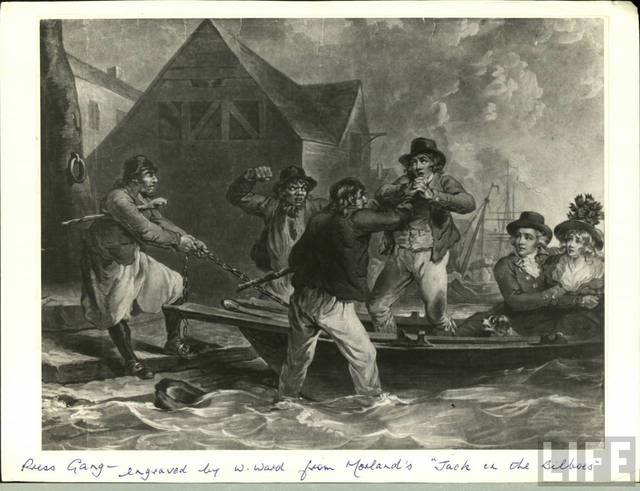
Press Gang. Image @LIFE magazine
During the Napoleonic wars, the need for sailors was great, and larger numbers of free men (including Americans) were forced into service. They were taken in any way, usually at night, through violence, entrapment, and fraud. Before anyone could discover their absence, they were taken on board and locked up until the ship sailed from port. The captured men were often wounded and would die from lack of treatment.
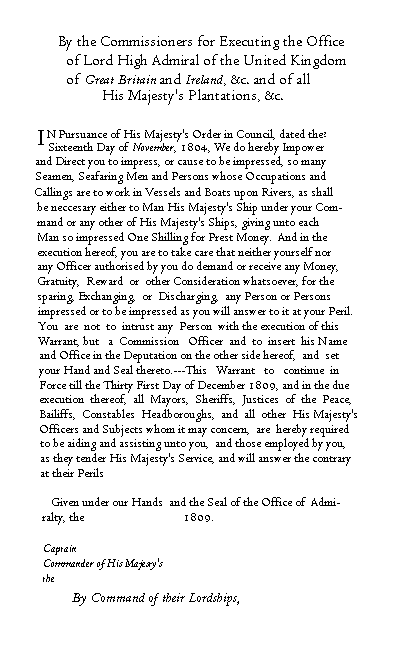
Press warrant. Image @Nelson's Navy**
“Impressment was restricted by law to seamen, who, being most needed for the fleet, chiefly suffered from the violence of the press-gangs. They were taken on the coast, or seized on board merchantships, like criminals: ships at sea were rifled of their crews, and left without sufficient hands to take them safely into port. Nay, we even find soldiers employed to assist the pressgangs: villages invested by a regular force: sentries standing with fixed bayonets; and churches surrounded, during divine service, to seize seamen for the fleet.
The lawless press-gangs were no respecters of persons. In vain did apprentices and landsmen claim exemption. They were skulking sailors in disguise, or would make good seamen at the first scent of salt-water; and were carried off to the sea ports. Press-gangs were the terror of citizens and apprentices in London, of laborers in villages, and of artisans in the remotest inland towns. Their approach was dreaded like the invasion of a foreign enemy. To escape their swoop, men forsook their trades and families and fled, — or armed themselves for resistance. Their deeds have been recounted in history, in fiction, and in song. Outrages were of course deplored; but the navy was the pride of England, and every one agreed that it must be recruited. In vain were other means suggested for manning the fleet, — higher wages, limited service, and increased pensions. Such schemes were doubtful expedients: the navy could not be hazarded: press-gangs must still go forth and execute their rough commission, or England would be lost. And so impressment prospered. – The constitutional history of England since the accession of George Third, 1760-1860, Volume 2 (Google eBook), Thomas Erskine May, 1866 p 261-262
May’s words in 1866 seem a bit overwrought, but one can only imagine how awful impressment must have been for the families who did not know what happened to their men, and for the men who were bound into service against their will.
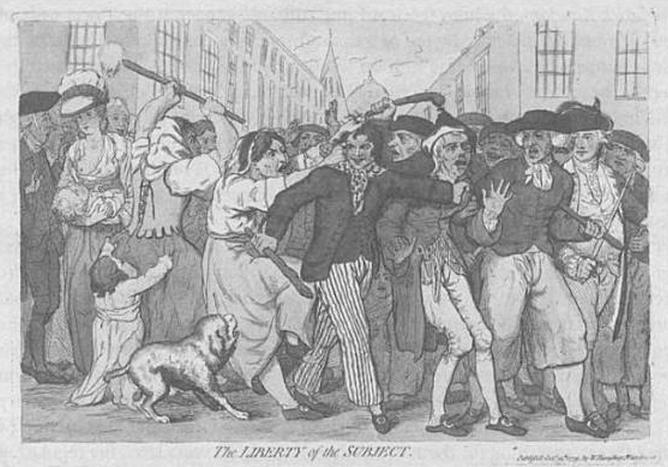
Towns people, including women, opposing the press gang, 1779
Although authorities would do all they could to prevent impressment, the Georgian police force was still primitive compared to what it would become in the Victorian era. Still, local townsmen would fight off the press gangs to save a hapless man from impressment.
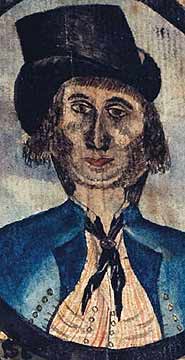
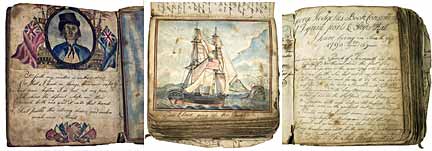
George Hodge, sailor in Nelson's navy
Even sailors who had served their term of duty were in danger of being pressed into service again. It was not unusual for a sailor to join, be captured, find freedom, run from the press gangs, be impressed, and then join the navy of their own free will again. George Hodge left a remarkable diary of his years as a sailor.
He was captured again in 1797, but was returned home and then spent months on the run from press gangs…But in 1798 he was caught and joined HMS Lancaster, which had 64 guns. For the next nine years he served mainly along the west African coast. But he also went to Ceylon and the East Indies.
In 1808 he joined HMS Marlborough, 74 guns, and spent the years until 1812 mostly on blockade duty around Europe. – Daily Mail
George Hodge's remarkable diary
In 1795, William Pitt introduced a Quota Act, which stated how many men each county had to provide for service. Convicted men were given the option to serve out their harsh sentences in prison, or serve in the navy. While this Act did not end the practice of impressment, it served to reduce it. Impressment virtually ended with the Napoleonic Wars in 1814. By the mid-19th century the custom had disappeared.
Press Gang – words to the song
As I walked out on London Street
A press gang there I chanced to meet
They asked me if I’d join the fleet
On board of a man-o-war, boys
Come brother shipmates tell to me
What kind of treatment they give you
That I may know before I go
On board of a man-o-war, boys
When I got there to my surprise
All they had told me was shocking lies
There was a row and a bloody old row
On board of a man-o-war, boys
The first thing they done they took me in hand
They lashed me with a ‘tar of a strand’
They flogged me till I could not stand
On board of a man-o-war, boys
Now I was married and me wife’s name was Grace
‘Twas she that led me to shocking disgrace
It’s oft I’d curse her ugly face
On board of a man-o-war, boys
When next I get may foot on shore
To see them London girls once more
I’ll never go to sea no more
On board of a man-o-war, boys
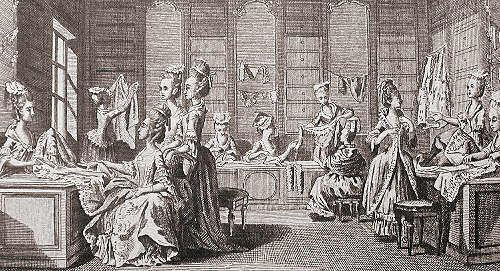
Early milliner shops were like our department stores, selling all manner of fashionable items. The image of a milliner shop in Paris shows the costumes we have come to associate with the era of Marie Antoinette. After the French Revolution, fashions changes drastically, for the French citizenry did not want to be reminded of the recent bloodshed or the ancient Regime. The rage in fashion was an imitation of the classical dress worn by the Greeks and Romans.
Dressmaker shop, 1775
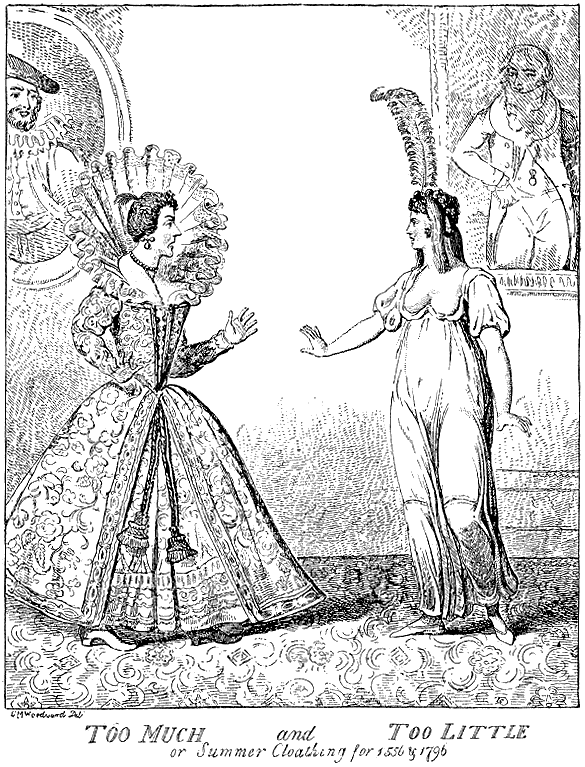
The end of the 18th century witnessed a signal change in the style of women’s dress. The gown no longer consisted of two dresses, an under and an outer one. The formal styles which had prevailed throughout the century and brought into use stiff materials such as solid damasks, velvets, satins, and silks, were replaced by the fashion of the short-waisted clinging gown made of muslin and soft silk. This “Empire” mode characterized the dress of the first quarter of the 19th century. – The Encyclopedia Americana, Frederick Converse Beach, George Edwin Rines, 1902, “costume”
Too Much and Too Little, or Summer Cloathing for 1556 & 1796
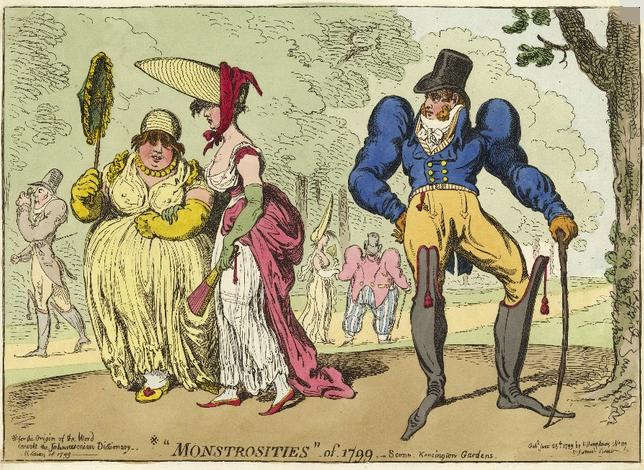
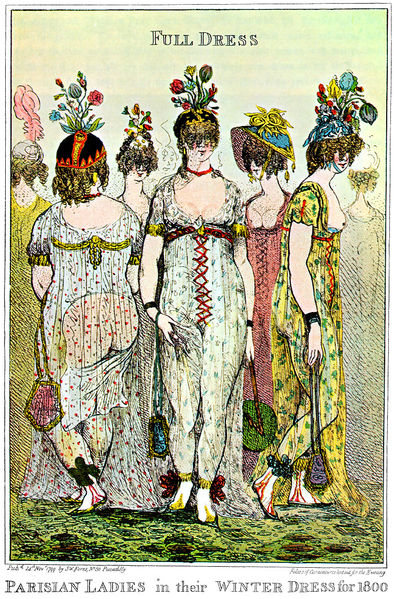
Parisians dressed in the new fashions were known as the “incroyables” (men) and the “merveilleuses,” (women.) These fashions were not at first admired and generally regarded as hideous. Caricaturists had a heyday making fun of these freaks of Fashion. British fashionistas shortly followed suit, as the cartoon by Gillray attests.
Monstrosities of 1799, Kensington Gardens, Gillray
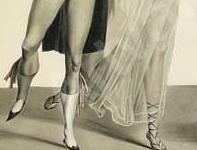
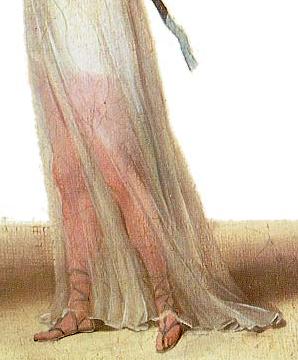
Macaronis turned into dandies, and gently bred ladies wore clothes so thin and diaphanous, that the shape of their legs showed clearly through the skirts. The muslin disease (catching a serious cold or pneumonia) lasted for as long as fashionable young women wore thin muslin dresses with bare necks and arms in damp and drafty buildings.
Merveilleuse et Incroyable. The close up of the dress reveals how sheer the fabrics were.
In some instances, nothing was left to the imagination. In the satirical image below by Isaac Cruikshank, the ladies are shown wearing next to nothing. Satire took many forms in the late 18th century. The Lady’s Monthly Museum featured a dialogue between a lady visiting Paris and a man milliner. His answer is hilarious.
Caricature by Isaac Cruikshank
Dialogue Between a Lady and A Man Milliner at Paris
“Citizen, I am just come to town: –pray, have the goodness to inform me how I must appear, to be in the fashion.”
“Madame, ’tis done in a moment; in two minutes I shall equip you in the first style. –Have the goodness to take off that bonnet.”
“Well.”
“Off that petticoat.”
“There it is.”
“Away with these pockets.”
“There they go.”
“Throw off that handkerchief.”
“’Tis done.”
“Away with that corset and sleeves.”
“Will that do?”
“Yes, Madame, you are now in the fashion. ‘Tis an easy matter, you see.–To be dressed in the fashion, you have only to undress.” – The Lady’s Monthly Museum, February 01, 1801, pg. 126.
Definition of a man milliner: A man who makes or deals in millinery, that occupation having been at one time predominantly performed by women; hence, contemptuously, a man who is busied with trifling occupations or embellishments.
Louis-Léopold Boilly painted a gown so sheer that without a petticoat, her short chemise is easily visible under the delicate muslin.
The days of the Revolution (1789 – 1799) brought in simple fashions. Corsets were discarded, the waist became short and the skirt clinging, and cheap materials were used. During the Directoire, the women adapted the classic style, borrowing from both Greek and Roman fashions. These costumes were scanty, and frequently were split up the sides. The dresses were often transparent and worn without chemises. The gentlemen of this fantastic period were styled “Incroyables,” “Unimaginables”; the ladies, “Merveilleuses” and “Impossibles.” The men wore an exaggerated copy of what had been previously called the English fashion.- Costume design and illustration, Ethel Traphagen, 1918, p 120.
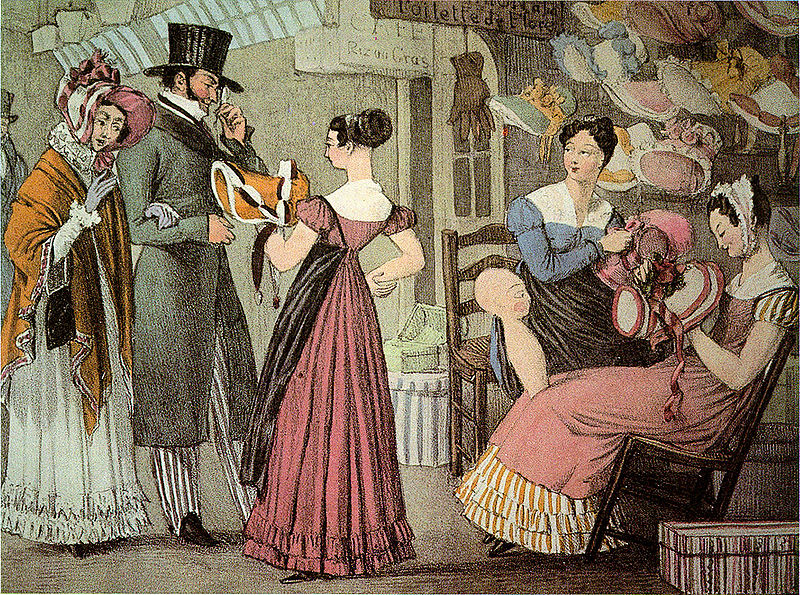
Millinery shop in Paris, 1822
A milliner could carry possibly a thousand different goods, becoming the forerunner of the modern department store. At this point, the term “milliner” was tied to the Latin word “mille,” meaning thousand.
The 18th Century milliner might have offered a thousand goods but all shared the quality of being fashionable accessories. Wares could include shoes, jewelry, table service, clocks, hosiery, fabrics, shirts, aprons, cloaks, caps, hats, muffs and mitts. – The Millinery Shop, Colonial Williamsburg
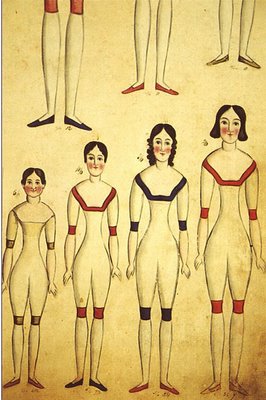
Milliner doll catalog, 1820s. These dolls were dressed in the fashion of the day. Look at the above image for a sample size of a doll. Image @Christine LeFever: Dolls and Fancywork
Fashionable Goodness: Christianity in Jane Austen's England is now available! By JAW contributor Brenda S. Cox. See Review. Available from Amazon and Jane Austen Books.
Available through December 31st, 2025. Click on image for details, and share this poster with other teachers and students!
The Obituary of Charlotte Collins by Andrew Capes
Click on image to read the story.
Comments
“My idea of good company…is the company of clever, well-informed people, who have a great deal of conversation.” – Jane Austen, Persuasion
Gentle readers: Please feel free to post your comments and continue the conversation! Due to SPAM, we will no longer accept comments on posts after 30 days of publication. In some instances, links will be removed from comments as well.
Administrators and Contributors
Vic Sanborn, founder of this blog, is supported by a team of talented and knowledgeable writers about Jane Austen and the Regency era. They are:
Tony Grant, who now contributes his photos from London and England
Click on their names to enter their own blogs.
In addition, we thank the many experts and authors who frequently contribute their posts and opinions, and who continue to do so freely or at our request.
Click here to enter the page. Topics include Regency fashion, historic foods, Jane Austen societies, British sites, related topics. Click on image.
May we suggest?
Hello, my name is Vic and I live in Maryland, USA. I have adored Jane Austen almost all of my life. I am a proud lifetime member of the Jane Austen Society of North America. This blog is a personal blog written and edited by me and my team. We do not accept any form of cash advertising, sponsorship, or paid topic insertions. However, we do accept and keep books and CDs to review.
If you would like to share a new site, or point out an error, please email us. (Yes, we are fallible. We'll own up to our mistakes and will make the corrections with a polite smile on our faces.) Write us at
Thank you for visiting this blog. Your comments and suggestions are most welcome.
Project Gutenberg: eBook of Stage-coach and Mail in Days of Yore, Volume 2 (of 2), by Charles G. Harper
STAGE-COACH AND MAIL IN DAYS OF YORE: A PICTURESQUE HISTORY
OF THE COACHING AGE, VOL. II, By CHARLES G. HARPER. 1903. Click on this link.










 Jane Austen's World