Feeds:
Posts
Comments

Archive for the ‘Regency World’ Category

I spent a lazy Sunday catching up on the many posts I am unable to read during the week. Imagine my delight when I landed on Madame Guillotine’s blog and read her impressions about her visit to the Fashion Museum in Bath.  With increasing excitement, I viewed her close up images of several of the most beautiful 18th and early 19th century gowns imaginable. Melanie graciously allowed me to showcase her posts. (I concentrated on the early 19th century examples.) Do rush over and view all her photos. They are simply amazing.

I have just got home after an amazing couple of hours spent studying some of the eighteenth century dresses in the vast collections (I think they said they have 80,000 pieces in their archives) of the Fashion Museum in Bath.

English, silk, 1770-73.

It was amazing seeing the hook and eye arrangements that they used to do up the bodices, the neat seam work and even the staining beneath the armpits which serves as a reminder that these are the real deal and not just mere costumes!

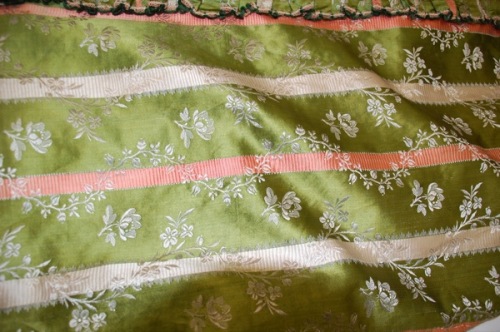
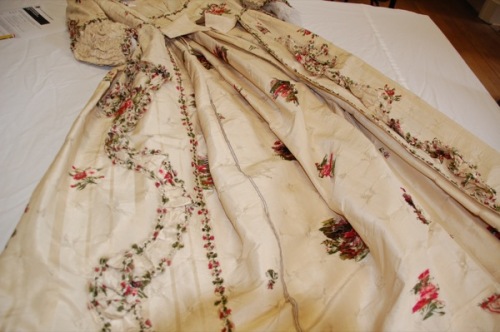
French, sacque gown, 1760-63. Image @Madame Guillotine

They were really keen on combinations of pink and green during the eighteenth century – a colour combination that seems to have vanished from fashion, alas.

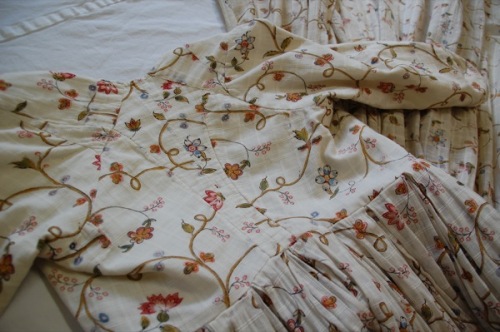
A floral printed muslin from 1793-97. Image @Madame Guillotine

[This dress] is really is lovely – very floaty and romantic with a pretty floral print. You can really imagine Marianne Dashwood in this one!

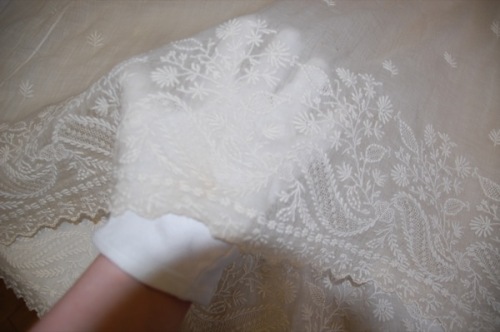
Muslin dress, 1813-20. Image @Madame Guillotine

This dress was so beautiful but really worryingly see through! You forget this about muslin when you see them in period dramas…

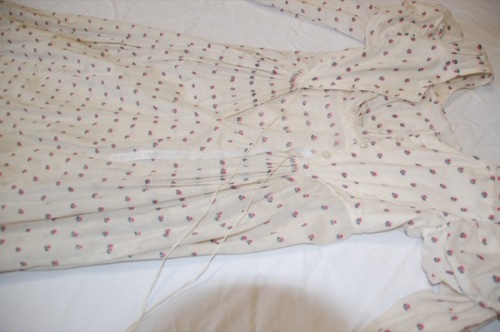
Patterned muslin dress, 1815-20. Image @Madame Guillotine

This is the sort of thing that a Heyer heroine would have worn.

These images are just a foretaste of the many photos that Melanie took at the Fashion Museum. To read both her posts, click on the two links below:

Read Full Post »

Copyright @ Jane Austen’s World.  Looking back 200 years (the precise date that the formal Regency era began was 1811) we tend to view Jane Austen’s Regency world wearing rose-tinted glasses.
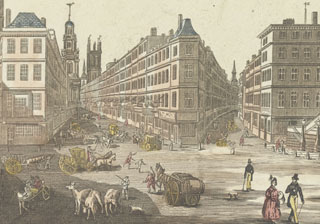
Early 19th century London street scene

Imagine the traffic in London back then:

In July 1811,

it appears that there passed over Blackfriars bridge in one day: 61,069 foot passengers, 533 waggons, 1,502 carts and drays, 990 coaches, 500 gigs and taxed carts, and 822 horses. On the same day, July 1811, there passed over London bridge: 89,640 foot passengers, 1,240 coaches, 485 gigs and taxed carts, 769 waggons, 2,924 carts and drays, and 764 horses.  – Leigh’s new picture of London: or A view of the political, religious, medical, literary, municipal, commercial, and moral state of the British metropolis (Google eBook), 1827, p. 251

Then imagine the animal droppings. I have not the mathematical wherewithal to calculate how much manure and urine these vast numbers of animals traversing London’s streets would generate on an average day, but I do know this: when a horse feels the need to relieve itself, it does so on the spot, releasing the end result of its digestion in a most spectacular fashion.
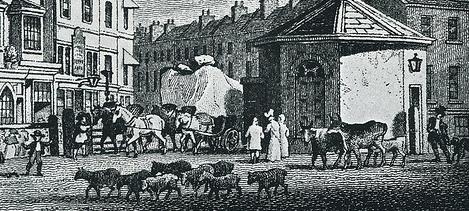
London, detail of Islington toll gate

And thus London’s streets were littered with dung. Not only did horses generously contribute their feces to London’s throroughfares, but so did the vast number of feral dogs and cats roaming the streets, and the cattle, goats, sheep, pigs, and fowl that were driven to London’s markets. Add on a hot summer’s day the smell of slops that were carelessly tossed out of windows, and the stench of contaminated water, backed-up sewers, over-filled privies, and rotting garbage, and you get the drift. The assault on one’s olfactory nerves must have been overpowering.

The rich had a choice – they left London in droves at the end of the Season to wile away the summer on their country estates. But those who were left behind had to suffer the fetid stench of thousands of evacuations that cooked in the heat and turned into gaseous rot. (I traveled through a similar malodorous area when driving past the slums of Jakarta one summer.)
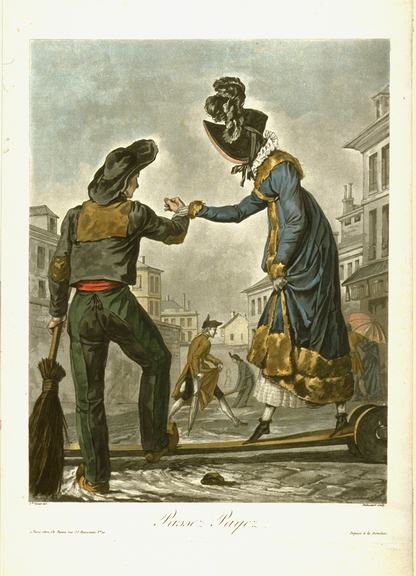
Streetsweeper assists a lady crossing the street, 1818, after Vernet. Image @Wikimedia.

Rain showers did not help much to relieve the situation. By 1841, when the metropolis was vastly larger, Henry Mayhew calculated that the refuse from butchers that washed into rain water approximated 24,000,000,000 gallons per annum. As for dung, let’s face it, wet poo sticks like glue, and once the offending substance adhered to boots and shoes, the unfortunate wearer would trod the vile stuff into carriages and on door stoops, which is why boot scrapers were essential.

Sunny weather was not much more helpful, for when poo baked and dried on dusty streets, it tended to crumble and turn into dust. A brisk wind would blow odiforous grit under door crevaces and through open windows, landing on furniture, floors, curtains, rugs, and hanging laundry. A person walking along the streets on a blustery day, would have it blown onto their clothes and in their hair. (Let’s not even imagine how much of these offensive granules landed on their faces and inside their mouths and noses! Achoo!)
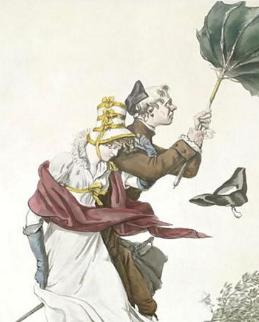
Carle Vernet, detail of a gust of wind

As for hygienic habits, if English Regency gentlemen felt comfortable urinating in chamberpots in the diningroom after dinner in full view of their companions, one can imagine that they thought nothing of relieving themselves in back alleys. And where were the poor urchins who lived on the streets supposed to “go”? Or the individuals crammed into overcrowded tenements who shared a common privy with hundreds of others and who, due to pressing circumstances, could NOT wait?
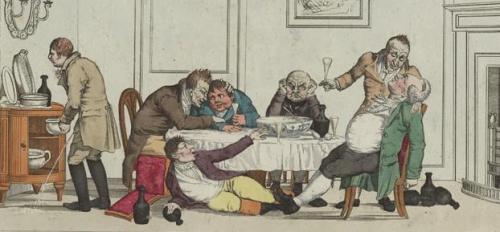
If peeing in front of others (left) near food stuffs inside one's home was permissable, one can only imagine the habits of this gentleman outside of a tavern.

There were attempts to combat these continual eliminations and excretions by animals and humans, which will be discussed in the next Fawlty Regency London post. Until next time, gentle reader, I am signing off. I hope I have not offended your tender sensibilities (or activated your gag reflexes) too much. Part 2 of this fascinating series will discuss The Removers, or those who worked tirelessly to keep London smelling as fresh as a daisy (well, at least like day old cat litter).

For those who are equally as fascinated with topics of an earthy nature as I am, here’s another post: Urea, a 17th & 18th Spot Remover, or Pee as a Cleansing Agent

Read Full Post »
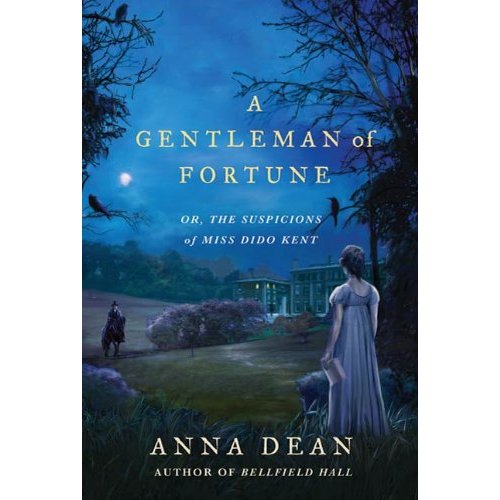
A Review by Lady Anne, Vic’s most excellent friend.

Miss Dido Kent is an unmarried gentlewoman of some 35 years. In this second book of the series set in 1806 and showing the lifestyles of the gentry and their dependents, the young relative whom she is visiting is foolish and therefore, to Dido, slightly boring. Visiting a succession of relatives is Dido’s fate, and the vehicle through which she can continue her mystery solving. Her fate, because she is unmarried and without money. Her relatives invite her to stay with them either when they have need of her. Pretty, empty-headed cousin Flora’s husband is away on business, and it will be a comfort to the young woman (as well as, we do not doubt, her husband) to have her clever cousin Dido to keep her company. Author Anna Dean, hereby presents a credible way to offer Dido new mysterious events to solve without having her audience need to suspend its disbelief too very much about all the murder and mayhem she encounters. The events of the series will not all occur in the one family, one small village, or neighborhood.

The mystery in this book concerns the assisted departure from this life of one Mrs. Lansdale. By all accounts, she was a difficult woman. However, she left behind a lovely fortune and a most attractive young nephew to inherit it. Richmond, the charming and proper new suburb of London where all this takes place, also harbors Mrs. Midgely, a disagreeably gossiping harridan who seems determined to bring the young man to book. Cousin Flora wants her clever cousin Dido to clear his name, because no one that attractive and charming could possibly be guilty of murder. Mrs. Midgely is recently widowed and has, in addition to a paid companion living in her household, her husband’s ward, a lovely young woman whom she is recently determined to place as a governess. The neighborhood also evinces a very lively interest in the recent marriage of their old friend Sir Joshua Carisbrooke to a lovely, talented, and very much younger woman.

It is Dido’s task to solve the mysteries: the death of Mrs. Lansdale, the reason for Mrs. Midgely’s determination to find Mr. Landsdale guilty, the identity of Mrs. Midgely’s ward, the mystery surrounding her companion, and an explanation of the quick and romantic Carisbrooke marriage. Dido’s skills in observation and in understanding the ramifications of what she has seen allow her to clear all these entangled mysteries large and small. The interconnection of all the puzzles of the neighborhood is very cleverly done, although one of the strands probably does not bear close scrutiny. Her reasoning abilities allow her to resolve everything in a timely manner; she not only solves the mystery of the death, she also clears the other problems without scandal, thereby depriving Mrs. Midgely of further nastiness.

It is this same clever mind that has kept Dido single: determined not to marry where she does not love, she has avoided or turned down several proposals. But without money of her own, she is continuously dependent upon the kindness of her family, and the story shows that this dependence could have a shaky foundation. Mr. Lomax, the steward she met at Belfield Hall in the book of that name, is able once again to provide some assistance as well as romantic interest for Dido, but his wishes to protect her from harm and to keep her from meddling she cannot bear. However, Mr. Lomax is not going to be easily deterred, we readers have the feeling that he will overcome her concerns and waverings over the course of the next few books. We can all look forward to Dido’s clearing more suspicious events in other interesting stately homes and neighborhoods.

Read Full Post »

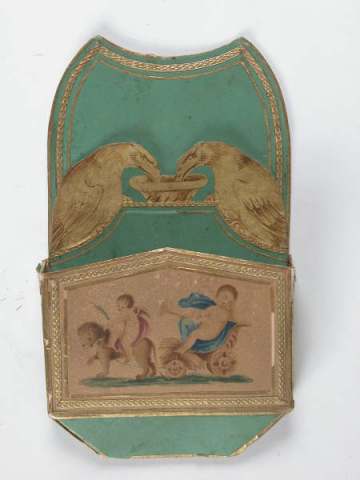
One of a pair of card racks made of decorated cardboard, French, c. 1820, at Attingham. ©National Trust/Claire Reeves

About two weeks ago, The National Trust asked a question about card racks: How were they used? The organization had acquired a number of beautiful examples of 1820’s card racks from Attingham, an estate in Shropshire.  Laurel Ann from Austenprose referred me to the site and to Emile de Bruijn, who had asked the question. I jumped right in, only to discover how little I (or anyone, really) knew about the topic. There was much lively speculation about these beautiful items.

Card racks are small, only large enough to hold visiting cards or small notes. They were designed to be hung somewhere, perhaps on a wall, or over a fireplace mantle. Many were made from cardboard, yet sturdier porcelain examples exist. Their true purpose is now obscure and has faded from memory.

These facts came out as I researched the topic:

It seems that young ladies decorated these card racks from the turn of the 19th c. until at least 1830. Mary Russel Mitford wrote in Our village: sketches of rural character and scenery, Volume 4, 1830:

With regard to accomplishments she knew what was commonly taught in a country school above twenty years ago, and nothing more: played a little, sang a little, talked a little, indifferent French, painted shells; and roses, not particularly like nature, on card-racks and hand screens; danced admirably; and was the best player at battledore, and shuttlecock, hunt the slipper, and blind man’s buff in the county.” p. 131

French emigres made card racks to earn a living:

During the period when the French emigres were so numerous in this country, he (Rudolph Ackermann) was one of the first to relieve their distress by liberal employment. He had seldom less than fifty nobles priests and ladies engaged in manufacturing screens, card racks, flower stands, and other ornaments.” – English coloured books, 1906, Martin Hardie

Rudolph Ackermann kept on hand in his Repository the supplies ladies needed for making hand made items:

No. 3 is a new embossed gold seed-paper. It is used, in a variety of ways, for ladies’ fancy work — in card-racks, hand and fire-screens, chimney ornaments, boxes, watch–stands and cases, &c. It is manufactured by Mr. S. Solomon, and sold, wholesale and retail, at R. Ackermann’s Repository, No., 101, Strand.” – From The Repository of arts, literature, commerce, manufactures, fashions and politics (1809)

And of course I found a Jane Austen connection. In Persuasion, Mrs. Smith makes pin money by creating hand made items:

One might argue that perhaps Nurse Rooke’s patients themselves are practicing charity by buying the thread-cases, pin-cushions, and card-racks. One finds, however, that they do not do so willingly. Nurse Rooke is skilled not only in invalid care, but also in sales. In the case of Mrs. Wallis, Nurse Rooke’s current invalid, Mrs. Smith says, “‘I mean to make my profit of Mrs. Wallis . . . . She has plenty of money, and I intend she shall buy all the high-priced things I have in hand now’” Thread-cases, Pin-cushions, and Card-racks: Women’s Work in the City in Jane Austen’s Persuasion, Susan E. Jones, Persuasions Online

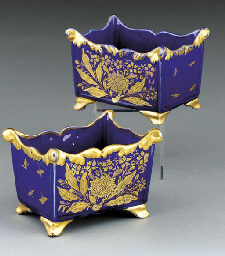
Ironstone ware card rack. Image @Christie's

More speculation and information about card racks can be found in the comment section of the National Trust post. (I have included only my own findings.) It is fascinating to learn how quickly a once popular pasttime has lost its meaning. If anyone can help the staff at The National Trust, do go over and leave a comment.

Read Full Post »

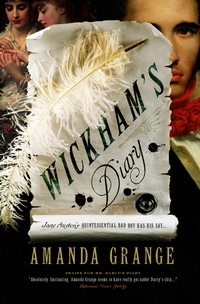
A Review From the desk of Shelley DeWees…of The Uprising.

I am thinking of enlisting. One of my acquaintances happened to recommend his regiment to me this morning, and as I have nothing better to do I believe I will join. It will get me away from London, where my creditors are once again pressing me, and take me into Hertfordshire, a place where I am not known. Then I can begin again, and at the very least, run up some new bills. And at the most…There will be impressionable young women in Meryton, no doubt, and they will all be susceptible to a charming and handsome young man in a red coat.”

So says that feisty George Wickham, with such a feisty future ahead of him, in the quazi-coming-of-age tale Wickham’s Diary by Amanda Grange. Although you may think this little novella is going to give a sneaky glimpse into the wooing of Lydia Bennet or perhaps a strange view of Wickham’s wicked scheming, alas, it doesn’t. In fact, Wickham’s Diary has next to zero connection the Bennet tale (you know the one I mean) and can be more easily likened to the history of George Wickham and his family.

The introduction on the back of the book explains, “He wasn’t always this cold-hearted.” But…um…well, according to this, he actually was. He grows up, as you, a learned reader, already know, in the shadow of Darcy and his sweet sister Georgiana, as the son of the steward with nearly nothing to his own name. Childhood almost-friendship with Darcy withers away in favor of rabid jealously, and Wickham decides at a young age that the situation just isn’t fair. “Why should I be beneath him?” he asks. “I am just as handsome as he is; I am just as intelligent, even though he works harder at his books; and I am just as amusing; in fact, I dare say I am a great deal more amusing, for Fitzwilliam is so proud and he will not take the trouble to entertain other people. Yet altogether he is no better than me, when he grows up he will inherit Pemberley and I will inherit nothing.” Tough break Georgie, but hey, that’s life. Regency life. Now of course he could take what he’s been given, which is truly not a bad situation, and apply himself toward a worthy, amiable path and a generally secure future. But as we know, he’s the villain and must therefore take the lowest possible road: planning, scheming, and plotting against everyone and everything, never blaming himself when things go awry. He looks around every corner for someone to exploit, usually while still experiencing success with his last victim, pocketing their money and breaking their hearts with no qualms. He’s conniving and rude. He’s spoiled and foolhardy. He is, naturally, a scoundrel.

I’d say that’s pretty cold-hearted behavior.

The reader is briefly shown the world of George Wickham as he works his way up the “Biggest Jerk in the Universe” ladder, tossing people aside who stand in the way of his ultimate goal to marry an heiress and be done with it. Darcy has long taken his own path, only reappearing to pay Wickham the value of the living he’s denounced and then quickly evaporating out of the picture, never to be seen again. Though I enjoyed the interesting and albeit unhealthy relationship Wickham has with his mother, I found myself disappointed that this teeny weeny 12-dollar novel ended without exploring Wickham’s character in any in-depth sense. The reader learns a bit about his motivations for villainy, yes, but nothing much about him as a person. No one commits a crime against humanity without some measure of mental back-and-forth…didn’t he ever have second thoughts? Blank pages abound in the book itself, and the type is shamefully over-sized.

The phrase that comes to mind with Wickham’s Diary is “hastily-written.” It’s a fair read and represents some of the author’s good attributes. But considering the 2 hours you’ll spend with it, you might want to save your 12 dollars.

Read Full Post »

« Newer Posts - Older Posts »