Feeds:
Posts
Comments

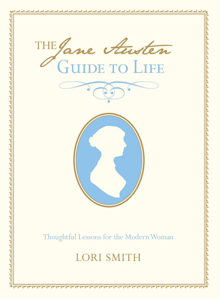
I became acquainted with Lori Smith when she wrote her first book, A Walk With Jane Austen. Our association has continued with her new book, The Jane Austen Guide to Life. (Read my review here.) Please welcome Lori as I talk to her about her most recent writing experience. I hope to meet her, as well as many other Janeites, at the JASNA meeting in New York this fall:

Hi Lori! What were your reasons for writing this book as your follow up to A Walk With Jane Austen?

You know, I didn’t expect to write another Jane Austen book, so this book, which was actually my editor’s idea initially, came as a great gift and a surprise. It covers some of the same material as A Walk with Jane, but from a completely different viewpoint. While A Walk with Jane was so deeply personal and so much about my journey, this book steps back and looks at how Austen would advise women today if she could. I took everything we know about her life and all the wonderful stories she gave us, and tried to ferret out how she might guide us today.
Why will people regard the advice on romance and life from a 19th c. country spinster?

For those already members of the cult of Austen, this isn’t a tough sell, but I’m sure it will be for some. I mean, really, a woman who lived two hundred years ago, who wouldn’t understand modern dating, tweeting, texting—can she really have helpful advice?

But the thing is, we adore Austen for her lovely stories. She understood people, what motivated them, their faults and foibles. As one reviewer commented on Sense and Sensibility, she had “a great deal of good sense.” Her good sense is so welcome today, and still so useful. The issues she dealt with—fame, money, heartbreak—are the same ones we face today. I think she can help us bring back some of the graciousness of the time she lived in, help us imbue our own lives with grace and good sense.

What about today’s society would scandalize Jane Austen the most?

I’m sure it would be sex. There was plenty of raunchy behavior in Austen’s era, but it wasn’t on display the way it is now, in movies, TV shows, magazines. And it’s become so very casual. I don’t think she would know what to make of that.

What changes would she like most?

Well, she wrote in one letter about not knowing what to do about a new gown, and said “I wish such things were to be bought ready made.” (In Austen’s day, you had to buy fabric and then work with a dress-maker.) So I think she would love how easy and affordable fashion has become. (Not that she cared overly much about fashion.)

But I think she would be happiest that singleness has become a viable option for women, that women can work and earn their own keep and don’t have to be dependent on family or have to marry to survive. I think that would thrill her. She herself never married, and even with the income from her writing, was financially dependent upon her brothers.

On a personal level what advice from Jane meant most to you, and why?

This time around I really appreciated her perspective on the need to be thoughtful about romance—two concepts that don’t always go together in our world. And as someone who has lived with chronic Lyme disease for more than a decade, her own journey through a lengthy and mysterious disease touched me.

But every time I come back to Austen, more than anything else, I’m astounded by her joy. She celebrated the world, relished in it, brought so much energy to it. She laughed as much as possible, I’m sure, but her joy was deep as well, loved a quiet evening by the fire or sitting and watching the flow of the tide. If I could take one thing from Austen, it would be that joy and effervescence.

Bio:

As a child, Lori Smith’s mother had to pay her to read books. So it’s a bit ironic that she now gets paid to write them. Lori feels connections to Austen on many levels—as a writer, a single woman, an Anglican, and as someone struggling with a mysterious chronic illness. For her last book, A Walk with Jane Austen: A Journey into Adventure, Love, and Faith, Lori spent a month in England tracing Austen’s life and works. Readers voted to give that book the Jane Austen Regency World Award for best nonfiction.

Her writing has also appeared in Washington Post Book World, Publishers Weekly, Beliefnet.com, Skirt!, and Today’s Christian Woman. Lori lives in Northern Virginia with her sweet but stubborn English lab, Bess.

Book Trailer: http://www.youtube.com/watch?v=XVYt-QOJWO8
Blogs: http://www.writerlorismith.com, http://www.austenquotes.com
Facebook: http://www.facebook.com/writerlorismith
Twitter: @writerlorismith

Portrait of Maria Edgeworth by John Downman (1807). Is it just wishful thinking on my part or does Jane Austen somewhat resemble this pretty, genteel author?

I’m sure others have been struck by this paragraph from Pride and Prejudice (see quote below), and wondered if perhaps it gives us a clue about how Cassandra was able to locate the many letters from Jane that she would destroy, for the majority of those that survived are innocuous and mundane. They reveal very little about the author’s observations and feelings about her family and friends, politics, and religion.

Cassandra, who outlived Jane by 26 years, kept her sister’s letters to reread during her lifetime. This gave her enough time to decide what to do with them. She burned most of Jane’s letters shortly before her death, redistributing the remaining few among friends and family.

Of the approximately 160 letters that survive from Jane, 95 were written to Cassandra. None of the letters Jane wrote to her parents survive, and very few to her brothers (none to Henry, her favorite brother). To be fair to Cassandra, who has been vilified by many for burning so many of Jane’s letters, it was the custom in those days to destroy such casual correspondence (much like we delete emails today).

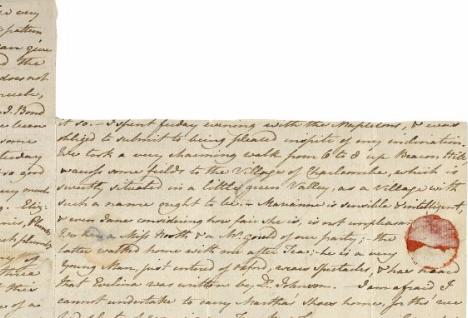
A portion of Jane’s letter has been cut out. Image@Morgan Library

When they read their missives out loud to the family, the Austen sisters had a habit of censoring each other’s letters and leaving out sections that were meant to remain private.  Jane might have given us a clue in Pride and Prejudice on how Cassandra was able to go through thousands of letters and locate information that she was unwilling to pass down for posterity. In some instances Cassandra cut out the offending sentence, but generally she destroyed the entire letter. How did she know where to cut out only one sentence or passage?

This scene, in which Lydia has joined Colonel and Mrs. Foster in Brighton, gives us a clue:

When Lydia went away she promised to write very often and very minutely to her mother and Kitty, but her letters were always long expected and always very short. Those to her mother contained little else than that they were just returned from the library, where such and such officers had attended them, and where she had seen such beautiful ornaments as made her quite wild; that she had a new gown or a new parasol, which she would have described more fully, but was obliged to leave off in a violent hurry, as Mrs Forster called her and they were going to the camp; and from her correspondence with her sister there was still less to be learned, for her letters to Kitty, though rather longer, were much too full of lines under the words to be made public.

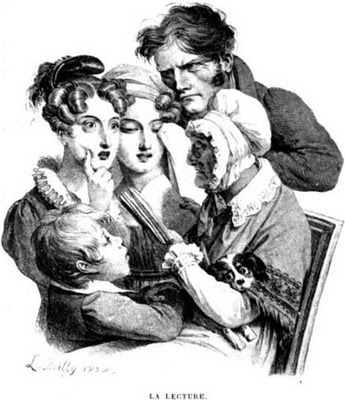
Reading out loud

Note how Kitty could not reveal the words and sentences that Lydia had underscored with lines, even to the family. Did Jane use such a system with Cassandra to keep her private thoughts only for her sister?  I’m curious to know.

Inquiring readers, guest blogger Tony Grant is a marvelous photographer, as you might have discovered from the images that accompany his posts. A week or so ago he wrote a post about door knockers. He provided only two original images: the rest came from the web. Last weekend he rectified the situation, saying:

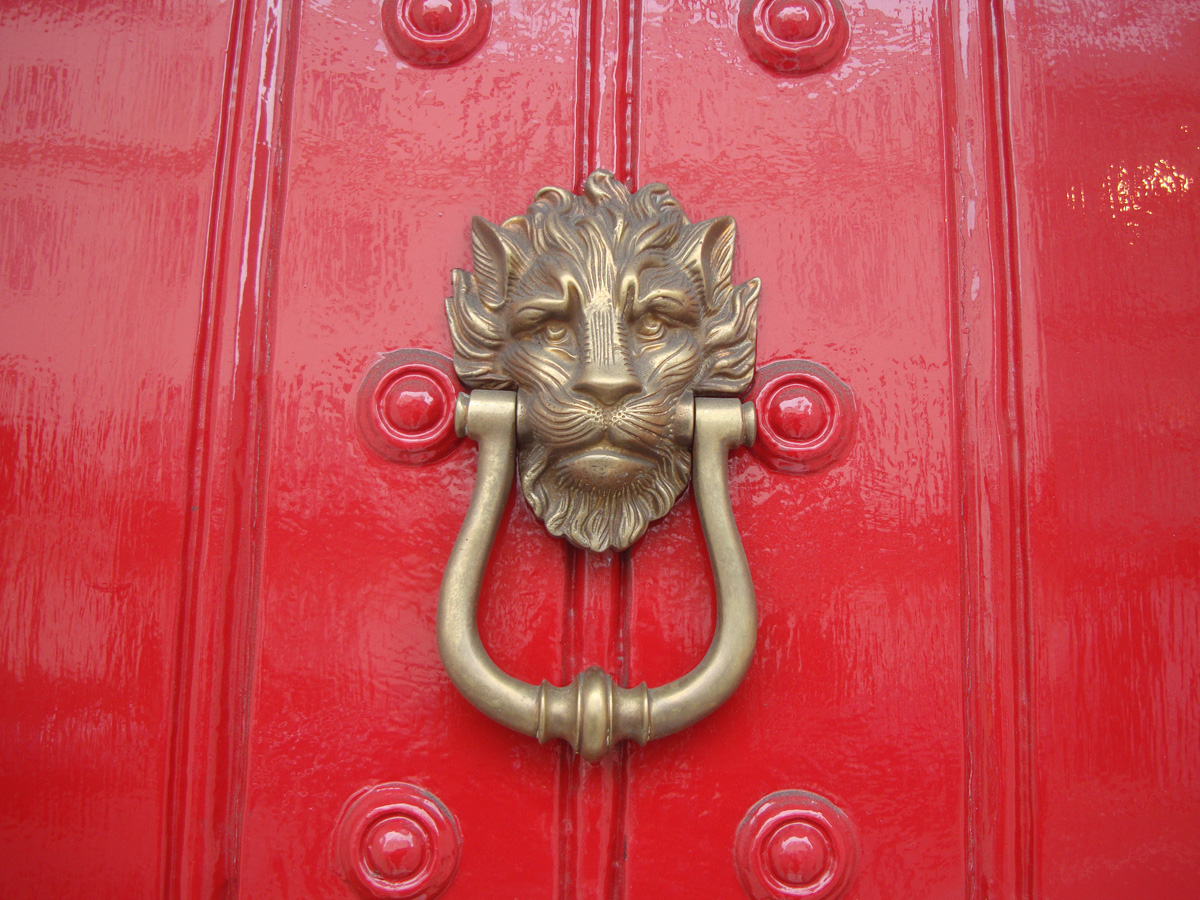
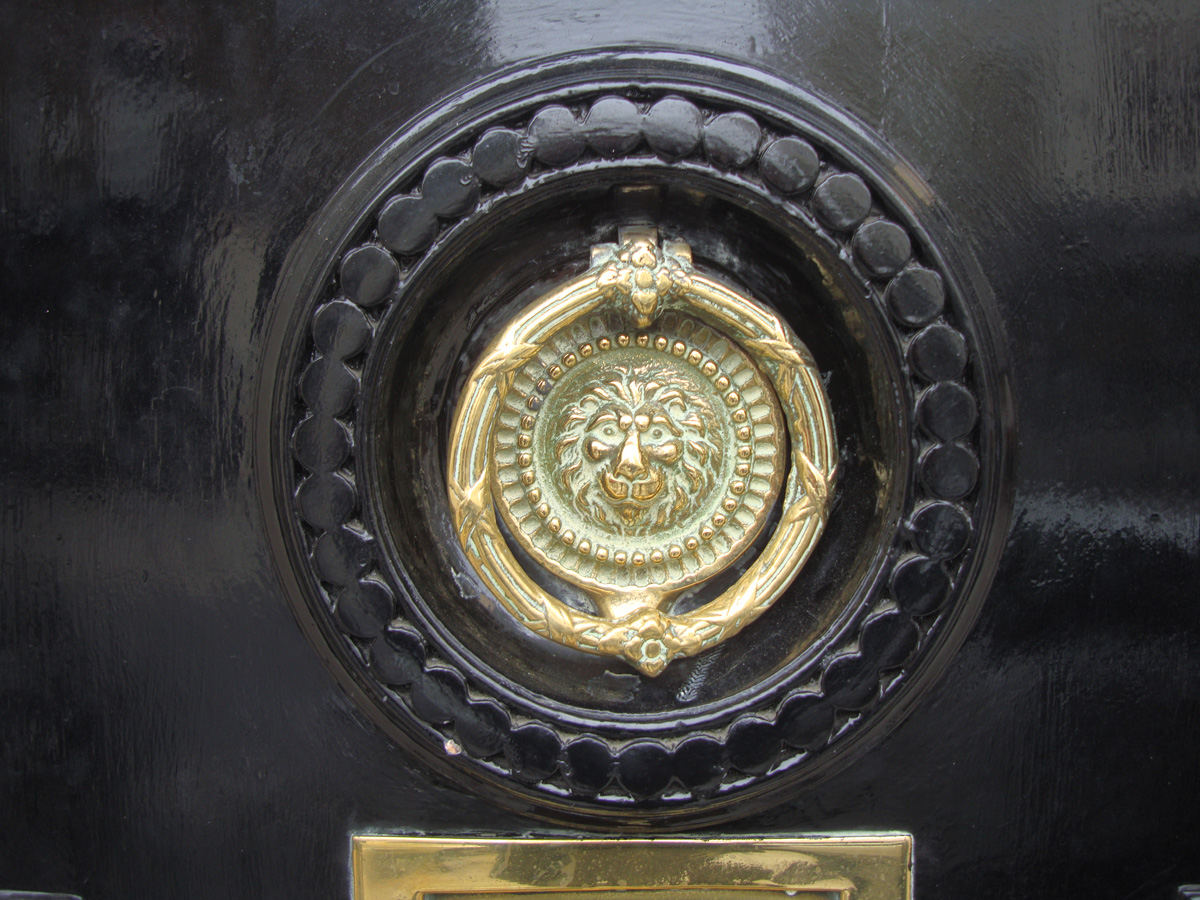
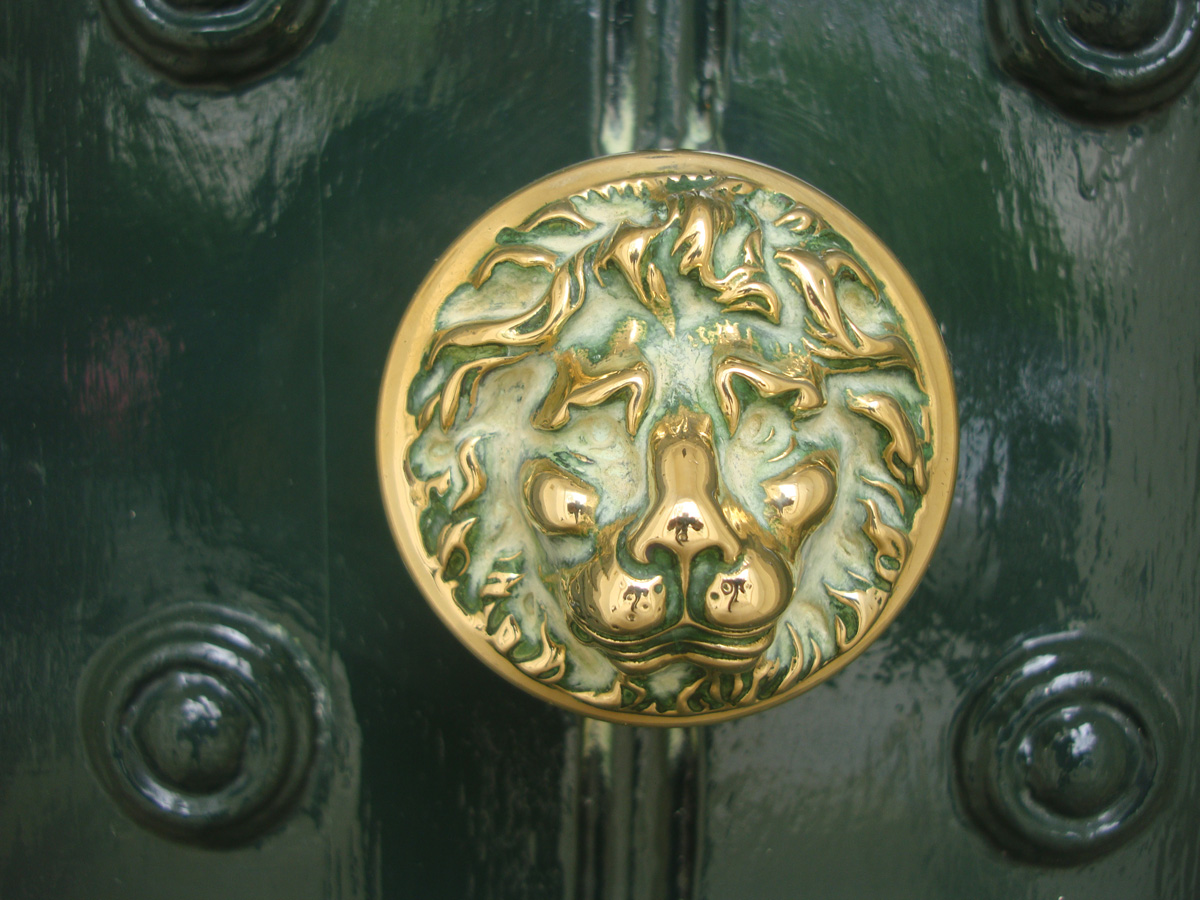
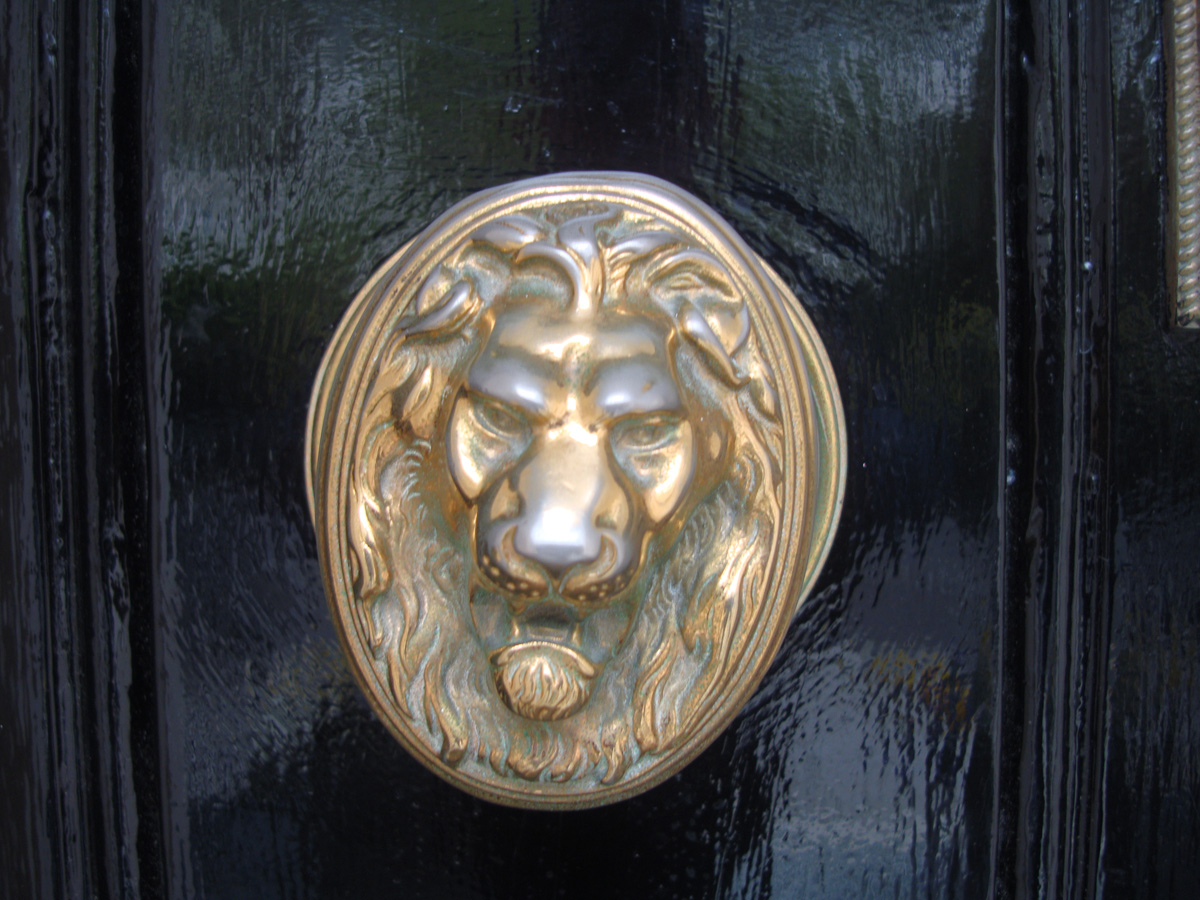
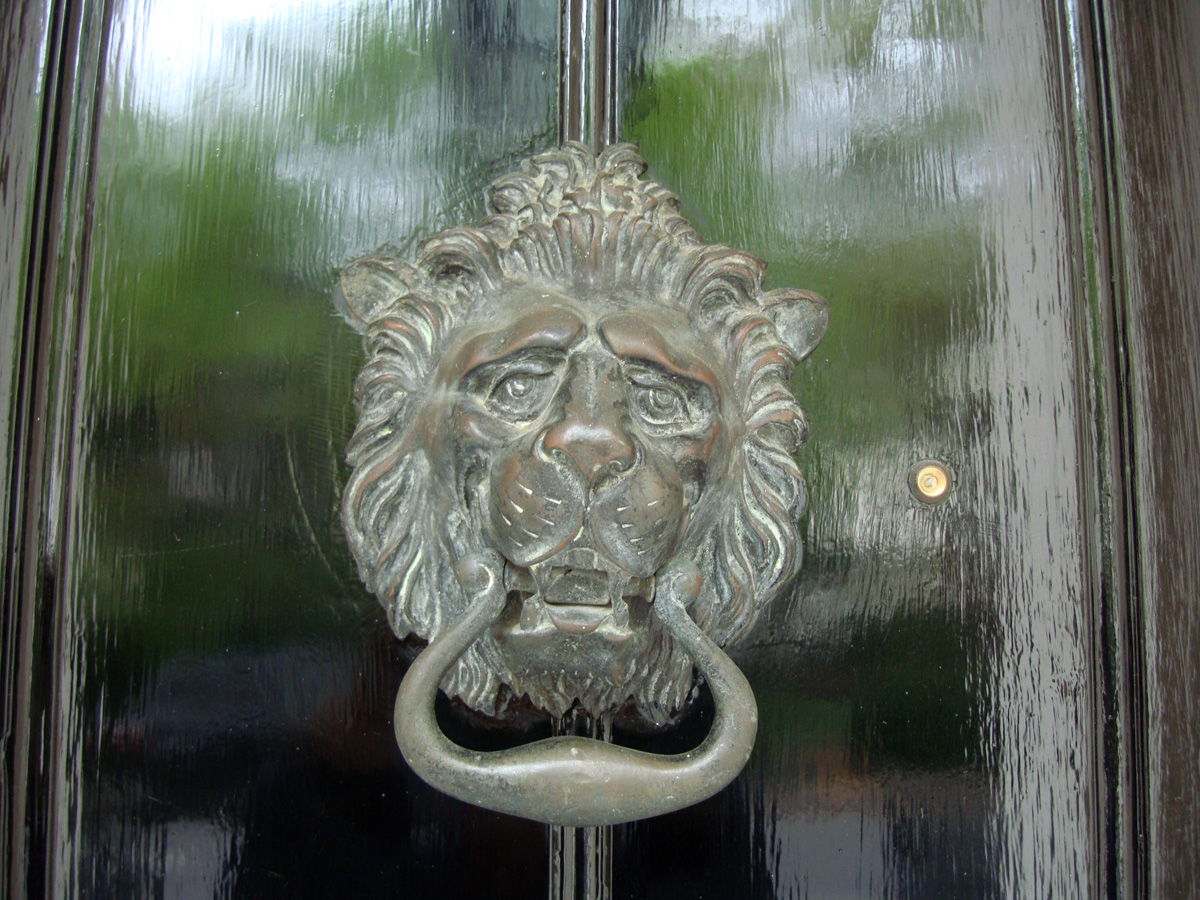
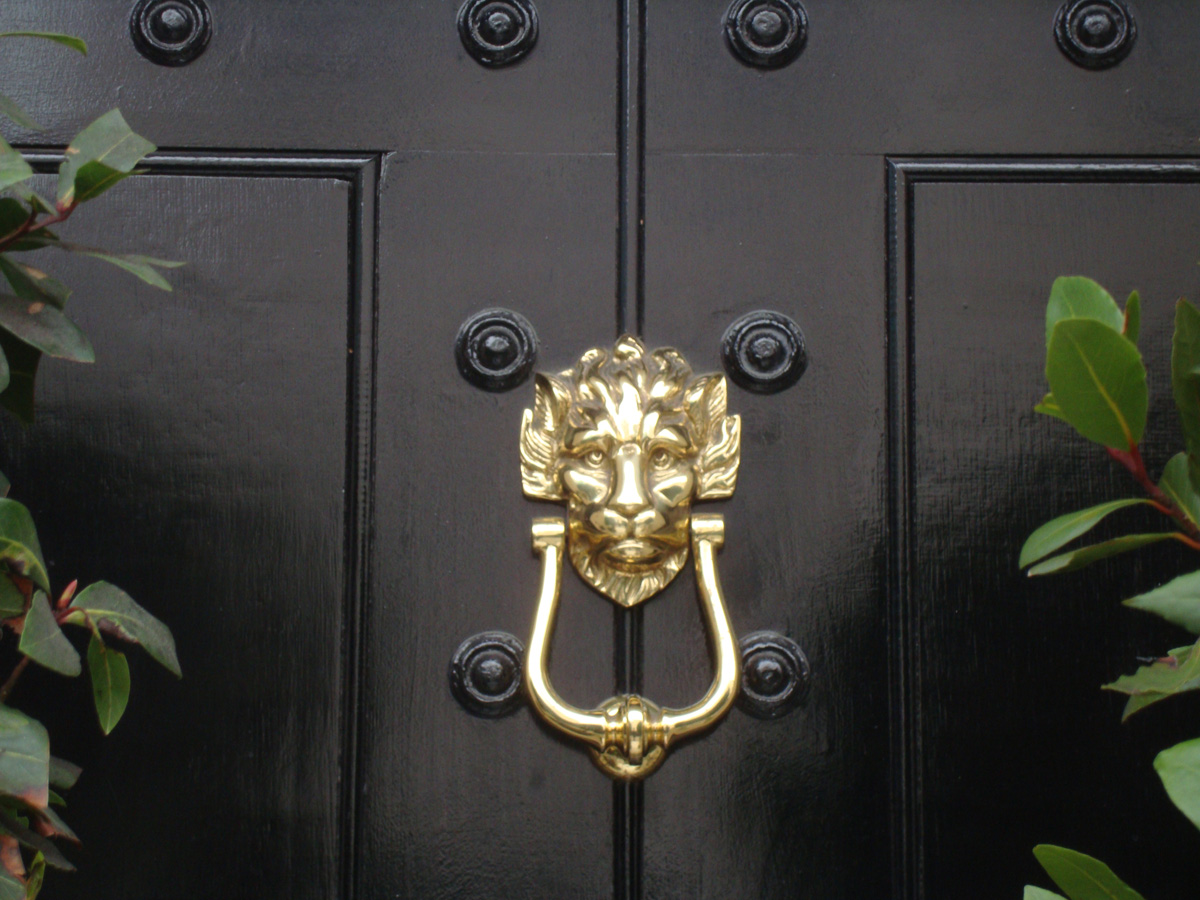
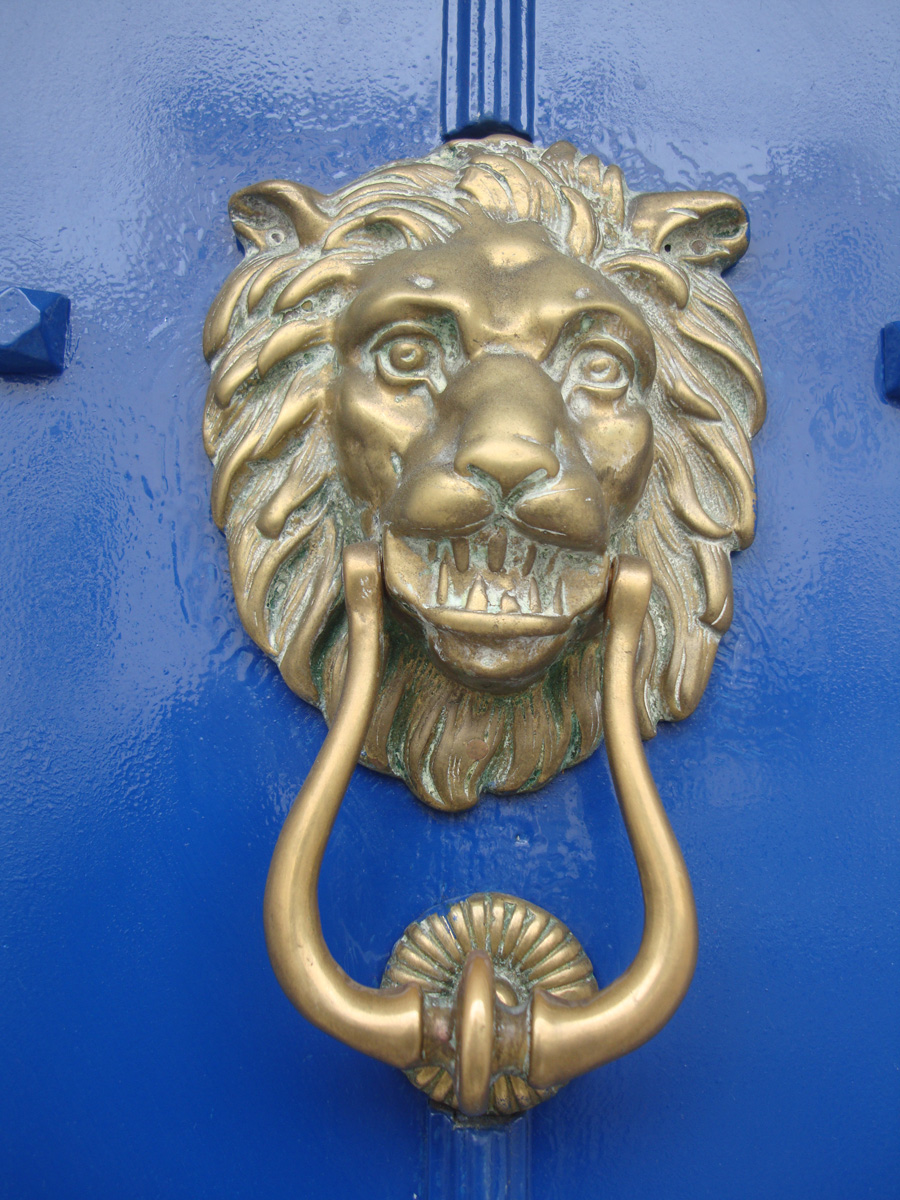
I drove into London to meet my daughter off the Cardiff coach at Victoria Coach Station today. I think I did an article on Belgravia once connected with the upstairs Downstairs series. Victoria is in Belgravia.To cut this story short, I had time to have a walk around Belgravia and along Eaton Square. The doors to those houses have a superfluity of Lion head door knockers.
What I have discovered taking these photographs is that  each lion head has it’s  own personality. They are all different which means they were all made individually, each from their own unique mould.

What struck me in viewing those photos is how beautifully painted the doors are. Tony is right – the lions all have their own personalities! Enjoy. Click on each image to view the larger photo.

Happy Mother’s Day!

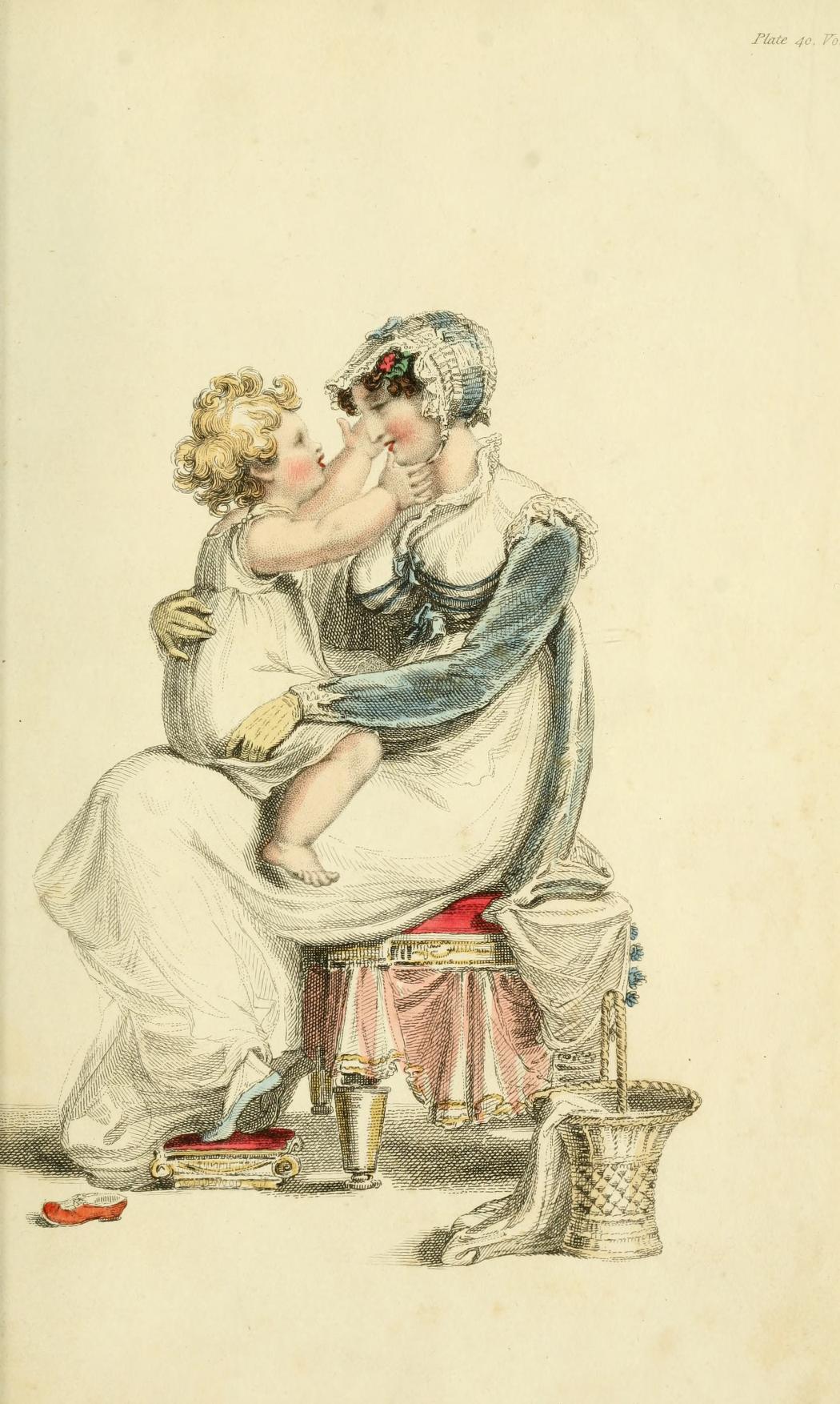
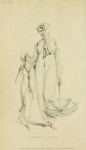
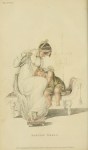
I’ve placed these gorgeous Ackermann fashion plates here  to wish my readers who are mothers a Happy Mother’s day. Aren’t these images precious?

1812 morning dress or domestic dress.

Click on images to enlarge.

1826 evening gowns, March.

Jane Austen loved games and a good laugh. Had she lived today in the U.S.A., she would most likely have been a listener of NPR’s “Wait Wait … Don’t Tell Me!” a talk show in which the weekly news is rehashed in a humorous format. Each week the radio show features a segment called Bluff the Listener, in which guest callers must guess which of three choices read to them is true. In this one the caller was told:

“The wisdom of the ages are found in the classic books of Western Civilization. The problem is, though, most of those important books are super boring. This week, we heard about an exciting adaptation of classic literature to a 21st Century form. Our panelists are going to tell you three stories. Guess that true story …”

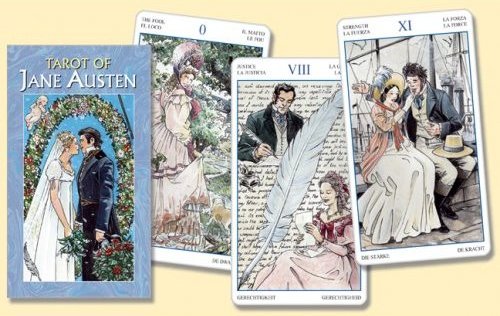
Jane Austen tarot cards

The first story was about a deck building card game, featuring characters from classic literature:

CHARLIE PIERCE: The people behind “Magic: The Gathering” have spent a few years trying to find new frontiers of nerdery to which they can bring the youth of America, and they’ve come up with an idea for all dweebs, an adventure card game, starring the heroes of classic literature.

Each character, in what is going to be called The Dark Library, will be possessed of all the qualities developed for them by their original creators, plus a character-specific superpower bestowed by the makers of the game.

For example: Queequeg, Tashtego and Daggoo, the three harpooners from “Moby Dick” will each get you 125 marksmanship points. While Montresor, the dark villain of Edgar Allen Poe’s, “The Cask of Amontillado,” will carry with him 50 brooding points, capable of being overcome only by a greater number of optimism prime points, such as the combined one thousand OP points possessed by the Bennet sisters from “Pride and Prejudice.”

(SOUNDBITE OF LAUGHTER)

PIERCE: There will also be a special gold edged Mr. Darcy card, of which on five hundred will be made, that trumps every Jane Austen character, except Emma Woodhouse, whose archery skills will lay him low.

(SOUNDBITE OF LAUGHTER)

PIERCE: “This is a field we’ve been itching to get into,” said Martha Willows Gausman, the company’s director of marketing. “The number of possibilities are absolutely limitless. And now that zombies have made Jane Austen cool again, the youth market is wide open.”

Alas, this card game was completely made up and was not the correct choice. To hear the entire Bluff the Listener game or to read the transcript, click on this link.

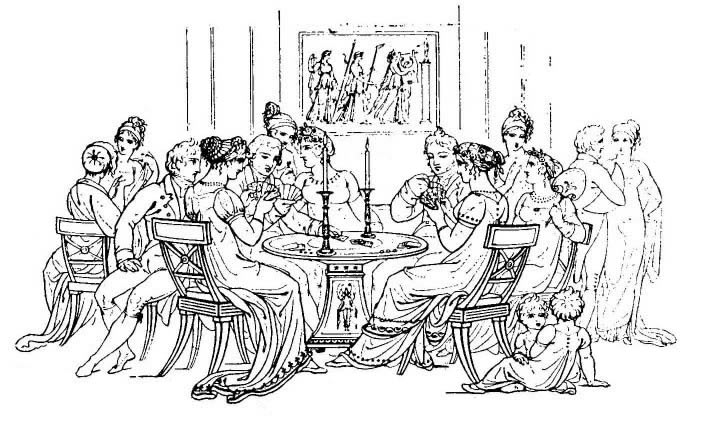
Regency card party