Feeds:
Posts
Comments

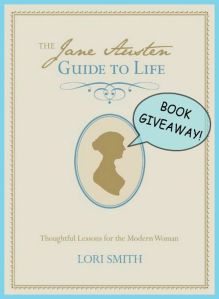
The contest is open until May 15th. You have two chances of winning this book by leaving a comment. Click on image to enter.

Nearly 200 years after her death, Jane Austen is more popular than ever with publishers and readers. Many of her fans are attracted to her era, which they identify as one filled with grace, gentility, and good manners. In The Jane Austen Guide to Life: Thoughtful Lessons for the Modern Woman, author Lori Smith examines Jane Austen’s novels, letters, and life for insights that can help guide today’s woman through life’s passages. There is much good material to digest.

The most important thing is family. Jane was blessed with a large, supportive tribe. They encouraged her talents, reveling in her tales, giving her time to write, and enjoying her books as she was writing them. With much love and support she was able to pursue and develop her talent in an age when such a career was not easily open to women. When she began to write as a girl, Jane had no idea that she would ever make money from her talent, much less find the time to pursue her career.  Some lessons to extract from her persistence in writing are: Do what you would be willing to be poor for; temper your expectations; and share your gifts with the world.  Lucky for us Jane never gave up and weathered the dry giving for posterity six incomparable novels.

Lori Smith’s Guide moves from the essential to the romantic. Let me explain. It is hard to find true love if you don’t know what you want. So, Jane’s advice via Lori is: Be accepting of yourself. Be self-aware. And be sensible. If you’re never satisfied with yourself, then you can’t please others. It’s an axiom that Jane and her heroines followed:

Not only do Austen’s characters find love, they find themselves, and they improve themselves. They see their faults in ways they haven’t before. They realize what kinds of things they are capable of — and that at times they are capable of doing things badly — and this awareness spurs them to change.

Regarding romance, once a woman is open to changing her mind, she is receptive to so many possibilities – of the fact that she was wrong, of opening her eyes to others, of finding the right man. In Jane Austen’s era, a sense of community and belonging helped to guide a woman in the right direction. Jane’s characters (and the author herself) lived in a small, connected society, where friends and relatives knew many details about each other. This situation no longer exists for many of us today:

I think [Jane’s] greatest advice to us would be to keep our eyes open and watch carefully, to not commit too quickly before we really understand a guy’s character.

Spoken like our wise mothers. The Guide continues to cover such topics as saving and spending, gratitude and enduring hardships. In the end, Jane shows us to live life to the fullest and to enjoy every moment. She was capable of making fun of herself and laugh even when things were not going her way.

Even the smaller things, that for most of us would only annoy us and lead to complaint, Jane approached with humor. She told Cassandra, “I will not say that your Mulberry trees are dead, but I am afraid they are not alive.”

In the end, no one can live our lives but ourselves. We can only follow our inner guide and the principles we have chosen to live by.

Lori Smith’s  The Jane Austen Guide to Life: Thoughtful Lessons for the Modern Woman continues to inform us about our lives through the lessons that Jane Austen and her characters can teach us. Like her first book. A Walk with Jane Austen, Lori’s clear writing style is a delight to read. One can almost hear Jane speaking through her words. This book is a wonderful gift for mother’s day, for mothers to give to their daughters, and for men to understand the mind of a fine woman. It is also delightfully illustrated.

I give it 4.5 out of 5 regency tea cups.

Book Giveaway: To enter the book giveaway, click on this link. Contest is open until May 15th. Sadly, only those living in the US and Canada are eligible. Please leave a way to contact you in your comment.

Order the book in both hard cover and eBook format:

  • Hardcover: 224 pages
  • Publisher: skirt! (May 1, 2012)
  • Language: English
  • ISBN-10: 0762773812
  • ISBN-13: 978-0762773817
I’ll admit it: The only thing that Jane Austen and Sherlock have in common, aside from their Britishness, is PBS and the BBC, who co-produce the many excellent film series and costume dramas that Jane Austen fans enjoy. That is my main excuse for reviewing a mystery set in the modern age. After watching Season One of Sherlock,  I eagerly looked forward to Season 2. I was not disappointed with the first episode, A Scandal in Belgravia. A number of viewers in the U.K., however, were outraged.

Lara Pulver as Irene Adler, dominatrix

Parents who watched the Belgravia episode with their young children wrote to the BBC complaining about the plot – which revolved around a dominatrix – and the nudity. While no female parts were anatomically shown, a great deal of bare flesh was displayed for about 2-3 minutes. I seriously doubt that young children are able to understand the double entendres spoken by Sherlock and Irene Adler (Lara Pulver), the woman whose craftiness and intelligence equals his. Much like a championship tennis game or chess match, it is great fun to watch these two characters connive, spar, tease and flirt in a game of mental and verbal one upmanship. And so, I surmise, that the irate parents were concerned about nudity, not subtext. Frankly, I’d be more angry about the explicit violence their children are exposed to in film and on television and try to put a halt to that, but what do I know?

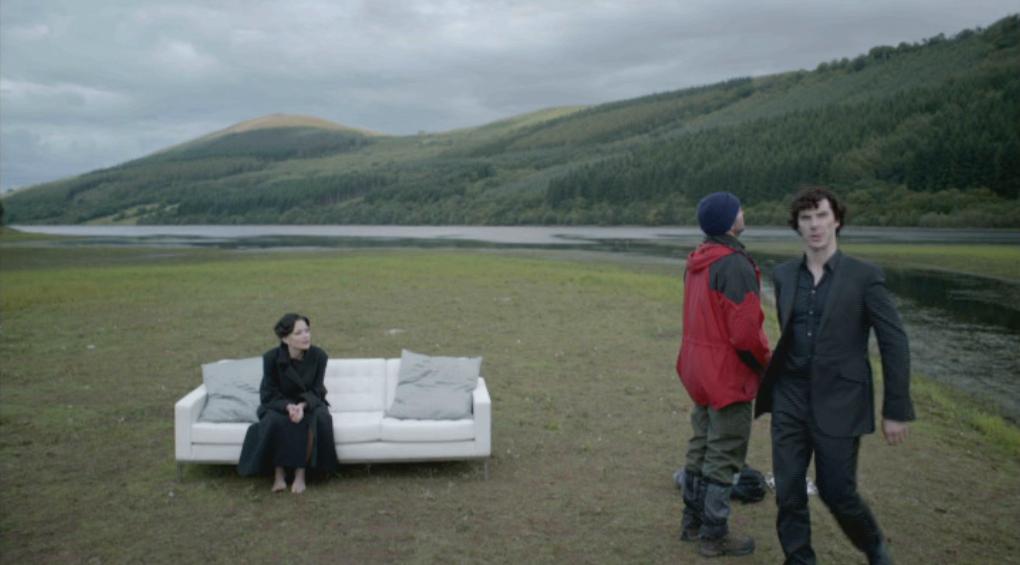
Irene talks nonchalantly as the two men try not to react.

The plot in the first Season 2 episode is really is not so much about solving the mystery as about Sherlock finding himself  in thrall of Ms. Adler’s devious mind. A dominatrix who possesses incriminating photos of her sexual involvement with a British royal, she is able to do mental battle with Sherlock and hold her own. Upon first meeting her, Sherlock cannot make a “read” on her, for she reveals no clues about herself. How could she? She’s naked.  And so he finds her irresistibly intriguing.

Sherlock and Dr. Watson in Buckingham Palace. Unwilling to come, he refused to dress, a fact that barely surprised his roommie.

Some critics yawned at the plot, but I think they missed the point. This episode is all about Irene Adler tempting Sherlock out of his celibacy and distracting him with sexual thoughts. The episode was purportedly written to deflect any thoughts about Sherlock and Dr. Watson engaging in a homosexual relationship. I never had such a thought, but apparently many did.

Tit for tat. Cumberbatch gets to do a partial nude scene.

Once again Benedict Cumberbatch has done an outstanding job in portraying a man who, aside from his brilliant mind, is completely off his rocker. To me he is the definitive Sherlock. No other actor, past or present (even Robert Downey Jr) can match him in my eyes. By now, Dr. Watson (Martin Freeman), has grown accustomed to his strange roommie, and can anticipate how Sherlock will react at any given moment. The two odd friends have solidified into a smooth-working team.

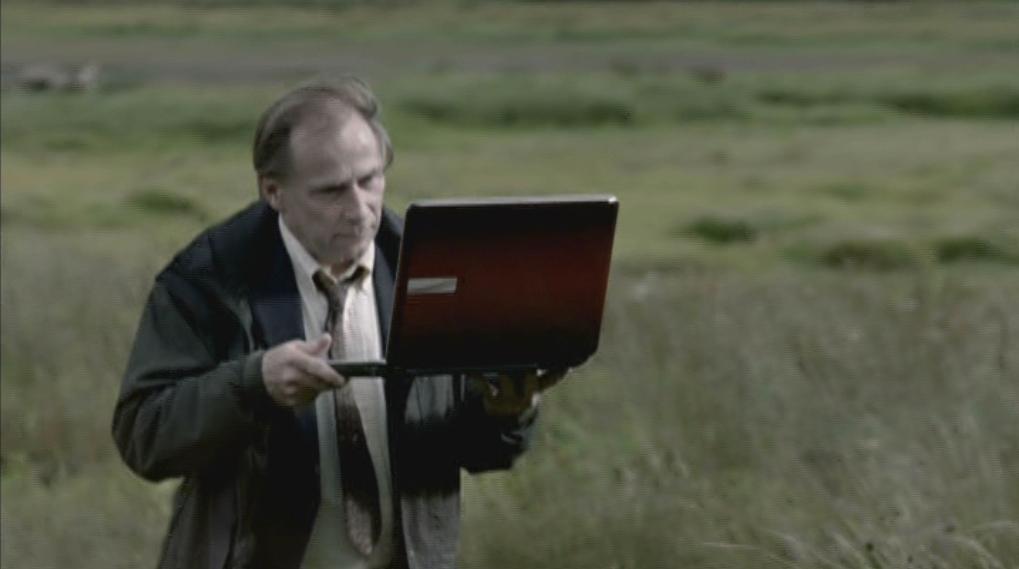
Sherlock refuses to visit the crime scene, but is willing to study the site via WiFi. In this scene he is lecturing the inspector for suspecting the suspect.

Guest star, Lara Pulver, is one brave actress. Not only did she perform an important scene entirely in the nude, she was convincing as the woman who could outsmart Sherlock. I was highly captivated by their interplay.

Sherlock and Irene Adler discuss the crime in her sitting room. The camera zooms in on the actual scene as the two are solving the mystery. It’s these original touches that make this series so visually exciting.

If , after reading my take on the first episode, you still think the topic of A Scandal in Belgravia is too mature for your children, I suggest that you rent a movie for your offspring, trundle them off to a different room, then sit back and enjoy one of the more weirdly satisfying and witty mystery series on TV.

Sherlock will air tonight and on May 13th and May 20th for 1 1/2 hours at 9 PM EST (or check your local listing.) PBS has also arranged a twitter party during these events. Hash tag #SherlockPBS.

The episodes will stream online at PBSs website one day after the initial air date. Click here. 

Read my reviews of Sherlock Season One here.

Elegancy and Decadence: The Age of the Regency is a BBC production hosted by Lucy Worsley, the author of If Walls Could Talk: An Intimate History of the Home. The video is one hour long. So, sit back and enjoy.

Gentle Readers, Frequent contributor Tony Grant has supplied us with yet another treat: a post about door knockers. After you have read it, you will want to hop on over to his blog, London Calling, in which he describes his trip to Venice. 

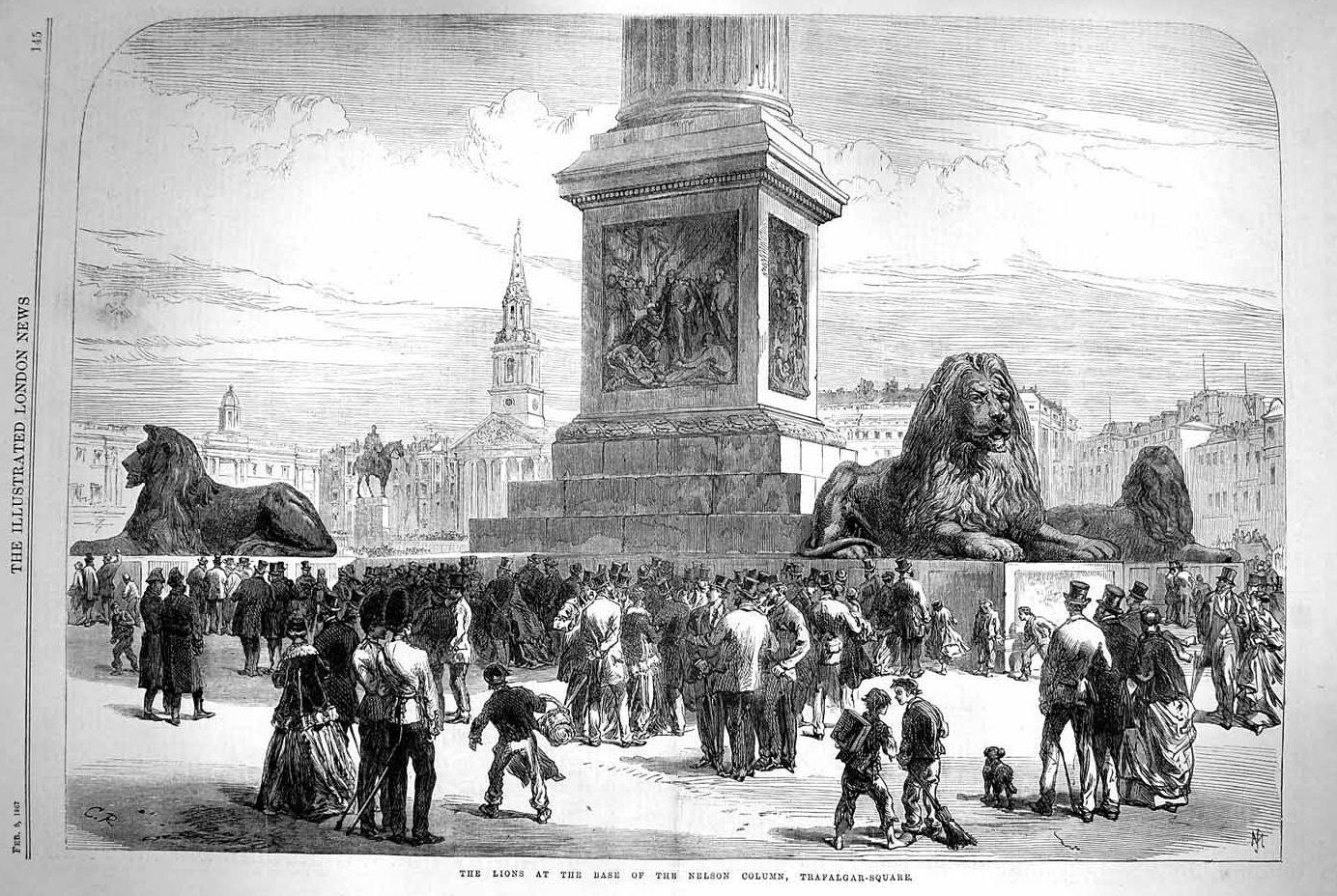
The quintessential door knocker in Georgian architecture is the brass lion head with a large brass ring gripped in its mouth. It has been used as a symbol of Great Britain for centuries. Trafalgar Square has four enormous bronze lions positioned on great granite plinths at the four corners of the base of Nelson’s Column. They are made from the melted down bronze from canons captured from French ships at The Battle of Trafalgar.

Lions at the base of Nelson's Column, Trafalgar Square. Image @The Illustrated London News

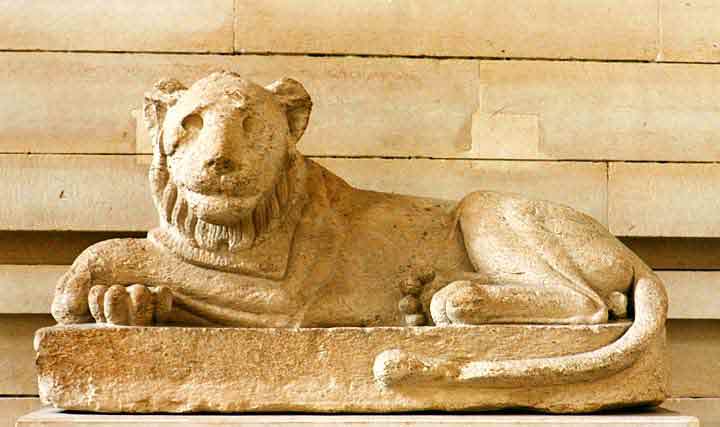
All coats of arms relating to the monarchy have lions as a prominent feature of their design, usually rampant. Lions have been used symbolically since the Paleolithic period.

Egyptian lion sculpture carved out of limestone, Louvre

The Egyptians carved sphinxes, half man, half lion. They symbolise power and strength, courage and fortitude.

Heraldic lion

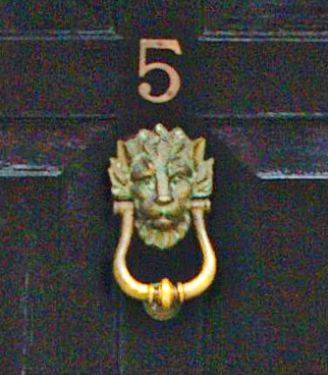
You can go to any part of London and you will come across Victorian or Georgian housing still with their original door furniture. Very often the door furniture will include a brass lion head door knocker. This could be a sign of Victorian and Georgian confidence. A sign for people of the greatest and largest empire the world has ever known. For the visitor it is their first contact with the house and a way of communicating their arrival by lifting the knocker and rapping it smartly against its back plate. The back plate to a lion head knocker is the lion’s head.

Lion door knocker. Image @Tony Grant

Knocking on a door does two things. First it makes the visitor take hold of the house. The hand grips the knocker. It is a like a handshake; a very English form of greeting. Secondly, through the sound of the knock it communicates to the occupants that somebody is visiting. The way the door is knocked can express other things too like haste, frustration, timidity or confidence.

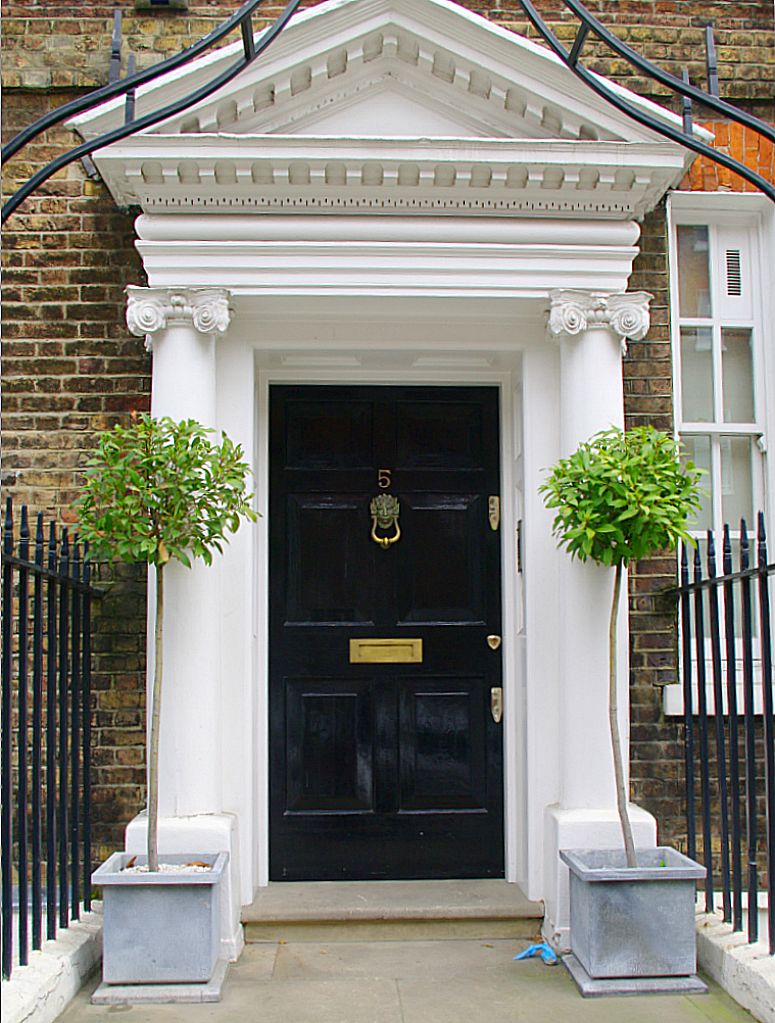
Front door with lion knocker. Image @Tony Grant

The fact that many Georgian houses have door knockers that are the originals means that we today in the 21st century, who are still using these door knockers to gain entrance, have a palpable, physical connection to people from past generations and from all classes of a past society.

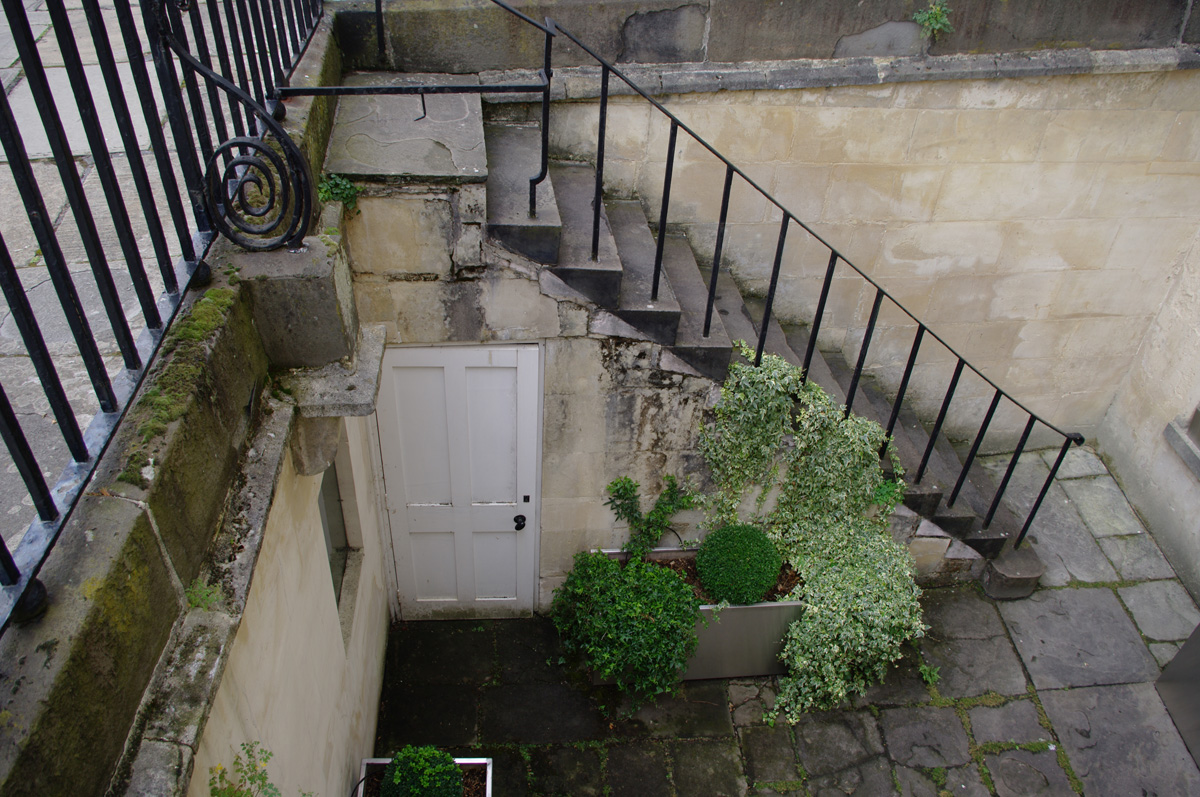
Downstairs to the servant's quarters, Bath. Image @Tony Grant

The servants belonging to the Georgian household would not have used the doorknocker of their own house. They would have slipped down the flight of stone steps near the front gate, to the servant’s quarters in the basement. However a footman or servant sent with a message or communication from another household would have used the front door knocker. The owners of the house would have knocked to alert their footman to open the door to them and their friends would have knocked to gain entrance too.

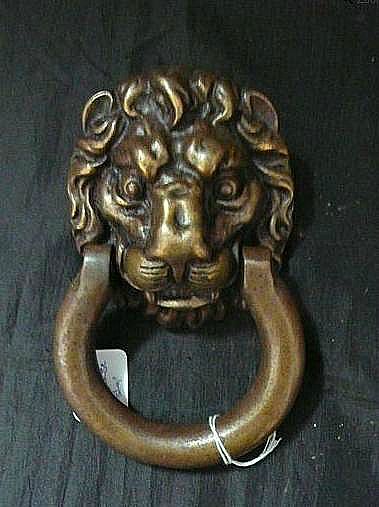
Door knocker made of brass. Image @Ruby Lane

A lot of door knockers are made from brass. Some are iron. Brass is a very special metal. It has a golden lustre when polished and expresses wealth, a friendly glow and a welcoming feel. Iron on the other hand can be aggressive and harsh. Iron against iron can cause a spark. It can rust and have unfriendly qualities. Brass on the other hand is benign. It is a malleable metal and has acoustic properties. In fact the brass door knocker on a Georgian front door can almost be regarded as a percussion instrument. The solid wooden door is the drum skin and the entrance hall behind it is the chamber within which the sound resonates and vibrates.

J. L. Settle door knocker at Portsmouth

Brass is used for many purposes, including bullet cases, artillery shell casings, horse accoutrements, locks, bearings, gears, musical instruments, horns and bells. It does not create a spark. It is low friction.

Brass is an alloy, which almost makes it a magical thing. It is an alloy of copper and zinc. The proportions can vary between the two metals to create different qualities in the brass. It is a substitutional alloy. This means that when the copper and zinc are melted together they replace some of each other’s atoms with their own atoms. Brass has been made since Roman times. You can imagine in the middle ages or earlier and perhaps even up to Georgian times people regarded blacksmiths and workers of metals almost as magicians being able to smelt ores and extract pure metals from their furnaces to make the most magical things. Brass is a difficult alloy to make, even more so than other alloys. Copper can be smelted easily but zinc cannot be smelted from it’s ore. Brass has to be created through what is called a cementation process. This is when smelted copper is mixed with the unsmelted zinc ore. This means that many impurities are included and the slag that is created has to be carefully separated during the alloy creating process. Zinc comes from rocks called hemimorphite and smithsonite. Lead is something that is also added to some brass alloys to create a different quality. However, sometimes, the lead leaches from the finished brass. Imagine that rubbing onto some unsuspecting visitors hands. Particles of lead unseen on the hands and transferred to the mouth and the digestive system.


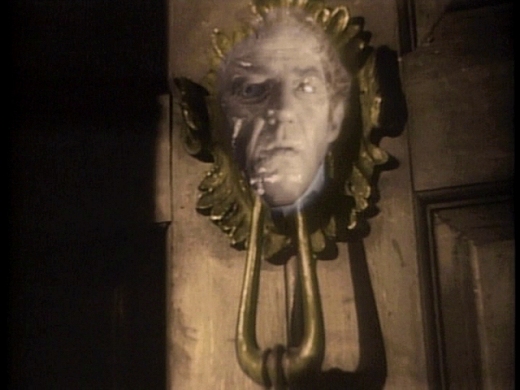
That thought lends new credence to the famous scene in Charles Dickens a Christmas Carol when Scrooge returns home on a cold misty winters night,

Now, it is a fact, that there was nothing at all particular about the knocker on the door, except that it was very large.  It is also a fact, that Scrooge had seen it, night and morning, during his whole residence in that place; also that Scrooge had as little of what is called fancy about him as any man in the city of London, even including — which is a bold word — the corporation, aldermen, and livery.  Let it also be borne in mind that Scrooge had not bestowed one thought on Marley, since his last mention of his seven years’ dead partner that afternoon.  And then let any man explain to me, if he can, how it happened that Scrooge, having his key in the lock of the door, saw in the knocker, without its undergoing any intermediate process of change — not a knocker, but Marley’s face.

Marley’s face.  It was not in impenetrable shadow as the other objects in the yard were, but had a dismal light about it, like a bad lobster in a dark cellar.  It was not angry or ferocious, but looked at Scrooge as Marley used to look: with ghostly spectacles turned up on its ghostly forehead.  The hair was curiously stirred, as if by breath or hot air; and, though the eyes were wide open, they were perfectly motionless.  That, and its livid colour, made it horrible; but its horror seemed to be in spite of the face and beyond its control, rather than a part or its own expression.

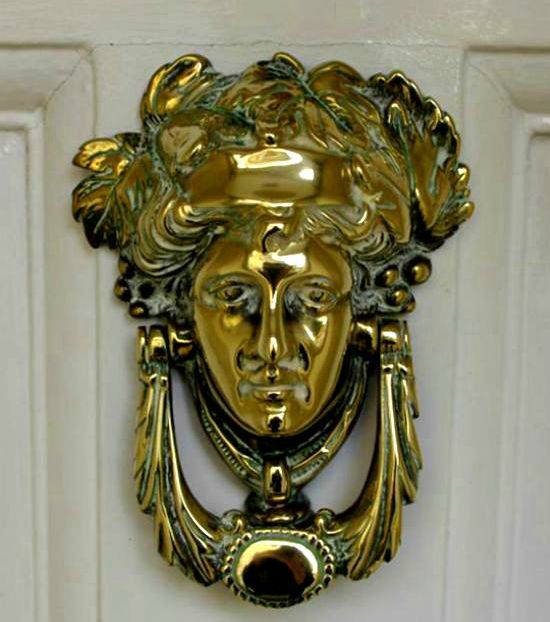
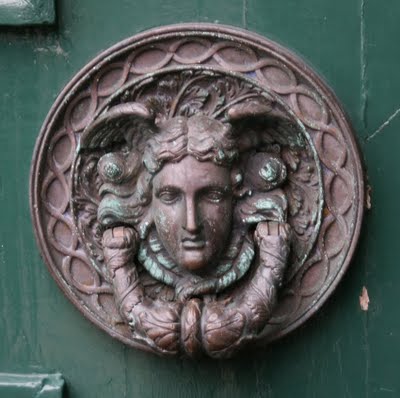
Another form of door knocker - that of a Roman god wearing a laurel wreath, Bath. Image@Tony Grant

As Scrooge looked fixedly at this phenomenon, it was a knocker again.

To say that he was not startled, or that his blood was not conscious of a terrible sensation to which it had been a stranger from infancy, would be untrue.  But he put his hand upon the key he had relinquished, turned it sturdily, walked in, and lighted his candle.”

Was it lead poisoning that was rotting Scrooges brain or just tiredness, misery, the cold and mist and darkness playing tricks with his imagination and senses?

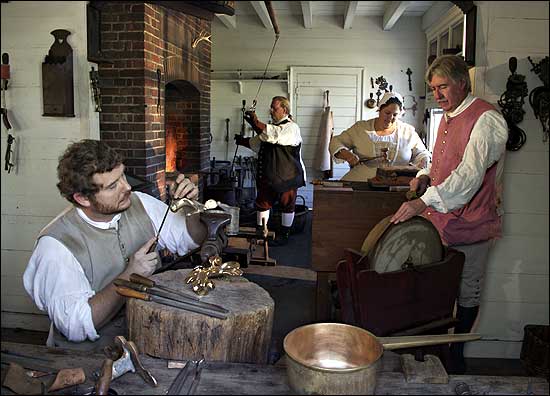
Filing a door knocker. Image @History.org Foundation Journal

To make a lion head door knocker a few technical and difficult processes have to be carried out. A mould has to be made. A carver carves a lion head pattern out of wood. A mould maker uses a box filled with a mixture of sand and clay to make a fire-proof  mould. The wooden pattern is pressed into the sand and clay composite and a lion head knocker mould is thus created. The molten alloy of copper and zinc that creates the brass is then poured into the mould and left to cool and solidify. When cold the brass knocker can be extracted and filed and sanded down to get rid of any rough surfaces. In this process, craftsmen, metal workers geologists and miners would form a trail of work and economy. Finally the finished  door knocker would have been sold to a carpenter making a door to then be sold to a builder who would fix the door in the house he made for a new purchaser.

Door knocker at the Brighton dome at the Brighton Pavilion, early 19th c.

More on the topic:

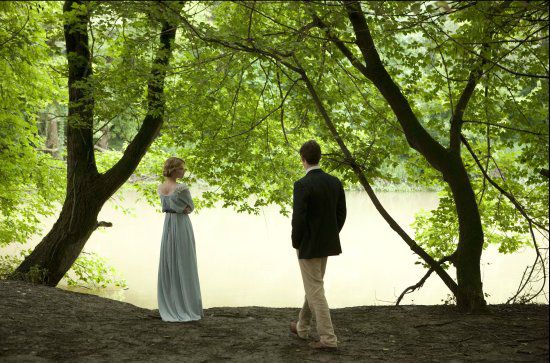
The second episode of Birdsong just aired on PBS Masterpiece Classic. If  you missed the series, you can watch both episodes online at this link through May 29th. I urge you to watch it. This is not a review of the show, simply my reaction to it, as I don’t want to reveal too much of the plot.

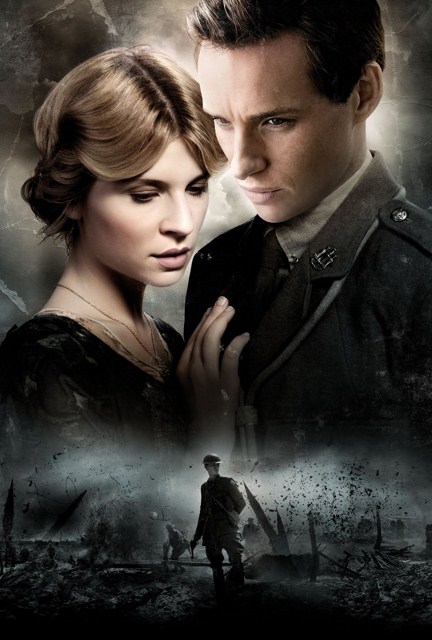
Eddie Redmayne and Clemency Poesy as the star crossed lovers

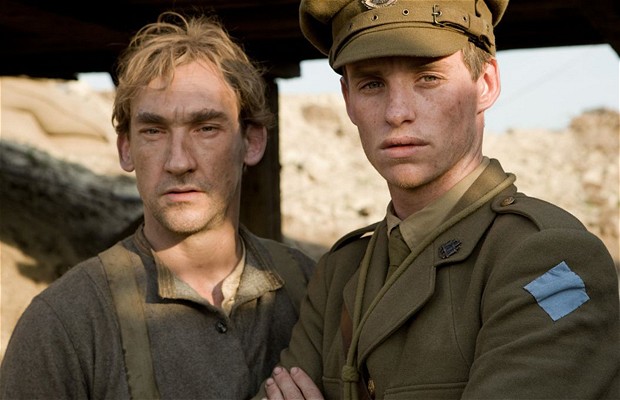
Eddie Redmayne is perfect as Stephen Wraysford. He effectively portrays Stephen as a boyish man when he meets Isabelle (Clemency Poesy), and grows up in front of our eyes as he experiences heartbreak and the horrors of war. The final scene had me reaching for yet another hanky.

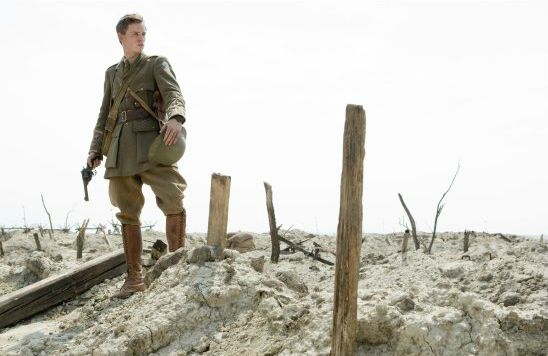
Even on the battlefield, Stephen's thoughts are not far from Isabelle

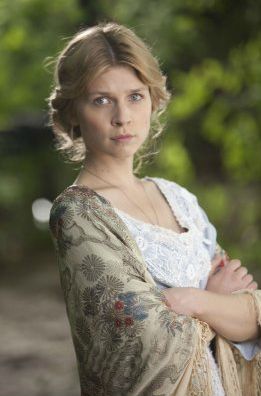
Clemency Poesy is simply splendid in the part of the unhappy wife who turns to Stephen for love and comfort, and so was Joseph Mawle as Jack Firebrace.

Clemency Poesy as Isabelle

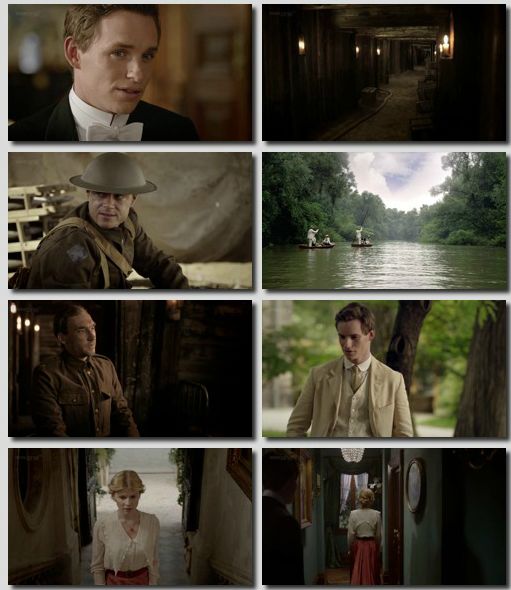
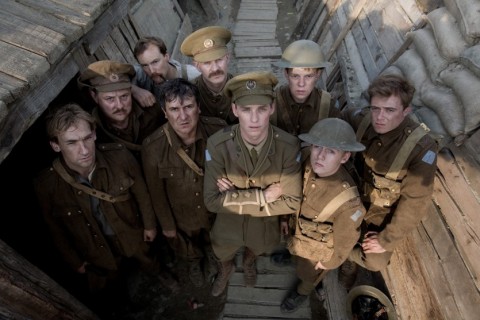
I have read a number of accounts of the Somme offensive, all of them horrifying. This film does justice to the young men who lost their lives in what can only be described as a scene from hell. At first I wasn’t sure that I would like the frequent cutting back and forth from the battle scenes to Stephen’s memories of his love affair with Isabelle at Amiens, when the countryside looked beautiful and pristine, but now I think the director and writer made the right choice.

Had we watched the story unfold chronologically, the unrelentingly harsh scenes in the trenches and on the battlefields would have worn me down. Just when the story became too emotionally raw for me to take in, the scene would shift to a softer, more romantic time, when Stephen’s life was starting out and he was filled with hope and ambition. There were perhaps a few missteps when the scene would cut away abruptly, but overall I began to see and look forward to the visual and emotional rhythms that this technique created. Life in the trenches was gray and dull and beige. Life with Isabelle was filled with sunshine, lush interiors, birdsong, and green leafy trees.

Eddie Redmayne portrayed Angel Clare in Tess of the d’Urbervilles. His face, with its unique bone structure, is as sensitive as James Dean’s. Coming off his acting stints in My Week With Marilyn, Pillars of the Earth, and his current role as Marius Pontmercy in Les Miserables, I have no doubt we will see him in many more films in the future.

The relationship between Jack Firebrace (Joseph Mawle) and Stephen Wraysford is as important as Stephen's with Isabelle.

As an aside, I urge those of you who enjoy these great PBS offerings to support your local PBS stations now that their funding has been greatly reduced. I was so sad to hear that the NEA sharply cut its funding for PBS. If you enjoy Masterpiece Classic and Masterpiece Mystery, and all the great arts specials, then we must individually step up to the plate and support PBS. Thank you for reading my rant. (And, no, I was not paid to make it! :))

An emotional scene after the Battle of the Somme was when the names of the men of one unit who had gone into battle were called. Only one replied.