Feeds:
Posts
Comments

Ladies shoes, 1810

In a previous post, I discussed how ladies slippers and boots were so delicately made that they could not withstand much wear and tear. In fact, a lady would not venture to walk outside the house in rainy weather and would be confined inside, whether she was in the city or country. Jane Austen described a rainy day in Mansfield Park:

… to poor Miss Crawford, who had just been contemplating the dismal rain in a very desponding state of mind, sighing over the ruin of all her plan of exercise for that morning, and of every chance of seeing a single creature beyond themselves for the next twenty-four hours; the sound of a little bustle at the front door, and the sight of Miss Price dripping with wet in the vestibule, was delightful. The value of an event on a wet day in the country, was most forcibly brought before her.”

1801, Two ladies in morning dresses, Nicholas Heideloff, Gallery of Fashion

In the country a lady would not soil her delicate kid slippers on grass or muddy lanes, but would walk along gravel paths in the shrubbery, as shown in the Heideloff image above. Elizabeth Bennet, who walked the three miles to Netherfield Park, muddying her petticoats in the process, would have worn sturdier shoes, such as those worn by the women in the watercolor below.

Studies of female figures with children, James Ward

Female fashionable attire in the eighteenth century was very ill fitted for country life, which is so largely spent out of doors. Indeed, it was not fitted for out door wear at all. No fashionable woman was properly shod in the first place, for the coloured shoes, which, as has been stated, all ladies wore, were not adapted for vigorous exercise, or damp weather, with their high heels and very open tops. Those were the kind of shoes worn for walking in London. Country life in shoes of that sort would mean endless expense. The wonder is that town bred women did not insist upon the shoemakers providing something more fitted for the dirty, uneven pathways. But, then, walking was not a daily exercise as it is now. Foot gear has undergone much reformation in the present century, in spite of the persistence of high heels…”

Knife Sharpener, W.H. Pyne. This traveling craftsman would have worn sturdy old boots like William Conway.

“… A notable itinerant trader of the middle of the eighteenth century, known to all Londoners, was William Conway of Bethnal Green, who made a living by selling and exchanging metal spoons. As he walked twenty five miles a day, Sundays excepted, his shoes were the most important articles of his attire, and these he made out of the uppers of old boots. A pair of shoes lasted him six weeks. He was an odd figure, with his long spindle legs encased in tight knee breeches, short coat, high hat, and bag slung over his shoulder.” – A history of English dress from the Saxon period to the present day, Volume 1, By Georgiana Hill , 1893, p 181

"Cash", Rowlandson, 1800. Note the dark leather slippers worn by the maid, and the sturdy buckled shoes by her elderly swain.

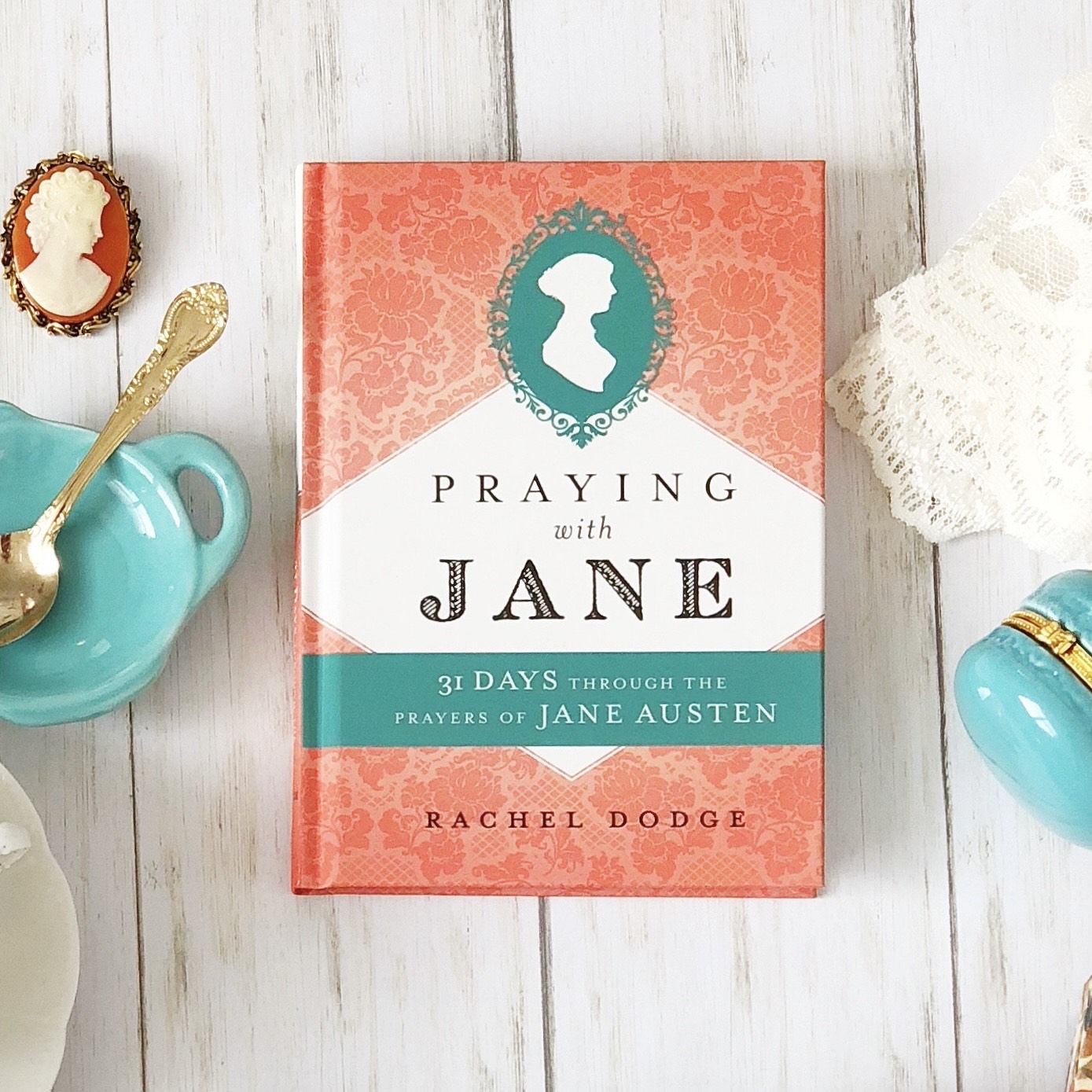
Review by Tony Grant.

To start with, it is a pleasure to be holding a book with a hard cover and with a glimpse of the brown and cream page binding at the top and bottom of the spine. It gives the reader the interesting, pleasurable knowledge that this is a sewn binding in the old style. Kindle can give us the effect, on its screen, of real paper but this book, solid and sharp cornered, is the real thing, an object with weight, a valued, well made artefact nice to hold. Having it in your hands is a pleasure to experience.

I love the contents pages divided into sections and then all the different article headings within each section beginning with,”How to…” There is something poetic in the repetition of these opening two words followed by an assertive verb.Yes, the contents are a pleasure to read in themselves and could be read out with passion, emphasise and feeling at any live poetry night, at my local pub anyway.

How to Become an Accomplished Lady…………………..16
How to identify “ The Quality”………………………………….22
How to ensure a good yearly income……………………..26
How to provide for your daughters & Young Sons…28

And so on. It’s mesmeric!

A couple of things made me wince. In Margaret’s introduction there is a sentence that goes thus. (I will come back to why I have just used the word ,”thus,” in a short while.)

“ All Janeites have heard the question at one time or another, whether from a friend, significant other, care worker, parole officer or a math teacher who caught said Janeite reading Emma under the desk during class.”

Margaret gives the game away with these, “Americanisms.” OK it is her introduction but I hope she intends this book for us British English speakers too? And also, I know I’m nit picking here, there are the odd occasion when these words appear: neighbor, endeavor, watercolor. I’ll say no more.

But on the whole and almost a hundred percent of the time, I absolutely love the way she uses language. I can hear the fun in her voice, the absolute thrill and joy of thinking and using the most gorgeous words and phrases., aplomb, guttersnipe, I chuckled at that one, impoverish, genteel, repine, overly impecunious, oh I just wanted to repeat that phrase again and again and she goes on, sentence after sentence, line after line, page after page, defray, small beer and skittles, a bit of working class culture creeping in there and it’s just such a joy to read and wallow in. I even think she used the word. “wallow,” at some stage. The best thing about this book is the joyous pleasure Magaret has with words. Oh yes!

So, coming back to why I used the word, “thus.” The above paragraph really provides the reason. Margaret, through her use of language, captured my mind and released my 18th century vocabulary store deep within my brain. I couldn’t help myself. It slipped out.

I do think this book is aimed at women rather than men. Here are some examples of Section headings and chapter opening lines.

“Well bred young ladies must acquire a store of accomplishments….”

“The mistress of the house is rather like a CEO of a major corporation…”

Get him back after you have quarrelled.

Converse with your dancing partner. (this chapter refers to how the female should make conversation with the male.)

There are references to male things, education, being a house owner and so on, but they are written about from a female point of view often just there to make a comparison with the female side of things.

It is also written as though the reader is middle class and discusses mostly middle class things. Once in a while there are references to the serving classes and aristocratic life, often written in the same breath as things about the middle classes. Perhaps there should be an explanation of the differences between the classes and the different lives they lead.

I think the sections at the back of the book are excellent. There is a very thorough and detailed index, a good glossary covering many words and terms. There is a good bibliography and resources list. These end sections will give the Jane Austen, and 18th century student a good starting point in a life long exploration.

Who do I think this book would be a good buy for? My daughter Emily is just completing her A’levels before she goes to university next year. Some of her friends are doing A’level English literature. This book would give them an excellent background and springboard into the life of Jane, her characters and the world of the 18th century. It would be an ideal companion to anybody beginning to read Jane Austen. They would be able to get their compass bearings set on a true course.

Contributed by Tony Grant, all rights reserved. Images by Tony Grant.

Brighton, the old Pavilion and Steyne, Charles Richards

Towards the end of her life Jane Austen was writing a new sort of novel, Sanditon. It appears to have been, in it’s far from completed form, an analysis of change going on in the world of the 18th century.The main female character in this story, Charlotte Heywood, is an observer of Sanditon, its development and its occupants. Through her eyes we the reader can see the social and environmental forces that are unfolding at Sanditon and the forces that act on its attempts to be attractive to people.

Brighton pier

In our own day we are creating new communities that we hope will be sustainable in materials, energy production and lifestyle. A community called Bedzed, near Croydon in Surrey, is just such a new development.

Brighton today

Sanditon is an 18th century exploration of how a new settlement may have occurred and mistakes made and Bedzed is a modern version showing how we can learn from the past.

Royal Pavilion at Brighton

Charlotte soon learns on her way to Sanditon that there are two Sanditons. There is the old fishing village set in a sheltered valley leading down to the sea and there is the new Sanditon high on a hill with cliffs overlooking the sea. The old home of the Parkers is set in the valley just outside the fishing village and it has orchards, gardens and meadows, all the resources for self-sufficient living and it is in a sheltered aspect away from gales and the worst of the elements.

Scarborough Beach

..in a shelterd dip within 2 miles of the sea, they passed by a moderate-sized house,well fenced and planted,and rich in the garden,orchard and meadows which are the best embelilishments of such a dwelling.”
The new Parkers home, Trafalgar House, is set high on a hill with no orchards and meadows and gardens and when they first arrive is being windswept by a minor gale.

Mr Parker has a concept of a seaside settlement centred around fresh air and spectacular views. Two very good ideals but missing many other requirements for a comfortable community to work.

Trafalgar House ,on the most elevated spot on the down, was a light elegant building, standing in a small lawn with a very young plantation around it about a hundred yards from the brow of a steep, but not very lofty cliff.”

Bedzed

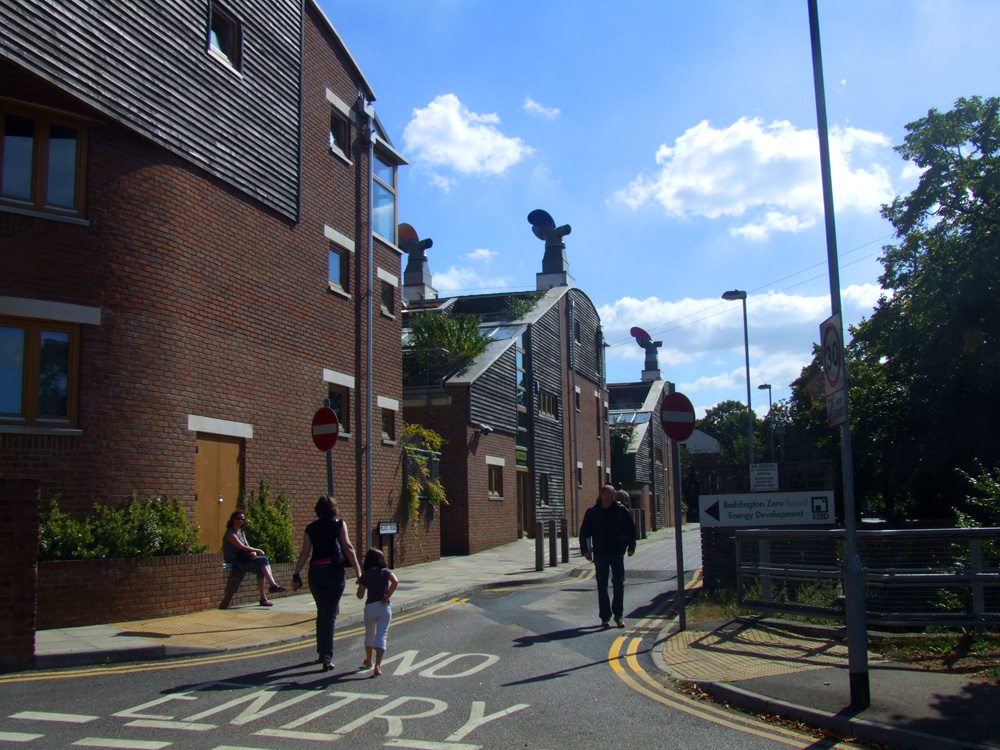
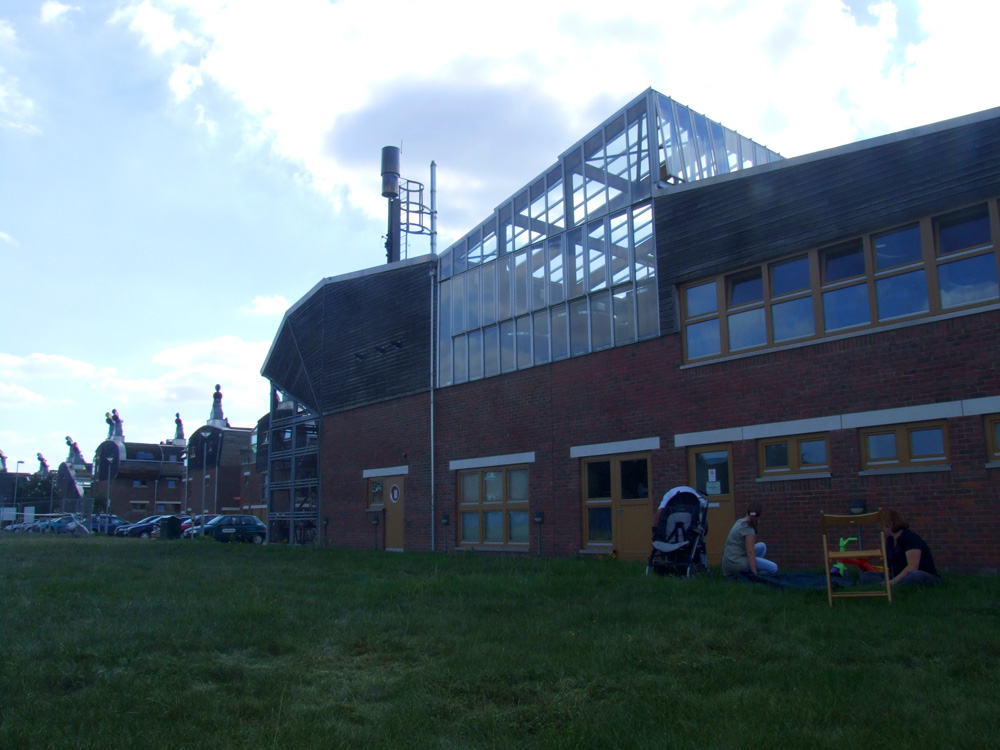
Bedzed, near Croydon, has been created to revolutionise people’s lives enabling them to live without wasting the resources of this planet and to live sustainably. It is situated outside a well-established town with major roads and rail links very close by. It is for people who live ordinary lives and it is designed to help them improve those ordinary lives and the planet they live on.

People move to Bedzed with typical lifestyles, and over the years change their behaviour significantly.”

The purpose of Sandition was to attract people to the seaside for health reasons. Seawater and sea air were considered, in the 18th century, the panaceas for all known ailments. They were the elixir of life. While people were there it was also hoped by Mr Parker, that they would spend their money in the new shops, buy the latest fashions, stay in the smart hotels and take part in the events of the new town, billiards, going to the library, buying presents in the gift shops, hiring bathing machines and eating the local produce.

Bedzed

Bedzed was designed for people to interact in ways that improve their lives. Much of what is hoped for Bedzed are things that communities over the ages have provided for their people. It is small enough and big enough to create what is termed a,” a community spirit.” People come together in sports teams, community events such as fetes and to meet and make community decisions; a sort ground level politics. What is necessary for our modern age is to do it sustainably.

the community have created their own facilities and groups to improve quality of life and reduce their environmental impact.”

Sustainability in the 18th century has many of the elements we think of today as sustainability. People grew their own produce, many house roofs were made from straw or reeds, recycled waste was used as food for animals or dug it into the soil to fertilise it, as with human waste and they used the natural elements as a power source. The wind to dry clothes, animals to move machinery and dead wood or sustainable forestry were used to provide fuel. Clay for bricks, rocks, slate and large amounts of wood were also taken for building and these might not have been sustainable practices even the 18th century. The increasingly massive use of coal certainly was not.

A calm, Gillray, 1810

The old fishing village of Sanditon and the Parkers first home, set snuggly in the valley, kept to these mostly sustainable principles. The new Sanditon, on the hill got rid of many of these essential practices. All the services, shops, hotels houses and transport were imposed on the hill and materials had to be got up there.

Ramsgate

People become the secondary thought in that they were expected to fit in. The new Sanditon is what Mr Parker thinks people want. It is an example of modernisation removing peoples connection with the world they live in. It is an example of the designers of our world not listening to the people they are providing for. The new Sanditon is a vision of the way the world has gone. The old Sanditon is an example of where we could go.

Bedzed

Total sustainabliltiy in our modern age is technically possible. Bedzed is run completely on sustainable practices. Water is recycled, the use of insulation, materials from sustainable sources, some of it recycled, the use of local materials as much as possible to reduce transport costs and pollution, the sharing of electric cars and the provision of sustainable energy from it’s own pwoerplant fuelled by waste materials are all sustainable practices. What is most important of all, the people who live in Bedzed make the choices and think of the ideas that create the world they live in.

the design solves problems such as heating and water usage.” And “the design and services offered help people make sustainable choices such as walking rather than driving.”

Windmill, sphagnum moss roof, recycled water

One of the most encouraging things I have seen in recent years in south London, is an enormous DIY store that has recently been built about half a mile from where I live. It uses rain water to flush the toilets, has a sphagnum moss roof, triple glazing for extra insulation, solar panels, a heating system where water is heated naturally through underground pipes, and one enormous windmill surmounting the lot. Impressive? You bet!!!!!! There is a new high rise office tower in central London that looks as though a knife has sliced off the top at a sharp angle. There are three gigantic oval holes in this angular top. Each oval hole contains a wind turbine. The world really is adapting.

Sliced off top and wind turbines

Gentle Readers, this lovely post comes from Patty at Brandy Parfums. I think she captured the day and its history perfectly, don’t you?

“Are you happy?  Yes, are you happy?  Yes, very happy.”  These words the experts say were spoken by Prince William and his bride Kate Middleton in the 1902 state landau right after their wedding ceremony at Westminster Abbey.

Catherine and Prince William in the State Landau

How remarkable to witness a royal marriage with British pomp and grandeur with the added pleasure of observing the attractive couple’s affection for each other.

Prince William and his bride in the Landau

The day began auspiciously with the rain that had been forecast never occurring.  The crowds that had gathered watched the Welsh Guards band circling about the Queen Victoria Memorial at Buckingham Palace.  Then, at various intervals all the royals and members of the wedding party alighted royal limos in black and claret, other limos and mini-vans to go to Westminster Abbey.  This was a break with tradition that perhaps was a courtesy to those concerned with security.  In years past, horse drawn state landaus and royal coaches with elegant Windsor greys or Cleveland bays transported the wedding party to and from the ceremony.  Afterwards, when horse drawn vehicles conveyed the wedding party back to the Palace, the BBC did not focus their cameras on the pageantry – the Household Calvary or any landaus. Besides fairly close shots of Kate and William, there were brief glimpses of the Queen and Prince Philip.  Prince Charles was seen only fleetingly as his landau pulled into Buckingham Palace.  In this remarkable newsreel from 1923, the Duke and Duchess of York, later King George VI and Queen Elizabeth, are shown in elegant horse drawn coaches and landaus.

Duke and Duchess of York, 1923

So important to the festivities were Kate’s lace and satin wedding gown and William’s bright red Irish Guards uniform.  The minute Kate stepped out of the 1950 Rolls Royce Phantom IV, the BBC presenters and guests both praised and criticized her Sarah Burton for Alexander McQueen creation.  One said it was too severe, and the other said she was thrilled it was a Sarah Burton and Kate looked lovely.  Many in the press compared Kate’s gown to Grace Kelly’s Helen Rose wedding gown with its lace top.  The press also made reference to the times we live in with its economic hardship for many people, and for this reason they speculated that perhaps Kate preferred a less flamboyant gown than Princess Diana’s.

A puff of a breeze lifted Catherine's veil

While similar to Catherine's gown in the front, Grace's elegant gown is quite different from the back.

Diana's wedding gown with large puffy sleeves was perfect for the 1980s

Full British pomp and formality is on display in this 1947 newsreel of Princess Elizabeth and Philip Mounbattan getting married at Westminster Abbey.  The royal coaches and state landaus are in use, and in the Abbey, the women are wearing evening gowns. The Princess’s gown is by Norman Hartnell.  In this video, the commentator describes eloquently the euphoria everyone feels watching the royal wedding, and the same is true for all royal weddings.  He says, “For the people who had come from afar, the wedding was a family wedding for the entire British people.  Everyone gladly shared in the rejoicings because the Crown once again was serving to remind us of the common humanity that unites us all.” The wedded union of royals represents hierogamy.

Princess Elizabeth and Philip

The marriage ceremony of Princess Elizabeth and Phillip

Click here to see the YouTube video

Princess Elizabeth and Phillip

While it is sad to watch the actual wedding ceremony of Prince Charles and Princess Diana, the procession back to Buckingham Palace in the same 1902 state landau used by Prince William and Kate Middleton, now the Duke and Duchess of Cambridge, is still majestic.

Prince Charles and Princess Diana

Click here to see the YouTube video

Prince Charles and Princess Diana

The most fashionable lady at the Prince William/Catherine Middleton wedding may have been the Queen in a flattering, dazzling yellow ensemble and hat designed by Angela Kelly.

The Queen

Queen Elizabeth

A source of great amusement and interest in the Prince William and Kate Middleton wedding were the hats, and fascinators.  Many hats were flattering if a trifle large, but the Philip Treacy fascinators worn by Princess Beatrice and Princess Eugenie were singled out by the press as among the most bizarre.

Treacy fascinators

Eugenie (left) and Beatrice (right)


No wedding is complete without a lovely cake. Here are photos of Prince William’s and Catherine’s wedding cake – a fruit cake from baker Fiona Cairns in the language of flowers and a groom’s chocolate biscuit cake from McVities.

William and Kate’s cakes

Kate's and William's wedding cakes


The following newsreel of the 1923 wedding cake for the Duke and Duchess of York completes this royal wedding survey. The cake was ten feet high, designed in St. Brides tiers – an object of great beauty.

1923 Cake

Posts related to this topic:

A Knuckle of Veal

This image comes from The Library of Congress’s digital collection, and sits in John Trusler’s The honours of the table, or, Rules for behaviour during meals : with the whole art of carving, illustrated by a variety of cuts. Together with directions for going to market, and the method of distinguishing good provisions from bad; to which is added a number of hints or concise lessons for the improvement of youth, on all occasions in life. By the author of Principles of politeness, &c. … For the use of young people, London, 1791

My tenderest emotions go toward that veal, for it did not have much time on this earth to use its knuckle. And yet, Mr. Trusler writes of this delicacy with such feeling.