Feeds:
Posts
Comments

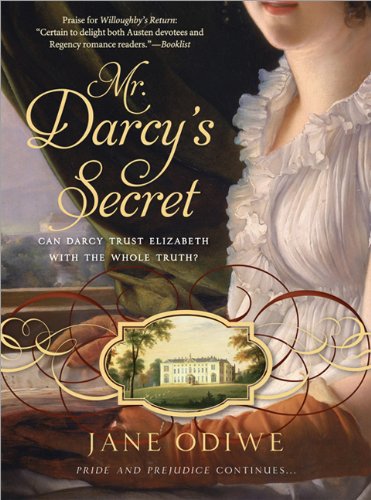
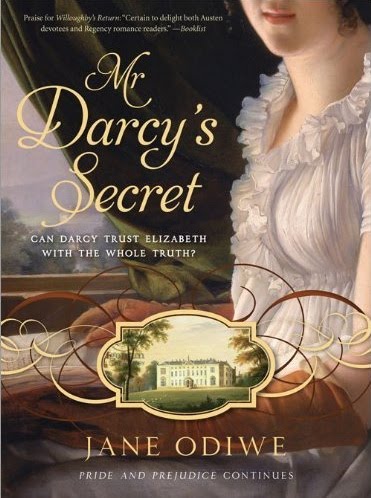
Mr. Darcy’s Secret is Jane Odiwe’s third Jane Austen sequel for Sourcebooks. The story picks up after the Darcys’ marriage and Elizabeth’s introduction as Lady of the Manor. Lizzy is a quick study, for it is not easy for someone to pick up on all the intricacies of managing such a great house as Pemberley, but through her natural grace she quickly gains the respect of the staff and villagers and settles into her new home – where she uncovers a secret, one that places her relationship with Darcy in emotional jeopardy.

The delightful author Jane Odiwe has done it again – created a novel using Jane Austen’s characters that leaves you turning the pages to find out how the story will end. Jane Odiwe lives in Bath and London, and travels extensively all over England. This is obvious, as she is able to single out details as only someone who is intimately acquainted with the regions can. She has also researched Jane Austen and the Regency era for many years, so that the facts ring true and are sometimes surprising, as with the ability for people during that era to marry without posting the banns in one church in Derbyshire, a legacy from the days of King Charles 1.

In so many ways, Ms. Odiwe gets the characters right, which makes reading her books so enjoyable. Take Lady Catherine de Bourgh, for instance:

Lady Catherine de Bourgh looked Mrs Darcy up and donw with such an expression of horror and contempt it was all Lizzy could do to keep her nerve. “Does your husband know that you are running around the countryside dressed as a gypsy riding in a donkey cart, Miss Bennet?” she asked in scolding tones. “What on earth can you mean by disgracing Mr Darcy in such a fashion? Have you no idea of decorum, are you insensible to the honours bestowed on you by him, that fool of a nephew of mine who has singled you out above all other women to bear his name?”

Wickham remains his dastardly self; Lydia is still immature and silly. We learn more about Darcy’s sister, Georgiana, and how she is influenced by Lizzy, with whom she falls in love, and about her backstory with her governess, a most nasty creature named Mrs Younge. Miss Caroline Bingley provides comic relief in a funny story line, as does the ever reliably silly Mrs Bennet. In short, devotees of Jane Austen sequels will not be disappointed with Jane Odiwe’s latest venture in Austen territory. Reading Mr Darcy’s Secret prompted me to ask the author a few questions, and she graciously answered them.
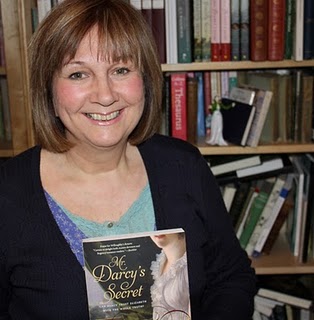
1. Why did you wait until your third book to write about Darcy and Elizabeth?

For me, it was just a natural progression. Initially, I hadn’t wanted to write their story because I really wanted to do something different from the books that were being published. But, after writing Lydia Bennet’s Story, and Willoughby’s Return, I wanted to set myself a real challenge. I felt absolutely compelled to write Darcy and Elizabeth’s story, and also wanted to give Georgiana a happy ending. I’m a great believer in letting things happen organically, and perhaps I wasn’t really ready to write their story until now. I wanted to do justice to the characters, and have the kind of twisting plot with humour, surprises and shocks along the way that Jane Austen liked to write herself, which I hope I’ve achieved.

2. Does living in England give you a different perspective on how Jane Austen’s environment influenced her work?  If so, how does this knowledge affect your own writing about her characters?

Perhaps it does, but if so, I think it is an unconscious perspective. This country is the place of my birth; I am English, and the feelings of connection to its people, landscape and history are very strong. It’s a part of who I am. I was a teacher, and consider myself very lucky and fortunate to have had the joy of teaching pupils from every walk of life, which means I have witnessed the behaviour and customs of a vast cross-section of society from the very poor to the very rich. I’m just an ordinary person, but I have been able to witness first-hand what it’s like to attend high society balls (a long time ago now) and enjoy 20th/21st century equivalents of the kind of experiences that Jane Austen would have done. Rather like Jane too, feeling apart from that world, not really belonging, made the observation of it all the more fun. I’ve seen a world of privilege, I’ve seen the extreme opposite, and everything in between. I think all of life’s experiences and the knowledge gained help to inform your writing, but whether this means that I am successful in writing about Jane’s characters, I will leave my readers to decide.

3. For you, which comes first? The plot or the characters? How long does it take for you to outline your book before you start writing, or do you just dive in and plot as you go along?

Now that is a tricky one, but I think it’s been different for every book. I generally think about what I’m going to write for a long time, several months usually,  before I commit any thoughts to paper, though occasionally I might jot down a few initial ideas or key words. I think the idea for Mr Darcy’s Secret was really started by thinking about what we knew about Mr Darcy, or rather, what Elizabeth did not know. It occurred to me that she really didn’t know him very well at all. Jane Austen gives us no clues about his past, and so that set me thinking.
I used to meticulously write out the plot from start to finish before I commenced writing, but I’ve discovered that for me it doesn’t really work because the characters always do their best to take me away from what I’ve originally planned. So now I have a general idea of where I want to story to go, and have an idea of the ending, but the journey is always an adventure! The characters always want to tell their own story, and I let them.

4. What research  for your book surprised you the most? Did you leave out any material that you found fascinating but couldn’t use? If so, please give an example and tell us why you decided not to use this bit of information.

The research that surprised me most was the fact there was a Gretna Green of Derbyshire. In the village of Peak Forest its church is dedicated to ‘Charles, King & Martyr’ (King Charles 1) and until an Act of Parliament was passed in 1804 its minister was able to perform marriages without having the banns read.

I really enjoyed all the research into Derbyshire which I’ve visited many times from school trips as a child to spending holidays with my sister.
There is a lovely tradition of ‘well-dressing’ which I would have liked to include, but I couldn’t fit it into the timeline or plot – unlike Jane, I decided we’d spend more time in the Lake District.

I remember as a child being disappointed not to see any of the villages we passed in Derbyshire decorated with flowers. The pagan custom started many years ago with blessing the water supply, and there is a history of making clay plaques pressed with flower petals to ornament the wells, which they still carry on today. I would have liked to have included a lot more of the folklore in the book. The area is well known for its stone circles, petrified rocks, witches and ghosts! Maybe next time…

5. Have you plotted your next novel?

I have written another novel, but I’m still tinkering with it…not quite there yet. It’s not a sequel, and it’s a bit off the wall, but I’ve really enjoyed writing it. It’s inspired by Bath, Jane Austen and Persuasion, my great passions after my family.

Oooh, you have me intrigued already! As always, Jane, it is a pleasure talking with you. I wish you much success with this book and the next, and thank you for stopping by .

Read my reviews of Jane Odiwe’s other books and interviews with the author in the following links:
Scheduled for this week are:

  • A review of Mr. Darcy’s Secret and interview with author Jane Odiwe on February 7th
  • A post by Tony Grant about the highwayman, Jerry Abershawe
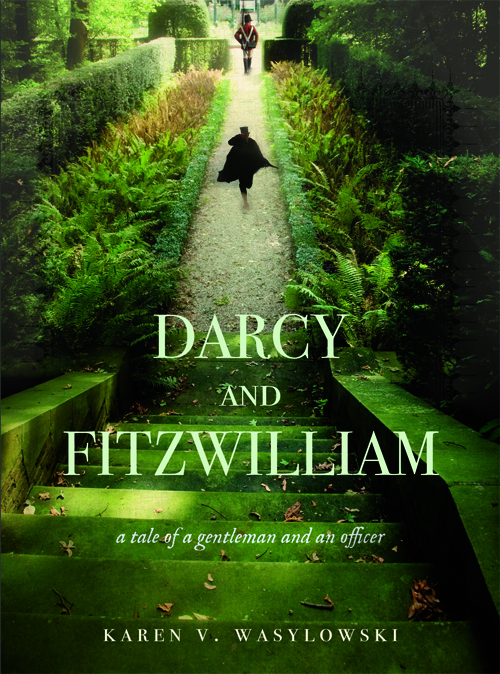
  • And an interview with Darcy and Fitzwilliam author Karen V. Wasylowski on February 10th.

Stay tuned for more!

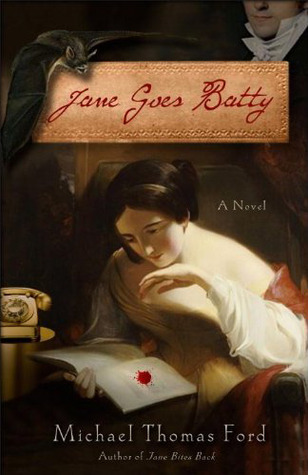
A review of Jane Goes Batty from the desk of Shelley DeWees …

Jane Austen as a protagonist might be one of the most likeable characters in literature.  She’s thoughtful, friendly, and devoted to her art, all of which are qualities you’d probably expect in the real Jane (were you lucky enough to know her).  She’s full of admirable characteristics, yes…accept that one little tiny baby hiccup of a problem…

She wants to suck your blood.

Now, she may not want to kill you unless you piss her off, or happen to be the annoying mother of a guy she’s considering a future with.  She may only want to taste you because, well, she must.  She’s got that little problem.  Not many people know about it, and those her do are among her most trusted confidantes: a lovely friend called Lucy who runs her bookshop in upstate New York and her best buddy Lord Byron, who happens to be a vampire as well.  He provides support, instruction in the ways of vampire art (how to become invisible, how to spot attraction between other people, how to create more undead chums), and is in general a source of inspiration for poor Jane who’s struggling to find meaning in a never-ending life.

The story finds her with a new hit novel, but she knows her old ones are better.  She’s getting lots of money from the new book, but not near as much as she’d be getting if she collected royalties on the others.  She’s happy with her boyfriend Walter, but can never marry him since he doesn’t know about her little problem.  She’s up.  She’s down.  She’s back.  She’s forth.  Jane is getting pulled around by all kinds of forces, many of which are entirely out of her control.  Such is life, Jane.  Such is life.

And such is the way of Jane Goes Batty, the second installment of a trilogy of novels by Michael Thomas Ford.  It’s a modern take on the life on Jane Austen, complete with her struggle to find a publisher and her wish to drink as much wine as she wants (as she said, being unmarried allows her to do just that).  The book is fun and inspiring in some senses, and probably worth your time if you’re looking for a bit of a romp through an alternate reality or simply trying to re-awaken your internal Janeite.  The book flows well and thrives on skillful construction, but seems to be saturated with an overabundance of problems.  Poor Jane the Undead has a veritable laundry list of troubles to slog through, not the least of which being an overdue sequel to her bestseller, an intolerable mother-in-law who insists she convert to Judaism, a new editor, an invasive camera crew, and the threat of a visit from another gloomy friend.  What’s a girl to do?

Jane Goes Batty is fun but simple, composed by a seasoned author whose interests are as diverse as the subject matter of his books.  Michael Thomas Ford spins a fairly interesting tale, and even though it’s nothing to write home about, you certainly won’t hate it!  Give it a shot, even if you haven’t read the first portion of the series, and see if you can lose yourself in Jane-love again.

Gentle Readers, this is Shelley de Wees’s fourth review for me and the third for Jane Austen’s World. (She has also reviewed for my other blog, Jane Austen Today.) Shelley also oversees her own blog, The Uprising, which features vegan recipes. Yum. She lives in the northern U.S. I shiver just thinking about the cold.

From Tony Grant, whose contributions to this blog are numerous: “Two years ago some of my friends wanted a weekend away so we decided on Lyme. Our wives went off to New York for the shopping. We tend to go to places more for the local beer than the literary connections, I must admit. Lyme has some very nice pubs and also we wanted somewhere where we could take a brisk walk. We thought of the Undercliff.”

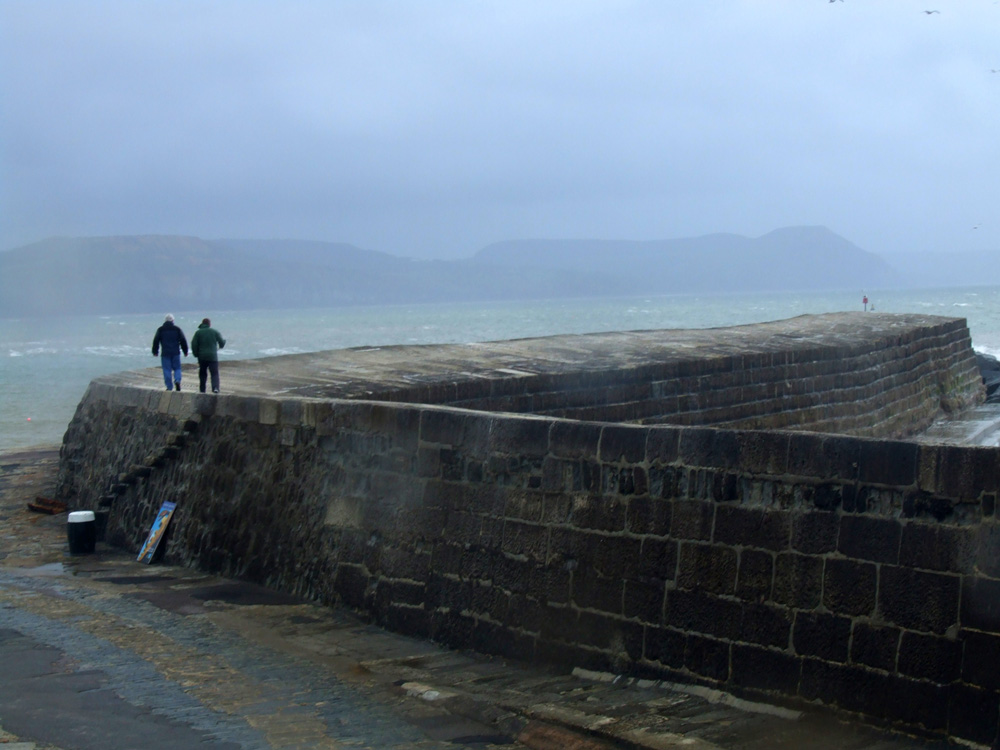
The Cobb at Lyme Regis. Image @Tony Grant

It depends on the weather conditions but the Cobb at Lyme can look and behave like an evil spirited leviathan; a Moby Dick. It’s a savage beast. At other times it can be a gentle, peaceful and calm creature.

Jane Austen used the Cobb at Lyme for the setting of an integral scene in her novel, Persuasion.

The accident on The Cobb, to Louisa Musgrove, brings Anne Elliot to the fore. She is the one looked to by Captain Wentworth and the others to take charge.

John Fowles, who lived in Lyme for most of his life, used Lyme , The Cobb and The Undercliff as the settings for his novel ,The French Lieutenants Woman.Indeed these topographical elements of Lyme are like a group of brooding characters within the novel and shape the action as much as the human characters…” Read the rest of the post at Tony Grant’s blog, London Calling.

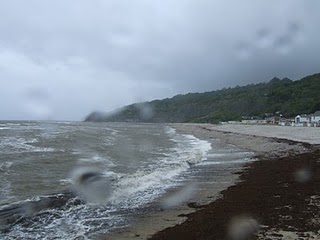
View of the Undercliff from the Cobb. Image @Tony Grant

Inquiring readers,

For those of you who have not yet visited Nancy Mayer’s beautiful website, you are in for a treat. Click here to enter Nancy Mayer, Regency Researcher: A most proper authority on all things Regency. Nancy has been a member of JASNA (Jane Austen Society of North America) for some time. She was a member of a local chapter in 1990-1994, then started up a new chapter in 1996, and has been the regional coordinator for northern Georgia since then. Nancy has been researching Regency England for more than twenty years, and finds Google books a big help. While she is responsible for the text on her website, Susan Newman designed the web pages and added the illustrations. Nancy graciously agreed to answer a few of my questions:

1. How and when did you become interested in Jane Austen’s novels?

This is probably heresy, but I came to Austen and her novels because I wanted to learn more about Regency life. I had heard of Pride and Prejudice and seen the old Lawrence Olivier movie, but hadn’t gone any further with it or the other novels until I became interested in the Regency period. After reading Jane Austen’s letters, and some biographical data on her, I started in on her novels. I joined a discussion group in Atlanta around 1990 and haven’t looked back since. Even after twenty years of discussing the novels there is always something new to be found. I am not one who has memorized the books and don’t read them all over every year, but I usually find some new insight each time I do.

2. Which is your favorite Jane Austen book and/or character, and why?

Persuasion. Anne Elliot is my favorite character. She is more mature than the other heroines and so doesn’t make the mistakes they do. One seldom has to blush for her. I also think Wentworth is more romantic than Darcy, but I wouldn’t want to be a sailor’s wife.

3. You are considered an authority on the topic of Jane Austen and the Regency period, and your breadth of knowledge about the era astounds me. What are some of your favorite topics to research and why?

You flatter me. The more I research the more I discover what I don’t know. I like to research marriage, titles, peerage, the law, and mourning rules. I find property law most confusing, and barely know a VanDyke fringe from a scalloped one.

One can find all sorts of period books on Google books.

I am also interested in Lord Byron who was Jane Austen’s contemporary, His life gives the masculine and aristocratic elements missing in Jane Austen’s life. Though they both were alive from 1809 to 1817, one could sometimes think they lived at different times.

4. For the casual (but avid) Jane Austen reader, what are some sources you would recommend for further reading?

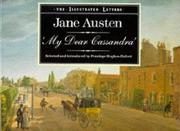
  • My Dear Cassandra:The letters of Jane Austen, Selected and introduced by Penelope Hughes Hallet. Clarkston Potter Publishers or Collins & Brown 1990, ISBN 0-51758312-7
  • Some might want the complete letters edited by Deirdre Le Faye, or the ones edited by John Chapman.
  • The novels published by Oxford have great appendices. Some of the Critical editions of the novels have appendices. One should have a copy of Lover’s Vows in one’s Copy of Mansfield Park. There are annotated versions of the stories with explanations of obscure and not so obscure points, and there are even comic book editions of Pride and Prejudice and Sense and Sensibility. No matter one’s taste or interests, one should be able to find a connection with Jane Austen.
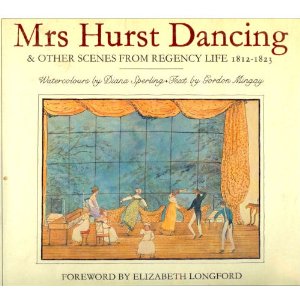
  • Mrs. Hurst Dancing by Diana Sperling. This isn’t about Jane Austen but the illustrations of the Sperling family could be those of the Younger Dashwoods or the Bennets. # ISBN-10: 0575030356 # ISBN-13: 978-0575030350. Some are exceedingly expensive, but there are remaindered copies and second-hand copies at reasonable prices.
  • Jane Austen and Her times by G.E. Mitton, originally published 1905, 2007 Barnes and Noble.
  • Also there are probably fifty books out there covering everything from Jane Austen and Art to Jane Austen and Zombies. I know of book on Jane Austen and Food, Jane Austen and Crime, Jane Austen and fashion, ( and Fashion in the Time of Jane Austen).
  • Those who like quizzes and challenges might like: Jane Austen Challenge by Helen Barton: BartonBooks (June 2009) # ISBN-10: 0952725754 # ISBN-13: 978-0952725756
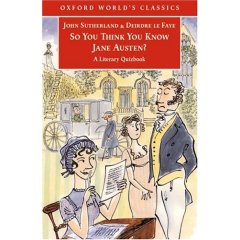
  • Also, So you Think You Know Jane Austen? By John Sutherland and Deidre le Faye Oxford University press, ISBN 0-19-280440-5

5. Would you like to share a common misconception about the Regency period with our readers, one that is wrongly perpetuated by book sources, websites, and blogs?

A general error I have found is thinking that the marriage laws, the church, and laws of inheritance were the same then as they are now. Many think the regency period was just like today, but in costume and with horses.

Nancy, thank you for sharing your wonderful insights. I hope readers will bookmark your website and visit it often. It’s best feature, as far as I am concerned, is your answers to their specific questions, like a personal researcher.