
[Marianne] “’What have wealth or grandeur to do with happiness?’
‘Grandeur has but little,’ said Elinor, ‘but wealth has much to do with it.’‘Elinor, for shame!’ said Marianne; ‘money can only give happiness where there is nothing else to give it. Beyond a competence, it can afford no real satisfaction as far as mere self is concerned.’‘Perhaps,’ said Elinor, smiling, ‘we may come to the same point. Your competence and my wealth are very much alike, I dare say; and without them, as the world goes now, we shall both agree that every kind of external comfort must be wanting. Your ideas are only more noble than mine. Come, what is your competence?’
‘About eighteen hundred or two thousand a year; not more than that.’
Elinor laughed. ‘Two thousand a year! One is my wealth! I guessed how it would end.’” – Jane Austen, Sense & Sensibility, volume 1, chapter 17
“To be above vulgar economy” … was one of Jane Austen’s express wishes, yet on the surface it would seem that her rich brother Edward contributed very little to Jane’s and her mother’s and sister’s notions of security. How was it that Edward’s fortunes were so very much above that of his family, and why did he not do more for his sisters and mother than provide them with a roof over their heads and a small annual sum?

Rev. George Austen presents his son, Edward, to Thomas Knight and family
Edward, third son of the family … became the favourite of some wealthy childless relatives of his father, the Thomas Knights. They met him as a 12-year-old when they visited the rectory at Steventon on their wedding journey. When they left, Edward accompanied them for the rest of the trip and subsequently went frequently for holidays at their estate. Eventually, when Edward was 16, they adopted him as their heir. – Janet Todd, Jane Austen in Context”
The Austens must have been thrilled beyond belief when Thomas Knight, George’s rich, childless cousin, took an interest in Edward, his third son. The practice of childless couples in adopting an heir from a less fortunate branch of the family was not an uncommon one for wealthy relatives to take at the time. When Edward inherited his estates from his adopted father, he became richer than Mr. Darcy, earning £15,000 per year from his investments against Mr. Darcy’s £10,000 per year. Multiply this number by 50 and you have an approximate amount of how much income Edward enjoyed in today’s terms.
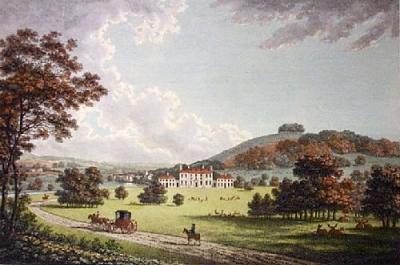
Godmersham Park
And yet, with such a rich brother, Jane and her sister and mother worried a great deal about money after the sudden death of Rev. George Austen in Bath in 1805. Three of the brothers rallied behind them. Edward’s initial pledge of £100 a year almost doubled his mother’s income of £122 from a small South Seas fortune, and both Henry and Frank pledged £50 apiece per year to support their mother and sisters. Cassandra received a small income from Tom Fowle’s £1000, which he had bequeathed to her in his will. Even so, the three women were forced to move in March to more affordable rented living quarters on Gay Street, and then to Southampton in 1806, where they, along with their friend Martha Lloyd, shared a house with Frank Austen and his new bride.
The move to the house in Castle Square, Southampton in 1807 brought much cheer to Jane. The house, she noted, was not in good repair but it had a large garden. Her accounts for 1807 show that from her allowance of £50 she spent £2.13.6 to hire a pianoforte.”- Soft and Loud, JASA
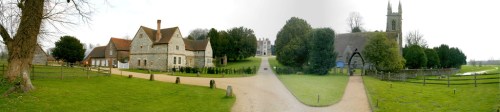
Panorama of Chawton
Edward finally came through for his mother and sisters. Four years after his father’s death, he refurbished Chawton Cottage and invited them to move in. It was in this cottage that Jane was at her most prolific, polishing off earlier versions of Pride and Prejudice and Sense and Sensibility and famously writing Mansfield Park, Emma, and Persuasion. In skimming through a variety of biographies, many authors treat Edward’s seeming parsimony with a hint of contempt. The Knights had a history of generosity towards their poorer Austen relatives. Thomas Knight, second cousin to Rev. George Austen, gave him two livings that were valued at £210 the year that Jane was born. At Steventon, the Austens also had land to farm, which was an important factor in their diet and maintaining their self-sufficiency. The Austens also took in boarding pupils, and by the time Rev. Austen retired , he was earning almost £600 per year, the same amount that his eldest son, James, made towards the end of his life.
Jane’s mother, Cassandra, who was related to the Leighs of Stoneleigh Abbey, placed a great hope that her rich childless brother, James Leigh-Perrot, would leave money to her eldest son James. While James Leigh-Perrot provided James with a clerical living and some supplementary cash, his property eventually went not to James, but to his son, James Edward, who was Jane Austen’s biographer. James Leigh-Perrot left nothing to his sister Cassandra, even knowing that she lived on a small income. He might have supposed that her uber rich son, Edward, would take care of his mother, which, in a fashion he did. Why did Edward not contribute more to his mother and siblings?
This is mere conjecture on my part, but Edward did the best he could under the circumstances. Yes, he was rich beyond imagining, but his responsibilities were many and heavy. He inherited two large estates, which were the physical embodiment of his inheritance. The laws of primogentirue demanded that as the heir, he should keep everything intact, from the land, which provided the income, to the house and all the family heirlooms within it. The heir was merely a “keeper” of the estate and the family name, and his actions were proscribed. Edward was more a tenant than an owner, and he was duty bound to turn over his entire estate to his male heir. – The Country House, JASA.
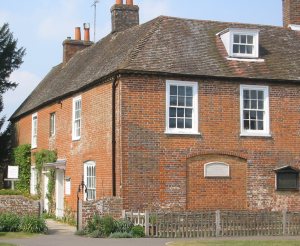
Chawton Cottage
Running these estates, with their attendant servants and necessary improvements, took an enormous, some would say crippling, amount of resources. In addition, Edward’s family was large. His first wife, Elizabeth, died after giving birth to their eleventh child. Add his seven brothers and sisters, his biological mother and adopted mother and her family, the Knight family, and the ever widening circle of nieces and nephews, and the even larger circle of aunts, uncles and cousins on both the biological and adopted sides, and you can imagine the pressures Edward must have felt all around. Had he doled out what we would deem as adequate support to all the needy individuals in his extended family, Edward’s estate would soon have been frittered away.

Chawton House
One cannot fault Edward too much for moving prudently and cautiously, for he was obliged first to his immediate family and the need to provide for adequate dowries for his daughters and support for his younger sons. I do fault him for not helping Jane to repurchase her manuscript, Susan (renamed Northanger Abbey), for the measly sum of £10, so that she could pursue its publication, but for all we know she might have never applied to him for help.
I sometimes wonder if the Austen women were as destitute as people today conjecture. Unlike 90% of their countrymen, who rarely traveled outside of their immediate area, the Austens traveled frequently, visiting friends and relatives. They were able to keep two servants and supplement their diet with vegetables from their kitchen garden, and received an endless supply of milk from Edward’s cows. Jane secured a modest but extra income from her writing, and the three women lived off a yearly income of £500 pounds, which was only £100 less than Rev. George Austen earned, who had a family of eight to feed, in addition to his boarders. Jane’s eldest brother, Rev. Frank Austen, managed to keep a carriage for his second wife on an income of £600 per year. I am not saying that the three women were rich, by any means, for, like Elinor Dashwood, they lived frugally and prudently, but they did dine frequently with Edward and visited him over extensive periods of time at Godmersham Park, which must have been as luxurious an experience as any visit to a high end resort.
After Thomas Knight died, his widow, instead of waiting until her own death, handed over the family estates to Edward, who from 1798 lived the life of a country gentleman at Godmersham in Kent. When Mrs Knight herself died in 1812, Edward and his family, as stipulated in her will, took the name of ‘Knight’, prompting his eldest daughter Fanny (a favourite niece of Jane Austen’s) to write in her diary that now ‘we are therefore all Knights instead of dear old Austens How I hate it!!!!!’. Fanny’s aunt Jane wrote more calmly to her friend Martha Lloyd that ‘I must learn to make a better K.” – Janet Todd, Jane Austen in Context
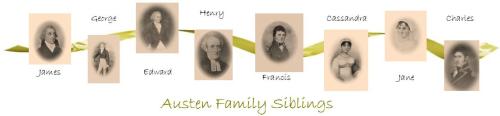
Edward was the Austen's third oldest child
More on the topic:
- Edward Austen Knight’s Godmersham Library and Jane Austen’s Emma.
- The Grand Tour in the 18th-19th century: includes information about Edward’s grand tour, which he undertook at the age of 18.
- Jane Austen’s siblings and cousin Eliza
- The Country House
- The quintessential Georgian parents: George & Cassandra Austen
- Sick and Wicked
Gentle reader: In honor of JASNA’s annual meeting in Philadelphia this week, this blog, Austenprose, and Jane Austen Today will be devoting posts to Jane Austen and her siblings. Look for new links each day.
- Cassandra Austen: Jane’s Supporter, Confidante, and Helpmate
- Jane Austen’s Siblings – Rev. James Austen 1765-1819 – comprehensive information about James Austen on Austenprose
- Jane Austen’s Siblings – Rev. Henry Austen – 1771 -1850 – Henry was Jane Austen’s favorite brother
- Jane Austen’s Siblings – Charles John Austen – 1779- 1852
- Sir Francis William Austen: Glimpses of Jane’s sailor brother in letters
- George Austen: Jane Austen’s almost forgotten, invisible brother
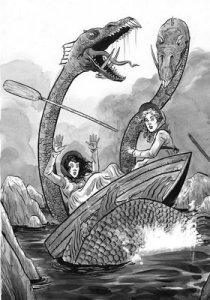 With my book in hand, my local Starbucks barista, most likely in his late teens, offered the following commentary: “Wow! Is that like Pride and Prejudice and Zombies? I hear that, you know, people who love Jane Austen like really hate these books.” And then he went back to making cappuccinos.
 Instead of arranging picnics and dinners to encourage courtship, Sir John hosts “tiki dances, crawfish fries, and bonfires,” taking the necessary precautions to ensure the safety of his guests, including “drawing a large quadrangle upon the beach in an admixture of squid ink and whale blood.”
 While I’ve stopped reading the book for now, there are a few mysteries in the plot (for example, how an octopus ended up on Colonel Brandon’s face) that I dwell on, and they very well could induce me to pick it up again.
 Incredulous reader: Our rating for this book is five out of eight tentacles. After all, Jane did write 60% of this book, which you can
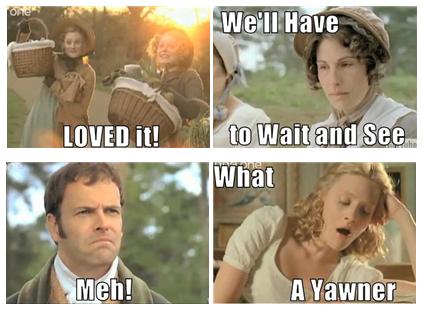 Reading Twitter, some people are turned off by the modern approach to Emma 2009. Curious minds want to know what you thought of the first installment of this new Jane Austen novel adaptation with Romola Garai, Jonny Lee Miller and Michael Gambon. These are your choices: a yawner, meh, loved it, and will have to wait and see. If you would like to share your thoughts, please leave a comment. Do you love the new film? Do you like it? Or are you sitting on the fence, waiting to see how the series will develop?
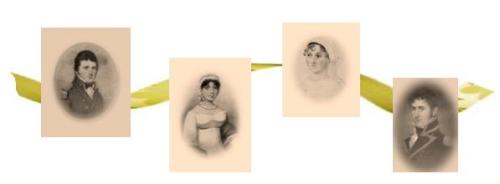
 Whenever we catch sight of Jane Austen in recollections and letters, her sister Cassandra is usually not far away. Although the two spinster women were frequently separated by visits to their friends and relatives, they shared a bedroom all their lives and presumably each others’ thoughts and secrets. Cassandra was separated from the family in her crucial formative years as a baby. After her birth, Mrs. Austen breast fed her first daughter for three months before handing her over to a village woman to be cared for until she was 18 months of age. The Austens, it seemed, followed this unusual habit with all their children, which must have worked well for them, for all eight survived in an age when child mortality was high.












 Jane Austen's World