This Jane Austen blog brings Jane Austen, her novels, and the Regency Period alive through food, dress, social customs, and other 19th C. historical details related to this topic.
The two first dances, however, brought a return of distress; they were dances of mortification. Mr. Collins, awkward and solemn, apologizing instead of attending, and often moving wrong without being aware of it, gave her all the shame and misery which a disagreeable partner for a couple of dances can give. The moment of her release from him was ecstasy. – Elizabeth Bennet dancing with Mr. Collins at the Netherfield Ball
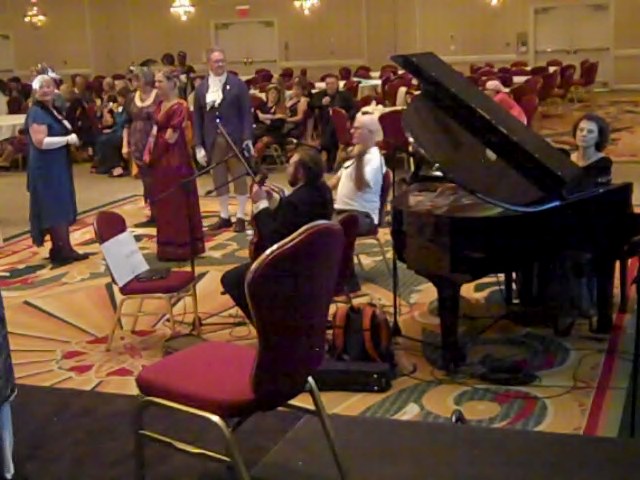
Mr. Collins could have used the services of the excellent caller at the Regency Ball at the JASNA AGM in Brooklyn. Had he been able to follow her direction (or had he learned his dance steps as a child, as did most well-bred Regency children), then he would not have made Elizabeth feel such shame about her partner. When I attended my first Regency ball, I felt as delighted as a child in a candy store at Christmas. The costumes and music lent authenticity to the event. Even those in modern dress (like myself) felt welcome.
As you can see from the clip, individuals with a wide range of dancing talent were present. The caller, or calling master, taught the steps, people practiced, and then they danced to the lovely music provided by the trio.
Caller at the Regency Ball
An important social element was the calling of the dance by the leading lady (a position of honor), who would determine the figures, steps, and music to be danced. The rest of the set would listen to the calling dancing master or pick up the dance by observing the leading couple. Austen mentions in her letters instances in which she and her partner called the dance. – Regency Dance, Wikipedia
I love the next clip, in which the caller sensed a lack of concentration on behalf of her audience. Listen to her final words!
With so many people in one room, and (in those days) the heat from the candles, ballrooms tended to become hot. Flimsy gowns provided little advantage for over-heated bodies restrained by corsets; time and again fans came to the rescue, as in this short scene. The poor men simply had to grin and bear it and sweat the night away, for, believe me, an evening of dance with two sets per dance partner, could be quite strenuous.
After learning the various moves, the group danced the set. The musicians (a trio in this instance) then struck up the music and the dancers progressed through the set, the movements beautiful to behold. My humble flip camera did not do much justice to the proceedings, and could capture only a few of the moments. If you have never attended a Regency ball and are a Jane Austen fan, I suggest that you find a group in your area.
This experience makes Austen’s ballroom scenes come alive as I reread the passages. One also experiences the social aspects of the dance – the dancers themselves, the people arranged on the sidelines watching, the musicians, and the outer rooms, where others assembled and talked or sought refreshment. In former days, game rooms would be set up for those who opted not to dance.
More images below. If anyone knows the names of the people I captured, please send them on! Thank you.
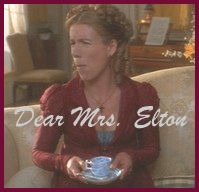
Inquiring Readers: Yes, you read the title correctly. Author Diana Birchall has resurrected her excellent advice column on behalf of Mrs. Elton. A number of years ago Laurel Ann Nattress, blogger of Austenprose and editor of Jane Austen Made Me Do It, co-posted on my other blog, Jane Austen Today. We both sent letters to Mrs. Elton/Diana, who replied with cheeky aplomb. (Read the archived columns here). The column entitled “Mrs. Elton Sez” once ran weekly. The renamed column will be featured monthly.
Agony Aunts, or advice columnists, were not unknown in the 18th and 19th centuries and have enjoyed a long tradition. One imagines that Mrs. Elton would have no difficulty dispensing her advice in print. And now, without further ado …
Dear Mrs. Elton,
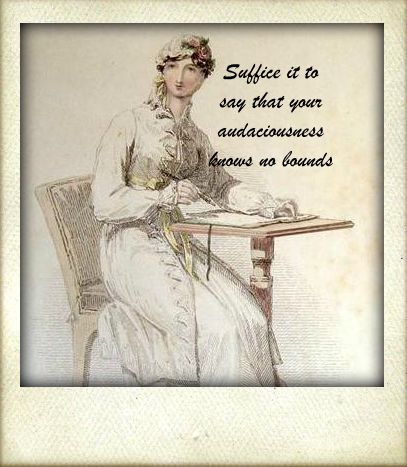
I am writing to inform you that I have identified you as the Agony Aunt in The Highbury Monthly Gazette. The means by which I came to this conclusion I shall keep to myself. Suffice it to say that your audaciousness knows no bounds. To brazenly appoint oneself as the judge of others and the arbiter of taste and deportment in an insignificant village when all one has done is marry a mere parson is the height of vanity. As his wife it is your DUTY to be a MODEL of humility and Christian love. I command you to take lessons from Mrs. Collins, also a parson’s wife, whose modesty and sense of duty have set her up as a PARAGON of propriety.
I am most seriously displeased with your presumption and shall not end this missive with my good wishes.
Lady Catherine de Bourgh
Rosings
My dear Lady Catherine,
Picture to yourself my extreme surprise at receiving your late missive! I do not at all know how to account for that honour, but although the Eltons have not a family name distinguished among the nobility, you may be better acquainted with the name of Suckling. Yes, my sister, Mrs. Suckling, Miss Selina Hawkins as was, has married into one of the very greatest families in the land; – that is, her husband’s father settled at Maple Grove at no very distant time in the past, but for income, Mr. Suckling has one of the largest in all the country round Birmingham, and drives a barouche-landau. So I think you must know whom you are addressing, when you give me the favour of a letter, and a letter actually written in your ladyship’s own hand.
The subject of your letter, however, takes me by surprise quite as much as the letter itself. Agony aunt! What a very modern term for a very odious thing, to be sure. I should like to know why you take me for such a creature? No lady would write for a newspaper, far less a little country organ like the Gazette, and I trust you realize by this time, that it is a lady with whom you have to do. The Hawkins family, you know – well, there, I need not display my antecedents. That would be vulgar. Display of all kind is what I have a horror of. You may take up the Peerage yourself; and see that the Hawkins family are a very ancient Kent line, whose name originated in the word HAVOC. There has always been a famous solicitor in every generation, but do not run away with the idea that we are tradesmen, for that, my Lady Catherine, I assure you we are not. One of my cousins was raised to a Barony for his excellence in jurisprudence, and my most illustrious ancestor of all was a Pirate. Admiral Sir John Hawkins. He invented the slave trade almost singlehandedly, and was of that enterprising, pushing nature shared by all my – But stay – I did not mean to mention that. You will kindly overlook it.
And who is this Mrs. Collins of whom you speak? If I mistake not, she is a country girl whose father really was in trade, until his having a term as mayor of his little village of Meryton, gave him his knighthood – a very recent creation, too. This is not the sort of person to hold up as example, and I beg to know what Your Ladyship means by it. My husband Mr. Elton is a far superior sort of clergyman than Mr. Collins, who is, as all the world knows, a half-educated, toadying sort of fellow, and certainly not a Vicar.
Let us return, however, to the subject of Agony Aunt. I take this term to mean a sort of Dispenser of Advice. Well, I must inform you, I have never Dispensed Advice; I should be ashamed to do so unasked (although any advice I might give, would be better than any body’s). From your mentioning the profession, however, I can divine your real intention. You protest, but I see through you. I see through to your real meaning, Lady Catherine! One with my Understanding, and my Resources, will always see through other ladies, no matter how high born; and I now give you to understand that I know that you would love nothing more than to be an Agony Aunt yourself! You write to me, therefore, seeking advice as to how to begin. You have, as I can very easily discern, a vast ability to give advice of the best sort, as I do myself, which is why I can recognize this very quality in others. You would like to make a more formal, more public use of your undoubted talents, and I believe you have come to exactly the right quarter, for who can better tell you how to proceed, than I? Did I not find a situation as governess, one of the first situations in the country, for my favorite, Jane Fairfax? As it happened, she did not take it up, for her marriage prevented her; but had she gone to Mrs. Smallridge, only think how happy she would have been! So make no mistake, I can and will find a situation for you, too.
Would you care to write – anonymously, of course, merely under the by-line of “A Lady,” for the Highbury Monthly Gazette? I await your reply by return of post.
Yours respectfully,
Augusta Elton
The Vicarage, Highbury
Diana and her cat, Pindar
About Diana Birchall
Diana Birchall grew up in New York City, and was educated at Hunter College Elementary School, the High School of Music and Art, and C.C.N.Y, where she studied history and English literature. She has worked in the film industry for many years and is the “book person” story analyst at Warner Bros. Studios, reading novels to see if they would make movies. A lifelong student of Jane Austen, whom she calls her writing teacher, Diana is the author of Mrs. Darcy’s Dilemma, a charming and best-selling sequel to Jane Austen’s Pride and Prejudice. Originally published by Egerton House Press in England, it is now available in a new reprint edition from Sourcebooks. Diana’s comedy pastiche In Defense of Mrs. Elton,based on characters from Jane Austen’s Emma, was published by the Jane Austen Society in the U.S., the U.K. and Australia. It forms part of the “compleat” Mrs. Elton Trilogy, which is collected in the volume Mrs. Elton in America, published by Sourcebooks. Read more about Diana in this link.
Lisa Brown. Image @Edward Voytovich. Click on image for a larger view.
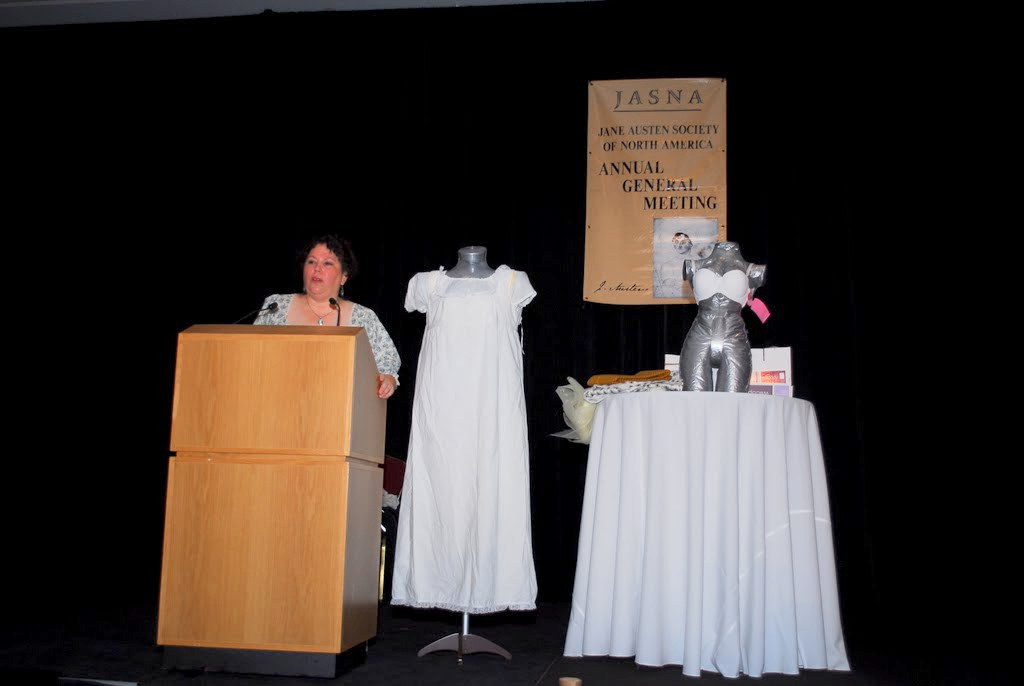
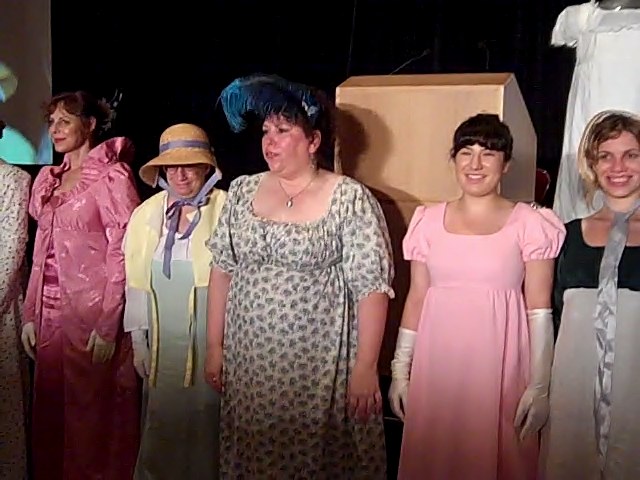
Inquiring readers. My first JASNA AGM in Brooklyn started out with a bang. Not only did I room with the wonderful Deb Barnum (Jane Austen in Vermont), but the first workshop I attended was given by Lisa Brown, co-coordinator of the Rochester and Syracuse Regions of JASNA (and the official photographer at the AGM, it seems). She presented a fashion show and workshop demonstration of Regency fashions, including detailed instructions on how to rework 1970s and 1980s gowns into very creditable Regency costumes. A similar custom was studiously followed by Regency ladies, such as the Miss Bennets and Miss Austens, whose income precluded them from custom ordering as many handmade gowns as they liked. Two hundred years ago, cloth and trim were quite expensive, although changes wrought by the Industrial Revolution in weaving, dying cloth, and creating off the rack gowns would make clothes more affordable as the 19th century progressed. Jane Austen wrote frequently of refurbishing a new bonnet or reworking a gown to suit an occasion.
Lisa Brown stands in the center of her models
Lisa graciously gave me permission to use the videos I took of her fashion show and from my notes. The personal impressions are mine.
The back of Lisa’s gown with the drawstring details. Note the floral print.
The Layers of a Regency gown
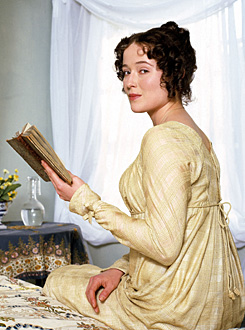
In Regency fashion, it’s all about lift and undergarments. The distinctive Regency “shelf” was created with straps tied from the side (not center) and short stays with busks and wires. The stays were drawn from the bottom to the top, and as the stays tightened the bosom (shelf) rose. During the extended Regency era (1795-1820) women wore fewer clothes than their mothers and aunts. Sheer fabrics, exposed bosoms, and bare arms in the evening were the hallmarks of the Regency style.
This image of Jennifer Ehle as Elizabeth Bennet shows her wearing a day gown with long sleeves. Note the gathering in the back and the silhouette of her Regency shelf bosom
The typical dress layers included (from skin side out): a simple shift made of sturdy cotton or linen that could withstand repeated laundering; short stays; a petticoat; and a gown. While women wore stocking and garters, under drawers were not generally worn until later in the 19th century. If a woman opted to wear them, they would be crotchless (mostly for convenience.)
Regency gown fashion show
In this video Sarah wears a 1970s dress found in a vintage shop and a period bonnet. The sleeves look modern, but the overall effect is very charming. Sarah is the author of the delightful post: I was a Model in a Regency Jane Austen Fashion Show.
Nadia wears a modern reworked holiday dress that converted nicely into a Regency style costume. I felt that the skirt lacked authenticity in that there was no gathering of the fabric in the back.
Julie wears a simple gray gown. To me the accessories turned this vintage dress into a Regency look, for the dress details were too sleek to be authentic.
Joyce in a green silk tafetta that could have used some trim or a shawl or something to turn this dress into a show stopper.
Jaclyn’s brown tafetta dress is one of my favorites. The gloves, bonnet, puffy sleeves, low scooped neck, and slight gathering in the back added realistic touches.
Jane wears a cotton dress with spencer jacket and long ties. I imagine Mrs. Austen might have looked much like her.
Meg looks like she is going to market. On stage she showed her reversible cape, which she took off for the runway. Her outfit is typical of a married lady who, after her marriage, begins to wear a cap. After turning 27, unmarried women don caps as well, much like Jane Austen and her sister Cassandra. Meg also wears a delicate fichu, an item typically worn during the day. It can be tucked in or worn out. The fichu indicated casual day dress. If a lady with a limited wardrobe wished to dress up for the evening, she would take off her fichu and add dressier accessories to spruce up her look.
Aniela is also off to market. On stage she wore a spencer, a spinster’s cap, and a tucked-in fichu, a garment appropriate for all ages. Walking down the runway, you can see her fan on a little chain. Angela is a resourceful young woman, who found her short, form-fitting “spencer” at Forever 21. All she needed to do to turn this day gown into evening wear was to take off her cap and fichu, change from short gloves to long gloves, and change her jewelry. Voila! She is ready to visit neighbors for dinner and join in a dance! Notice the Van Dyke points on her sleeve.
Lynn Marie wears a spencer and parasol. Lisa cautioned that only umbrellas made in the 40s, 50s, or 60s would do as Regency parasols. Umbrellas from that time period were still made pagoda style, with the fabric coming up to the top of the frame. Notice how Lynn Marie’s dress has the gathered pleats in the back. If you choose to make a dress with a print pattern make sure that the prints are small and set far apart. Modern prints are often too large and set too closely together. In choosing cloth to make Regency gowns and for the sake of authenticity, Lisa also warned us to stay away from fabrics that are reminiscent of the two Lauras – Laura Ingalls Wilder and Laura Ashley. Hah!
Joyce wears a dark sleeveless pelisse with a long train. An elegant look that flows beautifully when she walks.
Nadia wears long sleeves during day and gloves. Dark fabric was chosen for daywear, since the color was easier to keep clean. Lighter colors, such as whites and pastels, were worn at night. White was a symbol of wealth since laundering took a great deal of time and effort. A white gown easily became soiled and required enormous maintenance to keep pristine (imagine how dirty those trains must have become even if the woman was confined to walking indoors.) Jane Austen’s audience knew exactly how pampered Eleanor Tilney was when her character was described as wearing only white.
In her second costume, Sarah wears a long sleeved dress and a quaint Amish straw bonnet with lining, flowers, and a ribbon. Trims were expensive and transferred from dress to dress, on the neck or sleeves, or at the bottom of a dress. Between 1805-1815, embellishments at the hem increased from 1″ of trim to 2″, to 3″ or more in 1817, the year Jane Austen died.
Jaclyn’s polyester pink 1970s gown turns into a pretty Regency ball gown. Today’s enterprising seamstress can order Indian muslin in specialty stores and find sheer netting overlays at curtain shops.
Julie’s pink gown is based on Empress Josephine’s coronation gown. The elaborate satin overdress is worn over a simpler dress underneath.
Aniela wears a pretty pale dress, very simple in design. Her day look includes short gloves and a basket. This dress can easily be converted for a night time look by adding the right accessories.
Lynn Marie wears a dramatic ball dress from David’s Bridal. It was an age when showing one’s ankles was deemed scandalous, but showcasing one’s bosom was not. In fact, the Regency shelf was a display area on which a possible suitor could feast his eyes and the lady in question could show off her pretty necklace as well as her womanly assets.
Proper jewelry for that era consisted of small round shapes, such as seed pearls, small crosses, and delicate stones. To resemble a proper Regency miss, one should not wear posts or hoop earrings, long chains of pearls, or chokers, which were a Victorian affectation. Choose flat-heeled ballet style shoes or slippers, and half-boots with outer wear.
Inquiring readers, periodically Christine Stewart sends us her impressions in her quest to understand Jane Austen and study her novels and life in Embarking on a Course of Study. Here is her latest submission. Sandy Lerner, whose successful career as co-founder of Cisco Systems provided her with the fortune to renovate Chawton House, Edward Austen Knight’s second grand house, and found Chawton House Library, spoke about Jane Austen’s concept of money and wealth in “Money Then and Now: Has Anything Changed?” at the JASNA AGM in NYC earlier this month. While I found her talk to be riveting (the salon was packed) and thought-provoking, some of us disagreed with a number of points she made. (More about that speech in a later post.) Christine also recently heard Sandy speak at Goucher College. Here are her impressions.
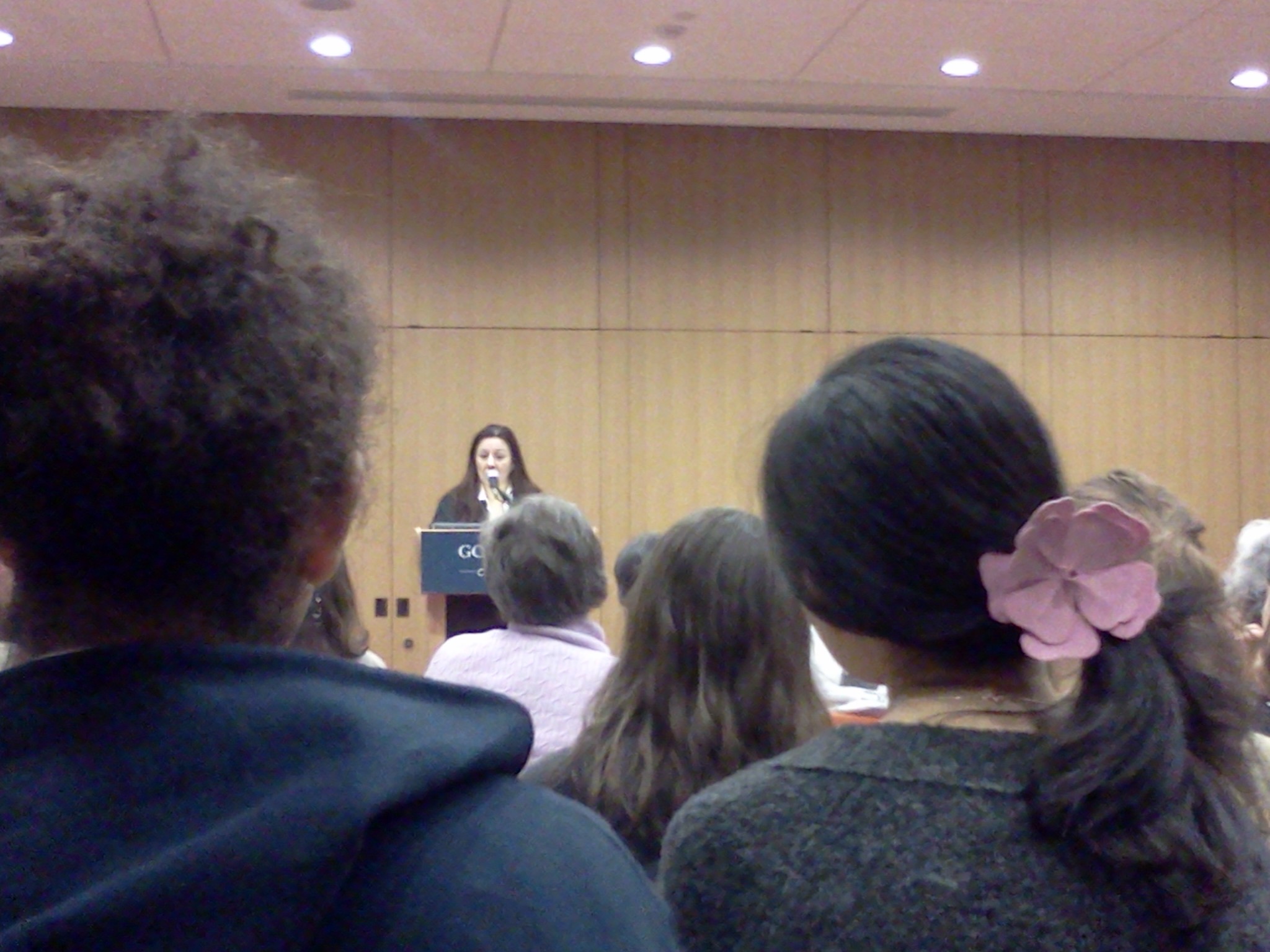
Sandy Lerner, savior of Chawton House, now Library, author of the P&P sequel, Second Impressions, visited Goucher last night to give a talk, a reading, and sign copies of her book.
Sandy Lerner at Goucher, image @Christine Stewart
About Sandy Lerner
If you’re not familiar with Lerner: “Lerner in 1992 bought and restored an estate once owned by Jane Austen’s brother, called Chawton House, in Hampshire, England. She has transformed it into the Center for the Study of Early English Women’s Writing, and is currently underwriting the digitization of the works of female authors who lived in England between 1600 and 1830. The 10,000 volumes, not all of them novels, include works by Austen, Mary Shelley, Frances Sheridan and Maria Edgeworth, among many others, as well as a collection of cookbooks by Quakers.” (Piedmont Maverick by Suzanne Gannon). Lerner co-founded Cisco Systems with her (now ex) husband, and later a cosmetic company called Urban Decay, which sold unusual (at the time) nail colors like green and blue. Their slogan was ‘Does Pink Make You Puke?’ She once posed naked on horseback for Forbes Magazine. In short, she is an interesting, eccentric, wicked smart woman who owns a farm in Ayrshire, Virginia. She bought a 125 year lease on Chawton House in 1993.
My friend Clare and I went to the talk at Goucher College in the (still shiny and new!) Athenaeum. This is where Alberta Burke’s famous Jane Austen Collection is housed. The Batza Room, where the Jane Austen Scholars talk every two years, was packed (50-75 people). So were the chairs. We were all pretty much sitting on top of each other, so that made it rather unpleasant when a man reeking of onions and gin sat down next to poor Clare. She bore it bravely, but we joked about how much we wished women still carried lavender scented handkerchiefs to bury their noses in.
Goucher’s president Sanford (Sandy) Ungar was there, which always signals that the visitor is a big deal, as if we didn’t know! Outside the door, the table was laden with the very prettily bound books (sort of blue and leathery looking) and elaborate bookmarks from Chawton Library, which you received when you bought the book. I couldn’t get a clear shot of the table because of the swarm of people.
Sandy Lerner at Goucher College
When Lerner took the podium, the first thing she said was that she had just decided what she was going to talk about, which might give you an indication of how well prepared she was. Clare and I enjoyed the talk, for what it was, a quick summary of her love of Austen and buying Chawton and what it is today, and a quick recap of writing the book, with some lamenting about not receiving the proper reviews, how agents and editors won’t talk to her, because she self-published. I think she spoke for, maybe 15 minutes? (My notes on her talk will follow the post.) There was an awkward pause and she offered to read, but didn’t have a book (!). One was borrowed from the audience and she read for 10 minutes, a very quick scene between Lady Catherine de Bourgh and Colonel Fitzwilliam.
Celebrating Jane Austen’s Pride and Prejudice: 200 Years of Jane Austen’s Masterpiece, By Susannah Fullerton, published by Voyageur Press, USA 2013 (Published in the UK as Happily Ever After: Celebrating Jane Austen’s Pride and Prejudice) Available in January, 2013
200 Years of Pride and Prejudice: The Beginning
I was asked by Frances Lincoln, the UK publishing firm who published A Dance with Jane Austen (read review here), if I would write a book about 200 years of Pride and Prejudice. I had barely finished Dance and knew it would be difficult to meet the tight deadline, but how could I resist? What better way to celebrate 200 years of that wonderful novel than to write a book about what it has meant to me and to so many people and about the extraordinary afterlife it has enjoyed. And so I set to work and I can honestly say that no book has given me such joy to write. For months I was deeply immersed in the world of the Bennets, Mr Collins, Lady Catherine and Mr Darcy. I have always adored the novel, but as I wrote my own book about it, I came to appreciate it even more, to be more fully aware of its intricacies, skill and its amazing power to charm and enchant again and again and again.
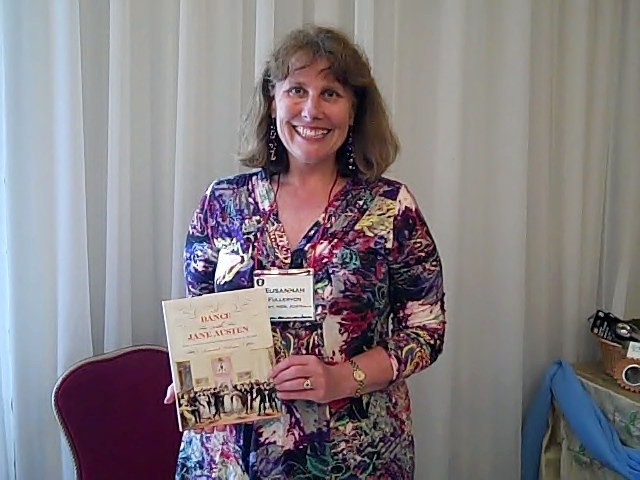
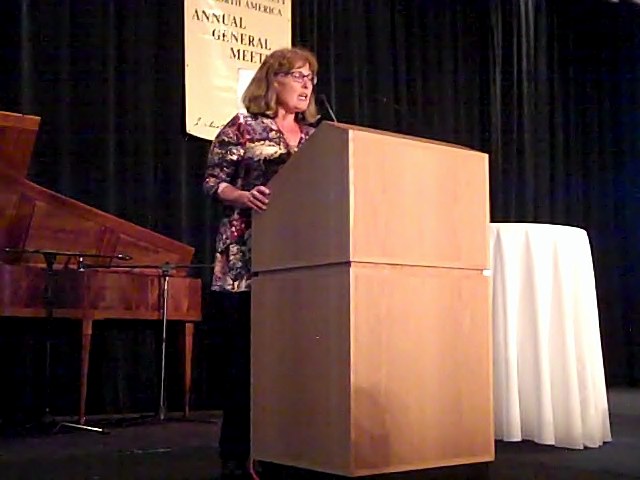
Susannah Fullerton at JASNA AGM 2012 with her new book, A Dance With Jane Austen
My book looks at many aspects of the novel. We all know that it was originally turned down, but for how long did it languish before its author again tried to get it into print? It was not a best-selling book, but from the beginning it had its admirers – who were they, and what did they say about it? I loved writing a chapter about the first sentence. Would I find enough to say, I wondered, as I sat down to write – a whole chapter about a few lines?? Could it be done? In the end, the problem was having almost too much to say, and I hope that chapter will make my readers see clearly just why that first sentence has achieved such fame.
I then turned to the characters. Every reader loves Elizabeth Bennet (I think there must be something wrong with anyone who does not fall in love with Elizabeth!), but why do we love her so, and in what ways is she so radically different from every heroine who had come before? How does her creator skilfully introduce her to us, show her growing and learning as the novel progresses, and endear her to us so greatly? And what of Mr Darcy, that archetypal romantic hero, progenitor of so many tall, dark and handsome men in romantic novels? I loved writing chapters on heroine and hero. I also explore their families and relatives – the Bennets and Mr Collins on her side, Lady Catherine, Anne, Georgiana and Colonel Fitzwilliam on his. How is each character revealed to us and what have 200 years done for them in the way of sequels and further careers?
Pride and Prejudice Translations
In the same year that Pride and Prejudice was published, the first translation appeared. It was published in a Swiss journal, written in French. Jane Austen never knew about it and received no money for it, which is probably a good thing – her own characters would have been almost unrecognisable to her in that Swiss ‘bastardisation’. Generally Pride and Prejudice fared badly for many decades in European translations, but things slowly improved and the non English-speaking world is now catching up on the delights of reading Jane Austen.
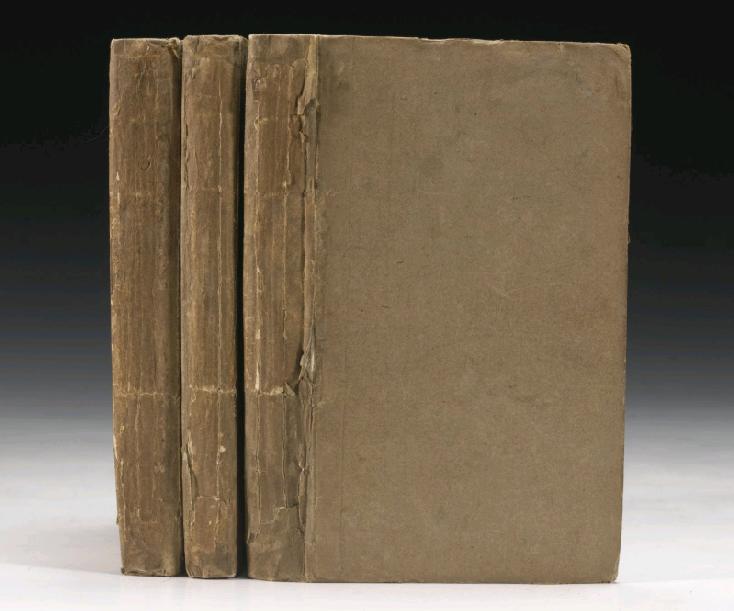
Pride and Prejudice, 1813 edition. Image @Sotheby’s
They say you should not judge a book by its cover, but many people still do, and Pride and Prejudice has had an extraordinary range of covers over 200 years. From the first edition, to the modern Chick-Lit covers, and much in between, it has been ‘packaged’ in a myriad of different ways. And as for illustrations, they range from the positively ugly (where Elizabeth isn’t handsome enough to tempt anyone at all!) to the gorgeously decorative. My book includes many of these illustrations from the familiar Hugh Thomson ones, to some that will be very new indeed to my readers.
Film Adaptations of Pride and Prejudice
We all know about the Greer Garson film version, the lovely Elizabeth Garvie TV series and the hugely popular Colin Firth BBC series, but did you also know about the Dutch TV version, the Italian one with a Mrs Bennet rather like Lucrezia Borgia, the Israeli version (modernised), and several old BBC adaptations? My chapter on the various films will tell you about those, plus modernisations such as Lost in Austen and Bride and Prejudice. And there’s a chapter on sequels. I knew there were lots of them out there, but until I began my research for this chapter I had no idea quite how many, or to what lengths some of them go. There are sequels, prequels, continuations which mix characters from all the Austen novels, modern re-tellings, zombie-infiltrated versions, and even pornographic sequels. You will be amazed at the afterlife of Darcy and Elizabeth in the minds of some sequel writers!!
Susannah Fullerton discussing Dirty Dancing in Jane Austen’s Ballrooms at the JASNA AGM 2012 Brooklyn, NY
Today Pride and Prejudice is big business. There is the tourism it has engendered – theme tours, sightseeing in houses where films were made, swimming in a certain lake, and travel to Jane Austen museums and centres. And there is marketing – you won’t believe what items Pride and Prejudice has inspired, from soaps to clothes pegs, skateboards to romper suits. Pride and Prejudice sells things, and manufacturers have given full vent to the fancy in creating literary merchandise from the novel.
And, finally, what of Pride and Prejudice in the future? In this age of kindles and Ipads, audio versions and information on the internet, what will the future of this adored novel be? I had to speculate of course, but see if you agree with me?
Celebrating Pride and Prejudice: 200 Years of Jane Austen’s Masterpiece is, if I say so myself, a very beautiful book. The illustrations are just gorgeous and were chosen with great care, and the book is a pleasure to hold. I hope you will also love its content! I am thrilled that it has also been published by Voyageur Press, an American publisher and that I have been invited to do a lecturing tour in the USA next year to talk about it. I wrote this book for every person who has fallen in love with Pride and Prejudice , who has read and re-read it, discussed all the film versions, and who feels that Elizabeth and Darcy are a part of their lives. I do hope you will want to read it and will join me in celebrating the fact that Pride and Prejudice has lived ‘happily ever after’ for 200 years!
Fashionable Goodness: Christianity in Jane Austen's England is now available! By JAW contributor Brenda S. Cox. See Review. Available from Amazon and Jane Austen Books.
Available through December 31st, 2025. Click on image for details, and share this poster with other teachers and students!
The Obituary of Charlotte Collins by Andrew Capes
Click on image to read the story.
Comments
“My idea of good company…is the company of clever, well-informed people, who have a great deal of conversation.” – Jane Austen, Persuasion
Gentle readers: Please feel free to post your comments and continue the conversation! Due to SPAM, we will no longer accept comments on posts after 30 days of publication. In some instances, links will be removed from comments as well.
Administrators and Contributors
Vic Sanborn, founder of this blog, is supported by a team of talented and knowledgeable writers about Jane Austen and the Regency era. They are:
Tony Grant, who now contributes his photos from London and England
Click on their names to enter their own blogs.
In addition, we thank the many experts and authors who frequently contribute their posts and opinions, and who continue to do so freely or at our request.
Click here to enter the page. Topics include Regency fashion, historic foods, Jane Austen societies, British sites, related topics. Click on image.
May we suggest?
Hello, my name is Vic and I live in Maryland, USA. I have adored Jane Austen almost all of my life. I am a proud lifetime member of the Jane Austen Society of North America. This blog is a personal blog written and edited by me and my team. We do not accept any form of cash advertising, sponsorship, or paid topic insertions. However, we do accept and keep books and CDs to review.
If you would like to share a new site, or point out an error, please email us. (Yes, we are fallible. We'll own up to our mistakes and will make the corrections with a polite smile on our faces.) Write us at
Thank you for visiting this blog. Your comments and suggestions are most welcome.
Project Gutenberg: eBook of Stage-coach and Mail in Days of Yore, Volume 2 (of 2), by Charles G. Harper
STAGE-COACH AND MAIL IN DAYS OF YORE: A PICTURESQUE HISTORY
OF THE COACHING AGE, VOL. II, By CHARLES G. HARPER. 1903. Click on this link.











 Jane Austen's World