Feeds:
Posts
Comments

Posts Tagged ‘Pride and Prejudice’

As we enjoy the crisp air of autumn, let’s take a tour of October in Jane Austen’s World! We’ll look at her life and times through the lens of her letters, novels, and personal interests and see what we can learn about Regency life in the month of October.

If you’re just jumping on the bus, you can find previous articles in the “A Year in Jane Austen’s World” series here: JanuaryFebruaryMarchAprilMayJuneJuly, August, and September.

First off, let’s see what Jane Austen’s beautiful Hampshire countryside looks like in October. Big changes occur as the month continues, which means the lush green of summer turns to the yellow, gold, and ruby colors of fall. Here is a stunning photo of Chawton House Gardens:
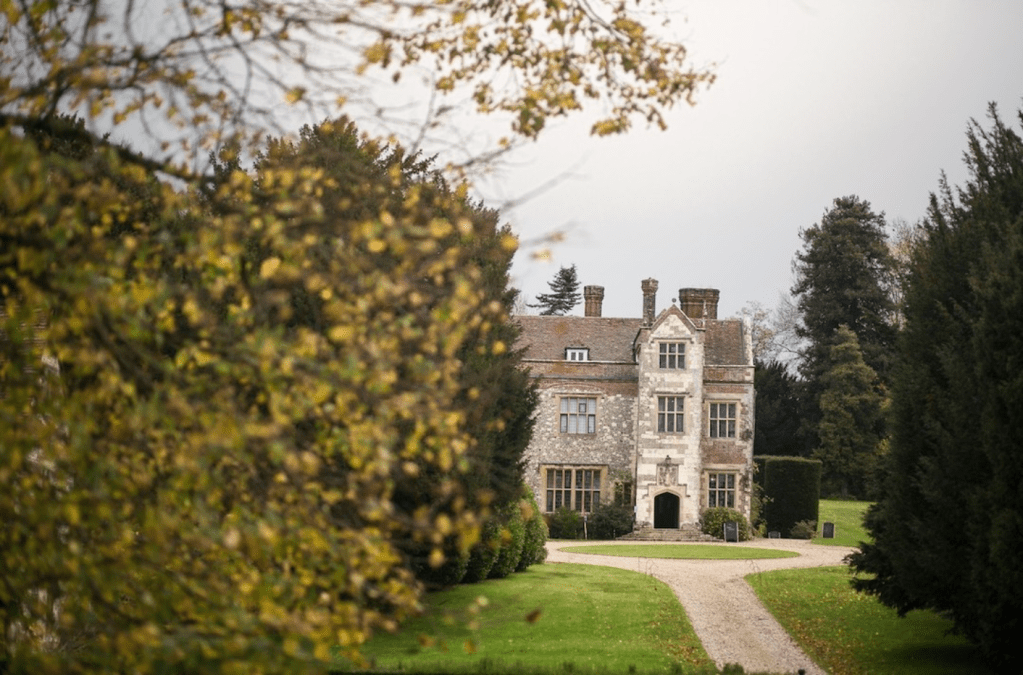
Chawton House in October: Photo @ChawtonHouse.

October in Hampshire

October in Jane Austen’s Hampshire brings a total change of atmosphere. The leaves turn, and the weather cools and crisps, just like the apples in the orchard at Chawton House. As is our tradition, I’ve collected a few snippets from Austen’s letters regarding the season change, weather, and gardens/orchards:

24 October 1798 (“Bull & George,” Dartford): “My day’s journey has been pleasanter in every respect than I expected. I have been very little crowded and by no means unhappy. Your watchfulness with regard to the weather on our accounts was very kind and very effectual. We had one heavy shower on leaving Sittingbourne, but afterwards the clouds cleared away, and we had a very bright chrystal afternoon.”

27 October 1798 (Steventon): “I understand that there are some grapes left, but I believe not many; they must be gathered as soon as possible, or this rain will entirely rot them.”

24 October 1808 (Castle Square): “We have just had two hampers of apples from Kintbury, and the floor of our little garret is almost covered.”

11 October 1813 (Godmersham Park): “We had thunder and lightning here on Thursday morning, between five and seven; no very bad thunder, but a great deal of lightning. It has given the commencement of a season of wind and rain, and perhaps for the next six weeks we shall not have two dry days together.”

Such detailed descriptions of October! Here now is a current glimpse of Jane Austen’s House Museum and its gardens in October:
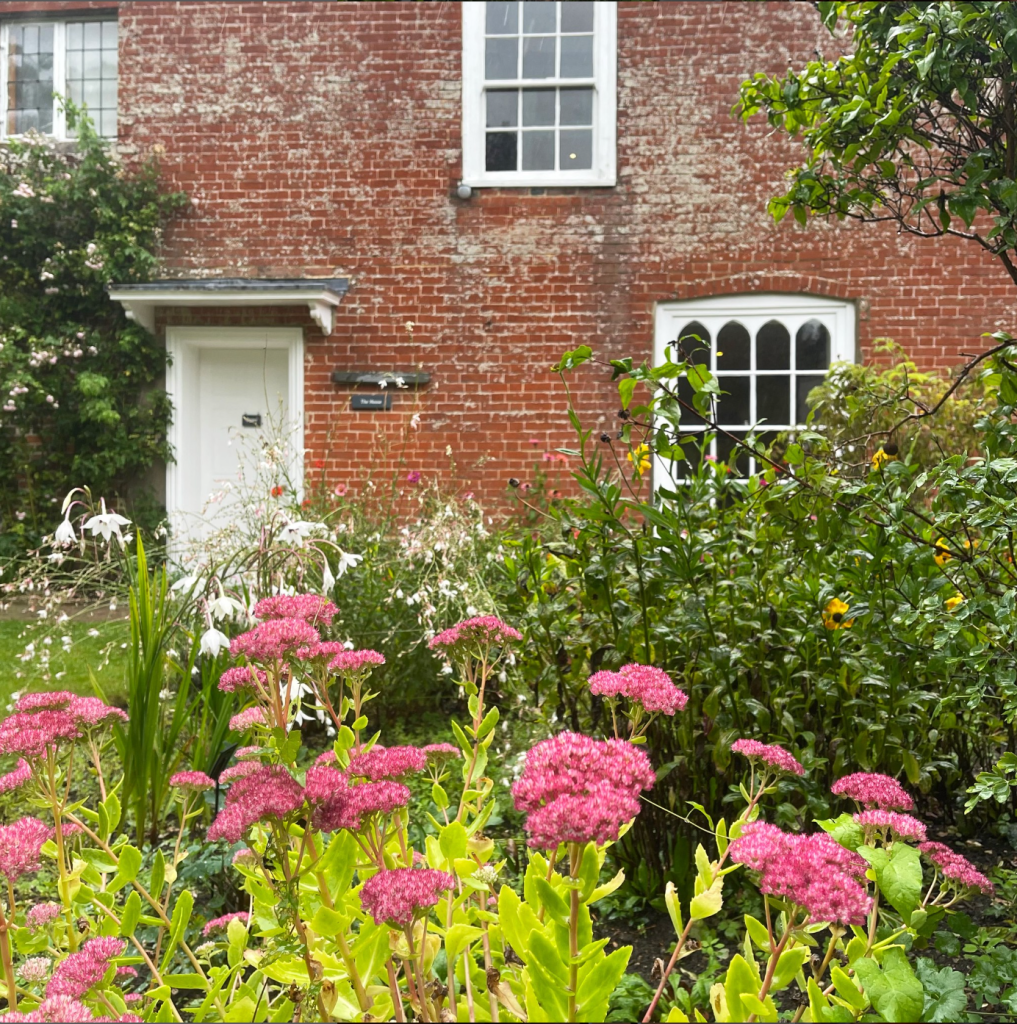
Jane Austen’s House in October, Photo: @JaneAustensHouse.

October in Jane Austen’s Letters: Jane’s Writing

While there are other October letters to consider, there is one excerpt that requires our attention first because it pertains to the safekeeping of Austen’s writing!

24 October 1798 (“Bull and George,” Dartford):

  • “I should have begun my letter soon after our arrival, but for a little adventure which prevented me. After we had been here a quarter of an hour it was discovered that my writing and dressing boxes had been by accident put into a chaise which was just packing off as we came in, and were driven away toward Gravesend in their way to the West Indies. No part of my property could have been such a prize before, for in my writing-box was all my worldly wealth, 7l., and my dear Harry’s deputation. Mr. Nottley immediately despatched a man and horse after the chaise, and in half an hour’s time I had the pleasure of being as rich as ever; they were got about two or three miles off.”

Thank goodness her writing box was found (and any money stowed in it). And what a beautiful description: “all my worldly wealth.” Though money and paperwork are important, one wonders if any of her writing might also have been in that box–a letter, a scene, a phrase. That would be treasure indeed.
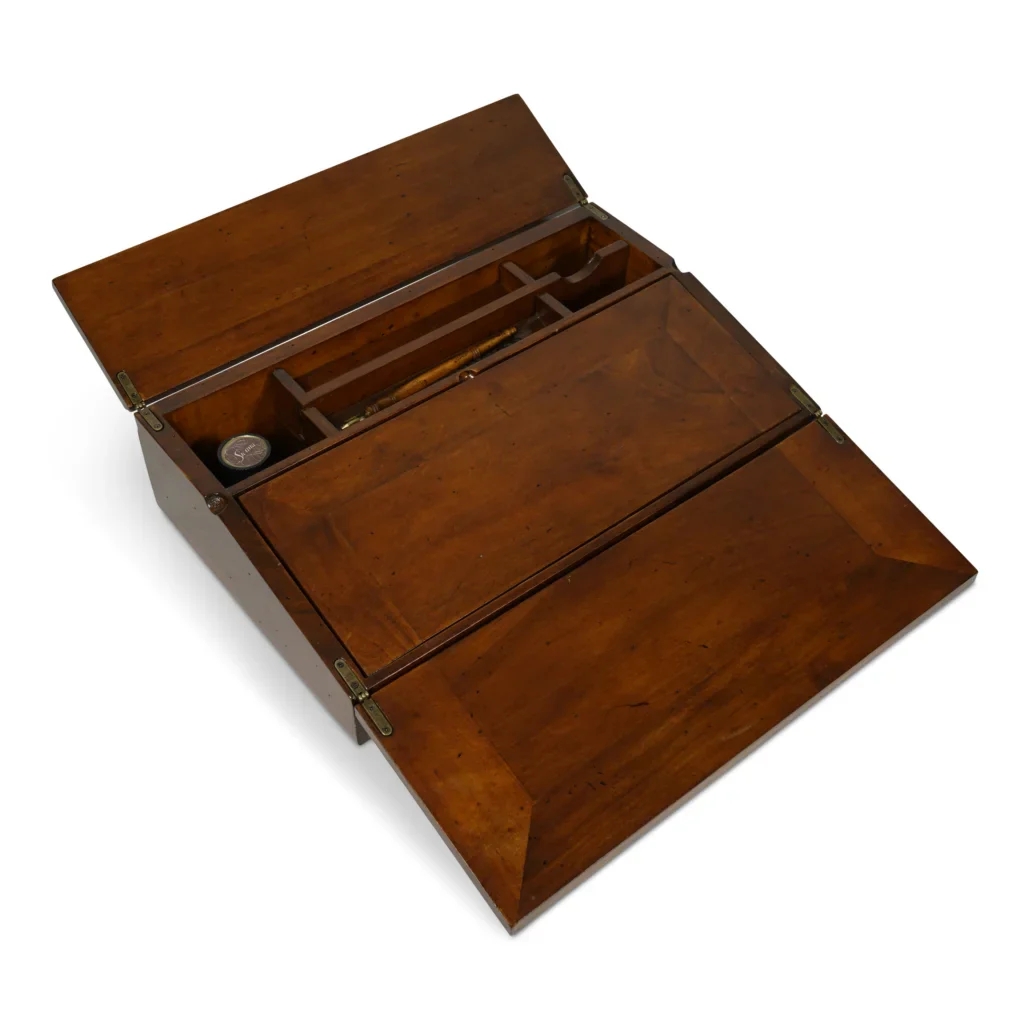
Regency Era traveling writing desk.

October in Jane Austen’s Letters: A Great Loss

Now we must turn our main focus to Austen’s letters dating from October 1808. For those of us who take a personal interest in Jane Austen’s life and family, this is the month when Elizabeth Austen, Edward’s darling wife, died (10 October 1808).

Elizabeth Austen nee Bridges (1773-1808) married Edward Austen (Knight) on 27 December 1791, in Goodnestone, Kent, England. They had a large family and were very happily married. She was 35 when she passed and Edward never remarried.

The letters between Jane and Cassandra during that time are particularly tender. Both sisters mourned her death, but as is usual when a family member loses a spouse, they were even more concerned for Edward and his children (Jane’s nieces and nephews). I highly recommend reading the letters in full on your own, but below are several excerpts that share the beautiful manner in which Jane and Cassandra helped to comfort Edward and his children as they grieved the lost of a beloved wife and mother:

13 October (Castle Square):

  • First news of Elizabeth’s death: “My dearest Cassandra,—I have received your letter, and with most melancholy anxiety was it expected, for the sad news reached us last night, but without any particulars. It came in a short letter to Martha from her sister, begun at Steventon and finished in Winchester.”
  • Family Condolences: “We have felt, we do feel, for you all, as you will not need to be told,—for you, for Fanny, for Henry, for Lady Bridges, and for dearest Edward, whose loss and whose sufferings seem to make those of every other person nothing. God be praised that you can say what you do of him: that he has a religious mind to bear him up, and a disposition that will gradually lead him to comfort.”
  • Fanny Knight: “My dear, dear Fanny, I am so thankful that she has you with her! You will be everything to her; you will give her all the consolation that human aid can give. May the Almighty sustain you all, and keep you, my dearest Cassandra, well; but for the present I dare say you are equal to everything.”
  • Update on the boys: “You will know that the poor boys are at Steventon. Perhaps it is best for them, as they will have more means of exercise and amusement there than they could have with us, but I own myself disappointed by the arrangement. I should have loved to have them with me at such a time. I shall write to Edward by this post.”
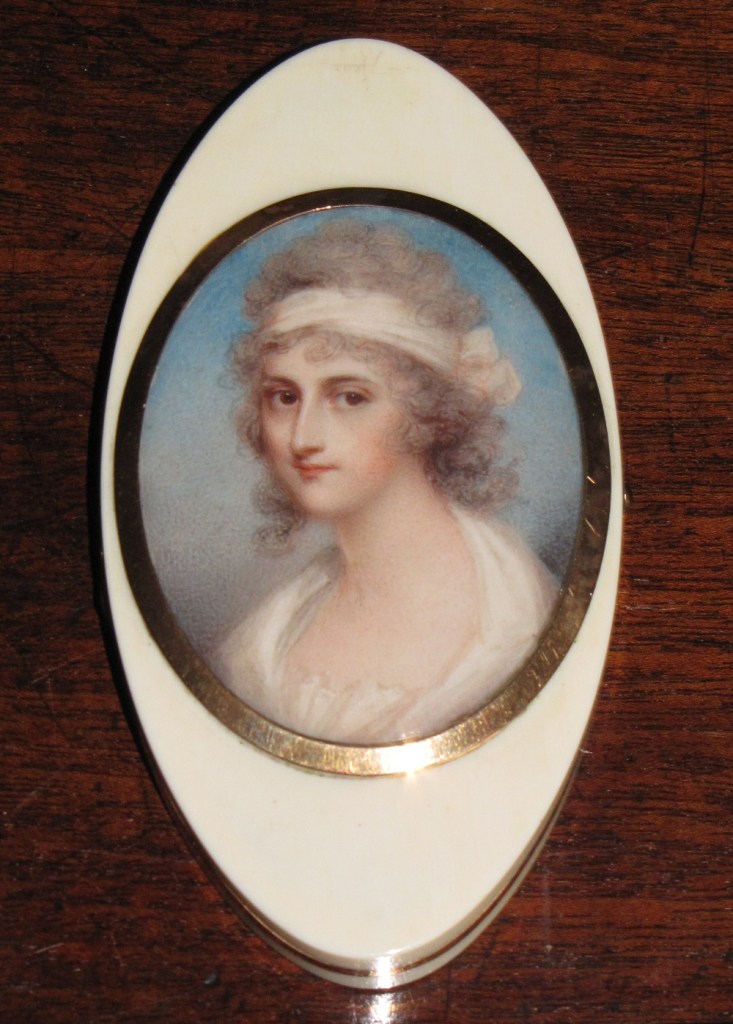
Patchbox with portrait of Elizabeth Austen, courtesy of Jane Austen’s House.

15 October (Castle Square):

  • Concern for Edward: “Your accounts make us as comfortable as we can expect to be at such a time. Edward’s loss is terrible, and must be felt as such, and these are too early days indeed to think of moderation in grief, either in him or his afflicted daughter, but soon we may hope that our dear Fanny’s sense of duty to that beloved father will rouse her to exertion. For his sake, and as the most acceptable proof of love to the spirit of her departed mother, she will try to be tranquil and resigned. Does she feel you to be a comfort to her, or is she too much overpowered for anything but solitude?”
  • Concern for Lizzy: “Your account of Lizzy is very interesting. Poor child! One must hope the impression will be strong, and yet one’s heart aches for a dejected mind of eight years old.”
  • Mourning clothes for Cassandra: “Your parcel shall set off on Monday, and I hope the shoes will fit; Martha and I both tried them on. I shall send you such of your mourning as I think most likely to be useful, reserving for myself your stockings and half the velvet, in which selfish arrangement I know I am doing what you wish.
  • Mourning clothes for Jane: “I am to be in bombazeen and crape, according to what we are told is universal here, and which agrees with Martha’s previous observation. My mourning, however, will not impoverish me, for by having my velvet pelisse fresh lined and made up, I am sure I shall have no occasion this winter for anything new of that sort. I take my cloak for the lining, and shall send yours on the chance of its doing something of the same for you, though I believe your pelisse is in better repair than mine. One Miss Baker makes my gown and the other my bonnet, which is to be silk covered with crape.”
  • Sisterly Condolences: “That you are forever in our thoughts you will not doubt. I see your mournful party in my mind’s eye under every varying circumstance of the day; and in the evening especially figure to myself its sad gloom: the efforts to talk, the frequent summons to melancholy orders and cares, and poor Edward, restless in misery, going from one room to another, and perhaps not seldom upstairs, to see all that remains of his Elizabeth. Dearest Fanny must now look upon herself as his prime source of comfort, his dearest friend; as the being who is gradually to supply to him, to the extent that is possible, what he has lost. This consideration will elevate and cheer her. Adieu. You cannot write too often, as I said before. We are heartily rejoiced that the poor baby gives you no particular anxiety. Kiss dear Lizzy for us. Tell Fanny that I shall write in a day or two to Miss Sharpe.”
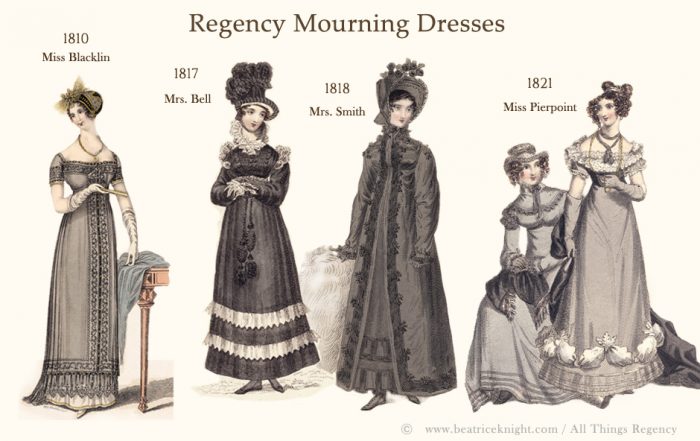
From Beatrice Knight’s article on Regency Mourning. Click HERE to read her article on this topic.

24 October (Castle Square):

  • Edward’s sons arrive: “Edward and George came to us soon after seven on Saturday, very well, but very cold, having by choice travelled on the outside, and with no greatcoat but what Mr. Wise, the coachman, good-naturedly spared them of his, as they sat by his side. They were so much chilled when they arrived, that I was afraid they must have taken cold; but it does not seem at all the case: I never saw them looking better.”
  • Jane’s Affectionate Observations: “They behave extremely well in every respect, showing quite as much feeling as one wishes to see, and on every occasion speaking of their father with the liveliest affection. His letter was read over by each of them yesterday, and with many tears; George sobbed aloud, Edward’s tears do not flow so easily; but as far as I can judge they are both very properly impressed by what has happened. Miss Lloyd, who is a more impartial judge than I can be, is exceedingly pleased with them.”
  • Entertaining the boys: “George is almost a new acquaintance to me, and I find him in a different way as engaging as Edward. We do not want amusement: bilbocatch, at which George is indefatigable, spillikins, paper ships, riddles, conundrums, and cards, with watching the flow and ebb of the river, and now and then a stroll out, keep us well employed; and we mean to avail ourselves of our kind papa’s consideration, by not returning to Winchester till quite the evening of Wednesday.”
  • Church on Sunday: “I hope your sorrowing party were at church yesterday, and have no longer that to dread. Martha was kept at home by a cold, but I went with my two nephews, and I saw Edward was much affected by the sermon, which, indeed, I could have supposed purposely addressed to the afflicted, if the text had not naturally come in the course of Dr. Mant’s observations on the Litany: ‘All that are in danger, necessity, or tribulation,’ was the subject of it.”
  • Sunday walk: “The weather did not allow us afterwards to get farther than the quay, where George was very happy as long as we could stay, flying about from one side to the other, and skipping on board a collier immediately.”
  • Sunday evening: “In the evening we had the Psalms and Lessons, and a sermon at home, to which they were very attentive; but you will not expect to hear that they did not return to conundrums the moment it was over… While I write now, George is most industriously making and naming paper ships, at which he afterwards shoots with horse-chestnuts, brought from Steventon on purpose; and Edward equally intent over the ‘Lake of Killarney,’ twisting himself about in one of our great chairs.”
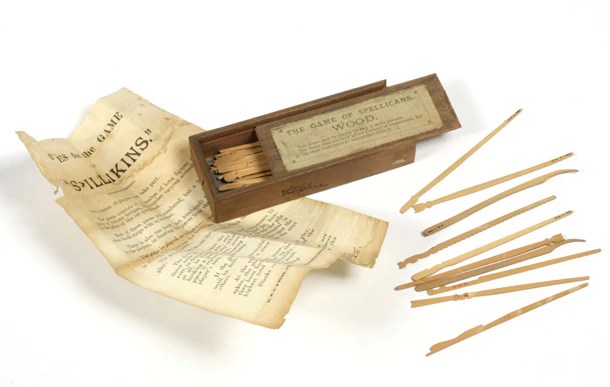
A game of “Spillikins,” image courtesy of the Jane Austen Centre. Read their article for the rules of the game!

25 October (Castle Square) – contained in the same post:

  • Updates on Edward: “All that you say of Edward is truly comfortable; I began to fear that when the bustle of the first week was over, his spirits might for a time be more depressed; and perhaps one must still expect something of the kind.”
  • Adventures to Northam and Hopeful Plans for Netley: “We had a little water-party yesterday; I and my two nephews went from the Itchen Ferry up to Northam, where we landed, looked into the 74, and walked home, and it was so much enjoyed that I had intended to take them to Netley to-day; the tide is just right for our going immediately after moonshine, but I am afraid there will be rain; if we cannot get so far, however, we may perhaps go round from the ferry to the quay. I had not proposed doing more than cross the Itchen yesterday, but it proved so pleasant, and so much to the satisfaction of all, that when we reached the middle of the stream we agreed to be rowed up the river; both the boys rowed great part of the way, and their questions and remarks, as well as their enjoyment, were very amusing; George’s inquiries were endless, and his eagerness in everything reminds me often of his uncle Henry.”
  • Evening Entertainment: “Our evening was equally agreeable in its way: I introduced speculation, and it was so much approved that we hardly knew how to leave off.”
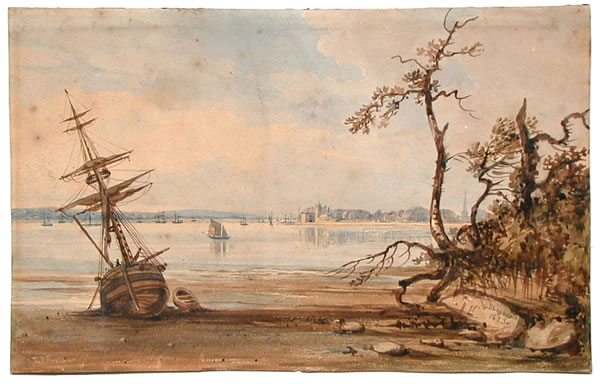
Site of the Itchen ferry in the 18th C.

October in Jane Austen’s Novels

Sense and Sensibility

  • Private Balls and Parties: “When Marianne was recovered, the schemes of amusement at home and abroad, which Sir John had been previously forming, were put into execution. The private balls at the park then began; and parties on the water were made and accomplished as often as a showery October would allow.”
  • Colonel Brandon’s Fateful Letter: “The first news that reached me of her [little Eliza] came in a letter from herself, last October. It was forwarded to me from Delaford, and I received it on the very morning of our intended party to Whitwell; and this was the reason of my leaving Barton so suddenly, which I am sure must at the time have appeared strange to every body, and which I believe gave offence to some. Little did Mr. Willoughby imagine, I suppose, when his looks censured me for incivility in breaking up the party, that I was called away to the relief of one whom he had made poor and miserable; but had he known it, what would it have availed? Would he have been less gay or less happy in the smiles of your sister? No, he had already done that, which no man who can feel for another would do. He had left the girl whose youth and innocence he had seduced, in a situation of the utmost distress, with no creditable home, no help, no friends, ignorant of his address! He had left her, promising to return; he neither returned, nor wrote, nor relieved her.”
Alan Rickman as Colonel Brandon, Sense and Sensibility (1995).

Pride and Prejudice

  • Mr. Collins Writes to Mr. Bennet: Excerpts from letter, from “Hunsford, near Westerham, Kent, 15th October,” read as follows:

    “The disagreement subsisting between yourself and my late honoured father always gave me much uneasiness; and, since I have had the misfortune to lose him, I have frequently wished to heal the breach: but, for some time, I was kept back by my own doubts, fearing lest it might seem disrespectful to his memory for me to be on good terms with anyone with whom it had always pleased him to be at variance… As a clergyman, moreover, I feel it my duty to promote and establish the blessing of peace in all families within the reach of my influence…

    “If you should have no objection to receive me into your house, I propose myself the satisfaction of waiting on you and your family, Monday, November 18th, by four o’clock, and shall probably trespass on your hospitality till the Saturday se’nnight following, which I can do without any inconvenience, as Lady Catherine is far from objecting to my occasional absence on a Sunday, provided that some other clergyman is engaged to do the duty of the day.”
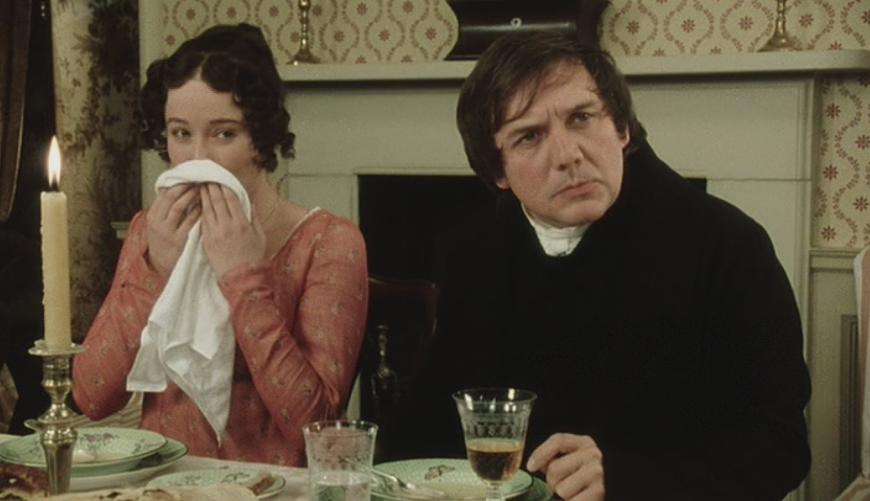
David Bamber as Mr. Collins, Pride and Prejudice 1995.

Mansfield Park

  • Tom Bertram on Hunting: “We have just been trying, by way of doing something, and amusing my mother, just within the last week, to get up a few scenes, a mere trifle. We have had such incessant rains almost since October began, that we have been nearly confined to the house for days together. I have hardly taken out a gun since the 3rd. Tolerable sport the first three days, but there has been no attempting anything since.”
  • Mr. Crawford on Fanny: “You see her every day, and therefore do not notice it; but I assure you she is quite a different creature from what she was in the autumn. She was then merely a quiet, modest, not plain-looking girl, but she is now absolutely pretty. I used to think she had neither complexion nor countenance; but in that soft skin of hers, so frequently tinged with a blush as it was yesterday, there is decided beauty; and from what I observed of her eyes and mouth, I do not despair of their being capable of expression enough when she has anything to express. And then, her air, her manner, her tout ensemble, is so indescribably improved! She must be grown two inches, at least, since October.”
  • Miss Crawford’s Response: “Phoo! phoo! This is only because there were no tall women to compare her with, and because she has got a new gown, and you never saw her so well dressed before. She is just what she was in October, believe me. The truth is, that she was the only girl in company for you to notice, and you must have a somebody.”
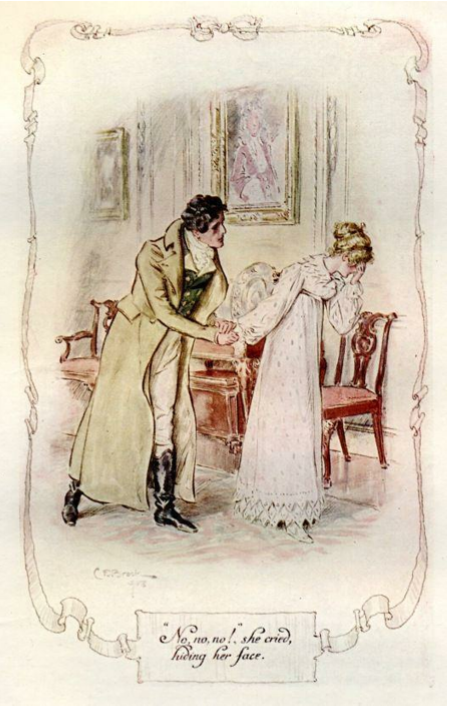
Fanny Price refusing Henry Crawford.

Emma

  • Emma Longs for Isabella’s Christmas Visit: “[Emma’s] sister, though comparatively but little removed by matrimony, being settled in London, only sixteen miles off, was much beyond her daily reach; and many a long October and November evening must be struggled through at Hartfield, before Christmas brought the next visit from Isabella and her husband, and their little children, to fill the house, and give her pleasant society again.”
  • Mrs. Weston on Mr. Frank Churchill and Jane Fairfax: “‘You may well be amazed,’ returned Mrs. Weston, still averting her eyes, and talking on with eagerness, that Emma might have time to recover— ‘You may well be amazed. But it is even so. There has been a solemn engagement between them ever since October—formed at Weymouth, and kept a secret from every body. Not a creature knowing it but themselves—neither the Campbells, nor her family, nor his.—It is so wonderful, that though perfectly convinced of the fact, it is yet almost incredible to myself. I can hardly believe it.—I thought I knew him.'”
  • Mr. and Mrs. Weston’s Pain: “Engaged since October,—secretly engaged.—It has hurt me, Emma, very much. It has hurt his father equally. Some part of his conduct we cannot excuse.”
  • Emma and Mr. Knightley get married in October:
    • “Before the end of September, Emma attended Harriet to church, and saw her hand bestowed on Robert Martin…”
    • “The Mr. Churchills were also in town; and they were only waiting for November. The intermediate month was the one fixed on, as far as they dared, by Emma and Mr. Knightley. They had determined that their marriage ought to be concluded while John and Isabella were still at Hartfield, to allow them the fortnight’s absence in a tour to the seaside, which was the plan.”
    • “But Mr. John Knightley must be in London again by the end of the first week in November.”
    • “[Emma] was able to fix her wedding-day—and Mr. Elton was called on, within a month from the marriage of Mr. and Mrs. Robert Martin, to join the hands of Mr. Knightley and Miss Woodhouse.”
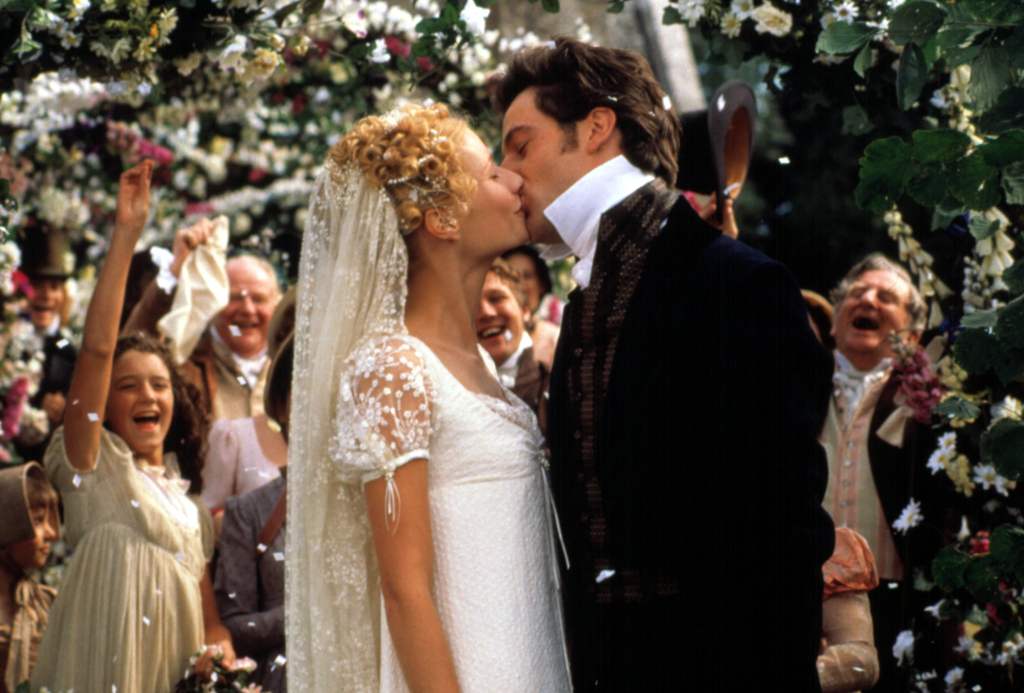
Gwyneth Paltrow as Emma Woodhouse, Emma 2009.

October Dates of Importance

This brings us now to several important October dates relating to Jane and her family:

Family News:

7 October 1767: Edward Austen born at Deane.

25 October 1804: Austen family returns to Bath and lives at 3 Green Park Buildings East.

October 1806: Austen women move to Southampton to live with Francis Austen and wife Mary.

14 October 1812: Edward Austen officially adopts “Knight” as surname.

4 October 1815: Austen travels to London and stays two months to nurse Henry during his illness.

Historic Dates:

19 October 1781: Major British defeat at the Battle of Yorktown, marking the end of the fighting during the American Revolutionary War.

16 October 1793: Marie Antoinette executed in France.

1 October 1801: Truce between Britain and France.

21 October 1805: Nelson defeats French-Spanish fleet at the Battle of Trafalgar.

Writing:

October 1796: Austen begins writing “First Impressions” (later revised as Pride and Prejudice).

30 October 1811: Sense and Sensibility published “By a Lady.”

Sorrows:

10 October 1808: Elizabeth Austen (Edward’s wife) dies after eleventh childbirth.
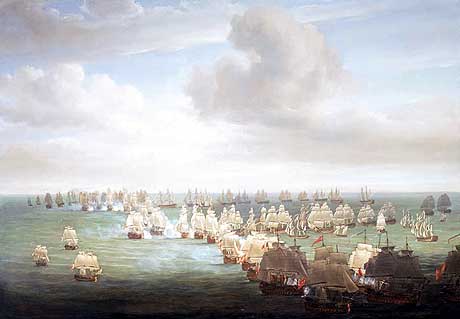
Battle of Trafalgar.

October

As we round the corner into the last few months of the year, it’s fascinating to find so many interesting tidbits each month in Jane Austen’s letters, novels, and life. Next month, we’ll take a look at November in Jane Austen’s World!


RACHEL DODGE teaches college English classes, gives talks at libraries, teas, and book clubs, and writes for Jane Austen’s World blog. She is the bestselling author of The Little Women DevotionalThe Anne of Green Gables Devotional and Praying with Jane: 31 Days Through the Prayers of Jane Austen. Now Available: The Secret Garden Devotional! You can visit Rachel online at www.RachelDodge.com.
Read Full Post »

As spring turns to summer on our month-by-month exploration of Jane Austen’s life, letters, and novels, we turn our attention to June in Jane Austen’s world. If you’re new to the series, you can find previous articles in this “A Year in Jane Austen’s World” series here: JanuaryFebruaryMarch, April, and May.

Last month, we enjoyed the beauty of springtime coming to Chawton, along with the beautiful blooms of May. Let’s take a look at our monthly view of Chawton House Gardens. Many visitors will come tour the gardens over the next few months to enjoy the garden walks, see the house, and perhaps stay for tea.

Chawton House in June: Photo @ChawtonHouse.

June in Hampshire

June is the time of year when England turns into a beautiful garden of scenic greenery, lush fields, and lovely flowers. Hampshire is one of the prettiest places you can visit. I’ve been to Hampshire in the spring and early summer several times, and I highly recommend a summer trip if the opportunity ever presents itself. It’s also time for berries!

“Yesterday I had the agreable (sic) surprise of finding several scarlet strawberries quite ripe;- had you been at home, this would have been a pleasure lost. There are more Gooseberries & fewer Currants than I thought at first.- We must buy currants for our Wine.-” (Jane Austen writing to Cassandra from Chawton Cottage in June 1811)

Here is Jane Austen’s House Museum and the roses that frame the front door this time of year:

Jane Austen’s House in June, Photo: @JaneAustensHouse.

June in Jane Austen’s Letters

We have several letters from June to explore. After the “season” ended, many rich families left London and went to the countryside or Bath. Jane and her family frequently traveled to visit family members or friends for longer visits during the summer months.

2 June 1799 (Queen’s Square, Bath):

  • Edward’s health: “What must I tell you of Edward? Truth or falsehood? I will try the former, and you may choose for yourself another time. He was better yesterday than he had been for two or three days before,—about as well as while he was at Steventon. He drinks at the Hetling Pump, is to bathe to-morrow, and try electricity on Tuesday. He proposed the latter himself to Dr. Fellowes, who made no objection to it, but I fancy we are all unanimous in expecting no advantage from it. At present I have no great notion of our staying here beyond the month.”
  • Visits with friends: “I spent Friday evening with the Mapletons, and was obliged to submit to being pleased in spite of my inclination. We took a very charming walk from six to eight up Beacon Hill, and across some fields, to the village of Charlecombe, which is sweetly situated in a little green valley, as a village with such a name ought to be. Marianne is sensible and intelligent; and even Jane, considering how fair she is, is not unpleasant. We had a Miss North and a Mr. Gould of our party; the latter walked home with me after tea. He is a very young man, just entered Oxford, wears spectacles, and has heard that ‘Evelina’ was written by Dr. Johnson.”
  • Outings: “There is to be a grand gala on Tuesday evening in Sydney Gardens, a concert, with illuminations and fireworks. To the latter Elizabeth and I look forward with pleasure, and even the concert will have more than its usual charm for me, as the gardens are large enough for me to get pretty well beyond the reach of its sound. In the morning Lady Willoughby is to present the colors to some corps, or Yeomanry, or other, in the Crescent, and that such festivities may have a proper commencement, we think of going to….”

11 June 1799 (Queen Square, Bath):

  • Taking the waters: “Edward has been pretty well for this last week, and as the waters have never disagreed with him in any respect, we are inclined to hope that he will derive advantage from them in the end. Everybody encourages us in this expectation, for they all say that the effect of the waters cannot be negative, and many are the instances in which their benefit is felt afterwards more than on the spot.”
  • Thoughts on “First Impressions”: “I would not let Martha read ‘First Impressions’ again upon any account, and am very glad that I did not leave it in your power. She is very cunning, but I saw through her design; she means to publish it from memory, and one more perusal must enable her to do it.”
Public Domain Image.

15 June 1808 (Godmersham)

  • Details of their journey: “Which of all my important nothings shall I tell you first? At half after seven yesterday morning Henry saw us into our own carriage, and we drove away from the Bath Hotel; which, by the by, had been found most uncomfortable quarters,—very dirty, very noisy, and very ill-provided. James began his journey by the coach at five. Our first eight miles were hot; Deptford Hill brought to my mind our hot journey into Kent fourteen years ago; but after Blackheath we suffered nothing, and as the day advanced it grew quite cool.
  • A rest for breakfast: “At Dartford, which we reached within the two hours and three-quarters, we went to the Bull, the same inn at which we breakfasted in that said journey, and on the present occasion had about the same bad butter. At half-past ten we were again off, and, travelling on without any adventure reached Sittingbourne by three. Daniel was watching for us at the door of the George, and I was acknowledged very kindly by Mr. and Mrs. Marshall, to the latter of whom I devoted my conversation, while Mary went out to buy some gloves. A few minutes, of course, did for Sittingbourne; and so off we drove, drove, drove, and by six o’clock were at Godmersham.”
Godmersham Park

25 April 1811 (Sloane St.)

  • Possible publishing date for Sense and Sensibility: “No, indeed, I am never too busy to think of S. and S. I can no more forget it than a mother can forget her sucking child; and I am much obliged to you for your inquiries. I have had two sheets to correct, but the last only brings us to Willoughby’s first appearance. Mrs. K. regrets in the most flattering manner that she must wait till May, but I have scarcely a hope of its being out in June. Henry does not neglect it; he has hurried the printer, and says he will see him again to-day. It will not stand still during his absence, it will be sent to Eliza.”

6 June 1811 (Chawton)

  • New set of dishes: “On Monday I had the pleasure of receiving, unpacking, and approving our Wedgwood ware. It all came very safely, and upon the whole is a good match, though I think they might have allowed us rather larger leaves, especially in such a year of fine foliage as this. One is apt to suppose that the woods about Birmingham must be blighted. There was no bill with the goods, but that shall not screen them from being paid. I mean to ask Martha to settle the account. It will be quite in her way, for she is just now sending my mother a breakfast-set from the same place. I hope it will come by the wagon to-morrow; it is certainly what we want, and I long to know what it is like, and as I am sure Martha has great pleasure in making the present, I will not have any regret. We have considerable dealings with the wagons at present: a hamper of port and brandy from Southampton is now in the kitchen.”
Wedgwood Queensware, c. 1790. Image @Christies

13 June 1814 (Chawton)

  • Thoughts on Mansfield Park from Mr. and Mrs. Cooke: “In addition to their standing claims on me they admire “Mansfield Park” exceedingly. Mr. Cooke says “it is the most sensible novel he ever read,” and the manner in which I treat the clergy delights them very much. Altogether, I must go, and I want you to join me there when your visit in Henrietta St. is over. Put this into your capacious head.”

23 June 1814 (Chawton):

  • Travels and plans: “I certainly do not wish that Henry should think again of getting me to town. I would rather return straight from Bookham; but if he really does propose it, I cannot say No to what will be so kindly intended. It could be but for a few days, however, as my mother would be quite disappointed by my exceeding the fortnight which I now talk of as the outside—at least, we could not both remain longer away comfortably.”
  • Friends go to Clifton: “Instead of Bath the Deans Dundases have taken a house at Clifton—Richmond Terrace—and she is as glad of the change as even you and I should be, or almost. She will now be able to go on from Berks and visit them without any fears from heat.”

23 June 1816 (Chawton)

  • Bits of news: “My dear Anna,—Cassy desires her best thanks for the book. She was quite delighted to see it. I do not know when I have seen her so much struck by anybody’s kindness as on this occasion. Her sensibility seems to be opening to the perception of great actions. These gloves having appeared on the pianoforte ever since you were here on Friday, we imagine they must be yours. Mrs. Digweed returned yesterday through all the afternoon’s rain, and was of course wet through; but in speaking of it she never once said “it was beyond everything,” which I am sure it must have been. Your mamma means to ride to Speen Hill to-morrow to see the Mrs. Hulberts, who are both very indifferent. By all accounts they really are breaking now,—not so stout as the old jackass.”
Rolinda Sharples’ Clifton Assembly Room (1817).

June in Jane Austen’s Novels

Pride and Prejudice

  • Lady Catherine to Elizabeth: “Oh, your father, of course, may spare you, if your mother can. Daughters are never of so much consequence to a father. And if you will stay another month complete, it will be in my power to take one of you as far as London, for I am going there early in June, for a week; and as Dawson does not object to the barouche-box, there will be very good room for one of you—and, indeed, if the weather should happen to be cool, I should not object to taking you both, as you are neither of you large.”
  • June at Longbourn after Lydia’s departure: After the first fortnight or three weeks of [Lydia’s] absence, health, good-humour, and cheerfulness began to reappear at Longbourn. Everything wore a happier aspect. The families who had been in town for the winter came back again, and summer finery and summer engagements arose. Mrs. Bennet was restored to her usual querulous serenity; and by the middle of June Kitty was so much recovered as to be able to enter Meryton without tears…
  • Lydia born in June: “Well,” cried her mother, “it is all very right; who should do it but her own uncle? If he had not had a family of his own, I and my children must have had all his money, you know; and it is the first time we have ever had anything from him except a few presents. Well! I am so happy. In a short time, I shall have a daughter married. Mrs. Wickham! How well it sounds! And she was only sixteen last June. My dear Jane, I am in such a flutter, that I am sure I can’t write; so I will dictate, and you write for me. We will settle with your father about the money afterwards; but the things should be ordered immediately.”
Happy Lydia and Unhappy Mr. Wickham

Mansfield Park

  • Edmund’s letter to Fanny: “I have sometimes thought of going to London again after Easter, and sometimes resolved on doing nothing till she returns to Mansfield. Even now, she speaks with pleasure of being in Mansfield in June; but June is at a great distance, and I believe I shall write to her. I have nearly determined on explaining myself by letter. To be at an early certainty is a material object. My present state is miserably irksome.”

Emma

  • Happenings in Highbury: “In this state of schemes, and hopes, and connivance, June opened upon Hartfield. To Highbury in general it brought no material change. The Eltons were still talking of a visit from the Sucklings, and of the use to be made of their barouche-landau; and Jane Fairfax was still at her grandmother’s; and as the return of the Campbells from Ireland was again delayed, and August, instead of Midsummer, fixed for it, she was likely to remain there full two months longer, provided at least she were able to defeat Mrs. Elton’s activity in her service, and save herself from being hurried into a delightful situation against her will.”
  • An outing delayed: “It was now the middle of June, and the weather fine; and Mrs. Elton was growing impatient to name the day, and settle with Mr. Weston as to pigeon-pies and cold lamb, when a lame carriage-horse threw every thing into sad uncertainty. It might be weeks, it might be only a few days, before the horse were useable; but no preparations could be ventured on, and it was all melancholy stagnation. Mrs. Elton’s resources were inadequate to such an attack.”
  • Mr. Knightley offers his strawberry fields: “You had better explore to Donwell,” replied Mr. Knightley. “That may be done without horses. Come, and eat my strawberries. They are ripening fast.”
Mr. and Mrs. Elton involved in everyone’s lives.

Persuasion

  • Elizabeth Elliot born: “Walter Elliot, born March 1, 1760, married, July 15, 1784, Elizabeth, daughter of James Stevenson, Esq. of South Park, in the county of Gloucester, by which lady (who died 1800) he has issue Elizabeth, born June 1, 1785; Anne, born August 9, 1787; a still-born son, November 5, 1789; Mary, born November 20, 1791.”
  • A June sorrow: “And I am sure,” cried Mary, warmly, “it was a very little to his credit, if he did. Miss Harville only died last June. Such a heart is very little worth having; is it, Lady Russell? I am sure you will agree with me.”

June Dates of Importance

This brings us now to several important June dates that relate to Jane and her family:

Family News:

8 June 1771: Henry Thomas Austen (Jane’s brother) born at Steventon.

23 June 1779: Charles Austen (Jane’s brother) born at Steventon.

18 June 1805: James Austen’s daughter, Caroline, born.

Historic Dates:

18 June 1812: The United States declares war on Great Britain (War of 1812).

18 June 1815: The Duke of Wellington defeats Napoleon at the Battle of Waterloo.

Writing:

3 June 1793: Jane Austen most likely writes the last item of her juvenilia.

June 1799: Austen most likely finishes Susan (Northanger Abbey).

Sorrows:

I’m happy to report that I found no major sorrows for the Austen family in the month of June throughout Austen’s lifetime.

June 2024 @JaneAustensHouse.

Joyful June

This concludes our June ramble through Jane Austen’s life, letters, and works. There is always something fascinating to explore! Next month, we’ll discover all the important dates and events from July in Jane Austen’s World. Until then, you might join the Jane Austen’s House Museum virtual book club! You can click here for more: https://janeaustens.house/visit/whats-on/.


RACHEL DODGE teaches college English classes, gives talks at libraries, teas, and book clubs, and writes for Jane Austen’s World blog. She is the bestselling author of The Little Women DevotionalThe Anne of Green Gables Devotional and Praying with Jane: 31 Days Through the Prayers of Jane Austen. Now Available: The Secret Garden Devotional! You can visit Rachel online at www.RachelDodge.com.

Read Full Post »

Inquiring readers, It’s time to lay Downton Abbey reviews aside and return to Jane Austen, since that is where my passion lies. Tony Grant, London Calling, has been a contributor to this blog for many years. He has written a piece that is quite original – how would Darcy’s first proposal to Lizzie sound if the two characters spoke in the Hampshire accent that Jane Austen, who lived in Chawton, would have known well?

I think you will find this post as interesting as I did. Enjoy!

One of the things that you see time and time again, is that when she reaches a point where the characters are in conversation, her hand runs smoothly – often without a pause, often without a mistake, often without a slip or correction. In other passages where she’s setting up a scene or introducing a new character and having to describe him with some detail – before he actually becomes animated by conversation – those are the passages she struggles with. But she does come through in the manuscripts as essentially and most confidently a conversational novelist.” – Katheryn Sutherland, speaking about Austen’s original manuscripts at the British Library.

In the following interview with NPR’s Mary Louise Kelly, Sutherland discusses the manuscripts, now compiled in a digital archive.

Prof. SUTHERLAND: There are very few authors that we put in this extraordinary position where we feel that we should never say anything critical about them. She can stand up to it. She’s interesting. She’s experimental. She’s an extraordinary writer. The idea that we can never question what she wrote I think is absolute nonsense.

KELLY: Professor Sutherland, so how different do these handwritten pages look from the finished books that we know?

Prof. SUTHERLAND: Well, they look very different, obviously, in that they are filled with blots, crossings out into linear insertions. When you look deeper you perhaps find something you wouldn’t expect, which is a different punctuation style.

KELLY: A different punctuation style. How – what do you mean?

Prof. SUTHERLAND: Well, it seems to mean that what she is doing is punctuating for speech. The English that she is known for is this polished, printed Johnsonian prose. And it’s not there in the manuscript.

kathryn sutherland

Katherine Sutherland

The controversy that Katheryn Sutherland stirred up when she published her ideas about Jane Austen’s writing style, is very telling. It highlighted, in the many shocked responses, the unthinking, emotionally charged fan worship that surrounds Austen. Sutherlands measured, researched views should have been a reality check, a cold shower cooling the heated, emotional, overwrought world of modern day Janites stoked to a white heat by the many branches of various Jane Austen Societies around the world. The now numerous films and TV adaptations and especially the wet shirt scene and also, in addition, the spin off genre epitomized recently in the film,” Pride and Prejudice and Zombies,” keep this unhealthy adoration at fever pitch.

Thinking about Sutherlands comments relating to Jane Austen’s use of the comma, her lack of paragraphing and her speech being her strong point, I thought it would be interesting to take it a stage further and write a piece from one of her novels using Hampshire phrases and colloquialisms and also being creative with punctuation and paragraphing as Sutherland says Austen’s original manuscripts demonstrate. Also her original manuscripts had, and you can see this in any publication of Sandition or The Watsons, a prolific use of abbreviations and ampersands.

I am Hampshire born and bred and up until the age of 23 lived in Southampton. I have often visited places like Winchester, Salisbury and villages such as Bishops Waltham and Botley and throughout my life, heard the Hampshire dialect spoken. My families neighbours in Southampton all spoke with pronounced Hampshire accents and used phrases and words that were peculiar to Hampshire.

It is a warm, gentle sort of accent with a soft burr to it. The letter S is often pronounced as Z. The letter H is often missed off when pronouncing a word and the G at the end of the suffix ing is missed. Words like, you, become, yer and, he, becomes ee, was is wuz, man, is , bloke, I ,is ,oy, and if you want to insult somebody you call them, mush. Vowels are flattened. The Hampshire way of speaking can easily be understood by outsiders, however. It is clearly spoken and the differences from accepted pronunciation are not great. You could not mistake somebody speaking with a Hampshire accent and using Hampshire colloquialisms, as coming from anywhere else but Hampshire.

In the following rewriting of the first proposal of his love to Elizabeth, I have tried to interpret what Darcy and Elizabeth say using Hampshire colloquialisms. I must admit I have not just kept to a Hampshire way of speaking. I have not enough expertise to do that. What follows is probably a mixture of various English dialetcs and mannerisms. But it was fun to do. I hope you can enjoy it. If you are challenged as far as an English accent, particularly a colloquial accent goes, make your sounds flat. Widen your mouth as you speak. You are not trying to create a ,”plummy,” upper class accent but the flat vowels of a regional accent.  Good luck.

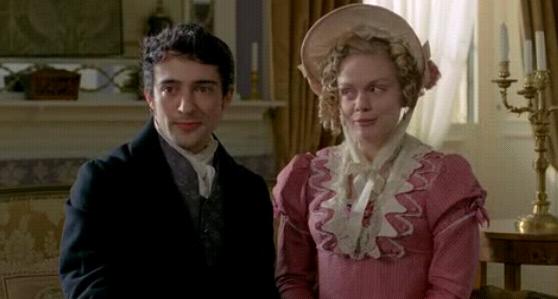
Screen Shot 2016-03-12 at 6.35.15 PM

Here is Elizabeth Bennet, in Pride and Prejudice, being surprised by an unexpected visitor and a very unexpected proposal:

….she was suddenly roused by the sound of the doorbell, and her spirits were a little fluttered by the idea of it being Colonel Fitzwilliam himself, who had once before called late in the evening, and might now come to enquire particularly after her.

“ Oo cud that be now?”

But this idea was soon banished, and her spirits were differently affected, when, to her utter amazement, she saw Mr Darcy walk into the room. In an unhurried manner he immediately began an enquiry after her health,

“Owz you be me dear?”

imputing his visit to a wish of hearing that she were better. She answered him with cold civility.

“Oyz orright. Thank ee fer azzkin.”

He sat down for a few moments, and then getting up walked about the room. Elizabeth was surprised, but said not a word. After a silence of several minutes he came towards her in an agitated manner, and thus began,

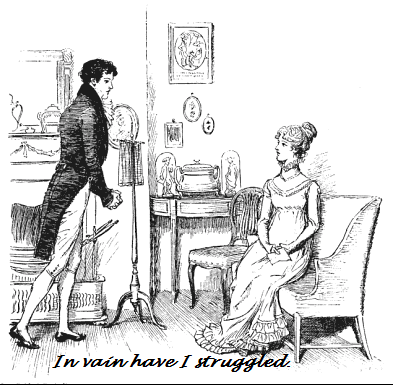
“Ize a bin struggling wi meslf Lizzie. It won’t do nay more. Me feelins will not be squarshed unner no dead rabbit nay mar. Yee mussle allowz me t’ tell yee ‘ow, wi some power’ul emotion me admires and loves ee.”

Elizabeth’s astonishment was beyond expression.

“Ahhh eeee !!!”

She stared, coloured, doubted and was silent. This he considered sufficient encouragement, and the avowal of all that he felt and had long felt for her, immediately followed.

He spoke well, but there were feelings besides those of the heart to be detailed, and he was not more eloquent on the subject of tenderness than of pride.

“Me pride makes eet hard Liz to tell ee these ere things but I knows how low down ee must feel agin me and me family. It’ll tak summit for ‘em all to coom roun’ to this ere idea Liz. It is nay degradation Lizzie to yee and yer mum and yer dad and yer sisterz.”

In spite of her deeply-rooted dislike, she could not be insensible to the compliment of such a man’s affection, and though her intentions did not vary for an instant, she was at first sorry for the pain he was to receive; till, roused to resentment by his subsequent language, she lost all compassion in anger. She tried, however, to compose herself to answer him with patience.

“Ize dun know what ter say? But yooz jus insulterd me family and all a uz!”

He concluded with representing to her the strength of that attachment which, in spite of all his endeavours, he had found impossible to conquer; and with expressing his hope that it would now be rewarded by her acceptance of his hand.

“Ize a cannot help meself Lizzie. Ize a feelin anxious like. Ize a feeling appre’ennersive like. Marry me ! I got these ere feelins see girl.”

As he said this, she could easily see that he had no doubt of a favourable answer. He spoke of apprehension and anxiety, but his countenance expressed real security. Such a circumstance could only exasperate farther, and when he ceased, the colour rose into her cheeks, and she said,

“In sich as this, it is ‘stablished thing t’express a sense a obligati’n fer the sen’imen’s avowed, ‘owever unequalz they be. It’s nat’ral that obligati’n should be felt, and if ay could feel grat’tude, I’d now thank ee. But ay can’t – I’ve ne’r wannered yer good thoughts like, and yee’ve cert’nly bin unwillin’ aven’t ee . I’ze sorry if ay cause ee some ‘art ache. I aint ment it like, ‘ Ize ope ee gets overit quick like. The feelin’s which, yee tell I, ‘ave long stopped ee, yee can ‘ave no difficulty overcoming em after what yee have sed like.”

Mr Darcy, who was leaning against the mantle-piece with his eyes fixed on her face, seemed to catch her words with no less resentment than surprise. His complexion became pale with anger, and the disturbance of his mind was visible in every feature. He was struggling for the appearance of composure, and would not open his lips, till he believed himself to have attained it. The pause was to Elizabeth’s feelings dreadful…

References:


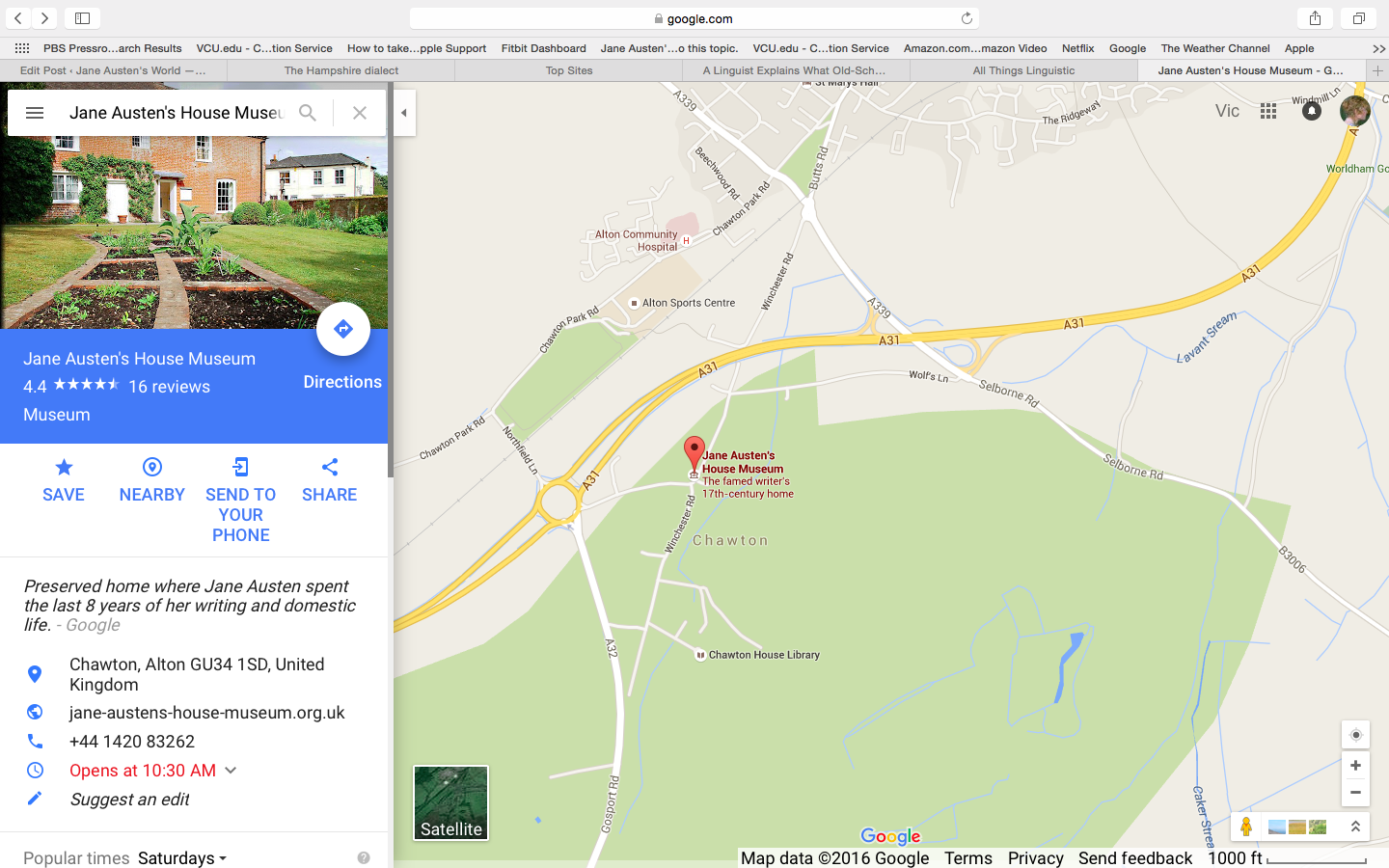
I found more information about British dialects online (Vic):

Screen Shot 2016-03-12 at 6.00.38 PM

The English Language in Hampshire: The English Project. http://www.englishproject.org/resources/english-language-hampshire

Jane Austen’s English: http://dialectblog.com/2013/03/23/jane-austens-english/. Unfortunately, there was no audio portion to the descriptions of the broad “a” in this article.

British Library: Survey of British Accents. This short audio sample was recorded in 1958. The speaker was born in 1898 and lived in Hatherden, Hampshire – http://sounds.bl.uk/Accents-and-dialects/Survey-of-English-dialects/021M-C0908X0031XX-0400V1

A Linguist Explains What Old-School British Accents Sounded Like: The Toast http://the-toast.net/2014/03/19/a-linguist-explains-british-accents-of-yore/. This article includes a 10-minute video on how Shakespearean English sounded as compared to the British dialect today. Fascinating.

A Linguist Explains What Old-School British Accents Sounded Like: All Things Linguistic
http://allthingslinguistic.com/post/80067476348/a-linguist-explains-what-old-school-british. A bit more on the topic by the same author.

Read Full Post »

I used to regard A&E as one of the premier cable channels in the U.S. Known then as the Arts and Entertainment Network, it ran such prestigious shows as the 6-hr 1995 adaptation of Jane Austen’s Pride and Prejudice, Inspector Morse, Midsommer Murders, and Biography. (These days this once admirable network features rubbish like Storage Wars, Duck Dynasty, Dog, the Bounty Hunter, Flipping Las Vegas, and Donny Loves Jenny.)  Regardless of the transformation, I shall always be grateful to A&E for showcasing P&P in the fall of 1995. For six weeks we were treated to this marvelous adaptation of Jane Austen’s most famous novel. The mini-series held me spellbound (and my then husband as well). I wanted to be Lizzy to Colin Firth’s Mr. Darcy. What romantic-minded lady didn’t?

Colin Firth as Mr. Darcy and Jennifer Ehle as Elizabeth Bennet

Colin Firth as Mr. Darcy and Jennifer Ehle as Elizabeth Bennet

Rewatching the first minutes of the first episode, I was reminded of how compact and economical those opening scenes were – and how they crucially fed our expectations for the rest of the series. In interviews over the years, Andrew Davies, the screenwriter, said that he wanted to emphasize the lives of Regency men as well, and so the film opens with Mr. Bingley and Mr. Darcy racing through the fields on their steeds to view Netherfield Park, which was available to let. The relationship between Darcy and Bingley is immediately established – Bingley the eager puppy wanting his friend’s approval, and Darcy’s slightly caustic reply as a supportive older friend, cautioning him that he’ll find the society something savage.

As the two friends gallop away, the camera pans to Elizabeth, who pauses during her country walk to watch the men disappear. We follow the tomboyish Lizzy as she skips home over a dirt path, past a field with horses, and to the Bennet family home, Longbourn. Lizzy gazes through the window into her father’s study, while in the background we hear loud bickering between two young women. Mr. Bennet, holding a book in his right hand, rolls his eyes as Lizzy smiles in acknowledgment. This brief exchange demonstrates their close relationship in an instant.

We are then treated to a raucous scene in the parlor with Kitty, Lydia, and Mrs. Bennet in all their argumentative glory. Only Mary sits quietly, reading a book amid the mayhem. A calm, beautiful Jane greets Lizzy, who has just entered the hallway. Both respond to their mother’s shrill cries with half smiles and serene expressions. These scenes, in which the viewer meets quite a few of the principal characters, took all of 3 minutes.

We next see the Bennets at church in their Sunday best. The costumes are sumptuous; the locations are authentic – not the staged sets that were so prevalent in BBC dramas of the 70’s and 80’s. I recall the excitement I felt when I saw the care that the director and producers had taken to give us an “authentic” English Regency experience. Cameras followed the actors as they moved through the rooms of real houses and the lanes and paths of actual locations. The stilted production techniques inside studio interiors that used two or three fixed camera angles belonged to the past. The BBC and PBS had finally caught up with commercial television in shooting and producing drama that seemed realistic.

The church scene provides us with two of Jane Austen’s most famous lines. Mrs. Bennet runs after Mr. Bennet screeching, “Mr. Bennet, wonderful news. Netherfield Park is let at last!” We are then treated to the brilliant witty dialogue that Jane Austen crafted for Mr Bennet as he replies to his wife’s many suppositions and inanities.

Andrew Davies gives Lizzy the honor of speaking the novel’s famous opening line, “For a single man in possession of a good fortune must be in want of a wife.” How apropos. Only 4:20 minutes have elapsed at this point. Even my ex, who had not read any of Jane’s novels, understood the plot for the full 6 episodes – two bachelors, five single girls, a silly mother, a sarcastic father, and romance and social history galore. We settled in for six hours of satisfying viewing time.

I could continue, but at this rate it would take me over 400 pages just to describe the first episode. Suffice it to say that I love Colin Firth as Mr. Darcy and prefer Jennifer Ehle as Lizzy (horrid wig and all) over Keira Knightley as Lizzy 2005. Some critics with modern sensibilities found Ehle too old and zaftig for the part of Lizzy Bennet. Jennifer was 25 when she took on the role, only 5 years older than Lizzy. (Twenty-five year old Julia Sawalha, who played 15 year old Lydia, was ten years older! And let’s not argue about 30-something Greer Garson playing Lizzy Bennet in 1940 P&P. Awful.)

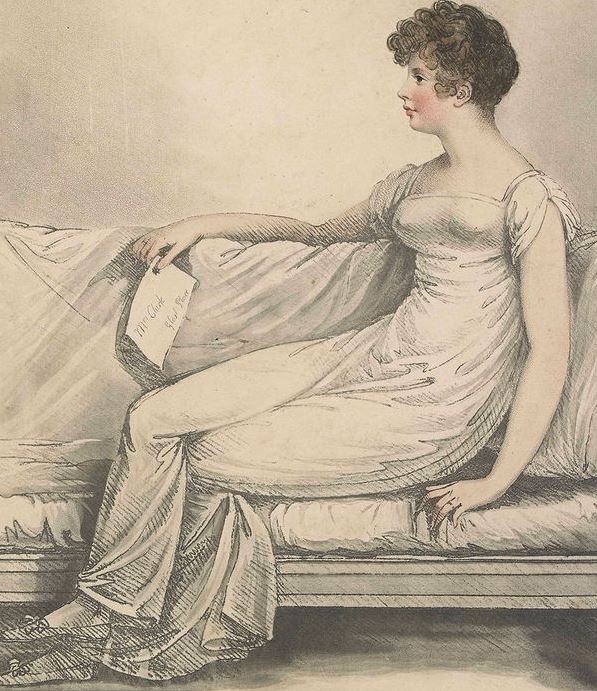
Mary Anne Clarke by Adam Buck, 1809. View more images here.

Mary Anne Clarke by Adam Buck, 1809. View more images here.

As for Jennifer Ehle being too heavy for the part of a 20 year old Regency girl, those critics need only to examine images of that era to see that Jennifer was the perfect size to play Lizzy. Keira Knightley possesses the thin fashionable looks that suit our 21st century tastes, but not those that depict early 19th century beauties. Feel free to disagree.

The 1995 adaptation of Pride and Prejudice also benefited from the immensely satisfying performances of Benjamin Whitrow as Mr Bennet, Alison Steadman as Mrs. Bennet, David Bamber as the incredibly silly Mr. Collins, and Barbara Leigh-Hunt as insufferable Lady Catherine de Bourgh. I found very little fault with the supporting actors, who played their roles to perfection. I can’t say how often I’ve seen this version of P&P – 12, 15 times? I’ve lost count. Be assured that I’ll enjoy many more viewings.

In case you wondered how Mr. and Mrs. Darcy would look after 15 years of marriage, here’s a lovely image.

If you wonder how our favorite couple would have aged, here's an image of Mr. Darcy and Elizabeth 15 years later.

Mr. Darcy and Elizabeth 15 years later. Colin Firth and Jennifer Ehle in 2010 after the King’s Speech premiere.

Additional bits of information about P&P 1995:

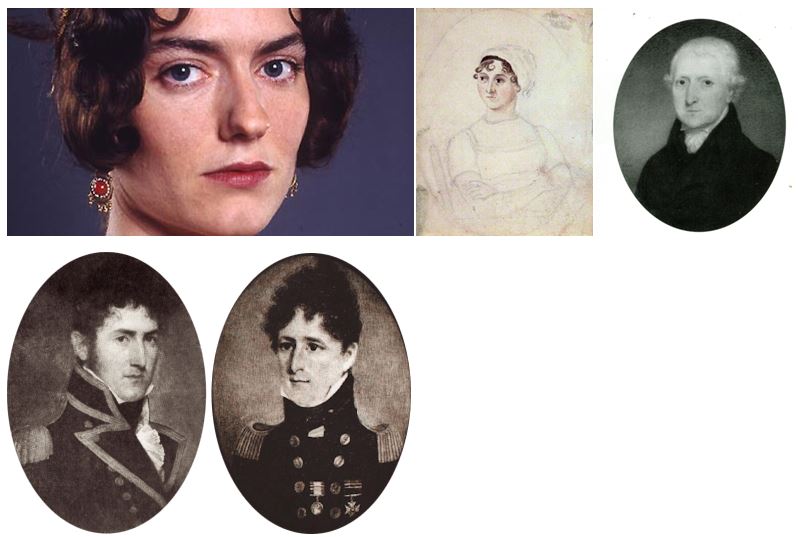
Left to right; Anna Chancellor, Jane Austen, Rev. George Austen. Bottom: Francis (l) and Charles (r) Austen.

Left to right; Anna Chancellor, Jane Austen, Rev. George Austen. Bottom: Francis (l) and Charles (r) Austen.

Read Full Post »

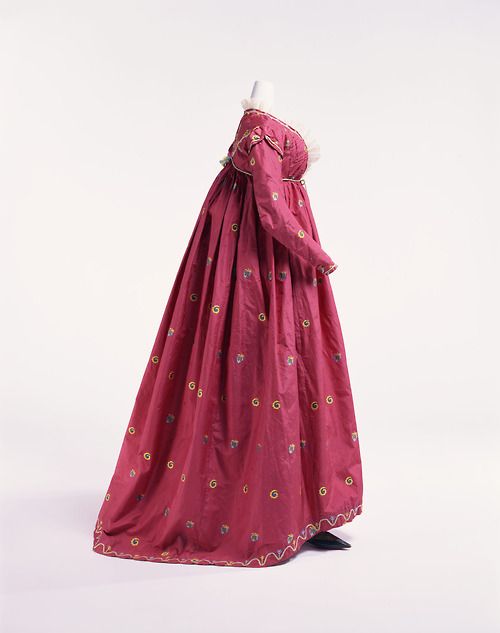
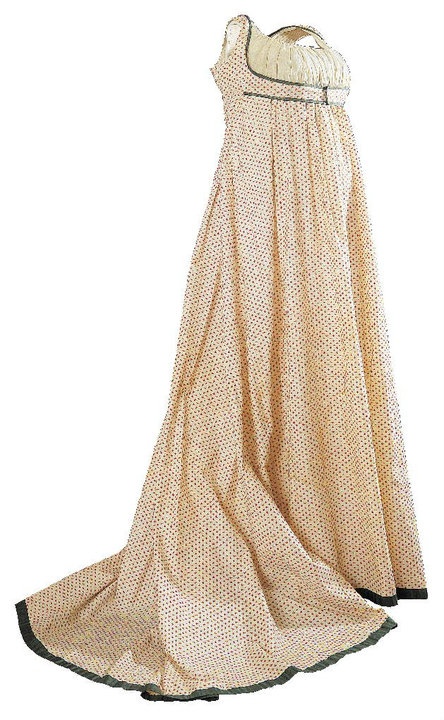
During the late 18th century, early 19th century, trains on gowns were de rigueur. I chose to show the two gowns below, since the styles were popular when Jane Austen was a teenager (first image) and wrote the first editions of Northanger Abbey, Sense and Sensibility, and Pride and Prejudice (second and third images).

1785-90 Sheer embroidered cotton muslin lined with pink silk taffeta - Galliera

Sheer embroidered cotton muslin, lined with pink silk taffeta, 1785-1790. Galliera

Silk Dress 1795 The Kyoto Costume Institute

Silk Dress, Kyoto Costume Institute, 1795

Robe ayant appartenu, 1797

Robe ayant appartenu, 1797

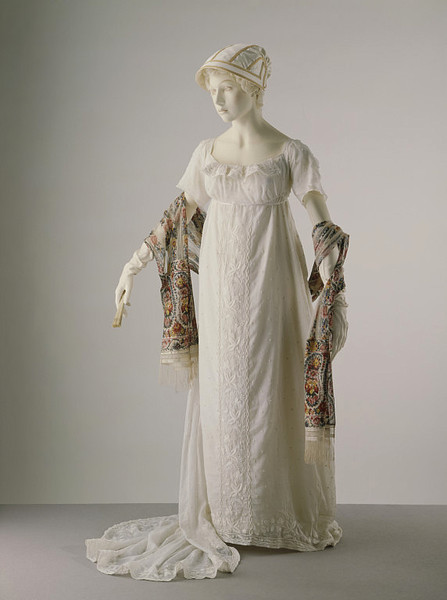
As Regency styles evolved and the 19th century  progressed, trains were worn largely on evening dresses.


1805-1810 French evening dress, V&A museum

1805-1810 French evening dress, V&A museum

I have often wondered how delicate muslin gowns survived the harsh laundering that was required to remove stains made from dusty floors and muddy pathways. Even the grandest ladies wearing the most expensive dresses promenaded on gravel walkways or shopped along city or village streets. How did they manage to keep their hems clean in an era when paved roads and sidewalks were almost impossible to find?

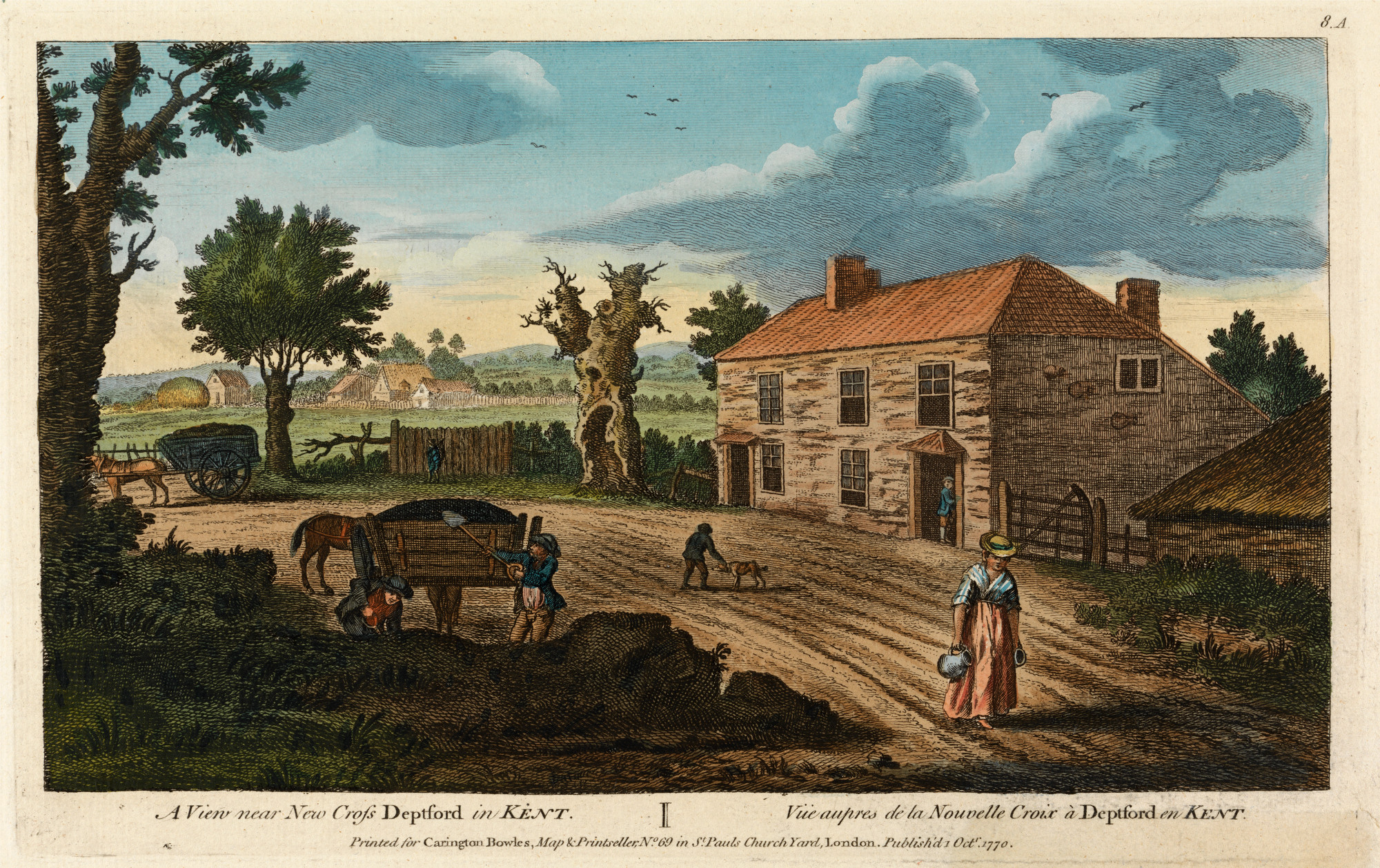
Dirt road, a view near New Cross Deptford in Kent, 1770. artist unknown Yale University, Mellon Collection.

Dirt road, a view near New Cross Deptford in Kent, 1770. artist unknown Yale University, Mellon Collection.

Until macadam roads became widespread, roads across most of Great Britain remained unpaved. Village roads were especially notorious for becoming muddy quagmires during rainy days. The deep ruts in this village scene, illustrated just five years before Jane Austen’s birth, say it all.

Detail

Detail of  the road in New Cross Deptford

Dresses worn by working class women stopped at or above the ankles, and for good reason! These women wore sturdy leather shoes that could withstand the dirt.

recto

Paul Sandby drawing of two vendors, 18th c.

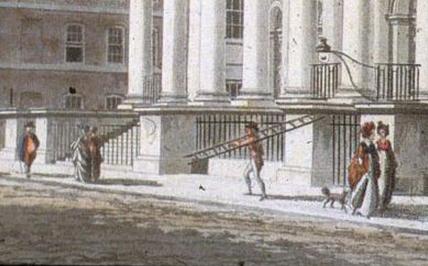
City streets were barely better than country roads. While sidewalks protected dress hems, roads were still made of dirt. People tossed out garbage from their windows, and horse droppings made crossings all but impassible for pedestrians.

Dirt road_St. George, Bloomsbury

Dirt road, detail of St. George, Bloomsbury

Crossing sweepers were stationed along major intersections, sweeping a clearing for anyone willing to give a tip. Not only did horses pull carriages and wagons, but drovers led animals to market through village and city streets. The stench from their droppings must have been unbelievable.

street sweeper and wheeled plank Vernet_street_print

This enterprising street sweeper places a wheeled plank at strategic points to help pedestrians cross dirty roads. Print by Carle Vernet.


With time, machines began to replace manual labor, as this unhappy street sweeper notes.

By 1829, machines began to replace manual labor, as this unhappy street sweeper notes in “The Scavenger’s Lamentation.” Observe the piles of horse and animal dung left behind.

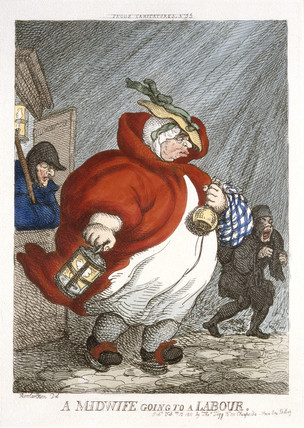
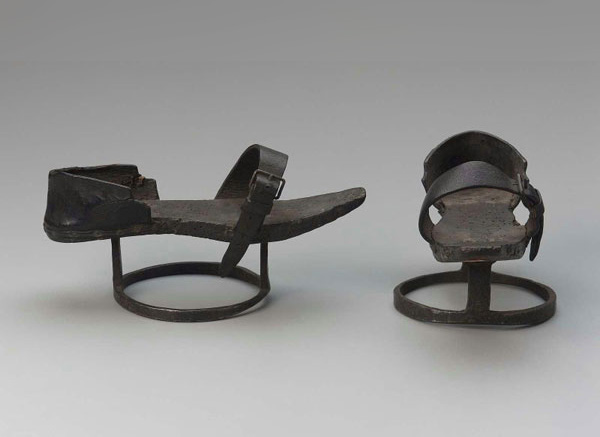
Jane Austen mentioned wearing pattens when she lived in Steventon. These devices elevated shoes above the dirt, but by the turn of the 19th century, pattens were no longer considered fashionable and were largely worn by the working classes, such as the midwife below.

Rowlandson, Midwife going to a labour.

Rowlandson. AMidwife Going to a Labour.


early 19th century pattens. Museum of Fine Art, Boston

early 19th century pattens. Museum of Fine Art, Boston

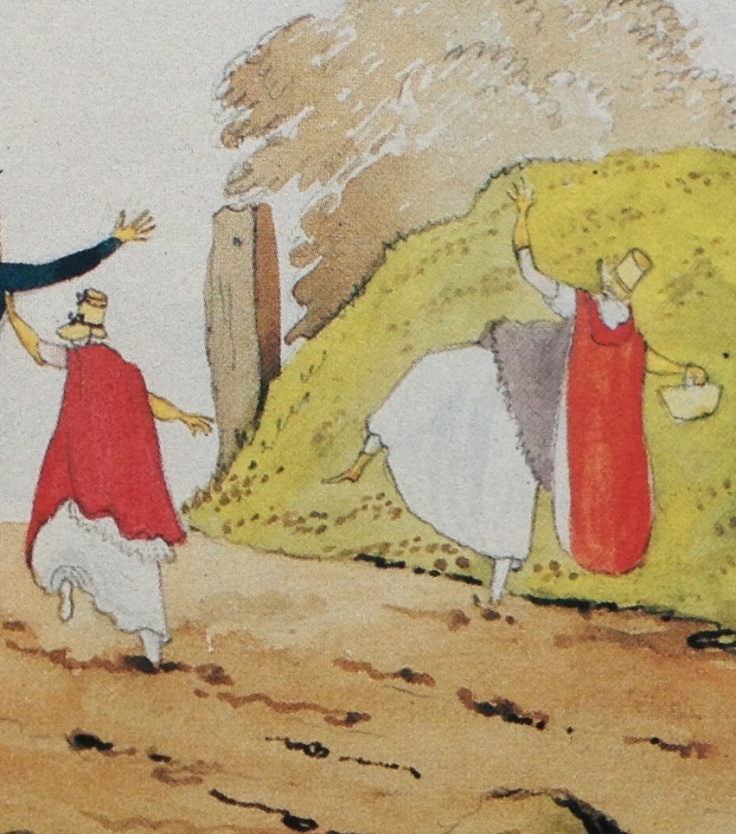
I always view contemporary images for clues. Diana Sperling created some wonderful watercolours around the topic. In this painting, you can see how the trains of the dresses have somehow been hitched up in the back, especially with the first and third women.

dirt road_hazards of walking sperling

Hazards of walking, by Diana Sperling

After Elizabeth Bennet walks to Netherfield to visit her sick sister, Jane, Mrs. Hurst and Mrs. Bingley speak disparagingly about the state of her dress:

“She has nothing, in short, to recommend her, but being an excellent walker. I shall never forget her appearance this morning. She really looked almost wild.”

“She did indeed, Louisa. I could hardly keep my countenance. Very nonsensical to come at all! Why must she be scampering about the country, because her sister had a cold? Her hair, so untidy, so blowsy!”

“Yes, and her petticoat; I hope you saw her petticoat, six inches deep in mud, I am absolutely certain; and the gown which had been let down to hide it, not doing its office.” – Pride and Prejudice, Chapter 8

Bingley’s citified and nouveau riche sisters were horrified at Elizabeth’s lack of decorum. To them, appearances are more important than sisterly devotion. One imagines that they would not have ventured out until the sun had dried the mud and they could be assured of a carriage. From the image below, one can readily see why Elizabeth’s hems were in such sad shape after her long walk in fields made wet by heavy rain.

Dirt roads

One wonders how helpful pattens were when dirt roads became quagmires. Although she was young when she painted these watercolours, Diana Sperling demonstrates a decided sense of humor in her paintings.

In Northanger Abbey, Isabella and Catherine became quickly inseparable, even calling each other by their first names in an age when only intimate friends and family could be on such terms.

They called each other by their Christian name, were always arm in arm when they walked, pinned up each other’s train for the dance, and were not to be divided in the set; and if a rainy morning deprived them of other enjoyments, they were still resolute in meeting in defiance of wet and dirt, and shut themselves up, to read novels together. 

They pinned up the trains of each others’ evening gowns to prevent tripping, but also staining, I suspect.  (It must be noted that guests changed from their street shoes to dancing slippers before entering a ballroom, which probably reduced the amount of dirt trailed inside.) Nothing could stop the girls from seeing each other, not even “dirt” or muddy streets.

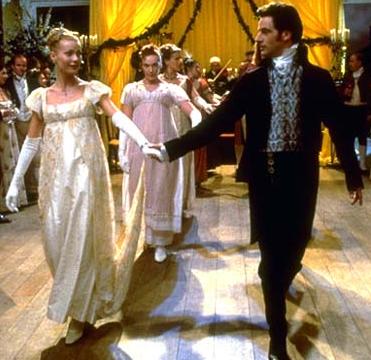
There were many ways to protect trains. In this film still, Gwynneth Paltrow’s Emma hitches her train on a loop over her wrist.

Note the train in this image of the 1996 version of Emma

Note the train in this image of the 1996 version of Emma

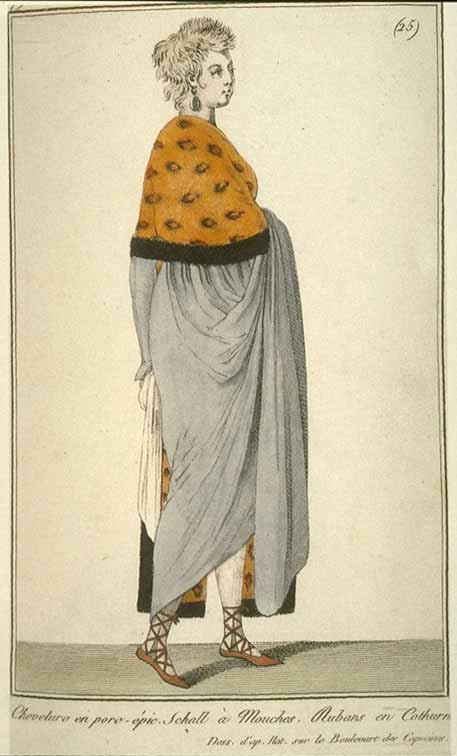
These French images from the late 18th century provide the best evidence in how ladies would protect their delicate dresses out of doors. While we assume that ladies did not expose their ankles to the public (they certainly did not in the Victorian era, but the Regency was a different time), the illustrations point out the practical habit of hitching a train over one’s arm.

corte de pelo a la victima

This French fashionista with her short, pert hair cut, reveals her roman style slippers as she promenades with her train carried over her arm.

Les Merveilleuses, by carle vernet

While this 1797 satiric image by Carle Vernet is making fun of fashionistas, one can surmise that the habit of carrying long skirts over the fore arm was widespread.

Wind and open windows swept dirt and dust continually into houses and visitors trod in dirt. No wonder maids needed to sweep floors daily!

Regardless of the efforts to keep streets, sidewalks, and floors clean, one wonders about the condition of the hems on women’s garments. Clothes were expensive before the advent of mass-produced cloth and were carefully recycled, even by the well-off.

Laundresses took an enormous amount of effort to keep clothes clean. One can only assume that the majority of women wore clothes with stained hems, and that only the rich could afford the expense of keeping their clothes looking spotless. Eleanor Tilney wore only white gowns, which told contemporary readers more about her economic status than pages of explanations ever could. In Mansfield Park, Mrs. Norris frowned on maidservants wearing white gowns. These white clothes were not only above their stations, but they would require an enormous amount of time spent on maintenance.

Also on this blog: Trains on Dresses


Read Full Post »

Older Posts »