Feeds:
Posts
Comments

Posts Tagged ‘Steventon’

Inquiring readers,

Since 2007, this blog has published a number of posts regarding Steventon, the village where Jane Austen and her parents and siblings lived until the parents and sisters moved to Bath in 1801. Austen was 26 years old. It is said that upon hearing of her parents’ plans to leave Steventon, she fainted. 

Well, girls, it is all settled. We have decided to leave Steventon and to go to Bath.’ To Jane, who had been from home and who had not heard much before about the matter, it was such a shock that she fainted away . . . . Constance Hill, Chapter IX, Leaving Steventon

The probable truth was that she was deeply unhappy to move from a community and friends and family she knew so well, and where her writing skills had flourished. Her creativity blossomed in Steventon, while her life in Bath resulted in a writing desert, where her projects were not completed – until she moved in 1809 to Chawton Cottage

Regardless of her difficulties in Bath, this post is about her life in Steventon, where Austen grew up. Contributors Brenda Cox, Rachel Dodge, and Tony Grant published their outstanding (copyrighted) images in these posts!

Steventon Village

A Drive Through Steventon to St. Nicholas Church

Sadly, my five visits to England focused on London, Bath, Salisbury Cathedral, Stonehenge, Brighton and the South Downs, Warwickshire, Eton, Oxford, Windsor, etc. I missed Austen’s villages of Steventon and Chawton by a smidge. Thank goodness that I could take the road to St. Nicholas Church via Google street view.
Screen Shot 2024-02-24 at 11.41.21 AM

St. Nicholas, Steventon

Jane Austen’s Family Churches: St. Nicholas’, Steventon

This past summer, Brenda Cox, after an extensive trip to England, wrote a series of posts regarding the churches in Austen’s world. Cox’s original photos and historical information are unique to this blog and provide us with a fabulous way to view these beautiful buildings and their history.

Screen Shot 2024-02-24 at 11.44.35 AM

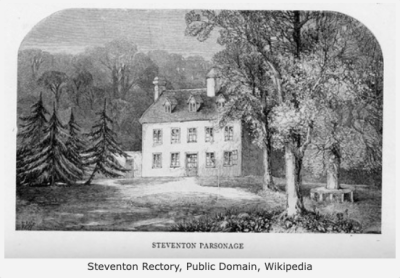
Steventon Rectory:

Steventon Rectory: Jane Austen’s Childhood Home

This was the first post I published in 2007 regarding Steventon Rectory. During that time I was a Jane Austen groupie and knew very little about her life. In the article, I focused on pattens, shoes with which I was not familiar. Good news: After all these years in this old post, the links still work! Looking back, the one negative comment still gives me the shivers, for I had no idea at that time  how to title a post! The reader came looking for substance and got clattering pattens instead!

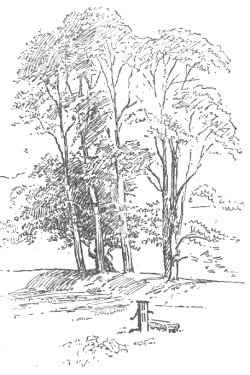
The image below of the remaining remnant of the Steventon Rectory (a pump) was drawn by Ellen G. Hill, whose sister, Constance wrote a book now in the public domain: Jane Austen: Her Homes and Her Friends by Constance Hill, 1901. See the link at the bottom of this post. Like me in 2007, Ellen and Constance were Austen fans. They visited the sites three quarters of a century after Austen died. In a some instances, they talked to a few aging villagers who recalled those who knew Cassandra Austen in her old age (dod 1845) and related some first-hand minutiae about her.
Screen Shot 2024-02-24 at 12.23.47 PM

Ellen Hill’s sketch of the pump on the site where the rectory stood.

The Garden:

Steventon Rectory Garden: Imagining the Landscape of Jane Austen’s Youth

Rachel Dodge, another outstanding writer for this blog, wrote a post about her visit to Steventon, Chawton, and the Austens’ self-sufficient gardens. Her photographs, as Brenda’s and Tony’s, are outstanding. This blog is blessed to have these contributors!
Screen Shot 2024-02-24 at 1.47.42 PM

The Rectory:

Servants in Jane Austen’s Houses

This post leads to an article that details the life of the Austen family in Steventon Rectory. It refers to Linda Robinson Walker’s 2005 Persuasions-Online article entitled Why Was Jane Austen Sent away to School at Seven: An Empirical Look at a Vexing Question. Ms Walker describes the Austen parents’ incentive to provide sufficiently for themselves and six children, which was not enough on Rev Austen’s two livings. The parents’ hard work to oversee a boy’s boarding school allowed the family to live a life of some comfort. Walker’s information regarding their daily lives and the costs for maintaining the boarding school and hire the servants is quite insightful.
Screen Shot 2024-02-24 at 1.16.24 PM

Last but not least: 

Steventon and Barton Cottage by Tony Grant

Tony Grant, a contributor to this blog since 2010, wrote this post and supplied his photographs to demonstrate the relationship between cottages in Steventon and Barton Cottage in Sense and Sensibility. His articles are always intriguing and informative, for he acted as a guide in Jane Austen tours in his native England for many years.

Screen Shot 2024-02-24 at 2.17.13 PM

More on the topic:

This online, public domain book, published in 1901 and referenced in this blog post, was my initial introduction to a first-hand Jane Austen fan account of her life. Enjoy the read! Jane Austen: Her Homes and Her Friends By Constance Hill
Read Full Post »

Inquiring readers,

Many of you have noticed my absence for a long time. If it weren’t for the efforts of Rachel Dodge and Tony Grant, this blog would have remained silent for most of the previous twelve months. Thank you, both, dear friends, for your contributions.

Two years ago I realized my heart and soul were no longer in my work and that it was time to retire.  Since then, I have been in the process of getting my house ready for sale, selling it, and packing my belongings to move to north Baltimore to be near family. Luckily or unluckily, I sold my house the moment my realtor planted the “coming soon” sign on my lawn. This meant that I had to move two months earlier than anticipated, since the new owners were anxious to move into my beloved abode.

My new place, however, was not ready. Currently, all my possessions, save for summer clothes and necessities, are in storage, and so I am living in limbo as a guest with friends until the end of August.

Starting September 1, I will be traveling between Richmond and Baltimore for four months, waiting for my new place to be approved by a house inspector and working remotely at a distance (with frequent travels via I-95 to attend bi-monthly meetings down south). January 1st is the date of my retirement. Ah, the modern life!

As I anticipate my schedule this fall and early winter, my thoughts often turn to Jane Austen. She had immense pleasure of living the first 25 years of her life in Steventon, a small village in Hampshire.

Outside there were fields where Mr Austen farmed and his wife grew potatoes (at that time quite an innovation), formal gardens with a turf walk, sundial, strawberry beds, and a grassy bank down which the young Jane, possibly enjoyed rolling as a child, like Catherine Morland in Northanger Abbey. – http://www3.hants.gov.uk/austen/deane-parsonage/steventon-village.htm, Hantsweb, Hampshire County Council

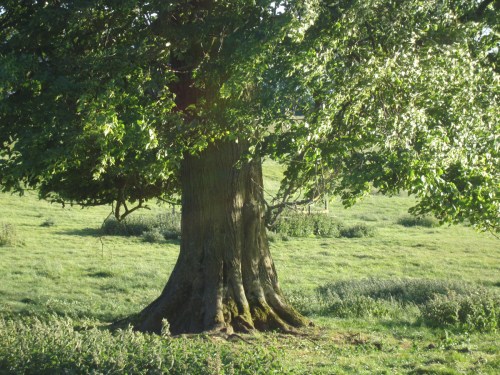
The old rectory site where the parsonage once stood. A well (inside the enclosure in back of the tree) is the only visible remnant of that house. Image @Tony Grant

The old rectory site where the parsonage once stood. A well (inside the enclosure in back of the tree) is the only visible remnant of that house. Image @Tony Grant

The Austens also ran a boarding school for young men out of the parsonage house to augment the reverend’s yearly income of £230. His extensive library of 300 – 500 volumes was amazingly large for that era, since books were frightfully expensive. Rev. Austen encouraged Jane and her sister, Cassandra, to read from his library, an unusual encouragement for females in that time.

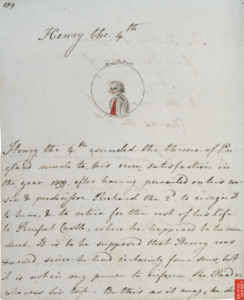
Image of a page of the History of England by Jane Austen and illustrated by Cassandra Austen of Henry the 4th, the British Library

Image of a page of the History of England by Jane Austen and illustrated by Cassandra Austen of Henry the 4th, The British Library

Jane enjoyed an extremely close relationship with her older sister, Cassandra, and they supported each other in their respective strengths and talents. Jane’s talent, as well as Cassandra’s, were nurtured by their doting family, as evidenced by the History of England, written by Jane and illustrated by Cassandra, and the plays and stories of juvenilia a young and playful Jane wrote for family gatherings.

At the age of 25, after enjoying a bucolic childhood that any woman of her era would have envied, Jane’s parents announced the Reverend’s decision to retire and leave Steventon. It was said that, upon hearing the news, Jane fainted. I can only imagine what went through her mind as she imagined the life she adored evaporating as she saw her family’s possessions reduced to the amount that one or several moving carts could hold.

(See slideshow of 18thcentury carts and wagons in Williamsburg of sample carts. I tend to think the blue covered wagon would be similar to one or two vehicles the Austen family would have contracted to move their belongings: http://www.history.org/foundation/journal/spring09/carts_slideshow/)

These days I empathize with the painful decisions the Austen family must have made regarding their possessions. After paring my own book collection down from around 4,000 volumes to 600 and getting rid of or giving away 90% of my furniture, and after living almost 30 years near a beautiful river and leaving my favorite house, ever, I can imagine Jane’s despair as beloved friends and family and favorite walking paths and shops were left behind for a city she didn’t particularly love (or so Claire Tomalin surmised). As the moving wagon and carriage that carried the Austen family and their possessions turned the corner away from the parsonage, Jane must have been overcome with nostalgia, sadness, and a bit of fear all at once.

And so for the next five years Jane began a restless, peripatetic lifestyle, one that influenced her inability to write any meaningful work for a long time. (Houses in Bath Where Jane Austen Lived, KleurijkJaneAusten, May 28, 2011)

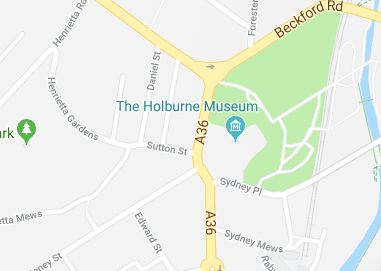
The Austen family’s first house in Bath was located at number 4 Sydney Place.

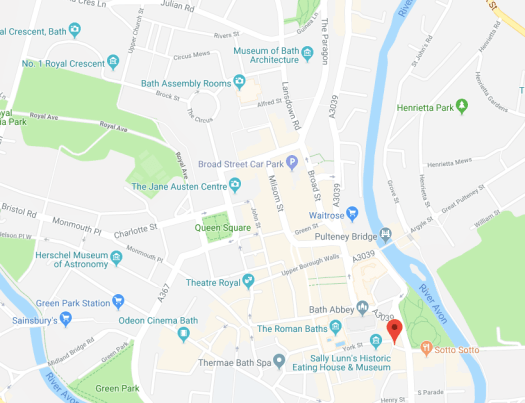
“No. 4 Sydney Place was a good, well-proportioned, newly build terraced house. It was well placed outside the crowded centre of Bath, but within easy walking distance over Pulteney Bridge.” – Claire Tomalin, Jane Austen: A Life

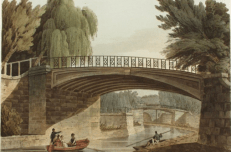
Canal and walks, Sydney Gardens 19th C.This address, opposite Sydney Gardens, allowed Jane easy access to the walking paths along its beautiful grounds, a sop to her country heart. (See image on the right.)

Map of Sydney Gardens and Sydney Place, Bath

Sydney Gardens and Sydney Place

Map of Bath

Main city of Bath, across the Pulteney Bridge from Sydney Place

“Whether you go to see, or to be seen, At Sydney Gardens you’ll be pleased, I ween, Whatever your taste, for prospects or good cheer, Cascades or rural walks, you’ll find them here…”
– Anon, 27 August 1795, poem in local newspaper
–“The History of Sydney Gardens” by Catherine Pitt, The Bath Magazine

Life in the city of Bath was vastly different from life in the country. In Steventon, Mrs Austen oversaw an extensive garden, and used fresh milk from a milk cow and fresh eggs from her chickens to create simple but good food from scratch. She worked alongside her servants in the kitchen and kitchen garden to provide wholesome meals for her family and young boarders, as well as clean clothes and a tidy house. She was a creative poet and a few of her recipes in verse still survive.

If the vicar you treat,
You must give him to eat,
A pudding to hit his affection;
And to make his repast,
By the canon of taste,
Be the present receipt your direction.

First take two pounds of Bread,
Be the crumb only weigh’d,
For the crust the good house-wife refuses;
The proportion you’ll guess,
May be made more or less,
To the size that each family chuses…

(Find the rest of this delightful recipe on this blog at https://janeaustensworld.wordpress.com/2011/04/23/a-receipt-for-a-pudding-by-mrs-austen/)

Imagine the shock this country family felt at having to walk to the green grocer daily, acquire milk from cows kept in city stalls and that was often cut with water, all in an age before refrigeration.


“When proud pied April, dress’d in all his trim,
Has put a spirit of youth in everything.”

yet for the rest of the year the coarse grass is carted to their stalls, or they devour what the breweries and distilleries cannot extract from the grain harvest. Long before “the unfolding star wakes up the shepherd” are the London cows milked; and the great wholesale vendors of the commodity, who have it consigned to them daily from more distant parts to the various railway stations in the metropolis, bear it in carts to every part of the town, and distribute it to the hundreds of shopkeepers and itinerants, who are anxiously waiting to receive it for re-distribution amongst their own customers. It is evident that a perishable commodity which everyone requires at a given hour, must be so distributed.

” –  — from A History of the Cries of London, Ancient and Modern, by Charles Hindley, Project Gutenberg, p 141

This situation for “not so” fresh milk, meat, and vegetables was as similar for the citizens of London as for a small city, like Bath. The Austen’s maid of all work and Austen women purchased “fresh” food on a daily basis, food that was both expensive and often past its “due date.” (Drinking Milk in Regency London, Jane Austen’s World, 2008)

Obtaining decent food supplies in Bath must have been costly for a family living on a parson’s pension. The incessant street cries of the baker, the milkmaid, and other food sellers, even across the Pulteney Bridge in a quieter section of town, must have cut into Jane’s peaceful hours. No wonder her creative juices stalled after her father’s death, as the family moved from place to place (after his pension to his family had been cut off), and before she and her mother and sister found refuge in Chawton Cottage. (Where Jane Lived, Gotta Keep Movin’ blog.)

I confess I possess not a smidgeon of Jane Austen’s writing genius, but the disruption in my life, starting with the years of my father’s slow dying and his death in 2014, and my sweet dog’s sudden fatal illness in 2016, blocked my creative input, both at work and at home.

To be near family, I am moving from a small city with many friends to the suburb of a much larger city., where I know few people. In the process, I am leaving my favorite, unique foodie haunts, small local theater productions, historic city neighborhoods, a short and easy ride to work, and white water rafting downtown on the James River to live in a land of manicured lawns, malls, congested traffic, and national restaurant chains.

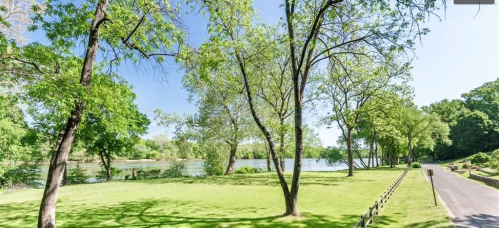
Riverside Drive, Richmond, VA

My river walk along the James

Until I regain my footing in early 2019, I don’t anticipate devoting myself to this blog full-time just yet. Thank you, readers, for your understanding. Thank you, Rachel and Tony, for your support.

Vic

Sources:


Read Full Post »

“Ah! there is nothing like staying at home, for real comfort.” This line from Mrs. Elton in Emma is quite humorous, but the quote itself holds an eternal truth for most of us. There really is no place like one’s own home.

For Jane Austen, “home” was in Hampshire, a lush, green county in the south of England. She seems to have been happiest there, and it’s no wonder. When I visited there in June, it was as lovely as ever. The narrow country roads wind slowly through gentle hills and are lined with tall trees and thick bushes. Large, green fields stretch out for miles beyond. Here and there, there are houses set far back from the road. The storybook villages that pop up every few miles are complete with thatched roofs, wood and brick buildings, and picket fences around the gardens.

The air is still and quiet there. But for the cars that pass by every so often, it’s like stepping back in time.

STEVENTON

Austen’s home for the first 25 years of her life was at the Rectory in Steventon, and it surely brought comfort to her in many ways. She grew up there, was educated there, and spent many happy years with her family there.

Image 1 Rectory Site (1)

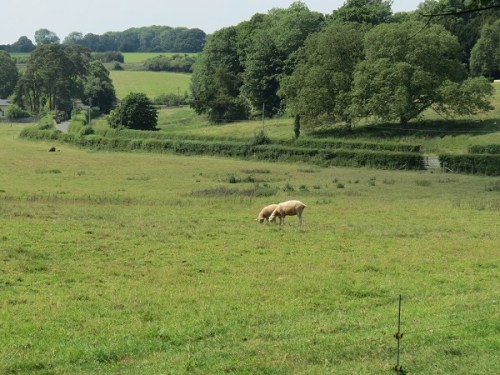
Rectory site today. Image Rachel Dodge
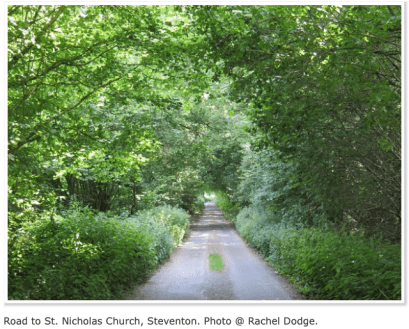
The lanes become more and more narrow as you near Steventon. Queen Anne’s Lace grows in profusion and the undergrowth presses close to the road. Trees grow up over the roads to form deep green tunnels of dappled light. Though the Rectory was torn down long ago, one can see the place where it once stood. Today, it is a large green field dotted with white sheep.

Image 2 Steventon Walk to Church

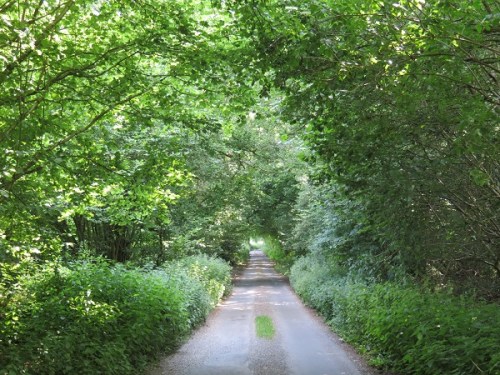
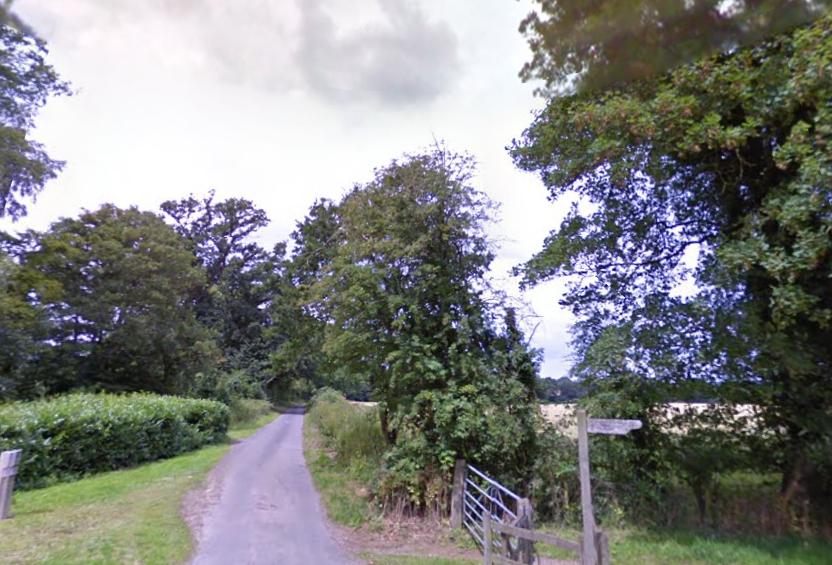
Road to St. Nicholas Church, Steventon. Photo Rachel Dodge.

Driving further up the lane to St. Nicholas Church, where her father Reverend George Austen was the rector, one enters a tunnel of trees that stretches around a bend and out of sight. It’s not hard to imagine Jane and Cassandra walking that beautiful lane on a fair Sunday morning to attend services at the church.

Image 3 Exterior Steventon Church

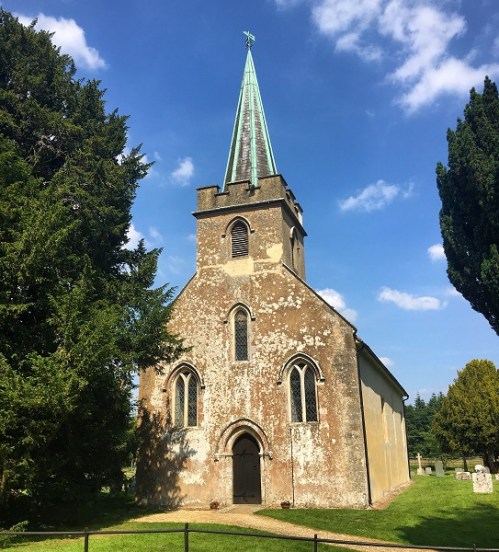
Exterior of St. Nicholas Church, Steventon. Image Rachel Dodge

The church itself is still in use today and looks the same as it would have in Jane’s time, making it quite unique. It is a small, simple church, built around 1200 by the Normans. In the heat of summer, its thick stone walls provide a cool, quiet place to sit and look, ponder, or pray. People from the neighborhood are known to stop by to visit and pray.

Image 4 Interior Steventon Church (1)

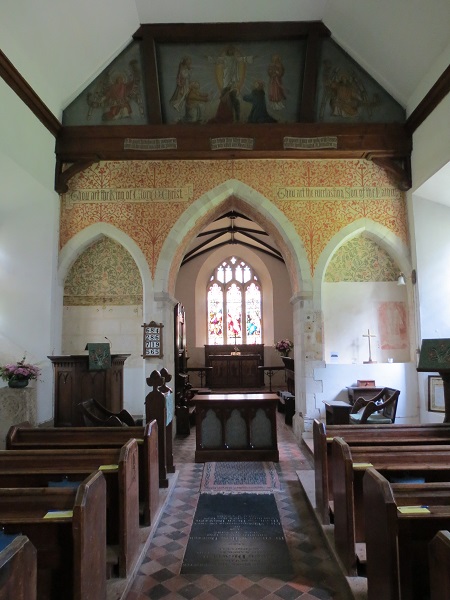
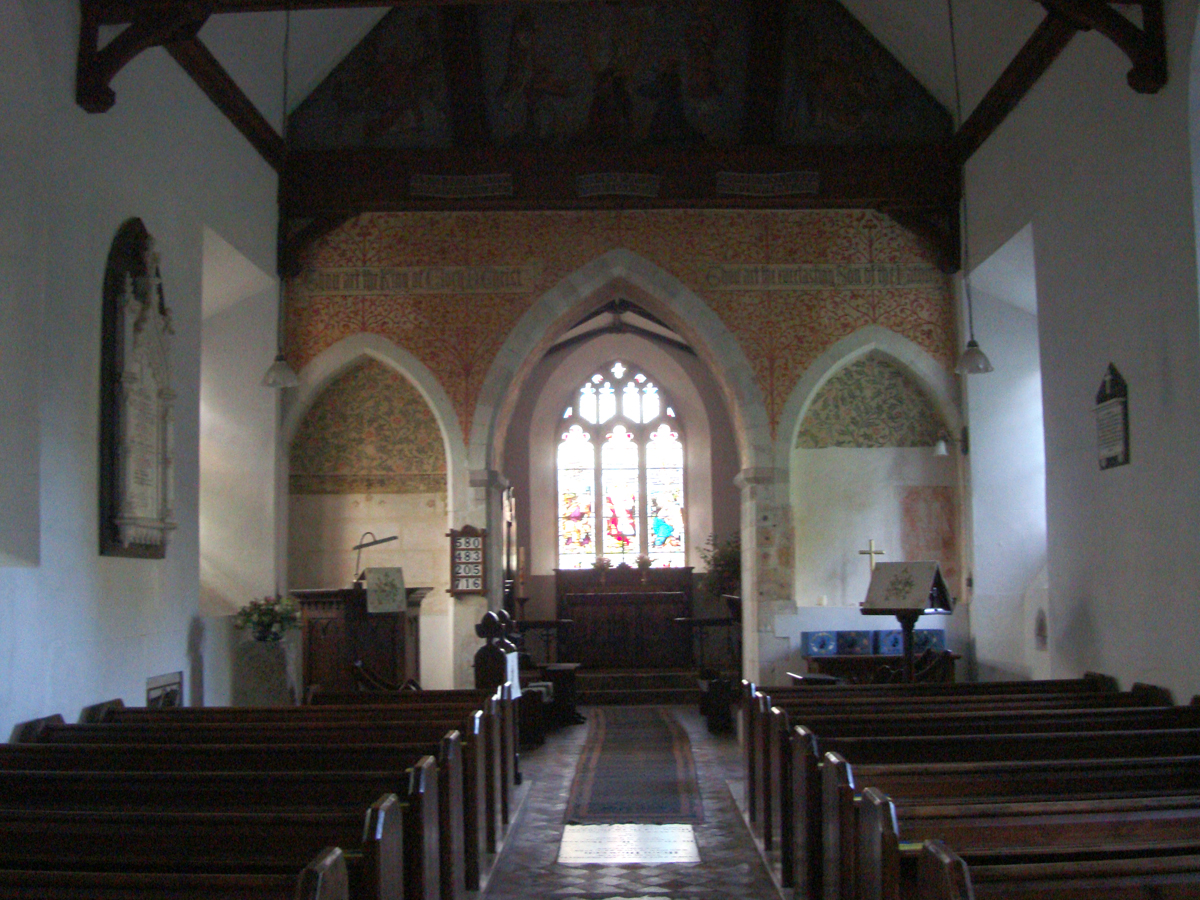
Interior, St. Nicholas Church, Steventon. Photo Rachel Dodge

Highlight: When we were there, one of the locals showed us how to open the door, which is kept unlocked for any who wish to visit and rest. The church is a place of stillness and beauty with its soft, rose colored-light from the mosaics and stained-glass windows.

Image 5 Wheatsheaf

Wheatsheaf Hotel, Basingstoke. Image Rachel Dodge

Up the road three miles is the Wheatsheaf Hotel in Basingstoke (known as the Wheatsheaf Inn during Austen’s life), where Austen walked to post letters and collect the family mail. Though it has since been expanded and updated, and now houses a lovely hotel and pub, the original building is still visible.

CHAWTON

The Austen family left Hampshire in 1801 when her father retired from his position as rector, and by all accounts, Jane Austen did not find that same home-comfort she had known at Steventon until she came back to Hampshire again years later. In 1809, several years after her father’s death, she moved with her mother and Cassandra into “the cottage” at her brother Edward’s estate in Chawton, Hampshire. Though Austen traveled frequently to visit family and friends during her adult years, Chawton Cottage and its surrounding areas once again became her true home.

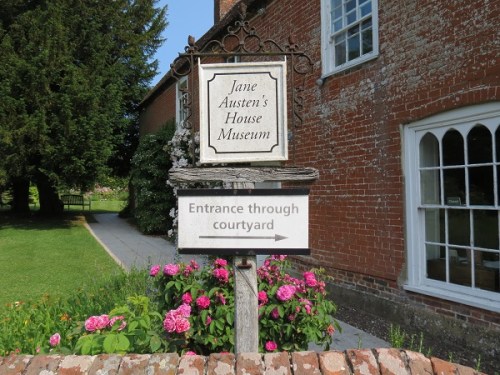
Image 6 Jane's House Sign

Chawton Cottage, Jane Austen’s house sign. Image Rachel Dodge

Jane Austen’s House Museum, or Chawton Cottage, is where Jane lived until she moved to Winchester to seek medical attention toward the end of her life. The lanes, the village, the church, and the areas surrounding Chawton became the happy backdrop for the most prolific period of writing in Austen’s life.

Image 7 Jane's House Front

Front of Chawton Cottage. Image Rachel Dodge

Jane Austen’s House is open for tours daily and is surrounded by beautiful flower gardens. Baskets of books by Austen sit on benches in the shade for any guest who wants to sit and read. In the kitchen, there is a station set up for making lavender sachets and another where visitors can practice writing with a quill. There are also straw bonnets and dresses for guests to borrow if they wish to enjoy a more authentic experience!

Image 8 Roses Entrance

Entrance to Chawton Cottage with rose bower. Image Rachel Dodge

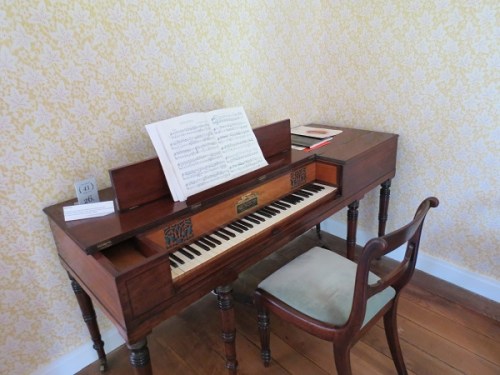
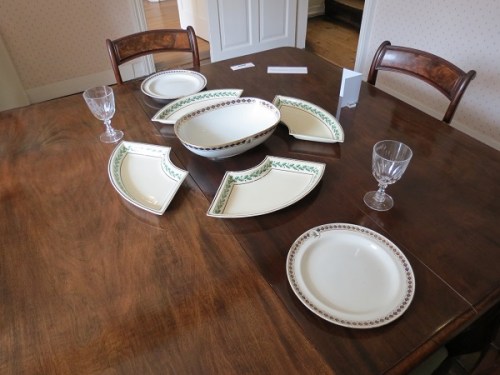
Inside the home, there are many items that are original heirlooms belonging to the family or are similar to what Jane would have known. I sat and played the piano (left image), which they allow visitors to do if they are pianists. In the dining room, one can see the Knight family’s Wedgwood dinner service, the tea things Jane would have used to make tea, and Jane’s writing desk (right image). Upstairs, guests can view the bedrooms and read more about the history of the family.

Image 9 Piano

Piano, Chawton Cottage. Image Rachel Dodge

Image 10 desk

Jane Austen’s writing desk. Image Rachel Dodge.

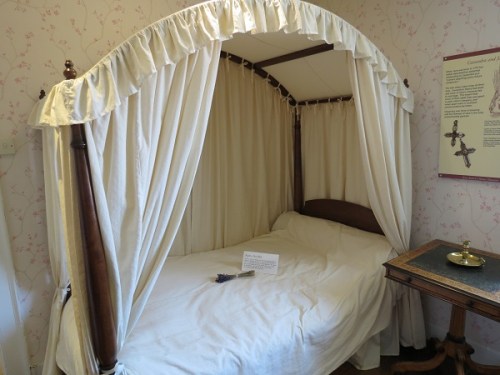
Highlight: At Jane Austen’s House, I met and spoke with a descendant of Austen’s, Jeremy Knight. He grew up at Chawton House (or the “Great House”), as did his daughter Caroline. When I visited, he was standing in the bedroom of Chawton Cottage, where Jane and Cassandra once shared a room, happily sharing Jane Austen’s history with visitors. What a treat! For further information about Chawton Cottage, you can read more here: https://www.jane-austens-house-museum.org.uk/

Image 11 Bed

Bed inside the room that Jane Austen and her sister, Cassandra, shared. Image Rachel Dodge.

St. Nicholas Church, Chawton is larger and more grand than the church at Steventon. Though it does not look as it did in Austen’s day, one can see the evidence of years of history inside and out. Like the church at Steventon, the church at Chawton is still a working parish church today.

Image 12 Chawton Church Exterior

Exterior, St. Nicholas, Chawton. Image Rachel Dodge

Image 13 Chawton Church Int

Interior, St. Nicholas Church, Chawton. Image Rachel Dodge

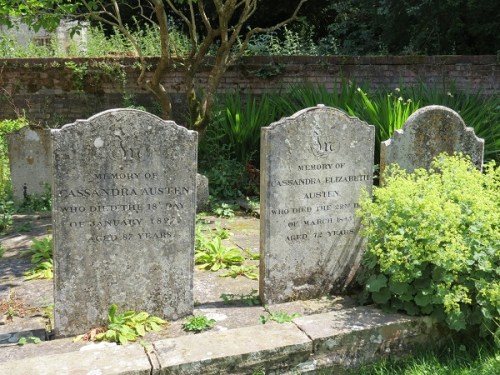
Highlight: If you walk around the back of the church, you can see the graves of Jane Austen’s mother and sister there. (Austen’s grave and memorial are found at Winchester Cathedral in Winchester.) Both women lived long, full lives, unlike our dear Jane.

Image 14 Graves at Chawton

Gravestones of Jane Austen’s mother and sister. Image Rachel Dodge

Chawton House and its gardens are open for public tours today. The Elizabethan era house, originally owned by Jane’s brother Edward Austen Knight, is now a library and study center devoted to women writers. There is also a tea shop inside the house.

Image 15 Chawton Great House Ext

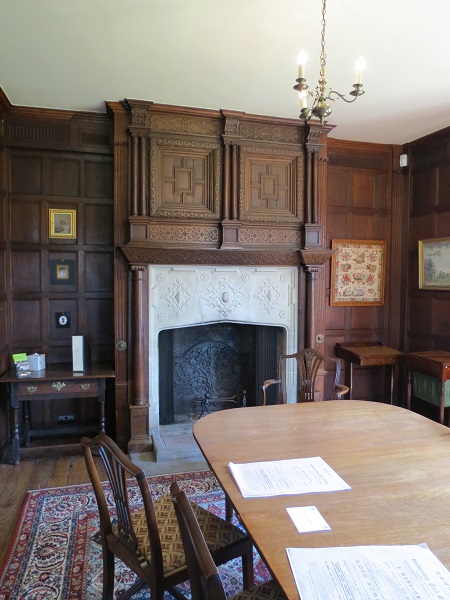
Chawton House interior. Image Rachel Dodge

Image 16 Chawton House Int

Chawton House interior. Image Rachel Dodge

Highlight: Caroline Jane Knight, daughter of Jeremy Knight and 5th great-niece to Jane, released a book in June called Jane & Me: My Austen Heritage. It tells her personal story of growing up at Chawton House, the family’s Christmas traditions, baking with her Granny, and helping in the tea room. She is the last Austen descendent to have grown up in the house (before it was sold and later became the Chawton House Library).

Caroline has also formed the Jane Austen Literacy Foundation, a non-profit organization devoted to helping support literacy in communities in need worldwide. https://janeaustenlf.org/

For more on the history of Chawton House, you can read more here: https://chawtonhouse.org/about-us/our-story/

CELEBRATING 200 YEARS

In honor of the 200th anniversary of Jane Austen’s death later this month, there are many special events all around Hampshire this summer and throughout the year. The people there are proud of their Austen heritage.

As part of the 200th year celebration, Jane Austen’s House Museum has a special exhibit called “41 Objects.” The number 41 marks the number of years that Jane graced this earth, and the objects can be found in and around the museum. Read here for more: https://www.jane-austens-house-museum.org.uk/41-objects

Image 17 41 Objects Plaque

Chawton Cottage plaque. Image Rachel Dodge


Image 18 41 Objects Wedgwood

Wedgwood china, Chawton. Image Rachel Dodge

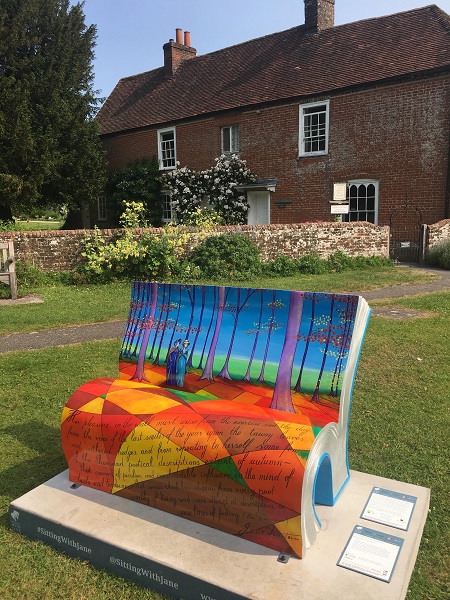
One highlight for those visiting Hampshire during the “Jane Austen 200: A Life in Hampshire” celebration is the “Sitting with Jane” park benches. These “Book Benches” are scattered throughout the Hampshire area and are part of a public book trail. Each of the 24 benches focuses on a Jane Austen theme as interpreted by a professional artist. Fans can take photos sitting on the benches and post them to Instagram or Twitter with the hashtag #SittingWithJane. Visit http://www.sittingwithjane.com/ or search @SittingWithJane on Twitter to see the benches or learn more.


Image 19 Steventon Bench

Sitting with Jane bench. Image Rachel Dodge

Image 20 Chawton Bench

Sitting with Jane bench. Image Rachel Dodge

For a full list of the events and exhibits scheduled for this year, you can read more here: http://janeausten200.co.uk/

If you have the chance to travel to England, visiting Jane’s beautiful Hampshire countryside is a must. Hampshire has all of the charm and beauty of modern British culture alongside a long, rich, and vibrant history of the past.

Other posts about Steventon, Chawton Cottage, and Chawton on this blog – Click here to see posts.

Read Full Post »

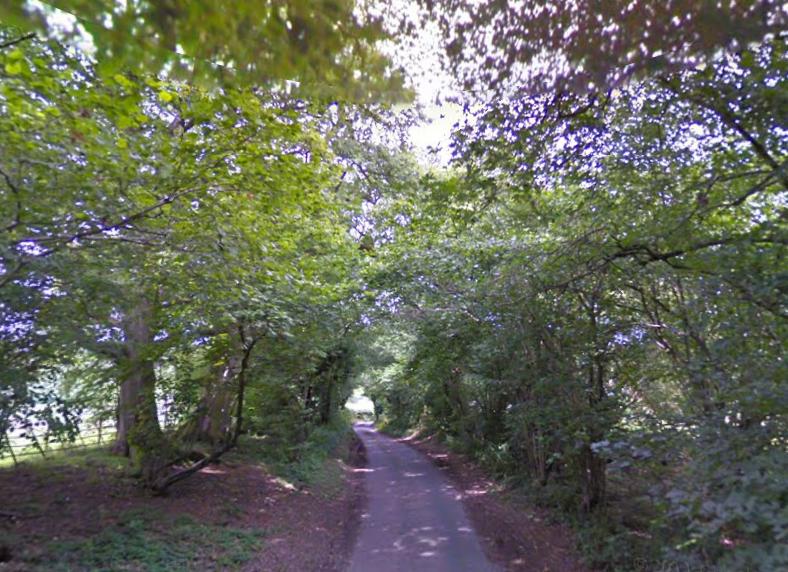
Steventon. Every Janeite has heard of this sleepy little village in Hampshire and the parsonage in which Jane lived over half her life. It was situated in the chalk hills of North Hants, about seven miles from Basingstoke. As with Chawton, I “traveled” through narrow lanes to St. Nicholas church, where Reverend Austen held Sunday services, married parishioners, and baptized babies, and where members of the Austen family were laid to rest.

Drive to St. Nicholas

Drive to St. Nicholas. Google street view.

Edward Austen Leigh, Jane’s nephew, described the area as somewhat tame but well clothed with woods and hedgerows. The soil is poor, and while there is an abundance of timber, there are no large trees.

narrow winding lane

The narrow winding lanes curve naturally and offer pleasant nooks and corners. Google street view.

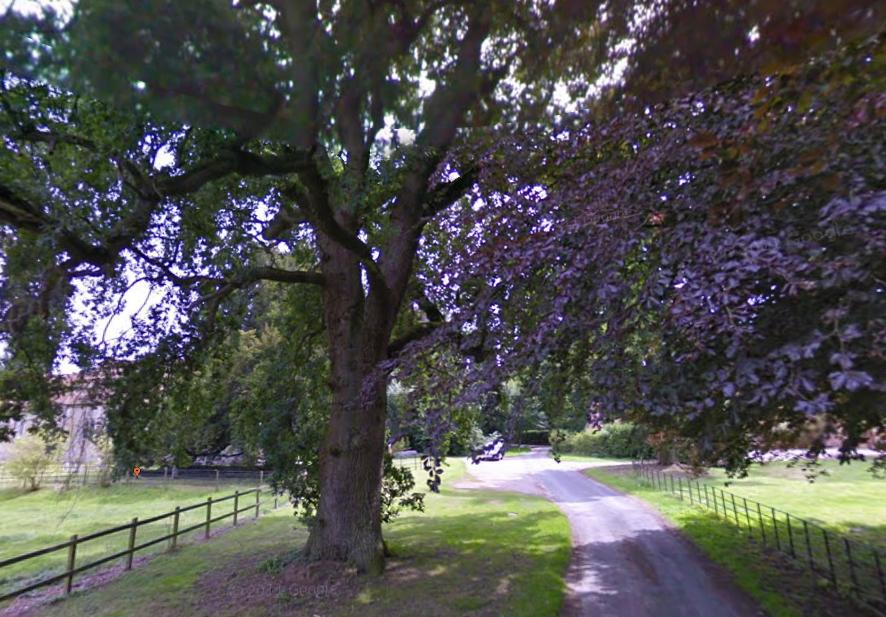
Approach to the church on the left

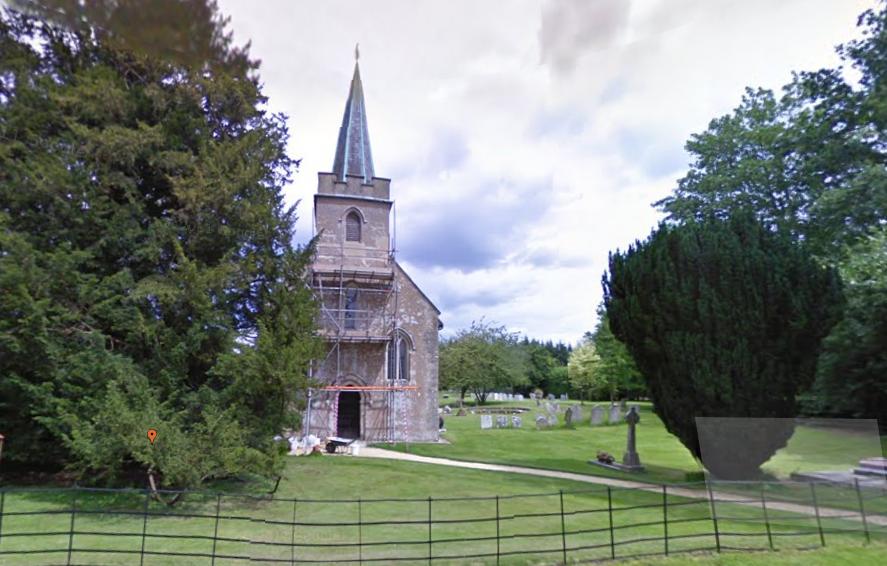
Approach to the church, which sits on the left, behind the tree. Google street view.

St. Nicholas as seen from the road, with the graves of the Austen family to the right.

St. Nicholas as seen from the road, with the graves of the Austen family to the right. Google street view.

St. Nicholas church. Image @Tony Grant

St. Nicholas church, first mentioned in records in 1238. Image @Tony Grant

Interior of St. Nicholas

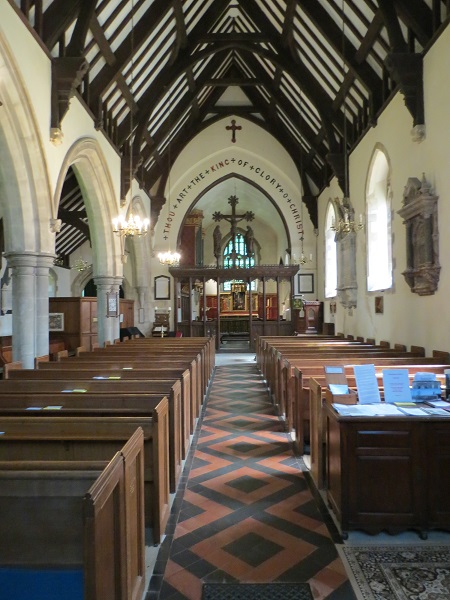
Interior of St. Nicholas. Two of the three arches have been closed in. Image @Tony Grant

Detail of interior

Detail of the arch to the right in the above image. Image @Tony Grant

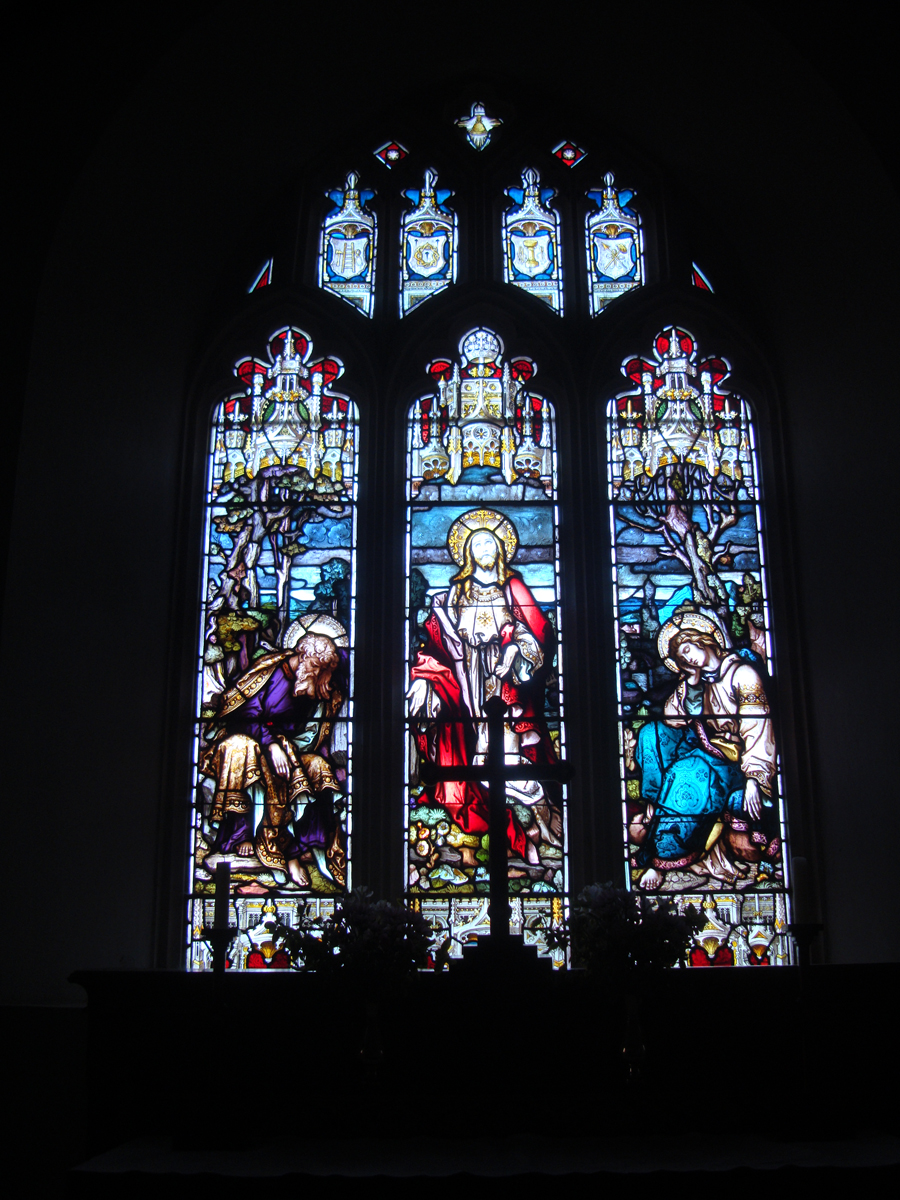
St. Nicholas's stained glass window

St. Nicholas’s stained glass window, which dates from 1883. Image @Tony Grant

Gargoyle

Gargoyle. Image@Tony Grant

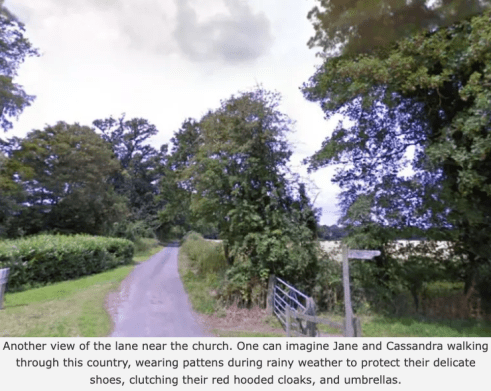
Another view of the lane near the church

Another view of the lane near the church. One can imagine Jane and Cassandra walking through this country, wearing pattens during rainy weather to protect their delicate shoes, clutching their red hooded cloaks, and umbrellas.

The old rectory site where the parsonage once stood. A well (enclosure in back of the tree) is the only visible remnant of that house.

The old rectory site where the parsonage once stood. A well (inside the enclosure in back of the tree) is the only visible remnant of that house. Image @Tony Grant

More on the topic

Read Full Post »

Jane Austen was born and grew up at Steventon in Hampshire. That tiny village is still a place of pilgrimage for Jane Austen devotees from around the world – the house has gone, but the church she attended is still there.

Steventon Station, New Zealand

Steventon Station, New Zealand

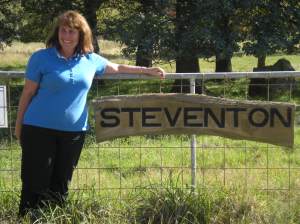
However, on the other side of the world there is another Steventon, with interesting Jane Austen connections. Steventon station lies on the banks of the Selwyn River, in the foothills of the Southern Alps, in New Zealand’s South Island. It was a property of 9700 acres that was taken up by Richard Knight and Arthur Charles Knight, great-nephews to Jane Austen (they were the sons of William Knight, son of Jane’s brother Edward) and named ‘Steventon’ in honour of their childhood home in England. They bought the land in 1852, but before long Richard bought his brother out and in 1855 built a working homestead on the station.

In 1866 Richard Knight sold the property to Henry Hill and Frederick Napier Broome, both of whom had been his cadets and worked on the station. Frederick Broome and his wife, Lady Barker (she had been married before and in order to get her first husband’s army pension, had to keep his name) built a property called ‘Broomielaw’ and settled in, but terrible floods and a freezing winter which killed most of their sheep, resulted in them selling the station and returning to England. The house they built still stands. Lady Barker wrote a best-selling book, Station Life in New Zealand, as a result of her experiences at Steventon, and later she and her husband lived in Western Australia, when he was made Governor there (the town of Broome was named after them).

The Knight boys remained in New Zealand. Richard married and had two sons. He died in 1866. Arthur purchased land on Banks Peninsula, near Christchurch, married, and is said to have had twenty-one children, so there are many Knight descendents in New Zealand today. Arthur died in Christchurch in 1905.

Susannah Fullerton guiding her literary tour

Susannah Fullerton guiding her literary tour

On a visit to New Zealand a few years ago I took a literary tour group to Steventon station. It was a wonderful visit. The owners Gavin and Nathalie McArthur gave us a truly Kiwi welcome, provided us all with a home-cooked lunch, and took us on a tour of the station. Inside the house are many fascinating documents and photos of Lady Barker and her writings, and information about the Knights. It is a beautiful place, and we all enjoyed finding this Jane Austen connection in New Zealand.

Susannah Fullerton has authored two books this year – A Dance With Jane Austen and Celebrating Pride and Prejudice: 200 years of Jane Austen’s Masterpiece (Coming out in January 2013). She is also President of JASA, tour guide, lecturer, mother and wife.

Read Full Post »

Older Posts »