Feeds:
Posts
Comments

Archive for the ‘Fashions’ Category

My regular Jane Austen readers have been patient as I succumbed to Downton Abbey fever and began to cover events 100 years after Jane Austen’s death. Customs changed during that intervening century. Take the matter of dress. While proper Regency ladies changed their outfits from morning gowns to walking gowns when they went out, and changed into dinner dress when dining, by Victorian and Edwardian times the custom of a lady changing her clothes throughout the day had turned into a fine art.  One could get by with no less than 4-5 changes per day. A woman who packed to visit a country estate was sure not to be seen in the same outfit twice. This meant that for a 4-day visit she would need at the very minimum to have her maid pack 16 changes of outfits. One can only imagine the work of a lady’s maid to keep all the clothes and unmentionables in perfect (and clean) condition. Such attention to detail required quite a bit of organization.

Morning dress, 1815. Ackermann plate. While she looked proper in her at home attire, this morning dress looks stodgy compared to the Edwardian teagown.

Corsets were worn all through the 19th century and into the early part of the 20th century. Women were constricted into these garments for most of their waking day, but there were times when they were free from these tight-laced garments.  During the early 19th century, upper class women at home would wear comfortable (but beautiful) morning gowns. Dressing gowns were also worn. Such gowns were meant to be seen by the family and close relatives only. The moment a woman expected to be seen, she would change into more proper dress.

Cora, the Countess of Grantham, lived during a time when teagowns were all the rage. These beautiful ornate gowns had the advantage of being simply cut and worn without a corset. It was possible that for just a few hours she could relax comfortably before dinner.

They were generally loose-fitting and elaborately trimmed, and gave full vent to the dressmaker’s or couturier’s skill and taste for theatricality. Tea-gowns were influenced by historical styles from eighteenth century Watteau-pleats, to renaissance hanging sleeves and empire waistlines and quite often, all of them at the same time. Never has so much love and art been invested in such an arguably unnecessary garment. All kinds of informal garments including tea jackets, peignoirs, dressing gowns, combing sacques, morning robes and dressing jackets also had their place in the leisured Edwardian lady’s wardrobe, all of them beautifully decorated and almost all of them now obsolete. 1900-1919: The Last Age of Elegance 

American dancer and actress Irene Castle wearing a teagown, 1913

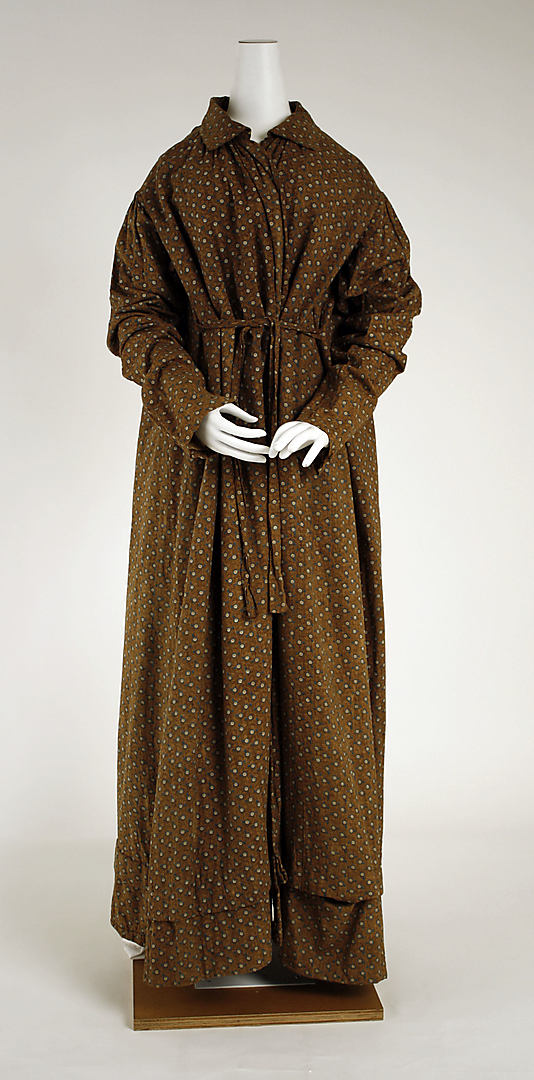
It had long been the custom for a lady to entertain both male and female visitors in her boudoir. (Read my article on this topic.) During the Regency era, dressing gowns were quite plain and simple compared to teagowns.

1810-23 dresssing gown. Image @Met Museum

At times the teagown gave rise to temptation, for a woman could entertain in private and not need the services of her maid:

Worn between five and seven oclock,  gave rise to the French phrase ‘cinq à sept‘. This referred to the hours when lovers were received, the only time of day when a maid wouldn’t need to be there to help you undress and therefore discover your secret. – “Style”, The World of Downton Abbey, Jessica Fellowes

Early 19th century dressing gown. Image @Met Museum

Attired in her tea-gown, a soft flowing robe of filmy chiffon or fine silk, trimmed with an abundance of lace and often free of corsetry, the hostess must have been a tempting prospect for many men. Such loose gowns afforded women great comfort, ease of access and a tremendous sense of femininity. Little wonder then that whilst hemlines rose and fell the tea-gown, which had appeared in England as early as 1875 lingered on until the 1920s. – Edwardian tea gowns, fashion era

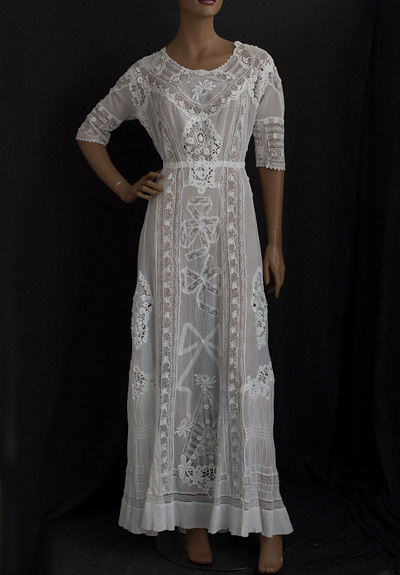
This Lingerie-style dress embellished with Irish crochet, c.1905 (below) can be seen in more detail on Vintage Texiles. Made of sheer cotton decorated with lace and ruffles, this sheer dress required a slip.

Edwardian teagown, 1905. Image @Vintage Textile

More on the topic:

Read more on the topic: Tea Gowns, Edwardian Promenade

Image of an early 19th century dressing gown at the Met Museum

Read Full Post »

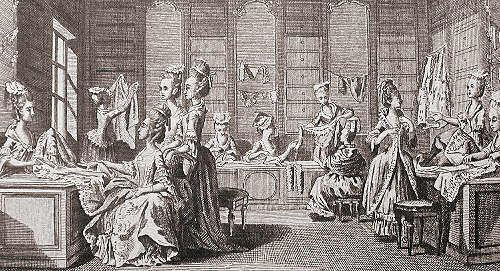
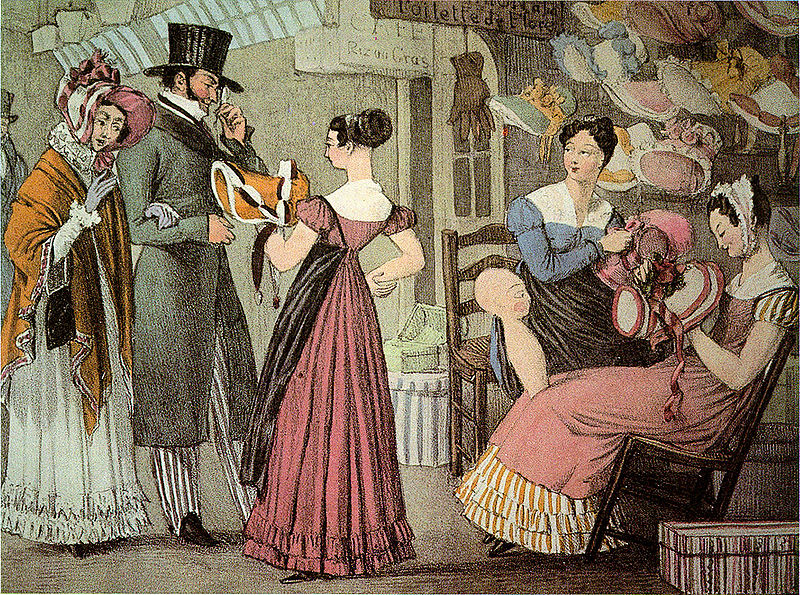
Early milliner shops were like our department stores, selling all manner of fashionable items. The image of a milliner shop in Paris shows the costumes we have come to associate with the era of Marie Antoinette. After the French Revolution, fashions changes drastically, for the French citizenry did not want to be reminded of the recent bloodshed or the ancient Regime. The rage in fashion was an imitation of the classical dress worn by the Greeks and Romans.

Dressmaker shop, 1775

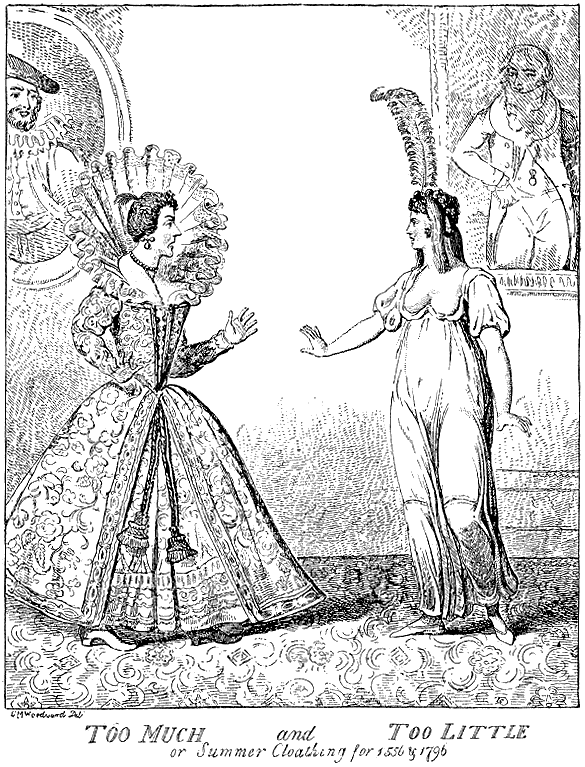
The end of the 18th century witnessed a signal change in the style of women’s dress. The gown no longer consisted of two dresses, an under and an outer one. The formal styles which had prevailed throughout the century and brought into use stiff materials such as solid damasks, velvets, satins, and silks, were replaced by the fashion of the short-waisted clinging gown made of muslin and soft silk. This “Empire” mode characterized the dress of the first quarter of the 19th century. – The Encyclopedia Americana, Frederick Converse Beach, George Edwin Rines, 1902,  “costume”

Too Much and Too Little, or Summer Cloathing for 1556 & 1796

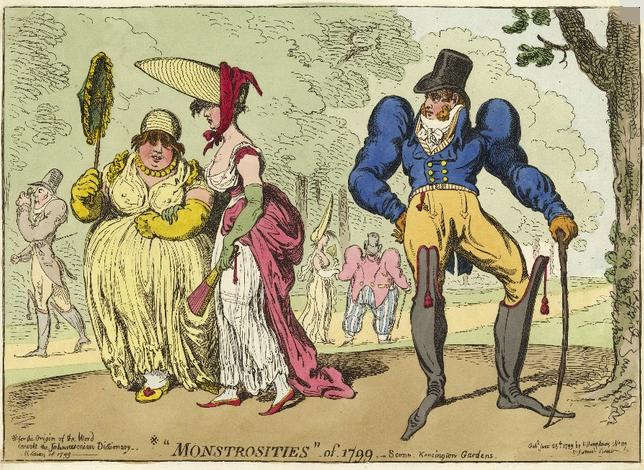
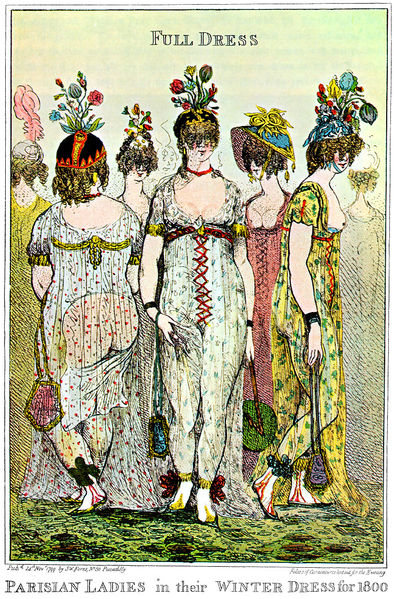
Parisians dressed in the new fashions were known as the “incroyables” (men) and the “merveilleuses,” (women.) These fashions were not at first admired and generally regarded as hideous. Caricaturists had a heyday making fun of these freaks of Fashion. British fashionistas shortly followed suit, as the cartoon by Gillray attests.

Monstrosities of 1799, Kensington Gardens, Gillray

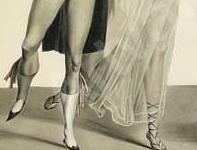
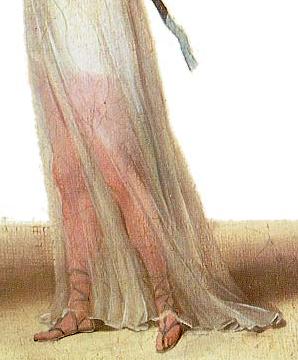
Macaronis turned into dandies, and gently bred ladies wore clothes so thin and diaphanous, that the shape of their legs showed clearly through the skirts. The muslin disease (catching a serious cold or pneumonia) lasted for as long as fashionable young women wore thin muslin dresses with bare necks and arms in damp and drafty buildings.

Merveilleuse et Incroyable. The close up of the dress reveals how sheer the fabrics were.

In some instances, nothing was left to the imagination. In the satirical image below by Isaac Cruikshank, the ladies are shown wearing next to nothing. Satire took many forms in the late 18th century. The Lady’s Monthly Museum featured a dialogue between a lady visiting Paris and a man milliner. His answer is hilarious.

Caricature by Isaac Cruikshank

Dialogue Between a Lady and A Man Milliner at Paris

“Citizen, I am just come to town: –pray, have the goodness to inform me how I must appear, to be in the fashion.”
“Madame, ’tis done in a moment; in two minutes I shall equip you in the first style. –Have the goodness to take off that bonnet.”
“Well.”
“Off that petticoat.”
“There it is.”
“Away with these pockets.”
“There they go.”
“Throw off that handkerchief.”
“’Tis done.”
“Away with that corset and sleeves.”
“Will that do?”
“Yes, Madame, you are now in the fashion. ‘Tis an easy matter, you see.–To be dressed in the fashion, you have only to undress.” – The Lady’s Monthly Museum, February 01, 1801, pg. 126.

Definition of a man milliner: A man who makes or deals in millinery, that occupation having been at one time predominantly performed by women; hence, contemptuously, a man who is busied with trifling occupations or embellishments.

Louis-Léopold Boilly painted a gown so sheer that without a petticoat, her short chemise is easily visible under the delicate muslin.

The days of the Revolution (1789 – 1799) brought in simple fashions. Corsets were discarded, the waist became short and the skirt clinging, and cheap materials were used. During the Directoire, the women adapted the classic style, borrowing from both Greek and Roman fashions. These costumes were scanty, and frequently were split up the sides. The dresses were often transparent and worn without chemises. The gentlemen of this fantastic period were styled “Incroyables,” “Unimaginables”; the ladies, “Merveilleuses” and “Impossibles.”  The men wore an exaggerated copy of what had been previously called the English fashion.- Costume design and illustration,  Ethel Traphagen, 1918,  p 120.

Millinery shop in Paris, 1822

A milliner could carry possibly a thousand different goods, becoming the forerunner of the modern department store. At this point, the term “milliner” was tied to the Latin word “mille,” meaning thousand.

The 18th Century milliner might have offered a thousand goods but all shared the quality of being fashionable accessories. Wares could include shoes, jewelry, table service, clocks, hosiery, fabrics, shirts, aprons, cloaks, caps, hats, muffs and mitts. – The Millinery Shop, Colonial Williamsburg

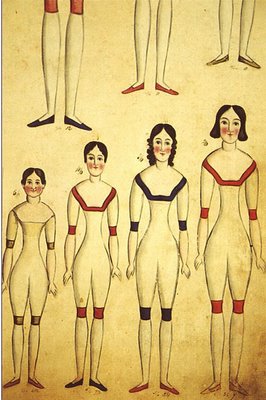
Milliner doll catalog, 1820s. These dolls were dressed in the fashion of the day. Look at the above image for a sample size of a doll. Image @Christine LeFever: Dolls and Fancywork

More on the topic:

Read Full Post »

Ladies shoes, 1810

In a previous post, I discussed how ladies slippers and boots were so delicately made that they could not withstand much wear and tear. In fact, a lady would not venture to walk outside the house in rainy weather and would be confined inside, whether she was in the city or country. Jane Austen described a rainy day in Mansfield Park:

… to poor Miss Crawford, who had just been contemplating the dismal rain in a very desponding state of mind, sighing over the ruin of all her plan of exercise for that morning, and of every chance of seeing a single creature beyond themselves for the next twenty-four hours; the sound of a little bustle at the front door, and the sight of Miss Price dripping with wet in the vestibule, was delightful. The value of an event on a wet day in the country, was most forcibly brought before her.”

1801, Two ladies in morning dresses, Nicholas Heideloff, Gallery of Fashion

In the country a lady would not soil her delicate kid slippers on grass or muddy lanes, but would walk along gravel paths in the shrubbery, as shown in the Heideloff image above. Elizabeth Bennet, who walked the three miles to Netherfield Park, muddying her petticoats in the process, would have worn sturdier shoes, such as those worn by the women in the watercolor below.

Studies of female figures with children, James Ward

Female fashionable attire in the eighteenth century was very ill fitted for country life, which is so largely spent out of doors. Indeed, it was not fitted for out door wear at all. No fashionable woman was properly shod in the first place, for the coloured shoes, which, as has been stated, all ladies wore, were not adapted for vigorous exercise, or damp weather, with their high heels and very open tops. Those were the kind of shoes worn for walking in London. Country life in shoes of that sort would mean endless expense. The wonder is that town bred women did not insist upon the shoemakers providing something more fitted for the dirty, uneven pathways. But, then, walking was not a daily exercise as it is now. Foot gear has undergone much reformation in the present century, in spite of the persistence of high heels…”

Knife Sharpener, W.H. Pyne. This traveling craftsman would have worn sturdy old boots like William Conway.

“… A notable itinerant trader of the middle of the eighteenth century, known to all Londoners, was William Conway of Bethnal Green, who made a living by selling and exchanging metal spoons. As he walked twenty five miles a day, Sundays excepted, his shoes were the most important articles of his attire, and these he made out of the uppers of old boots. A pair of shoes lasted him six weeks. He was an odd figure, with his long spindle legs encased in tight knee breeches, short coat, high hat, and bag slung over his shoulder.” – A history of English dress from the Saxon period to the present day, Volume 1, By Georgiana Hill , 1893, p 181

"Cash", Rowlandson, 1800. Note the dark leather slippers worn by the maid, and the sturdy buckled shoes by her elderly swain.

Read Full Post »

Fashionable mourning dresses, Ladies Museum, 1805

According to Jane Austen chronicler and scholar, David Nokes, when Martha Lloyd’s mother died on April 16, 1805, Jane Austen showed few signs of grief or emotion over that woman’s earthly departure. Instead, Jane wrote a jaunty verse to an uncivil (and imaginary) dressmaker. I surmise that these verses were meant more to cheer Martha up than to bring Martha’s mood down by reminding her of her loss. Mrs Austen, who was known for her droll verses, wrote a mythical reply by the dressmaker. At this time the Austen women were still reeling from Rev. Austen’s death in January and their own change in financial circumstances, having moved to more modest lodgings and becoming accustomed to a drastically reduced style of life. They would soon invite Martha to live with them in Bath. (Martha would remain with the Austen women through their move to Southampton in 1809.) After Jane’s death in 1817, Martha joined Cassandra in Chawton to help look after Mrs. Austen.

The poem that Jane wrote gives us a glimpse into how mourning clothes were made to order quickly. In this for-instance, the dressmaker, Miss Green, was slow to respond.

Lines sent to an uncivil Dress maker

Miss Lloyd has now sent to Miss Green,
As, on opening the box, may be seen,
Some yards of a Black Ploughman’s Gauze,
To be made up directly, because
Miss Lloyd must in mourning appear –
For the death of a Relative dear –
Miss Lloyd must expect to receive
This license to mourn & to grieve,
Complete, er’e the end of the week –
It is better to write than to speak – Jane Austen

Mrs. Austen’s reply as Miss Green

I’ve often made clothes
For those who write prose,
But ’tis the first time
I’ve had orders in rhyme – .
Depend on’t, fair Maid,
You shall be obeyed;
Your garment of black
Shall sit close to your back,
And in every part
I’ll exert all my art;
It shall be the neatest,
And eke the completest
That ever was seen –
Or my name is not Green! – Mrs. Cassandra Austen

Read Full Post »

18th century robe a la Francaise. Image @Rijksmuseum

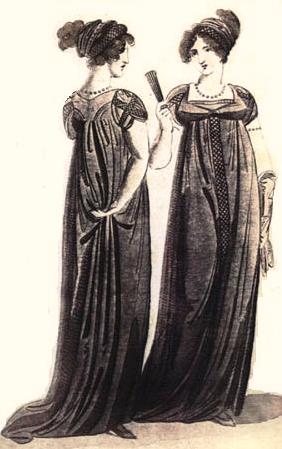
During the 18th century and much of the Regency era, trains were popular on evening and court dresses, and at times on walking gowns. The length of the train shortened as the 18th century progressed, but even shorter trains swept over lawns and grounds and sidewalks. This fashion turned out to be quite expensive, for after several short walks, the fabric would be quite soiled or would need replacement. Oliver Goldsmith wrote in Citizen of the world (1760):

Nothing can be better calculated to increase the price of silk than the present manner of dressing. A lady’s train is not bought but at some expense, and after it has swept  the public walks for a very few evenings, is fit to be worn no longer, more silk must be bought in order to repair the breach, and some ladies of peculiar economy are thus found to patch up their tails eight or ten times in a season.”

One imagines that the delicate muslin trains of the Regency era were as easily wrecked by wear and tear, and that only the rich could afford such an extravagant consumption. There were ways to save one’s train. In 1996’s Emma, Gwynneth Paltrow is seen holding up her train during the dance.

Emma's train is attached to her wrist.

In Northanger Abbey, Jane Austen described how Isabella Thorpe and Catherine Morland pinned up each others trains.

They called each other by their Christian name, were always arm in arm when they walked, pinned up each other’s train for the dance, and were not to be divided in the set; and if a rainy morning deprived them of other enjoyments, they were still resolute in meeting in defiance of wet and dirt, and shut themselves up, to read novels together.”

1800 sprigged muslin gown. Image @Christies

One can only conclude that trains (or tails, as Goldsmith called them) were an extravagance that the ordinary working woman did not indulge in wearing, for until mass production made cloth more affordable, the added lengths of cloth, plus the constant need for laundering and patching, would make this fashionable feature prohibitively high for most women.

Note: That Isabella and Catherine met  “in defiance of wet and dirt” meant something, for shoes and fabrics were so delicate at the time, that ladies tended to stay indoors on rainy days.


Read Full Post »

« Newer Posts - Older Posts »