Feeds:
Posts
Comments

Archive for the ‘Georgian London’ Category

Curious readers: Tony Grant (London Calling) has contributed an article about Kew Gardens and his beautiful photographs to go with it. Relax and enjoy this visual feast of gardens, walkways, and flowers.

The Royal Entrance at Kew. Image @Tony Grant

I have been to Kew Gardens, which is only a couple of miles from where I live, on the other side of Richmond upon Thames, many, many times for more than thirty years. When I first visited Kew gardens all those years ago the charge to get through those regal, ornate gates was 1p, a penny, a mere token payment. Kew is a government research centre and a leading authority on plants throughout the world. I think they felt in those far off days that a token payment, just to keep the paths swept, was all that was required. It was and is a government-owned establishment, and so by default, we, the British public, own it, (A little like The National Gallery and The National Portrait Gallery. Those paintings belong to me you know. So, why shouldn’t I get in free?)

Bumble bee at Kew. Image @Tony Grant

Nowadays, it costs an arm and a leg to get into Kew Gardens. I’ll whisper this; “it’s £13.90 for an adult.” The Government decided, to help finance research, and to develop further public facilities in the gardens, we should all pay to get in. It’s such a beautiful place and such an elemental place that, yes, I’ll pay to get in. No questions asked. I need my dose of Kew. And many, many thousands of others just love to pay to get in too.
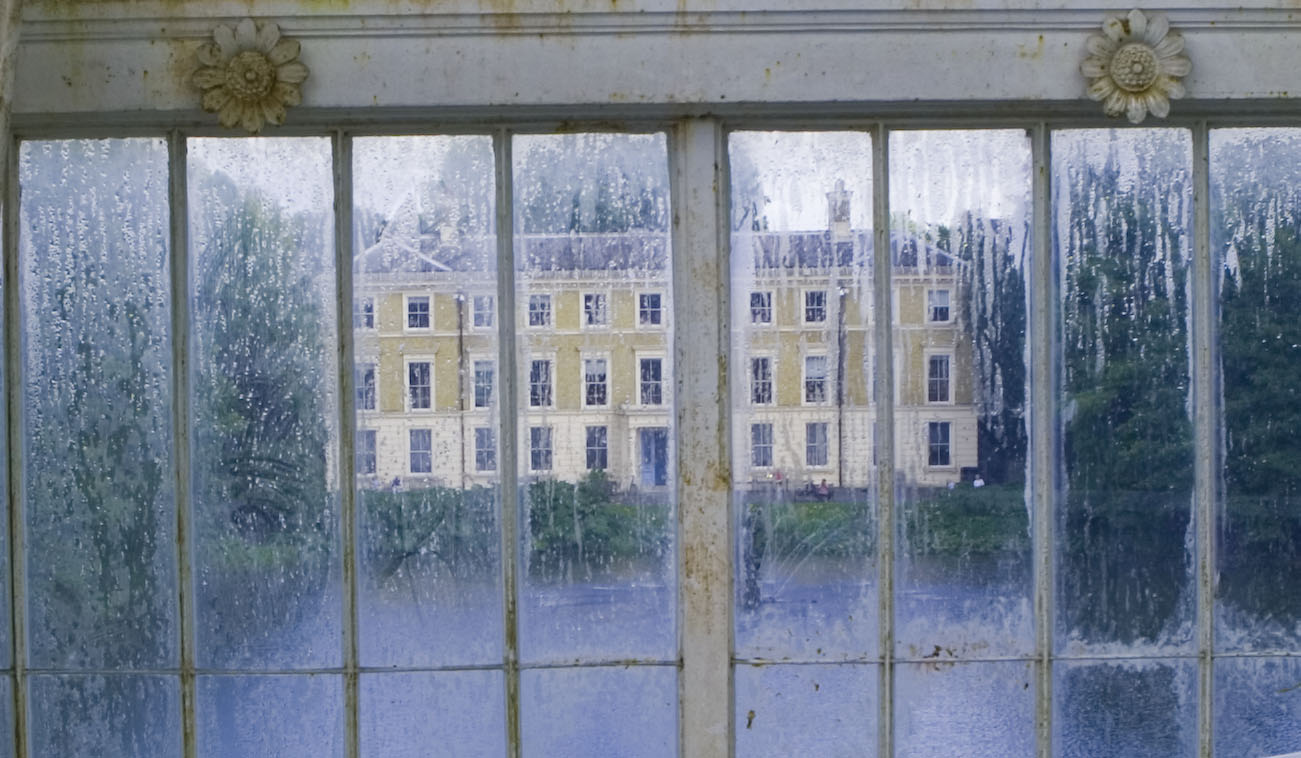
Through the glass wall. Image @Tony Grant

Oh, by the way, if you are a mum with a baby and young toddlers in tow, it’s free for the children, totally free. An example of British quirkiness in action. The gardens are a great place to meet for morning coffee in one of the 18th-century orangeries, to have a chat and a place to let the youngsters roam.

The Chinese Pagoda. Image @Tony Grant

My first encounter with Kew, I must admit, involved fellow students, bottles of wine, cans of beer, some very attractive females (my future wife amongst them), and an appreciation of nature and trees gained by lying on my back looking up through leafy branches to a clear blue sunny sky beyond.
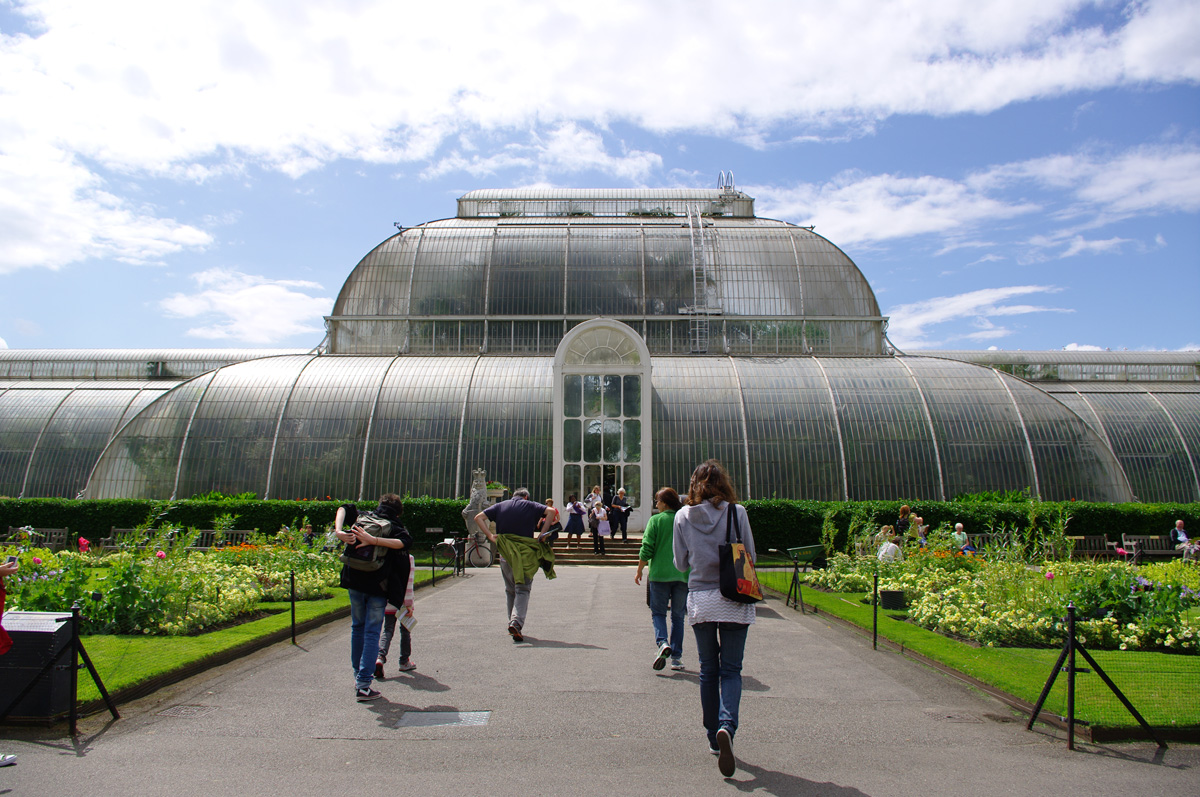
Approaching a palm house. Image @Tony Grant

Kew to me means pleasant tree-lined walks, elegant plant houses with their acres of glass and miles of fine wrought iron structural parts painted white and curved and curled into shapely structures. It is a place to look closely at beautiful flowers, contemplating their wondrous shapes and form, and their intense colours, and to take in their seductive perfumes. It is uplifting to observe the majesty of the many varieties of trees, with their beautiful patterned leaves, and their branch and twig systems like fine black lace against changing skies.
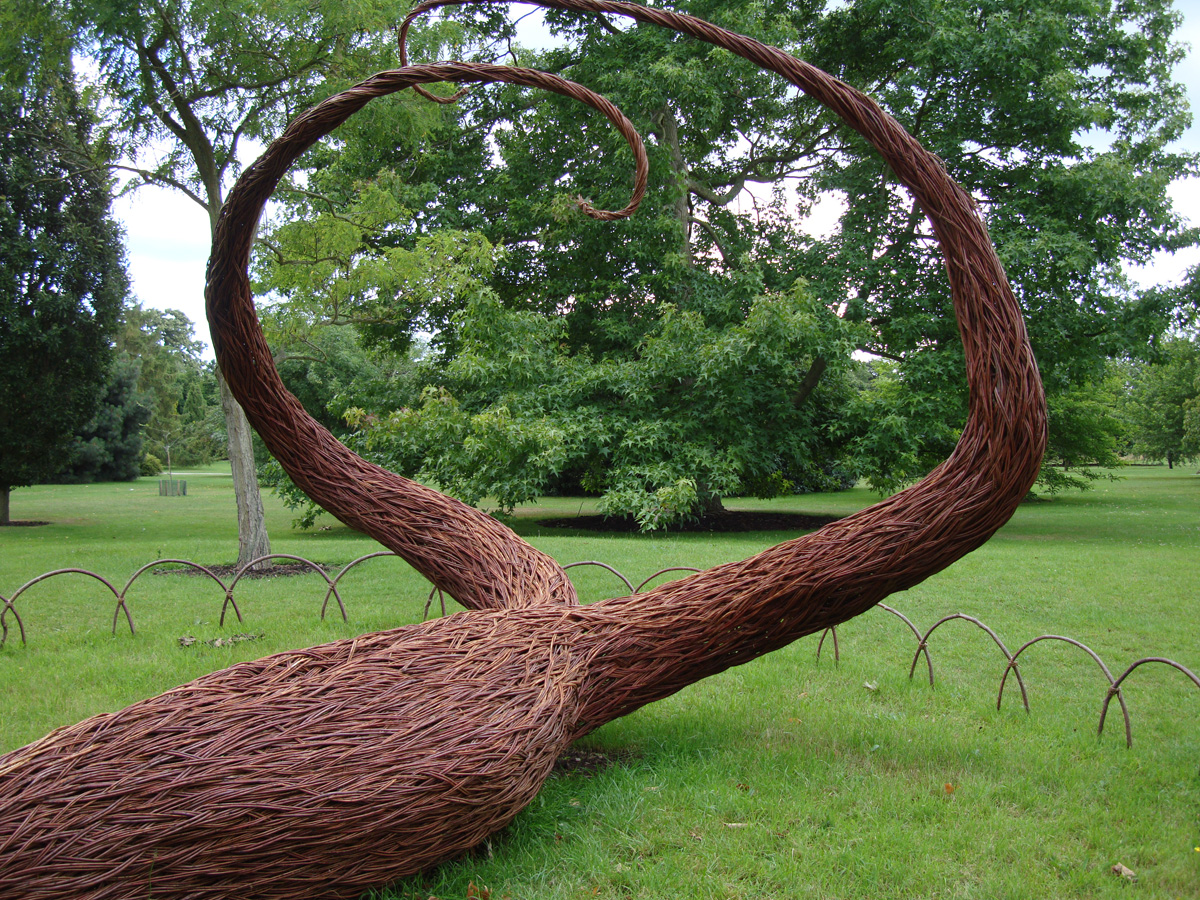
Environmental art at Kew. Image @Tony Grant

Kew calms the spirit. It is a meditative place. You can become one with yourself as you walk around or find a place on the grass to sit.
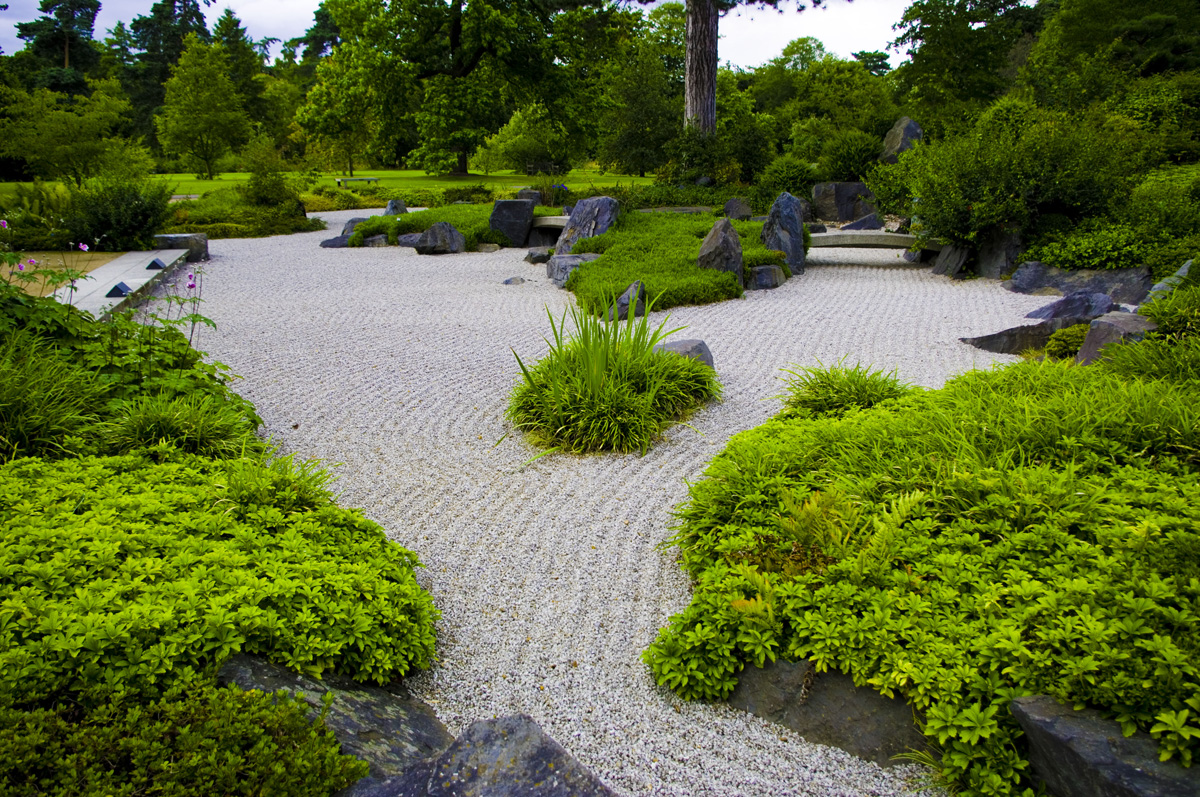
A Zen Garden. Be at peace. Image @Tony Grant

It is vast enough to give you personal space and there is tranquillity amongst the greens and shade.

Museum Number One, Economic Botany. Image @Tony Grant

The Importance of Kew

Kew is an important place. It has a seed bank that holds 10% of all the worlds’ plant species, and contains samples of nearly all endangered species. It also has a herbarium whose collection is being added to virtually daily. At the Joderell Laboratory at Kew, they research the molecular systems, and study the physiology and biochemistry of plants. They study the plants to find natural medicines, specifically for anti-cancer and anti-inflammatory drugs. One department focuses on agricultural research, and there are also botanical illustration and photography departments. Kew is a world leader in conservation and plant technology.
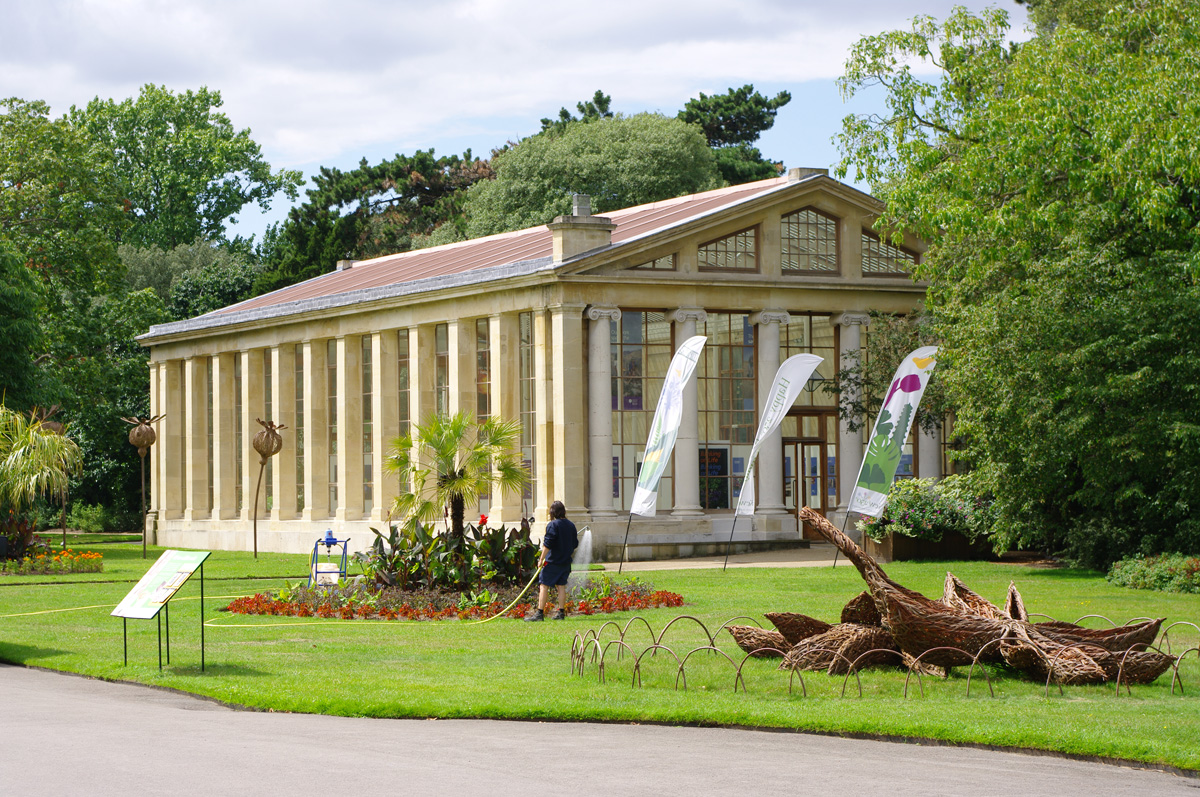
18th century orangery. Image @Tony Grant

Development of Kew

The development of Kew began in the 16th century when Henry VII built a palace at Richmond just along the Thames from Kew. By the 17th century the area round Richmond had become established as a hub of political power for part of the year. Everybody who was part of the court and the government came there in the summer when the king was in residence. Later, James I combined all the royal land in the area, along with former monastic land, with the park that existed at Shene, and created a new hunting ground of 370 acres. Robert Stickles, the architect, built a hunting lodge called Richmond Lodge right in the middle of it.

Temperate House and pagoda. Image @Tony Grant

After Charles I was executed, and The Commonwealth had taken over under Oliver Cromwell, much of the Royal property around Richmond and Kew was sold off. However, those sales were reversed during the reign of William III. Robert Stickles’s Richmond Lodge had survived, and it was extended and turned into a royal palace. The old deer park was reassembled, and the land around Richmond Lodge was turned into formal gardens. So began what we know today as Kew Gardens.
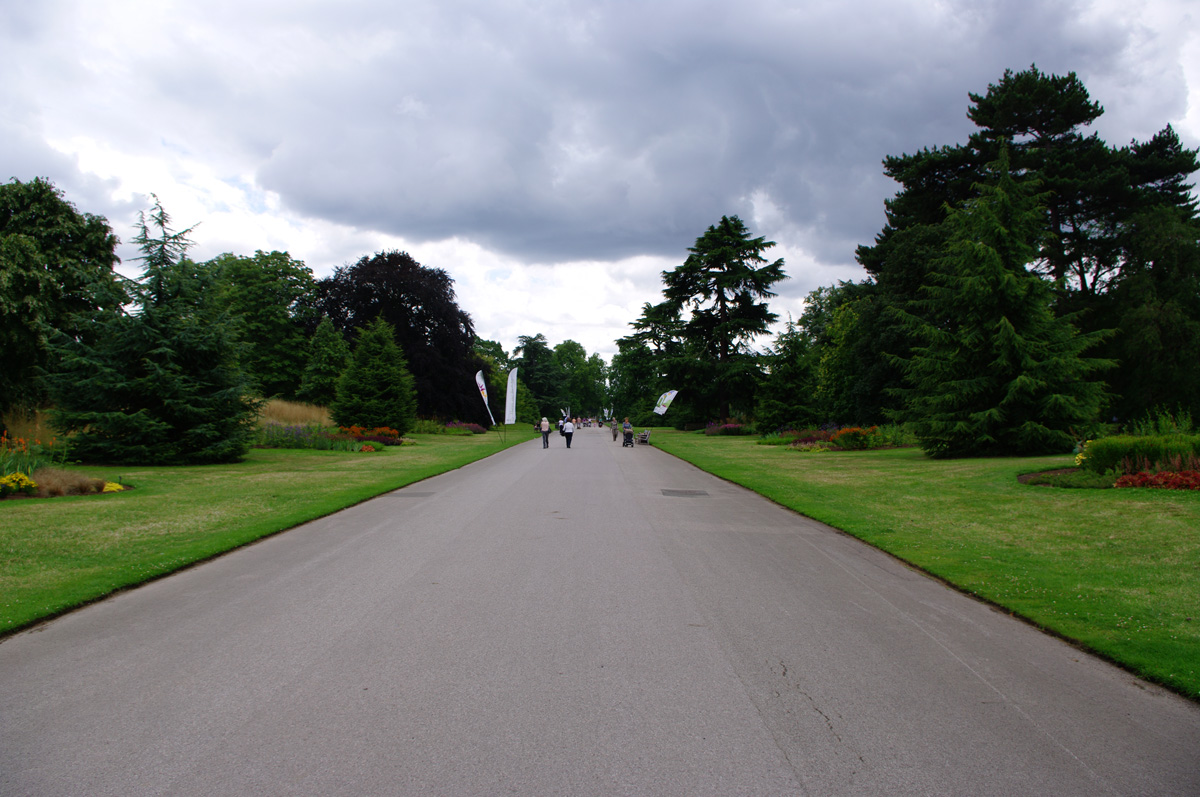
The broad walk.Image @Tony Grant

In the 1690’s, George London created the Broad Avenue, a wide path that goes nearly the full length of the gardens connecting many of the main gardens features. Charles Bridgeman and William Kent, two great 18th century landscape gardeners, primarily created the layout and design of the original gardens.
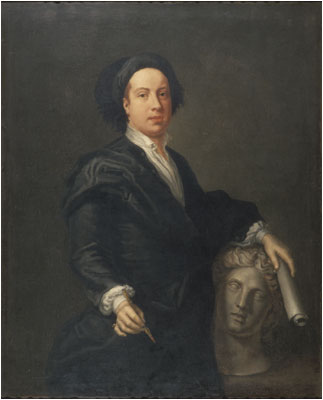
William Kent

Capability Brown added to the design later. Because of these three great garden designers’ influences and ideas, the garden at Kew were watched and visited, so that new ideas in garden design could be disseminated. Kew was an important influence to 18th century garden design throughout Britain.

Shape, pattern, colour. Image @Tony Grant

This early 18th-century plan was overlaid by later designers, although some of the Capability Brown’s features still persist. It is also likely that some of the older trees might have been planted by Charles Bridgeman. In 1731, King George II’s son, Frederick, Prince of Wale,s leased Kew farm. In 1736 he married Princess Augusta of Saxe Gotha, and together they began some drastic changes at Kew. They commissioned William Kent to redesign Richmond Lodge. He added extensions and covered the façade in white stucco. It became known as The White House.

Monkey puzzle tree. Image @Tony Grant

Frederick and Augusta were garden enthusiasts, and they were helped by the Earl of Bute, who advised them on obtaining plants and landscaping. He later became the tutor to their son, who became George III. Unfortunately, Frederick died in 1751 due to a bout of pleurisy and a burst abscess in his chest. He wasn’t able to fulfil his plans for the gardens. At the time it was said his death was a great loss to the development of gardening in this country. George III, Frederick’s son, succeeded to the throne on the death of his grandfather, George II in 1760.
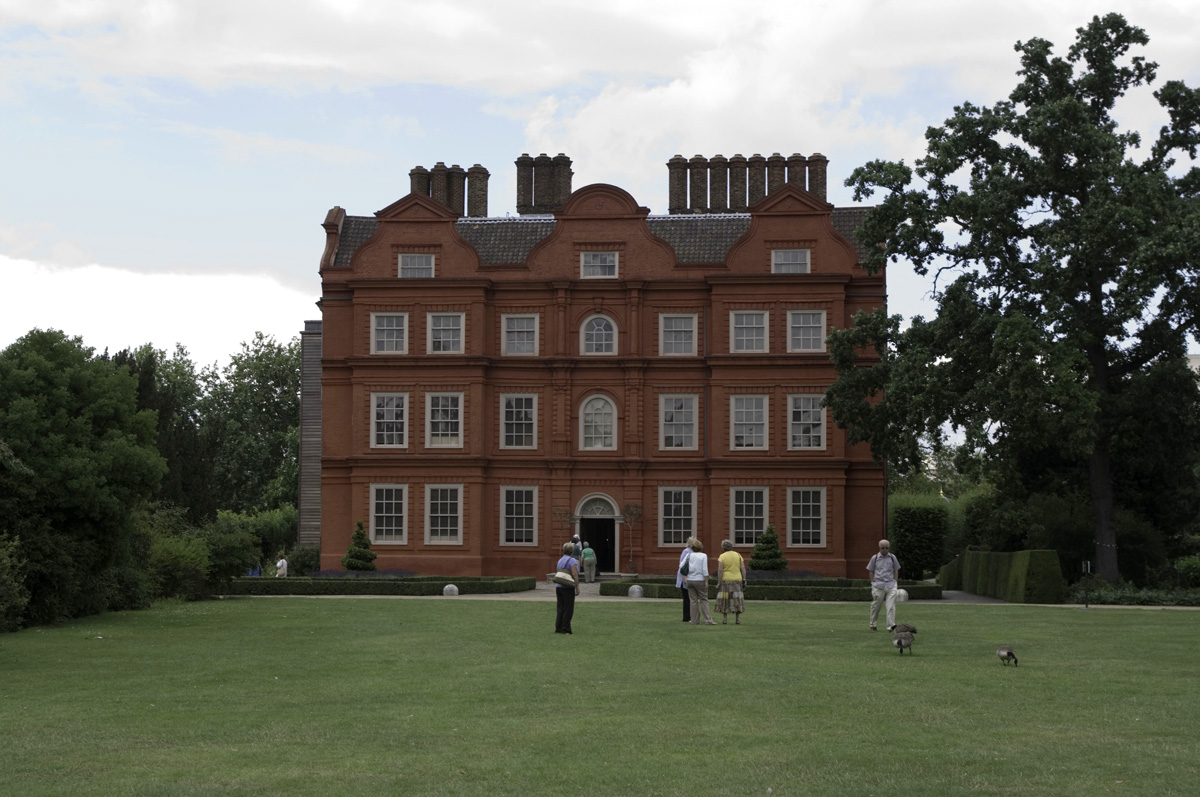
 

The Dutch House at Kew, Kew Palace. Image @Tony Grant

Capability Brown was commissioned to re-landscape the gardens. The royal family used Richmond Lodge as a summer home. When, Princess Augusta, George’s wife, died, the royal family moved to the White House, whilst The prince of Wales and his brother Prince Frederick lived in the Dutch House, which still exists today and is now called Kew Palace. The royal children were given lessons in botany and botanical illustration. During his bouts of illness, the King lived at Kew.
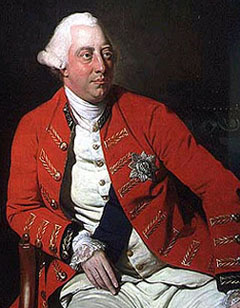
George III

During the Georgian period Joseph Banks became friends with George III and was the unofficial director of Kew Gardens. He became one of the most influential botanists of his time and began many of the work botanists do today.
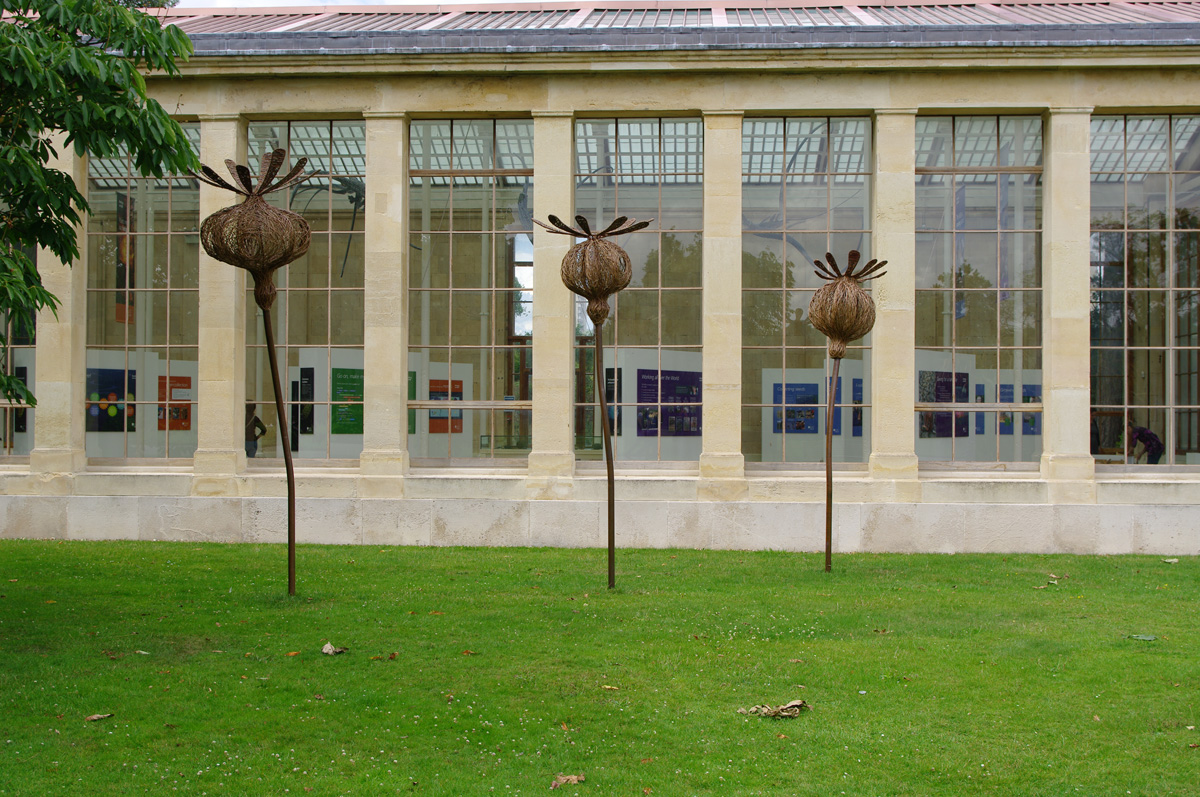
Natural art beside an orangery. Image @Tony Grant

Sir Joseph Banks (1743 – 1820)
In 1761he inherited his father’s estate in Lincolnshire to which was attached considerable wealth. His first voyage of discovery was to the coasts of Newfoundland and Labrador on the ship HMS Niger. On his return to London in 1767 he was elected a member of the Royal Society at the tender age of 23.
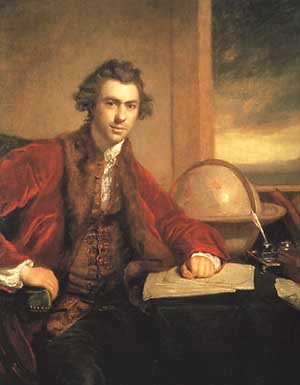
Joseph Banks

When the society proposed an expedition to observe the transit of Venus in the Pacific in 1769, Joseph Banks financed his own expedition with his own team of scientists, including the botanist Daniel Solander and the artist Sydney Parkinson. HMS Endeavor under Captain Cook left England in August 1768.
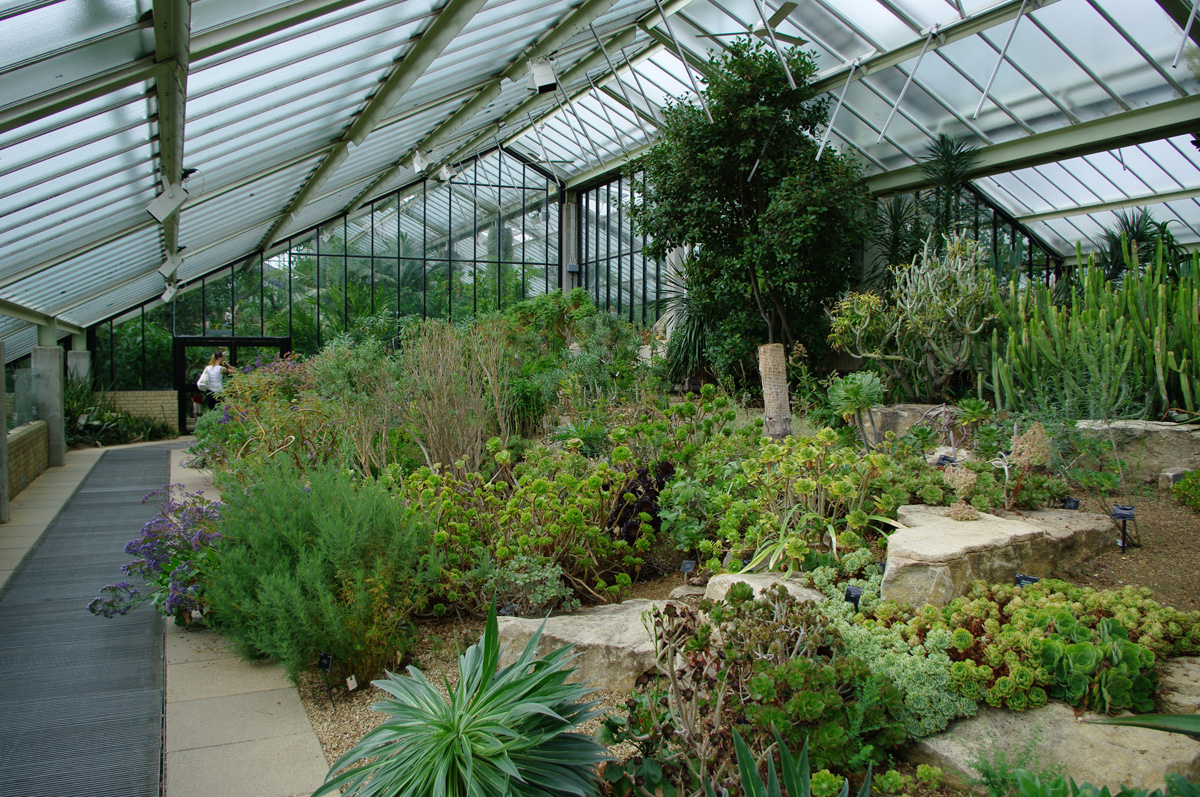
Inside a green house. Image @Tony Grant

Joseph Banks’ botanical collection formed the basis of the Herbarium at Kew today. His original specimens an still be studied there. Later he mounted expeditions to Iceland, the Hebrides, and the Orkneys. Banks helped organise the first collections at Kew. Specimens arrived from all over the growing British Empire, a typical trait with Empire building.
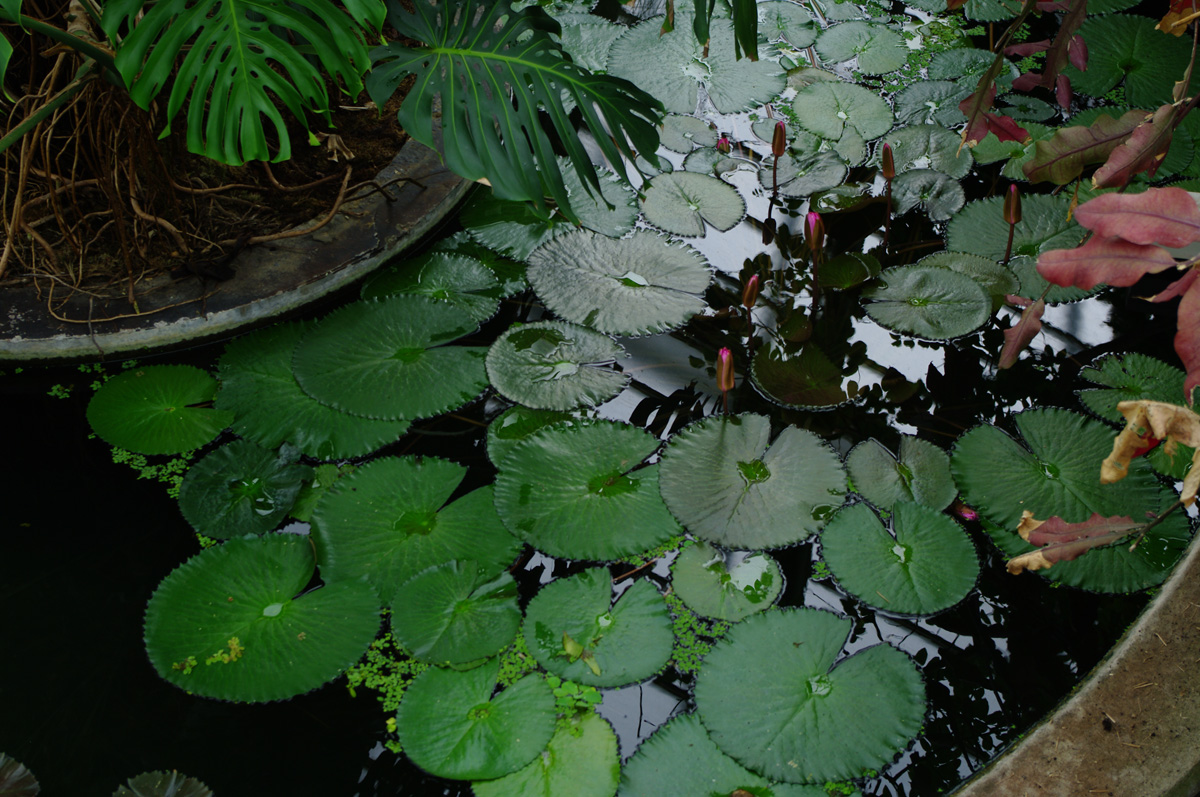
Water lillies. Image @Tony Grant

The initial impulse were trade and wealth, but so many other things went along in parallel with that:  science, exploration, discovery, art, culture. The British Empire brought religion, government, and even citizenship along with it. You can see examples and parallels with The Roman Empire, the Spanish exploration of South America, and present-day empire building.
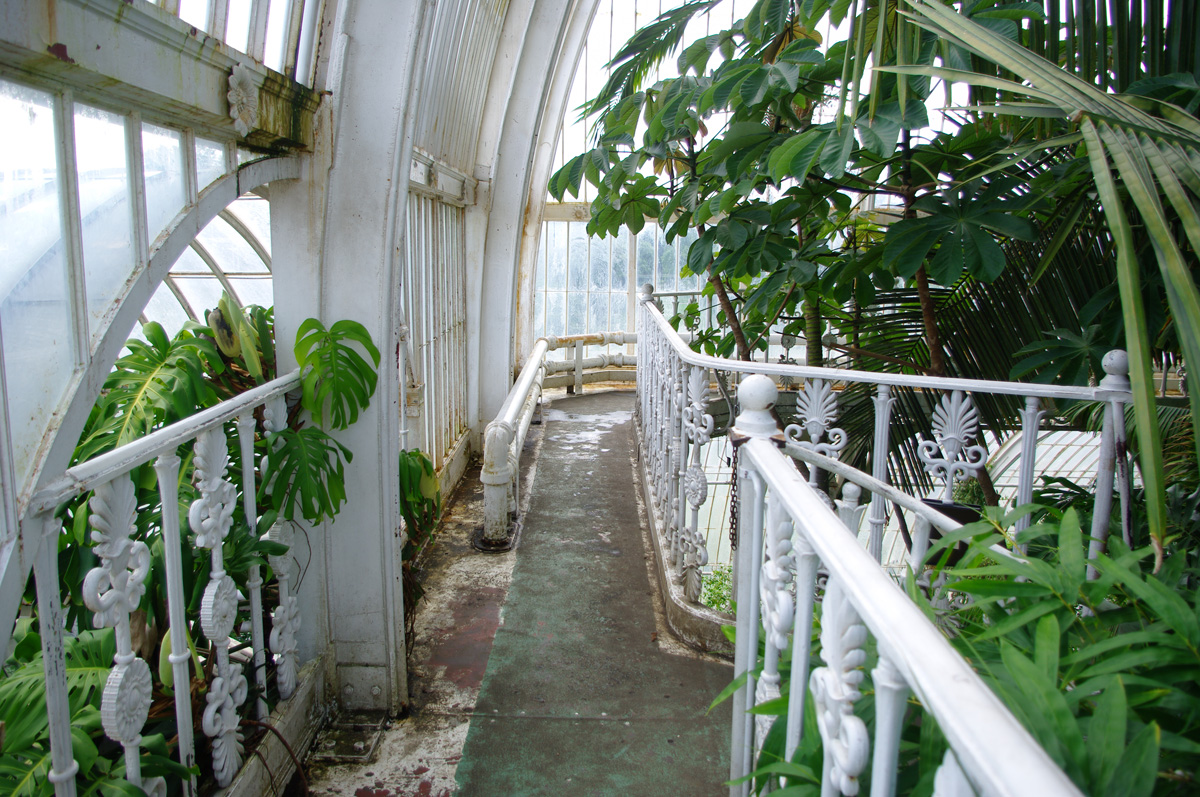
Inside the roof of the Palm House. Image @Tony Grant

Kew is a special place, and a visit there brings home the importance of plants, the keystone of our planet and very existence. They do so much for us, and their beauty brings us peace and joy. Is it such a strange thing to do – hug a tree?
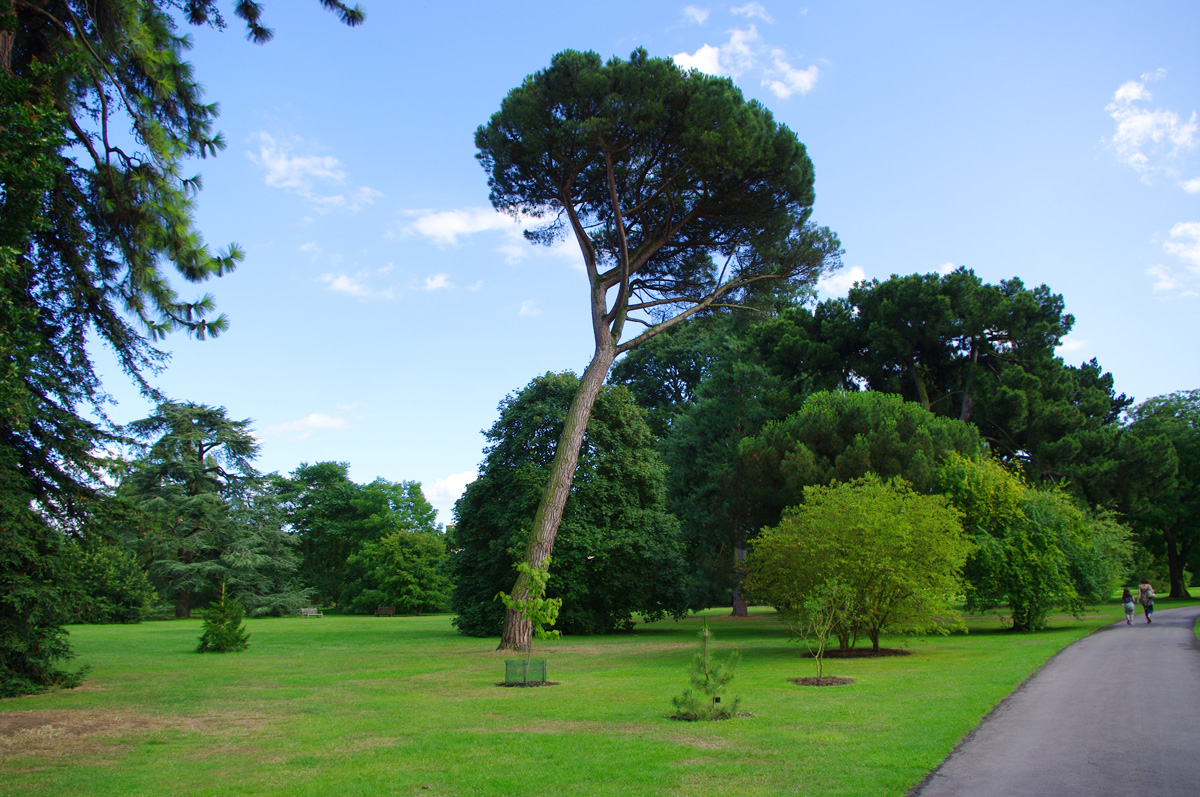
Scots pine. Image @Tony Grant

More images:

Before opening. Image @Tony Grant

Environmental art at Kew. Image @Tony Grant
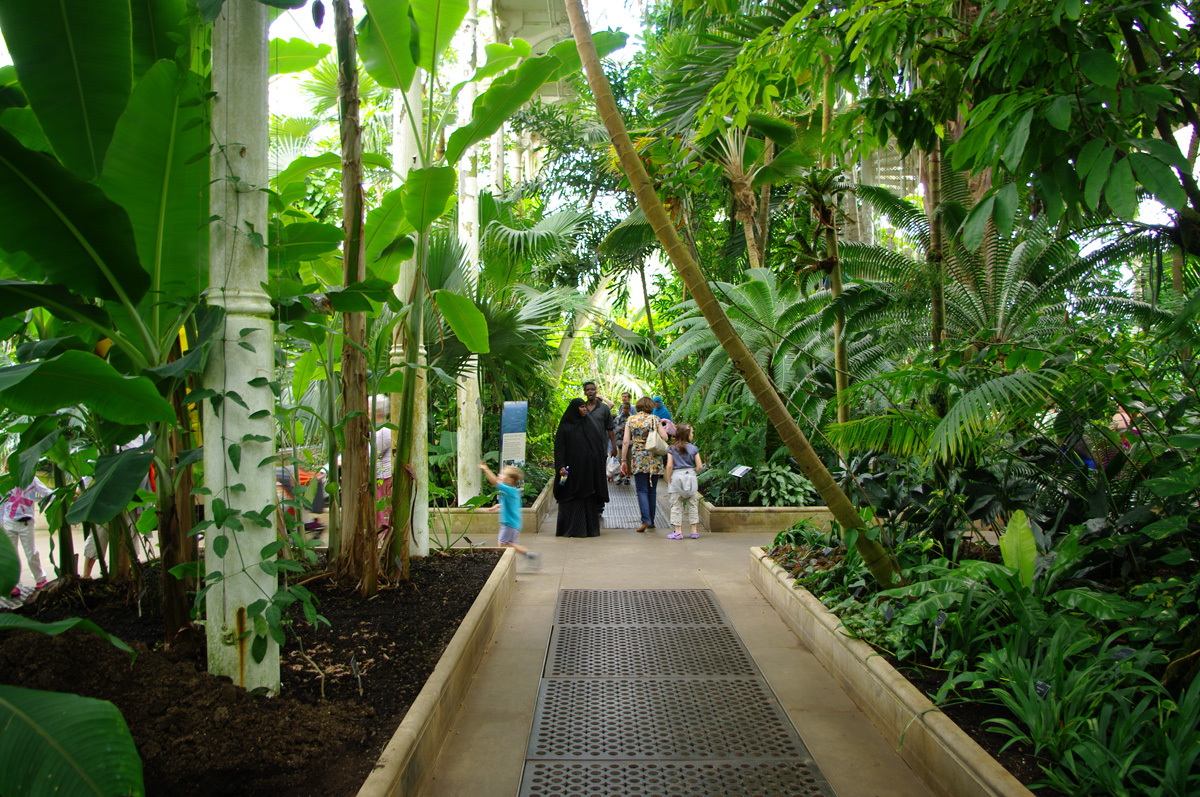
Inside the Palm House. Image @Tony Grant
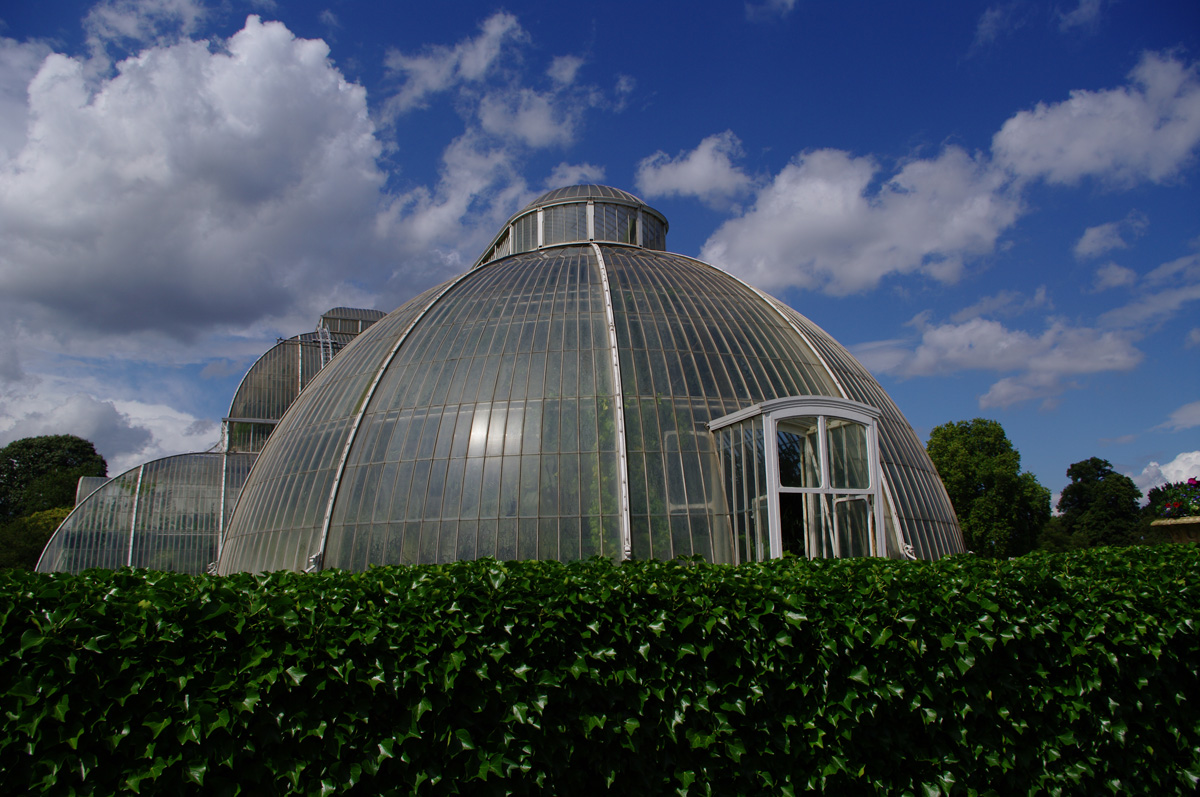
Side entrance. Image @Tony Grant
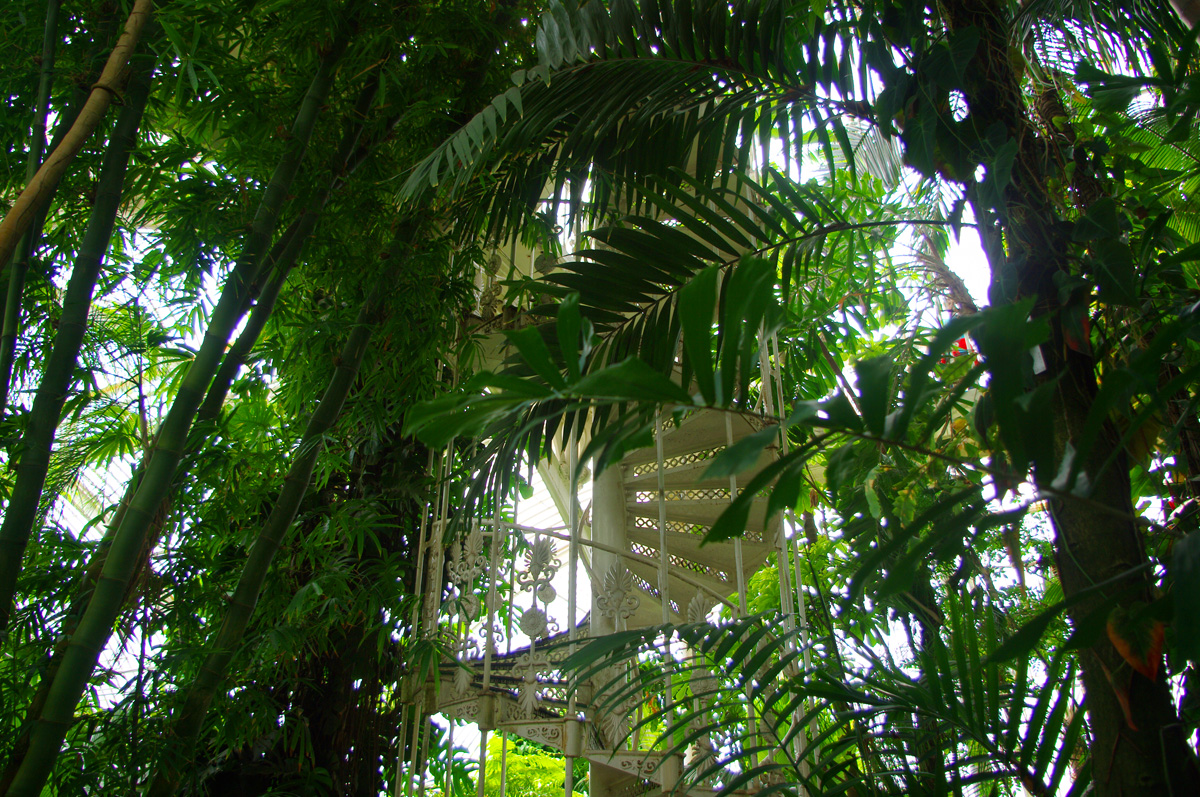
Stairs inside the Palm House. Image @Tony Grant
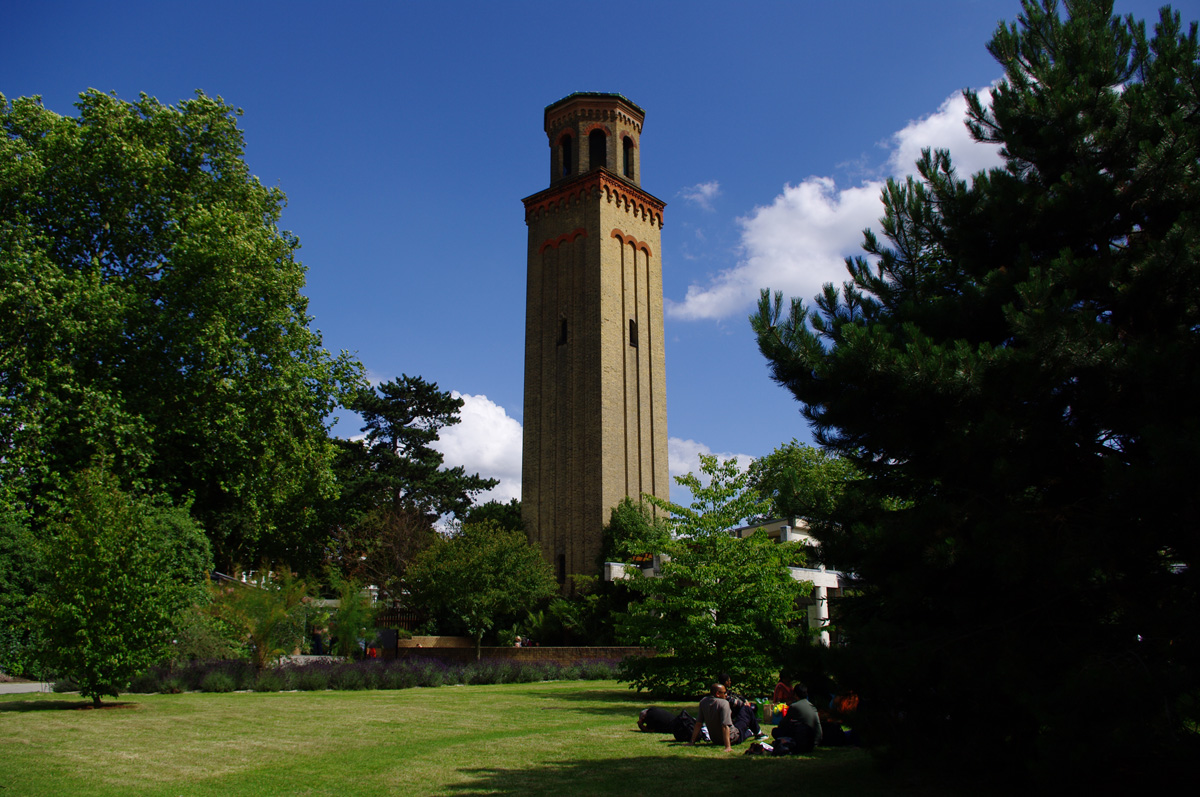
Water tower. Image @Tony Grant
Read Full Post »

Copryright (c) Jane Austen’s World. Post written by Tony Grant, London Calling.

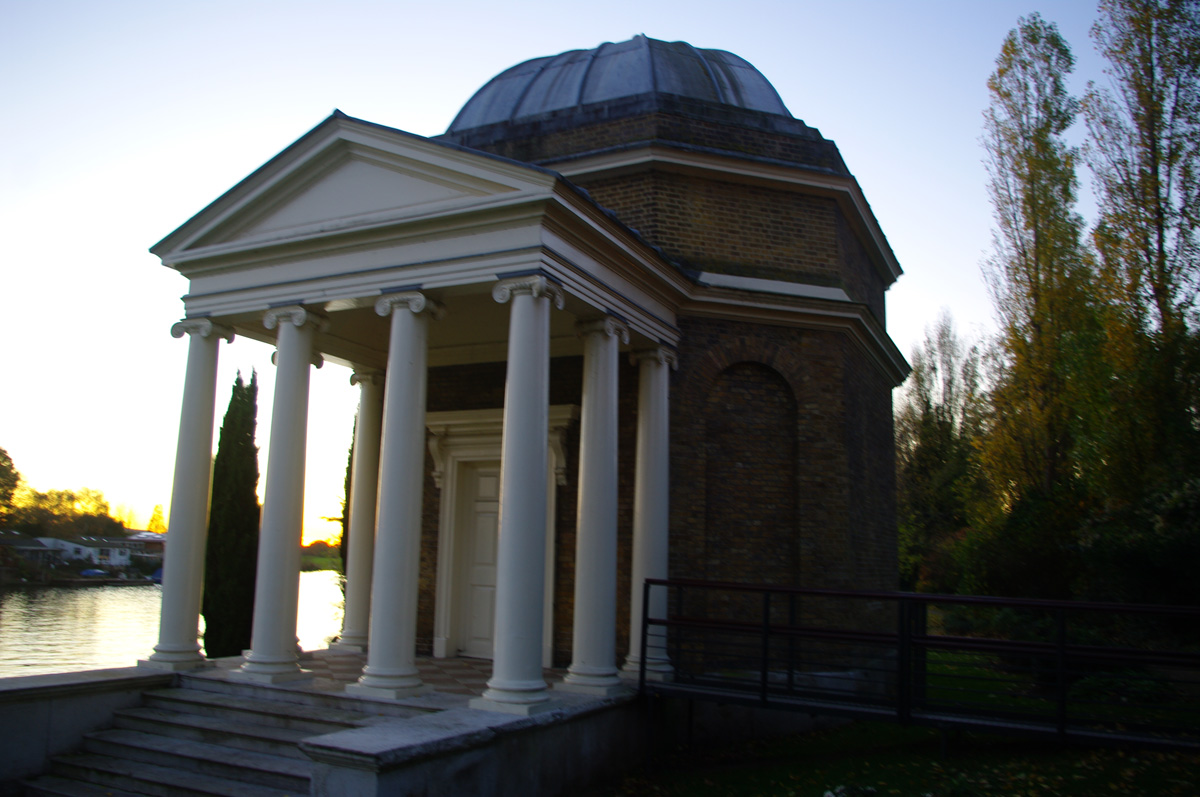
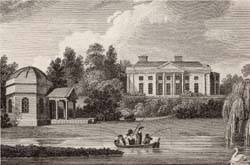
For four days last week, I was working in a school in Staines near Heathrow Airport. To get there from Wimbledon I had to drive past David Garrick’s Villa and his temple to Shakespeare, at Hampton on The Thames.

Garrick's Villa, 1783

David Garrick was an 18th century actor, playwright and owner of Drury Lane Theatre. He was innovative, and the forerunner of a new acting style. He was regarded as the greatest actor of his time and arguably is one of the great actors of all time. He had a profound interest in Shakespeare. It is easy to see connections between David Garrick and his career and the career and  driven personality of Dickens. Perhaps they are both a mirror in which we can see something of ourselves.

Garrick

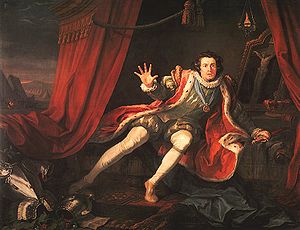
David Garrick was the second son of Peter and Arabella Garrick. He was born at The Angel Inn in Hereford on the 19th February 1717. For a while he was the pupil of Samuel Johnson at the little school at Edial near Lichfield. In 1773 Garrick and Johnson went to London together both with little money to support them. Garrick at first worked as a salesman in his family’s wine firm. However he turned to playwriting and acting. He write a version of, “Lethe,” that was used by Henry Giffard’s company at Drury Lane. He then joined Giffard’s company and worked at the theatre in Tankard street in Ipswich. At first Garrick took the stage name of Lyddall. On the 19th October 1741 he played Richard III at Goodman’s Fields Theatre in East London. He was an overnight sensation.

David Garrick as Richard III, 1745. William Hogarth

His acting style was new and innovative. He began a more naturalistic style. Rather than use the exaggerated bombastic style that was popular. On 28th November that year he got rid of his stage name and began to use his real name. His real name appeared on the posters advertising, “The Orphan,” in which he played the character, Chamont.. As a sign of his meteoric rise to fame within two months William Pitt decalerd that the 22 year old Garrick was the best actor the British stage had ever produced. Garrick became the dominant force in British theatre from then on.

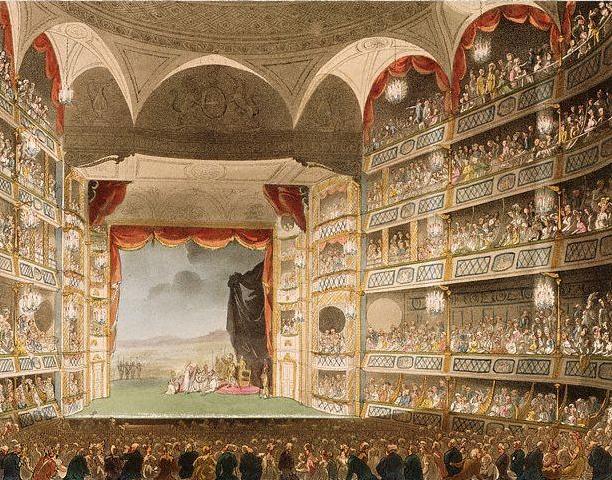
Drury Lane 1808

In 1747 with a new partner, James Lacey he took over the management of Drury Lane Theatre. For 29 years he directed repertory company in Europe. He developed new rehearsal techniques and discipline. His ideas included analysing characters, restoring the original texts of Shakespeare. Much of Shakespeare’s plays in the 18th century had been written in a bombastic and alliterative style. He didn’t always keep to Shakespeare’s original texts himself. He did tend to leave out bits and add bits to emphasise the character he was playing. Garrick was one of the leading playwrights of his day and wrote The Clandestine Marriage, Cymon, The Lying Valet and The Guardian. Garricks influence became the yardstick by which all other acting and drama was measured throughout Europe.

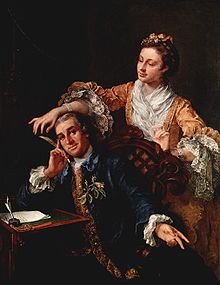
William Garrick and his wife, Eva Maria Vegel, by William Hogarth

In 1749 Garrick married the Viennese dancer, Eva Maria Vegel. They had no children and she outlived him by 43 years.They were so famous the crowned heads of Europe, the nobility and the leading figures of the London literary, art and social circles came to visit him.He owned residences at No 27 Southampton Street in Covent garden, in the Sdelphi, and his villa at Hampton on The Thames.You can imagine the elite of Europe coming to Hampton to visit garrick at his Thameside retreat, walking by The Thames, visiting his temple to Shakespeare and rowing out to the aits (river islands) Garrick owned along his stretch of the river to have sylvan parties in a beautiful natural surround.

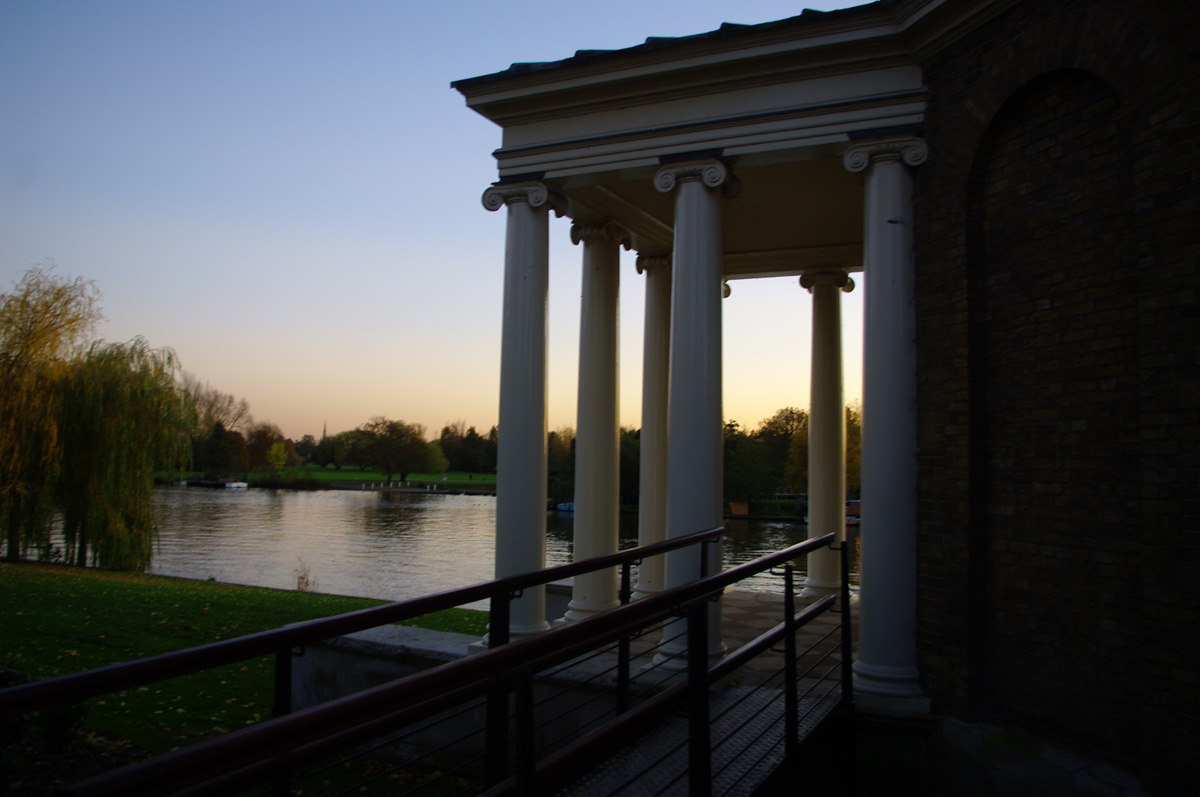
Garrick's temple close up. Image @Tony Grant
Garrick gave up Drury Lane and made his last performance at Drury Lane during a series of final performances in June 1776. He died in his house in the Adelphi on 20 th January 1779. He was buried at Poets Corner, Westminster Abbey.

View of the Thames from the Temple. Image @Tony Grant
Gentle reader: This is the first of two articles about David Garrick by Tony Grant. The second will concentrate on the actor’s beautiful house and temple on the Thames.

Read more about the topic

Read Full Post »


Bootmaker, 1845


He wore green trousers and a red jacket and his hat was leather with a narrow brim and a purple band all around the crown. He was sitting on a wooden stool, hammering away at a pair of boots that he was making, with the tools of his trade all laid out beside him: the lap-stone, the stirrup, the whet-board, the pincers and the nippers. As he worked he sang a little song to himself, to go with the rhythm of the hammering:

A Gentle Craft that hath the Art,
To steal soon into a Lady’s Heart.
Here you may see what Guile can do,
The Crown doth stoop to th’ Maker of a Shoe.

The Other End of the Rainbow, David Gardiner


16th Century Shoemaker Shop


In the Middle Ages, tradesmen formed guilds that protected their trades. Those who worked with fine leather were known as Cordwainers,  named after the very finest leather that was imported from Cordoba, Spain. In later years, those who processed leather formed their own guild, but  shoemakers retained the name of Cordwainer. Cobblers were distinct from Cordwainers, for they only repaired shoes, but over the years, this distinction began to weaken.  – Cordwainers: History.


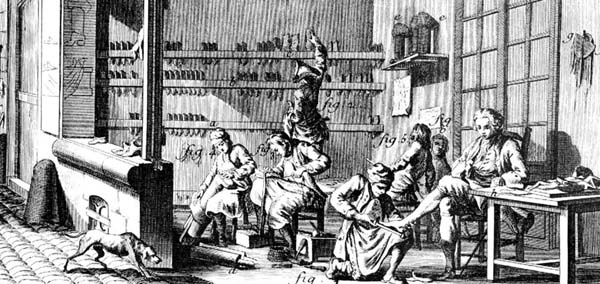
18th Century Shoe Shop


At the time, the shoemaking trade consisted of division according to the type of shoes made: men’s, women’s, and shoes for workers, such as night-soil men and slaughterhouse men. There were different operations performed by different persons: cutting leathers, sewing uppers, and joining heel and sole. And there were production sites, such as shop masters and cellar, garret and stall masters. Shoe masters employed many people in large operations that hired many workers (there were only 600 or 700 of these), but over 30,000 individuals worked as journeymen, countryworkers, apprentices and cheap garret masters.*


Shoe Seller, 1840


By the 18th century, most boot and shoemakers barely made a subsistence wage. The majority of individuals who made shoes worked for very low wages, about 9s or 10 s a week. Many could barely afford their own lodging, and if they did, the accommodations were mean and poor.  The wages, while low for men, were even lower for women – who worked in shoe closing and shoe binding – and for children.*


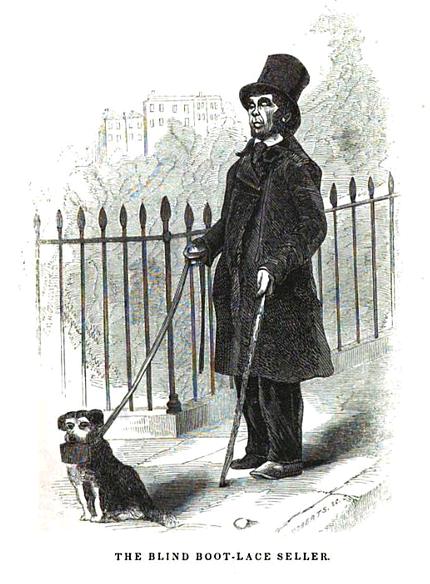
Blind bootlace seller, Mayhew


The life of a shoemaker was a hard scrabble life, for their trade depended on leather, the purchase of which required money or credit. Some shoemakers were known to stretch their goods by reducing the thickness of the leather used for heels and soles. Others, desperate to feed their families, would steal food or clothing and be jailed or, worse, hung after they were caught.*  -*London Hanged: crime and civil society in the eighteenth century, Peter Linebaugh


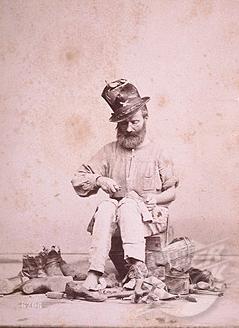
19th century shoe cobbler


Yet the shoemaking business was not totally abysmal:


Shoes over the 18th Century**


Shoemaking flourished in the 18th century, and boot- and shoe-makers were the most numerous of all Salisbury craftsmen throughout the 19th century and until the First World War. It was said that in the later 19th century ‘in hundreds of houses the shoe-binders, the closers and finishers were busy week in week out’. The business with the longest history is Moore Brothers, whose origins can be found in William Moore, boot and shoemaker in 1822 and 1830, and Henry Rowe, established in Catherine Street in 1842, who had moved by 1867 to Silver Street. By 1875 these premises were occupied by Rowe, Moore and Moore, a firm which subsequently became James and William Moore Brothers. The firm moved to its present premises in the New Canal at the end of the 19th century.  – Salisbury Economic History Since 1621


Yellow silk shoes with buckles, French, c. 1760's. @Bata Shoe Museum


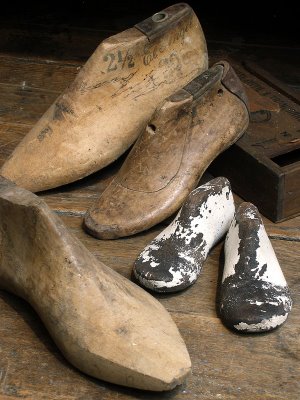
Early in the Georgian era the fashion for high heels (as much as 3″) made it difficult for cobblers to make “paired lasts” for left and right shoes. The “last” of the shoe is footprint of the shoe, which can be straight or without a left or right side. Many of the 18th and 19th century shoes and boots were produced on straight lasts. As the person wore the shoes, they “molded” to the foot, creating a left side and right side over time. –  The Bootmaker


1810-1820 woven straw shoes


After the French Revolution, shoe heels began to disappear, symbolizing that everyone was born on the same level. Delicate silk uppers began to be replaced by more affordable, sturdier leathers.


1891 silk shoe made with straight lasts***.


But the shoes continued to be made with straight lasts, a technique that continued into the 20th century.


Vintage shoe lasts


As late as 1850 most shoes were made on absolutely straight lasts, there being no difference between the right and the left shoe. Breaking in a new pair of shoes was not easy. There were but two widths to a size; a basic last was used to produce what was known as a “slim” shoe. When it was necessary to make a “fat” or “stout” shoe the shoemaker placed over the cone of the last a pad of leather to create the additional foot room needed. – Fashion Through Time, History of Your Shoes


Shoemaker's shop, 1849


Tools used by bootmakers and cobblers included: awls for punching holes in leather; hot burnishers that rubbed soles and heels to a shine; sole knives that shaped soles; stretching pliers which stretched the leather upppers; marking wheels to mark where the needle should go throught the sole, and size sticks to measure the foot. “By 1750 shoemakers were making shoes in different sizes for anyone who wanted to buy them. Before that they only made shoes on special order.” – Tradesmen/shoemaker.

Sources:


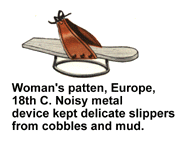
Pattens went out of fashion in the early 19th century. Jane Austen recalled their noise on cobblestones in Bath. It was common for women to trip while wearing this awkward device.


Read Full Post »

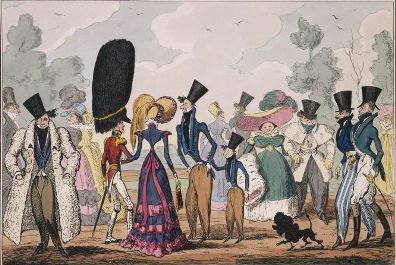
The Parks of London by Mary Elizabeth Brandon, 1868, on Dandyism.net discusses the dandies parading up and down London’s fashionable parks. After visiting that site, return to read some of my older posts about Hyde Park and the pleasure gardens.

More on the Topic:

Read Full Post »

How much clothing would a man consume in a 70 year lifespan if he had been born in 1795, and spent his young manhood during the Regency era? The following passage is interesting in that it tells as much about the kinds of  clothes that ordinary men wore as about the material they used up.

To this we have added the following calculation of the clothing the same man may have used. We estimate that a full-dressed man carries about fifty yards of cloth upon his body, or at least it has taken so many square yards of cloth to make the following garments: one under and one over shirt and drawers, eight yards; vest, with all its inside and out, four yards; coat, overcoat and cloak, 32 yards; the handkerchiefs in the coat and cloak pockets, two yards; pants, lined, four yards. Then we may add a nightshirt, four yards and morning wrapper, 10 yards, and we have 64 yards for a single suit. Allow six of these suits a year––of some garments he will want more, and some less than six, but take that as an average, and we have 384 yards for the gentleman’s wardrobe one year. Multiply that by sixty years, and we have 23,040 yards of cloth, which appears a fair allowance, as we throw out the ten years of childhood. With these garments he will want each year two pair of boots, two pair of shoes, two pair of slippers, two pair of rubbers or overshoes––480 pairs. With these he will wear sixty dozen pairs of stockings and (four hats a year) 240 hats. I will say nothing about the yards of cloth that he will want about his toilet and table, his carpets and curtains, and his bed, with its daily change of bedding; but you can imagine it would make a large spread. The great questions for consideration, in an agricultural point of view, is this: Could such a consumer of earth’s products produce as much as he consumed, with all industry applied during life, or would he be dependent upon the labor of others?

These calculations came from Facts For Farmers: Also for The Family Circle. A Compost of Rich Materials For All Land-owners, about Domestic Animals and Domestic Economy; Farm Buildings; Gardens, Orchards, and Vineyards; and all Farm Crops, Tools, Fences, Fertilization, Draining, and Irrigation – edited by Solon Robinson, 1865. (378)

Read Full Post »

« Newer Posts - Older Posts »