Feeds:
Posts
Comments

Archive for the ‘jane austen’ Category

Gentle readers: I am on vacation at the shore. The hot weather has cooled and the crowded beaches are empty, except for a few bathers and the shore birds. Yet, somehow my Internet connection is spotty and my ability to add images is nil. So, here is a link to an article I wrote for Suite 101 over a year ago about Martha Gunn and John Smoaker Miles, famous sea dippers who helped men and women into the sea waters at Brighton.

Martha Gunn, dipper

Martha Gunn, dipper

In 1750, Dr Richard Russell wrote a dissertation advising his patients with glandular conditions to swim in the ocean and drink the iodine-rich sea water. The Prince of Wales, who first visited Brighton in 1783, began taking the sea cure for his swollen glands on his second and third visits. Brighton was a mere 6 hours by stagecoach from London, and where the prince went, the fashionable crowd followed. The town quickly became the seaside resort of choice for people seeking a pleasant diversion, or a cure for gout and other illnesses caused by rich food and lack of exercise, and a thriving industry devoted to bathing soon developed.

Bathers were drawn into the ocean inside bathing machines constructed of wood. Men and women were required to enter the water at specified times in different sections of the beach. The women used the beaches on the east side of town near the Brighton aquarium, while the men were diverted to the west end beaches. This custom ensured that the sexes could not view each other in revealing bathing costumes, or while swimming in the nude, a practice that the men followed often and the women more infrequently

Read more at: Sea Bathing in Georgian Brighton: Martha Gunn and John ‘Smoaker’ Miles

Other posts on this topic:
Martha Gunn, Brighton’s Queen of the Dippers|

Read Full Post »

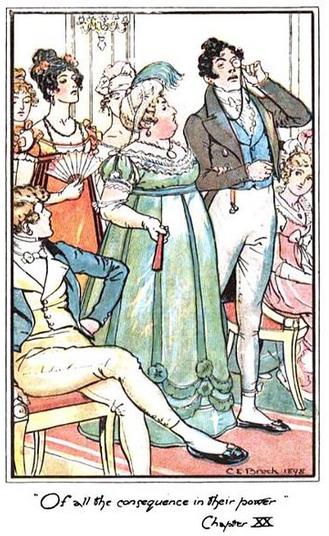
Dowager Viscountess Dalrymple makes an appearance with Sir Walter Elliot. Brock illustration.

“The Bath paper one morning announced the arrival of the Dowager Viscountess Dalrymple, and her daughter, the Honourable Miss Carteret. . . ” – Jane Austen, Persuasion

I have often wondered about dowagers and their status in Regency society in relation to widows. When did a widow become a dowager? Did all 19th century widows acquire the title? Why or why not?

Mirriam Webster Dictionary provides an answer : “Dowager – The widow of a peer, eg the Dowager Countess of Somewhere. The term was not added to a woman’s title unless and until the new holder of the title married.” The definition contains the clue. Until the new heir married, an aristocratic widow retained the title she acquired on the day of her own wedding.

Widows were legally entitled to a dower share or a third of the value of her husband’s estate after his death, for under the law of primogeniture he was the only real property owner. Dower rights meant that she would benefit for the rest of her life from a third of the income produced by a farm or from rental property on his estate:

“Under English common law and in colonial America, dower was the share of a deceased husband’s real estate to which his widow was entitled after his death. After the widow’s death, the real estate was then inherited as designated in her deceased husband’s will; she had no rights to sell or bequeath the property independently. She did have rights to income from the dower during her lifetime, including rents and including income from crops grown on the land.

One-third was the share of her late husband’s real property to which dower rights entitled her; the husband could increase the share beyond one-third in his will.

Where a mortgage or other debts offset the value of real estate and other property at the husband’s death, dower rights meant that the estate could not be settled and the property could not be sold until the widow’s death.” Women’s History 

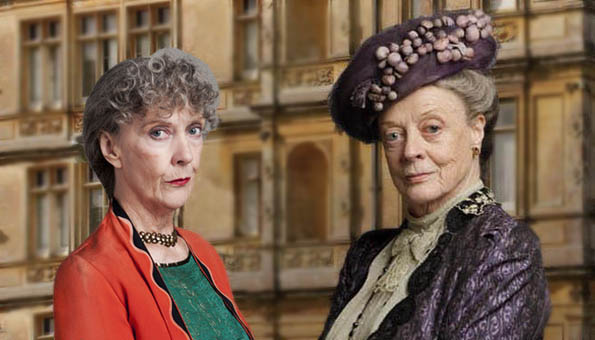
Dowager Maud, Lady Holland (Dame Eileen Atkins) and Violet, Dowager Countess of Grantham (Dame Maggie Smith) were able to live comfortably on 1/3 of the income of their husbands' estates.

Violet, the Dowager Countess of Grantham in Downton Abbey, would actively assume the title of dowager upon her son’s marriage so that there would be no confusion of having two Countesses of Grantham in the same room. But she did not always go by that title. Generally speaking the dowager would be known by the simplest title when encountered alone. Therefore, Violet would be referred to as the Countess of Grantham unless she attended the same event as her daughter -in-law. In that case, she would be referred to as the dowager countess.

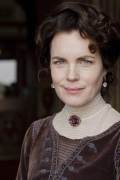
Cora, Countess of Grantham

Upon the heir’s marriage, it was expected that the dowager would move from the estate into a house of her own to guarantee a smooth transition of power. This was not always the case. As Amanda Vickery made clear in her fascinating book, Behind Closed Doors: At Home in Georgian England, some brides needed to summon a great deal of patience and cunning when their mamas-in-law dragged their heels in moving to the dower house. In real life, the Dowager Duchess of Leinster chose to live at Number 14 Harley Street in London. She would leave town occasionally to stay in her cottage in Wimbledon. Eleanor Percy, the Dowager Duchess of Northumberland, was the childless widow of the 4th Duke. The dowager moved into Stanwick Park following her husband’s death in 1865, and after the 5th Duke had moved into Alnwick Castle, the ducal estate. Eleanor lived a productive life at Stanwick Park, creating elaborate gardens and cultivating fruits and flowers. Sadly, Stanwick Hall no longer stands today due to lack of fortune. – Stanwick Hall: England’s Lost Country Houses

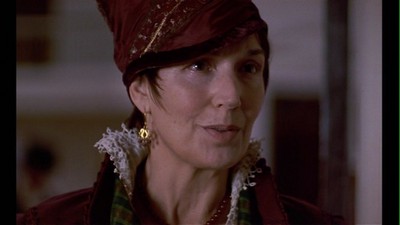
Susan Fleetwood as Lady Russell in Persuasion

Widowhood could emancipate a woman or lead her to poverty, depending on the income she derived from her dower rights and her dowry, which was the money and goods that a bride’s father had negotiated for her upon her marriage. Take Lady Russell from Persuasion. She did not remarry again from choice. Her independent life, free from money worries, was so improved without the presence of a husband who could dictate her every move and who would have control over her possessions that she would be a fool to remarry unless she fell head over heels in love. In that event she would lose her first husband’s income as stipulated by dower rights, although she would retain her dowry and any property she received through her mother.

Mrs. Dashwood and her daughters await the arrival of her replacement as mistress of Norland.

In contrast to Lady Russell’s situation, Mrs. Dashwood’s circumstances in Sense and Sensibility were instantly reduced due to the stipulations of the estate her husband was overseeing, which decreed the inheritance would go directly to the son, regardless of how much Mr. Dashwood desired to make provisions for his second wife and daughters. This is why on his deathbed he tried to extract a promise from John Dashwood, for Mr. Dashwood had not lived long enough to save money from the income of the estate for his second family. Due to Fanny’s stinginess, Mrs. Dashwood and her daughters are left to live on the modest income from her dowry (which was barely enough to keep them comfortable) and the beautiful items that she had brought into her marriage (which she retained as her own, much to Fanny Dashwood’s chagrin).

An elopement to Gretna Green was a most foolhardy and risky step for a young heiress

The dowry was one of the reasons that it was more than foolhardy for a young woman of fortune to elope to Gretna Green. Upon marriage all her worldly goods were legally handed over to her husband. An unscrupulous man could spend every single one of her pennies – except the amount that her father had settled upon her. A young woman who eloped had no such protection, for her family, caught unawares, would not have had the time to provide for her personal welfare. Her husband could go through her fortune (and his) with impunity, leaving her penniless and without recourse after his death.

Read Full Post »

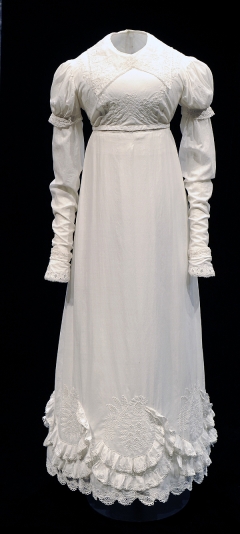
We’ve all come to associate Regency women’s fashion with delicate white muslin fabrics – sprigged muslin, spotted muslin,  checked and striped muslin, and embroidered muslin. Henry Tilney, the hero in Northanger Abbey, was well-acquainted with muslins through his sister, who wore only white.

Sheer white muslin gown with whitework embroidery. Image @Vintage Textile

In the 17th century and until the late 18th century, England imported muslin, a thin cotton material, from India.  The British East India Company traded in Indian cotton, silk fabrics, and Dacca (Dhaka or modern-day Bangladesh) muslins. Muslins from Bengal, Bihar and Orissa were also imported. The delicate cloth, which first originated in the Middle East in the 9th century, was perfect for clothing and curtains in hot, arid countries. – Muslin: Encyclopedia Britannica

Muslin gown, 1816

Muslin was a finely woven light cotton fabric in plain weave without a pattern, and had identical warp and weft threads. The fabric selection is quite flexible, coming in a wide variety of weights and widths. It accepts dyes and paints so successfully that today it is often used for theatrical backdrops and photographic portraits. One observation must be made: muslins of the past were made of much finer, more delicate weave than today’s muslins. –  How Is Muslin Fabric Made?

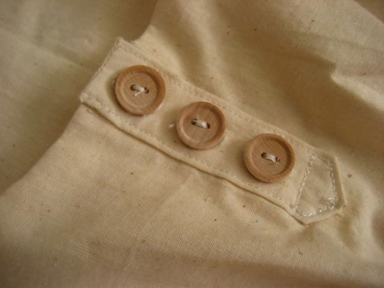
Buttons on a modern muslin fabric

Muslin gown circa 1815, Bath museum

An important feature of muslin fabrics is its ability to drape. Regency fashions were based on robes and garments from antiquity. The ability to drape and maneuver the fabric on the figure was an important feature of this cloth. Today, designers use muslin as a test garment for cutting and draping a design before creating the final dress from more expensive fabrics.

Another excellent feature of muslin is its ability to take dye, paints, and embroidery. The cloth accepted many patterns, motifs and designs that made it versatile and unique. Textile as Art

Plus the white fabric was a mark of gentility. White was difficult to keep clean or required constant cleaning. It was one thing for an aristocratic lady like Eleanor Tilney to wear white, but another for a maid to presume to wear such a high maintenance garment. Mrs Norris, that awful woman from Mansfield Park, approved of Mrs. Rushworth’s housekeeper’s action of turning away two housemaids for wearing white gowns.

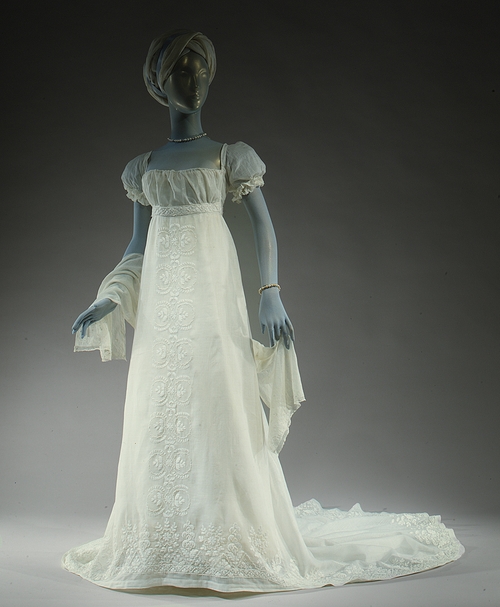
Muslin evening dress. Image @Metropolitan Museum of Art

Embroidery transformed the simple white muslin gown into works of art. Whitework embroidery was particularly striking, but colored threads could be equally beautiful. The draping quality of the cloth lent itself well to columnar-shaped empire waist gowns.

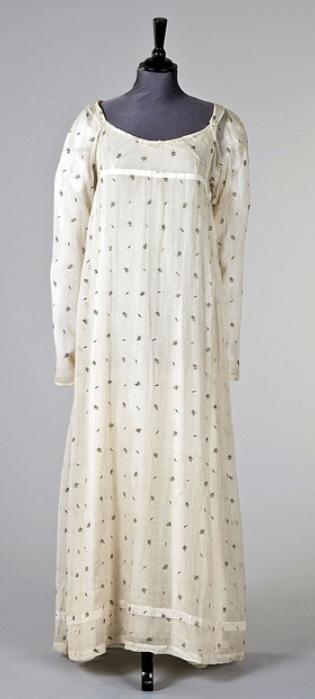
Indian sprigged muslin gown, 1800. Image@Kelly Taylor Auctions Trouvais

Muslin was imported from the Far East for centuries. Then the weavers in west Scotland, who were proficient in spinning fine cottons such as linen, cambric, and lawn, began to pay attention to weaving a finer, more delicate cloth.

Sheer muslin gown, 1800. Image @Victoria & Albert Museum

Muslins, therefore (plain for the most part in Glasgow, and fancy ornamented in Paisley),were among the earliest and principal cotton fabrics produced on the looms of the west of Scotland. About the year 1780 James Monteith, the father of Henry Monteith, the founder of the great printworks at Barrowfield, and of the spinning and weaving mills at Blantyre, warped a muslin web, the first attempted in Scotland; and he set himself resolutely to try to imitate or excel the famous products of Dacca and other Indian muslin-producing centres. As the yarn which could then be produced was not fine enough for his purposes, he procured a quantity of “bird-nest” Indian yarn, “and employed James Dalziel to weave a 6-4th 12” book with a handshuttle, for which he paid him 2Id. per ell for weaving;. It is worthy of remark that the same kind of web is now wrought at 2|d. per ell The second web was wove with a-fly shuttle, which was the second used in Scotland. The Indian yarn was so difficult to wind that Christian Gray, wife of Robert Dougall, bellman, got 6s. 0 J. for winding each pound of it. When the web was finished Mr Monteith ordered a dress of it to be embroidered with gold, which had presented to Her Majesty Queen Charlotte.”1

1817 Muslin day dress. Image @Bowes Museum

Once fairly established, the muslin trade and various other cotton manufactures developed with extraordinary rapidity, and diverged into a great variety of products which were disposed of through equally numerous channels. Among the earliest staples, along with plain book muslins, came mulls, jacconets or nainsooks, and checked and striped muslins. Ginghams and pullicats formed an early and very important trade with the West Indian market, as well as for home consumption. These articles for a long period afforded the chief employment to the hand-loom weavers in the numerous villages around Glasgow and throughout the west of Scotland. The weaving of sprigged or spotted muslins and lappets was subsequently introduced, the latter not having been commenced till 1814. Although the weaving of ordinary grey calico for bleaching or printing purposes has always held .and still retains an important place among Glasgow cotton manufactures, it has never been a peculiar feature of the cotton industry; and the very extensive bleaching and print-works of the locality have always been supplied with a proportion of their material from the great cotton manufacturing districts of Lancashire. – p 501, The Encyclopaedia Britannica: a dictionary of arts, sciences, and general literature, Volume 6, Thomas Spencer Bayne, 1888.

Embroidered muslin round gown, 1795. Image @Cathy Decker

More on the topic:

Read Full Post »

I will be resurrecting old posts until electricity has been restored in my house. The power company promised that 95% of households will be online by Friday. In 2004, our tiny street did not receive full service until 13 days after the storm. Right now I am looking for a hot shower!!

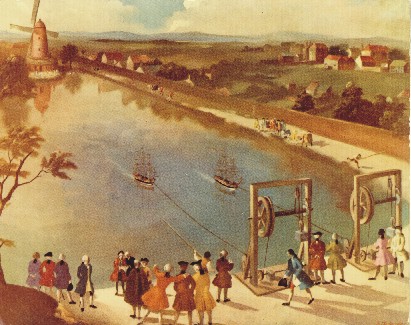
I published this post about the Peerless Pool two years ago. Perhaps my new readers might be interested in learning a few facts about a public swimming pool in London over 200 years ago. Click here to read the post.

Read Full Post »

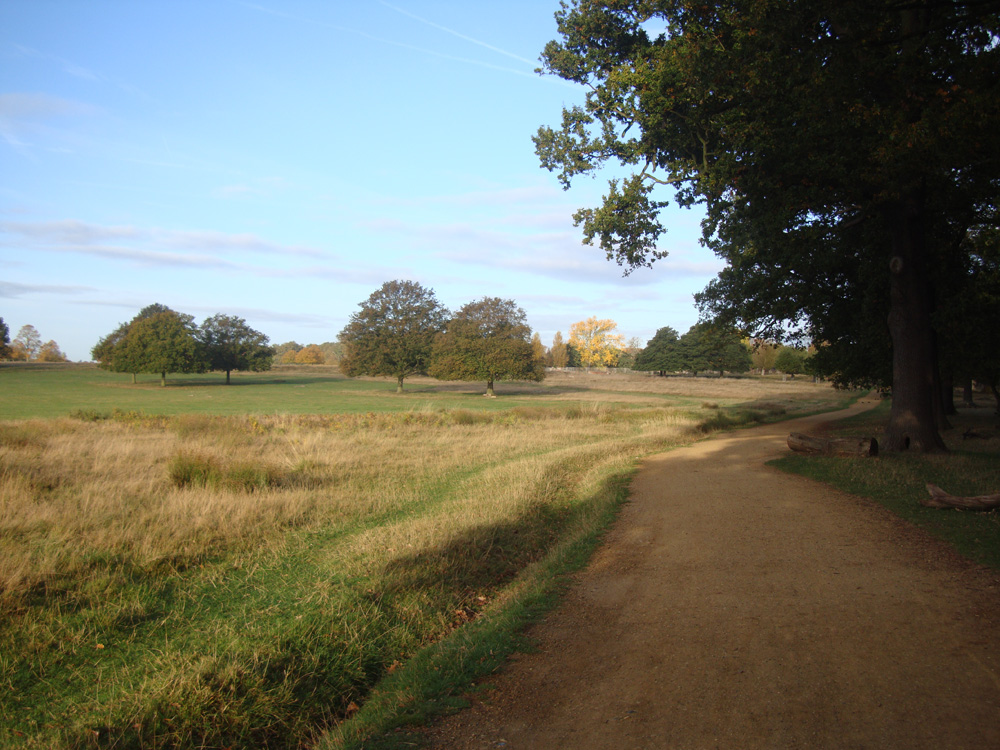
Gentle Readers, It may please you to know that frequent contributer, Tony Grant (London Calling), lives near Richmond Park, a wilderness that has kept its pristine nature for centuries. Enjoy these beautiful photographs.
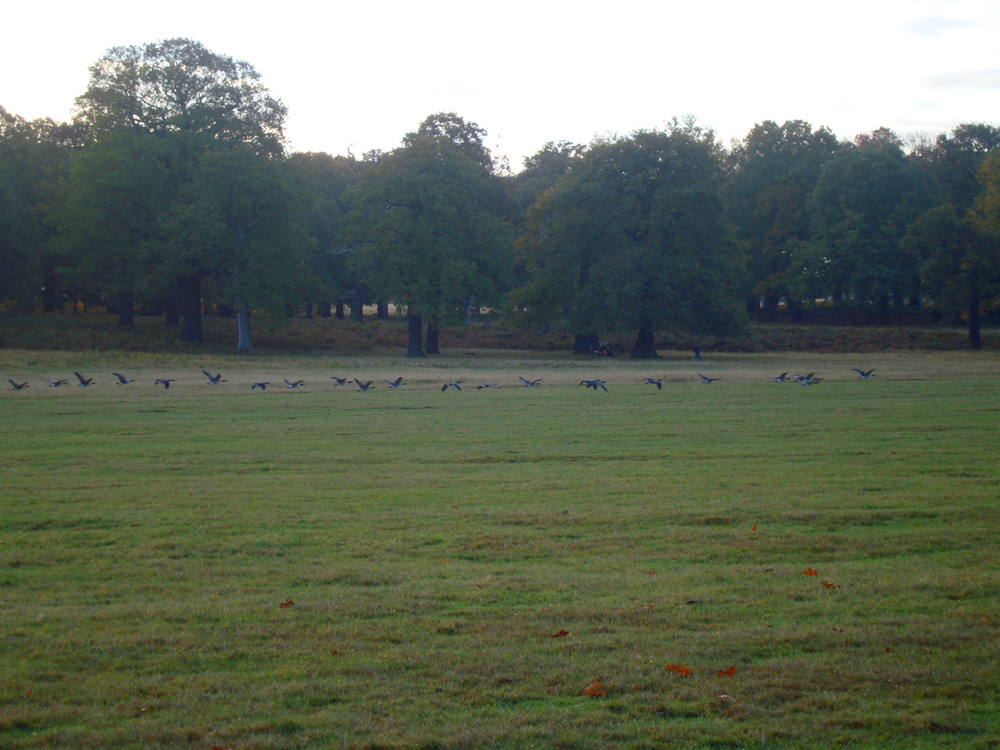
Geese flying towards Pen Ponds

Richmond Park is situated 12 miles south west of St Pauls Cathedral in the city of London. It just happens to be two miles from where I live on the edge of Wimbledon and abuts Wimbledon Common that stretches for a few miles on the other side of the Kingston Road.
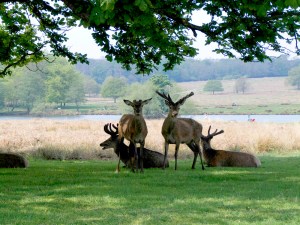
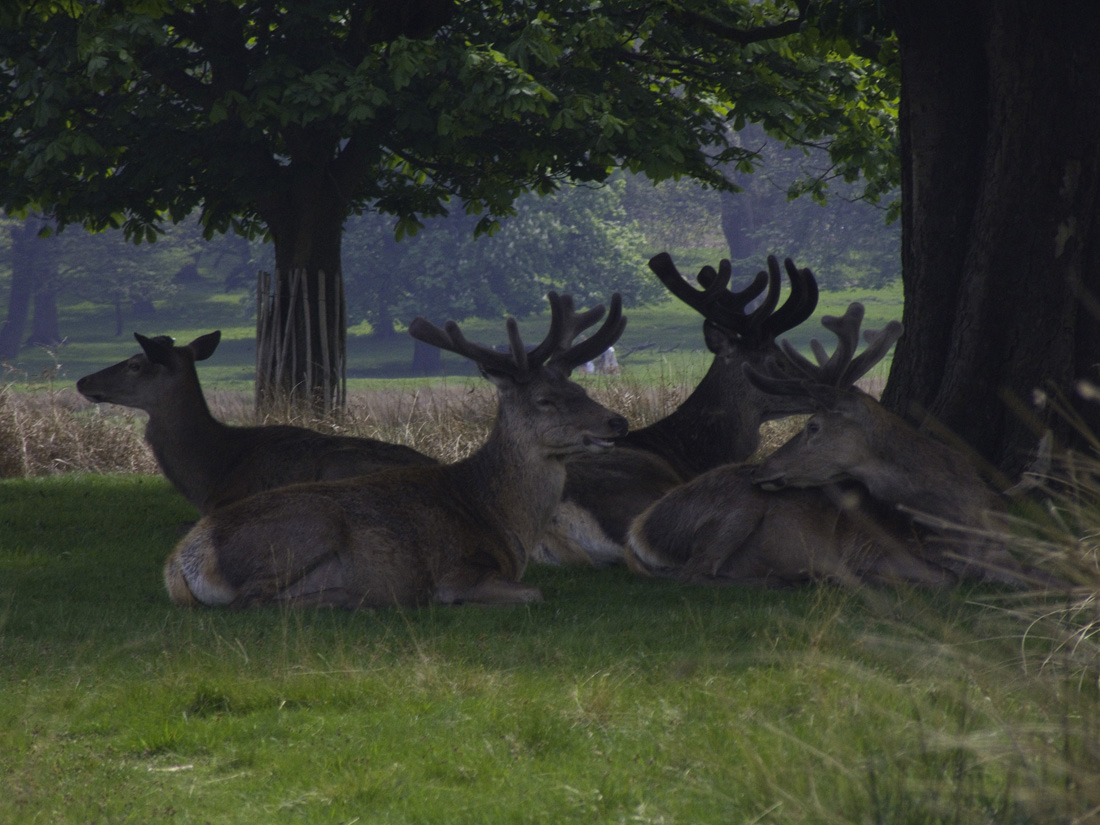
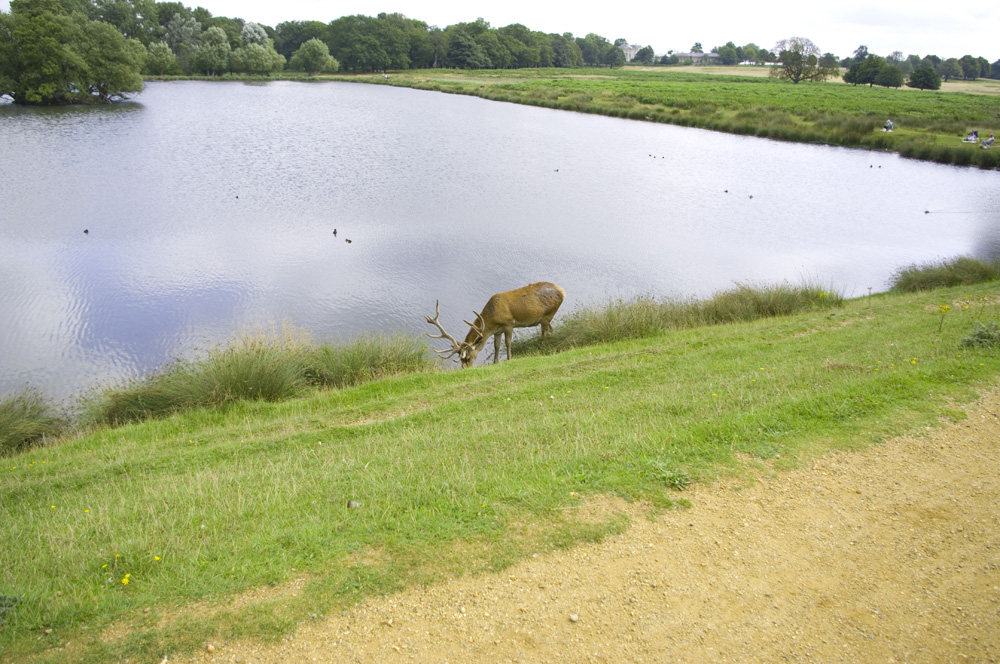
Deer at Richmond Park

The Kingston Road is a very old road running between Kingston upon Thames and the City of London. It bisects Wimbledon Common and Richmond Park on it’s way. Jane Austen would have travelled often along it on her way from Hampshire by way of Kingston upon Thames to her brother Henry’s house in Henrietta Street or to one of the other houses Henry owned at different times.
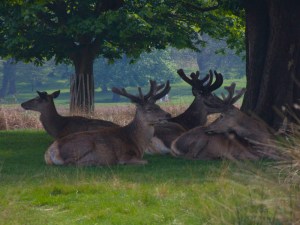
Deer under the trees

The park has always been an untouched piece of wilderness. It has never been adapted or changed by agriculture. It has always been as it is to this day. It covers 2,500 acres. King Edward I who lived from 1272 to 1307 and who was also called Longshanks and The Hammer of the Scots, formed the park in the Manor of Sheen beside the Thames outside of London, as a hunting park stocked with red and fallow deer.

There are six hundred deer in the park to this day. Under Henry VII, who built a palace at Sheen beside the river, the park and the local town was renamed, Richmond. There is a mound or small hill in the park called, Henry VIII’s Mound, where the Tudor king reputedly would spy out likely deer to be hunted. In 1625 Charles I removed the whole of his court to Richmond Palace because of the Black Plague raging through London.

He used the park for hunting too. In 1637 Charles had a wall built around the park, which is still there. The local people were obviously chagrined. Charles passed strict laws about the King’s deer being poached and the wall was an extra deterrent.
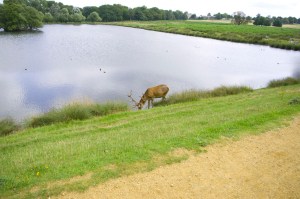
Stag by Pen Ponds

Richmond Park has a strong emotional connection for Marilyn and me. Not only does one of the campuses of Kingston University, where me met as undergraduates, back onto the park and on numerous occasions we scaled the brick wall between Kingston Hill Place, my halls of residence , to get into the park at night but it has great significance to the birth of all our children. Now I know what you are thinking, but you would be wrong. By the way, Kingston Hill Place used to be the home of Lilly Langtry or Jersey Lill, as she was known, the mistress of Queen Victoria’s eldest son Edward VII.
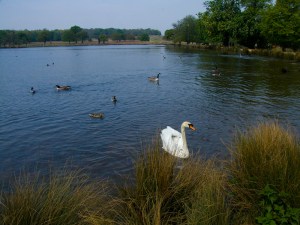
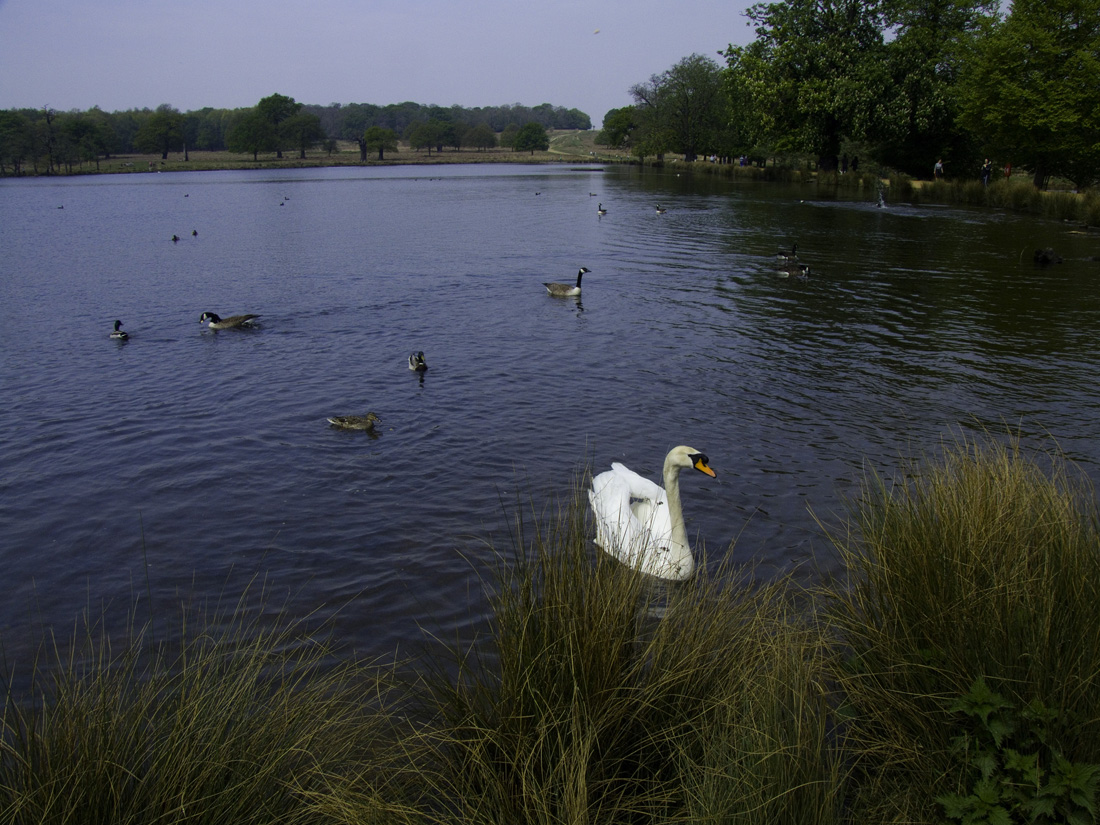
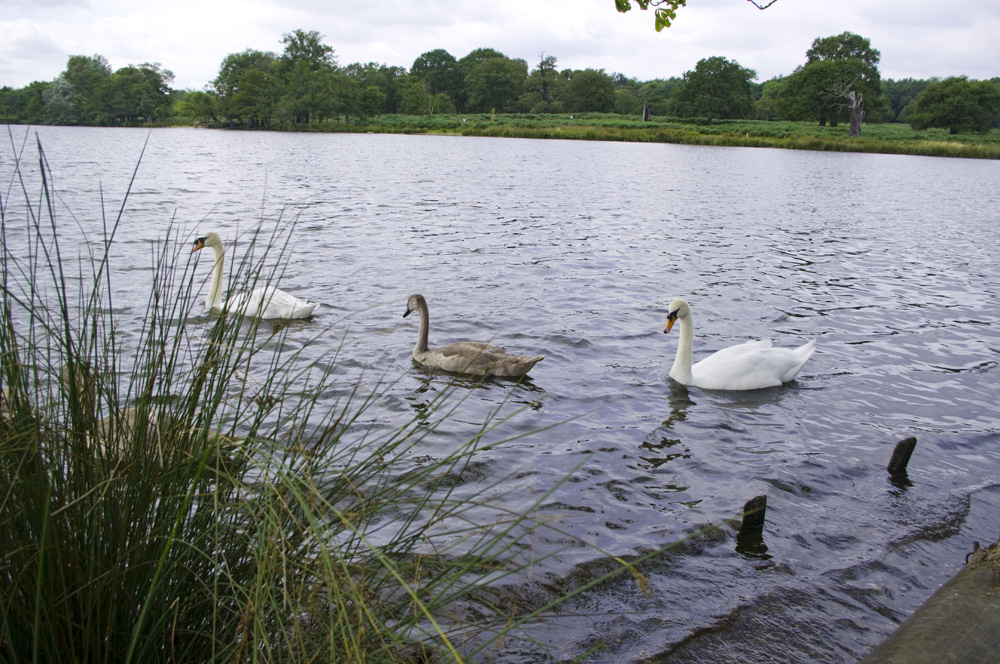
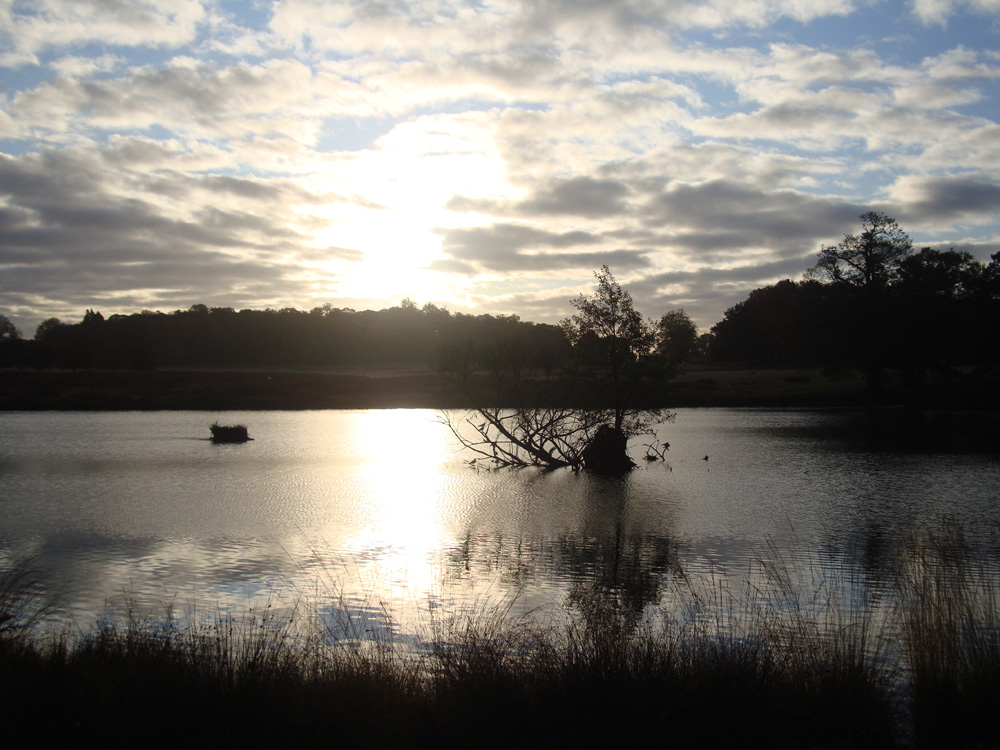
Pen Ponds, Richmond Park

Getting back to the great significance to the birth of our four children. Well, it first happened with Sam, our eldest. The day he was due to be born, 1st July 1986, Marilyn showed no signs of going into labour. We sat around and sat around waiting for something to happen and obviously it wasn’t going to.
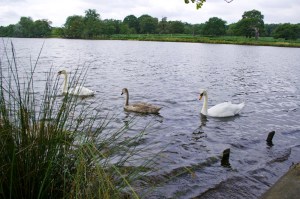
Pen Ponds

We decided to drive to Richmond Park and go for a walk beside Penn Ponds, two beautiful small lakes right in the middle of the park with reed beds and groves of massive ancient oak trees nearby. The ponds have a large variety of water birds, swans, mallards, Canada Geese, coots and many other varieties of ducks inhabiting them. They nest in the reed beds along the edge of the ponds. Richmond Park has been classified as SSSI status. That means it is a site of special scientific interest. Sam was born a week later on the 8th July.

Pen Ponds in the Rain

When Marilyn [Tony’s wife] was pregnant with Alice we followed the same routine, a day beside Penn Ponds and then after that, we did the same with Emily and Abigail in later years.
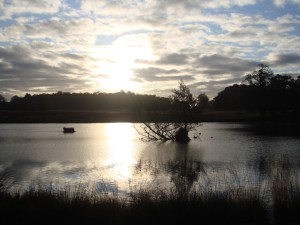
Pen Ponds

All of our children were born late. You might think, weren’t you taking a chance? What if Marilyn had gone into labour on the predicted date? Ah well you see, Kingston Hospital is right next to Richmond Park. All we needed to do was climb over the wall. No sorry, let me get that right; drive a short distance to the maternity department.
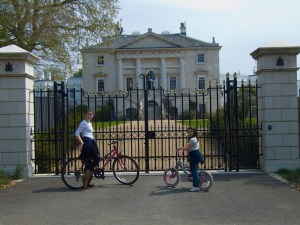
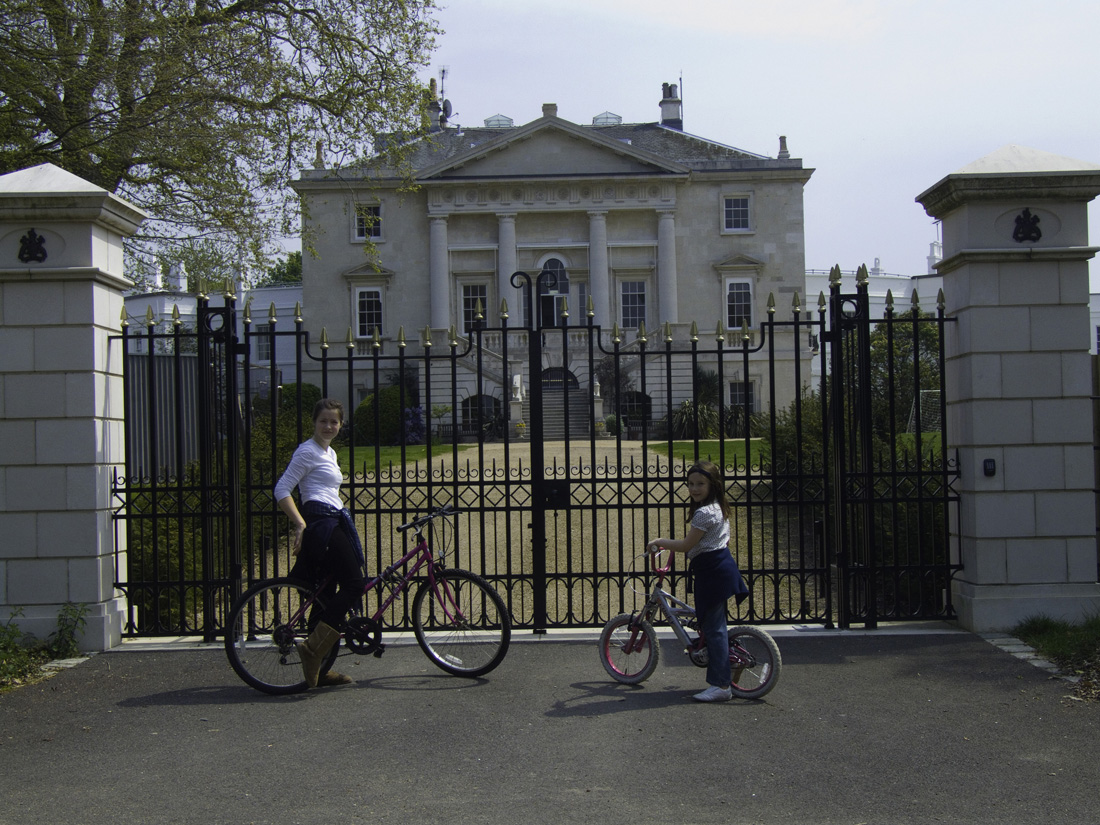
My daughters outside the Royal Ballet School

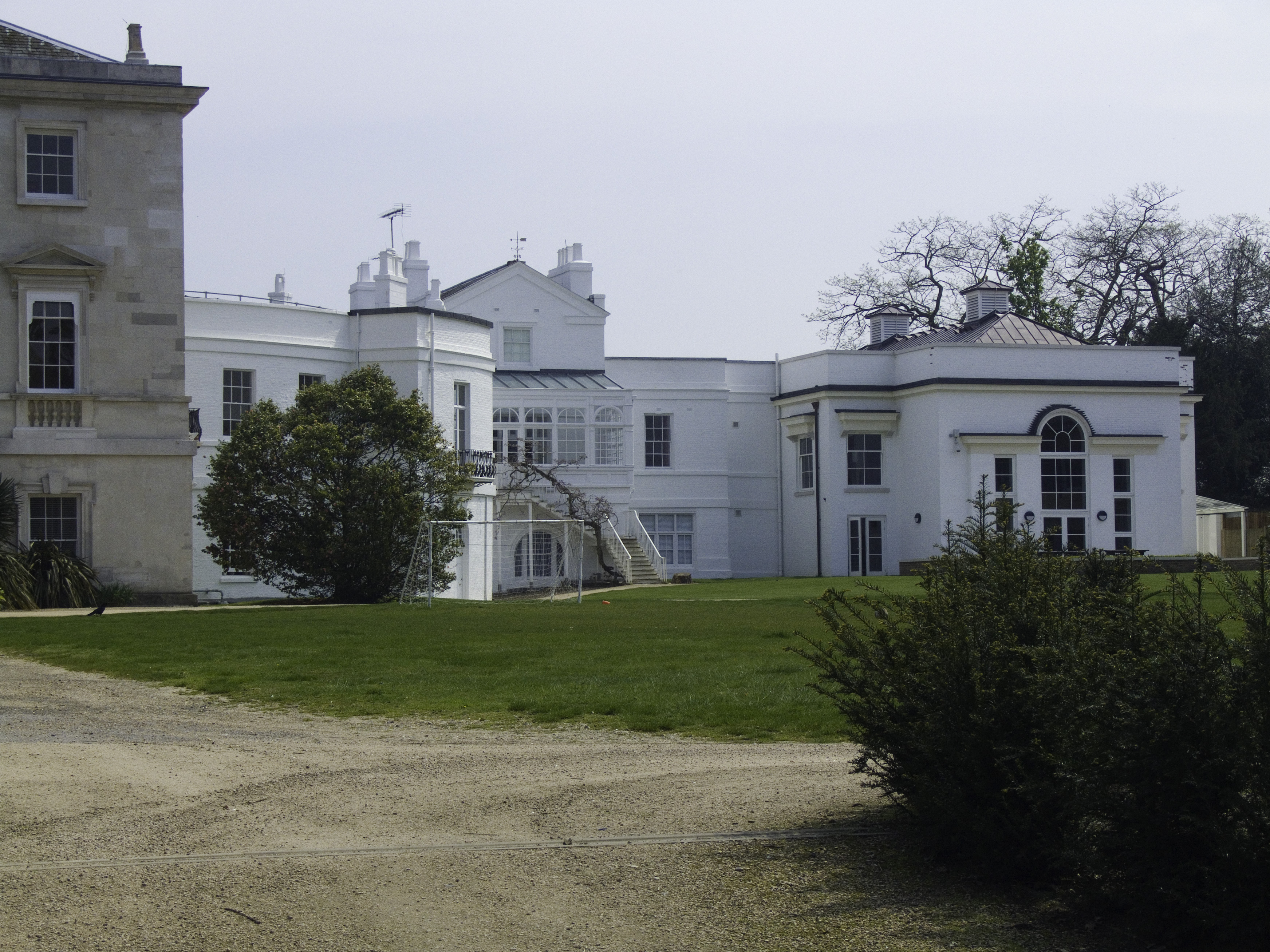
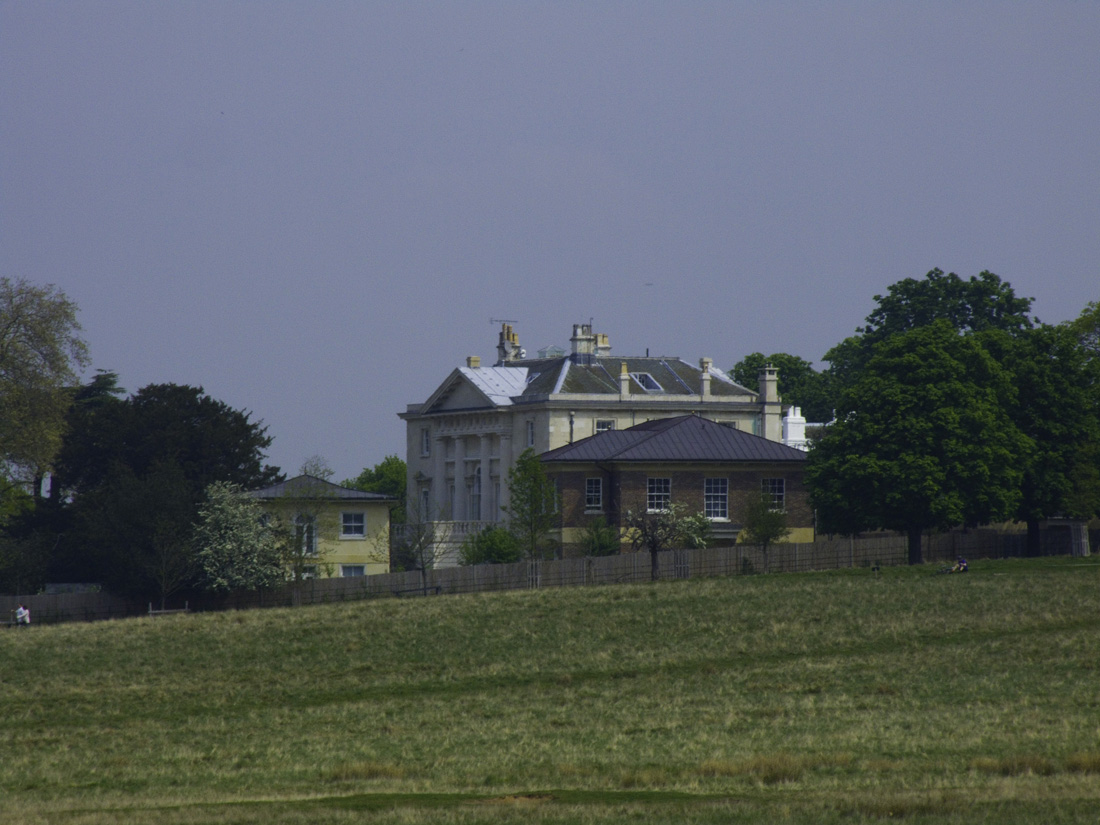
There are a number of beautiful houses inside Richmond Park. White Lodge,in the centre, is the home of The Royal Ballet School. All our great ballet dancers train there from an early age. In the film Billly Elliott, that is where he went to train as a dancer. White Lodge is an elegant 18th century pile that used to be a country house belonging to Edward VII.
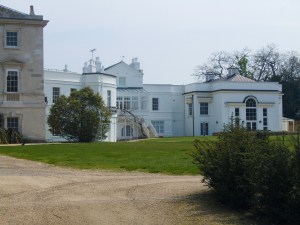
Outside the Royal Ballet school

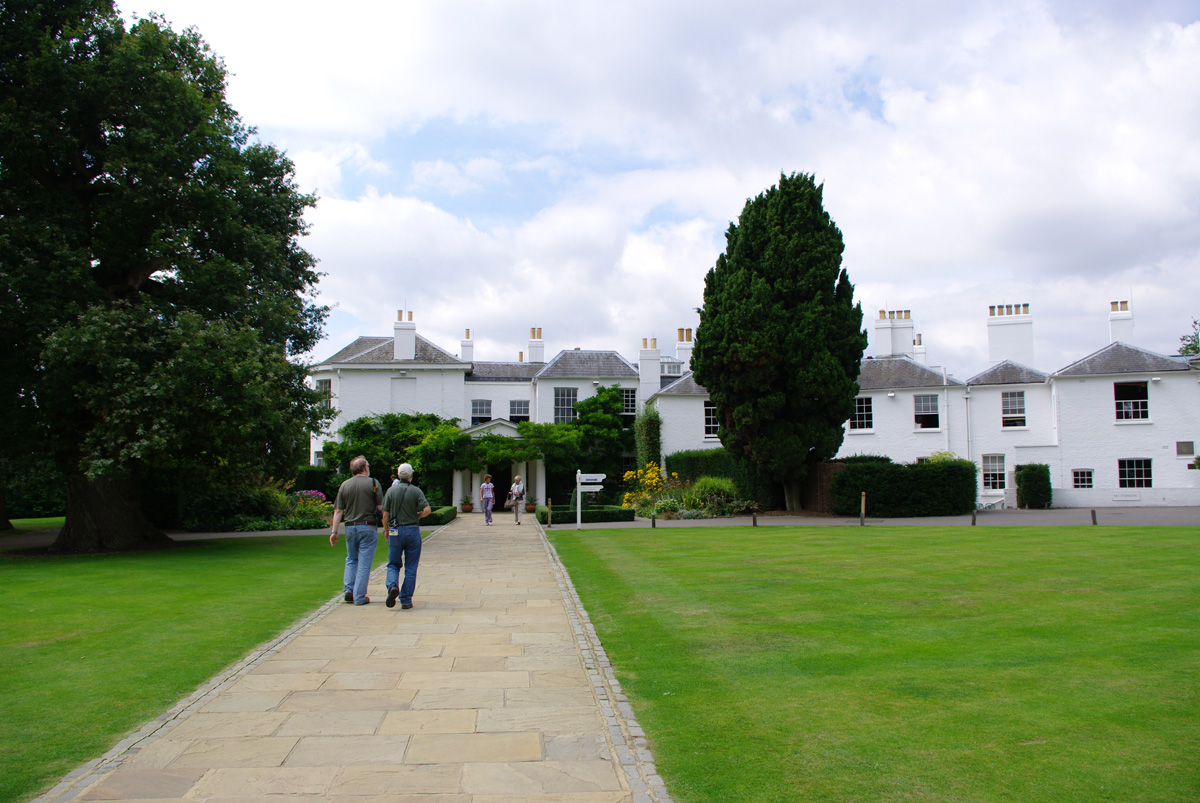
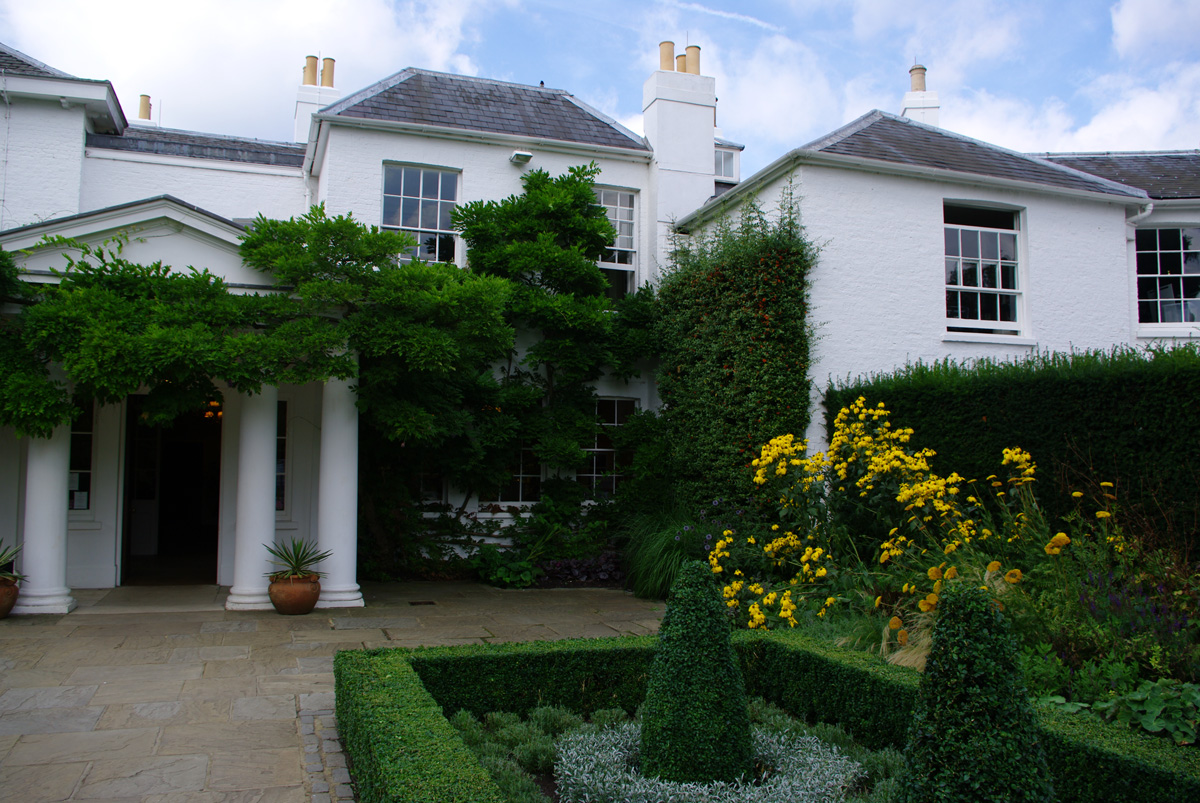
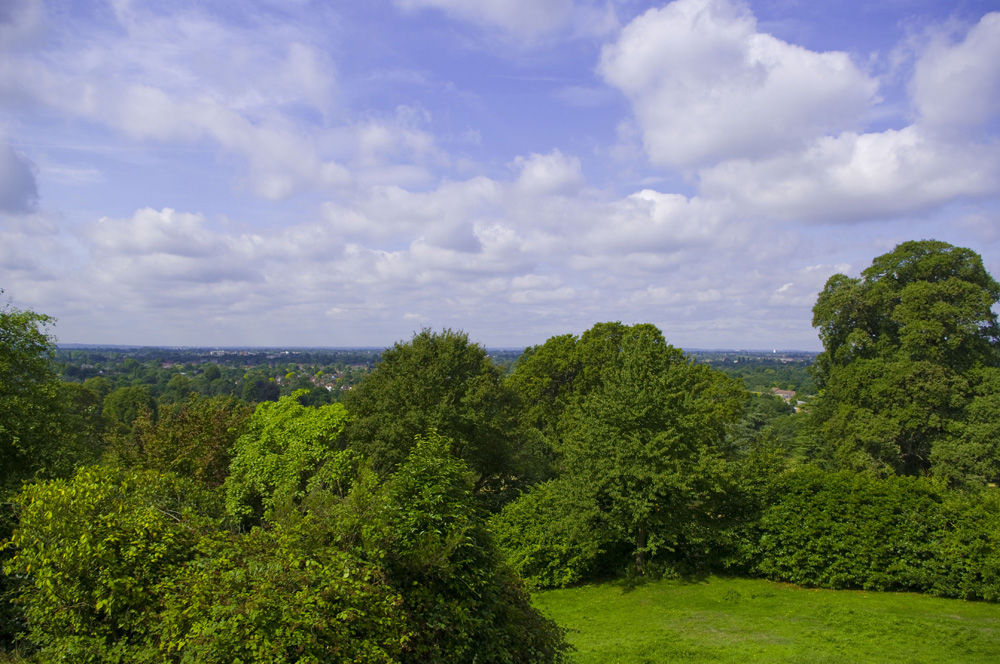
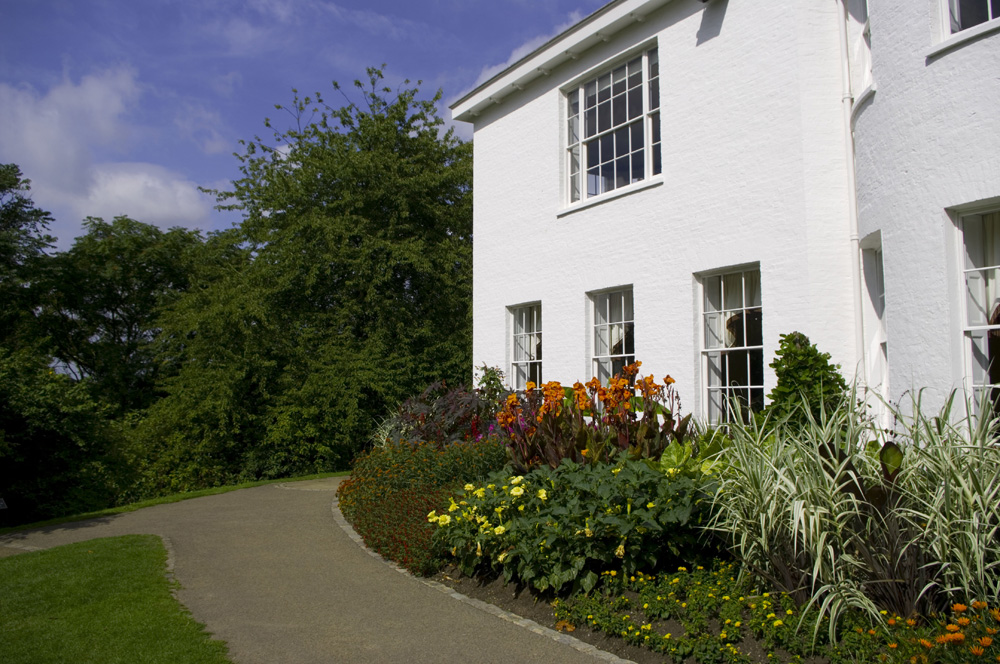
Pembroke Lodge, situated on a high hill overlooking the River Thames and Kingston upon Thames is situated on the edge of the park. It used to be the home of Lord John Russell, a prime minister during the reign of Queen Victoria. He was the grandfather of Bertrand Russell, the philosopher. Bertrand Russell spent much of his childhood at Pembroke Lodge.
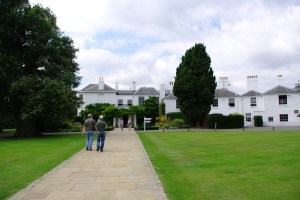
Pembroke Lodge

Pembroke Lodge is now a café and restaurant. It is a great experience to sit on the terrace of Pembroke Lodge on a summers afternoon looking out over the Thames sipping Earl Grey or Lapsang Souchong, and eating a scone with clotted cream or homemade strawberry jam.
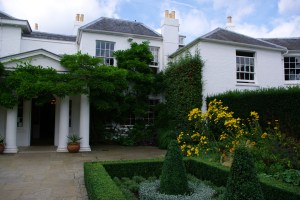
Pembroke Lodge entrance

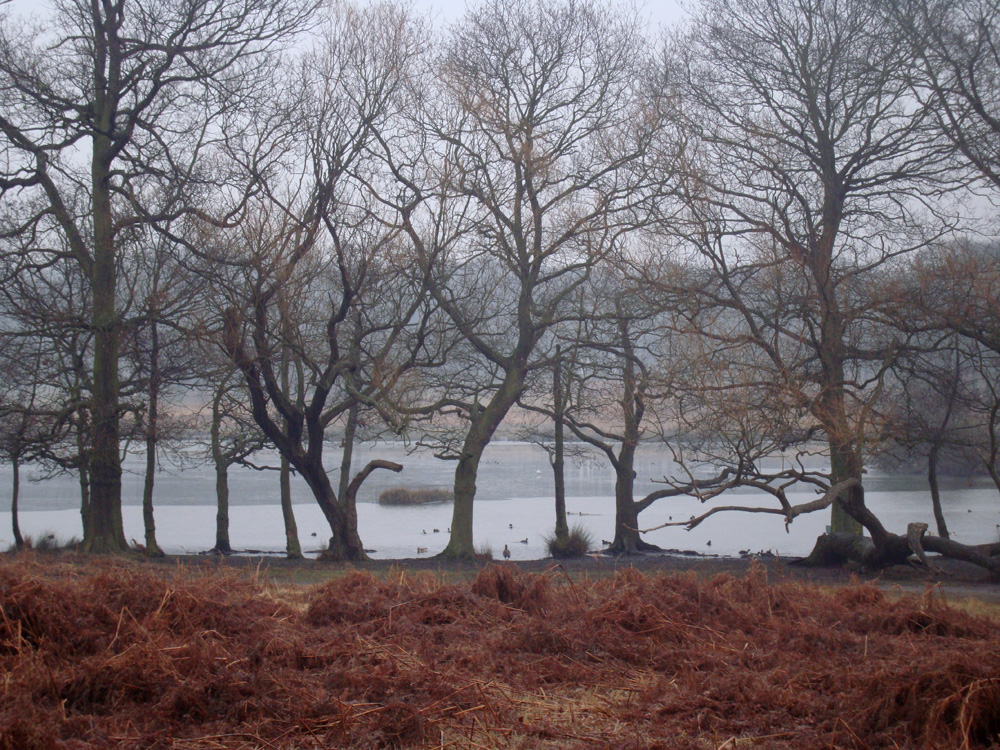
Richmond Park is wonderful to take long walks. There are many massive ancient oak trees. Some must be four or five hundred years old. A few have been scarred by lightning strikes.
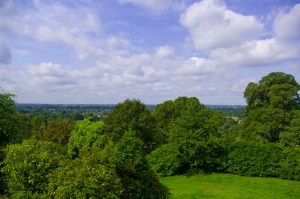
Pembroke Lodge view

You will see deer grazing in amongst the vast areas of bracken. An unexpected sound and sight are the flocks of green parakeets that have inhabited parts of Richmond Park.
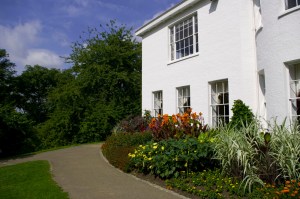
Pembroke Lodge

The story goes, whether myth or reality , is that in the 1940’s Treasure Island was being filmed at Pinewood Studios. They had parakeets on the film set and some escaped and began breeding in Richmond Park. A similar story centres around the making of The African Queen with Humphrey Bogard. It too was being filmed partly at Pinewood. Again the story goes that parakeets escaped from that film set too. I don’t know how much truth there is any of these stories but there is, without doubt, a colony of green parakeets living and breeding in Richmond Park. I have had a few land and rest in the branches of the apple trees in my own garden.
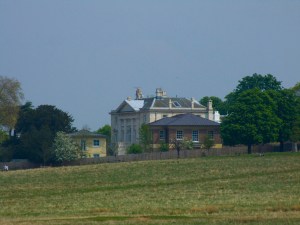
The Royal Ballet School

There are a number of plantations that are fenced off from the rest of the park so deer cannot eat the shrubs and trees growing in them.
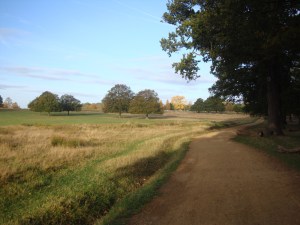
Walk in the park

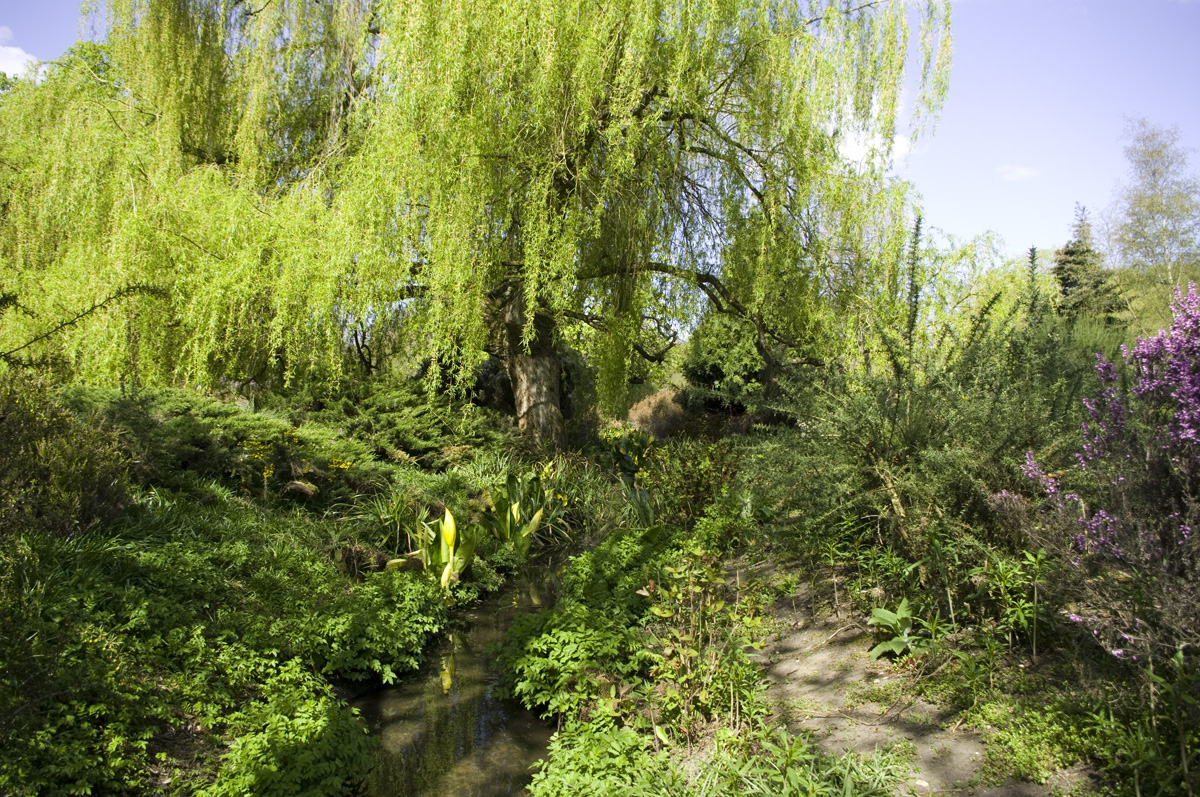
The Isabella Plantation is the most wonderful example of them all. It is a woodland garden at it’s best. In the spring when the bluebell woods are carpeted in blue it lifts the spirits and is a joy to behold. Many of the bushes and shrubs situated in glades and beside the sparkling stream that runs through the plantation create an emotional and spiritual experience.
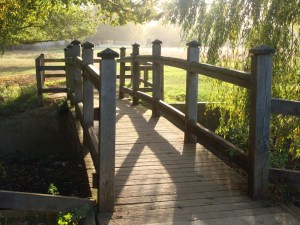
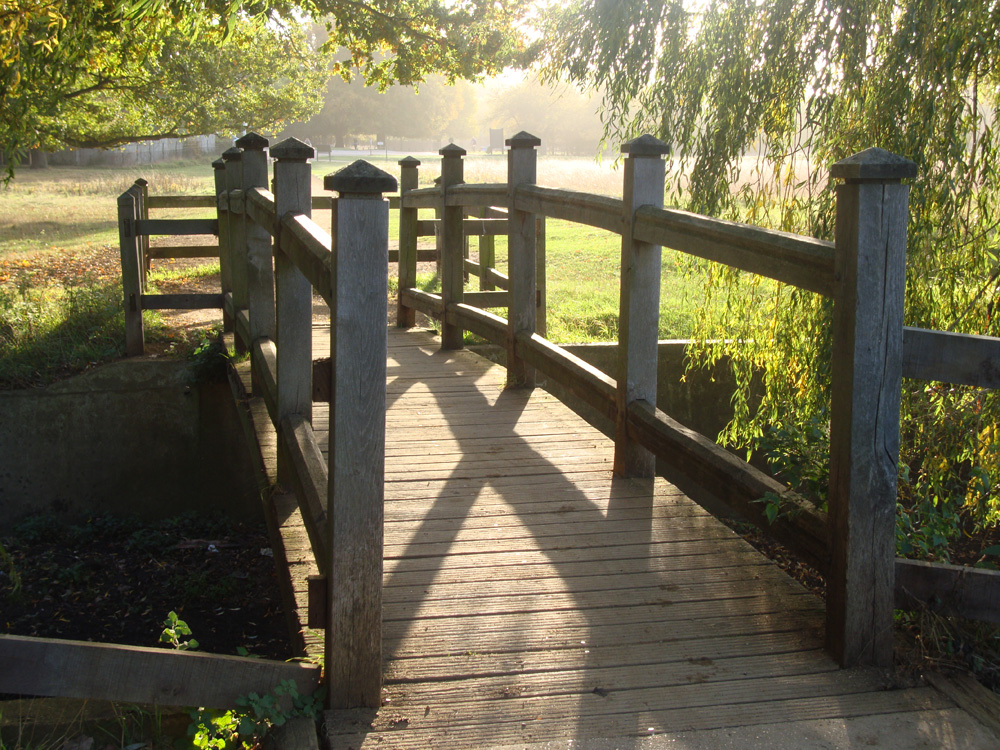
Foot bridge

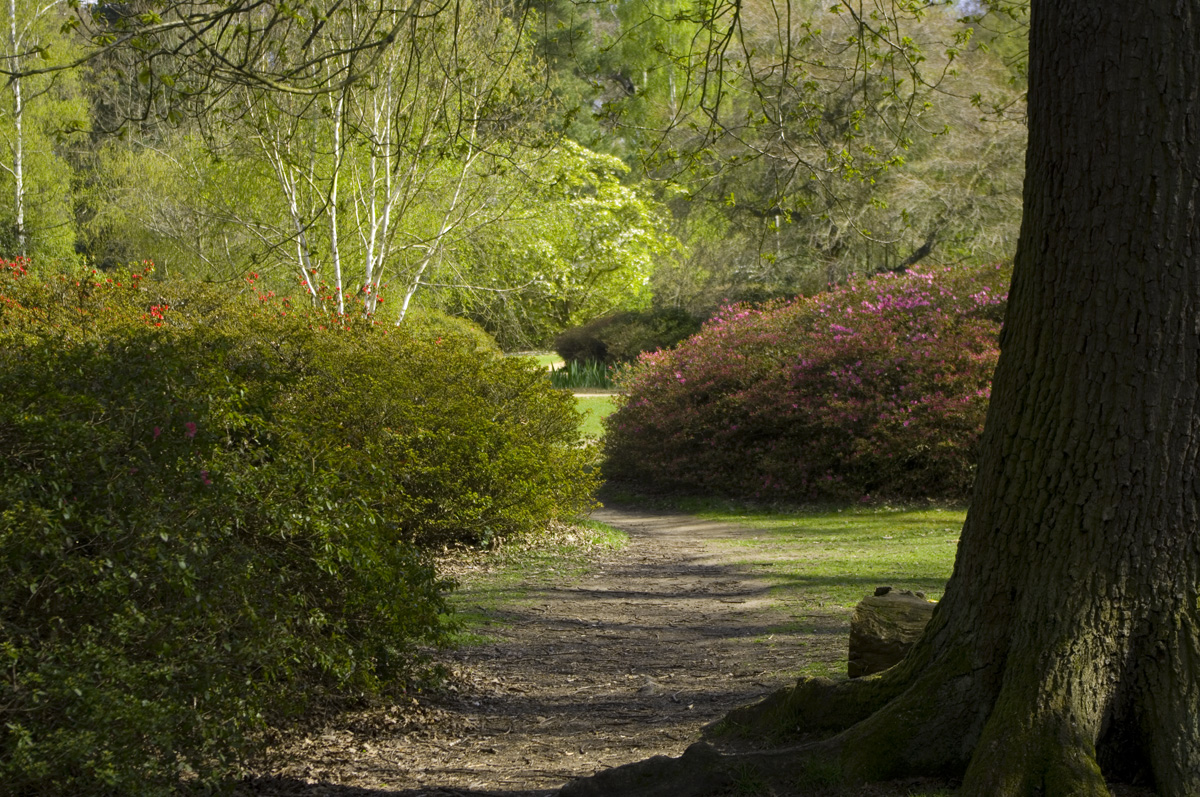
The Isabella Plantation is one of those places on earth that sooths the spirit and fills your eyes with beauty. To sit on the grass and listen to the birds and look at the camellias, magnolias, azaleas and rhododendrons is wonderful. The plantation is run on organic principles and because of this it is home to a great variety of insects and mini beasts.
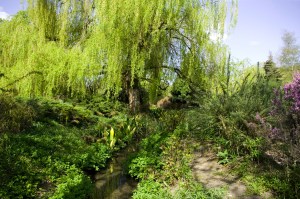
Wild corner

Here is a quote from the web site dedicated to the Isabella plantation.

“In spring, visitors can see camellias, magnolias, as well as daffodils and bluebells. From late April, the azaleas and rhododendrons are in flower. In summer, there are displays of Japanese irises and day lilies. By autumn, guelder rose, rowan and spindle trees are loaded with berries and leaves on the acer trees are turning red. Even in winter, the gardens have scent and colour. There are early camellias and rhododendron, as well as mahonia, winter-flowering heathers and stinking hellebore.”

The present plantation was developed by George Thomson , the park superintendent from 1951-1971.
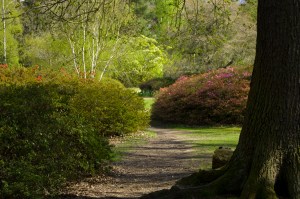
Woodland paths

Some recent news for you Hollywood A list watchers. My local paper had a small news item. Brad Pitt has been spotted taking pictures of the deer in Richmond Park recently. He is over here filming at the moment. He and Angelina are living in a house, a grand house I am sure, by the Thames at Richmond.

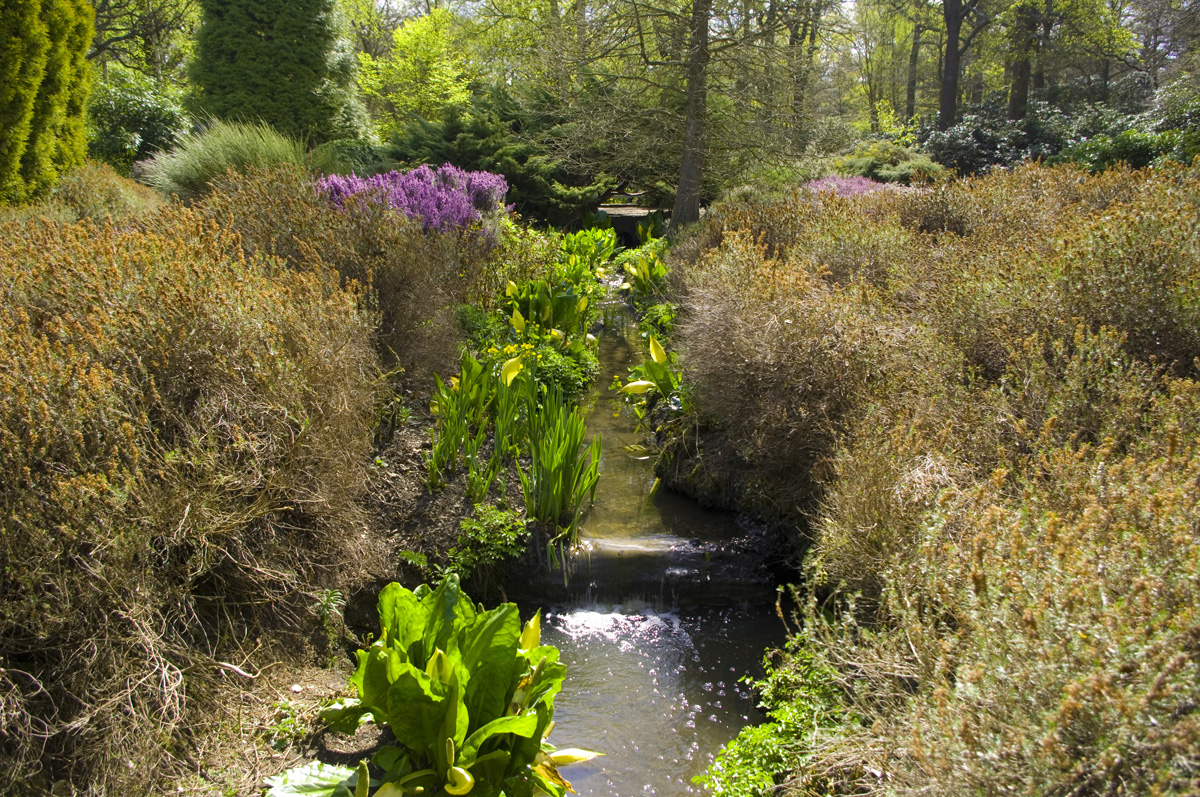
Woodland stream and flowers

Outside the Richmond gate is a large elegant brick building called The Star and Garter Hospital. It is a special hospital for aged military servicemen and women from all wars. They also have the poppy factory next to it. We celebrate the dead of our wars on November 11th every year which was the First World War Armistice Day. The fields of Picardy, in Northern France, where much of the terrible deadly trench warfare took place, were covered in wild poppies in the Spring. Somebody thought the poppies represented the drops of blood from the dead who lay in those fields so the poppy was taken as the British symbol to remember the dead.

In Flanders fields the poppies blow
Between the crosses, row on row,
That mark our place; and in the sky
The larks, still bravely singing, fly
Scarce heard amid the guns below. – John McRae
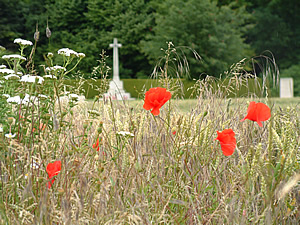
Poppies in Connaught Cemetery. Image @The Great War

Just down the hill from the park, in Richmond town, there is a house called Hogarth House. It was in this house that Virginia Woolf lived with her husband Leonard for many years and began The Hogarth Press, named after the house. Virginia Woolf, in her diaries, often mentions going for walks with Leonard and friends in Richmond Park.
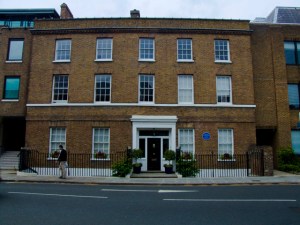
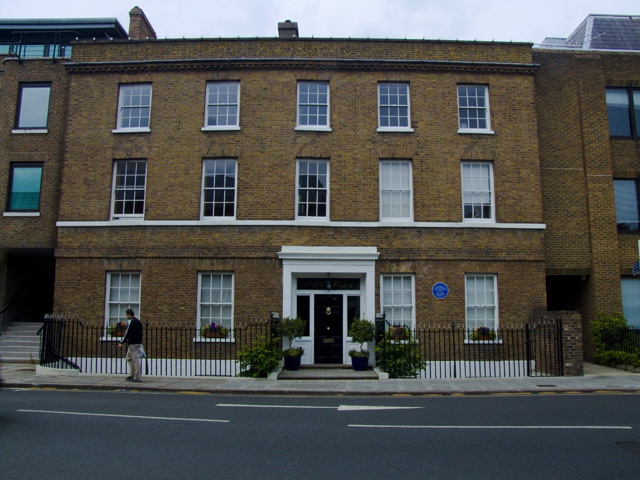
Hogarth House, Richmond

More on the topic:

Read Full Post »

« Newer Posts - Older Posts »