Feeds:
Posts
Comments

Archive for the ‘Jane Austen’s World’ Category

“We have this comfort, he cannot be a bad or a wicked child,” George Austen writing about his second son, George
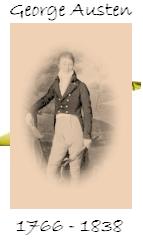
George Austen 2George Austen, Jane’s second oldest brother is an enigma, rarely glimpsed and hardly known to the world. No image exists of him, which is why the image I used for this post has no face to speak of. George Austen was thought to be mentally or physically impaired, or suffering from an infirmity. Nearly ten years older than Jane, Claire Tomalin wrote that he still lived in Steventon village in 1776 (See Boris’s comment in the comment section) and that the very young Jane knew him.

“He could walk, and he was not a Down’s Syndrome child, or he would not have lived so long, lacking modern medication. Because Jane knew deaf and dumb sign language as an adult— she mentioned talking “with my fingers” in a letter of 1808— it is thought he may have lacked language; it would not have stopped him joining in the village children’s games.” – Claire Tomalin, Jane Austen, A Biography

The Austens produced remarkably hardy children, for all survived their childhood. At forty-one, Jane was the youngest to die. George, who survived to a ripe old age, was cared for along with his Uncle Thomas (a mentally defective person), by Francis Cullum, who lived in Monk Sherborne, a nearby Hampshire village. Although George was not mentioned in Austen family letters, he was not totally forgotten, for the family contributed to his upkeep. The wildly sentimental film, Becoming Jane, shows George as an active member of the family, walking with Jane in the woods and attending church with them, but an article in JASNA rightly states, “It is not likely that he attended church with the Austens, as depicted in the movie.”
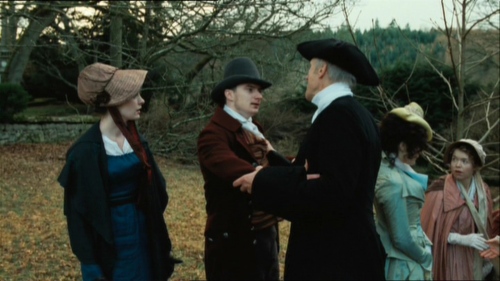
Jane, George, Rev. Austen, Eliza de Feuillide and Cassandra after church service in Becoming Jane.

Jane, George, Rev. Austen, Eliza de Feuillide and Cassandra after church service in Becoming Jane.

After Jane’s death, mention of George disappeared from several family sources. John and Edith Hubback in Jane Austen’s Sailor Brothers wrote: “In a family of seven all turned out well, two rose to the top of their profession, and one was—Jane Austen.”  Their math is obviously wrong. In the Memoir of Jane Austen, her nephew James Edward Austen-Leigh mentions that James was the first brother and Edward the second. This historical oversight has outraged some authors, David Nokes in particular, whose reaction is described in a Washington Post review of his book, Jane Austen: A Life:

A second “family secret” hitherto little mentioned is the existence of Jane Austen’s brother George, 10 years older than Jane, who “never learned to speak” and was boarded out for the rest of his life in another Hampshire village along with Thomas Leigh, Mrs. Austen’s mentally defective brother. This George Austen (perhaps the origin of “poor Richard” Musgrave in Persuasion) long survived his sister Jane and lived on into his seventies. David Nokes devotes an indignant last chapter to “poor George” and contrasts the Austen family’s ruthless jettisoning of him — apart from payment of a small, regular fee for his upkeep — with their family’s rather sickening adulation, after Jane’s death, of their “dear angel” Aunt Jane — whose propensity for satire and malice was almost entirely played down, while her simple religious beliefs were elevated into near-canonization.

The Loiterer cautions us about first-hand accounts, saying they can be wildly inaccurate:

“There were eight children in the family and the second brother was George and not Edward who, in fact, was the third brother. George, apparently, was epileptic and may have been deaf and dumb as well. He simply was not allowed to join the family in their home. None of Jane’s existing letters mentions him—not one single time. (In spite of his infirmities, he outlived Jane by at least ten years!) Now, there is something to give one perspective on “first-hand accounts”. – The Loiterer

Another source of outrage for David Nokes was Mrs. Austen, who died in 1823. In her will she had divided the money from her South Sea Annuities equally among the surviving Austen children, with the exception of  George.

“He, as usual, was excluded and forgotten. It was Edward Knight who, as an act of kindness, made over his share of the money ‘for the use of my brother George, being his full share of the £3,350 old South Sea Annuities. – David Nokes, p. 525

Francis Cullum, George caretaker, died in the spring of 1834. After his death, his son George took over the responsibilities of caring for George Austen, who died of dropsy in 1838. Once again, David Nokes writes with melodramatic flourish about the loving way in which Jane’s memory was perpetuated by her family, even as they neglected poor George:

“Less than twenty miles away [from Jane’s grave], Jane’s brother George was laid to rest in an unnamed grave in the churchyard of All Saints church, Monk Sherborne. In death, as in life, he was to be forgotten, his remains unmarked by any stone. Only George Cullum was in attendance at George Austen’s death. It was he who noted for the death certificate that George Austen was ‘a gentleman’. – Nokes, p. 526

I cannot express how much I disagree with David Nokes in this instance. The Austens arranged to have George and Cassandra’s brother, Thomas Leigh, looked after by a caring family, and supported these two family members financially. One imagines that with eight children, a boarding school, a small plot of land to tend to with chickens and a cow, and two livings as a clergyman, that the two elder Austens had their hands full overseeing their burgeoning household. The addition of a special needs child who required constant care would have added a great strain to their living situation.
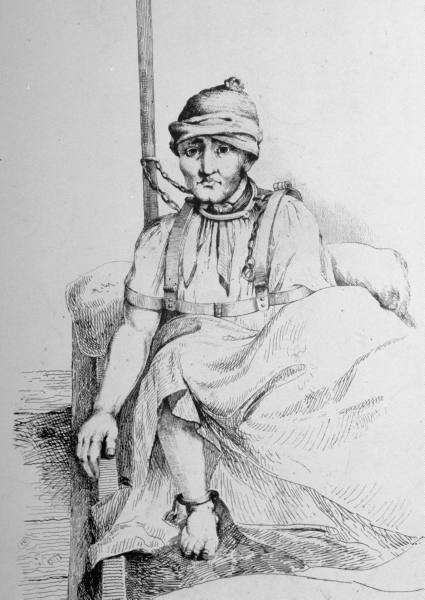
Bedlam inmate shackled in irons, Bethelehem Royal Hospital, London

Bedlam inmate shackled in irons, Bethelehem Royal Hospital, London

This was an age where few asylums for the mentally disabled or the physically disabled existed. People with infirmities were looked upon as defectives and many became sideshows at fairs or carnivals, or as beggars on the streets. It was a custom at this time to visit Bedlam and stare at the people in the lunatic asylum. In fact, there were very few institutions available during this era for people of special needs and very few places that could take them in. Bedlam was the only hospital of its kind in London during Jane’s lifetime. Workhouses and almshouses were the only other places where the physically and mentally handicapped could be deposited, and these were places that people strove to avoid at all cost. In addition, there has been a history since the beginning of time in almost all cultures that looked the other way when parents left their defective babies in the wild to die. (This situation still exists today.) Unlike David Nokes, my conclusion is that, given the era the Austens lived in, the family behaved in a remarkably responsible manner towards George, who lived a quiet life of peace and relative comfort for 72 long years. As for the inaccuracies in later biographies written by Austen family members, one wonders how effectively George had been hidden from view. Out of sight is out of mind, and these mistakes of omittance may well have been the natural result of – as David Nokes accused the Austens of doing – the extended family forgetting that George had ever existed.
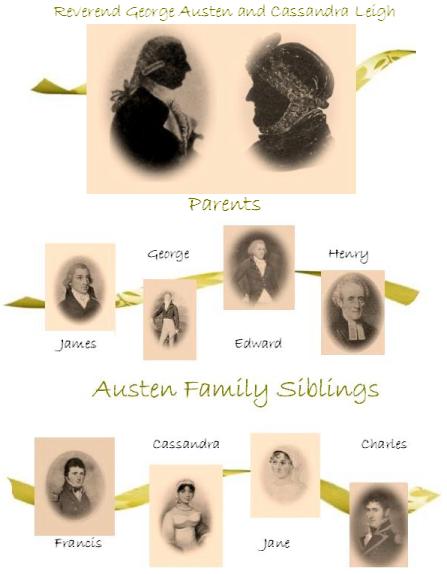
Austen family

Gentle reader: In honor of JASNA’s annual meeting in Philadelphia this week, this blog, Austenprose, and Jane Austen Today have devoted posts to Jane Austen and her siblings. This is the last of seven articles devoted to her brothers and sisters. Tomorrow, Laurel Ann and I will recommend several biographies on Jane Austen.

Read Full Post »

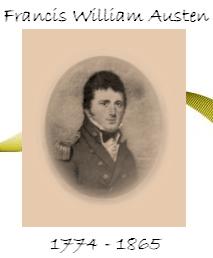
francis william austen

My dearest Frank, You will be glad to hear that every copy of  S. and S. is sold, and that it has brought me £140 besides the copyright, if that should ever be of any value.

In 1788,  14 ½ year-old Frank Austen prepared to put out to sea and leave his family. After excelling in his courses at the Portsmouth Naval Academy, the Commissioner of the Dockyards recommended that Frank join the Perserverance under the direction of Cornwallis, who was recently appointed Commander-in-Chief of India. The letter that young Francis received from his father, Rev.  George Austen, upon his departure was one that he would treasure for the rest of his life. In part, the Reverend wrote:

As you have hitherto, my dear Francis, been extremely fortunate in making friends, I trust your future conduct will confirm their good opinion of you; and I have the more confidence of this expectation because the high character you acquired at the Academy for propriety of behaviour and diligence in your studies, when you were so much younger and had so much less experience, seems to promise that riper years and more knowledge of the world will strengthen your naturally good disposition. That this may be the case I sincerely pray, as you will readily believe when you are assured that your good mother, brothers, sisters and myself will all exult in your reputation and rejoice in your happiness …

Ten years later, Jane would write with exultation:

My dear Cassandra, Frank is made. He was yesterday raised to the rank of Commander and appointed to the Petterel sloop, now at Gilbraltar. – Dec 28, 1798

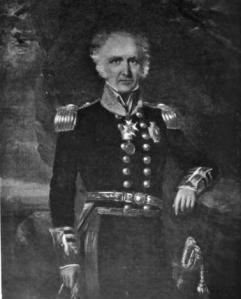
Vice Admiral Sir Francis Austen

Vice Admiral Sir Francis Austen

By 1800, Frank, was still single, although his captain’s salary would enable him to marry and support a family in reasonable comfort. The letter Jane would write him on January 21, 1805 was heartbreaking:

My dearest Frank

I have melancholy news to relate, & sincerely feel for your feelings under the shock of it.—I wish I could better prepare you for it. But having said so much, your mind will already forestall the sort of event which I have to communicate.—Our dear Father has closed his virtuous & happy life, in a death almost as free from suffering as his Children could have wished. He was taken ill on Saturday morning, exactly in the same way as heretofore, an oppression in the head, with fever, violent tremulousness, & the greatest degree of Feebleness….towards the Evening however he got better, had a tolerable night, & yesterday morning was so greatly amended as to get up & join us at breakfast as usual, & walk about with only the help of a stick, & every symptom was then so favourable that when Bowen saw him at one, he felt sure of his doing perfectly well. But as the day advanced, all these comfortable appearances gradually changed; the fever grew stronger than ever, & when Bowen saw him at ten at night, he pronounc’d his situation to be most alarming. At nine this morning he came again—& by his desire a Physician was called in;—Dr. Gibbs—But it was then absolutely a lost case—. Dr. Gibbs said that nothing but a Miracle could save him, and about twenty minutes after Ten he drew his last gasp…My Mother bears the Shock as well as possible; she was quite prepared for it, & feels all the blessing of his being spared a long Illness. My Uncle & Aunt have been with us, & shew us every imaginable kindness. And tomorrow we shall I dare say have the comfort of James’s presence, as an express has been sent to him. Adieu my dearest Frank. The loss of such a Parent must be felt, or we should be Brutes—. I wish I could have given you better preparation—but it has been impossible. Yours Ever affectly – J A.

The news must have been a great blow to Frank, who sailed the world over and only saw his family sporadically. Perhaps his grief was somewhat ameliorated by Jane’s next letter a little over a week later:

My mother has found among our dear father’s little personal property a small astronomical instrument, which she hopes you will accept for his sake. It is, I believe, a compass and sundial, and is in a black shagreen case…Yours very affecly, JA.

When Frank asked Miss Mary Gibson to marry him, Jane and Cassandra discovered that they liked her extremely well. Their cordial relationship had an opportunity to flourish after Rev. George Austen’s death. Frank invited his mother and sisters to live with him and his bride in Southampton from 1806 to 1808.  It was to be a mutually beneficial arrangement, for Frank did not want his young wife to be alone while he was away on his next voyage. He rented a house in Castle Square  with a fine garden and a view across Southampton Water to the Isle of Wight, which Jane found very much to her liking. The invitation included the Austen women’s close friend, Martha Lloyd, sister to James Austen’s wife Mary.

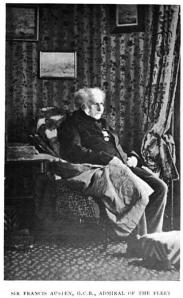
Sir Francis Austen lived until 1865, well into the age of photography

Sir Francis Austen lived until 1865, well into the age of photography

Unfortunately, like Edward’s wife Elizabeth, Mary did not survive into old age and died after the birth of her 11th child in 1823.  In an ironic turn of events, Frank asked Martha Lloyd to be his second wife in 1828 and she accepted. By any stretch of the imagination, Frank’s career was illustrious. He eventually achieved Knighthood as Sir Francis Austen and rose to the position of Admiral of the Fleet. Jane last saw her brother in the New Year of 1817, when a lull in her fatal illness allowed her to visit Frank and his large rambunctious family in Alton.

Thirty-five years after her death there came also a voice of praise from across the Atlantic. In 1852 the following letter was received by her brother Sir Francis Austen:

Boston, Massachusetts, U.S.A., 6th Jan. 1852

Since high critical authority has pronounced the delineations of character in the works of Jane Austen second only to those of Shakspeare, trans-atlantic admiration appears superfluous; yet it may not be uninteresting to her family to receive an assurance that the influence of her genius is extensively recognised in the American Republic, even by the highest judicial authorities. The late Mr Chief Justice Marshall, of the supreme Court of the United States, and his associate Mr Justice Story, highly estimated and admired Miss Austen, and to them we owe our introduction to her society. For many years her talents have brightened our daily path, and her name and those of her characters are familiar to us as ‘household words’. We have long wished to express to some of her family the sentiments of gratitude and affection she has inspired, and request more information relative to her life than is given in the brief memoir prefixed to her works.

Having accidentally heard that a brother of Jane Austen held a high rank in the British navy, we have obtained his address from our friend Admiral Wormley, now resident in Boston, and we trust this expression of our feeling will be received by her relations with the kindness and urbanity characteristic of Admirals of her creation. Sir Francis Austen, or one of his family, would confer a great favour by complying with our request. The autograph of his sister, or a few lines in her handwriting, would be placed among our chief treasures.

The family who delight in the companionship of Jane Austen, and who present this petition, are of English origin. Their ancestor held a high rank among the first emigrants to New England, and his name and character have been ably represented by his descendants in various public stations of trust and responsibility to the present time in the colony and state of Massachusetts. A letter addressed to Miss Quincey, care of the Honble Josiah Quincey, Boston, Massachusetts, would reach its destination.

Sir Francis Austen returned a suitable reply to this application; and sent a long letter of his sister’s, which, no doubt, still occupies the place of honour promised by the Quincey family. – A Memoir of Jane Austen by her nephew, Chapter IX

More links:

Gentle reader: In honor of JASNA’s annual meeting in Philadelphia this week, this blog, Austenprose, and Jane Austen Today will be devoting posts to Jane Austen and her siblings. Look for new links each day.

Read Full Post »

Edward Austen Knight

[Marianne] “’What have wealth or grandeur to do with happiness?’
‘Grandeur has but little,’ said Elinor, ‘but wealth has much to do with it.’‘Elinor, for shame!’ said Marianne; ‘money can only give happiness where there is nothing else to give it. Beyond a competence, it can afford no real satisfaction as far as mere self is concerned.’

‘Perhaps,’ said Elinor, smiling, ‘we may come to the same point. Your competence and my wealth are very much alike, I dare say; and without them, as the world goes now, we shall both agree that every kind of external comfort must be wanting. Your ideas are only more noble than mine. Come, what is your competence?’

‘About eighteen hundred or two thousand a year; not more than that.’

Elinor laughed. ‘Two thousand a year! One is my wealth! I guessed how it would end.’” – Jane Austen, Sense & Sensibility, volume 1, chapter 17

“To be above vulgar economy” … was one of Jane Austen’s express wishes, yet on the surface it would seem that her rich brother Edward contributed very little to Jane’s and her mother’s and sister’s notions of security. How was it that Edward’s fortunes were so very much above that of his family, and why did he not do more for his sisters and mother than provide them with a roof over their heads and a small annual sum?

Rev. George Austen presents his son, Edward, to Thomas Knight and family

Rev. George Austen presents his son, Edward, to Thomas Knight and family

Edward, third son of the family … became the favourite of some wealthy childless relatives of his father, the Thomas Knights. They met him as a 12-year-old when they visited the rectory at Steventon on their wedding journey. When they left, Edward accompanied them for the rest of the trip and subsequently went frequently for holidays at their estate. Eventually, when Edward was 16, they adopted him as their heir. – Janet Todd, Jane Austen in Context

The Austens must have been thrilled beyond belief when Thomas Knight, George’s rich, childless cousin, took an interest in Edward, his third son. The practice of childless couples in adopting an heir from a less fortunate branch of the family was not an uncommon one for wealthy relatives to take at the time. When Edward inherited his estates from his adopted father, he became richer than Mr. Darcy, earning £15,000 per year from his investments against Mr. Darcy’s £10,000 per year. Multiply this number by 50 and you have an approximate amount of how much income Edward enjoyed in today’s terms.

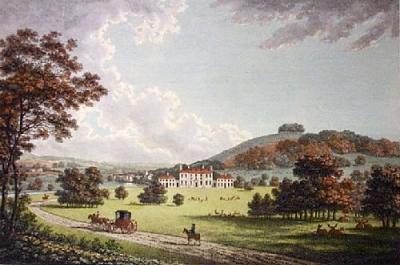
Godmersham Park

Godmersham Park

And yet, with such a rich brother, Jane and her sister and mother worried a great deal about money after the sudden death of Rev. George Austen in Bath in 1805. Three of the brothers rallied behind them. Edward’s initial pledge of £100 a year almost doubled his mother’s income of  £122 from a small South Seas fortune, and both Henry and Frank pledged £50 apiece per year to support their mother and sisters. Cassandra received a small income from Tom Fowle’s £1000, which he had bequeathed to her in his will.  Even so, the three women were forced to move in March to more affordable rented living quarters on Gay Street, and then to Southampton in 1806, where they, along with their friend Martha Lloyd, shared a house with Frank Austen and his new bride.

The move to the house in Castle Square, Southampton in 1807 brought much cheer to Jane. The house, she noted, was not in good repair but it had a large garden. Her accounts for 1807 show that from her allowance of £50 she spent £2.13.6 to hire a pianoforte.”- Soft and Loud, JASA

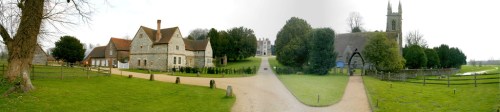
Panorama of Chawton

Panorama of Chawton

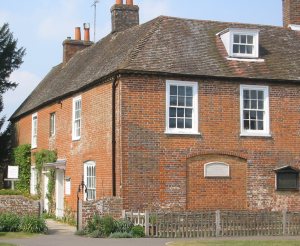
Edward finally came through for his mother and sisters. Four years after his father’s death, he refurbished Chawton Cottage and invited them to move in. It was in this cottage that Jane was at her most prolific, polishing off earlier versions of Pride and Prejudice and Sense and Sensibility and famously writing Mansfield Park, Emma, and Persuasion. In skimming through a variety of biographies, many authors treat Edward’s seeming parsimony with a hint of contempt. The Knights had a history of generosity towards their poorer Austen relatives. Thomas Knight, second cousin to Rev. George Austen, gave him two livings that were valued at £210 the year that Jane was born. At Steventon, the Austens also had land to farm, which was an important factor in their diet and maintaining their self-sufficiency. The Austens also took in boarding pupils, and by the time Rev. Austen retired , he was earning almost  £600 per year, the same amount that his eldest son, James, made towards the end of his life.

Jane, her sister and mother had fallen on hard times. Financially dependend on their families, they are forced to move in March to rented living quarters on Gay Street, and then to Southampton in 1806, where they, along with their friend martha Lloyd shared a house with Frank Austen and his new bride.
“The move to the house in Castle Square, Southampton in 1807 brought much cheer to Jane. The house, she noted, was not in good repair but it had a large garden. Her accounts for 1807 show that from her allowance of £50 she spent £2.13.6 to hire a pianoforte.” JASA Soft and Loud,
Finally, four years after his father’s death, Edward Austen Knight refurbished Chawton Cottage for his mother and sisters, and had them move in. The walled garden, designed by Edward Austen Knight on the advice of his sisters Jane and Cassandra, is being recreated to provide not only flowers but organically grown fruit, vegetables and herbs, some of which will be used in contemporary recipes to be prepared in the kitchens. The church where Jane’s mother and sister are buried sits halfway up the drive.(from Chawton site)There had always been generostiy from the Knights towards the Austens. .

Jane’s mother, Cassandra, who was related to the Leighs of Stoneleigh Abbey, placed a great hope that her rich childless brother, James Leigh-Perrot, would leave money to her eldest son James. While James Leigh-Perrot provided James with a clerical living and some supplementary cash, his property eventually went  not to James, but to his son, James Edward, who was Jane Austen’s biographer. James Leigh-Perrot left nothing to his sister Cassandra, even knowing that she lived on a small income. He might have supposed that her uber rich son, Edward, would take care of his mother, which, in a fashion he did. Why did Edward not contribute more to his mother and siblings?

This is mere conjecture on my part, but Edward did the best he could under the circumstances. Yes, he was rich beyond imagining, but his responsibilities were many and heavy. He inherited two large estates, which were the physical embodiment of his inheritance. The laws of primogentirue demanded that as the heir, he should keep everything intact, from the land, which provided the income, to the house and all the family heirlooms within it. The heir was merely a “keeper” of the estate and the family name, and his actions were proscribed. Edward was more a tenant than an owner, and he was duty bound to turn over his entire estate to his male heir. – The Country House, JASA.

Chawton Cottage

Chawton Cottage

Running these estates, with their attendant servants and necessary improvements, took an enormous, some would say crippling, amount of resources. In addition, Edward’s family was large. His first wife, Elizabeth, died after giving birth to their eleventh child. Add his seven brothers and sisters, his biological mother and adopted mother and her family, the Knight family, and the ever widening circle of nieces and nephews, and the even larger circle of aunts, uncles and cousins on both the biological and adopted sides, and you can imagine the pressures Edward must have felt all around.  Had he doled out what we would deem as adequate support to all the needy individuals in his extended family, Edward’s estate would soon have been frittered away.

Chawton House

Chawton House

One cannot fault Edward too much for moving prudently and cautiously, for he was obliged first to his immediate family and the need to provide for adequate dowries for his daughters and support for his younger sons. I do fault him for not helping Jane to repurchase her manuscript, Susan (renamed Northanger Abbey), for the measly sum of £10, so that she could pursue its publication, but for all we know she might have never applied to him for help.

I sometimes wonder if the Austen women were as destitute as people today conjecture. Unlike 90% of their countrymen, who rarely traveled outside of their immediate area, the Austens traveled frequently, visiting friends and relatives. They were able to keep two servants and supplement their diet with vegetables from their kitchen garden, and received an endless supply of milk from Edward’s cows. Jane secured a modest but extra income from her writing, and the three women lived off a yearly income of  £500 pounds, which was only  £100 less than Rev. George Austen earned, who had a family of eight to feed, in addition to his boarders. Jane’s eldest brother,  Rev. Frank Austen, managed to keep a carriage for his second wife on an income of  £600 per year. I am not saying that the three women were rich, by any means, for, like Elinor Dashwood, they lived frugally and prudently, but they did dine frequently with Edward and visited him over extensive periods of time at Godmersham Park, which must have been as luxurious an experience as any visit to a high end resort.

After Thomas Knight died, his widow, instead of waiting until her own death, handed over the family estates to Edward, who from 1798 lived the life of a country gentleman at Godmersham in Kent. When Mrs Knight herself died in 1812, Edward and his family, as stipulated in her will, took the name of ‘Knight’, prompting his eldest daughter Fanny (a favourite niece of Jane Austen’s) to write in her diary that now ‘we are therefore all Knights instead of dear old Austens How I hate it!!!!!’. Fanny’s aunt Jane wrote more calmly to her friend Martha Lloyd that ‘I must learn to make a better K.” – Janet Todd, Jane Austen in Context

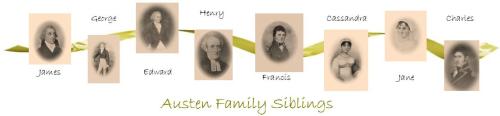
Edward was the Austen's third oldest child

Edward was the Austen's third oldest child

More on the topic:

Gentle reader: In honor of JASNA’s annual meeting in Philadelphia this week, this blog, Austenprose, and Jane Austen Today will be devoting posts to Jane Austen and her siblings. Look for new links each day.

Read Full Post »

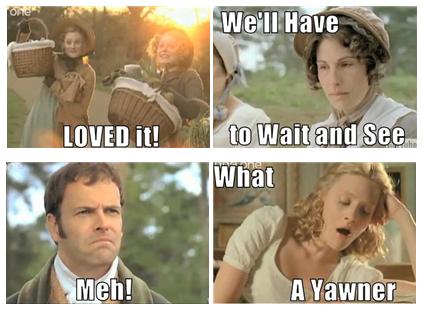
pollReading Twitter, some people are turned off by the modern approach to Emma 2009. Curious minds want to know what you thought of the first installment of this new Jane Austen novel adaptation with Romola Garai, Jonny Lee Miller and Michael Gambon. These are your choices:  a yawner, meh, loved it, and will have to wait and see. If you would like to share your thoughts, please leave a comment. Do you love the new film? Do you like it? Or are you sitting on the fence, waiting to see how the series will develop? Here’s my review of the film.

Read Full Post »

My dear Cassandra, Where shall I begin? Which of all my important nothings shall I tell you first? – Jane Austen, June 15, 1808

Cassandra Elizabeth AustenWhenever we catch sight of Jane Austen in recollections and letters, her sister Cassandra is usually not far away. Although the two spinster women were frequently separated by visits to their friends and relatives, they shared a bedroom all their lives and presumably each others’ thoughts and secrets. Cassandra was separated from the family in her crucial formative years as a baby. After her birth, Mrs. Austen breast fed her first daughter for three months before handing her over to a village woman to be cared for until she was 18 months of age. The Austens, it seemed, followed this unusual habit with all their children, which must have worked well for them, for all eight survived in an age when child mortality was high.

Cassandra's silhouette

Cassandra's silhouette

Two years after Cassandra’s birth, the Austens were blessed with a second daughter, Jane. Wherever Cassandra went, Jane followed. When 10-year-old Cassandra was sent off to boarding school in 1783, 8-year-old Jane demanded to go, refusing to be separated from her older sister…

…not because she was thought old enough to profit much by the instruction there imparted, but because she would have been miserable (at home) without her sister; her mother observing that ‘if Cassandra were going to have her head cut off, Jane would insist on sharing her fate. – Constance Hill, Jane Austen, Her Homes and Her Friends

Visits played an important part of Regency life and we have the frequent separations between Jane and Cassandra – who was often called to Godmarsham Park to help with her widowed brother Edward’s brood of children – to thank for their prolific correspondence. The letters between the two sisters reveal the intimate details of ordinary life, talking of purchasing ribbons and refashioning clothes or sending gifts. The sisters might well have written about more earth shattering events, but we shall never know, for Cassandra burnt or destroyed so much of Jane’s correspondence in 1843. The letters that do remain provide us with a glimpse into their relationship:

I saw some gauzes in a shop in Bath Street yesterday at only 4s. a yard, but they were not so good or so pretty as mine. Flowers are very much worn, and fruit is still more the thing. – 1799

and

I cannot possibly oblige you by not wearing my gown, because I have it made up on purpose to wear it a great deal, and as the discredit will be my own, I feel the less regret. You must learn to like it yourself and make it up at Godmersham. – 1800

Cassandra and Jane in Becoming Jane

Cassandra and Jane in Becoming Jane

After moving to Chawton Cottage, Cassandra and Mrs. Austen took over most of the duties of the house and garden, allowing Jane to capitalize on the most fruitful period of her writing. Once settled in a routine, she polished off earlier drafts of Sense and Sensibility and Pride and Prejudice, getting them published, and began to write new novels. The Austen women made do with very little, always economizing. Caroline Austenn, their niece, wrote, “The house was well furnished, and it was altogether a comfortable and ladylike establishment. Tho’ I believe the mean which supported it were but small.” In Chawton Cottage, Cassandra mourned the women’s lack of complete self-sufficiency, noting, “We have not even so much as a cow.” Chawton villagers recorded that “the Austen’s manservant would walk up to Chawton House each day accompanied by Cassandra’s dog “Link”, who would carry home the pail of milk in his mouth.” (Maggie Lane, p. 19). It is evident from the letter Jane sent to Cassandra in 1816, that she was grateful for Cassandra’s housekeeping activities:

It had been a busy week, and I wanted a few days quiet, and exemption from the thought and contrivances which any sort of company gives. I often wonder how you can find time for all you do, in addition to the care of the house; and how good Mrs West could have written such books and collected so many hard words, with all her family cares, is still more a matter of astonishment! Composition seems to me impossible, with a head full of joints of mutton and doses of rhubarb. – Jane Austen, Sept 8

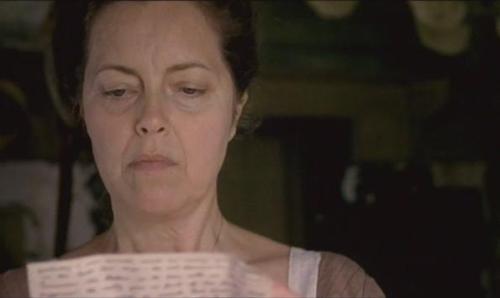
A Times Online article describes Greta Scacchi’s portrayal as Cassandra in Miss Austen Regretsas a bedraggled bread baker, chicken plucker and general rural dogsbody.” But the fact was that without Cassandra’s physical, mental and emotional support, and her brothers’ contributions to their annual income, Jane would not have had the freedom to actively pursue her career as a writer.

Greta Scacchi as Cassandra reads Jane's letter

Greta Scacchi as Cassandra reads Jane's letter

An older Cassandra

An older Cassandra

After Jane died in Cassandra’s arms, one can only imagine how bereft the older sister must have felt for the remaining 28 years of her life. Like Elinor Dashwood, she held her emotions in check. When Cassandra’s short engagement to Thomas Fowle ended in tragedy, Jane worried over her sister’s restraint in grieving.  It is our tragedy that Cassandra chose not to follow a similar restraint in preserving Jane’s letters.  In 1843, Cassandra wrote on a bundle of Jane’s letters: “To be burned.” Of the letters that survived, her niece Caroline noted that a number had “portions cut out“.  How ironic that in the twilight of her life Cassandra destroyed the very letters that must have given her a great deal of comfort and made her laugh or cry, and that, for a very short while, brought her sister back to life during the long evening hours she spent alone.

Francis, Cassandra, Jane, and Charles were the Austen's youngest children.

Francis, Cassandra, Jane, and Charles were the Austen's youngest children.

More links about this topic:

Gentle reader: In honor of JASNA’s annual meeting in Philadelphia this week, this blog, Austenprose, and Jane Austen Today will be devoting posts to Jane Austen and her siblings. Look for new links each day.

Read Full Post »

« Newer Posts - Older Posts »