Feeds:
Posts
Comments

Archive for the ‘Regency Life’ Category

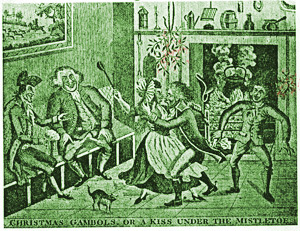
Dear Readers, Happy Holidays! If you happen to stand under a sprig of mistletoe (these days it is most likely artificial), you will probably hug or kiss the person standing nearest you. This tradition did not appear in English literature until the 18th century. The practice of gathering mistletoe began in the second century BC with the Druids in ancient Britain. They gathered the parasitic plant at the start of winter from the sacred oak as a symbol of hope, peace, and harmony. Sprigs were hung in homes to herald good fortune. The plants were also used for medicinal purposes to promote female fertility and as an antidote for poison. Today we associate mistletoe boughs with Christmas. Gathered on this page are a few quotes from various sources.
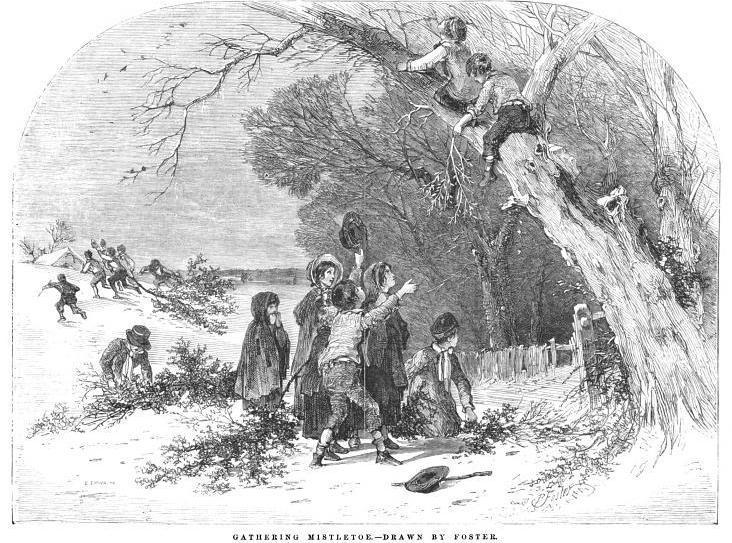
Illustrated London News, Dec 20, 1851

The Mistletoe Season

Down South for the past month all the boys and girls who want to earn money have been gathering mistletoe.

Weeks before the Christmas-time, these young people begin to hunt the woods for mistletoe. Having found it, they watch it growing. If they find that some one else watching the same bunch, they announce it is their mistletoe.

The mistletoe grows on the tree, but is no more a part of the tree than the moss with which Northern children are familiar, or vines that climb up the outside of the tree. The mistletoe grows high up in the tree and, if out on a slender branch, must be reached after with a stick and pulled off gently. Even then it is not out of danger, for the beauty is marred if the little plant falls to the ground. –  New outlook, Volume 52, edited by Alfred Emanuel Smith, Francis Walton Outlook Publishing Company, Inc., U.S., 1895, p. 1146

Mistletoe sprigs decorated chandeliers, doorways, and ceilings.

A ball of mistletoe, ornamented with ribbons, would be hung around Christmastime, and no unmarried girl could refuse a kiss if she was underneath it. At every kiss, the boy would pluck one of the mistletoe berries, and when there were no more berries, the ball was taken down until the next year. If a girl didn’t receive a mistletoe kiss by the time the ball was taken down, she couldn’t expect to marry in the following year. So the kiss could be a promise of marriage or a symbol of admiration, but it was also a kind of mystical fortune-telling trick. – Apartment Therapy – History of the Mistletoe

Gathering mistletoe in Nomandy

The best time for gathering mistletoe is in November after a few frosts have fallen and before the sap freezes, though it may be gathered and used at any period of the year. When gathered it should at once be spread out to dry as it will mould in a very short time if kept in a box or sack. It is best to dry it in the shade. – United States medical investigator1878,  p 132.

Kiss under the mistletoe

Mistletoe grew in England and the United States. The common mistletoe of England grew on orchard trees and forest trees, and seldom on oak trees, which is why Druids revered it for its rarity. Mistletoe sapped the strength of apple trees in Brittany and Normandy. There it was gathered for the London market. The American mistletoe grows on deciduous trees, especially the tupelo poplar and red maple, from New Jersey, southern Indiana and east Kansas, to the Gulf. –  The Standard reference work: for the home, school and library, Volume 5, edited by Harold Melvin Stanford Standard Education Society, 1921
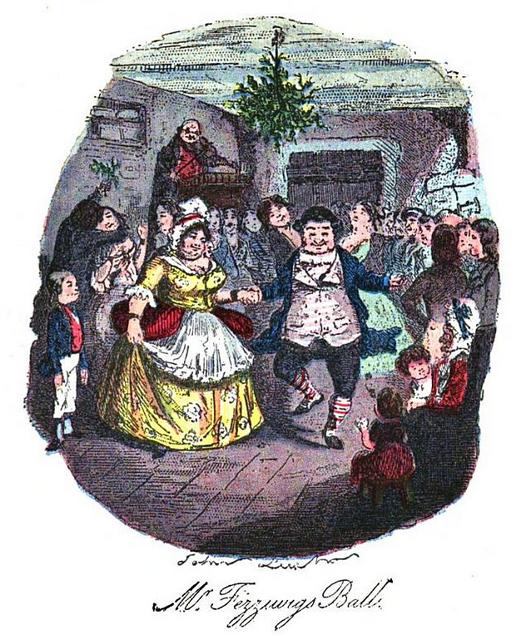
Mr Fezziwig's ball, John Leech, A Christmas Carol by Dickens

By the Victorian era, there was scarcely a house or cottage that did not have mistletoe at Christmas time.

Down with the rosemary, and so,

Down with the baies and Mistletoe;

Down with the holly, ivie, all,

Wherewith ye dressed the Christmas Hall.
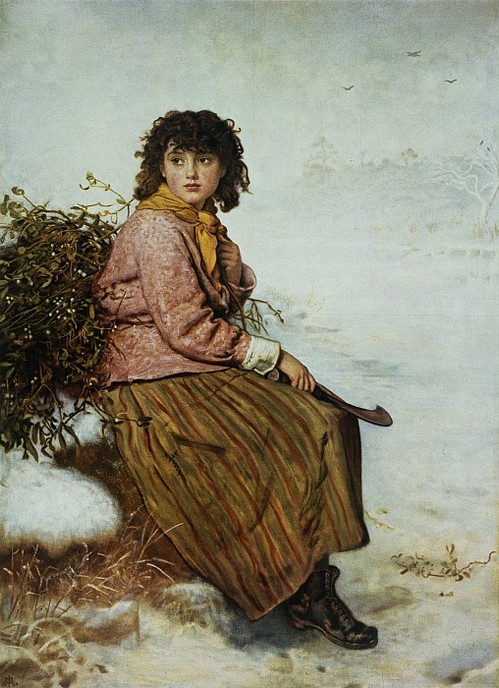
19th c. mistletoe gatherer

The damsel donn’d her kirtle sheen;

The hall was dress’d with holly green,

Forth to the wood did merry men go

To gather in the Mistletoe.”

– English botany, or, coloured figures of British plants, Volume 4, By James Sowerby G. Bell, 1873
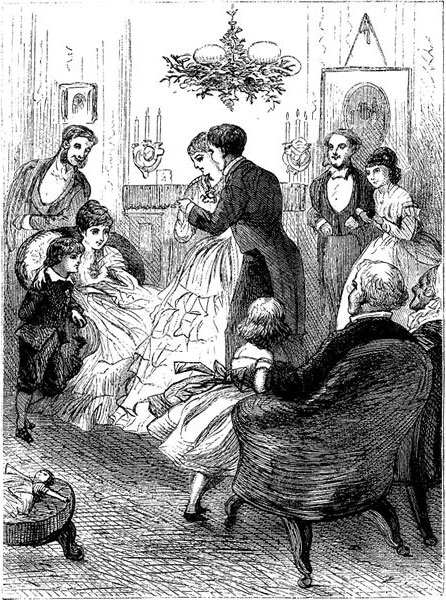
Kiss under the mistletoe
Happy Christmas Eve and Christmas Day to All!

Read Full Post »

Gentle Readers, Tony Grant’s latest contribution to this blog centers around Jane Austen’s two sailor brothers. What a delightful read just before the Holidays. His blog, London Calling, is worth visiting.

Horatio Nelson as a midshipman (middie) in the year Jane Austen was born, 1775

Francis was the older of Jane’s two brothers who joined The Royal Navy. He was twelve years old in 1786 when he travelled to Portsmouth from Steventon, a mere twenty miles away, to be enrolled at The Royal Naval Academy.

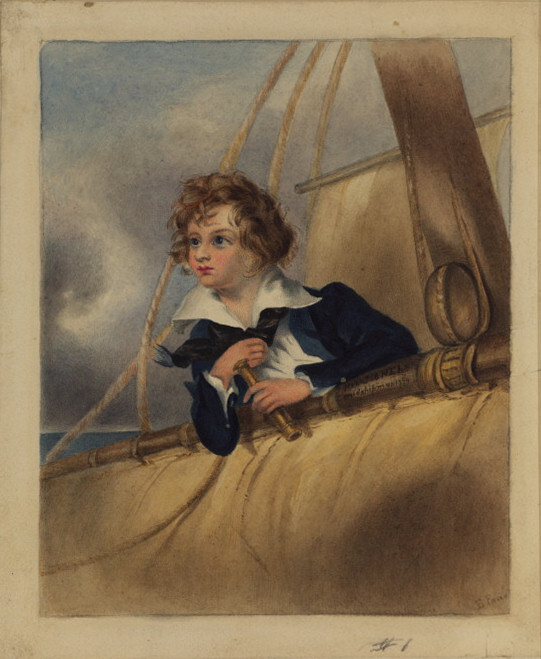
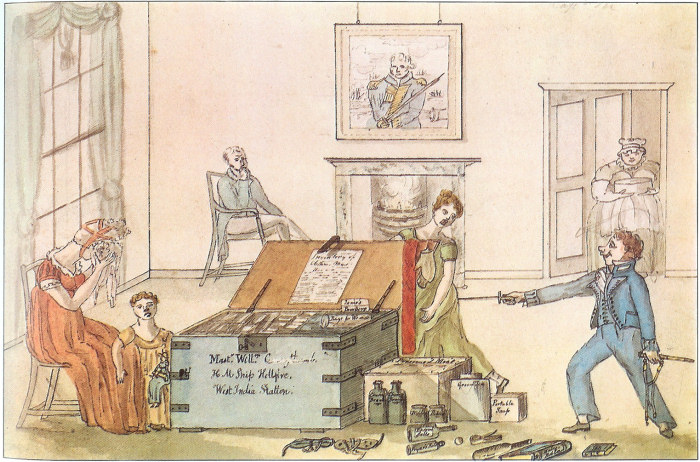
Young midshipman going off to sea. Would such a scene have been reenacted in the Austen household? Image @The Joyful Molly

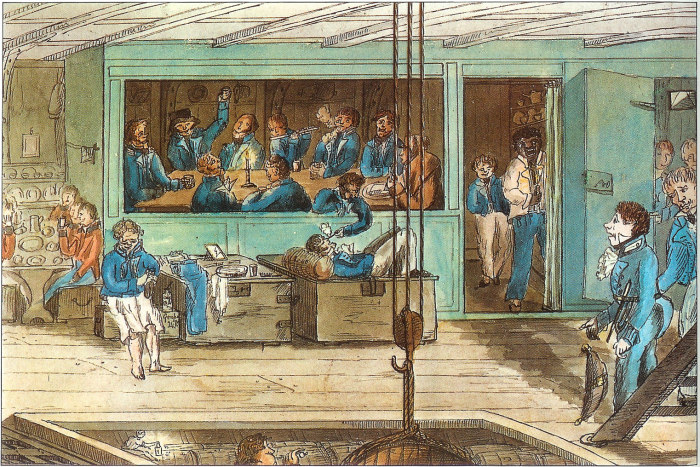
His father thought it would provide a good education for Francis. The Royal Naval Academy provided a very formal education. He was taught, navigation, mapping, how to use and handle sails, the construction and architecture of ships and gunnery, ropework, communications, maritime law, weather, meteorology and watch standing. He needed a thorough knowledge of mathematics to be able to be proficient at all these skills. The mathematics he had to learn and become adept at included pure mathematics, stations, elongations of an inferior planet, reflection at plane surfaces and reflection at two plane surfaces, Euclid, algebra and trigonometry. Future officers were also taught politics and diplomacy alongside fencing, French and dancing. It was thought that these skills were needed in diplomacy and often officers of ships, arriving at far-flung parts of the world, were required to act as diplomats for Britain.

Life for middies on board ship. Image @The Joyful Molly

Jane’s brother Charles joined The Royal Navy five years after Francis and followed a similar course of education.

Life at the Royal Naval College in Portsmouth was tough. We might say more than tough, in these enlightened times. Claire Tomlin, in her biography , Jane Austen A Life, writes,

“…and Francis was at the naval school in Portsmouth. The regime there was tough, not to say brutal; discipline was maintained with a horsewhip, and there were complaints about bullying, idleness and debauchery.”

From our point of view, in the Britain of the 21st century, horse whipping and a very rigid regime of rules and punishments might be termed as abuse and a criminal offence, damaging individuals for life. I don’t think it was seen like that in the 18th century.It is difficult for us to get into the minds of people in the 18th century but the Christian religion in the form of the Anglican church as part of the state, primarily possessed the minds, hearts and actions of people in very authoritarian and draconian ways. What was written in the Bible was law. Man’s baser instincts and proclivity for the seven deadly sins of wrath, greed, sloth, pride, lust, envy, and gluttony could be legitimately beaten out of them through pain and fear. Hence the horsewhipping. This obviously created the opposite scenario too. The secret lives of people in the 18th century, particularly those who could afford it, created a world of brothels and the prostitutes of Covent Garden and the affairs and licentious living that took place in a city like Bath. It just shows that fear and pain do not create the noble perfect man, they create somebody with two diverse sides to their personality . But of course in the 18th century psychiatrists and behaviourists had not been invented . A hundred years later,the story of Jekyl and Hyde was trying to grapple with this more overtly, and Darwin was beginning to challenge the viewpoint of religious status quo through science. With the fear of wrongdoing and the prospect of going to hell, at the back of peoples minds it took strong intelligent characters to question and be creative in their views about life and living.

Claire Tomlin goes on to explain that Jane’s two brothers did not appear to mind this strict regime of corporal punishment. They were both bright and intelligent and so succeeded. They probably avoided being punished because of their abilities and being successful and probably also, as we say, by“keeping their heads down.”

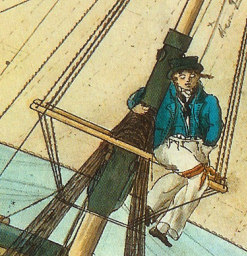
Middie sleeping on duty. Image @The Joyful Molly

The two brothers, during their careers saw action and provided a diplomatic service in many places across the globe including, the Mediterranean, the Adriatic, the Indian Ocean, the North and South Atlantic, the China Seas, the Caribbean and in South American waters.

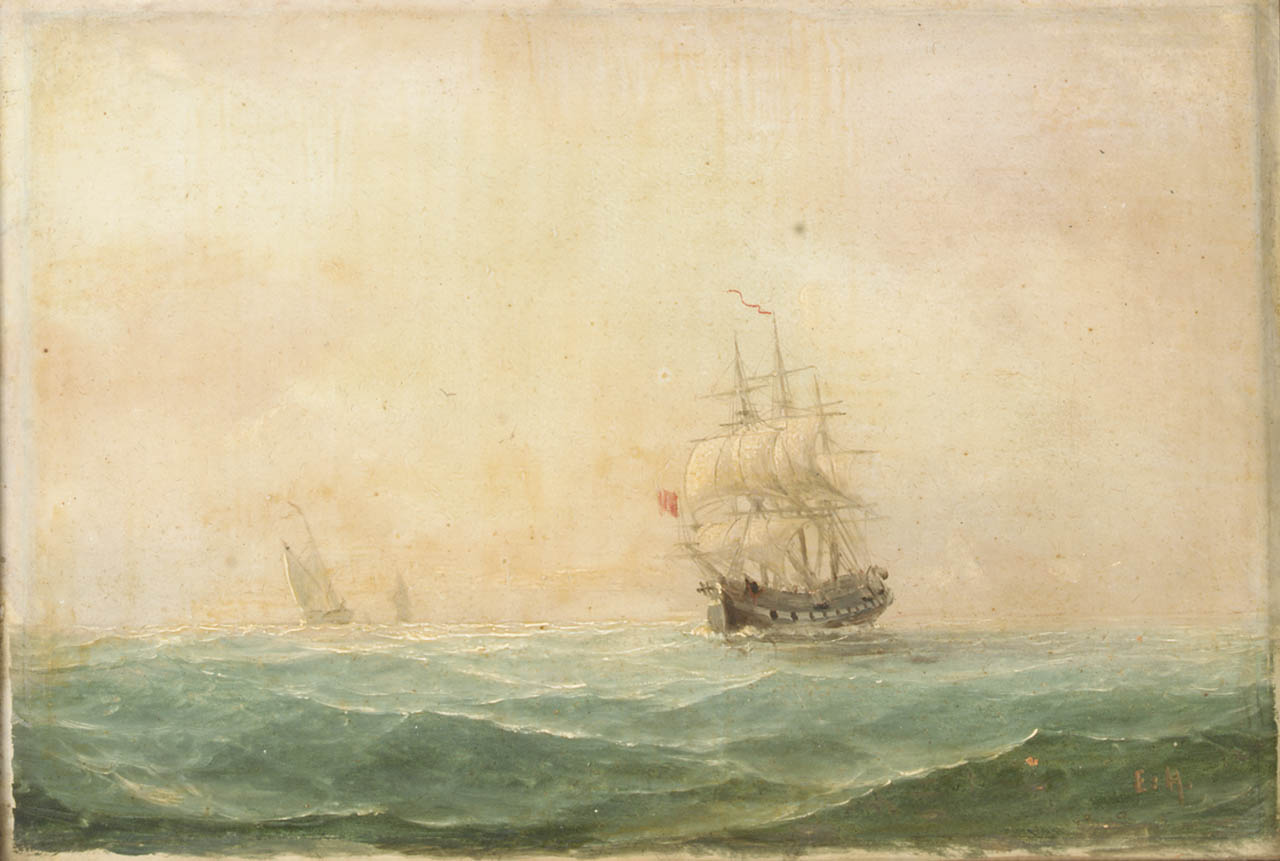
Frigate before the wind

The Royal Navy provided a very rigid hierarchical career structure. Once an officer had progressed past midshipman to Lieutenant, their career was often guaranteed. They progressed because of age and endurance. As people above them advanced, they moved in to fill their positions. Nowadays the Royal Navy and every professional and modern navy promotes their officers depending on their abilities. In the 18th century ability was not taken into account. Skilled people like Admiral Nelson or Jane’s two brothers rose through the hierarchy, but not because they were necessarily deemed as more able than others. Officers were in the navy virtually until they died, and as long as they stayed alive they progressed up the career ladder.

Francis Austen

Francis and Charles both rose through the ranks. Francis eventually became a full admiral and was the Commander in Chief of The North American and West Indian fleet. He became the Senior Admiral of the Fleet in 1868 when he was 89 years old. That seems ridiculous to us now. Unfortunately, Francis, did not have a very good opinion of Americans. He disapproved of the men spitting and didn’t like the flippant attitude of the women. The American women were not as cultured and sedate as his dear sister, Jane.

Charles Austen

Francis was unhappy about his career. Many things passed him by or were too slow in coming,  such as the position of Senior Admiral of the Fleet. His deepest regret was that he missed being at The Battle of Trafalgar with Nelson. His ship was there, but at the time he was ordered to perform another duty ashore.

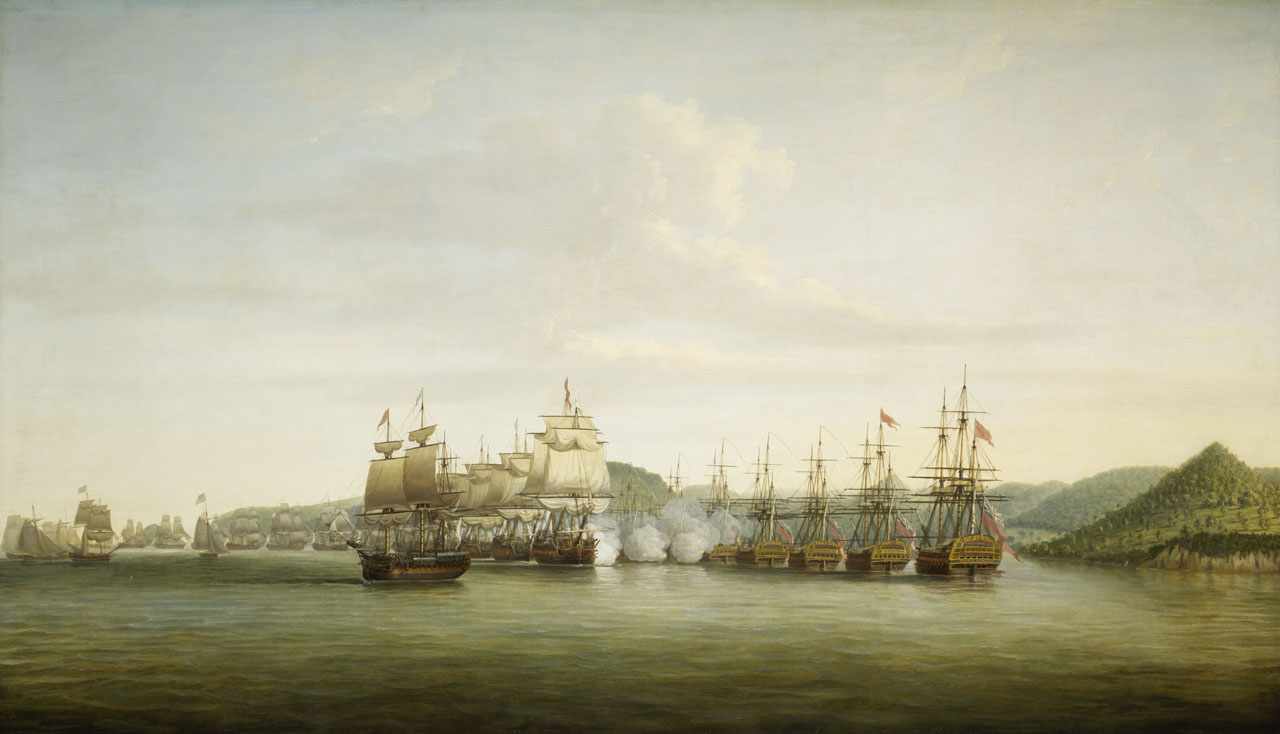
Barringtons action at St. Lucia 1778

Jane Austen includes Royal Naval characters in her novels, Persuasion and Mansfield Park. She had a great deal of affection for her brothers and knew a lot about the navy through them. Like her brothers, her naval characters were honest and chivalrous.

More on the topic

Read Full Post »

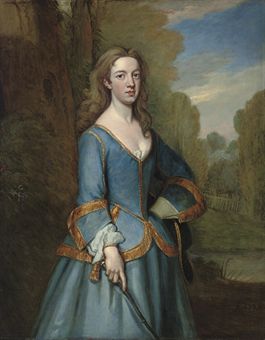
The riding habit, was first introduced in the 17th century. They were tailored by men in the manner of men’s dress: a fitted jacket worn over a long skirt, often worn with a masculine hat. Samuel Pepys, ever helpful with observations of his time, wrote in 1666 of seeing the Queen’s ladies of honor “dressed in their riding garbs, with coats and doublets and deep skirts, just for all the world like men, and buttoned their doublets up to the breast, with periwigs and with hats; so that, only for a long petticoat dragging under the men’s coats, nobody could take them for women in any point whatever — which was an odd sight, and a sight which did not please me.” – Candice Hern

In the 18th and through most of the 19th centuries, women’s riding habits were generally made by tailors and constructed like men’s wear. They were usually buttoned left over right, like a man’s coat. Other women’s fashions were made by dress makers and mantua makers. Masculine touches onwomen’s riding habits included mariner’s cuffs and fabrics and trims as seen on naval uniforms.  These riding habits were functional, but in the late 1700s they became fashionable dress as well, and were worn for informal day wear for traveling, visiting, or walking.

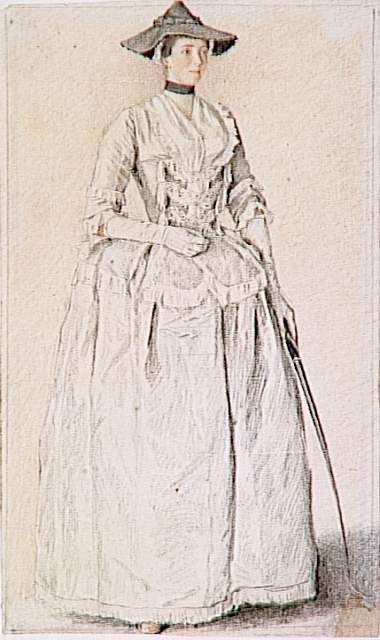
Madame Gaspard de Péleran by Jean-Etienne Liotard, 1738

The materials worn for riding from the mid-seventeenth to the early twentieth centuries were easily distinguished from the silks, muslins, and velvets of fashionable evening dress. Equestrian activities required sturdy and often weatherproof fabrics such as woolen broadcloth, camlet (a silk and wool or hair mixture), melton wool, and gabardine for colder weather and linen or cotton twill for summer or the tropics. In the eighteenth and early nineteenth centuries, habits were frequently adorned with gold, silver, or later woolen braiding, often imitating the frog-ging on Hussar or other military uniforms. – Equestrian costume

Equestrian portrait of Marie-Louise-Elisabeth d'Orléans (The Duchess of Berry in hunting-costume in 1710)

The appearance of a lady on horseback in a fashionable London riding-habit, and tricked out in the newest guise with patches, is amusingly described by Steele. The lady is supposed to be riding through the town of Kettering in Northamptonshire, in the month of July, 1724. ” Yesterday astrange and surprising creature was seen to pass through our town on horseback. It had the face of a young woman, stuck full of patches ; a perriwig which hung down to its waist; a hat cock’d with the smartness of a young officer; a huge bunch of ribbons fastened behind its left shoulder; a shirt laid in large pleights on the breasts and tied close at the neck and wrists, which, with a vest of white satteen, trimmed with black, had much the resemblance of a shroud.

Portrait of Lucy Pelham-Holles, Countess of Lincoln (d. 1736), three-quarter-length, in riding habit, in a landscape

Our whole town was soon alarmed with this strange appearance, and various are still the opinions what it really was. The old people, who were the most couragious generally, went pretty near to it with their spectacles on to view it more distinctly; the younger sort kept it at an awful distance. Some were of opinion that it was a highwayman in disguise, and accordingly were for seizing it; others took it for a nun; but by a certain arch leer it had with its eyes I dare engage it had not a bit of nun’s flesh about it. However, by its pale complexion and shroud-like dress, most of my neighbours at last concluded it to be a ghost, and so took to their heels, and left me (who am no great believer in these things) almost alone with it in the road. I had now an opportunity, during the time it was drinking a glass of Rhenish wine and sugar at the Saracen’s Head Inn, to survey it well, and thereupon concluding it to be an Hermaphrodite, I enquired of the man who seemed to have the keeping of it, if he intended to show it in our town, and at what inn? For you must know, Sir, that I have a mighty curiosity to see one of those creatures all over. But the man with an angry countenance told me: That what I took for an Hermaphrodite was only a young lady, and that the sort of dress she was in was commonly worn for a riding-habit by the ladies of fashion at London. But as neither I nor my neighbours can believe it possible for folks upon no ill design to disguise themselves in such a manner… – A history of English dress from the Saxon period to the present day, Volume 2 (Google eBook)R. Bentley, 1893

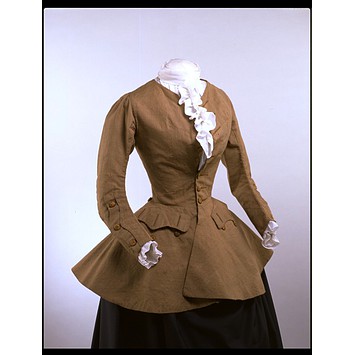
Women's riding Coat, 1750-59. Image V&A museum

Women’s riding outfits, known as ‘riding habits’, of the 18th century adapted elements of men’s dress. This jacket of the 1750s is styled after a man’s coat, although it has been modified with a waist seam to fit over stays and a wide petticoat. A narrow straight collar attached at the back neck and buttoning in front added protection on chilly rides. The fine tailoring and plain aspect of this jacket is typical of 18th century women’s riding habits. – Victoria & Albert Museum.

More Links

Read Full Post »

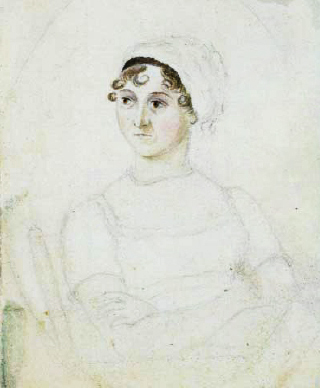
Let’s face it. Cassandra Austen’s tiny watercolour of her famous sister simply does not satisfy viewers. Jane Austen’s fans have been dying to find another authentic portrait of their favorite author. Has Dr. Paula Byrne accomplished this task? The Guardian.UK features an article with an imaginary portrait that Dr. Byrne believes was drawn from life.

Jane Austen portrait drawing, in graphite on vellum

The portrait drawing, in graphite on vellum, had been in a private collection for years, and was being auctioned as an “imaginary portrait” of Austen, with “Miss Jane Austin” written on the back. “When my husband bought it he thought it was a reasonable portrait of a nice lady writer, but I instantly had a visceral reaction to it. I thought it looks like her family. I recognised the Austen nose, to be honest, I thought it was so striking, so familiar,” Byrne told the Guardian.

Compare this portrait with images of Jane’s family and of Jane herself.

Cassandra's watercolour of Jane

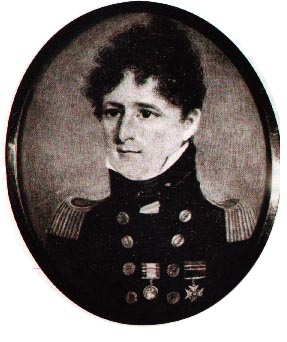
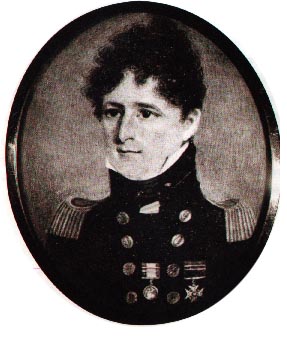
Captain Charles Austen, Jane's brother

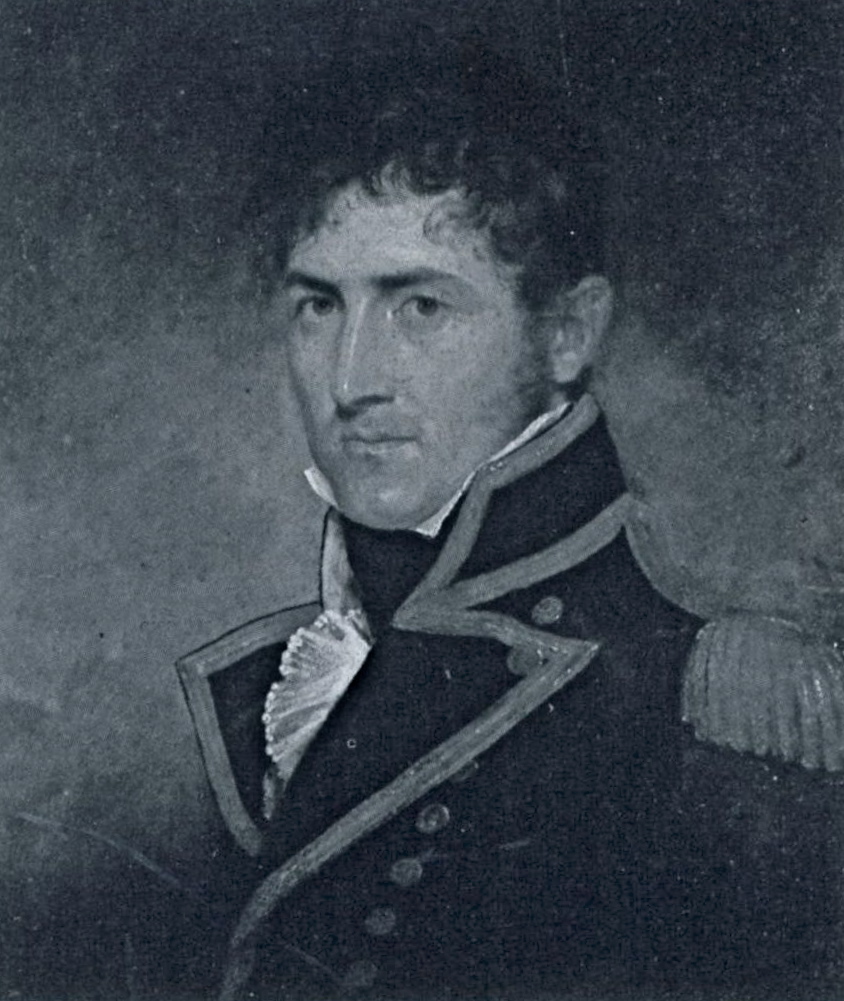
Francis Austen, Jane's brother

George Austen, Jane's father

James Austen, Jane's eldest brother

Read Full Post »

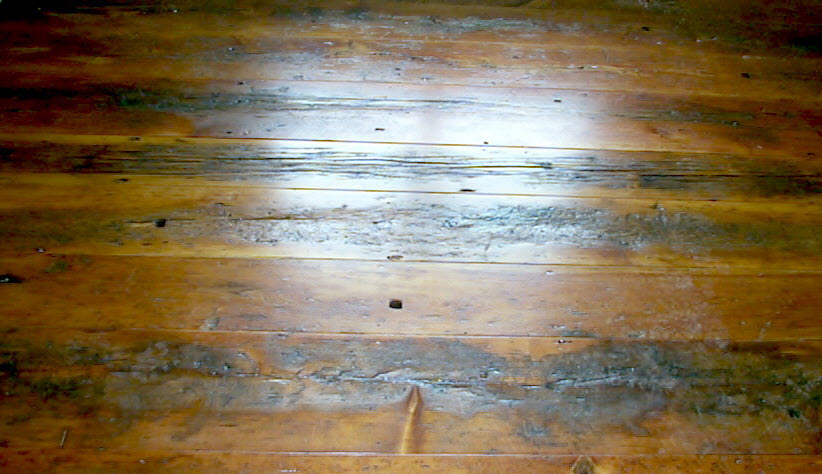
Wood floors of Brunswick House

In researching floors and floor coverings of Georgian houses, I came across these interesting tidbits of information.

During the middle ages, the floors of simple peasant households consisted of dirt. Hay and straw were strewn on top of the surface, and often cow dung and household wastes were tossed on top of the rushes. This mixture was trampled upon by the inhabitants. (During the middle ages, animals often shared the house with their human owners.) The result was a surface that became as hard as cement over time. Around the 1100s, saltpeter (potassium nitrate) was used for gunpowder, and the floors of former peasant homes provided a good source for this mineral. Mint was used as a deodorizer to cover the smell of the floors, for walking around the room and tramping onthe herb helped to spread its scent.  (A Not So Boring History of Flooring)

The interior of this Irish cottage shows the rough dirt floor. This image was taken in the late 19th century

Concrete floors were also widespread. They were made by plastering a concrete preparation over reeds that were fastened to joists. When this substance dried the concrete assumed the character of a slab of unbroken stone which was strong enough to bear a heavy load without the aid of supporting joists. This hardy substance was both fireproof and long lasting.

Pigs shown entering the Irish cottage. Late 19th century

Concrete floors eventually began to be replaced with wood floors during the Middle Ages.

We are not able to find any distinct records of wood having been employed for the boarding of the floors of dwelling-houses until towards the latter part of the middle ages, when an upper story began to be attached to middle-class houses in consequence of the increased value of land. The most abundant specimens of these early wooden floors are to be met with in London, probably for the reason that land being of higher values there than elsewhere, upperstoried houses wore more common. The name of 1′ lofts” was given to these upper storied rooms on their first introduction, from whence we have the compound word sentence of “up-a-loft,” and the word “cock-loft” has, probably, the same derivation, for wo find it now to be occasionally employed in some of the villages in the Midland counties to signify an up-stairs bedroom.- Building News and Engineering Journal, Vol 41, 1881

Wood floor planks were rough at first, and hand planed and hand finished with stone or metal. Old growth trees allowed for the maximum wood plank width (about 1-2 feet), which minimized the work required to cover a floor surface. In the 18th century, floorborads were irregular in shape and ranged in size and length. The goal was to use the smallest number of boards to cover a surface. More formal rooms used narower floorboards, indicating the wealth of the family who could afford to pay for the extra hours that craftsman took for the smaller sized boards.

Antique hemlock flooring with nail holes and saw marks.

Narrower floor boards general adoption gained rapid foothold during the Industrial Revolution after the repeal of duties place on foreign timber and the introductionof steam-powered planing machinery. In the early 1800s, production for such boards increased. The irony is that today wider floorboards have become a status symbol, for they have become more valuable as old growth trees have become scarce.

Wood floors had a variety of finishes. They were left unpainted and scrubbed with a mixture of sand and herbs. They were lymewashed, or oil painted in solid colors and stenciled. The floors were not sanded or washed or varnished during this early period. At a  later time varnishes and stains were applied to help make the wood last longer.

This charming watercolour by Diana Sperling shows the bare wood floor. It was the custom during this period to roll up the carpet and shove furniture aside for impromptu casual dancing.

In the mid 1800s decorated floor tile floors became popular in Europe. They had been used in Turkey, the Middle East, and in Dutch houses during the 1600s, and can be readily seen in Dutch interior paintings.

Floors were covered with a variety of rugs: rag rugs made of old bits of cloth; oil cloths; marble cloths; floor cloths, which were often painted to resemble carpets; and Persian rugs for the wealthy, which were prized for their color, design, and durability. Floor cloths were used in fine homes in France in the 14th century and made their appearance in England in the 17th century. Designs were often painted on them, as this U.S. example from Lakeport Plantation shows:

Floor cloth sample from Lakeport Plantation

One can see from this example how sturdy the cloth was after treatment.

Another fascinating fact is that rubber floors were used as far back as the 13th century and remained popular until the 1600s. In 1863, Frederick Walton, an English rubber manufacturer, patented linoleum, which is still made in the same way today.

Interesting fact: From ‘besom’ to broom

To sweep floors during the Middle Ages, the British used a ‘besom’ – a handful of twigs with the leaves attached. Besoms were often made of twigs from the ‘broom scrub,’ and so the sweeping implements came to be called ‘brooms’ around AD 1000.

More on the topic:

Read Full Post »

« Newer Posts - Older Posts »