Feeds:
Posts
Comments

Archive for the ‘Regency Life’ Category

From the desk of Shelley DeWees…The Uprising.

If Elizabeth had not known better, she would have sworn he was deliberately throwing himself in her way, but she did know better. Whenever they were in company together, Darcy was usually cool and aloof, yet he chose to stare at her constantly, and with a level of intensity that had begun to make her uncomfortable. Sure such a handsome, wealthy, intelligent man, who was used to nothing but the very finest in society, could not deign to look upon a woman of her inferior station and circumstances in life unless it was to find fault; and, indeed, she knew he had found fault with her, almost from the very first moment of their acquaintance at the assembly in Meryton some weeks ago.”

A departure from P&P while still calling itself a re-telling, The Truth About Mr. Darcy is a middle-of-the-road revisit to the beloved land of Jane’s Hertfordshire….it’s not stupendous, it’s not terrible. It starts slow. It ends slow. But the middle is a moderately interesting take on Darcy and Elizabeth’s path to matrimony, with all its major ups (money money everywhere) and smallish downs (minor disagreements followed by make-up sex).

The back of the book poses a question to Mr. Darcy. Should he tell the truth about his old nemesis George Wickham in order to protect the good citizens of Meryton from Wickham’s lies and secrets? Well, in a word, yes. He should. And does within the first two chapters, employing a moment of self-truth that would, had it occurred in the original P&P, caused all measure of heartache and sadness to be averted. What to do now? Especially since Elizabeth immediately follows suit in working out her out neurosis with prejudice right away, denying his first proposal but agreeing to a courtship that she reasons (admirably and in a drastic departure from Ms. Austen’s typical character attributes) will help her actually know this guy, this supposed husband/lover/friend/parent/guardian person she’s to spend her life attached to. Thus, the relationship begins, burgeoning passions ensue, then the wedding, and before you know it the book is over.

It’s a lovely story in all actuality, and Adriani tells it well. There seem to be a lot of modern flavors working here, including the aforementioned “let’s get to know that dude over there before agreeing to marriage” thing and the departure from the “let’s not have any sexual contact before the big day” thing. Having always suspected that many people in Regency England were guilty of violations of propriety in the name of love and/or passion, I found that rather refreshing and, frankly, long overdue in Austen spin offs. That Adriani should take a modern view of relationships and graft it onto Darcy and Elizabeth I found impressive and inspiring! Go you, Ms. Adriani! The courtship is honest and communicative, and paves the way for many heartfelt conversations and even more heartfelt turns in the sack (which were all super sexy but got to be little gratuitous by the end).

Spoiler Alert in this paragraph:

The rest of the experience in The Truth About Mr. Darcy was good-ish, not great, not horrific. There was, however, one moment where my hand went to my forehead, accompanied by an outspoken “Oh come ON!” and an exasperated sigh when Mr. Wickham’s nature was explored. Not only is he a debt-ridden scoundrel mired in controversy, he’s a near-rapist, and one sly wink away from a serial killer. Really? I mean, he’s a snotty spoiled dandy, but a rapist? It seemed like the dichotomy of good vs. bad was just a wee bit overused, both with Wickham and with Mr. Collins, whose refused proposal sparks a deluge of conceit and even revenge. In The Truth About Mr. Darcy, it seems as though you’re either a shining paradigm of virtue or the scum on the bottom rung of the ladder of humanity. A little bit of creative character development would’ve been a better choice.

Still, Susan Adriani’s debut novel is not entirely without success. It’s well written and fairly engaging, sexy, and compelling in a conventional sort of way. Those of you gentle readers whose hearts go aflutter at the notion of revisiting P&P won’t be disappointed. If you’re on the fence about these sorts of things, you might be better off skipping this one.

Be aware that this book is for mature readers only.

Read Full Post »

Lady Catherine de Bourgh's formal table: Pride and Prejudice 2005

When dinner is announced, the mistress of the house requests the lady first in rank, in company, to shew the way to the rest, and walk first into the room where the table is served; she then asks the second in precedience to follow, and after all the ladies are passed, she brings up the rear herself. The master of the house does the same with the gentlemen. Among the persons of real distinction, this marhalling of the company is unnecessary, every woman and every man present knows his rank and precedence, and takes the lead, without any direction from the mistress or the master.

When they enter the dining-room, each takes his place in the same order; the mistress of the table sits at the upper-end, those of superior rank next [to] her, right and left, those next in rank following, the gentlemen, and the master at the lower-end; and nothing is considered as a greater mark of ill-breeding, than for a person to interrup this order, or seat himself higher than he ought. – John Trusler, 1791

The Bennets seated at table en famille, with the two oldest daughters next to their father at the head of the table. Mrs. Bennet sits at the lower end. Pride and Prejudice 1995

As the eldest daughter, Jane and Elizabeth sat nearest their father during family meals, with Jane to his right. When Lydia returns as Mrs. Wickham, she unceremoniously bumps Jane to a position towards the middle of the table, for her married state gave her a higher rank than her eldest sister:

Elizabeth could bear it no longer. She got up and ran out of the room; and returned no more till she heard them passing through the hall to the dining parlour. She then joined them soon enough to see Lydia, with anxious parade, walk up to her mother’s right hand, and hear her say to her eldest sister, ‘Ah, Jane I take your place now, and you must go lower, because I am a married woman.’ – Jane Austen, Pride and Prejudice

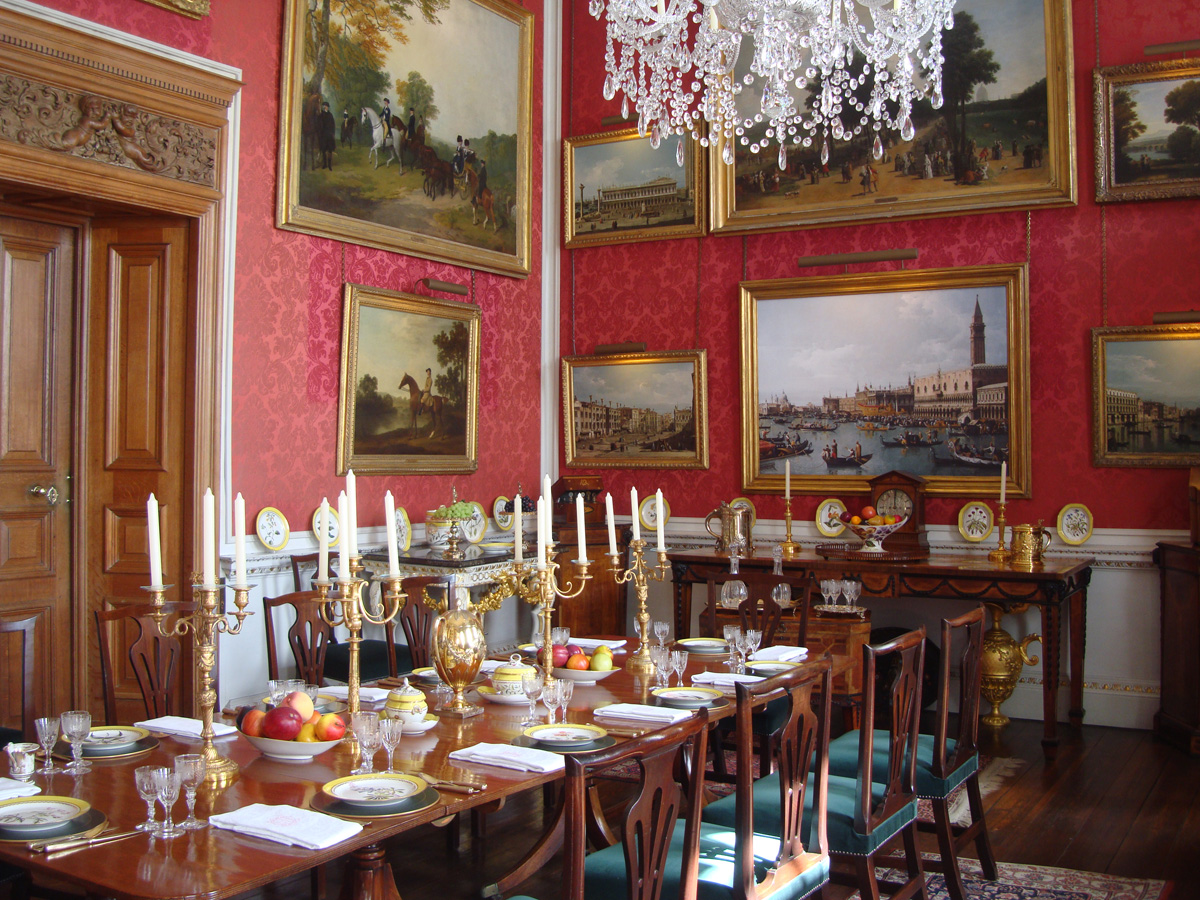
Sumptuous dining table at Castle Howard. Image @Tony Grant

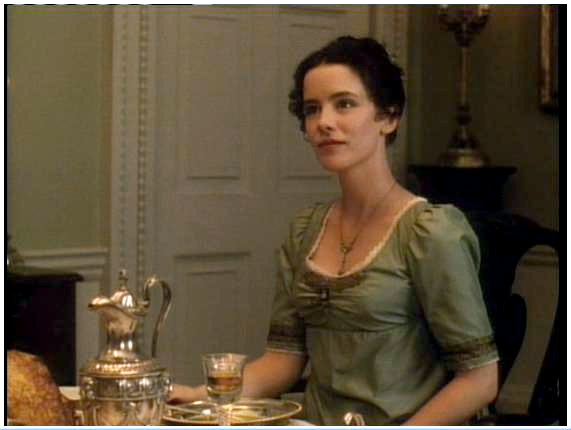
As hostess at her father's table, young Emma Woodhouse sat opposite her father at the upper end of the table. The ladies sit next to Mr. Woodhouse in hierarchy. As in the description by John Trusler, the gentlemen are seated nearest Emma's end of the table.

Emma Woodhouse (Kate Beckinsale)

Custom, however, has lately introduced a new mode of seating. A gentleman and a lady fitting alternately round the table, and this, for the better convenience of a lady’s being attended to, and served by the gentleman next to her. But notwithstanding this promiscuous seating, the ladies, whether above or below, are to be served in order, according to their rank or age, and after them the gentlemen, in the same manner. – John Trusler, p 6

From: The honours of the table, or, Rules for behaviour during meals : with the whole art of carving, illustrated by a variety of cuts. Together with directions for going to market, and the method of distinguishing good provisions from bad; to which is added a number of hints or concise lessons for the improvement of youth, on all occasions in life. By the author of Principles of politeness, &c. … For the use of young people, John Trusler

Other posts on this blog:

Read Full Post »

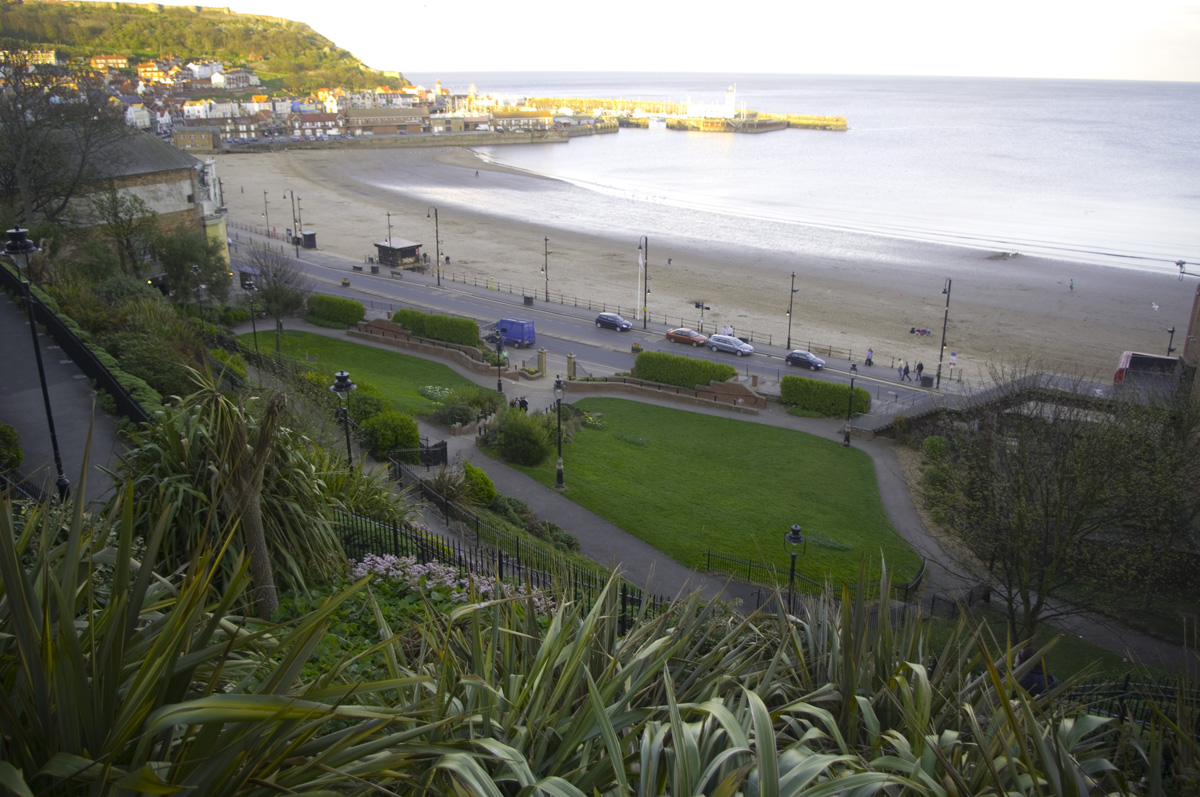
Scarborough Beach today. Image @Tony Grant

Post contributed by Tony Grant. All rights reserved, Tony Grant.

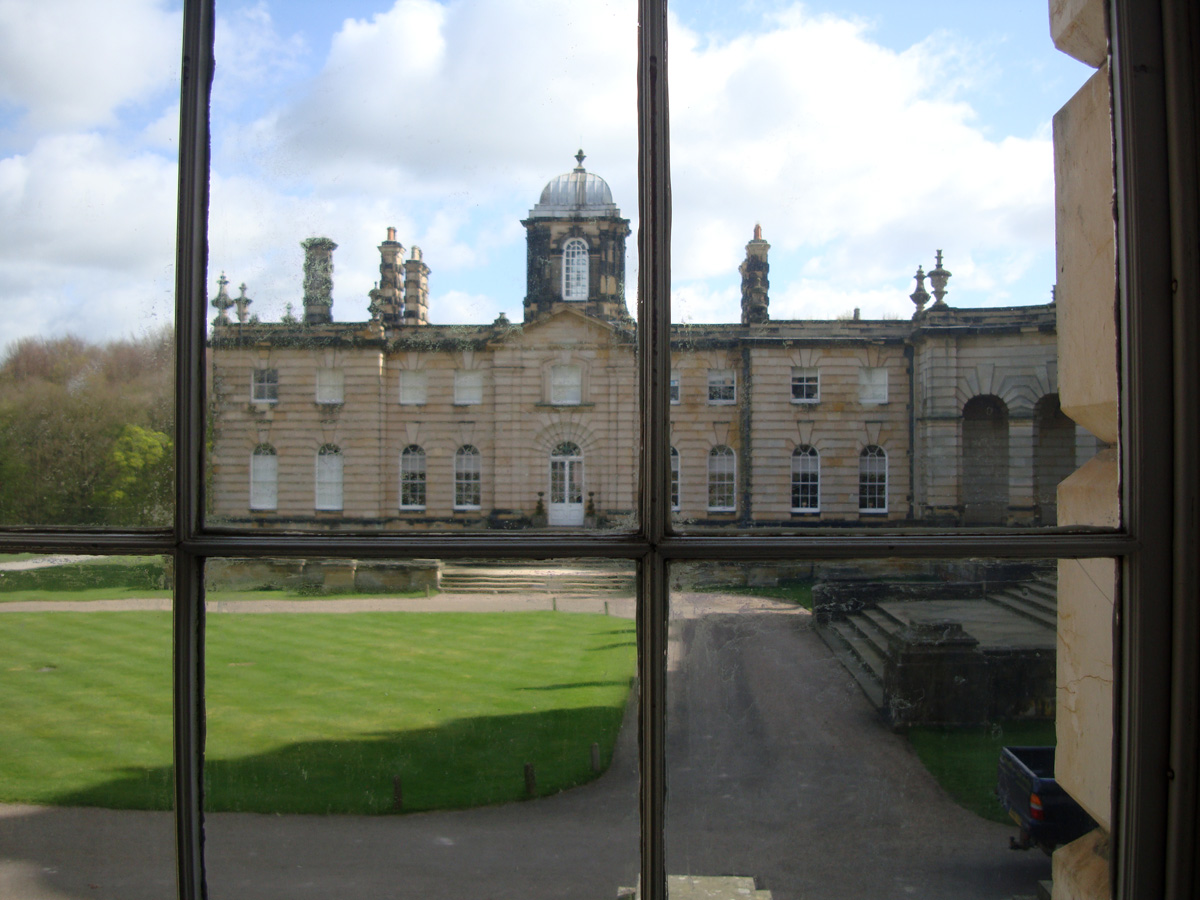
At the start of our Easter Holidays, on the 11th April, Marilyn, Abigail and myself drove up to Scarborough to spend a few days. Scarborough is on the beautiful rugged Yorkshire coast in the North East of England. We wanted to visit somewhere different and take a refreshing break from South London. We spent three days up there and drove on the North Yorkshire Moors, had a day in York, visited the fishing port of Whitby and went to Castle Howard, a few miles east of York, for one whole afternoon. Many of you will know Castle Howard as the wonderful, rich pile, used in the film and TV adaptations of Brideshead Revisited.
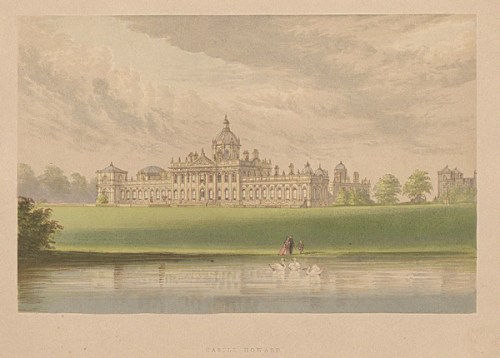
Castle Howard

Castle Howard has been home to the Howard family for over three hundred years. It is an 18th century residence set within over a thousand acres of landscaped gardens and vistas.
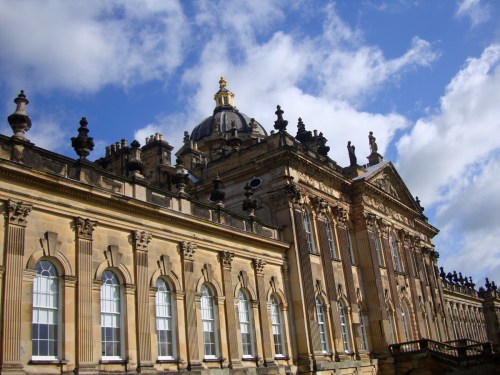
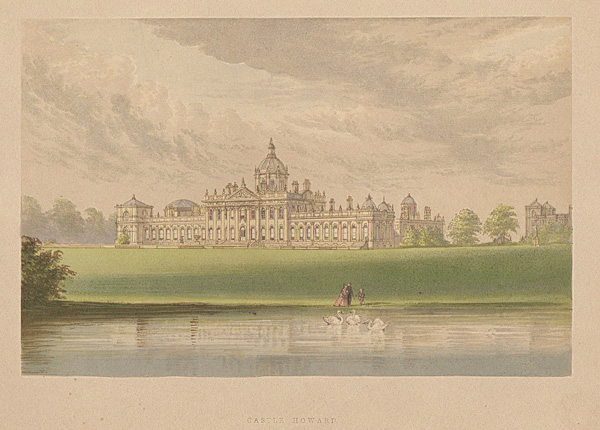
Castle Howard. Image @Tony Grant

Marilyn, Abigail and myself took a tour of this wonderful place. One of the things that has always interested me and I have often wondered about, is what books and authors an 18th century gentlemen has on his shelves. Reading Claire Tomlin’s biography of Jane Austen, it is her father’s library, consisting of hundreds of books that was part of Jane’s partly self lead education at Steventon. A short while ago we visited Sir John Soane’s house in Holburn. He had an extensive library. I asked one of the assistants in his house if I could take pictures. I was told politely that I could not.
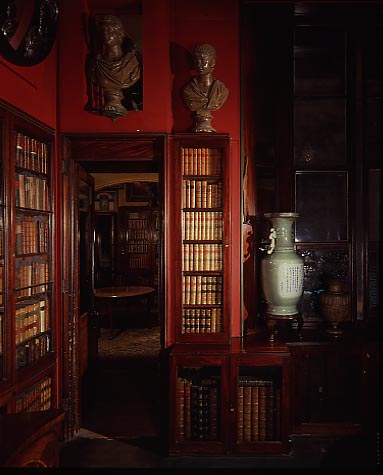
Library at the Sir John Soane's house. Image @Sir John Soane's House Museum

I had a discussion about the books on John Soanes shelves with the assistant but he did not know much about them. I looked at them, stared at them closely, extremely closely and tried very hard to remember titles, authors and general themes that ran throughout the library. My memory is not that good. I remember large leather bound atlases, the works of Shakespeare, books containing prints and sketches of ruins from classical Greece and Rome, philosophies, histories and there were many religious tracts. There seemed to be a variety of dictionaries. It is interesting to remember that Dr Johnson had many rivals before his Oxford English Dictionary became the definitive one.
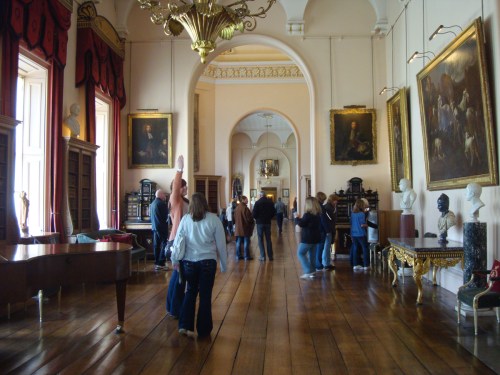
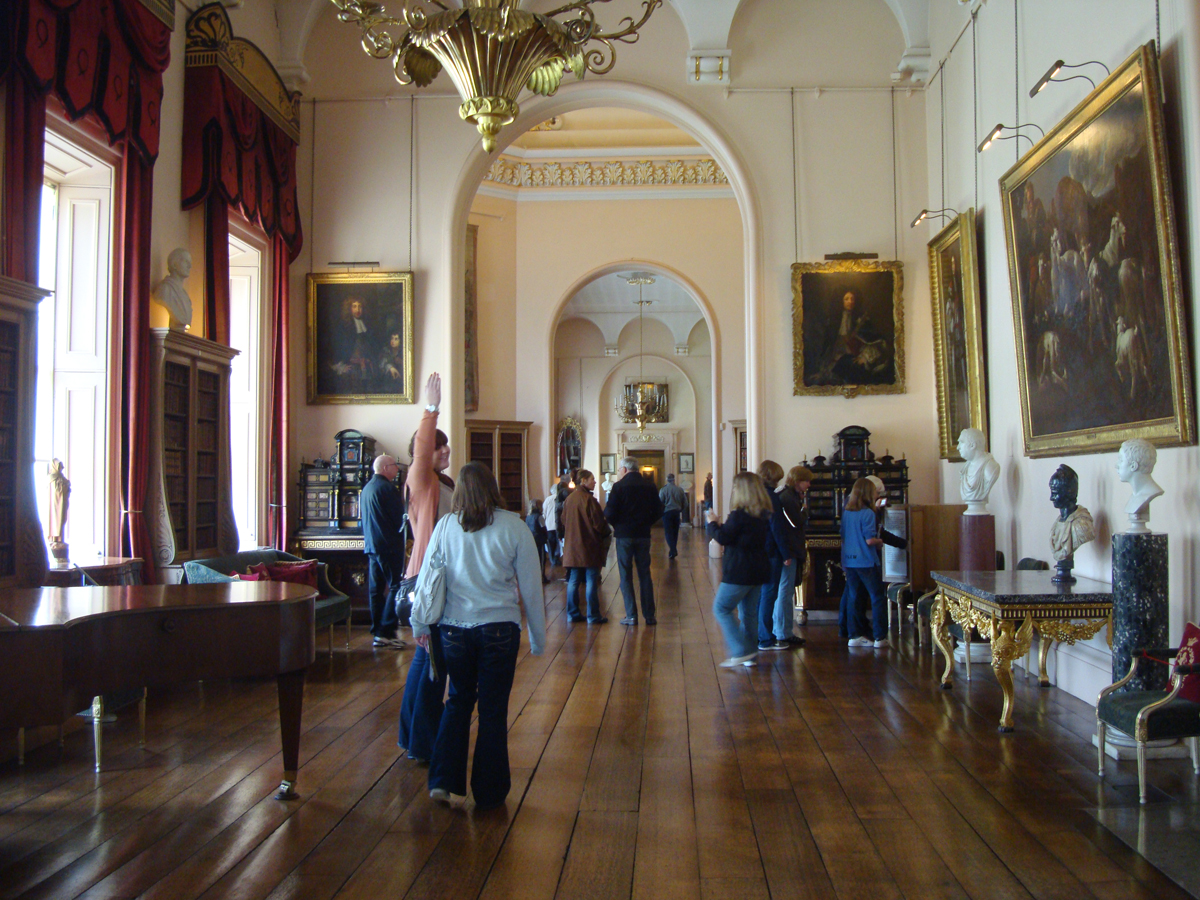
The Library at Castle Howard sits along a grand hallway. Image @Tony Grant

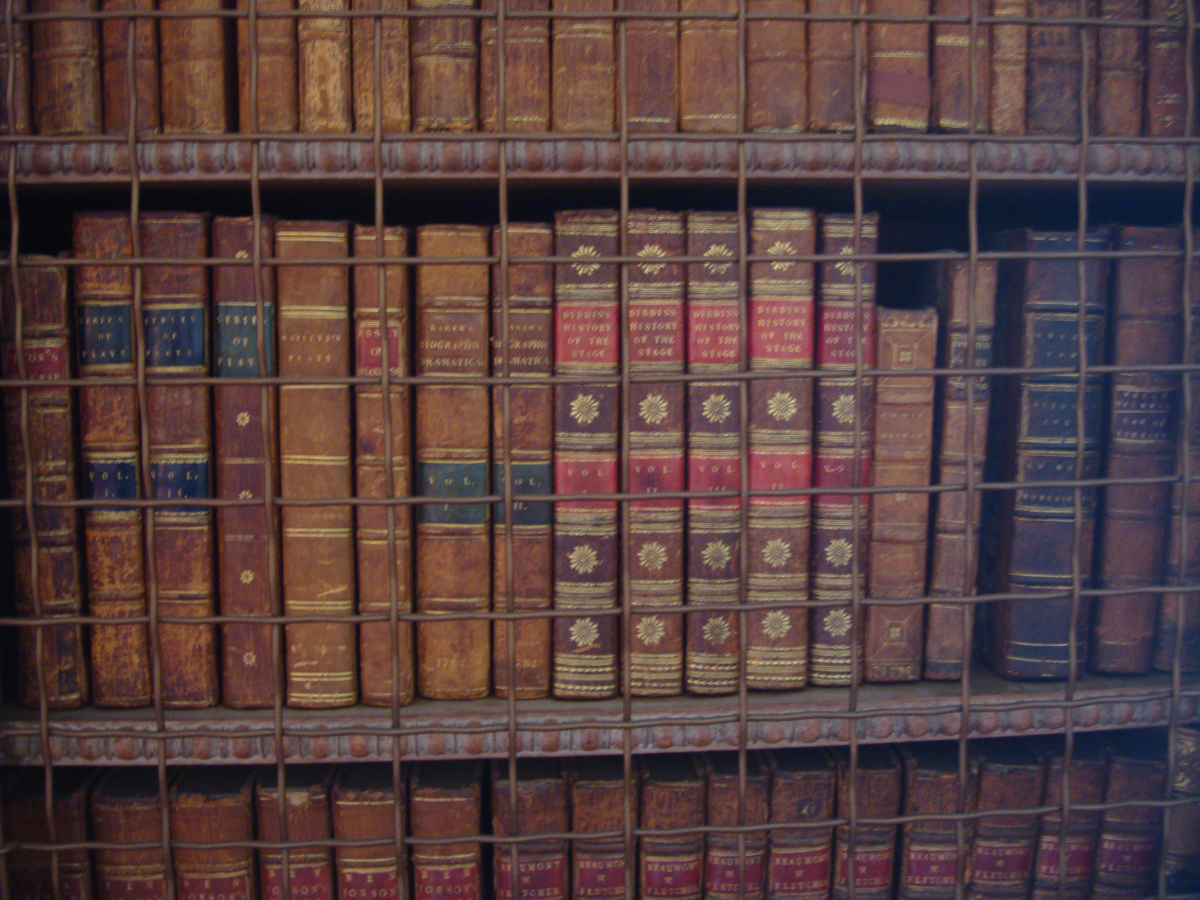
Anyway, getting back to Brideshead, sorry, Castle Howard. There is a magnificent library there. Shelves and shelves of beautiful volumes with gold-tooled titles and gold leaf flower and leaf patterns adorning, the light tan, dark brown and black leather bound volumes.
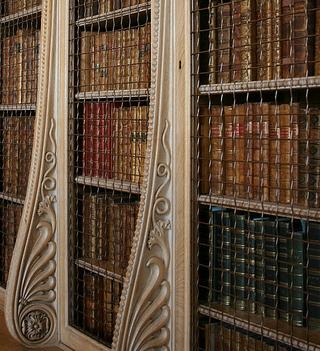
Detail of the book shelves in the library at Castle Howard

I asked, timorously, of a smiling gentle looking lady standing to one side of the library, the gallery assistant, if I could take photographs of the books expecting a negative reply. “Yes,” she said enthusiastically, “go ahead, and are there any particular books you would like to see?” I couldn’t believe my luck. She continued,“We have many first editions by great authors here.” I did ask about Jane Austen first editions. She thought there might be some somewhere amongst the novels section. We looked, but could only find Swift, Dryden, Byron, Congreve and others. We couldn’t find Jane. These first editions were there, on shelves, within touching distance. AAAAAGH!!!!
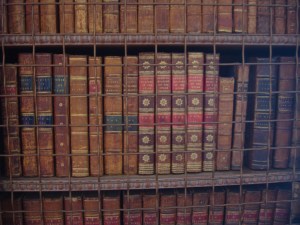
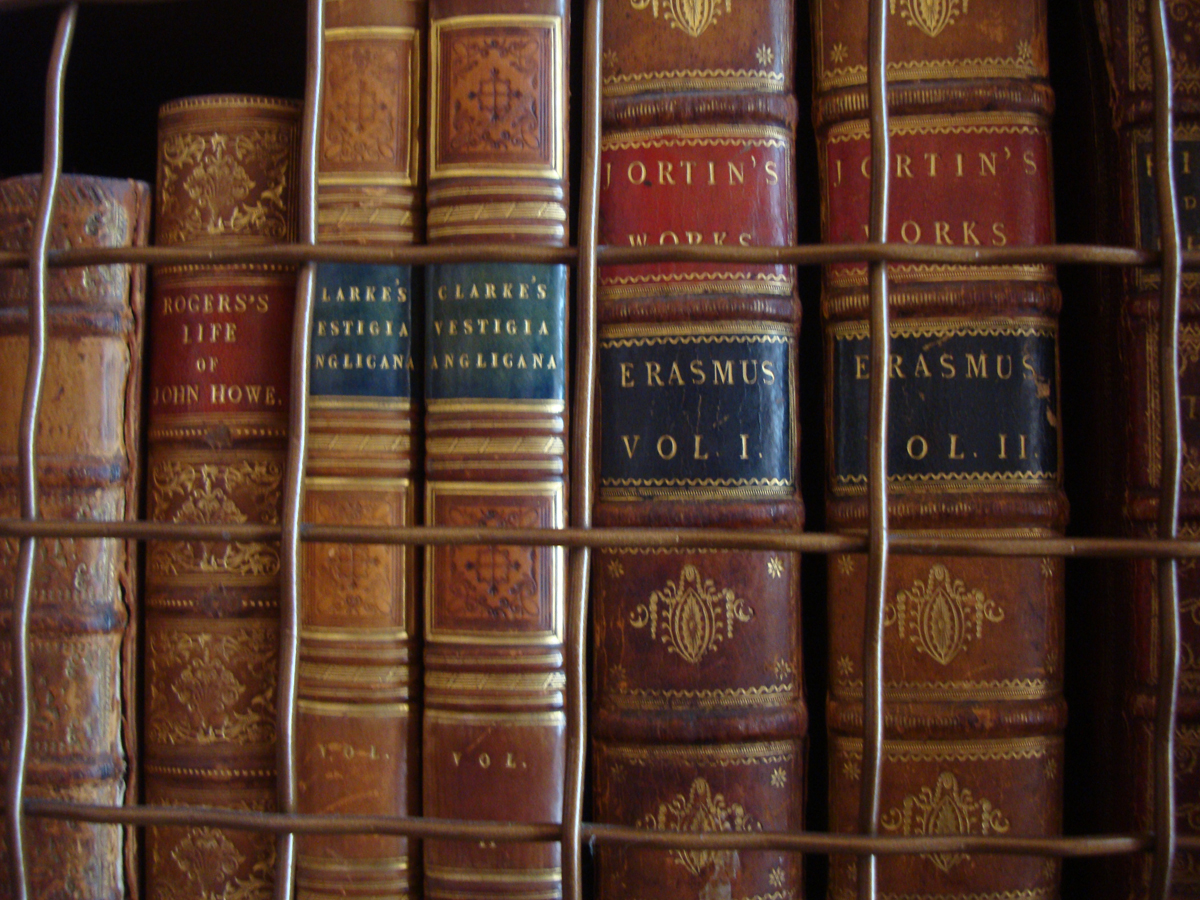
Brown Leather and gold-tooled lettering

One thing I discovered as we went around Castle Howard was that the gallery assistants were not your run of the mill gallery assistants, these people know a lot about the contents of the rooms. They had really studied what they watched over. An example was when we walked into a bedroom and on the wall was a portrait of Henry VIII and it was a Hans Holbein but the same room had Gainsboroughs and Lawrences, on the walls too. No, not copies, the real thing. Rooms throughout the Castle were full of original masterpieces. I couldn’t believe it. A lady there when I asked her, gave me a great art historians analysis of one particular Gainsborough. She, never mind the painting, was the real deal.
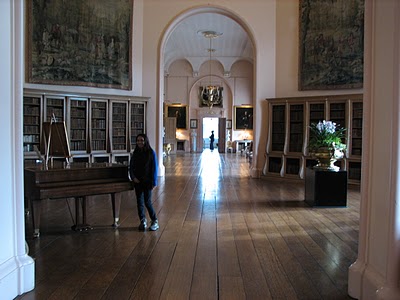
Library at Castle Howard. Image @A Life Less ORdinaRY

So back to the books, where I started. I was allowed to take photographs of the books. I must have looked odd. Other visitors looked through the windows at the magnificent views around the grounds, or studied beautiful gleaming vases and glanced at magnificent paintings and there was I, getting close and personal with brown dusty looking things crammed on shelves. I am a constant embarrassment to my family. Ha! Ha!
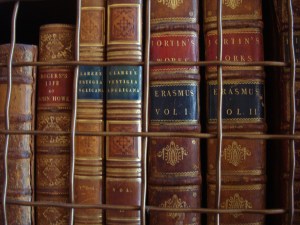
Books on the shelves at the library. Image @Tony Grant

Some of the books I came across were by authors I had never heard of, for instance, “Col. Napiers Peninsula Wars.” I discovered later that,Sir Charles James Napier was born in August 1782 and died in August 1853. He was a general in the British Army and became the British Army’s Commander in Chief in India. Napier commanded the 50th (Queen’s Own) Regiment of Foot during the Peninsular War in Iberia against Napoleon Bonaparte.
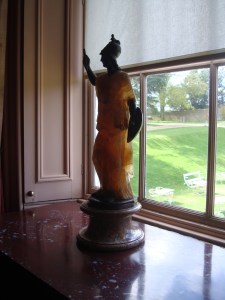
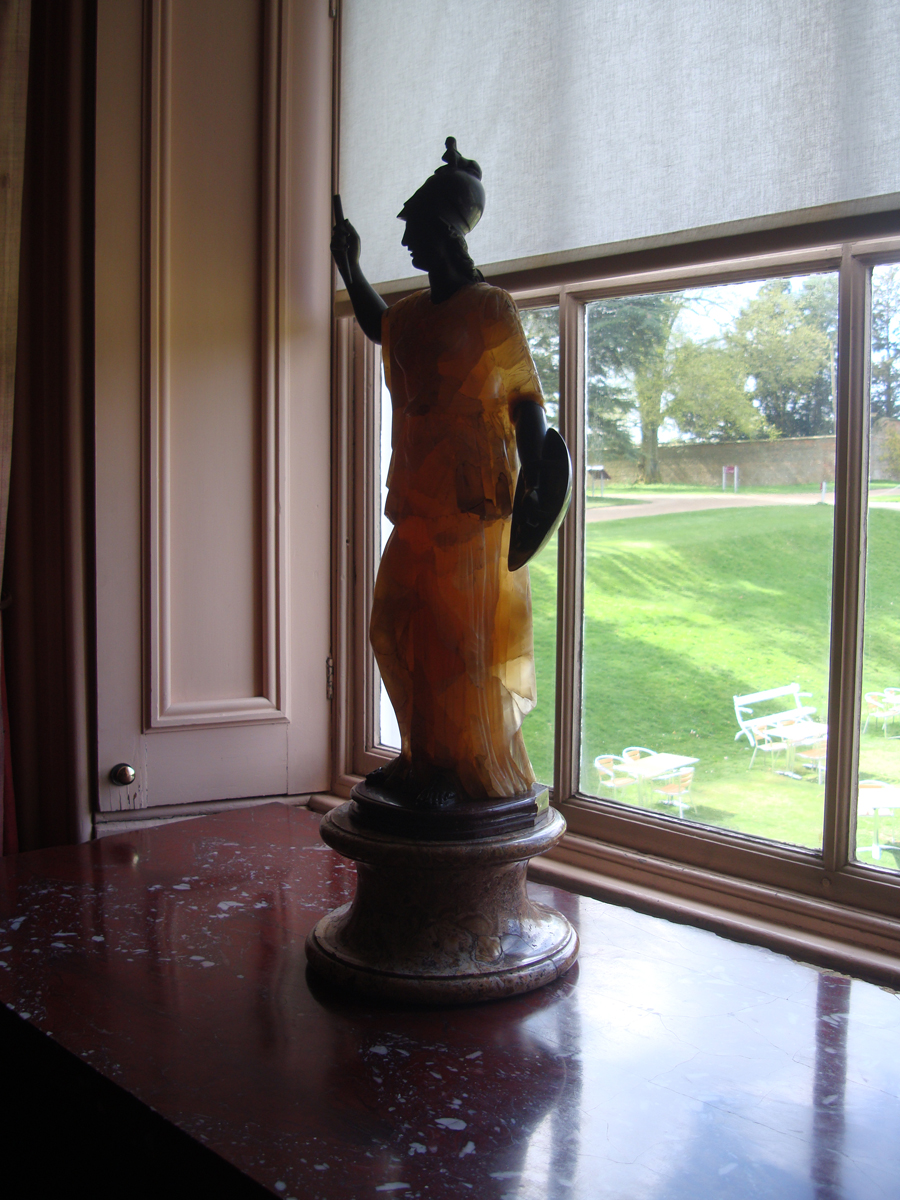
A luminous Greek statuette in the library. Image @Tony Grant

General Napier put down several insurgencies in India during his reign as Commander-in-Chief in India. Some of his rather perceptive insights into dealing with insurgencies included:

The best way to quiet a country is a good thrashing, followed by great kindness afterwards. Even the wildest chaps are thus tamed.
which may help explain why he felt rebellions should be suppressed with such brutality.”

He also once said that:

the human mind is never better disposed to gratitude and attachment than when softened by fear.”
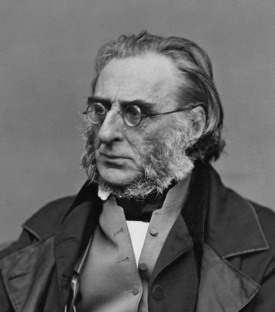
Charles James Napier

An example of this idea in practice was after the Battle of Miani, where most of the Mirs surrendered. One leader held back and was told by Napier:

Come here instantly. Come here at once and make your submission, or I will in a week tear you from the midst of your village and hang you.”

He also mused that:

“so perverse is mankind that every nationality prefers to be misgoverned by its own people than to be well ruled by another”

I would have loved to have met him. Wouldn’t you? Imagine him at your dinner party.
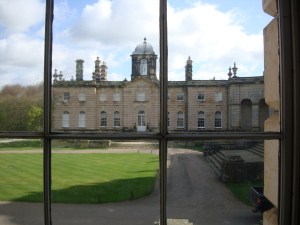
Castle Howard. Image @Tony Grant

Other books on the shelves included: Davies’s Micelanie, J. Orton’s Works ERASMUS, Murphy’s Works, alongside some more tried and tested volumes that have lasted the travails of time: Ben Johnson’s Work, Defoes’ History of The Stage, Drydens Plays, and Smollett’s England, to give you a flavour and taste of the contents of this library. I tried to search for information on some of the more obscure authors and as you can tell I found a bit about Colonel Napier. Many of the authors I could find nothing about, but an interesting discovery I made was about Murphy and his works. He was an Irish playwright. Here are some play titles to slake your thirst and satiate your appetite.

The Upholsterer (1758)
The Way to Keep Him (1760),
The Old Maid (1761)
Three Weeks After Marriage (1764)
Know Your Own Mind (1777)

Arthur Murphy wrote about eighteen plays in this vein. I wonder about The Upholsterer though. I’m sure it was a very “comfortable” play. You would probably fall asleep on your deeply “upholstered” seat during it, mind.

HOW can you write a play about upholstery???

He also wrote biographies of David Garrick, Samuel Johnson and Henry Fielding.
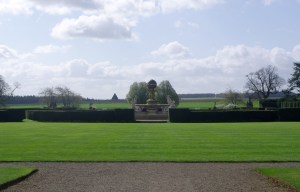
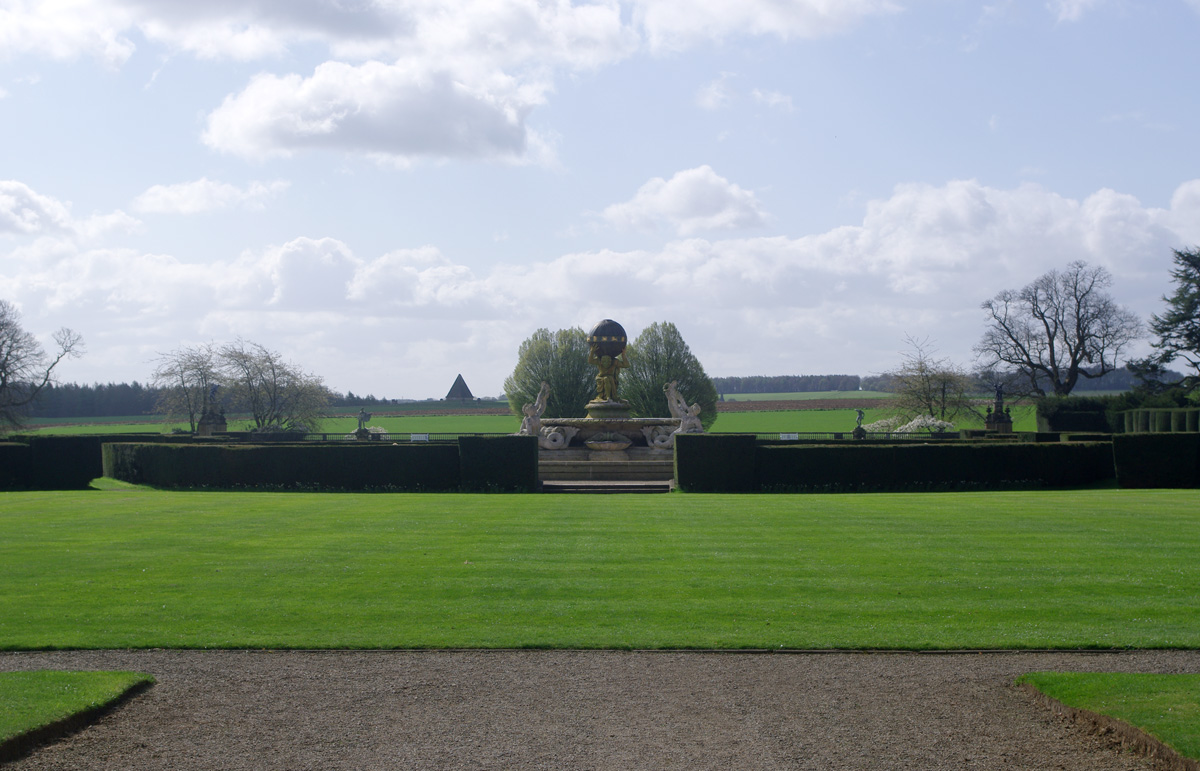
Globe Fountain on Castle Howard Grounds. Image @Tony Grant

With my experiences in two 18th century gentlemen’s libraries, Sir John Soanes house in Holburn, and the vast and airy gallery of the Howard family at Castle Howard, amongst their fine varied brown leather covers and illuminated gold leaf lettering, what sort of conclusion can I come to? After a swift and furtive voyeuristic delving into their interests and source of deep thought and emotions? What can I say?

The book titles have a familiar ring to them. If you spend an afternoon in a Waterstones [bookstore] it too has many of the same book divisions and sections as those two 18th century libraries. Nowadays the novel provides the larger section in Waterstones but at Holburn and Castle Howard they provide a rather smaller section. History, biography, philosophy, poetry, plays and dramas, atlases and travel accounts are there in varied abundance. Dictionaries are very prevalent in the 18th century library and dictionarys produced by different people using different criteria. In the 18th century there was a great interest in words, their meaning and origins. There was a hunt going on for words in the 18th century and need for conformity. There was the need for one language and one set of words accepted by all. You can only speculate the economic consequences. Local dialects were all very well within a locality. There was a sort of race to be the best amongst word gatherers, dictionary makers. Of course, we know now that Dr Johnson won. Hurray!!
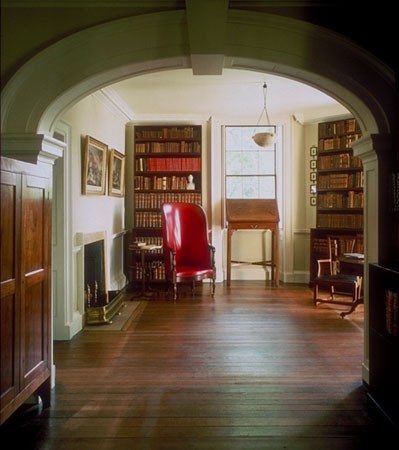
In 1815, Thomas Jefferson sold 6,487 volumes of his vast collection of books from his library at Monticello to the U.S. Library of Congress.

Many of these interests shown in the books displayed can be connected to interests in the classical world, which is not so much of a concern these days for the majority, unless you do a degree or are doing the Romans at school, or are watching a BBC documentary about Delphi or the Olympics.

I imagine plays by Dryden or Arthur Murphy were in great demand, because people didn’t have television and radio then to entertain them. We can see people’s interest in owning written drama scripts, reflected in Jane Austen’s own family’s exuberant enacting of plays and the writing of them at their home in Steventon. Jane uses the play, Lover’s Vows, as home entertainment in Mansfield Park, with many meanings and personal interactions connected to it.

So there are differences in the use and purpose of books between now and the 18th century, but the subjects covered and the systems of organisation were recognisable. Melvil Dewey (1851-1931) didn’t create his system until later, but the general system used for organisation was grouped in familiar ways. How we think about the world was being formed. Dewey and some others made it far more sophisticated. The organisation of books has had a big impact on the way we think and learn.

So there you are. We are not the only generation with a thirst for reading. The next time you visit a country house or stately home, get in amongst the musty smelling, brown leathery things. They will speak volumes to you.

Read Full Post »
Ladies shoes, 1810

In a previous post, I discussed how ladies slippers and boots were so delicately made that they could not withstand much wear and tear. In fact, a lady would not venture to walk outside the house in rainy weather and would be confined inside, whether she was in the city or country. Jane Austen described a rainy day in Mansfield Park:

… to poor Miss Crawford, who had just been contemplating the dismal rain in a very desponding state of mind, sighing over the ruin of all her plan of exercise for that morning, and of every chance of seeing a single creature beyond themselves for the next twenty-four hours; the sound of a little bustle at the front door, and the sight of Miss Price dripping with wet in the vestibule, was delightful. The value of an event on a wet day in the country, was most forcibly brought before her.”

1801, Two ladies in morning dresses, Nicholas Heideloff, Gallery of Fashion

In the country a lady would not soil her delicate kid slippers on grass or muddy lanes, but would walk along gravel paths in the shrubbery, as shown in the Heideloff image above. Elizabeth Bennet, who walked the three miles to Netherfield Park, muddying her petticoats in the process, would have worn sturdier shoes, such as those worn by the women in the watercolor below.

Studies of female figures with children, James Ward

Female fashionable attire in the eighteenth century was very ill fitted for country life, which is so largely spent out of doors. Indeed, it was not fitted for out door wear at all. No fashionable woman was properly shod in the first place, for the coloured shoes, which, as has been stated, all ladies wore, were not adapted for vigorous exercise, or damp weather, with their high heels and very open tops. Those were the kind of shoes worn for walking in London. Country life in shoes of that sort would mean endless expense. The wonder is that town bred women did not insist upon the shoemakers providing something more fitted for the dirty, uneven pathways. But, then, walking was not a daily exercise as it is now. Foot gear has undergone much reformation in the present century, in spite of the persistence of high heels…”

Knife Sharpener, W.H. Pyne. This traveling craftsman would have worn sturdy old boots like William Conway.

“… A notable itinerant trader of the middle of the eighteenth century, known to all Londoners, was William Conway of Bethnal Green, who made a living by selling and exchanging metal spoons. As he walked twenty five miles a day, Sundays excepted, his shoes were the most important articles of his attire, and these he made out of the uppers of old boots. A pair of shoes lasted him six weeks. He was an odd figure, with his long spindle legs encased in tight knee breeches, short coat, high hat, and bag slung over his shoulder.” – A history of English dress from the Saxon period to the present day, Volume 1, By Georgiana Hill , 1893, p 181

"Cash", Rowlandson, 1800. Note the dark leather slippers worn by the maid, and the sturdy buckled shoes by her elderly swain.

Read Full Post »

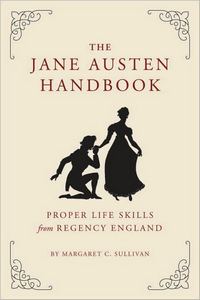
Review by Tony Grant.

To start with, it is a pleasure to be holding a book with a hard cover and with a glimpse of the brown and cream page binding at the top and bottom of the spine. It gives the reader the interesting, pleasurable knowledge that this is a sewn binding in the old style. Kindle can give us the effect, on its screen, of real paper but this book, solid and sharp cornered, is the real thing, an object with weight, a valued, well made artefact nice to hold. Having it in your hands is a pleasure to experience.

I love the contents pages divided into sections and then all the different article headings within each section beginning with,”How to…” There is something poetic in the repetition of these opening two words followed by an assertive verb.Yes, the contents are a pleasure to read in themselves and could be read out with passion, emphasise and feeling at any live poetry night, at my local pub anyway.

How to Become an Accomplished Lady…………………..16
How to identify “ The Quality”………………………………….22
How to ensure a good yearly income……………………..26
How to provide for your daughters & Young Sons…28

And so on. It’s mesmeric!

A couple of things made me wince. In Margaret’s introduction there is a sentence that goes thus. (I will come back to why I have just used the word ,”thus,” in a short while.)

“ All Janeites have heard the question at one time or another, whether from a friend, significant other, care worker, parole officer or a math teacher who caught said Janeite reading Emma under the desk during class.”

Margaret gives the game away with these, “Americanisms.” OK it is her introduction but I hope she intends this book for us British English speakers too? And also, I know I’m nit picking here, there are the odd occasion when these words appear: neighbor, endeavor, watercolor. I’ll say no more.

But on the whole and almost a hundred percent of the time, I absolutely love the way she uses language. I can hear the fun in her voice, the absolute thrill and joy of thinking and using the most gorgeous words and phrases., aplomb, guttersnipe, I chuckled at that one, impoverish, genteel, repine, overly impecunious, oh I just wanted to repeat that phrase again and again and she goes on, sentence after sentence, line after line, page after page, defray, small beer and skittles, a bit of working class culture creeping in there and it’s just such a joy to read and wallow in. I even think she used the word. “wallow,” at some stage. The best thing about this book is the joyous pleasure Magaret has with words. Oh yes!

So, coming back to why I used the word, “thus.” The above paragraph really provides the reason. Margaret, through her use of language, captured my mind and released my 18th century vocabulary store deep within my brain. I couldn’t help myself. It slipped out.

I do think this book is aimed at women rather than men. Here are some examples of Section headings and chapter opening lines.

“Well bred young ladies must acquire a store of accomplishments….”

“The mistress of the house is rather like a CEO of a major corporation…”

Get him back after you have quarrelled.

Converse with your dancing partner. (this chapter refers to how the female should make conversation with the male.)

There are references to male things, education, being a house owner and so on, but they are written about from a female point of view often just there to make a comparison with the female side of things.

It is also written as though the reader is middle class and discusses mostly middle class things. Once in a while there are references to the serving classes and aristocratic life, often written in the same breath as things about the middle classes. Perhaps there should be an explanation of the differences between the classes and the different lives they lead.

I think the sections at the back of the book are excellent. There is a very thorough and detailed index, a good glossary covering many words and terms. There is a good bibliography and resources list. These end sections will give the Jane Austen, and 18th century student a good starting point in a life long exploration.

Who do I think this book would be a good buy for? My daughter Emily is just completing her A’levels before she goes to university next year. Some of her friends are doing A’level English literature. This book would give them an excellent background and springboard into the life of Jane, her characters and the world of the 18th century. It would be an ideal companion to anybody beginning to read Jane Austen. They would be able to get their compass bearings set on a true course.

Read Full Post »

« Newer Posts - Older Posts »