Feeds:
Posts
Comments

Archive for the ‘Regency London’ Category

Vendors set up their carts and booths hours before execution time, doing a roaring trade selling food, drink, souvenirs, even pornographic material, to a frenzied crowd. Minstrels and jugglers entertained the crowd. With the advent of cheap printing in the 16th and 17th centuries, touts created lurid “broadsheets” detailing the supposed history and scandalous crimes of the victim, the precursors to modern day tabloids. These “broadsheets” sold like hotcakes to an excited audience. – The History of Executions in Olde London Towne– Roy Stevenson

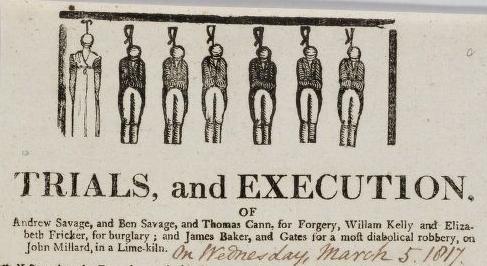
Detail of an execution broadside purchased March 5, 1817. Image @Harvard Law School Library


Life was cheap in Georgian England as this 1817 broadside attests. Five criminals were executed in March 1817 for forgery, burglary, and robbery. Poor Elizabeth Fricker protested her innocence, but to no avail.  Executions were public events, even during Jane Austen’s day, and one wonders if she ever saw a body left to rot on a gibbet, or if she cautiously avoided such sights and averted her eyes.  In any event, crowds would gather early at the execution spot to witness the hanging. They came in droves especially if the execution was of a notorious person.

Vendors set up stalls, selling drinks and refreshments to the large crowd, which, as the Hogarth illustration shows, were stacked on top of each other. The atmosphere must have been festive and somber at the same time, for even though there were jugglers and entertainers to amuse the crowd, a certain “execution” protocol was followed. Criminals were expected to speak to the crowd and to die well.

Broadsides, which were purchased for a pittance (in this instance a penny) described the crimes in detail, and were purchased much like programs to sporting events are purchased today.  Read the entire broadside here. This particular broadside was printed by J. Pitts of Seven Dials. Like other broadsides, it featured an illustration of the execution. Someone (the purchaser?) carefully penned in the date below the image.

Hogarth, 1747. Image @Wikimedia

Persistent Link to the Broadside:
http://nrs.harvard.edu/urn-3:HLS.Libr:1087957
Description:
Executions of criminals: more generally known by the uninviting name of “Dying speeches.”. Execution broadside (Andrew Savage, Ben Savage, Thomas Cann, William Kelly, Elizabeth Fricker, James Baker, James Gates)
Page:
(seq. 11)
Repository:
Harvard Law School Library
Institution:
Harvard University
Accessed:
09 June 2011

Other related links:

Read Full Post »

Copyright @ Jane Austen’s World.  Looking back 200 years (the precise date that the formal Regency era began was 1811) we tend to view Jane Austen’s Regency world wearing rose-tinted glasses.

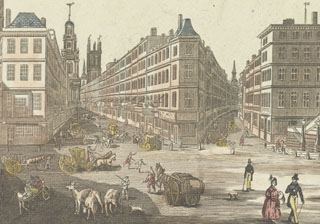
Early 19th century London street scene

Imagine the traffic in London back then:

In July 1811,

it appears that there passed over Blackfriars bridge in one day: 61,069 foot passengers, 533 waggons, 1,502 carts and drays, 990 coaches, 500 gigs and taxed carts, and 822 horses. On the same day, July 1811, there passed over London bridge: 89,640 foot passengers, 1,240 coaches, 485 gigs and taxed carts, 769 waggons, 2,924 carts and drays, and 764 horses.  – Leigh’s new picture of London: or A view of the political, religious, medical, literary, municipal, commercial, and moral state of the British metropolis (Google eBook), 1827, p. 251

Then imagine the animal droppings. I have not the mathematical wherewithal to calculate how much manure and urine these vast numbers of animals traversing London’s streets would generate on an average day, but I do know this: when a horse feels the need to relieve itself, it does so on the spot, releasing the end result of its digestion in a most spectacular fashion.

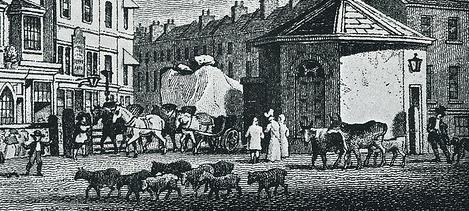
London, detail of Islington toll gate

And thus London’s streets were littered with dung. Not only did horses generously contribute their feces to London’s throroughfares, but so did the vast number of feral dogs and cats roaming the streets, and the cattle, goats, sheep, pigs, and fowl that were driven to London’s markets. Add on a hot summer’s day the smell of slops that were carelessly tossed out of windows, and the stench of contaminated water, backed-up sewers, over-filled privies, and rotting garbage, and you get the drift. The assault on one’s olfactory nerves must have been overpowering.

The rich had a choice – they left London in droves at the end of the Season to wile away the summer on their country estates. But those who were left behind had to suffer the fetid stench of thousands of evacuations that cooked in the heat and turned into gaseous rot. (I traveled through a similar malodorous area when driving past the slums of Jakarta one summer.)

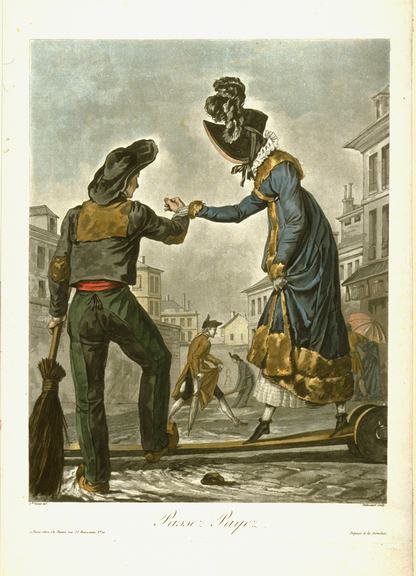
Streetsweeper assists a lady crossing the street, 1818, after Vernet. Image @Wikimedia.

Rain showers did not help much to relieve the situation. By 1841, when the metropolis was vastly larger, Henry Mayhew calculated that the refuse from butchers that washed into rain water approximated 24,000,000,000 gallons per annum. As for dung, let’s face it, wet poo sticks like glue, and once the offending substance adhered to boots and shoes, the unfortunate wearer would trod the vile stuff into carriages and on door stoops, which is why boot scrapers were essential.

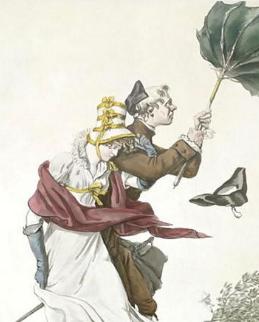
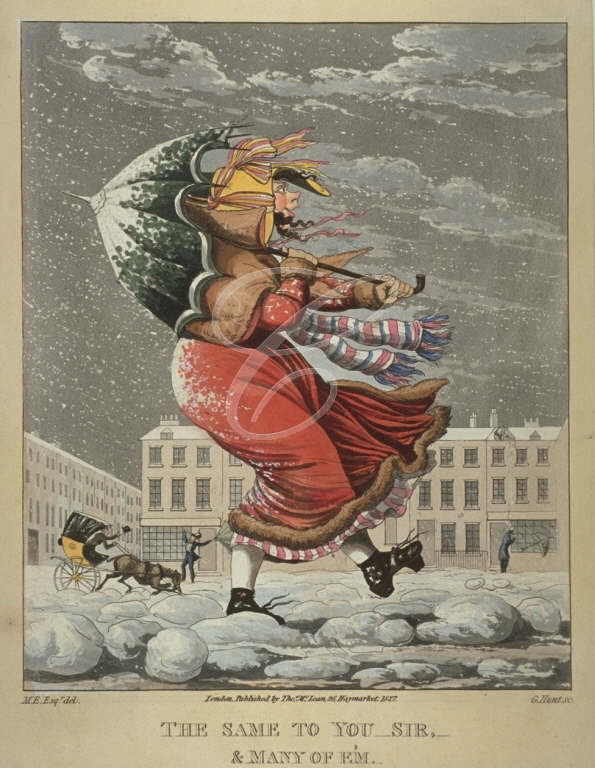
Sunny weather was not much more helpful, for when poo baked and dried on dusty streets, it tended to crumble and turn into dust. A brisk wind would blow odiforous grit under door crevaces and through open windows, landing on furniture, floors, curtains, rugs, and hanging laundry. A person walking along the streets on a blustery day, would have it blown onto their clothes and in their hair. (Let’s not even imagine how much of these offensive granules landed on their faces and inside their mouths and noses! Achoo!)

Carle Vernet, detail of a gust of wind

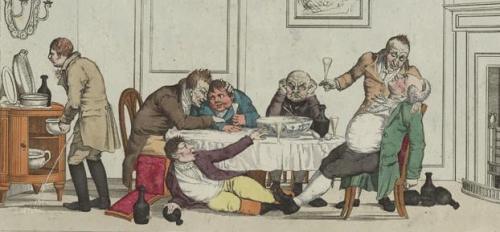
As for hygienic habits, if English Regency gentlemen felt comfortable urinating in chamberpots in the diningroom after dinner in full view of their companions, one can imagine that they thought nothing of relieving themselves in back alleys. And where were the poor urchins who lived on the streets supposed to “go”? Or the individuals crammed into overcrowded tenements who shared a common privy with hundreds of others and who, due to pressing circumstances, could NOT wait?

If peeing in front of others (left) near food stuffs inside one's home was permissable, one can only imagine the habits of this gentleman outside of a tavern.

There were attempts to combat these continual eliminations and excretions by animals and humans, which will be discussed in the next Fawlty Regency London post. Until next time, gentle reader, I am signing off. I hope I have not offended your tender sensibilities (or activated your gag reflexes) too much. Part 2 of this fascinating series will discuss The Removers, or those who worked tirelessly to keep London smelling as fresh as a daisy (well, at least like day old cat litter).

For those who are equally as fascinated with topics of an earthy nature as I am, here’s another post: Urea, a 17th & 18th Spot Remover, or Pee as a Cleansing Agent

Read Full Post »

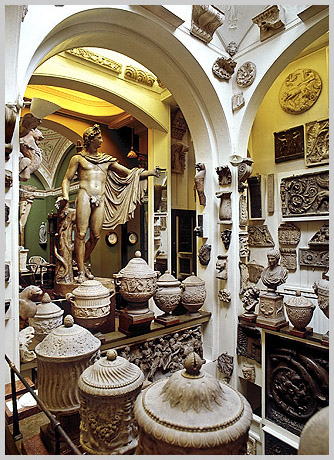
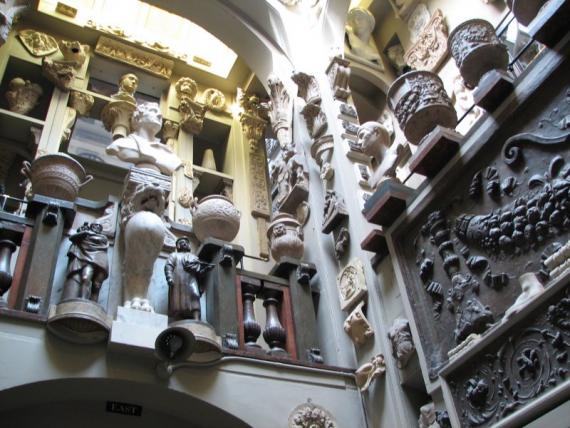
Interior, Sir John Soane’s House Museum

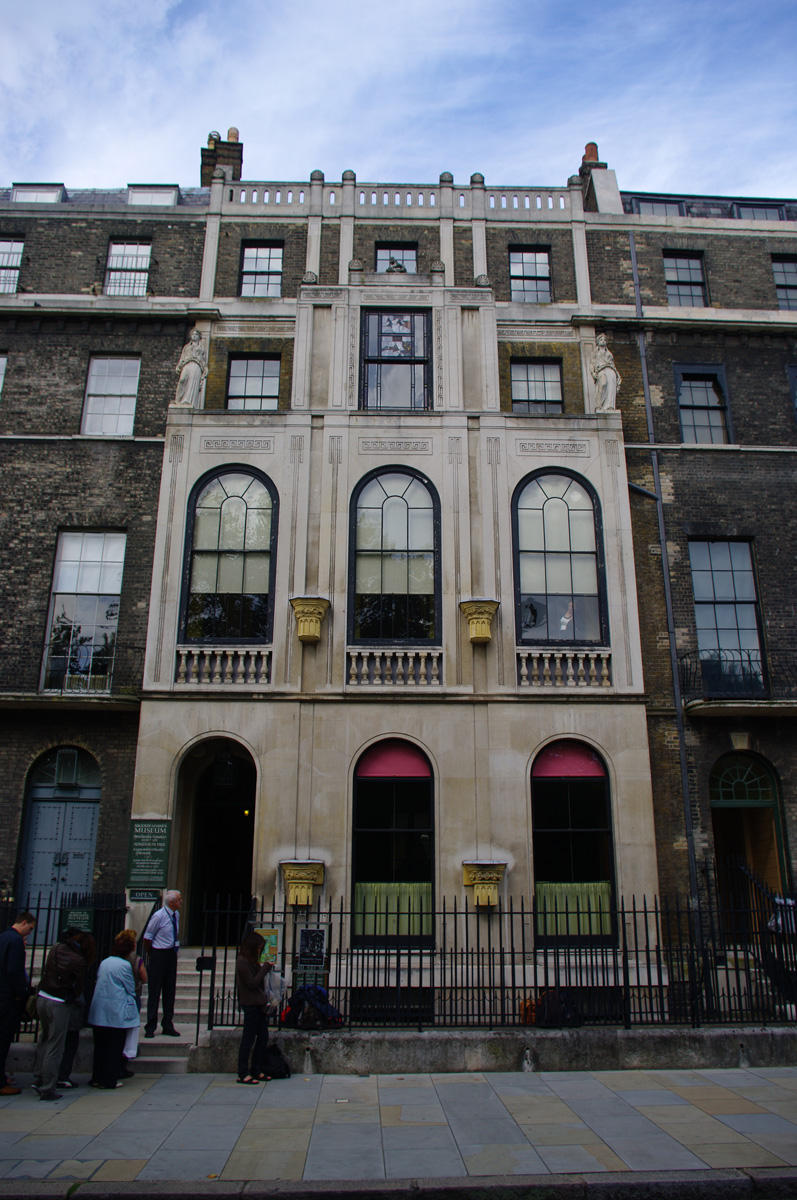
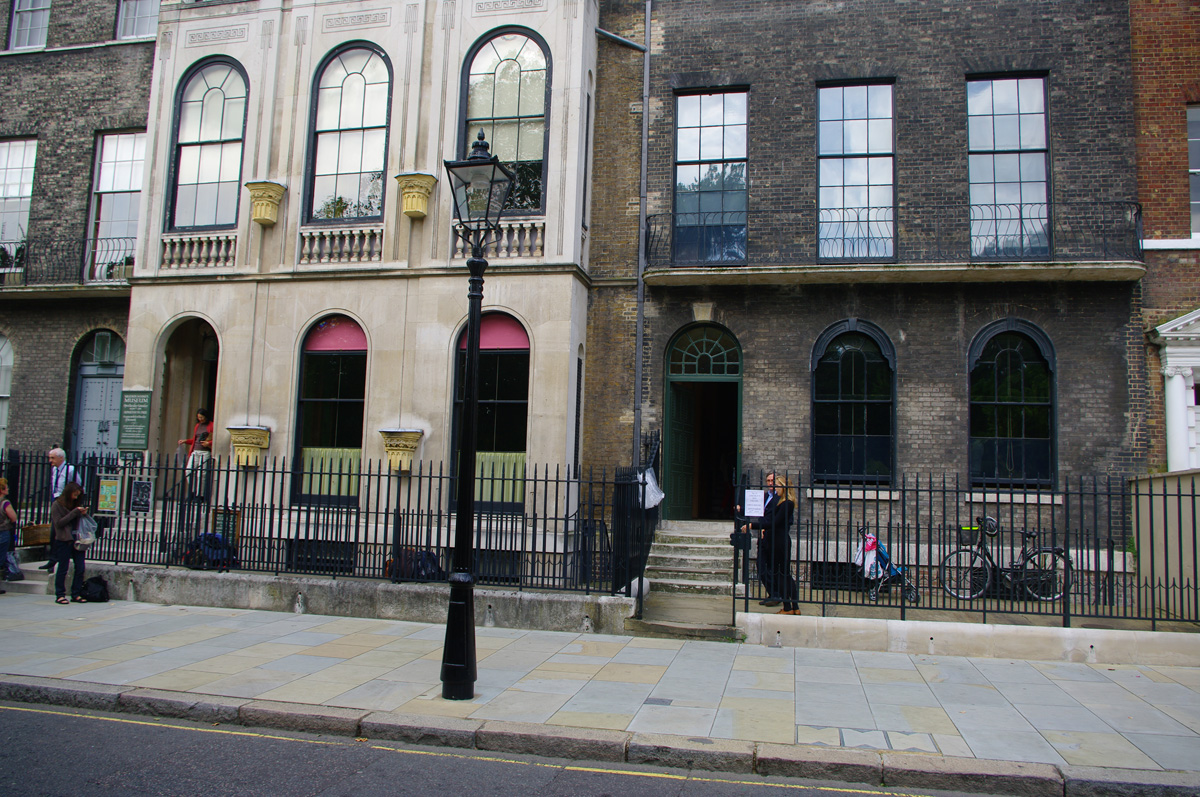
At Lincoln’s Inn Field , architect Sir John Soane (1753-1837) built three townhouses between 1792 and 1824 to house his remarkable collection of antiquities and objects d’art. The Museum was established by a private Act of Parliament in 1833 The house was opened to the public after the architect’s death in 1837.

Today, the museum is best seen on first Tuesday evening of each month when it is lit by candlelight. In three years, after a £7 million restoration, Soane’s private apartments will be opened to view for the first time in 170 years. Soane was known for his original designs of internal spaces and lighting, and for incorporating shallow domes, segmental arches, and clerestories.

Sir John Soane’s House and Museum. Image @Tony Grant

During the latter half of the 18th century (before the Napoleonic Wars), it was the custom of British collectors, painters and patrons to study antiquities of the ancient world during their Grand Tour of the Continent. The great collectors returned home laden with objects that they had acquired, most notably sculptures, gems, coins, vases, mosaics,  paintings, and architectural fragments from such countries as Italy, Egypt, and Greece. These visitors, mostly gentlemen, also brought back their vast knowledge (and love) of classical architecture, which in turn influenced the Neoclassical buildings, interiors, and styles so popular during the Georgian and Regency eras.

Interior of the Soane Museum**

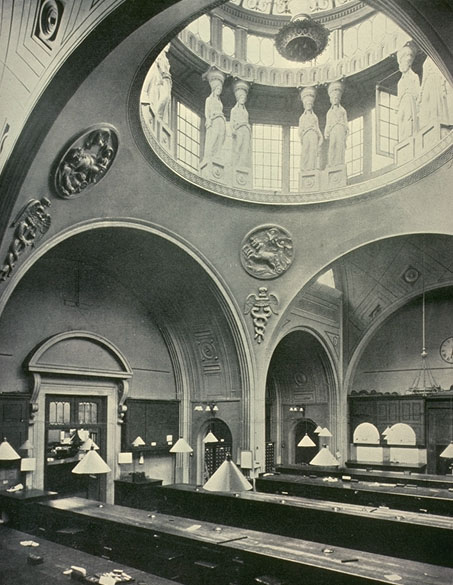
Interior, original Bank of England

Sir John Soane traveled to Italy between 1777 – 1780 to study architecture on a scholarship from the Royal Academy, and acquired his collection between the 1780s and his death in 1837. Among his designs are the Bank of England (now torn down), Dulwich College Art Gallery, and his own houses in Lincoln Fields Inn.

On his appointment as Professor of Architecture at the Royal Academy in 1806 Soane began to arrange the Books, casts and models in order that the students might have the benefit of easy access to them and proposed opening his house for the use of the Royal Academy students the day before and the day after each of his lectures. By 1827, when John Britton published the first description of the Museum, Soane’s collection was being referred to as an ‘Academy of Architecture’. – Sir John Soane’s Museum: Official Site


The three doorways to the Sir John Soane’s House Museum. Image @Tony Grant

Read Full Post »

She lost her pattens in the muck
& Roger in his mind
Considered her misfortune luck
To show her he was kind
He over hitops fetched it out
& cleaned it for her foot…
From the Middle Period Poems of John Clare (1820s)

It is commonly acknowledged that country roads in the day of Jane Austen became muddy and rutted in heavy rains, and therefore nearly impassable. In cities and towns, streets required constant sweeping of horse dung and dirt by street sweepers. Ladies wearing long white gowns and soft satin or kid slippers were constantly dodging dirt, protecting their hems from wet grass, and finding ways to walk on roads and cobblestones whose condition were poor at best.

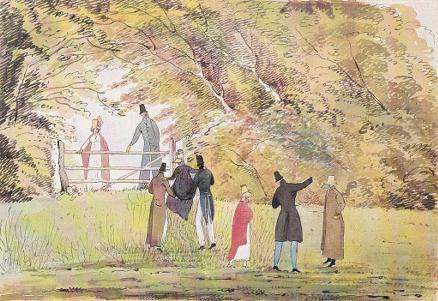
Diana Sperling's watercolor of a walk to a neighbor's house in mud

Diana Sperling painted her delightful watercolor sketches between 1812 and 1823. In two of the paintings, she shows precisely how difficult it was for ladies (and gents) to walk over poorly maintained roads – or no roads at all! One imagines that Jane Austen and her family, who were country gentry like the Sperlings, encountered similar difficulties when walking.

Charles Sperling conveys a lady over wet grass, by Diana Sperling.

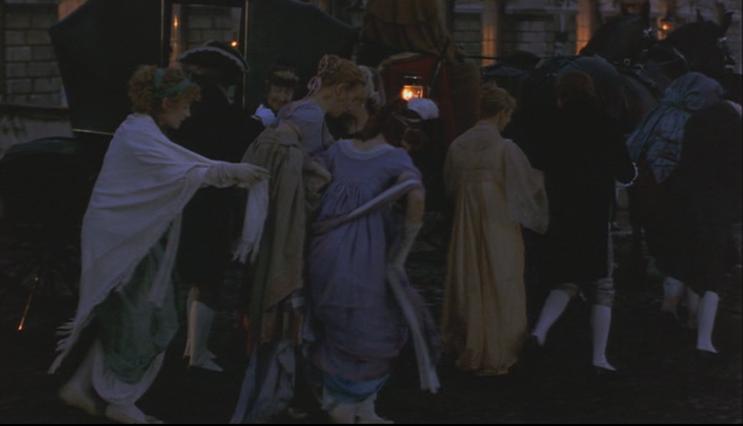
In Ang Lee’s Sense and Sensibility, one can see Marianne in particular holding up her skirts and daintily traipsing over a London street as the party walks from their carriage to the Dashwood’s ball in London. I found this scene particularly interesting, for this is one of the few films that depict how difficult it was for ladies to keep their garments clean as they walked down London’s streets. Regency women must have collectively heaved a sigh of relief when hemlines became fashionably short.
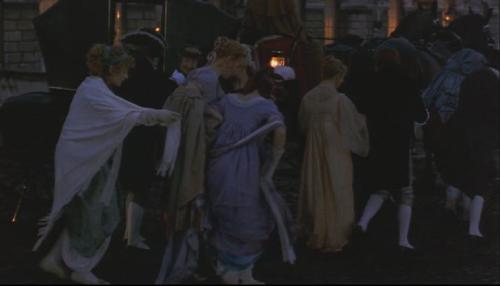
 

Marianne Dashwood (Kate Winslet) holds up her skirt, shawl, and reticule as she walks gingerly towards the ball.
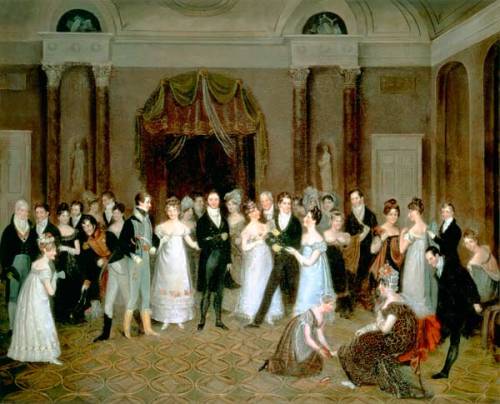


In Rolinda Sharples' Clifton Assembly Room (1817), one can see the lady on the lower right changing her slippers in the cloak room.

The problem of keeping one’s feet and skirts clean was solved by wearing pattens, although this practice was rapidly fading in the early 19th century.
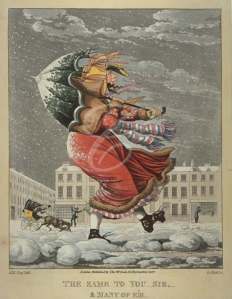
 

Lady wearing pattens in snow. Image @City of London

In A Memoir of Jane Austen, her James Edward Austen Leigh wrote about his aunts Cassandra and Jane:

The other peculiarity was that when the roads were dirty the sisters took long walks in pattens. This defence against wet and dirt is now seldom seen. The few that remain are banished from good society and employed only in menial work…

As an illustration of the purposes which a patten was intended to serve, I add the following epigram written by Jane Austen’s uncle Mr Leigh Perrot, on reading in a newspaper of the marriage of Captain Foote to Miss Patten

Through the rough paths of life,

with a patten your guard,

May you safely and pleasantly jog,

May the knot never slip,

nor the ring press too hard,

Nor the Foot find the Patten a clog.

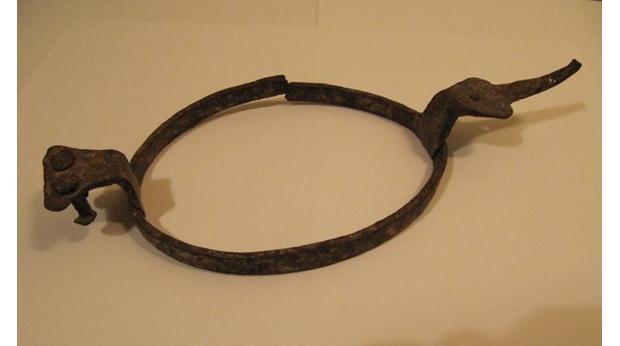
18th century fragment, iron shoe patten

A patten was an oval shoe iron that was riveted to a piece of wood and then strapped to the underside of a shoe. This unwieldy and loud contraption served to raise the shoe out of the mud or a dirty street.  Even a clean street would sully the hems of delicate white muslin gowns, and thus ladies would commonly wear pattens. However, these contraptions were loud. As Jane Austen described in Persuasion:

“When Lady Russell, not long afterwards, was entering Bath on a wet afternoon, and driving through the long course of streets from the Old Bridge to Camden Place, amidst the dash of other carriages, the heavy rumble of carts and drays, the bawling of newsmen, muffin-men, and milk-men, and the ceaseless clink of pattens, she made no complaint..”
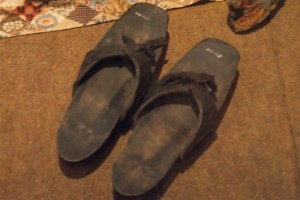
Early 19th century pattens

Pattens had been banned from churches for some time. As early as 1390, the Diocese of York forbade clergy from wearing pattens and clogs in both church and in processions, considering them to be indecorous: “contra honestatem ecclesiae”*. An 18th century notice in St Margaret Pattens, the Guild Church of the Worshipful Company of Pattenmakers, requested that ladies remove their pattens on entering; other English churches had similar signs, and in one case, provided a board with pegs for ladies to hang them on. One surmises that churches banned the use of pattens because of their loud clatter on stone floors.
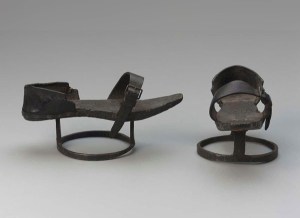
Early 19th century pattens. Image @Museum of Fine Arts, Boston

Constance Hill, who with her sister followed in the footsteps of Jane Austen a century after Jane’s death, described the noise of these raised iron clogs:

It is true that in bad weather ladies could walk for a short distance in pattens, which were foot-clogs supported upon an iron ring that raised the wearer a couple of inches from the ground. But these were clumsy contrivances. The rings made a clinking noise on any hard surface, and there is a notice in the vestibule of an old church in Bath, stating that “it is requested by the church-wardens that no persons walk in this church with pattens on.” – Constance Hill, Jane Austen: Her Homes and Her Friends

Pattens were clumsy platforms that raised the shoe a few inches from the ground. The most common patten after the 17th century was made from a  flat metal ring which made contact with the ground. The ring was then attached to a metal plate nailed into the wooden sole. By the 18th and 19th centuries, men’s shoes had thicker soles and the wealthier gentlemen tended to wear riding boots, and thus pattens were worn only by women and working-class men in outdoor occupations.  Soon, pattens were abandoned by ladies as well, and only the lower classes wore them as they went about their duties.
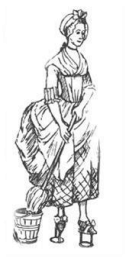
Pattens worn by a maid, 1773

There were three main types of pattens: one with a wooden ‘platform’ sole raised from the ground by either with wooden wedges or iron stands. The second variant had a flat wooden sole often hinged. The third type had a flat sole made from stacked layers of leather.*
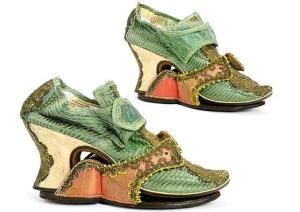
18th century silk shoes protected by pattens. Image @Wall Street Journal

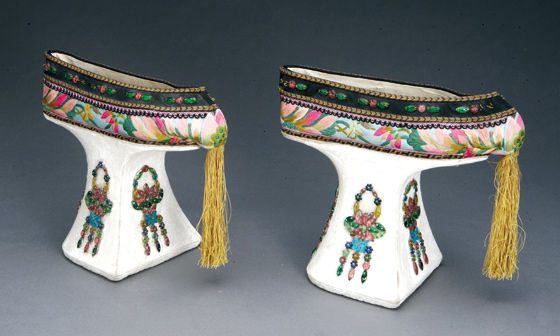
One can imagine the sad state of paths and roads the world over, which necessitated the use of such clumsy footwear in England, America, Turkey, and China, to name a few countries.

Late 19th century Chinese porcelain patten shoes

Images of pattens over the centuries:

Read Full Post »
The environs of London changed dramatically during the 18th and 19th century.

Map of London, Fairburn, 1795

Find them here: Maps of the city are clickable for closer views.  Click on this link: Old London Maps.

List of maps and views in chronological order on the site:

1702
St. Paul’s Cathedral. Pieter Schenk c. 1702. A colourised view of St Paul’s from Westminster.
1720
John Stow (John Strype, editor, and Richard Blome, engraver), maps and plans from the 1720 edition of The Survey of the Cities of London and Westminster.
1750
A map of the Thames between the Tower and Blackwall, giving soundings at low tide, and showing stairs and windmills. Printed in the late 18th century, but showing the Thames as it was in 1750.
1753
A map showing the new roads etc. from Westminster Bridge in May 1753, taken from the Gentleman’s Magazine.
1756
The Proposed New Road from Paddington to Islington 1756 in London.
1786
John Carey’s beautiful Actual Survey of the Country Fifteen Miles Around London, 1786 (which now, of course, includes most of London). This incorporates 24 maps of all eighteenth-century London’s satellite villages and many contemporary views.
1792-99
Richard Horwood’s 1792-1799 Plan of London and Westminster – quite simply, the most detailed map of Georgian and Regency London you will ever find. It shows every house (with numbers), every alley, every tavern, every work and alms house. Magnificent.
1801 John Fairburn’s Plan of Westminster and London, 180

Read Full Post »
« Newer Posts - Older Posts »