Feeds:
Posts
Comments

Archive for the ‘Regency style’ Category

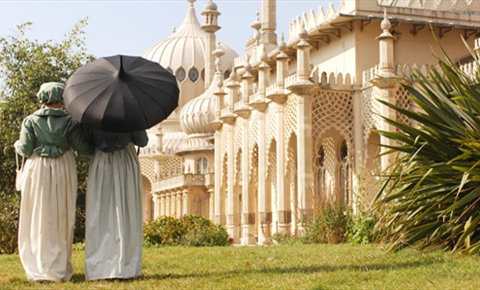
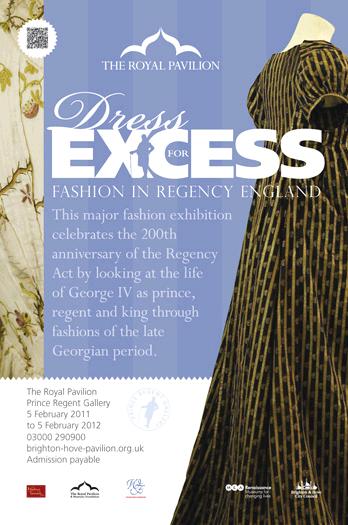
Dress for Excess: Fashion in Regency England, opened on February 5 and will run for a full year. The cost of the exhibition is free for those who purchase tickets to see the Royal Pavilion & Museums at Brighton.

The fashions look at the life of George IV as Prince, Regent and King through the clothes of the late Georgian period and how they have influenced fashions today. The king’s silk and velvet coronation robe, trimmed in ermine and over 16 feet in length, will be on public display for the first time in 30 years. Other clothes in the exhibition include a dandy’s costume, military uniform worn at the Battle of Waterloo, and neoclassical influenced silk and muslin gowns.

The costumes are displayed in rooms in the Royal Pavilion. The links below feature a number of beautiful examples in the exhibition. Lucky is the person who plans to visit Brighton within this calendar year!

Read Full Post »

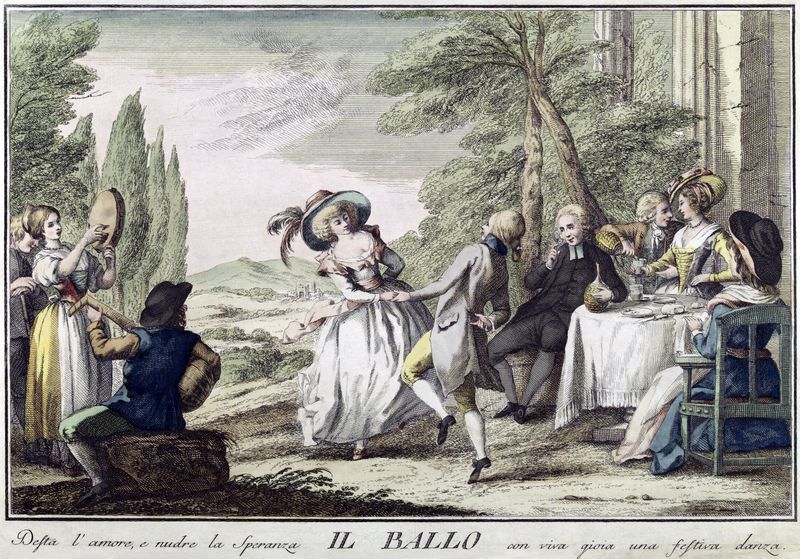
Inquiring readers: Recently I ran across the Contracts Prof Blog, a member of the Blog Professor Blogs network. Professor Franklin G. Snyder kindly granted me permission to reprint in full a second post written by Professor Jeremy Telman of Valparaiso University on February 1, 2010. (See the first post at this link.)  This post discusses the similarities and dissimilarities between a dance partnership and a marriage partnership in Northanger Abbey:

Image @Contracts Prof Blog

Thus the dashing Mr. Tilney addresses Catherine Morland, heroine of Northanger Abbey, upon discovering her in conversation with the odious Mr. Thorpe at the commencement of a dance:

That gentleman would have put me out of patience, had he staid with you half a minute longer. He has no business to withdraw the attention of my partner from me. We have entered into a contract of mutual agreeableness for the space of an evening, and all our agreeableness belongs solely to each other for that time. Nobody can fasten themselves on the notice of one, without injuring the rights of the other. I consider a country-dance as an emblem of marriage. Fidelity and complaisance are the principal duties of both; and those men who do not chuse to dance or marry themselves, have no business with the partners or wives of their neighbours.”

The conversation proceeds on the similarities and dissimilarities between a dance partnership and a marriage partnership. But if Catherine really wanted to impress Mr. Tilney, she would have pointed out that his real complaint sounded in tortious interference rather than in breach of contract.
[Jeremy Telman]

Legal Definition of Tortious/Wrongful Intereference (in Business Relationship)

The theory of the tort or wrong of interference is that the law draws a line beyond which no one may go in intentionally intermeddling with the business affairs of others. So, a systematic effort to induce employees to leave their present employment and take work with another is unlawful when the purpose of such enticement is to cripple or destroy their employer rather than to obtain their skills and services in the legitimate furtherance of one’s own business enterprise.

It also becomes unlawful when the inducement is made through the use of untruthful means, or for the purpose of having the employees commit wrongs such as disclosing the former employer’s trade secrets. – ‘Lectric Law Library Lexicon


Read Full Post »

She lost her pattens in the muck
& Roger in his mind
Considered her misfortune luck
To show her he was kind
He over hitops fetched it out
& cleaned it for her foot…
From the Middle Period Poems of John Clare (1820s)

It is commonly acknowledged that country roads in the day of Jane Austen became muddy and rutted in heavy rains, and therefore nearly impassable. In cities and towns, streets required constant sweeping of horse dung and dirt by street sweepers. Ladies wearing long white gowns and soft satin or kid slippers were constantly dodging dirt, protecting their hems from wet grass, and finding ways to walk on roads and cobblestones whose condition were poor at best.

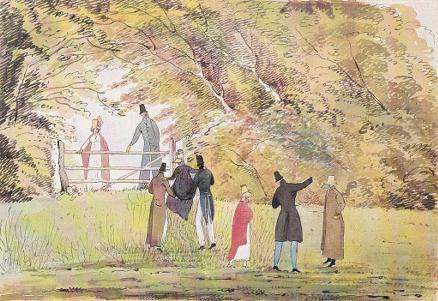
Diana Sperling's watercolor of a walk to a neighbor's house in mud

Diana Sperling painted her delightful watercolor sketches between 1812 and 1823. In two of the paintings, she shows precisely how difficult it was for ladies (and gents) to walk over poorly maintained roads – or no roads at all! One imagines that Jane Austen and her family, who were country gentry like the Sperlings, encountered similar difficulties when walking.

Charles Sperling conveys a lady over wet grass, by Diana Sperling.

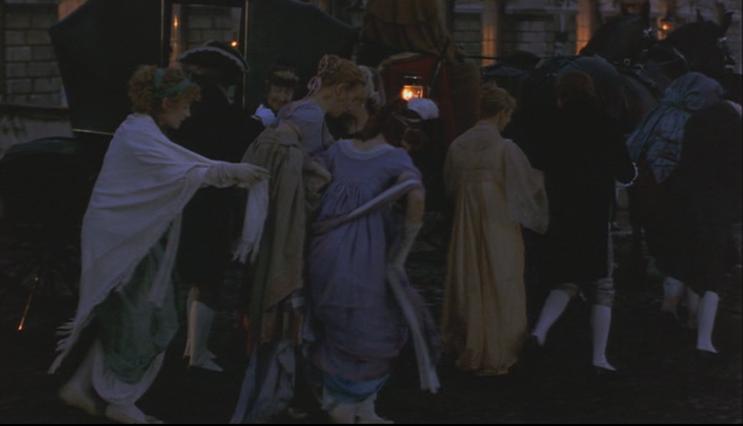
In Ang Lee’s Sense and Sensibility, one can see Marianne in particular holding up her skirts and daintily traipsing over a London street as the party walks from their carriage to the Dashwood’s ball in London. I found this scene particularly interesting, for this is one of the few films that depict how difficult it was for ladies to keep their garments clean as they walked down London’s streets. Regency women must have collectively heaved a sigh of relief when hemlines became fashionably short.


Marianne Dashwood (Kate Winslet) holds up her skirt, shawl, and reticule as she walks gingerly towards the ball.


In Rolinda Sharples' Clifton Assembly Room (1817), one can see the lady on the lower right changing her slippers in the cloak room.

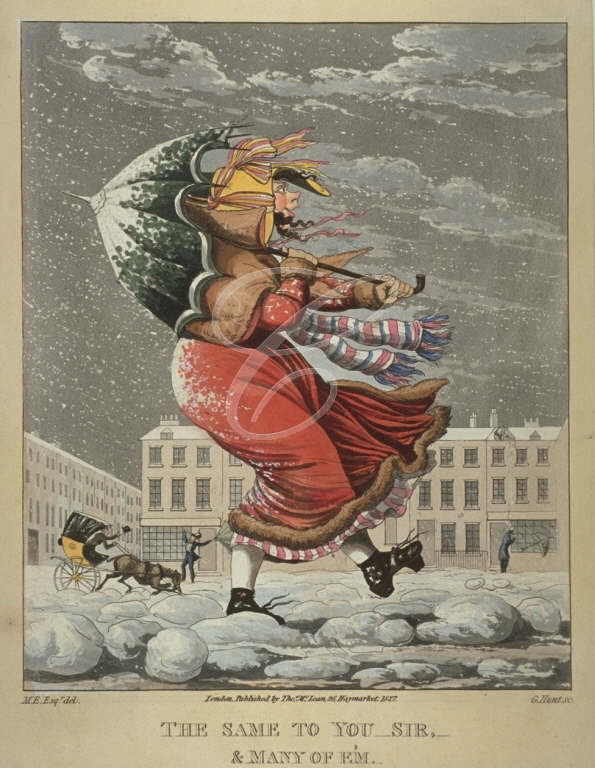
The problem of keeping one’s feet and skirts clean was solved by wearing pattens, although this practice was rapidly fading in the early 19th century.


Lady wearing pattens in snow. Image @City of London

In A Memoir of Jane Austen, her James Edward Austen Leigh wrote about his aunts Cassandra and Jane:

The other peculiarity was that when the roads were dirty the sisters took long walks in pattens. This defence against wet and dirt is now seldom seen. The few that remain are banished from good society and employed only in menial work…

As an illustration of the purposes which a patten was intended to serve, I add the following epigram written by Jane Austen’s uncle Mr Leigh Perrot, on reading in a newspaper of the marriage of Captain Foote to Miss Patten

Through the rough paths of life,

with a patten your guard,

May you safely and pleasantly jog,

May the knot never slip,

nor the ring press too hard,

Nor the Foot find the Patten a clog.

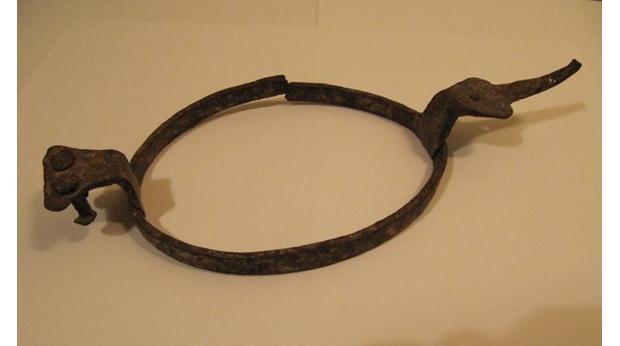
18th century fragment, iron shoe patten

A patten was an oval shoe iron that was riveted to a piece of wood and then strapped to the underside of a shoe. This unwieldy and loud contraption served to raise the shoe out of the mud or a dirty street.  Even a clean street would sully the hems of delicate white muslin gowns, and thus ladies would commonly wear pattens. However, these contraptions were loud. As Jane Austen described in Persuasion:

“When Lady Russell, not long afterwards, was entering Bath on a wet afternoon, and driving through the long course of streets from the Old Bridge to Camden Place, amidst the dash of other carriages, the heavy rumble of carts and drays, the bawling of newsmen, muffin-men, and milk-men, and the ceaseless clink of pattens, she made no complaint..”

Early 19th century pattens

Pattens had been banned from churches for some time. As early as 1390, the Diocese of York forbade clergy from wearing pattens and clogs in both church and in processions, considering them to be indecorous: “contra honestatem ecclesiae”*. An 18th century notice in St Margaret Pattens, the Guild Church of the Worshipful Company of Pattenmakers, requested that ladies remove their pattens on entering; other English churches had similar signs, and in one case, provided a board with pegs for ladies to hang them on. One surmises that churches banned the use of pattens because of their loud clatter on stone floors.

Early 19th century pattens. Image @Museum of Fine Arts, Boston

Constance Hill, who with her sister followed in the footsteps of Jane Austen a century after Jane’s death, described the noise of these raised iron clogs:

It is true that in bad weather ladies could walk for a short distance in pattens, which were foot-clogs supported upon an iron ring that raised the wearer a couple of inches from the ground. But these were clumsy contrivances. The rings made a clinking noise on any hard surface, and there is a notice in the vestibule of an old church in Bath, stating that “it is requested by the church-wardens that no persons walk in this church with pattens on.” – Constance Hill, Jane Austen: Her Homes and Her Friends

Pattens were clumsy platforms that raised the shoe a few inches from the ground. The most common patten after the 17th century was made from a  flat metal ring which made contact with the ground. The ring was then attached to a metal plate nailed into the wooden sole. By the 18th and 19th centuries, men’s shoes had thicker soles and the wealthier gentlemen tended to wear riding boots, and thus pattens were worn only by women and working-class men in outdoor occupations.  Soon, pattens were abandoned by ladies as well, and only the lower classes wore them as they went about their duties.

Pattens worn by a maid, 1773

There were three main types of pattens: one with a wooden ‘platform’ sole raised from the ground by either with wooden wedges or iron stands. The second variant had a flat wooden sole often hinged. The third type had a flat sole made from stacked layers of leather.*

18th century silk shoes protected by pattens. Image @Wall Street Journal

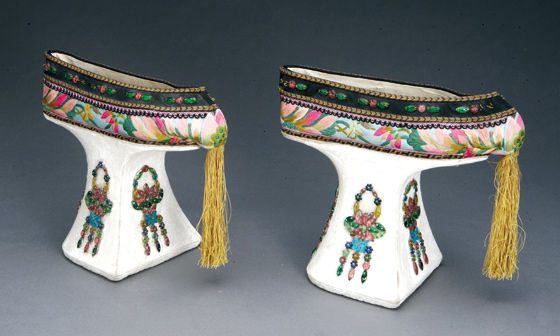
One can imagine the sad state of paths and roads the world over, which necessitated the use of such clumsy footwear in England, America, Turkey, and China, to name a few countries.

Late 19th century Chinese porcelain patten shoes

Images of pattens over the centuries:

Read Full Post »

Inquiring readers,

For those of you who have not yet visited Nancy Mayer’s beautiful website, you are in for a treat. Click here to enter Nancy Mayer, Regency Researcher: A most proper authority on all things Regency. Nancy has been a member of JASNA (Jane Austen Society of North America) for some time. She was a member of a local chapter in 1990-1994, then started up a new chapter in 1996, and has been the regional coordinator for northern Georgia since then. Nancy has been researching Regency England for more than twenty years, and finds Google books a big help. While she is responsible for the text on her website, Susan Newman designed the web pages and added the illustrations. Nancy graciously agreed to answer a few of my questions:

1. How and when did you become interested in Jane Austen’s novels?

This is probably heresy, but I came to Austen and her novels because I wanted to learn more about Regency life. I had heard of Pride and Prejudice and seen the old Lawrence Olivier movie, but hadn’t gone any further with it or the other novels until I became interested in the Regency period. After reading Jane Austen’s letters, and some biographical data on her, I started in on her novels. I joined a discussion group in Atlanta around 1990 and haven’t looked back since. Even after twenty years of discussing the novels there is always something new to be found. I am not one who has memorized the books and don’t read them all over every year, but I usually find some new insight each time I do.

2. Which is your favorite Jane Austen book and/or character, and why?

Persuasion. Anne Elliot is my favorite character. She is more mature than the other heroines and so doesn’t make the mistakes they do. One seldom has to blush for her. I also think Wentworth is more romantic than Darcy, but I wouldn’t want to be a sailor’s wife.

3. You are considered an authority on the topic of Jane Austen and the Regency period, and your breadth of knowledge about the era astounds me. What are some of your favorite topics to research and why?

You flatter me. The more I research the more I discover what I don’t know. I like to research marriage, titles, peerage, the law, and mourning rules. I find property law most confusing, and barely know a VanDyke fringe from a scalloped one.

One can find all sorts of period books on Google books.

I am also interested in Lord Byron who was Jane Austen’s contemporary, His life gives the masculine and aristocratic elements missing in Jane Austen’s life. Though they both were alive from 1809 to 1817, one could sometimes think they lived at different times.

4. For the casual (but avid) Jane Austen reader, what are some sources you would recommend for further reading?

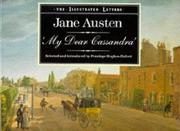
  • My Dear Cassandra:The letters of Jane Austen, Selected and introduced by Penelope Hughes Hallet. Clarkston Potter Publishers or Collins & Brown 1990, ISBN 0-51758312-7
  • Some might want the complete letters edited by Deirdre Le Faye, or the ones edited by John Chapman.
  • The novels published by Oxford have great appendices. Some of the Critical editions of the novels have appendices. One should have a copy of Lover’s Vows in one’s Copy of Mansfield Park. There are annotated versions of the stories with explanations of obscure and not so obscure points, and there are even comic book editions of Pride and Prejudice and Sense and Sensibility. No matter one’s taste or interests, one should be able to find a connection with Jane Austen.
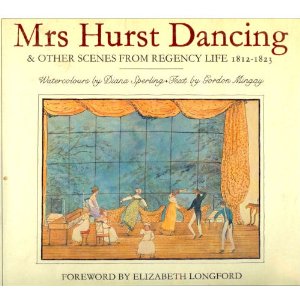
  • Mrs. Hurst Dancing by Diana Sperling. This isn’t about Jane Austen but the illustrations of the Sperling family could be those of the Younger Dashwoods or the Bennets. # ISBN-10: 0575030356 # ISBN-13: 978-0575030350. Some are exceedingly expensive, but there are remaindered copies and second-hand copies at reasonable prices.
  • Jane Austen and Her times by G.E. Mitton, originally published 1905, 2007 Barnes and Noble.
  • Also there are probably fifty books out there covering everything from Jane Austen and Art to Jane Austen and Zombies. I know of book on Jane Austen and Food, Jane Austen and Crime, Jane Austen and fashion, ( and Fashion in the Time of Jane Austen).
  • Those who like quizzes and challenges might like: Jane Austen Challenge by Helen Barton: BartonBooks (June 2009) # ISBN-10: 0952725754 # ISBN-13: 978-0952725756
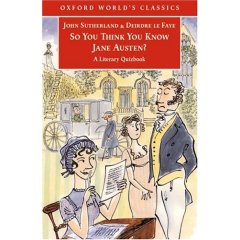
  • Also, So you Think You Know Jane Austen? By John Sutherland and Deidre le Faye Oxford University press, ISBN 0-19-280440-5

5. Would you like to share a common misconception about the Regency period with our readers, one that is wrongly perpetuated by book sources, websites, and blogs?

A general error I have found is thinking that the marriage laws, the church, and laws of inheritance were the same then as they are now. Many think the regency period was just like today, but in costume and with horses.

Nancy, thank you for sharing your wonderful insights. I hope readers will bookmark your website and visit it often. It’s best feature, as far as I am concerned, is your answers to their specific questions, like a personal researcher.

Read Full Post »


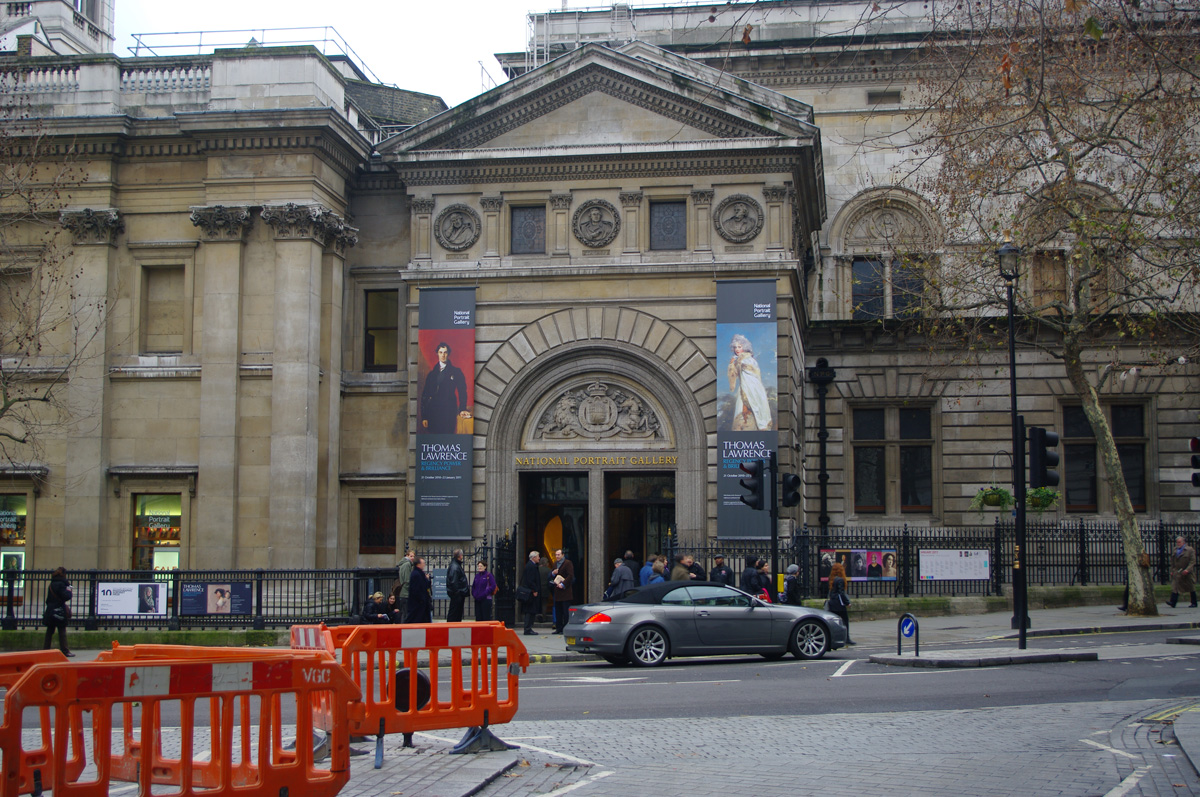
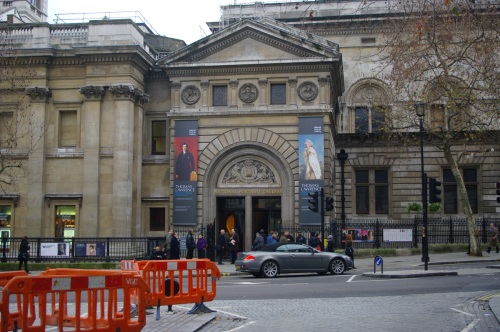
Thomas Lawrence Exhibit, National Portrait Gallery, London. Image @Tony Grant

Gentle readers, if you are lucky enough to be near London you have only a few days to see the exhibit at the National Portait Gallery of the splendid painter, Thomas Lawrence. This is Tony Grant’s (London Calling) review of the show.

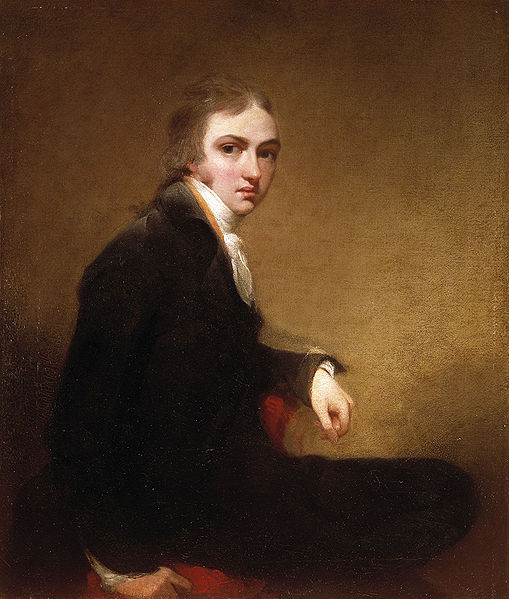
On entering the exhibition you are met with the bright gaze from a young Thomas Lawrence.
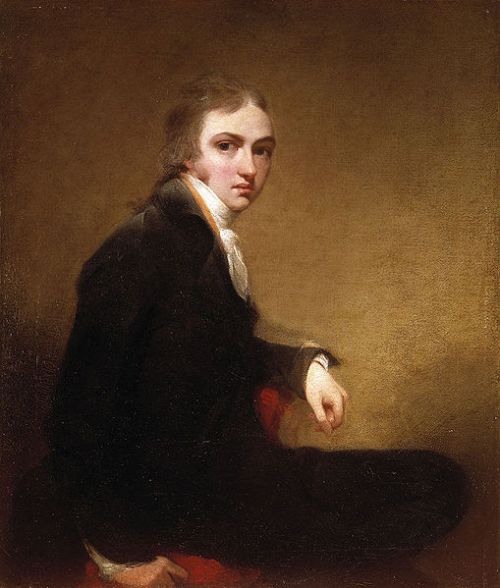
Self Portrait, Sir Thomas Lawrence, 1788 Image @PRA

Under the title of the exhibition, “Regency Power & Brilliance,” hangs a self-portrait, of oil on canvas, completed in the years 1787 – 1786 when Lawrence was 19 years of age. It is typical of Lawrence’s style that it is new and innovative for it’s time. Lawrence is sitting with his body facing to the right and his head turned to look at you the viewer over his right shoulder. The stare is steady, confident and penetrating. His face is almost illuminated and glows brightly out of the picture.
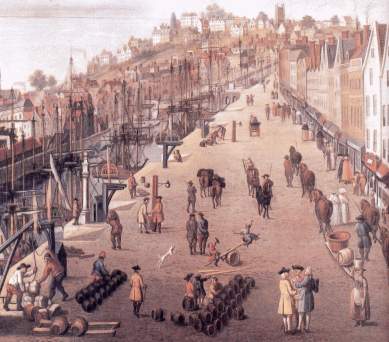
 

Bristol in the 18th century

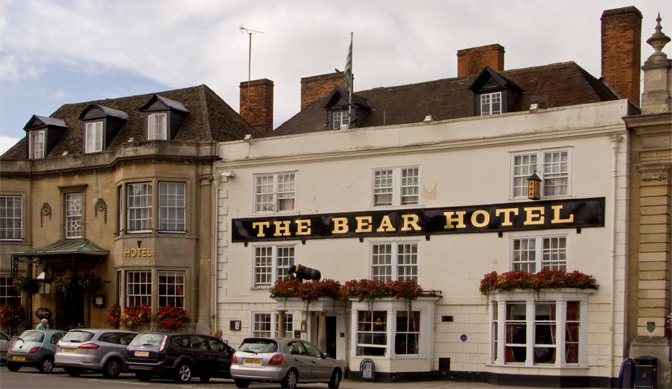
Thomas Lawrence was the leading portrait artist of the Regency period. Born in 1769 at 6 Redcross Street, Bristol, he came from a humble background. His father was also called Thomas Lawrence and his mother was Lucy Read, the daughter of a clergyman. Thomas’s father had several jobs, including innkeeper at the White Lion in Bristol. Later became the innkeeper of the Black Bear in Devizes where famous writers and artists, including David Garrick the actor and theatre owner, on their way to Bath, would stay. The young Thomas Lawrence would meet them.
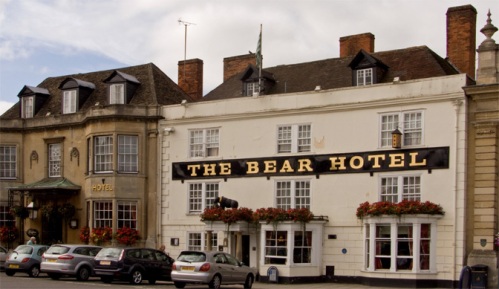
Devices Heritage .orgThe Black Bear in Devices

Thomas was the entertainment in the inn. He would recite poetry and use his natural talent for sketching people to amuse and interest them. When the senior Lawrence became bankrupt, the family moved to Bath where the younger Thomas Lawrence took over being the breadwinner for the family by selling his sketches and miniature oval portraits in pastel and chalk. Some of the wealthy people in Bath commissioned his work. From an early age Thomas had had prodigious natural talents for sketching and reciting poetry. Wealthy people allowed him to study their collections of paintings and Lawrence’s drawing of a copy of Raphael’s Transfiguration was awarded a silver gilt palette and a prize of 5 guineas by the Society of Arts in London. In 1787 he moved to London where he was introduced to Joshua Reynolds. He started exhibiting at the Royal Academy exhibitions held at Somerset House and his career took off.
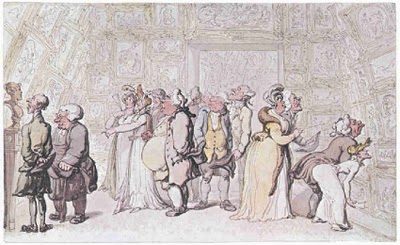
Royal Academy at Somerset House, Viewing Art, Rowlandson

The period in history that Lawrence came to prominence was also to have an affect on his development as an artist. There was much turmoil and political change. There was The French Revolution and the long wars against France. Once these came to an end, Thomas was able to travel across Europe. He did this commissioned by the Prince Regent, later George IV. He was able to make portraits of many of the great names of the time – generals, Emperors and the Pope. On his return from Europe in 1820 he was elected as the president of the Royal Academy and produced some of the best portraits of the time. Unexpectedly he died in January 1830 and was honoured with a state funeral.

What is evident in this exhibition is Lawrence’s original ideas, his naturalism and his particular use of colours.
Elizabeth Farrren, Thomas Lawrence. Image @Met Museum

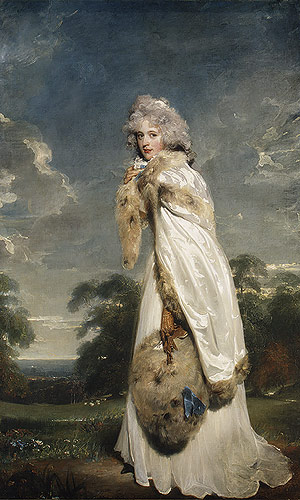
One of his early portraits, when he had only begun his career in London in 1790, was of Elizabeth Farren. He was only 21 at the time and this particular portrait attracted peoples interest. It shows a full length portrait of a slender, beautiful young girl caught in the act of walking through a rural landscape of trees and pathways with her dizzy blond head high in the dramatic surroundings of a stormy sky and dressed in a shimmering three quarter length white silk shawl over a long white gauze like garment. With this portrait and with all the others in the exhibition, for all the costume, dress and surroundings they might have, what always stands out, like an illuminated beacon, is the face of the person in the portrait. This is the most important part. It shows the persons character, and personality. Elizabeth has pale smooth skin, bright red lips and eyes that smile at you the viewer.
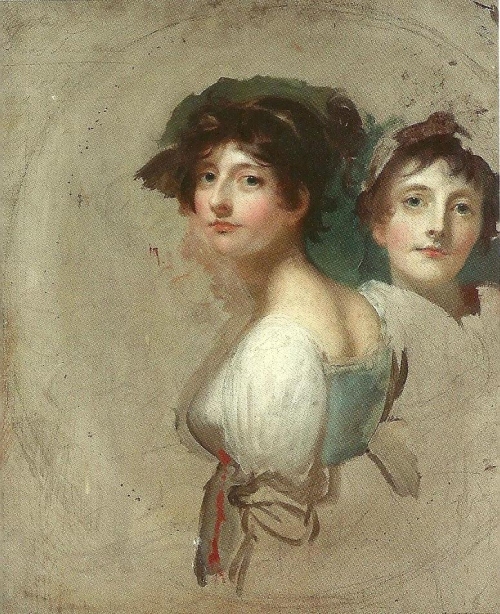
 

Emilia, Lady Cahir, later Countess of Glengall, Thomas Lawrence

What is evident with all the pictures in this exhibition is that when you are standing looking at one of these portraits, no matter how many other people there are in the gallery, it’s just the two of you. You could almost have a conversation together. The paintings certainly allow you to relate to them in a very personal way. I think this is true of all of Thomas’s portraits. Many of the portraits of beautiful young women, as with the Elisabeth Farron portrait, show them, young, always beautiful but often unmarried. The full title to this particular portrait is, Elizabeth Farron, later Countess of Derby. There are a lot of portraits with the name and then the phrase,.. “later the duchess of…” appended to the end. These portraits must have served an important part of the marriage trade. I certainly felt my blood rising at the sight of some of these beauties.
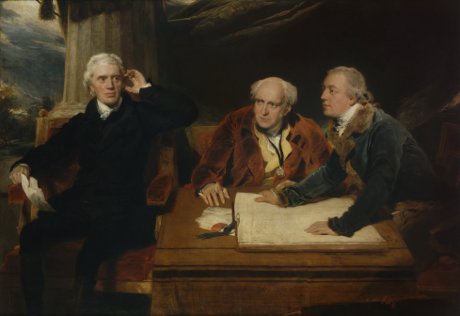
Three Colleagues, Thomas Lawrence

Thomas Lawrence showed great originality. One of his portraits of 1806, of Sir Francis Baring, John Baring, his brother and Charles wall, shows three businessmen contemplating business. It’s extraordinary. They have their work set out in front of them spread on a table and they are planning, scheming, thinking, working things out. It is an action packed picture. Although they are not walking or physically moving anywhere in the picture, things are happening, great decisions are being made right there in front of you. The different angles and poise of each character is quite disconcerting at first. It is not smooth and elegant. It shows action of thought, creativity and influence.
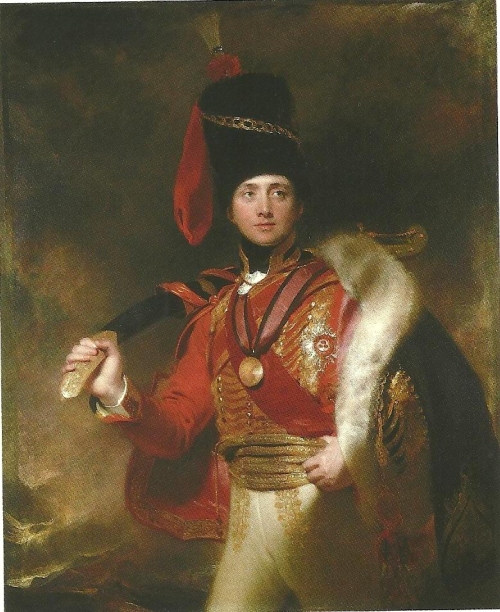
 

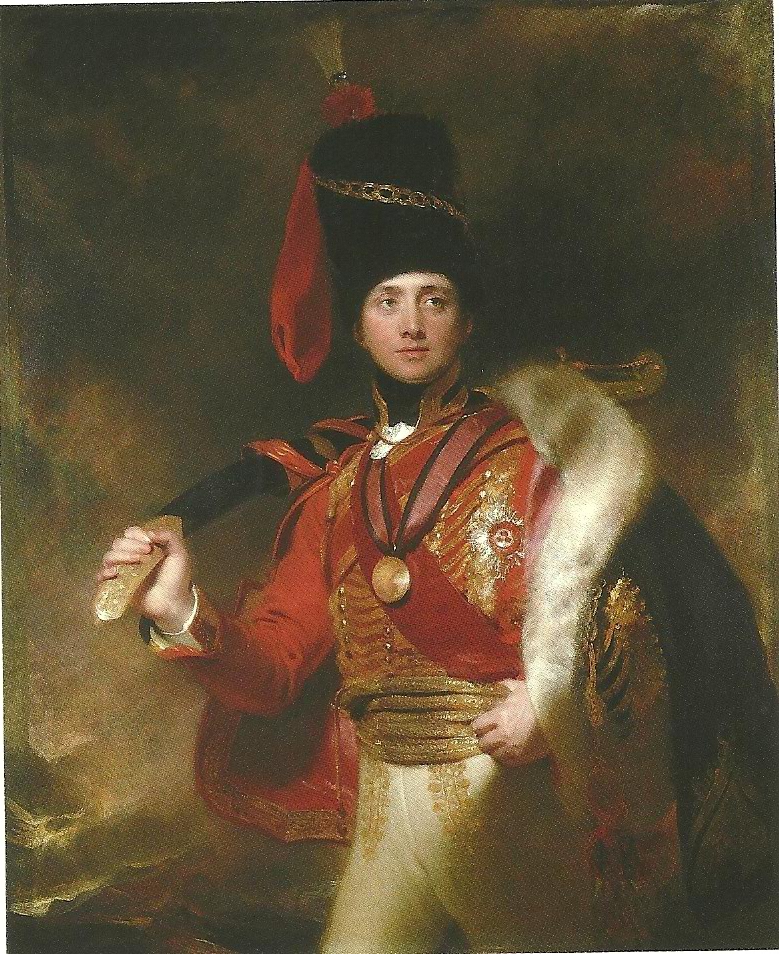
Charles William Vane Stewart, 3rd Marquess of Londonderry

Another thing I noticed and it became a quest for me to find in each portrait throughout the exhibition, was Lawrence’s use of the three colours red, white and black. At first I thought, why would he include these in every picture he painted. They do create very dramatic atmospheres. The Elizabeth Farron portrait has bright red lips, masses of white in her dress and one small pitch black shoe poking from under the hem of her dress but many of the other portraits have great swathes of each of these three colours.
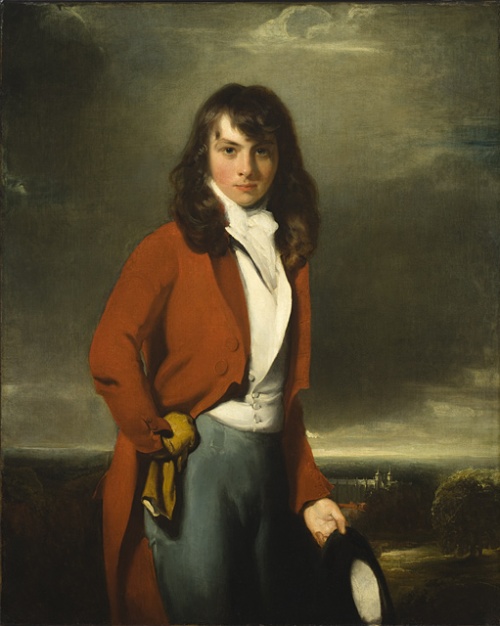
 

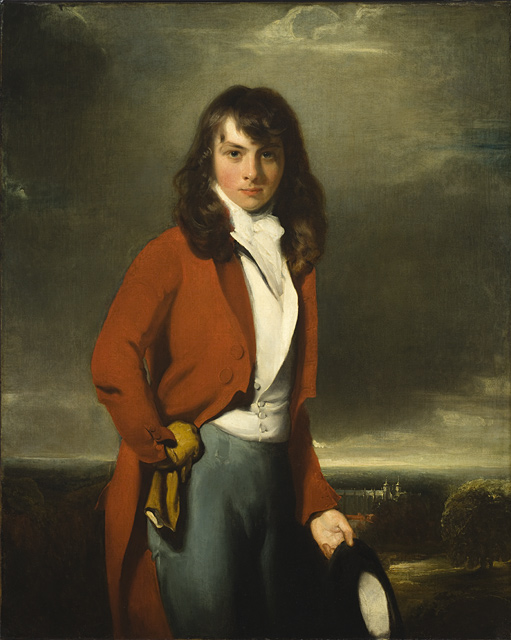
Arthur Atherley, Thomas Lawrence

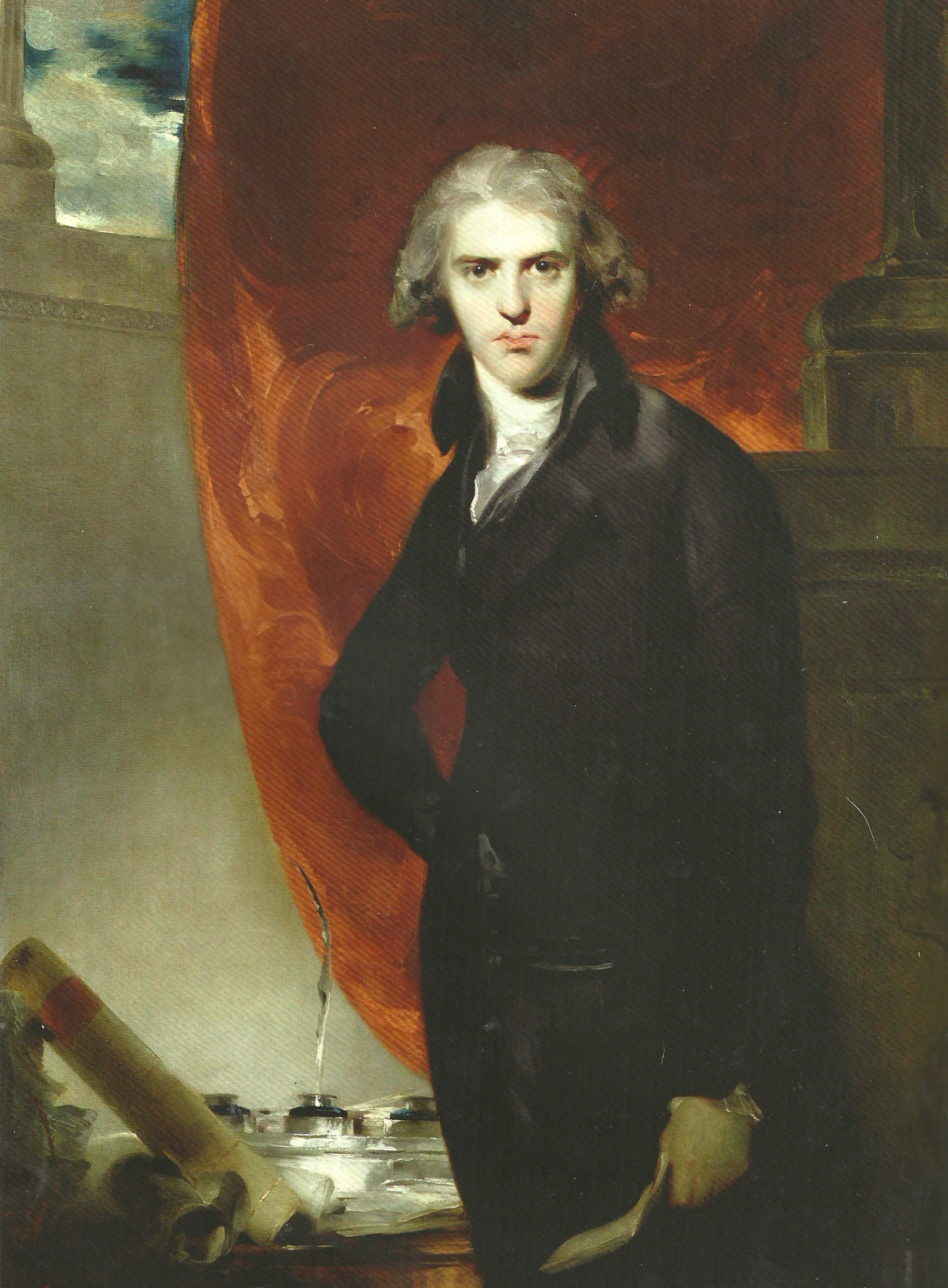
The title of the exhibition is, “Regency Power and Brilliance.” Lawrence paints many of the leading figures of that period from right across Europe. You might think, well how does the power bit enter into portraits of individuals? If you want to see ultimate overarching power embodied in an individual human being you only have to look at the faces in Lawrence’s portraits. All the men show this in their eyes, their demeanour. One small room in the gallery has three portraits of three different men. Arthur Atherley is a youth of about twenty who has just left Eton College, one of the top public schools. He is shown in 1792. The next shows Robert Banks Jenkinson 2nd Earl of Liverpool. This one is painted when the sitter was in his late twenties.
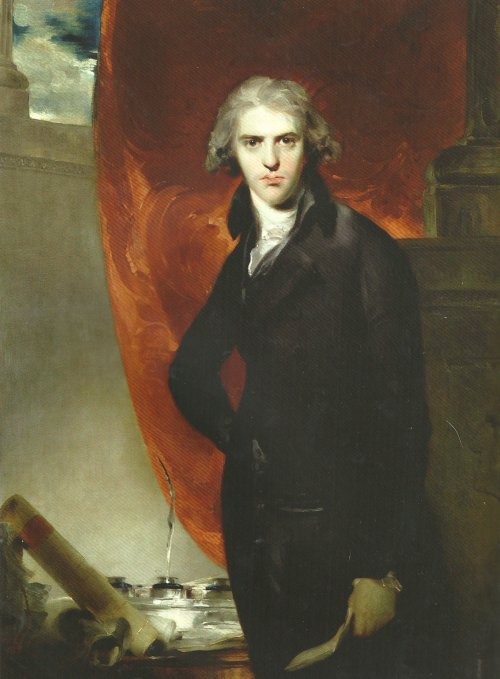
 

Robert Banks Jenkinson, 2nd Earl of Liverpool

The final picture shows, Edward Thurlow, Baron Thurlow. It was painted in 1802 when he was in his early seventies and he had retired. They are the different stages of a mans life. Arthur Atherley has a precocious energy, a steady stare revealing a sense of utter belief in his powers and where and what he is about to achieve in life. There is no swerving of thought or doubt. He is totally assured of his position and power in life. It’s quite unnerving to see this unwavering belief looking you right in the eye especially from somebody so young. I kept coming back to this portrait. He has long luxurious black hair, a bright red ornate coat and a bright luminous white neckerchief. The three colours work in a very dramatic way in this picture. Robert Banks is a thin spider like creature, slightly twisted and turning his face towards you from the picture, dressed in black from head to foot. A white pale face looking straight at you, looking into your very soul. He looks full of energy. He wants to get things done with his rolls of documents before him. His personality is like a force of nature almost leaping out of the portrait at you. He can get things done. No doubt about that.
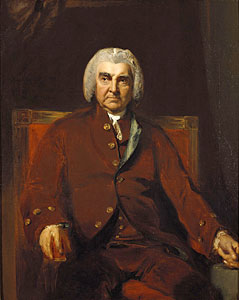
Baron Thurlow, Thomas Lawrence

Finally Edward Thurlow, at first looks, benign, very pleasant and friendly and almost smiling but the eyes are piercing and forceful. He is friendly but you couldn’t cross him. He wants talent, imagination, achievement and hard work from anybody who works for him. The three portraits, although of different people, could almost be the same person at different times of their life. In that small room in the gallery it’s quite an encounter. You could almost feel, coming away, that you have been for a tough penetrating job interview.
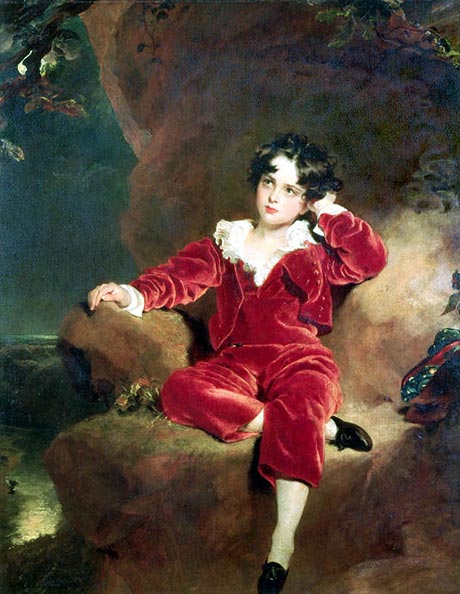
 

Master Lambton, Thomas Lawrence

Lawrence’s women fall into various categories. He obviously liked women and children too. There are quite a few pictures showing children. The children are active, playing, interacting, sometimes in a precocious way towards their mother or father in the pictures. He shows real children, not posed children.
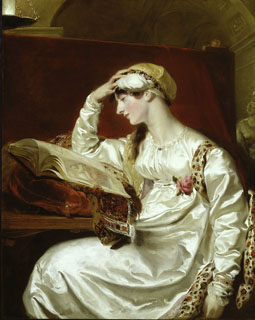
Mrs. Jens (Isabella) Wolff, Thomas Lawrence

His friend Isabella Wolf, who may have been his lover, is shown in two portraits. He drew and painted her over many years. The painting of her done in 1803 shows her examining some Michaelangelo prints. She was also separated from her husband. So this picture shows an intellectually curious women who also has broken the bounds of society in her personal life. There are also portraits of Queen Charlotte and Princess Sophia. Royalty is a theme that runs through the exhibition.
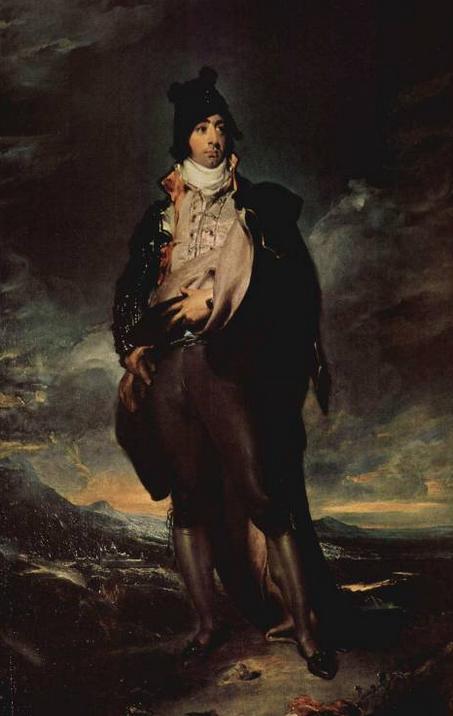
 

John, Lord Mountstuart, Thomas Lawrence

The picture that is most controversial is that of John, Lord Mountstuart.. He was a young politician and had lived in Spain for a while because he was the son of Britain’s ambassador to Spain. Lawrence painted him in 1795 when he had just returned from Spain. In many ways the picture is shocking. It is a full-length, life size portrait. It is hung so that at eye level you are confronted by a pair of very muscular legs showing all the muscular contours sheathed in very tight black leggings. As you look up you are confronted by a rather large black shining bulge in the crotch area. The top half of his body is swathed dramatically in a swirling fur trimmed embroidered black cloak with a dark jowelled, bright eyed, ruddy cheeked quite beautiful face surmounting the whole confection. It is a very erotic picture to say the least. It has lead to questions about Thomas Lawrence’s sexuality. But if you took one of his female portraits, almost any of them, you can say the same thing. Sensuality and a slight erotic air pervade many of Lawrence’s pictures.
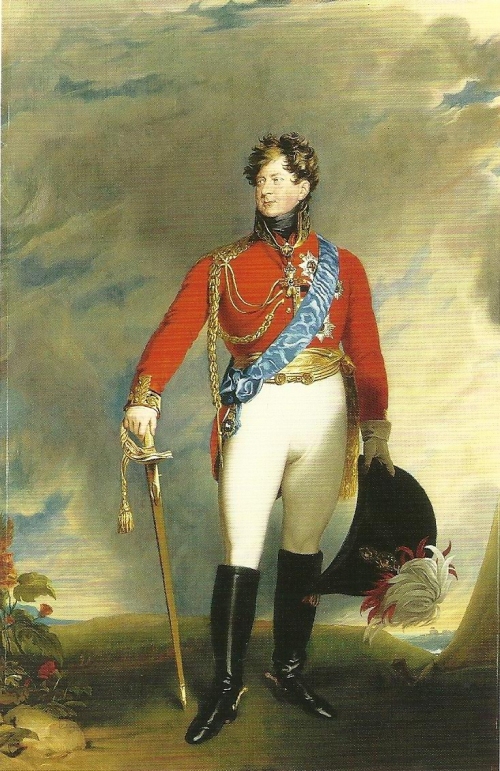
 

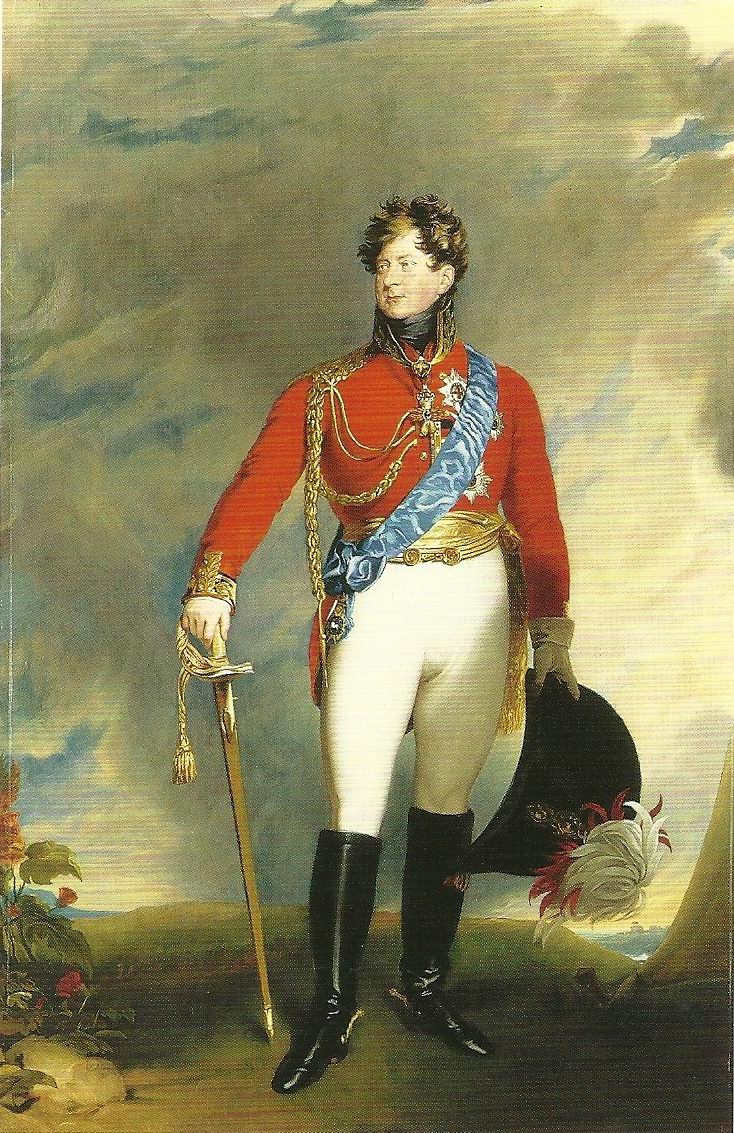
George IV when Prince of Wales, Thomas Lawrence

There are fifty-four pictures in this exhibition and each of the people portrayed in them are a delight to be with and a pleasure to spend time with. Some other characters you may care to come across are Arthur Wellesley, The Duke of Wellington, King George IV as King and also as Prince Regent, Field Marshall Blucher, who lead the Prussian forces who pursued Napoleon, Charles, the Archduke of Austria and Pope Pius VII and many more delightful and very interesting people.
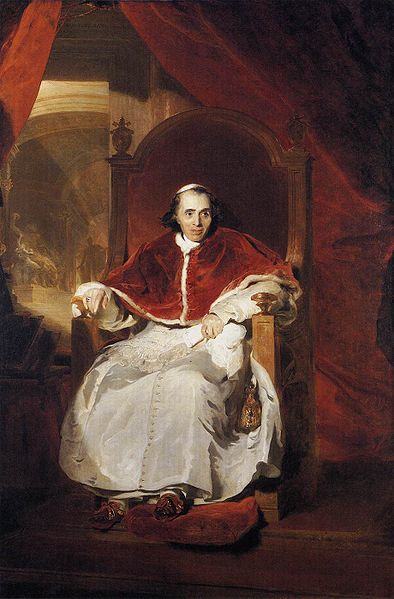
Pope Pius VII, Thomas Lawrence

I have tried to give you a taste and flavour of this exhibition. (Click here to see a PDF document of more paintings in the exhibit.) It is not something you can grade from good to bad, give a level to, say you must see it, or not see it, or apply any subjective or objective assessment like that. What I can say though, if you do get a chance to see it, be prepared to meet real people face to face in those portraits. You will have some very interesting encounters along the way. You will learn something about power, personality, individual characters and yes, brilliance.

Read Full Post »
« Newer Posts - Older Posts »