Feeds:
Posts
Comments

Archive for the ‘Regency Transportation’ Category

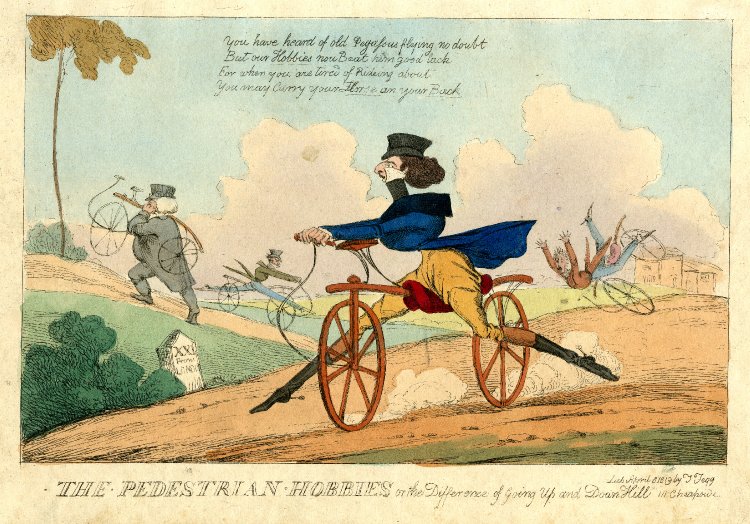
Imagine a bicycle with no brakes and no pedals and you have an idea of what it was like to ride a velocipede, or the dandy horse, in the early 19th century.

“The dandy-horse was a two-wheeled vehicle, with both wheels in-line, propelled by the rider pushing along the ground with the feet as in regular walking or running. The front wheel and handlebar assembly was pivoted to allow steering.” (Wikipedia)

This meant that the man riding this contraption not only looked ungainly while riding it, but had very little control over what he was doing and where he was going, especially on uneven and hilly ground.

The earliest usable and much copied velocipede was created by the German Karl Drais and called a Laufmaschine (German for “running machine”), which he first rode on June 12, 1817. He obtained a patent in January 1818. This was the world’s first balance bicycle and quickly became popular in both the United Kingdom and France, where it was sometimes called a draisine (German and English), draisienne (French), a vélocipède (French), a swiftwalker, a dandy horse (as it was very popular among dandies) or a Hobby horse. It was made entirely of wood and had no practical use except on a well-maintained pathway in a park or garden. – Wikipedia
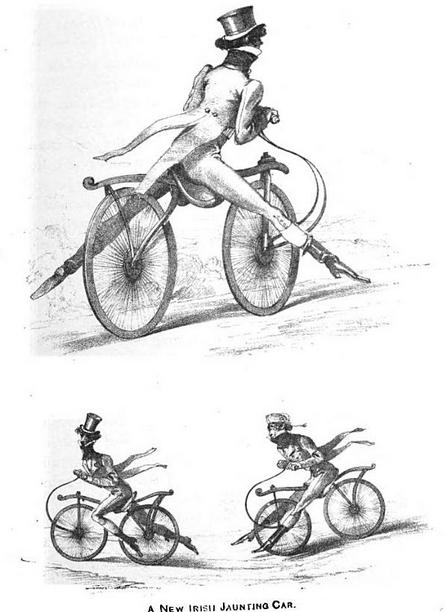
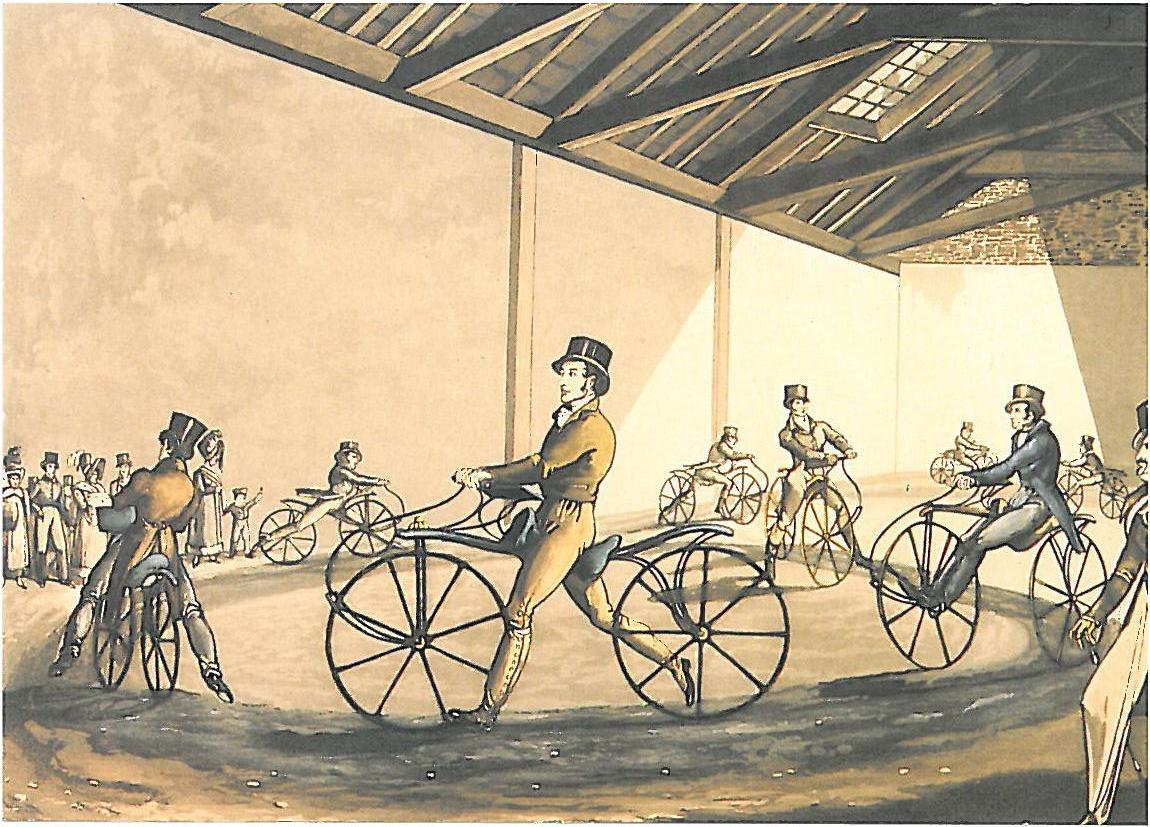
Learning how to ride one of these vehicles wasn’t easy. As seen in the image above, a man would propel himself with his legs and brake with them. The image below is from the archives of Westminster City Council, and is of a postcard of Dennis Johnson’s (c.1760-1833) velocipede school. The school was founded in 1818 by Johnson,  the coachmaker, who had made some improvements on Drais’ machine. He managed to make around 320 of his pedestrian curricles, as he called his patented machines. Then in 1819 the craze for velocipedes went out of fashion: Mr. Johnson returned to making carriages. (Velocipedes.) It wasn’t until towards the end of the 19th century that the velocipede began to be perfected and started to resemble the bicycle we know today.
Several years back I featured a remarkable publication on Dandyism.net called The Dandy’s Perambulations. The pamphlet was printed and sold in 1819 by John Marshall in Fleet Street.
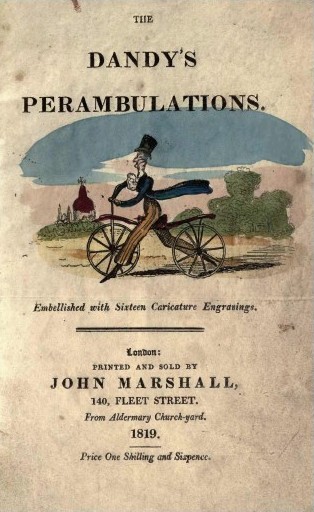
Image @Dandyism.net

Below are a few lines from the pamphlet:

[They] ran along together straight,
Until they reached the turnpike gate,
Where a coach had made a stop;
So they both got upon the top,
And after their disastrous falls,
At length in safety reached St. Paul’s.
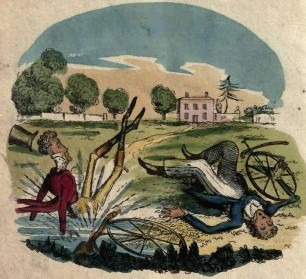
Image @Dandyism.net

The print below shows a dandy “forced off his hobby-horse and subjected to brutal punishment by the two professions most threatened by the new technology: a blacksmith and a vet.” (Wellcome Library)
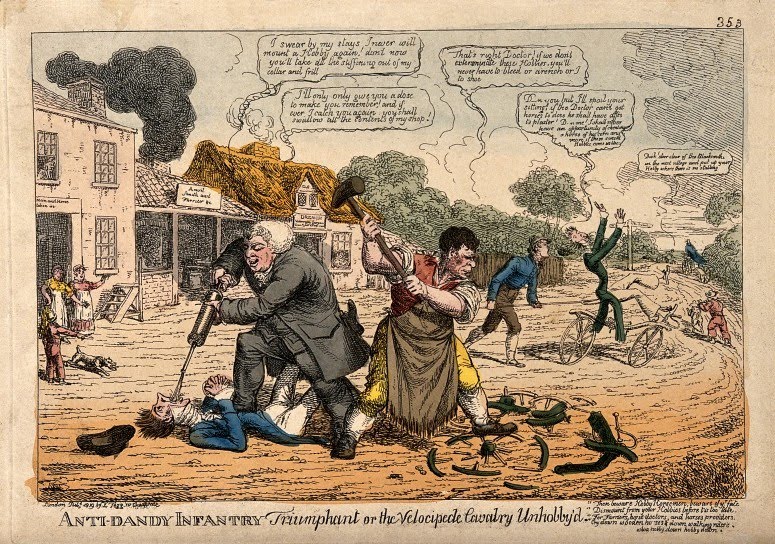
Image @Wellcome Library

It is sad to think that Jane Austen, who died in 1817, never had the chance to observe a gentleman riding a velocipede. With her wit and keen sense of observation, what would she have made of the sight?

More on the topic:

Read Full Post »

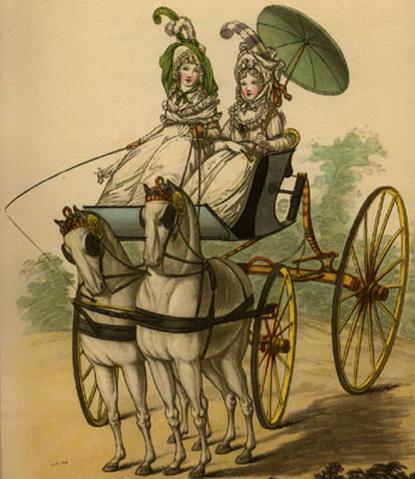
High Perch Phaeton

Gentle readers, Patty of Brandy Parfums is an avid fan of history, horses, Jane Austen, and Georgette Heyer. She is also a devoted reader of this blog.  Just recently she wrote ‘Georgette Heyer for Horse Lovers’ for the October issue of Horse Directory Magazine. Patty has graciously allowed me to reproduce her article for Jane Austen’s World.

Walnut Hill Driving Competition, the largest driving competition in North America held each August in Pittsford NY, has no speed classes for high-perch phaetons. They tip over too easily to be safe. Yet in the colorful, elegant world of English author Georgette Heyer’s romance novels, many with references to horses, intrepid heros and heroines drive these carriages around corners at high speeds without tipping over.

Georgette Heyer published her first novel in 1921, when she was nineteen, and went on to write over fifty novels. She was especially known for her witty Regency romance novels, and was widely copied and imitated. If you have never heard of her, it is because after a badly made movie based on one of her novels, The Reluctant Widow, came out in 1951, Heyer put in her will that she did not want any other of her books turned into movies.

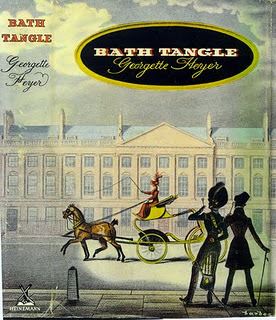
In Heyer’s Bath Tangle, Major Hector Kirkby questions Lady Serena Carlow about her choice of a high-perch phaeton with its “bottom five feet from the ground” and pair of horses. Major Kirkby says –

‘Serena,-my dearest! I beg you won’t! I know you are an excellent whip, but could you not have a more dangerous carriage!’

‘No! If I were not an excellent whip!…….The difficulty of driving them is what lends a spice!’

Cover of Bath Tangle by Heyer's favorite cover artist, Arthur Barbosa

The Heyer heros and heroines, who are skilled equestrians known as bruising riders, ride horses they treasure, like Maid Marion that Lady Serena rides in Bath Tangle.

By Jove, Lady Serena, you’re a devil to go!’ Mr. Goring exclaimed, in involuntary admiration. She laughed, leaning forward to pat the mare’s steaming neck. ‘I like a slapping pace, don’t you?’

‘I should have called it a splitting pace!’ he retorted…..’My heart was in my mouth when you rode straight for that drop fence!’

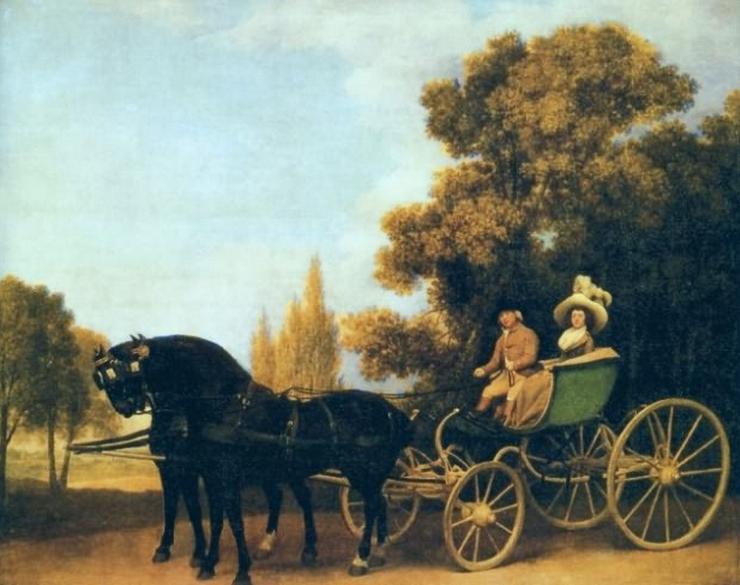
The more stable crane necked phaeton with smaller wheels

Because Heyer’s novels take place when horses were used for transportation, carriages and coaches breakdown in many of her books. In The Corinthian, there is little horse activity in the beginning except a coach breaking down, but the hero, Sir Richard Wyndham, a bored bachelor and renowned whip, is sure to get into action at some point in the story. Sir Richard (Ricky) asks his friend, the Honourable Cedric (Ceddie).

Ceddie, were you driving your own horses yesterday?’

‘Dear old boy, of course I was, but what has that to say to anything?’

‘I want ’em,’ said Sir Richard………I must have a fast pair immediately.’

My favorite Heyer novel so far for horseyness is The Quiet Gentleman, a Regency romance and mystery of sorts, with Gervase Frant, the Earl of St Erth, a subdued dandy returning home from military duties at Waterloo. Mr. Warboys says –

‘……..that’s a devilish good-looking hunter you have there, St Erth! Great rump and hocks! Splendid shoulders! Not an inch above fifteen-three, I’ll swear! The very thing for this country!’

‘Oh, he is the loveliest creature!’ Marianne said, patting Cloud’s neck. He makes no objection to carrying me in this absurd fashion: I am sure he must be the best-mannered horse in the world!’

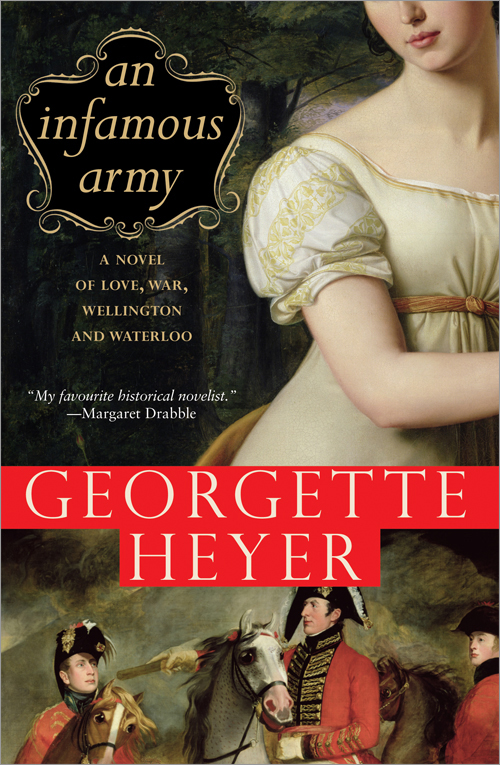
Cover of Infamous Army with horse. Image@Sourcebooks

Georgette Heyer wrote her romance novels over a period of many years and they were always best sellers even during WWII in England, when their lively, entertaining content helped people forget their misery. Heyer also wrote mysteries, and more serious historical fiction like the superb An Infamous Army, which takes place in Brussels in 1815 during the time of Waterloo. Infantry and calvary movements are so accurately described that this book is required reading at Sandhurst.

Other horsey and just plain amusing novels recommended include The Masqueraders, False Colors, Arabella, Sylvester or the Wicked Uncle and The Grand Sophy, a work unfortunately marred by the appearance of a cliché moneylender.  Sourcebooks has reissued many of Heyer’s fifty novels and they are proving quite popular – a wonderful diversion for our uncertain times.

More on the topic:

This is the first video of the film, The Reluctant Widow. Only 9 of the 10 videos are featured. Have no fear, this 1951 film is so badly made that you will probably not make it that far. Click on this link to access it.

Read Full Post »

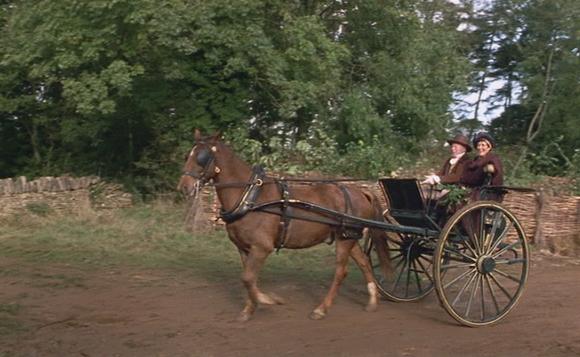
Crofts arrive in the gig, Persuasion 1995

In Persuasion, Jane Austen depicts the Crofts as the happiest couple imaginable. Sophy, who is also Captain Wentworth’s sister, follows her Admiral across the seas, sacrificing her looks in the process. She is only 38 years old, but her complexion is ruddy and has obviously been affected by the sun. Jane Austen writes about the couple in a realistic way, and like all happily married folks, these two exhibit their own idiosyncracies. Admiral Croft, it turns out, is a bad driver. Captain Wentworth says about his brother-in-law to Louisa:

“What glorious weather for the Admiral and my sister! They meant to take a long drive this morning; perhaps we may hail them from some of these hills. They talked of coming into this side of the country. I wonder whereabouts they will upset to-day. Oh! it does happen very often, I assure you–but my sister makes nothing of it–she would as lieve be tossed out as not.”

“Ah! You make the most of it, I know,” cried Louisa, “but if it were really so, I should do just the same in her place. If I loved a man, as she loves the Admiral, I would always be with him, nothing should ever separate us, and I would rather be overturned by him, than driven safely by anybody else.”

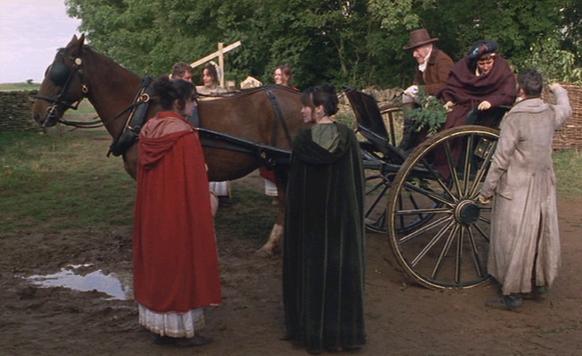
The party stops to talk to the Crofts

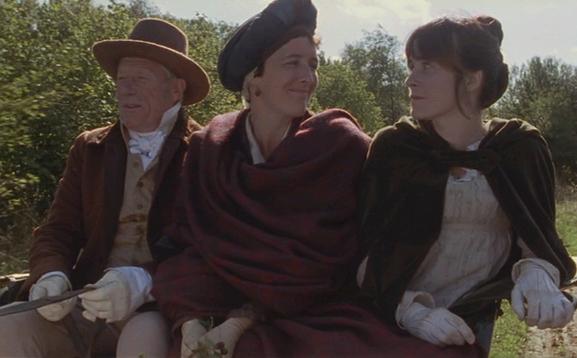
During their return walk from Winthrop, the party from Uppercross, which includes Anne Elliot and Captain Wentworth and a number of the Musgroves, encounter Admiral and Mrs. Croft in a gig. They offer a seat to one of the party. Everyone declines, except for Captain Wentworth, who has noticed Anne’s fatigue. He whispers something to his sister, then encourages Anne to join the Crofts in their two-seater for the rest of the way back to Uppercross (about one mile.) Anne is grateful for his thoughtfulness. But as she rides in the carriage, she hears Mrs. Croft warn her husband:

The Crofts and Anne Elliot crowded in a 2-man gig

My dear admiral, that post!–we shall certainly take that post.”

Jane Austen goes on to write:

But by coolly giving the reins a better direction herself, they happily passed the danger; and by once afterwards judiciously putting out her hand, they neither fell into a rut, nor ran foul of a dung-cart; and Anne, with some amusement at their style of driving, which she imagined no bad representation of the general guidance of their affairs, found herself safely deposited by them at the cottage.

The happy admiral is more than willing to allow his wife to steer the carriage alongside him, which many of us who have driven with “back-seat driving” spouses know is a rare attitude indeed!

In this famous scene by Jane Austen, the Crofts moved over to make room for Anne. Mary Musgrove would rather die from fatigue than be seen crowded in a humble gig, but Anne could only feel gratitude. She is beginning to understand that while Captain Wentworth is unable to forgive her for rejecting him, he is still a kind and decent man. He knows her well enough to see that she was tired and made arrangements for her. In these small observable progressions (as with taking the child Walter from her without comment), we see the Captain’s love for Anne come to the surface. It will take a little longer for his anger at her rejection to recede. See also Shopping and Milsom Street, Bath

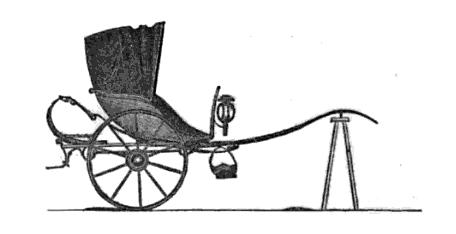
Light weight gig

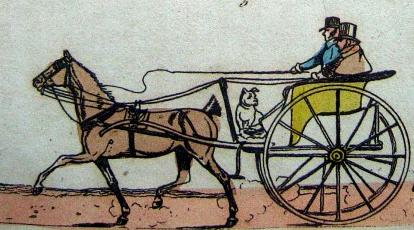
About Gigs: Gigs were two-wheeled carriages equipped for one horse only. They were designed for two people, one of whom was the driver, and were considered carriages for the middle class, or for the “poorer” classes, who paid less duty on them. Because these carriages were light in weight and springy, they could be easily turned over, especially by a poor driver like Mr. Croft. Gigs were used by doctors, travelers, and people who made short journeys that would not fatigue the horse. Gigs evolved into cabriolets (early versions of cabs) Dennet, Stanhope, and Tilbury. The Stanhope was designed by Fitzroy Stanhope, the second son to the Third Earl Stanhope. This carriage became popular towards the mid-19th century for short trips between Town and the suburbs.

Road to a fight, detail by Henry Alken, 1821

The two men in this high perch phaeton show how precarious a light two-wheeled vehicle can be. One can see the difference between this “sporty” more expensive vehicle and the humble gig (above).

Read Full Post »

This carriage database discusses the history of the carriage and its uses over time. Included are links to specific makes of carriages, which lead to more detailed information or definition about that type, ie. landau, barouche, mail coach, phaeton, etc. In some instances, images accompany the pages. (Click on reference, then carriage). Update: Something seems to be wrong with the first link to the carriage database. I shall update this post as soon as I find the link again. This link to A Catalogue of Horse drawn vehicles 1896 catalogue of E. S. Annison, Coach Builder, of Hull, features drawings of his carriages and their latest design (late 19th century). Internet Archive provides a downloadable PDF book with images, Carriages and Coaches: their history and their evolution, fully illustrated with reproductions from old prints, contemporary drawings and photographs (1912). This entry in Carriages in Indopediais contemporary and provides links to definitions and information.

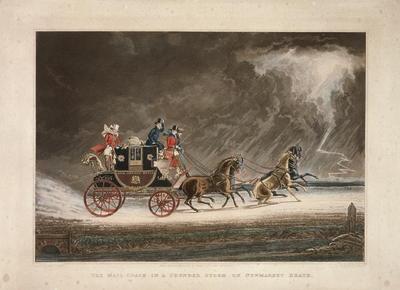
Mail Coach, 1827

The Georgian Index features an excellent page on Carriages and their Parts. Highways and Horses, Athol Maudslay, 1888 is an illustrated Google book that discusses carriages and transportation during the Victorian period in great detail. On the fronticepiece, Mr. Maudslay writes :

Share/Bookmark// More about the topic on this blog:

Read Full Post »

Another book review so soon on this blog? Well, yes. This book from Shire Publications, Victorian and Edwardian Horse Cabs by Trevor May, is short, just 32 pages long, but it  is filled with many facts and rare images of interest to lovers of history. In Jane Austen’s day most people walked to work, town, church, and market square, or to their neighbors. Six miles was not considered an undue distance to travel by foot one way. The gentry were another breed. They either owned their own carriages or hired a public horse cab. These equipages were available as early as the 1620’s.

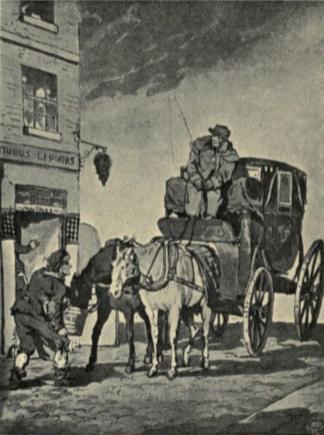
Hackneys, or public carriages for hire made their first significant appearance in the early 17th century. By 1694, these vehicles had increased to such a number that a body of Hackney Coach Commissioners was established in London. The commissioners dealt out licences, which was a bit of a joke, for a mere four inspectors were responsible for over 1,000 vehicles.

Hackney Coach 1680

Most of these licensed hackney coaches were purchased second hand. All that an enterprising person needed to establish his own hackney coach business was enough money for a used carriage and three horses, two that worked in rotation, and one that could be used as a replacement in case of injury or illness. The death of a horse could lead to a cab owner’s financial ruin. Another important ingredient was housing for the horses.

Hackney Coach 1800. Image @Wikimedia Commons

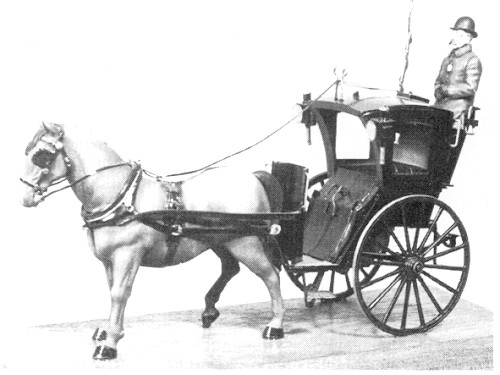
By, 1823, the lighter horse cabs began to replace cumbersome hackney coaches in great quantity, and by the mid 1830’s, the hansom cab set the new standard for modern horse cabs. Aloysius Hansom, an architect, designed the first carriage. When Hansom went bankrupt through poor investments, John Chapman took over, designing an even lighter, more efficient cab, one whose framework did not strike the horses on their backs or sides whenever a carriage ran over an obstacle in the road.

Hansom Cab

Commercial cab firms tended to be small, even as late as 1892. Only one or two proprietors provided a large number or variety of equipages, like Alfred Pargetter, whose concern advertised removal carriages, cabs, and funeral coaches for hire. While cabs were licensed, their drivers were not and the road could present a dangerous obstacle course. The video clip below shows how adroitly horses and carriages managed to avoid each other with seemingly few rules (mostly towards the end of the clip). Notice how some lucky individual horses pulled relatively light loads compared to other horses forced to pull heavy carts.

These two video clips, one from 1903 and the other from 1896 (unbelievable!) show the end of an era, for by 1914, motorized vehicles were rapidly replacing the horse-drawn cart.

I recommend this book to anyone with an insatiable appetite for a pictorial history on a particular topic. Trevor May is an expert on the Victorian era, and he has managed to squeeze more information about horse-drawn cabs in this short book (more a thick pamphlet) than I have read before. The images are simply splendid.

Read Full Post »

« Newer Posts - Older Posts »