Feeds:
Posts
Comments

Archive for the ‘Regency World’ Category

Lady Sarah Jersey

Gentle Readers: In my sidebar I call myself an amateur historian, an apt term as this post will attest. I try to quote from older sources, but this can sometimes backfire. Captain Gronow, for example, whose words I quoted for this post via John Ashton (1890) and Lewis Saul Benjamin (1909), wrote down his memories about the Regency era in 1863, a half century after the events occurred.  Gronow’s memory, unfortunately, was faulty in a few particulars, especially in recalling the names of the patronesses of Almack’s in 1814, and why they turned the Duke of Wellington away. I have placed a number of updates in the original post.

Any individual who has read a novel set in Regency England knows about the assembly rooms at Almack’s and the club’s exclusivity. While Almack’s was notorious for its stale refreshments and thin lemonade in the supper room, the Beau Monde never minded, for the idea was to hob nob with the right people, trot out one’s eligible daughters, and make the best marriages possible given their dowries and family connections. Looks and a personality had very little to do with a young lady’s success in her first season OUT, but a pleasing countenance matched with a fortune would swiftly speed up the unification of great estates or the purchase of a worthy title.

Almack's, Pall Mall, opened in 1765

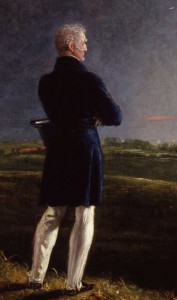
The Patronesses of Almack’s guarded entry to the club like Valkeries prepared to do battle. No one, not even the Duke of Wellington, would dare to step a foot inside the establishment without a proper voucher, and, indeed, he was turned away once for wearing *gasp* trousers instead of knee breeches. But is this true? Please keep on reading.

This passage from Social England Under the Regency by John Ashton (p 383) is quite telling:

*The Duke of Wellington

Of course the Creme de la creme went to Almack’s, but numberless were the Peris who sighed to enter that Paradise, and could not. Capt. Gronow, writing of 1814, says: “At the present time one can hardly conceive the importance which was attached to getting admission to Almack’s, the seventh heaven of the fashionable world. Of the three hundred officers of the Foot Guards, not more than half a dozen were honoured with vouchers of admission to this exclusive temple of the beau monde, the gates of which were guarded by lady patronesses whose smiles or frowns consigned men and women to happiness or despair. These lady patronesses were the Ladies Castlereagh, Jersey, Cowper, and Sefton; … and the Countess Lieven.” (Note: At that time, two other patronesses included Lady Downshire and Lady Bathurst.)

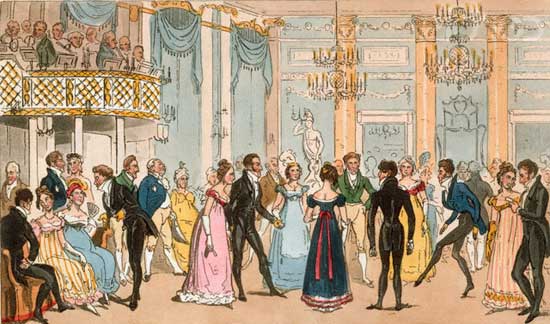
Cruikshank, Longitude (Countess Lieven) and Latitude (in capri-length pantaloons) at Almack's.

In a Newspaper of May 12, 1817, we read – “The rigorous rule of entry established at Almack’s Rooms produced a curious incident at the last Ball – The Marquis and Marchioness of W__r, the Marchioness of T__, Lady Charlotte C__ and her daughter, had all been so imprudent as to come to the rooms without tickets, and though so intimately known to the Lady Managers, and so perfectly unexceptionable, they were politely requested to withdraw, and accordingly they all submitted to the injunction. Again at the beginning of the season of 1819, we find these female tyrants issuing the following ukase: “An order has been issued, we understand, by the Lady Patronesses of Almack’s, to prevent the admission of Gentlemen in Trowsers and Cossacks to the balls on Wednesdays, at the same time allowing an exception to those Gentlemen who may be knock kneed or otherwise deformed.” But the male sex were equal to the occasion as we find in the following lines: –

TO THE LADY PATRONESSES OF ALMACK’S

Tired of our trousers are ye grown?

But since to them your anger reaches,

Is it because tis so well known

You always love to wear the breeches.

*Image from Highest Life in London: Tom and Jerry Sporting a Toe among the Corinthians at Almack's in the West, by I. Robert and George Cruikshank, 1821

Update:  Regency Researcher, Nancy Mayer, was kind enough to contact me and set a few facts straight. I have placed her explanations in the update/update below. In the above image, the young bucks are wearing dark suits with dark, close-fitted trousers (Beau Brummel’s influence), while the older men are still in buff-colored knee breeches.

If anyone knows the true story about the Duke and his trousers, please contact me. One conjecture is that Wellington was turned away for arriving after midnight. (Read more about the Patronesses’ edict on trousers in this link to The Beaux of the Regency, Vol. 1.)

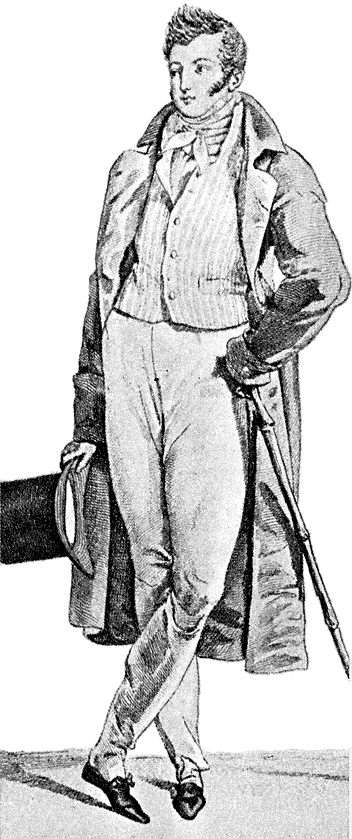
Update/Update: Pantaloons, which fitted snug to the leg, came in two lengths: capri and long. A strap under the foot kept long pantaloons in place. (The image below shows the strap.) Thus, the men in the image above were wearing tight pantaloons, for trousers at the time were slightly looser and would have sported gussets that extended the fabric low over the shoe.

Pantaloons with straps, 1821. Image @Republic of Pemberley

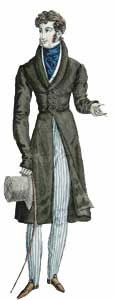
In 1814, the date Gronow recollected, trousers (below) were acceptable for day wear only. Pantaloons were worn as evening wear.

Nancy Mayer, a Regency researcher who provided much of the updated information, wrote in a second note: “Luttrell’s poem on Almack’s was published around 1819. According to the verse about the “trowsers”, I think trousers didn’t become an issue until after 1817, at least. Sometimes it is hard to tell if the men are wearing trousers or the longer pantaloons with the strap under the foot. Most of the Lords in the picture of the Trial of Queen Caroline 1820 are wearing trousers or the long pantaloons.”


Trouser with gussets, day wear, 1813

More on the topic:

*Images: Carolyn McDowell

Read Full Post »

Copright @Jane Austen’s World. Written by Tony Grant, London Calling

Two of the greatest writers of the late 18th century and early 19th century were Jane Austen and William Wordsworth. We think we know Jane Austen’s primary influences and encouragement in her writing. They are found amongst the members of her family, the villages, towns and great houses she visited constantly near where she lived and the people she interacted with in those diverse places. She was a keen observer and knew them all intimately. Claire Tomalin in her biography, “Jane Austen, A life,” says that Jane wrote

“… tightly constructed stories that cover a short span of time…….Jane Austen also chose to write about small families.”

Dorothy Wordsworth

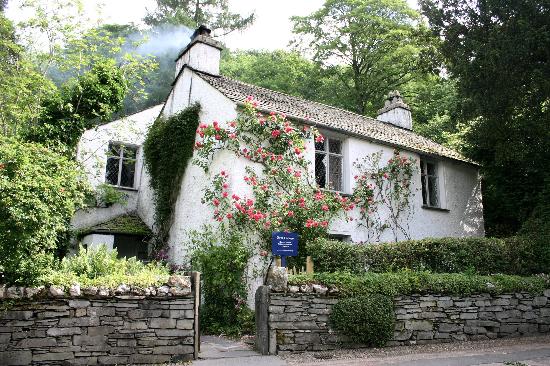
About, 250 miles north, there lived a young lady called Dorothy Wordsworth. She was a little older than Jane by five years. Dorothy’s brother was William Wordsworth and for a while they lived together in a tiny cottage they called Dove Cottage set in the wild and desolate scenery of The Lake District. Dorothy and William Wordsworth wrote about their emotional and intellectual response to nature and the landscape around them. While living at Dove Cottage in the Lake District, Dorothy was the muse, support, encourager and inspiration for her brother.

Dove Cottage, Grasmere. Image @Tony Grant

William often read Dorothy’s journal and drew inspiration for his poems from it.
We might ask why and how did these two writers have such different responses to the world about them?

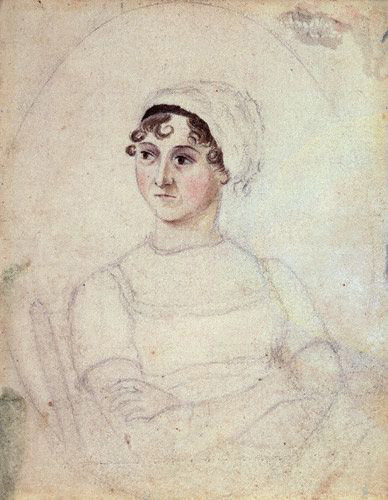
Jane Austen by Cassandra Austen

Jane was born into a lively and vibrant family of six brothers and one sister. It was a boisterous environment and aunts, uncles and neighbours were an additional group of relationships that were there, interested and ready to be involved with the new addition to the family. Family life was paramount in Jane’s existence from the start. All her senses were filled with it. Reading Gilbert Whites journals and letters makes us aware of the rich natural world all around her in her Hampshire village of Steventon, but although Jane would have been brought up in this natural environment, and she would have taken notice and interest in it, the life of family was the overriding power that carried her along. And so from an early start her environment filled her thoughts feelings and imagination. Claire Tomalin reminds us that,

“Not only was she one of eight, she lived with a perpetual awareness of a cousinage extending over many counties and even beyond England.”

Some examples of her writing show the intensity with which she was concerned with conversation and relationships as her primary focus. In Persuasion, the little Dorset coastal port of Lyme Regis plays a major role. In a letter to Cassandra written on Friday 14th, September, 1814, Jane says,

I called yesterday morning-( ought it not in strict propriety be termed yester – Morning?) on Miss Armstrong & was introduced to her father & mother. Like other young ladies she is considerably genteeler than her parents; Mrs Armstrong sat darning a pr of stockings the whole of my visit-.But I do not mention this at home , lest a warning should act as an example.-We afterwards walked on the Cobb; she is very conversable in a common way; I do perceive wit or genius- but she has Sense and some degree of Taste,& her manners are very engaging. She seems to like people too easily- she thought the Downes pleasant…”

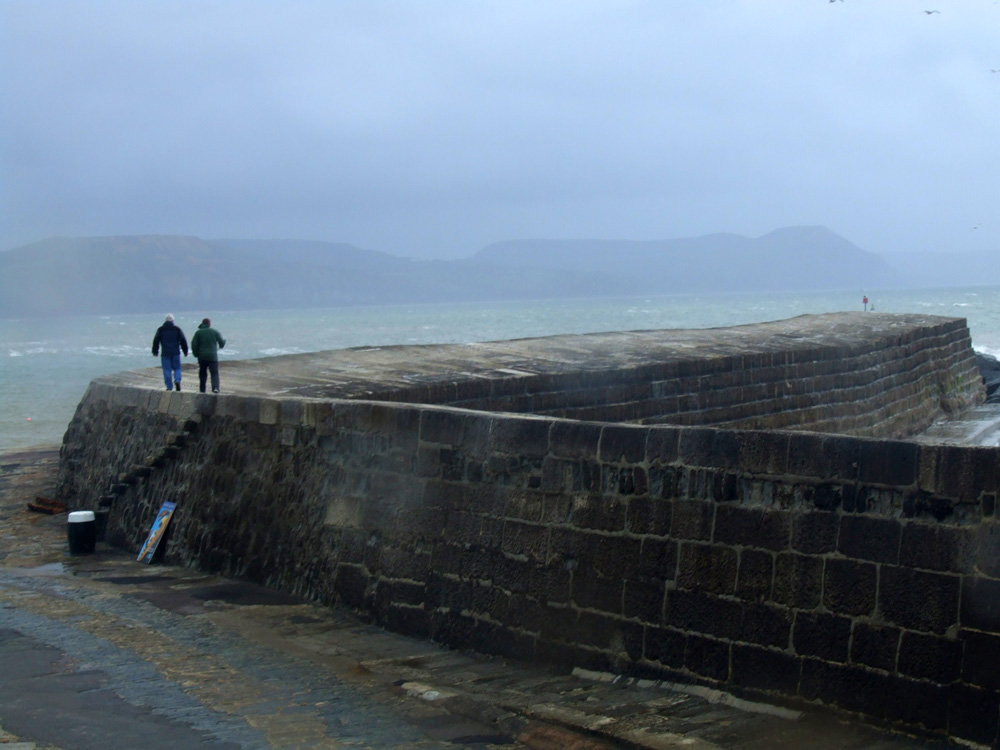
In Persuasion, Jane writes about Anne Elliott, Captain Harville, Captain Wentworth,and Louisa Musgrove walking on the Cobb. The scenery is definitely noticed, but the main preoccupation is conversation and social interaction;

“but as they drew near The Cobb there was such a general wish to walk along it once more, all were so inclined…”

The Cobb at Lyme with Grannies Teeth. Image @Tony Grant

At this point they did not know how this walk along the Cobb would affect their whole situation, but the pull of this great physical presence was important and drew them to it as a social group conversing and interacting, their relationships developing. In both Jane’s letters above to Cassandra, and in this extract from Persuasion, it’s the relationships that are paramount. The Cobb is the setting for both. We can see in these two extracts how relationships play their part in Jane’s real life and Jane’s fictional life. Her own world is the inspiration for her fictional world.

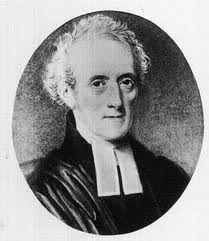
Henry Austen

Her family must have helped and encouraged her. Claire Tomalin writes,

Jane Austen managed the day-to-day routines of a novelist with an efficiency and discipline worthy of her naval brothers. The famous account of her working habits, given by her nephew, credits her with almost miraculous powers in stopping and starting under interruption.(her nephews account describes how she would stop and hide her small pieces of paper under a blotter at the slightest interruption and she used the sound of a creaking door as people entered the house to signal to her.)The picture is admirable, exasperating, painful and can only be half true………..there must have been times when the other inhabitants of the cottage protected her silence with something more than the creaking door……encouragement and practical help came from Henry….. Henry’s army connections may have helped to make the deal with
( Egerton the publisher) and Henry and Eliza’s money paid for the printing.”

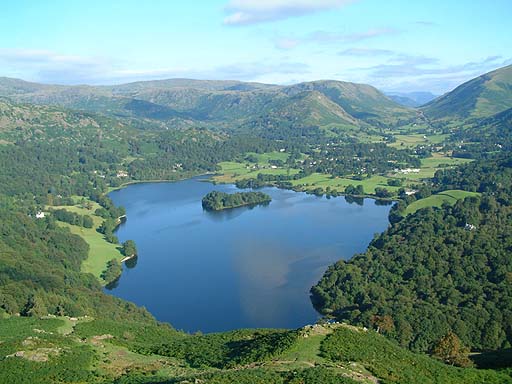
Grasmere Lake

Just over two hundred and fifty miles north of Steventon, in the County of Cumbria, also know as the Lake District, during the same period of time, lived Dorothy and William Wordsworth. They lived in various houses but the most famous is a small cottage, called Dove Cottage at Grasmere, next to Grasmere Lake. It is surrounded by the steep hills and small mountains and streams of the Lake District, the Scafell Pikes, and Dungeon Ghyll. The sights and sounds they lived with were those of tumbling water as it dropped down mountain falls, the hiss of fast-moving mountain streams, and the wild rugged terrain of the Lake District’s fells, crags, tarns, and ghylls.

William Wordsworth, Benjamin Robert Haydon. Image @National Portrait Gallery

Like Jane, William was born into a large family (on the 7th April, 1770). He was the second of five children born to John Wordsworth and Ann Cookson in a large house in the centre of Cockermouth, his father being the legal representative for James Lowther, the 1st Earl of Lonsdale. At the bottom of the garden was a wild stream and this is one of the first things that attracted William’s attention. Dorothy his younger sister was born a year later. She was to become his mentor and supporter throughout her life. Their brothers did well in life as indeed Jane’s brothers did. John Wordsworth became a naval captain but was lost at sea in 1805, the youngest, Christopher became master of Trinity College Cambridge. William himself went to St John’s College Cambridge and achieved his bachelor degree in 1791. Richard became a lawyer. None of the children in the family got close to their father who remained distant to them. Williams’ father did, however, encourage William to read poetry and William, similar to Jane at the Steventon Rectory, had access to his father’s extensive library.

To illustrate the influences and the type of encouragement that William drew on to write his poetry, the time that Dorothy and he lived at Dove Cottage is a prime period to focus on.

Dorothy kept a journal covering the years they spent together at Dove Cottage. She opens the journal in the year 1800. It is May 14th, a Wednesday.

“I resolve to write a journal of the time till William and John return and I set about keeping my resolve, because I will not quarrel with myself, and because I shall give William pleasure by it when he comes home again.”

This start to her journal gives us an insight into her total dedication towards her brother. It is written for William’s pleasure, not hers. She was a selfless soul. William, and indeed their friend and poet Coleridge, who also came to live in the lake District, often referred to Dorothy’s journal. It is almost as though William used his sister’s writing to affirm his own responses and feelings about nature.

Here is an extract that shows how William’s poems and Dorothy’s journal are connected. Dorothy would have written this first of course. It is written beautifully and with passion. It shows her connection to nature.

April 15th 1801

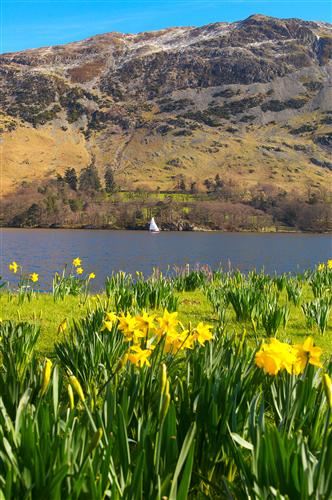
“ When we were in the woods beyond Gowbarrow Park we saw a few daffodils close to the waterside. We fancied that the lake had floated the seeds ashore, and that the little colony had so sprung up. But as we went along there were more and yet more; and at last under the boughs of the trees, we saw that there was a long belt of them along the shore, about the breadth of a country turnpike road. I never saw daffodils so beautiful. They grew among the mossy stones about and about them; some rested their heads upon these stones as on a pillow for weariness; and the rest tossed and reeled and danced, and seemed as if they verily laughed with the wind, that blew upon them over the lake; they looked so gay, ever glancing, ever changing.”

Lake District daffodils

Remember that William and Dorothy were together on this walk and saw the same sight. Soon after this entry William wrote this. It is the second verse of, The Daffodils;

Continuous as the stars that shine
And twinkle on the Milky Way,
They stretched in never ending line
Along the margin of a bay
Ten thousand saw I at a glance
Tossing their heads in sprightly dance”

It appears apparent that Dorothy’s words are used by William. “Tossed”, “danced”, repeat Dorothy’s imagery. He is relying on Dorothy’s emotional response as much as his own. They were very close as brother and sister and would have talked about their feelings of the event. But William’s heightened emotional response in this poem is the same as Dorothy’s.

It worked both ways. Williams’s poetry informed Dorothy’s emotional response too. On Monday may 26th, 1800, Mary writes;

I walked toward Rydal, and turned aside at my favourite field. The air and the lake were still……I could distinguish objects, the woods trees and houses. Two or three different kinds of birds sang at intervals on the opposite shore. I sate til I could hardly drag myself away. I grew so sad. “When pleasant thoughts,”……

Here Dorothy begins to quote a poem William had written two years earlier in 1798

I heard a thousand blended notes,
While in a grove I sate reclined,
In that sweet mood when pleasant thoughts
Bring sad thoughts to the mind.”

She is virtually re-enacting the poem. And of course Dorothy’s journal may well have informed Williams writing of the poem in the first place.

It is easy to see William Wordworths poems, in a quick superficial reading, as merely nice emotional descriptions of nature. Of course they are far more than that. Dorothy herself in her journal warns us that when reading William’s poems, to “look deep.”

In this article I wanted to show the different influences of two of the greatest writers of the late eighteenth century and early nineteenth century. It was not meant to be an analysis of their writing. However, to be fair to William Wordsworth it should be pointed out that his poems must be read carefully and a few times over. You begin to notice his emotional attachment to nature – he calls it his soul “linking” with the spirit of the natural world. It is ultimately about man’s connection with nature and being able to communicate with it, empathise with it, and know that you are part of it.  Wordsworth warns,

“And much it grieved my heart to think

What man has made of man.”

This sounds very modern and apt for our own times.

Jane Austen and William Wordsworth appear to be two very different writers, but I think placing them together shows that one is deeply concerned with the interrelationships of families and small communities and the other is deeply concerned about man’s relationship with nature. The themes and focus of Jane Austen’s and William Wordsworth’s writing were opposite, but they were closely connected too. Both writers wrote about what affected and concerned them as human beings. They show the human response to two different aspects of the world we live in and that we all share. It is interesting to note that Wordsworth obviously related and socialised with people and that Jane obviously noticed and interacted with the natural world about her in Hampshire, but both had a different emotional and intellectual responses to the world they inhabited rooted in their own personal experiences.

References:

Austen J. ( first published 1818) `(1998) Persuasion ; Penguin Classics

Clark C. (ed) (1986) Home At Grasmere : extracts from the journal of Dorothy Wordsworth ( written between 1800 and 1803) and from the poems of William Wordsworth: Penguin Classics

Le Faye D. (1995) Jane Austen’s letters (New Edition): Oxford University Press

Tomlin C. (2000) Jane Austen A Life: Penguin Books

Read Full Post »

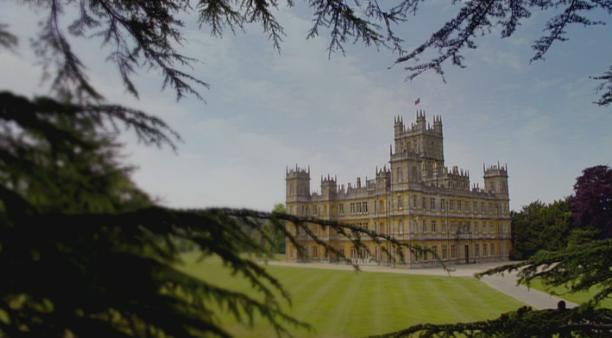
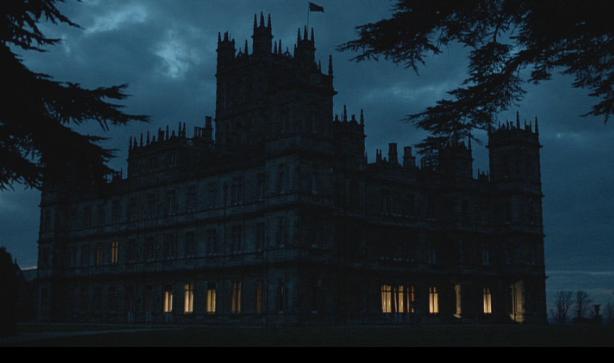
Highclere Castle as Downton Abbey

Downton Abbey’s connection to Jane Austen is through Lord Carnarvon, whose descendents still own Highclere Castle, where the PBS Masterpiece Classic mini-series’ interior and exterior shots of the fictional country house were filmed. (Read about Andrew Lloyd Weber’s recent attempt to purchase the castle.) In Jane’s day, Lord Carnarvon was Henry, the 1st Earl. Jane wrote in a letter to Cassandra Austen, Saturday25 – Monday 27 th,  October 1800 :

“This morning we called at the Harwood’s & in their dining room found Heathcote & Chute for ever – Mrs Wm Heathcote & Mrs Chute – the first of whom took a long ride in to Lord Carnarvons Park and fainted away in the evening…”

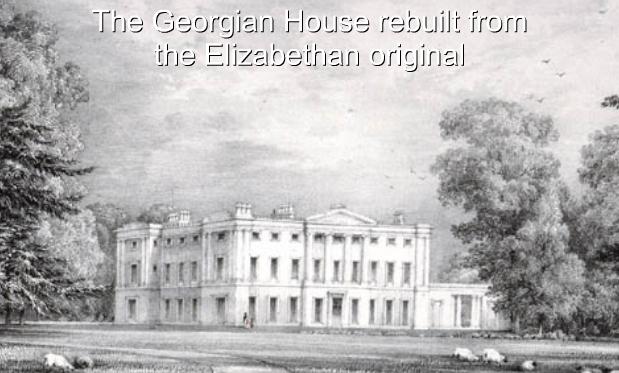
Highclere Castle as it looked in Jane Austen's day

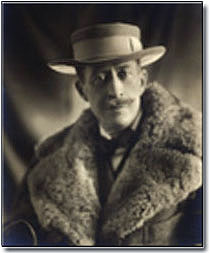
The 5th Earl

Lord Carnarvon’s park, which Jane writes of, is the grounds to Highclere Castle. The Carnarvon family has lived at Highclere since 1679, although the Castle as we see it today sits on the site of an earlier house. (Click here to view a short film about the Castle’s history.) A beautiful 6,000 acre park designed by Capability Brown between 1774-7 surrounds the Castle.

In 1842, the 3rd Earl commissioned architect Sir Charles Barry (also responsible for building the Houses of Parliament in Westminster) to redesign the Castle.

One of the most interesting fact about Highclere Castle is that the golden death mask of King Tutankhamun is featured in its gallery today.

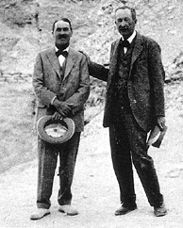
Howard Carter and Lord Carnarvon in Egypt

Lord Carnarvon of Tutankhamun fame (George, the 5th Earl) was an Egyptologist who sponsored Howard Carter,  the archaeologist who discovered Tutankhamun’s tomb in the Valley of the Kings in 1922. It is said that when Canarvon and Carter broke into Tut’s tomb, they unleashed the mummy’s curse. But the story goes more like this:


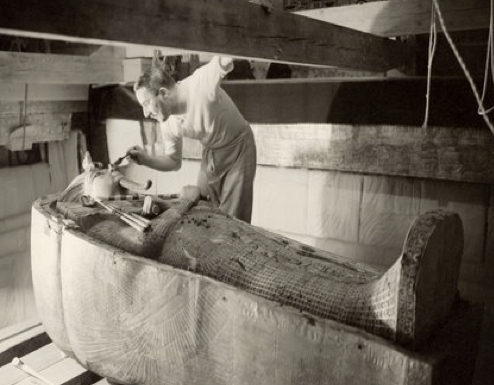
Howard Carter cleans the second coffin. Image @Harry Burton

This popular legend was born when Lord Carnarvon, the English Earl who funded the Tutankhamun expedition, died less than six months after the opening of the tomb. Despite the fact that Lord Carnarvon was a sickly individual, and that no such “hieroglyphic curse” was found inscribed on the tomb, this legend persists today. . . Lord Carnarvon had been in a car accident many years earlier and had never fully recovered. About a month after entering the tomb, he cut open a mosquito bite while shaving and infection set in. Blood poisoning and pneumonia quickly followed, and within a few weeks, he passed away. Newspapers reported that mysterious forces unleashed from the mummy and its trappings had caused his death. – King Tut

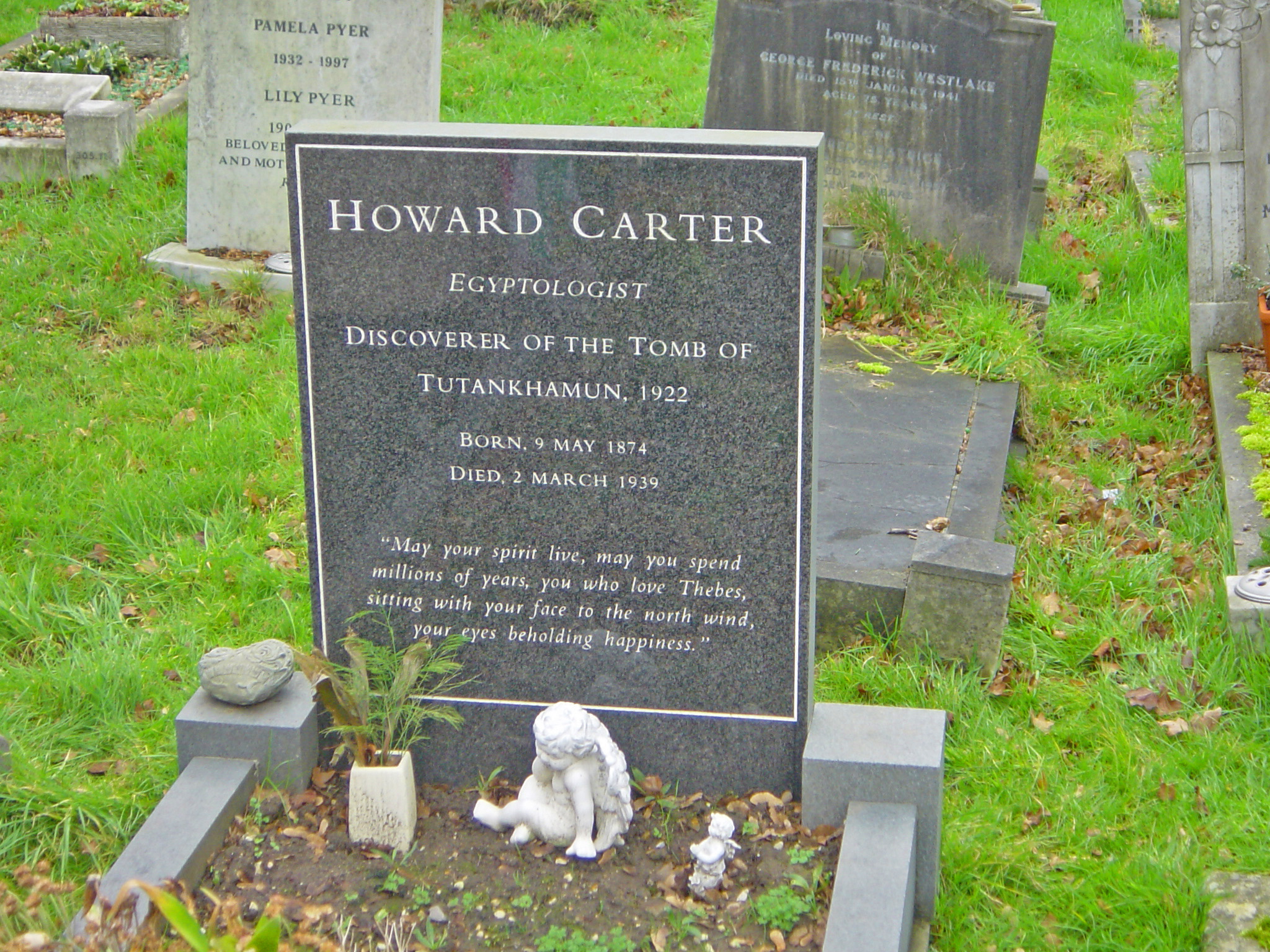
This image of Howard Carter’s grave was taken by Tony Grant, who lives near the cemetery in London. (Thank you, Tony, for the photo and for the quote from Jane Austen’s letter!)

Howard's grave. Image @Tony Grant

Watch Downton Abbey at your local PBS station Sundays, January 9, 16, 23, and 30, 2011 at 9 PM. Read my other posts:

More on the topic:

Read Full Post »

I recently finished reading a charming book by Cora Harrison, I Was Jane Austen’s Best Friend, in which Jane Austen has just reached the age of 15. It is February, 1791, and 16-year-old Jenny Cooper has slipped out of Mrs. Crawley’s boarding school to post a letter to Steventon Rectory warning Rev. and Mrs. Austen that their daughter, Jane, is seriously ill. By doing so, Jenny risks her reputation, for she ventures out alone and unescorted in a rough area of Portsmouth.

This scene sets the stage for the rest of the novel, in which young Jenny Cooper chronicles the months she spends with her best friend Jane and the Austens at the rectory.  The girls are avid writers: while Jane spins her creative tales, Jenny describes their routine days in her journal. And what days they were! Jenny observes Jane’s family and friends minutely: her gentle father and stern mother; her charming favorite brother, Henry, and the mentally challenged George, who lived with another family; Cassandra’s love for Tom Fowle; exotic cousin Eliza; the well-dressed Bigg sisters; and other vivid portraits of the people who inhabited Jane’s and Jenny’s world.

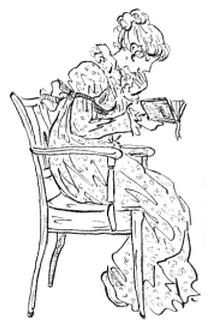
Jane Austen reads at Jenny's bedside. Image@Susan Hellard

The scenes are culled from actual events in Jane’s life and from letters that others wrote about her (for none of her letters from that time have survived). As teenagers are wont to do, Jenny and Jane dream of romantic encounters and parties and balls, engage in outdoor activities, and while away their time reading and writing and play-acting, or wishing for pretty gowns.

Image @Susan Hellard

The scene in which a pinch-penny Mrs. Austen must decide which color muslin would look best for ball gowns for all three girls (Cassandra, Jane and Jenny) is priceless, and the descriptions of tender romance between Cassandra and young Tom are heartbreaking to those who know he will die before they can be married. Tom LeFroy makes a suitably short appearance, and Jenny meets handsome Captain Thomas Williams, who in real life became engaged to her within three weeks of their first meeting, and whom she later married before her own untimely death.

Jenny witnessed Jane writing constantly and being inspired by the people she observed. For example, Jenny’s shrill sister-in-law, Augusta, becomes the prototype for Mrs. Elton and Mr. Collins is somewhat inspired by Jenny’s preachy brother.

Augusta. Image @Susan Hellard

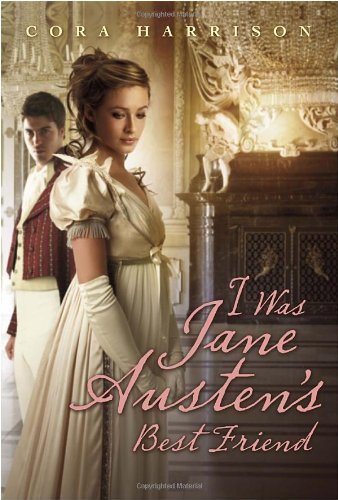
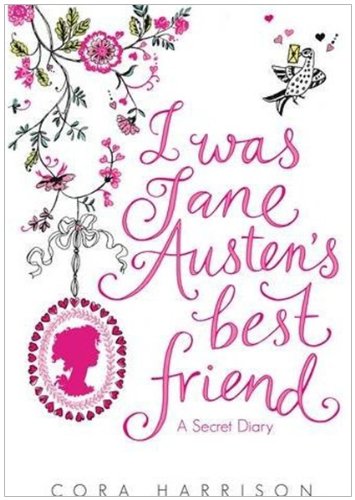
While I found the book a delight, not everyone has been thrilled with its purchase. The American cover of I Was Jane Austen’s Best Friend is a bit mature for a novel that targets young girls of eleven or so, but it explains the reason why so many older readers are buying the book.

This is what a high school  reviewer had to say about the U.S. cover: “… if you plan on buying [the book] at any time soon, make sure to check out the U.K. version… the cover art is so much cuter!” In fact, the U.K. cover (below) enjoyed the author’s full approval, and was drawn by Susan Hellard, the artist responsible for the charming illustrations displayed in this post and that are sprinkled throughout the book.

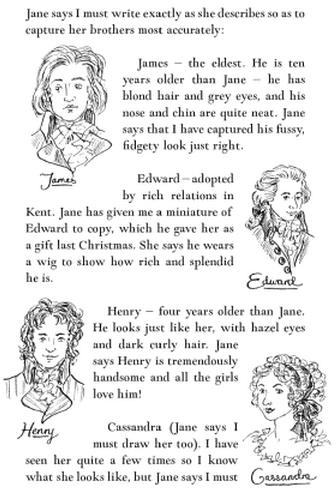
Page from the book, in which Jane describes some of her siblings. The style of writing is aimed at a very young audience. Drawings @Susan Hellard.

In writing this novel, Cora Harrison has kept her very young audience in mind. As you can see from the sample page above, the sentences are short and written in plain English, speech patterns and terms from the 18th century are kept to a minimum, the romance is sweet, and the story is written from a young lady’s point of view. While Ms.Harrison hoped that this book would introduce Jane Austen to very young readers, she also envisioned that mothers and grandmothers would enjoy reading the novel as well.

The book's U.K. cover

I have gone into great detail about the author’s intentions for a reason. Reviews of this book, while largely favorable, are varied. Lower rankings come largely from disappointed adult readers who expected a mature romance and a “more interesting plot.” But as the author wrote to me: “I didn’t want to do an in-depth analysis of love. I wanted to do a fun book, romantic in an old-fashioned style.”

Purists have also decried the changes in facts, dates, and characters, but isn’t it the novelist’s prerogative to change historical facts in order to move the plot forward? Besides, Ms. Harrison made her reasons for these changes clear in her Author’s Note in back of the book, which should have been placed as a Foreword. I also think that annotated notes for juvenile readers (such as those included for book clubs), would help adults explain some of the more obscure facts about the Georgian period to their children and place events in the novel in context.

Be that as it may, I rarely read review books from cover to cover, but I kept reading this one until I was finished (and then wished I had a daughter to give it to). This is a sweet book, filled with useful details about life in England 200 years ago. Ms. Harrison’s conjectures on how the Austens lived and interacted with each other is based on the letters and information about Jane that survived. After reading these pages, it is clear that Cora Harrison wrote her novel as an homage to Jane Austen. She also is an author with a mission. “As a teacher I am realistic enough to know that girls won’t automatically read Jane Austen unless their interest is awakened and I hoped to do that…”

More on the topic:

Read Full Post »

Downton Abbey, a PBS Masterpiece Classic mini-series, is as much a tale about the servants below stairs as about the noble Earl of Grantham and his family who employed them. With the recent airing of the updated version of Upstairs Downstairs in Great Britain, I am sure a debate will long rage about which series portrayed their eras and class differences better. In both cases, the viewer is the winner.

Downton Abbey. Credit: Courtesy of © Carnival Film & Television Limited for MASTERPIECE

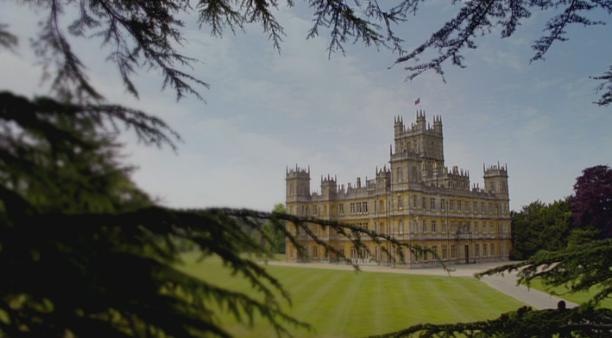
Downton Abbey (Highclere Castle, an “Elizabethan Pile”) Credit: Courtesy of © Carnival Film & Television Limited for MASTERPIECE

Images Credit: Courtesy of © Carnival Film & Television Limited for MASTERPIECE

No matter how expertly this mini-series of Downton Abbey tries to portray this bygone era, it is nearly impossible to capure life in an Edwardian country house exactly as it once was. The viewer should be aware that we can glimpse only a faint, musty, museum shadow of the complex and thriving community that a great English estate once supported.

Downton Abbey. Jane Austen's World. Credit: Courtesy of © Carnival Film & Television Limited for MASTERPIECE

The Crawleys and the servants of Downton Abbey. Credit: Courtesy of © Carnival Film & Television Limited for MASTERPIECE

Images Credit: Courtesy of © Carnival Film & Television Limited for MASTERPIECE

It is a well-known fact that grand country houses could only be run with a great deal of help. As early as the 18th century, Patrick Colquhoun estimated that there were around 910,000 domestic servants (in a population of 9 million). By 1911, the number of domestic servants had risen to 1.3 million. Eighty percent of the land during the Edwardian era was owned by only 3% of the population, yet these vast estates were considered major employers.

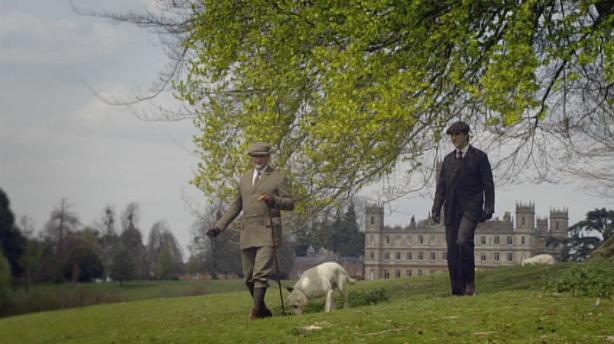
Downton Abbey. Credit: Courtesy of © Carnival Film & Television Limited for MASTERPIECE

The earl (Hugh Bonneville) and his heir, Matthew Crawley (Dan Stevens), survey his vast estate. Credit: Courtesy of © Carnival Film & Television Limited for MASTERPIECE

In the grander and larger houses, the ratio of servants (both indoor and outdoor) to the family could approach 1:7 or 1:10, but as the industrial revolution introduced improvements in laundering, lawn maintenance, and cooking, the number of servants required to run a great estate was greatly reduced.
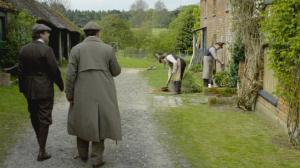
Credit: Courtesy of © Carnival Film & Television Limited for MASTERPIECE

The earl and his heir, Matthew Crawley, survey the cottages and outer buildings on his estate. Credit: Courtesy of © Carnival Film & Television Limited for MASTERPIECE

After World War One and the rise in taxes for each servant employed, many great families no longer kept two sets of house staff. They began to bring servants from their country house to their house in Town, leaving only a skeleton crew behind to maintain the family seat in their absence.
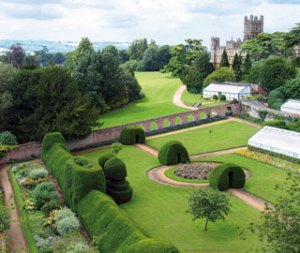
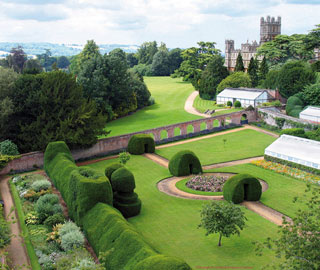
Grounds of Downton Abbey (Highclere Castle)

Country estates were designed to showcase the owner’s wealth via collections of art, furniture and other luxurious possessions, such as carriages, lawn tennis courts, and the like. The main house sat at the end of a long and winding drive through acres of beautifully landscaped park lands.

Downton Abbey.

The Duke is greeted by both the family and the servants. Credit: Courtesy of © Carnival Film & Television Limited for MASTERPIECE

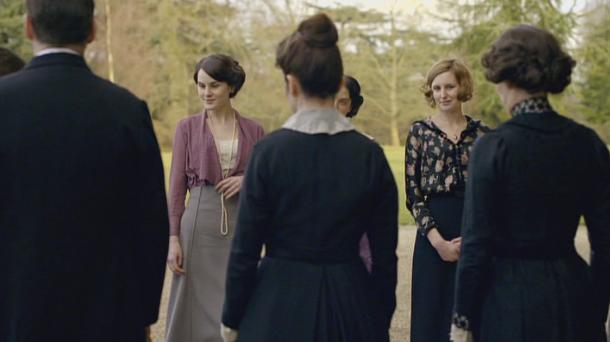
The spectacle did not end there, for approaching the house, guests would see a grand facade or an equally imposing flight of stairs that led to the first floor (or both). In Downtown Abbey, the family awaited the arrival of the Duke of Crowborough (Charlie Cox) along with their servants, who were arrayed in line according to their station.
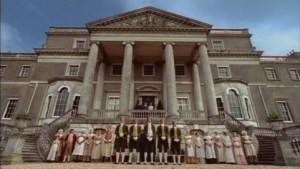
Downton Abbey. Jane Austen's World

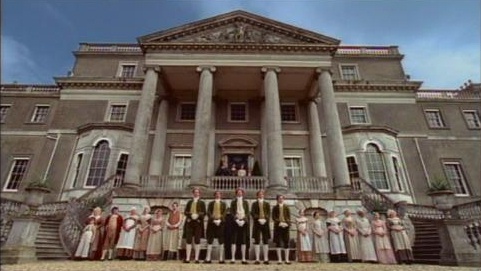
The servants await their new masters at Norland. Sense and Sensibility, 2008.

Such a display of staff was also evident in the 2008 adaptation of Sense and Sensibility, when Fanny and Robert Dashwood arrived to claim Norland Park.

Downton Abbey. Credit: Courtesy of © Carnival Film & Television Limited for MASTERPIECE

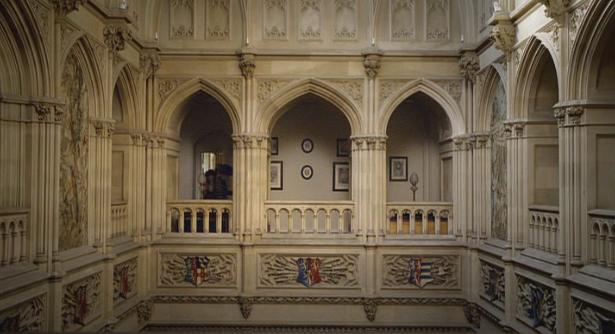
Grand interior hall of Downton Abbey, floor leading to the private rooms. Credit: Courtesy of © Carnival Film & Television Limited for MASTERPIECE

Once introductions had been made, the guests would ascend the imposing stairway and enter an equally impressive high-ceilinged hall that contained yet another grand staircase, which led to the private rooms upstairs. The ladies customarily brought their own maids, who would also require lodging. (In Gosford Park, a poor female relation had to make do with one of the hostesses’ house maids to help her with her dress and hair.)
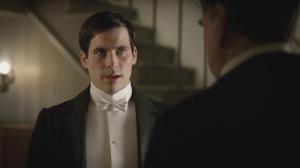
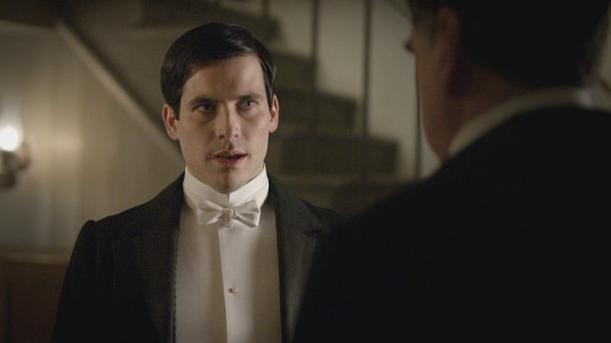
Downton Abbey. Credit: Courtesy of © Carnival Film & Television Limited for MASTERPIECE

Thomas (Rob James-Collier), the first footman, is chosen to act as valet to the duke. Credit: Courtesy of © Carnival Film & Television Limited for MASTERPIECE

The guests’ servants were expected to enter the house through a separate, back servant’s entrance, and shared quarters with the regular staff. The host supplied his own butler or footmen to help serve as valet to his male guests.
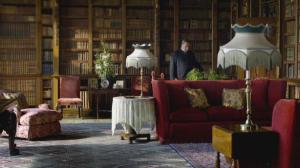
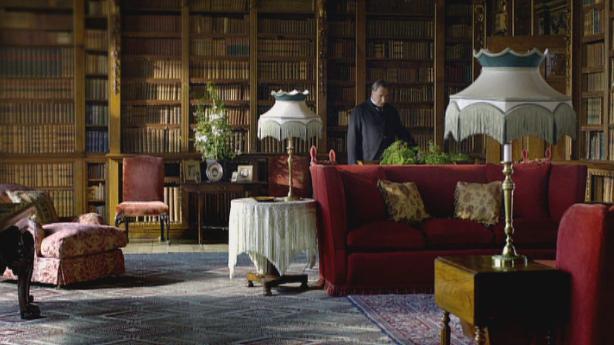
Downton Abbey. Credit: Courtesy of © Carnival Film & Television Limited for MASTERPIECE

The Earl of Grantham’s impressive library/study. Credit: Courtesy of © Carnival Film & Television Limited for MASTERPIECE

A host’s willingness to lavishly entertain his guests did not necessarily reflect the family’s daily schedule:

In 1826 a German visitor to England remarked that: it requires a considerable fortune here to keep up a country house; for custom demands… a handsomely fitted-up house with elegant furniture, plate, servants in new and handsome liveries, a profusion of dishes and foreign wines, rare and expensive desserts… As long as there are visitors in the house, this way of life goes on; but many a family atones for it by meagre fare when alone; for which reasons, nobody here ventures to pay a visit in the country without being invited, and these invitations usually fix the day and hour… True hospitality this can hardly be called; it is rather the display of one’s own possessions, for the purpose of dazzling as many as possible.(3)” – The Country House: JASA

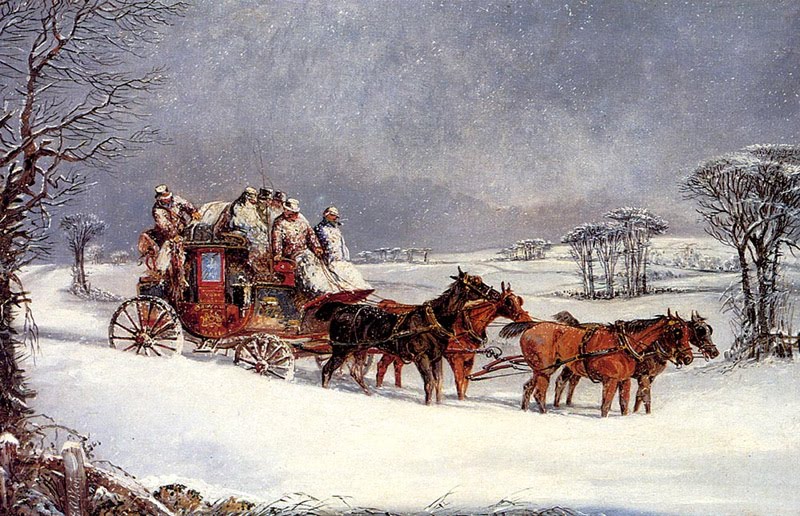
Downton Abbey. Jane Austen's World

Travel in winter, Henry Alken, 1785

Guests stayed for a long time for a variety of reasons. In the 17th and 18th centuries, travel over a long distance was laboriously slow and difficult, for roads were notoriously poor and dangerous. Long visits, such as Cassandra Austen’s visits to her brother Edward in Godmersham Park, became a custom. Even during the Edwardian age, when travel was much improved, guests tended to stay for the weekend (Saturday through Monday). In Downton Abbey, the Duke of Crowborough arrived amidst much hope and anticipation, until he discovered that the estate had been entailed to a third cousin not the earl’s daughter, whom he had come to woo, and he cut his visit to one short day and evening, making an excuse that did not hold water.
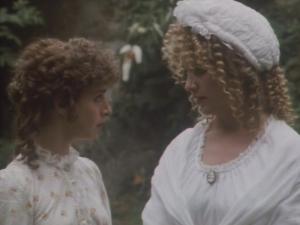
Downton Abbey. Jane Austen's World

Catherine Morland (Katherine Schlessinger) and Eleanor Tilney (Ingrid Lacey), Northanger Abbey 1986

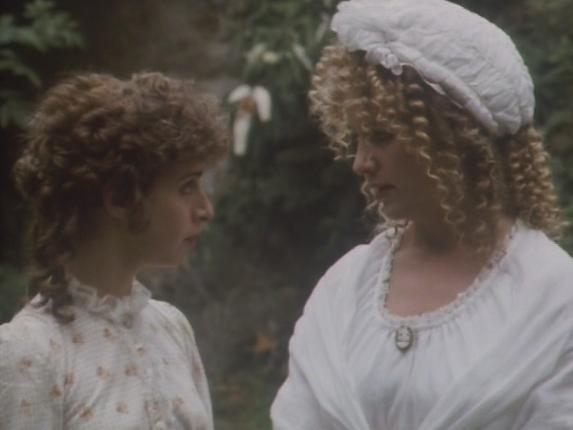
Even during the 18th century, when long-term guests were expected, some overstayed their welcome, like Jane Austen’s anti-heroine, Lady Susan Vernon, whose hostess (sister-in-law) despised her but was forced to tolerate her because she was ‘family.’ Desirable guests, like Catherine Morland of Northanger Abbey, were invited to extend their visit. In Catherine’s instance, Eleanor Tilney, a motherless young lady who lived without a female companion, found the young girl’s company delightful. By the time General Tilney discovered that Catherine was no heiress, she had been with the Allens in Bath and the Tilneys in Northanger Abbey for a total of 11 weeks. As previously noted, Edwardian hosts, while generous, expected house guest to stay for only three days. During this time every luxury was lavished upon them, but it was considered bad form if they stayed longer than arranged or without invitation.

Downton Abbey. Credit: Courtesy of © Carnival Film & Television Limited for MASTERPIECE

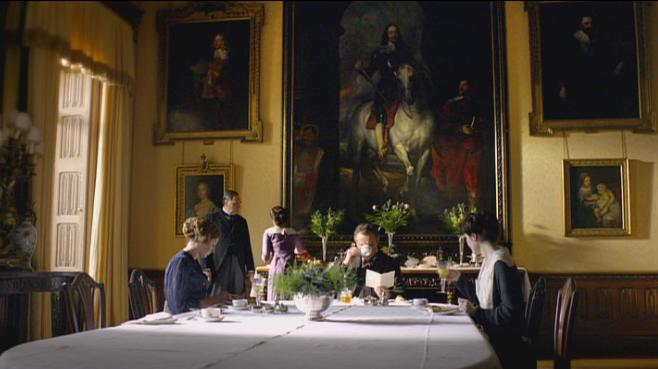
Breakfast was a substantial meal served at 9:30 a.m. Credit: Courtesy of © Carnival Film & Television Limited for MASTERPIECE

At set times, Edwardian guests would congregate in the common rooms, which included the drawing room, music room, dining room and breakfast room, the library or study, the gallery (where ancient family portraits were hung), the billiard room, and the conservatory. Vast lawns and gardens were laid out for promenading; guests could ride or walk through the parklands to view picturesque follys or dine alfresco (outdoors), take tea under an awning, or paint a vista or two.

Downton Abbey. Credit: Courtesy of © Carnival Film & Television Limited for MASTERPIECE

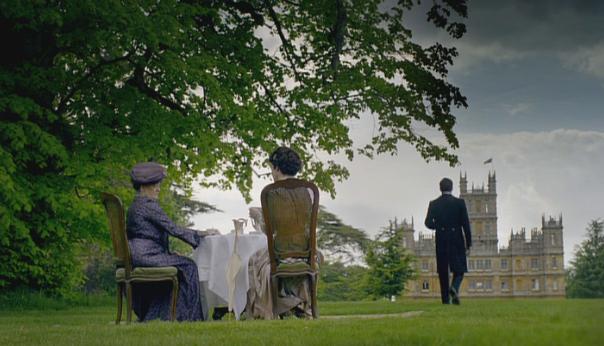
Taking tea alfresco. Credit: Courtesy of © Carnival Film & Television Limited for MASTERPIECE

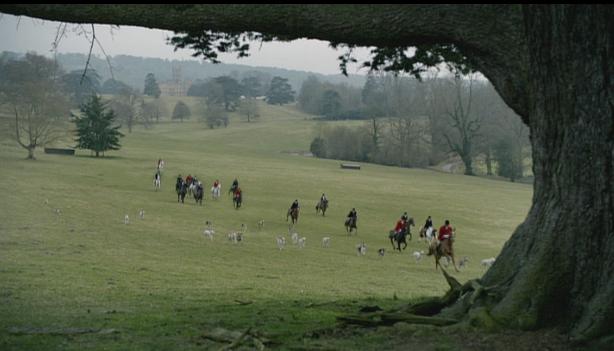
The reputation of a host rested on the entertainments, which helped to pass the time – walking, riding, shooting (in winter), and hunting (in fall) for outdoor activities; and card parties, musicales, and dances for indoor festivities. A fox hunt, such as the one depicted in Downton Abbey, required riding skill and stamina, for the chase would take riders over hills and dales, and hedges, and over long distances for much of the day.

Downton Abbey. Credit: Courtesy of © Carnival Film & Television Limited for MASTERPIECE

The hunt required riding skills and stamina.Credit: Courtesy of © Carnival Film & Television Limited for MASTERPIECE

Billiards made an appearance during the 17th century, and by the 19th century billiard rooms had become a staple. Private libraries offered a variety of books and periodicals. In the summer, Edwardians enjoyed lawn tennis, croquet, cricket, and golf (by the men).

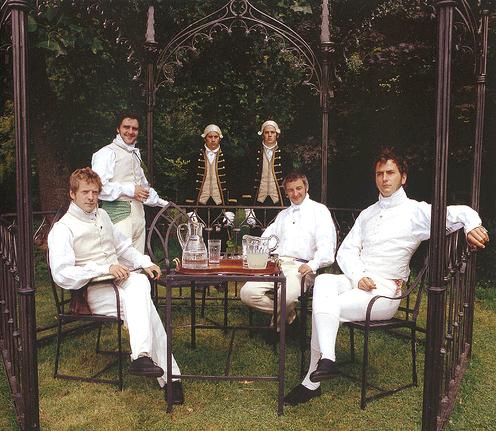
The male guests in Regency House Party (2004) could pretty well behave and move around as they pleased.

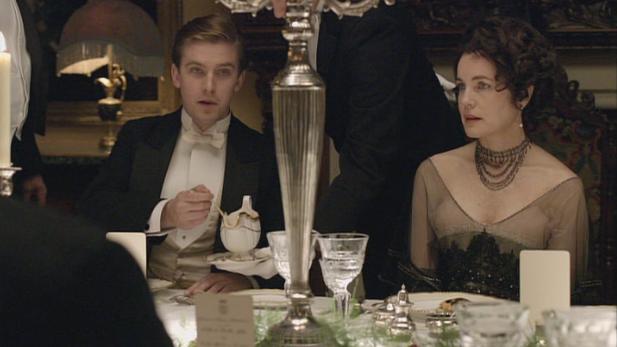
Ladies and gentlemen tended to spend the day apart. Male guests were more active and could engage in almost any activity during the day, except at the time reserved for dinner, when they were expected to show up. In an Edwardian house, men did not escort their female dining partners into the dining room. Rather, after the host served cocktails in the drawing room a half hour before the meal, the group moved to the dining room where they were seated according to a set pattern, with guests sitting between members of the family and their neighbors.
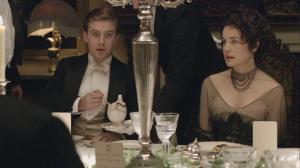
Downton Abbey. Credit: Courtesy of © Carnival Film & Television Limited for MASTERPIECE

The new heir of Downton Abbey (Dan Stevens) sits next to his hostess, the Countess of Grantham (Elizabeth McGovern). Credit: Courtesy of © Carnival Film & Television Limited for MASTERPIECE

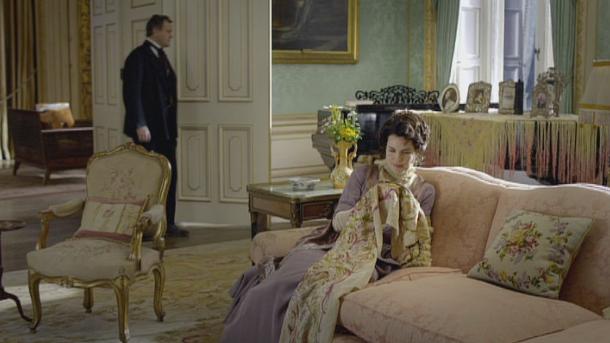
After dinner, the ladies would remove to the drawing room, which became increasingly larger and more feminine over time, while the gentleman relaxed at the dining room table, drinking port, smoking their cheroots, and discussing manly topics.

Downton Abbey. Credit: Courtesy of © Carnival Film & Television Limited for MASTERPIECE

The drawing room at Downton Abbey was large and feminine. Credit: Courtesy of © Carnival Film & Television Limited for MASTERPIECE

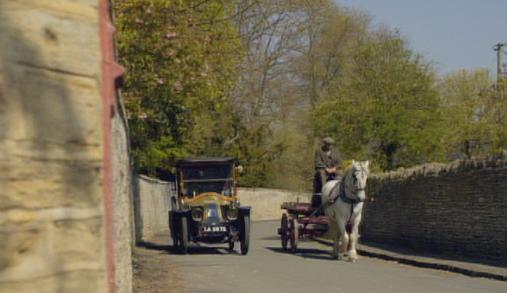
While an 18th century gentlemen would have talked about horse flesh and carriages, Edwardian guests would have included automobiles and their rapidly changing technology, road improvements, and the availability of petrol as well.

Downton Abbey. Credit: Courtesy of © Carnival Film & Television Limited for MASTERPIECE

Transportation was changing rapidly at the turn of the 20th century. Credit: Courtesy of © Carnival Film & Television Limited for MASTERPIECE

Unlike the gentlemen, a lady’s day was more restricted and confined. She spent her day following a set routine, starting with breakfast, and wearing appropriate outfits and getting into them and out of them. Mothers spent some time overseeing the nannies and the care of their children (if they were brought along). Ladies, married or not, would also receive visitors, sew, gossip, read, walk, participate in charity work, observe the men at sport (if invited) or take a ride in the carriage. They did join in on more active, outdoor games at set times during the appropriate season, such as cricket, croquet, lawn tennis, lawn bowling, and the like, but they would have been properly dressed for the occasion.

Downton Abbey. Credit: Courtesy of © Carnival Film & Television Limited for MASTERPIECE

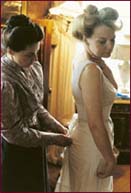
The head maid (Joanne Froggatt) dresses Lady Mary’s (Michelle Dockery) hair for dinner. Credit: Courtesy of © Carnival Film & Television Limited for MASTERPIECE

Imagine poor Eleanor Tilney in the late 18th century, alone in a grand house without female companionship, having no-one to talk to and forced to live a constricted life. No amount of walking, charity work, practicing the piano, or overseeing the household would have made up for her boredom, and thus Catherine Morland’s companionship was so welcome.

Manor House (2002), dressing Lady Olliff-Cooper. Image @PBS

In Regency House Party (the 2004 mini-series), the modern women who portrayed Regency ladies chafed under the strict rules of protocol, forced chaperonage, and daily tedium. A lady’s routine did not much improve during the Edwardian era, although towards the end of this period changing one’s gown for afternoon tea became obsolete.
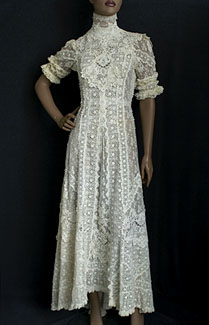
Tea gown, circa 1908. Image @Vintage Textiles

In Manor House, the 2002 mini-series set in the Edwardian era, Lady Olliff-Cooper’s spinster sister, the lowest-ranking member of the family, had so little to do and so little say in how she could spend her time, that Avril Anson (who in real life is a professor) left the series for a few episodes to maintain her sanity.

Downton Abbey. Credit: Courtesy of © Carnival Film & Television Limited for MASTERPIECE

Evelyn Napier (Brendan Patricks) and Matthew Crawley (Dan Stevens) eye their rival before dinner. Credit: Courtesy of © Carnival Film & Television Limited for MASTERPIECE

Lady Olliff-Cooper … [needed] to change her clothes five or six times a day. And very few of these dresses would be what today we’d call practical. Not only did each meal carry its own dress code, but if she needed to receive a visitor, pay a call or go riding, she’d have to change both her clothes and often her hairstyle as well.” Manor House, clothes

Anna Olliff-Cooper, who portrayed the lady of the house in Manor House, spent an enormous amount of her day changing into new gowns and having her hair dressed. She would stand passively as her maid did all the work. Anna noted how constricting the dresses were, and cried as she described how the tight sleeves of her gowns prevented her from raising her arms above her shoulders or from closely hugging her eleven-year old son. Even the fashions conspired to keep a women passive!

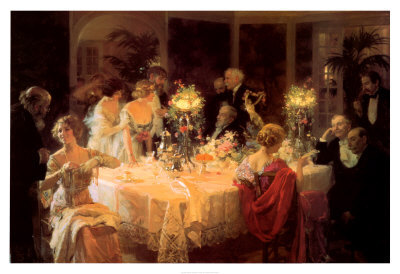
The Dinner Party, 1911, Jules Alexandre Grun

After they had finished their cigars and port, the gentlemen were obligated to rejoin the ladies for cards or music, or both, to while away the evening. The Duke’s behavior in Downton Abbey was egregious, for instead of joining the group for the rest of the evening, he went to bed early. The house party would stay up until 10:30 or so (unless a grand ball had been arranged, and then the guests would stay up until the wee hours of the morning).
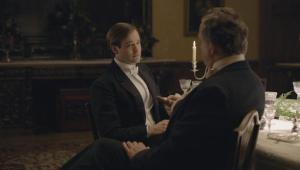
Downton Abbey. Credit: Courtesy of © Carnival Film & Television Limited for MASTERPIECE

Male conversation after dinner over port and cigars. The duke and earl have a frank conversation. Credit: Courtesy of © Carnival Film & Television Limited for MASTERPIECE

In either case, the last people in the house to retire for the night would be the servants, but their lives and schedule will be described in another post.

Look for Downton Abbey, Part One to air on PBS Masterpiece Classic on Sunday, January 9th! Once again PBS will host a twitter party! Stay tuned for details.

Downton Abbey. Credit: Courtesy of © Carnival Film & Television Limited for MASTERPIECE

End of the day at Downton Abbey. Credit: Courtesy of © Carnival Film & Television Limited for MASTERPIECE

More on the topic:

Images of Downton Abbey Season 1: Credit Courtesy of © Carnival Film & Television Limited for MASTERPIECE

Read Full Post »

« Newer Posts - Older Posts »