Feeds:
Posts
Comments

Archive for the ‘Regency’ Category

Today marks the start of a new month-by-month series, “A Year in Jane Austen’s World,” in which I highlight several important events and details that happened in Jane Austen’s novels, letters, and lifetime during each month of the year.

We’ll kick off Jane Austen January (aka “Jane-uary”) by examining passages and situations in each of her novels that occur in January. While some of the novels have no mention of January, others do—with interesting results! Next, we’ll note where Austen was and what she was doing in January by checking her letters for January dates and details. Finally, we’ll highlight events and anniversaries that occurred in January that directed affected Jane Austen or her family.

All of this can help us better understand Austen’s life and times as we look at specific dates, events, and details in the context of months and seasons.

Snowdrops at Chawton House in January, courtesy of Chawton House.

January in Regency Times

One of the highlights of January for Jane Austen’s family was surely Twelfth Night (also known as Epiphany), which falls on January 5th.

Maria Grace, in her article “Celebrating Twelfth Night–Jane in January and You,” explains its religious importance: “Epiphany or Twelfth Night … was the exciting climax of the Christmastide season… It was a feast day to mark the coming of the Magi bearing gifts to the Christ child, and as such was the traditional day to exchange gifts.”

She also explains the social side of Twelfth Night: “In Jane Austen’s day, the party of the year would generally be held on Twelfth Night.” (Austen Variations)

During the Regency Era, people hosted parties and balls to celebrate Christmas and especially the last day of the Christmas season. The entertainment often involved guests playing assigned parts for the evening, dressing up in costumes, eating “Twelfth Cake,” and eating and drinking.

Rowlandson, “Twelfth Night Characters,” Creative Commons, 1811.

In a letter to Cassandra on December 27, 1808, Austen writes about an upcoming ball between Christmas and “Twelfth-day” at Manydown:

I was happy to hear, chiefly for Anna’s sake, that a ball at Manydown was once more in agitation; it is called a child’s ball, and given by Mrs. Heathcote to Wm. Such was its beginning at least, but it will probably swell into something more. Edward was invited during his stay at Manydown, and it is to take place between this and Twelfth-day. Mrs. Hulbert has taken Anna a pair of white shoes on the occasion.

Austen’s Letters (December 27, 1808)

Later, on January 10, 1809, she writes, “The Manydown ball was a smaller thing than I expected, but it seems to have made Anna very happy. At her age it would not have done for me.”

Manydown Great House, Wikipedia Commons, 1833.

January Travel in Jane Austen’s Novels

In Austen’s novels, January is primarily mentioned in the context of parties and travel. Anne Elliot goes to Bath for January and February, Miss Crawford is invited for “a long visit” to see her friend in London in January, Mrs. Jennings goes to her own house in London in January, and Mr. Bingley, Mr. Darcy, and Bingley’s sisters all go to London (when Bingley leaves Netherfield) and stay for the winter.

In Sense and Sensibility, Lucy Steele and her sister, Anne, go to “town” (London) in January to stay with relatives (and subsequently move from house to house throughout the season as socially advantageous opportunities become available):

I had quite depended upon meeting you there. Anne and me are to go the latter end of January to some relations who have been wanting us to visit them these several years! But I only go for the sake of seeing Edward. He will be there in February, otherwise London would have no charms for me; I have not spirits for it.

Sense and Sensibility

Mrs. Jennings, who “resided every winter in a house in one of the streets near Portman Square,” invites Elinor and Marianne to come with her to London in January when her thoughts begin to turn toward home after Christmas.

Portman Square, London, Wikipedia Commons, 1813.

The London Season

So why do so many of Austen’s characters travel to London in January? Wouldn’t the weather make travel difficult? Wouldn’t they prefer to stay home (and inside) where it’s cozy?

These are fair questions, but after Christmas, a large portion of the genteel class moved “to town” during the winter months for the London Season, which coincided with England’s political schedule, for entertainment and socializing. The Season had previously started in the fall, meaning most people went to London before the bad weather set in, but with the improvement of roads and travel during Austen’s day, the season slowly shifted later.

Here’s an explanation of the London Season from Jane Austen’s House Museum:

The London season coincided with the sitting of Parliament, beginning at some point after Christmas when fashionable families would move into their London houses. The men would attend Parliament, whilst the women shopped, visited, and found husbands for themselves or their daughters. It lasted until early summer, when the ‘beau monde’ would return to their country estates, escaping the city’s stifling heat and pungent smells.

The season was a whirlwind of court balls and concerts, private balls and dances, parties and sporting events. On a typical day, ladies would rise early to go riding in Hyde Park, before returning home to breakfast and spending the day shopping, dealing with correspondence and paying calls.

The Season, Jane Austen’s House Museum

Most villages had assemblies and balls during the winter, but all of the most important social occasions happened “in town.” In Pride and Prejudice, we’re told that the Bennet sisters have little to do “beyond the walks to Meryton” in January and February, when conditions are “sometimes dirty and sometimes cold” (Ch. 27). It makes sense that many young women longed to go to town in the winter, at the height of the London Season and “marriage market,” when the majority of the parties, balls, and social events were held.

Rowlandson, Drawing Room at St. James’s Palace in London, Wikimedia Commons, 1810.

January in Jane Austen’s Letters

January often brings rain, cold weather, and even snow to the various locations where Austen lived and traveled. Austen kept her spirits up, but January in England, especially in homes without central heating or today’s insulation, could not have been entirely comfortable. Balls and assemblies, visits and travel, kept Austen busy and content during the winter months.

Austen’s entries follow below and give us a glimpse into the miserable weather conditions during one particularly snowy and wet January:

17 January 1809 (Castle Square):
“Yes, we have got another fall of snow, and are very dreadful; everything seems to turn to snow this winter.”

24 January 1809 (Castle Square):
“This day three weeks you are to be in London, and I wish you better weather; not but that you may have worse, for we have now nothing but ceaseless snow or rain and insufferable dirt to complain of; no tempestuous winds nor severity of cold. Since I wrote last we have had something of each, but it is not genteel to rip up old grievances.”

In the same letter, Austen describes her writing:
“I am gratified by her having pleasure in what I write, but I wish the knowledge of my being exposed to her discerning criticism may not hurt my style, by inducing too great a solicitude. I begin already to weigh my words and sentences more than I did, and am looking about for a sentiment, an illustration, or a metaphor in every corner of the room. Could my ideas flow as fast as the rain in the store-closet, it would be charming.”

On the topic of the store-closet, she writes this:
“We have been in two or three dreadful states within the last week, from the melting of the snow, etc., and the contest between us and the closet has now ended in our defeat. I have been obliged to move almost everything out of it, and leave it to splash itself as it likes.”

30 January 1809 (Castle Square):
“Here is such a wet day as never was seen. I wish the poor little girls had better weather for their journey; they must amuse themselves with watching the raindrops down the windows. Sackree, I suppose, feels quite broken-hearted. I cannot have done with the weather without observing how delightfully mild it is; I am sure Fanny must enjoy it with us. Yesterday was a very blowing day; we got to church, however, which we had not been able to do for two Sundays before.”

And a final update on the flooded closet:
“The store-closet, I hope, will never do so again, for much of the evil is proved to have proceeded from the gutter being choked up, and we have had it cleared. We had reason to rejoice in the child’s absence at the time of the thaw, for the nursery was not habitable. We hear of similar disasters from almost everybody.”

If you’ve ever dealt with water damage or burst pipes due to cold weather, you know how awful and destructive it can be. Austen makes light, but one can imagine it caused quite a bit of damage.

Snow at Jane Austen’s House Museum, January 2021.

January in Jane Austen’s Lifetime

And finally, let us turn our attention to some of the most important dates and events that happened (or were celebrated) during the first month of the year in Jane Austen’s lifetime. In December 1800, Reverend Austen decided to retire and remove his family to Bath. Austen’s letters in January 1801 prove an interesting read as she and the Austen family prepare to move later in the year:

3 January 1801 (Steventon):
Austen writes that her mother wants to keep two maids and quips about their plans to have “a steady cook and a young giddy housemaid, with a sedate, middle-aged man, who is to undertake the double office of husband to the former and sweetheart to the latter.”

Austen discusses three parts of Bath where they might live:
“Westgate Buildings, Charles Street, and some of the short streets leading from Laura Place or Pulteney Street.” She writes extensively about each neighborhood and several others, giving her opinion and hopes about each. She details which pictures, furniture, and beds they are choosing to keep or leave behind and asks Cassandra’s advice. And she shares plans for the family to travel to Bath a few weeks from then.

Austen shares own thoughts on their move to Bath:
“I get more and more reconciled to the idea of our removal. We have lived long enough in this neighborhood: the Basingstoke balls are certainly on the decline, there is something interesting in the bustle of going away, and the prospect of spending future summers by the sea or in Wales is very delightful. For a time we shall now possess many of the advantages which I have often thought of with envy in the wives of sailors or soldiers. It must not be generally known, however, that I am not sacrificing a great deal in quitting the country, or I can expect to inspire no tenderness, no interest, in those we leave behind…”

The letter is full of useful information and well-worth a read. You can access it HERE.

14 January 1801 (Steventon):
Austen speaks of the many visitors they’ve received in response to the news that Rev. Austen is retiring and the family is moving to Bath. She says, “Hardly a day passes in which we do not have some visitor or other: yesterday came Mrs. Bramstone, who is very sorry that she is to lose us, and afterwards Mr. Holder, who was shut up for an hour with my father and James in a most awful manner.”

4 Sydney Place, Bath.
Plaque outside 4 Sydney Place, Bath.

January Dates of Importance

This brings us now to several dates that would have been quite important to Austen personally:

Celebrations/Birthdays:

9 January 1773: Jane Austen’s sister, Cassandra Elizabeth Austen, born.

23 January 1793: Edward Austen’s first child, Fanny, born.

Goodbyes/Sorrows:

January 1796: Tom Lefroy leaves Ashe for London (and never returns) and Tom Fowle (Cassandra’s fiancé) sets sail for the Indies, where he later dies.

21 January 1805: Rev. George Austen (Jane’s father) dies suddenly in Bath.

Writing:

28 January 1813: Pride and Prejudice was published, by Thomas Egerton (Whitehall, London).

21 January 1814: Austen begins writing Emma.

The Joys of Sleuthing

I hope you’ve enjoyed this first installment of our month-by-month exploration of Jane Austen’s world. I was pleasantly surprised to find that there was so much more to research and explore about the month of January than I anticipated. I enjoyed sleuthing around, following my nose, and discovering what I could uncover–just with the word “January.” If you have ideas about what I might pursue for February in Jane Austen’s World, please share your ideas in the comments.


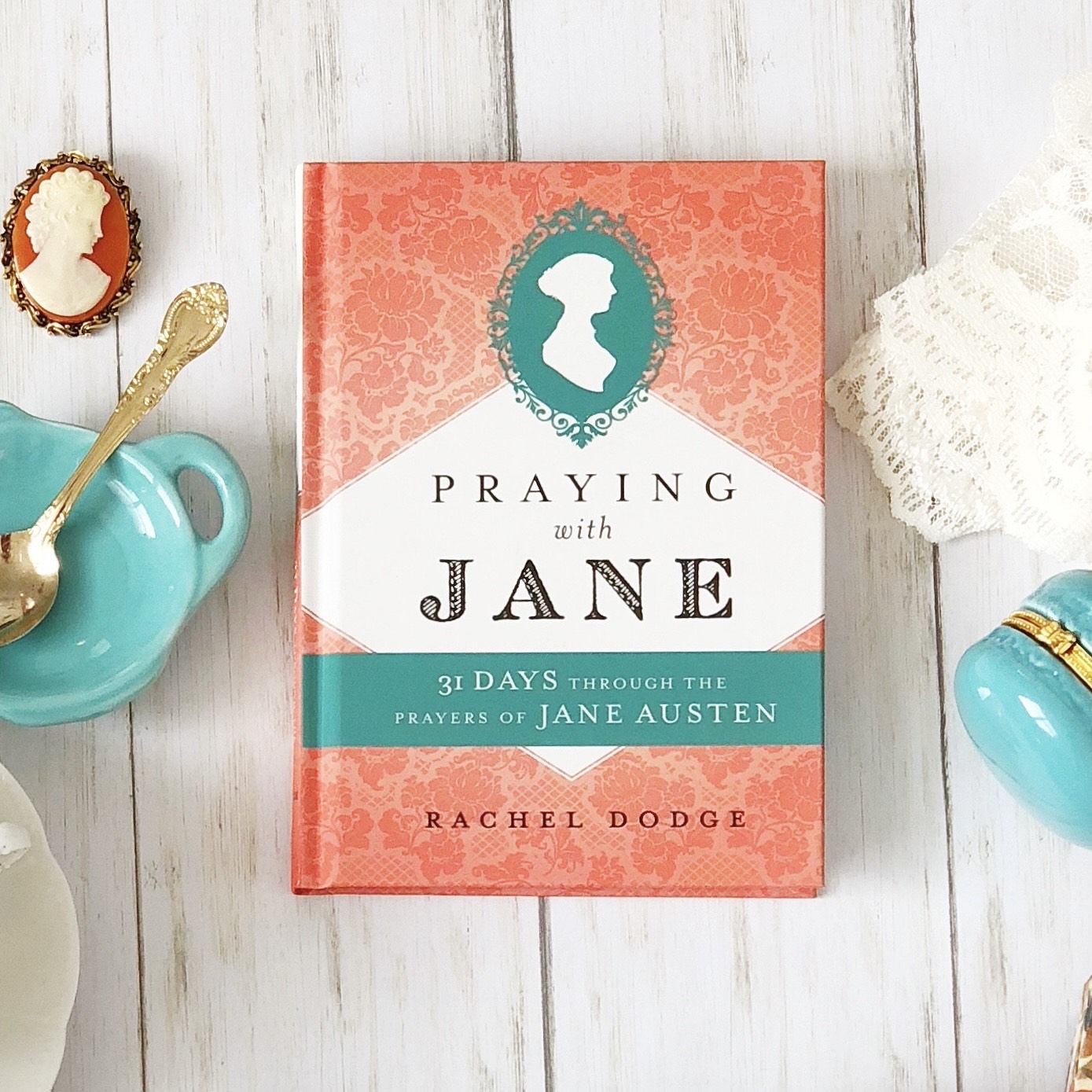
RACHEL DODGE teaches college English classes, gives talks at libraries, teas, and book clubs, and writes for Jane Austen’s World blog. She is the bestselling author of The Little Women DevotionalThe Anne of Green Gables Devotional and Praying with Jane: 31 Days Through the Prayers of Jane Austen. Now Available: The Secret Garden Devotional! You can visit Rachel online at www.RachelDodge.com.

Read Full Post »

I’m delighted to share with you a beautiful new book I think you’ll want by your side this fall as you settle down for a cozy read by the fire! It’s called Bygone: Musings and Poems from a Regency Hearthside by Hannah Linder.

Not only is it beautiful to behold, but it is also beautiful to read. Read on for a fun interview with Hannah and some of my own thoughts on her book!

Book Description:

Modern, Regency-Esque Love Poems from a Regency Novelist. Enjoy this hardback collection of whimsical thoughts and poems, perfect for fans of Jane Austen. Grab a cup of tea and immerse yourself in this gift book release, just in time for fall.

I had the great honor of writing an endorsement for this book:

In Bygone: Musings and Poems from a Regency Hearthside, Hannah Linder offers elegant, heartfelt verses for the discerning Regency soul. As words dance delicately across the page, you’ll soon hear the gentle rustle of silk and the subtle murmur of voices as you step back through time to the beauty and romance of a bygone era.”

As you can see, I found myself in a very poetic mood after reading Hannah’s poems! Her words not only sweep you away to another time and place, but they are also food for the soul.

Interview with Hannah Linder

Hannah agreed to do an interview with me, and I enjoyed getting to know more about her and her writing and artistic background. She is an accomplished, creative, and talented person (I’m sure Austen would approve) with the same deep love for Austen and the Regency Era that all of us here at Jane Austen’s World share. I hope you enjoy our Q&A!

1. What is your background with poetry and what inspired you to write this book?

For years, I’ve enjoyed slipping off alone somewhere with an old poetry book, reading the stanzas out loud, or committing them to memory. I love the way poems play with words. The soothing sound. The cut of realization, throbbing at your chest, when you read something you always knew about life but never really pondered.

For years, I said I could not write poetry. I liked freedom best and writing in rhythms seemed too binding. Funny, isn’t it? Oftentimes the things we say we’ll never do are those we find ourselves doing. Now, writing poetry is an outlet. When emotions swell, I let them topple over and bleed into paper, each line a journal entry or a piece of what cries within me. Bygone is the collection of all my thoughts, dreams, and longings.

2. What are 2 of your favorite poems and what is the story behind each one?

Love You? is one that will always be special to me, because it reflects the heart of a wife who tries to explain to her husband all the ways she loves him. Love is not always flowers and moonlit dances and serenating music. Love, more often, is the simple things we do for each other. The life we live together.

Another favorite is Worth the While. This poem is a sweet reminder to slow down, be happy, and enjoy life as it comes.

3. When did you first discover Jane Austen and the Regency Era? 

My best friend, in my early teens, invited me over and introduced me to the 2005 Pride and Prejudice. From the moment Mr. Darcy walked through the foggy field with his coat billowing in the wind, I was hopelessly twitterpated. I have been in love with everything Jane Austen ever since.

4. Do you read Regency or Historical Fiction? If so, who are your favorite authors?

Absolutely! My all-time favorite Regency author is Michelle Griep. Her stories always keep me captivated.

5. What are your favorite 3 books you read in the last year?

This is such a hard question! I think Memory Lane by Becky Wade and Forgotten Secrets by Christy Barritt were among my favorite reads of the year.

6. Who do you picture reading the poems in this collection?

Anyone who loves the Regency Era, the sweetness of romance, the sing-song voice of poetry, or the sentimental things in life. Bygone would be a fun book to curl up with in a chair, near a hearth, with a steaming cup of tea.

7. What was your writing process for this collection? Where did you write these poems?

Anywhere, everywhere! Sometimes a thought or idea would strike me, and I would rush to write it down before I could forget. Other times, I’d just go wandering in a field, take a seat by the creek, and ponder on life until a poem came to me.

Bonus: Who is your favorite Jane Austen hero? Who is your favorite villain?

Absolutely, hands down, the wonderful Mr. Darcy. Though Mr. Knightly would be a close second. And villain, hmm…perhaps Mr. Wickham. He’s so charmingly deceitful and such a layered character. Jane Austen was so masterful.

About the Author

Hannah Linder resides in the beautiful mountains of central West Virginia. Represented by Books & Such, she writes Regency romantic suspense novels filled with passion, secrets, and danger. She is a four-time Selah Award winner, a 2023 Carol Award semi-finalist, and a member of American Christian Fiction Writers (ACFW). Also, Hannah is an international and multi-award-winning graphic designer who specializes in professional book cover design. She designs for both traditional publishing houses and individual authors, including New York TimesUSA Today, and international bestsellers. She is also a self-portrait photographer of historical fashion. When Hannah is not writing, she enjoys playing her instruments—piano, guitar, ukulele, and banjolele—songwriting, painting still life, walking in the rain, and sitting on the front porch of her 1800s farmhouse.

To follow her journey, visit hannahlinderbooks.com.

Hannah’s Links

If you’d like to follow along with Hannah’s other literary and artistic ventures, here are a few ways to find her online:

Purchase Bygone

You can purchase Bygone by Hannah Linder HERE!

I hope you enjoyed learning more about Hannah and her beautiful new book! Which Jane Austen character do you think would be most likely to read poetry? Which would be most likely to write poetry?


RACHEL DODGE teaches college English classes, gives talks at libraries, teas, and book clubs, and writes for Jane Austen’s World blog. She is the bestselling author of The Little Women DevotionalThe Anne of Green Gables Devotional and Praying with Jane: 31 Days Through the Prayers of Jane Austen. Now Available: The Secret Garden Devotional! You can visit Rachel online at www.RachelDodge.com.

Read Full Post »

It’s time for the next installment in this series devoted to examining the enduring romantic themes in Jane Austen’s novels, many of which are used over and over again in today’s most popular “rom com” movies and books.

So far in this series, we’ve explored popular themes in Jane Austen’s other novels: “Enemies to Lovers” in Pride and Prejudice, the “Slow Burn” Romance in Emma“Best Friends to Lovers” in Mansfield Park, and “Second-Chance” Love in Persuasion.

This month, we’re taking a closer look at the romantic themes Jane Austen used in Northanger Abbey (NA) and tracking the themes that are still used today.

Defining the “Meet-Cute”

Every rom com has a meet-cute, the moment when two characters meet each other in a “cute” and memorable way. In The Holiday, Arthur (Eli Wallach) defines a meet-cute like this:

Say a man and a woman both need something to sleep in, and they both go to the same men’s pajama department. And the man says to the salesman, ‘I just need bottoms.’ The woman says, ‘I just need a top.’ They look at each other, and that’s the meet-cute.”

The Holiday

While every story has a meet-cute, some are cuter than others. Sometimes the two characters cannot stand one another, sometimes there is a misunderstanding, and sometimes there is a clash. But sometimes, as in NA, the two characters meet and are immediately drawn to one another.

Introducing Mr. Tilney

In NA, not only do Catherine Morland and Henry Tilney have a clever first meeting, we also learn a lot about social etiquette during that era.

When Catherine arrives in Bath, she knows no one and her chaperone, Mrs. Allen, has no immediate acquaintances. On their first night in the Upper Rooms, they move through a crowded ballroom, but because Mrs. Allen does not see anyone she knows, Catherine cannot dance:

[S]he longed to dance, but she had not an acquaintance in the room. Mrs. Allen did all that she could do in such a case by saying very placidly, every now and then, “I wish you could dance, my dear—I wish you could get a partner.”

Northanger Abbey

However, when they visit the Lower Rooms, “fortune” is “more favourable to our heroine” (Ch. 3). It’s there that the master of ceremonies makes an introduction: “The master of the ceremonies introduced to her a very gentleman-like young man as a partner; his name was Tilney.”

After dancing they strike up a lively conversation and the meet-cute is on.

Northanger’s Meet-Cute

Henry is described by Austen in highly favorable terms: “He seemed to be about four or five and twenty, was rather tall, had a pleasing countenance, a very intelligent and lively eye, and, if not quite handsome, was very near it. His address was good, and Catherine felt herself in high luck.”

As they talk, Mr. Tilney teases Catherine and is clearly a good-humored man: “He talked with fluency and spirit—and there was an archness and pleasantry in his manner which interested, though it was hardly understood by her.”

Mr. Tilney flirts with Catherine when he questions her about her journal and even tells her what she “ought” to write in it after their meeting:

“I danced with a very agreeable young man, introduced by Mr. King; had a great deal of conversation with him—seems a most extraordinary genius—hope I may know more of him. That, madam, is what I wish you to say.”

For the remainder of the chapter, Austen is at her absolute best with light-hearted, quick-paced dialogue and witty banter. Rarely do any of her characters talk quite so much upon first meeting one another, and we, her readers, find ourselves as charmed by Henry as Catherine herself:

They danced again; and, when the assembly closed, parted, on the lady’s side at least, with a strong inclination for continuing the acquaintance. Whether she thought of him so much, while she drank her warm wine and water, and prepared herself for bed, as to dream of him when there, cannot be ascertained; but I hope it was no more than in a slight slumber, or a morning doze at most; for if it be true, as a celebrated writer has maintained, that no young lady can be justified in falling in love before the gentleman’s love is declared, it must be very improper that a young lady should dream of a gentleman before the gentleman is first known to have dreamt of her.

Northanger Abbey

Love at First Sight, Conflict Ahead

In a book with a quick mutual connection between characters, there must be some kind of problem or conflict to keep the story going. Otherwise, it would be over in the first few pages. In many popular movies today, writers add in misunderstandings, timing issues, geographical hurdles, age differences, and other road blocks to make things interesting.

The same is true for NA. After their first meeting, Catherine develops an immediate first major crush, and it’s clear that Mr. Tilney is hoping to see more of her as well. Both are charmed and interested. Both hope to see one another again. However, as with most stories that start with immediate attraction, Catherine and Henry don’t live happily ever after–at least not right away.

For the remainder of the novel, Austen uses a variety of plot devices to create conflict for her two young lovers, unfold a larger plot with its own major themes, and build a multi-layered story arc for Catherine and Henry.

C.E. Brock illustration, Northanger Abbey, “Pray, pray, Stop Mr. Thorpe”

Popular “Meet-Cute” Examples

No romantic comedy can hold a candle to Jane Austen’s complex plots, characters, and novels. However, it’s interesting to think about the devices she used to create the meet-cute in NA versus the devices writers must use today. While people don’t need a master of ceremonies to introduce them anymore, writers still must find ways to “match-make” their characters. Here are some popular movies that fall into the “meet-cute” category:

In The Holiday, there are several meet-cutes: When Iris and Amanda switch houses for Christmas, Iris ends up meeting Miles when he comes to drop something off at Amanda’s house on a windy day in Los Angeles. Miles and Iris immediately hit it off, while Miles’ girlfriend sits in his car waiting. Amanda meets Graham when he shows up on her doorstep (Iris’ doorstep), hoping to crash at his sister’s house after a night out.

In Serendipity, the two main characters meet in a busy department store at Christmas time. They each grab for the last pair of black gloves and strike up a conversation.

In Notting Hill, Will spills orange juice on Anna, a popular movie star, when they crash into one another on the sidewalk near his apartment. She agrees to go to his place to change into clean clothes and they share a delightful first conversation and an unexpected first kiss.

In 50 First Dates, Henry must create a series of meet-cutes to gain the attention of Lucy each day because she has lost her short-term memory and forgets who he is every time they meet.

And in My Big Fat Greek Wedding, we find a refreshing twist on the meet-cute when Toula meets and falls in love with Ian. As she serves him at her family’s restaurant, she can’t even speak to him. However, that meeting pushes Toula to change her life, go to school, (get a makeover – of course), and become the confident woman Ian later notices through the window of a travel agency.

Clever Introductions

Jane Austen created her stories in a world where men and women could only meet under certain circumstances. The social rules of her time necessarily set up parameters that she had to follow, which provided for some very creative inspiration. Today, people don’t have to follow those same rules, but they still need to find a way to meet and introduce themselves, either in person, online, at church, work, or school, or through a mutual friend.

What are some of your favorite “meet-cute” moments in literature or film? If you have a “meet-cute” story of your own, we’d love to hear about it in the comments!


RACHEL DODGE teaches college English classes, gives talks at libraries, teas, and book clubs, and writes for Jane Austen’s World blog. She is the bestselling author of The Little Women DevotionalThe Anne of Green Gables Devotional and Praying with Jane: 31 Days Through the Prayers of Jane Austen. Now Available: The Secret Garden Devotional! You can visit Rachel online at www.RachelDodge.com.

Read Full Post »

As we continue to analyze Jane Austen’s novels and identify the best romantic tropes used in each one, we’re well on our way to proving that Austen not only used romantic themes ingeniously but also played an important role in developing several key plot devices that are regularly used in modern filmmaking today.

Last month, I wrote about Rom Coms and Emma. This month, I’m delving into Mansfield Park and finding the romantic themes found in the novel that are commonly found in romantic movies today.

Mansfield Park, 1st Edition, 1814, Swann Auction Galleries

Romantic Themes in Mansfield Park

In Mansfield Park, there are several themes that ring true as romantic tropes we’re familiar with today:

The Ugly Duckling-Turned-Swan (aka the “Make-over”)

Following this train of thought, we see Fanny Price blossom and come into her own in MP. Her transformation isn’t necessarily outward. She doesn’t exactly go to the mall and get a makeover, but she does come out of her shell and begin to stand on her own two feet.

The “makeover” in this novel is actually a bit inverted because while Fanny later gains some of her own agency and confidence, the real change that occurs is that the people around her finally see her for who she really is and start to value her!

The Diamond-in-the-Rough

Adjacent to the “ugly duckling” theme, many rom coms play with the idea that the main character is wonderful just as she is, but she is overlooked, shy, or overshadowed by other characters. There’s usually an “a-ha” moment where one or more characters finally see the main character in a new way.

In MP, Edmund and his family members finally wake up and see Fanny for her true worth. Miss Crawford is the shiny object that distracts Edmund from much of the novel from seeing Fanny’s quieter brilliance.

Mansfield Park (1983)

Red Herring (aka, the Shiny Object)

Similar to the chemistry and relationship between Emma and Mr. Knightley (and the Frank Churchill distraction), there’s a red herring (or several) in Mansfield Park as well.

In The Take’s “The Rom Com Explained,” we find this explanation of the red herring theme: “Rom-com leads often start out with a red herring love interest who seems very appealing but turns out to be all wrong. Meanwhile, as the protagonist spends time with someone they aren’t actively trying to impress, they can be their unfiltered self and get to know the other person in a real way. This long-developing chemistry leads to a moment of epiphany, where the character suddenly realizes the feelings that have been crystal-clear to the viewer all along.”

In Mansfield Park, the arrival of Henry and Mary Crawford (siblings) is the pebble thrown into the pond at Mansfield. This disrupts the regular rhythm of life for Fanny and Edmund and the rest of the Bertram family and sets the plot spinning.

Henry throws a wrench into several plot lines, while Mary comes between Fanny and Edmund. Edmund, dazzled by Mary’s beauty, is blinded by Mary and only sees her through rose-colored glasses. Fanny waits in the wings, heart aching, as he falls for Mary.

Mary, similar to Wickham, Willoughby, and others, is the “shiny object” that keeps Edmund distracted and causes havoc for Fanny. Fanny cannot prove what she thinks is wrong with either of the Crawfords. She has no other recourse but to wait patiently until Mary and Henry both show their true colors.

Mansfield Park (2007)

Best Friends-to-Lovers

Of all the themes in rom coms used today, Best Friends-to-Lovers is one of the most popular and it fits Mansfield Park beautifully. While Emma and Mr. Knightley have a bit of this vibe, much of their chemistry comes from their sparring matches (like Elizabeth and Darcy). But with Fanny and Edmund, they are incredibly close friends who share many of the same interests, qualities, and values. Edmund is the first person to take an interest in Fanny when she comes to live at Mansfield.

If you think of MP as a new school, Fanny is the new kid and the popular kids won’t talk to her or play with her. Edmund is different. Edmund helps Fanny when she is sad and lonely. At first, she looks up to him, but as they grow up, mutual respect and affection grows. Later, at least for Fanny, love begins to bud.

The Love Triangle

As in most Austen novels, there’s a love triangle, which is probably the most popular trope in most romantic comedies today.

In Mansfield Park, there are multiple love triangles, but we don’t see all of them at first. The one we focus on most is the Fanny-Edmund-Mary triangle. While Fanny hides lovelorn feelings for Edmund, Edmund doesn’t see Fanny as more than a friend/cousin he grew up with. Miss Crawford comes to town at exactly the wrong moment and steals the show.

Until Edmund sees Miss Crawford for her true self, he is blinded by her alluring personality and beauty and cannot see Fanny standing right in front of him.

Love Triangles similar to Mansfield Park

When I started looking for modern movies with similar themes (Best Friends-Turned-Lovers, Ugly Duckling-Turned Swan, Unrequited Love), I posted questions on my Instagram account (@KindredSpiritBooks) and on the Jane Austen Fan Club on Facebook. I received dozens and dozens of answers to this intriguing question!

If you’ve ever wanted to know what themes come up most often in movies, take a look at this list; it’s the longest list I’ve had yet in this series. There’s no denying that movie-goers respond well to love triangles—especially when the triangle involves two close friends finally realizing their love for one another!

The Holiday, 10 Things I Hate About You, 13 Going On 30, A Cinderella Story, A Walk to Remember, Always Be My Maybe, America’s Sweethearts, Can’t Buy Me Love, FRIENDS (Chandler and Monica), Crossing Delancey , Drive Me Crazy, Easy A, Ever After, Get Over It, Grease, He’s Just Not That into You, Love and Basketball, Love, Rosie , Made of Honour, Maid in Manhattan, Miss Congeniality, Moonstruck, Never Been Kissed, Pretty in Pink, Pygmalion (My Fair Lady), Sabrina, She’s all That, She’s the Man, Sixteen Candles, Some Kind of Wonderful, Something Borrowed, Superman, The Duff, The Office (Jim and Pam), The Perfect Man, The Princess Diaries, The Summer I Turned Pretty, The Truth About Cats & Dogs, Trojan War, Whatever It Takes, While You Were Sleeping, Wild Hearts Can’t Be Broken, Win a Date with Todd Hamilton, Yesterday, Your Place or Mine.

Always Be My Maybe
Jim, Pam, and Roy from The Office

When asked what themes they saw in Mansfield Park that are common in romantic films today, several fans quipped, “The Cousins-to-Lovers” theme? Which made me laugh out loud. Yes, cousins did marry cousins during Austen’s time, but it’s still a funny remark.

I’m sure you can add others to this list! In each of these movies, there is some element of MP present.

Fanny Price

When I took these polls, the one thing everyone agreed on was this: We like Fanny Price because she doesn’t change her morals, her convictions, or her personality just to gain acceptance or love. She does blossom, but she doesn’t change. She is the same through-and-through, which makes her a very admirable heroine. Edmund finally wakes up and begins to see her in a new light, but she doesn’t become more like Mary Crawford; she remains steady, true Fanny.

Fanny has a lot to lose in terms of a future when she refuses to give in to Henry Crawford’s proposal and her uncle’s pressure. Without an inheritance of her own, her only options are to continue living with her aunt and uncle Bertram as long as they will have her or find work as a governess. And yet, though she’s timid and easily intimidated, she does not yield.

Mansfield Park (2007)

Have you seen any of the film versions of Mansfield Park? If so, which one do you think remains most faithful to the original text? (I’ve yet to find one that I enjoyed as much as the novel, but I’m open to suggestions!)

Are there any other books or movies in this genre that allow the heroine to stay true to herself as she wait patiently for her dreams to come true?


RACHEL DODGE teaches college English classes, gives talks at libraries, teas, and book clubs, and writes for Jane Austen’s World blog. She is the bestselling author of The Little Women DevotionalThe Anne of Green Gables Devotional and Praying with Jane: 31 Days Through the Prayers of Jane Austen. Now Available: The Secret Garden Devotional! You can visit Rachel online at www.RachelDodge.com.

Read Full Post »

As promised, I’m back with a reminder and announcement about Regency Marketplace’s brand-new seasonal Jane Austen Box! I’m delighted to share that the theme of this new box is “Christmas In Highbury”! If you missed my review of the lovely Autumn in Chawton Box I received, you can read about it and see photos HERE.

Christmas in Highbury

This Christmas, be transported to the little hamlet of Highbury in County Surrey. Here we find Emma and her friends and family preparing for a delightful country holiday, and you’re invited! Regency Christmastide for the aristocracy was often celebrated at the families’ country estates, and in Emma, we see her sister Isabella and Knightley’s brother John bring all their children to Hartfield for the occasion, enlivening the quiet household with their fun and noise. Mr. Woodhouse would have them stay forever!

The Perfect Gift

The “Christmas In Highbury” Jane Austen Box will be filled to the brim with a cozy and elegant medley of Emma and Regency-inspired Christmas gifts! A perfect gift box to send or receive this holiday season, it also makes a wonderful hostess gift. December 16th is Jane Austen’s birthday, too, so celebrate in style!

At Christmas every body invites their friends about them, and people think little of even the worst weather.

Jane Austen’s Emma

Place Your Order

The “Christmas In Highbury” Jane Austen Box will be available to reserve from Saturday, October 15th-Tuesday, November 15th, 2022. All boxes will ship out the first week of December! These boxes sell out quickly, so do not delay. Place an order for yourself or as a gift for a friend or relative today.

If you are longing to receive a box for Christmas, send this link to a friend or loved one as a big HINT: https://regencymarketplace.com/collections/jane-austen-box.

If you want to take it up a notch, you can subscribe to the Quarterly Jane Austen Box and receive a box every 3 months, or purchase as a One-Time Gift option (non-recurring). Free Shipping in the USA! International Flat Rate Shipping available.

Coupon Code

Many thanks to Regency Marketplace for providing me with a discount code that I can share with all my friends and readers this Christmas ordering season. If you would like to receive a discount, you can use my special COUPON CODE for 10% off the Winter Box! *While Supplies Last.*

Previous Winter-Themed Jane Austen Box

RACHEL DODGE teaches college English classes, gives talks at libraries, teas, and book clubs, and writes for Jane Austen’s World blog. She is the bestselling author of The Little Women DevotionalThe Anne of Green Gables Devotional and Praying with Jane: 31 Days Through the Prayers of Jane Austen. Coming soon: The Secret Garden Devotional! You can visit Rachel online at www.RachelDodge.com.

Read Full Post »

« Newer Posts - Older Posts »