Feeds:
Posts
Comments

For years, I’ve loved the Penguin Random House “Puffin in Bloom” editions of Anne of Green GablesHeidiLittle Women, and A Little Princess. I typically purchase these gorgeous books as gifts for my bookish friends and their daughters.

Now, the Puffin in Bloom line has expanded to include three of Jane Austen’s novels as well!

Delectable Classic Covers

The Puffin in Bloom line started with four classic, coming-of-age novels: Anne of Green GablesHeidiLittle Women, and A Little Princess. These hardcover classics feature floral cover illustrations by Anna Bond, the creative director and artistic inspiration behind the global stationery phenomenon Rifle Paper Co. Puffin in Bloom became an instant success and the original foursome continues to fly off the shelves. Classics novels with such beautiful covers do not disappoint!

Each book can be purchased individually or as a boxed set in a beautiful keepsake box. These hardcover books don’t just boast a pretty cover; they look and feel great in your hands. They are just the right size and they read well. I am very particular about the feel of a book in my hands, and these are a joy to hold and read. You can easily slip them into a purse or tote to take with you, too!

Alice’s Adventures in Wonderland

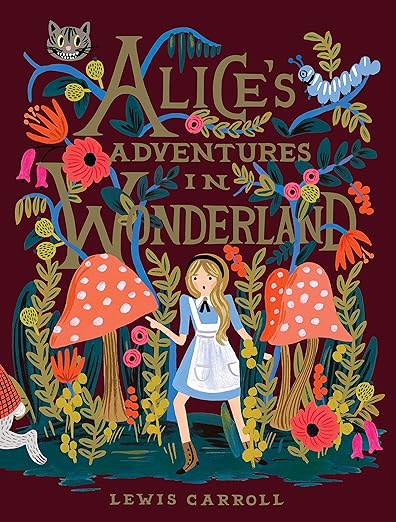
To commemorate the 150th anniversary of Alice’s Adventures in Wonderful by Lewis Carroll, Puffin Books added to the Puffin in Bloom line and released a deluxe, hardcover gift edition of the famous novel. Once again, the talented Anna Bond created the cover illustration, and she also provided full-color illustrations inside. The result is exquisite!

“In this beautiful edition, Alice’s story comes to life for a whole new generation of readers through the colorful, whimsical artwork of Anna Bond, best known as the creative director and artistic inspiration behind the worldwide stationery and gift brand Rifle Paper Co.”
Jane Austen in Bloom

After years of waiting and wondering (and wishing), I was overjoyed when Penguin announced last year that they were planning to expand the Puffin in Bloom line to include other classics as well. Again, they chose Anna Bond to create new cover art with her signature style. But best of all, they chose our Jane’s cherished novels for this new endeavor!!

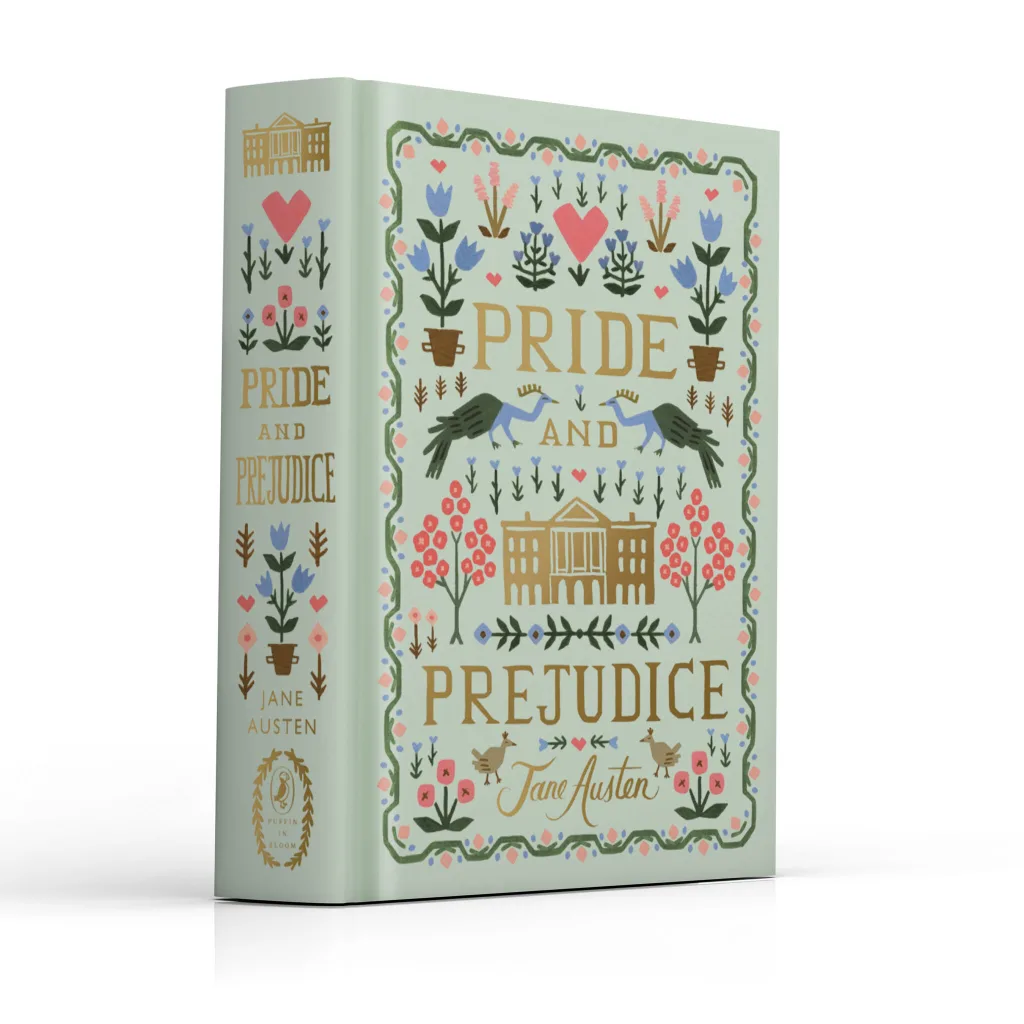
This first installment (I truly hope there will be more) includes Austen’s Pride and Prejudice, Sense and Sensibility, and Emma. Let’s take a closer look:

Pride and Prejudice

Though her sisters are keen on finding men to marry, Elizabeth Bennet would rather wait for someone she loves – certainly not someone like Mr. Fitzwilliam Darcy, whom she finds to be smug and judgmental, in contrast to the charming George Wickham. But soon Elizabeth learns that her first impressions may not have been correct, and the quiet, genteel Mr. Darcy might be her true love after all. You can view and purchase HERE.
Sense and Sensibility

Book Description: “Marianne Dashwood wears her heart on her sleeve, and when she falls in love with the dashing but unsuitable John Willoughby, she ignores her sister Elinor‘s warning that her impulsive behavior leaves her open to gossip and innuendo. Meanwhile Elinor, always sensitive to social convention, is struggling to conceal her own romantic disappointment, even from those closest to her. Through their parallel experience of love– and its threatened loss–the sisters learn that sense must mix with sensibility if they are to find personal happiness in a society where status and money govern the rules of love.” You can view and purchase HERE.

Emma

Book Description: “Emma Woodhouse believes herself to be an excellent matchmaker, though she herself does not plan on marrying. But as she meddles in the relationships of others, she causes confusion and misunderstandings throughout the village, and she just may be overlooking a true love of her own.” You can view and purchase HERE.

Anna Bond

Anna Bond is co-founder and CCO of Rifle Paper Co., an international stationery and lifestyle brand with offices in Winter Park, Florida and New York City. Originally from Summit, New Jersey, Anna trained as a graphic designer and made her way to Florida to work as a senior art director at a media company at age 21. After a year of working in print design she left to pursue her passion in illustration. A number of gig posters and freelance work later, she re-discovered her lifelong love of stationery through wedding invitation design and the idea for a stationery collection was born.

Together with her husband Nathan, Anna launched Rifle Paper Co. based out of their apartment in November 2009 and the brand has quickly grown to become of the most notable brands in the industry. Every one of Rifle’s over 900 products are designed by Anna and feature her signature hand-painted illustrations, vibrant color palette, and whimsical tone which has helped propel the brand’s success. Rifle Paper Co. now employs over 200 people and is carried in over 5,000 stores around the world including Anthropologie, MoMA and Barnes & Noble. You can see more of Anna’s work HERE.

Collecting Austen Covers

With covers like these, who can resist “just one more” edition of Austen’s beloved novels? I know many of us have shelves with several pretty editions, plus a favorite, worn-in version that we keep close by for regular reading. Do you have several editions of Austen’s novels? Which books do you collect and how many do you have so far?


RACHEL DODGE teaches college English classes, gives talks at libraries, teas, and book clubs, and writes for Jane Austen’s World blog. She is the bestselling author of The Little Women DevotionalThe Anne of Green Gables Devotional and Praying with Jane: 31 Days Through the Prayers of Jane Austen. Now Available: The Secret Garden Devotional! You can visit Rachel online at www.RachelDodge.com.
This year I’ve embarked on a new series, “A Year in Jane Austen’s World,” that focuses on important details that happened in Jane Austen’s novels, letters, and lifetime during each month of the year. Each month, I share with you my findings as I scour her letters, novels, and personal and family history.

Thus far, we’ve covered January and February and learned a lot about the “Season” in London and Bath during the winter months during the Regency Era, as well as the garden the Austen women planned for their Southampton home during their first winter there.

Next, we turn to March in Austen’s novels. While January and February were still quite wintry, March in the south of England is a mix of weather and season. As always happens, this type of research is a “follow your nose”-type study – let’s see where March will take us!

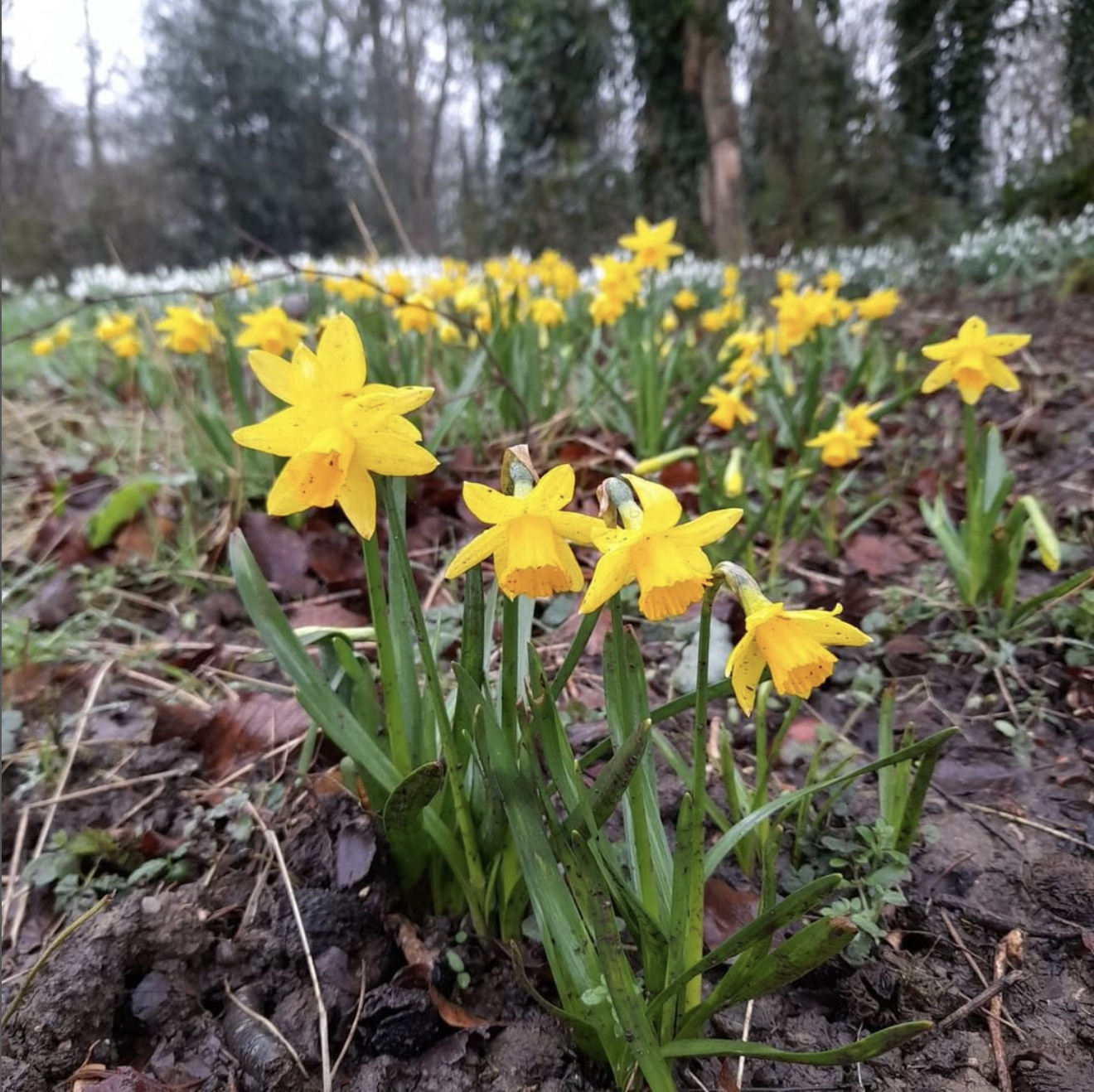
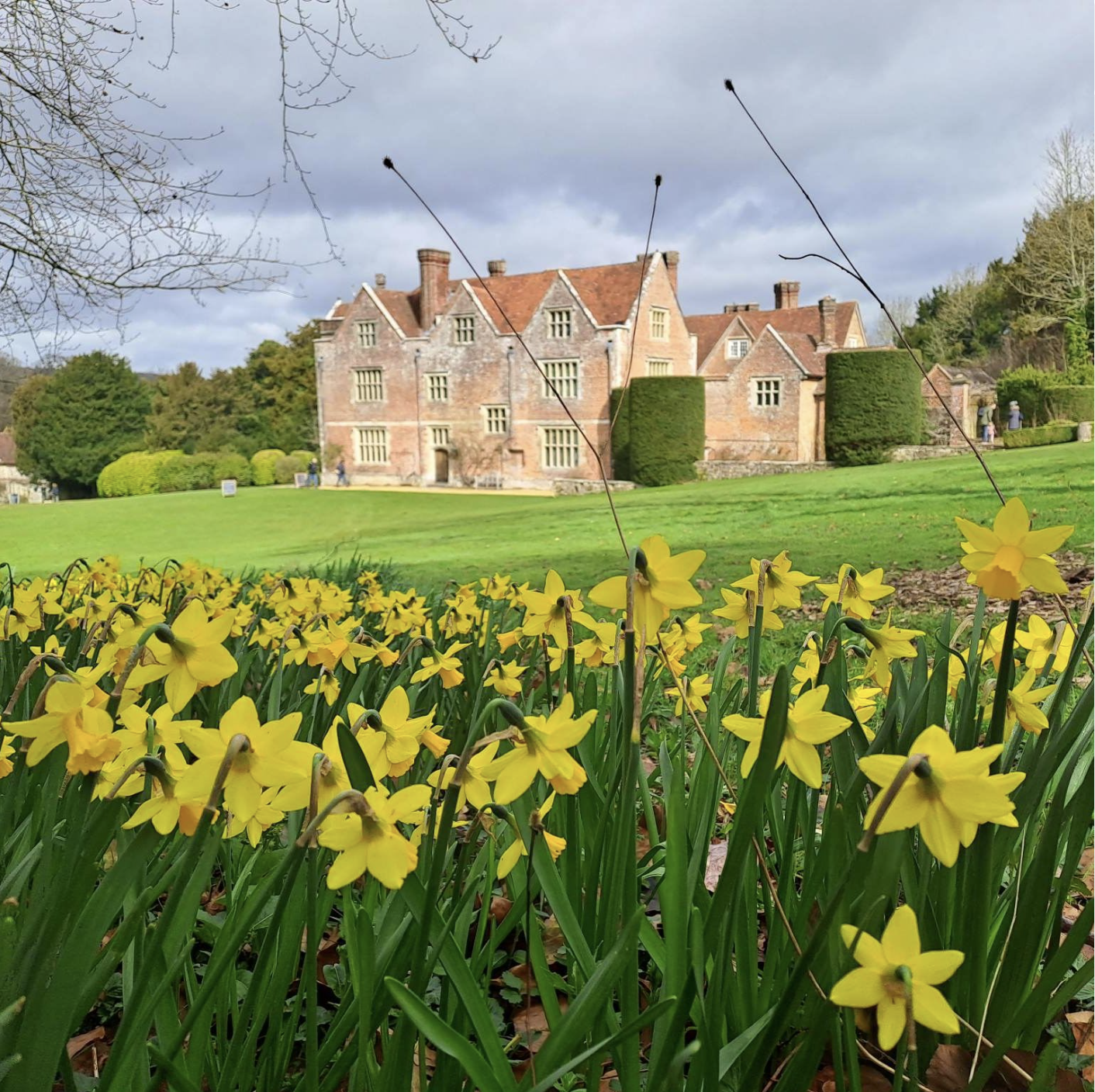
Daffodils at Chawton House in March, @ChawtonHouse.

March in Hampshire

The daffodils like to put on a good show at Jane Austen’s House Museum and Chawton House this time of year. The yellow pops of color are good for the soul and prove to be a hopeful sign that spring is on its way, to those who visit the grounds this time of year.

The daffodils in my yard are glorious right now and it makes my heart happy. I planted 250 bulbs last fall, which meant a lot of work … without anything to show for it at the time. But now that it’s spring, I’m seeing the fruit of my labors!

Daffodils and the like are a wonderful reminder that many worthwhile projects and tasks take work and time before we see fruit. In Austen’s life, before she was published, only her family and close friends enjoyed her work. But later, there was an abundance of fruit from her labors–and it continues to this day!

Jane Austen’s House in March, Photo: @JaneAustensHouse.

March in Jane Austen’s Letters

Several of Austen’s surviving letters were written in March or about March. Here are some interesting highlights:

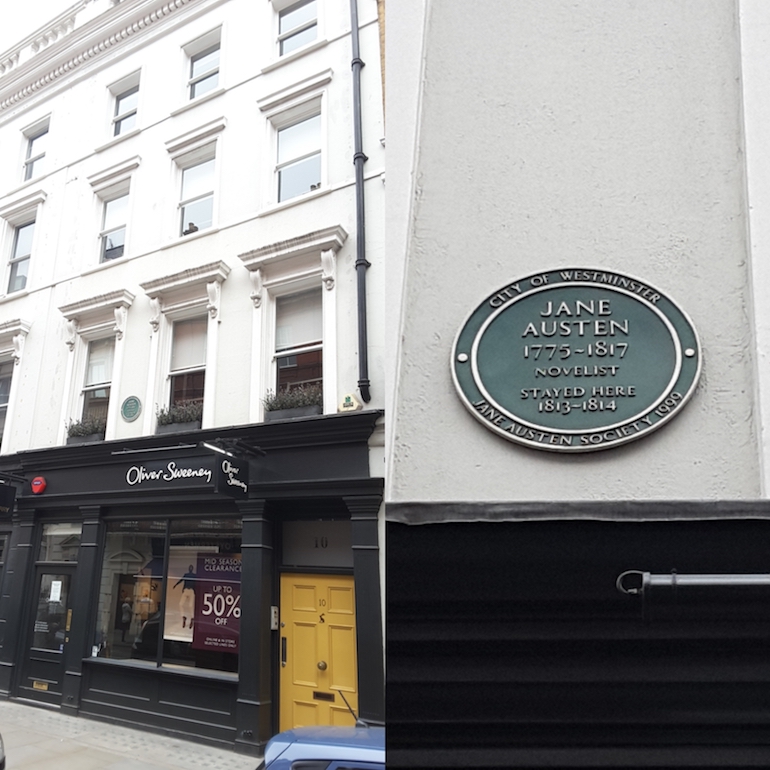
1814: We have several letters from Jane to Cassandra from March 1814, when Austen visited her brother Henry at his house in Henrietta Street in Covent Garden (you can read more here).

These letters give us a glimpse into Jane’s mind about London, the weather that winter, shopping for herself and the other women in her family, her brother Henry’s thoughts on Mansfield Park, and the plays they attended (several that she liked and others she did not).

Wednesday, 2 March (Henrietta Street):

  • Henry’s thoughts on MP: “We did not begin reading till Bentley Green. Henry’s approbation is hitherto even equal to my wishes. He says it is different from the other two, but does not appear to think it at all inferior. He has only married Mrs. R. (Rushworth). I am afraid he has gone through the most entertaining part. He took to Lady B. (Bertram) and Mrs. N. (Norris) most kindly, and gives great praise to the drawing of the characters. He understands them all, likes Fanny, and, I think, foresees how it will all be.”
  • More on that topic: “Henry is going on with ‘Mansfield Park.’ He admires H. Crawford: I mean properly, as a clever, pleasant man.”
  • Austen’s thoughts on reading The Heroine: “We have drank tea, and I have torn through the third vol. of the ‘Heroine.’ I do not think it falls off. It is a delightful burlesque, particularly on the Radcliffe style.” (The Heroine; Or Adventures of Cherubina is a novel by Eaton Stannard Barrett, 1813).
Henrietta Street today, GuideLondon.org.

Saturday, 5 March (Henrietta Street):

In this letter, Austen provides short accounts from several different days in one week. She provides news each day for Saturday, Sunday, Monday, and Tuesday:

  • The weather seems quite uncomfortable: “Do not be angry with me for beginning another letter to you. I have read the ‘Corsair’ (Byron), mended my petticoat, and have nothing else to do. Getting out is impossible. It is a nasty day for everybody. Edward’s spirits will be wanting sunshine, and here is nothing but thickness and sleet; and though these two rooms are delightfully warm, I fancy it is very cold abroad.”
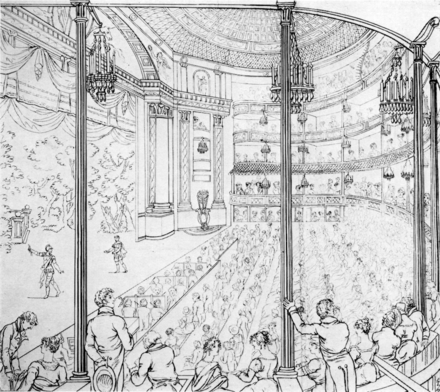
  • She attends several plays at the Theatre Royal in Drury Lane, London. On Saturday, March 5, 1814, she sees Edmund Kean as Shylock in William Shakespeare’s The Merchant of Venice and provides her thoughts: “We were quite satisfied with Kean. I cannot imagine better acting, but the part was too short; and, excepting him and Miss Smith, and she did not quite answer my expectation, the parts were ill filled and the play heavy. We were too much tired to stay for the whole of “Illusion” (“Nour-jahad”), which has three acts; there is a great deal of finery and dancing in it, but I think little merit. Elliston was “Nour-jahad,” but it is a solemn sort of part, not at all calculated for his powers. There was nothing of the best Elliston about him. I might not have known him but for his voice.”
  • Later, she continues with this: “I shall like to see Kean again excessively, and to see him with you too. It appeared to me as if there were no fault in him anywhere; and in his scene with “Tubal” there was exquisite acting.”
  • She writes more about Henry’s assessment of Mansfield Park: “Henry has this moment said that he likes my M. P. better and better; he is in the third volume. I believe now he has changed his mind as to foreseeing the end; he said yesterday, at least, that he defied anybody to say whether H. C. [Henry Crawford] would be reformed, or would forget Fanny in a fortnight.”
  • Her thoughts on the increase in the price of tea: “A cold day, but bright and clear. I am afraid your planting can hardly have begun. I am sorry to hear that there has been a rise in tea. I do not mean to pay Twining till later in the day, when we may order a fresh supply.”
Edward Kean as Shylock (Wiki Commons).
Theatre Royal in Drury Lane, sketched when it was newly built, in 1813 (Wiki Commons).

Wednesday, 9 March (Henrietta Street):

  • Jane Austen and her mother and Martha Lloyd all have winter colds: “I have a cold, too, as well as my mother and Martha. Let it be a generous emulation between us which can get rid of it first.” And later: “We are home in such good time that I can finish my letter to-night, which will be better than getting up to do it to-morrow, especially as, on account of my cold, which has been very heavy in my head this evening, I rather think of lying in bed later than usual. I would not but be well enough to go to Hertford St. on any account.”
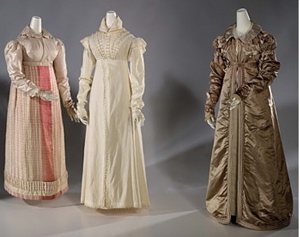
  • Austen’s dress: “I wear my gauze gown to-day, long sleeves and all. I shall see how they succeed, but as yet I have no reason to suppose long sleeves are allowable. I have lowered the bosom, especially at the corners, and plaited black satin ribbon round the top. Such will be my costume of vine-leaves and paste.” And later: “Mrs. Tilson had long sleeves, too, and she assured me that they are worn in the evening by many. I was glad to hear this.”
  • And Henry’s final thoughts on Mansfield Park: “Henry has finished ‘Mansfield Park,’ and his approbation has not lessened. He found the last half of the last volume extremely interesting.”
Long-sleeved Regency gowns.

1816: Letters to Fanny Knight

Thursday, 13 March (Chawton):

  • Austen’s romantic advice: “To you I shall say, as I have often said before, Do not be in a hurry, the right man will come at last; you will in the course of the next two or three years meet with somebody more generally unexceptionable than anyone you have yet known, who will love you as warmly as possible, and who will so completely attach you that you will feel you never really loved before.”
  • Notes on writing: “I will answer your kind questions more than you expect. “Miss Catherine” (Northanger Abbey) is put upon the shelf for the present, and I do not know that she will ever come out; but I have a something ready for publication (Persuasion), which may, perhaps, appear about a twelvemonth hence. It is short — about the length of ‘Catherine.’ This is for yourself alone. Neither Mr. Salusbury nor Mr. Wildman is to know of it.”
  • Illness: “I am got tolerably well again, quite equal to walking about and enjoying the air, and by sitting down and resting a good while between my walks, I get exercise enough. I have a scheme, however, for accomplishing more, as the weather grows spring-like. I mean to take to riding the donkey; it will be more independent and less troublesome than the use of the carriage, and I shall be able to go about with Aunt Cassandra in her walks to Alton and Wyards.”

Sunday, 23 March (Chawton):

In this letter, Austen speaks of many other topics, but the state of her health seems to be the most important topic in this letter:

  • “Many thanks for your kind care for my health; I certainly have not been well for many weeks, and about a week ago I was very poorly. I have had a good deal of fever at times, and indifferent nights; but I am considerably better now and am recovering my looks a little, which have been bad enough — black and white, and every wrong colour. I must not depend upon being ever very blooming again. Sickness is a dangerous indulgence at my time of life. Thank you for everything you tell me. I do not feel worthy of it by anything that I can say in return, but I assure you my pleasure in your letters is quite as great as ever, and I am interested and amused just as you could wish me.”
  • Evening: “I was languid and dull and very bad company when I wrote the above; I am better now, to my own feelings at least, and wish I may be more agreeable. We are going to have rain, and after that very pleasant genial weather, which will exactly do for me, as my saddle will then be completed, and air and exercise is what I want. Indeed, I shall be very glad when the event at Scarlets is over, the expectation of it keeps us in a worry, your grandmamma especially; she sits brooding over evils which cannot be remedied, and conduct impossible to be understood.”
  • “I took my first ride yesterday, and liked it very much. I went up Mounter’s Lane and round by where the new cottages are to be, and found the exercise and everything very pleasant; and I had the advantage of agreeable companions, as At. Cass. and Edward walked by my side. At. Cass. is such an excellent nurse, so assiduous and unwearied! But you know all that already.”

March in Jane Austen’s Novels

The following are a collection of interesting little tidbits and important moments from Austen’s novels:

Sense and Sensibility

  • “The third day … was so fine, so beautiful a Sunday as to draw many to Kensington Gardens, though it was only the second week in March. Mrs. Jennings and Elinor were of the number; but Marianne, who knew that the Willoughbys were again in town, and had a constant dread of meeting them, chose rather to stay at home, than venture into so public a place.” While walking, Elinor meets Miss Steele (Anne) who says Edward tried to persuade Lucy to give up their engagement, but that Lucy has said she never will.
  • In that same chapter, a letter arrives: “The next morning brought Elinor a letter by the two-penny post from Lucy herself” (from Bartlett’s Building). In this letter, Lucy claims that she tried to persuade Edward to give her up, but “he would not hear of [their] parting.”
  • In the next chapter, we read this: “The Palmers were to remove to Cleveland about the end of March, for the Easter holidays; and Mrs. Jennings, with both her friends, received a very warm invitation from Charlotte to go with them.” Elinor and Marianne, both for different reasons, don’t want to go, but they are persuaded to go because going to Cleveland will mean they are only “a long day’s journey” from Barton and can soon go home.
Promenade in Kensington Gardens, 1804.

Pride and Prejudice

  • March was to take Elizabeth to Hunsford. She had not at first thought very seriously of going thither; but Charlotte, she soon found, was depending on the plan,{190} and she gradually learned to consider it herself with greater pleasure as well as greater certainty. Absence had increased her desire of seeing Charlotte again, and weakened her disgust of Mr. Collins. There was novelty in the scheme; and as, with such a mother and such uncompanionable sisters, home could not be faultless, a little change was not unwelcome for its own sake. The journey would, moreover, give her a peep at Jane; and, in short, as the time drew near, she would have been very sorry for any delay. Everything, however, went on smoothly, and was finally settled according to Charlotte’s first sketch. She was to accompany Sir William and his second daughter. The improvement of spending a night in London was added in time, and the plan became as perfect as plan could be.”

Mansfield Park

  • It’s in March that Mr. Crawford visits Fanny in Portsmouth. First, they go to church: “The Prices were just setting off for church the next day when Mr. Crawford appeared again. He came, not to stop, but to join them; he was asked to go with them to the Garrison chapel, which was exactly what he had intended, and they all walked thither together.”
  • Then, on a walk: “The day was uncommonly lovely. It was really March; but it was April in its mild air, brisk soft wind, and bright sun, occasionally clouded for a minute; and everything looked so beautiful under the influence of such a sky, the effects of the shadows pursuing each other on the ships at Spithead and the island beyond, with the ever-varying hues of the sea, now at high water, dancing in its glee and dashing against the ramparts with so fine a sound, produced altogether such a combination of charms for Fanny, as made her gradually almost careless of the circumstances under which she felt them.”
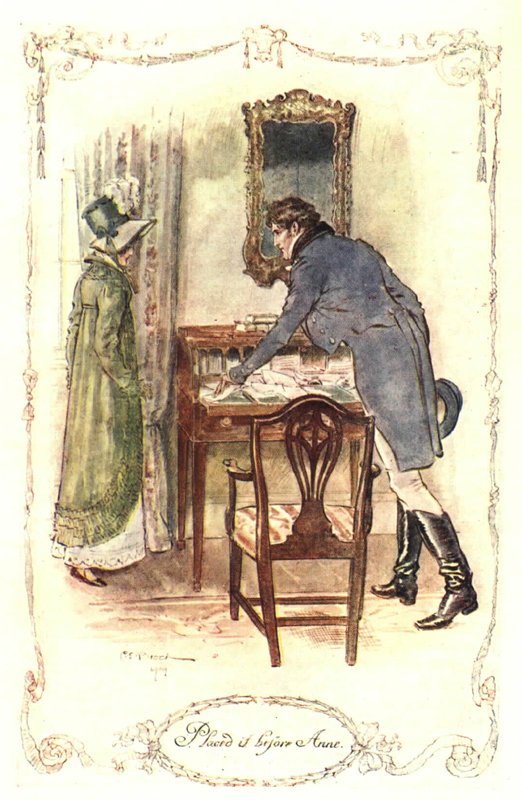
  • Later, we read these poignant thoughts from Anne on missing spring in the countryside: “It was sad to Fanny to lose all the pleasures of spring. She had not known before what pleasures she had to lose in passing March and April in a town. She had not known before how much the beginnings and progress of vegetation had delighted her. What animation, both of body and mind, she had derived from watching the advance of that season which cannot, in spite of its capriciousness, be unlovely, and seeing its increasing beauties from the earliest flowers in the warmest divisions of her aunt’s garden, to the opening of leaves of her uncle’s plantations, and the glory of his woods. To be losing such pleasures was no trifle; to be losing them, because she was in the midst of closeness and noise, to have confinement, bad air, bad smells, substituted for liberty, freshness, fragrance, and verdure, was infinitely worse: but even these incitements to regret were feeble, compared with what arose from the conviction of being missed by her best friends, and the longing to be useful to those who were wanting her!”
Fanny Price in Portsmouth, Mansfield Park, Folio Society, illustrated by Joan Hassall.

Persuasion

  • According to the Baronetage in Persuasion, a very important man (in his own estimation) was born in March: “ELLIOT OF KELLYNCH HALL: Walter Elliot, born March 1, 1760…”

Northanger Abbey

  • “[Catherine] was struck, however, beyond her expectation, by the grandeur of the abbey, as she saw it for the first time from the lawn. The whole building enclosed a large court; and two sides of the quadrangle, rich in Gothic ornaments, stood forward for admiration. The remainder was shut off by knolls of old trees, or luxuriant plantations, and the steep woody hills rising behind, to give it shelter, were beautiful even in the leafless month of March. Catherine had seen nothing to compare with it; and her feelings of delight were so strong, that without waiting for any better authority, she boldly burst forth in wonder and praise. The general listened with assenting gratitude; and it seemed as if his own estimation of Northanger had waited unfixed till that hour.”
Lismore Castle was used for the 2007 Northanger Abbey film adaptation.

March Dates of Importance

This brings us now to several dates that would have been important to Austen personally and to the Austen family as a whole:

Family News:

23 March 1773: Rev. Austen becomes rector of Deane parish (in addition to Steventon).

27 March 1792: James Austen marries Anne Mathew (they move into the parsonage in Deane).

25 March 1805: Mrs. Austen and her daughters move to 25 Gay Street, Bath.

Historic Dates:

11 March 1793: Civil war erupts in France.

Writing:

March 1811: Austen corrects proofs of Sense and Sensibility.

29 March 1815: Emma finished.

Sorrows:

January-March 1816: Austen begins work on Sanditon.

Spring 1816: Jane Austen begins to feel ill.

18 March 1816: Austen ceases work on Sanditon.

Cassandra’s handwritten copy of Sanditon, JaneAusten’s.House.

March in the Life of Austen

I hope you enjoyed this month’s overview of March in Jane Austen’s World. As always, there is so much more to explore! These are merely highlights and snippets. In some instances, the information I found was a tad contradictory, so I did my best to find the most accurate research available. If you have more information on any topic, feel free to share in the comments. Next up: April in Jane Austen’s World!


RACHEL DODGE teaches college English classes, gives talks at libraries, teas, and book clubs, and writes for Jane Austen’s World blog. She is the bestselling author of The Little Women DevotionalThe Anne of Green Gables Devotional and Praying with Jane: 31 Days Through the Prayers of Jane Austen. Now Available: The Secret Garden Devotional! You can visit Rachel online at www.RachelDodge.com.

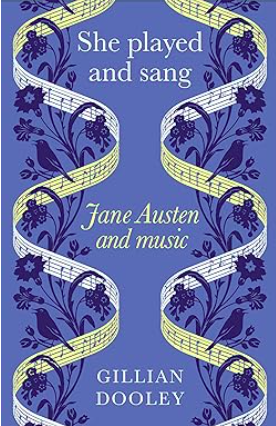
Book CoverIn the introduction, author Gillian Dooley reveals her primary reason for writing a book about music in Austen’s life – that of exploring the “rhetorical link between writing and making music, especially given the musicality of her prose” (P 3). This statement reveals the book’s direction. She quotes Robert K. Wallace in Jane Austen and Mozart:
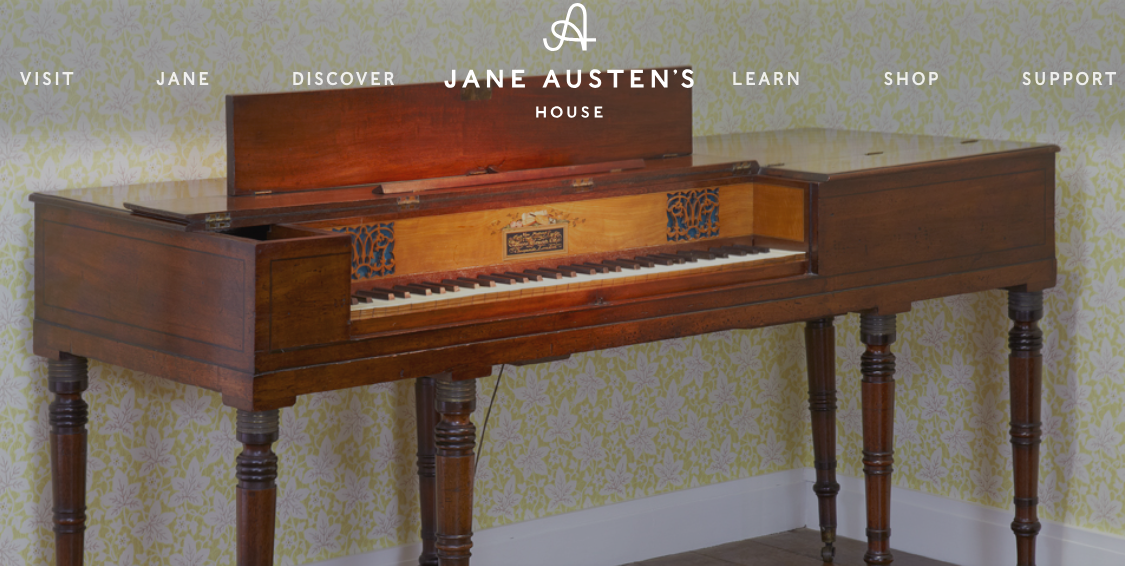
“the classical and neoclassical value of balance, equilibrium, proportion, symmetry, clarity, restraint, wit, and elegance that are typical of Austen’s novels and of Mozart’s piano concertos are typical as well of the music that Austen played on her square piano” – P 3

In pages 4-8, Dooley describes the connection between music and Austen’s writing with examples in her novels, such as Sense and Sensibility and Mansfield Park. Mind you, we are still in the introduction, which is rich with information.   

The Jane Austen  music manuscripts

Jane Austen's Music Books

Screen shot of an online search

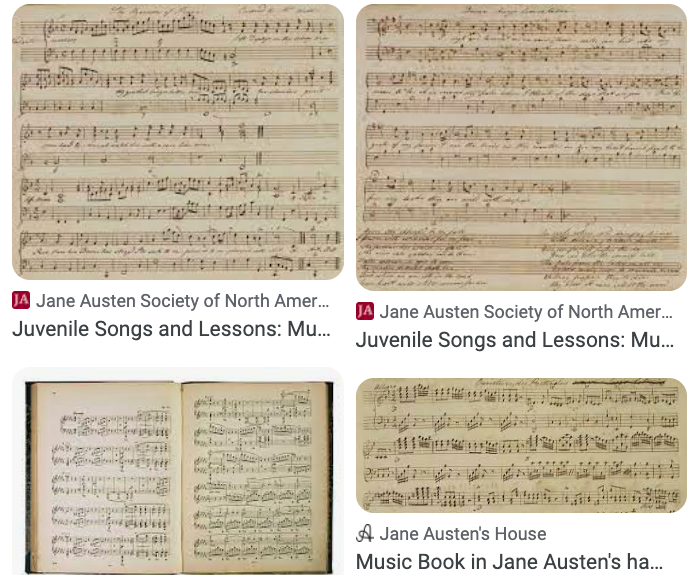
These manuscripts consist of more than 500 separate playable pieces of eighteen albums, which can be found on the Internet Archive. Four of the surviving music books contain manuscripts in Austen’s hand (P 24). Dooley discusses the “160 or so” pieces of music that she meticulously copied by hand (listed in Appendix 2). These most likely represented the memorable music that meant more to her than the other pieces she played and sung as well.

The section that describes the Austen family music collection includes a wider range of musical tastes. When the Austens moved from Steventon to Bath in 1801, they brought along with them a large music collection, although there is no record of its details. Of the eighteen albums that we now know of, it was determined that seven belonged to Austen, and that the remaining 11 albums belonged to the extended family (P 87). Dooley mentions their names, including Eliza née Hancock, who married Henry Austen; Elizabeth Bridges, who married Edward Austen Knight; Louisa and Cassandra Austen Knight, Edward’s youngest daughters, and more.

Movie music vs. Austen’s preferences

I’ve tried over the years to find if the music played in the films based on Austen’s novels represent her actual taste in music, or the music popular in her time. Much to my chagrin, my feeble attempts took time, and I suspect that I still got much of the information wrong. So I embarked on a quick search in Dooley’s book.

I’ve long favored the earthy music and folksy ballads included in Emma 2020, which spoke to my heart. Was my instinct correct about these folk pieces’ connection to Austen’s musical tastes? Dooley provides some important insights. 

One question I had was about Haydn’s and Mozart’s influence in her repertoire. Dooley mentions Haydn:

“In the later decades of the eighteenth century Franz Joseph Haydn (1732–1809) was far better known in London than Mozart. Adjacent to the Mozart duet in Austen’s album are three of Haydn’s English canzonets, in a hand which has been attributed to Elizabeth Austen, née Bridges, Edward’s wife. It is very similar indeed to Austen’s own handwriting … the presence of these songs, even if copied in Elizabeth’s handwriting, in Austen’s manuscript book indicates that she knew them and perhaps sang them.” 

While Austen knew of Haydn, she was fond of the composer Ignaz Pleyel, who was his student, and she had a number of Pleyel’s pieces. As an aside, Dooley mentioned that Mozart’s music played a minor role (P 43) in her collection of music, which surprised me. 

Over the years, Austen’s letters indicated that she shared musical information with friends and family, and that she planned to play country dances for her young relatives, some of whom recalled her singing for the family years later. She did not perform  for company or in public, (PP 70-71). It was said that she had a fine singing voice.

“Most of the English nursery rhymes among the manuscripts are unattributed and the only one which uses the tune familiar today is ‘Dickory, dickory dock’. They appear towards the middle of the book and were probably copied by Austen to sing for the amusement of her young nieces and nephews” (P 64). 

On a personal note, I favor songs, old or modern, that tell a story. Austen, it appears, recorded many such songs, such as Irish and Scottish folk songs. One song mentioned by Dooley was familiar to Austen, but was not recorded in her manuscript. Still, ‘Anna’ is representative of her tastes:

“ ‘Anna: A favorite Scotch song with variations for the piano forte composed by J. L. Dussek’.  The Dussek variations are not to be found in any of her surviving music books. This Scottish folk song, which is more usually titled ‘Shepherds I have lost my love’, was well known at the time, appearing in musical arrangements by several other composers including Joseph Haydn and Ignaz Pleyel. Austen would have been familiar with the tune – she had a copy of an arrangement for [a] piano duet by Thomas Billington in one of her composite volumes of printed music. The song lyrics are not included in the Dussek and Billington versions, but Austen might still have known them.

Shepherds, I have lost my love;

Have you seen my Anna?

Pride of ev’ry shady grove,

Upon the banks of Banna!

I for her my home forsook,

Near yon misty mountain;

Left my flock, my pipe, my crook,

Greenwood shade, and fountain.

Never shall I see them more

Until her returning;

All the joys of life are o’er,

From gladness chang’d to mourning.

Whither is my charmer flown?

Shepherds, tell me whither?

Ah! Woe for me, perhaps she’s gone

For ever and for ever. – P 74

This story melts my heart. I grew up loving folk songs and this one is right up my alley. You can listen to it in the YouTube video below. The fact that the song has some connection to Austen makes it even sweeter for me. 

But what of the waltz? Was it not introduced during Austen’s time? Did she not mention it? Indeed she did, but here’s the rub – Dooley explains that the waltz was controversial, even considered scandalous in some quarters:

“Those whose opposing opinions were recorded were either the jealous lovers of the female partners in a waltz who felt that the dance allowed other men to take liberties, or the authors of advice manuals for young women. The very fact that these opinions were voiced suggests that the waltz was already common and the opposition was therefore not universal at all … it is implied that the ‘irresistible waltz’ played by Mrs Weston in Emma (Volume II, Chapter 8) accompanied a ‘longways country dance set in waltz time, not waltzing in pairs’, which would have been more controversial. There are several waltz tunes from the 1790s in the ‘Juvenile songs and lessons’ album, but it seems likely that they were played to accompany country dances rather than the ‘turning waltz’ that was not widely danced in England until late in Austen’s lifetime.” – P 51

Poignantly, Dooley includes Caroline Austen’s memory of her Aunt Jane’s last four songs when “she had nearly left off singing” (P 229).

The book’s final pages (starting at P 235) includes a bibliography, two appendices, notes, and an index. Appendix Two covers an annotated list of manuscripts in Austen’s hand (PP 238 – 292). Information contained at the end is quite extensive and provides a wealth of information. 

In my estimation, this book is a keeper and will be kept on my shelf of reference materials. It’s an interesting read, but, more importantly, it fills a gap in our knowledge of the music Austen loved, copied,  and sang. Dooley brought to mind how important reading out loud was to Austen and the people of her time, and how important music was in an era when family and local musicians provided wonderful entertainments for their families and communities.

More on the topic

Publisher ‏: ‎ Manchester University Press (March 5, 2024)

Language ‏ : ‎ English

Hardcover ‏ : ‎ 344 pages

ISBN-10 ‏ : ‎ 1526170108

ISBN-13 ‏ : ‎ 978-1526170101

Review and Discussion by Brenda S. Cox

“Had Elizabeth’s opinion been all drawn from her own family, she could not have formed a very pleasing opinion of conjugal felicity or domestic comfort. Her father, captivated by youth and beauty, and that appearance of good humour which youth and beauty generally give, had married a woman whose weak understanding and illiberal mind had very early in their marriage put an end to all real affection for her. Respect, esteem, and confidence had vanished for ever; and all his views of domestic happiness were overthrown.”—Pride and Prejudice, chapter 42

Mr. and Mrs. Bennet’s Courtship

Have you ever wondered how on earth intelligent Mr. Bennet came to marry a woman of “weak understanding” and an “illiberal” [uncultured, unrefined] mind? Jane Austen gives us a brief explanation above: he was “captivated by youth and beauty” and an “appearance of good humour.” But what was their courtship like? Emma Wood has imagined that in the play Mr. Bennet’s Bride. First, let’s think a little more about what Austen tells us. 

Mr. and Mrs. Bennet, an ill-assorted pair.
Hugh Thomson, 1894, public domain.

It’s often been pointed out that Mrs. Bennet, silly as she seems, has some worldly wisdom. She has legitimate concerns about providing for herself and her children after Mr. Bennet’s death. It seems that Mr. Bennet had earlier considered this, but now has more or less given up. In chapter 50, when Lydia is to marry Wickham, we read:

“Mr. Bennet had very often wished before this period of his life that, instead of spending his whole income, he had laid by an annual sum for the better provision of his children, and of his wife, if she survived him. He now wished it more than ever. . . .

“When first Mr. Bennet had married, economy was held to be perfectly useless, for, of course, they were to have a son. The son was to join in cutting off the entail, as soon as he should be of age, and the widow and younger children would by that means be provided for. Five daughters successively entered the world, but yet the son was to come; and Mrs. Bennet, for many years after Lydia’s birth, had been certain that he would. This event had at last been despaired of, but it was then too late to be saving. Mrs. Bennet had no turn for economy, and her husband’s love of independence had alone prevented their exceeding their income.

“Five thousand pounds was settled by marriage articles on Mrs. Bennet and the children. But in what proportions it should be divided amongst the latter depended on the will of the parents.”

So Mrs. Bennet did have some fortune, enough to give her about £250 a year (5% of £5,000). Not enough for a gentry family to live on, but not poverty, either. However, divided between five daughters, once their father died and his estate went to Mr. Collins, it was insignificant.

Mrs. Bennet has some valid concerns mixed with her foolishness.
C.E. Brock, 1895, public domain

While her family’s future is uncertain, Mrs. Bennet does not recognize, as her husband does, that saving money would be a help. Her extravagant plans for Lydia’s wedding clothes, and for Lydia and Wickham’s future house, servants, and carriages, show that she has no conception of limiting expenditures according to income. It is her husband whose “love of independence” (desire to avoid debt) has kept their family solvent. Mr. Bennet was at least better than that “foolish, spendthrift baronet,” Sir Walter Elliot of Persuasion, “who had not had principle or sense enough to maintain himself in the situation in which Providence had placed him.”

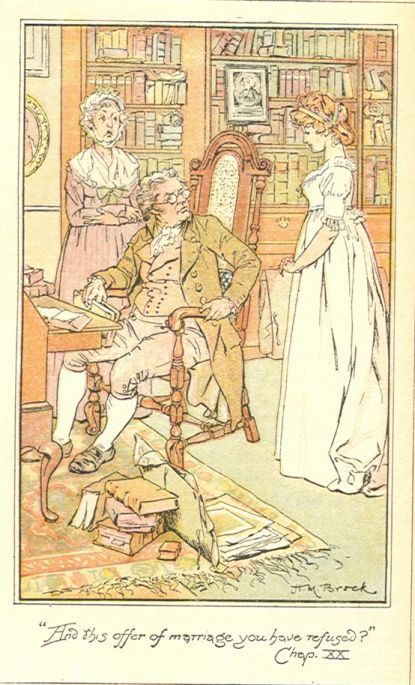
Mr. Bennet wishes he had saved money to provide for his daughters, but he has not.
H. M. Brock, public domain

Mrs. Bennet, when she was lovely young Miss Gardiner, had enough sense to get the attention of young Mr. Bennet, heir to Longbourn estate, and wheedle him into marrying her.

And that’s where the imagination of Emma Wood, an Australian playwright, took off.

The Play, Mr. Bennet’s Bride

Wood says,

“I began to imagine the details of their courtship. I knew the end, but how did the story begin? The characters flew onto the page. It was such a joy to write. Imagining the earlier lives of the ill-suited couple and peopling the stage with other characters in the previous generation to the novel was an adventure. . . . I felt a deep sense of obligation to honour the characters and style of the novel as I wrote, aware that audiences would expect to see people and situations they recognized in a loving tribute to the novel.”

Mr. Bennet’s Bride is a fun play by Australian playwright Emma Wood. Its US premiere was this month in Cartersville, GA. Photo by Brenda S. Cox

Wood’s play, Mr. Bennet’s Bride, has been delighting audiences in Australia and the U.K. since 2014. This February it premiered in the United States, in the small town of Cartersville on the outskirts of Atlanta, Georgia. I was privileged to attend a performance with a group of JASNA friends. We all loved it. The characters were engaging and fun, and the dialogue sparkled. A few little “Easter eggs” were thrown in, Austen quotes that fit well. One started with “It is a truth universally acknowledged . . .”; I won’t give away the others.

The Plot (Includes spoilers)

Here’s how Ms. Wood imagines the story:

We have James Bennet, age 29. His mother died giving birth to him, and his father has been distant all his life. His father’s sister, Aunt Mary, has raised James. His father is pressuring him to marry and produce an heir for Longbourn. His father’s cousin, Benedict Collins, has just produced his own heir, William Collins, and looks on Longbourn as William’s future inheritance.

First we see James hiding behind a sofa, reading a book. When he is discovered, he is forced to make small talk with one of the appropriate young ladies his father has been trying to set him up with. She is no more interested than he is.

Afterwards, his father lays down an ultimatum: Get married within six months, or you’ll be kicked out and have to make your own way in the world. To get James to take him seriously, he puts it into a contract, involving his lawyer (solicitor), Mr. Gardiner.

Jolly Mr. Gardiner and his wife—an earlier incarnation of Mrs. Bennet—take advantage of the situation. In a hilarious scene, Mr. Gardiner manages to introduce James to their beautiful but air-headed daughter Emily. She is in love with an officer but is savvy enough to quickly replace him in her affections with the heir to Longbourn. The story continues with much laughter.

In a serious scene, the elder Mr. Bennet has a touching reconciliation with his son, then allows him to choose his own bride. He chooses Emily. Only at the end does James get an inkling of what he’s gotten himself into.

Some flashed scenes show the new Bennet couple’s future.

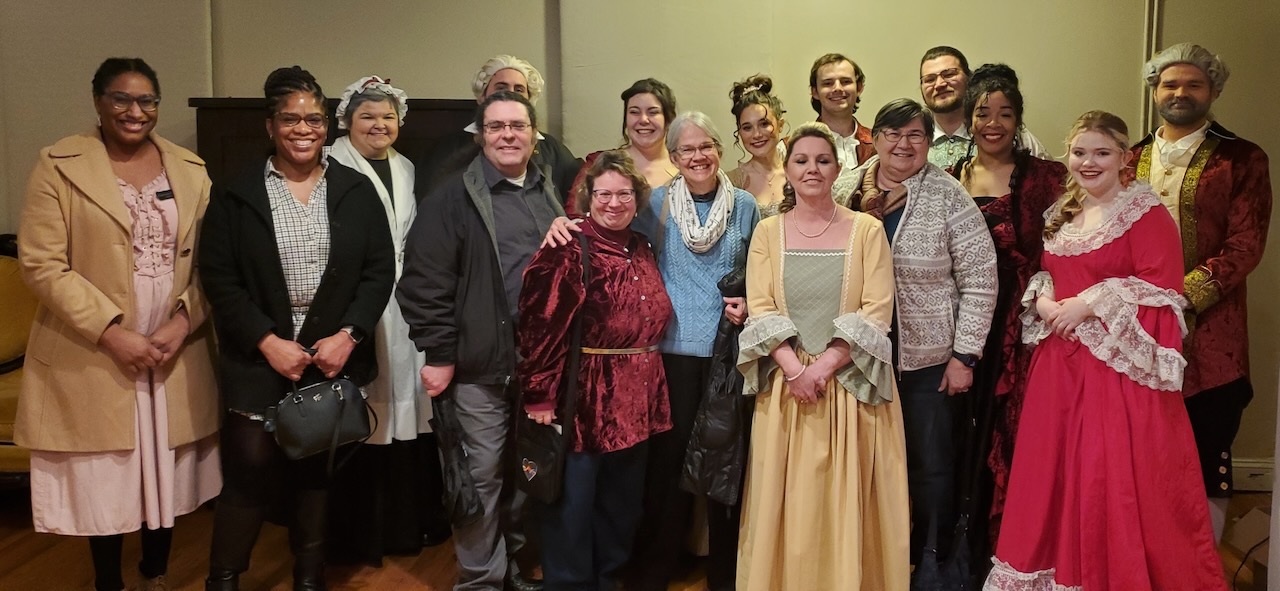
The cast and director of Mr. Bennet’s Bride with some visiting Janeites, Feb., 2024. Photo by Brenda S. Cox

Gaining Depth and Understanding

Imani Anderson did a beautiful job of directing Mr. Bennet’s Bride for the Pumphouse Players in Cartersville, Georgia. She says,

“One of the reasons why I have fallen in love with Mr. Bennet’s Bride is how James (our Mr. Bennet), Emily (Mrs. Bennet), and their families are written. They bring another level of depth and understanding for the matriarch and patriarch we’ve come to know in the classic tale. It’s clear both families want the best for their children and I think it’s so important that they admit their faults too when need be. . . . I hope that our production . . .  makes you get those warm fuzzy feelings of love and laughter during this Valentine’s season.”

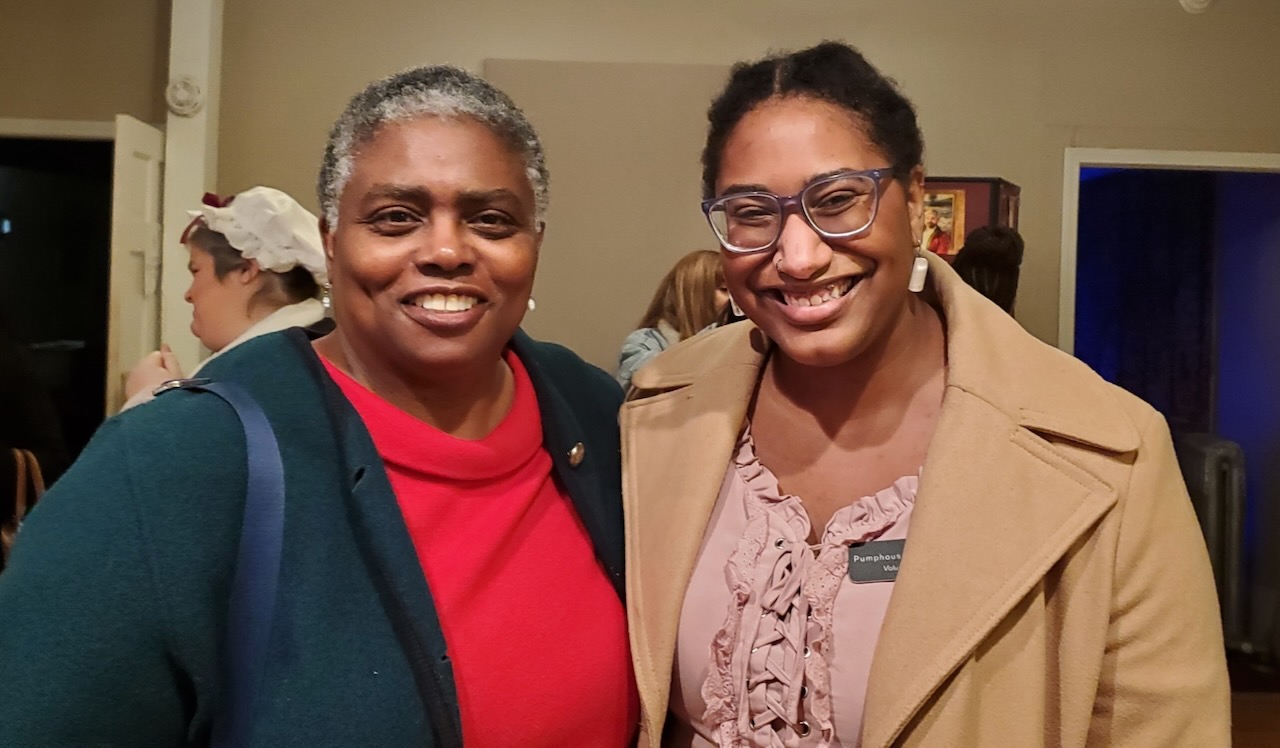
Renata Dennis, Regional Coordinator of JASNA Georgia, and Imani Anderson, director of Mr. Bennet’s Bride. Photo by Brenda S. Cox

The play did indeed give a deeper understanding of Mr. and Mrs. Bennet and how their family came to be what it was.

Gentle readers, how do you imagine Mr. and Mrs. Bennet’s courtship?

Brenda S. Cox is the author of Fashionable Goodness: Christianity in Jane Austen’s England. She also blogs at Faith, Science, Joy, and Jane Austen.

Her posts on Jane Austen’s Family Churches will resume in April.

Inquiring readers,

Since 2007, this blog has published a number of posts regarding Steventon, the village where Jane Austen and her parents and siblings lived until the parents and sisters moved to Bath in 1801. Austen was 26 years old. It is said that upon hearing of her parents’ plans to leave Steventon, she fainted. 

Well, girls, it is all settled. We have decided to leave Steventon and to go to Bath.’ To Jane, who had been from home and who had not heard much before about the matter, it was such a shock that she fainted away . . . . Constance Hill, Chapter IX, Leaving Steventon

The probable truth was that she was deeply unhappy to move from a community and friends and family she knew so well, and where her writing skills had flourished. Her creativity blossomed in Steventon, while her life in Bath resulted in a writing desert, where her projects were not completed – until she moved in 1809 to Chawton Cottage

Regardless of her difficulties in Bath, this post is about her life in Steventon, where Austen grew up. Contributors Brenda Cox, Rachel Dodge, and Tony Grant published their outstanding (copyrighted) images in these posts!

Steventon Village

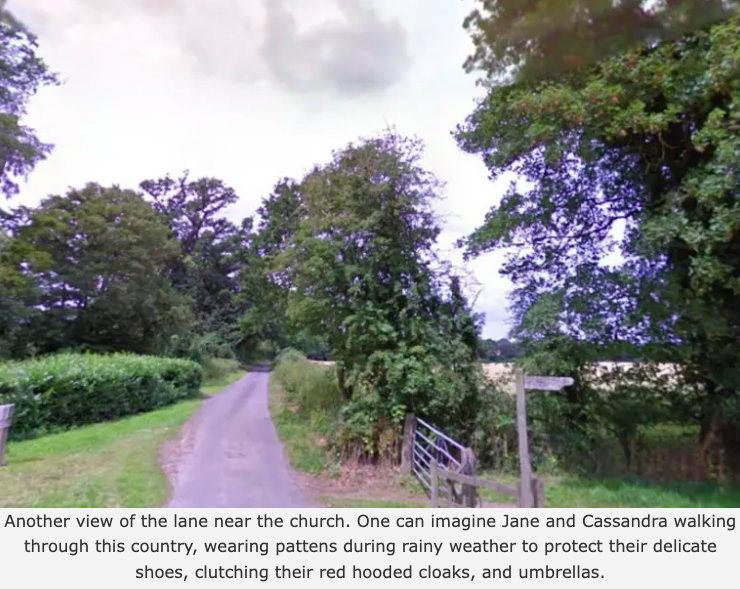
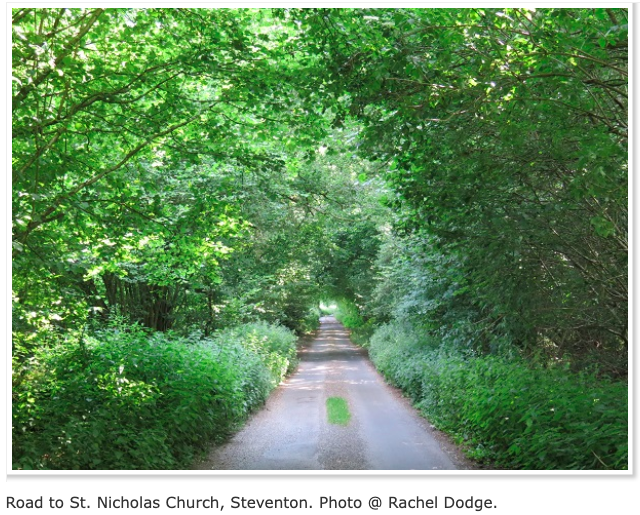
A Drive Through Steventon to St. Nicholas Church

Sadly, my five visits to England focused on London, Bath, Salisbury Cathedral, Stonehenge, Brighton and the South Downs, Warwickshire, Eton, Oxford, Windsor, etc. I missed Austen’s villages of Steventon and Chawton by a smidge. Thank goodness that I could take the road to St. Nicholas Church via Google street view.

Screen Shot 2024-02-24 at 11.41.21 AM

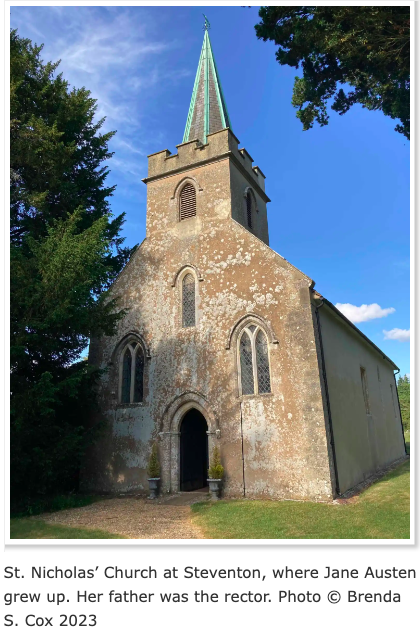
St. Nicholas, Steventon

Jane Austen’s Family Churches: St. Nicholas’, Steventon

This past summer, Brenda Cox, after an extensive trip to England, wrote a series of posts regarding the churches in Austen’s world. Cox’s original photos and historical information are unique to this blog and provide us with a fabulous way to view these beautiful buildings and their history.

Screen Shot 2024-02-24 at 11.44.35 AM

Steventon Rectory:

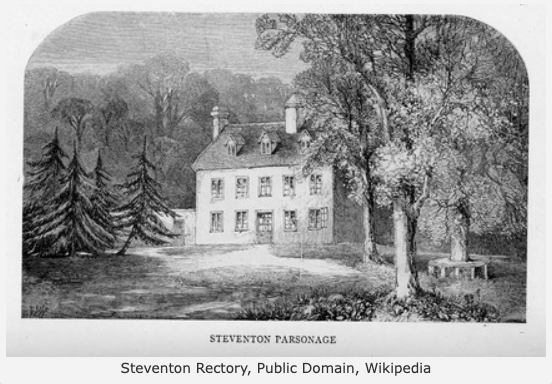
Steventon Rectory: Jane Austen’s Childhood Home

This was the first post I published in 2007 regarding Steventon Rectory. During that time I was a Jane Austen groupie and knew very little about her life. In the article, I focused on pattens, shoes with which I was not familiar. Good news: After all these years in this old post, the links still work! Looking back, the one negative comment still gives me the shivers, for I had no idea at that time  how to title a post! The reader came looking for substance and got clattering pattens instead!

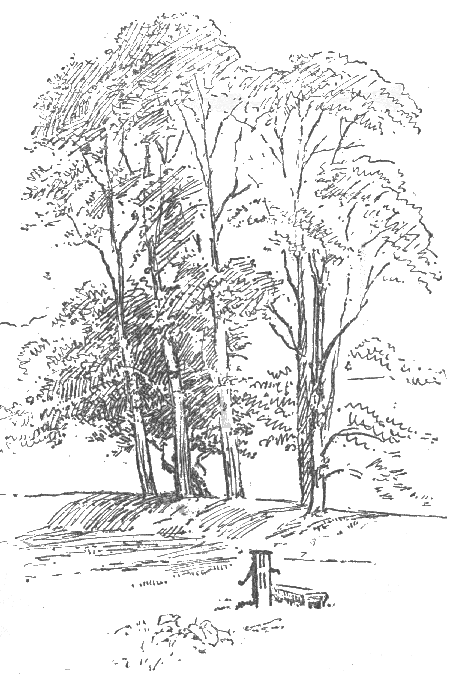
The image below of the remaining remnant of the Steventon Rectory (a pump) was drawn by Ellen G. Hill, whose sister, Constance wrote a book now in the public domain: Jane Austen: Her Homes and Her Friends by Constance Hill, 1901. See the link at the bottom of this post. Like me in 2007, Ellen and Constance were Austen fans. They visited the sites three quarters of a century after Austen died. In a some instances, they talked to a few aging villagers who recalled those who knew Cassandra Austen in her old age (dod 1845) and related some first-hand minutiae about her.

Screen Shot 2024-02-24 at 12.23.47 PM

Ellen Hill’s sketch of the pump on the site where the rectory stood.

The Garden:

Steventon Rectory Garden: Imagining the Landscape of Jane Austen’s Youth

Rachel Dodge, another outstanding writer for this blog, wrote a post about her visit to Steventon, Chawton, and the Austens’ self-sufficient gardens. Her photographs, as Brenda’s and Tony’s, are outstanding. This blog is blessed to have these contributors!

Screen Shot 2024-02-24 at 1.47.42 PM

The Rectory:

Servants in Jane Austen’s Houses

This post leads to an article that details the life of the Austen family in Steventon Rectory. It refers to Linda Robinson Walker’s 2005 Persuasions-Online article entitled Why Was Jane Austen Sent away to School at Seven: An Empirical Look at a Vexing Question. Ms Walker describes the Austen parents’ incentive to provide sufficiently for themselves and six children, which was not enough on Rev Austen’s two livings. The parents’ hard work to oversee a boy’s boarding school allowed the family to live a life of some comfort. Walker’s information regarding their daily lives and the costs for maintaining the boarding school and hire the servants is quite insightful.

Screen Shot 2024-02-24 at 1.16.24 PM

Last but not least: 

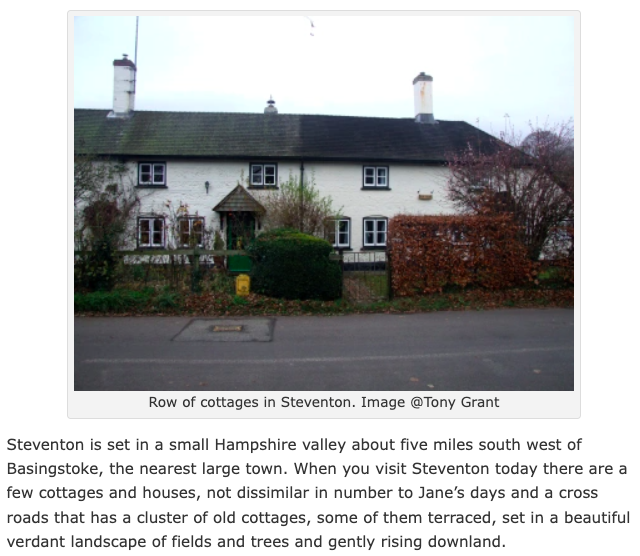
Steventon and Barton Cottage by Tony Grant

Tony Grant, a contributor to this blog since 2010, wrote this post and supplied his photographs to demonstrate the relationship between cottages in Steventon and Barton Cottage in Sense and Sensibility. His articles are always intriguing and informative, for he acted as a guide in Jane Austen tours in his native England for many years.

Screen Shot 2024-02-24 at 2.17.13 PM

More on the topic:

This online, public domain book, published in 1901 and referenced in this blog post, was my initial introduction to a first-hand Jane Austen fan account of her life. Enjoy the read! Jane Austen: Her Homes and Her Friends By Constance Hill