Feeds:
Posts
Comments

Posts Tagged ‘Maggie Lane’

Growing Older with Jane Austen by Maggie Lane: Review and Highlights by Brenda S. Cox

“Me! a poor, helpless, forlorn widow, unfit for anything, my spirits quite broke down . . .”—Mrs. Norris, Mansfield Park, chapter 3

“That Lady Russell, of steady age and character, and extremely well provided for, should have no thought of a second marriage, needs no apology to the public, which is rather apt to be unreasonably discontented when a woman does marry again, than when she does not; but Sir Walter’s continuing in singleness requires explanation.”—Persuasion, chapter 1

Last month we began looking at older characters in Jane Austen’s novels, drawing from Maggie Lane’s fascinating book, Growing Older with Jane Austen. We saw the importance of beauty in making matches, and the position of women as wives and mothers, or as single “old maids.” 

Next, Lane turns to older men, in the chapter:

Still a Very Fine Man (chapter 6)

With the exception of Sir Walter Elliot, the older men in Austen are less concerned about their appearances. But they are more likely to want to remarry than the older women. This is because men generally contribute financially to the marriage. If women are lucky, money may pass into their hands when they are widowed and they can be independent.

For the men, though, they depend on women for housekeeping, and they are uncomfortable without a female relative caring for them and their households. Younger men like Henry Tilney or Colonel Brandon, expecting to marry, may be happy with a paid housekeeper for the time being. But older men like the Dashwoods’ great-uncle want a female relative to care for them. So those young enough to remarry, like Mr. Weston and Mr. Dashwood (Elinor’s father), are likely to find a second wife, and in Austen’s novels they find happiness.

Sir Walter Elliot wanted to remarry, but failed. He probably proposed to women much younger than himself, with his eye for beauty. They were not interested in a “foolish, spendthrift baronet.” Instead, he depends on his daughter Elizabeth, who is very much like himself. Unfortunately she does not balance him, “promot[ing] his real respectability,” as his wife had.

Vain and foolish, Sir Walter Elliot failed to find a second wife who would accept him.
C.E. Brock, public domain

Mr. Woodhouse, of course, also depends on his daughter Emma, and she carefully fulfills her duty to him. He is at least loving, though selfish. In contrast, General Tilney bosses his daughter around harshly and keeps control of his household in his own hands.

Austen presents some happy marriages of older men. “Older men have usually settled down to an accommodation with their wives, and Austen presents many portraits of ageing couples who seem well-knit together: the Shirleys, the senior Musgroves, and the Morlands, for example” (Lane, 109). Even Sir Thomas Bertram and Mr. Allen are always courteous to their rather foolish wives.

Merry Widows (chapter 7)

The next three chapters explore the varying possibilities for widows. Lane says, “The conventional ‘merry widow’ of literature is an unprincipled predator with a voracious sexual appetite and a carefree disregard of conventional morals” (122). The only widow like that in Austen is, of course, Lady Susan Vernon (of Lady Susan), whom Lane discusses at length.

Another widow in Austen who follows a different contemporary stereotype is Mrs. Turner of The Watsons. She is taken in by a fortune-hunting Irish officer; she marries him and leaves her niece penniless.

Other widows in Austen’s novels, like Mrs. Jennings and Lady Russell, have a comfortable income and seem content to remain unmarried. Austen makes an interesting remark about double standards when she says of Lady Russell that “the public . . . is rather apt to be unreasonably discontented when a woman does marry again, than when she does not.” Lane explains that if a woman doesn’t need to remarry for money or a home (as Lady Susan does), she is “giving proof of continuing sexual desires.” A man, though, was expected to have continuing sexual desires, and “if he lost one wife, he was thought to be doing a good thing in seeking another—and in giving another single woman the chance to be wed” (Lane, 132).

In her letters, though, Austen commended a woman, Lady Sondes, who was being criticized for marrying again (and apparently had not married for love the first time). Jane writes, “I consider everybody as having a right to marry once in their Lives for Love, if they can” (Letters, Dec. 27, 1808).
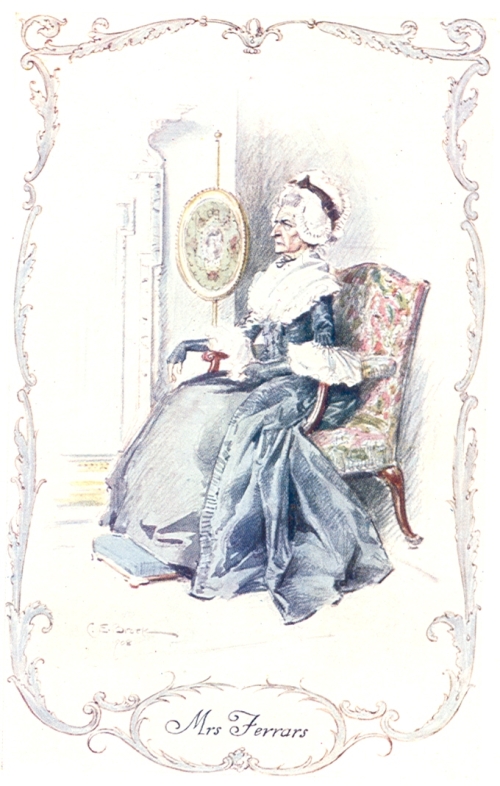
Mrs. Ferrars of Sense and Sensibility is a despot over her family. She controls the money and wants to control their lives.
C. E. Brock, public domain

Four Dowager Despots (chapter 8)

Not all of Jane Austen’s widows are as loving as Mrs. Jennings and Lady Russell. While power was usually held by men in Austen’s world, Austen gives us four rich widows who tyrannize others. (Think for a minute; who are they?) Mrs. Ferrars of S&S, Lady Catherine de Bourgh of P&P, Lady Denham of Sanditon, and Mrs. Norris of Mansfield Park. (Mrs. Norris doesn’t have a lot of her own money, but exercises authority on behalf of her “supine sister and absent brother-in-law.”)

Lane writes, “Only Lady Denham is a true dowager, the strict definition of which is a woman whose income derives by legal pre-arrangement from her late husband’s estate, the estate [and title, if there is one] having passed on his death to his heir” (136). Lady Catherine and Mrs. Ferrars appear to completely control their late husbands’ fortunes. But all of them show “a mixture of self-importance and interference in others’ lives” (Lane, 137). Lady Catherine, in particular, controls her whole parish, and it appears that Lady Denham also has great influence in Sanditon.

Lane contrasts two older women in Sense and Sensibility: the manipulative Mrs. Ferrars, who uses money to control her sons, and Mrs. Smith, who controls Willoughby financially. “The telling difference between Mrs. Ferrars and Mrs. Smith is that the latter only wants her young relation to be good, not rich or distinguished” (Lane, 142). Mrs. Smith was likely an elderly maiden lady, of “uncompromising propriety,” who was given the honorary title of “Mrs.” Her motivations are better than Mrs. Ferrars’s selfishness.

Not the Only Widow in Bath (chapter 9)

Another dowager, Mrs. Rushworth, is not a despot as far as we know. When her son marries, she retires, “with true dowager propriety,” to Bath, ready to boast of Sotherton during her evening parties. While Mrs. Elton tries to convince Emma to go to Bath to find a husband, many older people went for other reasons. People like Austen’s parents moved to Bath for “freedom from the cares of a country property and housekeeping; company on tap; and easy access to medical attention as well as to shops, libraries, concerts, and plays” (Lane, 157). (Sounds good to me; I wish I could afford to retire to Bath!)

No longer a place of high fashion, Bath now appealed to “the kind of people Jane Austen knew and wrote about: the minor gentry with a taste for social life and the means to indulge their real or imagined illnesses; the less well-off, especially single women, desperately clinging to their shreds of gentility in a place where living was comparatively cheap; well-funded widows and retired professional men with their families . . . and . . . a motley assortment of hangers-on and would-be social climbers” (Lane, 157-8).

Sir Walter Elliot, a widower, goes there to “be important at comparatively little expense.” Lady Russell, a widow, spends every winter there, “finding mental refreshment in meeting up with old friends and getting all the new publications.” Widowed Mrs. Thorpe of Northanger Abbey goes to find husbands for her daughters. Impoverished invalids like Mrs. Smith of Persuasion go for medical care, while a similar widow, Mrs. Clay, is looking to marry again.
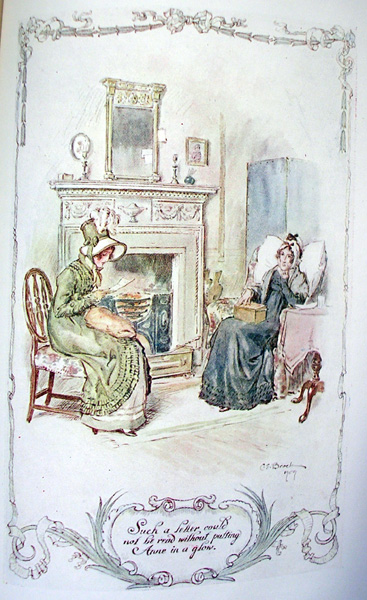
Widowed Mrs. Smith of Persuasion goes to Bath for her health.
C.E. Brock, public domain

Because of changes in Bath, in Austen’s later novels, “Bath appears not as the place of fun and frivolity it is in Northanger Abbey, but increasingly the choice of the old and dreary. . . . Austen’s Bath is not without its young people but it is an appropriate stage for so many of her older ones” (Lane, 170).

Age and Money (chapter 10)

How they live in Bath or elsewhere depends on their income. Some of Austen’s characters got richer as they aged. These include Mr. Weston, Mr. Cole, John Knightley, Robert Martin, Mr. Jennings (now deceased), Mr. Gardiner, Captain Wentworth, and Charles Bingley’s father. They all prospered in their work.

Others, though, like Austen’s naval brothers and Henry, got poorer as they aged. They suffered reverses from “the vagaries of their profession[s].” Captain Harville has been wounded, causing him to fall on hard times, and Mrs. Smith of Persuasion has lost a fortune due to her husband’s extravagance. Mrs. Bates, a clergyman’s widow, lost her income when her husband died.

Those in the lower classes might be miserable in old age, like “old John Abdy” of Emma. Well-off families, though, were expected to care for their household servants in old age. For example, three servants of Edward Ferrars’s father receive yearly annuities from his estate.

Wills and inheritance, of course, played an important part in Austen’s novels and her life. Most famously, the entail on the Bennets’ estate, and the Dashwoods’ uncle’s will, cause the girls in the story to be urgently in need of husbands.

The Dangerous Indulgence of Illness (chapter 11)

Mrs. Bennet is constantly fearing her husband’s death, which will leave the family penniless. Illness and death were constant threats in Austen’s world (as they are today, of course). This chapter discusses Austen’s final illness. Surprisingly, she wrote Sanditon during that time, which includes absurd hypochondriacs exaggerating their own illnesses.

Sea-bathing was considered a cure-all, and the Knightleys, Dr. Shirley, and Mary Musgrove try it at seaside resorts like the fictional Sanditon. Others go to Bath to take the waters for their “gout and decrepitude.” Mr. Allen, General Tilney, Admiral Croft, and Mrs. Smith of Persuasion go to Bath for their health, as did some of Austen’s friends and relations.
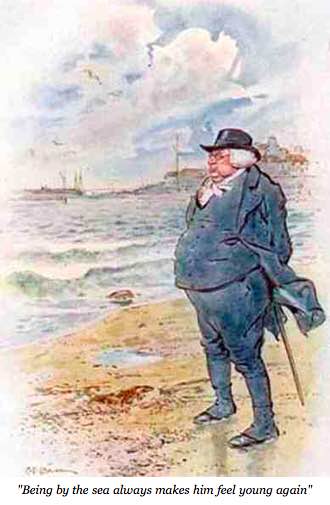
For Dr. Shirley of Persuasion,  “coming to Lyme for a month did him more good than all the medicine he took; . . . being by the sea always makes him feel young again.”
C. E. Brock, public domain

Illness is also a way to control others in Austen’s novels. Dr. Grant, Mary Musgrove, Fanny Dashwood, Mrs. Bennet, Mr. Woodhouse, and Mrs. Churchill all use illness or pretended illness to get their own way.

Once Mrs. Churchill actually dies, though, her illnesses are taken seriously. Austen uses several deaths as plot devices, including this one which frees Frank to marry. Dr. Grant’s death similarly frees Edmund and Fanny to take the living of Mansfield Park.

Lane says, “Mansfield Park is the only novel in which ideas of the hereafter find a place” (206). Fanny worries about Tom, during his illness, considering “how little useful, how little self-denying his life had (apparently) been”—she’s worried about him not going to heaven. And Austen indicates that, while society does not punish a man for adultery as it does a woman, the penalties “hereafter” will be more equal.

The chapter includes a fascinating list of the funeral expenses for Elizabeth Austen’s elaborate burial (Edward Austen Knight’s wife). For example, 22 mourning cloaks were hired for the day, and 60 pairs of black gloves bought for family, servants, and others, including the carpenter and bricklayer.

“Jane Austen’s attitude to the death of others ranged between the insouciant, the pragmatic, and the heartfelt” (Lane, 216). She of course approached her own death very seriously. She took Holy Communion one last time, while she could still understand it, about a month before her death.

For more on this topic, see my article, “Preparation for Death and Second Chances in Austen’s Novels,” which draws partly from Lane’s ideas.

Conclusion

The author explores how Austen might have fared in old age. She would probably have become more famous. Her sister Cassandra, Jane’s heir, prospered financially as the years went on, and Jane would have prospered with her.

The book ends, “Apart from the sad loss of Jane, Cassandra’s old age was in fact a secure and comfortable one. If only she had been able to share it with her sister” (Lane, 225).

I’ve only been able to give you a small taste of the riches in Growing Older with Jane Austen, but I hope you’ve found some ideas you can pursue on your own. If you can get a copy of the book (perhaps through your library), I highly recommend it. It’s well worth exploring the lives of older men and women in Austen’s novels and in Jane Austen’s world.

What do you think would have been most difficult about growing older in Jane Austen’s England? What might have been better about it than growing older in our society today?

For more on the topic of aging women in Jane Austen’s novels, see:

“Growing Older with Jane Austen, Part 1”

“’My Poor Nerves’: Women of a Certain Age on the Page,” about perimenopausal women in Austen

Past the Bloom: Aging and Beauty in the Novels of Jane Austen,” by Stephanie M. Eddleman, a fascinating article

Three Stages of Aging with Pride and Prejudice,” by Emily Willingham, a light look at how we identify with different characters as we have more life experience 

Age and Money in Austenland”: Susan Allen Ford’s review of Growing Older with Jane Austen

And, of course, the source for most of these two posts:

Growing Older with Jane Austen, by Maggie Lane

Brenda S. Cox writes about Faith, Science, Joy, and Jane Austen. Her recent book is Fashionable Goodness: Christianity in Jane Austen’s England.

This June she will be speaking about Mr. Collins at Jane Austen Regency Week in Alton, England, and would love to see some of you there!
Read Full Post »

Inquiring readers, I recently wrote a post about the important but largely unseen parts servants played in Jane Austen’s novels. As I looked into the topic, animals were also mentioned. So much information exists that I decided to write about their important contributions to our understanding of Austen’s milieu.

________

In The Jane Austen Companion, the editor of the book, David Grey, wrote that Jane Austen “pays little attention to pets and animals”. Professor Susan E. Jones, who quoted Mr. Grey at the start of her JASNA article, begs to disagree. She ends her thoughts by writing:

“Austen uses her animal references to provide provocative signals and insights that would have amplified the pleasure of her text to insider readers.”

As an avid reader of Austen’s novels and letters, wherein a great deal of animals are mentioned, I agree with Professor Jones’s POV. Jane’s inclusion of animals and food might not have been given center stage, but her contemporary readers knew just what they represented when they made their appearance in her stories. The animals added dimension to her human characters and to her readers’ understanding of the scene: Their presence meant more than mere beasts of burden or as a source for food.

Screen Shot 2021-07-03 at 7.59.29 AM

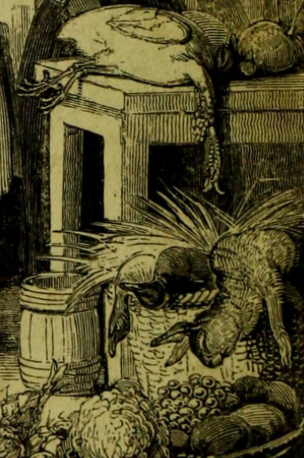
Detail of the fronticepiece image for The Frugal Housewife, 1835, Internet Archive.

One passage in Emma demonstrates why only a few references to food conjured up a host of associations for Austen’s contemporary readers, and why current scholarship helps us to understand her era better. Emma suggested a menu for an early dinner for Mrs and Miss Bates and Mrs Goddard, a trio that was “always at the service of an invitation at Hartfield” (Austen, Emma).

“…with the real good-will of a mind delighted with its own ideas, did she then do all the honours of the meal, and help and recommend the minced chicken and scalloped oysters, with an urgency which she knew would be acceptable to the early hours and civil scruples of their guests.” – Emma, Vol 1, Ch 3.

This passage provides much information about Mr. Woodhouse’s food phobias and the dishes he deemed too rich for “the digestion.” But there is more to this scene than first meets the eye.

Mrs Bates, who was “almost past everything but tea and quadrille”, and her daughter, Miss Bates, were poor due to Mr Bates’s death. Mr Elton, who replaced him as Vicar of Highbury, acquired his living. Mr Bates’s widow and daughter were instantly poor and reduced to renting rooms in town, with only a maid of all work to help them. Except for a small income, they were dependent on the beneficence of their community. They, and Mrs Goddard, the mistress of the local boarding school, were frequent visitors at Hartfield, and were invited early to play cards with Mr Woodhouse, and keep him company and partake of his food and hospitality.

Emma, who had been Hartfield’s mistress since her older sister’s marriage to Robert Knightley, and who hoped she was “not often deficient in what is due to guests at Hartfield,” arranged for this particular meal, hoping to please both her company and her exacting father. From her planned menu, Austen’s contemporaries instantly recognized the three visitors’ social and economic status. Guests belonging to the first tier of society would have been served a fresh, whole capon. Minced chicken was made with leftover chicken, and while the dish was considered delicious, Austen’s readers understood that these second tier guests had been served the remains of yesterday’s chicken (Jones).

Emma also served oysters, which are considered a specialty today. In my region, which is part of the Chesapeake Bay Watershed, U.S., oysters are expensive delicacies, since their numbers have been drastically reduced by fertilizer run-offs and other pollution in the bay, but in Austen’s day, oysters were cheap and plentiful in England and served as “common fare at an inn” (Jones). They, like chicken, are a white food, whose bland color, Emma knew, suited Mr Woodhouse to a tee.

Animals in the countryside:

Pork was considered a symbol of affluence. Jane’s rich brother, Edward, kept pigs:

“In a letter to Cassandra from Steventon (1 December 1798), Jane wrote, ‘My father is glad to hear so good an account of Edward’s pigs, and desires he may be told…that Lord Bolton is particularly curious in his pigs, [and] has had pigstyes of a most elegant construction built for them, and visits them every morning as soon as he rises’” (Wilkes).

In her blog post, author Sue Wilkes aptly titled an image of a fortunate pig as

“an elegant pig in an elegant pigsty.”

Emma’s gift to Mrs and Miss Bates of a whole hindquarter of a pig was generous – but to a fault. Mr Woodhouse first suggested a small, more delicate loin or leg, which Susan Jones points out was thoughtful, since the Bates’s rented accommodations were small. While Miss Bates effusively thanked Emma, she added that her mother feared they “had not a salting-pan large enough.” In the film Clueless, director Amy Heckerling had it right – Emma was oblivious in so many ways.

Growing up in the Steventon countryside, the Austens were surrounded by fields of crops, stands of woodlands, and grazing animals. “Mr Austen was entitled to graze his sheep and cows in the actual churchyard of St Nicholas if he so chose” (Le Faye, p 170). Jane mentioned in her letters the excellent quality of the Leicester sheep he had sold for profit.

“Mr Lyford gratified us very much yesterday by his praises of my father’s mutton, which they all think the finest that was ever ate.” – Le Faye, p 172

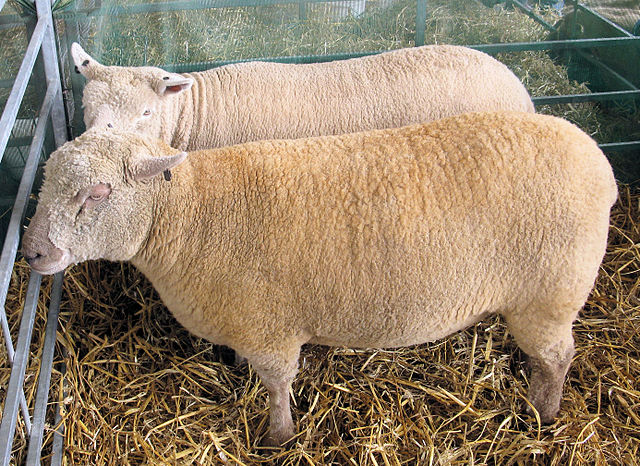
Mr Austen likely raised Southdown Sheep, a small, stocky animal, whose lambs, born in October, were ready for slaughter by Christmas. LeFaye speculated that the sheep Mr Knightley and Robert Martin (E) kept on their farms on the Donwell Abbey estate were also Southdown sheep, for they had exceptional wool and Mr Martin’s wool crop fetched a high price. Admiral and Mrs Croft (P) inspected their sheep as soon as they were settled at Kellynch Hall, an action that Sir Walter Elliot considered vastly beneath his lofty sense of self (LeFaye, 174).

Southdown Sheep-Wikimedia Commons

Southdown Sheep, Wikimedia Commons image

Working animals:

Animals in the countryside in which Austen lived sounded out familiar noises – the crowing of roosters, clucking of chickens, honking of geese, mooing of cows, neighing of horses, squealing of pigs, meowing of cats, and barking of dogs. Austen must also have intimately known their smells, their antics when they were young, and their drama from birth to death. They were part of her childhood in Steventon and formed the background for the rural locations in her novels, albeit more as indicators of a character’s status and wealth than as characters in their own right. Their literary presence marked their service of their owners who fed them.

Jane mentioned cats once in a minor quote from Mrs Jennings in Sense and Sensibility: “Lord! we shall sit and gape at one another as dull as two cats,” so I shall quickly move on to their jobs as hunters of mice and rats in barns and houses, and of moles and voles in gardens. They “earned” their living, although I am certain no child could resist the continuous litter of kittens produced by these feral creatures.

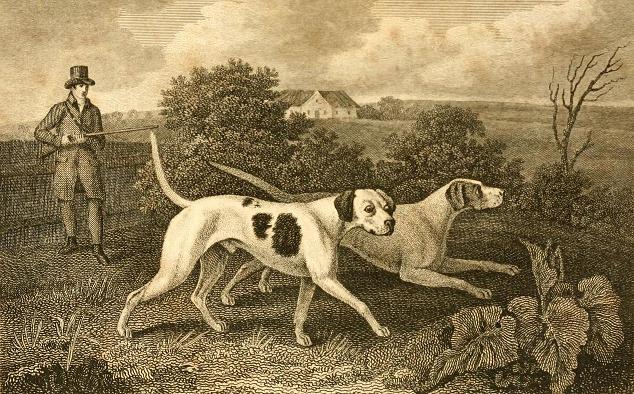
Purebred dogs specifically bred for desired features and purposes belonged largely to aristocrats and the gentry. Farmers and peasants owned more common curs. With their sensitive noses, ability to run alongside their masters for hours, loyalty, and willingness to serve and please, dogs were essential in too many jobs to count. As herders they were essential helpmeets for shepherds and drovers. As fearless terriers, they could dig any animal out of a hole, their tails providing a handy means for pulling them out of predicaments. Dogs protected livestock, barked warnings at intruders, defended their masters, pulled down large animals, acted as nanny dogs for children, etc. One suspects that many individuals who worked with dogs learned to love them more as companions than as workers, such as Willoughby, who “bred hounds for pleasure” (Shearer).

A black and white print of a hunter going out with two pointers, 1820 image.

James Barenger , 1820, Pointers. Wikimedia Commons image.

Aside from providing mankind with eggs, meat, and feathers, geese also trumpeted danger to chickens and anything and anyone within hearing distance. Austen’s mention of a goose in Emma, demonstrates the quality of Mr Martin’s excellent farm products:

“…Robert Martin raises geese because the Martin matriarch gives a fine goose to Mrs Goddard, who says it is “the finest goose[she has] ever seen” (Jones).

Animals for food:

Alderney cows played a major role for the Martin family in Emma:

“…and of their having eight cows, two of them Alderneys, and one a little Welch cow, a very pretty little Welch cow indeed; and of Mrs. Martin’s saying as she was so fond of it, it should be called her cow).”

Interestingly, Jane’s mother also kept Alderney cows. Mrs Austen wrote in a letter to a sister-in-law in 1773:

“I have got a nice dairy fitted up, and am now worth a bull and six cows”

Maggie Lane tells us that in 1770, Mrs. Austen had described “an Alderney cow which ‘makes more butter than we use,” which meant that any excess from their animals earned much needed income for the Austens and their large family.

In a letter to Cassandra, Jane Austen exclaimed over the value of the family cows in the sale of the family possessions [when moving from Steventon to Bath], “sixty one Guineas & a half for the three Cows…” (Jones)

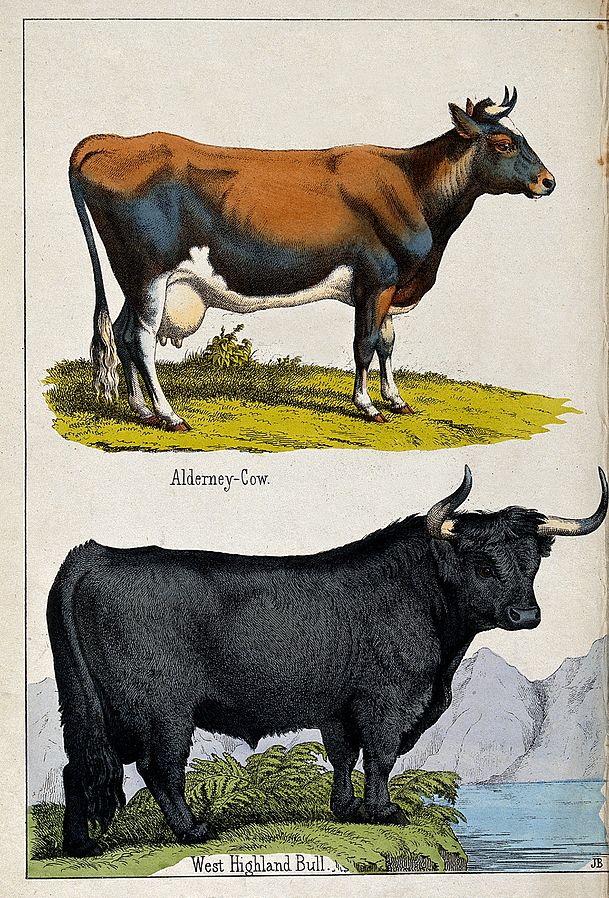
The butter of Alderney cows, a small rugged Channel Island breed, was considered superb, but, sadly, these cows became extinct in WWII. There were other varieties of cows during this era that produced milk, meat, and leather, but the Alderneys were prevalent in Austen letters and in Emma.

Above,_an_Aldernay_cow;_below,_a_Westhighland_bull._Coloured_Wellcome_V0020750

Alderney cow, top image, West Highland bull, lower image. Creative Commons, Wikimedia Commons via Wellcome library.

Other farm animals (still common) provided essential food and products for the Austen family, like chickens (meat, eggs, feathers), sheep (meat, wool), and goats (meat, milk.) My descriptions echo the dispassionate attitude that the Georgian era populace had until the turn of the 19th century, when attitudes changed.

Animals for transport:

Many animals, commonly known as beasts of burden,” served as “engines” for transport. In too numerous instances to count, their lives were severely shortened from hard work and harsh treatment. Horses were primarily owned by the elite because their upkeep was expensive. When Austen mentioned a carriage drawn by four horses (luxurious), or a curricle pulled by two (costly), her reading audience knew to the penny how much their maintenance cost per year. John Thorpe (NA) drove a gig pulled by one horse, which he pretended was as fine and fast as Mr Tilney’s carriage pulled by two. At the mere mention of the carriages Jane’s readers instantly knew which of the two young men had more financial resources and the faster vehicle. The way Thorpe forced his sole horse to compete with Tilney’s team of two demonstrated his ambition and cruelty. (See the Brock image on the left of John Thorpe, “Pray, pray, Stop Mr. Thorpe,” Wikimedia Commons) vs. (Henry Tilney in his carriage with Catherine on the right, “Henry Drove So Well,” Ch XX, Molland’s.)

In Sense and Sensibility, Austen demonstrated Marianne Dashwood’s recklessness with Willoughby’s gift of a horse (Queen Mab), and complete disregard of her family’s financial situation. She could only think of Willoughby’s loving present, which it wasn’t. Willoughby must have known of the family’s circumstances, and so his gesture was cruel.

“Marianne told her [Elinor], with the greatest delight, that Willoughby had given her a horse, one that he had bred himself on his estate in Somersetshire, and which was exactly calculated to carry a woman. Without considering that it was not in her mother’s plan to keep any horse, that if she were to alter her resolution in favour of this gift, she must buy another for the servant, and keep a servant to ride it, and after all, build a stable to receive them, she had accepted the present without hesitation, and told her sister of it in raptures.

“He intends to send his groom into Somersetshire immediately for it,” she added, “and when it arrives we will ride every day. You shall share its use with me. Imagine to yourself, my dear Elinor, the delight of a gallop on some of these downs.”

“Most unwilling was she to awaken from such a dream of felicity to comprehend all the unhappy truths which attended the affair; and for some time she refused to submit to them. As to an additional servant, the expense would be a trifle; Mamma she was sure would never object to it; and any horse would do for HIM; he might always get one at the park; as to a stable, the merest shed would be sufficient. Elinor then ventured to doubt the propriety of her receiving such a present from a man so little, or at least so lately known to her. This was too much.”

Because of this expensive gift, Elinor assumed that the pair had entered into a secret engagement.

In another example of Austen’s use of an animal to demonstrate character, she shows Edmund’s interest in Mary Crawford by allowing her to ride Fanny Price’s gentle pony. He had first obtained it for his cousin for her health, which blossomed with a daily ride. Then Mary Crawford expressed her desire to learn to ride, and Edmund, losing his head, gave her free rein to use Fanny’s pony.

“The ensuing spring deprived [Fanny] of her valued friend, the old grey pony; and for some time she was in danger of feeling the loss in her health as well as in her affections; for in spite of the acknowledged importance of her riding on horse-back, no measures were taken for mounting her again…”

Ignored by her most supportive cousin, Fanny’s aunts took advantage of the circumstances and employed her to run errands for both of them, which tired her excessively. Edmund soon noticed that Fanny looked ill and realized that his insensitivity to her situation and that his interest in Mary had contributed to his cousin’s ill health. He swiftly returned the pony for her daily rides. Without much exposition, Austen introduced this subplot with a pony at its center to point out her characters’ motivations, their actions and the consequences.

Other modes of transportation:

Not many people could afford to purchase or maintain horses. Drays and heavy wagons drawn by teams of mules and oxen pulled heavy loads over rutted roads or provided transportation for groups of people with fewer means. Donkey and pony carts could carry two adults, and goat carts could carry one woman or two children. Dogs pulled carts for small children or pulled specialized vehicles alongside their working masters.

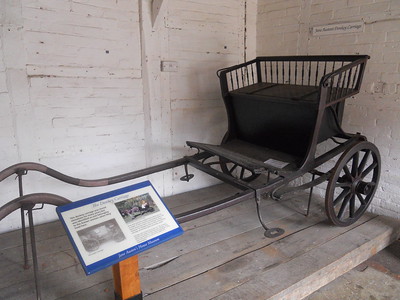
We know that the Austen women used a donkey cart to get around. Today it can still be seen in Chawton Cottage, now a museum.

donkey cart-JA House Chawton-PhoebeZu

The donkey cart, Jane Austen House Museum (Chawton Cottage), taken by Phoebe Zu.

Animals as pets:

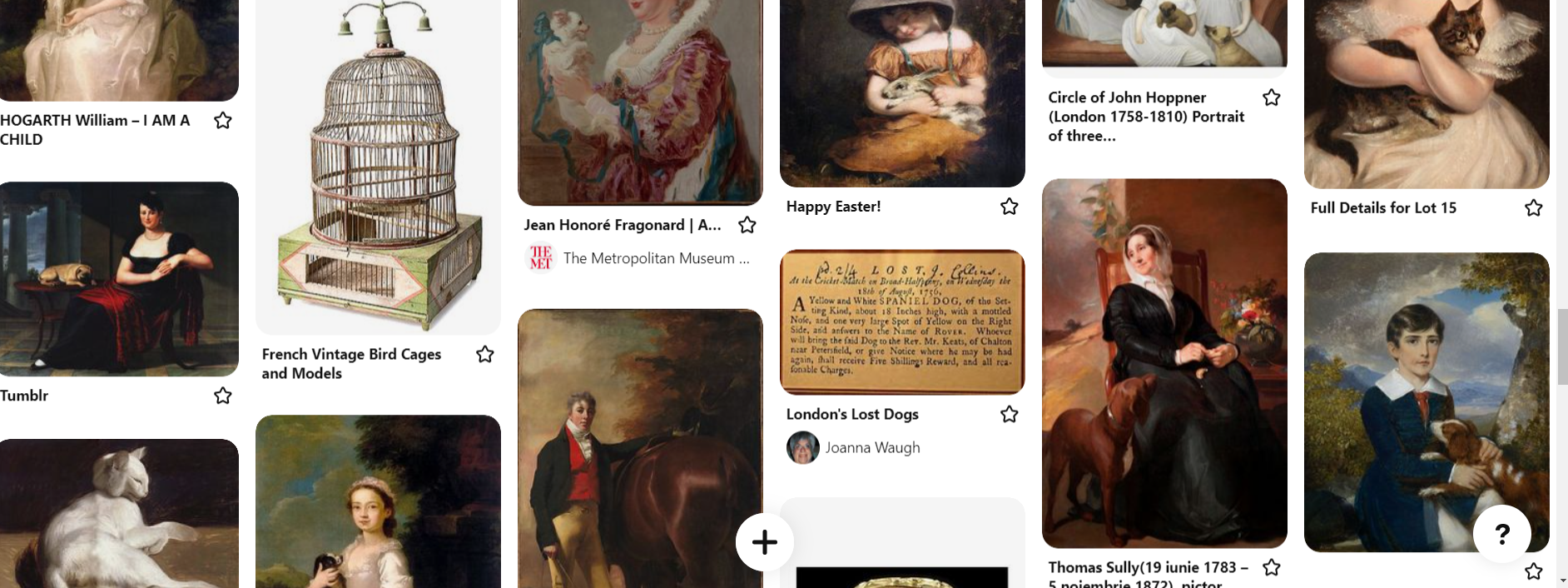
This last category is short, for in the early 19th century animals were largely used for work. The aristocracy and gentry, however, were another matter, as my pinterest board, “Regency Pets and Animals,” attests. The paintings depict dogs, horses, cats, and birds, etc. held by their owners. Many of the horses and dogs were signs of wealth and consequence.

Pinterest board of Georgian pets

Rabbit, pugs, cats, dogs, bird cage, and a man with his thoroughbred. Vic’s Pinterest Board. A majority of the paintings and illustrations depict adults and children from the upper classes.

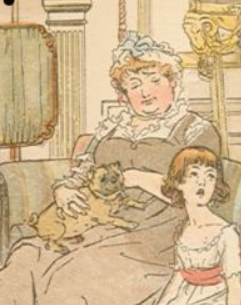
The pug in Mansfield Park is the only pet fully described in a Jane Austen novel. It too was used to show character, as well as sloth and indolence.

Detail of pug-Molland's

Detail of a Brock image of Lady Bertram, pug, and Fanny as an infant. Molland’s.

“To the education of her daughters Lady Bertram paid not the smallest attention. She had not time for such cares. She was a woman who spent her days in sitting, nicely dressed, on a sofa, doing some long piece of needlework, of little use and no beauty, thinking more of her pug than her children, but very indulgent to the latter when it did not put herself to inconvenience, guided in everything important by Sir Thomas, and in smaller concerns by her sister.”

Pugs, first bred in China and brought to The Netherlands by the Dutch East India Company, became a favorite animal of William of Orange and his wife Mary, who introduced the small dog to England in the 17th century, where its popularity took off.

When Henry Crawford took notable interest in Fanny, Lady Bertram became quite talkative:

“No, my dear, I should not think of missing you, when such an offer as this comes in your way. I could do very well without you, if you were married to a man of such good estate as Mr. Crawford. And you must be aware, Fanny, that it is every young woman’s duty to accept such a very unexceptionable offer as this.”

This was almost the only rule of conduct, the only piece of advice, which Fanny had ever received from her aunt in the course of eight years and a half. It silenced her. She felt how unprofitable contention would be…”

Lady Bertram was convinced that Henry Crawford fell in love with her at the ball, where she looked remarkably well (even Sir Thomas said so).

And you know you had Chapman to help you to dress. I am very glad I sent Chapman to you. I shall tell Sir Thomas that I am sure it was done that evening.” And still pursuing the same cheerful thoughts, she soon afterwards added, “And I will tell you what, Fanny, which is more than I did for Maria: the next time Pug has a litter you shall have a puppy.”

This speech must have exhausted Lady Bertram, for it was the first time she showed such deep emotion and enthusiasm on any topic, or affection towards another person. That she was willing to give Fanny one of Pug’s precious puppies spoke volumes.

Conclusion:

Most of Austen’s contemporary readers experienced first-hand the life and death roles that animals played in their lives. When reading her novels, they could use this knowledge to fill in the blanks that Austen, an author not known for detailed descriptions, assumed they knew. Today’s readers do not have this luxury. For example, take this statement from Sue Wilkes, which describes the different ways in which rich and poor treated each other regarding property and food:

“Rich landowners … had hothouses for growing tender fruits like grapes, nectarines and peaches. In season, they also enjoyed game from their estates. The Knight family sent game to the Austens from Godmersham. The killing of game by using dogs or a gun was restricted by law to members of the landed gentry, providing they owned estates worth at least £100 p.a., or leased land worth at least £150 p.a. Although the countryside was plentifully stocked with fish and game, a poor man who helped himself to a hare or salmon to feed his family faced jail or transportation.”

Details like these enrich our knowledge of the era and our understanding of novels written at that time. Austen’s ways of incorporating the roles that animals represented in her stories without burdening us with too many details was simply genius.

Additional resources:

Books

Grey, J.D. (1986) The Jane Austen Companion (with A Dictionary of Jane Austen’s Life and Works by H. Abigail Bok (U.S.). Macmillan Publishing Company.

LeFaye, D. (2014) Jane Austen’s Country Life (1st ed., U.K.) Frances Lincoln Ltd.

Online information

Jones, S.E. (2016) “Oysters and Alderneys: Emma and the Animal Economy,” (Vol 37, No. 1) Persuasions Online, JASNA. URL downloaded 7/2/21: http://jasna.org/publications-2/persuasions-online/vol37no1/jones/

Knowles, R. (2019) “Curricles, gigs and phaetons in the Regency,” Regency History. URL downloaded 7/2/21: https://www.regencyhistory.net/2019/07/curricles-gigs-and-phaetons-in-regency.html

Sanborn, V. (2010) “Pugalicious: The Pug in Mansfield Park and the 19th Century,” Jane Austen’s World. URL downloaded 7/1/21: https://janeaustensworld.com/2010/02/16/pugnacious-the-pug-in-mansfield-park-and-the-19th-century/

Shearer, E. (2017) “Animals in Jane Austen’s novels,” Eliza Shearer. URL downloaded 6/30/21: https://elizashearerblog.wordpress.com/2017/10/30/animals-in-jane-austen/

Sullivan, M.C. (2000) “The Curricle,” Tilneys and Trapdoors. URL downloaded 7/1/21: http://www.tilneysandtrapdoors.com/cult/curricle.html

Wilkes, S. (2015) “Down on the Farm,” A Visitor’s Guide to Jane Austen’s England. URL downloaded 7/2/21: https://visitjaneaustensengland.blogspot.com/2015/07/down-on-farm.html

Detail of image, fronticepiece, Mrs. Child, (1835) The Frugal Housewife (15th Ed. U.K.)

Read Full Post »

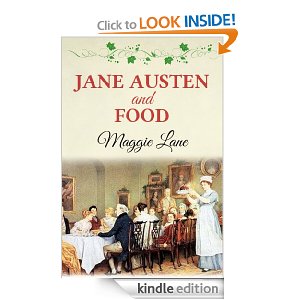
jane austen and food Jane Austen and Food by Maggie Lane is not a cookbook with recipes, but a well-researched, highly informative, and entertaining historical discussion about food, mealtimes, manners, and housekeeping in the age of Jane Austen. Lane examines Austen’s letters regarding food and drink, and how she uses both to define the characters in her novels.

Today, the Jane Austen and Food’s hardcover edition, which was first published in 1995, can be purchased on Amazon in hardcover or paperback for $85 to $129! But the kindle edition from Endeavor Press is available for a mere $2.99 – and it contains the same content as the hardcover and paperback editions. (Keep in mind that kindle apps are available for those who do not own kindles. I have downloaded the book on my iPad and android devices, for example.)

Let me explain what a bargain you will be getting with the kindle version of Maggie Lane’s thoroughly enjoyable and informative book. Jane Austen’s treatment of food yields new insights in which she creates character and establishes her moral values in her novels:

In Steventon, the glebe lands (which added to about 3 acres) supplied the Rectory with pork, mutton, wheat, peas, barley, hops, and oats and hay for the horses. The surplus in produce contributed up to £300 per year to the Austen’s income. They made their own mead and wines and preserved foods that were produced with foods in season. The only commodities that were purchased were expensive items like tea, coffee, chocolate, sugar, spices, and dried fruits.

No gentleman, single or widowed, could run his own home. He depended upon a paid housekeeper to oversee his hearth for good dinners, or, like Mr Bingley, he required a sister to keep house for him. Mr. Rushworth depended upon his mother, while Mr. Collins was in need of a wife.  When Mrs. Austen was kept away in 1770 for a month to look after her sister in childbirth, Mr. Austen wrote that “I must bear … [for] about three weeks longer, at which time I expect my housekeeper’s return.” Jane never took the responsibility of a household completely, although she assisted whenever she was needed. Composing for her was difficult during such times, and she wrote, “Composition seems to me impossible with a head full of joints of mutton and doses of rhubarb.”

In terms of food and its purchase, the Austen’s move to Bath was a shock. Slow transportation changed the quality of the food that Jane and her family were accustomed to, and the very fact that they had to purchase all their produce made them anxious, for they had lost sources of revenue in the form of farm produce, pupils, and Reverend Austen’s clerical stipend. Milk was of a poor quality due to the cows being kept in unhygienic barns, and food, purchased at the bakers, grocers, butchers, poulterers, and fishmongers was quite expensive. In addition, its cost  fluctuated.

Mrs. Austen in particular never lost her love for working in a garden. She did so at Steventon and later at Chawton Cottage, where she dug up her own potatoes and delighted in her flower borders. According to one of her great-grand-daughters: “She wore a green round frock like a day-laborer’s.”

At Chawton Cottage, the Austen women were able to find their footing again, growing their own fruit and vegetables, rearing poultry, keeping bees, baking bread, and making wine and brewing beer. Villagers recalled in later years that their dog, Link, would carry home a pail of milk in his mouth. It must be emphasized that, although Jane Austen worried about financial security, she and her sister and mother were comfortable enough to eat well and, like Emma Woodhouse, to dispense charity to those less fortunate than themselves. If Jane envied others, it was for their freedom from perpetual contrivance. In the sale of her novels, she found some relief from such worry.

In later chapters, Maggie Lane describes the history of tea, coffee, and chocolate, and how these fashionable drinks were imbibed before and during Jane Austen’s day. Austen herself only mentioned chocolate twice in her letters, but Mrs Austen during her visit to Stoneleigh Abbey wrote that their breakfast at her ancestral home consisted of “Chocolate Coffee and Tea, Plumb Cake, Pound Cake, Hot Rolls, Cold Rolls, brad and Butter, and dry toast for me.”

Breakfast, lunch, dinner, and supper are described, but Lane emphasizes that Jane barely mentions these daily events in her letters and novels. She gives scant details, especially as to the preferences of her heroines, most of whom are not concerned with the daily details of food. There are hints here and there in her novels: Willoughby takes porter at an inn during midday, and Frank Churchill imbibes spruce beer on a hot day at Donwell.

Dinner times are moved up as the Regency era progresses. In 1798, Jane writes to Cassandra that they dine at half after three, and by 1808, “we never dine now till five.” This was a gradual shift in dinner-time that took place with most families during this era, although dinner in town (London) was taken fashionably later. In addition, dinners in the early 19th century were far less splendid than those in the latter part of the century. Edward Austen-Leigh noted that there was a “far less splendid appearance than it does now.” By the time Jane wrote Mansfield Park, silver forks emerged, as well as napkins and finger glasses. In 1808 Jane wrote, “My mother has been lately adding to her possessions in plate – a whole tablespoon and a whole dessertspoon, and six whole teaspoons – which makes our sideboard border on the magnificent.”

I could go on and on describing the enormous amount of information in this ebook. Lane goes on to discuss in great detail the attitudes towards food and domesticity in Northanger Abbey, Emma, and Mansfield Park – all of which excited this reader. The characters of Emma Woodhouse, Mr. Woodhouse, Mr. Grant, Mrs. Grant, Mrs. Norris, Mr. Price, and General Tilney are elaborated in great detail in their obsession (or not) with food and general housekeeping details.

tea cups ratingIs Jane Austen and Food worth the cost of $2.99? Oh, yes. Definitely.!I paid so much more for my hardback copy several years ago and do not regret its purchase. I give this ebook a rating of 5 out of 5 Regency teacups.

Read Full Post »

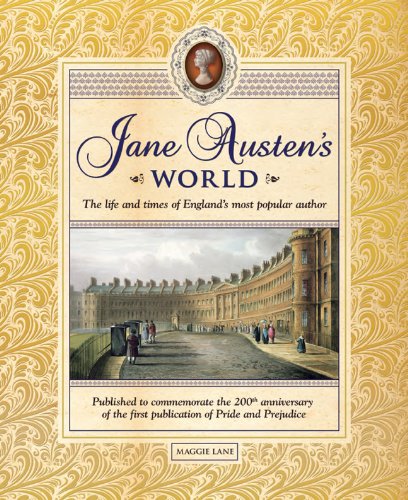
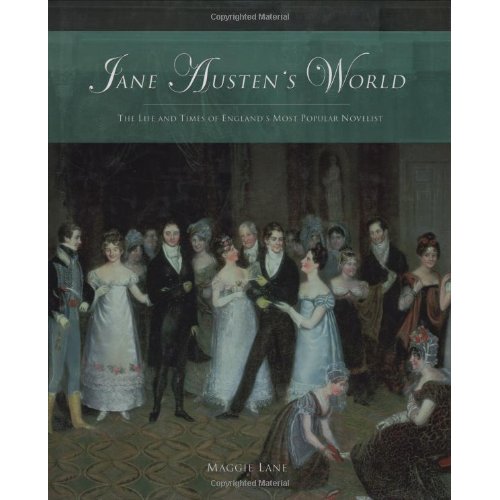
Jane Austens World LaneI am continuing this blog’s giveaways in celebration of the 200th anniversary of Pride and Prejudice and 6 millionth visit to my blog with one free copy of the reissue of Maggie Lane’s Jane Austen’s World, courtesy of Sterling Publishing.

Jane Austen’s World takes a look at Jane Austen’s private life and examines the world she inhabited—a time when England was developing into a colonial power, the Napoleonic Wars raged, and the Regency took hold.

Maggie Lane is an active committee member of the Jane Austen Society and has written several highly acclaimed books on the author, including Jane Austen and Food (Hambledon Continuum), Jane Austen’s England (Robert Hale), and Jane Austen’s Family (Robert Hale). She has also appeared on television as a Jane Austen expert.

jane austens world

Like the 2005 reissue (left) this book features a short introduction by Brian Southam and a Jane Austen timeline, and is filled with colored plates and illustrations. Interestingly this reissue was printed and bound in Dubai. The reason I say this is that I found the color in the plates to be brighter. It’s a matter of taste, I know. Some will like these images over the somewhat more subdued color palate in the other edition.

If you already own a copy of the book with the cover on the left  (first published in 1993), be aware that only minor changes have been made. For those who already own the book, this reissue will be the perfect gift for their Janeite friends and relatives.

To Enter the Contest: This contest is open only to those who live in the U.S. Tell us what you want to know about Jane Austen’s world that eludes you or will help you understand her novels better. Contest closes April 3rd. Note: Click here to enter another giveaway on this blog of The Jane Austen Handbook and Pride and Prejudice and Zombies. That contest, open to those who live in the U.S., U.K., and Canada, closes April 1st. CONTEST CLOSED. Congratulations, Raquel Muniz!

Read Full Post »

Copryright (c) Jane Austen’s World. This post is in honor of Thanksgiving and all the cooks, feminine or masculine, who toil hard in the kitchen to feed their families on this special holiday.

I am sure that the ladies there had nothing to do with the mysteries of the stew-pot or the preserving-pan” – James Edward Austen-Leigh, writing about his aunts, Jane and Cassandra Austen, and grandmother, Mrs Austen, when they lived at Steventon Rectory.

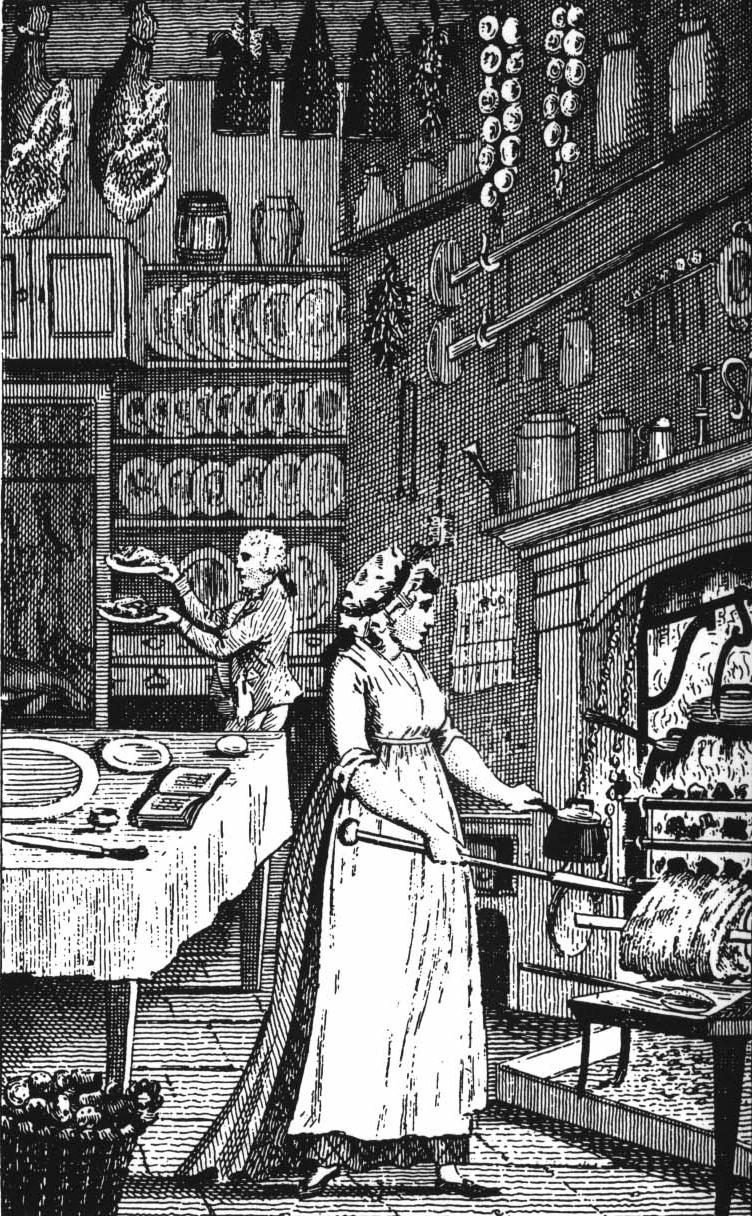
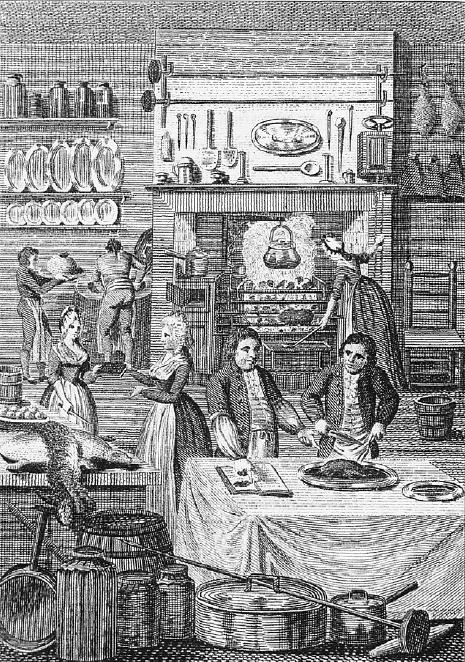
18th century kitchen servants prepare a meal. Image @Jane Austen Cookbook

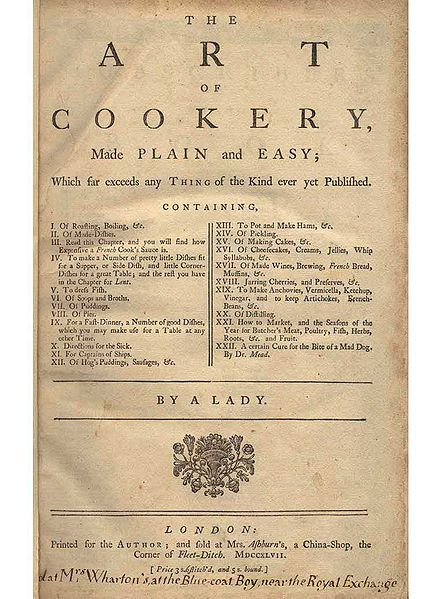
In 1747, Mrs.Hannah Glasse wrote her historic The Art of Cookery Made Plain and Easy, an easy-to-understand cookbook for the lower class chefs who cooked for the rich. Her recipes were simple and came with detailed instructions, a revolutionary thought at the time.

The Art of Cookery’s first distinction was simplicity – simple instructions, accessible ingredients, an accent on thrift, easy recipes and practical help with weights and timing. Out went the bewildering text of former cookery books (“pass it off brown” became “fry it brown in some good butter”; “draw him with parsley” became “throw some parsley over him”). Out went French nonsense: no complicated patisserie that an ordinary cook could not hope to cook successfully. Glasse took into account the limitations of the average middle-class kitchen: the small number of staff, the basic cooking equipment, limited funds. – Hannah Glasse, The Original Domestic Goddess forum

Hannah Glasse's The Art of Cookery Made Plain and Easy

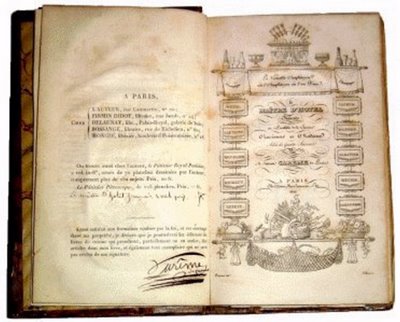
Until Mrs. Glasse wrote her popular cookery book (17 editions appeared in the 18th century), these instructional books had been largely written by male chefs who offered complicated French recipes without detailed or practical directions. (To see what I mean, check Antonin Careme’s recipe for Les Petits Vol-Au-Vents a la Nesle at this link.) Like Jane Austen, Hannah signed her books “By a Lady”.

Antonin Careme's cookbook

Mrs. Glasse had always intended to sell her cookery book to mistresses of gentry families or the rising middle class, who would then instruct their cooks to prepare foods from her simplified recipes, which she collected. “My Intention is to instruct the lower Sort [so that] every servant who can read will be capable of making a tolerable good Cook,” she wrote in her preface.

Frontispiece from William Augustus Henderson, The Housekeeper’s Instructor, 6th edition, c.1800. This same picture appeared in the very first edition of c.1791and it shows the mistress presenting the cookery book to her servant, while a young man is instructed in the art of carving with the aid of another book.*

Hanna’s revolutionary approach, which included the first known printed recipe for curry and instructions for making a hamburger, made sense. In the morning, it was the custom of the mistress of the household to speak to the cook or housekeeper about the day’s meals and give directions for the day. The servants in turn would interpret her instructions. (Often their mistress had to read the recipes to them, for many lower class people still could not read.)

In theory, the recipes from Hannah’s cookbook would help the lady of the house stay out of the kitchen and enjoy a few moments of free time. But the servant turnover rate was high and often the mistress had to roll up her sleeves and actively participate in the kitchen. Many households with just two or three servants could not afford a mistress of leisure, and they, like Mrs. Austen in the kitchens of Steventon Rectory and Chawton Cottage, would toil alongside their cook staff.

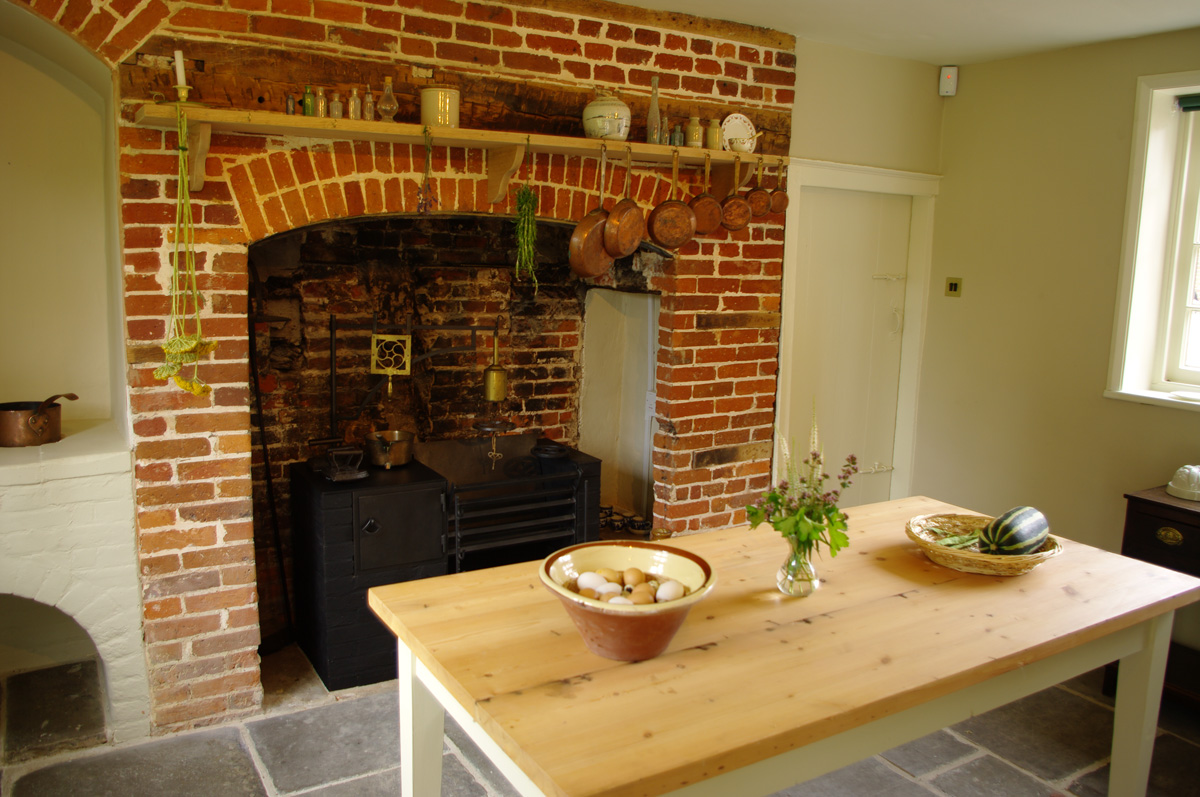
The simple kitchen at Chawton cottage. Image @Tony Grant

At the start of the 18th century the French courtly way of cooking still prevailed in genteel households. As the century progressed, more and more women like Hannah Glasse began to write cookery books that offered not only simpler versions of French recipes, but instructions for making traditional English pies, tarts, and cakes as well. Compared to the expensive cookbooks written by male chefs, cookery books written by women were quite affordable, for they were priced between 2 s. and 6 d.

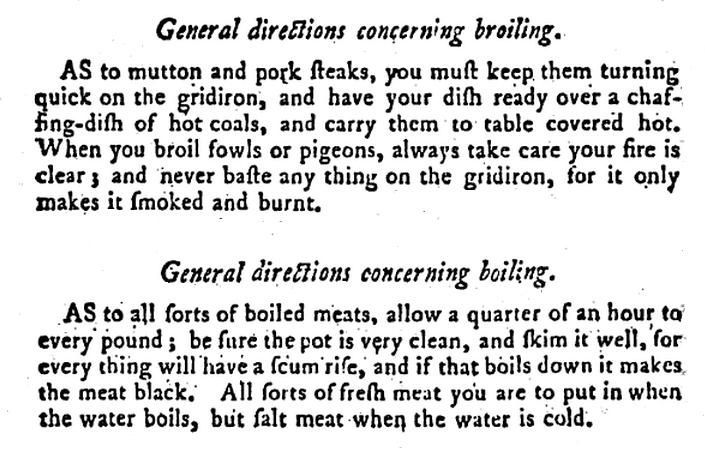
Hannah Glasse's practical directions for boiling and broiling

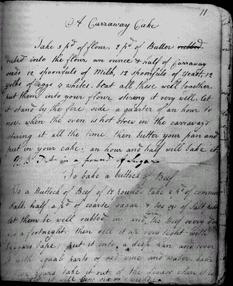
Publishers took advantage of the brisk trade, for with the changes in agricultural practices,  food was becoming more abundant for the rising middle classes. Large editions of cheap English cookery books by a variety of female cooks were distributed to a wide new audience of less wealthy and largely female readers who had money to spend on food. Before Hannah Glasse and her cohort, cooks and housewives  had been accustomed to sharing recipes in private journals (such as Marthat Lloyd’s) or handing them down by word-of-mouth.

Martha Lloyd's recipe for caraway cake written in her journal.

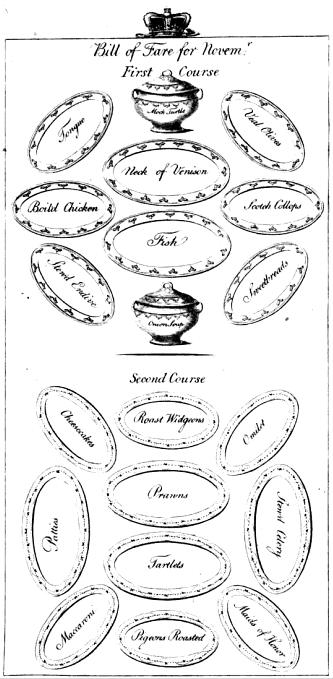
Female authors tended to share their native English recipes in their cookery books. As the century progressed, the content of these cookery books began to change. Aside from printing recipes, these books began to include medical instructions for poultices and the like; bills of fare for certain seasons or special gatherings; household and marketing tips; etc.

Bill of fare for November, The Universal Cook, 1792

By the end of the 18th century, cookery books also included heavy doses of servant etiquette and moral advice. At this time plain English fare had replaced French cuisine, although wealthy households continued to employ French chefs as expensive status symbols.  In the mid-19th century cookery books that targeted the working classes, such as Mrs. Beeton’s famous book on Household Management, began to be serialized in magazines, as well as published in book form.

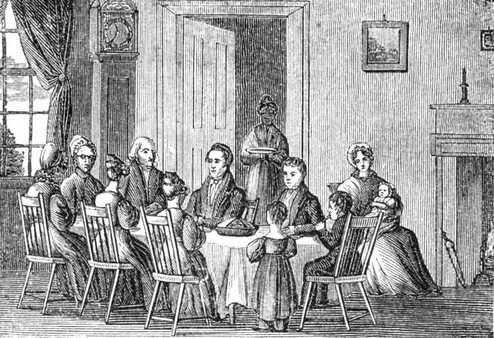
Family at meal time

Before ending this post, I would like to refer you back to James Edward Austen-Leigh’s quote at top. In contrast to what he wrote (for he did not know his aunts or grandmother well), Jane Austen scholar Maggie Lane reminds us that housewives who consulted with their cook and housekeeper  about the day’s meals still felt comfortable working in the kitchen. She writes in Jane Austen and Food:

“though they may not have stirred the pot or the pan themselves, Mrs. Austen and her daughters perfectly understood what was going on within them…The fact that their friend and one-time house-mate Martha Lloyd made a collection of recipes to which Mrs. Austen contributed is proof that the processes of cookery were understood by women of their class.”

More on the topic:

Read Full Post »

Older Posts »