Feeds:
Posts
Comments

Archive for the ‘Edwardian Life’ Category

Inquiring reader: Sit back, relax, and grab a cup of coffee or a glass of wine! This is a long post about foxhunting. (Note: because of the helpful suggestions from equestrian readers, crucial edits have been made.)
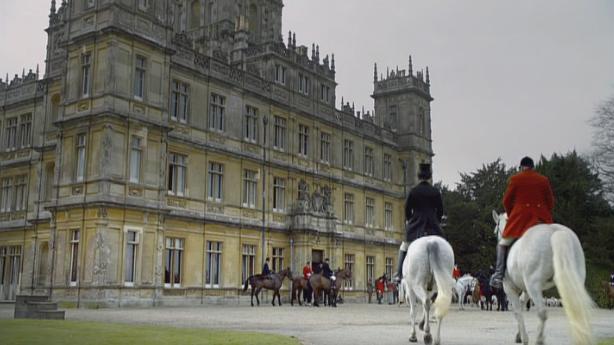
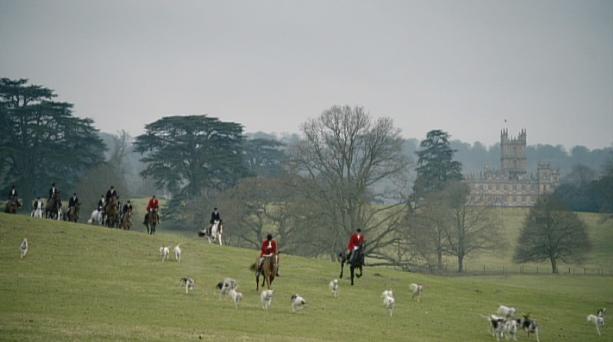
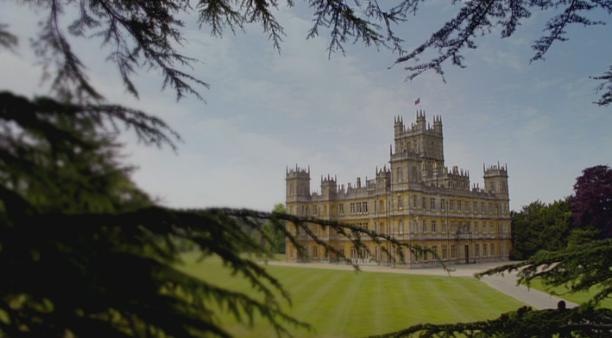
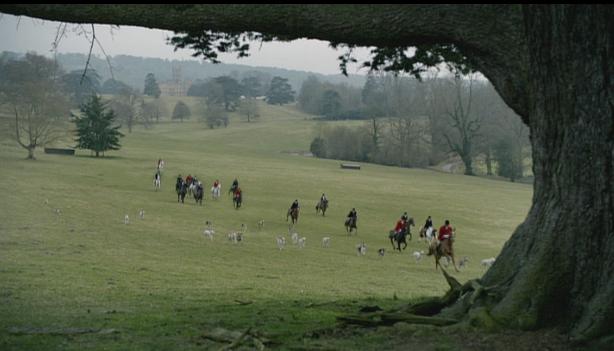
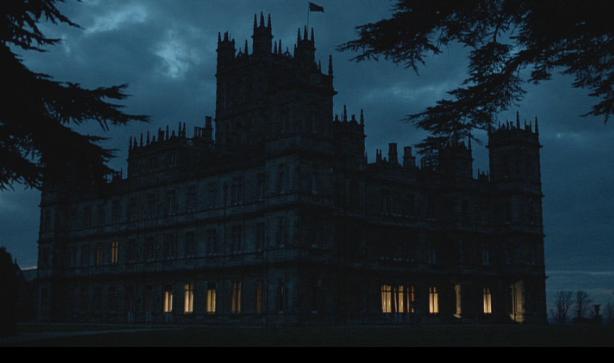
Downton Abbey (Highclere Castle) and the start of the hunt

The fox hunting scenes in PBS Masterpiece Classic’s Downton Abbey fascinated me and prompted me to ask: How accurate was the depiction of this sport? Aside from the fashions, how different was fox hunting in the Edwardian era from the Regency era? And what happened to that wily fox, whose odds of escaping a score of determined hunters and a pack of excited hounds must have been close to zero? Or were they? My research uncovered a few interesting bits of information:
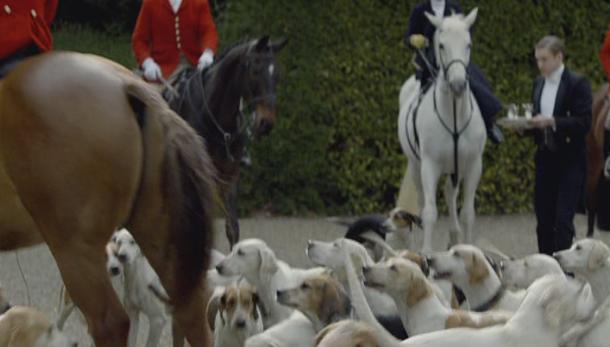
Hounds milling before the hunt. Notice William with refreshments. Downton Abbey

Description of the Hunt:

In 1910, 350 hunts existed in Britain, almost twice as many as today. Foxhunting was one of the few country sports in which women played an active role. It had become so popular that foxes were even imported from Europe to meet demand. The anti-hunt movement was a fledgling organisation concerned largely with horse beating and vivisection. For the vast majority, fox-hunting was seen as a harmless and ancient tradition. – Manor House
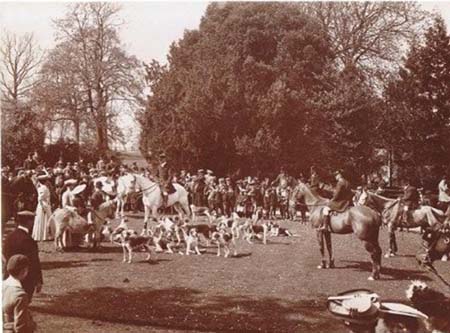
Before the start of an Edwardian hunt. Image @The Antique Horse

The Master will sound his horn and he and the hounds will take off on the hunt. Everyone else follows. The hounds are cast or let into coverts, which are rough brush areas of undergrowth where foxes often lay in hiding during the day. Sometimes the huntsmen must move from covert to covert, recasting the hounds until a scent is discovered. Once the hounds pick up the scent of a fox, they give tongue. The hounds will trail and track for as long as possible. Either the fox will go to ground or find an underground den for safety and protection or the hounds will wear him out and overtake him in a kill. Temperature and humidity are huge factors in how well hounds keep the scent of a fox. Often the chase involves extreme speed through brush and growth. A rider will need to be skilled in racing, jumping brooks, logs, brush, and the horses must be in excellent condition as well.”  – The history of fox hunting
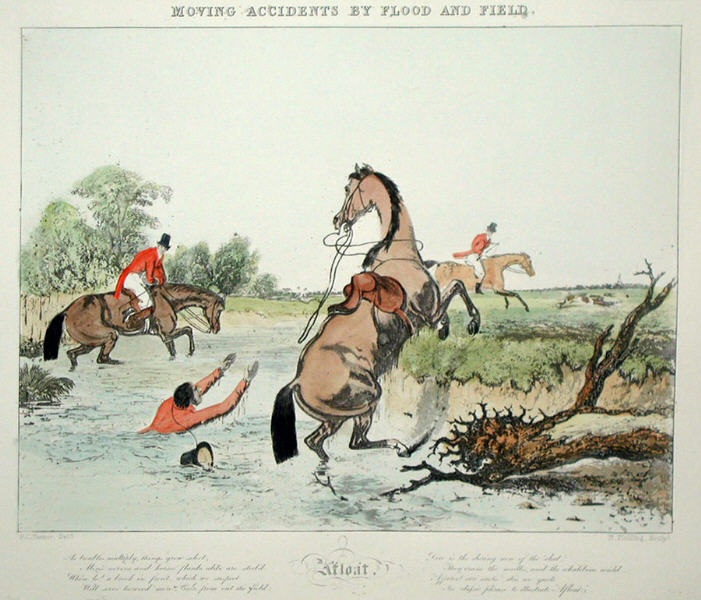
Moving accident by flood and field

Moving accident by flood and field

Filming the Fox Hunt for Downton Abbey:

While the crew were at the castle they filmed various scenes, inside and out. Lady Carnarvon explained that on one particular day they filmed a hunt. “It was wonderful. It was a beautiful day on the day they were doing it too. The funny thing is the one thing I asked them not to do was go across the lawns because there was to be a wedding. They started very early and they were all hanging around. They were going up and down for hours on end, and then suddenly just out of the laurel bushes went a fox – a real fox. The fox took off towards the secret gardens and the hounds turned in full pursuit. The fox wasn’t caught. It just ran off. The hounds were eventually brought back having gone through a couple of cold frames in the garden. I could see the location manager thinking that is the one thing I asked them not to do,” she laughed. – Highclere Castle is the star of the screen

Dirt dog work, circa 1560

History of the Fox Hunt:

Talk of horses, and hounds, and of system of kennel!

Give me Leicestershire nags, and the hounds of old Meynell!

While Hugo Meynell is widely considered to be the father of modern foxhunting as we know it today (his Quorn Hunt between 1753 and 1800 was quite fashionable), hunting foxes with hounds was not new. Evidence exists that fox hunting has been practiced since the 14th century. In 1534 a Norfolk farmer used his dogs to catch a fox, which consisted of hunting on foot and trailing the animal back to its den. Foxes were thought to be “vermin” and left to commoners to hunt. In those early times, royalty and the aristocracy hunted stags, or deer, which required great swathes of open land and an investment in horses, hounds, and stables. Considering the chasing and killing of vermin to be beneath their status, the aristocracy continued to chase stags until these animals became scarce.

Hunting with hounds on foot

Hugo Meynell began breeding hounds that could keep up with the foxes at the same time that an increased number of 18th century men could devote their time to leisurely pursuits. Consequently, the sport of fox hunting began to take off. (See Rowlandson, The Humours of Fox Hunting: The Dinner, 1799 for a depiction of a group of men enjoying the after effects of a hunt.)

There were no formal hunt clubs during this period. Rather, large landowners kept hounds that accompanied them on private hunts. The hunts were not very effective in controlling the number of foxes in any given area, but the sport was safer than the practice of using spring traps, which could snare a human as well as a fox. (Animal traps from the 16th century. )
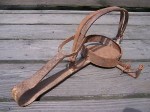
 

18th century spring trap

By the early 19th century, a more formal style of foxhunting began to be organized. Roads and railways had cut the land into smaller portions, and it became more convenient for rich landowners and their guests to hunt foxes. Railways also gave a larger number of people in towns and cities easy access to the countryside and an opportunity to join in the sport.

The rising middle clases, eager to improve their social standing, joined the clubs, and by the late 19th century the sport had reached the height of its popularity. In fact, the demand for foxes was so great that some hunts were called off if the probability was high that the fox would get killed. Foxes were so scarce that a large numbers of the animals were imported from Europe to be sold in England.

The Bilsdale Hunt. Image @MSNBC.com

The oldest continuous fox hunt in England is the Bilsdale Hunt in Yorkshire, established by George Villiers, the Duke of Buckingham in 1668. Since 2005, foxhunting with hounds has been illegal in Britain, but there are groups that are still unhappy with this turn of events, for foxes are still allowed to be hunted and shot in England. Supporters of the foxhunt state that organized foxhunts never caught enough foxes to affect the total population and that the kills were clean. In addition, foxhunting supports a minor economy of farriers, grooms, horse stables, dog kennels, trainers, veterinarians, shops, inns, taverns, and the like. Since it became organized, the hunt also provided a spectator sport to local villages and market-towns and inspired railroads to expand their services so that participants could join the hunts and travel up and back within a day. The landscape also benefited from the hunt in that landowners planted low bushy coverts for the foxes and maintained their hedges to facilitate jumps. – Encyclopedia of Traditional British Rural Sports: History of Fox Hunting


Foxhunting Schedule:

Fox hunting began on the first Monday of November; traditionally a hunt was held on Boxing Day (Dec 26).

In the early morning workers stopped up the holes of the dens where the foxes rested, forcing these nocturnal animals to find shelter above ground during the day.

Around 11 a.m. the riders (field) would assemble, with around 40-50 hounds.

The Master of the Hounds was in charge of the hunt and supervised the field, hounds, and staff. The huntsman, who had bred the hounds and worked with them, would be in charge of the pack during the hunt.

Chasing the fox. Downton Abbey

Once the group was assembled, the hunstman would lead the pack of hounds and field to where a fox might be hiding. When the fox was flushed out into the open, the group would pursue the fox, with the huntsman leading the group. The field would follow at a gallop and watch the hounds chase down the fox.

When the fox was cornered, the hounds took over.

Hunt festivities included lawn meets, where food and drink were served to the people who gathered together, and hunt balls.The cost of horses, outfits, and operating expenses made the activity prohibitive for those with limited means, and only those with a great deal of money could afford to participate. – What Jane Austen Ate and Charles Dickens Knew, Daniel Pool – p171-173
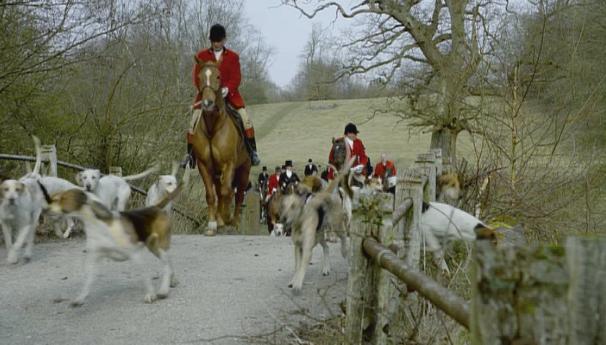
Women and Foxhunting:

Waiting for the hunt to begin, Downton Abbey

Few women rode in a fox hunt during the Regency period. It took great skill and courage for a woman to join the hunt, for in those days the side-saddle lacked the leaping horn, which offered a more secure seat and made taking fences safer.
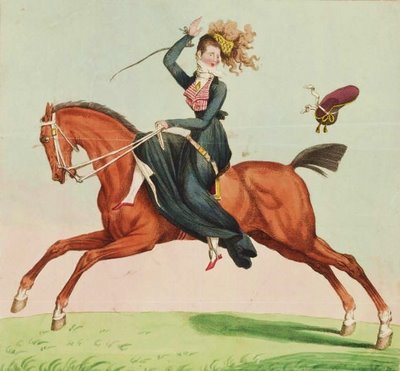
The Inconvenience of wigs, Carle Vernet. Image @Yale University Library

By the mid-19th century, women began to join in the sport in greater numbers. An article written by Catriona Parratt discusses women’s involvement:

“Preeminent among these activities was foxhunting, one of the few sports for which there seems to have been no rigidly prescriptive code limiting women’s participation. In fact, some women embraced the sport with a zest which was evidently not considered inappropriate. This may be explained in part by the extreme social exclusivity which attended to the leaders of the foxhunting set. Members of the aristocracy and the upper middle classes were probably sufficiently secure in their status to ignore, to some extent, more bourgeoise notions of respectability… According to one enthusiast, 200 riders was considered a poor turn out, while few meets attracted less than 100 men and women. A figure of thirty women is given in an account of the Tipperary Hunt in the 1902 season, but the overall evidence is very impressionistic…

There are also several accounts of women achieving the honour of being the first to ride in at the death of the fox, something which seems not to have offended their supposedly more delicate sensibilities. In a 1900 meeting of the Dartmoor Pack, the brush [tail] was awarded to a Miss Gladys Bulteel, of whom it was noted that her pony “was piloted with exceptional skill,” while in a previous month’s run of the same pack, a Miss Dorothy Bainbridge claimed the coveted trophy. None of this is to suggest that women participated in equal numbers or on equal terms with men… Rather, it is clear that some women were active, enthusiastic, and skillful participants who were drawn to the sport by “the enjoyment, the wholesomeness, even the nerve-bracing dash of danger.” – Athletic “Womanhood”: Exploring Sources for Female Sport in Victorian and Edwardian England Cartriona M. Parratt*, Lecturer, Dept. of Physical Educ
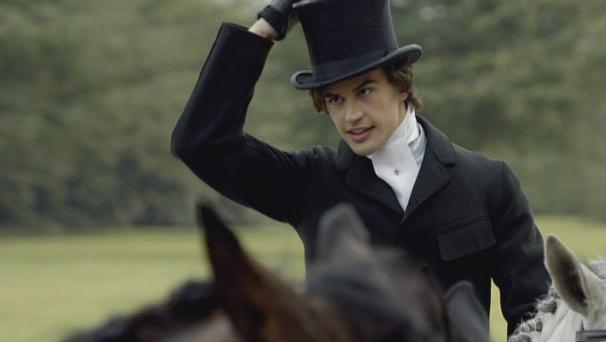
Kemal Pamuk (Theo James) meets Lady Mary

Comments about the Fox Hunt in Downton Abbey from the Horse and Hounds forum:

As I researched foxhunting, curiosity led me to a discussion forum at the Horse and Hounds website. I wanted to know what the experts thought of the foxhunting scenes in Downton Abbey. Here they are in a nutshell, with the names of the individuals taken off:

Master of the Hunt sounds the call

They should have told that daft lady [Mary] side saddle person to put a bloody thong and lash on her hunting whip and hold it the right way too..thong end up please. Suppose we should be grateful it was’nt filmed in high summer! And WHY film the field and hounds all mingled but apparently in full cry..UUURRRGGGHH it drives me nuts.”

“Not unless they have a leather loop on one end for the thong and lash? Do sidesaddle whips have bone “gate hooks” on the top end?? In one shot the lady did have a thong attached ..but still holding it the wrong way anyway, shortly before, no lash!! Pathetic.”

“My thoughts that the horses were not typical or hunters of that era, also would there have been a coloured, I thought that the craze for colours was a recent thing and they were frowned on in ‘those days’. “
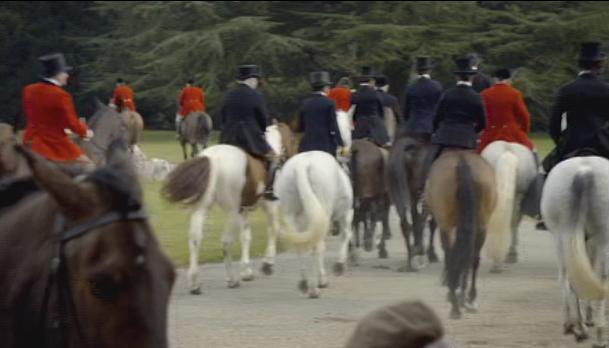
The field follows the Master and pack

I am amazed that finally a TV programme has made the effort to show not only a hunting scene but a lady hunting on PRIMETIME TV and people are moaning about minor details! I hunt side saddle, I do it because I love it, so I was over the moon to finally see something relevant to it on t.v. Would you have preferred they didn’t show it at all and cut the hunting scenes entirely??

Lets not forget these programmes are filmed for public entertainment, they are not historical documentarys. Please could we all be a little more supportive of equines on TV regardless of the reasons, then maybe we would see more.”

“Well if you want to moan about the most minute details of the scenes (and don’t forget, what you see on screen in a STORY not a documentary !!!) why not start with the fact that the forward seat was unknown in Edwardian times?”
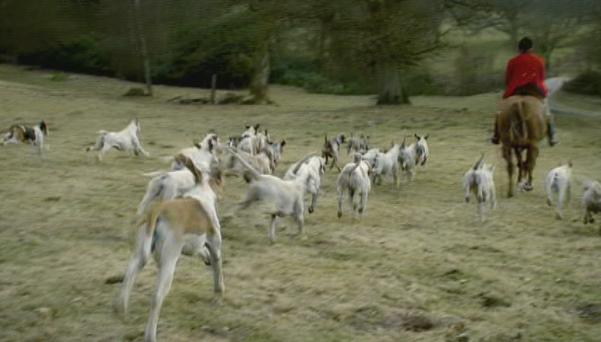
Master of the Hunt and pack set off ahead of the field

We noticed the coloured horse too and said no way would they have had one of them!! They only pulled carts in those days. Still – we all got excited when the hunting scene started!!”
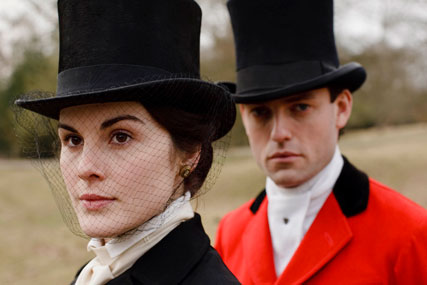
Lady Mary and Evelyn Napier, Downton Abbey

Lady Mary and Evelyn Napier

Did anyone spot which hunt’s tail coat was being worn by Mr Evelyn Napier?”

“It was the vine and craven hunt huntsman David Trotman scarlet coat with gold vine leafs on black collar. The Vine & Craven [were] filming at Highclere Castle…”Horse and Hounds forum

Riding hell bent for leather through the fields. Downton Abbey

Master of the Hunt and other staff:

The Master of the Fox Hounds (MFH) or Joint Master of the Fox Hounds operates the sporting activities of the hunt, maintains the kennels, works with, and sometimes is, the Huntsman. The word of the Master is the final word in the field and in the kennels.  The Huntsman is responsible for directing the hounds in the course of the hunt.

The Huntsman usually carries a horn to communicate to the hounds, followers, and whippers-in.  Whippers-in are the assistants to the Huntsman. Their main job is to keep the pack all together.”  – Human roles in fox hunting
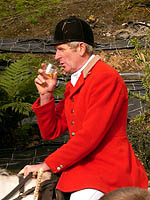
The huntsman drinking a pre-hunt drink. Image @Icons A Portrait of England

From Baily’s magazine of sports and pastimes, Volume 2, 1861, p. 182: “As well might you assert that because a nobleman throws open his house and grounds to the public one or two days in the week from free goodwill that he has not the right to exclude any persons he may object to. A Master of fox hounds hunts his country upon the same conditions. Any landowner can prevent him riding over his fields or drawing his coverts. By the landowners he stands or falls. He recognizes no other power to interfere with his conduct in the field.”

Edgar Lubbock, Master of the Blankney Hunt

Description of the above image: Edgar Lubbock LLB was the Master of the Blankney Hunt at the turn of the 20th century. He was born on 22 February 1847 in St James, London the eighth son of Sir John William and Harriett Lubbock. Educated at Eton and the University of London he studied Law and became an accomplished lawyer. Through his career he held varying positions, including Lieutenant of the City of London, Director of Whitbread Brewery, Director of the Bank of England and in 1907 Lord Lieutenant of Lincolnshire. He died in London on 9 September 1907 aged 60 whilst Master of the Blankney Hunt. – Metheringham Area Mews

The Dogs:

The true point of riding to hounds was (and is) to watch the hounds work. Those who galloped wildly or jumped unnecessarily were termed “larkers” – an insult – and disdained by the serious hunters. – Word wenches, fox hunt

The hounds are the most vocal component of the hunt and the means by which the fox is flushed out and then chased until it was too exhausted to go farther. In England, there were two breeds of dogs that were necessary to the hunt: Harriers, which are slightly smaller than foxhounds, and who chased the fox over hill and dale; and terriers, who followed the fox into the den and dug it out.

Harriers (Hare Hounds or Heirer)
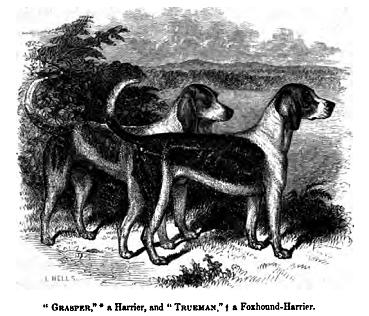

The Harrier, also known as the Hare Hound or the Heirer, is a hardy hound, with a strong nose, that was developed in England to hunt hare.  Hare hunting has always been popular in England, sometimes being even more popular than fox hunting because hunters could trail their hare hounds on foot, without the need for the many horses required to follow fox hounds on the hunt. Moreover, hare hunting was never reserved to royalty; it was always accessible to commoners, who could add their few Harriers to a “scratch pack” made up of hounds owned by different people and still participate in the sport. Reportedly, in 1825, the slow-moving Harrier – in size between the larger English Foxhound and the smaller Beagle – was crossed with Foxhounds to improve its speed and enable it to better hunt fox in addition to hare. – Harrier overview

Terriers

Fox Terrier. Image @Chest of Books

With the growth of popularity of fox-hunting in Britain in the 18th and 19th centuries, terriers were extensively bred to follow the red fox, and also the Eurasian badger, into its underground burrow, referred to as “terrier work” and “going to ground”.[1] The purpose of the terrier is that it locate the quarry, and either bark and bolt it free or to a net, or trap or hold it so that it can be dug down to and killed or captured.[2] Working terriers can be no wider than the animal they hunt (chest circumference or “span” less than 35 cm/14in), in order to fit into the burrows and still have room to maneuver.[3] As a result, the terriers often weigh considerably less than the fox (10 kg/22 lbs)[4] and badger (12 kg/26 lbs),[5] making these animals formidable quarry for the smaller dog. – Wikipedia
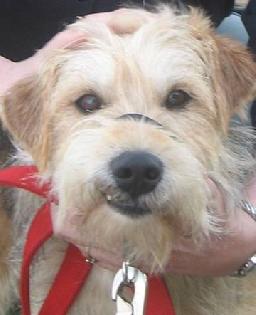
My terrier no longer has the slender girth to chase a fox into its den, for he eats too many doggie biscuits.

Read more about terriers:

The Kill:

Foxes were killed in one of two ways:

1) Hounds chased the foxes until they were caught and then dispatched it. There seems to be a widespread disagreement about the kill, some saying it was quick, and that the fox died from a nip to the back of the neck, and others saying that the fox was repeatedly bitten or torn apart, and sometimes died slowly from its injuries.

2) The fox went to ground (inside a hole or den), and then was dug out with terriers.

Animal rights experts also found the chase itself, with the fox hunted to the point of exhaustion, cruel.

A lurcher adopts a fox cub, the opposite of a kill. Jack and Copper are famous in the U.K. Image @Animal Tourism.com

I could not show an image of a kill, so I’ve presented you with the opposite image: This young lurcher has adopted a fox cub. Jack, the hound, and Copper, the cub, are famous in the U.K. for their playful wrestling matches. Image @Animal Tourism.com

Final Words about Foxhunting in America:

Since Cora (the Countess of Grantham) in Downton Abbey was an American heiress, the information below regarding the American fox hunt is appropriate to this post:

Description of a Fox Hunt by a New England minister
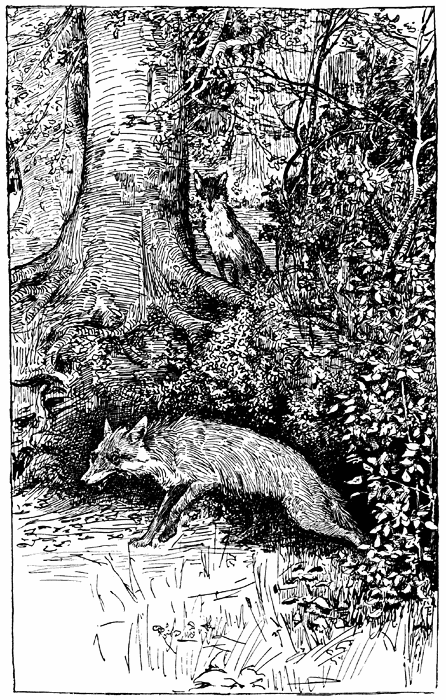
Fox hiding in the covert.

Foxhunts were imported into America in the 17th century. In 1799, a wry New England minister gave a glimpse of the sport in the New World: “From about the first of Octor. this amusement begins, and continues till March or April. A party of 10, and to 20, or 30, with double the number of hounds, begins early in the morning, they are all well mounted. They pass thro’ groves, Leap fences, cross fields, and steadily pursue, in full chase wherever the hounds lead. At length the fox either buroughs out of their way, or they take him. If they happen to be near, when the hounds seize him, they take him alive, and put him into a bag and keep him for a chase the next day. They then retire in triumph, having obtained a conquest to a place where an Elegant supper is prepared. After feasting themselves, and feeding their prisoner, they retire to their own houses. The next morning they all meet at a place appointed, to give their prisoner another chance for his life. They confine their hounds, and let him out of the bag—away goes Reynard at liberty—after he has escaped half a mile—hounds and all are again in full pursuit, nor will they slack their course thro’ the day, unless he is taken. This exercise they pursue day after day, for months together. This diversion is attended by old men, as well as young—but chiefly by married people. I have seen old men, whose heads were white with age, as eager in the chase as a boy of 16. It is perfectly bewitching. The hounds indeed make delightful musick—when they happen to pass near fields, where horses are in pasture, upon hearing the hounds, they immediately begin to caper, Leap the fence and pursue the Chase—frequent instances have occurred, where in leaping the fence, or passing over gullies, or in the woods, the rider has been thrown from his horse, and his brains dashed out, or otherwise killed suddenly. This however never stops the chase—one or two are left to take care of the dead body, and the others pursue.” – Colonial Williamsburg, Personable Pooches
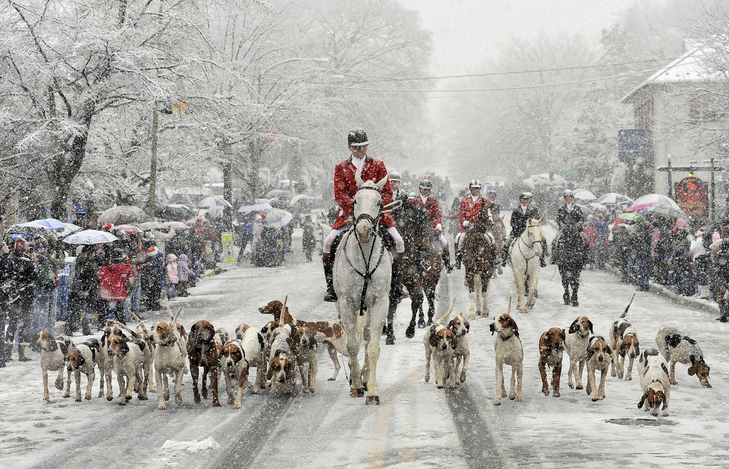
Middleburg Christmas parade. Image @Washington Post

Comment made on a Word Wenches post by a reader who lives in Virginia’s hunt cup country: I live in Virginia hunt country, in fact in the Old Dominion hunt area.  My property deed has one covenant on it. We must allow the huntmaster through. We can deny the rest of the hunt if we want. The covenant was signed by King Charles (I am not sure which one). Fauquier County has 3 hunts and the U.S. largest Steeplechase race, the Gold Cup. .. Many of the more recent mansions (post US Civil War through the 1920s) in Fauquier and neighboring Loudoun were built as hunt houses. – Word Wenches, Fox Hunting
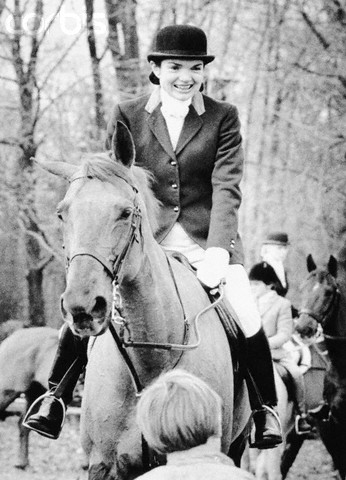
Jacqueline Kennedy. Equestrian outfit in the 1970s.

Etiquette and Dress Code of a Fox Hunt:

The etiquette of the hunt field was (and is) as intricate and strict as that of the ballroom. I imagine (and please correct me if I am wrong), that each club has its own variation of rules. Loudoun County is west of Washington D.C. and sits near the middle of the hunt country of Northern Virginia, where Jacqueline Kennedy frequently hunted when she lived in Georgetown. Click here to read the extensive rules of etiquette of the Loudoun Hunt: Etiquette and the rules of Attire.
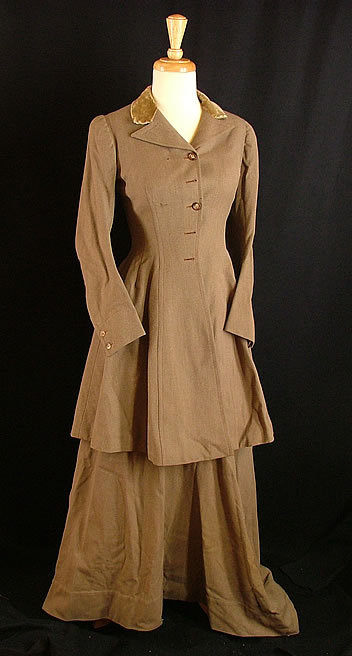
Edwardian riding habit. Image @side saddle girl

More on the foxhunt:

Addendum to original post:

This post began innocently enough, for I had no idea about the emotions surrounding the fox ban. Various views are presented in the comment section. Tony Grant, who writes for this blog and who lives in London, said in an email:
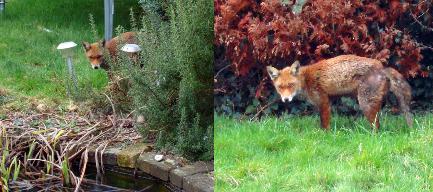
A fox creeps in Tony's yard towards the dustbins

Because foxes are no longer hunted their population has expanded unbelievably. They no longer keep to the countryside but live in the towns and cities as scavengers. They live in dens created in parks and the bottom of peoples gardens. They scavenge dustbins. We have an epidemic where I live in South London. They walk down my road and enter my garden on a regular basis. They are not afraid of humans.

Here are some pictures taken in my back garden. This fox wanted to raid our dustbins.

Read Full Post »

Inquiring readers: Raquel Sallaberry from Jane Austen em Portugues sent the link to this post on Promantica about the entail in Downton Abbey entitled “Downton Abbey Fans – Welcome to the MOST Boring Law School Class.” The title is not exactly descriptive, for this wonderful post explains in great detail why the entail cannot be superceded, why Cora’s money is tied up and Lady Mary cannot inherit, and why Matthew Crawley cannot relinquish the title.

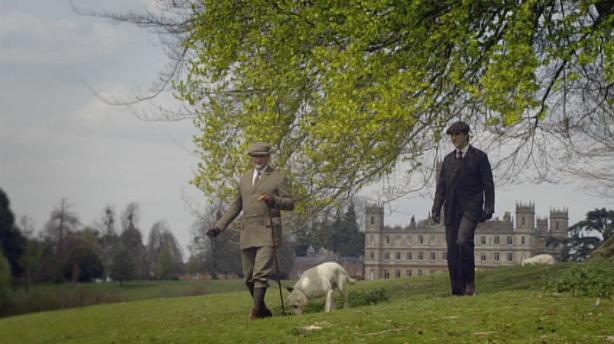
The Earl of Grantham and Matthew Crawley walk around the grounds of Downton Abbey

Magdalen, one of the blog contributors, introduces the expert:

By special request, I have asked my ex-husband to help us understand the law of the entail, critical to the plot of Downton Abbey.  Henry is a) British, b) an attorney, c) smart, and d) the son and grandson of QCs, i.e., barristers (British attorneys who appear in court) selected to be “Queen’s Counsel.”  (Although, to be fair, I think Henry’s grandfather took silk — Britspeak for becoming a QC — long enough ago that he was actually King’s Counsel!)
The blog goes on to describe the difference between real property, personal property, and intellectual property. Magdalen then dives into her questions:

First off, what’s an entail?
It is a limitation on the current tenant’s (in our case, the 6th Earl of Grantham) ownership interest in the estate. If he owned Downton Abbey outright, he would have a fee simple. Instead, he has a fee tail, which gives him a life interest so he can’t be evicted in his lifetime, but not the right to say who gets Downton Abbey after he dies.

The Earl of Grantham summarizes the situation best: "I'm a custodian, not an owner."

Okay, so how would an entail work?
The normal entail would be to “the 6th earl and heirs of his body” (meaning his legitimate biological children) or “and heirs male of his body” or “and heirs male of his body to be begotten on Cora.” When the 6th earl had no sons, the second and third of those would terminate, allowing the 6th earl to dispose of the money by will. The first would allow a daughter to inherit, but I’m not sure if it would pass to Mary or to the three daughters jointly or in shares…

To read the rest of this fascinating post, please click on this link to Promantica.

Thank you, Raquel (and Magdalen and Henry). This article is fascinating, fun to read, and very, very informative.

Read this blog’s other posts about Downton Abbey:


Read Full Post »

Downton Abbey, presented on PBS Masterpiece classic this month, is one of the most expensively produced mini-series for television next to Brideshead Revisited. The sets and costumes are lavish, and the viewer can readily see that everything possible has been done to recreate the Edwardian world.

But even huge budgets have their limits, for creating new costumes for every character in the production would have been prohibitive. The website, Recycled Movie Costumes, and an article in the Daily Mail point to a few outfits that were worn in other productions.  This custom is common, and has been pointed out on this blog before in Recycled Fashions in Emma 2009.  Around 2/3 of the costumes used in Downton Abbey were used before, but only a few have been expressly identified so far.
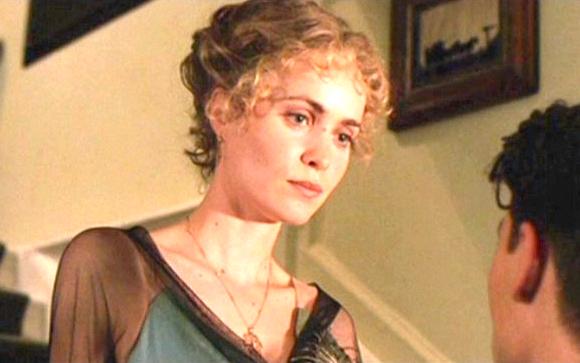
The dress worn by Laura Michael (Lady Edith) was also used in A Room With a View, 2007. At left is Elizabeth McGovern as the Countess

Elaine Cassidy in A Room With a View, 2007

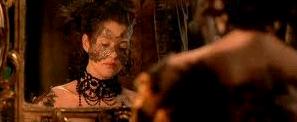
Compare the necklace worn by Michelle Dockery as Lady Mary to ...

...Monica Belluci's in Brotherhood of Wolves


Lady Mary (Michelle Dockerey, between Maggie Smith and Laura Michaels) wears the same dress as ...

... Radha Mitchell in Finding Neverland

You can look for Regency costumes that have been recycled in this link. The Daily Mail mentioned that one certain brown dress has been used in seven productions in the past 15 years, including Pride and Prejudice and Little Dorrit. I wonder which one it is?

As you watch Downton Abbey tonight, perhaps you can spot a few recycled outfits on your own and inform Recycled Films of your find. Learn more about the series on PBS Masterpiece Classic.

More posts about Downton Abbey on this site:

Read Full Post »

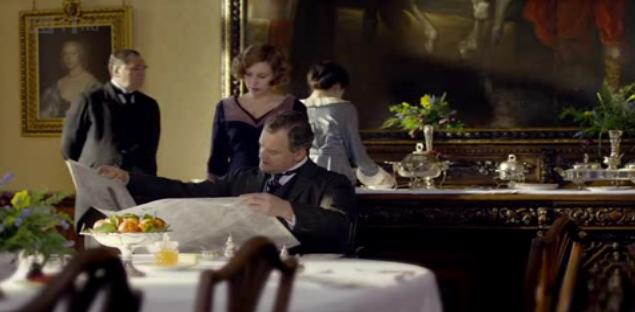
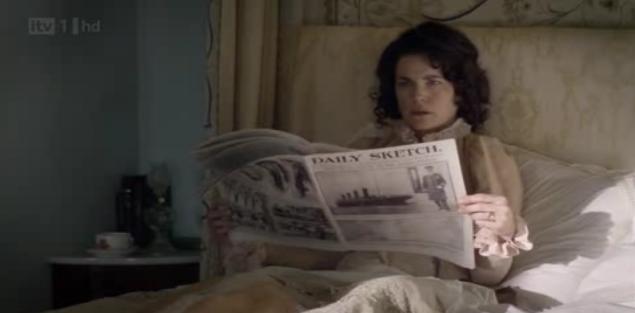
At the start of Downton Abbey, the Earl of Grantham sadly learns of the death of his cousin and cousin’s son on the Titanic. This event places the Earl and Countess of Grantham in a tragic and unexpected situation, for both men – the heir and the spare – were in line to inherit Downton Abbey.

The earl (Hugh Bonneville) reads about the Titanic

The earl had never anticipated such a tragic turn of events. He had married Cora, an American heiress, in a marriage of convenience in order to maintain his landed estate in the manner in which it had been run for centuries. During the marriage negotiations, the old Earl of Grantham struck a hard bargain and Cora’s fortune became completely tied up in the entail. This  was no great matter to the young couple, who were certain they would produce an heir. While the earl eventually fell in love with his beautiful bride, they were unable to produce a son, their union resulting in three daughters.
The countess (Elizabeth McGovern) learns of the tragedy.

And so the plot of Downton Abbey thickens, for lovely Lady Mary, the earl’s eldest daughter, was engaged to the younger heir, Patrick. But Patrick died and now Matthew Crawley, the earl’s third cousin once removed, stands next in line to inherit. Unlike the previous heirs, who were accustomed to the ways of the upper classes, the very reluctant Matthew must learn how to run a great estate from the ground up … and Lady Mary, by dint of being a woman and as the result of an unbreakable entail, is left out in the cold.

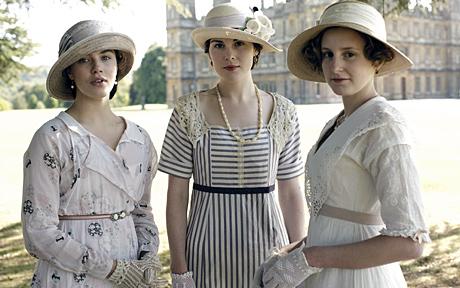
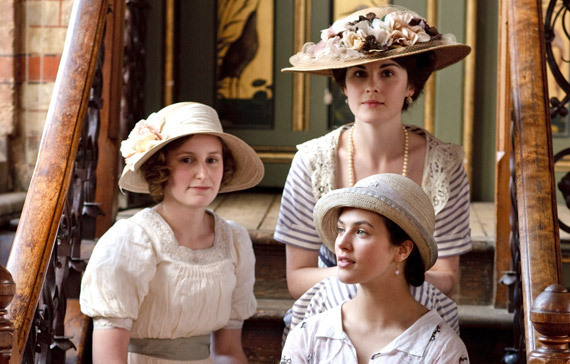
Lady Sybil, Lady Mary, and Lady Edith

The plot line of Downton Abbey weaves the stories of the privileged who live upstairs with the lives of those who serve them, and involves the intricacies of the entail and running the estate. Of the three sisters, only Lady Mary plays a major role. But the other two, Lady Edith and Lady Sybil, faced challenges that were typical of upper class women of the era. As Jane Austen astutely observed, “ There are not so many men of fortune in the world as there are pretty girls who deserve them,” a fact that the middle sister, Lady Edith, comes to know too well, and one that Lady Sybil ignores, for she has modern notions of a woman’s place in Society.

Downton Abbey. Jane Austen's World

Upon learning of the death of her fiance, Patrick, Lady Mary is not as sad as she should be.

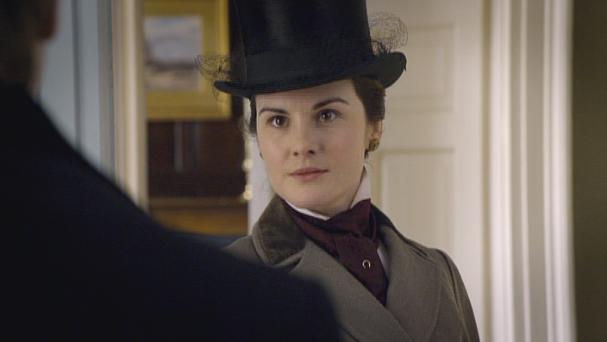
Lady Mary Crawley (Michelle Dockerey)

The eldest of the three girls, and the most beautiful and self-assured, is Lady Mary Crawley who knows her worth. Upset that the entail cannot be undone, she realizes that her only way to marry “up” or to financial security is to find a wealthy man with (preferably) a title. The new heir, Matthew Crawley, in no way interests her. From the moment they meet, snobby Lady Mary looks down her patrician nose at the upstart heir, who, she doubts, even knows how to hunt. (Lady Mary might have no use for Matthew, but he has more than a passing interest in her.)

Lady Mary meets Matthew and ... is not impressed

Ever the opportunist when it comes to snaring a suitable mate, Lady Mary sets her sights on a duke, as well as Evelyn Napier, a gentleman who is besotted with her.  But then a handsome and exotic visitor catches her eye and makes her heart flutter uncharacteristically,  and Lady Mary’s safe and secure world will never be the same again.

Downton Abbey. Jane Austen's World

Lady Edith reads Lady Mary's private letter

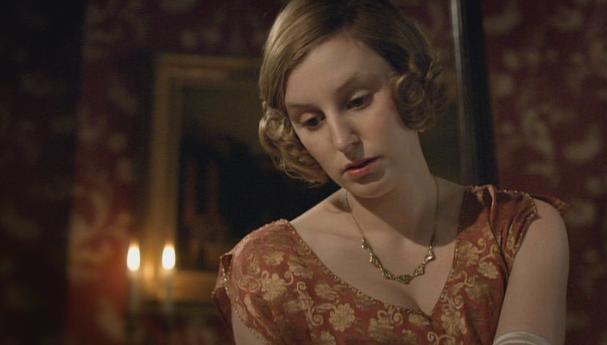
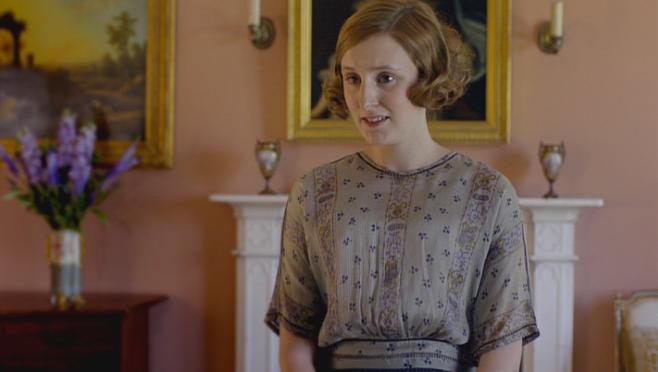
Lady Edith Crawley (Laura Carmichael)

Lady Edith can hardly contain her jealousy of Lady Mary’s beauty, her easy popularity with men, and her status as elder daughter. As the second daughter, she feels invisible. Lady Mary barely mourns her fiance, which triggers Lady Edith’s resentment of her older sister and her cool reaction to his death. Not that she is entirely to be pitied, for her jealousy drives her to snoop on her sister, and tattle tales that should never be shared.

Lady Edith looks hopeful as she is courted unexpectedly

The complex, nasty relationship between the two sisters is a result of the keen pressure that women still felt to marry up and well in the Edwardian era. Upper class women, as Amanda Vickery pointed out in her excellent series, At Home With the Georgians, were raised to live passive lives and accept the fact that they were second-class citizens. While Lady Edith plots and schemes to find a husband (if even from her older sister’s romantic leavings), Lady Sybil, the younger sister, is forging a role for herself.

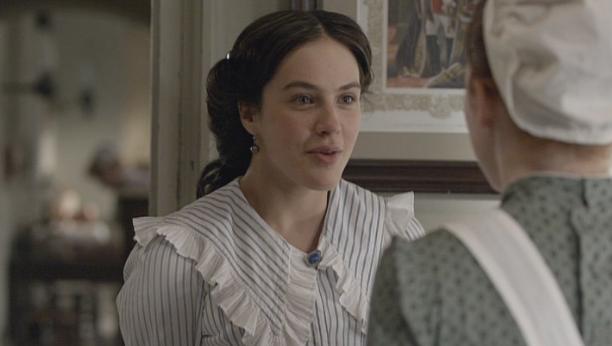
Lady Sybil helping Gwen, the housemaid

Lady Sybil Crawley (Jessica Brown-Findlay)

Lively, upbeat, and compassionate, Lady Sybil plays no role in the spiteful drama of her two older sisters. She is too busy admiring suffragettes, supporting Gwen, the housemaid, in her ambition to become a secretary, reading political tracts and attending forbidden rallies. Even her taste in clothes is flamboyant, and one suspects that as Lady Sybil matures she will become a character with a capital “C”.

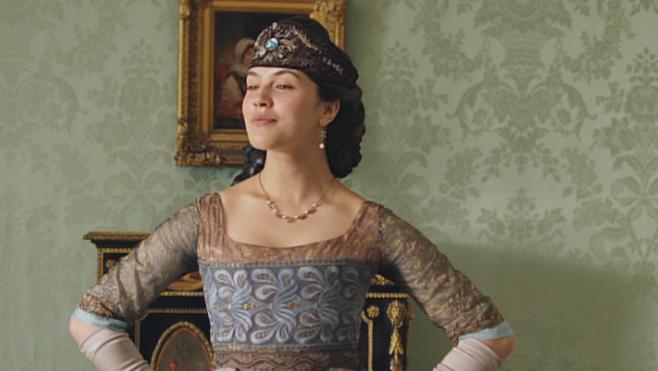
Lady Sybil shows off her new frock

In Downton Abbey, Lady Edith and Lady Mary demonstrate the dependent role that women still played in the early 20th century. But Lady Sybil was another creature altogether.  After the end of World War I,  she would no doubt be dancing the Charleston in flapper clothes, and after turning thirty, exercising her right to vote and earn her own living.


Edith, Mary, and Sybil

More about Downton Abbey, to air on Masterpiece Classic, Sunday, January 9th at your local PBS station:

Read Full Post »

Downton Abbey, a PBS Masterpiece Classic mini-series, is as much a tale about the servants below stairs as about the noble Earl of Grantham and his family who employed them. With the recent airing of the updated version of Upstairs Downstairs in Great Britain, I am sure a debate will long rage about which series portrayed their eras and class differences better. In both cases, the viewer is the winner.

Downton Abbey. Credit: Courtesy of © Carnival Film & Television Limited for MASTERPIECE

Downton Abbey (Highclere Castle, an “Elizabethan Pile”) Credit: Courtesy of © Carnival Film & Television Limited for MASTERPIECE

Images Credit: Courtesy of © Carnival Film & Television Limited for MASTERPIECE

No matter how expertly this mini-series of Downton Abbey tries to portray this bygone era, it is nearly impossible to capure life in an Edwardian country house exactly as it once was. The viewer should be aware that we can glimpse only a faint, musty, museum shadow of the complex and thriving community that a great English estate once supported.

Downton Abbey. Jane Austen's World. Credit: Courtesy of © Carnival Film & Television Limited for MASTERPIECE

The Crawleys and the servants of Downton Abbey. Credit: Courtesy of © Carnival Film & Television Limited for MASTERPIECE

Images Credit: Courtesy of © Carnival Film & Television Limited for MASTERPIECE

It is a well-known fact that grand country houses could only be run with a great deal of help. As early as the 18th century, Patrick Colquhoun estimated that there were around 910,000 domestic servants (in a population of 9 million). By 1911, the number of domestic servants had risen to 1.3 million. Eighty percent of the land during the Edwardian era was owned by only 3% of the population, yet these vast estates were considered major employers.

Downton Abbey. Credit: Courtesy of © Carnival Film & Television Limited for MASTERPIECE

The earl (Hugh Bonneville) and his heir, Matthew Crawley (Dan Stevens), survey his vast estate. Credit: Courtesy of © Carnival Film & Television Limited for MASTERPIECE

In the grander and larger houses, the ratio of servants (both indoor and outdoor) to the family could approach 1:7 or 1:10, but as the industrial revolution introduced improvements in laundering, lawn maintenance, and cooking, the number of servants required to run a great estate was greatly reduced.

Credit: Courtesy of © Carnival Film & Television Limited for MASTERPIECE

The earl and his heir, Matthew Crawley, survey the cottages and outer buildings on his estate. Credit: Courtesy of © Carnival Film & Television Limited for MASTERPIECE

After World War One and the rise in taxes for each servant employed, many great families no longer kept two sets of house staff. They began to bring servants from their country house to their house in Town, leaving only a skeleton crew behind to maintain the family seat in their absence.

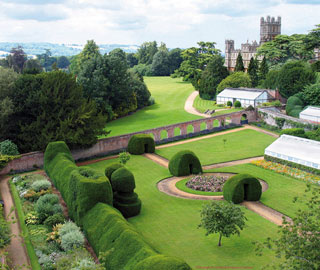
Grounds of Downton Abbey (Highclere Castle)

Country estates were designed to showcase the owner’s wealth via collections of art, furniture and other luxurious possessions, such as carriages, lawn tennis courts, and the like. The main house sat at the end of a long and winding drive through acres of beautifully landscaped park lands.

Downton Abbey.

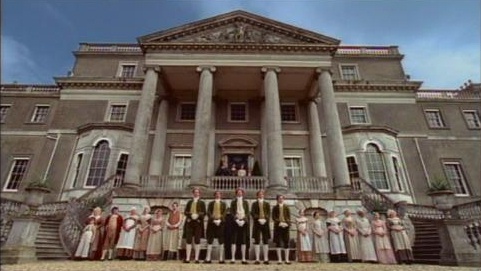
The Duke is greeted by both the family and the servants. Credit: Courtesy of © Carnival Film & Television Limited for MASTERPIECE

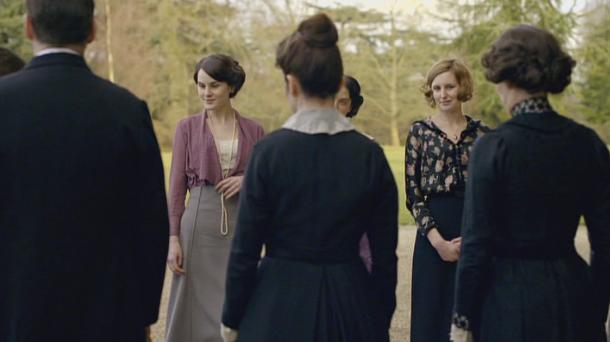
The spectacle did not end there, for approaching the house, guests would see a grand facade or an equally imposing flight of stairs that led to the first floor (or both). In Downtown Abbey, the family awaited the arrival of the Duke of Crowborough (Charlie Cox) along with their servants, who were arrayed in line according to their station.

Downton Abbey. Jane Austen's World

The servants await their new masters at Norland. Sense and Sensibility, 2008.

Such a display of staff was also evident in the 2008 adaptation of Sense and Sensibility, when Fanny and Robert Dashwood arrived to claim Norland Park.

Downton Abbey. Credit: Courtesy of © Carnival Film & Television Limited for MASTERPIECE

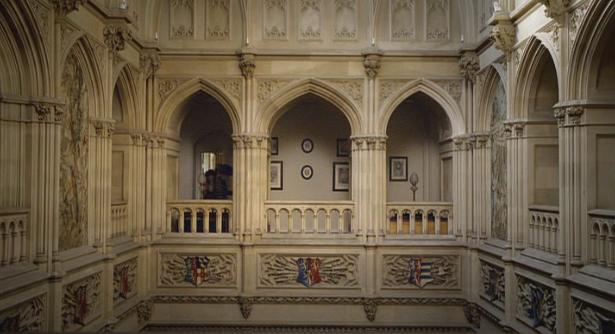
Grand interior hall of Downton Abbey, floor leading to the private rooms. Credit: Courtesy of © Carnival Film & Television Limited for MASTERPIECE

Once introductions had been made, the guests would ascend the imposing stairway and enter an equally impressive high-ceilinged hall that contained yet another grand staircase, which led to the private rooms upstairs. The ladies customarily brought their own maids, who would also require lodging. (In Gosford Park, a poor female relation had to make do with one of the hostesses’ house maids to help her with her dress and hair.)

Downton Abbey. Credit: Courtesy of © Carnival Film & Television Limited for MASTERPIECE

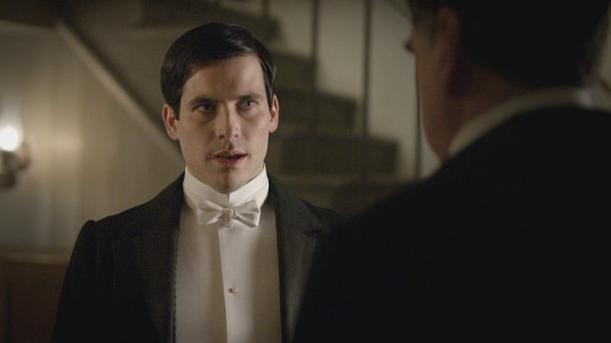
Thomas (Rob James-Collier), the first footman, is chosen to act as valet to the duke. Credit: Courtesy of © Carnival Film & Television Limited for MASTERPIECE

The guests’ servants were expected to enter the house through a separate, back servant’s entrance, and shared quarters with the regular staff. The host supplied his own butler or footmen to help serve as valet to his male guests.

Downton Abbey. Credit: Courtesy of © Carnival Film & Television Limited for MASTERPIECE

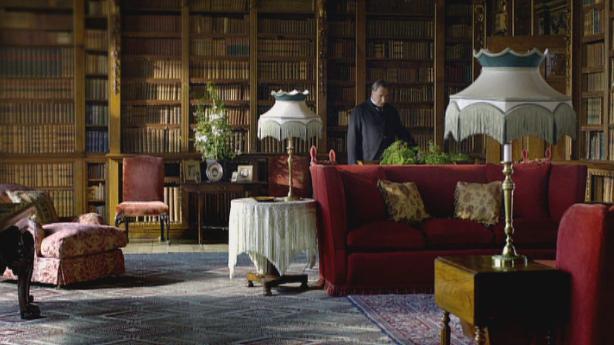
The Earl of Grantham’s impressive library/study. Credit: Courtesy of © Carnival Film & Television Limited for MASTERPIECE

A host’s willingness to lavishly entertain his guests did not necessarily reflect the family’s daily schedule:

In 1826 a German visitor to England remarked that: it requires a considerable fortune here to keep up a country house; for custom demands… a handsomely fitted-up house with elegant furniture, plate, servants in new and handsome liveries, a profusion of dishes and foreign wines, rare and expensive desserts… As long as there are visitors in the house, this way of life goes on; but many a family atones for it by meagre fare when alone; for which reasons, nobody here ventures to pay a visit in the country without being invited, and these invitations usually fix the day and hour… True hospitality this can hardly be called; it is rather the display of one’s own possessions, for the purpose of dazzling as many as possible.(3)” – The Country House: JASA

Downton Abbey. Jane Austen's World

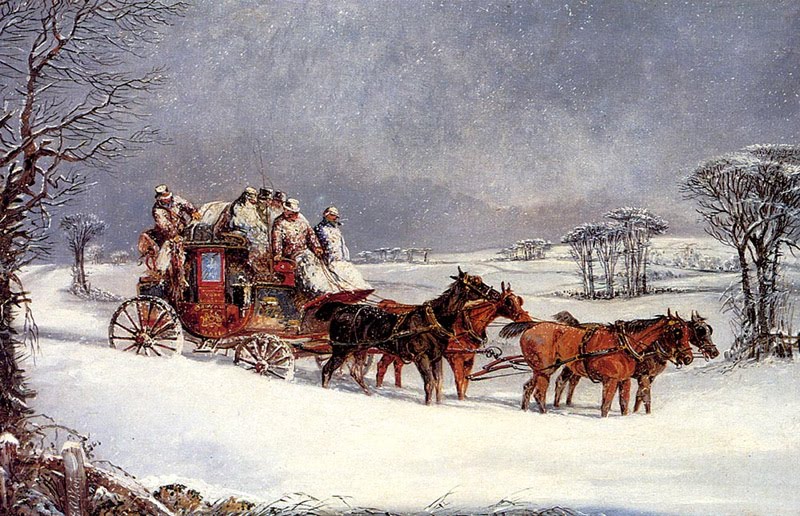
Travel in winter, Henry Alken, 1785

Guests stayed for a long time for a variety of reasons. In the 17th and 18th centuries, travel over a long distance was laboriously slow and difficult, for roads were notoriously poor and dangerous. Long visits, such as Cassandra Austen’s visits to her brother Edward in Godmersham Park, became a custom. Even during the Edwardian age, when travel was much improved, guests tended to stay for the weekend (Saturday through Monday). In Downton Abbey, the Duke of Crowborough arrived amidst much hope and anticipation, until he discovered that the estate had been entailed to a third cousin not the earl’s daughter, whom he had come to woo, and he cut his visit to one short day and evening, making an excuse that did not hold water.

Downton Abbey. Jane Austen's World

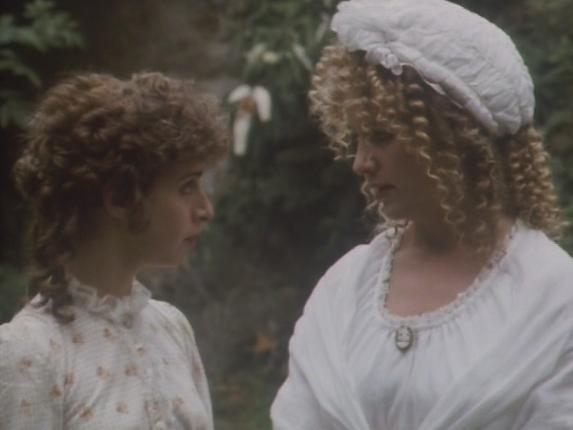
Catherine Morland (Katherine Schlessinger) and Eleanor Tilney (Ingrid Lacey), Northanger Abbey 1986

Even during the 18th century, when long-term guests were expected, some overstayed their welcome, like Jane Austen’s anti-heroine, Lady Susan Vernon, whose hostess (sister-in-law) despised her but was forced to tolerate her because she was ‘family.’ Desirable guests, like Catherine Morland of Northanger Abbey, were invited to extend their visit. In Catherine’s instance, Eleanor Tilney, a motherless young lady who lived without a female companion, found the young girl’s company delightful. By the time General Tilney discovered that Catherine was no heiress, she had been with the Allens in Bath and the Tilneys in Northanger Abbey for a total of 11 weeks. As previously noted, Edwardian hosts, while generous, expected house guest to stay for only three days. During this time every luxury was lavished upon them, but it was considered bad form if they stayed longer than arranged or without invitation.

Downton Abbey. Credit: Courtesy of © Carnival Film & Television Limited for MASTERPIECE

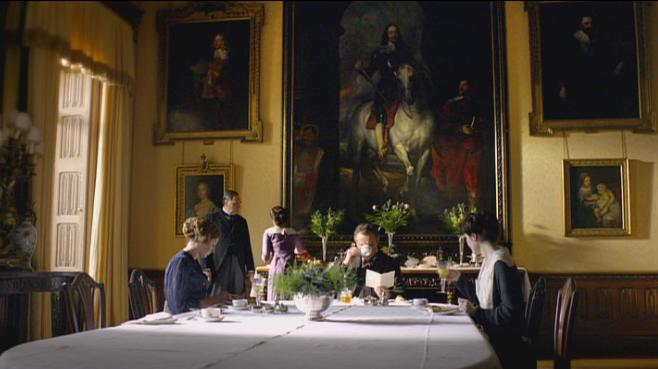
Breakfast was a substantial meal served at 9:30 a.m. Credit: Courtesy of © Carnival Film & Television Limited for MASTERPIECE

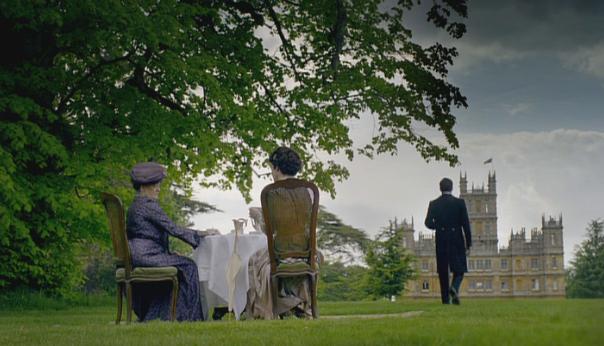
At set times, Edwardian guests would congregate in the common rooms, which included the drawing room, music room, dining room and breakfast room, the library or study, the gallery (where ancient family portraits were hung), the billiard room, and the conservatory. Vast lawns and gardens were laid out for promenading; guests could ride or walk through the parklands to view picturesque follys or dine alfresco (outdoors), take tea under an awning, or paint a vista or two.

Downton Abbey. Credit: Courtesy of © Carnival Film & Television Limited for MASTERPIECE

Taking tea alfresco. Credit: Courtesy of © Carnival Film & Television Limited for MASTERPIECE

The reputation of a host rested on the entertainments, which helped to pass the time – walking, riding, shooting (in winter), and hunting (in fall) for outdoor activities; and card parties, musicales, and dances for indoor festivities. A fox hunt, such as the one depicted in Downton Abbey, required riding skill and stamina, for the chase would take riders over hills and dales, and hedges, and over long distances for much of the day.

Downton Abbey. Credit: Courtesy of © Carnival Film & Television Limited for MASTERPIECE

The hunt required riding skills and stamina.Credit: Courtesy of © Carnival Film & Television Limited for MASTERPIECE

Billiards made an appearance during the 17th century, and by the 19th century billiard rooms had become a staple. Private libraries offered a variety of books and periodicals. In the summer, Edwardians enjoyed lawn tennis, croquet, cricket, and golf (by the men).

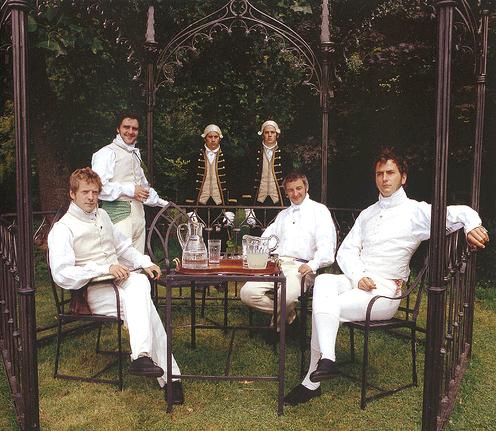
The male guests in Regency House Party (2004) could pretty well behave and move around as they pleased.

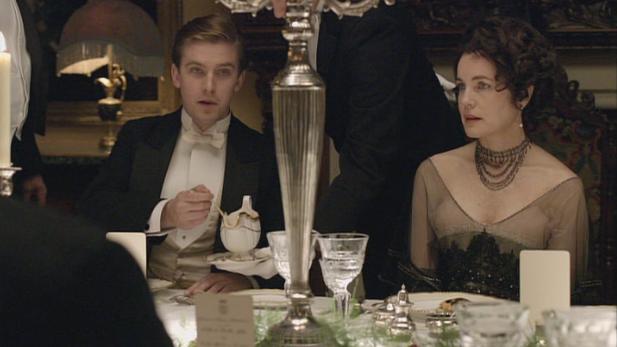
Ladies and gentlemen tended to spend the day apart. Male guests were more active and could engage in almost any activity during the day, except at the time reserved for dinner, when they were expected to show up. In an Edwardian house, men did not escort their female dining partners into the dining room. Rather, after the host served cocktails in the drawing room a half hour before the meal, the group moved to the dining room where they were seated according to a set pattern, with guests sitting between members of the family and their neighbors.

Downton Abbey. Credit: Courtesy of © Carnival Film & Television Limited for MASTERPIECE

The new heir of Downton Abbey (Dan Stevens) sits next to his hostess, the Countess of Grantham (Elizabeth McGovern). Credit: Courtesy of © Carnival Film & Television Limited for MASTERPIECE

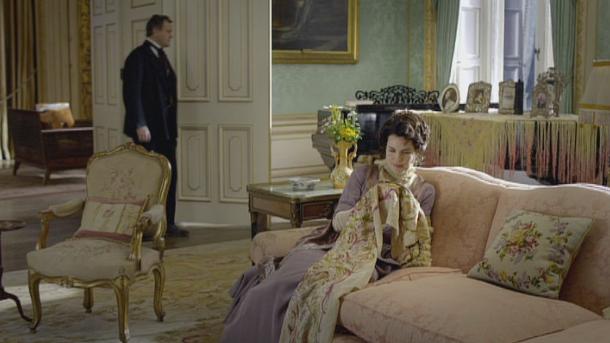
After dinner, the ladies would remove to the drawing room, which became increasingly larger and more feminine over time, while the gentleman relaxed at the dining room table, drinking port, smoking their cheroots, and discussing manly topics.

Downton Abbey. Credit: Courtesy of © Carnival Film & Television Limited for MASTERPIECE

The drawing room at Downton Abbey was large and feminine. Credit: Courtesy of © Carnival Film & Television Limited for MASTERPIECE

While an 18th century gentlemen would have talked about horse flesh and carriages, Edwardian guests would have included automobiles and their rapidly changing technology, road improvements, and the availability of petrol as well.

Downton Abbey. Credit: Courtesy of © Carnival Film & Television Limited for MASTERPIECE

Transportation was changing rapidly at the turn of the 20th century. Credit: Courtesy of © Carnival Film & Television Limited for MASTERPIECE

Unlike the gentlemen, a lady’s day was more restricted and confined. She spent her day following a set routine, starting with breakfast, and wearing appropriate outfits and getting into them and out of them. Mothers spent some time overseeing the nannies and the care of their children (if they were brought along). Ladies, married or not, would also receive visitors, sew, gossip, read, walk, participate in charity work, observe the men at sport (if invited) or take a ride in the carriage. They did join in on more active, outdoor games at set times during the appropriate season, such as cricket, croquet, lawn tennis, lawn bowling, and the like, but they would have been properly dressed for the occasion.

Downton Abbey. Credit: Courtesy of © Carnival Film & Television Limited for MASTERPIECE

The head maid (Joanne Froggatt) dresses Lady Mary’s (Michelle Dockery) hair for dinner. Credit: Courtesy of © Carnival Film & Television Limited for MASTERPIECE

Imagine poor Eleanor Tilney in the late 18th century, alone in a grand house without female companionship, having no-one to talk to and forced to live a constricted life. No amount of walking, charity work, practicing the piano, or overseeing the household would have made up for her boredom, and thus Catherine Morland’s companionship was so welcome.

Manor House (2002), dressing Lady Olliff-Cooper. Image @PBS

In Regency House Party (the 2004 mini-series), the modern women who portrayed Regency ladies chafed under the strict rules of protocol, forced chaperonage, and daily tedium. A lady’s routine did not much improve during the Edwardian era, although towards the end of this period changing one’s gown for afternoon tea became obsolete.

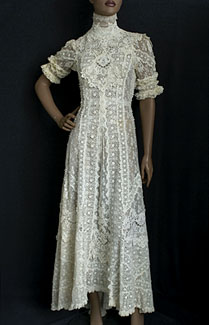
Tea gown, circa 1908. Image @Vintage Textiles

In Manor House, the 2002 mini-series set in the Edwardian era, Lady Olliff-Cooper’s spinster sister, the lowest-ranking member of the family, had so little to do and so little say in how she could spend her time, that Avril Anson (who in real life is a professor) left the series for a few episodes to maintain her sanity.

Downton Abbey. Credit: Courtesy of © Carnival Film & Television Limited for MASTERPIECE

Evelyn Napier (Brendan Patricks) and Matthew Crawley (Dan Stevens) eye their rival before dinner. Credit: Courtesy of © Carnival Film & Television Limited for MASTERPIECE

Lady Olliff-Cooper … [needed] to change her clothes five or six times a day. And very few of these dresses would be what today we’d call practical. Not only did each meal carry its own dress code, but if she needed to receive a visitor, pay a call or go riding, she’d have to change both her clothes and often her hairstyle as well.” Manor House, clothes

Anna Olliff-Cooper, who portrayed the lady of the house in Manor House, spent an enormous amount of her day changing into new gowns and having her hair dressed. She would stand passively as her maid did all the work. Anna noted how constricting the dresses were, and cried as she described how the tight sleeves of her gowns prevented her from raising her arms above her shoulders or from closely hugging her eleven-year old son. Even the fashions conspired to keep a women passive!

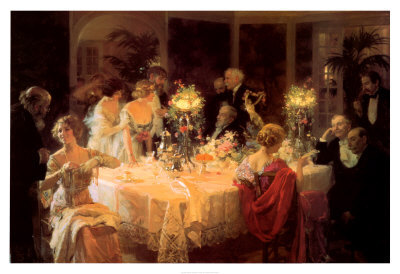
The Dinner Party, 1911, Jules Alexandre Grun

After they had finished their cigars and port, the gentlemen were obligated to rejoin the ladies for cards or music, or both, to while away the evening. The Duke’s behavior in Downton Abbey was egregious, for instead of joining the group for the rest of the evening, he went to bed early. The house party would stay up until 10:30 or so (unless a grand ball had been arranged, and then the guests would stay up until the wee hours of the morning).

Downton Abbey. Credit: Courtesy of © Carnival Film & Television Limited for MASTERPIECE

Male conversation after dinner over port and cigars. The duke and earl have a frank conversation. Credit: Courtesy of © Carnival Film & Television Limited for MASTERPIECE

In either case, the last people in the house to retire for the night would be the servants, but their lives and schedule will be described in another post.

Look for Downton Abbey, Part One to air on PBS Masterpiece Classic on Sunday, January 9th! Once again PBS will host a twitter party! Stay tuned for details.

Downton Abbey. Credit: Courtesy of © Carnival Film & Television Limited for MASTERPIECE

End of the day at Downton Abbey. Credit: Courtesy of © Carnival Film & Television Limited for MASTERPIECE

More on the topic:

Images of Downton Abbey Season 1: Credit Courtesy of © Carnival Film & Television Limited for MASTERPIECE

Read Full Post »

« Newer Posts - Older Posts »