Feeds:
Posts
Comments

Archive for the ‘Georgian Life’ Category

Image recently added to @Wikimedia Commons

Prostitutes were regarded with mixed feelings in the 18th century. An awareness of the vulnerability of women who had few economic options for making their way in the world owed much to the sentimental view taken of prostitutes. Ladies of pleasure were generally born into poverty and had little education or work skills. The sentimental prostitute narrative, which was common at the time, rarely condemned these women. These narratives, whether in print or on canvas, tell the story of a prostitute’s career and sexual fall, and generally end their tales in two ways: happily, through her marriage or finding acceptable employment, or tragically with her death.

The Progress of a Woman of Pleasure was drawn by Richard Newton, a young artist who died at 21 in 1798, two years after making this illustration. The “Progress” formula, which Newton used for a variety of prints, is a familiar one to those who have viewed William Hogarth’s The Rake’s Progress, Marriage a la Mode, Industry and Idleness and A Harlot’s Progress. Progress series demonstrate in a progression of satirical paintings and prints how lives were transformed by temptation, bad luck and poor choices.

A closer look at Progress of a Woman of Pleasure reveals Newton’s sentimental take of the prostitute theme, as well as details about the life of an 18th Century lady of  ill repute. For many 18th century prostitutes, their occupation was transitional, meant to economically tide them over a particularly bad hump in their lives. Many eventually married or found another occupation.

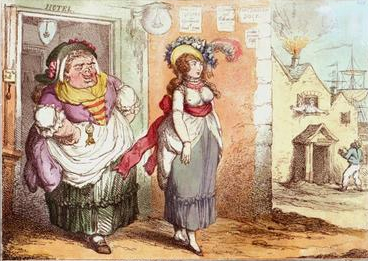
Your first step for preferment will be to a great lady in King's Place.

“A great lady in King’s Place” refers to Charlotte Hayes, who ran a high-class brothel in King’s-Place off Pall Mall. Gentlemen of the upper classes frequented this brothel located in london’s tony west end. With the use of the term ‘preferment’,  Newton makes it obvious that this woman has set her sights high. Her clothes are rather simple and plain as compared to the second scene below.
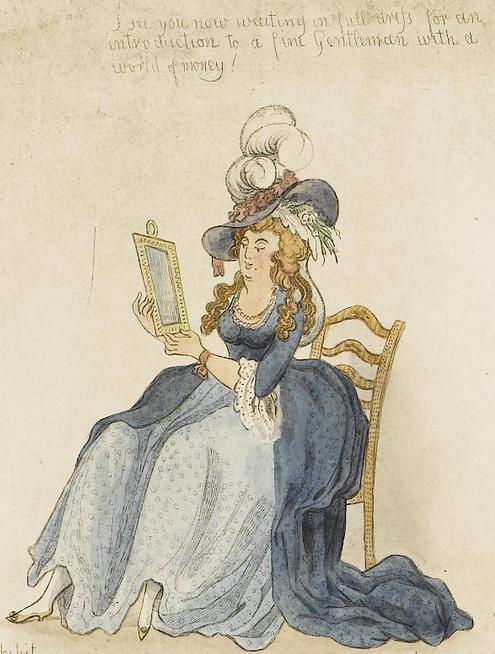
We see you now waiting in full dress for an introduction to a fine gentleman with a world of money!

London was a notorious hot bed for prostitutes. Fully one in five women in London (50,000) worked as ladies of the night. Many of them worked alone, plying their trade on the streets, in their own rooms, or in brothels. One foreign traveler was amazed at the variety of ways a man could have a woman:

…dressed, bound up, hitched up, tight-laced, loose, painted, done up or raw, scented, in silk or wool, with or without sugar. – Daily Life in 18th Century England, Kirsten Olsen, p. 49
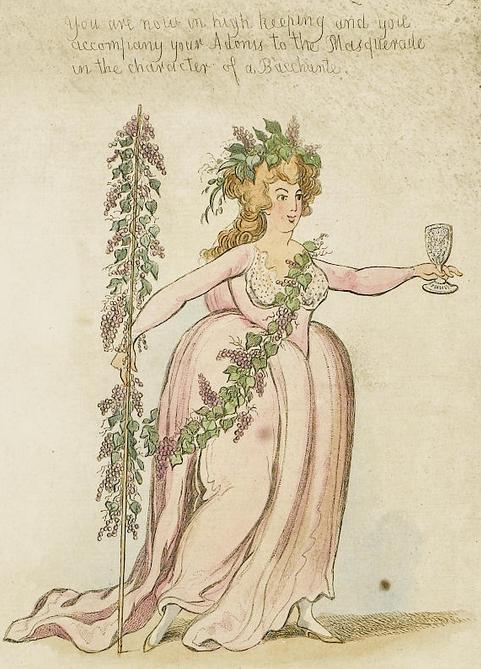
You are now in high keeping and you accompany your Adonis to the Masquerade in the character of a Bacchante.

Masquerades were wildly popular in 18th century London. Hidden behind masks and disguised in costumes, people from varying social classes freely intermingled at these events, where licentious behavior was common. Prostitutes attended these events in order to attract customers, or, as in this instance, were brought there by their benefactors.
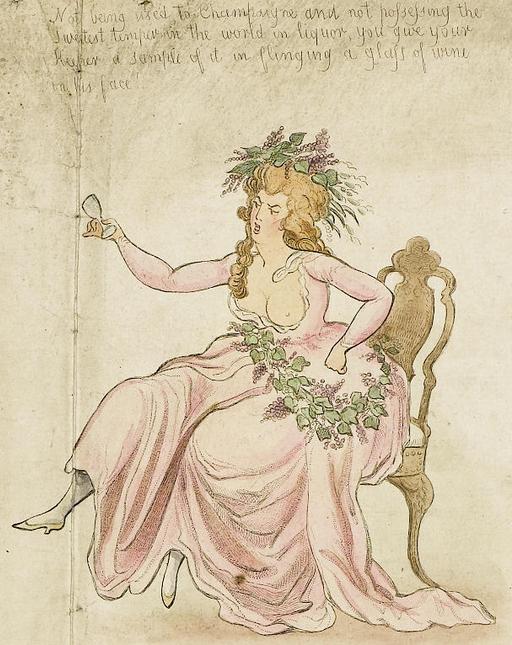
Not being used to champagne and not possessing the sweetest temper in the world in liquor, you give your keeper a sample of it by flinging a glass of wine to his face.

As this courtesan finds out the hard way, she is with her companion for only as long as she is useful to him. In this instance, her outrageous behavior causes him to cast her off.  The aim of the successful prostitute/mistress/courtesan was to find a benefactor from the highest echelons of society and to make a long-lasting arrangement that created a financially fruitful association for her. For the number of women who rose in the ranks of serving as mistress to important men, there was an equal number that had no place to go but down. The idea was to extend your association for as long as possible and retire in comfort.
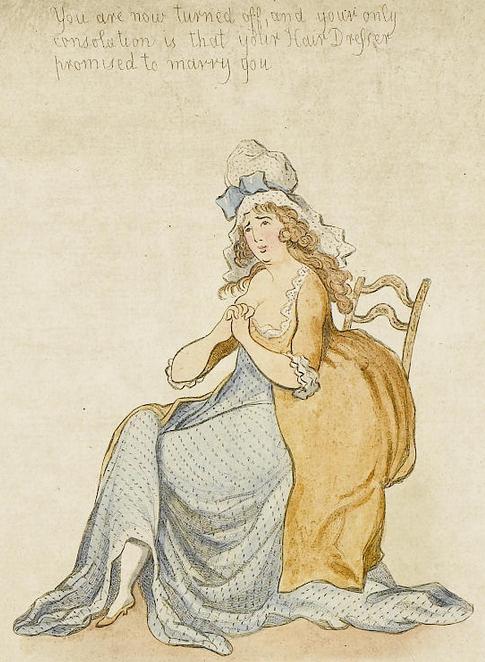
You are now turned off and your only consolation is that your hair dresser promised to marry you.

Newton’s prostitute must have been a pretty woman indeed if the hair dresser was willing to marry her. The attitude towards prostitutes in the 18th century was more forgiving that it would be in the 19th century, and a former courtesan could still attain a certain level of social acceptance. At this stage, Newton could have ended his sentimental “Progress” with a happy ending and shown our heroine as being reformed and leading a happy life. Note how simple and plain her dress is compared to the previous three drawings.
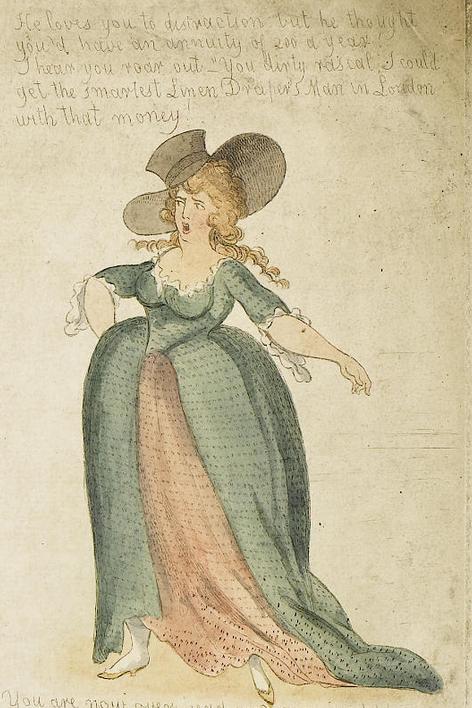
He loves you to distraction but he thought you'd have an annuity of 200 a year! I hear you roar out -- "You dirty rascal! I could get the smartest linen draper's man in London with that money."

Newton’s prostitute was not only a bit dim, but her huge ego stood in the way of her success. Two hundred a year was a huge sum of money for that day and age. A single gentleman in London could live very comfortably on that sum, although it would not allow him to keep a horse in Town. Nevertheless, such an amount would have been considered staggering for a prostitute and her working class husband. Newton’s contemporary audience would have understood this. Note how much more social caché a draper’s man had over a mere hair dresser! (Well, at least for a woman of her station. A lady wouldn’t have bothered to tell the difference, I’m sure.)

Our prostitute’s  pride ruins any chance of happiness she might have found as a respectable married woman. This up and down course of events is not unusual. Many prostitutes in their (generally) short careers went from rags to riches and back to rags and riches again. The cycle, in Newton’s instance, is ever downward.
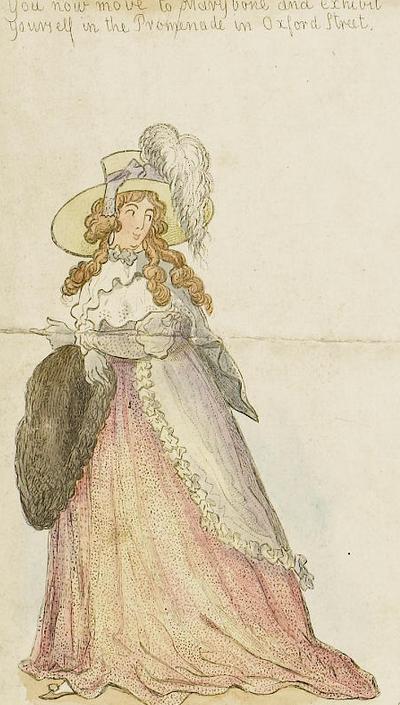
You move to Marybone and exhibit yourself in the Promenade in Oxford Street.

Marylebone was once a Georgian estate in London that was developed into housing tracts. By 1792-99, Richard Horwood’s map showed that the area from Oxford Street to the Marylebone Road was covered with houses. (The Heart of Marylebone.) Prostitutes were scattered throughout London, including the “Marybone” area (as many as 30,000 in Marylebone alone by one count):

They tended to gather in areas with looser police control; when the police became stricter in the City of London in the eighteenth century, the prostitutes gravitated toward the west and east ends of the city; when police control loosened in the early nineteenth century, they returned to the City. Prostitutes also tended to congregate in areas with cheap lodging houses and lots of men. St. Giles and St. James, home to many cheap boardinghouses, were popular with prostitutes in Westminster; the Docks, where many sailors disembarked, was popular on the east side of the city. – Prostitutes in 18th-Century London

It is interesting to note that William Holland, the artist’s publisher, had his shop on 50 Oxford Street.
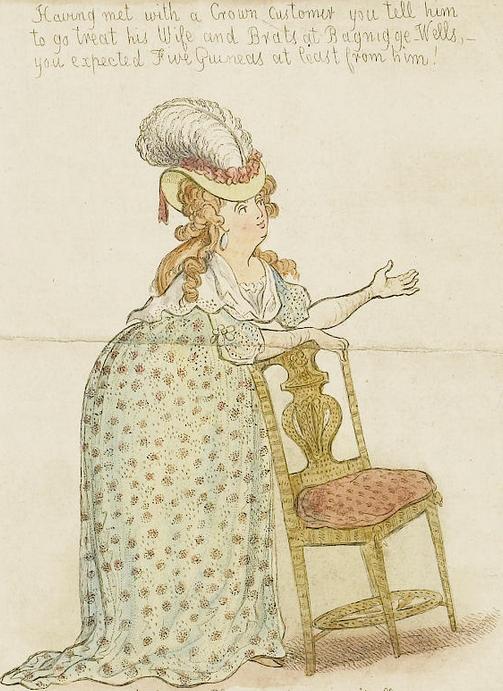
Having met with a Crown Customer, you tell him to go treat his Wife and Brats at Bagnigge Wells, you expected Five Guineas at least from him.

Bagnigge Wells no longer exists. It was a spa for the “middling sort”, located on the River Fleet near St. Pancras. The River Fleet is now one of London’s underground rivers. The guinea’s value was more than a pound. The coin itself was valuable, for it was made of gold and the value of a 5 guinea piece fluctuated during the 18th century. A crown was a silver coin worth five shillings, considerably less than a five guinea piece.
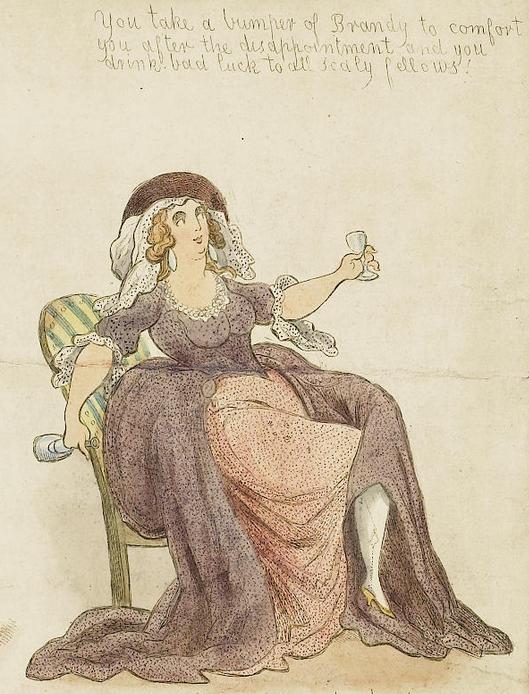
You take a bumper of Brandy to comfort you after the disappointment and you drink bad luck to all scaly fellows.

We already know that our prostitute does not take to drink well. She now turns to brandy. A bumper of brandy is no small amount, as you can see from the bottle in her hand. The Book of Scottish Anecdotes contains this little tale:

While Burns was at Moffat once with Clark the composer, the poet called for a bumper of brandy. “Oh, not a bumper,” said the musician. “I prefer two small glasses.”

“Two glasses?” cried Burns; “Why, you are like the lass in Kyle, who said she would rather be kissed twice bare-headed than once with her bonnet on.” – p81.

Scaly fellows were the lowest of the low. Also note the clocks (embroidery) on the prostitute’s stockings, which were quite fashionable in her day.
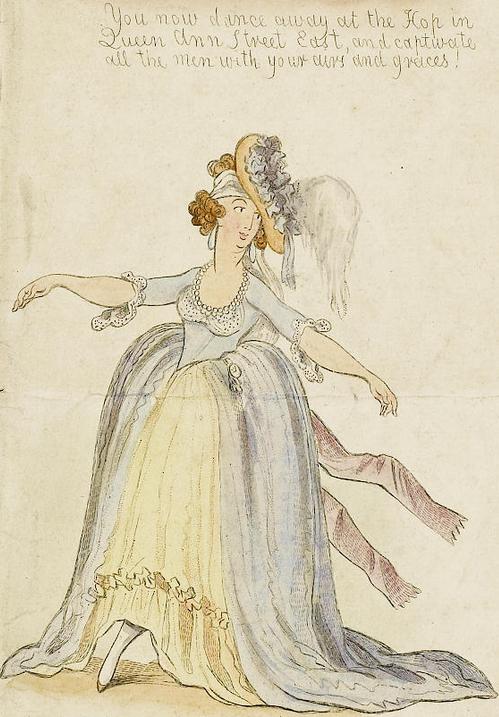
Harris’s List of Covent Garden Ladies contained a description of Miss Devonshire on Queen Anne Street. At this point, our lady of pleasure has gravitated towards a tavern on a street near Marlebone .
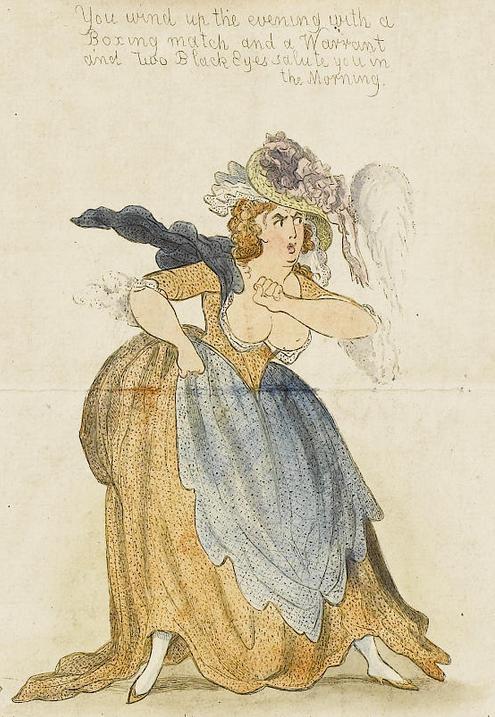
You wind up the evening with a boxing match and a Warrant and two Black Eyes salute you in the Morning.

Due to her inability to hold her temper, our lady’s downhill slide is guaranteed. Richard Newton was known for his drawings of bare-breasted ladies. It could not have been hard to tug a woman’s chemise down over her bosom in those days.
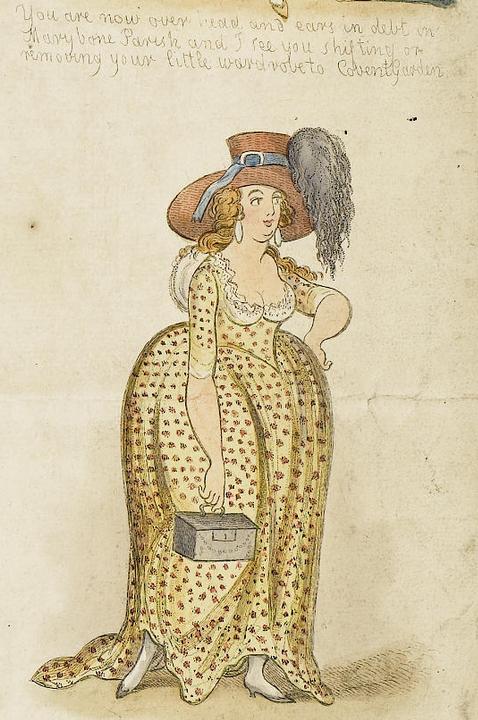
You are now over head and ears in debt in Marybone Parish and I see you shifting and removing your little wardrobe to Covent Garden.

Our lady of pleasure has moved from the West End to Covent Garden.

By the middle of the 18th century Covent Garden was full of seedy lodging houses and an astonishing number of Turkish baths, many of which were brothels.

Sir John Fielding, the magistrate, called Covent Garden ‘the great square of Venus’. He said, ‘One would imagine that all the prostitutes in the kingdom had picked upon the rendezvous’. – Prostitution in Maritime London
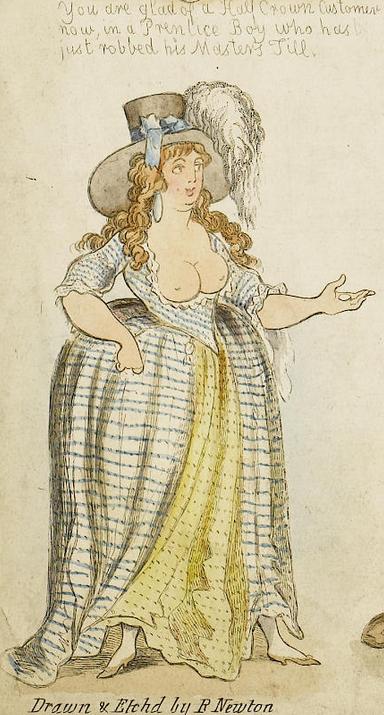
You are glad of a half-crown customer now, in a Prentice Boy who has just robbed his master's till.

And so our prostitute has fallen further. She is attracting customers of a lower sort, such as an apprentice who has taken to thievery to afford her wares. It is obvious that she no longer holds herself out for the highest bidder.
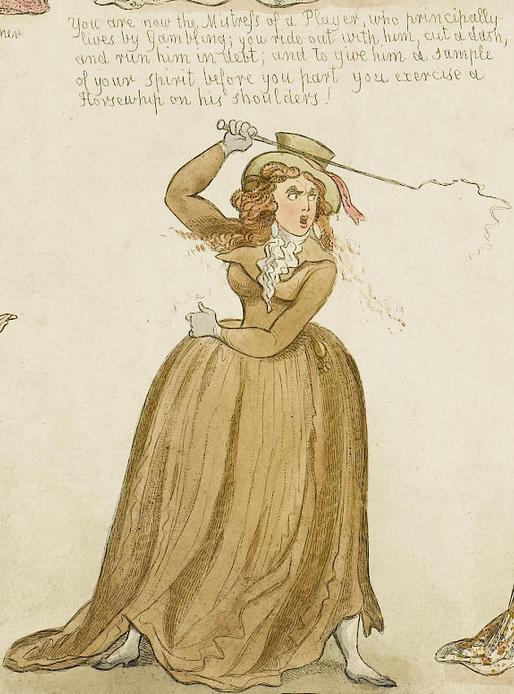
You are now the mistress of a Player, who principally lives by Gambling; you ride out with him, cut a dash, and run him in debt; and to give him a sample of your spirit before you part you exercise a Horsewhip on his shoulders.

Our lady of pleasure is on a slight uptick again, having become the mistress to a gambler. Riding outfits, made by tailors, were quite expensive. To cut a dash was to make a fine figure and to look quite smart. One assumes that the gambler took his mistress horse back riding in London’s Hyde Park, which meant that he kept her in fancy digs until his luck ran out. Once again, our lady of the night shows poor judgment and gives him a physical memory of her temper, flogging him with her riding whip.
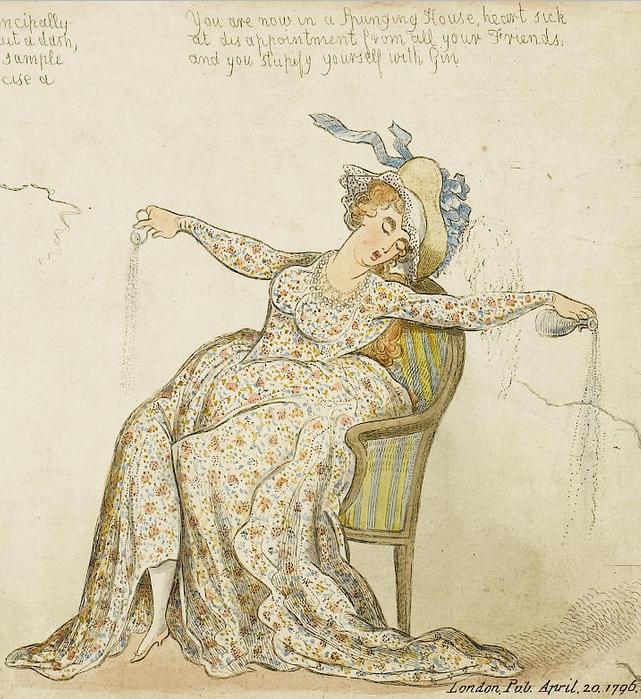
You are now in a Sponging House, heart sick at disappointment from all your Friends, and you stupefy yourself with Gin.

One can only imagine that this prostitute is reaping what she sowed, and that she made quite a few enemies when her luck ran high. Now that she is in debt herself, she has no one to turn to.

The normal process was for the debtor to be arrested by a bailiff or sheriff’s officer, and then taken to what was called a sponging-house, usually the officer’s own house. There, the debtor would be persuaded that they should pay their debts, otherwise, they faced a court appearance, and a debtors’ prison. – The Real Little Dorrit

Gin was also known as blue ruin. Before 1734 it was the drink of choice for poor people.

Along with promiscuous and adulterous behavior, gin became associated with prostitution, an issue that ranked high on the agenda of moral reformers. The association between gin and prostitution came about because gin-shops were public places that brought prostitute and customer together. It is important to note however that gin-shops were simply places where ordinary people gathered in a city where there were few other social spaces. As such, gin-shops were perhaps unfairly associated with prostitution in the sense that prostitution occurs where people happen to frequently gather. – The Gin Craze
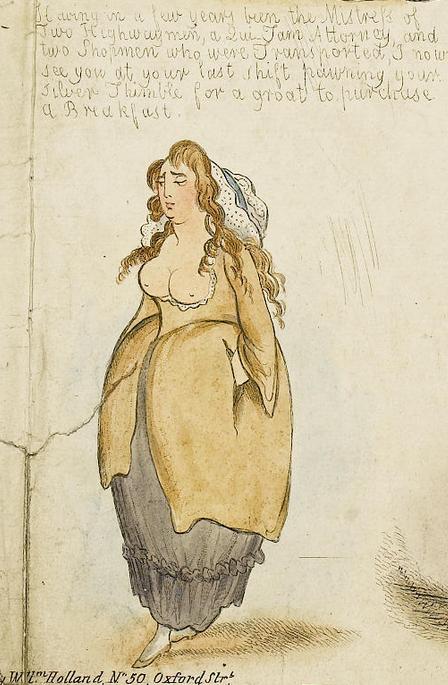
Having in two years been the mistress of a Two Highwaymen, a Qui Tam Attorney, Two Shopmen who were Transported, I now see you at your last shift, pawning your silver thimble for a groat to purchase your breakfast.

Our whore is so down on her luck, she’ll take any man as a customer, even criminals. Her two shopmen have been transported, to Australia no doubt.  She’s most likely working in back alleys and near the ports of London. Her jewelry is gone and her clothes are old-fashioned rags. Selling her thimble, an important item for sewing, for food means that she has no resources left.  I know little about ‘qui tam’ attorneys except to say that their practice had fallen into disrepute in England by the 19th century.

A groat was worth only four pence in the 1700s.
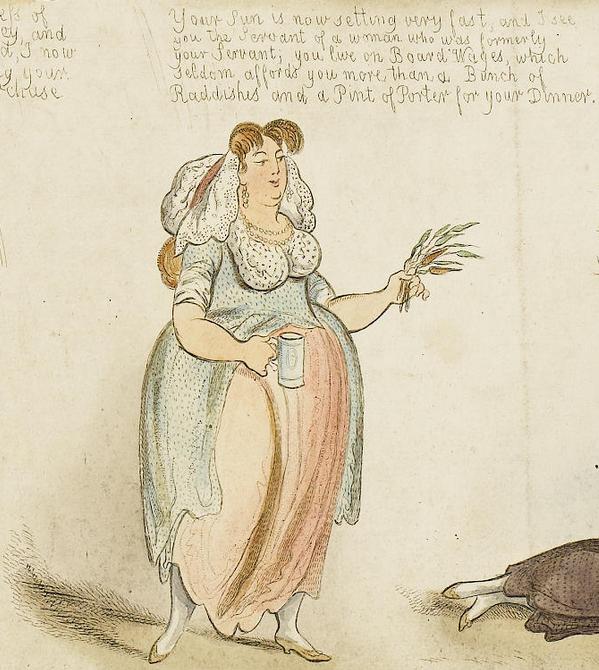
Your sun is now setting very fast, and I see you the servant of a woman who was formerly your Servant, you live on Board Wages, which seldom affords you more than a Bunch of Radishes and a Pint of Porter for your dinner.

Board wages mean that our prostitute worked very hard to earn enough money for her room, but had barely enough left over for food. Porter during this time was a strong dark beer. It was a good thing that she could afford alcohol, for I imagine that the wells in her neighborhood were contaminated with fecal matter. Water was a dangerous substance in the poorer sections of London. This prostitute’s narrative provides a cautionary tale for viewers. Her actions caused her downfall; her inability to hold her temper or her drink led to her ruin.

Our “heroine” falls sick and dies outdoors, to be buried in a potter’s field. Nothing could have been said more clearly about this unfortunate woman’s social worthlessness than her degrading end: No one, not even her former servant, now mistress, is willing to put up a single pence for her funeral.
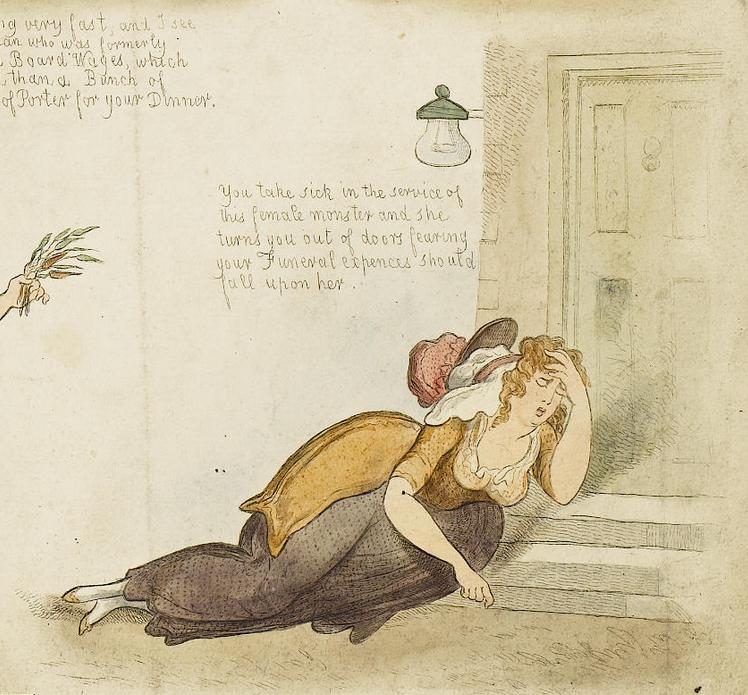
You take sick in the service of this female monster and she turns you out of doors fearing your Funeral expenses should fall upon her.

More on the topic:

Read Full Post »

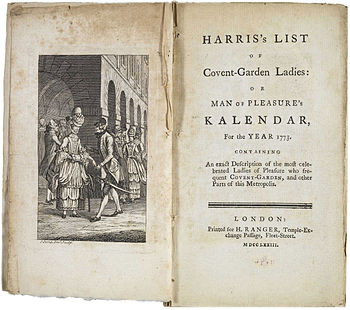
1773 Edition. Image @Wikipedia

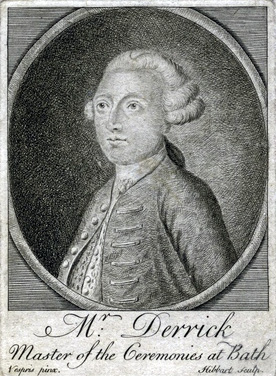
When I wrote my post about the Master Key to the Rich Ladies Treasury, a number of readers mentioned Harris’s List of Covent Garden Ladies. To my delight Google eBooks offers a link to the 1789 publication. The pocket-sized book, first published in 1757, remained popular for over 30 years with Lotharios looking for a light-o’-love. This annual sold for half a crown, the equivalent of about £15 today or the weekly room rent back in those days. Its author, identified for years as John Harris, was actually the drunken poet, Samuel Derrick, once described by James Boswell as “a little blackguard pimping dog”.*

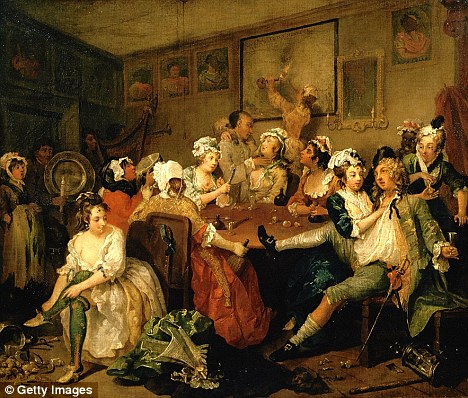
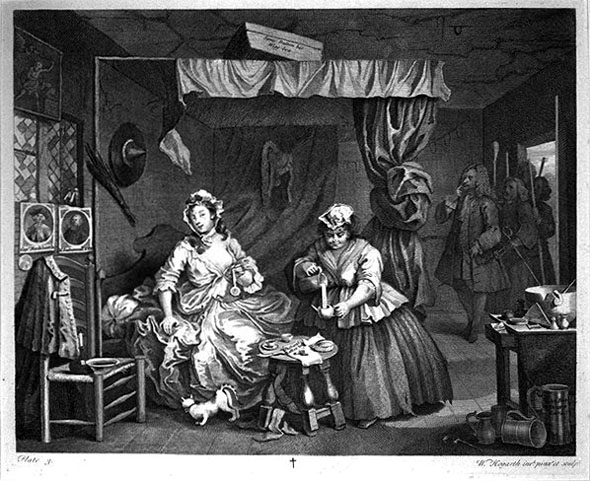
A Rake's Progress, Hogarth, 1732-33

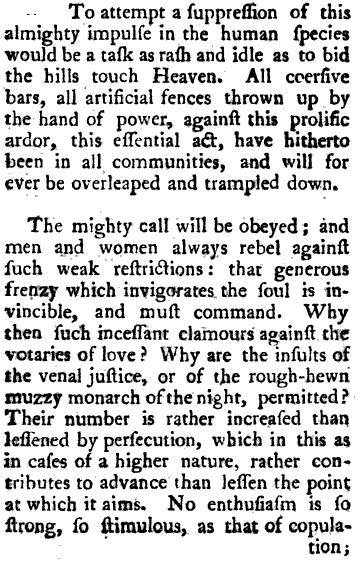
The introduction to the 1789 publication (see below) provides a shameless rationale for the “votaries of love.” The writer ignored the fact that for most of these ladies life was hard and bitter.

Introduction, p ii of Harris's List of Covent Garden Ladies, 1789

Demand for these lists was so great that 8,000 copies of the first edition were printed. London’s prostitutes were identified by name, location, and their special charms. Here’s a description of Miss Devonshire of Queen Ann Street, who had ‘a fair complexion, cerulean eyes and fine teeth.:

many a man of war hath been her willing prisoner, and paid a proper ransom…she is so brave, that she is ever ready for an engagement, cares not how soon she comes to close quarters, and loves to fight yard arm and yard arm, and be briskly boarded. – Port Cities, London

Although Derrick died in 1769, the list was continued by anonymous authors:

The list was continued for another 15 years by others, but Ms Rubenhold says it became dull soft porn, lacking the wicked sparkle of Derrick’s days – such as the anecdote of Miss C, powdered and perfumed above and below to entertain a prince, who “was so much of an Englishman to despise all fictitious aids in that quarter and, turning up his nose at the … musk, which was quite offensive to him, he rang the bell and sent the servant for a red herring”.- Exposed: Filthy Poet Pimp Who Wrote the Georgian Gentleman’s Guide to Prostitution

The description below of a tall and elegant woman, written 20 years after Derrick’s death, is rather pedestrian and obviously lacks Derrick’s wit.

A description in the 1789 list

For most prostitutes eking out a living in the Georgian era life was a constant struggle against poverty, illness and danger.The Times reported in 1785 that every year 5000 street-walkers died in the city (Prostitution in Maritime London). Prostitutes also died from venereal disease and the effects of poverty once their charms waned. Many aged prematurely. Some girls began their life of sin when they were 10 or 12 , for virgins came at a premium.

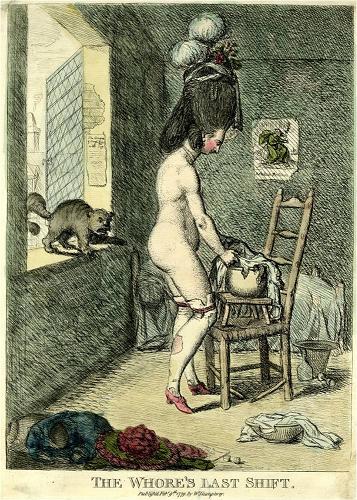
The Whore's Last Shift, James Gillray, 1779. From this view of her room and hole in her stocking, we can surmise that her life was far from glamorous. One can imagine that her tower of elaborately styled hair, kept in shape with grease, lard, and powder for days at a time, contained any number of itching lice and vermin when the arrangement was dismantled.

Economics was the driving engine of the thriving whore business in London. One in five women made a living as a prostitute, a remarkable number. The young women and girls who chose prostitution as a living were undereducated and fit only to work in backbreaking, menial jobs. Most prostitutes were independent street-walkers and kept a majority of their wages. A London prostitute stood an excellent chance of earning more than £400 a year. Contrast this income to a housemaid’s earnings of £5 a year, and one can readily see why so many women were drawn to the trade. Forty per cent of prostitutes came from London, while 60% came from the countryside and Ireland. Pimps, bawds, and procuresses (aging former prostitutes) exploited young girls arriving from the country (shades of Fanny Hill). They could make a tidy sum of money, for the deflowering rights of a young virgin went for £150, or £11,000 in today’s sums. (Sin City: One in Five Women in 1700’s London Were Prostitutes.)

Rowlandson, Launching a Frigate. Image @Port Cities.org

[Prostitutes] tended to gather in areas with looser police control; when the police became stricter in the City of London in the eighteenth century, the prostitutes gravitated toward the west and east ends of the city; when police control loosened in the early nineteenth century, they returned to the City. Prostitutes also tended to congregate in areas with cheap lodging houses and lots of men. St. Giles and St. James, home to many cheap boardinghouses, were popular with prostitutes in Westminster; the Docks, where many sailors disembarked, was popular on the east side of the city. – (Tony Henderson. Disorderly Women in Eighteenth-Century London: Prostitution and Control in the Metropolis, 1730-1830. London and New York: Longman, 1999. x + 226 pp. $29.20 (paper), ISBN 978-0-582-26421-2; $106.00 (cloth), ISBN 978-0-582-26395-6. Reviewed by Kristen Robinson (Department of History, University of Kentucky)

Note the saying above the door lintel.

The last Harris’s List was published in 1795, just as the perception of prostitution began to change. In the 18th century, “most prostitutes were seen as harlots who sought sex for pleasure. In the eighteenth century, however, prostitution was redefined as a condition stemming from economic need.” (Tony Henderson).  As the 19th century progressed, the arrival of street lighting and methods of modern policing reformed London as a city of vice.

The dawn of the Victorian age and new attitudes to morality meant that prostitution gradually went underground. Streetwalking was made an imprisonable offence in the 1820s. – Sin City: One in Five Women in 1700’s London Were Prostitutes

More on the topic:

Read Full Post »

This 12-minute podcast from Colonial Williamsburg Podcasts discusses The Art of Beauty in the 18th century. My previous post featured a recap of the Shire Book, Beauty and Cosmetics 1550-1950 by Sarah Jane Downing. The podcast compliments that post to a tee!

Read the transcript at this link. Find other podcasts at the Colonial Williamsburg Past and Present Podcast. The categories sit in the sidebar on the right.

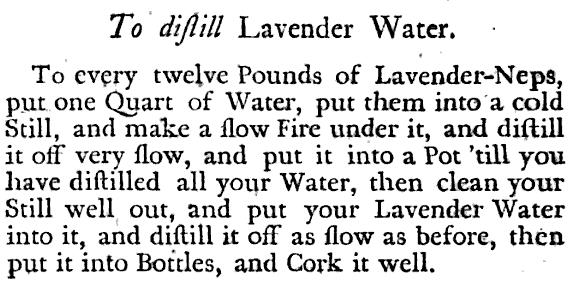
Lavender Water recipe from The experienced English house-keeper: for the use and ease of ladies, house-keepers, cooks, &c, Elizabeth Raffald, confectioner … Manchester, 1769.

Read Full Post »

Beauty and Cosmetics 1550-1950 by Sarah Jane Downing was published this month by Shire Library.  Small and compact, as Shire publications tend to be, this wonderfully illustrated book describes the standards of beauty popular in each era, from 1550 when alabaster brows were highly prized, to the black eyebrows that were favored by 18th century women.  As with her best-selling Fashion in the Time of Jane Austen, Ms. Downing provides the reader with a comprehensive overview of the topic. She begins with the Tudor Court and ends with the delightful cosmetic advertisements of the first half of the 20th century.

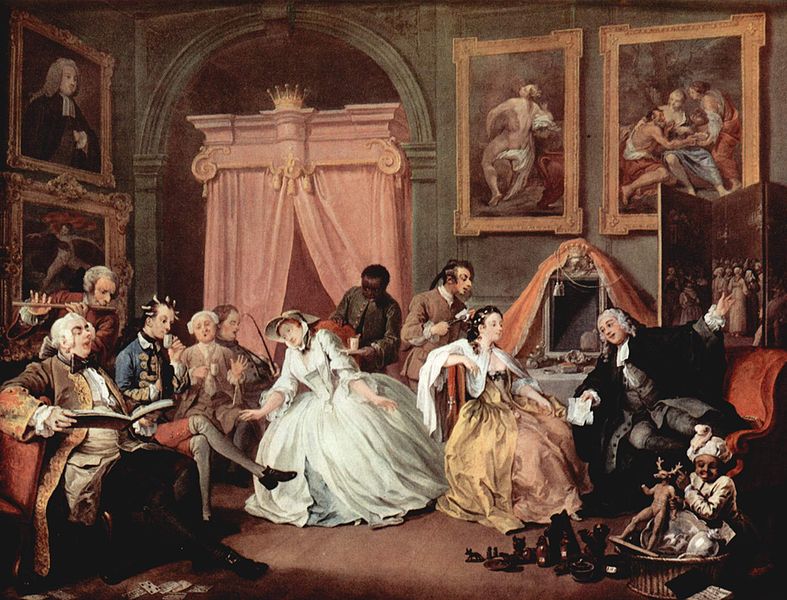
Marriage à-la-mode: The Countess's Morning Levee, William Hogarth, c. 1745

Because my blog’s theme centers on the Georgian and Regency eras, I will confine much of my recap to those years.

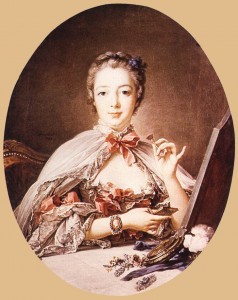
A woman applying beauty patches, Boucher

Mirrors, once only possessed by the rich, became so popular in London in the mid-16th century that British manufacturers petitioned Parliament to ban foreign imports. The ritual of the dressing table became quite elaborate and ladies began to entertain guests as they prepared themselves for the day.

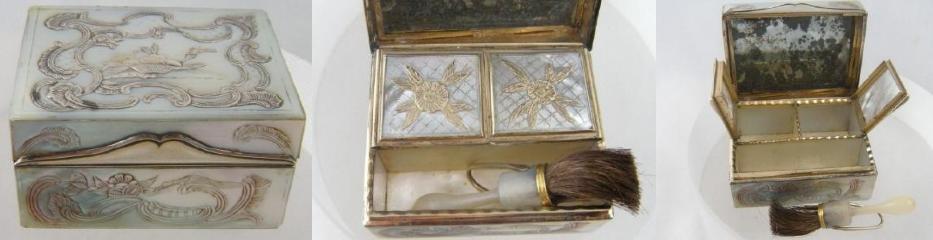
French mop gold boite a mouche patch box with brush, 1730. Images @ Etsy

Decorative patches covered skin blemishes and blotches, sometimes to such an extent that a face could be covered with a variety of dots, half-moon crescents, stars and even a coach and horses! The popularity of using patches began in the mid-17th century and did not wane until the end of the 18th century.

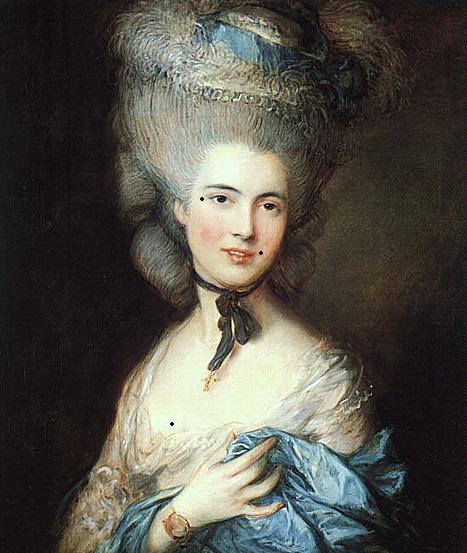
Woman with patches, pale skin and rouged cheeks. Thomas Gainsborough

Porcelain skin was highly prized and created with white lead-based skin cream. Blush was then applied to create a doll-like look. Cosmetics were created in a variety of ways. Here are the ingredients for one recipe for lead face powder that did not come from this book: several thin plates of lead, a big pot of vinegar, a bed of horse manure, water, perfume & tinting agent. Once can only guess how this concoction was put together and at its smell.

Marquise the Pompadour applying face powder with a brush. Boucher, 1758.

Ms. Downing describes in her book:

lead sheets were unrolled and beaten with battledores until all the flakes of white lead came off. These were gathered and ground into a very fine powder… p. 24

Gainsboroughs portrait of Grace Dalrymple Elliot in 1782 shows the craze for dark eyebrows.

For a while during the third quarter of the 18th century, dark eyebrows became all the rage. Lead-based cosmetics, used over time, caused hair-loss at the forehead and over the brows, resulting in a receding hair-line and a bare brow. For those who lost their eyebrows, it became the custom as early as 1703  to trap mice and use their fur for artificial eyebrows. Sadly, the glue did not always adhere well, and a lady could be caught with her brows out of kilter. This hilarious poem was written by Matthew Prior in 1718:

On little things, as sages write,

Depends our human joy or sorrow;

If we don’t catch a mouse to-night,

Alas! no eyebrows for to-morrow. – p.28

Aging beauties staved off the ravages of time with sponge fillers and rouge (sound familiar?), while many women risked poisonous side effects from using their deadly cosmetics. Maria, one of the Gunning sisters who went on to become Lady Coventry, was so addicted to her lead-based paints that she died in 1760 at the age of 27 knowing full well that she was at risk.

Maria, Countess of Coventry

The French Revolution swept away the widespread use of makeup, which was associated with the aristocracy. Defiantly, some aristocratic ladies went to their doom wearing a  full complement of make-up: pale skin, patches, rouged cheeks and rosy lips.

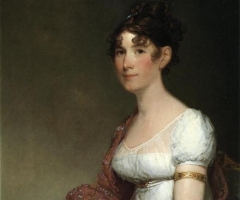
The more natural look of the regency woman. Note that the cheeks are still rouged.

Rousseau influenced the concept of nature and a more natural Romantic look took hold, aided by the blockade of cosmetics during the Napoleonic Wars. The death of many soldiers resulted in widespread melancholia and the affectation of a consumptive look. Ladies, nevertheless, were never far from their rouge pot.

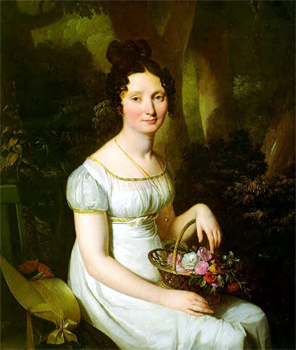
Another Regency portrait with subtle makeup. The flower basket adds to the natural look.

As with all Shire books, Sarah Jane Downing’s trip through time provides us with brilliant insights, in this instance it is via cosmetics and how society viewed beauty in each era. By the 1950s, the success of a marriage was defined by how well a woman took care of herself. This included makeup. Beauty, as Ms. Downing wrote, “was switched from a pleasure to an obligation.”  Oh, my. I give the delightful Beauty and Cosmetics 1550-1950 four out of five Regency tea cups.


Product Details

Paperback: 64 pages
Publisher: Shire (February 21, 2012)
Language: English
ISBN-10: 0747808392
ISBN-13: 978-0747808398
Product Dimensions: 5.8 x 0.2 x 8.2 inches

More on the topic:

Read Full Post »

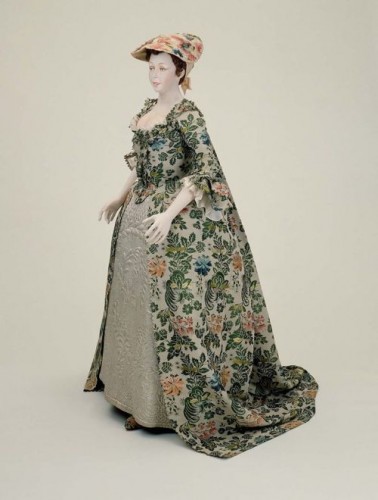
Wedding dress, 1742, Image @Boston Museum of Fine Arts

Anyone who had the opportunity to see “At Home With the Georgians” with Amanda Vickery was in for a treat. The BBC series, based upon her fabulous book, Behind Closed Doors: At Home in Georgian England, covered courtship and marriages in the 18th century in great detail. The perspectives of bachelors, spinsters, and married couples were taken into account.

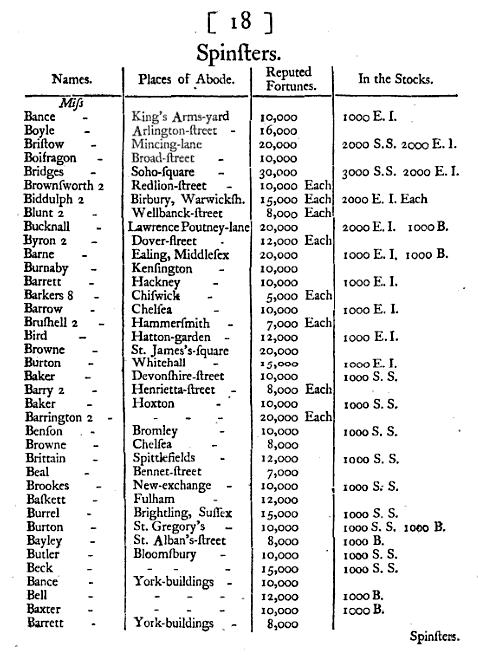
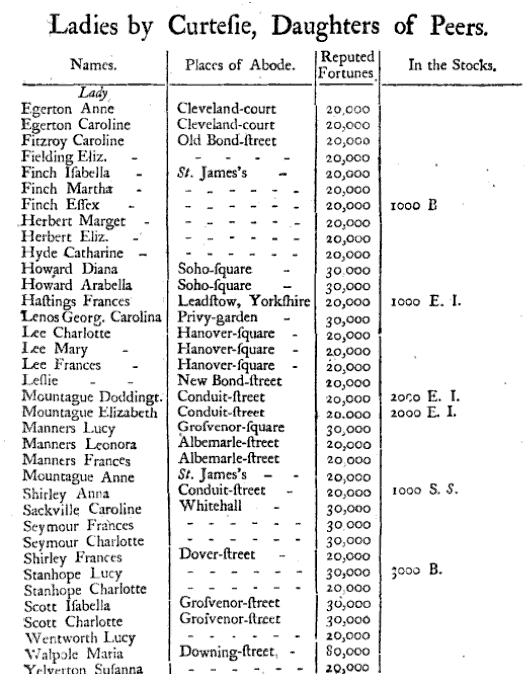
One of the most intriguing portions of the series occurred when Amanda Vickery introduced A Master-Key to the Rich Ladies Treasury or The Widower and Batchelor’s Directory by a Younger Brother, published in 1742.

The witty saying on the frontispiece describes perfectly why this book of lists was compiled:

“He took his Stand

Upon a Widow’s Jointure Land.”

The author, a younger brother who had to make his way in the world by working or marrying rich, writes these shameless words to the woman of fortune he is courting:

“Begin then Madam, hasten to begin — Bless the thrice happy Compiler, make the Happiness of a Younger Brother equal to that of his Elder, — Let the Honourable Mrs. M——n in the Connubial State shine with Splendour equal to Miss F———n in the Maiden, and tell a mistaken World that the Appellation Wife bears with it every Sound of Dignity and demands an universal Reverence;…”

This book was compiled for those  men who were unlucky to follow in their elder brothers’ shadows, for the laws of primogeniture dictated that the eldest son would inherit everything. The ladies are described in its pages with their names, where they live, the largeness of their reputed fortunes and of the stocks held in their names.

Marriage was the only option for ladies during the Georgian era, since they could not control their own fortunes or possess lands. All they “owned” was held in trust for them. Many a rich spinster or widow preferred choosing marriage over living a life alone.

One can almost hear this shameless Younger Brother courting his future bride (and plying her with gifts and poesies) as he charms her into marriage and publicly worships her with these words:

I could for ever dwell on the Repetion of your Charms, if I were not in immediate Expectation of the Possession of them: Whatever Pleasures, whatever Joys we earnestly covet, we surely anticipate of; when alone I am for ever repeating one Line of Dryden’s,

Happy, Happy Pair!”

Today many a suitor would be laughed off his knees if he said such a thing, but back then marriage was a serious business. An engagement represented the best financial arrangement that the pair could finagle. A gentleman had only a few means of making a fortune, one of which was by marrying rich, and a lady had only one means of supervising her own household, and that was in attaining the status of a wife. The Marriage Mart, as the pages in A Master Key imply, was strictly business. Oh, it helped if the people involved had pleasing countenances, good manners, and gentle hearts, but none of these attributes are discussed in this short list of women on the marriage mart in 1742.

I can imagine that many younger sons found comfort in these lists and made elaborate plans to be introduced to the women described so coolly inside of them. To these gentlemen the Younger Brother writes:

Whoever has read the Advertisements in the public Papers of Mr. C—-x, and the unknown Lady who accepted of his Proposals, will instantly acknowledge the Usefulness of the following Directory: The Dilemma that Gentleman was reduced for a Partner, determined the Compiler to set about it: He resolved to spare no Pains: He carefully examined every List of the Proprietors of the public Funds; and made afterwards the best Enquiry he was capable of, into their Fortunes exclusive: As it was impossible to give the exact Fortune of every lady in so large a List as the following, he thought proper to make in his Kalender, one Column under the Title of Reputed Fortunes.”

The Younger Brother’s advice is quite straightforward and required little embellishing:

Thus Gentlemen, have I in the following Sheets I think, opened a fair Field for Action for you; a fine Choice and a fine Collection of Ladies; — Open the Campaign directly then yourselves, that my next may be a new Sett. I have one favour to beg of you, and then I take my Leave; that no one of you, of what Degree soever, presume to attempt the Lovely Charmer I dedicate to; as to the Rest, I heartily wish you all Success …”

The Marriage Mart, I imagine, was a dance of the sexes, with the younger sons finding the best situation their charms were capable of, and the women choosing among the pool of men, hoping that their choice of mate will remain charming, moral, and kind  and not turn into a selfish, wife-beating monster.

Read Full Post »

« Newer Posts - Older Posts »